Pros and cons of moving nuclear wastes from pools to casks
 Haste vs. Procrastination on Nuclear Waste, NYT By MATTHEW L. WALD 7 July 11 “…….safety concerns arise in moving the fuel to casks, too. The details, pro and con, get interesting. Continue reading
Dangers of USA’s spent nuclear fuel pools
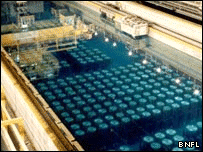 A Safer Nuclear Crypt, NYT, By MATTHEW L. WALD, July 5, 2011, The nuclear calamity at Japan’s Fukushima Daiichi plant has refocused attention on the vulnerability of spent fuel pools at the 104 operating American nuclear plants.
USA Senate Bill to set up temporary nuclear waste storage sites
Senators float bill to create interim storage sites for spent nuclear fuel, THE HILL By Andrew Restuccia – 07/01/11, Sens. Lisa Murkowski (R-Alaska) and Mary Landrieu (D-La.) floated legislation Friday that would require the Energy Department to establish two temporary repositories for spent fuel from the country’s nuclear power plants.
The legislation comes amid increased frustration by Republicans and some Democrats over the Obama administration’s decision to abandon Yucca Mountain, a proposed nuclear waste repository designated by Congress that has been mired by years of delay.
“This proposal addresses one of the most glaring failures of our national nuclear policy — what to do with the used nuclear fuel currently that is currently being stored at over 100 sites across the country,” Murkowski said in a statement Friday.
The lawmakers say the legislation is intended to end a series of lawsuits filed by utilities because the federal government has yet to establish a permanent waste repository. The lawsuits could cost the federal government billions of dollars. ….
The storage of spent nuclear fuel has come under increased scrutiny in the aftermath of the disaster at Japan’s Fukushima Daiichi nuclear power plant.
Sen. Dianne Feinstein (D-Calif.) has raised questions about the way spent fuel is stored in light of issues at the spent fuel pools at the Japanese plant. In the United States, spent fuel rods are placed in pools for several years and then moved into dry cask storage.
“It is clear that we lack a comprehensive national policy to address the nuclear fuel cycle,” Feinstein, the chairwoman of the Appropriations Committee’s Energy and Water subcommittee, said earlier this year.
A recent NRC inspector general report said the commission does not have an adequate system in place for the inspection of nuclear spent fuel storage sites…..
IAEA likely to rubber stamp Australian company’s plan for dumping radioactive waste in Malaysia
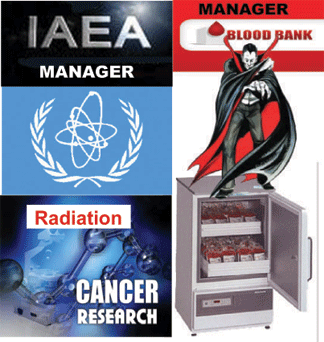 “How can we monitor daily? The risks of human error are too high,” she said, pointing out that the half-life of thorium was 14 billion years…..Fuziah promised that if the report from the panel, which includes members of the IAEA, was as she anticipated, she will continue to bring the issue to a higher level and exert pressure on authorities.
No confidence in Lynas safety review’, Free Malaysia Today Tashny Sukumaran, June 20, 2011, The IAEA report on the Lynas Corp is bound to be slanted and the human factor will not be taken into account, says Kuantan MP Fuziah Salleh. KUALA LUMPUR: Kuantan MP Fuziah Salleh is already second guessing the International Atomic Energy Agency’s (IAEA) report on the Lynas Corp’s rare earth refinery in Gebeng, Pahang.
She said she has no confidence in the independent panel’s safety review of the RM300 million Lynas Corp rare earth refinery . “I can imagine the outcome will contain acknowledgement of safety concerns, but also on how this refinery can be made safe,” said Fuziah. Continue reading
Ashok Parthasarathi on the myth of cheap, ‘clean’, nuclear energy
such waste disposal applies not only to nuclear electrocuting reactors but also the “tailings” from uranium mines and mills which produce the basic material for making the fresh uranium fuel rods that feed the reactors but also in the process of reprocessing the used or ‘spent’ fuel coming out of the reactors and containing the deadliest and most dangerous plutonium. Human ingestion of even one billionth of a gram of plutonium leads to death.

 Renewable energy is the future, not nuclear, Business Standard, Ashok Parthasarathi / June 19, 2011 There are recurring slippages in the timescales of setting up nuclear power plants, particularly imported ones. Inevitably, there are cost over-runs too.
Nuclear power is often referred to as a ‘clean’, safe, economically cost-effective and environmentally benign source of electric power. This is incorrect. It is not ‘clean’ because it generates large quantities of highly radioactive solid and liquid wastes. The liquid wastes can be treated to bring them to set levels and then discharged into the environment. However, even after extensive multi-level treatment, the solid wastes leave a considerable amount of residues of long-life nuclear isotopes.
These have first to be loaded into thick walled lead containers, the containers hermetically sealed by a special technique, ‘vitrified’ and then buried deep in hard rock cavities in shafts of disused metaliferous or coal mines, making sure that the shafts are free of water ingress. Such storage has to be for several decades. This whole process is technically demanding and expensive but has to be done to ensure human and ecological safety. Popular accounts of nuclear reactors seldom bring out these issues.
But such waste disposal applies not only to nuclear electrocuting reactors but also the “tailings” from uranium mines and mills which produce the basic material for making the fresh uranium fuel rods that feed the reactors but also in the process of reprocessing the used or ‘spent’ fuel coming out of the reactors and containing the deadliest and most dangerous plutonium. Human ingestion of even one billionth of a gram of plutonium leads to death. So, all reprocessing plants are almost totally robotised.
Then there is the elaborate process and equipment involved in continuously cooling the ‘core’ of the reactor while the reactor is in operation. When an accident occurs, affecting the cooling system, as happened in two reactors of the Fukushima nuclear power in Japan in March, the core becomes so hot (2,000 degrees C) that the highly radioactive core melts and the molten core falls to the bottom of the reactor, punctures the heavy steel containment vessel and seeps into the reactor’s foundation and then into the ground beneath, contaminating any ground water present. All this is not a gory hypothetical scenario. It actually happened at Fukushima.
To steeply reduce the probability of such events, modern nuclear reactors have ‘traps’ at the base of the containment vessel, to prevent the kind of puncturing described above. Whether such ‘traps’ will be near-100 per cent effective, only time will tell.
It is well-known that because of the technology involved, nuclear power reactors are intrinsically highly capital-intensive. When one adds the protective technology and equipment, as well as the waste treatment technology and equipment described above, the capital costs go through the roof. Thus the capital cost of the ‘latest’ European Power Reactor (EPR) which the French firm Areva is to set up at Jaitapur in Maharashtra is around Rs 20 crore per Mw, compared to Rs 15 crore for solar power and Rs 6-7 crore per Mw for wind power. Such capital cost levels, in turn, take the cost of nuclear power to Rs 7-8 per KWh (or unit of power generated), making the reactors totally uneconomic.
Then there is the problem of recurring slippages in the time scales of setting up nuclear power plants, particularly imported ones. For example, the two 1,000 Mw Russian reactors coming up at Kudankulam in Tamil Nadu are already four years behind schedule, provided they are actually commissioned in 2011 and 2012, as the Nuclear Power Corporation claims they will be. The four Areva 1,650 Mw EPRs — one each in France and Finland, and two in China — are also four years behind schedule, with no firm commissioning dates indicated by Areva as of now.
As a result, the plant in Finland came close to being cancelled by the Finnish government about two years ago. This is despite all four, like the Kudankulam plant, being set up on a turnkey basis by the foreign suppliers involved. These time over-runs, which have for example taken the Kudankulam plants to a total construction time of 11 and 12 years, inevitably lead to huge cost over-runs as well.
Areva is now promising that the first two EPRs at Jaitapur will be commissioned in 2017-18. But what credence can we put on such promises, given Areva’s past record? This in turn makes NPCIL’s claim that it will have 20,000 Mw of nuclear power — 14,000 Mw indigenous and 6,000 Mw imported — by 2020, look like a pipe dream. As for its repeatedly announced plan of achieving 63,000 Mw by 2030, it is a laugh! To put these numbers in perspective, the current installed nuclear power generating capacity is around 5,000 Mw.
Contrast this state of affairs with that in renewable energy. In wind power we have an operating capacity of 16,000 Mw, the fourth largest in the world. Suzlon, our largest wind turbine manufacturer and project developer, added 4000 Mw last year. It is a Rs 22,000 crore company with subsidiaries in Europe and a production plant in China. As for solar energy, the 20,000 Mw by 2022 Nehru Solar Energy Plan is progressing well, with many foreign and local companies having committed to establish large grid-connected solar power plants of 100 Mw to 500 Mw capacity…http://www.business-standard.com/india/news/ashok-parthasarathi-renewable-energy-isfuture-not-nuclear/439598/
—
No progress in USA’s dilemma about nuclear wastes
U.S. making little progress on nuclear waste issue, Battle Creek Enquirer 17 June 11 When Congress passed the Nuclear Waste Policy Act of 1982, most Americans thought the nation was on its way toward dealing with the spent radioactive fuel from nuclear power plants.
But nearly 30 years and about $15 billion later, little progress has been made.
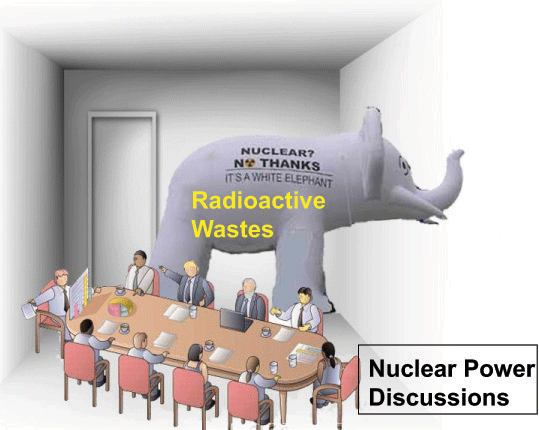
Michigan Public Service Commissioner Greg White, speaking on behalf of the National Association of Regulatory Utility Comm-issioners, told a U.S. House subcommittee earlier this month that the nation is no closer to creating a central repository for nuclear waste than it was in the early 1980s……. Continue reading
South Africa moves radioactive wastes to Northern Cape
Low-level nuclear waste moved to Northern Cape, Mail & Guardian JOHANNESBURG, SOUTH AFRICA – Jun 15 2011 Low-level radioactive waste packages accumulated from the 1960s at the Nuclear Energy Corporation South Africa (Necsa) in the North West have been removed to a waste disposal site, the corporation said on Wednesday. ….The trip to Vaalputs took two days over about 1 200km…..http://mg.co.za/article/2011-06-15-lowlevel-nuclear-waste-moved-to-northern-cape/
Injustice of nuclear waste near Taiwan’s indigenous people
it was unfair for Aborigines, who usually consume less energy than other people in Taiwan, to be exposed to the dangers of coal mines in the past, and now nuclear waste….
Lawmakers pass new nuclear funding, Taipei Times, By Shih Hsiu-chuan and Lee I-chia 14 June “……Pani (拔耐), an Aboriginal woman and cofounder of Raging Citizens Act Now, provided a clear picture of the implications of nuclear energy for ordinary citizens. Continue reading
USA nuclear wastes – the intractable problem that just won’t go away
U.S. nuclear operators have begun moving some of their spent fuel out of pools and into “dry casks,” considered safer because the casks require only natural air flow, not mechanically pumped water, to cool the fuel. But only about 15,000 metric tons of fuel are stored this way in the U.S., in part because the system is expensive. Even dry-cask storage isn’t a permanent solution. The casks are expected to last decades, not the thousands of years it takes the fuel to become safe…. “No one else on the planet has a solution either.”..Problem of Where to Put Waste Besets Nuclear Industry, WSJ, By BEN CASSELMAN, JUNE 9, 2011 No question has bedeviled the U.S. nuclear-power industry more than what to do with the thousands of tons of radioactive waste generated by its reactors every year.U.S. nuclear reactors run on enriched uranium fuel. A nuclear reaction splits the uranium atoms, emitting heat that boils water, turning a turbine and generating electricity. The process leaves behind waste that is no longer capable of sustaining a nuclear reaction but is still highly radioactive. Continue reading
USA holds largest amount of concentrated radioactivity – time bombs!
The U.S. government should promptly take steps to reduce these risks by placing all spent nuclear fuel older than five years in dry, hardened storage casks like Germany did 25 years ago. …..
After more than 50 years, the quest for permanent nuclear waste disposal remains illusory. One thing, however, is clear, whether we like it or not: the largest concentrations of radioactivity on the planet will remain in storage at U.S. reactor sites for the indefinite future.

 America’s Nuclear Spent-Fuel Time Bombs HUFFINGTON POST, Robert Alvarez, : 06/ 6/11 Japan’s nuclear disaster should serve as a wake-up call for the United States.
Now that many Americans have stopped paying attention to Japan’s nuclear catastrophe, shocking new details about its severity are finally coming to light. Continue reading
Problems in France’s plan for 100,000 years of nuclear waste storage
“No geologist can guarantee that there will never be water infiltration in the places intended for storage,”
Europeans Pursue Labyrinths of Nuclear Waste, NYTimes.com, By SUE LANDAU, June 2, 2011 BURE, FRANCE —”…….Gérald Ouzounian, the international director at Andra, said that research had found that this hard clay had a water content of just 15 percent, and that water remained in the clay rather than moving through it. This is critical for the repository, because it must prevent radioactivity seeping out into groundwater and contaminating soil, plants, animals, and ultimately, human beings. Continue reading
France’s nuclear wastes must be secured for over 100,000 years
The repositories are supposed to remain hermetically sealed for at least 100,000 years — roughly the length of time human beings have existed on Earth

Europeans Pursue Labyrinths of Nuclear Waste, NYTimes.com, By SUE LANDAU : June 2, 2011 BURE, FRANCE — Reached by narrow roads that meander through picturesque villages, a high-tech laboratory sits in a corner of France so remote that until construction started on it a decade ago, the local inn was not connected to the electricity grid.
Beneath a plateau surrounded by fields of colza and wheat, the underground laboratory, located near the village of Bure, in the eastern French region of Lorraine, is run by the Agence Nationale pour la Gestion des Déchets Radioactifs, or Andra, the national authority charged with the safe disposal of nuclear waste. Continue reading
Fukushima nuclear plant might now be used as a temporary nuclear waste dump
As the sites are for intermediary use, the nation is still searching for a deep underground storage site for the waste, according to the World Nuclear Association…
Fukushima set to become Nuclear waste graveyard Bloomberg / Tokyo May 27, 2011, Japan’s atomic energy specialists are discussing a plan to make the Fukushima Daiichi nuclear plant a storage site for radioactive waste from the crippled station run by Tokyo Electric Power Co.The Atomic Energy Society of Japan is studying the proposal, which would cost tens of billions of dollars, Muneo Morokuzu, a professor of energy and environmental public policy at the University of Tokyo, said in an interview yesterday. The society makes policy recommendations to the government. Continue reading
UK plan to dump nuclear waste in sea
 Hinkley Point nuclear waste sea disposal plan Nuclear waste is currently stored in vaults at Hinkley Point, BBC News, 23 May 2011 Plans being developed to deal with nuclear waste at Hinkley Point A in west Somerset will see radioactive gas and liquid released into the sea.The power station began decommissioning in 2001 and is working on a system to put “intermediate” waste in vats of acid to reduce it down.
Magnox, the company that manages the site, said there would be no risk to public health or the environment.
But a nuclear expert questioned the controls in place at Hinkley Point……John Large, a nuclear consultant who has worked with power companies and Greenpeace, said: “If you look at the history and the development of the British nuclear industry, and look at the calamity that was caused by radioactive discharges around Sellafield, if the past practice is a sign I don’t think sufficient guards and controls will be in place at this station.”
Before this process can start, it needs to be approved by the Environment Agency and the Office for Nuclear Regulation, and the company will have to apply for planning permission for a new building….http://www.bbc.co.uk/news/uk-england-somerset-13501260
“Blue Ribbon” Panel wants a powerful new govt agency to set up a nuclear waste dump
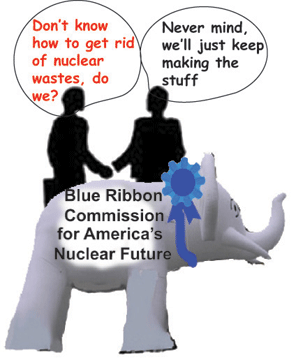 the commission also urged creation of a new government agency with the sole purpose of selecting the locations of the proposed interim storage and repository facilities. The proposed agency should be given the necessary financial and institutional resources, as well as sufficient authority, to make its policies stick……
Panel urges centralized storage facility and permanent repository for nuclear waste , David KramerBy Physics Today on May 17, 2011, A recommendation has been made by the commission formed to advise the Obama administration on what to do with the spent nuclear fuel from the nation’s commercial reactors: The material should be consolidated at an above-ground storage facility while a new search is carried out to find a permanent geological repository. Continue reading
1 This Month
23-25 October – on Zoom – World BEYOND War’s annual global conferenc


Shut down the radiation-damaged Heysham nuclear reactors now
To see nuclear-related stories in greater depth and intensity – go to https://nuclearinformation.wordpress.com

Say No to NASA’s Reckless Nuclear Reactor on the Moon
Say No to NASA’s Reckless Nuclear Reactor on the Moon

-
Archives
- October 2026 (247)
- September 2026 (339)
- August 2026 (330)
- July 2026 (355)
- June 2026 (287)
- May 2026 (306)
- April 2026 (356)
- March 2026 (251)
- February 2026 (267)
- January 2026 (308)
- December 2025 (358)
- November 2025 (359)
-
Categories
- 1
- 1 NUCLEAR ISSUES
- business and costs
- climate change
- culture and arts
- ENERGY
- environment
- health
- history
- indigenous issues
- Legal
- marketing of nuclear
- media
- opposition to nuclear
- PERSONAL STORIES
- politics
- politics international
- Religion and ethics
- safety
- secrets,lies and civil liberties
- spinbuster
- technology
- Uranium
- wastes
- weapons and war
- Women
- 2 WORLD
- ACTION
- AFRICA
- Atrocities
- AUSTRALIA
- Christina's notes
- Christina's themes
- culture and arts
- Events
- Fuk 2022
- Fuk 2023
- Fukushima 2017
- Fukushima 2018
- fukushima 2019
- Fukushima 2020
- Fukushima 2021
- general
- global warming
- Humour (God we need it)
- Nuclear
- RARE EARTHS
- Reference
- resources – print
- Resources -audiovicual
- Weekly Newsletter
- World
- World Nuclear
- YouTube
-
RSS
Entries RSS
Comments RSS

