Excavation planned – removal of NUMEC nuclear waste dump in Parks Township
 NUMEC nuclear waste dump in Parks Township will be excavated http://triblive.com/neighborhoods/yourallekiskivalley/yourallekiskivalleymore/9678472-74/nuclear-corps-materials#axzz3v71kOvgB
According to the U.S. Nuclear Regulatory Commission, Special Nuclear Material is only “mildly radioactive” but can include fissile material — uranium-233, uranium-235 and plutonium-239 — that, in concentrated form, can be the primary ingredients of nuclear explosives.
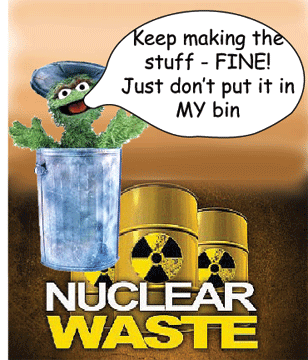 By Mary Ann Thomas, Dec. 22, 2015 After finding more complex radioactive contamination than expected in 2011 at the nuclear waste dump in Parks Township, the Army Corps of Engineers announced Tuesday it will stay the course for a $350 million project to dig up and remove 36,000 tons of waste.
The Corps shut down the cleanup four years ago after unearthing more highly radioactive nuclear materials that required special handling, escalating cleanup costs.
The defunct Nuclear Materials and Equipment Corp. and successors, the Atlantic Richfield Co. and Babcock & Wilcox disposed of uranium, plutonium and other hazardous materials at the 44-acre, Armstrong county, site from 1960 until the early 1970s. With plants in Parks and Apollo, those companies produced fuel for Navy nuclear reactors, nuclear power plants and other government entities.
The Corps will release its request for proposals from contractors and likely name a new cleanup company in 2017. The contractor will develop new plans and start digging again in 2018. The waste will then be shipped out of state.
The project is expected to finish between 2026 and 2028 : http://triblive.com/neighborhoods/yourallekiskivalley/yourallekiskivalleymore/9678472-74/nuclear-corps-materials#ixzz3v728qWVp
Turning contaminated Hanford Nuclear Reservation into a tourist site!
Most polluted US nuclear weapons building site plans for influx of tourists, Guardian 20 Dec 15
Hanford Nuclear Reservation, country’s newest national park and home to the world’s first full-sized nuclear reactor, prepares for expanded crowds. Thousands of people are expected next year to tour the Hanford Nuclear Reservation, home of the world’s first full-sized nuclear reactor and the most polluted US nuclear weapons production site.
Hanford, near Richland, about 200 miles east of Seattle in south-central Washington state, is the newest national park.
Visitors will not, however, be allowed anywhere near the country’s largest collection of toxic radioactive waste.
“Everything is clean and perfectly safe,” said Colleen French, the US Department of Energy’s program manager for Hanford. “Any radioactive materials are miles away.”
The Manhattan Project national historical park, signed into existence in November, also includes sites at Oak Ridge, Tennessee and Los Alamos, New Mexico. The Manhattan Project is the name for the US effort to build an atomic bomb during the second world war.
At Hanford, the main attractions will be B Reactor and the ghost towns of Hanford and White Bluffs, which were evacuated by the government to make room for the Manhattan Project………
Nine reactors were built at Hanford and operated during the Cold War. That work created more than 56m gallons of radioactive waste that the government still spends more than $1bn a year to maintain and clean up…….. http://www.theguardian.com/us-news/2015/dec/20/hanford-nuclear-reservation-manhattan-project-washington-national-park
Endless delays – that’s the system for Hanford nuclear waste clean-up
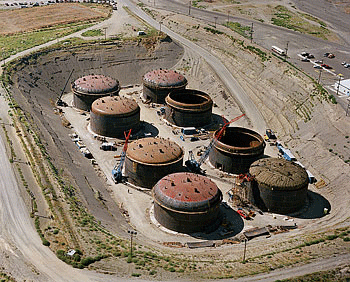 Will Hanford’s Big Clean-Up Ever Begin? Fifteen years past its originally scheduled start-up date, the nuclear facility’s glassification plant is way over budget and no one seems able to nail down a deadline. At fault, say critics, are mismanagement, frequent turnover in the top brass, and a culture that doesn’t take kindly to criticism. Seattle News Weekly, By John Stang , Dec 15 2015 “……….The story of Tamosaitis’ unheralded warnings is not the exception in the ongoing struggle to contain Hanford’s waste. Rather, this episode is just the latest in a litany of setbacks that has put the project over budget and off schedule again and again.
Officially, the reasons are that this is a first-of-its-kind project with difficult-to-perfect new technology.
In reality, the glassification project—like most of Hanford—resembles a giant Dilbert comic book. The culture is the culprit. There are immense corporate and social pressures to look good now and hope someone else is in charge when things go wrong later. These pressures include high turnover in upper management, bonuses to corporations, individual career advancement, and retaliation against those who rock the boat at inconvenient times. Continue reading
Ukraine’s troubles continue with the toxic Chernobyl site
Fukushima Amplifies Murphy’s Law COUNTERPUNCH DECEMBER 14, 2015 by ROBERT HUNZIKER “……….. In sharp contrast to Japan’s position, Chernobyl’s officialdom has a different take on “permissible annual radiation exposure,” specifically: “The radiation limit that excluded people from living in the 30km zone around the Chernobyl nuclear plant exclusion zone was set at 5mSV/year, five years after the nuclear accident. Over 100,000 people were evacuated from within the zone and will never return,” (Greenpeace Japan). Never ever return!
Nuclear disasters don’t go away easily. For example, Chernobyl is already facing a brand new crisis. The durability of the original decaying blighted sarcophagus expires within the next 12 months. However, the new replacement sarcophagus, the world’s biggest-ever metallic dome, will not be accomplished in time as they are short of funds (615million EUR).

In addition to Ukraine’s internal strife with pro-Russian citizens, the country has serious financial difficulties. All of this amounts to one more “spoke in the wheel” against nuclear reactor proliferation (Incidentally, China has 400 reactors on the drawing board). Who knows if and when a crippled reactor ends up in the hands of a financially strapped country? Then what?
Already, Ukraine has 15 nuclear reactors standing tall, so far, amongst whizzing bullets and powerful rockets. Dismally, Ukraine has conceivably become a nuclear holocaust tinderbox in the midst of cannon fire, rumbling tanks, and surface-to-air missiles, for example, Malaysia Airlines Flight 17 was shot down by a missile, supposedly by accident, on July 17, 2014, all 298 on board died……….. http://www.counterpunch.org/2015/12/14/fukushima-amplifies-murphys-law/
Japan’s NRA may change nuclear waste burial rules, increase depth
 NRA panel wants deeper disposal for nuclear waste http://www3.nhk.or.jp/nhkworld/english/news/20151211_01.html A team of experts at Japan’s nuclear regulator has proposed that nuclear waste with relatively high levels of radiation be buried deeper underground than current law requires.
The team at the Nuclear Regulation Authority, or NRA, presented a draft of regulations for such waste on Thursday. The waste comes from the decommissioning of reactors. The draft calls for such waste to be buried at least 70 meters underground. This is to prevent people from approaching the waste.
Current law requires that waste with low or relatively high levels of radiation be buried at least 50 meters underground. The draft requires utilities to maintain buried waste for 300 to 400 years.
The draft also would have the central government prepare a system to prevent the buried waste from being dug up after the maintenance period ends. The NRA team plans to gather opinions from the Federation of Electric Power Companies of Japan and compile basic ideas by the end of next March.
Germany’s process of decommissioning nuclear power plant
This Is How You Decommission a Nuclear Power Plant [great photos] German Chancellor Angela Merkel called time on nuclear energy in her country in 2011, after a tsunami severely damaged the Fukushima power plant in Japan, causing a major radioactive leak. Almost five years later, that process is in full swing – with an estimated cost of up to €77 billion ($84 billion). The operation to decommission Germany’s Greifswald nuclear power plant is described by German energy officials as the largest project of its kind in the world. Once the largest power plant in the former East Germany, Greifswald was closed in 1990 during German reunification. This is how it is being made safe. Bloomberg Tino Andresen , 10 Dec 15
Alexander Jones Germany’s nuclear plant operators are seeking public agreement on how to manage the burden of decommissioning the country’s atomic power stations. Chancellor Angela Merkel’s government decided in 2011 to phase out nuclear power by 2022 in light of the Fukushima disaster in Japan. ……..
The decommissioning process could force those footing the bill to set aside anything from €25 billion to €77 billion, according to scenarios.
Germany’s Economy Ministry believes that utility companies do have enough funds to pay for the shutdown and cleanup of nuclear power plants……..
Depending on the severity of contamination, some of the components will go on to be housed in temporary disposal sites before a final storage solution is found….http://www.bloomberg.com/news/photo-essays/2015-12-10/this-is-how-you-decommission-a-nuclear-power-plant
The nuclear industry’s plight – the COSTS OF RADIOACTIVE TRASH DISPOSAL
 The politics of nuclear waste disposal, The Hill, 8 Dec 15 By Mark R. Maddox, The closure of nuclear power plants — seven at last count — and the role of nuclear power in a low carbon world has received a fair amount of media coverage, including a piece in The Hill. What hasn’t, however, is what to do about the nuclear waste stored at these plants and which will continue to be stored at these abandoned facilities for many decades to come. While the topic has become a political hot potato, some in Congress, like Illinois Rep. John Shimkus (R), a senior member of the House Energy and Commerce Committee, recognize its importance and the need to address it in short order.
First, it’s important to understand the reasons for the trend toward closures. The U.S. nuclear fleet is old. While many licenses to operate have been extended, required upgrades are expensive and regulatory oversight is extensive. Compounding the problem is the availability of reliable and cost-effective alternative power sources: shale production in the United States has contributed to a significant drop in gas prices and made natural gas-generated electricity comparatively cheap; also, increased accessibility to lower-cost renewable energy due to declining costs and supportive policies for investment has squeezed the profitability of nuclear generation. Finally, demand for electricity has declined due to a combination of efficiency improvements and manufacturing shifts.
As one analyst described the plight of nuclear energy: You cannot roll back the rules of economics…….
Not surprisingly, the government inactivity has led to a shift in the conversation away from plants producing electricity and creating waste to plants being decommissioned and the waste being stranded on site. If Yucca Mountain is taken off the table as a permanent storage site, every nuclear power plant that has been storing nuclear waste on an interim basis could become its own version of Yucca Mountain. The Maine Yankee Plant, closed in 1997, is still home to 60 nuclear casks and 550 metric tons of waste. As well, the Pilgrim plant in Massachusetts recently announced it is to be closing and is estimated to have 3,000 radioactive rods in storage that will be stored on-site indefinitely.
Utilities owning a nuclear plant are now caught in real bind. According to press reports, every dismantling decision has been accompanied by a request to divert reserved funds to also cover costs for long-term fuel storage. In the case of Vermont Yankee, this is a double-whammy. Not only are its reserve funds insufficient, forcing the utility to mothball the plant for 60 years until the dismantlement fund is adequate, the utility is pursuing an additional line of credit of $145 million to build a storage facility and estimates that it will take an additional $225 million for storage operation and security…….http://thehill.com/blogs/pundits-blog/energy-environment/262407-the-politics-of-nuclear-waste-disposal
Germany expecting nuclear utilities to pay the costs of decommissioning and disposal of radioactive trash
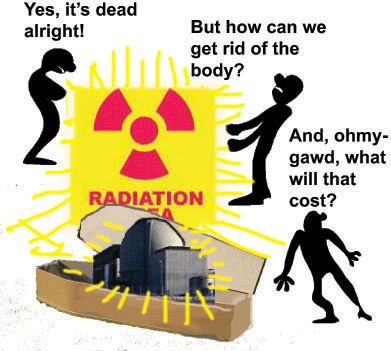
 Germany: Utilities Must Shoulder Nuclear Phase-Out Costs http://www.powermag.com/germany-utilities-must-shoulder-nuclear-phase-costs/ 12/01/2015 | Sonal Patel Germany’s nuclear power–producing companies will be able to shoulder the costs of the nuclear phase-out—including costs for decommissioning and the disposal of radioactive waste. That’s according to the country’s Federal Ministry for Economic Affairs and Energy, as it published the results of a “stress test” on October 10. The government on July 1 reaffirmed that energy companies must bear the costs of dismantling their nuclear plants and concluded in October that reserves set aside by EON SE, RWE AG, Energie Baden-Wuerttemberg AG, Vattenfall AB, and Stadtwerke Muenchen GmbH of €38.3 billion ($41.98 billion) are within various scenarios examined during the stress test.
In the wake of the Fukushima disaster, Germany decreed the phase-out of all its nuclear capacity by December 2022. It shuttered eight reactors in the immediate aftermath of the Japanese earthquake and tsunami, and this June it closed the Grafenrheinfeld plant (Figure 3). Eight reactors remain open.
The government-commissioned study, prepared by auditing company Warth & Klein Grant Thornton AG, breaks down expected costs across five different categories, from dismantling to final storage. It finds that cost estimates made by companies are higher than the international average. Dismantling costs in Germany are estimated by the companies at €857 million ($939 million) per reactor compared to between €205 million ($224 million) and €542 million ($594 million) in other countries. If nuclear plants are dismantled in “an efficient manner,” overall costs could be slashed by about €6 billion ($6.5 billion), the auditors also said.
“We do not consider the scenarios requiring the highest provisions to be likely to materialise, as they are based on the assumption of major losses being incurred by the companies over a long period of time,” Minister Sigmar Gabriel said. Gabriel noted that the Federal Cabinet will soon establish a commission to review financing for the nuclear phase-out to adopt draft legislation on extended liability for the dismantling of nuclear power plants and the disposal of nuclear waste. The results of the stress test will be made available to the commission.
Despite bribes offered, 47 Prefectures not keen to host Japan’s 166,000 tons of nuclear waste
Japan’s 166,000 tons of nuclear waste still waiting to be buried, Digital Journal, By Karen Graham 29 Nov 15 In a survey conducted last month by the Kyodo News survey, none of the 47 prefectures showed much interest in hosting a nuclear waste dump site, with 14 saying “absolutely no.”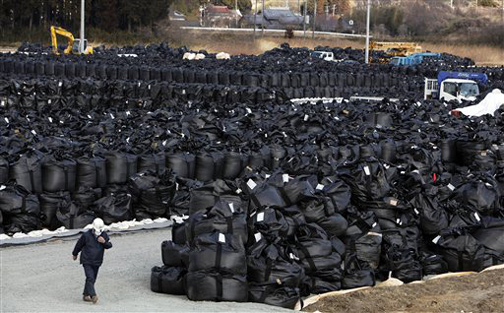
Being that the government considered the situation an “emergency,” temporary sites were set up in a number of prefectures, with the government promising landowners to only lease the land for a period of two years. The waste has been stored in polyvinyl buildings.
But the government has reneged on those promises. Shigetaro Chiba, a 73-year-old farmer who leased land to the government for two years, said, “I was made to agree to extend the lease after the initial two-year period promised by the government expired. The new contract no longer specifies a deadline.”
In 2014, the Nuclear Waste Management Organization (NUMO) started work on updating guidelines, as well as working to design, construct, and operate an underground storage facility nearly 4 square miles in area, which would be operated for 50 years and monitored for an additional 300 years before being shut down.
Work on updated guidelines for a nuclear waste site
NUMO is funded by every power company in Japan that has nuclear power plants, with their fees based on how much radioactive waste they produce each year. The agency has worked on getting communities to express interest in a waste disposal site, but have had no takers despite being told they would receive billions in subsidies.
Public Trust is one option under discussion for managing Germany’s nuclear waste storage
Minister signals German trust could handle nuclear waste storage http://uk.reuters.com/article/2015/11/29/uk-germany-nuclear-decomissioning-idUKKBN0TI0MH20151129 Germany could share responsibility for phasing out nuclear power with energy firms by setting up a publicly managed trust, the environment minister said on Sunday.
Barbara Hendricks’ comments to Deutschlandfunk radio follow calls by Germany’s top energy firms utilities on Berlin to help handle the country’s nuclear exit and set up a trust for decommissioning plants and the storage of radioactive waste.
A government-appointed commission is tasked with recommending by early 2016 how to safeguard the funding of fulfilling the exit.
The use of a public trust is one option under discussion and closely eyed by investors, as utilities would then have to transfer certain assets, most likely cash and minority stakes.
Chancellor Angela Merkel accelerated the shift away from nuclear power and fossil fuels towards renewable sources of energy such as wind, hydro, solar and biomass power afterJapan‘s Fukushima disaster in 2011.
Germany’s “big four” utilities – E.ON, RWE, EnBW and Vattenfall – have already set aside nearly 40 billion euros ($42 billion) to fund the decommissioning and waste disposal but say they cannot handle the problem on their own. Hendricks said half of provisions could remain with the utilities to pay for the dismantling of the nuclear power plants.
“And yes, if the other half was put into a publicly managed fund, so that the finances were available for finding and establishing sites for storage, then that would be progress. I would agree to that.” (Reporting By John O’Donnell and Christoph Steitz)
‘NO to nuclear waste dumping’ say 13 Japanese Prefectures
 Thirteen prefectures say no to hosting nuclear waste depository, Japan Times, 29 Nov 15 KYODO A total of 13 out of the nation’s 47 prefectures say they would refuse to host a final disposal site for highly radioactive nuclear waste, a Kyodo News survey showed Saturday.
In the survey conducted between late October and early November, 13 local governments said they would “never accept” such a facility, eight sounded negative, while 24 declined to clarify their position and two said they will “carefully consider the possibility.” None showed a positive stance toward hosting the site.
In May, the government introduced a plan in which it will choose candidate sites for burying high-level radioactive waste based on scientific analysis, rather than waiting for municipalities to express a willingness to host a final depository.
The change of policy reflects the lack of progress made in the process of soliciting candidate sites that began in 2002 due to safety concerns.
For permanent disposal, high-level nuclear waste needs to be stored in a final depository more than 300 meters underground for up to 100,000 years until radiation levels fall and it no longer poses a threat to humans and the environment.
Among the 13 prefectures opposed to accommodating a disposal site, four host nuclear power plants…….http://www.japantimes.co.jp/news/2015/11/29/national/thirteen-prefectures-say-no-hosting-nuclear-waste-depository/#.VltoWNIrLGh
Dead nuclear reactors still leave an intractable wastes problem
Security, storage concerns linger at closed nuclear sites US regulators still seek safe site for waste, Boston Globe, By David Abel GLOBE STAFF NOVEMBER 26, 2015 VERNON, Vt. — Across from an elementary school, a short road leads to a gate topped by barbed wire and a stark sign that warns in large letters:
“Security personnel are authorized to use deadly force.”
The Vermont Yankee nuclear plant stopped producing power last year, but rigorous security measures, including heavily armed guards in bulletproof towers, are still in place and will be for decades to protect hundreds of tons of radioactive waste that remain behind the gate. The spent fuel will stay here along a bend of the Connecticut River, just 10 miles from the Massachusetts border, until the federal government can resolve a decades-old political battle over where to store the waste from the nation’s nuclear plants.
Across the United States, there are 22 decommissioned plants that have become heavily guarded repositories of spent fuel, their owners waiting indefinitely for a federal decision on where to permanently store the radioactive waste. About 150 miles away in Plymouth, Mass., the Pilgrim Nuclear Power Station will enter the same phase after it closes sometime in the next four years and moves its waste into massive casks.
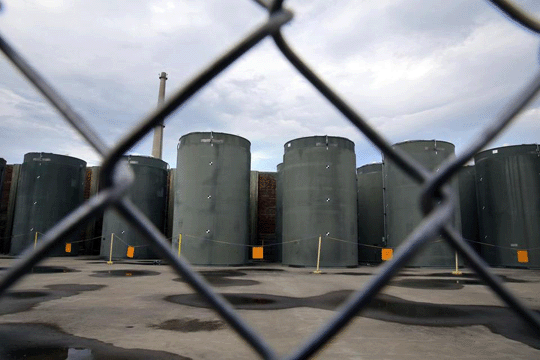
The issue of nuclear waste has long been a political quandary, one that has become increasingly urgent as more of the nation’s aging nuclear plants are shuttered…….
“We don’t think Yucca Mountain will be a viable approach,” said Secretary of Energy Ernest Moniz during a recent meeting with reporters and editors at the Globe.
Moniz said his staff is reviewing a proposal to build a temporary storage site in Andrews County, Texas, which already hosts two radioactive waste disposal facilities. The government will also have to overcome concerns and potential challenges over transporting the fuel through a variety of jurisdictions.
Until then, the waste will remain atop specially built concrete pads at the nation’s nuclear plants. That means the properties cannot be redeveloped for other uses, major security measures will remain in force at sites scattered across the country, and many of their neighbors will continue to live in fear.
“We’re talking about a colossal amount of dangerous waste,” said Deb Katz, executive director of Citizens Awareness Network, who lives 18 miles from Vermont Yankee. “The radioactive plume from an accident could travel more than 100 miles within 24 hours, depending on which way the wind blows.”
Entergy Corp., a Louisiana-based conglomerate that owns the plants in Vernon and Plymouth, plans a decommissioning process at Pilgrim similar to the one it has started at Vermont Yankee.
On its compact campus in Vernon, Vermont Yankee’s remaining 285 employees — about 600 people worked at the plant until last December — have transferred all of the remaining fuel to a 37-foot-deep pool suspended seven stories above ground in a concrete containment building. There are 2,996 spent fuel assemblies cooling in the pool.
After they’re moved into safer, dry storage, the plant will have 58 of the 18-foot-tall, 300,000-pound casks on the outdoor pad along the Connecticut River.
Activists who live near Vermont Yankee have urged the plant to move the spent fuel more quickly from the pools, which they fear could catch fire if an earthquake or other natural disaster caused a leak or cut power to the plant. They have also raised concerns about storing the casks closely together out in the open, rather than below ground or in a hardened building.
“Should someone be interested in shooting them up, they’re sitting ducks,” said Nancy Braus of the Safe and Green Campaign in Brattleboro. “They’re easy targets, very visible.”………. David Abel can be reached at dabel@globe.com. Follow him on Twitter @davabel. https://www.bostonglobe.com/metro/2015/11/26/the-long-road-decommissioning-nuclear-power-plant/k5VWUQzLKCIz2VuYs8RhoO/story.html
Russia now plans to store nuclear wastes on Arctic islands !
 Has the world gone crazy? Particularly Russia! What right do they have to impose this poisonous trash on Arctic islanders? And where radioactive pollution will further endanger the ocean? Have they not heard of climate change? Of rising sea levels? Have ANY nuclear powers ever entertained the thought of just stopping making radioactive trash for which there is no real solution?
Russia plans to build radioactive waste storage on Arctic islands of Novaya Zemlya http://tass.ru/en/economy/839293 November 25, 2015
Until 1992, the waters off the coast of the archipelago of Novaya Zemlya had been the main area for sinking solid radioactive waste from the Soviet nuclear vessels based in the North ARKHANGELSK, November 25. /TASS/. Russia’s Rosatom state nuclear corporation intends to build a low-and medium-level radioactive waste disposal facility in the area of the Novaya Zemlya archipelago. Rosatom’s relevant request is to be considered on Wednesday by deputies of the Arkhangelsk regional assembly.
The press service of the regional assembly reported that before the session the lawmakers held a roundtable discussion to discuss the project. Deputy head of Rosatom department for work with regions Andrei Polosin said: “We do not plan to build this facility right now. We just need a permission to conduct additional studies.” “To get started, we need seven years. It’s a very big project, requiring many different approvals,” he added.
According to experts, about 50 tonnes of radioactive waste from the operation of nuclear-powered submarines in Severodvinsk have been accumulated in the Arkhangelsk region. The construction of a waste disposal facility on Novaya Zemlya would attract additional investment to the region and create new jobs.
Until 1992, the sea off the coast of the Arctic archipelago of Novaya Zemlya had been the main area for sinking solid radioactive waste from the Soviet military and civilian nuclear vessels based in the North. A total of about 17,000 containers with solid radioactive waste, as well as 16 nuclear reactors from submarines and icebreakers were sunk in the Arctic. In 1982, the K-27 emergency nuclear submarine with unloaded reactor was sunk in Stepovoi Bay. The radiation situation in these areas is regularly monitored by expeditions of the Emergency Situations Ministry and the Russian Academy of Sciences. According to their data, solid radioactive waste dumped during the Soviet years off the coast of Novaya Zemlya at present poses no threat to the environment, but requires constant monitoring
Nuclear waste storage in rock salt not as safe as they thought
Nuclear waste storage sites in rock salt may be more vulnerable than previously thought, Phys Org
November 26, 2015 Research from The University of Texas at Austin shows that rock salt, used by Germany and the United States as a subsurface container for radioactive waste, might not be as impermeable as thought or as capable of isolating nuclear waste from groundwater in the event that a capsule or storage vessel failed.
A team of researchers from the university has used field testing and 3-D micro-CT imaging of laboratory experiments to show that rock salt can become permeable. Their findings, published in the Nov. 27 issue of Science, has implications for oil and gas operations, and, most notably, nuclear waste storage. The team includes researchers from the university’s Cockrell School of Engineering and Jackson School of Geosciences.
“What this new information tells us is that the potential for permeability is there and should be a consideration when deciding where and how to store nuclear waste,” said Maša Prodanovic, assistant professor in the Department of Petroleum and Geosystems Engineering. “If it’s an existing nuclear waste storage site, you may want to re-evaluate it with this new information.”
Salt generally blocks fluid flow at shallow depth, a feature that allows oil reservoirs to form. But scientists have long suspected that salt becomes permeable at greater depth. Jackson School professor James E. Gardner confirmed this theory through laboratory experiments with synthetic rock salt……
The critical takeaway is that salt can develop permeability, even in absence of mining activity,” said assistant professor Marc A. Hesse of the Jackson School’s Department of Geological Sciences. “Further work is necessary to study the quantity of flow that can occur.”
The Waste Isolation Pilot Plant, in Carlsbad, New Mexico, stores low-level nuclear waste in salt beds beneath the ground. However, high-level waste from the nation’s nuclear energy sector is stored at the power plants in pools or dry casks, methods that are considered temporary solutions. For decades there has been a proposal to build a permanent central repository under Nevada’s Yucca Mountains, but that proposal has stalled because of political and regulatory hurdles. This has renewed interest in rock salt as an alternative permanent storage solution for high-level nuclear waste. In this context, the findings of the team from UT Austin provide a timely reminder that rock salt is a dynamic material over long timescales.
Ghanbarzadeh hopes that “our discovery encourages others to ask questions about the safety of current and future disposal sites.” http://phys.org/news/2015-11-nuclear-storage-sites-salt-vulnerable.html#jCp
Nuclear giants AREVA and Hitachi to help dismantle Japan’s nuclear recators
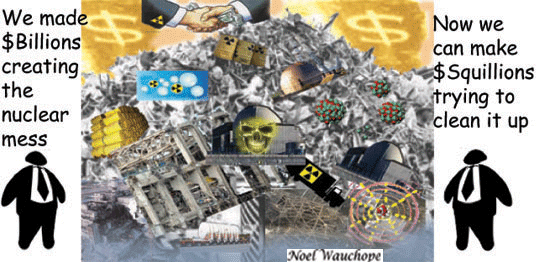
Areva was involved in the Fukushima clean-up, but that reactor is not covered by the new agreement, the French group said in a statement. It has been working with Hitachi to improve Japanese reactors’ safety for the past two years.
Areva’s role will now be to participate in preliminary studies for dismantling boiling-water reactors.
Prime Minister Shinzo Abe’s government has been pushing for a return to nuclear power to generate electricity after Japan’s several dozen reactors went offline in the wake of the 2011 disaster.
The resource-poor nation’s energy bill has soared since it was forced to turn to fossil-fuel imports to plug the gap.
But the Japanese public remains wary of atomic power, and Abe’s push has prompted rare protests and damaged his popularity.
1 This Month


31st January – Challenging the War Machine – a DECLASSIFIED UK SUMMIT


Website of the Week
Now until to February 10, 2026 Radioactive waste storage in France: the debate is finally open! How to participate?
-
Archives
- January 2026 (227)
- December 2025 (358)
- November 2025 (359)
- October 2025 (377)
- September 2025 (258)
- August 2025 (319)
- July 2025 (230)
- June 2025 (348)
- May 2025 (261)
- April 2025 (305)
- March 2025 (319)
- February 2025 (234)
-
Categories
- 1
- 1 NUCLEAR ISSUES
- business and costs
- climate change
- culture and arts
- ENERGY
- environment
- health
- history
- indigenous issues
- Legal
- marketing of nuclear
- media
- opposition to nuclear
- PERSONAL STORIES
- politics
- politics international
- Religion and ethics
- safety
- secrets,lies and civil liberties
- spinbuster
- technology
- Uranium
- wastes
- weapons and war
- Women
- 2 WORLD
- ACTION
- AFRICA
- Atrocities
- AUSTRALIA
- Christina's notes
- Christina's themes
- culture and arts
- Events
- Fuk 2022
- Fuk 2023
- Fukushima 2017
- Fukushima 2018
- fukushima 2019
- Fukushima 2020
- Fukushima 2021
- general
- global warming
- Humour (God we need it)
- Nuclear
- RARE EARTHS
- Reference
- resources – print
- Resources -audiovicual
- Weekly Newsletter
- World
- World Nuclear
- YouTube
-
RSS
Entries RSS
Comments RSS
 nuclear-news