Cumbria Trust 2nd April 2019 At the Silloth Town Council meeting held on 11 March 2019 it was
“RESOLVED that a letter be sent to say that Silloth Town Council will not
be volunteering to be a site for a GDF and that we don’t want it in our
area” which was in response to The Radioactive Waste Management –
Consultation on how they will evaluate potential sites for a GDF in the
future in England and Wales.
https://cumbriatrust.wordpress.com/2019/04/02/its-definitely-no-to-a-gdf-from-silloth-town-council/
April 4, 2019
Posted by Christina Macpherson |
opposition to nuclear, politics, UK, wastes |
Leave a comment
As safety board cites quakes, Perry says Nevada nuke sites safe By Gary Martin / Las Vegas Review-Journal, April 2, 2019
|
 WASHINGTON — Energy Secretary Rick Perry acknowledged Tuesday that the Nevada National Security Site — where weapons-grade plutonium is being stored — and the proposed Yucca Mountain nuclear waste repository are located in an area considered a seismic hazard. WASHINGTON — Energy Secretary Rick Perry acknowledged Tuesday that the Nevada National Security Site — where weapons-grade plutonium is being stored — and the proposed Yucca Mountain nuclear waste repository are located in an area considered a seismic hazard.
But he insisted that the facility where the half metric ton of plutonium is being held is secure and that Yucca Mountain would be a safe site to store waste…….
Safety board report
Perry told Cortez Masto the facility was secure. Cortez Masto raised concerns by the Air Force and other entities about the safety of storing plutonium at the facility and opening a nuclear waste repository in a region with current seismic activity.
Cortez Masto grilled Perry on a report first revealed by the Review-Journal in which the Defense Nuclear Facilities Safety Board outlined risks to workers and the “offsite public” because of seismic hazards to structures at the Device Assembly Facility at the security site, located about 90 miles north of Las Vegas.
“This facility continues to operate without accounting for the increase in seismic hazard and without evaluating whether the credited structures, systems and components can perform their safety function during and after a seismic event,” wrote Bruce Hamilton, chairman of the Defense Nuclear Facilities Safety Board, in the board’s report.
The board noted that concerns about seismic hazards at the Device Assembly Facility in Nevada were first raised in 2007.
Earthquake faults near Yucca
Cortez Masto raised the most recent U.S. Geological Survey report, issued in 2008, which lists the area that includes the Nevada security site and nearby Yucca Mountain as one of moderate to high seismic hazard.
Two faults, the Northern Death Valley and the Black Mountains, are located west of the Nevada security site and the proposed nuclear waste storage facility. According to the USGS, one of the strongest recent earthquakes in the state occurred on June 29, 1992, at Little Skull Mountain in the southwest portion of the Nevada security site and about 12 miles east of Yucca Mountain. That earthquake registered magnitude 5.6.
The safety board report noted that the Device Assembly Facility has “high explosives co-located with special nuclear material.”
Cortez Masto said the seismic hazards cited in the report should also be taken into account in the administration’s attempt to restart license hearings on the Energy Department’s application for Yucca Mountain.
Site is unsafe
Sisolak agreed with Cortez Masto in a statement.
“As the Defense Nuclear Facilities Board — a federal safety board — pointed out recently, earthquake risks make the Nevada National Security Site unsuitable for plutonium and make Yucca Mountain unsuitable for nuclear waste,” he said.
Cortez Masto also asked Perry about President Donald Trump’s flip-flop on Yucca Mountain during a campaign event in Nevada last year, where he said he agreed that a nuclear waste dump should not be located in the state if the residents don’t want it.
“What we all have to recognize here is that Yucca Mountain is the law,” Perry answered. “I’m going to follow the law. The president is going to follow the law. His opinion of whether or not the people of Nevada like it or not doesn’t have anything to do with what the statute says.”
Cortez Masto replied that the Obama administration had taken a different approach, preferring a consent-based plan to store nuclear waste in an area where residents didn’t oppose it.
And she told the secretary the 1987 law that focused only on Yucca Mountain to store waste was a decision that “shows extreme political influence was used to scapegoat the state of Nevada.”……….. https://www.reviewjournal.com/news/politics-and-government/as-safety-board-cites-quakes-perry-says-nevada-nuke-sites-safe-1631919/
|
|
April 4, 2019
Posted by Christina Macpherson |
politics, USA, wastes |
Leave a comment
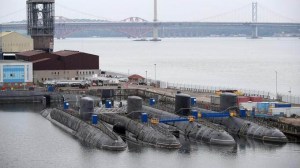 Times 3rd April 2019
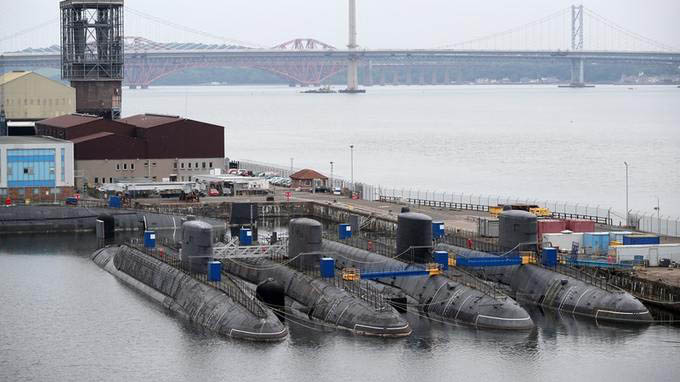
 Delaying the disposal of the Royal Navy’s retired submarine fleet has
cost the taxpayer £900 million, according to the Whitehall spending
watchdog. None of the 20 submarines that have left service since 1980 has
been fully defuelled or dismantled.
They include HMS Conqueror, which sank
the General Belgrano in the Falklands conflict in 1982, and the four
Polaris vessels that carried Britain’s nuclear deterrent until the
mid-1990s.
A National Audit Office report published today says that while
it is expensive to scrap the submarines, at £96 million per boat, delaying
the disposal programme is also costly, adding £900 million to the total
bill so far. Each decommissioned submarine costs £12 million a year to
store and maintain.
Meg Hillier, chairman of the Commons public accounts
committee, heaped scorn on the “dismal lack of progress” and
“spiralling costs”. She told the Ministry of Defence (MoD) to “get a
grip urgently before we run out of space to store and maintain submarines
and we damage our reputation as a responsible nuclear power”.
The budget
for the programme to dismantle retired submarines and remove their
radioactive parts has soared by £800 million, or 50 per cent, due to a
15-year delay in rolling out a tested approach. In addition, the 11-year
delay in the project to remove irradiated fuel from the nine retired
nuclear submarines has seen the budget rise by £100 million, or 57 per
cent. Regulators halted the defuelling of submarines in 2004 after
government facilities failed to meet required standards. The process is not
due to start again until 2023.
April 4, 2019
Posted by Christina Macpherson |
UK, wastes, weapons and war |
Leave a comment

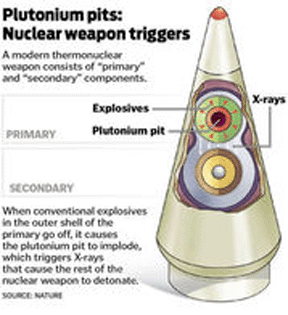
Dangerous history of pit production https://www.aikenstandard.com/opinion/guest-column-dangerous-history-of-pit-production/article_a22aa6b8-4ab2-11e9-83dc-7b695e05d8a7.html Dr. Rose O. Hayes
Recent comments on the proposed pit production at Savannah River Site warrant a cautionary comment. All is not wonderful news where pit production is concerned. It has a very dirty past. Awareness of that past is paramount to the protection of CSRA public health and safety.
The primary U.S. plant to smelt plutonium, purify it and shape it into “triggers” (pits) for nuclear bombs was Rocky Flats Nuclear Weapons Site. From 1952 to 1989, Rocky Flats manufactured more than 70,000 pits at a cost of nearly $4 million apiece. Each one contained enough breathable plutonium particles to kill every person on earth. Virtually all of the waste produced there remains on-site. As we have learned through the SRS waste storage struggles, there is no place for it to go and no government plan to develop a repository. What’s made at a nuclear processing plant, stays at the nuclear processing plant.
Much went wrong at Rocky Flats due to mismanagement, criminal government indifference and public complacency. It took more than 30 years for the public to become so concerned with the pollution hazards issuing from the plant before the Department of Energy (DOE) was forced to hold a public meeting in 1988 to address the problems. One example: The plant produced one boxcar a week packed with 140 drums of radioactive waste. They were parked on site. Moisture penetration of a drum could have triggered an explosion. Ground water, soil and air pollution were also major hazards. A subsequent DOE study indicated that Rocky Flats was the most dangerous site in the country.
On June 6, 1989 more than 70 FBI and EPA agents raided the plant to begin an official investigation of the contractor and DOE for environmental crimes. The plant manager acknowledged that problems were solved “when DOE wanted to pay for them.” The final FBI/EPA allegations included concealment of environmental contamination, false certification of federal environmental reports, improper storage and disposal of hazardous and radioactive waste, and illegal discharge of pollutants into creeks flowing to drinking water supplies. Another independent study found there was enough lost plutonium in the plant exhaust ducts to create the possibility of an accidental nuclear reaction. According to a later DOE report, about 62 pounds of plutonium was lost in the plant air ducts; enough for seven nuclear bombs.
A grand jury was convened to hear the case on Aug. 1, 1989. The contractor argued in court that it could not fulfill its DOE contract without also violating environmental laws. In order to remediate the damage, on Sept. 28, 1989, EPA added Rocky Flats to its Superfund cleanup list. The grand jury worked until May 1991, then voted to indict the plant contractor, five employees and three individuals working for DOE.
The Department of Justice refused to sign the indictments despite more than 400 environmental violations that occurred during the decades of pit production at the plant. All charges were dropped. A settlement guaranteed the contractor and all indicted individuals immunity. Although the contractor pleaded guilty to criminal violations of the federal hazardous waste law and the Clean Water Act, the fine was only $18.5 million, less than the corporation had collected in bonuses for meeting production quotas that year. The contractor’s annual fee to run the site was estimated at $10 million, with an additional $8.7 million paid from DOE for management and safety excellence.
The contractor was also allowed to sue for reimbursement of $7.9 million from taxpayers for fees and costs related to its case. In addition, the contractor’s plea agreement indemnified it from further claims and all future prosecution, criminal or civil. The trial records are permanently sealed. Further, the contractor argued that everything it did at Rocky Flats was at the behest of DOE and maintained the right to receive future government contracts.
Grand jury members asked to write their own report but the judge refused to read it or release it to the public. Not surprisingly, the report was leaked to the press and printed in a Denver newspaper and Harper’s magazine. In January 1993, a Congressional committee finally issued a report revealing evidence of high-level intervention by Justice Department officials for the purpose of reducing the contractor’s fines.
DOE has estimated that it will take until 2065 to clean up Rocky Flats, at a cost to American taxpayers of more than $40 billion. One DOE official testified to the Senate Armed Services Committee that some weapons plants, like Rocky Flats, may never be cleaned up because we lack the technology to do so at a reasonable cost. Another investigator, testifying before the U.S. Senate’s Governmental Affairs Committee, stated he did not believe it possible to reverse the harm done at Rocky Flats.
Could this history repeat itself at SRS? Without a comprehensive cradle to grave plan with built-in irrevocable government funding and independent oversight, including citizen stakeholder input, SRS could become the next Rocky Flats. How likely is the government to attach such planning and funding to an SRS pit processing campaign? Past experience at SRS includes years of having to do best guess planning under continuing resolution funding and government failures to pass a budget, decades of “temporarily” storing deadly radioactive waste due to the government’s failure to meet off-site disposition commitments, budget reductions, program cancellations (most recently, the MOX project), and more.
Plutonium pit production waste is not just radioactive. It is nuclear waste on steroids. If produced here, it will likely remain in our backyard, along with all the decades old waste at SRS. There is no place for it to go. Looming large as examples of the dangers and difficulties SRS will face in having pit production waste moved off-site are the explosion and prolonged closure at the New Mexico Waste Isolation Pilot Plant (the government’s only operating repository) and the abandonment of the Yucca Mountain project.
Is it the CSRA’s responsibility to take on this mission? Pit production, while bringing jobs to the Aiken/Augusts area, will add to the decades old SRS hazards waiting for DOE remediation. SRS is already part of the DOE nuclear complex cleanup program. That mission, 30 some years old, drags on under the burden of DOE mismanagement and variable federal funding. Estimates are it will take another 70 years to clean up the DOE nuclear complex and cost about $500 billion more. Celebration of plans to add U.S. pit production to SRS is a rush to judgement. Only the usual corporations, living large off gigantic federal awards, stand to benefit.
Dr. Rose O. Hayes is a medical anthropologist who spent her career in public health. She holds a B.S., M.S., M.A., and Ph.D. from SUNY and completed post-doctoral work in skeletal biology at The George Washington University. From 2009 to 2015, she served on the U.S. Department of Energy Site-Specific Advisory Board for the Savannah River plant, chairing its Nuclear Materials Committee.
April 1, 2019
Posted by Christina Macpherson |
- plutonium, history, legal, Reference, safety, USA |
Leave a comment
 With Pilgrim Nuclear Plant Set To Retire, There Are Questions About Decommissioning Trust Fund WBUR,March 27, 2019, Miriam Wasser
As Plymouth’s Pilgrim Nuclear Power Station prepares to shut down for good, questions are emerging about its nuclear decommissioning trust fund. This is money set aside for “decommissioning” the plant — removing the spent fuel and making the land safe for eventual unrestricted use.
The trust fund is like a 401(k) for retired nuclear plants; ratepayers contribute money into a conservatively managed account that accrues interest over time. Pilgrim’s fund was worth about $1.05 billion in October 2018. It cannot be accessed until the plant permanently shuts down.
The big questions about the trust fund: What can plant owners spend the money on? And will there be enough to cover the cost of decommissioning?
Surprisingly, the federal Nuclear Regulatory Commission (NRC) has no specific regulations on how plant owners can spend trust fund money, only guidelines.
Also surprising: A plant owner also needs an exemption from the NRC to use the money for “spent fuel management” and “site restoration” — the bulk of the decommissioning work — but not for paying the host community what essentially amounts to property taxes.
This all came to light at recent public meetings in Plymouth about Pilgrim, which is supposed to shut down by June 1. The state-appointed Nuclear Decommissioning Citizens Advisory Panel (NDCAP) questioned a representative of Holtec International, the New Jersey-based company that wants to buy Pilgrim from its current owners, Entergy Nuclear Operators, about the company’s  finances. …….
Everybody who’s a resident of Plymouth, including all of our town meeting members, should understand that the intention of both Entergy and Holtec is to take ratepayer money to pay their taxes,” said NDCAP Chairman Sean Mullin. ……. https://www.wbur.org/earthwhile/2019/03/27/pilgrim-decommissioning-trust-fund-pilot-taxes-plymouth
March 30, 2019
Posted by Christina Macpherson |
decommission reactor, USA |
Leave a comment
 Daily Post 22nd March 2019 , Any plans to find a site to store nuclear waste in Denbighshire will be strongly resisted despite an offer of £1 million just to listen to a government pitch for the plans. The UK government is searching for sites that will allow nuclear waste to be buried.
As part of the process county councils have been offered £1 million to listen to the government sales pitch for the scheme. If a council agrees to the start of work on taking in the waste they will be then given £2.5 million if authorities take part in
the planning stage. Denbighshire councillors will be presented with details of the scheme when they meet next week but already opposition councillors have said there is no way they would support such a move.
https://www.dailypost.co.uk/news/north-wales-news/1m-sweetener-store-nuclear-waste-16015159
March 25, 2019
Posted by Christina Macpherson |
UK, wastes |
Leave a comment

Trump administration calls for sharp drop in Hanford nuclear reservation spending , https://www.tri-cityherald.com/news/local/hanford/article228065049.html#storylink=cpy Tri City Herald, BY ANNETTE CARY,  18 Mar 19,
-The Trump administration is proposing cutting Hanford nuclear reservation spending for fiscal 2020 by $416 million.
The nuclear reservation’s annual budget would drop from about $2.5 billion this fiscal year to $2.1 billion next year under the budget request submitted to Congress by the administration.
The biggest hit would be to the Richland Operations Office.
Its budget would drop by almost 25 percent. Current spending of about $954 million would drop by about $236 million to $718 million under the administration’s proposal.
The budget for the Office of River Protection would drop by almost 12 percent, or about $181 million. Spending would be reduced from almost $1.6 billion to about $1.4 billion.
Money proposed for the Office of River Protection included $715 million for the vitrification plant and $677 million for the tank farms.
A further breakdown of how the money is proposed to be spent on individual projects had not been released on Monday.
The Office of River Protection is responsible for 56 million gallons of radioactive waste in underground tanks and the $17 billion vitrification plant being built to treat much of the tank waste for disposal.
The Richland Operations Office is responsible for general operations of the site, including roads and utilities, and all other environmental cleanup, including polluted groundwater, unneeded buildings, old dump sites and contaminated soil.
CONGRESS SETS HANFORD BUDGET
The 580-square-mile site is contaminated from the past production of plutonium for the nation’s nuclear weapons program.
The administration proposes a spending amount for Hanford annually to Congress, which then sets the spending amount for the next fiscal year.
“Unfortunately, presidents on both sides of the aisle have proposed funding cuts that would slow down Hanford cleanup,” said Rep. Dan Newhouse, R-Wash. “And just as I have worked before with my colleagues through the appropriations process to restore funding, I will do so again.”
The federal government created the waste at Hanford and has a moral and legal obligation to finish cleaning up the site, he said.
In 2018 Washington’s congressional delegation was able to increase the administration’s spending proposal for the current fiscal year by about $342 million more than proposed by the Trump administration.
The proposed spending cut comes as a new estimate of remaining cleanup at Hanford at least triples the estimated cost released three years ago.
The Lifecycle Scope, Schedule and Cost Report released at the end of January puts the remaining cleanup costs for Hanford at $323 billion under a best case scenario. At worst it could be $677 billion.
The estimate before the current one put the remaining costs as of 2016 at $108 billion.
March 21, 2019
Posted by Christina Macpherson |
USA, wastes |
Leave a comment
Councillors back motion to oppose dumping of nuclear waste, The Impartial Reporter, 18th March A motion to
oppose the dumping of any toxic waste in any part of Ireland was passed unanimously by Fermanagh and Omagh District Council, however it was not without some political wrangling between Sinn Féin and the DUP.
The motion proposed by Sinn Fein’s John Feely states the Council’s opposition who said that the “dumping of nuclear waste has dire consequences for our environment and also poses a serious health risk to the population”.
Councillor Feely said the geological screening for geological disposal facilities for nuclear waste raised a number of questions such as about how much radiation would reach the surface and water sources.
He added that the proposals by the British Government showed once again “the complete and total disregard” it has for the citizens of “Fermanagh and Omagh, the North of Ireland and all its people”.
Councillor Barry Doherty seconded the motion saying everybody had obligation to ensure future generations have the opportunity to enjoy the area in the same way that people do today and Ireland should not turn into anyone’s dumping ground……..
Councillor Alex Baird said the UUP were happy to support the motion with an amendment to stop anybody dumping toxic waste in Northern Ireland.
Councillors, Shields, McAnespy and Deehan all welcomed the motion, with Councillor Deehan describing the prospect of a disposal facility for nuclear waste in the country as “chilling”…….. https://www.impartialreporter.com/news/17495254.councillors-back-motion-to-oppose-dumping-of-nuclear-waste/
March 21, 2019
Posted by Christina Macpherson |
Ireland, politics international, UK, wastes |
Leave a comment
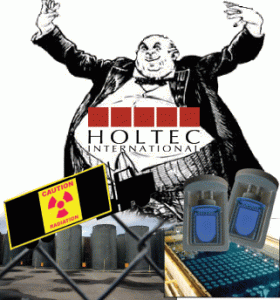 The Energy Mix 10th March 2019
 On the anniversary of the 2011 Fukushima nuclear disaster, investigative
journalist Paul McKay reveals that the trade in radioactive waste is
becoming a lucrative opportunity for SNC-Lavalin and its U.S. partner.
If it is true that one person’s garbage can be another’s gold, then
Montreal-based multinational SNC-Lavalin and its new U.S. partner, Holtec
International, plan to be big global players in what promises to be a very
lucrative, long-term business: handling highly radioactive nuclear wastes
until permanent disposal methods and sites might be found, approved, and
built.
That problem is pressing because the volume of spent reactor fuel is
cresting in the U.S., Canada, Europe, China, India, Russia, and Japan.
There are also hundreds of intensively contaminated reactors which must
sooner or later be entombed, dismantled, chopped up by robots, then sent in
special, sealed containers to interim storage sites somewhere.
But no country in the world has yet found a proven, permanent solution for the 250
million kilograms of spent fuel now in limbo in storage pools and
canisters, let alone the atomic furnaces which created them. There are now
about 413 operable civilian reactors in 31 countries, and another 50 under
construction. Physics tells us precisely how “hot” atomic garbage is.
Every commercial power reactor—regardless of model, type, country, or
owner/operator—contains the radioactive equivalent of many atomic bombs
locked within its spent fuel, reactor core, pumps, valves, and extensive
cooling circuits.
https://theenergymix.com/2019/03/10/hot-garbage-grifters-snc-lavalins-plan-to-turn-nuclear-waste-into-long-term-gold/
March 14, 2019
Posted by Christina Macpherson |
Canada, wastes |
Leave a comment
Germany’s atomic phase-out: How to dismantle a nuclear power plant https://www.dw.com/en/germanys-atomic-phase-out-how-to-dismantle-a-nuclear-power-plant/a-47823766– 11 Mar 19, Germany now has just seven nuclear plants left in operation, but what becomes of those that are already decommissioned? Bits of them are recycled, and could ultimately end up in our kitchens.
When Egbert Bialk looks at the giant demolition robot perched on top of the cooling tower at the Mülheim-Kärlich nuclear power plant, it makes him happy.
“Happy that the eyesore is finally being dismantled,” he told DW. “Some said we should leave it standing as a memorial or piece of art. But for me the tower is like a symbol of humanity’s arrogance, of us playing with fire.”
Bialk began campaigning against the reactor when it was built near his home in the 1970s, and has since joined the local chapter of environmental group BUND to observe the 1 billion euros ($1.2 billion) decommissioning of the facility.
The dismantling of the western German plant, which will take two decades to complete, started in 2004, seven years before the Fukushima disaster that prompted Angela Merkel’s government to announce the nation’s complete withdrawal from nuclear power by 2022.
With just a couple of years to go before that deadline, seven plants are still in operation, and even after they’ve shut down for good, it will take many more years before all the country’s reactors have been safely dismantled, and contaminated sites cleared and deemed free of radiation
One of the most pressing questions during this lengthy process, is what to do with the radioactive waste?
Buried in mines
The first things to be removed are the heavily contaminated spent fuel rods, which contain the nuclear fuel that is converted into electrical power.
Because Germany doesn’t yet have a long-term depository for highly radioactive waste, the rods are currently stored in so-called Castor containers in several locations across the country.
By the time all the nation’s reactors have been decomissioned, there will be around 1,900 such containers in interim storage. And there they will remain until a suitable location for their permanent resting place has been found
Read more: Nuclear waste in disused German mine leaves a bitter legacy
“We expect the storage phase to take 50 years,” Monika Hotopp, spokeswoman of BGE told DW.
Exactly what it will all cost, is unknown. Much depends on the ultimate location, but the 4.2 billion euro preparations of a former iron ore mine known as pit Konrad to be used as the final depository for low- and intermediate-level radioactive waste could serve as some kind of indicator.
Once things like technical equipment and parts of buildings exposed to nuclear fission reaction for years, have been buried in the mine, it will be filled up with concrete and sealed.
“When sealed, it’s safe and there should be no danger of nuclear radiation for the environment,” Hotopp told DW.
Environmental groups however, warn that nuclear waste remains a threat even when buried deep under the ground.
“The depositories have to be able to contain radiation for up to 500,000 years,” local environmentalist Bialk told DW. “We are giving a time bomb to future generations.”
Building materials recycled into roads and pots
And what happens to the rest of the waste? The hundred of thousands of tons of metal, concrete, pipes and other building materials that accumulate during the dismantling process?
Because under German law, the entire plant, including offices and the canteen, are considered radioactive, no single item can be removed before operators can prove it is no longer contaminated. Once considered free of radiation or at least to be below the safety limit, the waste can be disposed of at regular landfills and recycling sites.
Environmental groups and locals criticize this practice, on the grounds that once materials have been recycled, nobody knows where they end up. Concrete from nuclear power plants could be used to pave our roads, while metals could be melted and turned into pots and pans.
“Melted metals could even be turned into braces for kids; they could be contaminated by radiation and no one would know,” he told DW. “I think it would be useful to track where the materials from nuclear sites end up.”
But experts don’t regard post-decommissioning monitoring as necessary.
“The risks are minimal,” Christian Küppers, who specializes in nuclear facility safety at the environmental research center Oeko-Institut, told DW. “The safety limits for radiation correspond to what we are naturally exposed to in the environment,”
All the material from nuclear power plants that expose radiation below 0.01 millisieverts per year can be recycled, Küppers continued.
By way of comparison, the Oeko- Institut says people are exposed to natural radiation of 2.1 millisieverts per year in Germany, and a one-way transatlantic flight exposes those on board to between 0.04 and 0.11 millisieverts of radiation.
From nuclear site to “greenfield”
Once the nuclear power plants have been completely dismantled, all the waste removed and when there is no longer any measurable trace of radiation, the premises can be returned to greenfield status.
At this point, the premises are considered to be regular industrial sites, and can be sold as such.
Likewise pit Konrad. Once the mine has been closed and sealed, which is expected to happens around the year 2100, the land on top of it will also be returned to greenfield space. Theoretically, houses could then be built on it.
Whether anybody would want to live there, is another question, says Monika Hotopp from BGE, the federal company in charge of the long-term storage sites.
Because ultimately, nuclear power has become synonymous with danger. And as Bialk puts it, even when all the plants have been dismantled and the waste stored, the problem won’t have gone away.
“First, the radioactive waste remains dangerous for hundreds of thousands of years. Second, other countries still rely on nuclear power,” he said. “There are more than 50 nuclear power plants in France alone, and if an accident were to happen there, it would affect us, too.”
March 12, 2019
Posted by Christina Macpherson |
decommission reactor, Germany |
Leave a comment

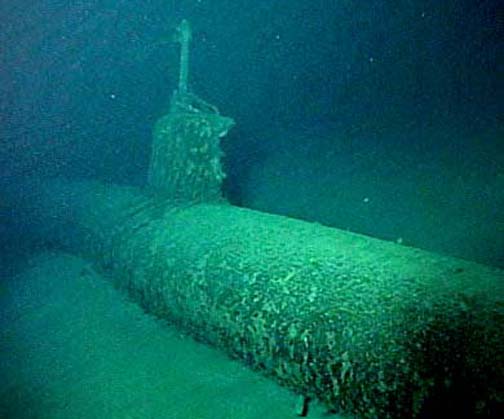
CTY Pisces – Photos of a Japanese midget submarine that was sunk off Pearl Harbor on the day of the attack. There’s a hole at the base of the conning tower where an artillery shell penetrated the hull, sinking the sub and killing the crew. Photos courtesy of Terry Kerby, Hawaii Undersea Research Laboratory. August 2003.
15,000 Feet Below the Waves Lurks Trouble: This Dead Russian Submarine Is Nuclear Armed “Unfortunately, the loss of power onboard and the difficult weather conditions were too much for the crew to overcome. On April 12, K-8 sank with some forty crew members aboard, coming to rest at a rough depth of 15,000 feet. The depth made any effort at recovering the submarine, and the nuclear torpedoes, impractical.”
National Interest, by Robert Farley, 10 Mar 19
n April 8, K-8 suffered two fires, resulting in a shutdown of both nuclear reactors. The boat surfaced, and Captain Vsevolod Borisovich Bessonov ordered the crew to abandon ship. Eight crew members, trapped in compartments that were either flooded or burned out, died in the initial incident. Fortunately, a Soviet repair vessel arrived, and took K-8 under tow. However, bad weather made the recover operation a difficult prospect. Much of K-8’s crew reboarded the submarine, and for three days fought a life-and-death struggle to save the boat. Although details remain scarce, there apparently was no opportunity to safely remove the four nuclear torpedoes from K-8, and transfer them to the repair ship.
The Bay of Biscay is one of the world’s great submarine graveyards. In late World War II, British and American aircraft sank nearly seventy German U-boats in the Bay, which joined a handful of Allied and German subs sunk in the region during World War I. On April 12, 1970, a Soviet submarine found the same resting place. Unlike the others, however, K-8 was propelled by two nuclear reactors, and carried four torpedoes tipped by nuclear warheads……… https://nationalinterest.org/blog/buzz/15000-feet-below-waves-lurks-trouble-dead-russian-submarine-nuclear-armed-46652
March 10, 2019
Posted by Christina Macpherson |
France, wastes, weapons and war |
Leave a comment

 Act would give states voice on nuclear waste dumps, Las Vegas Sun, March 5, 2019 The Nuclear Waste Informed Consent Act would require approval of the governor and impacted local governments and tribes before any money could be spent on a nuclear waste repository from the federal Nuclear Waste Fund. The act would be applicable to all states.
The act was introduced by most of the Nevada delegation, including U.S. Sens. Catherine Cortez Masto and Jacky Rosen and U.S. Reps. Dina Titus, Susie Lee and Steven Horsford, all Democrats.
Members of Nevada’s congressional delegation are attempting to ensure states have a voice in the construction of nuclear waste repositories.
Nevada is home to the dormant Yucca Mountain nuclear waste depository.
Titus, who has introduced a similar bill multiple times in the past, said the federal government should not force a waste site on any community.
“The Trump Administration’s attempt to treat our state as the dumping ground for the nation’s nuclear waste is based on dirty politics, not sound science. No state or community should have a nuclear waste dump forced upon them. I’m reintroducing this legislation as part of our strategy to put an end to the Yucca Mountain project once and for all,” she said in a statement…….
Lee, Horsford and Titus characterized Yucca Mountain as a push to turn Nevada into the nation’s dumping ground.
“I refuse to sit by and watch my community be used as a dumping ground for the nation’s nuclear waste,” Horsford said in a statement. “Yucca Mountain is an ongoing threat to the safety of Nevada families and to the Silver State’s $40 billion tourism industry.” https://lasvegassun.com/news/2019/mar/05/act-would-give-states-voice-on-nuclear-waste-dumps/
March 7, 2019
Posted by Christina Macpherson |
politics, USA, wastes |
Leave a comment
U.S. still has no place for spent nuclear fuel, so Maine Yankee’s owner gets millions
The award will help pay for the roughly $10 million per year to maintain the repository at the closed nuclear plant in Wiscasset. PressHerald, BY TUX TURKEL STAFF WRITER 3 Mar 19, For the fourth time since 1998, a federal judge has awarded the owners of three closed nuclear power plants, including Maine Yankee, millions of dollars for the federal government’s failure to remove spent nuclear fuel.
According to Connecticut Yankee Atomic Power Co., Yankee Atomic Electric Co., and Maine Yankee Atomic Power Co., the owners won a partial summary judgment last week totaling $103.2 million. Maine Yankee’s share is $34.4 million.
The award will help offset the roughly $10 million per year cost of operating an interim spent fuel storage site on plant property in Wiscasset. It will indirectly benefit ratepayers, who otherwise foot the bill. The actual financial impact hasn’t been determined, but is expected to be minimal.
In 2016, for instance, Maine Yankee was awarded about $24.6 million. Roughly $3.6 million of the total award was returned to utilities, including Central Maine Power. The balance, $21 million, went to operate the spent fuel storage site…….
Wayne Norton, president of the three companies urged Congress to authorize funding for a pilot program to remove and consolidate spent nuclear fuel and high-level waste from closed reactor sites, and to complete a review for a permanent repository at Yucca Mountain in Nevada.
Maine Yankee operated from 1972 to 1996. Although activists fought for years to close the plant, it was the company’s board that ultimately voted to pull the plug rather than fix expensive, safety-related problems.
Yankee, in Rowe, Massachusetts, closed in 1992. Connecticut Yankee shut down in 1996.
By law, the federal government is charged with coming up with a long-term solution for disposing of radioactive waste from nuclear reactors. It was supposed to begin removing waste in 1998. Facing ongoing public and political opposition, that process hasn’t happened.
Plans to build a permanent waste repository in the Nevada desert were scrapped in 2009 by President Obama. The Trump administration has sent mixed signals about whether it supports reviving Yucca Mountain.
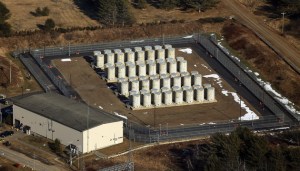 For the foreseeable future, highly radioactive fuel rods are being stored in 60 airtight steel canisters and housed in concrete casks in Wiscasset. Another four canisters hold radioactive steel from the decommissioning process. Maintaining them costs roughly $10 million a year, according to Maine Yankee.
The current award is for a period from 2013 to 2016, and the three companies are seeking an additional $1.2 million in costs. The federal government has 60 days to appeal the award.
Tux Turkel can be contacted at 791-6462 or at:
tturkel@pressherald.com https://www.pressherald.com/2019/02/25/judge-awards-34-million-to-offset-costs-of-storing-spent-fuel-rods-in-wiscasset/
March 4, 2019
Posted by Christina Macpherson |
politics, USA, wastes |
2 Comments
 WASHINGTON — Energy Secretary Rick Perry acknowledged Tuesday that the Nevada National Security Site — where weapons-grade plutonium is being stored — and the proposed Yucca Mountain nuclear waste repository are located in an area considered a seismic hazard.