 But is interim storage really interim?……. the communities that give the OK to build an interim storage facility may end up having the waste stuck in their backyards for decades to come.
“Until there is an idea of a long-term repository,” said Maria Korsnick, CEO of the Nuclear Energy Institute, at a recent Senate hearing, “anybody that raises their hands for that consolidated interim storage [site] is, de facto, the long-term” site.
Finding a repository for San Onofre plant’s nuclear waste is a difficult task L A Times, ROB NIKOLEWSKI
JULY 27, 2019, SAN DIEGO — Earlier this month, Southern California Edison — the operators of the now-shuttered San Onofre nuclear power plant — resumed transferring heavy canisters filled with spent fuel assemblies from wet storage pools to a newly constructed dry storage facility on the plant’s premises.
Continue reading →
July 29, 2019
Posted by Christina Macpherson |
USA, wastes |
Leave a comment

 Tepco says it will decommission nuclear reactors at Fukushima No. 2 plant https://www.japantimes.co.jp/news/2019/07/24/national/tepco-says-will-decommission-nuclear-reactors-fukushima-no-2-plant/#.XTjRFugzbIU, 24 July 19,
Tokyo Electric Power Company Holdings Inc. will decommission the Fukushima No. 2 nuclear plant, its president, Tomoaki Kobayakawa, told Fukushima Gov. Masao Ochibori at a meeting Wednesday.
The facility is the second nuclear plant that the utility company has decided to decommission after accepting it would need to shutter the nearby Fukushima No. 1 plant, which was crippled by the March 2011 earthquake and tsunami disaster in the world’s worst nuclear crisis since Chernobyl.
Tepco’s decision to scrap Fukushima No. 2, which is expected to cost some ¥280 billion ($2.6 billion), will be formally approved at the company’s board meeting later this month if local municipalities accept the plan.
The prefecture has demanded the utility scrap the reactors at Fukushima No. 2, saying their existence would hamper its reconstruction efforts. The plant has been offline since its operations were suspended due to the 2011 disaster.
If the plan goes ahead, all 10 nuclear reactors in the prefecture — four at the No. 2 plant and six at the No. 1 facility — will be scrapped.
It will also leave the utility company with only the Kashiwazaki-Kariwa nuclear plant in Niigata Prefecture and the planned Higashidori nuclear plant in Aomori Prefecture.
Kobayakawa said at the meeting, also attended by the mayors of the two towns — Naraha and Tomioka — that host the plant, that Tepco plans to build a new on-site storage facility for spent nuclear fuel from the reactors at the Fukushima No. 2 plant.
The fuel will be placed in metallic containers and cooled using a dry storage approach, according to the operator.
No decision has been made regarding final disposal of the spent fuel, raising concerns that the radioactive waste may remain on-site for a long time.
The Fukushima No.2 plant currently has around 10,000 assemblies of spent fuel cooling in pools.
July 25, 2019
Posted by Christina Macpherson |
decommission reactor, Japan |
Leave a comment
Using Commercial Satellites To Control Nuclear Weapons Is A Bad Idea — But
It’s Being Discussed Forbes, Loren Thompson 24 July 19, “……. With the collapse of the Soviet Union and the appearance of new
threats, though, the sense of urgency about nuclear security has waned. The
infrastructure supporting nuclear deterrence has decayed to a point where all three
legs of the strategic “triad”—land-based missiles, sea-based missiles and long-range
bombers—need to be replaced. Meanwhile, the architecture used to command and
control nuclear forces has changed little since the Reagan era.
Against this backdrop, the Chief of Staff of the U.S. Air Force said something curious at a meeting of
the Mitchell Institute on June 26. The institute recently produced a report focused on the need to
modernize technology for nuclear command and control. General David Goldfein opined that ongoing
efforts to network the Air Force were as relevant to control of nuclear forces as conventional forces.
In particular, he mentioned the “rapid and exciting expansion of commercial space”
as a trend that might facilitate the creation of resilient links for communicating with
nuclear forces. I was unaware of the chief’s comments until I saw a story by Mandy
Mayfield of National Defense Magazine entitled, “Air Force Wants To Utilize
Commercial Satellites For Nuclear Command, Control.” The Air Force is responsible
for most of the 200 systems comprising the nuclear command and control system, so
General Goldfein’s thoughts have to be taken seriously even if they are just random
musings.
This particular idea is dangerous.
Commercial satellites lack virtually all of the security features that would be
necessary to assure control of the nuclear arsenal in a crisis. First of all, they are not
survivable against a wide array of threats that China and Russia have begun posing
to U.S. orbital assets, ranging from kinetic attacks to electronic jamming to
electromagnetic pulse. Second, they are susceptible to cyber intrusion via their
ground stations that could impede their performance. Third, they frequently contain
foreign components, including in-orbit propulsion technology made in Russia, which
might be manipulated in a crisis or simply become unavailable during wartime.
Air Force planners presumably know all this, so why would General Goldfein suggest
relying on commercial satellites to execute the military’s most fateful decisions?
Perhaps for the same reason that the Army is backing into reliance on commercial
satellites for its next-generation battlefield networks. There are so many commercial
constellations in operation that it seems unlikely America’s enemies could shut them
all down in wartime, and they are a lot cheaper to use than orbiting dedicated military
satcoms with the requisite capacity and redundancy.
“Resilience” has become the watchword for modernizing military space activities, and
one way of creating resilience is to proliferate the pathways available for vital
communications to a point where adversaries can’t keep up with all the possible
options available to U.S. commanders. The same logic is leading technologists to
propose large numbers of cheap satellites in low-earth orbit as an adjunct to existing
military satcoms.
These “cheapsats” wouldn’t be anywhere near as capable as the secure
communications assets that Washington has placed in geostationary orbits, but there
would be so many that links could be sustained even in highly stressed
circumstances, such as the “trans-attack” phase of a nuclear war.
Or at least, so the reasoning goes.
……But the idea of relying on commercial satellites for command and control of
nuclear forces takes this reasoning a step too far, because market forces preclude
any of the hardening and other protective features that might be required in dedicated
military birds
……… think of all the ways an adversary like China might seek to interfere with
commercial satellites through their ground stations and uplinks, such as insertion of
malware via hacking and jamming of signals. ……..
https://www.forbes.com/sites/lorenthompson/2019/07/23/using-commercial-satellites-to-control-nuclear-
weapons-is-a-bad-idea-but-its-being-discussed/#2da6f0751dfa
July 25, 2019
Posted by Christina Macpherson |
USA, wastes, weapons and war |
Leave a comment
|
 This Texas Oil Town Actually Wants the Nation’s Nuclear Waste, Bloomberg
By Ari Natter and Will Wade July 24, 2019, This Texas Oil Town Actually Wants the Nation’s Nuclear Waste, Bloomberg
By Ari Natter and Will Wade July 24, 2019,
But Roberts, 29, has his eye on what he hopes will be the next big thing for the area: nuclear waste. As president of the local chamber of commerce, knows that oil booms are inevitably followed by busts.
He is supporting a plan to establish a repository in the desert about 30 miles outside of town for as much as 40,000 metric tons of highly radioactive spent nuclear fuel and waste from power plants…….
Local support for the project is strong, said County Judge Charlie Falcon, who presides over the four-member Andrews County Commissioners’ Court, which functions as the county’s board of commissioners.
The panel approved a resolution in 2015 backing the idea to accept high-level nuclear waste at the designated site, and is likely to reiterate its support with a letter in the near future, Falcon said during an interview in his chambers in the brick courthouse on Main Street.
…….. The plan by Interim Storage Partners LLC, a joint venture between Orano CIS LLC and Waste Control Specialists LLC, calls for waste to be shipped by rail from around the country. Then it would be sealed in giant concrete casks and stored above ground for as long as 100 years, or at least until a permanent repository is built.
Opponents say that could be never…….
In the meantime, the U.S. has no permanent place of its own to store radioactive material that will remain deadly for several thousand years. …
Not everyone in Andrews is on board with the idea of storing waste that can remain radioactive for thousands or even hundreds of thousands of years.
“We don’t need to put it right in the middle of the biggest oil field in the world,” said Tommy Taylor, director of oil and gas development for Fasken Oil and Ranch Ltd. of Midland, Texas, which is part of a coalition of oil and gas producers and landowners opposed to the nuclear dump.
More than 4 million barrels of crude are produced every day in the Permian Basin and drillers say a leak or terrorist attack could put the oil boom at risk. “It would shut the whole Permian down. The result would be catastrophic for us,” he said.
Said Andrews resident Elizabeth Padilla: “It only takes one accident and we would become the Chernobyl of West Texas.”
Some surrounding counties and cities have adopted resolutions against the plan. It’s also drawn opposition from national environmental groups……….
A panel of administrative judges from the Nuclear Regulatory Commission recently convened a hearing at the neighboring Midland County Courthouse and heard arguments from environmentalists, oil industry representatives and other groups. Outside, protesters gathered around an eight-foot-tall, green-and-black inflatable replica of a storage cask bearing a sign reading “Say No To Radioactive Waste.”
Kevin Kamps, an official with Takoma Park, Maryland-based group Beyond Nuclear, who drove to Midland for the hearing, said in an interview that high-level nuclear waste bound for Andrews would travel through major cities.
“The transport risks are for the entire country and they haven’t even been alerted,” Kamps said.
Other opponents expressed worry about the site’s proximity to the Ogallala Aquifer, a underground reservoir that spans eight states that supplies water for drinking and irrigation to millions of people. …..
The project has powerful backers. As Texas Governor, Rick Perry encouraged storing high level nuclear waste in the state and, as U.S. Energysecretary, he has been supportive of interim nuclear waste storage. The current governor, Greg Abbott, is opposed.
Scott State, the chief executive officer of Waste Control Specialists, which is owned by J.F. Lehman & Co., said he was optimistic the Nuclear Regulatory Commission would approve the license for the project, though additional approvals, such as plans for transporting waste, need to be approved before storage can begin, he said.
Rose Gardner, a 61-year-old grandmother who owns a floral shop in Eunice, N.M., about five miles away from the proposed nuclear dump, said she will do everything in her power to stop that from happening.
“We will appeal and appeal and appeal,” she said in an interview. “We will do whatever we have to throw a monkey wrench inside their plans to open a deadly dump.” https://www.bloomberg.com/news/articles/2019-07-24/one-texas-oil-town-actually-wants-the-nation-s-nuclear-waste
|
|
July 25, 2019
Posted by Christina Macpherson |
politics, USA, wastes |
2 Comments
Wiscasset could get $8 million for storing nuclear waste https://www.pressherald.com/2019/07/24/wiscasset-could-get-8-million-for-storing-nuclear-waste/ A bill before Congress would compensate communities who store spent nuclear fuel that the federal government has failed to remove.
BY KATHLEEN O’BRIEN, TIMES RECORD KOBRIEN@TIMESRECORD.COM 24 July 19, WISCASSET — Wiscasset could collect more than $8 million for the 64 containers of nuclear waste stored at the former Maine Yankee power plant site.
U.S. Sens. Susan Collins, R-Maine, and Tammy Duckworth, D-Illinois, introduced the Sensible, Timely Relief for America’s Nuclear Districts Economic Development (STRANDED) Act earlier this month, aimed at providing financial relief to communities like Wiscasset stuck with storing nuclear waste.
Should the Stranded Act pass, Wiscasset, home to decommissioned Maine Yankee, would be eligible to receive $15 per kilogram of nuclear waste currently being housed at the site, which is the rate for impact assistance established under the Nuclear Waste Policy Act of 1982.
There are about 542 metric tons of spent nuclear fuel stored at Maine Yankee, meaning Wiscasset would collect over $8 million from the government. According to Maine Yankee, it costs roughly $10 million per year to maintain the 64 canisters of radioactive waste.
“In the absence of a permanent (disposal) site, this will help alleviate the burden communities face and may help encourage Congress to take action on a long-term solution for nuclear waste, which is something Collins supports,” said Christopher Knight, a spokesperson for Collins.
Maine Yankee operated from 1972 to 1996. The company’s board voted to cease operations rather than invest in fixing expensive safety-related problems to keep the plant running.
The spent nuclear fuel is housed in 64 dry storage casks, which stand on 16 3-foot-thick concrete pads. Each concrete cask is comprised of a 2.5-inch thick steel liner surrounded by 28 inches of reinforced concrete.
The federal government was contractually obligated to remove the radioactive waste by 1998, but that commitment was never fulfilled.
Plans to build a permanent disposal site in the Yucca Mountains in Nevada were scrapped in 2009 by the Obama Administration. The Trump Administration has made no plans to revive the Yucca Mountains project.
A federal judge has awarded the owners of three nuclear power plants millions of dollars. This money pays for the operation of the fuel storage site so local taxpayers, including those in Wiscasset, aren’t left to foot the bill.
“The Yankee companies collectively have to date recovered about $575 million on behalf of our ratepayers in the ongoing litigation with the Department of Energy,” said Eric Howes, Maine Yankee director of public and government affairs. “Maine Yankee’s portion of the $575 million total is about $176.5 million.”
This money was amassed as a result of four separate lawsuits against the Department of Energy. When the U.S. government loses a lawsuit, the money lost comes from a Judgment Fund, which is funded by taxpayers.
“The Nuclear Waste Policy Act says those who benefit from nuclear power would be responsible for the removal of the spent nuclear fuel,” Howes said. “The cost of disposing Maine Yankee’s fuel has been fully paid for by the ratepayers. The government, however, has not met its obligation to remove the material from the site, and that’s true at every nuclear waste site in the country.”
Howes said Maine Yankee’s goal is to go out of business.
“It’s our responsibility to store this material in accordance with all the federal regulations,” Howes said. “When the government finally removes the spent nuclear fuel, we’ll go out of business, but I don’t know when that will be.”
There are 24 permanently and announced shutdown nuclear sites across the U.S. Five are in New England.
July 25, 2019
Posted by Christina Macpherson |
politics, USA, wastes |
Leave a comment
TMI nuclear plant can’t go away fast enough, some neighbors and ’79 accident survivors say, Penn Live Jul 23, By Charles Thompson | cthompson@pennlive.com
As jarring as the closure of the Three Mile Island One nuclear power station is to longtime Harrisburg-area residents, a cadre of them told Nuclear Regulatory Commission officials Tuesday they’d like the plant’s planned decommissioning to take a faster track.
It’s known in NRC lingo as DECON, and it can allow for the deconstruction, clean-up and re-use of closed nuclear plants in less than a decade, as opposed to the six decade-plus track Three Mile Island Unit One’s owners, Exelon Generation, has started planning for.
Several longtime TMI watchdogs, born of the notorious 1979 partial meltdown at the adjacent Three Mile Island Two reactor, said the desire for speed is partly a matter of good riddance, and a world-weary resignation that past promises about the troubled plant have not panned out.
“How many dog and pony shows can you (the NRC) bring to Harrisburg over the last 40 years?” asked longtime TMI activist Gene Stilp, bemoaning the fact that under the current safe storage plan the island would be a nuclear waste dump long past the lifetimes of any current residents.
Stilp called on Exelon, and elected officials who fought for TMI’s economic preservation over the last two years, to put the decommissioning on a faster track to preserve more of the region’s existing nuclear-related jobs in the short term and allow for a faster rehabilitation of the site.
“You could start getting jobs for clean-up right now,” Stilp said. “Get retrained in some fashion and set up things for that. But you could actually have jobs right now and start on that. Not just monitoring the site… Start providing jobs right now, by starting the clean-up right now.
“This bargain with the devil to store it (spent nuclear fuel) on the Susquehanna River is an abomination to the river, an abomination to the citizens who live here…. and it provides more terrorist targets in a big way.”
NRC officials noted Tuesday it is ultimately the licensee’s decision whether to put a plant into safe storage or rapid decontamination.
Exelon’s current timeline calls for the site to spend most of the next 60 years in a “dormancy” stage, in which most activity will center around storage of spent fuel, and a wait for residual contamination levels to naturally break down until major reactor buildings and components can be dismantled.
Exelon, however, has recently changed paths with other retired nuclear plants – including one in New Jersey this year……..
There are other ways to join the TMI decommissioning conversation. Written comments on the report can be submitted through Oct. 9 either:
- online to the NRC using Docket ID NRC-2019-0142 on the Regulations.gov website;
- or via mail to: Office of Administration, Mail Stop: TWFN-7-A60M, U.S. Nuclear Regulatory Commission, Washington D.C. 20555-0001, ATTN: Program Management, Announcements and Editing Staff. https://www.pennlive.com/news/2019/07/three-mile-island-neighbors-79-accident-survivors-call-for-faster-clean-up-of-closing-nuclear-reactor.html
July 25, 2019
Posted by Christina Macpherson |
decommission reactor, USA |
Leave a comment
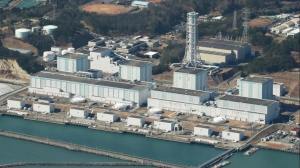
Tepco to retire remaining reactors in Fukushima https://asia.nikkei.com/Business/Companies/Tepco-to-retire-remaining-reactors-in-Fukushima Decommissioning is expected to take 40 years and cost $2.5bn SUGURU KURIMOTO, Nikkei staff writer, JULY 20, 2019 TOKYO — Tokyo Electric Power Co. Holdings will scrap the four Fukushima Prefecture reactors that escaped damage in the 2011 earthquake and tsunami, moving to decommission all of the nuclear power plants the public utility owns in the disaster-stricken region.
The shutdown of the Fukushima Daini plant, which is located just 12km away from the Daiichi Plant crippled by fuel meltdowns, will be formally authorized at the company’s board meeting at the end of the month. This marks the first decision by the utility, known as Tepco, to decommission nuclear reactors apart from the Daiichi facilities.
Costs for decommissioning Fukushima Daini are estimated to exceed 270 billion yen ($2.5 billion). While Tepco’s reserves are not enough to cover them, the government adopted new accounting rules allowing operators to spread a large loss from decommissioning over multiple years. The company also believes it has secured enough people with necessary expertise to move forward.
Tepco soon will inform Fukushima Gov. Masao Uchibori of its decision. The utility intends to submit the decommissioning plan to Japan’s Nuclear Regulation Authority by March next year.
The decision means all 10 reactors in Fukushima will be scrapped. The Daini reactors will be decommissioned in roughly 40 years, sharing the same timetable as the Daiichi site. Tepco owns one other nuclear plant, the Kashiwazaki-Kariwa facility in Niigata Prefecture.
The Daini plant, where each reactor produced 1.1 gigawatts of power, served the Tokyo area for about three decades. Japan’s central government sought to restart the complex but faced withering opposition from local residents in Fukushima.
Including the Fukushima Daini facilities, a total of 21 reactors across Japan are now slated for decommissioning. Recent additions include two units at the Ikata plant in Ehime Prefecture and one reactor at the Onagawa facility in Miyagi Prefecture.
July 23, 2019
Posted by Christina Macpherson |
decommission reactor, Japan |
Leave a comment
 Earthquakes repeatedly striking proposed US nuclear waste site
Officials fear deadly radioactivity could seep into earth if another high-magnitude quake strikes Nevada desert, Independent, Emma Snaith, 19 July 19
Repeated earthquakes could risk releasing deadly radioactivity into the earth if plans for a nuclear waste site in go ahead in Nevada’s desert, the state’s governor has warned.
Tens of thousands of tons of highly radioactive used nuclear reactor fuel are due to be transferred from 35 US states to a new facility in the Mojave Desert.
The Yuka Mountain nuclear waste repository is set to store this material deep within the earth.
But a series of recent earthquakes in the Mojave Desert has raised concerns about the safety of storing radioactive waste at the facility.
On 4 July, a 7.1 magnitude earthquake ruptured the earth in the desert, which stretches across the California-Nevada border.
The force of the quake cracked buildings, sparked fires, damaged roads and caused several injuries in southern California. It was followed by a 6.4-magnitude temblor two days later.
In the wake of the earthquakes, the governor of Nevada Steve Sisolak said he was committed to “fighting any continued federal effort to use Nevada as the nation’s nuclear dumping ground”.
“These significant recent earthquakes so near to Yucca Mountain show one of the many geologic problems with the site as a nuclear waste repository,” he said.
Mr Sisolak sent a letter to the energy secretary, Rick Perry, urging him to reconsider the location of the facility.
………. In governor of Nevada’s letter to Mr Perry, he included the opinions of James Faulds at the Nevada Bureau of Mines and Geology and Graham Kent at the seismological laboratory at the University of Nevada.
They urged for more research to be conducted into the seismic activity at the Yuka Mountain site. “The Ridgecrest earthquake sequence, which began July 4 and has yet to subside, clearly highlights the importance of such studies,” Mr Faulds and Mr Kent said.
A recent ranking compiled by the US Geological Survey found Nevada was the US state with the fourth highest level of seismic activity after Alaska, Wyoming and Oklahoma.
Additional reporting by AP https://www.independent.co.uk/news/world/americas/earthquake-nuclear-waste-radioactive-mojave-desert-nevada-yuka-mountain-a9011051.html
July 20, 2019
Posted by Christina Macpherson |
safety, USA, wastes |
Leave a comment
Nuclear waste moves from wet pools to dry storage at San Onofre
1 down, 43 to go before the plant’s cooling pools are empty and its dry storage system is full By TERI SFORZA | tsforza@scng.com | Orange County Register July 18, 2019 It took the better part of two days, but Canister No. 30 — a 50-ton behemoth full of spent nuclear waste — was successfully moved from a fuel-handling building, rolled across the bluff on a giant transporter, then inserted into its steel-and-concrete vault in the Holtec Hi-Storm UMAX dry storage system at San Onofre Nuclear Generating Station.
The delicate, deliberate dance was originally projected to wrap up by early morning Wednesday, July 17, but finished up about 6 a.m. Thursday. And as far as majority owner and operator Southern California Edison is concerned, that’s just fine and dandy……..
Critics continue to worry about the integrity of those canisters — which have scratches from their descent into the vaults — over what could be decades in the San Onofre’s salty seaside atmosphere. They demand that the waste be moved from what they deride as a “beachfront nuclear waste dump” immediately, but that requires action from a federal government that has dithered on the issue for some 70 years.
The road to here
San Onofre’s reactors powered down in 2012 after tubes in its brand-new steam generators cracked, resulting in a small radiation leak. After local opposition to restarting it appeared insurmountable, San Onofre was shuttered for good in 2013.
The plant will be dismantled – a $4 billion job that’s expected to take at least another decade – and all the spent fuel currently cooling in its spent fuel pools will be transferred to dry storage by next year…….. https://www.ocregister.com/2019/07/18/nuclear-waste-moves-from-wet-pools-to-dry-storage-at-san-onofre/
July 20, 2019
Posted by Christina Macpherson |
USA, wastes |
Leave a comment
 Bill would help Maine town offset cost of storing nuclear waste https://wgme.com/news/local/bill-would-help-maine-town-offset-cost-of-storing-nuclear-waste by The Associated Press Monday, July 15th WISCASSET, Maine (AP) — A proposal before the U.S. Senate would seek to help communities around the country that face the expensive problem of storing spent nuclear fuel.
Republican Sen. Susan Collins of Maine and Democratic Sen. Tammy Duckworth of Illinois are calling the proposal “the STRANDED Act.”
That stands for “Sensible, Timely, Relief for America’s Nuclear Districts’ Economic Development.”
The proposal calls for economic impact grants to local governments to offset the impacts of stranded waste. Communities would be eligible for $15 per kilogram of spent nuclear fuel stored.
Collins says the town of Wiscasset has endorsed the proposal. Wiscasset is the location of decommissioned Maine Yankee nuclear plant.
Collins says a permanent solution for the waste is also needed.
The co-sponsors of the bill include Maine’s other senator, independent Sen. Angus King.
July 15, 2019
Posted by Christina Macpherson |
politics, USA, wastes |
Leave a comment
 Lawmakers quietly explore storing spent nuclear fuel. Wyo File, July 12, 2019 by Angus M. Thuermer Jr. Wyoming legislative leadership voted by email Monday to explore temporarily storing spent nuclear fuel rods in the state, a prospect one senator says could bring in $1 billion a year.
A legislative committee has appointed six of its members to investigate the idea with the U.S. Department of Energy, Sen. Jim Anderson (R-Casper) told WyoFile on Friday. Anderson is co-chairman of the Joint Minerals Business and Economic Development Committee which received approval and funding from the Legislative Management Council in an unannounced vote to study the issue before the next legislative session begins in early 2020. ………
The state is looking for other revenue options, Anderson said, and “this is a way.” The federal government could pay up to $1 billion a year for the temporary storage, he said, depending on the size and scope of a Wyoming project. That’s the amount the federal government offered last time Wyoming considered the issue about 15 years ago, he said.
Anderson couldn’t immediately name the six members who serve on the subcommittee that will engage DOE, but he said it’s unlikely the group would report at the next minerals committee meeting in August. More likely there would be a presentation in November, he said……….
The spent fuel rod casks would be temporarily stored in Wyoming on their way to a permanent storage site at Nevada’s Yucca Mountain. ….
The Wyoming effort is specific regarding fuel rods only, he said. “There’s nothing here about storing nuclear waste,” Anderson said. Storage might be for 5-10 years, he said……..
The old uranium sites are out of the way, Anderson said.
“Nobody will ever see it,” he said of a storage site. “Nobody even knows where it is,” he said of the locations at Gas Hills and the Shirley Basin. “They’ll never see it and there’s no danger from the casks.”
Wyoming might have to build some infrastructure, he said, like a fence around the casks. The state could offer both the old mine sites, he said, potentially increasing revenue.
“Environmental terrorists” sure to object
Wyoming’s previous attempts to bring some types of nuclear storage to the state were blocked by environmental groups, Anderson said.
During an earlier effort to bring nuclear material to Wyoming “the environmental terrorists came out against it and stopped it in its tracks,” he said. That opposition likely remains.
“I think they’ll be back terrorizing us again,” Anderson said.
Wyoming people will likely welcome such a project, Anderson said, given the potential $1 billion or more annual revenue stream. …….
On the Management Council, Sens. Ogden Driskill (R-Devils Tower), Dan Dockstader (R-Afton), Drew Perkins (R-Casper) and Bill Landen (R-Casper) plus Reps. Greear, Albert Sommers (R-Pinedale), and Speaker of the House Steve Harshman (R-Casper) supported the minerals committee request, Obrecht wrote.
Sens. Mike Gierau (D-Jackson), Liisa Anselmi-Dalton (D-Rock Springs, Chris Rothfuss (D-Laramie) opposed the measure along with Reps. Eric Barlow (R-Gillette), John Freeman (D-Green River) and Kathy Connolly (D-Laramie), according to Obrecht’s email.
The Management Council vote was taken by email, Obrecht said. The motion includes funds to support the investigation, but WyoFile could not immediately ascertain how much.
Gierau outlined his opposition to the measure. “I like a billion dollars as much as the next guy, but some things are not for sale,” he told WyoFile. He pointed to efforts through the state’s Economically Needed Diversity Options for Wyoming and other programs to diversify the state’s economy.
“Of all the things we want to do… I just don’t see this as a winning proposition, on an environmental, social or personal level,” he said.
He noted the close vote on the Management Council and said he would continue his opposition.
“I will do my best to make sure it’s not as close on the floor,” he said. https://www.wyofile.com/lawmakers-quietly-explore-storing-spent-nuclear-fuel/
July 15, 2019
Posted by Christina Macpherson |
politics, USA, wastes |
Leave a comment
Mining Awareness 11th July 2019 The proposed nuclear waste dump for Texas is by “Interim Storage Partners“– a joint venture between Waste Control Specialists (WCS),
which was sold to J.F. Lehman, and French State owned Orano (formerly
Areva). The only good things that we can say about this plan, as opposed to
competitor Holtec, is that in the event of a nuclear waste disaster, we
know where France can be found, whereas we may not be able to find
Holtec’s Krishna Pal Singh. In the event of a leak, it will be easier to
recover an above ground canister. Both plans are dangerously unacceptable,
however.
https://miningawareness.wordpress.com/2019/07/11/us-nrc-hearing-on-dangerous-radioactive-waste-storage-in-texas-proposed-by-j-f-lehman-france/
July 15, 2019
Posted by Christina Macpherson |
USA, wastes |
Leave a comment
|
This is how Hungarian villages fought back against planned nuclear waste repositories in the 1980s https://globalvoices.org/2019/07/10/this-is-how-hungarian-villages-fought-back-against-planned-nuclear-waste-repositories-in-the-1980s/#
It has been reported several times that geological research is being conducted near the Hungarian village of Boda in order to determine whether the area is suitable for a long-term nuclear waste repository. Hungary needs a repository where it can place the spent fuel from Paks Nuclear Power Plant and the new Paks2 reactors because spent nuclear fuel cannot be transported back to Russia anymore.
The research about Boda and its suitability is not conclusive yet; however, only a few people remember that the “perfect” place for a nuclear repository has been found twice already in Hungary. But neither of them was built because locals organized and stood up against the state and the powerful nuclear plant. Here is the story of how the “small” managed to fight the huge powers over the last decade of socialism in Hungary.
Anti-nuclear waste activism behind the Iron Curtain
However, more nuclear waste repositories were needed and the search for another location was started – the process is documented by journalist and lawyer János Havasi, who published a book about the topic in 1989.
A study published in 1981 recommended four possible locations. Three were eliminated and one remained: the village of Magyaregregy. This would have been the place for low and medium-level radioactive material from Paks.
Locals were shocked and surprised – especially that they were not officially notified. They’ve heard about the plan from hearsay. Some of them secretly started to organize. One of them was Lajos Bihari, a local doctor. This is the first time he spoke about the events since then.
He told Atlatszo that the area considered for the nuclear waste repository was rich in coal and other minerals, which could not have been mined if a nuclear cemetery was built in the area. He thought that for the future of his children and grandchildren, the mineral resources needed to be protected.
He convinced the local party secretary responsible for the industry to support the cause. They convinced a deputy minister, László Kapoly to go and inspect the area; during the visit, locals convinced Kapolyi that the village was unsuitable for the nuclear waste repository.
In 1982, a study commissioned by the Ministry of Industry concluded that the area was not fit for the nuclear facility.
The reason was that the soil easily moved, water was seeping through, and there were several water springs in the area; all of these made it unfit for the facility.
It is obvious now that the decision to cancel the plans was scientifically well-founded at the time, backed by geological research. However, some locals remember it differently. Some of the older inhabitants mentioned that some of the communist party elite liked to hunt in the area, and if nuclear waste was dumped there, the hunting would have been impossible.
Another village fights back
Following Magyaregregy, the attention turned towards another village, Ófalu. Locals living near the new proposed location were not informed about the decision either. They simply noticed several heavy machines appearing in their area doing geological research. After a few town hall meetings, the plans were revealed.
Even though many scientists questioned the suitability of the area, the works proceeded, and 150 million Hungarian forints were spent on research and construction preparations. It seemed like it was a done deal.
However, a few locals started a petition, including Ferenc Wekler and his wife. According to an interview he gave to journal Beszélő, his wife pressed him to step up. First, they tried to establish an NGO, but that proved to be impossible in 1985. However, his wife did not give up; she organized town hall meetings, asked scientists to write independent opinions and founded a “social committee” with locals in the four villages near the proposed site.
“We’ve done a lot of things that were very new at that time,” he said.
Wekler says that many things contributed to their success. One of them was that the political environment was already changing in 1987. Also, they managed to find renowned experts who stood up for their opinions and who were so well-known that they could not be ignored.
Wekler also mentions the role of the press that supported the locals in Ófalu. “The press finally had a story where they could tell the story of the small guy standing up to power,” he said. The locals even asked for an opinion from Hans Blix, then-director general of the International Atomic Energy Agency.
In the end, the nuclear waste repository was not built. The final word was said after a group of independent experts concluded that the area was geologically unsuitable for the facility.
The final decision not to grant a permit to the proposed facility was announced in April 1988 and the minister of health and social affairs stated in 1990 that there wouldn’t be a nuclear cemetery in Ófalu.
Representatives of the Paks nuclear plant held a press conference in February 1990 where they said that “the locals in Ófalu were better at politics and were better at using the current political realities of Hungary to their advantage.” They added that they learned their lessons and that they will never try to construct such a waste repository without winning the support of the local population. They stressed, however, that they think that the decision to cancel the construction of the facility was political, and not scientific.
Village of Boda as the next location for nuclear waste dump
During the same press conference, it was announced that the government is starting research near the village of Boda to determine whether it is suitable for a long-term facility.
Also, a short-term waste repository was built in Bátaapáti, only a few kilometers from Ófalu. The facility officially opened in 2012.
However, the Bátaapáti construction was also controversial. Energiaklub, an NGO working on energy issues, asked the Ombudsman for Future Generations to look into the Bátaapáti construction in 2008.
According to Energiaklub project director Eszter Mátyás, the Ombudsman found irregularities in the licensing procedure of Bátaapáti – officials several times granted permits unlawfully. Also, barrels of nuclear waste had been placed in the facility before its geological suitability was proven, and before the construction of the underground holding facilities was finished.
Mátyás said that Energiaklub is closely watching what is happening in Boda as well. The stakes are high because, until now, Hungary built nuclear waste repositories for low- or medium-level nuclear waste.
Representatives of the Paks nuclear plant held a press conference in February 1990 where they said that “the locals in Ófalu were better at politics and were better at using the current political realities of Hungary to their advantage.” They added that they learned their lessons and that they will never try to construct such a waste repository without winning the support of the local population. They stressed, however, that they think that the decision to cancel the construction of the facility was political, and not scientific.
Village of Boda as the next location for nuclear waste dump
During the same press conference, it was announced that the government is starting research near the village of Boda to determine whether it is suitable for a long-term facility.
Also, a short-term waste repository was built in Bátaapáti, only a few kilometers from Ófalu. The facility officially opened in 2012.
However, the Bátaapáti construction was also controversial. Energiaklub, an NGO working on energy issues, asked the Ombudsman for Future Generations to look into the Bátaapáti construction in 2008.
According to Energiaklub project director Eszter Mátyás, the Ombudsman found irregularities in the licensing procedure of Bátaapáti – officials several times granted permits unlawfully. Also, barrels of nuclear waste had been placed in the facility before its geological suitability was proven, and before the construction of the underground holding facilities was finished.
Mátyás said that Energiaklub is closely watching what is happening in Boda as well. The stakes are high because, until now, Hungary built nuclear waste repositories for low- or medium-level nuclear waste.
The new facility, planned in Boda, will be a long-term repository for highly radioactive material including spent nuclear fuel from the Paks nuclear plant – and later, from the Paks2 reactors.
This story, written by Eszter Katus and adapted into English by Anita Kőműves was produced by Atlatzo.hu in cooperation with Energiaklub, as part of a joint investigative series on energy issues in Hungary. Company information was provided by Opten.
|
|
July 13, 2019
Posted by Christina Macpherson |
EUROPE, opposition to nuclear, wastes |
Leave a comment
DOE Was Shipping Potentially Dangerous Nuclear Waste To Nevada Site For Years
Energy officials told Gov. Steve Sisolak that the Nevada National Security Site received shipments from 2013 to 2018 that could contain “reactive” material. By Sanjana Karanth, 12 July 19
The U.S. Department of Energy shipped potentially dangerous nuclear material incorrectly labeled as low-level radioactive waste into Nevada for several years, the state’s governor announced.
A statement from Nevada Gov. Steve Sisolak (D) on Wednesday said the department sent a total of 32 shipments to the Nevada National Security Site between 2013 and 2018 that were supposed to be low-level radioactive waste from a facility in Tennessee. (The DOE told the Las Vegas Review-Journal later on Wednesday that there were actually nine shipments that had 32 containers.)
But DOE Deputy Secretary Daniel Brouillette told Sisolak on July 3 that some of those shipments may have included “reactive” material, which can release large amounts of thermodynamic energy.
Sisolak’s office said DOE officials have not confirmed that the shipments definitely contained reactive materials, which he said “would trigger additional safety concerns,” but the department did confirm Wednesday to the Review-Journal that the shipments were not in compliance with the security site’s waste acceptance criteria.
On July 5, Sisolak and Sens. Catherine Cortez Masto (D) and Jacky Rosen (D) sent a letter to Energy Secretary Rick Perry citing the risks posed to Nevada’s residents and environment and demanding that the DOE immediately correct the waste disposal mistake and create new procedures to ensure it doesn’t happen again.
“These egregious acts ― whether acts of negligence or indicative of something else ― are unconscionable and have potentially put the health and safety of Nevadans and our environment at unacceptable risk,” the letter stated.
The security site has been a place to permanently dispose of what the DOE categorizes as low-level radioactive waste, which can include materials like rags, construction debris and other equipment exposed to radioactive material. The site also takes in some forms of “mixed low-level waste,” which can contain some hazardous waste such as garbage and sludge. The governor’s office said mixed low-level waste is more strictly regulated and requires treatment prior to disposal and a more protective disposal method than low-level waste.
The shipments in question were not properly labeled to indicate which materials were low-level waste and which were more dangerous.
Federal officials, including from the National Nuclear Security Administration, gave an in-person briefing to Sisolak on Tuesday regarding the department’s findings and proposed response. During the briefing, the governor referred to an incident last year in which the DOE shipped half a metric ton of weapons-grade plutonium to the same security site and didn’t give notice until months later.
Yet again, the DOE has violated its mission, broken Nevadans’ trust and failed to follow its own compliance procedures,” Cortez Masto and Rosen said in a joint statement Wednesday. “We intend to immediately determine whether the mixed waste shipped to Nevada poses a hazard to the health and safety of Nevadans and will take every action necessary to hold the DOE accountable.”
DOE officials told the Review-Journal that they are launching an internal investigation to figure out how the shipments were miscategorized for six years, and will temporarily suspend all planned future shipments from the Tennessee facility.
July 13, 2019
Posted by Christina Macpherson |
secrets,lies and civil liberties, USA, wastes |
Leave a comment








 nuclear-news