Shuttering the Nuclear Weapons Sites: There’s Gold in Those Warheads but the Scrap Metal is Radioactive
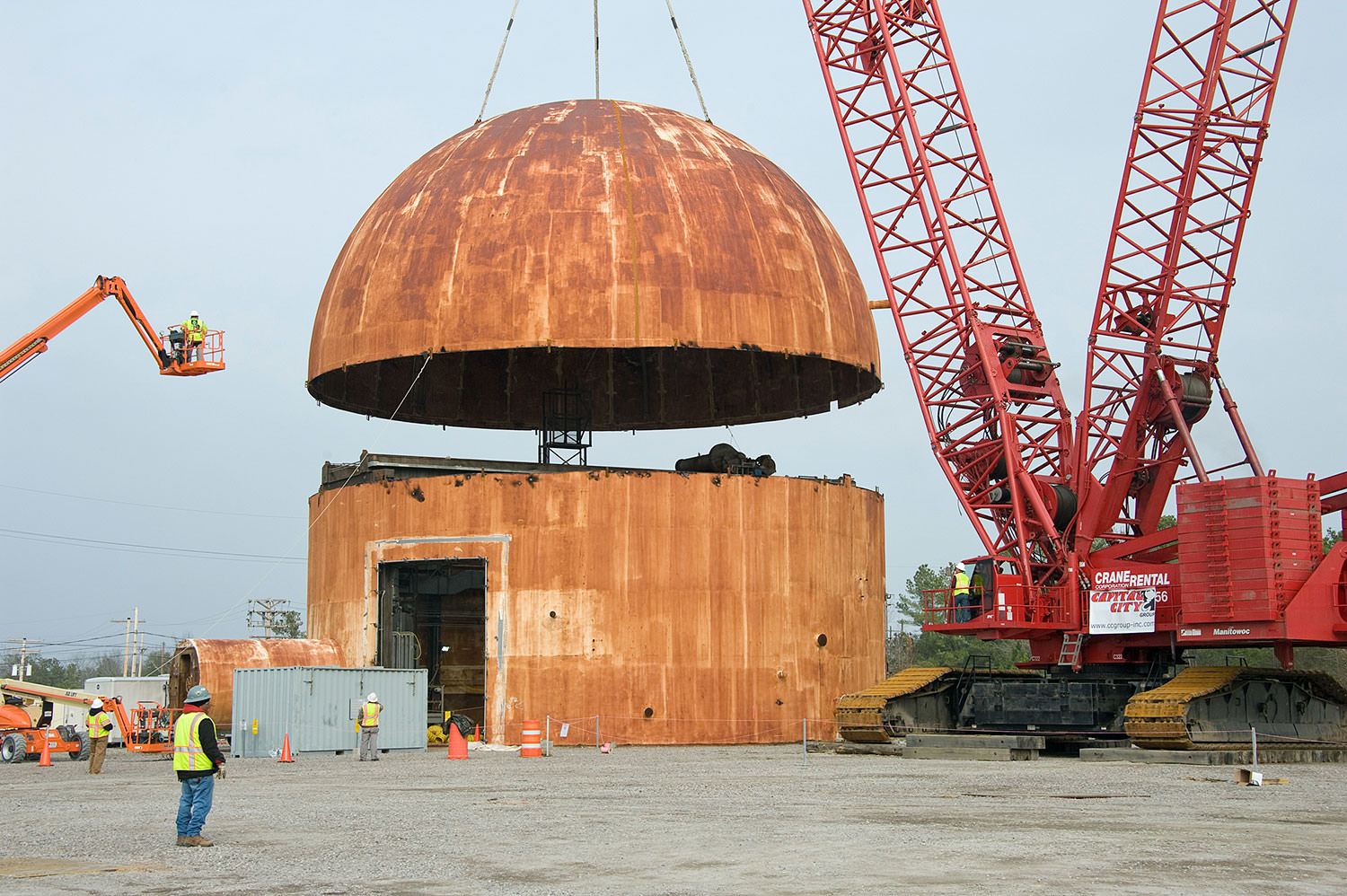
by Robert Alvarez, Dec 18, 2023, https://washingtonspectator.org/shuttering-the-nuclear-weapons-sites-theres-gold-in-those-warheads-but-the-scrap-metal-is-radioactive/
As one of my first tasks early in the first Clinton Administration as the newly appointed Deputy Assistant Secretary for Policy, I conducted the first (and only) asset inventory of the U.S. Department of Energy (DOE). In carrying it out, we departed from the usual reliance on DOE contractors, and established a team of federal employees throughout the DOE complex to scour the system for data. In doing this we saved a lot of money and time that would otherwise be consumed by DOE contractors that had perfected the art of cost maximization.
After six months we briefed Energy Secretary O’Leary on what we found. With real estate holdings of more than 2.4 million acres–an area larger than Rhode Island and Delaware combined–the DOE was the largest government-owned industrial energy supply and research enterprise in the country, responsible for:
- More than 20,700 specialized facilities and buildings, including 5,000 warehouses, 7,000 administrative buildings, 1,600 laboratories, 89 nuclear reactors, 208 particle accelerators, and 665 production and manufacturing facilities.
- More than 130,000 metric tons of chemicals, a quantity roughly equivalent to the annual output of a large chemical manufacturer.
- More than 270,000 metric tons of scrap metal—equivalent to more than two modern aircraft carriers in weight. (The dismantlement of three gaseous diffusion plants will generate about 1.4 million metric tons of additional scrap.)
- More than 17,000 pieces of large industrial equipment.
- More than 40,000 metric tons of base metals and more than 10,000 pounds of precious metals, such as gold, silver, and platinum.
- About 700,000 metric tons of nuclear materials, mostly depleted uranium but also including weapons-grade and fuel-grade plutonium, thorium, and natural and enriched uranium.
- About 320,000 metric tons of stockpiled fuel oil and coal for 67 power plants.
- About 600 million barrels of crude oil stored at the Strategic Petroleum Reserve.
- Electrical distribution systems for the Bonneville, Western Area, Southwestern, Southeastern, and Alaska power administrations.
If the Energy Department were a private concern with more than 100,000 employees, it would be one of the nation’s largest and most powerful corporations. And, we determined, if it were privately held, it would be filing for bankruptcy.
Major elements of Energy’s complex were closing down, leaving a huge unfunded and dangerous mess. After more than a half century of making nuclear weapons, the DOE possessed one of the world’s largest inventories of dangerous nuclear materials and it has created several of the most contaminated areas in the Western hemisphere.
We discovered that a significant percentage of overhead expenses at several shuttered sites were from hoarding fungible assets that were no longer needed. The challenge was to empty these warehouses and to generate an income for the U.S. government by selling off valuable excess materials.
Our first effort was aimed at the large amount of uncontaminated precious metals contained in nuclear weapons that would generate millions-of-dollars in revenue from warheads scheduled for dismantlement under the 1991 Strategic Arms Reduction Treaty (START). For the first time, nuclear disarmament would actually make money for the taxpayer.
We were astounded to find that for decades intact weapons components containing large amounts of precious metals were being disposed at great expense in a classified landfill under heavy guard. It took a direct order from the Secretary for DOE’s PANTEX weapons assembly and dismantlement facility near Amarillo, TX to obtain an industrial scale hydraulic hammer to smash non-nuclear components into little pieces so that the gold and other metals can be recovered without revealing design secrets.
Further complicating the process for dismantling weapons, the DOE had failed to properly maintain its system for assessing and evaluating each nuclear weapon for reliability, aging problems, and safe dismantlement. Known as configuration management (CM), this system is a fundamental element in the control of the nuclear stockpile and is based on careful documentation of “as built” drawings and product definitions made during the design, manufacture, assembly, and deployment of a nuclear weapons.
My staff discovered that DOE could not find nearly 60 percent of the “as built” drawings that document all changes made to active weapons selected for dismantlement. I threw a fit and reported it to the front office, which promptly took action.
Over the ensuing decade, we wound up sending about $50 million from the sale of precious metals extracted from dismantled weapons back to the treasury. As a side benefit, we also set up the DOE’s first electronic recycling center to recover fungible materials from DOE’s huge inventory of excess computers.
After receiving a Secretarial Gold Medal for our asset management program, I became increasingly isolated from the DOE front office, and spent most of my time involved with environment, safety and health problems afflicting the DOE nuclear weapons complex. As soon as Secretary O’Leary departed in late 1996, our asset inventory was buried and barred from public disclosure.
However, I drew the line when it came to the disposition of radiologically contaminated materials, such as the vast amount of scrap metal resulting from the decommissioning of nuclear weapons facilities.
In 1994, I blocked a deal that would have allowed some 10,000 tons of radiation-contaminated nickel from nuclear weapons operations to be recycled into the civilian metal supply, where some percentage of it would inevitably wind up in stainless steel items such as intrauterine devices, surgical tools, children’s orthodontic braces, kitchen sinks, zippers, and flatware. However, that confrontation was not to be the end of the scrap metal gambit.
The pressures to recycle 1.7 million metric tons of contaminated metal scrap (equivalent to 17 U.S. aircraft carriers in weight) at nuclear weapons facilities in Tennessee, Kentucky and Ohio were enormous.
I dug in my heels and opposed an effort, supported by Vice President Gore’s office, to release tens of thousands of tons of radiologically contaminated metals into commerce. By claiming cost savings associated with foregoing landfill disposal, DOE contractors would be able to pocket the profits from the sale of scrap. Going forward however, I was seen as obstructionist and was effectively shunned from decision-making circles.
After Hazel O’Leary left as Energy Secretary in late 1996, I lost my political “air cover” and was perceived in the words of a colleague by the incoming leadership of the agency (Secretary Frederico Pena’s team) as “too radioactive.”
Even though I was being excluded from policy decisions, I still persisted.
As a former environmental activist, I had no compunctions about going outside of the Department to convince an old friend at the Natural Defense Resource Council to file a lawsuit to block the free release of the contaminated metal.
I knew that if DOE and its contractors got their way, this practice would lead to a major public backlash. Not to mention the market impacts the contaminated material would create for the U.S. steel industry, which was almost totally dependent on recycled metal for its feedstock. Steel makers had been burned before by errant radiation sources and the last thing they wanted was for the public to realize that the stainless-steel fork on the dinner table had some plutonium in it from a nuclear weapons plant. But consideration of these consequences could easily get overlooked in the DOE, where decisions were made in isolation and secrecy.
The lawsuit stopped the train temporarily. Judge Gladys Kessler, in a strongly worded opinion, stated: “It is . . . startling and worrisome that from an early point on, there has been no opportunity at all for public scrutiny or input in a matter of such grave importance.” Calling the recycling effort “entirely experimental at this stage,” she concluded, “The potential for environmental harm is great, especially given the unprecedented amount of hazardous materials which the defendants seek to recycle.”
In the summer of 1998, I received a call from the White House indicating that I was being fired within the next 30 days. This was the third time my detractors sought to end my tenure as a senior political appointee in DOE’s Policy office. This time, it seemed to be final.
A week before my departure, I was summoned to meet with Bill Richarson – the newly installed Secretary of Energy. He was slouched on the sofa and disheveled after a long day. “I don’t know why you got on the list. You must have pissed-off quite a few people,” he said with a devilish smile. “But you have a lot of folks that want to keep you around. When I visited DOE sites, members of Congress, union officials, Indian tribes, and environmental activists, would ask me about this Alvarez guy.”
He then pulled out a news clipping from the Seattle Times about a walk-out staged by the members of a DOE advisory panel at the Hanford facility in protest to my sacking. “You must be a fighter, I like fighters,” he said approvingly. Richardson reversed the White House decision and appointed me as his Senior Policy Advisor, where I was tasked among other things to end the “hot scrap” recycling scam.
A senior scholar at the Institute for Policy Studies, Robert Alvarez served as senior policy adviser to the Energy Department’s secretary and deputy assistant secretary for national security and the environment from 1993 to 1999.
Nuclear Power: UK’s Financial Challenge Unveiled
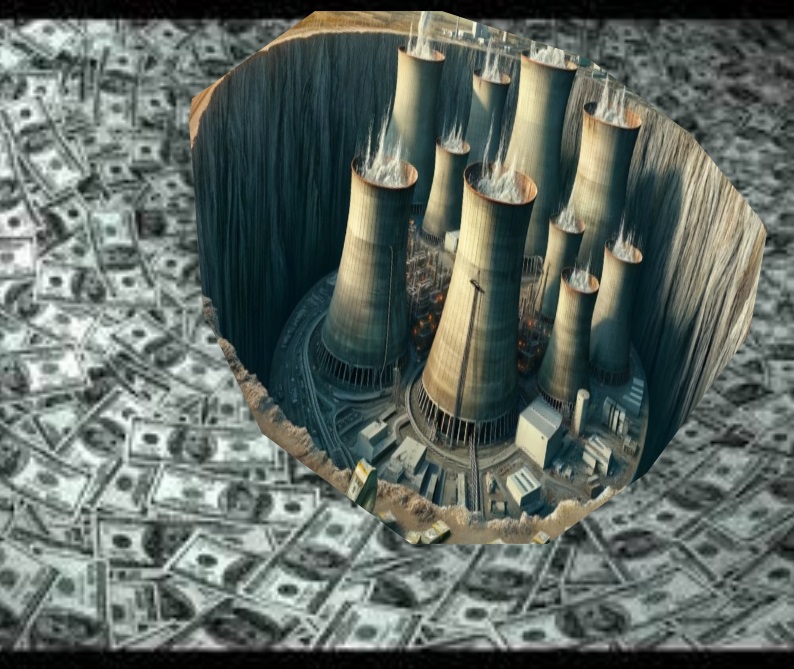
the actual cost might reach as high as £10 billion per reactor, resulting in an astonishing cumulative expense for the decommissioning process. …
this substantial cost could ultimately fall on taxpayers, raising concerns about the financial burden on the public.
Dev X Noah Nguyen, November 21, 2023
The UK’s Commitment to Nuclear Power and Financial Challenges
The United Kingdom’s dedication to nuclear power is becoming a financially challenging commitment as the dismantling expenses for its nuclear generating facilities continue to escalate. These costs have been advantageous for businesses involved in the dismantling process but a noteworthy expenditure for UK taxpayers
Regardless of the substantial costs associated with the new nuclear reactors at Hinkley Site C and the rising price of clean-up initiatives, the nation’s government remains committed to nuclear technology. This unwavering commitment is driven by the belief that nuclear power is crucial for achieving the UK’s long-term energy security and climate change goals. However, critics argue that increased investment in renewable energy sources could provide similar benefits, without the high financial burden and safety concerns associated with nuclear power……………………………………………………
Concerns Regarding Decommissioning Costs and Life Expectancy of Reactors
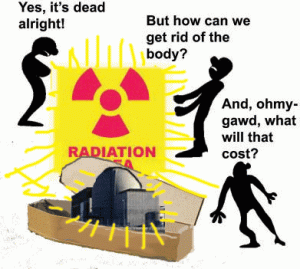
Nearly all of the remaining functional reactors are scheduled for closure by 2028, except Sizewell B, anticipated to stay in operation until 2035. With a life expectancy of roughly 40 years—considerably shorter than the 60 to 80 years frequently claimed by the sector—questions emerge about the demolition costs for the existing 23 reactors and the two under construction at Hinkley Point C.
As these reactors reach the end of their life cycle, it is crucial to plan and allocate resources effectively for their dismantling and waste disposal. The cost of decommissioning and managing nuclear facilities can significantly impact the overall economic feasibility of the energy generated, emphasizing the need for accurate cost estimations and environmentally responsible strategies.
Projected Costs of Dismantling and Importance of Effective Management
By the end of 2022, the UK’s Nuclear Decommissioning Authority (NDA) projected a total dismantling cost of £149 billion. If this figure encompasses Hinkley Site C, it would equate to about £6 billion per reactor. This substantial financial investment highlights the importance of thoroughly managing the decommissioning process to ensure effective resource allocation. With the growing push towards renewable energy sources, proper management and safe dismantling of nuclear reactors have become increasingly significant for the country’s transition towards sustainable energy.
Higher Potential Costs and the Financial Burden on Taxpayers
However, Professor Stephen Thomas from the University of Greenwich’s energy policy department posits that the actual cost might reach as high as £10 billion per reactor, resulting in an astonishing cumulative expense for the decommissioning process. He further elaborates that this substantial cost could ultimately fall on taxpayers, raising concerns about the financial burden on the public. To mitigate such consequences, proper planning and establishing an adequate funding source must be undertaken for a feasible and efficient decommissioning process…………………………………………………………………………………….
What are the concerns regarding the decommissioning costs and life expectancy of nuclear reactors in the UK?
With functional reactors scheduled for closure and shorter life expectancies than often claimed, there are concerns about the demolition costs for the existing reactors and effective management of resources for dismantling and waste disposal. The cost of decommissioning can significantly impact the overall economic feasibility of nuclear-generated energy and necessitates accurate cost estimations and environmentally responsible strategies………….. https://www.devx.com/news/nuclear-power-uks-financial-challenge-unveiled/
UK Has £10 Billion Per Nuclear Reactor Decommissioning Bottomless Pit
estimate in late 2022 was that the program was likely to cost £260 billion given the cost trends. That’s £10.4 billion per reactor, an order of magnitude higher than the industry average of three years ago.
Whether £6 billion or £10 billion, these numbers should be giving national energy policy makers pause. After all, those costs are going to be paid in the future in future value dollars that will be inflated. They won’t be getting magically smaller due to discounting, but should be included in cost cases with the discounting rates built in.
Clean Technica, , Michael Barnard
The decommissioning costs for the UK’s nuclear generation are coming home to roost, and they are laying golden eggs for the firms that won the business. For UK citizens, not so much. Despite the very high costs of both the new nuclear reactors at Hinkley Site C, the rapidly rising costs of clean up and the much cheaper alternatives available, the country’s current administration remains committed to the technology. Something is likely to give.
The UK is like the USA and France, a western nuclear military power. They built and operated four nuclear powered submarines with nuclear missiles and two nuclear powered aircraft carriers. That gave them one of the preconditions for success for commercial nuclear electricity generation.
They built all of the 14 shut down and 9 currently operating nuclear generation plants between 1957 and 1995, satisfying the conditions of success of a three to four decade build out to maintain master builders, creation of a nuclear construction industry with skilled, certified and security validated resources, and building a couple of dozen reactors to amortize the national program across.
They built all reactors with a very narrow set of designs, first the Magnox which also created weapons grade plutonium and then the AGR which was a modified Magnox optimized for electricity generation, not plutonium manufacturing. The high similarity and only two designs across all 23 reactors satisfied another criterion for success of a nuclear program…………….
Naturally, the nuclear program was a national strategic priority for the UK with bi-partisan support between the Conservatives and Labour, satisfying another condition of success.
This was a blueprint for a successful nuclear electrical generation program, and why nuclear generation is a poor fit for free market economics.
Despite no longer having the obvious conditions for success for a new nuclear program, the British government got behind the Hinkley Point C construction of two new EPR reactors with their unproven design. That program is years late and 50% over budget as a result. The reactors are GW scale, with 3.2 GW between the two reactors so have one condition for success out of six. The UK government also have planned two EPRs at the Sizewell site, with one of the innumerable Conservative Prime Ministers of the past decade committing £100 million of governmental money in a vain attempt to get any private investors interested. No schedule has been set for construction of those reactors.
But now the reactors are shut down or about to be shut down. Most of the remaining operating reactors will be off the grid by 2028, with only Sizewell B hanging on until 2035. All reactors had roughly a 40 year lifespan, not the 60 to 80 years often claimed by the industry, including the 60 year claim for Hinkley Point C.
How much will it cost to decommission those 23 reactors and the two Hinkley Point C reactors still under construction? The last time I looked at nuclear decommissioning costs and duration was three years ago. At the time, the average was roughly a billion US dollars and a century of duration per site.
Well, the UK’s nuclear program is definitely exceeding that. As of late 2022, the official estimate of the UK’s Nuclear Decommissioning Authority (NDA) was £149 billion. Assuming Hinkley Site C was rolled into that number, that would be a cost of £6 billion per reactor, or more than many nuclear advocates claim new nuclear can be built for.
However, Stephen Thomas, a professor of energy policy at the University of Greenwich and a regular analyst of the nuclear industry with a publication history on energy and nuclear programs with a global reach stretching back to 2004, has a slightly different expectation. He first published on the UK’s NDA in 2005 and has been tracking costs closely since, including with freedom of information requests to get accurate numbers.
His estimate in late 2022 was that the program was likely to cost £260 billion given the cost trends. That’s £10.4 billion per reactor, an order of magnitude higher than the industry average of three years ago.
Whether £6 billion or £10 billion, these numbers should be giving national energy policy makers pause. After all, those costs are going to be paid in the future in future value dollars that will be inflated. They won’t be getting magically smaller due to discounting, but should be included in cost cases with the discounting rates built in.
Given the magnitude of the costs, effectively every MWh generated by the UK fleet of reactors cost substantially more than its official stated cost. The price will be paid, after all.
If there were no alternatives to nuclear generation, then this wouldn’t be a problem compared to global warming. But, of course, this is 2023 and there are proven, effective, efficient and reliable forms of low-carbon electrical generation that do compete with nuclear energy, wind and solar. ……………………………………
The full lifecycle costs of nuclear energy are fairly well established now, and they are much higher than for renewables, transmission and storage. The conditions for success for nuclear programs are well established as well, and there isn’t a single country in the world that has fulfilled them in the 21st Century. Even China has failed, in my assessment as their industrial policy of exporting nuclear reactors of any type foreign buyers might want overrode energy policy requirements to build only a single design.
It’s unclear to me what blend of ideology, tribalism and magical thinking are combining to make countries think that their nuclear programs are unique, and that they will succeed at them when there are clear alternatives. https://cleantechnica.com/2023/11/19/uk-has-e10-billion-per-nuclear-reactor-decommissioning-bottomless-pit/
Uncharted waters: Navy navigating first-ever dismantling of nuclear-powered carrier
The challenges for the Navy to dispose of the former USS Enterprise have driven the service to stand up a new office to deal both with “The Big E” and the pipeline of Nimitz-class carriers to come.
Breaking Defense, By JUSTIN KATZon November 15, 2023
WASHINGTON — For more than a decade, the US Navy has considered the former Enterprise (CVN-65) no longer operational. In fact, since 2018, the 1,101-foot behemoth has been mostly floating pier side in Newport News, Va., awaiting final dismantlement and disposal.
Ships come and go in the Navy, but their disposal is not usually such a prolonged and complicated affair. They can be used as target practice for what the Navy calls a “SINKEX” or handed over to scrapping and salvaging companies, among other options.
But for a host of reasons, those routes are non-starters for the service’s first nuclear-powered aircraft carrier. Instead, after studying the problem for years, the service has finally settled on a path forward: enlisting commercial industry for a job it has historically done itself, and likely creating a new norm for how all nuclear-powered carriers will be disposed of going forward.
To lead that charge, Breaking Defense has learned the Navy has set up a new office just to focus on the inactivation and disposal of nuclear-powered aircraft carriers…….
Whatever the service ends up doing, both analysts and the Navy have said it will likely set precedents for future carriers facing disposal, and the clock is ticking. The longer it takes, the more likely it is the Pentagon will risk a buildup of older carriers taking up various private and public ports around the country.
Even if everything goes according to the Navy’s preliminary plans, time is not on the service’s side. Public Navy documents show that Enterprise will not begin dismantlement until 2025, and the work will continue through 2029 — meaning even if everything stays on track, the work will be ongoing when the second nuclear-powered aircraft carrier, USS Nimitz (CVN-68), is scheduled to leave the operational fleet in 2026. The USS Eisenhower (CVN-69) will follow suit not long after.
“The Navy has really had a tough time figuring out … what’s the process we’d go about dismantling this thing,” said Bryan Clark, a fellow at the Hudson Institute and retired submariner. “That’s why the Enterprise in particular has been sitting around waiting to be dismantled. And we’re going to have the same problem with the Nimitz.”…………………………………………………………………………………………………………….. more https://breakingdefense.com/2023/11/uncharted-waters-navy-navigating-first-ever-dismantling-of-nuclear-powered-carrier/
Magnox rebrands to Nuclear Restoration Services as its decommissioning portfolio expands
Magnox has become Nuclear Restoration Services (NRS) ahead of taking
ownership of closing EDF nuclear sites. NRS, part of the UK’s Nuclear
Decommissioning Authority (NDA) group, is responsible for safely
decommissioning first generation nuclear reactor and research sites across
the UK and restoring them for future use.
As Magnox, the company was
responsible for safe and secure cleanup of 12 nuclear sites. In April, it
additionally took on the decommissioning of the Dounreay nuclear site in
Scotland when it merged with Dounreay Site Restoration (DSR).
The site is owned by NDA, but DSR was contracted to deliver its decommissioning
programme. Two years ago, it was agreed that NDA would become responsible
for decommissioning EDF’s seven advanced gas-cooled reactors (AGRs), once
power generation had ended and defueling had been completed. Hunterston B
was the first AGR to come offline in January last year, followed by Hinkley
Point B in August 2022. EDF expects all the sites will stop operating by
2028. Ownership of Hunterston B is expected to transfer in 2026, with the
others to follow on a rolling basis over the next decade.
The Chemical Engineer 2nd Nov 2023
https://www.thechemicalengineer.com/news/magnox-rebrands-to-nuclear-restoration-services-as-its-decommissioning-portfolio-expands/ #nuclear #antinuclear #nuclearfree #NoNuke
What happens after a nuclear power station is closed?
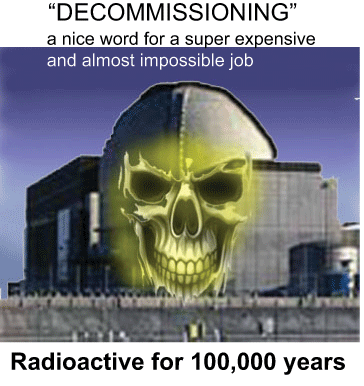
When Hinkley Point B. opened in 1976, its two advanced gas-cooled reactors
(AGRs) were state of the art. But over nearly half a century of generation,
cracks developed in their graphite cores, creating potential safety
concerns, and they were shut down for good last year.
Yet inside the
cavernous main hall, little seems to have changed. Freshly painted
machinery gleams under bright lights, as teams of workers in blue boiler
suits scurry around above the reactors themselves. The main activity at the
moment is defueling: removing hundreds of fuel assemblies from deep within
the reactor cores, stripping them down, and sending the wastes away for
storage at Sellafield. As we watch, a large steel tower is being positioned
over the reactor.
This is the charging machine. It looks rather like an
old-fashioned helter-skelter, but in fact it is a heavily-shielded crane.
The fuel assemblies, having been in the reactor for years, are highly
radioactive and need to be handled with extreme care.
Once defueling is
complete, EDF will hand over the site to the Nuclear Decommissioning
Authority (NDA). To find out what happens then, it is worth going next door
– to another power station, Hinkley Point A. This was one of the UK’s
first-generation nuclear sites. Its two reactors were brought online in
1965 – and shut down for good in 2000. Nearly a quarter of a century later,
its two box-like reactor buildings still stand tall against the skyline.
But other buildings, including the huge turbine hall, have been removed –
leaving just a deep, weed-strewn hole in the ground. Old fuel storage ponds
have been drained, cleaned and painted to reduce radiation risks, although
we are warned not to linger around them. But elsewhere a water-filled vault
remains half-full of radioactive scrap, which is being painstakingly
removed.
BBC 27th Oct 2023
https://www.bbc.co.uk/news/business-67087673 #nuclear #antinuclear #NoNukes
Vermont Yankee nuclear plant teardown ahead of schedule, but removal of the spent fuel is a problem.

By CHRIS LARABEE, Staff Writer, 10/15/2023
VERNON, Vt. — With the reactor building serving as one of the final structures standing, the decommissioning of the former Vermont Yankee nuclear power plant has been progressing steadily with a potential finish date four years ahead of its 2030 deadline.
Amid a teardown of the former turbine building’s foundation one day last week, officials from NorthStar, the company undertaking the $600 million decommissioning project, shared their planned decommissioning timeline of the controversial power plant…………………………………
Entergy, the former owner and operator of the plant, closed the facility in 2014, citing the lack of profitability of Vermont Yankee in the energy economy. The plant began operation in November 1972 and faced decades of scrutiny from anti-nuclear activists. Decades later, Entergy, which purchased the facility for $180 million in 2002, also faced several lawsuits over the final decade of Vermont Yankee’s lifetime……………………………………………………
Removing waste
As of Aug. 31, NorthStar had sent a total of 685 shipments of waste by rail to a storage facility in Texas, amounting to approximately 39,188 tons of material, according to Corey Daniels, senior manager for the spent fuel storage installation for NorthStar…………….
Removing waste
As of Aug. 31, NorthStar had sent a total of 685 shipments of waste by rail to a storage facility in Texas, amounting to approximately 39,188 tons of material, according to Daniels.
While the site is expected to be cleared in just a few years, there is a potential snag.
NorthStar is able to transport “low-level radioactive” materials, such as metal waste, for disposal, but the nuclear fuel that powered the reactor currently remains on the site because a license to an interim Texas storage facility was vacated.
The license was vacated after the Texas state government challenged the facility and the federal Nuclear Regulatory Commission’s authority to grant a permit for an interim waste facility, according to The Brattleboro Reformer.
State added that it is the Nuclear Regulatory Commission’s legal fight and there is the possibility the case could be brought before the U.S. Supreme Court.
In the meantime, State said the spent fuel will remain on the parcel until the federal and various state governments can find a solution. ……………………. https://www.gazettenet.com/Vermont-Yankee-nuclear-plant-teardown-ahead-of-schedule-52630716 #nuclear #antinuclear #NuclearFree #NoNukes #NuclearPlants
UK’s old nuclear submarines, dead for over 40 years, and a new plan for turning them into “tin cans and razor blades”.
BABCOCK International want to build a new industrial building at Rosyth
Dockyard for the dismantling of old nuclear submarines. If approved, and a
planning application has gone into Fife Council, the metal waste disposal
facility will go up at the corner of Wood Road and Caledonia Road.
Seven old nuclear subs have been laid up at the yard for decades, Dreadnought has
been there since 1980, longer than it was in service, and last year
councillors were told of a UK Government pledge to “de-nuclearise Rosyth”
by 2035. They were also informed of a world first in removing the most
radioactive waste and the overall aim of cutting up the vessels and turning
them into “tin cans and razor blades”.
Blyth and Blyth, of Edinburgh, have
been appointed by Babcock as civil and structural engineering consultants
for the Rosyth Submarine Dismantling Project and are agents for the
application. The plans say the building would be around 200 square metres
in size and the council are expected to make a decision next month.
Dunfermline Press 16th Oct 2023
https://www.dunfermlinepress.com/news/23853192.rosyth-babcock-plans-new-metal-waste-disposal-building/ #nuclear #antinuclear #NuclearFree #NoNukes #NuclearPlants
Nuclear reactor that operated for only 9 years will take many (expensive) decades to decommission .
Complete dismantling of experimental French reactor to proceed.
1WNN, 0 October 2023
EDF has been authorised to begin the third and final phase of the decommissioning of the Brennilis nuclear power plant in the Monts d’Arée in Brittany, France. The plant is a unique 75 MWe gas-cooled heavy water reactor that operated between 1972 and 1981.
The first phase of the plant’s decommissioning – the removal of all fuel and the dewatering of its systems – was completed in 1992. The second phase – the dismantling of equipment and all buildings (with the exception of the reactor building) – was completed in 2005.
On 26 September, EDF obtained the “complete dismantling” decree, signed by the Minister of Energy Transition, which makes it possible to launch the dismantling of the reactor, the cleaning up of the civil engineering, the demolition of the reactor building and the final rehabilitation of the Brennilis site………..
The final deconstruction of Brennilis is a complex operation,” noted Cédric Lewandowski, director of the nuclear and thermal fleet at EDF, on LinkedIn. “Indeed, this prototype, unique in France, using heavy water reactor technology, is contained in a concrete cube measuring 20 metres on each side and 1.5 metres thick. Inside, the equipment to be dismantled is tightly packed into a very cramped space.
“To carry out this work on time and to guarantee the protection of personnel, the EDF Deconstruction and Waste Projects Department (DP2D) is working with its industrial partners on innovative tele-operation and robotics solutions.”
The dismantling of the reactor’s peripheral circuits, entrusted by DP2D to Onet Technologies and Cyclife Engineering, will begin later this year.
September 14, 2023: Dounreay decommissioning end date that proved to be unachievable

By Alan Hendry – alan.hendry@hnmedia.co.uk, 14 September 2023
The end of an era for Caithness… the last chapter in a pioneering
industrial story that began in the black-and-white world of the 1950s… a
final farewell to our great atomic age… Or at least, it would have been
if a prediction made 11 years ago had proved to be accurate.
It was in May 2012 that Roger Hardy, then managing director of Dounreay Site Restoration
Ltd (DSRL), announced a target for the demolition of the nuclear site that
had transformed the county’s socio-economic landscape over the course of
six decades. Dounreay’s operators were setting a specific end date of
September 14, 2023.
That was when all redundant facilities needed to be
flattened and the waste sorted, segregated and made safe for the long term,
according to Mr Hardy. It was a big ask, he acknowledged at the time, but
staff were responding to the challenge: “No-one seems hugely surprised by
what we think is achievable.”
It was destined not to be achievable after
all. The current deadline for the clean-up is 2033, a full decade beyond
that 2012 forecast – although questions have been raised as to whether
even this revised schedule is a realistic one. Earlier this year,
ex-councillor Roger Saxon, a former chairman of Dounreay Stakeholder Group,
expressed the view that 2033 would be unachievable. He was concerned that
momentum had been lost on the decommissioning programme.
John O’Groat Journal 14th Sept 2023
Dismantling of deactivated Fort Greely nuclear power plant to resume.
Alaska Public Media By Tim Ellis, KUAC – Fairbanks, August 25, 2023
The decommissioning of an old nuclear power plant at Fort Greely can move forward now that the federal agency overseeing the project has resolved a contract dispute that delayed work for more than a year.
Work on the final phase of decommissioning and dismantling the long-mothballed SM-1A heat and power plant has been on hold since late last year, when a company that was competing for the contract began filing protests over how the Army Corps of Engineers handled the bid proposals…………………………………………………………………………………………
Barber said the year-long, back-and-forth process of reviewing and re-evaluating the proposals means the completion date of the project also will be pushed back by a year.
“So we’re looking at 2029, at this point,” she said, adding that it’ll take a while for A3D to begin work on the facility……………..
The SM-1A’s highly enriched uranium dioxide fuel and most highly radioactive components of the facility were removed after it was shut down in 1972. Remaining materials have been entombed in concrete or safely stored onsite. Much of that will be removed as part of the contract with A3D……
Barber says when the the remaining work is completed, the SM-1A, like two other prototype military nuclear power plants developed during the Cold War, will finally all be decommissioned and dismantled. https://alaskapublic.org/2023/08/25/dismantling-of-deactivated-fort-greely-nuclear-power-plant-to-resume/
.
At Fukushima Daiichi, decommissioning the nuclear plant is far more challenging than water release.
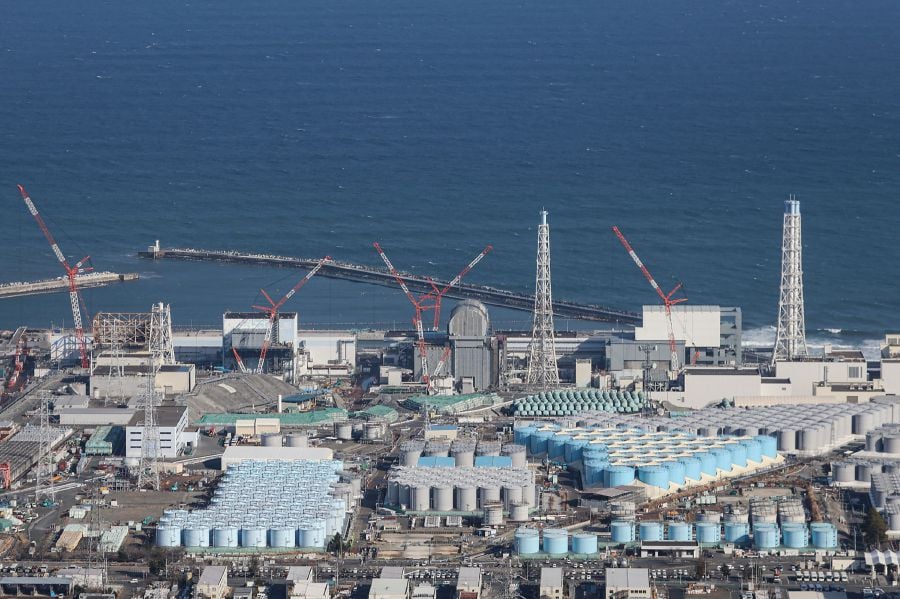
“technical difficulty involving the decommissioning is much higher” than the water release and involves higher risks of exposures by plant workers to remove spent fuel or melted fuel.
Some experts say it would be impossible to remove all the melted fuel debris by 2051 and would take 50-100 years, if achieved at all.
BY MARI YAMAGUCHI, August 27, 2023
FUTABA, Japan (AP) — For the wrecked Fukushima Daiichi nuclear plant, managing the ever-growing volume of radioactive wastewater held in more than 1,000 tanks has been a safety risk and a burden since the meltdown in March 2011. Its release marks a milestone for the decommissioning, which is expected to take decades.
But it’s just the beginning of the challenges ahead, such as the removal of the fatally radioactive melted fuel debris that remains in the three damaged reactors, a daunting task if ever accomplished.
Here’s a look at what’s going on with the plant’s decommissioning:
…………………………………………………… WILL THE WASTEWATER RELEASE PUSH DECOMMISSIONING FORWARD?
Not right away, because the water release is slow and the decommissioning is making little progress. TEPCO says it plans to release 31,200 tons of treated water by the end of March 2024, which would empty only 10 tanks out of 1,000 because of the continued production of wastewater at the plant.
The pace will later pick up, and about 1/3 of the tanks will be removed over the next 10 years, freeing up space for the plant’s decommissioning, said TEPCO executive Junichi Matsumoto, who is in charge of the treated water release. He says the water would be released gradually over the span of 30 years, but as long as the melted fuel stays in the reactors, it requires cooling water, which creates more wastewater.
Emptied tanks also need to be scrapped for storage. Highly radioactive sludge, a byproduct of filtering at the treatment machine, also is a concern.
WHAT CHALLENGES ARE AHEAD?
About 880 tons of fatally radioactive melted nuclear fuel remain inside the reactors. Robotic probes have provided some information but the status of the melted debris remains largely unknown.
Earlier this year, a remote-controlled underwater vehicle successfully collected a tiny sample from inside Unit 1’s reactor — only a spoonful of the melted fuel debris in the three reactors. That’s 10 times the amount of damaged fuel removed at the Three Mile Island cleanup following its 1979 partial core melt.
Trial removal of melted debris using a giant remote-controlled robotic arm will begin in Unit 2 later this year after a nearly two-year delay. Spent fuel removal from Unit 1 reactor’s cooling pool is set to start in 2027 after a 10-year delay. Once all the spent fuel is removed, the focus will turn in 2031 to taking melted debris out of the reactors. But debris removal methods for two other reactors have not been decided.
Matsumoto says “technical difficulty involving the decommissioning is much higher” than the water release and involves higher risks of exposures by plant workers to remove spent fuel or melted fuel.
“Measures to reduce radiation exposure risks by plant workers will be increasingly difficult,” Matsumoto said. “Reduction of exposure risks is the basis for achieving both Fukushima’s recovery and decommissioning.”
HOW BADLY WERE THE REACTORS DAMAGED?
Inside the worst-hit Unit 1, most of its reactor core melted and fell to the bottom of the primary containment chamber and possibly further into the concrete basement. A robotic probe sent inside the Unit 1 primary containment chamber found that its pedestal — the main supporting structure directly under its core — was extensively damaged.
Most of its thick concrete exterior was missing, exposing the internal steel reinforcement, and the nuclear regulators have requested TEPCO to make risk assessment.
CAN DECOMMISSIONING END BY 2051 AS PLANNED?
The government has stuck to its initial 30-to-40-year target for completing the decommissioning, without defining what that means.
An overly ambitious schedule could result in unnecessary radiation exposures for plant workers and excess environmental damage. Some experts say it would be impossible to remove all the melted fuel debris by 2051 and would take 50-100 years, if achieved at all.
North County Report: What’s the Deal with San Onofre’s Nuclear Power Plant?
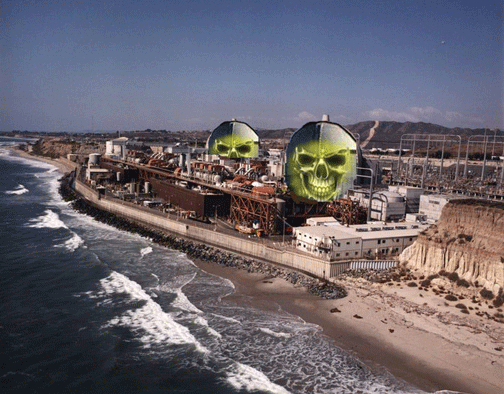
Federal and public officials have been working to dismantle the San Onofre nuclear power plant for about a decade, but there’s still a long way to go. Here are the latest developments.
Voice of San Diego, by Tigist Layne, 24 Aug 23
“………………………………………………………. For the past several years, SoCal Edison has been dismantling the plant, a process known as decommissioning. Once that process is complete, the land will go back to its owner, the U.S. Navy.
Before that can happen, though, there’s the issue of the 3.55 million pounds of nuclear waste currently sitting inside the facility.
The latest: Manuel Camargo, principal manager of the San Onofre Decommissioning Project, said 50 percent of the plant has been decommissioned so far. The San Onofre Decommissioning Project was created by SoCal Edison.
As for the nuclear waste, also known as spent nuclear fuel, the Department of Energy is moving forward with a plan to transport the fuel into a temporary storage facility. Once that happens, officials can complete the decommissioning process.
Decommissioning of the Plant Is Carried Out in Three Phases
- First, after allowing the spent nuclear fuel to cool for a few years, the decommissioning team packaged the spent fuel into seal-welded stainless-steel canisters and transferred it to an onsite storage system. That transfer was completed in 2020, Edison International spokesperson Jeff Monford wrote in an email.
- Next is the demolition of above-ground structures like pressure vessels, pumps, motors, fans, cables and structural steel, which are removed from the buildings, packaged and sent offsite for disposal. The rest of the concrete structures are then demolished and transported to a disposal facility in Utah.
- Remaining underground structures will be decontaminated according to federal guidelines for cleanup of the site. The team anticipates this to be completed by 2028, Camargo said.
The final phase of decommissioning and site restoration will occur after the spent nuclear fuel is removed from the site.
The two containment domes are expected to come down sometime in 2025 or 2026.
The big storage issue: By now, you’ve probably gathered that without a place to store the spent nuclear fuel, the decommissioning can’t be completed. And there’s a reason it’s been so hard to find storage space: The federal government doesn’t have a single designated place in the United States to permanently store and/or dispose of spent nuclear fuel.
Let’s rewind to 1982 when the Nuclear Waste Policy Act became law. It established a national program for the disposal of highly radioactive waste and supports the use of deep geologic repositories to store and/or dispose of that waste.
A deep geologic repository is essentially a cavern a couple thousand feet below the Earth’s crust where the spent fuel would be placed, and it would stay there forever. It’s a way to store the waste while avoiding the contamination of the air, ground and underground water.
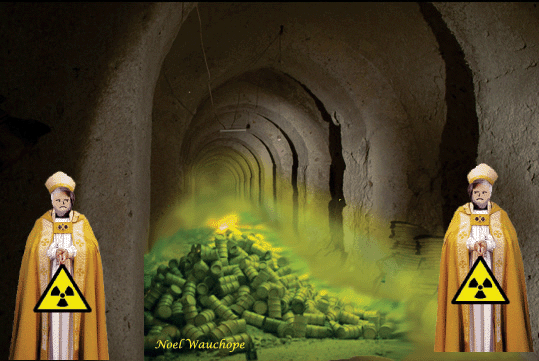
…………………………. until a permanent site is established by the federal government, the Department of Energy is stepping in.
……………………………………… ….Officials are planning to use consent-based siting to establish these storage facilities, meaning only cities and jurisdictions that are willing and able to store the spent nuclear fuel will be considered and chosen.
But these storage sites will be temporary. ……………………
The Department of Energy also needs approval from Congress to create these interim storage sites because the Nuclear Waste Policy Act would have to be modified to allow for it. It will also be up to lawmakers to eventually amend the act and establish another permanent deep geologic repository for spent fuel.
A few different groups are now working together to get this done: the Spent Nuclear Fuel Solutions Congressional Caucus established by Rep. Mike Levin; the Department of Energy; and the Spent Fuel Solutions coalition, which includes San Diego County, Orange County, Riverside County, SoCal Edison, San Diego Gas & Electric and the City of Riverside. https://voiceofsandiego.org/2023/08/23/north-county-report-whats-the-deal-with-san-onofres-nuclear-power-plant/
Plush new building for UK’s Nuclear Decommissioning Authority (NDA)
A government agency is moving into a plush 53,000 sq ft building at the
Harwell Science Campus. The Nuclear Decommissioning Authority (NDA) will
have a new office space after Vale of White Horse District Council granted
permission for the building in June. It will be occupied by the NDA but has
been designed to provide flexibility. In addition to workspaces, the
planning consent also includes breakout areas inside and outside of the
building for staff and visitors, enhanced landscaping and tree planting, as
well as car and cycle parking on site.
Oxford Mail 11th Aug 2023
https://www.oxfordmail.co.uk/news/23714472.new-office-space-occupied-harwell-science-campus/
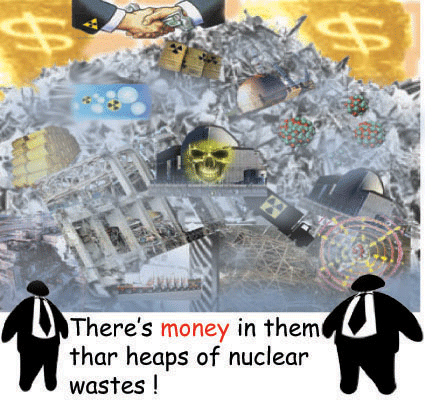
£485m clean-up operation for UK’s 10 nuclear reactors
A team featuring Keltbray and Costain is one of several firms to win spots
on a £485m framework to carry out demolition and asbestos removal work
across all of the UK’s 10 nuclear reactors. The pair and a second team
called Celadon Alliance, comprising Altrad Support Services, KDC Veolia
Decommissioning Services and NSG Environmental, have been awarded framework
contracts for both Lots 1 and 2.
In addition, Kaefer UK & Ireland has been
awarded a framework contract for Lot 1 and a team featuring Nuvia, Rainham
Industrial Services and Hughes and Salvidge has been awarded a framework
contract for Lot 2. Called the Decommissioning and Asbestos Removal
framework, work includes jobs at all 10 reactor sites, two research sites
and one hydro-electric plant, which are all operated by Magnox on behalf of
the Nuclear Decommissioning Authority.
The framework is initially for four
years with an option to extend up to a further two years. Jobs will include
demolition and deplanting, turbine hall cleaning, removal and treatment of
radioactively contaminated plant, including cooling ponds and water
treatment facilities.
Building 22nd June 2023
1 This Month
23-25 October – on Zoom – World BEYOND War’s annual global conferenc


Shut down the radiation-damaged Heysham nuclear reactors now
To see nuclear-related stories in greater depth and intensity – go to https://nuclearinformation.wordpress.com

Say No to NASA’s Reckless Nuclear Reactor on the Moon
Say No to NASA’s Reckless Nuclear Reactor on the Moon

-
Archives
- October 2026 (247)
- September 2026 (339)
- August 2026 (330)
- July 2026 (355)
- June 2026 (287)
- May 2026 (306)
- April 2026 (356)
- March 2026 (251)
- February 2026 (267)
- January 2026 (308)
- December 2025 (358)
- November 2025 (359)
-
Categories
- 1
- 1 NUCLEAR ISSUES
- business and costs
- climate change
- culture and arts
- ENERGY
- environment
- health
- history
- indigenous issues
- Legal
- marketing of nuclear
- media
- opposition to nuclear
- PERSONAL STORIES
- politics
- politics international
- Religion and ethics
- safety
- secrets,lies and civil liberties
- spinbuster
- technology
- Uranium
- wastes
- weapons and war
- Women
- 2 WORLD
- ACTION
- AFRICA
- Atrocities
- AUSTRALIA
- Christina's notes
- Christina's themes
- culture and arts
- Events
- Fuk 2022
- Fuk 2023
- Fukushima 2017
- Fukushima 2018
- fukushima 2019
- Fukushima 2020
- Fukushima 2021
- general
- global warming
- Humour (God we need it)
- Nuclear
- RARE EARTHS
- Reference
- resources – print
- Resources -audiovicual
- Weekly Newsletter
- World
- World Nuclear
- YouTube
-
RSS
Entries RSS
Comments RSS

