The US deal to normalise relations between Saudi Arabia and Israel brings risks of a Middle East #nuclear arms race
#anti-nuclear #nuclear-free #NoNukes
The risk of a nuclear arms race in the Middle East is ‘acute’, a former
British ambassador to Riyadh has warned, amid reports that the US could
help Saudi Arabia develop a civil nuclear programme in exchange for
normalising relations with Israel.
Joe Biden’s administration is working
keenly on a package of agreements that would see Riyadh formally recognise
Israel’s nationhood, becoming the biggest Arab power to do so since the
Jewish state was founded in 1948. Riyadh has made US assistance with its
civil nuclear programme a key demand of the talks.
Under the terms of the deal, the Wall Street Journal reported last week, US and Israeli officials
are discussing a potential US-run uranium enrichment centre on Saudi soil.
Telegraph 1st Oct 2023
Top nuclear experts urge Biden to not allow Saudi uranium enrichment in mega-deal

“even if the enrichment facility in Saudi Arabia is operated by Americans, it will pose “an unacceptable proliferation risk, particularly given Crown Prince Mohammed bin Salman’s public comments on nuclear weapons”.
Barak Ravid 22 Sept 23 https://www.axios.com/2023/09/21/saudi-nuclear-power-uranium-mbs-biden-megadeal-israel
A bipartisan group of more than two dozen nuclear and Middle East experts sent a letter to President Biden on Thursday urging him not to allow Saudi Arabia to have a uranium enrichment program on its soil, according to the letter first shared with Axios.
Why it matters: The Saudi demand for a civilian nuclear program that includes uranium enrichment is the most complicated and sensitive part of the mega-deal the White House is negotiating with the kingdom and Israel.
- It is one of Saudi Arabia’s main demands in the Biden administration’s efforts to secure a peace deal between the kingdom and Israel.
- But it not only faces opposition from the experts who sent Thursday’s letter but also from Israel’s opposition, as well as many members of Congress who are critical of the Saudi government over its human rights record.
What they’re saying: The 27 experts who signed the letter say they support normalization but think the kingdom doesn’t need uranium enrichment to produce peaceful nuclear energy.
- “We urge you to reject the Kingdom of Saudi Arabia’s request for uranium enrichment as part of or separate from a normalization agreement between Saudi Arabia and Israel,” they wrote.
- The experts stressed that uranium enrichment on Saudi soil could bring Saudi Arabia to the brink of acquiring nuclear arms — a reality U.S. policy should keep from happening.
Signatories to the letter include several former U.S. officials who served under both Republican and Democratic administrations and worked on nuclear or Middle East issues.
- They also include David Albright, one of the leading nuclear experts in the world, Olli Heinonen and Pierre Goldschmidt, both former deputy director generals of the International Atomic Energy Agency, and Israeli Prime Minister Benjamin Netanyahu’s former national security adviser, Jacob Nagel.
- The letter was co-organized by the Nonproliferation Policy Education Center and the Foundation for the Defense of Democracies (FDD), a Washington think tank that holds pro-Israeli views.
State of play: The Biden administration is still negotiating with the Saudi officials the conditions for a possible civilian nuclear program.
Separate negotiations on the issue are being held between the Biden administration and the Israeli government.- Unlike the signatories of the letter, Netanyahu doesn’t object to Saudi Arabia having a civilian nuclear program and his government is negotiating with the U.S. the red lines and the guardrails for a program that would include uranium enrichment.
- A senior U.S. official told reporters on Wednesday that there is total alignment between the Israeli government and the Biden administration when it comes to the red lines.
- The White House did not immediately respond to Axios’ request for comment.
The big picture: In the letter, the experts also said that even if the enrichment facility in Saudi Arabia is operated by Americans, it will pose “an unacceptable proliferation risk, particularly given Crown Prince Mohammed bin Salman’s public comments on nuclear weapons”.
- MBS told Fox News in an interview that was aired on Wednesday that if Iran obtains a nuclear weapon, Saudi Arabia would “have to get one, for security reasons, for balancing power.”
- The experts also wrote that Saudi threats to go to China for nuclear technology are not a reason for the U.S. to change its policy on nuclear enrichment, a step that will be “a sign of weakness” and could encourage similar efforts by other countries.
The experts added that allowing Saudi Arabia to have uranium enrichment capability like Iran could trigger a regional nuclear arms race.- “Any nuclear cooperation agreement with Saudi Arabia must meet the highest non-proliferation standards and enhanced inspection and transparency measures through a strong Additional Protocol with the International Atomic Energy Agency,” they wrote.
Foundation for the Defense of Democracy and The Nonproliferation Policy Education Center urge Biden against helping Saudi Arabia to enrich uranium
In an effort to get Saudi Arabia to recognize Israel, the Biden
Administration is considering offering Riyadh a U.S. civilian nuclear
cooperative agreement that would allow the Kingdom to enrich uranium, a
process that could bring it within weeks or days of acquiring a nuclear
weapon.
With nuclear fuel making activities, such as uranium enrichment,
there is no way to assure timely warning of possible military diversions:
By the time there is a detection, it’s too late to prevent the last few
steps to making a bomb. This inherent safeguards gap makes any endorsement
of enrichment in the Kingdom dangerous.
Mohammed bin Salman Al Saud is
publicly on record pledging to acquire nuclear weapons if he believes Iran
is acquiring one. Some argue this risk must be taken to keep the Kingdom
from embracing ever tighter relations with China. This is mistaken The
United States is the richest nation in the world. It has other more
powerful and far less dangerous ways to influence the Saudis’ thinking.
NPEC 21st Sept 2023
British activists join Nuclear Free Local Authorities in supporting Swedish Sami against uranium mining
The UK/Ireland Nuclear Free Local Authorities and Lakes against the Nuclear Dump have been joined by activists from twelve anti-nuclear campaign groups in a letter to organisations representing the Sami people of Sweden offering support in their fight against uranium mining.
A ban on uranium exploration, mining and processing in Sweden came into force on 1 August 2018 but, last month, Swedish Climate Minister Romina Pourmokhtari announced that the ban would be lifted and that ten new nuclear reactors would be built over the next twenty years. In the face of international and domestic criticism, the centre-right government has since reined in the commitment to new nuclear by talking instead of a vague commitment to developing ‘green power’, but there has been no roll-back on uranium mining.
Sweden accounts for 80% of the European Union’s uranium deposits and already extracts uranium as a waste product when mining for other metals. Foreign companies, including Aura Energy and District Metals, have already expressed an interest in exploiting reserves. Even if the new government’s nuclear hopes come to naught, there will still be a ready export market for any output. The ongoing conflict in Ukraine has made the surety of uranium supply from Russia and its allies uncertain and the recent military takeover in uranium-producing Niger has shaken the market; consequently, pro-nuclear European nations will be looking for any stable source from a neighbour.
The correspondents fear that any resumption of uranium mining will come at a heavy price to the traditional lands and lifestyles of the Indigenous Sami People, with a degradation of their natural environment and their health. The Sami (or Saami) inhabit the region of Sápmi, which embodies the most Northern parts of Norway, Sweden and Finland, and North West Russia, and are best known for their reliance upon semi-nomadic reindeer herding.
Councillor Lawrence O’Neill, Chair of the NFLA’s Steering Committee, said: “Sadly the world over, uranium mining has been, and still is, often visited upon Indigenous People in their Traditional Lands by large, profit-hungry corporations. In addition, national governments have chosen their lands to carry out nuclear weapons testing and nuclear waste dumping. The impact has been enormous – the lands of Indigenous People have been poisoned, their health destroyed and their culture and traditional way of life decimated.
“Sweden has signed the UN Declaration of the Rights of Indigenous People pledging to defend the lands and lifestyle of the Sami, but the decision to resume uranium mining could, if left unchallenged, lead to their destruction. In sending this collective letter, we, the British and Irish local authorities opposed to nuclear power, with British anti-nuclear groups and activists are pledging ourselves as allies in this fight”.
Co-sponsor, Marianne Kirkby, founder of LAND, Lakes against the Nuclear Dump, added: “Here in Cumbria, we feel so much empathy for the Sami people who have had no say whatsoever in the opening-up of Sweden’s wild areas to the devastation of uranium mining.
“In the UK, we have no uranium mining, but plenty of nuclear plants. We are constantly told that nuclear power is ‘clean’ and ‘home-grown’. This blatant lie is the means by which Sami lands are put under pressure for new uranium mining exploitation in areas where it was previously, and quite rightly, banned as being too destructive to the health of people and planet”.
“This lie of ‘clean nuclear’ is the means by which Indigenous people, whether in Cumbria or in Sweden, whether at the waste end or the fuel end of the nuclear industry, are being exploited by the most toxic industry there is without even a ‘by your leave’. We stand in solidarity with the Sami in saying NO – NO MORE!”
Does Europe need Niger’s uranium?
Will the lights go out in Europe if Niger were to prevent France from mining more of its uranium? DW asked experts in Niger and Europe about the energy supply chain in the wake of the coup. Niger’s greatest treasure lies underground: Uranium is the most
important commodity in the Sahel state. But coup plotters have been in
charge for just over a month, fuelling fears that the uranium supply to
global markets is in jeopardy. France, the former colonial power in Niger,
is in a particularly tight spot. Around two-thirds of its electricity comes
from nuclear power plants powered by uranium sourced in Niger. It also
exports electricity to other countries in Europe that have no nuclear
plants of their own.
Deutsche Welle 4th Sept 2023
https://www.dw.com/en/does-europe-need-nigers-uranium/a-66711717
US Doubles Imports of Russian Uranium to Largest Amount Since 2005

– The United States bought 416 tonnes of uranium from Russia in the first half of 2023, which is 2.2 times bigger than in the same period last year and the largest amount since 2005, Sputnik has calculated using data of the US federal statistical system.
In the first six months of 2022, the US bought 188 tonnes of uranium from Russia, and 418 tonnes in January-July 2005.
Russia supplies the US only with uranium-235 enriched fuel, which is the country’s main “radioactive” imports. However, the analysis also took into account data on imports of natural and depleted uranium, which the US purchases from other countries.
The cost of imported Russian uranium amounted to $696.5 million, which is the highest value since 2002, the year when the US started to break data down by months. The cost of supplies increased 2.5 times year-over-year, and Russia’s share in US uranium imports grew by 13 percentage points to 32%.
The US also significantly increased its purchases of uranium from the United Kingdom in 2023 – by 28% to $383.1 million, bringing it to just under 18% of all imports. The most significant increase was observed in France’s exports, which stood at $319 million, 15% of total imports, in 2023 against $1.9 million a year earlier.
There should be no Saudi uranium enrichment
The ultimate argument against a US-Saudi nuclear deal is the crown prince himself, who is in line to be king and for practical purposes already is.
He is a liar and a gruesome killer. Saudi Arabia, for all its modern trappings, is a primitive state with no effective checks on his powers. The king makes the laws, rules by decree, and is the chief judge. He has powers the British king gave up in the 13th century. Saudi Arabia has a long way to go before it will be a safe place for nuclear energy.
By Victor Gilinsky | August 28, 2023
https://thebulletin.org/2023/08/there-should-be-no-saudi-uranium-enrichment/?utm_source=Newsletter&utm_medium=Email&utm_campaign=MondayNewsletter08282023&utm_content=NuclearRisk_SaudiUranium_08282023&utm_source=Newsletter&utm_medium=Email&utm_campaign=MondayNewsletter08282023&utm_content=NuclearRisk_SaudiUranium_08282023
There is increasing talk of a United States-brokered “grand bargain” on Middle East security, the core of which would be normalization of ties between Israel and Saudi Arabia. It isn’t clear what motivates Joe Biden to press for this deal now. The obvious goal would involve the eternal search for peace in the Middle East, but there are hints that such a bargain may have more to do with keeping the Saudis out of China’s orbit.
One thing we know, Biden’s lieutenants are lobbying hard in the Senate for acceptance of some version of far-reaching demands from the Saudi crown prince, Mohammed bin Salman, among them access to uranium enrichment technology that would ostensibly provide fuel for future Saudi nuclear power plants. Indeed, enrichment is a step in the production of nuclear reactor fuel. It is also a vital part of one of two paths to the atomic bomb.
One thing we know, Biden’s lieutenants are lobbying hard in the Senate for acceptance of some version of far-reaching demands from the Saudi crown prince, Mohammed bin Salman, among them access to uranium enrichment technology that would ostensibly provide fuel for future Saudi nuclear power plants. Indeed, enrichment is a step in the production of nuclear reactor fuel. It is also a vital part of one of two paths to the atomic bomb.
That isn’t of course the polite version of the crown prince’s plan. He says he wants to use domestic uranium, of which the Saudis claimed to have large deposits, to fuel civilian nuclear power reactors. He wants to produce fuel domestically, ergo he needs to acquire enrichment technology. But despite Saudi claims, there are no significant uranium deposits in the country. Recent reports reveal that the teams of geologists sent to search for it have turned up empty-handed. That hasn’t, however, caused the crown prince to lose interest in enrichment, which is itself a revealing fact about his intentions—and his reliance on American cupidity.
To cope with what the Saudis regard as excessive suspicion of others, they have suggested they are open to accepting some modest additional oversight arrangements, which they cynically expect Congress to accept after members engage in some ritual handwringing.
You would think the Saudi insistence on inclusion of enrichment, no matter how restricted, would be a non-starter for a US-Saudi “123” agreement for nuclear cooperation. (Compliance with Section 123 of the Atomic Energy Act is essential for any significant US-Saudi nuclear trade.) But such common sense is a thin reed to lean on when it comes to Washington nuclear politics. Powerful lobbies have been pushing for years for sale of power reactors in the Middle East and for generous subsidies to allow this to happen. The departments of Energy and State will be supporting this, too, claiming that international “safeguards” would be effective in preventing misuse of civilian nuclear facilities. The official line on nuclear energy is still Atoms for Peace, as it has been since President Eisenhower’s 1953 speech. Recall that George W. Bush said even Iranian power reactors, by themselves, were perfectly legitimate.
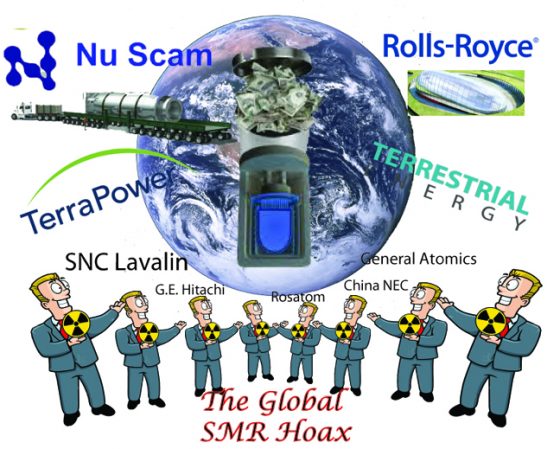
The problem is that hardly anyone in Congress has any real understanding of nuclear technology. The members are swept off their feet by promises of safe, non-carbon producing energy sources, especially when nuclear proponents use adjectives like “small” and “modular” and “advanced.” Congressional discussions on international aspects seldom get beyond “restoring America’s competitive advantage in nuclear energy.”
There is also little understanding of the limitations of international “safeguards,” the inspection system of the International Atomic Energy Agency (IAEA). (Is there any realistic recourse if the Saudis break the rules?) It is indicative of Saudi Arabia’s attitude toward the IAEA that it has used every stratagem to minimize its safeguards responsibilities. The minimization strategy does not violate IAEA requirements, yes, but a country anxious to demonstrate its nuclear bona fides should be more forthcoming in its nonproliferation cooperation.
The 2008 US-India civil nuclear agreement is an eternal warning about how American international nuclear policy can go off the rails when the president and Congress are swept away by visions of gaining an ally against China plus the prospect of dozens of power reactor sales. That agreement ran a truck through the Non-Proliferation Treaty, and none of the sales of nuclear power plants materialized.
The Saudis know Americans can be made to swallow principle—they recently succeeded in humbling the US president on human rights and oil prices—and so are unlikely to soften their stance on inclusion of enrichment in a 123 agreement. The White House will be looking for a formula that accepts it, but adds some restriction, or appearance of restriction, or another sweetener, perhaps related to Palestinian rights, that would allow members of the House and Senate to go along with inclusion of enrichment in a US-Saudi agreement.
Who would stand in the way? Not the Republicans: They love the Saudis. The one possibility is if Israel balks at any deal that includes Saudi enrichment. Opposition Leader Yair Lapid told Democratic Party lawmakers visiting Israel recently that he opposes a potential Israel-Saudi Arabia normalization deal that allows Riyadh to enrich uranium because it would harm Israel’s security. But the Israeli government’s response—that is, Prime Minister Netanyahu’s—has been ambiguous.
Somebody needs to stand up. Not only should the United States say no to Saudi enrichment, but Washington should also rethink the entire notion of nuclear power reactors in Saudi Arabia. Such reactors, coupled with a reprocessing facility to extract plutonium from used fuel, which the Saudis will surely want as well, provide the other path to a bomb, a plutonium bomb.
With its constant threat of wars, the Middle East is no place for nuclear reactors. Nuclear reactors in the region have been targeted in aerial attacks a dozen times. The safety issues that followed the capture by the Russians of the Zaporizhzhia power reactors in Ukraine should teach us something, too. Nuclear reactors do not belong in regions of potential conflict.
The ultimate argument against a US-Saudi nuclear deal is the crown prince himself, who is in line to be king and for practical purposes already is. He is a liar and a gruesome killer. Saudi Arabia, for all its modern trappings, is a primitive state with no effective checks on his powers. The king makes the laws, rules by decree, and is the chief judge. He has powers the British king gave up in the 13th century. Saudi Arabia has a long way to go before it will be a safe place for nuclear energy.
Niger is Far From a Typical Coup
Rather than send troops in response to the coup, France and the U.S. seem to favor a “Rwanda” type solution applied in Mozambique earlier this year, writes Vijay Prashad. Only this time ECOWAS would apply force.
SCHEERPOST, By Vijay Prashad / Peoples Dispatch 20 Aug 23
In July 26, 2023, Niger’s presidential guard moved against the sitting president—Mohamed Bazoum—and conducted a coup d’état. A brief contest among the various armed forces in the country ended with all the branches agreeing to the removal of Bazoum and the creation of a military junta led by Presidential Guard Commander General Abdourahamane “Omar” Tchiani. This is the fourth country in the Sahel region of Africa to have experienced a coup—the other three being Burkina Faso, Guinea, and Mali
The new government announced that it would stop allowing France to leech Niger’s uranium (one in three lightbulbs in France is powered by the uranium from the field in Arlit, northern Niger). Tchiani’s government revoked all military cooperation with France, which means that the 1,500 French troops will need to start packing their bags (as they did in both Burkina Faso and Mali).
Meanwhile, there has been no public statement about Airbase 201, the US facility in Agadez, a thousand kilometers from the country’s capital of Niamey. This is the largest drone base in the world and key to US operations across the Sahel. US troops have been told to remain on the base for now and drone flights have been suspended. The coup is certainly against the French presence in Niger, but this anti-French sentiment has not enveloped the US military footprint in the country.
Hours after the coup was stabilized, the main Western states—especially France and the United States—condemned the coup and asked for the reinstatement of Bazoum, who was immediately detained by the new government. But neither France nor the United States appeared to want to lead the response to the coup. Earlier this year, the French and US governments worried about an insurgency in northern Mozambique that impacted the assets of the Total-Exxon natural gas field off the coastline of Cabo Delgado. Rather than send in French and US troops, which would have polarized the population and increased anti-Western sentiment, the French and the United States made a deal for Rwanda to send its troops into Mozambique. Rwandan troops entered the northern province of Mozambique and shut down the insurgency. Both Western powers seem to favor a “Rwanda” type solution to the coup in Niger, but rather than have Rwanda enter Niger the hope was for ECOWAS—the Economic Community of West African States—to send in its force to restore Bazoum.
A day after the coup, ECOWAS condemned the coup. ECOWAS encompasses fifteen West African states, which in the past few years has suspended Burkina Faso and Mali from their ranks because of the coups in that country; Niger was also suspended from ECOWAS a few days after the coup. Formed in 1975 as an economic bloc, the grouping decided—despite no mandate in its original mission—to send in peacekeeping forces in 1990 into the heart of the Liberian Civil War. Since then, ECOWAS has sent its peacekeeping troops to several countries in the region, including Sierra Leone and Gambia. Not long after the coup in Niger, ECOWAS placed an embargo on the country that included suspending its right to basic commercial transactions with its neighbors, freezing Niger’s central bank assets that are held in regional banks, and stopping foreign aid (which comprises forty percent of Niger’s budget).
The most striking statement was that ECOWAS would take “all measures necessary to restore constitutional order.” An August 6 deadline given by ECOWAS expired because the bloc could not agree to send troops across the border. ECOWAS asked for a “standby force” to be assembled and ready to invade Niger. Then, ECOWAS said it would meet on August 12 in Accra, Ghana, to go over its options. That meeting was canceled for “technical reasons.” Mass demonstrations in key ECOWAS countries—such as Nigeria and Senegal—against an ECOWAS military invasion of Niger have confounded their own politicians to support an intervention. It would be naïve to suggest that no intervention is possible. Events are moving very fast, and there is no reason to suspect that ECOWAS will not intervene before August ends.
Coups in the Sahel
When ECOWAS suggested the possibility of an intervention into Niger, the military governments in Burkina Faso and Mali said that this would be a “declaration of war” not only against Niger but also against their countries…………………………………………………………………………….. https://scheerpost.com/2023/08/20/niger-is-far-from-a-typical-coup/
Putin profits from US and European reliance on Russian nuclear fuel
MARTHA MENDOZA and DASHA LITVINOVA, Yahoo News, 10 August 2023
WASHINGTON (AP) — The U.S. and its European allies are importing vast amounts of nuclear fuel and compounds from Russia, providing Moscow with hundreds of millions of dollars in badly needed revenue as it wages war on Ukraine.
The sales, which are legal and unsanctioned, have raised alarms from nonproliferation experts and elected officials who say the imports are helping to bankroll the development of Moscow’s nuclear arsenal and are complicating efforts to curtail Russia’s war-making abilities. The dependence on Russian nuclear products — used mostly to fuel civilian reactors — leaves the U.S. and its allies open to energy shortages if Russian President Vladimir Putin were to cut off supplies……
“We have to give money to the people who make weapons? That’s absurd,” said Henry Sokolski, executive director of the Washington-based Nonproliferation Policy Education Center. “If there isn’t a clear rule that prevents nuclear power providers from importing fuel from Russia — and it’s cheaper to get it from there — why wouldn’t they do it?”
Russia sold about $1.7 billion in nuclear products to firms in the U.S. and Europe, according to trade data and experts. The purchases occurred as the West has leveled stiff sanctions on Moscow over its 2022 invasion of Ukraine, blocking imports of such Russian staples as oil, gas, vodka and caviar.
The West has been reluctant to target Russia’s nuclear exports, however, because they play key roles in keeping reactors humming. Russia supplied the U.S. nuclear industry with about 12% of its uranium last year, according to the U.S. Energy Information Administration. Europe reported getting about 17% of its uranium in 2022 from Russia.
………………………………………. Many of the 30 countries generating nuclear energy in some 440 plants are importing radioactive materials from Russia’s state-owned energy corporation Rosatom and its subsidiaries. Rosatom leads the world in uranium enrichment, and is ranked third in uranium production and fuel fabrication, according to its 2022 annual report.
……………………………Rosatom’s CEO Alexei Likhachyov told the Russian newspaper Izvestia the company’s foreign business should total $200 billion over the next decade. That lucrative civilian business provides critical funds for Rosatom’s other major responsibility: designing and producing Russia’s atomic arsenal, experts say.
…………………………………. The value of Russian nuclear fuel and products sent to the U.S. hit $871 million last year, up from $689 million in 2021 and $610 million in 2020, according to the U.S. Census Bureau. In terms of weight, U.S. imports of uranium products from Russia nearly doubled from 6.3 tons in 2020 to 12.5 tons in 2022, according to trade data from ImportGenius.
……………………………………………………………………………….Europe is in a bind largely because it has 19 Russian-designed reactors in five countries that are fully dependent on Russian nuclear fuel. France also has a long history of relying on Russian-enriched uranium. In a report published in March, Greenpeace, citing the United Nations’ Comtrade database, showed that French imports of enriched uranium from Russia increased from 110 tons in 2021 to 312 tons in 2022.
Europe spent nearly $828 million (almost €750 million) last year on Russian nuclear industry products — including fuel elements, nuclear reactors, and machinery — according to Eurostat, the EU’s statistics office………………………………………more https://uk.news.yahoo.com/putin-profits-off-global-reliance-040103115.html?guccounter=1
Niger’s 20 million tonnes of radioactive waste
Uranium tailings in Niger are blowing in the wind and poisoning the water
By Linda Pentz Gunter
Note: In late July, a military coup ousted Niger’s president, Mohamed Bazoum. Since then, those who have declared themselves in charge have announced a halt to uranium exports to France. France relies on Niger for around 17% of the uranium that fuels its troubled commercial reactor fleet (with Kazakhstan and Uzbekistan the main suppliers). Since Russia’s invasion of Ukraine, European countries have been wrestling with their uncomfortable dependence on Russian-sourced uranium supplies. The Russian mercenary group, Wagner, already has a strong presence in Africa, and one that is now growing.
The grey mountain looms, mirage-like, on the horizon of the uranium mining town of Arlit in Niger. (Picture below is of Kyrgyzstan’s mountain of uranium tailings, not Niger’s – but the same type)

This lethal legacy has been confirmed by the independent French radiological research laboratory — Commission de Recherche et d’Information Indépendantes sur la Radioactivité — known in international circles simply as CRIIRAD. The lab, and its director, Bruno Chareyron, have been studying the situation around uranium mines in Niger for years. In 2009 his lab measured the radioactive levels of the wastes at 450,000 Becquerels per kilogram.
In a recent video, CRIIRAD describes the waste pile— mostly radioactive sludges — as “a sword of Damocles hanging over the drinking water supply for more than 100,000 people.” (You can watch the video below, in French with English subtitles. If you understand French, you can also listen to the CRIIRAD podcast episodes on this topic on Spotify.)
Under its subsidiary, Cominak, Orano exploited mines near Arlit for 40 years. Much of the uranium extracted was used as fuel for reactors in France and other countries in the European Union.
As part of the extraction process, radon gas was released into the air along with fine radioactive dusts, inhaled by the uranium mine workers and local residents. Radioactively contaminated materials ended up in workers’ homes, used to fashion furniture and utensils and even as construction materials for the homes themselves. And yet, no effort was made by Orano to contain this waste. Instead, as the Radio France International report says, “it was simply dumped on the ground.”
Some workers who were treated in the local Areva-run hospital were told their illnesses had nothing whatever to do with the uranium mines.
Diners along the Seine, sitting under their Parisian fairy lights, rarely if ever thought about the workers in Arlit who helped turn those lights on, and who suffered all the negative health consequences while enjoying none of the financial gain. Niger remains one of the world’s poorest countries.
Niger is yet another example of colonialism, its people burdened effectively with a radioactive smallpox blanket. It’s a story and a pattern that repeats itself across the world where people of color toil in uranium mines or other foreign-imposed government or corporate methods of exploitation, working to benefit white western customers thousands of miles away.
And it’s an exploitation that could now be prolonged at Orano’s only remaining uranium mine in Niger — Somair. Earlier this year, Orano and the then Niger government signed an agreement to extend operations at Somair until 2040, 11 years longer than its originally projected closure date. That agreement may now be in doubt under the current political uncertainty brought about by the July coup.
Imouraren in northern Niger, with potentially 200,000 tonnes of uranium deposits, is still also potentially within Orano’s sights, although what would become the world’s biggest uranium mine has been on hold for some time, even before the current coup.
Meanwhile, in Arlit, many live without electricity at all. Or even running water. That water, according to Chareyron, has already been contaminated by the 40 years of waste discharges from the mines —chemicals and heavy metals along with radioactive uranium and its daughter products such as radium and polonium— which have migrated into groundwater. Absent other alternatives, local populations are obligated to keep drinking it.
According to the Radio France International report, “Orano’s Niger subsidiary, Cominak, said that it will cover the radioactive mud with a two-metre layer of clay and rocks to contain the radiation.” But, even though it is a necessary first step to prevent further dispersal into the air, the measure will scarcely be an enduring barrier, given the wastes will be dangerous to human health for hundreds of thousands of years.
But while it is dangerous for Arlit locals to wash their hands in their radioactively contaminated water supply, has Cominak washed its hands of them? In the two years since the mines closed, nothing has happened to safeguard the waste piles.
Almoustapha Alhacen, a former mine worker who heads the local NGO, Aghir’n Man and collaborates with CRIIRAD, told Chareyron that the reason given for inaction is lack of financing.
In reality, the problem is an even bigger one than miserly corporate inaction. Worldwide, points out Chareyron, authorities have yet to figure out how to confine lethal radioactive waste safely over the longterm. The simple answer is that, when it comes to radioactive waste, no one really knows what to do.
Why The Niger Coup Has Sparked Concerns About Nuclear Power
Forbes, Ana Faguy, Forbes Staff, 1 Aug 23
When a coup left Niger’s democratically elected president detained and rebellious soldiers in charge of the West African nation last week, it also sparked concern about how the supply of uranium to European countries, used to fuel nuclear reactors, might be at risk —those fears materialized Monday when the junta reportedly said it was suspending exports if the heavy metal to France, but some European agencies are squashing those concerns and noting there’s enough uranium inventories to last a few years regardless of what happens in Niger.
While Niger only accounts for a small percentage of global production of uranium—about 5% according to the World Nuclear Association—it is a major supplier of uranium for France, which receives some 15% of its uranium supply from the Western African nation, according to Politico and the EU which gets more than 20% of its uranium from Niger, according to the Euratom Supply Agency.
The junta purportedly said it was suspending exports of uranium to France—Niger’s once longtime colonial ruler—immediately, the Financial Times reported Monday.
…………………………………EU officials have also tried to downplay concerns, with European Commission spokesman Adalbert Jahnz noting that EU utilities have sufficient inventories of natural uranium to mitigate short-term supply risks and “for the medium and long term there are enough deposits on the world market to cover the EU needs,” he said to AFP.
………………………………………..
The need for uranium in many European countries could prevent the EU from adopting nuclear sanctions against Russia, Phuc-Vinh Nguyen, an energy expert at the Jacques Delors Institute in Paris, told Politico. Uranium, and nuclear power more generally, is currently not subject to EU sanctions. If the supply of uranium decreases from Niger, then EU countries could look elsewhere to find supply. Meanwhile, Russia is one of the world’s largest uranium exporters, producing some 2,500 tons in 2022, according to the World Nuclear Association.
…………………………..If the militant leaders who took over in the coup—and expressed their dismay for how the Nigerien president has run the country—took Wagner up on his offer, it’s possible that his support could affect the amount of uranium supplied to the EU. https://www.forbes.com/sites/anafaguy/2023/08/01/why-the-niger-coup-has-sparked-concerns-about-nuclear-power/?sh=253224392738
Greenland refuses to allow exploitation for uranium
Energy Transition Minerals, formerly Greenland Minerals A/S, has been
informed by Naalakkersuisut that their application for an exploitation
permit in Kuannersuisut has been refused. The ministry announced this in a
short press release on Friday afternoon. Energy Transition Minerals has
applied for permission for exploitation at Kuannersuit in Narsaq,
targeting, among other things, rare earths, zinc and uranium.
Sermitsiaq 2nd June 2023
Iran increasing enriched uranium stocks, holding 23 times the limit, says nuclear watchdog
ABC News 1 June 23
Iran has significantly increased its stockpile of enriched uranium in recent months, continuing its nuclear escalation, a confidential report by the UN nuclear watchdog said.
Key points:
- Iran has enough uranium enriched to up to 60 per cent for two bombs
- The IAEA estimates Iran’s stockpile is now 23 times the 202.8-kg limit imposed by the 2015 deal
- The reports said Iran had given a satisfactory answer explaining the presence of uranium particles at one site
The agency, however, noted progress in its cooperation with Iran in a separate report saying it has decided to close the file on nuclear material at an undeclared site, an issue which has long exacerbated relations between the two parties.
The two confidential reports come days before the board of governors of the International Atomic Energy Agency (IAEA) is due to meet to review progress in addressing the watchdog’s remaining concerns…………………………………………………………….. more https://www.abc.net.au/news/2023-06-01/iran-nuclear-monitoring-equipment-iaea/102418980
U.S. planning test reactor to run on weapons-grade uranium.

Use of highly enriched fuel in civilian reactor would contravene decades-old nonproliferation policy
23 MAY 2023, BYADRIAN CHO, https://www.science.org/content/article/u-s-planning-test-reactor-run-weapons-grade-uranium
The U.S. Department of Energy (DOE) is planning a small test reactor that would burn a large amount of weapons-grade uranium, according to the project’s draft environmental assessment. The experiment, to be built in a cost-sharing arrangement, would provide data for a new type of power reactor being developed by TerraPower and Southern Company Services. But the use of highly enriched uranium, first reported by Physics Today, would contravene the U.S. policy of removing HEU from civilian reactors around the world to keep it from being made into bombs.
The decision is “discouraging,” says Edwin Lyman, a physicist and director for nuclear safety at the Union of Concerned Scientists. “When the U.S. preaches the nonproliferation gospel, it should practice what it preaches.” Alan Kuperman, a political scientist at the University of Texas at Austin, says, “There was not by any means adequate public disclosure by the department that they were planning to contradict
5 decades of U.S. nonproliferation policy.”
Neither DOE nor Idaho National Laboratory (INL), where the test reactor will be built, would comment on the issue
The Molten Chloride Reactor Experiment (MCRE) would differ dramatically from conventional power reactors. They consume uranium fuel enriched to roughly 4% uranium-235, the fissile isotope, and encased in metal rods. Some uranium atoms split or fission to release energy and neutrons, which then split other uranium atoms in a chain reaction. Pressurized water flows around the rods both to slow the neutrons so that they split atoms more effectively and to carry heat to steam generators that ultimately drive turbines to generate electricity.
The MCRE would instead be cooled by molten salt, into which the uranium would be dissolved. In theory, a molten salt reactor could burn used fuel from conventional reactors and generate less long-lived radioactive waste, Kuperman says. Because the salt would not slow the neutrons, the reactor would need fuel with higher enrichment, which would generate more neutrons.
TerraPower’s commercial reactor would use fuel enriched to as much as 19% uranium-235, so-called high-assay, low-enriched fuel. But the MCRE will run on HEU enriched to greater than 90%—630 kilograms of it. That’s hundreds of times more than some research reactors use and enough to make dozens of bombs, Kuperman estimates. The uranium is leftover from another research reactor that ran at INL from 1969 to 1990, he says.
Running on HEU should enable the MCRE to produce the data needed to design and license the molten-salt power reactor while remaining relatively small and inexpensive, Lyman says. DOE would cover $90 million of the MCRE’s $113 million cost, and the reactor would start up in a few years. But its thrifty design would cost the United States credibility, says John Tierney, executive director of the Center for Arms Control and Non-Proliferation. “This is going to be seen as hypocritical by many, many people.”
In the 1950s and ’60s, the U.S. helped build research reactors around the world, providing HEU for many of them. In the 1970s, it changed course and led efforts to remove HEU from those reactors and repatriate it. Of the 171 research reactors that ran on HEU, 71 have switched to low-enriched fuel and
28 have shut down, according to the International Atomic Energy Agency—although five U.S. research reactors still use HEU.
The issue highlights a tension between DOE’s Office of Nuclear Energy, which is eager to develop new reactors, and its National Nuclear Security Administration, which controls nuclear weapons and works for nonproliferation, Kuperman says. He and others have drafted a letter to DOE and President Joe Biden’s administration to encourage them to reconsider the plan. “If they make the wrong decision, I think they’re going to undermine much more of the nonproliferation regime than they realize.”
1 This Month

of the week – Shut Down Drone Warfare!


Tell the Ukrainian Government to Drop Prosecution of Peace Activist Yurii Sheliazhenko

Petition to revoke the licensing of the Near Surface Nuclear Disposal Facility (NSDF) at Chalk River. https://www.ourcommons.ca/petitions/en/Petition/Details?Petition=e-7247
To see nuclear-related stories in greater depth and intensity – go to https://nuclearinformation.wordpress.com
-
Archives
- March 2026 (251)
- February 2026 (268)
- January 2026 (308)
- December 2025 (358)
- November 2025 (359)
- October 2025 (376)
- September 2025 (257)
- August 2025 (319)
- July 2025 (230)
- June 2025 (348)
- May 2025 (261)
- April 2025 (305)
-
Categories
- 1
- 1 NUCLEAR ISSUES
- business and costs
- climate change
- culture and arts
- ENERGY
- environment
- health
- history
- indigenous issues
- Legal
- marketing of nuclear
- media
- opposition to nuclear
- PERSONAL STORIES
- politics
- politics international
- Religion and ethics
- safety
- secrets,lies and civil liberties
- spinbuster
- technology
- Uranium
- wastes
- weapons and war
- Women
- 2 WORLD
- ACTION
- AFRICA
- Atrocities
- AUSTRALIA
- Christina's notes
- Christina's themes
- culture and arts
- Events
- Fuk 2022
- Fuk 2023
- Fukushima 2017
- Fukushima 2018
- fukushima 2019
- Fukushima 2020
- Fukushima 2021
- general
- global warming
- Humour (God we need it)
- Nuclear
- RARE EARTHS
- Reference
- resources – print
- Resources -audiovicual
- Weekly Newsletter
- World
- World Nuclear
- YouTube
-
RSS
Entries RSS
Comments RSS
 nuclear-news