US Doubles Imports of Russian Uranium to Largest Amount Since 2005

– The United States bought 416 tonnes of uranium from Russia in the first half of 2023, which is 2.2 times bigger than in the same period last year and the largest amount since 2005, Sputnik has calculated using data of the US federal statistical system.
In the first six months of 2022, the US bought 188 tonnes of uranium from Russia, and 418 tonnes in January-July 2005.
Russia supplies the US only with uranium-235 enriched fuel, which is the country’s main “radioactive” imports. However, the analysis also took into account data on imports of natural and depleted uranium, which the US purchases from other countries.
The cost of imported Russian uranium amounted to $696.5 million, which is the highest value since 2002, the year when the US started to break data down by months. The cost of supplies increased 2.5 times year-over-year, and Russia’s share in US uranium imports grew by 13 percentage points to 32%.
The US also significantly increased its purchases of uranium from the United Kingdom in 2023 – by 28% to $383.1 million, bringing it to just under 18% of all imports. The most significant increase was observed in France’s exports, which stood at $319 million, 15% of total imports, in 2023 against $1.9 million a year earlier.
There should be no Saudi uranium enrichment

The ultimate argument against a US-Saudi nuclear deal is the crown prince himself, who is in line to be king and for practical purposes already is.
He is a liar and a gruesome killer. Saudi Arabia, for all its modern trappings, is a primitive state with no effective checks on his powers. The king makes the laws, rules by decree, and is the chief judge. He has powers the British king gave up in the 13th century. Saudi Arabia has a long way to go before it will be a safe place for nuclear energy.
By Victor Gilinsky | August 28, 2023
https://thebulletin.org/2023/08/there-should-be-no-saudi-uranium-enrichment/?utm_source=Newsletter&utm_medium=Email&utm_campaign=MondayNewsletter08282023&utm_content=NuclearRisk_SaudiUranium_08282023&utm_source=Newsletter&utm_medium=Email&utm_campaign=MondayNewsletter08282023&utm_content=NuclearRisk_SaudiUranium_08282023
There is increasing talk of a United States-brokered “grand bargain” on Middle East security, the core of which would be normalization of ties between Israel and Saudi Arabia. It isn’t clear what motivates Joe Biden to press for this deal now. The obvious goal would involve the eternal search for peace in the Middle East, but there are hints that such a bargain may have more to do with keeping the Saudis out of China’s orbit.
One thing we know, Biden’s lieutenants are lobbying hard in the Senate for acceptance of some version of far-reaching demands from the Saudi crown prince, Mohammed bin Salman, among them access to uranium enrichment technology that would ostensibly provide fuel for future Saudi nuclear power plants. Indeed, enrichment is a step in the production of nuclear reactor fuel. It is also a vital part of one of two paths to the atomic bomb.
One thing we know, Biden’s lieutenants are lobbying hard in the Senate for acceptance of some version of far-reaching demands from the Saudi crown prince, Mohammed bin Salman, among them access to uranium enrichment technology that would ostensibly provide fuel for future Saudi nuclear power plants. Indeed, enrichment is a step in the production of nuclear reactor fuel. It is also a vital part of one of two paths to the atomic bomb.
That isn’t of course the polite version of the crown prince’s plan. He says he wants to use domestic uranium, of which the Saudis claimed to have large deposits, to fuel civilian nuclear power reactors. He wants to produce fuel domestically, ergo he needs to acquire enrichment technology. But despite Saudi claims, there are no significant uranium deposits in the country. Recent reports reveal that the teams of geologists sent to search for it have turned up empty-handed. That hasn’t, however, caused the crown prince to lose interest in enrichment, which is itself a revealing fact about his intentions—and his reliance on American cupidity.
To cope with what the Saudis regard as excessive suspicion of others, they have suggested they are open to accepting some modest additional oversight arrangements, which they cynically expect Congress to accept after members engage in some ritual handwringing.
You would think the Saudi insistence on inclusion of enrichment, no matter how restricted, would be a non-starter for a US-Saudi “123” agreement for nuclear cooperation. (Compliance with Section 123 of the Atomic Energy Act is essential for any significant US-Saudi nuclear trade.) But such common sense is a thin reed to lean on when it comes to Washington nuclear politics. Powerful lobbies have been pushing for years for sale of power reactors in the Middle East and for generous subsidies to allow this to happen. The departments of Energy and State will be supporting this, too, claiming that international “safeguards” would be effective in preventing misuse of civilian nuclear facilities. The official line on nuclear energy is still Atoms for Peace, as it has been since President Eisenhower’s 1953 speech. Recall that George W. Bush said even Iranian power reactors, by themselves, were perfectly legitimate.
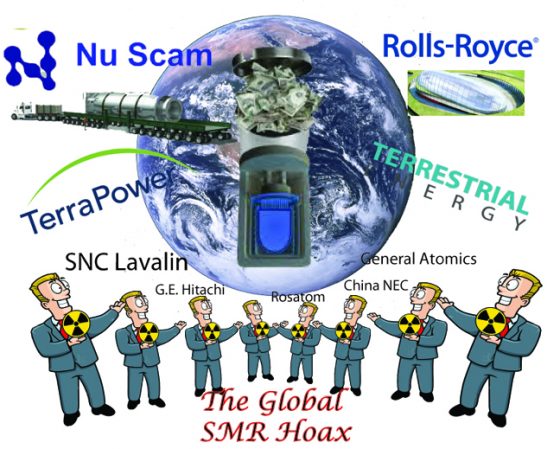
The problem is that hardly anyone in Congress has any real understanding of nuclear technology. The members are swept off their feet by promises of safe, non-carbon producing energy sources, especially when nuclear proponents use adjectives like “small” and “modular” and “advanced.” Congressional discussions on international aspects seldom get beyond “restoring America’s competitive advantage in nuclear energy.”
There is also little understanding of the limitations of international “safeguards,” the inspection system of the International Atomic Energy Agency (IAEA). (Is there any realistic recourse if the Saudis break the rules?) It is indicative of Saudi Arabia’s attitude toward the IAEA that it has used every stratagem to minimize its safeguards responsibilities. The minimization strategy does not violate IAEA requirements, yes, but a country anxious to demonstrate its nuclear bona fides should be more forthcoming in its nonproliferation cooperation.
The 2008 US-India civil nuclear agreement is an eternal warning about how American international nuclear policy can go off the rails when the president and Congress are swept away by visions of gaining an ally against China plus the prospect of dozens of power reactor sales. That agreement ran a truck through the Non-Proliferation Treaty, and none of the sales of nuclear power plants materialized.
The Saudis know Americans can be made to swallow principle—they recently succeeded in humbling the US president on human rights and oil prices—and so are unlikely to soften their stance on inclusion of enrichment in a 123 agreement. The White House will be looking for a formula that accepts it, but adds some restriction, or appearance of restriction, or another sweetener, perhaps related to Palestinian rights, that would allow members of the House and Senate to go along with inclusion of enrichment in a US-Saudi agreement.
Who would stand in the way? Not the Republicans: They love the Saudis. The one possibility is if Israel balks at any deal that includes Saudi enrichment. Opposition Leader Yair Lapid told Democratic Party lawmakers visiting Israel recently that he opposes a potential Israel-Saudi Arabia normalization deal that allows Riyadh to enrich uranium because it would harm Israel’s security. But the Israeli government’s response—that is, Prime Minister Netanyahu’s—has been ambiguous.
Somebody needs to stand up. Not only should the United States say no to Saudi enrichment, but Washington should also rethink the entire notion of nuclear power reactors in Saudi Arabia. Such reactors, coupled with a reprocessing facility to extract plutonium from used fuel, which the Saudis will surely want as well, provide the other path to a bomb, a plutonium bomb.
With its constant threat of wars, the Middle East is no place for nuclear reactors. Nuclear reactors in the region have been targeted in aerial attacks a dozen times. The safety issues that followed the capture by the Russians of the Zaporizhzhia power reactors in Ukraine should teach us something, too. Nuclear reactors do not belong in regions of potential conflict.
The ultimate argument against a US-Saudi nuclear deal is the crown prince himself, who is in line to be king and for practical purposes already is. He is a liar and a gruesome killer. Saudi Arabia, for all its modern trappings, is a primitive state with no effective checks on his powers. The king makes the laws, rules by decree, and is the chief judge. He has powers the British king gave up in the 13th century. Saudi Arabia has a long way to go before it will be a safe place for nuclear energy.
Niger is Far From a Typical Coup
Rather than send troops in response to the coup, France and the U.S. seem to favor a “Rwanda” type solution applied in Mozambique earlier this year, writes Vijay Prashad. Only this time ECOWAS would apply force.
SCHEERPOST, By Vijay Prashad / Peoples Dispatch 20 Aug 23
In July 26, 2023, Niger’s presidential guard moved against the sitting president—Mohamed Bazoum—and conducted a coup d’état. A brief contest among the various armed forces in the country ended with all the branches agreeing to the removal of Bazoum and the creation of a military junta led by Presidential Guard Commander General Abdourahamane “Omar” Tchiani. This is the fourth country in the Sahel region of Africa to have experienced a coup—the other three being Burkina Faso, Guinea, and Mali
The new government announced that it would stop allowing France to leech Niger’s uranium (one in three lightbulbs in France is powered by the uranium from the field in Arlit, northern Niger). Tchiani’s government revoked all military cooperation with France, which means that the 1,500 French troops will need to start packing their bags (as they did in both Burkina Faso and Mali).
Meanwhile, there has been no public statement about Airbase 201, the US facility in Agadez, a thousand kilometers from the country’s capital of Niamey. This is the largest drone base in the world and key to US operations across the Sahel. US troops have been told to remain on the base for now and drone flights have been suspended. The coup is certainly against the French presence in Niger, but this anti-French sentiment has not enveloped the US military footprint in the country.
Hours after the coup was stabilized, the main Western states—especially France and the United States—condemned the coup and asked for the reinstatement of Bazoum, who was immediately detained by the new government. But neither France nor the United States appeared to want to lead the response to the coup. Earlier this year, the French and US governments worried about an insurgency in northern Mozambique that impacted the assets of the Total-Exxon natural gas field off the coastline of Cabo Delgado. Rather than send in French and US troops, which would have polarized the population and increased anti-Western sentiment, the French and the United States made a deal for Rwanda to send its troops into Mozambique. Rwandan troops entered the northern province of Mozambique and shut down the insurgency. Both Western powers seem to favor a “Rwanda” type solution to the coup in Niger, but rather than have Rwanda enter Niger the hope was for ECOWAS—the Economic Community of West African States—to send in its force to restore Bazoum.
A day after the coup, ECOWAS condemned the coup. ECOWAS encompasses fifteen West African states, which in the past few years has suspended Burkina Faso and Mali from their ranks because of the coups in that country; Niger was also suspended from ECOWAS a few days after the coup. Formed in 1975 as an economic bloc, the grouping decided—despite no mandate in its original mission—to send in peacekeeping forces in 1990 into the heart of the Liberian Civil War. Since then, ECOWAS has sent its peacekeeping troops to several countries in the region, including Sierra Leone and Gambia. Not long after the coup in Niger, ECOWAS placed an embargo on the country that included suspending its right to basic commercial transactions with its neighbors, freezing Niger’s central bank assets that are held in regional banks, and stopping foreign aid (which comprises forty percent of Niger’s budget).
The most striking statement was that ECOWAS would take “all measures necessary to restore constitutional order.” An August 6 deadline given by ECOWAS expired because the bloc could not agree to send troops across the border. ECOWAS asked for a “standby force” to be assembled and ready to invade Niger. Then, ECOWAS said it would meet on August 12 in Accra, Ghana, to go over its options. That meeting was canceled for “technical reasons.” Mass demonstrations in key ECOWAS countries—such as Nigeria and Senegal—against an ECOWAS military invasion of Niger have confounded their own politicians to support an intervention. It would be naïve to suggest that no intervention is possible. Events are moving very fast, and there is no reason to suspect that ECOWAS will not intervene before August ends.
Coups in the Sahel
When ECOWAS suggested the possibility of an intervention into Niger, the military governments in Burkina Faso and Mali said that this would be a “declaration of war” not only against Niger but also against their countries…………………………………………………………………………….. https://scheerpost.com/2023/08/20/niger-is-far-from-a-typical-coup/
Putin profits from US and European reliance on Russian nuclear fuel
MARTHA MENDOZA and DASHA LITVINOVA, Yahoo News, 10 August 2023
WASHINGTON (AP) — The U.S. and its European allies are importing vast amounts of nuclear fuel and compounds from Russia, providing Moscow with hundreds of millions of dollars in badly needed revenue as it wages war on Ukraine.
The sales, which are legal and unsanctioned, have raised alarms from nonproliferation experts and elected officials who say the imports are helping to bankroll the development of Moscow’s nuclear arsenal and are complicating efforts to curtail Russia’s war-making abilities. The dependence on Russian nuclear products — used mostly to fuel civilian reactors — leaves the U.S. and its allies open to energy shortages if Russian President Vladimir Putin were to cut off supplies……
“We have to give money to the people who make weapons? That’s absurd,” said Henry Sokolski, executive director of the Washington-based Nonproliferation Policy Education Center. “If there isn’t a clear rule that prevents nuclear power providers from importing fuel from Russia — and it’s cheaper to get it from there — why wouldn’t they do it?”
Russia sold about $1.7 billion in nuclear products to firms in the U.S. and Europe, according to trade data and experts. The purchases occurred as the West has leveled stiff sanctions on Moscow over its 2022 invasion of Ukraine, blocking imports of such Russian staples as oil, gas, vodka and caviar.
The West has been reluctant to target Russia’s nuclear exports, however, because they play key roles in keeping reactors humming. Russia supplied the U.S. nuclear industry with about 12% of its uranium last year, according to the U.S. Energy Information Administration. Europe reported getting about 17% of its uranium in 2022 from Russia.
………………………………………. Many of the 30 countries generating nuclear energy in some 440 plants are importing radioactive materials from Russia’s state-owned energy corporation Rosatom and its subsidiaries. Rosatom leads the world in uranium enrichment, and is ranked third in uranium production and fuel fabrication, according to its 2022 annual report.
……………………………Rosatom’s CEO Alexei Likhachyov told the Russian newspaper Izvestia the company’s foreign business should total $200 billion over the next decade. That lucrative civilian business provides critical funds for Rosatom’s other major responsibility: designing and producing Russia’s atomic arsenal, experts say.
…………………………………. The value of Russian nuclear fuel and products sent to the U.S. hit $871 million last year, up from $689 million in 2021 and $610 million in 2020, according to the U.S. Census Bureau. In terms of weight, U.S. imports of uranium products from Russia nearly doubled from 6.3 tons in 2020 to 12.5 tons in 2022, according to trade data from ImportGenius.
……………………………………………………………………………….Europe is in a bind largely because it has 19 Russian-designed reactors in five countries that are fully dependent on Russian nuclear fuel. France also has a long history of relying on Russian-enriched uranium. In a report published in March, Greenpeace, citing the United Nations’ Comtrade database, showed that French imports of enriched uranium from Russia increased from 110 tons in 2021 to 312 tons in 2022.
Europe spent nearly $828 million (almost €750 million) last year on Russian nuclear industry products — including fuel elements, nuclear reactors, and machinery — according to Eurostat, the EU’s statistics office………………………………………more https://uk.news.yahoo.com/putin-profits-off-global-reliance-040103115.html?guccounter=1
Niger’s 20 million tonnes of radioactive waste
Uranium tailings in Niger are blowing in the wind and poisoning the water
By Linda Pentz Gunter
Note: In late July, a military coup ousted Niger’s president, Mohamed Bazoum. Since then, those who have declared themselves in charge have announced a halt to uranium exports to France. France relies on Niger for around 17% of the uranium that fuels its troubled commercial reactor fleet (with Kazakhstan and Uzbekistan the main suppliers). Since Russia’s invasion of Ukraine, European countries have been wrestling with their uncomfortable dependence on Russian-sourced uranium supplies. The Russian mercenary group, Wagner, already has a strong presence in Africa, and one that is now growing.
The grey mountain looms, mirage-like, on the horizon of the uranium mining town of Arlit in Niger. (Picture below is of Kyrgyzstan’s mountain of uranium tailings, not Niger’s – but the same type)

This lethal legacy has been confirmed by the independent French radiological research laboratory — Commission de Recherche et d’Information Indépendantes sur la Radioactivité — known in international circles simply as CRIIRAD. The lab, and its director, Bruno Chareyron, have been studying the situation around uranium mines in Niger for years. In 2009 his lab measured the radioactive levels of the wastes at 450,000 Becquerels per kilogram.
In a recent video, CRIIRAD describes the waste pile— mostly radioactive sludges — as “a sword of Damocles hanging over the drinking water supply for more than 100,000 people.” (You can watch the video below, in French with English subtitles. If you understand French, you can also listen to the CRIIRAD podcast episodes on this topic on Spotify.)
Under its subsidiary, Cominak, Orano exploited mines near Arlit for 40 years. Much of the uranium extracted was used as fuel for reactors in France and other countries in the European Union.
As part of the extraction process, radon gas was released into the air along with fine radioactive dusts, inhaled by the uranium mine workers and local residents. Radioactively contaminated materials ended up in workers’ homes, used to fashion furniture and utensils and even as construction materials for the homes themselves. And yet, no effort was made by Orano to contain this waste. Instead, as the Radio France International report says, “it was simply dumped on the ground.”
Some workers who were treated in the local Areva-run hospital were told their illnesses had nothing whatever to do with the uranium mines.
Diners along the Seine, sitting under their Parisian fairy lights, rarely if ever thought about the workers in Arlit who helped turn those lights on, and who suffered all the negative health consequences while enjoying none of the financial gain. Niger remains one of the world’s poorest countries.
Niger is yet another example of colonialism, its people burdened effectively with a radioactive smallpox blanket. It’s a story and a pattern that repeats itself across the world where people of color toil in uranium mines or other foreign-imposed government or corporate methods of exploitation, working to benefit white western customers thousands of miles away.
And it’s an exploitation that could now be prolonged at Orano’s only remaining uranium mine in Niger — Somair. Earlier this year, Orano and the then Niger government signed an agreement to extend operations at Somair until 2040, 11 years longer than its originally projected closure date. That agreement may now be in doubt under the current political uncertainty brought about by the July coup.
Imouraren in northern Niger, with potentially 200,000 tonnes of uranium deposits, is still also potentially within Orano’s sights, although what would become the world’s biggest uranium mine has been on hold for some time, even before the current coup.
Meanwhile, in Arlit, many live without electricity at all. Or even running water. That water, according to Chareyron, has already been contaminated by the 40 years of waste discharges from the mines —chemicals and heavy metals along with radioactive uranium and its daughter products such as radium and polonium— which have migrated into groundwater. Absent other alternatives, local populations are obligated to keep drinking it.
According to the Radio France International report, “Orano’s Niger subsidiary, Cominak, said that it will cover the radioactive mud with a two-metre layer of clay and rocks to contain the radiation.” But, even though it is a necessary first step to prevent further dispersal into the air, the measure will scarcely be an enduring barrier, given the wastes will be dangerous to human health for hundreds of thousands of years.
But while it is dangerous for Arlit locals to wash their hands in their radioactively contaminated water supply, has Cominak washed its hands of them? In the two years since the mines closed, nothing has happened to safeguard the waste piles.
Almoustapha Alhacen, a former mine worker who heads the local NGO, Aghir’n Man and collaborates with CRIIRAD, told Chareyron that the reason given for inaction is lack of financing.
In reality, the problem is an even bigger one than miserly corporate inaction. Worldwide, points out Chareyron, authorities have yet to figure out how to confine lethal radioactive waste safely over the longterm. The simple answer is that, when it comes to radioactive waste, no one really knows what to do.
Why The Niger Coup Has Sparked Concerns About Nuclear Power
Forbes, Ana Faguy, Forbes Staff, 1 Aug 23
When a coup left Niger’s democratically elected president detained and rebellious soldiers in charge of the West African nation last week, it also sparked concern about how the supply of uranium to European countries, used to fuel nuclear reactors, might be at risk —those fears materialized Monday when the junta reportedly said it was suspending exports if the heavy metal to France, but some European agencies are squashing those concerns and noting there’s enough uranium inventories to last a few years regardless of what happens in Niger.
While Niger only accounts for a small percentage of global production of uranium—about 5% according to the World Nuclear Association—it is a major supplier of uranium for France, which receives some 15% of its uranium supply from the Western African nation, according to Politico and the EU which gets more than 20% of its uranium from Niger, according to the Euratom Supply Agency.
The junta purportedly said it was suspending exports of uranium to France—Niger’s once longtime colonial ruler—immediately, the Financial Times reported Monday.
…………………………………EU officials have also tried to downplay concerns, with European Commission spokesman Adalbert Jahnz noting that EU utilities have sufficient inventories of natural uranium to mitigate short-term supply risks and “for the medium and long term there are enough deposits on the world market to cover the EU needs,” he said to AFP.
………………………………………..
The need for uranium in many European countries could prevent the EU from adopting nuclear sanctions against Russia, Phuc-Vinh Nguyen, an energy expert at the Jacques Delors Institute in Paris, told Politico. Uranium, and nuclear power more generally, is currently not subject to EU sanctions. If the supply of uranium decreases from Niger, then EU countries could look elsewhere to find supply. Meanwhile, Russia is one of the world’s largest uranium exporters, producing some 2,500 tons in 2022, according to the World Nuclear Association.
…………………………..If the militant leaders who took over in the coup—and expressed their dismay for how the Nigerien president has run the country—took Wagner up on his offer, it’s possible that his support could affect the amount of uranium supplied to the EU. https://www.forbes.com/sites/anafaguy/2023/08/01/why-the-niger-coup-has-sparked-concerns-about-nuclear-power/?sh=253224392738
Greenland refuses to allow exploitation for uranium
Energy Transition Minerals, formerly Greenland Minerals A/S, has been
informed by Naalakkersuisut that their application for an exploitation
permit in Kuannersuisut has been refused. The ministry announced this in a
short press release on Friday afternoon. Energy Transition Minerals has
applied for permission for exploitation at Kuannersuit in Narsaq,
targeting, among other things, rare earths, zinc and uranium.
Sermitsiaq 2nd June 2023
Iran increasing enriched uranium stocks, holding 23 times the limit, says nuclear watchdog
ABC News 1 June 23
Iran has significantly increased its stockpile of enriched uranium in recent months, continuing its nuclear escalation, a confidential report by the UN nuclear watchdog said.
Key points:
- Iran has enough uranium enriched to up to 60 per cent for two bombs
- The IAEA estimates Iran’s stockpile is now 23 times the 202.8-kg limit imposed by the 2015 deal
- The reports said Iran had given a satisfactory answer explaining the presence of uranium particles at one site
The agency, however, noted progress in its cooperation with Iran in a separate report saying it has decided to close the file on nuclear material at an undeclared site, an issue which has long exacerbated relations between the two parties.
The two confidential reports come days before the board of governors of the International Atomic Energy Agency (IAEA) is due to meet to review progress in addressing the watchdog’s remaining concerns…………………………………………………………….. more https://www.abc.net.au/news/2023-06-01/iran-nuclear-monitoring-equipment-iaea/102418980
U.S. planning test reactor to run on weapons-grade uranium.

Use of highly enriched fuel in civilian reactor would contravene decades-old nonproliferation policy
23 MAY 2023, BYADRIAN CHO, https://www.science.org/content/article/u-s-planning-test-reactor-run-weapons-grade-uranium
The U.S. Department of Energy (DOE) is planning a small test reactor that would burn a large amount of weapons-grade uranium, according to the project’s draft environmental assessment. The experiment, to be built in a cost-sharing arrangement, would provide data for a new type of power reactor being developed by TerraPower and Southern Company Services. But the use of highly enriched uranium, first reported by Physics Today, would contravene the U.S. policy of removing HEU from civilian reactors around the world to keep it from being made into bombs.
The decision is “discouraging,” says Edwin Lyman, a physicist and director for nuclear safety at the Union of Concerned Scientists. “When the U.S. preaches the nonproliferation gospel, it should practice what it preaches.” Alan Kuperman, a political scientist at the University of Texas at Austin, says, “There was not by any means adequate public disclosure by the department that they were planning to contradict
5 decades of U.S. nonproliferation policy.”
Neither DOE nor Idaho National Laboratory (INL), where the test reactor will be built, would comment on the issue
The Molten Chloride Reactor Experiment (MCRE) would differ dramatically from conventional power reactors. They consume uranium fuel enriched to roughly 4% uranium-235, the fissile isotope, and encased in metal rods. Some uranium atoms split or fission to release energy and neutrons, which then split other uranium atoms in a chain reaction. Pressurized water flows around the rods both to slow the neutrons so that they split atoms more effectively and to carry heat to steam generators that ultimately drive turbines to generate electricity.
The MCRE would instead be cooled by molten salt, into which the uranium would be dissolved. In theory, a molten salt reactor could burn used fuel from conventional reactors and generate less long-lived radioactive waste, Kuperman says. Because the salt would not slow the neutrons, the reactor would need fuel with higher enrichment, which would generate more neutrons.
TerraPower’s commercial reactor would use fuel enriched to as much as 19% uranium-235, so-called high-assay, low-enriched fuel. But the MCRE will run on HEU enriched to greater than 90%—630 kilograms of it. That’s hundreds of times more than some research reactors use and enough to make dozens of bombs, Kuperman estimates. The uranium is leftover from another research reactor that ran at INL from 1969 to 1990, he says.
Running on HEU should enable the MCRE to produce the data needed to design and license the molten-salt power reactor while remaining relatively small and inexpensive, Lyman says. DOE would cover $90 million of the MCRE’s $113 million cost, and the reactor would start up in a few years. But its thrifty design would cost the United States credibility, says John Tierney, executive director of the Center for Arms Control and Non-Proliferation. “This is going to be seen as hypocritical by many, many people.”
In the 1950s and ’60s, the U.S. helped build research reactors around the world, providing HEU for many of them. In the 1970s, it changed course and led efforts to remove HEU from those reactors and repatriate it. Of the 171 research reactors that ran on HEU, 71 have switched to low-enriched fuel and
28 have shut down, according to the International Atomic Energy Agency—although five U.S. research reactors still use HEU.
The issue highlights a tension between DOE’s Office of Nuclear Energy, which is eager to develop new reactors, and its National Nuclear Security Administration, which controls nuclear weapons and works for nonproliferation, Kuperman says. He and others have drafted a letter to DOE and President Joe Biden’s administration to encourage them to reconsider the plan. “If they make the wrong decision, I think they’re going to undermine much more of the nonproliferation regime than they realize.”
China’s nuclear ambitions get a boost from Russia, but is energy the only goal?
- Moscow is feeding Beijing’s growing appetite for highly enriched uranium, but observers say those supplies could be used for nuclear weapons
- China will replace the US to become the world’s top uranium buyer by 2030, experts say
Liu Zhen, 13 May, 2023, SCMP,
China is importing highly enriched uranium from Russia to produce energy, but observers caution that Beijing also plans to expand its nuclear arsenal. Photo: Shutterstock
The confirmation came last week when Russia said it had agreed to supply highly enriched uranium-235 to energy-hungry China over the next three years.
The announcement backed up reports that the shipments of nuclear fuel – enriched up to 30 per cent – were part of a deal to supply a demonstration fast-neutron power plant, a technology that could help China ease its shortage of nuclear fuel.
…….. with the enriched uranium fuelling a demonstration project for the new technology, China could improve its output of nuclear fuel and go some way to overcoming itst supply problem.
The final product would be plutonium 239, an artificial element that is primarily used in nuclear warheads – and that worries the West.
Although never officially admitted, Beijing is believed to be expanding the country’s nuclear arsenal, in line with President Xi Jinping’s pledge at last October’s 20th Communist Party congress to “strengthen strategic deterrence” as military tensions with the United States and its allies rise.
The US Department of Defence (DOD) has estimated China will increase from 400 warheads today to 1,500 by 2035.
……………………………………………………… With its two 600 megawatt power generators, the CFR-600 is not particularly large and is only considered a “demonstration project”. By comparison, the Daya Bay Nuclear Power Plant near Hong Kong, which has been operating since the 1990s, has two 944 megawatts generators.
In March, US DOD official John Plumb described the China-Russia cooperation deal as “very troubling”, but China’s foreign ministry has defended the arrangement as “perfectly normal and we do not see anything wrong about it”.
………………………… Fast-neutron reactors are an advanced fourth-generation nuclear power plant technology, which function to generate power, multiply nuclear fuel, and incinerate long-lived radionuclides, according to Xue Xiaogang, head of the China Institute of Atomic Energy Science.
……………………………………………. Russia has for decades been a leader in fast-neutron reactor technology, and last year its Beloyarsk BN-800 reactor began running completely on reprocessed spent fuel known as MOX.
But China’s imports of 30 per cent concentrated uranium-235 fuel for the Xiapu CFR-600 meant it was still at an earlier stage of technological development with many obstacles to overcome, said the researcher. https://www.scmp.com/news/china/military/article/3220391/chinas-nuclear-ambitions-get-boost-russia-energy-only-goal
US nuclear companies urge Congress for $billions, as Russia’s nuclear industry profits from both sides of the Ukraine war

U.S. companies collectively sent almost $1 billion last year to Rosatom.
“That’s money that’s going right into the defense complex in Russia,”
“We’re funding both sides of the war.”
The West Needs Russia to Power Its Nuclear Comeback. WSJ 10 May 23
U.S., Europe add reactors but still heavily dependent on Moscow for crucial ingredients to produce fuel
Nuclear power in the West is having a long-awaited revival, with new reactors opening in the U.S. and Europe and fresh momentum toward building more soon.
A gaping hole in the plan: The West doesn’t have enough nuclear fuel—and lacks the capacity to swiftly ramp up production. Even more vexing, the biggest source of critical ingredients is Russia and its state monopoly, Rosatom, which is implicated in supporting the war in Ukraine………….
Nuclear power supplies nearly 20% of U.S. electricity, and roughly 25% of European electricity, but in recent decades has struggled to gain traction in most of the West as a green alternative to fossil fuels, for reasons ranging from cost to waste disposal and an erosion of expertise in building reactors.
Pockets of stiff resistance remain: Germany closed its last reactors in April, in a phaseout that began more than a decade ago………………………….
A recent Gallup poll found that Americans are more supportive of the technology than at any point in the past decade…………………………………..
Westinghouse, a storied pioneer of electric power, has struggled in the nuclear sector and repeatedly changed hands amid market swings and tighter industry regulation after the reactor accidents at Three Mile Island, Chernobyl and Fukushima.
A group including private-equity firm Brookfield Asset Management bought Westinghouse for almost $8 billion in October, in a move billed as a bet on nuclear power’s resurgence.
Westinghouse said this month that it next plans to launch a line of smaller reactors that could cost as little as $1 billion each.
Despite the industry’s progress, the dependence on Russian enriched uranium for nuclear fuel has proven intractable.
Nuclear fuel is one of the few Russian energy sources not banned by the West as a result of the war in Ukraine. The reason is rooted in a program from the early 1990s, soon after the Cold War ended, aimed at shrinking the threat of Soviet nuclear warheads falling into the wrong hands.
Under the 1993 deal, the brainchild of a Massachusetts Institute of Technology researcher named Thomas Neff and dubbed Megatons to Megawatts, the U.S. bought 500 metric tons of highly enriched uranium, enough for 20,000 warheads, and had it converted into reactor fuel.
Arms-control advocates hailed it as a win-win: Moscow got urgently needed cash, Washington reduced its proliferation headache and U.S. utilities got inexpensive fuel. It remains one of the world’s most successful nuclear-disarmament programs.
The deal “did what was promised,” Dr. Neff said in an interview. “We have many fewer nuclear weapons and stuff to make them out of than we did.”
The problem, critics said, was that the deal delivered Russian nuclear fuel so cheaply that rival suppliers struggled to compete. Before long, U.S. and European companies were scaling back and Russia was the world’s biggest supplier of enriched uranium, with nearly half of global capacity.
Before the deal ended in 2013, Russian suppliers, now organized as Rosatom, signed a new contract with the U.S. private sector to provide commercial fuel beyond the government-to-government program. Rosatom still supplies as much as one-fourth of U.S. nuclear fuel.
U.S. companies collectively sent almost $1 billion last year to Rosatom, according to a recent analysis from Darya Dolzikova at the Royal United Services Institute in London.
“That’s money that’s going right into the defense complex in Russia,” said Scott Melbye, executive vice president of uranium miner Uranium Energy and president of the Uranium Producers of America, an industry group. “We’re funding both sides of the war.”
Rosatom was formed by Russian President Vladimir Putin in 2007 from various parts of the country’s nuclear-power industry and is closely controlled by the Kremlin. Its top managers have been deeply involved in running Ukraine’s Zaporizhzhia nuclear-power plant, Europe’s largest………………….
A proposed new generation of reactors, which proponents and investors including Microsoft founder Bill Gates are touting as less risky and more environmentally friendly than current reactor designs, requires a special type of fuel that is the nuclear equivalent of high-octane gasoline.
The only source of that fuel today is Rosatom.
……………………….. The multinational Urenco owns one of only two uranium-processing facilities in the U.S., in Eunice, N.M., just across the Texas border. The company says it is spending roughly $200 million on new capacity and can invest much more if Russian uranium is sanctioned.
The catch: It wants government guarantees on quantities allowed in the market.
Urenco’s fear, said Kirk Schnoebelen, head of U.S. sales, is that in several years low-price Russian enriched uranium might swamp world markets, tanking prices……….
But because of the Megatons deal, “the business case for that project was utterly destroyed,” Today that history “absolutely” informs the U.S. nuclear industry’s thinking and makes corporate boards reluctant to invest the necessary billions…..
Westinghouse’s Mr. Fragman said the legislation is long overdue……… https://www.wsj.com/articles/nuclear-power-makes-a-comeback-underpinned-by-russian-uranium-24ed8e12
Zaporizhzhia nuclear power plant will switch back to Russian fuel, from Westinghouse fuel
The Zaporizhzhia nuclear power plant in southern Ukraine which Russia
captured last year will stop using U.S.-produced nuclear fuel as quickly as
possible, the Interfax news agency quoted a Russian official as saying on
Thursday. The biggest nuclear power plant in Europe, mostly built in the
Soviet times, originally used Russian nuclear fuel, but Ukraine gradually
switched to supplies from Westinghouse after its first conflict with Russia
in 2014.
Reuters 20th April 2023
Local Indigenous peoples protest possible licence renewal for world’s largest uranium mine.
In June, the Canadian Nuclear Safety Commission will hold hearings about renewing the licence for Cameco’s McArthur River uranium mine, located in the Athabasca basin in Saskatchewan’s rugged far north.
Davis Legree, Apr 13, 2023 https://www.ipolitics.ca/news/local-indigenous-peoples-protest-possible-licence-renewal-for-worlds-largest-uranium-mine
The operator of the world’s largest uranium mine is seeking a new 20-year licence from Canada’s nuclear regulator but some Indigenous peoples in northern Saskatchewan are calling for the application to be rejected or scaled back, citing health concerns.
“The Athabasca River basin is under siege,” said Candyce Paul, outreach coordinator for the advocacy group Committee for Future Generations. “The people here have had enough of this industrial colonialism that is going on.”
In June, the Canadian Nuclear Safety Commission will hold hearings about renewing the licence for Cameco’s McArthur River uranium mine, located in the Athabasca basin in Saskatchewan’s rugged far north.
Paul, a member of English River First Nation, on whose territory several of Cameco’s mining sites are located, said her community is frustrated by the company’s lack of transparency, as well as human health concerns associated with uranium mining.
“Quite frankly, some of the community members are getting really fed up with the footprint this industry is having on the land and there’s been actual talk of blocking the main road from the mine,” said Paul.
Uranium, which ranges in use from atomic weapons to powering nuclear reactors, was initially discovered in the Athabasca Basin in the late 1960s. According to Gordon Edwards, president of the Canadian Coalition for Nuclear Responsibility, the volume and grade of the deposits found in northern Saskatchewan have led those in the industry to dub the area “the Saudi Arabia of uranium.”
“Canada has the richest uranium mines in the world around the Athabasca Basin,” said Edwards, who explained uranium ‘richness’ refers to the grade and what percentage of uranium there is in a ton of ore.
According to Edwards, uranium in the Athabasca Basin is considerably richer than uranium deposits found elsewhere in Canada, which makes it more lucrative. However, Edwards continued, mining rich uranium deposits can be problematic for the health of local communities.
“When you mine uranium, since it’s radioactive, there’s a chain of progeny, which are radioactive by-products of uranium,” explained Edwards. “These include radium, radon gas, certain isotopes of thorium, and polonium – all highly toxic materials.”
Edwards said that around 85 per cent of the radioactivity in mined uranium ore is left behind in “voluminous sand, like tailings from a mill,” adding that Canada has around “220 million tonnes of this stuff.”
These radioactive and toxic tailings areas should be of concern to communities in the Athabasca Basin, said Edwards, because richer uranium ore means the radioactivity is more concentrated in the waste.
Paul believes her community has been adversely affected from living in close proximity to large-scale uranium mining activities. She cited issues regarding increased cancer rates among English River members, which she said “could be related to radiation exposure.”
Paul said her community has contacted Health Canada, Saskatchewan’s Ministry of Health, and several epidemiologists about conducting health studies in the area, only to be told that their population is too small to justify an assessment.
That being said, Cameco’s licence renewal application to the CNSC referenced a federally funded human health risk evaluation that was conducted in the English River First Nation in 2017.
Regardless, Paul said she would intervene in the upcoming licence renewal hearings, which are scheduled to be held June 7-8 in Saskatoon. Initially, Cameco had requested an indefinite licence term for McArthur River and several other sites, but, following Indigenous consultation activities, the company has since walked back their application to 20 years.
When asked if local Indigenous communities were satisfied with a 20-year term, Cameco spokesperson Veronica Baker said in an email that the application for an indefinite licence was abandoned because “communities expressed uncertainty with what an indefinite licence term means and how it fits within existing regulatory and engagement frameworks.” However, she did not clarify whether these communities approved of the 20-year application.
According to Paul, the CNSC would set a dangerous precedent by granting Cameco a 20-year licence.
“Twenty years is too long,” she told iPolitics. “It would be nice to see the CNSC reject a 20-year licence and go for something for reasonable, like five or ten years, although even ten is too much.”
Neither Paul nor Edwards has much confidence that the CNSC will reject Cameco’s 20-year application.
“From our perspective, it will look like a rubber stamp,” said Paul.
According to Edwards, the current iteration of the CNSC, which has only existed since 2000, has “never refused to grant a licence to any major nuclear facility in their entire existence.”
“The public has very little opportunity to question the practices going on,” he continued. “There’s a widespread feeling in the NGO community that we have a captured regulator in the CNSC, which reports to the natural resources minister, who is also responsible for promoting uranium mining and exports.”
A review of Lobby Canada’s registry reveals Cameco officials met in recent months with Rumina Velshi, the CNSC’s president and CEO, and Ramzi Jammal, the regulator’s executive vice-president. However, both Cameco and the CNSC denied that the upcoming licence renewal hearing was discussed.
Edward said Cameco’s initial attempt at securing an indefinite licence term is indicative of an industry trend that is seeing longer licensing periods being granted and, as a result, less public oversight, and [fewer opportunities] for accountability.
“Unfortunately, that’s the direction they’re moving in,” he said.
According to CNSC spokesperson Renée Ramsey, individuals and organizations who want to intervene in the hearing have until April 24 to submit their requests, at which point the submissions from intervenors will be made publicly available. Ramsey also said the CNSC panel that will be leading the upcoming hearing has yet to be appointed.
A Cold War Legacy — uranium pollution

Uranium mills dumped their toxic wastes and filled cancer wards
A Cold War Legacy — Beyond Nuclear International
What’s lurking in U.S. groundwater?
By Mark Olalde, Mollie Simon and Alex Mierjeski, video by Gerardo del Valle, Liz Moughon and Mauricio Rodríguez Pons
This story was originally published by ProPublica.
ProPublica is a Pulitzer Prize-winning investigative newsroom. Sign up for The Big Story newsletter to receive stories like this one in your inbox.
In America’s rush to build the nuclear arsenal that won the Cold War, safety was sacrificed for speed.
Uranium mills that helped fuel the weapons also dumped radioactive and toxic waste into rivers like the Cheyenne in South Dakota and the Animas in Colorado. Thousands of sheep turned blue and died after foraging on land tainted by processing sites in North Dakota. And cancer wards across the West swelled with sick uranium workers.
The U.S. government bankrolled the industry, and mining companies rushed to profit, building more than 50 mills and processing sites to refine uranium ore.
But the government didn’t have a plan for the toxic byproducts of this nuclear assembly line. Some of the more than 250 million tons of toxic and radioactive detritus, known as tailings, scattered into nearby communities, some spilled into streams and some leaked into aquifers.
Congress finally created the agency that now oversees uranium mill waste cleanup in 1974 and enacted the law governing that process in 1978, but the industry would soon collapse due to falling uranium prices and rising safety concerns. Most mills closed by the mid-1980s.
When cleanup began, federal regulators first focused on the most immediate public health threat, radiation exposure. Agencies or companies completely covered waste at most mills to halt leaks of the carcinogenic gas radon and moved some waste by truck and train to impoundments specially designed to encapsulate it.
But the government has fallen down in addressing another lingering threat from the industry’s byproducts: widespread water pollution.
Regulators haven’t made a full accounting of whether they properly addressed groundwater contamination. So, for the first time, ProPublica cataloged cleanup efforts at the country’s 48 uranium mills, seven related processing sites and numerous tailings piles.
At least 84% of the sites have polluted groundwater. And nearly 75% still have either no liner or only a partial liner between mill waste and the ground, leaving them susceptible to leaking pollution into groundwater. In the arid West, where most of the sites are located, climate change is drying up surface water, making underground reserves increasingly important.
ProPublica’s review of thousands of pages of government and corporate documents, accompanied by interviews with 100 people, also found that cleanup has been hampered by infighting among regulatory agencies and the frequency with which regulators grant exemptions to their own water quality standards.
The result: a long history of water pollution and sickness.
Reports by government agencies found high concentrations of cancer near a mill in Utah and elevated cancer risks from mill waste in New Mexico that can persist until cleanup is complete. Residents near those sites and others have seen so many cases of cancer and thyroid disease that they believe the mills and waste piles are to blame, although epidemiological studies to prove such a link have rarely been done……………………………………………………………………………………………
For all the government’s success in demolishing mills and isolating waste aboveground, regulators failed to protect groundwater.
Between 1958 and 1962, a mill near Gunnison, Colorado, churned through 540,000 tons of ore. The process, one step in concentrating the ore into weapons-grade uranium, leaked uranium and manganese into groundwater, and in 1990, regulators found that residents had been drawing that contaminated water from 22 wells………………………………………………………………………………
When neither water treatment nor nature solves the problem, federal and state regulators can simply relax their water quality standards, allowing harmful levels of pollutants to be left in aquifers.
…………………………………………………………………………………………… Layers of Regulation
It typically takes 35 years from the day a mill shuts down until the NRC approves or estimates it will approve cleanup as being complete, ProPublica found. Two former mills aren’t expected to finish this process until 2047.
……………………………………………………………………… “A Problem for the Better Part of 50 Years”
While the process for cleaning up former mills is lengthy and laid out in regulations, regulators and corporations have made questionable and contradictory decisions in their handling of toxic waste and tainted water.
More than 40 million people rely on drinking water from the Colorado River, but the NRC and DOE allowed companies to leak contamination from mill waste directly into the river, arguing that the waterway quickly dilutes it.
Federal regulators relocated tailings at two former mills that processed uranium and vanadium, another heavy metal, on the banks of the Colorado River in Rifle, Colorado, because radiation levels there were deemed too high. Yet they left some waste at one former processing site in a shallow aquifer connected to the river and granted an exemption that allowed cleanup to end and uranium to continue leaking into the waterway……………………………………………………………………………… more https://beyondnuclearinternational.org/2023/04/10/a-cold-war-legacy/
1 This Month

of the week – Nuclear Information and Resource Service



22,000+ miles voyaging for nuclear disarmament
and a radiation-free environment https://vfpgoldenruleproject.org/
To see nuclear-related stories in greater depth and intensity – go to https://nuclearinformation.wordpress.com
-
Archives
- July 2026 (241)
- June 2026 (287)
- May 2026 (306)
- April 2026 (356)
- March 2026 (251)
- February 2026 (267)
- January 2026 (308)
- December 2025 (358)
- November 2025 (359)
- October 2025 (375)
- September 2025 (257)
- August 2025 (319)
-
Categories
- 1
- 1 NUCLEAR ISSUES
- business and costs
- climate change
- culture and arts
- ENERGY
- environment
- health
- history
- indigenous issues
- Legal
- marketing of nuclear
- media
- opposition to nuclear
- PERSONAL STORIES
- politics
- politics international
- Religion and ethics
- safety
- secrets,lies and civil liberties
- spinbuster
- technology
- Uranium
- wastes
- weapons and war
- Women
- 2 WORLD
- ACTION
- AFRICA
- Atrocities
- AUSTRALIA
- Christina's notes
- Christina's themes
- culture and arts
- Events
- Fuk 2022
- Fuk 2023
- Fukushima 2017
- Fukushima 2018
- fukushima 2019
- Fukushima 2020
- Fukushima 2021
- general
- global warming
- Humour (God we need it)
- Nuclear
- RARE EARTHS
- Reference
- resources – print
- Resources -audiovicual
- Weekly Newsletter
- World
- World Nuclear
- YouTube
-
RSS
Entries RSS
Comments RSS
 nuclear-news