Rare earths company Lynas wants the profits, but nobody wants the radioactive wastes

 Malaysia – How to dispose of the waste? MY Sin Chew Daily,, 2012-03-01 By LIM SUE GOAN, Translated by SOONG PHUI JEE, Four government departments have earlier recommended that Lynas should ship back waste material produced by the refinery plant to Australia. They have a certain representativeness as four departments account for 16% of the total 25 departments.
It was reported that the Malaysian Cabinet has accepted the recommendation and required Lynas to ship back all waste material back to Western Australia. It is indeed a positive development, but is it feasible or just a wishful thinking?
Western Australian Minister for Mines and Petroleum Norman Moore told the Parliament in April last year that the Australian Government would not accept responsibility for any waste produced by Lynas. Even if the recommendation works, there is still a distance from the anti-Lynas group’s demand of revoking the temporary operating licence.
The Cabinet must have a clear decision on the issue, whether to revoke the licence or keep the refinery plant. If they decide to revoke the licence, they have to study how to deal with the aftermath problems, including explaining to the international community that Malaysia does not deliberately violate the agreement. The country might also have to compensate a huge sum of money, particularly when the rare-earth plant’s construction is almost complete.
If they decide to keep the plant, they should then ponder over how to ensure that the waste material will not threaten the people’s health. The chemical toxicity of thorium is estimated to be little and the risk is mostly from its radioactivity. The most stable isotope of thorium is 232Th, with a half-life of 14.05 billion years. Can Lynas’ permanent waste disposal facilities withstand the test of time and natural disasters?
In politics, the BN must also get prepared for attacks, particularly from political leaders of eastern Peninsula.
Since the anti-Lynas movement is in full swing in the civil society, BN leaders must think twice before making a speech. If they make a slip of the tongue, including calling it a local community issue and threatening to sell cendol at the rallies, it would only heighten the public’s ill-feeling. As Himpunan Hijau 2.0 chairman Wong Tuck said, the then process of approving the investment of Lynas lacked transparency and who actually allows the plant to be built in Kuantan? Why was the environment-threatening projects approved within a week?
……. we wonder how severe is the assessment procedure in Malaysia. It is understood that the Pahang Environment Department had given its approval only three weeks after Lynas submitted its environmental impact assessment report, while the radiation impact assessment procedure was completely opaque.
Should the rare-earth refinery plant be kept after the exposure of so many management weaknesses in the approval process? http://www.mysinchew.com/node/70809
Kazakhstan says Japan will continue to buy its uranium
Japan to Purchase Contracted Kazakh Uranium, Kazatomprom Says Bloomberg, By Nariman Gizitdinov and Yuriy Humber – Feb 23, 2012 Kazatomprom (KZAP), the state nuclear company in the world’s biggest uranium-producing nation, said its Japanese customers will take delivery of the fuel they agreed to buy even as the country idles its atomic stations.
The supply contracts with Japan haven’t changed, Chief Executive Officer Vladimir Shkolnik told reporters in Almaty, Kazakhstan, today without identifying the buyers…..
http://www.bloomberg.com/news/2012-02-24/japan-to-purchase-contracted-kazakh-uranium-kazatomprom-says.html
Questions on Australian company Lynas’ radioactive wastes plan in Malaysia
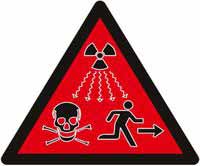 The Lynas Advanced Material project will produce 20,000 tones of radioactive waste, which is 10 times more than the Asian Rare Earth factory in Bukit Merah.
1. Why didn’t Lynas set-up the rare earth plant near its source of extraction in Western Australia as it would have saved a huge amount of money in shipping costs?
2. Why didn’t Lynas obtain an approval from the authorities in Western Australia to set-up the plant?
3. Could the authorities in Western Australia be concerned about the possible radiation leaks, health hazards, birth defects, lead poisoning and other complications?
4. Shouldn’t this in itself raise a red flag with the Malaysian authorities?
Gov’t fails to learn from Bkt Merah tragedy http://www.freemalaysiatoday.com/2012/02/22/govt-fails-to-learn-from-bkt-merah-tragedy/ Free Malaysia Today February 22, 2012 Is the RM700 million in Lynas investment more important to the government than the lives of its citizens? By Charles Santiago Severe birth defects, eight leukemia cases over five years in a community of 11,000, tears and anguish of the poor people from a largely shoe-making community – these are not news headlines. Neither is it the plot of a movie.
These are the consequences of carelessly allowing the Asian Rare Earth factory to be built in Bukit Merah, Perak in 1982. When Mitsubishi Chemical started operating its rare earth factory, the villagers complained of choking sensation, pungent smell, coughs and colds. The community also saw a sharp rise in the cases of infant deaths, congenital disease, leukemia and lead poisoning. While US$100 million is estimated to be the clean-up cost of the factory and dump site, the largest in the rare earth industry, it has not wiped out the memories and heartache of the villagers who lost their children and loved ones.
But 30 years later, the government has again allowed a rare earth factory to be set-up by Lynas Corporation Ltd in Gebeng, Kuantan. This means the government has waved the green flag with full knowledge of the possible consequences and deadly effects. Continue reading
First Uranium company teeters on the brink of collapse

 What will happen to First Uranium? First Uranium is looking at a distress sale of assets to settle upcoming debts, a move that would have a number of implications for shareholders Christy Filen , 22 Feb 2012 JOHANNESBURG (MINEWEB) –
It is no secret that First Uranium is in a pickle. Releasing a forecast that shows its cash will run out by the end of March will be cold comfort to shareholders and creditors alike…. First Uranium has turned to what is conceivably its only option and that is a distress sale of its assets in an effort to settle upcoming debts….. As if this wasn’t enough First Uranium’s Ezulwini operation is not making the gradeand its Mine Waste Solutions (MWS) is fighting licensing issues with environmentalists and the Department of Mineral Resources. In terms of the results of an impairment exercise of the Ezulwini Mine’s assets, an impairment adjustment of $180m was recognised in the company’s financial statements…. “The Company’s ability to continue as a going concern is dependent upon its ability to bring these proposed transactions to fruition” said First Uranium….. http://www.mineweb.com/mineweb/view/mineweb/en/page34?oid=145826&sn=Detail&pid=102055
Uranium mining’s radiation dangers continue near Grand Canyon

 Risks remain from uranium mining near the Grand Canyon Feb 22, 2012 High Country News By Heather Hansen, Red Lodge Clearing House. “….. There are over 5,000 active uranium claims within those one million acres. The withdrawal goes a long way toward protecting the watersheds, seeps and springs, sacred sites and critical wildlife habitat in the area because the only claims that can now be mined would have had to establish “valid existing rights,” before the 2009 moratorium. Yet even with these protections, the mines with existing rights — the ones allowed to operate despite the moratorium — may still have a significant negative impact on the Grand Canyon environment Continue reading
How some uranium mining corporations deceive developing countries
 Mining deals worry industry grouping The Daily Times, 21 February 2012 Isaac Masingati An international mining industry grouping, Intergovernmental Forum on Mining, Minerals, Metals and Sustainable Development (IGF), says it is concerned with contracts between investors and governments especially in developing countries, saying they tend to be skewed in favour the investor.
IGF President Leonard Kalindekafe told the Business Times in Zomba on Friday that there was a concern among members of the grouping that some investors were taking advantage of governments’ lack of expertise to strike deals that bring little profits. ”This is a big concern to the Forum because some bona fide countries are not able to realise full benefits from their minerals,” he said. Continue reading
Thorium reactors won’t save the nuclear industry

 Nuclear power entrepreneurs push thorium as a fuel, Washington Post, 20 Feb 12, “….. a small group of scientists, entrepreneurs and advocates see the post-Fukushima era as the perfect opportunity to get the United States to consider a proposal they have made with no success for years. What about trying a new fuel, they say, and maybe a new kind of reactor?….. They’re pushing the idea of adapting plants to use thorium as a fuel or replacing them with a completely new kind of reactor called a liquid-fluoride thorium reactor, or LFTR (pronounced “lifter”). The LFTR would use a mixture of molten chemical salts to cool the reactor and to transfer energy from the fission reaction to a turbine..
….‘Small boatloads of fanatics’ Although the idea of thorium power has been around for decades — and some countries are planning to build thorium-powered plants — it has not caught on with the companies that design and build nuclear plants in the United States or with the national research labs charged with investigating future energy sources.
“There are small boatloads of fanatics on thorium that don’t see the downsides,” said Dan Ingersoll, senior project manager for nuclear technology at the Oak Ridge National Laboratory in Tennessee. For one thing, he said, it would be too expensive to replace or convert the nuclear power plants already running in this country: “A thorium-based fuel cycle has some advantages, but it’s not compelling for infrastructure and investments.”
He also pointed out that thorium would still have some radioactive byproducts — just not as much as uranium and not as long-lived — and that there is no ready stockpile of thorium in the United States. It would have to be mined.
Overall, he says the benefits don’t outweigh the huge costs of switching technologies. “I’m looking for something compelling enough to trash billions of dollars of infrastructure that we have already and I don’t see that.”…… most U.S. nuclear energy industry executives are wary of both approaches to thorium, saying that neither utilities nor investors are eager to gamble on an unfamiliar technology….
Court action over radioactive waste faces Australian company Lynas
 Lynas itself had admitted it had no prepared any such permanent waste storage facility
I cannot understand why Malaysia is prepared to tolerate the potential hazards to occur here from a plant which will give no substantial benefit of Malaysia because of the pioneer status granted to Lynas for 10 years
Lynas Corp failed to meet any of the conditions in its first proposals, according to the regulator.
Anti-Lynas groups are planning a mammoth rally in Kuantan on February 26 to pressure Putrajaya to terminate the project.
A year on, anti-Lynas campaign goes to court http://www.themalaysianinsider.com/malaysia/article/a-year-on-anti-lynas-campaign-goes-to-court The Malaysian Insider By Debra Chong , February 17, 2012 KUALA LUMPUR, — A nationwide campaign to stop Lynas heads into the courtroom with damaging allegations against the Australian rare earths producer and Malaysia’s regulators.
The court filing also accuses Lynas of economic imperialism and points out that until today it does not have a plan to permanently dispose of its waste, some which contain potentially harmful levels of radiation. Continue reading
For the 4th time, a failed attempt to overturn the ban on uranum mining near Grand Canyon
Fourth Legislative Attack On Grand Canyon Uranium Ban Fails ENews Park Forest, 16 FEBRUARY 2012 WASHINGTON–(ENEWSPF) The fourth legislative attempt to block the Obama administration’s ban on new uranium development across 1 million acres of public land surrounding Grand Canyon National Park died Tuesday night when the House rules committee ruled it out of order. Continue reading
The human consequences of uranium mining
“The most difficult part for the victims of uranium exposure is to prove that their symptoms are directly related to the work they were doing in those mines,” Hecht said. Due to this difficulty, workers do not receive any compensation.
Lecture tackles global uranium trade, The Brown Daily Herald. Alissa Haddaji, February 17, 2012 To understand the consequences of global uranium trade in Africa, the intricate interaction between political lobbying, government and human interests must be explored, said Gabrielle Hecht, professor of history at the University of Michigan, in a lecture hosted by the science and technology studies program Thursday.
The presentation — held in Smith-Buonanno 106 — was part of the program’s lecture series “Nothing Can Go Wrong: Rethinking Nuclear Energy in the 21st Century” and introduced themes from Hecht’s forthcoming book, “Being Nuclear: Africans and the Global Uranium
Trade.” …. Continue reading
Thorium nuclear reactors – not all they’re cracked up to be
What you then get, as well as heat energy, radiation, and fission products from the Plutonium and Uranium, is U232. U232 (and its decay products) emit very hard gamma radiation.
will anyone really trust the nuclear lobby when it says ‘we have the answer’, as so often before?
Nuclear Problems, Environmental Research Web, 12 Feb 12,”……With uranium fired reactors out of favour after Fukushima, for the longer term, some in the nuclear lobby have been promoting thorium as an allegedly safer fuel- looking at molten flouride salt systems.
The Weinberg Foundation was launched last year to promote the Liquid Flouride Thorium Reactor (LFTR) Continue reading
Cameco uranium company cuts production in view of nuclear industry slowdown
 Cameco outlook sours amid doubts on nuclear’s future * Company sees 2012 revenue flat to down 5 percent
* Eyes lower production in 2012
* Shares down 1 pct at C$23.12
TORONTO, Feb 10 (Reuters) – Uranium producer Cameco forecast lower sales and highlighted doubts about the takeup of nuclear power in its stronger than expected quarterly results, and its shares edged lower on Friday, ……
Cameco, the world’s No.1 publicly-listed uranium producer, also lowered its 2012 uranium production outlook by 3 percent to 21.7 million pounds and said delays and cancellations after last year’s Fukushima nuclear disaster could hit prices.
Germany, which represents about 5 percent of the global market for uranium, plans to phase out its reactors by 2022.
Japan shut down most of its reactors for testing after the March 2011 earthquake and tsunami that crippled the Fukushima Daiichi power plant, and is expected to take its remaining three reactors offline for maintenance in the next few months.
“It remains unclear what level of nuclear power Japan itself – which represents 12 percent of global nuclear generating capacity – will depend on in the future,” Cameco said.
Process for terminating Cotter company’s radioactive license in Colorado
The majority of the documents being reviewed currently concern characterization of the soil and groundwater contamination on site and cleanup criteria.
Cotter documents under review, Company in process to terminate radioactive materials license, Canon City Daily Record, By RACHEL ALEXANDER 02/10/2012 A public meeting was held Thursday with the Colorado Department of Public Health and Environment and Cotter Corp. to discuss three upcoming department decisions.
The documents currently under review by CDPHE, the Environmental Protection agency and the public are the New Evaporation Pond
Conceptual Design; the Onsite Soil Excavation and Groundwater Characterization Process Plan; and the Soil Remediation Criteria
Selection.
This is the first round of documents that are being developed by Cotter as part of the process to terminate its radioactive materials
license and the deletion of the site from the Superfund list. Continue reading
Virginia Uranium’ s lavish gifts to law-makers
 Va. Uranium tops in 2011 gifts to state lawmakers, By David Sherfinski-The Washington Times, February 7, 2012 Virginia Uranium, which is pushing to mine a 119 million-pound deposit in southside Pittsyvania County, gave more than $120,000 in gifts and trips last year to state lawmakers — tops in Virginia — according to figures released Tuesday by the nonpartisan Virginia Public Access Project.
Lawmakers reported receiving a total of nearly a quarter million dollars’ worth of gifts.
The top five donors were Va. Uranium ($120,336) , Dominion Power ($16,916), Jonnie R. Williams Sr ($15,233). Alexander B. McMurtrie Jr. ($12,322) and the State of Taiwan ($11,000.)
Virginia Uranium flew 15 lawmakers to examine mines on fact-finding missions in France and/or Canada. Continue reading
Iran says enriching uranium under IAEA supervision
Iran Starts Uranium Enrichment at Underground Complex, VOA, January 9th, 2012 Iran on Monday confirmed it has started uranium enrichment at a second facility where the material can be upgraded quickly for potential use in a nuclear bomb.
Iran’s envoy to the International Atomic Energy Agency, Ali Asghar Soltanieh, said Tehran is refining uranium at the newly-launched Fordo complex and an older facility in the city of Natanz. He told Iran’s Arabic language al Alam TV network the work was taking place under thesupervision of the United Nations atomic agency.
Diplomats with ties to the IAEA confirmed that Iranian centrifuges have begun refining uranium to a purity of 20 percent at Fordo, an underground complex near the Shi’ite holy city of Qom.
The United States and France condemned the move…… Most of the work at the Natanz facility has involved refining uranium to a relatively low purity of 3.5 percent. Enrichment to the 20 percent level at the Fordo complex could reduce the time needed for Iran to further refine the material to the 90 percent purity required for nuclear weapons.
Iran says its nuclear program is designed only to generate electricity and material for medical research.
The United States and its ally Israel have not ruled out military action to stop the program. Israel sees a nuclear-armed Iran as a threat to its existence.
http://blogs.voanews.com/breaking-news/2012/01/09/iran-starts-uranium-enrichment-at-underground-complex-3/
1 This Month



26 September – International Day for the Total Elimination of Nuclear Weapons


PLEASE OPPOSE HR 8255 AND S.3639 – bills would accelerate satellite deployment, with no environmental review or safeguards – https://ncstd5li.quorum.us/campaign/169331/
To see nuclear-related stories in greater depth and intensity – go to https://nuclearinformation.wordpress.com
-
Archives
- September 2026 (245)
- August 2026 (330)
- July 2026 (355)
- June 2026 (287)
- May 2026 (306)
- April 2026 (356)
- March 2026 (251)
- February 2026 (267)
- January 2026 (308)
- December 2025 (358)
- November 2025 (359)
- October 2025 (375)
-
Categories
- 1
- 1 NUCLEAR ISSUES
- business and costs
- climate change
- culture and arts
- ENERGY
- environment
- health
- history
- indigenous issues
- Legal
- marketing of nuclear
- media
- opposition to nuclear
- PERSONAL STORIES
- politics
- politics international
- Religion and ethics
- safety
- secrets,lies and civil liberties
- spinbuster
- technology
- Uranium
- wastes
- weapons and war
- Women
- 2 WORLD
- ACTION
- AFRICA
- Atrocities
- AUSTRALIA
- Christina's notes
- Christina's themes
- culture and arts
- Events
- Fuk 2022
- Fuk 2023
- Fukushima 2017
- Fukushima 2018
- fukushima 2019
- Fukushima 2020
- Fukushima 2021
- general
- global warming
- Humour (God we need it)
- Nuclear
- RARE EARTHS
- Reference
- resources – print
- Resources -audiovicual
- Weekly Newsletter
- World
- World Nuclear
- YouTube
-
RSS
Entries RSS
Comments RSS
 nuclear-news