Nuclear Free Future Award to Dr Katsumi Furitsu
CBUW Science Team member wins Nuclear Free Future Award http://www.bandepleteduranium.org/en/icbuw-science-team-member-wins-nuclear-free-future International Coalition to Ban Uranium Weapons. ICBUW’s Dr Katsumi Furitsu is among the five winners of 2012’s Nuclear Free Future Awards for her work on publicising the impact of the Fukushima disaster. 4 July 2012 – ICBUW Continue reading
Uranium market stays slumped
Gap Grows Between Uranium Buyers and Sellers, 9 News 4 July 12, A slow week last week ended what was a slow month for uranium trading. Spot prices barely budged on the 15 transactions reported in June by industry consultant TradeTech, with sellers unwilling to drop their prices and buyers not willing to pay more.
With traders comprising the vast majority of both buyers and sellers in the bulk of the transactions reported over the past several months, TradeTech notes the spot uranium price remains stuck between the lack of committed buyers and what are fairly unmotivated sellers at current levels.
Last week’s news that Japan had officially green-lighted the restart of two reactors did see a bit of renewed optimism in the market, but what seems to be an increasingly stubborn spot uranium market remained sluggish, with the announcement yet to produce any sort of uplift in prices.
USA joining with China to develop thorium nuclear reactors
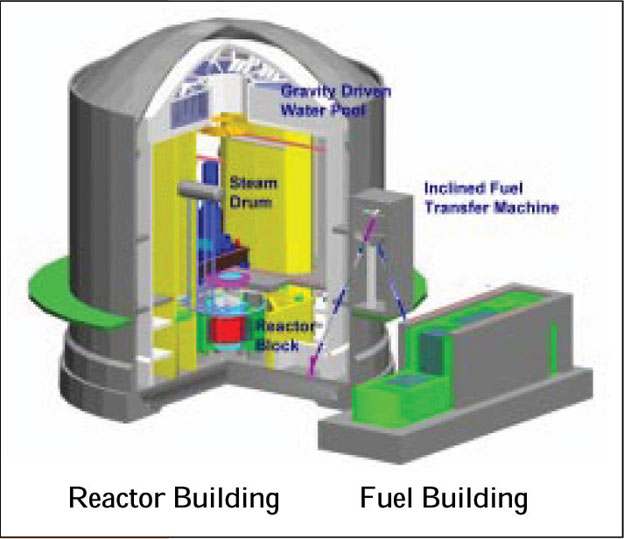 What’s not clear is what, exactly, the U.S. will get from the collaboration….
U.S. partners with China on new nuclear, By Mark Halper Smart Planet June 26, 2012 E Pluribus Thorium? U.S. Assistant Energy Secretary Peter Lyons and Chinese Academy of Sciences’ Jiang Mianheng have joined forces for thorium development. What’s in it for the U.S.?
The U.S. Department of Energy is quietly collaborating with China on an alternative nuclear power design known as a molten salt reactor that could run on thorium fuel Continue reading
Malaysian govt insists that Lynas might have to take its radioactive wastes back to Australia
The Temporary Operating License will only be issued after Lynas fulfils two new conditions imposed

 AELB: Lynas committed to returning radioactive waste to AustraliaThe Malaysian Insider By Lisa J. Ariffin June 28, DENGKIL, June 28 — Lynas is committed to return all potentially harmful waste from its rare earths plant here to Australia despite its government’s firm refusal to take it in, Malaysia’s radiation regulator said today.
The Atomic Energy Licensing Board (AELB) told reporters today the Australian miner would have to send home all residue that could not be turned into commercial products or if a location for a permanent disposal facility (PDF) here could not be determined or approved.
“Lynas will have 10 months to come up with a permanent disposal facility plan for its radioactive residue upon receiving its temporary operating license (TOL),” said Dr Noor Hasnah Mohamed Khairullah who is special adviser to the AELB director-general.
“If they fail to find a location for the PDF, or if the plan is not approved, then Lynas has to return the residues back to Australia. Continue reading
Thorium nuclear reactors not possible for decades to come

 India needs to wait for few decades to use thorium in reactor DNA, , Jun 27, 2012, Bhubaneswar PTI Describing India as self-reliant in nuclear technology, Atomic Energy Commission on Wednesday said the country has to wait for a few more decades to use thorium as the base for nuclear reactors.
“Using thorium as the base for reactors will take time. We have to wait a few decades to make it possible,” Atomic Energy Commission Chairman R K Sinha said….. Replying a question on the possible use of thorium as the base for the nuclear reactors, he said the country needs to wait…..
North Carolina’s water faces danger from Virginia uranium mining

 Virginia uranium mining ‘would be a huge mistake’ for NC HENDERSON, N.C.WRAL News : Beau Minnick, 27 June 12, — As Virginia considers lifting a 30-year-old ban on uranium mining, some North Carolina residents have been crossing the border to share their concerns about the possible environmental effects on this state.
Lifting the ban, which has been in place since 1982, would allow a Chatham, Va., company to tap into the nation’s largest undeveloped resource of uranium. The question is how that could impact Kerr Lake and surrounding bodies of water, which straddle both states. Continue reading
Same old price doldrums for the uranium industry
 Spot uranium price unchanged at $50.75/lb U3O8 in weak market, Washington (Platts)–26 Jun2012 The spot price for uranium was unchanged over the last week at about $50.75/lb U3O8, prompting one analyst to describe the market as”stuck” with few buyers or sellers anxious to make a deal.
TradeTech on Friday kept its weekly price at $50.75/lb, saying that spot uranium demand “continues to be dominated by highly price sensitive and discretionary demand, and while spot supplies are currently sufficient to meet demand [and] sellers are not actively seeking to push material to the market.”… http://www.platts.com/RSSFeedDetailedNews/RSSFeed/ElectricPower/8439315
New Zealand to do limited testing of soldiers for depleted uranum poisoning
Kiwi soldiers tested for uranium poisoning, TVNZ June 25, 2012 Soldiers returning from Afghanistan are having urine tests to check if they have absorbed radioactivity from American depleted uranium munitions…. The issue will come before Parliament on Wednesday during the first reading of the Depleted Uranium (Prohibition) Bill, backed by Labour MP Phil Twyford. Continue reading
National Academy of Sciences’ report indicates “keep uranium mining ban in Virginia”
Here are just three of the report’s key findings:
» “Extreme natural events (e.g., hurricanes, earthquakes, intense rainfall events, drought) have the potential to lead to the release of contaminants if facilities are not designed and constructed to withstand such an event, or fail to perform as designed.”
» “The decay products of uranium provide a constant source of radiation in uranium tailings for thousands of years, substantially outlasting the current U.S. regulations for oversight of processing facility tailings.”
 » “Because almost all uranium mining and processing to date has taken place in parts of the United States that have a negative water balance (dry climates with low rainfall) federal agencies have limited experience applying laws and regulations in positive water balance (wet climates with medium to high rainfall) situations.”
All the credible science says, ‘Keep the ban’ Go Dan River, By: Robert G. Burnley | GoDanRiver June 17, 2012 I began my career as a water quality scientist in Virginia 40 years ago — six years before uranium deposits were discovered beneath farmland in Pittsylvania County. Since shortly after that discovery, Virginia law has banned uranium mining.
It is my firm belief, based on review of the highly anticipated National Academy of Sciences’ report released last December, that the ban needs to remain in place. Continue reading
“Flimsy” new safety conditions for Malaysia’s rare earths project
“The two conditions are flimsy and general in nature. They are not specific enough and will in no way safeguard or appease the fears of residents living in the area,”
The group plans to challenge the government decision in court …
.. The ministry said the refinery would only be allowed to operate once Lynas complies with all the requirements, including the two extra conditions…… the government review has blocked the company from bringing in raw material.
Malaysia imposes 2 more conditions on controversial rare earth plant by Australian miner,Washington Post, By Associated Press, June 14, KUALA LUMPUR, Malaysia — Malaysia’s government has imposed two new conditions on a rare earth refinery set up by Australian miner Lynas to assuage public fears of radioactive pollution. Continue reading
Another USA govt handout to a nuclear-related company
“The real risks of this nuclear bailout is for taxpayers, who will be on the hook for questionable government handouts that are worth more than the entire company,”
Energy Department Steps in to Help Uranium Enrichment Company, NYT, By MATTHEW L. WALD, June 13, 2012, WASHINGTON — The Energy Department announced Wednesday that it was stepping in to shore up an ailing company it created in the 1990s to privatize uranium enrichment, Continue reading
Judge invalidates Colorado radioactive materials license for uranium mill
License to build uranium mill in southwest Colorado nixed by Denver judge, 06/14/2012 Denver Post, By Bruce Finley, A state judge has invalidated a radioactive materials license that the Colorado Department of Public Health and Environment issued to allow construction of a new uranium mill in southwestern Colorado. Continue reading
No response from Virginia’s Governor about concerns over Uranium Working Group’s credibility
Concerns over Uranium Working Group remain Gazette Virginian, 14 June 12, Two environmental groups opposed to lifting the moratorium on uranium mining in Virginia still have not received a satisfactory response from Virginia Gov. Bob McDonnell concerning their letter raising concerns about the lack of transparency within the Uranium Working Group. Continue reading
Indian villages fight against uranium mining plan for Mahbubnagar district.
Locals dig in heels against uranium mining plan, Sribala Vadlapatla, TNN | Jun 14, 2012, HYDERABAD: The dust on the controversy over uranium mining in Nalgonda district is still to settle and already the government has begun efforts to mine the resource in Mahbubnagar district.
Despite opposition from locals, authorities are going ahead with plans to hold a gram sabha at
Urumilla village in Amrabad mandal, in the Nallamala forest area, on June 14…… Presence of uranium in these villages, about 140km southeast of Hyderabad, was established 10 years back but strong opposition from locals saw the Uranium Corporation of India Ltd (UCIL)
dropping the plan to mine the area…. Padara village has a population of roughly 8,000 people while Urumilla village is 1,500 residents strong.
“We will oppose any move by the authorities to carry out mining in these small villages,” TRS leader Nasarayya said. http://timesofindia.indiatimes.com/city/hyderabad/Locals-dig-in-heels-against-uranium-mining-plan/articleshow/14106609.cms
Virginia uranium study panel – bias in favour of uranium companies
“What we’re concerned about here is they appear to have hired a group that has only done work for uranium mining companies and that they’re going to go with them behind closed doors and come up with a uranium mining law and a set of regulations,”
Uranium mining foes take aim at Va. study panel, Bloomberg, By STEVE SZKOTAK, 13 June 12, RICHMOND, VA. Two environmental groups opposed to ending a 30-year state ban on uranium mining in Virginia have raised new complaints about a state panel studying the issue and the hiring of a consultant they say has too many industry ties. Continue reading
1 This Month



26 September – International Day for the Total Elimination of Nuclear Weapons


PLEASE OPPOSE HR 8255 AND S.3639 – bills would accelerate satellite deployment, with no environmental review or safeguards – https://ncstd5li.quorum.us/campaign/169331/
To see nuclear-related stories in greater depth and intensity – go to https://nuclearinformation.wordpress.com
-
Archives
- September 2026 (245)
- August 2026 (330)
- July 2026 (355)
- June 2026 (287)
- May 2026 (306)
- April 2026 (356)
- March 2026 (251)
- February 2026 (267)
- January 2026 (308)
- December 2025 (358)
- November 2025 (359)
- October 2025 (375)
-
Categories
- 1
- 1 NUCLEAR ISSUES
- business and costs
- climate change
- culture and arts
- ENERGY
- environment
- health
- history
- indigenous issues
- Legal
- marketing of nuclear
- media
- opposition to nuclear
- PERSONAL STORIES
- politics
- politics international
- Religion and ethics
- safety
- secrets,lies and civil liberties
- spinbuster
- technology
- Uranium
- wastes
- weapons and war
- Women
- 2 WORLD
- ACTION
- AFRICA
- Atrocities
- AUSTRALIA
- Christina's notes
- Christina's themes
- culture and arts
- Events
- Fuk 2022
- Fuk 2023
- Fukushima 2017
- Fukushima 2018
- fukushima 2019
- Fukushima 2020
- Fukushima 2021
- general
- global warming
- Humour (God we need it)
- Nuclear
- RARE EARTHS
- Reference
- resources – print
- Resources -audiovicual
- Weekly Newsletter
- World
- World Nuclear
- YouTube
-
RSS
Entries RSS
Comments RSS
 nuclear-news