At long Last, some compensation to Navajo for uranium mining’s disastrous legacy
Navajo to benefit from $1B for uranium  cleanup http://www.chron.com/news/science/article/Navajo-to-benefit-from-1B-for-uranium-cleanup-5374413.php By FELICIA FONSECA, Associated Press | April 3, 2014 FLAGSTAFF, Ariz. (AP) — More than $1 billion is going to help clean up abandoned uranium mines that have left a legacy of disease and death on the Navajo Nation.
The money is part of a $5.15 billion settlement that the federal government reached with Anadarko Petroleum Corp. for the cleanup of thousands of long-contaminated sites nationwide. The settlement announced Thursday resolves a legal battle over Tronox Inc., a 2005 spinoff of Kerr-McGee Corp. that Anadarko acquired in 2006.
Kerr-McGee once operated about 50 uranium mines in the Lukachukai Mountains of northeastern Arizona near Cove and a uranium mill in Shiprock, N.M. Uranium waste was thrust over the mountain side and carried by rainwater across the land used by hikers, anglers, medicine men and Navajo shepherds, said David Taylor, an attorney with the Navajo Nation Department of Justice.
“I have a feeling of just deep appreciation for the Navajo children, who literally are playing in uranium piles today who aren’t going to have to do that in the future,” he said.
But, Taylor added: “The path before us is still monumental. We’ve got a good start now, and I hope we can build on that.”
The more than $1 billion will address about 10 percent of the tribe’s inventory of abandoned uranium mines. About 4 million tons of uranium ore were mined from the reservation from 1944 to 1986 for wartime weapons. Many families still live among the contamination and fear drinking water polluted by uranium. Navajo President Ben Shelly said the settlement will ease some concerns about public health.
About $1 billion of the money benefiting the Navajo Nation will be administered by the U.S. Environmental Protection Agency in San Francisco. Of that, nearly $87 million will be set aside specifically for two sites known as the Quivira Mines near Church Rock, N.M. The Navajo Nation separately will receive $43 million to address Shiprock mill, where uranium ore was processed near the San Juan River, the EPA said.
The federal government has been working for years with the Navajo Nation to address the more than 500 abandoned uranium mines on the reservation, but they’ve been hampered by the costs of remediation and the unwillingness of some companies to pay for cleanup of their previous operations.
Jared Blumenfeld, the EPA’s regional administrator in San Francisco, said federal agencies spent about $100 million as part of a five-year cleanup plan. The EPA is drafting a second, five-year plan, but the budget is expected to be much less, he said.
“The mess that’s on the Navajo Nation in terms of abandoned uranium mines should never have been put there, and all of us have been waiting for this day to start to make a big dent in the cleanup,” he said.
The mountainous sites near Cove rarely are visited, but a network of roads established for mining, logging and firewood gathering provide access. Tribal officials say Navajo medicine men gather plants and herbs for prayer and healing purposes from the mountains, and families set up summer camps where sheep graze nearby.
The federal government initially sought $25 billion to clean up decades of contamination at dozens of sites. A U.S. bankruptcy judge in New York ruled in December that Kerr-McGee improperly shifted its environmental liabilities to Tronox and should pay between $5.15 billion and $14.2 billion, plus attorneys’ fees.
Anadarko CEO Al Walker said the settlement eliminates the uncertainty of the dispute.
Blumenfeld said Navajos have struggled with the legacy of uranium contamination for too long. He said dozens of tribal members already have been trained in how to properly dispose of and transport contaminated waste, and they soon can be put to work.
“It’s one of those environmental justice burdens that has garnered a lot of attention and, thankfully, now it’s garnering a lot of money,” Blumenfeld said.
Thorium – the nuclear power fuel of the perpetual future
Clamping down on tweets Mar 26th 2014, by Economist.com Thorium the wonder fuel of Tomorrowland by Oliver Morton HOW the Doppler effect helped locate the likely remains of MH370, why thorium will not be the fuel of tomorrow and how Turkey (tried to) shut Twitter down

What to do with 40,000 depleted uranium rounds scattered around Serbia?
 Serbian Minister, UN representatives discuss depleted uranium http://inserbia.info/today/2014/03/serbias-minister-un-representatives-discuss-depleted-uranium-sites/sites BELGRADE – Serbia’s Minister without portfolio for Kosovo-Metohija Aleksandar Vulin has discussed with UN representatives in Belgrade the progress made in research on locations in Serbia where higher levels of depleted uranium have been detected. Vulin on Thursday met with Peter Due, the Representative of the UN Secretary-General and Head of the UN Office in Belgrade, and UN Resident Coordinator Irena Vojackova-Solorano, the Serbian government’s Office for Kosovo-Metohija said in a statement.
Following field research in 1999 and 2002, the UN Environment Programme (UNEP) published reports on locations with higher levels of depleted uranium, the statement said.
During the 1999 bombing campaign, NATO forces used banned depleted uranium ammunition and Yugoslav Forces figures said that 30,000 to 50,000 rounds of depleted uranium ammunition were scattered on 112 locations across the country, but mostly in Kosovo-Metohija.
On the 15th anniversary of the bombing of the Federal Republic of Yugoslavia, Vulin discussed with the UN representatives the progress made in research on locations with higher depleted uranium levels in the territory of central Serbia, but also in Kosovo-Metohija.
Such research is helpful not only to Serbia, but also to other countries, Minister Vulin said.
Vojackova-Solorano said that the reports were the first of their kind and that the time has come to monitor the situation again, especially if the Serbian government has evidence of an impact of the bombing campaign on the health of the population in Serbia, the statement said.
She said that the UN agency will strive to provide support to Serbia’s health care system in the coming years.
Due also inquired about the progress in the technical negotiations on establishing the community of Serb municipalities and organising judicial authorities in northern Kosovo-Metohija.
Minister Vulin reiterated that any armed force in Kosovo-Metohija other than Kfor – the force envisioned by UN Security Council Resolution 1244 – is absolutely unacceptable to Serbia.
Uranium mining – environmental racism
Uranium Mining http://www.berkeleydailyplanet.com/issue/2014-03-28/article/41964?headline=Uranium-Mining—-By-Tejinder-Uberoi March 28, 2014 In a stark example of environmental racism, Native Indians have become the target of toxic uranium mining. Energy Fuels Resources recently obtained federal approval to reopen a mine in close proximity to the Grand Canyon’s popular South Rim entrance.
Environmental activists have joined forces with Native Navajos to protest the decision siting serious health risks. Earlier uranium mining has scarred the landscape and left deposits of radioactive waste from 1,000 closed mines. The mining companies failed to adequately remove the radioactive wastes which have resulted in a dramatic increase in cancer and other serious ailments.
One native Indian activist, Klee Benally, remarked that “this is really a slow genocide of the people, not just indigenous people of this region, but it’s estimated that there are over 10 million people who are residing within 50 miles of abandoned uranium mines.” The long term impact of contaminated water seepage into groundwater and its impact on wildlife have been ignored. The five-year cleanup plan initiated by the EPA has also been ignored.
San Francisco Peaks, an area considered sacred by 13 Native tribes, has been severely impacted; to compound health concerns is the practice of using treated sewage water to make snow at the popular Snow bowl resort. The future of indigenous tribes has been railroaded over the interests of corporate greed and government watchdogs have fallen asleep at the wheel.
Toxicologist finds high levels of cancer caused by uranium in water

 SA toxicologist’s study says higher uranium causes cancers in Malwa http://timesofindia.indiatimes.com/city/chandigarh/SA-toxicologists-study-says-higher-uranium-causes-cancers-in-Malwa/articleshow/32114888.cms Neel Kamal,TNN | Mar 16, 2014 FARIDKOT: Excessive presence of uranium in water in the Malwa region of Punjab is turning out disastrous for the residents of rural areas and is giving birth to cancer, neurological and birth abnormality. Taking leads from her study on the subject, South African clinical metal toxicologist Dr Carin Smit has confirmed that excess prevalence of uranium in human bodies is the biggest reason of cancer in Malwa region of Punjab. The Union and state government in the past had negated the affect of uranium in cancer incidence. Dr Smit had obtained hair samples of 149 children with deformities in 2009 and urine samples in 2010 and had sent these to Micro Trace mineral laboratory in German where it was established that excess prevalence of uranium has caused deformities. These children are being treated at Faridkot. As per Bhabha Atomic Research Center (BARC), the uranium level here have reached up to 1000 parts per billion(ppb) against permissible limit of 15ppb, she said.
 While visiting Baba Farid Centre for Special Children on Saturday, Dr Smit based her submission on a study carried out in Finland in the past and said, “Uranium toxicity is much more there as compared to Malwa region of Punjab but spray of fertilizers is filtered and eating habits are much more safe there, but in Punjab the use of fertilizers, pesticides is at much higher levels, which is leading to cancer and deformities among persons.”
Dr Carin finds faults in the state approach in tackling such an important issue with grave seriousness. She said, “Desiring to conduct a full study to establish excess uranium presence leading to cancer incidence, I had written to Punjab government in 2013 to provide infrastructure to conduct the study with Japanese scientists but an still waiting the government response.” Claiming that presently Punjab is passing through a bad phase on health and environment front, she accused the state government of not being serious to tackle the issue. She said despite knowing the seriousness of the issue, the state government is doing nothing to provide respite to people. “Though courts are serious but the governments are not and Punjab government is not providing proper findings to the court in one petition related to uranium giving birth to cancer in the state,” said Dr Pritpal singh and Amar Singh Azad of Baba Farid centre.
She said a study published recently in a research journal titled ‘Comparing metal concentration in the hair of cancer patients and healthy people living in Malwa region of Punjab’ by scientists from USA and Germany too had mentioned higher toxicity as reason for cancer.
With 5 Million Tons of uranium waste to clean up, Colorado Mining Corp. Spills more
 Colorado Mining Corp. Spills 20,000 Gallons Of Uranium Waste Amid Negotiations To Clean Up 15 Million Tons More Opposing Views, By Sarah Fruchtnicht, Sat, March 15, 2014
A broken pipe at a dismantled Colorado mill spilled 20,000 gallons of uranium waste just as the corporate owner is negotiating with state and federal authorities to clean up another 15 million tons of radioactive uranium tailings.
The Colorado mining and milling corporation Cotter Corp. is working with the Environmental Protection Agency and the Colorado Department of Public Health and Environment (CDPHE) to negotiate one of the nation’s longest-running cleanups in history. The agencies are expected to help Cotter clean up, gather data, and figure out what to do with 15 million tons of radioactive uranium tailings.
They could remove the tailings, which would cost more than $895 million, or bury the waste.
In the meantime, a 6-inch plastic pipe, part of a 30-year-old system on Cotter’s 2,538-acre property in Canon City, broke and spewed 20,000 gallons of uranium-laced waste………
A community group, Colorado Citizens Against Toxic Waste, is pressing Cotter and the state for more facts about the spills and cleanup operations.
Energy Minerals Law Center attorney Travis Stills says the public deserves to know more.
“There’s an official, decades-old indifference to groundwater protection and cleanup of groundwater contamination at the Cotter site — even though sustainable and clean groundwater for drinking, orchards, gardens and livestock remains important to present and future Lincoln Park residents,” Stills said. “This community is profoundly committed to reclaiming and protecting its groundwater.” http://www.opposingviews.com/i/society/environment/colorado-mining-corp-spills-20000-gallons-uranium-waste-amid-negotiations
Dirty bomb could be made from uranium-233 recovered from thorium reactor
England’s queen has substantial investments in depleted uranium weapons
The Queen of England Deals Extensively in $17 Trillion Depleted Uranium Trade Nation of Change, : Friday 28 February The truth of the matter is that the Queen is sitting on enough money to end world hunger, fuel the world’s energy needs with non-nuclear, clean sources and definitely stop the poverty in her own country.
Uranium can be mined for some medical purposes and to make electricity, but its main purpose was and is to fuel nuclear warfare against the world. Just six mines provide 85 percent of the world’s uranium and guess who owns the mineral rights to that land?
It may be surprising to realize it is none other than the Queen of England. Continue reading
Birth deformities, cancers, in Libya as result of depleted uranium weapons

In Libya now being recorded by the WHO (world health organization), the highest deformation in fetuses inside Libya and reached 23% of newborns and also the high incidence of new forms of cancer that were not known among ordinary Libyans and now amounting to 18% of the total of cancers that have been diagnosed by the organization’s branch in Libya .
Despite this serious health disaster countries involved with NATO are now demanding that Libya pay them one billion seven hundred million dollars for their help in toppling the Gaddafi regime.
NATO War Crimes In Libya: Deformities of Newborns Because of Depleted Uranium Bombs http://libyanfreepress.wordpress.com/2014/02/28/nato-war-crimes-in-libya-deformities-of-newborns-because-of-depleted-uranium-bombs/ Libyans knew that depleted uranium was being used by NATO in their bombing raids and they were very concerned.
There is no doubt that NATO/US broke every agreement imposed by the Geneva Convention.
War crimes against humanity in Libya by NATO and its member countries is unmatched in the world. Continue reading
AREVA now finding it harder to rip off Niger in uranium projects
 Niger fails to reach uranium mining deal with French nuclear firm Areva Deadlock over royalties as Oxfam points out Areva’s global turnover is more than four times Niger’s entire annual budget Guardian Celeste Hicks in Niamey, 28 Feb 14, Another deadline has passed without agreement in Niger in the government’s ongoing negotiations with the French nuclear company Areva on the renewal of the company’s license to operate in the country.
After months of discussions, the mining minister, Omar Tchiana, said last week that Friday would be the final deadline for the two sides to strike a deal. Now it has been agreed that talks will continue without a fixed deadline.
The negotiations are deadlocked on the issue of the royalties Areva pays Niger for the rights to two large uranium mines, Somair and Cominak in the arid north of the country. The terms of the original deal struck in the early 1970s have never been made public, but government sources say the company pays about 5.5% of its revenues in royalties. Niger wants the terms of a new mining code passed in 2006 to be implemented, which would force Areva to pay between 12% and 15% in royalties, and end a number of tax breaks on materials and equipment.
“Niger has not benefited at all from uranium production for 40 years. These contracts need to be win-win for Niger and not just for the benefit of France and Areva” said Ali Idrissa, the executive co-ordinator of the civil society group Rotab. The issue is of huge significance to the country, which ranks bottom of the UN’s human development index. According to Oxfam, Areva’s annual turnover of €9bn ($12.4bn) is more than four times Niger’s entire annual budget of €2bn…….
the current negotiations between Areva and the government are still less than transparent, and steps towards establishing a FGF and prioritising its spending have not been implemented…….
It is likely that Niger will be able to leverage a better deal from Areva, despite the company’s claims that a higher royalty rate could make the operation prohibitively unprofitable……http://www.theguardian.com/global-development/2014/feb/28/niger-fails-uranium-mining-deal-french-firm-areva
THe Nuclear Medusa AREVA and its uranium mining harm to Niger
 No matter where Uranium is mined on this planet the story is the same. The marketeers operate without conscience. Uranium should not be a marketable commodity.
 World’s Poorest Suffer From Radioactive Sickness as Areva Mines for Uranium http://ecowatch.com/2014/01/24/worlds-poorest-radioactive-areva-uranium/Brandon Baker | January 24, 2014 More than 60 percent of Niger’s population lives on less than $1 per day, and even more have no electricity.
Still, French company Areva keeps contaminating those residents and their environment while mining away for uranium—one of the few resources the world’s poorest country still has. Continue reading
Authorities carefully do not record the harm that uranium mining does to communities
There are few studies to verify the impacts of radiation poisoning on communities because no one with power will fund them, and those impacted are unable to fight corrupt politicians and corporations on their own because they’re poor, isolated, sick, or dead. It apparently doesn’t matter anyway because our County Commissioners and other uranium advocates disregard facts and personal experience as “anecdotal evidence.”
Uranium mining decimates economies and communities Post Independent Citizen Telegram, Robyn Parker, 23 Jan 14 On Jan. 14, Mesa County Commissioners unanimously voted to permit a uranium mine near Gateway Canyons Resort and John Brown Road, a popular public lands access route. They argued that uranium mining will create a new tourism and recreation industry. Commissioner Justman explained how New Yorkers will appreciate an opportunity to brag to their friends about seeing a real uranium mine.
“How cool would that be?” he asked.
As a person who grew up in a community so contaminated by the uranium industry that the area was declared a Superfund site shortly before I graduated from high school, I can’t help but disagree with Mr. Justman and say it wouldn’t be cool at all. Virtually every point made at the permit hearing last week in favor of a new Mesa County uranium mine should have been used as argument to deny the permit, yet Commissioners perceived those weaknesses as assets. Continue reading
uranium exploration companies’ bleak outlook, with low uranium prices
Low uranium prices take toll on African exploration, Ft.com Jan 21, 2014 Low uranium prices, especially in the post-Fukushima era, are taking a toll on African exploration.
Between 2005 and 2007, the uranium price increased steeply from $20 per pound ($44 per kg) to almost $140 per pound ($311 per kg) during what came to be described as a ‘nuclear renaissance’……
But the spot price decreased after 2007. By late 2013 it had dropped to $35 per pound ($78 per kg), a challenge for an industry characterised by long timelines and heavy investments. Countries keen on building new nuclear capacity seemed to stall, including the US and the UK. Then came the Fukushima crisis, which “raised questions in the public mind about the feasibility and desirability of nuclear. It came on top of already negative market developments,” according to Ian Anthony, a nuclear expert at the Stockholm International Peace Research Institute. Finally, the shale boom brought gas into the spotlight, and nuclear lost a little of its shine.
Low price trends also caused a delay to a feasibility study of Zambia’s Chirundu mine, and Areva was forced to postpone work on its Bakouma project in the Central African Republic for the same reason. The country’s serious conflict since has undermined the investment case further.
This has left companies in the lurch. In June 2013, Paladin boss John Borshoff warned that a minimum $70 per pound price level was necessary to justify investment and give risk reward to shareholders, adding that such a price appeared to be “a long way away”.
Big players are struggling too, with the likes of Areva left holding significant extraction investments which turned out to be commercial white elephants when there was no short term demand. Similar challenges have faced BHP Billiton and Canada’s Cameco in other regions…..http://blogs.ft.com/beyond-brics/2014/01/21/low-uranium-prices-take-toll-on-african-exploration/#axzz2rFiM1T6k
Decline in uranium market hits URENCO
Urenco hit by slowdown in uranium enrichment market By Sylvia Pfeifer Ft.com 22 Jan 14 Urenco, the uranium enrichment company being privatised by its government and utility owners, expects revenues for the past 12 months to be down “around 5 per cent” on record levels of €1.6bn in 2012.
It blamed a continued slowdown of the enrichment market but stressed that despite the expected drop for the year to end December 2013, there had been “a substantial rebalancing of revenue” in the second half of the year.
Wide implications for uranium industry of test case in Niger
Niger uranium mining dispute a test case for use of African natural resources by Mark Tran Friday 10 January 2014 theguardian.com The wrangle between Niger and a state-owned French firm over payments for uranium extraction has wider ramifications
The protracted negotiations on uranium mining between Niger andAreva, the French energy multinational, are not just a trial of strength between an African government and a big company. The face-off will also test whether there is more than just pious sentiment to the notion that African countries should derive greater benefit from their natural resources.
Areva, which owns stakes in the Somair and Cominak mines, has been negotiating with Niger over new uranium mining contracts for two years. The mines’ 10-year licences expired on 31 December without a new agreement, although Niger issued a decree on 27 December providing a legal framework under the 2006 mining law for operations to continue.
The company is tight-lipped on discussions……..
The mines have been closed since mid-December for what Areva describes as routine maintenance. Some see the move as hardball tactics by the company to put pressure on the Nigerien government.
At heart of the matter is the country’s desire for a better deal. Niger accounts for more than a third of Areva’s uranium production, and President Mahamadou Issoufou’s government wants to increase the royalties the company pays from 5.5% of revenues to 12%, officials told Reuters…….
Niger is desperately poor, ranking last of the 187 countries in the 2012 UN Human Development Index. Three-quarters of its people live on less than $2 a day and malnutrition is rife, with the country beset by droughts. Although mining made up 70.8% of Niger’s exports in 2010, it contributed only 5.8% of the country’s gross domestic product.
According to a report from Oxfam France and the Niger arm of Publish What You Pay, the transparency group, Areva’s two mines produced uranium worth more than €3.5bn (£2.9bn) in 2010, but Niger received just €459m, or 13% of this amount. In 2012 Areva received tax exemptions worth €320m, the report says….http://www.theguardian.com/global-development/poverty-matters/2014/jan/10/niger-uranium-mining-dispute-african-natural-resource
1 This Month


4 August – WEBINAR – Hiroshima & Nagasaki: Nuclear Bombs Never Again
Tuesday, Aug. 4 at 5 pm PT / 8 pm ET.
Aug 5, 2026 10:00 AM in Australia/Melbourne
Join the Nuclear Bombs Never Again webinar on August 4th at 5pm Pacific Time / 8pm Eastern Time / 9am Japan Standard Time.
Cross generational voices at the intersection of Japan-Korea-US policy and militarization will share their lived experiences, nuclear impacts in these contexts, anti-war strategies, and actions you can take to advocate for a world with Nuclear Bombs Never Again. This 75-minute event is co-hosted by WILPF US and Korea Peace Now.
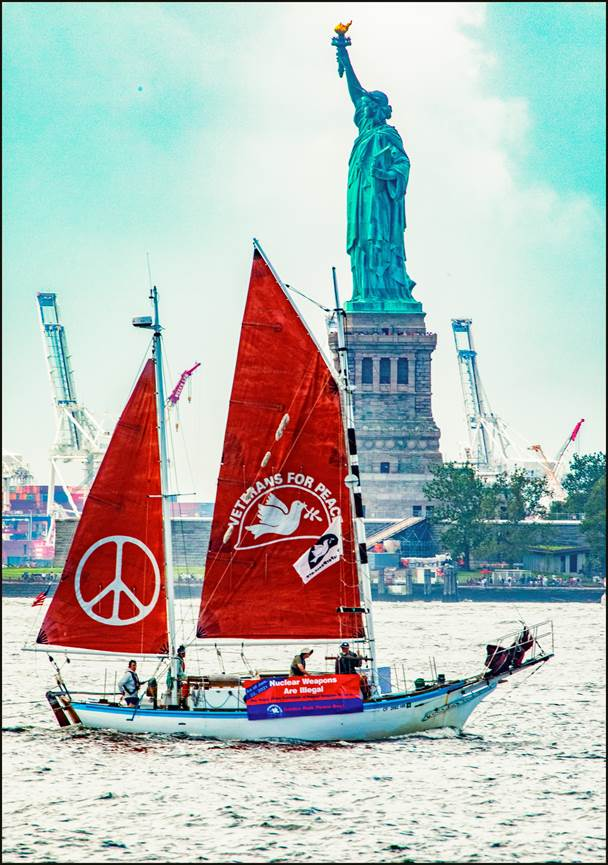
22,000+ miles voyaging for nuclear disarmament
and a radiation-free environment https://vfpgoldenruleproject.org/
To see nuclear-related stories in greater depth and intensity – go to https://nuclearinformation.wordpress.com
-
Archives
- July 2026 (276)
- June 2026 (287)
- May 2026 (306)
- April 2026 (356)
- March 2026 (251)
- February 2026 (267)
- January 2026 (308)
- December 2025 (358)
- November 2025 (359)
- October 2025 (375)
- September 2025 (257)
- August 2025 (319)
-
Categories
- 1
- 1 NUCLEAR ISSUES
- business and costs
- climate change
- culture and arts
- ENERGY
- environment
- health
- history
- indigenous issues
- Legal
- marketing of nuclear
- media
- opposition to nuclear
- PERSONAL STORIES
- politics
- politics international
- Religion and ethics
- safety
- secrets,lies and civil liberties
- spinbuster
- technology
- Uranium
- wastes
- weapons and war
- Women
- 2 WORLD
- ACTION
- AFRICA
- Atrocities
- AUSTRALIA
- Christina's notes
- Christina's themes
- culture and arts
- Events
- Fuk 2022
- Fuk 2023
- Fukushima 2017
- Fukushima 2018
- fukushima 2019
- Fukushima 2020
- Fukushima 2021
- general
- global warming
- Humour (God we need it)
- Nuclear
- RARE EARTHS
- Reference
- resources – print
- Resources -audiovicual
- Weekly Newsletter
- World
- World Nuclear
- YouTube
-
RSS
Entries RSS
Comments RSS
 nuclear-news