Unending gloom for the uranium industry
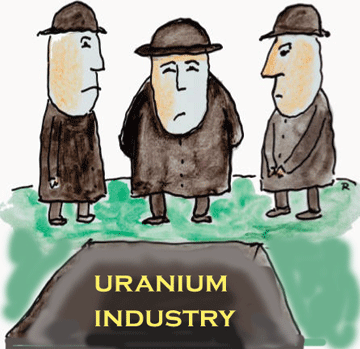 Japanese nuclear forecasts and other key indicators point to lower uranium prices (T.CCO) Stockhouse Editorial, 23 April 14
The following is an excerpt from Canaccord Genuity’s Morning Coffee newsletter.
According to UxC, the uranium spot price dropped US$0.50 this week to US$32.50 a pound, the lowest price in more than eight years (lowest level since November 2005). Canaccord Genuity Base Metals analyst Gary Lampard believes that uranium prices are already close to marginal production costs, and sees minimal potential for substantially lower prices than current.
We also note a Reuters analysis, “based on questionnaires and interviews with more than a dozen experts and input from 10 nuclear operators” published on April 1, 2014, concluded, “fewer than a third, and at most about two-thirds, of the (idled) reactors will pass today’s more stringent safety checks and clear the other seismological, economic, logistical and political hurdles needed to restart,” and that of the 48 non-Fukushima Daiichi reactors, “14 will probably restart at some point, a further 17 are uncertain and 17 will probably never be switched back on.”
http://www.stockhouse.com/news/newswire/2014/04/23/japanese-nuclear-forecasts-and-other-key-indicators-point-to-lower-uranium#MtwE9VTmwDgfQ0h0.99
Slow poison from USA’s 10,000 abandoned uranium mines
Clean Up “America’s Secret Fukushima”, The US Abandoned Uranium Mines (AUMs), Global Research, By Margaret Flowers 23 April 14 National Campaign. Earth Day Actions at Mt. Rushmore & Cheyenne River Expose Toxic Threats Red Shirt Village, Oglala Lakota Nation (SOUTH DAKOTA) – Organizations from throughout the United States held an Earth Day ceremony to launch a nation-wide campaign to clean up hazardous abandoned uranium mines (AUMs). Clean Up The Mines! calls for effective and complete eradication of the contamination caused by the estimated 10,000 abandoned uranium mines that are silently poisoning extensive areas of the U.S.
Clean Up The Mines! volunteers from across the country toured abandoned mines this week. They donned hazardous materials suits at Mount Rushmore and carried a large banner to raise awareness of the 169 AUMs in the Southwestern Black Hills near Edgemont. There are another 103 AUMS in the Northwest corner near Buffalo. The Northern Great Plains Region of Colorado, Montana, Wyoming, North and South Dakota contains more than 3,000 AUMs……http://www.globalresearch.ca/clean-up-americas-secret-fukushima/5378869
Rio Tinto’s $billion uranium profits at the expense of cancer death sin Africa
Uranium kills in Namibia http://www.news24.com/Columnists/AndreasSpath/Uranium-kills-in-Namibia-20140422 2014-04-22 Andreas Wilson-Späth
That uranium is a radioactive and toxic substance with potentially lethal impacts on the people who dig it out of the ground is generally glossed over by those among us who argue for nuclear power as a clean, green, safe and sustainable source of electricity.
Along with other intractable problems faced by the atomic energy industry – like its propensity to lay to waste entire landscapes if and when things go wrong and the fact that we still don’t have a long-term solution for storing its noxious waste products – this is not in dispute. It’s merely a matter of unintended side-effects. Collateral damage.
For uranium miners in Namibia, however, their occupation in proximity to the metal has much more first-hand and personal consequences. A report soon to be released by Earthlife Namibia and the Labour Resource and Research Institute argues that long-time workers at the Rössing uranium mine are routinely exposed to unhealthy working conditions, radiation and dust.
Rössing, which is located in central Namibia and employs over 1500 people, is majority owned (69%) by British-Australian mining giant Rio Tinto. The next biggest shareholders of the mine are the government of Iran (10%) and our own Industrial Development Corporation (10%).
Rio Tinto officials have consistently denied that they’re to blame for any harm, insisting that their operations at Rössing and elsewhere, including their copper, gold, coal, bauxite, iron ore and diamond mines around the world, are well monitored and run ethically, for the benefit of local communities, respecting human rights and protecting the environment.
But a closer look at the multinational’s global operations reveals that Rio Tinto isn’t quite as squeaky clean as they would like us to believe:
• At the end of last year, radioactive and acidic slurry spilled from a uranium processing tank at Rössing. Two weeks later the damaged rubber lining of a similar tank at the company’s Ranger mine in Australia’s Northern Territory leaked more than a million litres of the stuff.
• In 2013, 33 miners perished when a tunnel collapsed at Rio Tinto’s Grasberg gold and copper mine in Indonesia – the largest portion of the total of 41 deaths at their global operations during that year which international trade union IndustriAll claims the company should have done more to prevent.
• Locals have blamed the Grasberg mine for pollution affecting the environment and population.
• In Madagascar, activists have accused Rio Tinto of “land grabbing and environmental devastation”.
• A lawsuit has been filed against Rio Tinto’s Bingham Canyon mine in the US state of Utah for five-year breaches in air pollution regulations. The organisations that brought the case claim, that on some days the dust from the mine has a similar “effect on people who are consistently outdoors” as “smoking a pack of cigarettes a day”
• In Mongolia, indigenous nomadic herders have raised concerns that an expansion of Rio Tinto’s Oyu Tolgoi copper and gold mine in the Gobi desert would threaten the integrity of the local ecosystem along with their access to fresh water.
Of course Rio Tinto also made over $1 billion in profits last year. I guess in the minds of the company’s executives that justifies the occasional mishap.
– Andreas is a freelance writer with a PhD in geochemistry. Follow him on Twitter:@Andreas_Spath
Defenders of the Black Hills want old uranium mines cleaned up
Protesters urge state to clean up old uranium mines Argus Leader 21 Apr 14 Nora Hertel, Associated Press PIERRE – A South Dakota group says old uranium mines across the state and U.S. are contaminating water and the air with radioactive chemicals. Defenders of the Black Hills is helping to lead an effort to educate people and clean up old uranium mines across the country with an Earth Day event today.
The event is part of a “Clean Up The Mines” project launched on Earth Day. Charmaine White Face, founder and coordinator for Defenders of the Black Hills, said the river, among others, contains runoff from abandoned uranium mines in South Dakota and Wyoming. Most of the 10,000 abandoned uranium mines are in the western U.S., including more than 250 in South Dakota.
White Face, a former science teacher, said the issue came to her attention more than 10 years ago, but she didn’t understand the extent of it.
“We’ve been hollering about this to the state and anybody that would listen,” White Face said. “The state could do quite a bit if they would.”
She said some of the mines in question are on private land and some on federal land, including a large percentage around Mount Rushmore.
“All those 2 million visitors (a year) to Mount Rushmore, they’re breathing in radioactive dust and they don’t even know it,” White Face said.
Mike Cepak, an engineering manager with the South Dakota Department of Environment and Natural Resources, said the state doesn’t have an abandoned mine program. He said the U.S. Forest Service has reclaimed some mines in the western part of the state, but the process is expensive. It involves rearranging drainage so water doesn’t pass through the mine, filling it in and returning vegetation to the area.
“It’s mainly a funding problem,” Cepak said……….
On the potential health risks of uranium exposure, but White Face attributes it to cases of cancer and brain tumors in the Northern Plains.
She’s concerned that people don’t realize the number of old mines in the state and their potential effects. White Face has given speeches on the East Coast to drum up support for federal legislation that her group is collaborating on.
Defenders of the Black Hills is working with a member of Congress to draft legislation mandating mine reclamation. White Face said they’re on the fourth draft. She hopes it will be complete in a few weeks and sent to Washington, D.C., to be reviewed then presented as a bill for consideration. http://www.argusleader.com/story/news/2014/04/22/protesters-urge-state-clean-old-uranium-mines/7995325/
Rio Tinto’s AGM faced with facts on radiological impact of Rossing uranium mine
 Radiological Impact of Rössing Uranium Mine – Namibia http://www.facing-finance.org/en/2014/04/radiological-impact-of-rossing-uranium-mine-namibia/ April 17th, 2014 by jdub / facing finance
At the Annual General Meeting of Rio Tinto in London, 15 May  2014, two recent reports about the impact of the uranium mine Rössing near Arandis, Namibia, on the environment and health were presented to the shareholders.
In cooperation with Earthlife Namibia, the French organizationCRIIRAD (Commission de Recherhe et d’Information Independantes sur la Radioactivite) analyzed the radiation of soil, water and sediments samples taken near Rössing´s mine caused by the tailing dams and waste rock dumps. Results show elevated levels of heavy metals and uranium in the samples up to more than 2000 times higher than WHO recommendations.
In their study, Earthlife Namibia surveyed the health status of current and former workers of the mine. Many of them complained of health problems, among them respiratory problems and illnesses due to the constant exposure to radon gas and dust.
CRIIRAD and Earthlife Namibia demand more independent research on radiation at the Rössing mine, a broad independent examination of the health status of workers and access to monitoring data for experts, as well as workers´ unrestricted access to their own medical reports.
Read CRIIRAD´s report here
Read Earthlife Namibia´s report here
$Millions spent on Uranium Processing Facility (UPF) “just gone”
 Irresponsible spending on nuclear weapons infrastructure http://thehill.com/blogs/congress-blog/economy-budget/203685-irresponsible-spending-on-nuclear-weapons-infrastructure By Eric Tamerlani 17 April 14 Hundreds of millions of tax dollars have been wasted on U.S. nuclear weapons infrastructure—again. The National Nuclear Security Administration (NNSA) wasted about $600 million on the design of the Uranium Processing Facility (UPF) in Oak Ridge, Tennessee.
The waste was confirmed by Bruce Held, NNSA administrator. In an April 8 House Armed Services Strategic Forces Subcommittee hearing chaired by Rep. Mike Rogers (R-Ala.), Held said that half of the $1.2 billion spent on designing the UPF is “just gone.”
Responsible for maintaining the nuclear weapons arsenal and laboratories that support the arsenal, NNSA is a federal civilian contracting agency that oversees major construction contracts. A major contract is defined by the Government Accountability Office (GAO) as having a value over $750 million.
NNSA’s major contracts are on GAO’s “High Risk List,” susceptible to fraud, waste, abuse and mismanagement. When it comes to big construction jobs, NNSA seems to have more money than sense. To their credit, NNSA has improved on managing projects less than $750 million; several smaller projects were completed on time and on budget. Unfortunately, the UPF is among the latest examples of NNSA’s failure to responsibly manage large contracts.
Half the money spent on designing the facility is gone with nothing to show for it. The start of UPF’s construction has been delayed by at least 10 years. According to Held, the facility may not be finished until 2038—“well after most people who are today working at Oak Ridge would be long retired.” Each representative and senator on the Appropriations Energy and Water subcommittees should wonder how a federal agency with several major contracts could let one project slip so perilously out of control. When mismanagement leads to exorbitant waste and abuse of the taxpayer, it is time to take a closer look. Rep. Rogers was right: it is awful.
Nuclear weapons facilities have operated on an assumption that government objectives are better met by the skill and expertise of private industry. Facilities would be owned by the government, and industry would be contracted to operate the facilities. That relationship has worked in some other functions of the Energy Department, particularly the Office of Science, but the model seems to have failed the UPF project.
The management and operating contractor for the UPF was Babcock and Wilcox Technical Services Y-12 (B&W), which has since been replaced on the project. NNSA would oversee B&W as the private contractor carried out the majority of the work to design and build the UPF. B&W was free to achieve the NNSA’s performance goals as they saw fit, which is in line with the thinking that government defers to the expertise of industry.
In the process, B&W subcontracted UPF’s design to four other companies and then failed to consolidate or supervise the subcontractors’ work. This led to an untenable design which was scrapped and over half a billion tax dollars were paid to a handful of companies for nothing the government could use. More rigorous performance standards for contractors have since been put in place. However, more can be done. A peer review process could be used at NNSA. Private engineers and managers from other contractors across the nuclear weapons complex could critique each other’s plans, under NNSA direction, before embarking on large construction projects. This would provide assessment of projects from companies that work for NNSA but are not working on the project being considered.
Additionally Congress could place the U.S. Army Corps of Engineers in charge of supervising all major NNSA construction projects until NNSA has a better track record with the GAO. The Corps has helped other parts of the government with fledgling construction responsibilities and they could teach the NNSA a thing or two.
The Friends Committee on National Legislation opposes all nuclear weapons and the facilities that support their modernization. However, you don’t have to be a Quaker or pacifist to realize the millions our government throws down the drain on the UPF and other mismanaged projects at NNSA is poor public policy.
Demanding accountability from federal contractors, requiring independent performance evaluation from across the complex, and supplementing industry expertise with the Army Corps of Engineers protects taxpayers from waste and abuse and certifies the NNSA can be effective at overseeing large projects that it delegates to industry.
Tamerlani is the program assistant for Nuclear Disarmament at the Friends Committee on National Legislation.
IAEA says Iran has made drastic cuts in its stock of highly enriched uranium
 Iran slashes nuclear stock, says UN http://www.skynews.com.au/world/article.aspx?id=968784 April 18, 2014 Iran has cut its stock of highly-enriched uranium by 75 per cent, a new report by the UN’s nuclear watchdog has revealed.
The monthly update by the International Atomic Energy Agency (IAEA) showed Tehran remained in compliance with a November interim deal made with world powers, drawn up as part of efforts to find a lasting solution to Iran’s controversial nuclear drive.
Under the agreement, Iran pledged to ‘dilute’ half of its highly-enriched uranium by mid-April, with the rest to be converted by mid-July.
The IAEA report also said that progress on a plant in Tehran that will be used for the conversion of low-enriched uranium had been delayed, but that Iran had said this will not prevent it from fulfilling its part of the deal by the July 20 deadline.
Diplomats who saw the document told AFP everything was in order.
The international community was ‘keeping an eye’ on progress at the conversion plant in Tehran, one of the diplomats added.
Under the November deal, Iran agreed to freeze parts of its nuclear activities, including limiting enrichment. Enriching uranium can be part of a peaceful atomic drive but can also produce weapons-grade material for a bomb.
Tehran has consistently said its nuclear program is for civilian purposes only, while the West believes it has a military dimension.
Iran and six world powers – the US, Russia, China, Britain, France and Germany — will next meet on May 13 in a bid to draw up a lasting accord and end the decade-old standoff over Iran’s nuclear program.
Investors wary of South Dakota uranium mining project, and with good reason
Death and disease among uranium workers in Rio Tinto’s mines
Uranium workers dying after time at Namibia mine, report warns http://www.theguardian.com/environment/2014/apr/15/uranium-workers-dying-cancer-rio-tinto-namibia-mine
A study based on questionnaires of current and former workers at the giant Rio Tinto-owned Rössing uranium mine in Namibia says that everyone questioned was aware of people who are now suffering lung infections and unknown illnesses thought to be linked to their work.
The mine, in the Namib desert, produces around 7% of the world’s uranium but was operated with rudimentary safety when it opened in 1976. “People get sick. We are seeing it in people that have worked for Rössing for a long time. They just go back and die after working at Rössing,” one man told researchers working with Earthlife Namibia and the Labour Resource and Research Institute.
The study, which is expected to be published this week, accepts that working conditions in the mine have greatly improved but says that all workers questioned said that they were exposed to high levels of dust.
“Two current workers are on sick leave since 2000 and 2003. One worked as a laboratory technician for 24 years and claims to have proof he was radiated,” says a summary of the paper seen by the Guardian.
Rössing, which mines millions of tonnes of rock a year to extract uranium, employs more than 1,500 people. “Most workers stated that they are not informed about their health conditions and do not know if they have been exposed to radiation or not. Some workers said they consulted a private doctor to get a second opinion,” say the authors.
“The older workers all said they know miners dying of cancers and other illnesses. Many of these are now retired and many have already died of cancers,” says the report.
Aerial view of the discharge channels from Rössing, the world’s largest opencast uranium mine. Photograph: Yann Arthus-Bertrand/CorbisA spokesman for Rio Tinto said that Rössing has been recognised by independent consultants as one of the world’s safest mines. “The health and safety of our employees is the top priority. We have health management systems in place to make sure that everyone goes home safe and healthy every day. Effective controls ensure that radiation exposures to employees are kept well below the Rössing standard for occupational radiation exposure.
“The company keeps detailed records of the health status of its workforce from the day of employment to the day they leave the company. It therefore does not need to speculate on health issues of its employees.”
One former worker said: “Yes, I have cancer now. In the beginning they [Rio Tinto] did not want to give money for the treatment but later when they referred me to a doctor for an operation they gave me money for treatment.”
“Doctors were told not to inform us with our results or tell our illness. They only supply you with medications when you are totally finished up or about to die,” said another.
During the first years of operation, Rössing operated with a migrant labour system which the International Commission of Jurists declared illegal and said was similar to slavery. Black workers lived on the mine premises and were exposed to dust and radiation 24 hours a day and the mine became the focus for protests by anti-apartheid and anti-nuclear groups.
Shares in the mine are owned 69% by UK-based Rio Tinto, and 15% by the government of Iran. The Namibian government has denied supplying Iran with Namibian uranium which could be used for nuclear weapons.
The Erongo region is home to Rössing mine, the oldest and third-largest producer of uranium in the world. The mine sustains the small satellite town (population 7,600) of Arandis, which is visible near the top of the image. Photograph: ALI/EO-1/NASA“Uranium companies generally deny that workers get sick because of exposure to radiation. They blame the bad health conditions to unhealthy lifestyles such as eating habits, tobacco smoking and alcohol,” says the study.
Former Rössing mineworkers and people from communities adversely affected by Rio Tinto mines in west Papua, Madagascar, Namibia, Mongolia and the US will petition Rio Tinto shareholders at Tuesday’s annual meeting in London.
“Rio Tinto is enormous. Its history of attacks on workers’ rights, and environmental destruction has had a particularly damaging impact across the world,” said Richard Solly, co-ordinator of LondonMining Network, an alliance of human rights, development, environmental and solidarity groups.
No shortage of uranium: economics will kill nuclear power before that’s any concern
Enough Uranium, but Nuclear Power Is Still Shrinking http://www.truthdig.com/report/item/enough_uranium_but_nuclear_power_is_still_shrinking_20140412 By Paul Brown, Climate News Network This piece first appeared at Climate News Network.
LONDON—There is enough uranium available on the planet to keep the world’s nuclear industry going for as long as it is needed. But it will grow steadily more expensive to extract, because the quality of the ore is getting poorer, according to new research.
Years of work in compiling information from around the world has led Gavin M. Mudd from Monash University in Clayton, Australia to believe that it is economic and political restraints that will kill off nuclear power and not any shortage of uranium, as some have claimed.
Writing in the journal Environmental Science & Technology that renewables do not have the disadvantages of nuclear power, which needs large uranium mines that are hard to rehabilitate and which generates waste that remains dangerous for more than 100,000 years.
In addition, research shows that renewable technologies are expanding very fast and could produce all the energy needs of advanced economies, phasing out both fossil fuels and nuclear.
Mudd, who is a lecturer in the department of civil engineering at Monash, has compiled decades of data on the availability and quality of uranium ore. He concludes that, while uranium is plentiful, mining the ore is very damaging to the environment and the landscape.
It is expensive to rehabilitate former mines, not least because of the dangerous levels of radiation left behind. As a result many of the potential sources of uranium will not be exploited because of opposition from people who live in the area.
‘Too cheap to meter’
His paper examines the history of uranium mining and its wild fluctuations in price. These have little to do with supply, but rather with demand that is badly affected by nuclear accidents like Chernobyl and Fukushima, and by the political decisions by governments to embark on new nuclear building programmes, or to abandon them.
“Despite the utopian promise of electricity ‘too cheap to meter’, nuclear power remains a minor source of electricity worldwide”, Mudd writes. In 2010 it accounted for 5.65% of total primary energy supply and was responsible for 12.87% of global electricity supply. Both contributions have effectively been declining through the 2000s.
“Concerns about hazards and unfavourable economics have effectively slowed or stopped the growth of nuclear energy in many Western countries since the 1980s.”
The Fukushima accident in Japan has accelerated the trend away from nuclear power. The growth in projects in some countries, notably China, Russia and India, does not offset the fact that many more nuclear power stations will reach retirement age over the next 15-20 years than will be constructed.
Among the factors Mudd considered in the fluctuation of supply was the conversion of Russian and American nuclear weapons into power station fuel supplying 50% of American needs since the mid-1990s, and 20% of global uranium supply. This has not materially affected the long-term supply of uranium.
Mining blighted
Another issue that is more politically contentious is the high cost of rehabilitating mines, notably in Germany and the US. In many of the countries where uranium has been mined and no rehabilitation attempted, the prospect of further mining is blighted. Mudd gives the examples of Niger, Gabon, Argentina and Brazil, where there has been considerable public opposition to opening up fresh deposits as a result.
If these resources and other uranium deposits elsewhere in the world are to be exploited, Mudd argues, the issue of rehabilitating existing and future mines needs to be addressed.
“There is a critical need for a thorough and comprehensive review of the success (or otherwise) of global U mine rehabilitation efforts and programmes; such a review could help synthesise best practices and highlight common problems and possible solutions,” he says.
The paper also examines in detail the quality of the ore and the difficulty of extracting uranium from various rocks. Mudd concludes that as time passes the richer ores in the rocks that are easiest to extract are becoming scarce.
As a result, for each pound of uranium extracted more greenhouse gases are generated, adding to the CO2 emissions of nuclear power. However, he believes, in the overall comparisons of various energy systems the increase is only marginal.
“The future of nuclear power clearly remains contested and contentious — and therefore difficult to forecast accurately. While some optimists remain eternally hopeful, reality appears to be relegating nuclear power to the uneconomic category of history.
“Overall, there is a strong case for the abundance of already known U resources, whether currently reported as formal mineral resources or even more speculative U sources, to meet the foreseeable future of nuclear power. The actual U supply into the market is, effectively, more an economic and political issue than a resource constraint issue,” Mudd says.
Risks of uranium tailings to Las Vegas water in floods
A flood through Moab uranium tailings could poison Las Vegas drinking water An unseasonable flood through a 17 million ton uraniam tailing pile 500 miles upstream in Moab, Utah could spell the end of Las Vegas valley’s drinking water supply. Isn’t it about time mainstream science started paying attention to radiation remediation methods? by Sterling D. Allan Pure Energy Systems News , 13 April 14
Fukushima saw a situation in which the engineers who built the facility did not properly anticipate the magnitude of storm that ended up hitting the facility on March 11, 2011. Their having put the emergency pumps in the basement further shows their total denial about what mother nature could do.
Such a catastrophe actually hangs over Las Vegas as well, and the extend of mother nature’s unleashing wouldn’t be that high above normal. Ninety percent of Vegas valley’s drinking water comes from the Lake Mead reservoir, which is in the Colorado River drainage (source) — about 500 miles downstream from a 17 million ton uranium tailing pile in Moab, Utah. There is no containment berm protecting the pile from an unseasonably flooding Colorado River. Below is an email I received today from my New Energy Congress associate, Gary Vesperman, who lives in Boulder City, Nevada, neighboring Lake Mead. I share this for two reasons. One, to hopefully prevent such a thing from unfolding by spurring remedial measures; and second, to get you scientists among us thinking more about how we can remediate radiation in general.
It’s an email Gary wrote to John Hutchison, who has working on nuclear remediation for several years, and is coming up with some promising results……..http://pesn.com/2014/04/13/9602470_Flood-through-Moab-Uranium-tailings_could-poison-Vegas-drinking-water/
South Dakota’s 270 abandoned, open-pit uranium mines.
South Dakota groups urging cleanup of uranium mines http://www.argusleader.com/story/news/2014/04/09/south-dakota-groups-urging-cleanup-uranium-mines/7499621/ Associated Press, @ap7 April 9, 2014 RAPID CITY — Some environmental groups plan to use Earth Day to call attention to old uranium mines in South Dakota and elsewhere.
Defenders of the Black Hills and Clean Up The Mines say they’ll announce a nationwide campaign to clean up all abandoned uranium mines in the United States.
The event is scheduled for April 22 near Hermosa.
The groups say South Dakota has at least 270 abandoned, open-pit uranium mines.
Uranium mining affected by water shortage, water prices
 Uranium Miners in Namibia Face Rise in Water Price, Paladin Says http://www.businessweek.com/news/2014-04-04/uranium-miners-in-namibia-face-rise-in-water-price-paladin-says By Felix Njini April 04, 2014 Uranium miners in Namibia, already coping with water shortages in the semi-arid Erongo region, face a steep rise in costs, Paladin Energy (PDN) Ltd. said.
“When we get it, sometimes we have problems with the quality of the water and the cost,” said Simon Solomons, managing director of Paladin’s Langer Heinrich mine. “At the moment there is no long-term solution to the water-supply situation.”
The mines operated by Paladin, Rio Tinto Plc and China General Nuclear Power Group rely on water from a 20 million-cubic-meter capacity desalination plant operated by Areva SA, a French reactor maker. Areva is in talks to sell a majority stake in the plant to state utility Namibia Water Corp. after shelving its Trekkopje project in 2012 as uranium prices slumped in the wake of the Fukushima disaster.
Namwater has “to look for finance to buy the plant,” Solomons said yesterday during a tour of the Subiaco, Western Australia-based company’s mine. “They will pass on those charges to the uranium mines.”
Calls to Namwater weren’t immediately answered.
The three mines, which require as much as 10 million cubic meters of water a year, were previously supplied by the Omaruru Delta aquifer, which has dwindling volumes as demand from the mines and surrounding towns of Swakopmund and Walvis Bay rises.
Langer Heinrich, which consumes 130,000 cubic meters of water a month, has had “no long-term and no firm discussion” with Namwater over supplies, Solomons said.
Namibia is the fourth-largest uranium producer after Kazakhstan, Canada and Australia.
To contact the reporter on this story: Felix Njini in Windhoek at fnjini@bloomberg.net
Legal action against Utah uranium mill
 Environmental group sues uranium mill operator,http://www.heraldextra.com/news/local/environmental-group-sues-uranium-mill-operator/article_2293f9e6-bc40-11e3-8d5a-0019bb2963f4.html Annie Knox – Associated Press SALT LAKE CITY 4 April 14 — An environmental group is suing the operator of a southern Utah uranium mill, alleging it has hiked pollution levels in neighboring communities.
Grand Canyon Trust filed the suit in Utah federal District Court Wednesday against Energy Fuels Resources over operations at its San Juan County White Mesa Mill.
The group says the mill’s radon emissions in 2012 and 2013 surpassed federal standards and alleges the company ran more waste pits during that time than federal regulations allowed.
Trust attorney Anne Mariah Tapp says emissions from the nation’s last operating conventional uranium mill pose serious health risks.
Energy Fuels has announced plans to in summer halt processing ore from regional mines, including ones near the Grand Canyon, and possibly restart next year.
It did not immediately return phone messages Friday afternoon.
West now keen to market nuclear fuel to Ukraine
 Westinghouse, Ukraine Near Deal on Nuclear Fuel for Reactors Extension of Contract Could Also Lessen Reliance of Other Former Communist States on Russia WSJ, By SEAN
 CARNEY April 3, 2014 The United States and Ukraine are on the verge of deepening their ties in nuclear energy while lessening the influence of Russia on the former Soviet state’s economy and geopolitical orientation.
Pennsylvania-based Westinghouse Electric Co. on Thursday said it’s in negotiations to extend its contract with Ukraine’s Energoatom and supply nuclear fuel for three reactors, a deal that would bolster Ukraine’s commitment to long-term cooperation with the West.
“Westinghouse is currently in discussions with Energoatom to agree on an amended fuel supply contract,” Westinghouse spokesman Hans Korteweg said.
Ilona Zayets, spokeswoman for state-owned Energoatom, said the two sides were in final negotiations on the deal and added that Energoatom hopes to sign the contract next week……….
The nuclear contract being negotiated would renew and extend for an unspecified number of years an existing fuel contract between Westinghouse, a unit of Japan’s Toshiba Corp, and Ukraine’s state-owned Energoatom. ……..
A senior Westinghouse official late last year said the fuel deal is worth roughly $100 million for a five-year supply and that a renewal of the Ukraine supply contract was essential for the company in keeping its Swedish fuel processing plant in operation.
The Swedish plant is the sole non-Russian facility globally that produces fuel for use in Russian-designed reactors used in EU countries, and it is a crucial outpost as the West aims to check Russian influence in Europe’s eastern regions.
If the deal goes through as expected, it would also provide the Czech Republic and Bulgaria—which both have Russian VVER 1000-type reactors—with an alternative supplier of nuclear fuel in years to come.
Russia’s state-owned Rosatom and Westinghouse are the only producers of fuel for this reactor type.
Czech utility CEZ AS early in the last decade used Westinghouse fuel but later switched to Russian-made fuel.
Russia’s state-owned Rosatom, which is the primary nuclear fuel supplier to Ukraine as well as most post-communist countries in Europe that use Russian VVER-type reactors, wasn’t immediately available to comment. http://online.wsj.com/news/articles/SB10001424052702303847804579479543798143068?mg=reno64-wsj&url=http%3A%2F%2Fonline.wsj.com%2Farticle%2FSB10001424052702303847804579479543798143068.html
1 This Month



4 August – WEBINAR – Hiroshima & Nagasaki: Nuclear Bombs Never Again
Tuesday, Aug. 4 at 5 pm PT / 8 pm ET.
Aug 5, 2026 10:00 AM in Australia/Melbourne
Join the Nuclear Bombs Never Again webinar on August 4th at 5pm Pacific Time / 8pm Eastern Time / 9am Japan Standard Time.
Cross generational voices at the intersection of Japan-Korea-US policy and militarization will share their lived experiences, nuclear impacts in these contexts, anti-war strategies, and actions you can take to advocate for a world with Nuclear Bombs Never Again. This 75-minute event is co-hosted by WILPF US and Korea Peace Now.
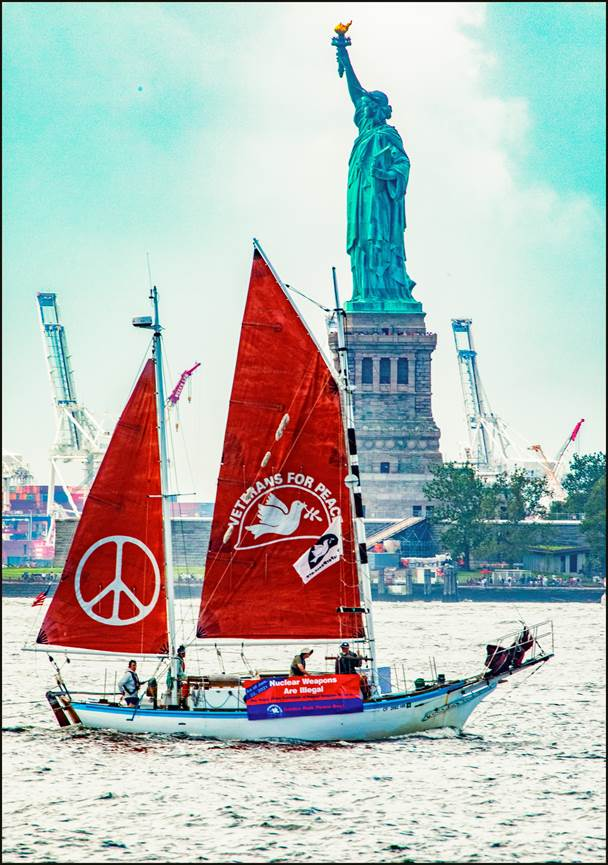
22,000+ miles voyaging for nuclear disarmament
and a radiation-free environment https://vfpgoldenruleproject.org/
To see nuclear-related stories in greater depth and intensity – go to https://nuclearinformation.wordpress.com
-
Archives
- July 2026 (276)
- June 2026 (287)
- May 2026 (306)
- April 2026 (356)
- March 2026 (251)
- February 2026 (267)
- January 2026 (308)
- December 2025 (358)
- November 2025 (359)
- October 2025 (375)
- September 2025 (257)
- August 2025 (319)
-
Categories
- 1
- 1 NUCLEAR ISSUES
- business and costs
- climate change
- culture and arts
- ENERGY
- environment
- health
- history
- indigenous issues
- Legal
- marketing of nuclear
- media
- opposition to nuclear
- PERSONAL STORIES
- politics
- politics international
- Religion and ethics
- safety
- secrets,lies and civil liberties
- spinbuster
- technology
- Uranium
- wastes
- weapons and war
- Women
- 2 WORLD
- ACTION
- AFRICA
- Atrocities
- AUSTRALIA
- Christina's notes
- Christina's themes
- culture and arts
- Events
- Fuk 2022
- Fuk 2023
- Fukushima 2017
- Fukushima 2018
- fukushima 2019
- Fukushima 2020
- Fukushima 2021
- general
- global warming
- Humour (God we need it)
- Nuclear
- RARE EARTHS
- Reference
- resources – print
- Resources -audiovicual
- Weekly Newsletter
- World
- World Nuclear
- YouTube
-
RSS
Entries RSS
Comments RSS
 nuclear-news