Judge’s ruling prioritises uranium industry over Grand Canyon’s health and environment
TAKE ACTION: Tell President Obama to protect the Grand Canyon from mining and share the message on Facebook
This uranium project could haunt the Grand Canyon region for decades to come,” said Katie Davis with the Center for Biological Diversity. “Uranium mining leaves a highly toxic legacy that endangers human health, wildlife and the streams and aquifers that feed the Grand Canyon. It’s disappointing to see the Forest Service prioritizing the extraction industry over the long-term protection of a place as iconic as the Grand Canyon.”
‘Beyond Unacceptable’: Judge OKs Uranium Mine at Grand Canyon s underground aquifers. Slamming ruling, conservationists warn of irreversible contamination of the canyon’s underground aquifers.By Reynard Loki / AlterNet August 12, 2015 In June, the Grand Canyon was named one of the “Most Endangered Places” in America by the National Trust for Historic Preservation. But the designation came just two months too late to possibly influence U.S. District Court Judge David Campbell. In April, he denied a request by the Havasupai tribe and a coalition of conservation groups to halt new uranium mining next to Grand Canyon National Park, just six miles from the Grand Canyon’s South Rim.
“We are very disappointed with the ruling by Judge Campbell in the Canyon Mine case,” said Havasupai Chairman Rex Tilousi. “We believe that the National Historic Preservation Act requires the Forest Service to consult with us and the other affiliated tribes before they let the mining company damage Red Butte, one of our most sacred traditional cultural properties.” He said that the Havasupai Tribal Council would appeal the decision.
Cleaning Up Contamination? Next to Impossible Continue reading
Bureau d’audiences publiques sur l’environnement (BAPE) – no go ahead for uranium mining in Quebec
 BAPE cites ‘uncertainties’ and ‘low acceptability’ in report on future of uranium mining in Quebec, Montreal Gazette, PRESSE CANADIENNEJuly 17, 2015 By Stéphanie Marin
The Bureau d’audiences publiques sur l’environnement (BAPE) concluded that would be inappropriate to give the green light to uranium mining in Quebec right now. Their findings were presented to the provincial government on Friday afternoon.
According to the BAPE, there are too many uncertainties and unanswered questions regarding the risks posed by uranium mining to human health and the environment.
“These uncertainties are compounded by the radioactivity of uranium residues, which may remain problematic for thousands of years,” the agency wrote in its 600-page report, dated May 2015 and entitled “The challenges of the uranium industry in Quebec.”
The report noted that social acceptability is also an issue for uranium mining.
“Because of the uncertainty and sometimes significant gaps and limitations in scientific and technological knowledge, we are very far from reaching a social and political consensus and there is very low acceptability in Quebec.”
And in areas where the potential mines would be located, “the rejection of the uranium industry is almost unanimous.”
The city of Sept-Îles, which is near a uranium mining project, has been the scene of many protests in recent years. In 2009, 20 doctors resigned from a Sept-Îles hospital to protest the construction of a uranium mine on the North Shore.
The BAPE notes that the Institut national de santé publique du Québec states that the presence of a uranium mine could create additional exposure to radiation for people living nearby.
Quebec’s environment minister asked the BAPE to address the mining industry in March 2014. Uranium mines are considered different from other mines because they emit radiation……….http://montrealgazette.com/news/quebec/bape-cites-uncertainties-and-low-acceptability-in-report-on-future-of-uranium-mining-in-quebec
Investigation at last into radioactive pollution of Johannesburg, from uranium mining

“[Johannesburg] is undoubtedly the most uranium-contaminated city in the world,”
Bench Marks, which receives support from UK charity Christian Aid, is mid-way through a three-year impact assessment of pollution levels in an around Johannesburg’s Soweto district. By systematically tracking air and water contamination, Bench Marks hopes to provide a scientific basis for the alleged health impacts of the tailings
Radioactive city: how Johannesburg’s townships are paying for its mining past, Guardian, Oliver Balch , 6 July 15
Much of the waste from 600 abandoned mines around South Africa’s largest city is piled high next to residential communities – most of which are poor and black Plaatjies is one of tens of thousands in Johannesburg’s impoverished townships who are paying a high cost for the city’s rich mining past. More than 600 abandoned mines surround South Africa’s largest city, with much of their waste now piled up high next to residential communities – most of which are poor and black.
Residents here fear the wind most. When it blows, fine particles from these man-made dumps are carried up into the air and deposited on to residents’ homes. It is no ordinary dust, either: the residue of decades of mining, it can contain traces of everything from copper and lead to cyanide and arsenic.
“During August and September, the dust is terrible. You stop cleaning the floor after a while. It’s just useless,” says Plaatjies.
In the local clinic, respiratory cases such as tuberculosis and asthma are ubiquitous across all age groups, says Musa Mbatha, chairman of the clinic’s civic committee. Rashes and skins diseases are commonplace, too.
“People can’t afford to buy food every day, so they leave the food and it gets contaminated,” Mbatha adds. “The government said that it would do a survey of the health impacts of the mining dust, but until today it hasn’t happened.”
An even more dangerous pollutant is lurking in Johannesburg’s mine dumps, however: radioactive waste. According to one university study, an estimated 600,000 metric tonnes of radioactive uranium are buried in waste rock in and around Johannesburg – around three times what was exported during the Cold War. Continue reading
It’s wearing thin: the pretense that the uranium market is healthy
Uranium Energy Corporation: The Bad News Buried In The Recent Sale [excellent graphs and chart] CNA Finance 19 Jun e15 Uranium mining company Uranium Energy Corp (UEC) is digging all the love it’s getting from the market right now. But after we mined into company documents, we couldn’t resist humming the cowboy song, “You Done Tore Out My Heart and Stomped That Sucker Flat.”
Uranium Energy looks ready to do just that to investors.
The company has not responded to TheStreetSweeper’s request for comment but investors may find other viewpoints here. Meanwhile, we’ve leaned on some ol’ country songs to help us croon out the risks.
*”If The Jukebox Took Teardrops,” Or Market’s Feeling The Pain
While UEC stock is up, the company’s peers are all down. The reason the sector’s performance remains so terrible is because uranium spot prices of about $36 are at a five-year low,
So these factors indicate that UEC’s recent price performance is unsustainable because the fundamentals of the company (more on that below) and the sector have not improved. We expect the stock will collapse as it follows the path set by peers.
*UEC is “Busted”
UEC reports zero sales in the past seven quarters from its sole producer, the Palangana Mine. UEC and other uranium companies were hurt after the Fukushima nuclear disaster hit in March 2011. Public pressure mounted and the negative effects have lingered and lower oil and gas prices have made the situation worse as of late for uranium companies. During its spotty history, UEC generated “no revenues from the sale of U3O8 generated during Fiscal 2014 or prior to Fiscal 2012.”
No surprise, then, that UEC shareholders have endured a long history of horrid earnings:………http://cnafinance.com/uranium-energy-corporation-the-bad-news-buried-in-the-recent-sale/4088
Hedge funds, Goldman Sachs and the money behind the push for nuclear power
 Follow the Money http://majiasblog.blogspot.jp/2015/05/follow-money.html I’ve been following the money for the uranium supply chain:
I turned over a rock and found Goldman Sachs is one of the world’s biggest, if not the biggest, uranium trader through its control of Nufcor.
2008 June 26, Nufcor was bought by the Constellation Energy Group, a U.S. firm that operated several nuclear power plants, for about $103 million. (Exelon has owned Constellation Energy since 2011)
2009 Goldman acquires Nufcor from Constellation Energy as part of a purchase of 900,000 pounds of uranium. Nufcor is the biggest private trader of uranium.
Details about Goldman’s uranium venture are included in the 2014 US Senate report chaired by Carl Levin and including Senator John McCain title: “Wall Street Bank’s Involvement with Physical Commodities”: From Senate Report: page 113 Constellation Acquisition. After its conversion to a bank holding company, Goldman continued to expand its physical commodity activities. In 2009, according to a Goldman presentation to the Federal Reserve, Goldman purchased over 3,000 trading assets involving U.K., French, and German power and U.K. natural gas; as well as about 60 coal contracts, 20 time and voyage freight agreements, and 900,000 pounds of uranium ore from Constellation Energy, a U.S. utility and trading business.Included in that acquisition was Nufcor International, a uranium trading company which stored and traded uranium ore in various stages of enrichment, as further described below…
…Page 124: In 2009, Goldman purchased Nufcor, and expanded its business over the
next five years, resulting in Goldman’s buying millions of pounds of uranium, controlling inventories of physical uranium at storage facilities in the United States and Europe, and becoming a long term supplier of physical uranium to nine utilities with nuclear power plants. Because no employees who conducted Nufcor’s business joined Goldman after the sale, Goldman employees ran the business. In 2014, for a variety of reasons, Goldman decided it would sell Nufcor or wind it down…
I find no evidence that Goldman has successfully sold Nufcor. Since 2011 Constellation Energy, which no longer owns Nufcor, has been owned by Exelon.http://www.constellation.com/about-constellation/pages/about-us.aspx
In 2006 and 2007 hedge funds piled into Uranium. Goldman is noteworthy because of the scope of its involvement the leverage that involvement affords it over uranium pricing and, no doubt, demand.
If you want to know why nuclear is pursued despite its obvious costs and risks, there is no better place to begin understanding than addressing who benefits from the global uranium trade.
Rio Tinto pulls out of loss-making Australian uranium mine

 Shares in Rio Tinto’s Australian uranium unit halve, Ft.com , 12 June 15 Jamie Smyth in Sydney Rio Tinto has withdrawn its support for the expansion of one of the world’s biggest uranium mines, causing shares in its separately listed subsidiary Energy Resources of Australia to almost halve in value.
The decision by the Anglo-Australian miner underscores the difficulties in the nuclear industry following the Fukushima meltdown in 2011, which prompted Japan to mothball its 43 operable reactors.
Since soaring to a record high of US$137 per pound in 2007, uranium prices have fallen to US$35 per pound — a level at which many miners are losing money and new investment does not make economic sense.
“After careful consideration, Rio Tinto has determined that it does not support any further study or the future development” of ERA’s proposed underground uranium mine “due to the project’s economic challenges,” the miner said.
Shares in ERA were down 46 per cent at A$0.70 in mid-afternoon trading in Sydney on Friday.
Up until 2008, the Ranger mine in Australia’s Northern Territory was producing almost 10 per cent of the global supply of uranium. But the open cut mine is now exhausted and ERA was conducting feasibility studies on developing an underground mine, Ranger 3 Deeps.
This week, ERA, which is 68 per cent owned by Rio, said it was committed to revisiting the underground project once the uranium market has recovered. But the decision by Rio to rule out support for the future development of the mine casts serious doubt on whether the project will ever happen………..http://www.ft.com/intl/cms/s/0/f24a6a9a-10b7-11e5-b4dc-00144feabdc0.html#axzz3csmrhS7I
Costs of Enriching Uranium Have Hurt Iran – Iranian Professor Sadegh Zibakalam
Iranian Professor: The Costs of Enriching Uranium Have Hurt Iran http://www.thetower.org/2156-iranian-professor-the-costs-of-enriching-uranium-have-hurt-iran/ by TheTower.org Staff | 06.12.15 In a public debate last month against an advisor to Iranian Supreme Leader Ayatollahi Ali Khamenei, Prof. Sadegh Zibakalam of Tehran University, who is associated with the reformist movement in Iran, argued that Iran’s enrichment program has been expensive for the country with little benefit. His remarks were translated Tuesday by the Middle East Media Research Institute (MEMRI).
“I’m not saying that the nuclear [program] is bad; it’s good. But at what cost? Now they will say ‘Zibakalam said we don’t need a nuclear [program]’… The political, partisan, and factional conduct on this [nuclear] issue must be resolved. Does the nuclear [program] exist for the sake of the state, or does the state exist for it? Must Iran be sacrificed for the sake of the nuclear [program], or should we sacrifice the nuclear [program] for the sake of Iran?”Zibakalam argued that enriching uranium has huge direct operating costs, but the penalties for having an illicit enrichment program has hurt Iran even more. Zibakalam suggested that Iran would have been better off buying enriched uranium and incurring neither cost.
Zibakalam, who was sentenced to prison last year for questioning Iran’s nuclear program, made several references during the debate to not being allowed to express an opinion about the nuclear program. In a different forum last year, Zibakalam said that Iran’s threats against Israel were the reason Iran’s nuclear program is viewed with suspicion.
Uranium Energy reports 3Q loss
Uranium Energy posts third-quarter loss of $5.3 million
VANCOUVER, British Columbia (AP) _ Uranium Energy Corp. (UEC) on Tuesday reported a loss of $5.3 million in its fiscal third quarter…….http://finance.yahoo.com/news/uranium-energy-reports-3q-loss-101556220.html
Investors warned ; uranium market still in trouble
The uranium sector DUNDEE CAPITAL MARKETS The Globe and Mail , May. 21 2015 “…..We have concerns regarding negative impact to investor and utility/trader sentiment, which could manifest itself in the already thin spot uranium market. The two other news items might influence investor sentiment but essentially cancel each other out. Uranium stocks retreated yesterday, followed by the price.”
Trying to cut costs, TEPCO to sell uranium stockpile
Tepco looking to sell some uranium stockpiles to cut costs Japan Times, 19 May 15 Tokyo Electric Power Co. is planning to sell part of its uranium stockpiles for nuclear power generation in the current business year to cut costs amid uncertainty over the restart of idled nuclear plants, a company document obtained by Kyodo News showed Monday.
Tepco has not consumed uranium since the 2011 nuclear crisis started at its Fukushima No. 1 complex that eventually resulted in all of Japan’s nuclear reactors being taken offline amid safety concerns. By reducing the stockpiles, the utility is seeking to slash costs for managing them as it faces funding difficulties stemming from the nuclear crisis.
According to the document, Tepco aims to reduce the amount of uranium to levels prior to the Fukushima disaster by the end of fiscal 2015 through March. The company estimated in the paper it can secure ¥12.3 billion ($103.13 million) by selling around half of the planned amount……..
Major utilities including Tepco procure uranium, which could be diverted to military use, under long-term contracts from overseas suppliers in Canada and elsewhere.
As of the end of March, Tepco had a total of 17,570 tons of uranium (tU), equivalent to the amount used at the Kashiwazaki-Kariwa plant for 10 years, compared with 16,805 tU at the time of the nuclear disaster in March 2011.
The amount would increase to 19,317 tU in fiscal 2015 if the company does not sell some of the stockpile.The utility will likely return it to the suppliers or pay for the costs of uranium enrichment in kind, while it will also consider terminating uranium purchase contracts and reducing purchase volumes to streamline its business, according to the document.
Japan Atomic Power Co. has also taken the rare step of selling some of its uranium, apparently to raise money to repay loans amid its faltering business conditions. http://www.japantimes.co.jp/news/2015/05/19/business/corporate-business/tepco-looking-sell-uranium-stockpiles-cut-costs/#.VVv7z7mqpHw
Uranium price takes another dive down
Uranium daily spot price down 35 cents from week ago to $35.65/lb Washington (Platts)–19 May2015
The uranium daily spot price was $35.65/lb U3O8 Monday, down 35 cents from a week ago, according to price publisher TradeTech.
The daily U3O8 spot price had held steady at $36/lb during four trading days, May 8-13, TradeTech reported. The spot price declined 25 cents on Thursday and by another 10 cents, to $35.65/lb, on Friday, according to TradeTech, which Monday reported it unchanged…….http://www.platts.com/latest-news/electric-power/washington/uranium-daily-spot-price-down-35-cents-from-week-21469982
A year of losses for Namibia’ Rossing uranium mine
Namibia’s Rossing Uranium revenue tumbled in 2014 – official, Star Africa May 19, 2015 The impact of lower prices and the lower production figures in 2014 has strained Rossing Uranium’s revenue, which declined by 19 per cent compared to the previous year, leading to a net loss after tax of N$91 million (about US$8 million), compared to N$32 million (about US$2.7 million) profit in 2013.
The company’s turnover in 2014 was N$2.4 billion (about US$201 million), down from N$2.9 billion (about US$243 million) in 2013.
Managing director Werner Duvenhage revealed in a statement issued to APA on Tuesday that 2014 was a tough year due to continued decline of uranium globally, putting substantial pressure on the business.
“The challenging times currently experienced in our industry are mainly because of global influences. It was a tough year because the uranium price continued to decline globally, putting substantial pressure on our business, with the average uranium spot market price at US$33 (N$333) per lbs, much lower than the US$38 (N$418)) per lbs average in 2013,â€� he explained……….
Unfortunately, the uranium price declined further during the first half of the year, leading to a management and board decision to curtail production and meet only contractual commitments, with the resulting curtailment production plan effective from August 2014,� he said.
“The 2011 tsunami in Japan and its impact on the Fukushima nuclear plant still continued to plague the uranium market in 2014, with excess supply causing a decline in market prices.
“Nuclear plants in Japan remained off-line for most of the year. Supply has increased over the three years since the Fukushima incident.
“This is a recipe for continued weak prices in the near term. Utilities are holding large stocks in all forms, which defer their need to buy for one to three years on averageâ€�……http://en.starafrica.com/news/namibias-rossing-uranium-revenue-tumbled-in-2014-official.html
Opposition in Greenland to Australian rare earths/uranium mining project
The concerns come as Greenland Minerals and Energy, an Australia-based mining outfit, closes in on final approval to begin production rare earths, a mineral vital for use in modern technologies……
in order to extract rare earths, GME will also need to mine uranium as a by-product, and that has raised fears, particularly among farmers, sheep farmers and those making a living off tourism, that dust from the open-pit facility will taint the region’s soil and water, and in the process spoil the region’s image.
Instead representatives from Urani Naamik, an anti-uranium group, together with IA, the main opposition party, have put forward 17 proposals they say could help to stimulate job growth in other sectors of the economy, including agriculture, fishing and bottling of glacial meltwater.
Until 2013, mining uranium in Greenland was explicitly banned. A law change opened up the possibility for such operations to be approved, but the issue remains divisive.
“We’re told that without a mine out at Kvanefjeld, Narsaq will die. We say that Narsaq will die if the build a mine it will kill Narsaq,” Mariane Paviasen, a Urani Naamik representative, said in April…….
Another criticism of the Kvanefjeld mine is that GME intends to dump tailings, a miner’s term for unwanted material, into a lake close by the facility. Berthlesen defends the process, calling it the best way to protect the surrounding area against possible radiation from the tailings.
Urani Naamik, however, wants an independent study looking into the mine’s environmental impact to be conducted. …..http://arcticjournal.com/oil-minerals/1583/uranium-opponents-look-other-sectors-job-growth
Things look crook for the uranium market – no respite in sight
Uranium prices have taken a turn for the worse due to a combination of factors that pulled the floor from underneath the commodity.
Back in November 2014, prices spiked from $28 per pound to $44 per pound. This was largely due to the sanctions imposed on Russia after the annexation of Crimea, thus portending a supply shortage.
But the price is currently close to $35 per pound. And technical indicators are pointing south once again……..
France was so confident in its atomic energy capabilities that, about 10 years ago, the French nuclear establishment made a bet on a new generation of reactors using European pressurize reactor (EPR) technology. These reactors were touted as the safest and most powerful ever made.
But, France isn’t living up to its promises. New plants that would ostensibly showcase the most cutting edge of nuclear energy prowess are years behind schedule and billions of euros over budget. Some are as much as three times more expensive than the original cost projections! At this point, many are questioning if they’ll ever be completed.
Plus, The New York Times reported on April 7 that one reactor, the Autorite de Surete Nucleaire, had discovered imperfections in the steel used by Areva (AREVA.PA) to make the caps of the main reactor vessel.
The caps contain the extreme heat, pressure, and radiation produced by nuclear fission. These same parts were used for a plant under construction in Taishan, China, which is being built in partnership with France……http://www.wallstreetdaily.com/2015/05/15/uranium-commodity-concerns/
AREVA Uranium Exploration and Mining in Mongolia

Today I heard a yet unpublished, unconfirmed news coming from a Mongolia Antinuclear activist :
As Areva is very busy exploring and mining uranium in Mongolia, journalists and local opponents are definitely not welcomed around.
A French woman named Caroline, who recently came to Mongolia together with a French man journalist, with the intention of filming a documentary, about Areva’s uranium activities in Mongolia, were guided by a few local Mongolian antinuclear activists to a certain place in Mongolia where Areva has a campsite, for uranium exploration in the aera.
According to my source, they both quickly returned from that place, the French woman severely wounded by knife, both of them renouncing completely to film their documentary, and they immediately flew back to France, cutting short their stay in Mongolia.
I have asked to my source to look discreetly for further details: what date did this happened, what location in Mongolia. But I told my source most of all to not take risks digging that story, to tread very lightly.
Conclusion: Mongolia is a bit far and isolated, so already very little news is trickling out, but if some journalists or film makers intend to go there uninvited to make a scoop on Areva Mongol’s activities there, it may become quickly unhealthy for them!
Historical background
April 13, 2007 – Russia, Mongolia to jointly prospect, produce, process uranium
“[Nuclear power agency] Rosatom and Mongolia’s industry and trade ministry signed a protocol on development of cooperation in the field of geological prospecting, production and processing of uranium ores,” Rosatom secretary Sergei Novikov said on April 13, 2007. Rosatom head Sergei Kiriyenko held a meeting with Mongolian President Nambaryn Enkhbayar and held talks with the country’s prime minister, Miegombyn Enkhbold, during which it was agreed to implement international projects in Russia and Mongolia. (RIA Novosti, April 13, 2007)
April 11, 2008 – Russia-Mongolia uranium agreement signed
Russia and Mongolia have signed an agreement to cooperate in the production of Mongolian uranium. Prime minister Sanjaa Bayar also told journalists that his country is interested in building a nuclear power plant with Russian help.
According to reports, the agreement signed during a visit by Bayar to Moscow comprises a plan of joint actions whereby Russian specialists would assist in the uranium exploration, extraction and processing in Mongolia. OECD Nuclear Energy Agency and International Atomic Agency figures show Mongolia’s ‘reasonably assured’ uranium resources are currently estimated at some 46,000 tonnes, but Sergei Kiryenko, head of Russian state nuclear corporation Rosatom, was upbeat about the possibility the country could have much more. “I think they are more than officially registered, over 100,000 tonnes,” he said. (WNN 11 Apr. 2008)
April 24, 2009 – IAEA offers assistance with development of uranium deposits to Mongolia
Mongolia and the International Atomic Energy Agency (IAEA) will work together toward implementing a joint program for the peaceful and effective use of the nation’s uranium. IAEA Director General ElBaradei said the IAEA will support Mongolia’s efforts to use its proven reserves with the help of international assistance. (UB Post Apr. 24, 2009)
July 16, 2009 – Japan and Mongolia sign agreement on joint uranium mine development
Japan and Mongolia signed a mine development agreement Thursday (July 16), as resource-poor Tokyo searches for ways to secure mineral products. Japanese Prime Minister Taro Aso agreed with visiting Mongolian premier Sanjaa Bayar that their nations would jointly develop uranium mines for use in nuclear power plants. (Straits Times July 16, 2009)
Sept. 14, 2009 – India signs uranium supply agreement with Mongolia
India Monday (Sep. 14) signed a uranium supply agreement with Mongolia, the fifth country to seal a civil nuclear pact with New Delhi, and announced a soft loan of $25 million to rejuvenate the economy of the resource-rich Central Asian country. (SamayLive Sep 14, 2009)
Oct. 7, 2009 – Areva signs agreement with Mongolia
French nuclear company Areva has signed a Memorandum of Understanding (MoU) on nuclear energy and radioactive materials cooperation with Mongolia’s Atomic Energy Department (AED). Areva CEO Anne Lauvergeon reiterated Areva’s interest in increasing its investment in Mongolia and infomed the Mongolian president that her company would “assist Mongolia to train its mining specialists.” (WNN Oct. 7, 2009)
Dec. 21, 2009 – Mitsubishi Corporation joins Areva with uranium exploration in Mongolia
On Dec. 21, 2009, Areva announced that it has invited Mitsubishi Corporation to participate in the development of its uranium exploration assets in Mongolia with the possibility of acquiring 34% of Areva Mongol over time. Areva currently holds 36 uranium exploration licenses on more than 14,000 km2 in both the Dornogobi and Sukhbaatar provinces.
Jan. 13, 2010 – India to mine uranium in Mongolia
India and Mongolia on Wednesday (Jan. 13) decided to operationalise their pact on civil nuclear cooperation by assisting in capacity creation for Ulan Bator’s nuclear sector and considering the manner in which India would begin uranium mining in Mongolia. (The Hindu Jan. 13, 2010)
July 19, 2010 – China and Mongolia sign Memorandum of Understanding on nuclear power cooperation
On June 1, Mr. Sun Qin, General Manager of China National Nuclear Corporation (CNNC) signed the Memorandum of Understanding on Radioactive Minerals and Nuclear Power Cooperation (MOU) with Mr. Enkhbat, Director General of the Mongolian Nuclear Energy Agency in the presence of the premiers of the two states during Chinese Premier Wen Jiabao’s visit to Mongolia. The execution of the MOU laid the foundation for cooperation between the two countries in peaceful use of nuclear energy and uranium resources in particular. (CNNC July 19, 2010)
Nov. 2, 2010 – France and Mongolia sign agreement on nuclear cooperation, uranium mining
On Oct. 14, 2010, France and Mongolia signed a cooperation agreement in the field of nuclear energy. It covers, among others, uranium exploration and exploitation by Areva in Mongolia. (Areva Nov. 2, 2010)
Dec. 27, 2010 – Russia and Mongolia uranium mining joint venture
According to RIA Novosti, the Russian Federation Council ratified on Dec. 24 the agreement with Mongolia on the creation of a uranium mining joint venture. (Emfis Dec. 27, 2010)
107 uranium exploration licenses issued in Mongolia
According to the Nuclear Energy Authority, 107 uranium exploration licenses have been issued in Mongolia so far. Two uranium exploitation licenses have been issued as well. The agency also says the state spent MNT 16 billion for uranium exploration in 2009, MNT 25.1 billion in 2010, and MNT 37.1 billion in 2011.
Specialists say most exploration work is being done in Dornod, Sukhbaatar, and Dornogobi aimags. A total of nine uranium deposit mines have been identified in the country, and these mines have an estimated 68,500 tons of uranium. Forty-three exploration licenses have been granted in Dornogobi aimag, 26 in Dornod aimag, and 19 in Sukhbaatar aimag. Twenty-eight companies have finished research and test work and have begun to prepare to exploit uranium deposits. Some companies are planning to exploit uranium beginning in 2014 and to build uranium processing facilities in Dornod, Dornogobi, and Dundgobi aimags. (news.mn Dec. 16, 2011)
Two uranium processing facilities to be built in Dornod province
The Nuclear Energy Authority says it has big plans for Mongolia’s uranium mining industry. The authority says two uranium processing facilities will be built in Dornod aimag (province), and construction preparation work is already underway. The factories will export uranium products to France and Kazakhstan.
Uranium exploration efforts began in Mongolia in 2009, and the Nuclear Energy Authority is planning to intensify exploration efforts. The work of establishing uranium mines in Dornod and Dundgobi aimags has begun. (news.mn Dec. 28, 2011)
http://www.wise-uranium.org/upmn.html
April 2013 – The French nuclear giant AREVA (EPA:AREVA) revealed information about a new uranium discovery in Mongolia.
AREVA Mongol, its Mongolian subsidiary, reported 50,000 tonnes of uranium in inferred resources with a grade of 0.01% as a result of ongoing exploration efforts at the Zoovch Ovoo project.
The project is located in Ulaanbadrah Soum, in the southeastern Dornogobi province of Mongolia.
Uranium mineralization is characterized as roll-front type and potentially amenable for the most effective lowest-cost in-situ leaching (ISL, a.k.a in-situ recovery) mining method.
Thus, by the volume of uranium resources in-situ, the Zoovch Ovoo project is comparable to the biggest deposits of that type in Kazakhstan.
This is not the only Mongolian exploration success for AREVA in recent years.
Two years ago, the company announced the discovery of the Dulaan Uul deposit with 9,888 tonnes of uranium, following field tests which confirmed the ISL mining method as preferable.
AREVA Mongol has 28 exploration licenses covering more than 14,100 square kilometres in the East Gobi province of Mongolia. This huge sedimentary basin contains promising uranium deposits well-suited to ISL mining technology.
October 2013 – AREVA forms a joint venture to develop its mining activities in Mongolia
AREVA has signed an agreement to develop uranium mines in Mongolia and to create the company AREVA Mines LLC, 66% owned by AREVA and 34% owned by MON-ATOM, the Mongolian state-owned nuclear company. Areva in the text of the agreement mentioning Mitsubishi financial participation but without revealing to what extent.
http://www.areva.com/EN/news-10018/areva-forms-a-joint-venture-to-develop-its-mining-activities-in-mongolia.html
http://www.world-nuclear-news.org/C-Areva_JV_to_develop_Mongolian_mines-2810137.html
http://au.ibtimes.com/areva-inks-agreement-develop-uranium-mines-mongolia-1321458
Areva Operations in Mongolia
AREVA Mongol LLC
AREVA Mongol, the parent company
In 2007, AREVA purchased the East Asia Minerals Energy company, renamed it AREVA Mongol in March 2008. AREVA Mongol LLC is the parent company of the entities in Mongolia. Its headquarters are in Ulaanbaatar, the capital.
All support functions are grouped together. It counts with its entities, nearly 120 employees of which over 90% are of Mongolian origin.
Since 2009, AREVA Mongol owns 100% of Cogegobi. In November 2011, Mitsubishi has exercised its previous agreement of an investment option, becoming 34% shareholder in Areva Mongol LLC.
Cogegobi LLC for exploration
The Cogegobi LLC company holds all the uranium deposit exploration permits (22 licenses). All functions related to exploration are grouped unde Cogegobi LLC.
AREVA Mining LLC for the mining operations
AREVA Mines LLC (66% AREVA MONGOL LLC, MON-ATOM 34%) is the company that will own the mining licenses that will be requested by Cogegobi to the International Atomic Energy Agency
All functions relating to the operation will be consolidated within AREVA Mines LLC.
http://www.areva.com/FR/activites-586/areva-en-mongolie-une-presence-renforcee-et-prometteuse.html
Uranium in Mongolia : 1.47 millionTU estimated !
According to the 2011 Red Book, Mongolia has 74,000 tU in Reasonably Assured Resources plus Inferred Resources, to US$ 130/kg U. However, geological indications reported in the Red Book suggest that uranium resources could be 1.47 million tU.
The mining sector is Mongolia’s single largest industry, accounting for 55% of industrial output and more than 40% of export earnings.
http://www.world-nuclear.org/info/Country-Profiles/Countries-G-N/Mongolia/
Antinuclear in Mongolia
Herders on horseback protesting in Ulaanbaatar against mining activities
Central Square of the capital city is more crowded than usual for the last ten days. United under the moto “Save the Nation”, members of three civil movements – United for Rivers and Lakes , Khuder River , and Gal Undesten – started to converge on Sukhbaatar Square since April 19th with 100 horsemen and horse carts and erected eight gers (yurts) there. Most of them are herders, who have come on horseback from countryside to demand stopping of mining activities that destroys their pastureland.
All the members had their heads bound in bands and held sign boards with the slogans “We want resignation of the Government!”, “Give power to the People!”. The movement wants a national discussion on the present situation, resignation of the Government, and dissolution of Parliament. Moreover, they already have the anthem “Wake up Mongols”, which has been playing all day at the Sukhbaatar Square.
According to an activist of the movement there are about 400 people from different soums (counties) of 18 provinces participating in this civil movement to protect their living areas. They are calling out people to join and to involve in the movement at the Sukhbaatar Square. Both the assembly and the putting up of gers in Sukhbaatar Square are in violation of orders, but the gers are still there. Another 300 horsemen are on their way to Ulaanbaatar from the western provinces to join those already here. (UB Post Apr. 26, 2011)
Uranium Action Day: protests at Areva office in Ulaanbaatar
Activists of Golomt – Anti Nuclear Movement Mongolia held protests against the proposed uranium mining in Mongolia at the offices of Areva in Ulaanbaatar on Sep. 29, and Oct. 1, 2012. (Golomt Oct. 2, 2012)
Demonstration in Ulaanbaatar against uranium extraction in Mongolia
Several NGOs expressed their opposition against uranium extraction in Mongolia, informed the public of the fatal effects deriving from uranium in Ulaanbadrakh soum [county], and prompted decision makers to visit the soum in Dornogovi Province to witness the conditions, at a peaceful demonstration at the Central Square [in Ulaanbaatar] on Monday (June 9).
Residents of Ulaanbadrakh soum have contacted the NGOs for support against uranium operation of Gogegobi LLC and Areva Mongol LLC, fully owned subsidiary of France-headquartered uranium-giant Areva, at the soum which has reportedly seen 200 livestock die and many more with birth defects due to uranium contamination in the region. (UBPost June 12, 2014)
http://www.wise-uranium.org/upmn.html
The largest antinuclear activist group on Facebook is from Mongolia
10,183 members !
https://www.facebook.com/groups/nonuclearmongolia/
1 This Month


4 August – WEBINAR – Hiroshima & Nagasaki: Nuclear Bombs Never Again
Tuesday, Aug. 4 at 5 pm PT / 8 pm ET.
Aug 5, 2026 10:00 AM in Australia/Melbourne
Join the Nuclear Bombs Never Again webinar on August 4th at 5pm Pacific Time / 8pm Eastern Time / 9am Japan Standard Time.
Cross generational voices at the intersection of Japan-Korea-US policy and militarization will share their lived experiences, nuclear impacts in these contexts, anti-war strategies, and actions you can take to advocate for a world with Nuclear Bombs Never Again. This 75-minute event is co-hosted by WILPF US and Korea Peace Now.
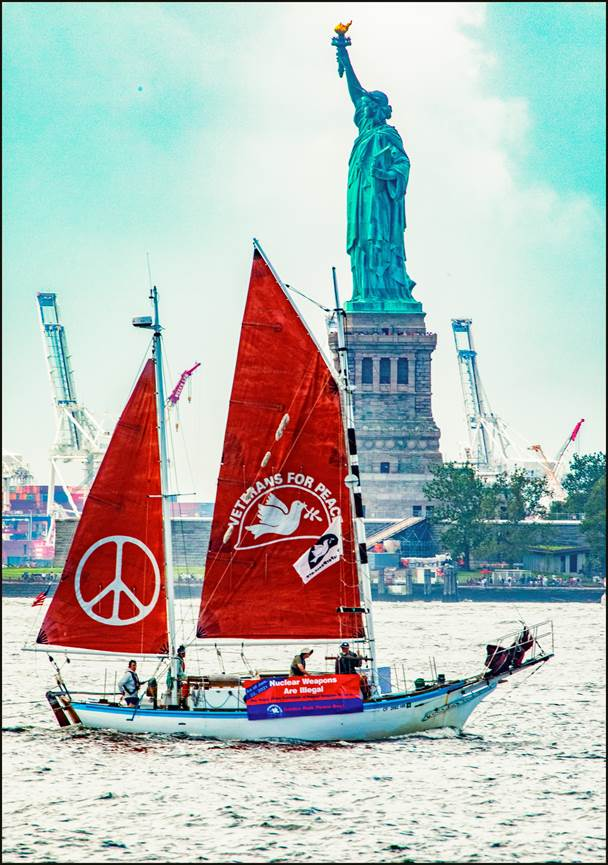
22,000+ miles voyaging for nuclear disarmament
and a radiation-free environment https://vfpgoldenruleproject.org/
To see nuclear-related stories in greater depth and intensity – go to https://nuclearinformation.wordpress.com
-
Archives
- July 2026 (266)
- June 2026 (287)
- May 2026 (306)
- April 2026 (356)
- March 2026 (251)
- February 2026 (267)
- January 2026 (308)
- December 2025 (358)
- November 2025 (359)
- October 2025 (375)
- September 2025 (257)
- August 2025 (319)
-
Categories
- 1
- 1 NUCLEAR ISSUES
- business and costs
- climate change
- culture and arts
- ENERGY
- environment
- health
- history
- indigenous issues
- Legal
- marketing of nuclear
- media
- opposition to nuclear
- PERSONAL STORIES
- politics
- politics international
- Religion and ethics
- safety
- secrets,lies and civil liberties
- spinbuster
- technology
- Uranium
- wastes
- weapons and war
- Women
- 2 WORLD
- ACTION
- AFRICA
- Atrocities
- AUSTRALIA
- Christina's notes
- Christina's themes
- culture and arts
- Events
- Fuk 2022
- Fuk 2023
- Fukushima 2017
- Fukushima 2018
- fukushima 2019
- Fukushima 2020
- Fukushima 2021
- general
- global warming
- Humour (God we need it)
- Nuclear
- RARE EARTHS
- Reference
- resources – print
- Resources -audiovicual
- Weekly Newsletter
- World
- World Nuclear
- YouTube
-
RSS
Entries RSS
Comments RSS
 nuclear-news