AREVA Uranium Exploration and Mining in Mongolia

Today I heard a yet unpublished, unconfirmed news coming from a Mongolia Antinuclear activist :
As Areva is very busy exploring and mining uranium in Mongolia, journalists and local opponents are definitely not welcomed around.
A French woman named Caroline, who recently came to Mongolia together with a French man journalist, with the intention of filming a documentary, about Areva’s uranium activities in Mongolia, were guided by a few local Mongolian antinuclear activists to a certain place in Mongolia where Areva has a campsite, for uranium exploration in the aera.
According to my source, they both quickly returned from that place, the French woman severely wounded by knife, both of them renouncing completely to film their documentary, and they immediately flew back to France, cutting short their stay in Mongolia.
I have asked to my source to look discreetly for further details: what date did this happened, what location in Mongolia. But I told my source most of all to not take risks digging that story, to tread very lightly.
Conclusion: Mongolia is a bit far and isolated, so already very little news is trickling out, but if some journalists or film makers intend to go there uninvited to make a scoop on Areva Mongol’s activities there, it may become quickly unhealthy for them!
Historical background
April 13, 2007 – Russia, Mongolia to jointly prospect, produce, process uranium
“[Nuclear power agency] Rosatom and Mongolia’s industry and trade ministry signed a protocol on development of cooperation in the field of geological prospecting, production and processing of uranium ores,” Rosatom secretary Sergei Novikov said on April 13, 2007. Rosatom head Sergei Kiriyenko held a meeting with Mongolian President Nambaryn Enkhbayar and held talks with the country’s prime minister, Miegombyn Enkhbold, during which it was agreed to implement international projects in Russia and Mongolia. (RIA Novosti, April 13, 2007)
April 11, 2008 – Russia-Mongolia uranium agreement signed
Russia and Mongolia have signed an agreement to cooperate in the production of Mongolian uranium. Prime minister Sanjaa Bayar also told journalists that his country is interested in building a nuclear power plant with Russian help.
According to reports, the agreement signed during a visit by Bayar to Moscow comprises a plan of joint actions whereby Russian specialists would assist in the uranium exploration, extraction and processing in Mongolia. OECD Nuclear Energy Agency and International Atomic Agency figures show Mongolia’s ‘reasonably assured’ uranium resources are currently estimated at some 46,000 tonnes, but Sergei Kiryenko, head of Russian state nuclear corporation Rosatom, was upbeat about the possibility the country could have much more. “I think they are more than officially registered, over 100,000 tonnes,” he said. (WNN 11 Apr. 2008)
April 24, 2009 – IAEA offers assistance with development of uranium deposits to Mongolia
Mongolia and the International Atomic Energy Agency (IAEA) will work together toward implementing a joint program for the peaceful and effective use of the nation’s uranium. IAEA Director General ElBaradei said the IAEA will support Mongolia’s efforts to use its proven reserves with the help of international assistance. (UB Post Apr. 24, 2009)
July 16, 2009 – Japan and Mongolia sign agreement on joint uranium mine development
Japan and Mongolia signed a mine development agreement Thursday (July 16), as resource-poor Tokyo searches for ways to secure mineral products. Japanese Prime Minister Taro Aso agreed with visiting Mongolian premier Sanjaa Bayar that their nations would jointly develop uranium mines for use in nuclear power plants. (Straits Times July 16, 2009)
Sept. 14, 2009 – India signs uranium supply agreement with Mongolia
India Monday (Sep. 14) signed a uranium supply agreement with Mongolia, the fifth country to seal a civil nuclear pact with New Delhi, and announced a soft loan of $25 million to rejuvenate the economy of the resource-rich Central Asian country. (SamayLive Sep 14, 2009)
Oct. 7, 2009 – Areva signs agreement with Mongolia
French nuclear company Areva has signed a Memorandum of Understanding (MoU) on nuclear energy and radioactive materials cooperation with Mongolia’s Atomic Energy Department (AED). Areva CEO Anne Lauvergeon reiterated Areva’s interest in increasing its investment in Mongolia and infomed the Mongolian president that her company would “assist Mongolia to train its mining specialists.” (WNN Oct. 7, 2009)
Dec. 21, 2009 – Mitsubishi Corporation joins Areva with uranium exploration in Mongolia
On Dec. 21, 2009, Areva announced that it has invited Mitsubishi Corporation to participate in the development of its uranium exploration assets in Mongolia with the possibility of acquiring 34% of Areva Mongol over time. Areva currently holds 36 uranium exploration licenses on more than 14,000 km2 in both the Dornogobi and Sukhbaatar provinces.
Jan. 13, 2010 – India to mine uranium in Mongolia
India and Mongolia on Wednesday (Jan. 13) decided to operationalise their pact on civil nuclear cooperation by assisting in capacity creation for Ulan Bator’s nuclear sector and considering the manner in which India would begin uranium mining in Mongolia. (The Hindu Jan. 13, 2010)
July 19, 2010 – China and Mongolia sign Memorandum of Understanding on nuclear power cooperation
On June 1, Mr. Sun Qin, General Manager of China National Nuclear Corporation (CNNC) signed the Memorandum of Understanding on Radioactive Minerals and Nuclear Power Cooperation (MOU) with Mr. Enkhbat, Director General of the Mongolian Nuclear Energy Agency in the presence of the premiers of the two states during Chinese Premier Wen Jiabao’s visit to Mongolia. The execution of the MOU laid the foundation for cooperation between the two countries in peaceful use of nuclear energy and uranium resources in particular. (CNNC July 19, 2010)
Nov. 2, 2010 – France and Mongolia sign agreement on nuclear cooperation, uranium mining
On Oct. 14, 2010, France and Mongolia signed a cooperation agreement in the field of nuclear energy. It covers, among others, uranium exploration and exploitation by Areva in Mongolia. (Areva Nov. 2, 2010)
Dec. 27, 2010 – Russia and Mongolia uranium mining joint venture
According to RIA Novosti, the Russian Federation Council ratified on Dec. 24 the agreement with Mongolia on the creation of a uranium mining joint venture. (Emfis Dec. 27, 2010)
107 uranium exploration licenses issued in Mongolia
According to the Nuclear Energy Authority, 107 uranium exploration licenses have been issued in Mongolia so far. Two uranium exploitation licenses have been issued as well. The agency also says the state spent MNT 16 billion for uranium exploration in 2009, MNT 25.1 billion in 2010, and MNT 37.1 billion in 2011.
Specialists say most exploration work is being done in Dornod, Sukhbaatar, and Dornogobi aimags. A total of nine uranium deposit mines have been identified in the country, and these mines have an estimated 68,500 tons of uranium. Forty-three exploration licenses have been granted in Dornogobi aimag, 26 in Dornod aimag, and 19 in Sukhbaatar aimag. Twenty-eight companies have finished research and test work and have begun to prepare to exploit uranium deposits. Some companies are planning to exploit uranium beginning in 2014 and to build uranium processing facilities in Dornod, Dornogobi, and Dundgobi aimags. (news.mn Dec. 16, 2011)
Two uranium processing facilities to be built in Dornod province
The Nuclear Energy Authority says it has big plans for Mongolia’s uranium mining industry. The authority says two uranium processing facilities will be built in Dornod aimag (province), and construction preparation work is already underway. The factories will export uranium products to France and Kazakhstan.
Uranium exploration efforts began in Mongolia in 2009, and the Nuclear Energy Authority is planning to intensify exploration efforts. The work of establishing uranium mines in Dornod and Dundgobi aimags has begun. (news.mn Dec. 28, 2011)
http://www.wise-uranium.org/upmn.html
April 2013 – The French nuclear giant AREVA (EPA:AREVA) revealed information about a new uranium discovery in Mongolia.
AREVA Mongol, its Mongolian subsidiary, reported 50,000 tonnes of uranium in inferred resources with a grade of 0.01% as a result of ongoing exploration efforts at the Zoovch Ovoo project.
The project is located in Ulaanbadrah Soum, in the southeastern Dornogobi province of Mongolia.
Uranium mineralization is characterized as roll-front type and potentially amenable for the most effective lowest-cost in-situ leaching (ISL, a.k.a in-situ recovery) mining method.
Thus, by the volume of uranium resources in-situ, the Zoovch Ovoo project is comparable to the biggest deposits of that type in Kazakhstan.
This is not the only Mongolian exploration success for AREVA in recent years.
Two years ago, the company announced the discovery of the Dulaan Uul deposit with 9,888 tonnes of uranium, following field tests which confirmed the ISL mining method as preferable.
AREVA Mongol has 28 exploration licenses covering more than 14,100 square kilometres in the East Gobi province of Mongolia. This huge sedimentary basin contains promising uranium deposits well-suited to ISL mining technology.
October 2013 – AREVA forms a joint venture to develop its mining activities in Mongolia
AREVA has signed an agreement to develop uranium mines in Mongolia and to create the company AREVA Mines LLC, 66% owned by AREVA and 34% owned by MON-ATOM, the Mongolian state-owned nuclear company. Areva in the text of the agreement mentioning Mitsubishi financial participation but without revealing to what extent.
http://www.areva.com/EN/news-10018/areva-forms-a-joint-venture-to-develop-its-mining-activities-in-mongolia.html
http://www.world-nuclear-news.org/C-Areva_JV_to_develop_Mongolian_mines-2810137.html
http://au.ibtimes.com/areva-inks-agreement-develop-uranium-mines-mongolia-1321458
Areva Operations in Mongolia
AREVA Mongol LLC
AREVA Mongol, the parent company
In 2007, AREVA purchased the East Asia Minerals Energy company, renamed it AREVA Mongol in March 2008. AREVA Mongol LLC is the parent company of the entities in Mongolia. Its headquarters are in Ulaanbaatar, the capital.
All support functions are grouped together. It counts with its entities, nearly 120 employees of which over 90% are of Mongolian origin.
Since 2009, AREVA Mongol owns 100% of Cogegobi. In November 2011, Mitsubishi has exercised its previous agreement of an investment option, becoming 34% shareholder in Areva Mongol LLC.
Cogegobi LLC for exploration
The Cogegobi LLC company holds all the uranium deposit exploration permits (22 licenses). All functions related to exploration are grouped unde Cogegobi LLC.
AREVA Mining LLC for the mining operations
AREVA Mines LLC (66% AREVA MONGOL LLC, MON-ATOM 34%) is the company that will own the mining licenses that will be requested by Cogegobi to the International Atomic Energy Agency
All functions relating to the operation will be consolidated within AREVA Mines LLC.
http://www.areva.com/FR/activites-586/areva-en-mongolie-une-presence-renforcee-et-prometteuse.html
Uranium in Mongolia : 1.47 millionTU estimated !
According to the 2011 Red Book, Mongolia has 74,000 tU in Reasonably Assured Resources plus Inferred Resources, to US$ 130/kg U. However, geological indications reported in the Red Book suggest that uranium resources could be 1.47 million tU.
The mining sector is Mongolia’s single largest industry, accounting for 55% of industrial output and more than 40% of export earnings.
http://www.world-nuclear.org/info/Country-Profiles/Countries-G-N/Mongolia/
Antinuclear in Mongolia
Herders on horseback protesting in Ulaanbaatar against mining activities
Central Square of the capital city is more crowded than usual for the last ten days. United under the moto “Save the Nation”, members of three civil movements – United for Rivers and Lakes , Khuder River , and Gal Undesten – started to converge on Sukhbaatar Square since April 19th with 100 horsemen and horse carts and erected eight gers (yurts) there. Most of them are herders, who have come on horseback from countryside to demand stopping of mining activities that destroys their pastureland.
All the members had their heads bound in bands and held sign boards with the slogans “We want resignation of the Government!”, “Give power to the People!”. The movement wants a national discussion on the present situation, resignation of the Government, and dissolution of Parliament. Moreover, they already have the anthem “Wake up Mongols”, which has been playing all day at the Sukhbaatar Square.
According to an activist of the movement there are about 400 people from different soums (counties) of 18 provinces participating in this civil movement to protect their living areas. They are calling out people to join and to involve in the movement at the Sukhbaatar Square. Both the assembly and the putting up of gers in Sukhbaatar Square are in violation of orders, but the gers are still there. Another 300 horsemen are on their way to Ulaanbaatar from the western provinces to join those already here. (UB Post Apr. 26, 2011)
Uranium Action Day: protests at Areva office in Ulaanbaatar
Activists of Golomt – Anti Nuclear Movement Mongolia held protests against the proposed uranium mining in Mongolia at the offices of Areva in Ulaanbaatar on Sep. 29, and Oct. 1, 2012. (Golomt Oct. 2, 2012)
Demonstration in Ulaanbaatar against uranium extraction in Mongolia
Several NGOs expressed their opposition against uranium extraction in Mongolia, informed the public of the fatal effects deriving from uranium in Ulaanbadrakh soum [county], and prompted decision makers to visit the soum in Dornogovi Province to witness the conditions, at a peaceful demonstration at the Central Square [in Ulaanbaatar] on Monday (June 9).
Residents of Ulaanbadrakh soum have contacted the NGOs for support against uranium operation of Gogegobi LLC and Areva Mongol LLC, fully owned subsidiary of France-headquartered uranium-giant Areva, at the soum which has reportedly seen 200 livestock die and many more with birth defects due to uranium contamination in the region. (UBPost June 12, 2014)
http://www.wise-uranium.org/upmn.html
The largest antinuclear activist group on Facebook is from Mongolia
10,183 members !
https://www.facebook.com/groups/nonuclearmongolia/
Uranium effluent discharged into Malawi river by Australian company Paladin
Malawi: Paladin Starts Discharging Uranium Wastes Into Public Rivers, AllAfrica, By Bishop Witmos Karonga April 23: Few months after Paladin Africa Limited differed with civil society organizations (CSOs) and some chiefs in Karonga over the disposition of uranium wastes into public water, the company has started discharging the effluent into Sere River.

Paladin Africa Limited, a member of the Paladin Energy group of companies, suspended its operations at Kayelekera Mine in the district in May, 2014, due to unstable uranium prices at an international market. The project is now on care and maintenance.
Malawi News Agency (Mana) has established Paladin invited Paramount Chief Kyungu and the District Commissioner (DC) for Karonga, Rosemary Moyo, to a meeting in Lilongwe early April this year (2015),to brief them about the company’s recent decision.
Paladin Africa Acting General Manager in Malawi, Greg Walker, confirmed in a telephone interview that the company, indeed, started releasing the uranium wastes into the public rivers………
Sere River flows into North Rukuru River, then into Lake Malawi.
When asked why the company decided to brief Paramount Chief Kyungu and the Karonga DC about their action in Lilongwe instead of explaining it to the general populace of Karonga, Walker said the company conducted enough meetings with relevant authorities in the district……..
Despite the decision by Paladin to start discharging its effluent into the public water, some people in the district feet it would have been safer if the company had constructed another dam where the wastes would be transferred into.
Chairperson for Karonga District Council, Patrick Kishombe, said in an interview the plan to release the waste water from the storage dam into Sere River is raising fears amongst communities who feel the water is not fully treated and could be a health hazard.
“This, I believe, will lead into many hazards, like killing of fish in Lake Malawi and may also cause skin cancer to some people,” said Kishombe.
Uranium contains gamma rays, particles that cause skin cancer to human kind, according to experts.
In developed nations, mining companies construct a stable tank that stores all the wastes, ready for transportation to recommended disposal sites. ……http://allafrica.com/stories/201504231621.html
NUCLEAR TECHNOLOGY CHALLENGES
The decline of the nuclear industry poses huge challenges – nuclear experts need not fear unemployment.
RADIOACTIVE WASTE DISPOSAL. If all nuclear reactors stopped today, and all nuclear weapons were “turned off”, the world would still be left with a massive unsolved problem of disposing of the wastes.
BURYING THE CORPSES of nuclear reactors – (they prefer that nice word “decommissioning”) – a huge part of the unsolved waste problem.
ALTERNATIVE TECHNOLOGIES
Renewable energy is taking over – it is supposed to be “clean and green”. And digital communications are also taking over the world.
But at present, both of these require “rare earths”
 RARE EARTHS On the one hand, these play a part in the renewable energy future, for example in making wind turbines, and in electric car batteries. Rare earths are a group of 17 chemical elements ( yttrium and the 15 lanthanide elements (lanthanum, cerium, praseodymium, neodymium, promethium, samarium, europium, gadolinium, terbium, dysprosium, holmium, erbium, thulium, ytterbium, and lutetium) Rare earth metals and alloys that contain them are used in many devices that people use every day such as: computer memory, DVD’s, rechargeable batteries, cell phones, car catalytic converters, magnets, fluorescent lighting and much more. http://geology.com/articles/rare-earth-elements/
On the other hand, – the downside of rare earths – in the mining and processing of these rare earth minerals, radioactive wastes are produced.
US FILM THE RETURN OF NAVAJO BOY RECEIVES YELLOW OSCAR
 Exposing Uranium Mining ‘Return of Navajo Boy’ Receives Yellow Oscar in Rio, Censored News 21 Apr 15 Navajo Boy Co-producer Bennie Klain, Dine’ (Navajo) US FILM THE RETURN OF NAVAJO BOY RECEIVES YELLOW OSCAR
RIO DE JANEIRO/QUEBEC CITY, Rio de Janeiro´s 5th International Uranium Film Festival started Wednesday, April 15, with a wonderful Gala and the presence of international guests from all five continents including French Canadian actress Karine Vanasse in Quebec City. Until April 25 this unique global film festival will screen more than 40 documentaries, short films, animations and fiction movies about nuclear power, uranium risks and atomic bombs. The Grand Council of the Crees (Eeyou Istchee) is the event’s principal host of this in the world most important film festival about nuclear energy and radioactive risks in Quebec.
USA 2000/2008, 57 min and 15 min, Epilogue / Documentary, Director:
Jeff Spitz, Produced by Jeff Spitz and Bennie Klain, www.navajoboy.com<(link is external)http://www.navajoboy.com>……
Cameco uranium company a “great corporate citizen”? Actually NO!
Don’t call Cameco a “great corporate citizen,” group says BY JASON WARICK, THE STAR PHOENIX APRIL 17, 2015 Governments should not describe Cameco as a “great corporate citizen” while suing the company over a $1.5 billion tax debt, a lobby group says.
“One questions whether governments should promote companies who so flagrantly violate Canadian tax law,” said Dennis Howlett, executive director of Canadians for Tax Fairness………
Howlett noted Cameco is in court for allegedly avoiding payment of $1.5 billion in federal and provincial taxes by funnelling business through a Swiss subsidiary. The IRS in the United States also alleges the mining company owes it more than $30 million. Cameco is disputing the allegations.
Howlett said he wonders what deterrent there is for companies to dodge their taxes if governments continue to praise them. He said it sends all the wrong signals, noting the issue is particularly serious because of the massive amounts involved.
“It is very much a concern,” he said.
Speaking to reporters at the Saskatchewan legislature on Thursday, Wall said he’s been “watching very carefully” as the tax case develops…….. http://www.thestarphoenix.com/news/call+Cameco+great+corporate+citizen+group+says/10982294/story.html
Japan’s nuclear restart is stalled – causing yet more depression in the uranium market
Japanese Court Blocks Reactor Restarts on Safety Concerns, Uranium Investing News
April 16, 2015, By Staff Writer The U3O8 spot price has floundered a little since the start of April. Though it was sitting at $39.50 at the beginning of the month, it’s since dropped down to $39 per pound.
 Compounding that stagnancy, the uranium market was dealt a heavy hit this week when a Japanese court issued an injunction to block the restart of two reactors at Kansai Electric Power Company’s (TSE:9503) Takahama nuclear power plant. Reactor restarts are a key psychological catalyst for the uranium market, and the news is expected to have a negative impact on the space.
Safety concerns
Nuclear power is not looked upon favorably in all areas of Japan, and the Fukui Prefecture, where the Takahama plant is located, is one such place. It’s thus perhaps not too surprising that the Fukui District Court shelved plans to restart the two reactors.
The court’s decision was reportedly made on the basis of safety concerns and is the first injunction against any nuclear power plant in Japan in 50 years. Specifically, the court ruled that regulations implemented after the 2011 Fukushima disaster are no guarantee against another accident.
“The new regulations are not reasonable, therefore there is no need to study whether the Takahama plant satisfies them,” the court said, adding that the regulations are “so loose that compliance with these regulations wouldn’t secure the safety of this plant.”
According to NHK, residents of the Fukui Prefecture are in favor of blocking the reactors, and have “argu[ed] that the government’s plans ignored or underestimated risks and failed to meet tougher safety standards that were imposed after the Fukushima crisis.”
Kansai Electric is working on getting the injunction lifted. Originally, the reactors were scheduled to restart later this year, but that is now unlikely given the setback……..
It it is unclear if Japan’s pro-nuclear central government will be able overturn district courts like the one in Fukui Prefecture. In addition, the court’s decision could still have a negative impact on equities, and could slow down the process of bringing nuclear power back to Japan. Sadowski also believes that if more utilities are blocked, the uranium price could bear the burden, sinking lower as the market factors in the implications…….
investors would do well to watch not only what’s going on in Fukui Prefecture, but also what’s happening in Kagoshima Prefecture. According to NDTV, activists there are seeking an injunction to stop the restart of reactors at Kyushu Electric Power Company’s (TSE:9508) Sendai nuclear power plant. A court ruling is expected there on April 22. http://uraniuminvestingnews.com/21492/japan-kansai-electric-power-takahama-nuclear-power-plant.html
Federal Judge OKs Uranium Mining Next to Grand Canyon National Park
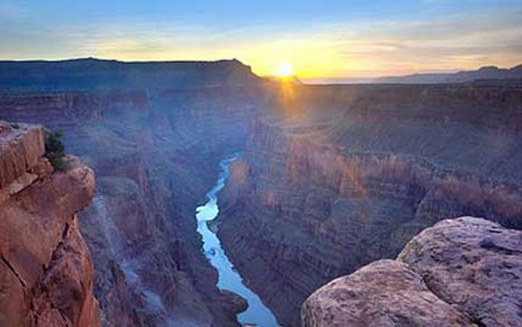 http://www.biologicaldiversity.org/news/press_releases/2015/uranium-mining-04-08-2015.html
Decision Allows Mining Without Tribal Consultation or Update Decades-old Environmental Review
PHOENIX, Ariz.— U.S. District Court Judge David Campbell denied a request to halt new uranium mining at the Canyon uranium mine, located only six miles from Grand Canyon National Park’s South Rim. The Havasupai tribe and a coalition of conservation groups had challenged the U.S. Forest Service’s decision to allow Energy Fuels Inc. to reopen the mine without initiating or completing formal tribal consultations and without updating an obsolete federal environmental review dating to 1986. At stake are tribal cultural values, wildlife and endangered species, and the risk of toxic uranium mining waste contaminating the aquifers and streams that sustain the Grand Canyon and Colorado River.
“We are very disappointed with the ruling by Judge Campbell in the Canyon Mine case,” said Havasupai Chairman Rex Tilousi. “We believe that the National Historic Preservation Act requires the Forest Service to consult with us and the other affiliated tribes before they let the mining company damage Red Butte, one of our most sacred traditional cultural properties. The Havasupai Tribal Council will meet this week to talk about appealing this ruling.” Continue reading
Manti-La Sal National Forest halt uranium expansion of the La Sal Uranium Mines Complex
Expansion of Four Utah Uranium Mines Halted, Center for Biological Diversity, http://www.biologicaldiversity.org/news/press_releases/2015/uranium-mines-03-26-2015.html 28 Mar 15
MOAB, Utah— In response to formal objections by Uranium Watch and other conservation groups, the Manti-La Sal National Forest on Tuesday halted plans to allow the uranium industry to expand the La Sal Mines Complex — a complex of four old uranium mines located in La Sal, Utah. Continue reading
Uranium Workers Day highlights health and environmental harm done by uranium mining
“The Pueblo felt so strongly about the issues surrounding uranium mining that it issued its own Resolution in 2008 declaring a moratorium on any further uranium mining activities on Pueblo lands from that day forward,” emphasized Laguna Governor Siow.
“Why should we be talking about opening new mines when we have more than 500 abandoned mines?” questioned one Native American man. “New Mexico needs to go with renewable energy; it’s about time we start doing that.”

Concerned Community Members Attend Uranium Workers Day http://www.cibolabeacon.com/news/concerned-community-members-attend-uranium-workers-day/article_d3db641a-be87-11e4-8ac5-7bf4a188c6cf.html
PROCLAMATION AND LEGISLATION By Rosanne Boyett 27 Feb 15
CIBOLA COUNTY – “We can’t plant cornfields anymore because the water is contaminated on our homestead, which has been in the family for four generations,” said one Native American woman. “We used to plant one of the largest cornfields in the area.”
She addressed an audience of more than 200 people who participated in the Feb. 20 “Uranium Workers Day” at the Rotunda in Santa Fe and urged people to contact legislators about their concerns.
Another area suffering from contamination is the Pueblo of Laguna, which was once the site of the largest open pit uranium mine in the world. Residents “know first-hand the challenges associated with uranium mining and its aftermath, especially when it comes to the severe impacts it has had on the health and welfare of our community members and the environmental impacts is has had on our lands,” wrote Virgil A. Siow, Pueblo of Laguna governor, in a letter supporting MASE in its activities to raise awareness about mining issues. Continue reading
India could develop thermonuclear weapons: it is secretly enriching uranium
 India nuke enrichment plant expansion operational in 2015 – IHS BY DOUGLAS BUSVINENEW DELHI Fri Jun 20, 2014 (Reuters) – India is expanding a covert uranium enrichment plant that could potentially support the development of thermonuclear weapons, a defence research group said on Friday, raising the stakes in an arms race with China and Pakistan.
The revelation highlights a lack of nuclear safeguards on India under new Prime Minister Narendra Modi, while sanctions-bound Iran faces minute scrutiny in talks with world powers over its own nuclear programme.
New units at the Indian Rare Metals Plant would boost India’s ability to produce weapons-grade uranium to twice the amount needed for its planned nuclear-powered submarine fleet, IHS Jane’s said.
The facility, located near Mysore in southern India, could be operational by mid-2015, the research group said, basing its findings on analysis of satellite imagery and public statements by Indian officials.
“Taking into account all the enriched uranium likely to be needed by the Indian nuclear submarine fleet, there is likely to be a significant excess,” Matthew Clements, editor of IHS Jane’s Intelligence Review, told Reuters.
“One potential use of this would be for the development of thermonuclear weapons.” No comment was available from the Indian government press office or the foreign ministry. Pakistan reacted with consternation, with a senior aide to Prime Minister Nawaz Sharif saying the news underscored India’s “established hegemony”…….http://in.reuters.com/article/2014/06/20/india-nuclear-idINKBN0EV0JR20140620
The uranium industry’s role in causing cancer in Namibia
 Cancer Locks a Deadly Grip on Africa, Yet It’s Barely Noticed, By Jeffrey Moyo HARARE, Feb 13 2015 (IPS) – Hidden by the struggles to defeat Ebola, malaria and drug-resistant tuberculosis, a silent killer has been moving across the African continent, superseding infections of HIV and AIDS.
World Cancer Day commemorated on Feb. 4 may have come and gone, but the spread of cancer in Africa has been worrying global health organisations and experts year round. The continent, they fear, is ill-prepared for another health crisis of enormous proportions.
By 2020, according to the World Health Organisation (WHO), approximately 16 million new cases of cancer are anticipated worldwide, with 70 percent of them in developing countries. Africa and Asia are not spared………
in Namibia, uranium workers were reported to have elevated rates of cancers and other illnesses after working in one of Africa’s largest mines.
Rio Tinto’s Rössing uranium mine extracts millions of tonnes of rock a year for the mineral. “Most workers stated that they are not informed about their health conditions and do not know if they have been exposed to radiation or not. Some workers said they consulted a private doctor to get a second opinion,” say researchers at Earthlife Namibia and the Labour Resource and Research Institute who collaborated in a study.
“The older workers all said they know miners dying of cancers and other illnesses. Many of these are now retired and many have already died of cancers,” says the study report……..http://www.ipsnews.net/2015/02/cancer-locks-a-deadly-grip-on-africa-yet-its-barely-noticed/
Uranium company Cameco continues to get miserable results
 Uranium Producer Cameco Looks Depleted Full-Year Results Lowest Since 2006, WSJ, By SPENCER JAKAB Feb. 8, 2015 Customers shutting down in droves? Environmentalists creating headaches? Low cost competitors flooding the market? Nuke ‘em. ……
he nearly two-thirds decline in Cameco’s U.S.-listed share price since February 2011 is about more than a delayed earnings bonanza. Furthermore, fluctuations in uranium’s thinly traded spot market should be viewed cautiously.
Not only do utilities in Japan and elsewhere have substantial inventory on hand but other sources of uranium supply hang over the market. These include low-cost mines in Kazakhstan that now supply around 40% of the market as well as nuclear fuel derived from nonmine sources such as the waste “tailings” of previously processed uranium.
Assuming analysts’ 2018 scenario plays out in terms of output and prices, Cameco now fetches just under 10 times that year’s consensus forecast earnings according to FactSet—hardly a bargain in today’s depressed mining landscape. The cloud hanging over Cameco may not dissipate soon.http://www.wsj.com/articles/uranium-producer-cameco-looks-depleted-ahead-of-the-tape-1423421905
Navajo community – a case study on deadly effects of uranium mining
The studies have found considerably increased rates of death by lung cancer and other lung or related diseases
“Navajo is a non-smoking population. That’s why the Navajo underground miners were such an important sub-unit of the cohort,” Shuey said. “The Navajo cohort debunks the whole notion that the uranium miners’ lung cancer relates to smoking.”
 Radon’s Deadly Connection With Uranium Mining As Seen From Navajo Nation, Indian Country, Konnie LeMay 2/2/15 Where you live may increasingly become as important as how you live in determining your health as we continue to recognize how environmental factors affect our lives and may hasten our deaths.
“No longer can we just kind of sit back and say those are all just lifestyle (influences) … just stop eating frybread and throw some vegetables in there,” said Chris Shuey, director of the Uranium Impact Assessment Program for theSouthwest Research and Information Center.
For more than three decades, Shuey has tracked the environmental influences on long-term health for the Navajo people linked to the region’s past uranium mining. He foresees growing acknowledgment of how human-caused environmental changes and naturally occurring threats may affect our health. Continue reading
Iranium President Rouhani optimistic about a nuclear deal with the West
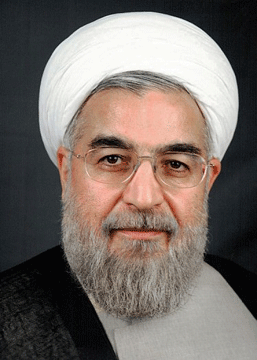 Iranian president says nuclear deal with the west is getting closer, Guardian, Julian Borger and Saeed Kamali Dehghan, 4 Feb 15 Mehr news agency quotes Hassan Rouhani saying sides have ‘narrowed the gaps’ as second report emerges of uranium enrichment deal with US. President Hassan Rouhani has said that a nuclear deal with the west is getting closer, as a report emerged of a possible compromise between American and Iranian negotiators over uranium enrichment.
After meeting the heads of the country’s parliament and judiciary, Rouhani was quoted by the Mehr news agency as saying: “We have narrowed the gaps,” adding that although “some issues and differences remain … The west has realised that it should recognise the rights of the Iranian people.”
Even Ali Larijani, the parliamentary speaker and a noted hardliner on nuclear talks, declared himself “not pessimistic” about the trajectory of the negotiations.
Nuclear talks between Iran and six major powers are due to resume later this month in Geneva ahead of a March deadline for arriving at a basic framework agreement. A comprehensive permanent settlement would be reached by the end of June………
The possible compromise under consideration, according to the AP, would see most of the 10,000 centrifuges in operation left in place but reconfigured so that they would be less productive. One way of doing that would be to spin the centrifuges more slowly. Other measures would be agreed upon to reassure the west that Iran could not make a warhead quickly, such as reducing its stockpile of uranium hexafluoride gas – the form in which uranium can be enriched by centrifuge………http://www.theguardian.com/world/2015/feb/03/iranian-president-nuclear-deal-west
Lowest production in 16 years – uranium in Australia
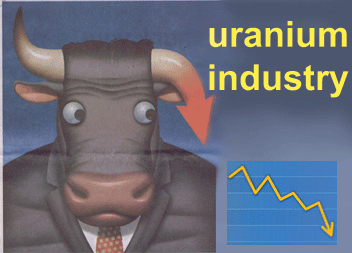 Lowest Australian uranium production for 16 years, World Nuclear Association 23 Jan 15 Due to the shutdown of ERA’s Ranger plant to June, and despite the rich Four-Mile deposit coming on line, Australia’s uranium production in 2014 at 5897 tonnes U3O8 (5000 tU) was the lowest since 1998. Two thirds of it was from Olympic Dam, where uranium is a by-product of copper. Production from Four Mile is recovered at the Beverley plant, replacing output from that mine at about double the level. http://us1.campaign-archive1.com/?u=140c559a3b34d23ff7c6b48b9&id=e08ac096b6&e=ae5ca458a0
1 This Month
To see nuclear-related stories in greater depth and intensity – go to https://nuclearinformation.wordpress.com/
12 February – Webinar The Big Push: New Nuclear Projects in Canada
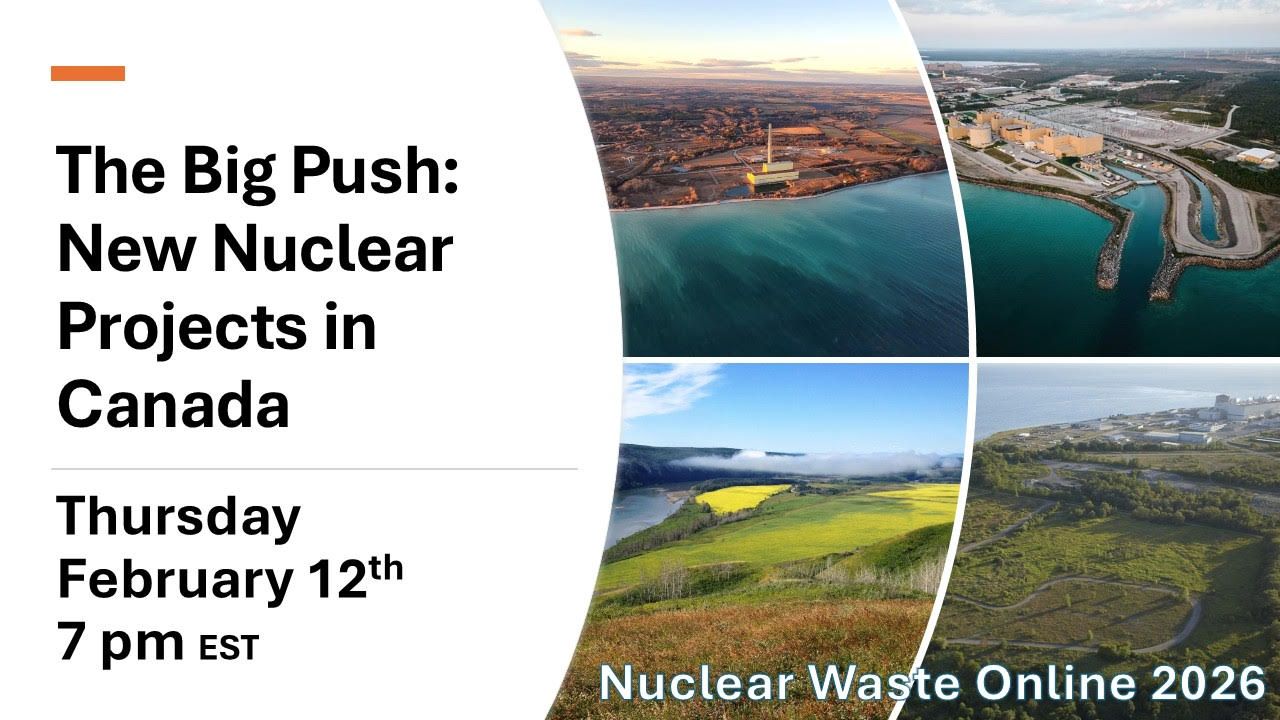
Thursday, February 12, 7 pm Eastern | 2nd of 4 sessions in the 2026 Nuclear Waste Online webinar series
Join a webinar on the push for new nuclear generation in Canada. Go to Northwatch.org to register or use the registration link https://us02web.zoom.us/webinar/register/WN_ZfWOf1GITqSRIZX8CB-A9w
-
Archives
- February 2026 (127)
- January 2026 (308)
- December 2025 (358)
- November 2025 (359)
- October 2025 (376)
- September 2025 (258)
- August 2025 (319)
- July 2025 (230)
- June 2025 (348)
- May 2025 (261)
- April 2025 (305)
- March 2025 (319)
-
Categories
- 1
- 1 NUCLEAR ISSUES
- business and costs
- climate change
- culture and arts
- ENERGY
- environment
- health
- history
- indigenous issues
- Legal
- marketing of nuclear
- media
- opposition to nuclear
- PERSONAL STORIES
- politics
- politics international
- Religion and ethics
- safety
- secrets,lies and civil liberties
- spinbuster
- technology
- Uranium
- wastes
- weapons and war
- Women
- 2 WORLD
- ACTION
- AFRICA
- Atrocities
- AUSTRALIA
- Christina's notes
- Christina's themes
- culture and arts
- Events
- Fuk 2022
- Fuk 2023
- Fukushima 2017
- Fukushima 2018
- fukushima 2019
- Fukushima 2020
- Fukushima 2021
- general
- global warming
- Humour (God we need it)
- Nuclear
- RARE EARTHS
- Reference
- resources – print
- Resources -audiovicual
- Weekly Newsletter
- World
- World Nuclear
- YouTube
-
RSS
Entries RSS
Comments RSS
 nuclear-news