No accountability for the $billions being spent on Oak Ridge Uranium Processing Facility.

 BUSTED! UPF bomb plant to break the bank at $11 Billion, UPF Update. Orepa.org 10 Sep 15
Oglala Sioux Tribe reject #uranium mine cultural survey
 Oglala Sioux object to uranium mine cultural survey BY KERRI REMPP / CHADRON DAILY RECORD , 1 Sep 15, CRAWFORD — A full week of testimony on renewing Crow Butte Resources’ uranium mining license wrapped up last week with objections by the Lakota Nation to a planned cultural and archeological survey.
Crow Butte’s operating license expired in 2007, and it has been operating on a temporary license since then while the Nuclear Regulatory Commission reviewed its renewal application. The NRC granted the renewal last fall, but because the Oglala Sioux Tribe and 11 other people and organizations objected, the Atomic Safety Board scheduled its own hearings and will render a final decision at a later date.
Friday’s testimony concerned cultural and archeological surveys at the Crow Butte mine site near Crawford. The Oglala Sioux Tribe contended that the Nuclear Regulatory Commission failed to include its members in discussions and did not allow for an adequate survey of the site…….
Testimony throughout the rest of the week focused mainly on water safety, both in the Nebraska Panhandle and on the Pine Ridge Reservation.
Charmaine White Face testified for the Oglala Sioux and consolidated interveners that samples from five reservation wells taken in 2014 show, in her opinion, an unusual level of mined uranium and thorium, though she admitted she had no evidence that the contamination was caused by Crow Butte Resources. Likewise, Debra White Plume testified, “I have no evidence in terms of western science that the contamination is from Crow Butte Resources, but I know what I know.”
Additional testimony will be heard during a telephonic hearing at a later date. Crow Butte Resources Inc. is owned by Cameco Resources, America’s biggest uranium mining company, based in Saskatoon, Saskatchewan. http://journalstar.com/news/state-and-regional/nebraska/oglala-sioux-object-to-uranium-mine-cultural-survey/article_2deb035c-8686-54b4-a6ce-587911b303bd.html
Money running low for uranium cleanup in Ohio
Mass layoff possible in Portsmouth uranium cleanup, Columbus Dispatch, By Kantele Franko ASSOCIATED PRESS • Friday August 28, 2015 Workers decontaminating and decommissioning a Cold War-era uranium plant in southern Ohio are again being notified about hundreds of potential layoffs because of an anticipated funding gap, a reprise of warnings they heard a year ago for the same reason…….
Those layoffs could occur around Oct. 22, but the project’s director and other leaders remain hopeful they’ll get funding needed to continue their current pace, which costs roughly $387 million annually, Wagner said.
Hundreds of layoffs were averted last year because Congress approved extra funding. This time, the situation is a bit different.
About 70 percent of the project’s funding comes from a program in which the government sells uranium, but the amount that can be bartered has been reduced for 2016, so project officials must hope the balance is made up through appropriations, Wagner said……..
U.S. Sen. Rob Portman said lawmakers will once again have to scramble to find funding. As he has repeatedly, the Ohio Republican called for adequate annual funding in the federal budget for the cleanup.
“It’s actually less expensive to the taxpayer over time to start moving to actual cleanup rather than almost maintaining the site, which is about all you can do with the low levels of funding,” Portman said Thursday in Columbus. “It may seem like it’s more money up front, but it’s actually billions of dollars less money over time — billions because they’re now pushing the cleanup really out to the 2050s.” http://www.dispatch.com/content/stories/local/2015/08/28/mass-layoff-possible-in-uranium-cleanup.html
Uranium mining’s threat to Grand Canyon’s groundwater
Claims that uranium mining near the Grand Canyon is safe don’t hold water, Guardian, David Kreamer, 25 Aug 15 Science shows we can’t assume that uranium deposits, when disturbed by mining, can’t leak into groundwater. We should be wary of claims to the contrary It only takes a few Grand Canyon hikes to realize the importance of its springs and other water sources. When refilling a water bottle in the cool depths below multi-colored rock walls, listening to a summer frog symphony at sunset or maybe snapping an icicle from a weeping ledge in winter, it’s clear that the living desert depends on its pockets of water.
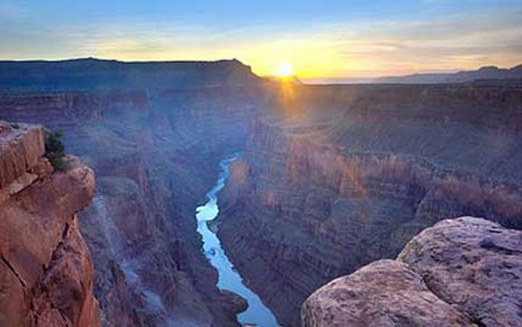
That’s why, as a hydrologist and longtime Grand Canyon hiker, boatman and scientist, I am profoundly concerned about continued uranium mining in or near it. It has great potential to irreparably harm Grand Canyon springs and the plants and animals that depend on them.
I am concerned because industry and agency officials are relying on a justification that isn’t supported by past investigations, research or data to promote uranium mining in the Grand Canyon region. Specifically, they claim that mining will have minimal impact on springs, people and ecosystems there.
Instead, the science shows that it is unreasonable to assume that uranium deposits, when disturbed by mining, can’t leak into groundwater. The deposits in the Grand Canyon are typically found in geologic features known as breccia pipes, formed millennia ago when caves in the main groundwater system collapsed, leaving shattered, rock-filled chimneys that extend upwards thousands of feet to the canyon’s rim. These chimneys act as conduits that have allowed groundwater to move vertically through the rock layers over thousands of years. The vertical movement of groundwater combined with low oxygen levels caused the uranium deposits to form over millennia. Inserting a mine shaft into these features disrupts geologic formations, increases the permeability and oxygenation of these vertical pipes and increases the ability of ore deposits to be suddenly dissolved, mobilized and carried with groundwater.
It is unreasonable to assume that elevated concentrations of dissolved uranium cannot be mobilized and will not reach the Grand Canyon’s springs. It is also risky for industry to assume that mining activities, such as the sinking of mining shafts and pumping of groundwater, have no potential to redirect groundwater movement and negatively impact spring flow and associated wildlife habitats……..
Some mining representatives have implied that the cosmetic fix of cleaning up the surface of old mining sites is evidence of zero subsurface pollution. But because groundwater flow can be very slow, the effects of groundwater contamination may take years, decades or even centuries to fully manifest. The lack of clear and consistent groundwater monitoring undercuts industry claims that mining near the Grand Canyon has caused and will cause no harm……….http://www.theguardian.com/commentisfree/2015/aug/25/uranium-mining-grand-canyon-groundwater-contamination
Concern over North Korea’s uranium enrichment
The world can’t ignore North Korea’s nuclear progression WP, By Editorial Board August 17 CHARTING THE course of North Korea’s nuclear weapons and ballistic missile program has always required painstaking detective work. Because the country is so closed to outsiders, hints have been drawn from sources such as atmospheric samples, seismic data and satellite photographs. A new building or roof on an industrial factory has often pointed to activity inside. North Korea once gave a visiting American scientist an eyeful: a sprawling array of new uranium enrichment centrifuges that hadn’t been detected previously.
This is why there are serious worries about uranium mining and milling in North Korea as described in a new report from Jeffrey Lewis of the James Martin Center for Nonproliferation Studies at the Middlebury Institute of International Studies at Monterey. Analyzing satellite photographs and other information, Mr. Lewis has published evidence on the Web site 38 North, which is run by the U.S.-Korea Institute at the Johns Hopkins School of Advanced International Studies, that North Korea is “expanding its capacity to mine and mill natural uranium.” The information doesn’t confirm what the uranium is to be used for; it might be for nuclear power reactors, or it might be for nuclear weapons. Mr. Lewis found evidence of “significant refurbishment” at a uranium concentration plant at Pyongsan that turns ore into yellowcake. Pyongsan is the most important uranium mine and mill in the country.
This new hint comes on top of an earlier report this year from the same institute that suggested North Korea is moving toward a bigger, better nuclear arsenal that could put it on par with Pakistan and Israel. …….https://www.washingtonpost.com/opinions/the-world-cant-ignore-north-koreas-nuclear-progression/2015/08/17/6e74a664-42ca-11e5-8e7d-9c033e6745d8_story.html
Judge’s ruling prioritises uranium industry over Grand Canyon’s health and environment
TAKE ACTION: Tell President Obama to protect the Grand Canyon from mining and share the message on Facebook
This uranium project could haunt the Grand Canyon region for decades to come,” said Katie Davis with the Center for Biological Diversity. “Uranium mining leaves a highly toxic legacy that endangers human health, wildlife and the streams and aquifers that feed the Grand Canyon. It’s disappointing to see the Forest Service prioritizing the extraction industry over the long-term protection of a place as iconic as the Grand Canyon.”
‘Beyond Unacceptable’: Judge OKs Uranium Mine at Grand Canyon s underground aquifers. Slamming ruling, conservationists warn of irreversible contamination of the canyon’s underground aquifers.By Reynard Loki / AlterNet August 12, 2015 In June, the Grand Canyon was named one of the “Most Endangered Places” in America by the National Trust for Historic Preservation. But the designation came just two months too late to possibly influence U.S. District Court Judge David Campbell. In April, he denied a request by the Havasupai tribe and a coalition of conservation groups to halt new uranium mining next to Grand Canyon National Park, just six miles from the Grand Canyon’s South Rim.
“We are very disappointed with the ruling by Judge Campbell in the Canyon Mine case,” said Havasupai Chairman Rex Tilousi. “We believe that the National Historic Preservation Act requires the Forest Service to consult with us and the other affiliated tribes before they let the mining company damage Red Butte, one of our most sacred traditional cultural properties.” He said that the Havasupai Tribal Council would appeal the decision.
Cleaning Up Contamination? Next to Impossible Continue reading
Bureau d’audiences publiques sur l’environnement (BAPE) – no go ahead for uranium mining in Quebec
 BAPE cites ‘uncertainties’ and ‘low acceptability’ in report on future of uranium mining in Quebec, Montreal Gazette, PRESSE CANADIENNEJuly 17, 2015 By Stéphanie Marin
The Bureau d’audiences publiques sur l’environnement (BAPE) concluded that would be inappropriate to give the green light to uranium mining in Quebec right now. Their findings were presented to the provincial government on Friday afternoon.
According to the BAPE, there are too many uncertainties and unanswered questions regarding the risks posed by uranium mining to human health and the environment.
“These uncertainties are compounded by the radioactivity of uranium residues, which may remain problematic for thousands of years,” the agency wrote in its 600-page report, dated May 2015 and entitled “The challenges of the uranium industry in Quebec.”
The report noted that social acceptability is also an issue for uranium mining.
“Because of the uncertainty and sometimes significant gaps and limitations in scientific and technological knowledge, we are very far from reaching a social and political consensus and there is very low acceptability in Quebec.”
And in areas where the potential mines would be located, “the rejection of the uranium industry is almost unanimous.”
The city of Sept-Îles, which is near a uranium mining project, has been the scene of many protests in recent years. In 2009, 20 doctors resigned from a Sept-Îles hospital to protest the construction of a uranium mine on the North Shore.
The BAPE notes that the Institut national de santé publique du Québec states that the presence of a uranium mine could create additional exposure to radiation for people living nearby.
Quebec’s environment minister asked the BAPE to address the mining industry in March 2014. Uranium mines are considered different from other mines because they emit radiation……….http://montrealgazette.com/news/quebec/bape-cites-uncertainties-and-low-acceptability-in-report-on-future-of-uranium-mining-in-quebec
Investigation at last into radioactive pollution of Johannesburg, from uranium mining

“[Johannesburg] is undoubtedly the most uranium-contaminated city in the world,”
Bench Marks, which receives support from UK charity Christian Aid, is mid-way through a three-year impact assessment of pollution levels in an around Johannesburg’s Soweto district. By systematically tracking air and water contamination, Bench Marks hopes to provide a scientific basis for the alleged health impacts of the tailings
Radioactive city: how Johannesburg’s townships are paying for its mining past, Guardian, Oliver Balch , 6 July 15
Much of the waste from 600 abandoned mines around South Africa’s largest city is piled high next to residential communities – most of which are poor and black Plaatjies is one of tens of thousands in Johannesburg’s impoverished townships who are paying a high cost for the city’s rich mining past. More than 600 abandoned mines surround South Africa’s largest city, with much of their waste now piled up high next to residential communities – most of which are poor and black.
Residents here fear the wind most. When it blows, fine particles from these man-made dumps are carried up into the air and deposited on to residents’ homes. It is no ordinary dust, either: the residue of decades of mining, it can contain traces of everything from copper and lead to cyanide and arsenic.
“During August and September, the dust is terrible. You stop cleaning the floor after a while. It’s just useless,” says Plaatjies.
In the local clinic, respiratory cases such as tuberculosis and asthma are ubiquitous across all age groups, says Musa Mbatha, chairman of the clinic’s civic committee. Rashes and skins diseases are commonplace, too.
“People can’t afford to buy food every day, so they leave the food and it gets contaminated,” Mbatha adds. “The government said that it would do a survey of the health impacts of the mining dust, but until today it hasn’t happened.”
An even more dangerous pollutant is lurking in Johannesburg’s mine dumps, however: radioactive waste. According to one university study, an estimated 600,000 metric tonnes of radioactive uranium are buried in waste rock in and around Johannesburg – around three times what was exported during the Cold War. Continue reading
It’s wearing thin: the pretense that the uranium market is healthy
Uranium Energy Corporation: The Bad News Buried In The Recent Sale [excellent graphs and chart] CNA Finance 19 Jun e15 Uranium mining company Uranium Energy Corp (UEC) is digging all the love it’s getting from the market right now. But after we mined into company documents, we couldn’t resist humming the cowboy song, “You Done Tore Out My Heart and Stomped That Sucker Flat.”
Uranium Energy looks ready to do just that to investors.
The company has not responded to TheStreetSweeper’s request for comment but investors may find other viewpoints here. Meanwhile, we’ve leaned on some ol’ country songs to help us croon out the risks.
*”If The Jukebox Took Teardrops,” Or Market’s Feeling The Pain
While UEC stock is up, the company’s peers are all down. The reason the sector’s performance remains so terrible is because uranium spot prices of about $36 are at a five-year low,
So these factors indicate that UEC’s recent price performance is unsustainable because the fundamentals of the company (more on that below) and the sector have not improved. We expect the stock will collapse as it follows the path set by peers.
*UEC is “Busted”
UEC reports zero sales in the past seven quarters from its sole producer, the Palangana Mine. UEC and other uranium companies were hurt after the Fukushima nuclear disaster hit in March 2011. Public pressure mounted and the negative effects have lingered and lower oil and gas prices have made the situation worse as of late for uranium companies. During its spotty history, UEC generated “no revenues from the sale of U3O8 generated during Fiscal 2014 or prior to Fiscal 2012.”
No surprise, then, that UEC shareholders have endured a long history of horrid earnings:………http://cnafinance.com/uranium-energy-corporation-the-bad-news-buried-in-the-recent-sale/4088
Hedge funds, Goldman Sachs and the money behind the push for nuclear power
 Follow the Money http://majiasblog.blogspot.jp/2015/05/follow-money.html I’ve been following the money for the uranium supply chain:
I turned over a rock and found Goldman Sachs is one of the world’s biggest, if not the biggest, uranium trader through its control of Nufcor.
2008 June 26, Nufcor was bought by the Constellation Energy Group, a U.S. firm that operated several nuclear power plants, for about $103 million. (Exelon has owned Constellation Energy since 2011)
2009 Goldman acquires Nufcor from Constellation Energy as part of a purchase of 900,000 pounds of uranium. Nufcor is the biggest private trader of uranium.
Details about Goldman’s uranium venture are included in the 2014 US Senate report chaired by Carl Levin and including Senator John McCain title: “Wall Street Bank’s Involvement with Physical Commodities”: From Senate Report: page 113 Constellation Acquisition. After its conversion to a bank holding company, Goldman continued to expand its physical commodity activities. In 2009, according to a Goldman presentation to the Federal Reserve, Goldman purchased over 3,000 trading assets involving U.K., French, and German power and U.K. natural gas; as well as about 60 coal contracts, 20 time and voyage freight agreements, and 900,000 pounds of uranium ore from Constellation Energy, a U.S. utility and trading business.Included in that acquisition was Nufcor International, a uranium trading company which stored and traded uranium ore in various stages of enrichment, as further described below…
…Page 124: In 2009, Goldman purchased Nufcor, and expanded its business over the
next five years, resulting in Goldman’s buying millions of pounds of uranium, controlling inventories of physical uranium at storage facilities in the United States and Europe, and becoming a long term supplier of physical uranium to nine utilities with nuclear power plants. Because no employees who conducted Nufcor’s business joined Goldman after the sale, Goldman employees ran the business. In 2014, for a variety of reasons, Goldman decided it would sell Nufcor or wind it down…
I find no evidence that Goldman has successfully sold Nufcor. Since 2011 Constellation Energy, which no longer owns Nufcor, has been owned by Exelon.http://www.constellation.com/about-constellation/pages/about-us.aspx
In 2006 and 2007 hedge funds piled into Uranium. Goldman is noteworthy because of the scope of its involvement the leverage that involvement affords it over uranium pricing and, no doubt, demand.
If you want to know why nuclear is pursued despite its obvious costs and risks, there is no better place to begin understanding than addressing who benefits from the global uranium trade.
Rio Tinto pulls out of loss-making Australian uranium mine

 Shares in Rio Tinto’s Australian uranium unit halve, Ft.com , 12 June 15 Jamie Smyth in Sydney Rio Tinto has withdrawn its support for the expansion of one of the world’s biggest uranium mines, causing shares in its separately listed subsidiary Energy Resources of Australia to almost halve in value.
The decision by the Anglo-Australian miner underscores the difficulties in the nuclear industry following the Fukushima meltdown in 2011, which prompted Japan to mothball its 43 operable reactors.
Since soaring to a record high of US$137 per pound in 2007, uranium prices have fallen to US$35 per pound — a level at which many miners are losing money and new investment does not make economic sense.
“After careful consideration, Rio Tinto has determined that it does not support any further study or the future development” of ERA’s proposed underground uranium mine “due to the project’s economic challenges,” the miner said.
Shares in ERA were down 46 per cent at A$0.70 in mid-afternoon trading in Sydney on Friday.
Up until 2008, the Ranger mine in Australia’s Northern Territory was producing almost 10 per cent of the global supply of uranium. But the open cut mine is now exhausted and ERA was conducting feasibility studies on developing an underground mine, Ranger 3 Deeps.
This week, ERA, which is 68 per cent owned by Rio, said it was committed to revisiting the underground project once the uranium market has recovered. But the decision by Rio to rule out support for the future development of the mine casts serious doubt on whether the project will ever happen………..http://www.ft.com/intl/cms/s/0/f24a6a9a-10b7-11e5-b4dc-00144feabdc0.html#axzz3csmrhS7I
Costs of Enriching Uranium Have Hurt Iran – Iranian Professor Sadegh Zibakalam
Iranian Professor: The Costs of Enriching Uranium Have Hurt Iran http://www.thetower.org/2156-iranian-professor-the-costs-of-enriching-uranium-have-hurt-iran/ by TheTower.org Staff | 06.12.15 In a public debate last month against an advisor to Iranian Supreme Leader Ayatollahi Ali Khamenei, Prof. Sadegh Zibakalam of Tehran University, who is associated with the reformist movement in Iran, argued that Iran’s enrichment program has been expensive for the country with little benefit. His remarks were translated Tuesday by the Middle East Media Research Institute (MEMRI).
“I’m not saying that the nuclear [program] is bad; it’s good. But at what cost? Now they will say ‘Zibakalam said we don’t need a nuclear [program]’… The political, partisan, and factional conduct on this [nuclear] issue must be resolved. Does the nuclear [program] exist for the sake of the state, or does the state exist for it? Must Iran be sacrificed for the sake of the nuclear [program], or should we sacrifice the nuclear [program] for the sake of Iran?”Zibakalam argued that enriching uranium has huge direct operating costs, but the penalties for having an illicit enrichment program has hurt Iran even more. Zibakalam suggested that Iran would have been better off buying enriched uranium and incurring neither cost.
Zibakalam, who was sentenced to prison last year for questioning Iran’s nuclear program, made several references during the debate to not being allowed to express an opinion about the nuclear program. In a different forum last year, Zibakalam said that Iran’s threats against Israel were the reason Iran’s nuclear program is viewed with suspicion.
Uranium Energy reports 3Q loss
Uranium Energy posts third-quarter loss of $5.3 million
VANCOUVER, British Columbia (AP) _ Uranium Energy Corp. (UEC) on Tuesday reported a loss of $5.3 million in its fiscal third quarter…….http://finance.yahoo.com/news/uranium-energy-reports-3q-loss-101556220.html
Investors warned ; uranium market still in trouble
The uranium sector DUNDEE CAPITAL MARKETS The Globe and Mail , May. 21 2015 “…..We have concerns regarding negative impact to investor and utility/trader sentiment, which could manifest itself in the already thin spot uranium market. The two other news items might influence investor sentiment but essentially cancel each other out. Uranium stocks retreated yesterday, followed by the price.”
Trying to cut costs, TEPCO to sell uranium stockpile
Tepco looking to sell some uranium stockpiles to cut costs Japan Times, 19 May 15 Tokyo Electric Power Co. is planning to sell part of its uranium stockpiles for nuclear power generation in the current business year to cut costs amid uncertainty over the restart of idled nuclear plants, a company document obtained by Kyodo News showed Monday.
Tepco has not consumed uranium since the 2011 nuclear crisis started at its Fukushima No. 1 complex that eventually resulted in all of Japan’s nuclear reactors being taken offline amid safety concerns. By reducing the stockpiles, the utility is seeking to slash costs for managing them as it faces funding difficulties stemming from the nuclear crisis.
According to the document, Tepco aims to reduce the amount of uranium to levels prior to the Fukushima disaster by the end of fiscal 2015 through March. The company estimated in the paper it can secure ¥12.3 billion ($103.13 million) by selling around half of the planned amount……..
Major utilities including Tepco procure uranium, which could be diverted to military use, under long-term contracts from overseas suppliers in Canada and elsewhere.
As of the end of March, Tepco had a total of 17,570 tons of uranium (tU), equivalent to the amount used at the Kashiwazaki-Kariwa plant for 10 years, compared with 16,805 tU at the time of the nuclear disaster in March 2011.
The amount would increase to 19,317 tU in fiscal 2015 if the company does not sell some of the stockpile.The utility will likely return it to the suppliers or pay for the costs of uranium enrichment in kind, while it will also consider terminating uranium purchase contracts and reducing purchase volumes to streamline its business, according to the document.
Japan Atomic Power Co. has also taken the rare step of selling some of its uranium, apparently to raise money to repay loans amid its faltering business conditions. http://www.japantimes.co.jp/news/2015/05/19/business/corporate-business/tepco-looking-sell-uranium-stockpiles-cut-costs/#.VVv7z7mqpHw
1 This Month

of the week – Shut Down Drone Warfare!


Tell the Ukrainian Government to Drop Prosecution of Peace Activist Yurii Sheliazhenko

Petition to revoke the licensing of the Near Surface Nuclear Disposal Facility (NSDF) at Chalk River. https://www.ourcommons.ca/petitions/en/Petition/Details?Petition=e-7247
To see nuclear-related stories in greater depth and intensity – go to https://nuclearinformation.wordpress.com
-
Archives
- April 2026 (68)
- March 2026 (251)
- February 2026 (268)
- January 2026 (308)
- December 2025 (358)
- November 2025 (359)
- October 2025 (376)
- September 2025 (257)
- August 2025 (319)
- July 2025 (230)
- June 2025 (348)
- May 2025 (261)
-
Categories
- 1
- 1 NUCLEAR ISSUES
- business and costs
- climate change
- culture and arts
- ENERGY
- environment
- health
- history
- indigenous issues
- Legal
- marketing of nuclear
- media
- opposition to nuclear
- PERSONAL STORIES
- politics
- politics international
- Religion and ethics
- safety
- secrets,lies and civil liberties
- spinbuster
- technology
- Uranium
- wastes
- weapons and war
- Women
- 2 WORLD
- ACTION
- AFRICA
- Atrocities
- AUSTRALIA
- Christina's notes
- Christina's themes
- culture and arts
- Events
- Fuk 2022
- Fuk 2023
- Fukushima 2017
- Fukushima 2018
- fukushima 2019
- Fukushima 2020
- Fukushima 2021
- general
- global warming
- Humour (God we need it)
- Nuclear
- RARE EARTHS
- Reference
- resources – print
- Resources -audiovicual
- Weekly Newsletter
- World
- World Nuclear
- YouTube
-
RSS
Entries RSS
Comments RSS
 nuclear-news