Australian uranium mining company threatens Spanish government with legal action
Miner threatens Spain over uranium ban, Cosmo Sanderson, 01 February 2021
From tears to joy — Beyond Nuclear International

First Native American nominated to US cabinet position
From tears to joy — Beyond Nuclear International
……………..“A new scintilla of hope has bloomed among us in part because Haaland, like millions of Indigenous peoples, strongly believes in and practices the Seven Generation rule,” wrote Moya-Smith. “The rule says that all significant decisions must be made with the next seven generations in mind, and includes preserving and protecting the water, the earth and the two leggeds and the four leggeds for people you will never meet — at least in this life.”
……. Haaland has been in the forefront of the fight to get restoration and compensation for Native uranium miners and their families. Getting the mines cleaned up will also likely be high on her priority list at Interior.
……Last year, Haaland was also recognized by the Nuclear Free Future Award, receiving the award in the Special Recognition category.
The Shoshone Nation’s battle against nuclear racism and trespassers on indigenous land

|
Trespassers on Native land, Linda Pentz Gunter January 3, 2021 by beyondnuclearinternational “……………When the military industrial complex showed up in Shoshone country to test its atomic bombs, or excavate a mountain for a potential radioactive waste dump, they were there “as trespassers,” says Ian Zabarte, Principle Man of the Western Bands of the Shoshone Nation of Indians, and this year’s winner of Beyond Nuclear’s Dr. Judith H. Johnsrud “Unsung Hero” Award.“The United States gave away Shoshone property before there was the United States here,” Zabarte explained during a recent on-line teach-in about uranium and Indigenous rights. The plunder started with gold. But once the US began working on nuclear weapons, Indigenous lands were mined for uranium. And that, in turn, led to atomic testing, carried out almost entirely on Shoshone land, “the most bombed nation on Earth,” as Zabarte describes it. The US continues to trespass, and trample, on Western Shoshone land, violating the 1863 Treaty of Ruby Valley which only gave certain rights to the United States. As the Las Vegas Sun reported it, “The Shoshone did not cede land claims to the federal government in the treaty. Instead the tribe granted Americans the right to enter its lands for passage and developments like railways and mining. In return, the federal government would compensate the tribe.” As far as the Western Shoshone are concerned, the treaty did not mean decimating and poising the land and its people with atomic bomb tests. It did not mean dumping the country’s high-level radioactive waste there. It did not mean the ability to seize their horses and cattle, which had long roamed freely on the territory to which they and the people belonged — not the other way around. And the treaty most certainly did not give permission to commit acts of genocide. But, as Zabarte said in an earlier article, republished on the Beyond Nuclear International website: “What the Shoshone people experience is a deliberate intent by the US to systematically dismantle the living life-ways of the Shoshone people for the benefit of the US and the profit of the nuclear industry. This meets the minimum threshold of genocide under both the UN Convention and the US enactments of the crime of genocide.” That genocide includes the around 900 atomic tests on Western Shoshone land, conducted largely by the US but also by the United Kingdom, during the Cold War. It includes the decision to site the country’s only high-level radioactive waste deep geological repository on Western Shoshone land at Yucca Mountain, Nevada threatening groundwater and drinking water. (The project was canceled by the Obama administration in 2010, but hovers perpetually in the wings, absent, so far, any alternative site.) And it includes trampling not only on Indigenous rights and traditions but, literally, on some of the most rare and important flora and fauna in the US. “The oldest and most isolated plants and animals are here, in Newe Sogobia, the people’s Mother Earth,” wrote Zabarte in a recent email. “Pando, Quaking Aspen, is the largest and oldest tree up to 80,000 years old and spreads across 25 square miles. Bristol Cone Pine is 6,800 years old. Yutumbe, Creosote is an 11,700 year old clone plant. Thyms Buckwheat is a plant that only exists on 5 acres here, and nowhere else on Mother Earth. There is also the Devils Hole Pupfish, the most isolated fish that changed from salt water to fresh water near Death Valley.” So not “nothing out there” as proponents of the Yucca Mountain radioactive waste dump love to claim. That campaign — to block the Yucca Mountain dump — is one, among many issues of Indigenous justice, on which Zabarte has been campaigning tirelessly for years. That is why Beyond Nuclear selected him for the organization’s 2020 Johnsrud Award, usually given during the Alliance for Nuclear Accountability’s annual DC Days………. we are all involved, one way or the other. “We are all downwinders,” says Zabarte. “The fallout has gone across the United States, across the ocean, around the world. The material from weapons testing is in everything.” Linda Pentz Gunter is the international specialist at Beyond Nuclear and writes for and edits Beyond Nuclear International. — |
|
The cover-up of workers’ illnesss in radioactively polluted clean-up of Kingston coal ash spill
A Legacy of Contamination, How the Kingston coal ash spill unearthed a nuclear nightmare, Grist By Austyn Gaffney on Dec 15, 2020 This story was published in partnership with the Daily Yonder.
………………………………….The apparent mixing of fossil fuel and nuclear waste streams underscores the long relationship between the  Kingston and Oak Ridge facilities………… .
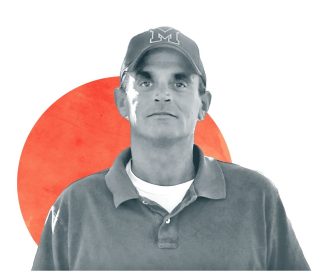 ……….In 2017, a former chemist named Dan Nichols stumbled upon a news story that revealed the existence of the additional health problems TVA feared. High levels of uranium had been measured in the urine of a former cleanup worker named Craig Wilkinson. Like Thacker, Wilkinson had worked the night shift. After dredges piped the coal ash back onshore, Wilkinson used heavy equipment to scoop, flip, and dry the wet ash along the Ball Field.
Although Wilkinson worked at the Kingston site for less than a year, he quickly developed health issues, including chronic sinus infections and breathing problems that eventually led to a double-lung transplant. Frustrated by his sudden decline in health, Wilkinson shelled out over $1,000 for a toxicology test because he wanted to know what occupational hazards might be lingering in his body.
After reading Wilkinson’s story, Nichols sat stunned. Though he was not associated with the spill, he’d been unable to shake his obsession with the Kingston disaster. Nichols had worked as a Memphis-based field chemist for a wastewater technology company, and he was used to studying lab reports on industrial water supplies and samples. For years he’d been trying to solve a mystery that no one else seemed to be aware of: why Kingston regulators deleted and then altered a state-sanctioned report showing extremely high levels of radiation at the cleanup site.
Roughly a month after the spill, Nichols read a Duke University press release stating that ash samples collected at Kingston by a team led by Vengosh, the geochemist, showed radium levels well above those typically found in coal ash. Nichols knew that the state environmental regulator, the Tennessee Department for Environment and Conservation, or TDEC, was also testing soil and ash samples at the site. After seeing Vengosh’s high radium readings, he wondered if TDEC’s report would also show high levels of either radium or uranium. (Radium is a decay element of uranium.) Later that spring, Nichols visited TDEC’s website and discovered the test results.
“I opened it up and went to uranium, and it was just off the charts,” Nichols recalled. In a 2020 affidavit, Nichols reported that these levels were “extremely high so as to be alarming.” At least 27 soil and ash samples were collected from at least 20 different sites surrounding Kingston beginning January 6, 2009. The levels ranged from 84 parts per million (ppm) to 2,000 ppm. The average level was over 500 ppm, as much as 50 times the typical uranium content found in coal ash.
The next morning, when Nichols slumped back into his computer chair and refreshed TDEC’s website, he saw that the report had been changed. The high uranium readings had plummeted. Now the average uranium levels in the ash were 2.88 ppm, a tenth of the typical uranium content found in coal ash and illogically, below levels naturally occurring in soil. Luckily, Nichols had downloaded the unaltered report the night before.
A month later, Nichols sent the two lab reports to one of the attorneys representing Tennessee residents affected by the spill in a lawsuit they’d brought against TVA. According to Nichols, the lawyers weren’t interested. Nevertheless, Nichols was determined to find more proof of the unusually high levels of on-site radiation. In between cutting hay and spraying weeds on his family farm, he spent years poring over information online about TVA, coal ash, and uranium before he stumbled across Wilkinson’s story.
Back in 2014, Wilkinson’s urine tested for unusually high levels of both mercury and uranium. The mercury is more easily explained: The most common cause of mercury contamination, according to the EPA, is coal-fired power plant emissions, which account for 44 percent of all man-made mercury pollution. The 2008 spill released 29 times the mercury reported at the Kingston site for the entire decade before it, and TVA documents show high levels of additional legacy mercury were present in the Clinch River and could have migrated into the Emory. Today, Wilkinson has symptoms attributable to methylmercury poisoning including blurry vision, fatigue, a hearing impairment, memory loss, and loss of coordination that caused him to fall out of the machines he operated until retiring on disability in 2015.
But most shocking to Nichols was the high level of uranium in Wilkinson’s body — it was 10 times the U.S. average, and identical to the median levels that one study found in workers exposed to the substance. Prolonged occupational exposure to uranium is strongly linked to chronic kidney disease, which Wilkinson suffers from. Because Wilkinson’s toxicology results were taken four years after he left Kingston, they likely show lower uranium levels than what he and other cleanup workers initially had.
Wilkinson’s results left no doubt in Nichols’ mind that the original uranium readings he’d saved were significant. A reporter for the Knoxville News-Sentinel, Jamie Satterfield, contacted him after the report he saved showed up in court proceedings. Satterfield published a story about the altered uranium readings in May of this year.
In response to her story, TDEC told the News-Sentinel that its updated uranium readings, which plummeted by 98 percent, were due to a change in the sampling method used for the tests. (Satterfield also reported that radium levels had been lowered between the initial TDEC report Nichols downloaded and the updated one; the department attributed this to a “data entry error.”) In an email response to Grist and the Daily Yonder, a TDEC spokesperson elaborated that the sampling lab, which was neither staffed nor supervised by TDEC, “discovered there were interferences in the analysis of soil and ash samples for uranium” and subsequently changed the method of analysis from one EPA-approved protocol to another. The new results were then published without public notice of the alteration.
“Changing lab reports is a very serious thing,” Nichols said. “But I can assure you data entry errors don’t cause a man to test for unusually high levels of uranium. That’s [TDEC’s] big problem.”
Unbeknownst to Nichols, Russell Johnson, the district attorney with jurisdiction over Roane County, where Kingston is located, had informed TDEC’s commissioner in 2017 that he was beginning a criminal probe into the Kingston cleanup. “I am deeply concerned with the apparent intentional conduct of the cleanup contractors and their supervisors, actions that took place in Roane County, conduct that may indeed have caused serious bodily injury or possibly even death to a number of people,” Johnson wrote in a letter to TDEC.
In concert with the Tennessee Bureau of Investigation, Johnson began investigating whether TVA or its contractors “suppressed information” as part of the coverup alleged in the 2013 worker lawsuit against Jacobs. They now have Nichols’ evidence as well. But despite this ongoing investigation, it’s unclear if workers will ever learn for certain whether or not they were exposed to dangerous substances besides the coal ash itself. (Bob Edwards, an assistant district attorney working under Johnson, told Grist and the Daily Yonder that the district attorney’s office could not comment on a pending investigation.)………………….https://grist.org/justice/tva-kingston-coal-ash-spill-nuclear/
Indigenous opposition to uranium milling and the import of radioactive material
 problems and believe the environment is being damaged. https://www.sltrib.com/news/2020/12/10/indigenous-activists/
When locations were chosen more than half a century ago for the dozens of uranium mills that dot the Four Corners landscape, one common factor was almost always considered: proximity to productive uranium mines.
The region’s best uranium deposits typically only contain a small percentage of the valuable radioactive mineral, and being able to process the material at a nearby mill was critical to saving on transportation costs.
For the last conventional uranium mill still operating in the United States, however, the business model has changed. San Juan County’s White Mesa Mill, which is owned by the Denver-based company Energy Fuels Resources, hasn’t processed ore from local mines in recent years. Instead, it has survived primarily by accepting uranium-bearing material from around the country and, more recently, as far away as Japan. State regulators are also considering an application from the company to import material from Estonia.
Members of the Ute Mountain Ute community of White Mesa, which is located three miles from the mill site, spoke out against the mill’s continued operation on Tuesday at an annual town hall event that was held virtually this year due to the coronavirus pandemic.
The event, which was sponsored by a coalition of 12 grassroots community groups and environmental organizations, featured presenters from across Indian Country who spoke about the legacy of uranium production and nuclear waste storage on Native Americans as well as the White Mesa Mill.
The mill has accepted radioactive material from the Cherokee Nation in Oklahoma, and Energy Fuels has expressed interest in processing tailings from the more than 500 abandoned uranium mines that have yet to be cleaned up on the Navajo Nation.
Scott Clow, environmental programs director for the Ute Mountain Ute Tribe, said that such proposals address a real need to remediate contaminated sites on tribal lands, but that they also “pit tribes against tribes.”
“We all want those places to be cleaned up, but we don’t want it to go to White Mesa,” Clow said.
Thelma Whiskers and Michael Badback of the White Mesa Concerned Community group said emissions from the mill can be smelled in White Mesa on a regular basis, adding they believe the facility has had negative health impacts on local residents.
“Let’s just keep … fighting to not have [the mill] close to the reservation,” Whiskers said. “I care for the community members and the children and the grandchildren.”
In an effort to better understand both the potential environmental and health impacts of the mill, Clow said the tribe has projects underway with both the Centers for Disease Control (CDC) and the Environmental Protection Agency (EPA).
Two new monitoring wells were drilled this fall between the mill and the community with EPA funding in order to better track potential water quality changes, Clow said, and a branch of the CDC is helping the tribe plan epidemiological work in the White Mesa community that could provide more information about health concerns among residents.
Other speakers at the event addressed the legacy of uranium production elsewhere in Indian Country.
“A lot of the land in our community has been disrupted and we can no longer use it [for livestock],” she said. “We can’t grow crops because the EPA has stated that if we grow crops we’ll be further exposed to uranium contamination. We can’t drink the water.”
Keyanna added the uranium contamination has had not only physical health consequences but has caused spiritual and mental health impacts as well, all of which have been exacerbated by the pandemic.
“It feels like a prison,” Keyanna said. “We’re not only prisoners during this pandemic, but we’ve kind of always been prisoners [since] this uranium industry started in our community.”
Leona Morgan, co-founder of the Indigenous-led group Haul No!, which opposes Energy Fuels’ plans to mine for uranium near Grand Canyon National Park and haul ore across the Navajo Nation, encouraged meeting participants to oppose a separate proposal currently being considered by the Nuclear Regulatory Commission that could result in radioactive material being hauled from the Church Rock area to the White Mesa Mill for processing.
“It’s not just an individual human rights issue,” he said, addressing the residents of White Mesa. “It’s a collective rights issue for your people to live in a safe and healthy environment: your homeland.”
Zak Podmore is a Report for America corps member and writes about conflict and change in San Juan County for The Salt Lake Tribune.
The tragic nuclear history of the Democratic Republic of the Congo
Six Million dead, The Congo Holocaust has its origins in minerals plunder and colonialism https://wordpress.com/read/feeds/72759838/posts/3011373848, By Linda Pentz Gunter, 8 Nov 20,
When you’ve lost family members to the Nazi death camps, it’s a pain that never goes away. Six of my relatives were killed there, four more shot in Polish ghettos and at Forlì. They died long before I was born and were people I never knew. But we have their photographs. Their pain stares out from those images, a perpetual ache.
But what use is endless mourning if no lessons are learned? The most important one surely is that no such Holocaust must ever be allowed to happen again? And yet it has. To almost universal silence. No one speaks of today’s six million dead. They lie beneath the mineral-rich soil of the Democratic Republic of Congo (DRC), invisible and unmourned by the world beyond their country’s borders.
“The Holocaust continues in DRC with the complicity of the international community,” Rodrigue Muganwa Lubulu wrote to me in an email exchange. “Women and girls are raped every day and the dead are counted by tens each day.” He is the program director for CRISPAL Afrique and gave a zoom talk recently hosted by ICAN Germany.
The tragedy of the DRC, the second largest country in Africa, began with the discovery in 1915 of the Shinkolobwe uranium deposit, the richest ever discovered at the time. Its plunder, from 1921 until its closure in 2004, “has been a curse for the powerless community” around the mine, said Lubulu, “because not only have they been forced to abandon their lands, houses and fields in favor of uranium mining, but also all the men were forced to dig out those extremely radioactive materials without protective equipment.”
The cancers and other illnesses that killed those uranium workers are still harming the community today, Lubulu says, even though the mine is now shut down.
The DRC was first colonized by Belgium in 1908 and known as the Belgian Congo until it gained independence in 1960. (It was known as Zaire between 1971 and 1997.) It rapidly became a country of great interest, especially to the United State and the then Soviet Union, engaged in a growing Cold War arms race. Then, as now, the country promised riches to its White pillagers. In the Eastern part of the country, wrote Armin Rosen, in a June 26, 2013 article in The Atlantic, “just feet beneath the surface of the earth are enough minerals to keep the global technology and defense industries humming.”
But during World War II, the uranium mined from Shinkolobwe went to the American Manhattan Project. “More than 70 percent of the uranium in the Hiroshima bomb came from Shinkolobwe,” says Lubulu, whose organization is holding workshops and other events in an effort to persuade the government of the DNC to ratify the Treaty on the Prohibition of Nuclear Weapons (TPNW).
He is haunted by what might have been if the “ore of death” as he calls uranium, had instead been left where it belongs; in the ground. “Without the uranium of Shinkolobwe, the 5th of August 1945 would have been a perfect and productive day in Hiroshima,” he said during his ICAN presentation.
This is supported by a recollection from the Manhattan Project’s Colonel Ken Nichols, who wrote: “Without Sengier’s foresight in stockpiling ore in the United States and aboveground in Africa, we simply would not have had the amounts of uranium needed to justify building the large separation plants and the plutonium reactors.” Edgar Sengier was the then director of Union Minière du Haut Katanga, and had stockpiled 1,200 tonnes of uranium ore in a warehouse in New York. This ore and an additional 3,000 tonnes of ore stored above-ground at the mine was purchased by Nichols for use in the Manhattan Project.
That connection between his homeland and Hiroshima, and the haunting reminders of its outcome so movingly expressed by Japan’s Hibakusha, as the atomic bomb survivors are known, is what spurs Lubulu and CRISPAL to urge on the ratification and implementation of the TPNW.
“You cannot separate nuclear weapons from uranium,” Lubulu said. “Once you have one, you get the other. Once you dig it out, it becomes a monster and you can’t control it anymore.”
Tragically, that monster could be unleashed again at Shinkolobwe. Both France and China are interested in mineral rights there. CRISPAL needs to move fast to educate people about these renewed dangers. But they face dangers of their own in doing so.
Since 1997, when internal and cross-border strife took hold in the DRC, at least six million people have died. Trying to leaflet or hold meetings in such communities, especially if it is in opposition to uranium mining, is fraught with danger. No one involved has forgotten the brutal treatment of Congolese anti-uranium mining activist, Golden Misabiko, who was arrested, imprisoned twice, poisoned by his own government in an apparent, and mercifully unsuccessful, assassination attempt, separated from his family and forced into exile.
Despite this, Lubulu believes that, above all, love will find a way. “There is no door that enough love cannot open,” he said in concluding his presentation. Hopefully, the rest of the world will start sending some love in Congo’s direction.
EDF trucks enriched uranium to the unfinished Flamanville nuclear reactor. Why so much in advance of the need for it?
 Reuters 26th Oct 2020, A first truck responsible for transporting enriched uranium to the EPR
reactor in Flamanville (Manche) left Monday morning from the Framatome
plant in Romans-sur-Isère (Drôme), according to anti-nuclear associations
who denounce an EDF “maneuver” to “make it impossible to question”
the project.
Associations, including Greenpeace, France Nature
Environnement and several anti-nuclear collectives, believe in a press
release that “nothing guarantees” that the EPR “can work one day”
and therefore consider that the fact of storing fuel there now is “an
aberration”. They also consider that “the arrival of fuel in Flamanville
also questions the security of the site” and stress that this first
delivery opens “a ballet of trucks which will last several months”.
https://fr.reuters.com/article/idFRL8N2HH2HL
Greenpeace 26th Oct 2020, EDF has just obtained the authorization to transport new fuel to the
Flamanville EPR nuclear reactor site. A first truck left at 8 am Monday,
October 26 from Romans-sur-Isère, in Drôme, and arrived in the evening at
Flamanville, in Manche. In the coming weeks, these nuclear road convoys
will therefore multiply… As if the EPR were ready to start. Yet this is
far, very far from being the case. Why such a rush, when the EPR is
accumulating delays? EDF once again adopts the strategy of a fait accompli,
despite common sense.
https://www.greenpeace.fr/epr-de-flamanville-du-combustible-pour-un-projet-obsolete/
BHP abandons plan to expand Olympic Dam uranium mine – a sign foe the future

Wire 21st Oct 2020, The news this week that mining giant BHP will not continue with its long planned multi-billion dollar expansion of its Olympic Dam uranium and copper project is a sign that the market is turning against the controversial mineral.
It spells good news for the future of renewables but leaves the problem of leftover radioactive waste at Olympic Dam. There is no decision to change tack and mine the many many rare earths which also exist at the site.
http://thewire.org.au/story/bhps-rejection-of-uranium-a-sign-of-the-future/
France’s anti nuclear activists to train citizen scientists to measure radioactivity levels around a nuclear site
La Depeche 17th Oct 2020, The actinists who have been mobilizing on the ground for years against the
Orano-Malvesi plant (conversion and enrichment of uranium ore), want to
train citizens to take samples themselves to measure the radioactivity
around the nuclear site.
Australia faces costly cleanup of Ranger uranium mine, still struggling with pollution legacy of other uraniu mines
|
Over the years many people questioned the decision to allow uranium to be mined inside one of Australia’s most famous and largest national parks – Kakadu. But in 1980 that’s exactly what happened, an open-cut mine surrounded by a park famed for its natural beauty made even more famous by the hugely popular Paul Hogan movie, Crocodile Dundee. Now the uranium is gone, dug out and sent off to nuclear power stations around the world and Australia’s longest continually operated uranium mine is almost done.
Nuclear power is making way for renewable energy. Uranium has been mined at Ranger for more than three decades, producing in excess of 130,000 tonnes of uranium oxide. The mine is being closed, Jabiru – the town built to service to the mine workers, is in the process of being handed over to Traditional Owners and the mining company is being closely watched as it delivers on its promise to clean up the site. Cleaning up uranium mines is not something the Northern Territory does well – there is still a huge environmental mess at Rum Jungle closer to Darwin. That uranium mine is a legacy of the Cold War. Australia’s first large scale uranium mine was dug at Rum Jungle on behalf of our “Allies” in the UK and USA to fuel their nuclear weapon programs in the 1950s. Now water fills that vast open cut, a lake as locals call it, and another attempt is going to have to be made to cap the radioactive tailings left behind, the first attempt, supposed to last a century, failed after 20 years. Energy Resources Australia, a subsidiary of Rio Tinto, says it has spent more than $642 million in the past eight years on rehabilitation of the mountains of tailings complicated by a lake created from a vast flooded pit………. This story It’s costing a fortune but the NT’s uranium mine is being cleaned up, gradually first appeared on Katherine Times. https://www.canberratimes.com.au/story/6955634/its-costing-a-fortune-but-the-nts-uranium-mine-is-being-cleaned-up-gradually/?cs=14231 |
|
Saudi Arabia may be able to produce its own nuclear fuel – with its uranium reserves
|
Revealed: Saudi Arabia may have enough uranium ore to produce nuclear fuel, Guardian
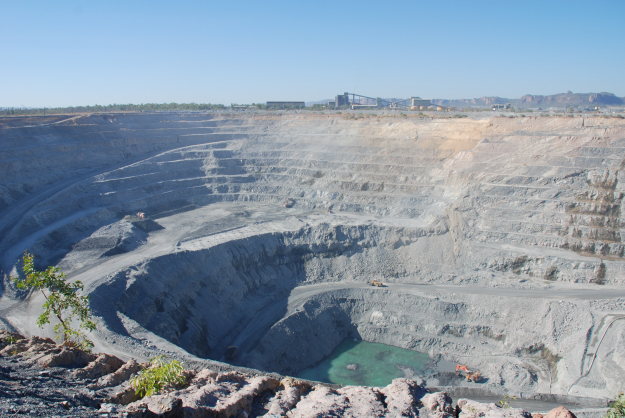
Emma Graham-Harrison, Stephanie Kirchgaessner and Julian Borger, 18 Sep 2020 Confidential Chinese report seen by the Guardian intensifies concerns about possible weapons programme, Saudi Arabia likely has enough mineable uranium ore reserves to pave the way for the domestic production of nuclear fuel, according to confidential documents seen by the Guardian.Details of the stocks are contained in reports prepared for the kingdom by Chinese geologists, who have been scrambling to help Riyadh map its uranium reserves at breakneck speed as part of their nuclear energy cooperation agreement. The disclosure will intensify concerns about Riyadh’s interest in an atomic weapons programme…….. The 2019 survey suggests that the reserves could potentially provide Saudi Arabia with both fuel for the reactors it wants to build, and surplus for export. ……. “If you are considering nuclear weapons development, the more indigenous your nuclear program is, the better. In some cases, foreign suppliers of uranium will require peaceful-use commitments from end users, so if your uranium is indigenous, you don’t have to be concerned about that constraint,” said Mark Hibbs, senior fellow in the nuclear policy program at the Carnegie Endowment for Peace. Another expert, Bruce Riedel at the Brookings Institution, said the information showed that the Saudis were “aggressively pursuing the prerequisites” for either an energy or weapons programme and that securing a domestic source of uranium would boost their effort……… The greatest international concern is over the kingdom’s lack of transparency. Under a 2005 agreement with the International Atomic Energy Agency (IAEA), Saudi Arabia avoided inspections through a small quantities protocol (SQP), which waives IAEA monitoring up to the point where fissile fuel is introduced into a reactor. The nuclear watchdog has been trying to convince the Saudi monarchy to now accept a full monitoring programme, but the Saudis have so far fended off that request. ……… https://www.theguardian.com/world/2020/sep/17/revealed-saudi-arabia-may-have-enough-uranium-ore-to-produce-nuclear-fuel |
The dangerous and deadly toll of uranium mining, on Indian communities

Child with cerebral palsy, in uraniummining region Dungridih village. Jaduguda, photo by Subhrajit Sen.
[Photos] Suffering in the town powering India’s nuclear dreams. Mongabay, BY SUBHRAJIT SEN ON 4 SEPTEMBER 2020
- Uranium is a vital mineral for India’s ambitious nuclear power programme. Out of the seven states with uranium reserves, Jharkhand and Andhra Pradesh have currently operating mines.
- In Jharkhand’s Jaduguda region, which has India’s oldest uranium mines, local communities narrate stories of suffering due to degrading health and the environment. The government, however, denies any ill-impact of uranium mining on people.
- The Indian government is aiming to increase uranium exploration and mining.
- This photo essay features images taken between 2016-2019 of residents of villages around uranium mines in Jharkhand. Some of these photos contain sensitive content.
Anamika Oraom, 16, of village Dungridih, around a kilometre away from Narwa Pahar uranium mine in Jharkhand, wants to study. But she cannot, owing to severe headaches that come up periodically, triggered by a malignant tumour on her face. Sanjay Gope, 18, cannot walk and is confined to his wheelchair. Haradhan Gope, 20, can study, walk, talk, but owing to a physical deformity, his head is much smaller in proportion to his body.
There are many more, young and old, in the village Bango, adjacent to Jaduguda uranium mine in Jharkhand, whose lives and death highlight the ill-effects of uranium mining, say the villagers.
Uranium is a naturally occurring radioactive mineral and is vital to India’s nuclear power programme. At present (till August 31, 2020), India’s installed nuclear power capacity is 6780 megawatts (MW). The country aims to produce 40,000 MW of nuclear power by 2030.
The Uranium Corporation of India Limited (UCIL) is involved in the mining and processing uranium ore in the country. According to the UCIL, mining operations at Jaduguda began in 1967, and it is India’s first uranium mine.
In the 25-kilometre radius of Jaduguda, there are other uranium deposits at Bhatin, Narwa Pahar, Turamdih, Banduhurang, Mohuldih, and Bagjata. While UCIL claims that Jaduguda mine has created a large skill base for uranium mining and the mining industry, local communities point out that their lives and land have changed irreversibly.
The villagers complain that the hills surrounding Jaduguda, dug up to create ‘tailing ponds,’ have proven to be a severe health hazard. A tailing pond is an area where leftover material is stored after the excavated ore is treated to extract uranium. Communities argue that these ponds have led to groundwater and river contamination.
Namita Soren of village Dungridih said, “This radioactive element has become a part of our daily life.”
“Children are born with physical disabilities or people with cancer. But our sorrow doesn’t end there,” said Soren who had three miscarriages before giving birth to a child born with physical deformities.
Ghanshyam Birulee, the co-founder of the Jharkhandi Organisation Against Radiation (JOAR), said that villagers earlier marked certain forest areas as ‘cursed’ – a woman passing through the area was believed be affected by an evil gaze and suffer a miscarriage or people would feel dizzy. These areas coincided with the forest spaces around tailing ponds. In cultural translation, the regions surrounding tailing ponds became infested with ‘evil spirits.’ But as the people became more aware, they connected their misery to the mining operations.
A 2003 study by Tata Institute of Social Sciences emphasised that 18 percent of women in the region suffered miscarriages/stillbirth between 1998 and 2003, 30 percent reported some sort of problem in conception, and most women complained of fatigue and weakness.
When asked the reason for opposing the UCIL’s mining project, Birulee said, “Before mining started, people never used to have diseases like these – children were not handicapped, women were not suffering from miscarriages, people didn’t have tuberculosis or cancer. People had ordinary illnesses, cold and cough, that got cured by traditional medicines. But today, even the doctors are not able to diagnose diseases. It all emerged after uranium mining started.”
India has uranium reserves in Rajasthan, Jharkhand, Chhattisgarh, Meghalaya, Telangana, Andhra Pradesh, and Karnataka. It is currently operating mines in Jharkhand and Andhra Pradesh. The country has a detailed plan to become self-sufficient in uranium production by achieving a nearly ten-fold rise by 2031-32, including expansion from existing mines and opening new mines. However, to augment supply until then, it has signed a long-term contract with Uzbekistan (in 2019) to supply 1,100 metric tons of natural uranium ore concentrates during 2022 -2026. Similar agreements have been signed with overseas suppliers from various other countries like Canada, Kazakhstan, and France to supply uranium ore.
No help from the government or politicians
Birulee feels that the political class is aware of the problem but that has not translated into safeguarding villagers’ lives. “Whoever is elected from here – legislator or parliamentarian – has never raised our issue about radiation either in the state legislature or parliament. If they raise our issue, I am sure the government will take some action to resolve people’s issues,” said Birulee.
In March 2020, Bharatiya Janata Party leader Rajiv Pratap Rudy asked Prime Minister Narendra Modi in Lok Sabha about public health hazards due to India’s uranium mines.
Rudy asked whether the central government has reports of hazardous activities like radioactive slurry being stored in the open, causing health hazards to people residing in adjacent areas of uranium mines in the country, and, if so, the action taken on it.
While replying to the question, Minister of State for Personnel, Public Grievances and Pensions and Prime Minister’s Office, Jitendra Singh, refuted any such impact. ………..
Birulee reflects on the opposing conditions that he has witnessed. For him, it is impossible to leave behind his land, livelihood, and traditions. But for people close to the mines and tailing ponds, “the only solution is that from this region – from this radiation zone – people should be rehabilitated to a safer place. Else they’ll be surrounded by the same problems.”
Local livelihood options impacted
The people note that displacement and then deforestation for uranium mining robbed them of their land and livelihood, and later cursed them with health impacts.
Though the company and those in power deny any ill-impact on local ecology and livelihood, locals alleged that small-scale production of bidis is also hampered due to the low quality of tendu leaves. They suspect that the trees have been exposed to contaminated groundwater.
Villagers said that with expansion of mining large tracts of sal, sarjom, and teak trees are being wiped out. The trees are essential for the communities’ sacred rituals and traditional activities.
Ashish Birulee, photojournalist and member of JOAR, said that the route for transporting uranium ore is the same used by the public. He says the resulting pollution from the dust has a long-term impact on health and ecology.
Ashish adds that the mining company cannot ignore the most significant factor – the experience of people living in this area. “The experience of people is nothing less than any study or research. It can’t be denied. UCIL is not ready to admit that there are problems. It is because if it admits it would have to compensate people. Peoples’ experience shows that before 1967 there were no such issues, but it started after mining took off. If you look at the population of Jaduguda, there are a lot of people with disabilities. But if you go about 15 kilometres away, there are no such problems.”
“As far as a solution is concerned, once you start mining at any place, there is no solution. The company will mine here till the uranium ore exists. It has a lease for 45-50 years and after mining is over here, it will move to a new mine and extract resources. But the mining waste will be left here,” said Ashish. …… https://india.mongabay.com/2020/09/photos-suffering-in-the-town-powering-indias-nuclear-dreams/
Japan’s nuclear fuel imports almost zero in 2019 as industry stagnates
|
Most nuclear plants in Japan remain idle as stricter safety measures were implemented after a massive earthquake and ensuing tsunami crippled the Fukushima No. 1 nuclear complex. The operations of fuel manufacturing plants have also been suspended……. Of the 54 nuclear reactors that were in operation before the Fukushima crisis, currently, only nine have come back online after clearing harsher safety measures. In the wake of the accident, 21 reactors have been flagged for decommissioning in consideration of the hefty cost of refurbishment. All four fuel manufacturing factories are offline as they are undergoing regulatory review under the new safety standards. Kansai Electric Power Co., Shikoku Electric Power Co. and Kyushu Electric Power Co., which operate the nine plants currently back online, said they have enough fuel to run their reactors for the next several years. …….https://www.japantimes.co.jp/news/2020/08/12/business/japan-nuclear-fuel-imports-zero/ |
|
Radiation-related health hazards to uranium miners
|
Radiation-related health hazards to uranium miners https://www.docwirenews.com/abstracts/radiation-related-health-hazards-to-uranium-miners/
July 8, 2020 This article was originally published here
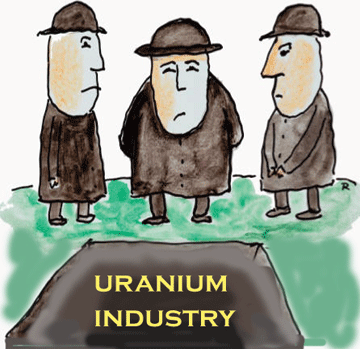
Semenova Y, et al. Environ Sci Pollut Res Int 2020 – Review. ABSTRACT Concerns on health effects from uranium (U) mining still represent a major issue of debate. Any typology of active job in U mines is associated with exposure to U and its decay products, such as radon (Rn), thorium (Th), and radium (Ra) and its decay products with alpha-emission and gamma radiation. Health effects in U miners have been investigated in several cohort studies in the USA, Canada, Germany, the Czech Republic, and France. While public opinion is particularly addressed to pay attention to the safety of nuclear facilities, health hazard associated with mining is poorly debated. According to the many findings from cohort studies, the most significant positive dose-response relationship was found between occupational U exposure and lung cancer. Other types of tumors associated with occupational U exposure are leukemia and lymphoid cancers. Furthermore, it was found increased but not statistically significant death risk in U miners due to cancers in the liver, stomach, and kidneys. So far, there has not been found a significant association between U exposure and increased cardiovascular mortality in U miners. This review tries to address the current state of the art of these studies. PMID:32638305 | DOI:10.1007/s11356-020-09590-7 |
|
Uranium mining protests in Russia
“……..Uranium mining protest
In the Kurgan region, Rosatom’s subsidiary company, Dalur, has been mining uranium and the local communities fear an environmental disaster. In the summer of 2019, the state environmental appraisal revealed a discrepancy between Dalur’s documentation and the Russian legislation
Activists attribute her persecution to her work at the Public Monitoring Fund for the Environmental Condition and the Population Welfare which she led back in 2017. The Foundation has repeatedly published information on the possible environmental damage resulting from Dalur’s mining activity. (28)
9
In the fall of 2019, environmentalists revealed that radioactive and toxic waste (uranium hexafluoride, UF6)were being imported from Germany through the port of Amsterdam into Russia. This is the waste from the uranium enrichment process which will be sent to the Urals or Siberia and stored in containers above the ground. Thus, under the auspices of a commercial transaction, the German uranium–enriching enterprise, Urenco, avoids its nuclear waste problem, while Rosatom profits by taking the hazardous waste into Russia.
1 This Month

of the week – Shut Down Drone Warfare!


Tell the Ukrainian Government to Drop Prosecution of Peace Activist Yurii Sheliazhenko

Petition to revoke the licensing of the Near Surface Nuclear Disposal Facility (NSDF) at Chalk River. https://www.ourcommons.ca/petitions/en/Petition/Details?Petition=e-7247
To see nuclear-related stories in greater depth and intensity – go to https://nuclearinformation.wordpress.com
-
Archives
- April 2026 (19)
- March 2026 (251)
- February 2026 (268)
- January 2026 (308)
- December 2025 (358)
- November 2025 (359)
- October 2025 (376)
- September 2025 (257)
- August 2025 (319)
- July 2025 (230)
- June 2025 (348)
- May 2025 (261)
-
Categories
- 1
- 1 NUCLEAR ISSUES
- business and costs
- climate change
- culture and arts
- ENERGY
- environment
- health
- history
- indigenous issues
- Legal
- marketing of nuclear
- media
- opposition to nuclear
- PERSONAL STORIES
- politics
- politics international
- Religion and ethics
- safety
- secrets,lies and civil liberties
- spinbuster
- technology
- Uranium
- wastes
- weapons and war
- Women
- 2 WORLD
- ACTION
- AFRICA
- Atrocities
- AUSTRALIA
- Christina's notes
- Christina's themes
- culture and arts
- Events
- Fuk 2022
- Fuk 2023
- Fukushima 2017
- Fukushima 2018
- fukushima 2019
- Fukushima 2020
- Fukushima 2021
- general
- global warming
- Humour (God we need it)
- Nuclear
- RARE EARTHS
- Reference
- resources – print
- Resources -audiovicual
- Weekly Newsletter
- World
- World Nuclear
- YouTube
-
RSS
Entries RSS
Comments RSS
 nuclear-news