Increasing carbon emissions from uranium mining

Jan Willem Storm van Leeuwen 27th June 2021, The energy source of nuclear power is a mineral from the earth’s crust: uranium. An intricate system of industrial processes is required to convert the potential energy in this mineral into useful energy, and to manage the inevitable radioactive material wastes. During operation each nuclear power plant generates each year an amount of human-made radioactivty equivalent to about 1200 exploded Hiroshima atomic bombs. Without the process chain nuclear power would be impossible, and without nuclear power these processes would not exist.
The CO2 emission of these processes together form the specific CO2 emission inextricably coupled to nuclear power. The thermodynamic quality of the available uranium resources declines with time, because the highest quality resources are always mined first, for these offer the highest return on investments for the mining companies…
Declining thermodynamic quality of the resources results in an exponential rise of the specific energy and the coupled CO2 emission required to extract 1 kg of uranium from rock. At a given point the required extraction energy will equal the amount of useful energy that can be produced from 1 kg of uranium. Within the lifetime of new nuclear build uranium resources cannot be considered energy resources anymore, if the world uranium consumption remains at the present level. Meanwhile the coupled specific CO2 emission will grow as large as fossil-fuelled power.
‘Strong Evidence’ Links Uranium Mining to Lung Cancer

The U.S. Nuclear Weapons Program Left ‘a Horrible Legacy’ of Environmental Destruction and Death Across the Navajo Nation Inside Climate News, By Cheyanne M. Daniels, Amanda Rooker, June 27, 2021 ”………………….‘Strong Evidence’ Links Uranium Mining to Lung Cancer
Uranium mining began in the Southwest in 1944, when the United States no longer wanted to depend on foreign sourcing of the uranium that was needed for nuclear research and weapons development as part of the Manhattan Project, the secret World War II effort to develop the atomic bomb. The federal government was the sole purchaser of uranium ore until 1971, but private companies operated the mines.
Navajo miners were not fully informed about the dangers of uranium mining specifically, despite the fact that scientists had concluded by the late 1930s that uranium mining caused lung cancer, even if debate existed about exactly why, according to a 2002 study published in the American Journal of Public Health. The miners were not informed about the potential risks of their work.
The investigation focused on white miners, although mortality rates were reported for non-white miners. One study looked at 3,238 white miners, while a second involved 757 non-whites, mainly Navajos. The studies were performed without the consent of the workers.
In both white and non-white cohorts, “strong evidence” was found for an increased incidence of lung cancer. In the study of 757 non-white miners, 10 deaths were expected, but 34 were documented, meaning researchers found more than three times the number of lung cancer deaths than they expected.
Tommy Reed, 64, a member of the Navajo Radiation Victims Committee who began working in a uranium mine when he was in high school, said his father was one of the Navajo miners studied.
“They studied my father and a lot of the men … and ladies that were in the mines there,” Reed said. “My dad, like many other men that were (miners), spent nine months on a ventilator. How much more of our story can cut deep, where one can comprehend the struggle that we have?”
For Reed, extending the Radiation Exposure Compensation Act isn’t to place blame but to ensure that other miners, uranium workers and downwinders are compensated for illnesses related to radiation exposure. But if he had to place blame, Reed said, he would point to the federal agencies that allowed the mining to take place and the related illnesses to go undiagnosed and untreated.
“They knew, and they had numbers on them. They studied, it’s on the books, there were human experimentations,” said Reed.
“We’re just five-finger people,” he said, using a Navajo word for human beings. “But these five-finger people are the ones that they relied on, the people that are most expendable.”
In response to this legacy of environmental destruction, death and racism, the Navajo Nation Council passed the Diné Natural Resources Protection Act in 2005 to mandate that “no further damage to the culture, society and economy of the Navajo Nation occurs because of uranium processing until all adverse economic, environmental and human health effects from past uranium mining” have been eliminated or substantially reduced……………… https://insideclimatenews.org/news/27062021/nuclear-weapons-navajo-nation-uranium-mining-environmental-destruction-health/
Uranium at lowest price since 2007

Uranium Week: Struggling With Low Prices
FN Arena Weekly Reports By Mark Woodruff May 25 2021, As the uranium spot price rose 2% for the week and 9% for the month, an EIA report revealed the lowest price paid since 2007 by owners and operators of US commercial nuclear plants
The US Energy Information Administration (EIA) released both its 2020 US Uranium Marketing Annual Report and its 2020 Domestic Uranium Production Report last week.
Despite covid roiling energy markets during 2020, the reports pointed to nuclear energy being a fundamental source of base load electricity generation (20%) with capacity factors steady at 94%, explains Canaccord Genuity. The broker believes coverage of future demand will continue to provide an impetus for a more active term market over 2021.
The EIA is responsible for collecting, analysing and disseminating energy information to inform policy making and efficient markets. It also adds to the public understanding of energy and its interaction with the economy and the environment.
The released reports in 2020 quantify developments in the US uranium industry, including decreased inventories, explains industry consultant TradeTech. They also showed an elevated aggregated contractual coverage rate among owners and operators of US civilian nuclear power reactors. Additionally, lower weighted average uranium prices and historically low uranium production were reported.
The Uranium Marketing Annual Report showed owners and operators of US commercial nuclear plants in 2020 purchased nearly 49mlbs uranium from US and foreign suppliers. These were transacted at a weighted-average price of US$33.27/lb, which represents a 1% increase in volume and a -7% decline in price compared to 2019 data. The weighted average price is the lowest price paid by owners and operators of US civilian power reactors since 2007.
Of the US deliveries, 76% were through longer-term contracts, averaging US$34.74/lb. As Canaccord notes, it’s always darkest before the dawn, with pricing failing to represent the marginal cost of production let alone the incentivisation price for restarts or new developments.
During 2020, 11.7mlbs or 24% of sales were on a spot basis, up from 10.5mlbs in 2019 and the highest since 2014. This illustrates that long-term contracts signed post-Fukushima (2011-2015) are starting to expire, explains Canaccord.
The report showed Australian and Canadian-origin uranium combined accounted for 42% of reported volumes by country of origin. Uranium purchased by owners and operators of US civilian power reactors from Russia again was the lowest weighted average price paid at US$25.73/lb, while purchases from Australia occupied the highest cost position at US$39.86/lb.;;;;;;;;;;;;;; https://www.fnarena.com/index.php/2021/05/25/uranium-week-struggling-with-low-prices/
High level of radioactivity near France’s uranium processing factory
France Info 29th April 2021, Residents of the largest uranium processing site in France, in Narbonne
(Aude), are worried: samples taken near the plant and analyzed in the laboratory show a high level of uranium. The site manager, however, says there is no danger to residents.
The most important uranium processing site in France is located three kilometers from Narbonne (Aude). Concerned local residents regularly check the level of radioactivity in the vicinity of the plant.
At the barrier that limits access to the site, the meter is racing and exceeds four times the natural level of radioactivity. The Orano Malvési plant is the entry point for nuclear power in France. Uranium arrives from all over the world in the form of yellow powder and must be purified and transformed into nuclear fuel. In 60 years, already more than 300,000 m3 of radioactive waste have been produced and are contained in basins, in the form of sludge.
Australian-Chinese company Greenland Minerals to be thwarted in its bid for uranium and rare earth mining in Greenland.

Telegraph 17th April 2021, Overlooking the small fishing town of Narsaq, next to painted houses and slow-moving icebergs, lies one the last great untapped deposits of rare earth materials. About a quarter of the world’s rare earth minerals are thought to be found here, deep in the southern fjords of Greenland, providing key ingredients needed to build everything from wind turbines or electric vehicles. These deposits are crucial to Britain’s dream of developing the technologies required to become a green economy while reducing our rare-earth reliance on China.
But one man could be about to scupper the UK’s plans. Múte Bourup Egede, the 34-year-old leader of the Left-wing Inuit Ataqatigiit party, won a snap election in Greenland lastweek. At the heart of his election campaign was a pledge to halt the Kvanefjeld project by Greenland Minerals, an Australian company with Chinese ownership.
But for Greenlanders, strategic relevance was eclipsed by concerns surrounding the mine’s uranium contents. The territory’s anxieties around radioactive materials can be traced back to the 1968 Thule plane crash, when a US plane carrying nuclear bombs crashed into the sea ice in Greenland’s north. Even though the nuclear material did not
detonate, as part of clean up efforts the US Air Force collected 1.6m gallons of contaminated snow.
https://www.telegraph.co.uk/technology/2021/04/17/battle-rare-earth-minerals-turns-radioactive/
Australian uranium fuelled Fukushima

The Nuclear Accident Independent Investigation Commission ‒ established by the Japanese Parliament ‒ concluded in its 2012 report that the accident was “a profoundly man-made disaster that could and should have been foreseen and prevented” if not for “a multitude of errors and wilful negligence that left the Fukushima plant unprepared for the events of March 11”.
The accident was the result of “collusion between the government, the regulators and TEPCO”, the commission found.
Mining
But overseas suppliers who turned a blind eye to unacceptable nuclear risks in Japan have largely escaped scrutiny or blame. Australia’s uranium industry is a case in point.
Yuki Tanaka from the Hiroshima Peace Institute noted: “Japan is not the sole nation responsible for the current nuclear disaster. From the manufacture of the reactors by GE to provision of uranium by Canada, Australia and others, many nations are implicated.”
There is no dispute that Australian uranium was used in the Fukushima reactors. The mining companies won’t acknowledge that fact — instead they hide behind claims of “commercial confidentiality” and “security”.
But the Australian Safeguards and Non-Proliferation Office acknowledged in October 2011 that: “We can confirm that Australian obligated nuclear material was at the Fukushima Daiichi site and in each of the reactors — maybe five out of six, or it could have been all of them”.
BHP and Rio Tinto, two of the world’s largest mining companies, supplied Australian uranium to TEPCO and that uranium was used to fuel Fukushima. Continue reading
EPA awards $220 million for uranium mine cleanup on Navajo Nation
WASHINGTON — The Environmental Protection Agency said Thursday it will award contracts worth up to $220 million to three companies for the cleanup of some of the hundreds of abandoned uranium mines on the Navajo Nation.
Work could start later this year following the completion of assessments for mining sites coordinated between the EPA and the Navajo Nation’s environmental agency, the federal agency said.
This week’s announcement is just the latest in years of efforts to clean up the mines, the toxic legacy of Cold War mining in the region. More than 30 million tons of uranium ore were mined in the region, according to the EPA, which said more than 500 mines were ultimately abandoned.
“From World War II until the end of the Cold War, millions of tons of uranium were mined on Navajo lands, exposing mine workers and their families to deadly radiation,” said Rep. Tom O’Halleran, D-Sedona, whose district includes the Arizona portion of the Navajo Nation.
“As a result, high rates of cancer, birth defects, and contaminated water sources remain a reality for residents of the Navajo Nation even now,” O’Halleran said in a statement on the contracts.
The agency said it worked closely with Navajo Nation to develop contracts that would incentivize the creation of employment opportunities for Navajo residents in order to build local economic and institutional capacity.
The majority of funding for the contracts comes from a nearly $1 billion settlement made in 2015 with Kerr McGee Corp. for the cleanup of more than 50 mines in Nevada and on the Navajo Nation that the company and its successor, tronox, were responsible for.
From the late 1940s through the 1960s, Kerr-McGee mined more than 7 million tons of ore on or near the Navajo Nation, leaving behind uranium mine sites that included contaminated waste rock piles. Exposure to uranium in soil, dust, air, and groundwater, as well as through rock piles and structural materials used for building can pose risks to human health, according to the EPA
Mining stopped for the most part decades ago, and the Navajo Nation banned uranium mining on its lands in 2005. But the cleanup effort has lingered. The EPA launched five-year programs in 2007 and 2014 to study the issue and identify the biggest risks, and the agency last year added abandoned Navajo uranium mines to its list of Superfund sites “targeted for immediate, intense action.”……. https://www.12news.com/article/news/local/arizona/epa-awards-220-million-for-uranium-mine-cleanup-on-navajo-nation/75-154a0fae-53e3-477d-a5ce-0a678d97d
Radiation illnesses and COVID-19 in the Navajo Nation
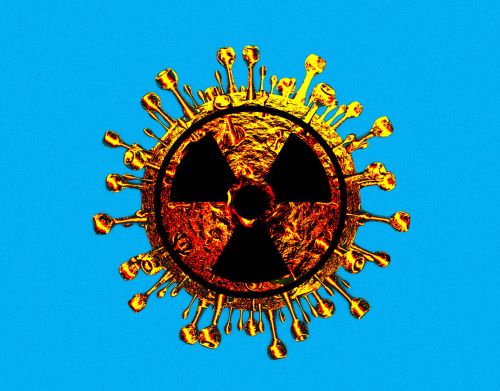 Radiation illnesses and COVID-19 in the Navajo Nation, Bulletin of the Atomic Scientists, By Jayita Sarkar, Caitlin Meyer, February 3, 2021 The COVID-19 pandemic is wiping out Indigenous elders and with them the cultural identity of Indigenous communities in the United States. But on lands that sprawl across a vast area of the American West, the Navajo (or Diné) are dealing not just with the pandemic, but also with another, related public health crisis. The US Centers for Disease Control and Prevention says COVID-19 is killing Native Americans at nearly three times the rate of whites, and on the Navajo Nation itself, about 30,000 people have tested positive for the coronavirus and roughly 1,000 have died. But among the Diné, the coronavirus is also spreading through a population that decades of unsafe uranium mining and contaminated groundwater has left sick and vulnerable.
In Indigenous lands where nuclear weapons testing took place during the Cold War and the legacy of uranium mining persists, Indigenous people are suffering from a double whammy of long-term illnesses from radiation exposure and the COVID-19 pandemic. Yet, we have not witnessed in the mainstream media and policy outlets a frank discussion of how the two public health crises have created an intractable situation for Indigenous communities. The Diné are drinking poisoned water, putting them at risk for more severe coronavirus infections.
From 1944 until 1986, 30 million tons of uranium ore was extracted on Navajo lands. At present, there are more than 520 abandoned uranium mines, which for the Diné represents both their nuclear past as well as their radioactive present in the form of elevated levels of radiation in nearby homes and water sources. Due to over four decades of uranium mining that supplied the US government and industry for nuclear weapons and energy, radiation illnesses characterize everyday Diné life.
The water crisis Continue reading
Why Spain plans to ban uranium mining.
Shock waves: what will a Spanish ban mean for uranium mining in Europe?, Mining Technology, Yoana Cholteeva12 January 2021 ” ………. Reasons behind the proposed ban
The proposed ban has been welcomed by environmental groups and local organisations concerned about the potential damage to ecosystems in the country and overall safety, as argued by the Spanish organisation Stop Uranio (Stop Uranium). The group, which was established in 2013, has since then been trying to prevent the approval and construction of Berkley Energy’s uranium mining project in the Campo Charro area of Salamanca.
For the past seven years, Stop Uranium has organised a number of campaigns and protest rallies over the country, with activists from both Spain and Portugal raising concerns over Salamanca’s agriculture lands, pastures, rural tourism, and the population’s health being at stake.
Stop Uranium member and spokesperson Jose Manuel Barrueco has written in The Free – blog of the post capitalist transition, that “the majority of the inhabitants of the area oppose the planned mines due to the negative effects that this activity will entail for the region: explosions with release of radioactive dust into the atmosphere, the continuous transfer of trucks and heavy machinery, loss of forest, diversion of water courses, etc.”.
It terms of scientific evidence to support the some of the claims, according to a 2013 peer reviewed article, ‘Uranium mining and health’, published in the Canadian Family Physician journal, the chemical element has the potential to cause a spectrum of adverse health effects to people, ranging from renal failure and diminished bone growth to DNA damage.
The effects of low-level radioactivity include cancer, shortening of life, and subtle changes in fertility or viability of offspring, as determined from bothanimal studies and data on Hiroshima and Chernobyl survivors.
….. MP Juan Lopez de Uralde has in turn voiced his support of a holistic approach, telling the Spanish online newspaper Publico that banning uranium extraction is directly linked to the energy policies of both Spain and the EU. He continued that “since no uranium mine is active in the Old Continent”, “by committing to the closure of nuclear power stations we should complete the circle entirely by banning uranium mining”………. https://www.mining-technology.com/features/shock-waves-what-will-a-spanish-ban-mean-for-uranium-mining-in-europe/
Australian uranium mining company threatens Spanish government with legal action
Miner threatens Spain over uranium ban, Cosmo Sanderson, 01 February 2021
From tears to joy — Beyond Nuclear International

First Native American nominated to US cabinet position
From tears to joy — Beyond Nuclear International
……………..“A new scintilla of hope has bloomed among us in part because Haaland, like millions of Indigenous peoples, strongly believes in and practices the Seven Generation rule,” wrote Moya-Smith. “The rule says that all significant decisions must be made with the next seven generations in mind, and includes preserving and protecting the water, the earth and the two leggeds and the four leggeds for people you will never meet — at least in this life.”
……. Haaland has been in the forefront of the fight to get restoration and compensation for Native uranium miners and their families. Getting the mines cleaned up will also likely be high on her priority list at Interior.
……Last year, Haaland was also recognized by the Nuclear Free Future Award, receiving the award in the Special Recognition category.
The Shoshone Nation’s battle against nuclear racism and trespassers on indigenous land

|
Trespassers on Native land, Linda Pentz Gunter January 3, 2021 by beyondnuclearinternational “……………When the military industrial complex showed up in Shoshone country to test its atomic bombs, or excavate a mountain for a potential radioactive waste dump, they were there “as trespassers,” says Ian Zabarte, Principle Man of the Western Bands of the Shoshone Nation of Indians, and this year’s winner of Beyond Nuclear’s Dr. Judith H. Johnsrud “Unsung Hero” Award.“The United States gave away Shoshone property before there was the United States here,” Zabarte explained during a recent on-line teach-in about uranium and Indigenous rights. The plunder started with gold. But once the US began working on nuclear weapons, Indigenous lands were mined for uranium. And that, in turn, led to atomic testing, carried out almost entirely on Shoshone land, “the most bombed nation on Earth,” as Zabarte describes it. The US continues to trespass, and trample, on Western Shoshone land, violating the 1863 Treaty of Ruby Valley which only gave certain rights to the United States. As the Las Vegas Sun reported it, “The Shoshone did not cede land claims to the federal government in the treaty. Instead the tribe granted Americans the right to enter its lands for passage and developments like railways and mining. In return, the federal government would compensate the tribe.” As far as the Western Shoshone are concerned, the treaty did not mean decimating and poising the land and its people with atomic bomb tests. It did not mean dumping the country’s high-level radioactive waste there. It did not mean the ability to seize their horses and cattle, which had long roamed freely on the territory to which they and the people belonged — not the other way around. And the treaty most certainly did not give permission to commit acts of genocide. But, as Zabarte said in an earlier article, republished on the Beyond Nuclear International website: “What the Shoshone people experience is a deliberate intent by the US to systematically dismantle the living life-ways of the Shoshone people for the benefit of the US and the profit of the nuclear industry. This meets the minimum threshold of genocide under both the UN Convention and the US enactments of the crime of genocide.” That genocide includes the around 900 atomic tests on Western Shoshone land, conducted largely by the US but also by the United Kingdom, during the Cold War. It includes the decision to site the country’s only high-level radioactive waste deep geological repository on Western Shoshone land at Yucca Mountain, Nevada threatening groundwater and drinking water. (The project was canceled by the Obama administration in 2010, but hovers perpetually in the wings, absent, so far, any alternative site.) And it includes trampling not only on Indigenous rights and traditions but, literally, on some of the most rare and important flora and fauna in the US. “The oldest and most isolated plants and animals are here, in Newe Sogobia, the people’s Mother Earth,” wrote Zabarte in a recent email. “Pando, Quaking Aspen, is the largest and oldest tree up to 80,000 years old and spreads across 25 square miles. Bristol Cone Pine is 6,800 years old. Yutumbe, Creosote is an 11,700 year old clone plant. Thyms Buckwheat is a plant that only exists on 5 acres here, and nowhere else on Mother Earth. There is also the Devils Hole Pupfish, the most isolated fish that changed from salt water to fresh water near Death Valley.” So not “nothing out there” as proponents of the Yucca Mountain radioactive waste dump love to claim. That campaign — to block the Yucca Mountain dump — is one, among many issues of Indigenous justice, on which Zabarte has been campaigning tirelessly for years. That is why Beyond Nuclear selected him for the organization’s 2020 Johnsrud Award, usually given during the Alliance for Nuclear Accountability’s annual DC Days………. we are all involved, one way or the other. “We are all downwinders,” says Zabarte. “The fallout has gone across the United States, across the ocean, around the world. The material from weapons testing is in everything.” Linda Pentz Gunter is the international specialist at Beyond Nuclear and writes for and edits Beyond Nuclear International. — |
|
The cover-up of workers’ illnesss in radioactively polluted clean-up of Kingston coal ash spill
A Legacy of Contamination, How the Kingston coal ash spill unearthed a nuclear nightmare, Grist By Austyn Gaffney on Dec 15, 2020 This story was published in partnership with the Daily Yonder.
………………………………….The apparent mixing of fossil fuel and nuclear waste streams underscores the long relationship between the  Kingston and Oak Ridge facilities………… .
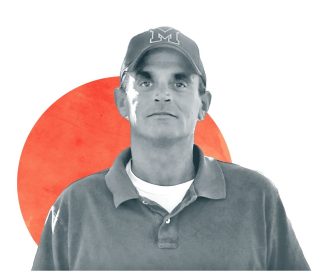 ……….In 2017, a former chemist named Dan Nichols stumbled upon a news story that revealed the existence of the additional health problems TVA feared. High levels of uranium had been measured in the urine of a former cleanup worker named Craig Wilkinson. Like Thacker, Wilkinson had worked the night shift. After dredges piped the coal ash back onshore, Wilkinson used heavy equipment to scoop, flip, and dry the wet ash along the Ball Field.
Although Wilkinson worked at the Kingston site for less than a year, he quickly developed health issues, including chronic sinus infections and breathing problems that eventually led to a double-lung transplant. Frustrated by his sudden decline in health, Wilkinson shelled out over $1,000 for a toxicology test because he wanted to know what occupational hazards might be lingering in his body.
After reading Wilkinson’s story, Nichols sat stunned. Though he was not associated with the spill, he’d been unable to shake his obsession with the Kingston disaster. Nichols had worked as a Memphis-based field chemist for a wastewater technology company, and he was used to studying lab reports on industrial water supplies and samples. For years he’d been trying to solve a mystery that no one else seemed to be aware of: why Kingston regulators deleted and then altered a state-sanctioned report showing extremely high levels of radiation at the cleanup site.
Roughly a month after the spill, Nichols read a Duke University press release stating that ash samples collected at Kingston by a team led by Vengosh, the geochemist, showed radium levels well above those typically found in coal ash. Nichols knew that the state environmental regulator, the Tennessee Department for Environment and Conservation, or TDEC, was also testing soil and ash samples at the site. After seeing Vengosh’s high radium readings, he wondered if TDEC’s report would also show high levels of either radium or uranium. (Radium is a decay element of uranium.) Later that spring, Nichols visited TDEC’s website and discovered the test results.
“I opened it up and went to uranium, and it was just off the charts,” Nichols recalled. In a 2020 affidavit, Nichols reported that these levels were “extremely high so as to be alarming.” At least 27 soil and ash samples were collected from at least 20 different sites surrounding Kingston beginning January 6, 2009. The levels ranged from 84 parts per million (ppm) to 2,000 ppm. The average level was over 500 ppm, as much as 50 times the typical uranium content found in coal ash.
The next morning, when Nichols slumped back into his computer chair and refreshed TDEC’s website, he saw that the report had been changed. The high uranium readings had plummeted. Now the average uranium levels in the ash were 2.88 ppm, a tenth of the typical uranium content found in coal ash and illogically, below levels naturally occurring in soil. Luckily, Nichols had downloaded the unaltered report the night before.
A month later, Nichols sent the two lab reports to one of the attorneys representing Tennessee residents affected by the spill in a lawsuit they’d brought against TVA. According to Nichols, the lawyers weren’t interested. Nevertheless, Nichols was determined to find more proof of the unusually high levels of on-site radiation. In between cutting hay and spraying weeds on his family farm, he spent years poring over information online about TVA, coal ash, and uranium before he stumbled across Wilkinson’s story.
Back in 2014, Wilkinson’s urine tested for unusually high levels of both mercury and uranium. The mercury is more easily explained: The most common cause of mercury contamination, according to the EPA, is coal-fired power plant emissions, which account for 44 percent of all man-made mercury pollution. The 2008 spill released 29 times the mercury reported at the Kingston site for the entire decade before it, and TVA documents show high levels of additional legacy mercury were present in the Clinch River and could have migrated into the Emory. Today, Wilkinson has symptoms attributable to methylmercury poisoning including blurry vision, fatigue, a hearing impairment, memory loss, and loss of coordination that caused him to fall out of the machines he operated until retiring on disability in 2015.
But most shocking to Nichols was the high level of uranium in Wilkinson’s body — it was 10 times the U.S. average, and identical to the median levels that one study found in workers exposed to the substance. Prolonged occupational exposure to uranium is strongly linked to chronic kidney disease, which Wilkinson suffers from. Because Wilkinson’s toxicology results were taken four years after he left Kingston, they likely show lower uranium levels than what he and other cleanup workers initially had.
Wilkinson’s results left no doubt in Nichols’ mind that the original uranium readings he’d saved were significant. A reporter for the Knoxville News-Sentinel, Jamie Satterfield, contacted him after the report he saved showed up in court proceedings. Satterfield published a story about the altered uranium readings in May of this year.
In response to her story, TDEC told the News-Sentinel that its updated uranium readings, which plummeted by 98 percent, were due to a change in the sampling method used for the tests. (Satterfield also reported that radium levels had been lowered between the initial TDEC report Nichols downloaded and the updated one; the department attributed this to a “data entry error.”) In an email response to Grist and the Daily Yonder, a TDEC spokesperson elaborated that the sampling lab, which was neither staffed nor supervised by TDEC, “discovered there were interferences in the analysis of soil and ash samples for uranium” and subsequently changed the method of analysis from one EPA-approved protocol to another. The new results were then published without public notice of the alteration.
“Changing lab reports is a very serious thing,” Nichols said. “But I can assure you data entry errors don’t cause a man to test for unusually high levels of uranium. That’s [TDEC’s] big problem.”
Unbeknownst to Nichols, Russell Johnson, the district attorney with jurisdiction over Roane County, where Kingston is located, had informed TDEC’s commissioner in 2017 that he was beginning a criminal probe into the Kingston cleanup. “I am deeply concerned with the apparent intentional conduct of the cleanup contractors and their supervisors, actions that took place in Roane County, conduct that may indeed have caused serious bodily injury or possibly even death to a number of people,” Johnson wrote in a letter to TDEC.
In concert with the Tennessee Bureau of Investigation, Johnson began investigating whether TVA or its contractors “suppressed information” as part of the coverup alleged in the 2013 worker lawsuit against Jacobs. They now have Nichols’ evidence as well. But despite this ongoing investigation, it’s unclear if workers will ever learn for certain whether or not they were exposed to dangerous substances besides the coal ash itself. (Bob Edwards, an assistant district attorney working under Johnson, told Grist and the Daily Yonder that the district attorney’s office could not comment on a pending investigation.)………………….https://grist.org/justice/tva-kingston-coal-ash-spill-nuclear/
Indigenous opposition to uranium milling and the import of radioactive material
 problems and believe the environment is being damaged. https://www.sltrib.com/news/2020/12/10/indigenous-activists/
When locations were chosen more than half a century ago for the dozens of uranium mills that dot the Four Corners landscape, one common factor was almost always considered: proximity to productive uranium mines.
The region’s best uranium deposits typically only contain a small percentage of the valuable radioactive mineral, and being able to process the material at a nearby mill was critical to saving on transportation costs.
For the last conventional uranium mill still operating in the United States, however, the business model has changed. San Juan County’s White Mesa Mill, which is owned by the Denver-based company Energy Fuels Resources, hasn’t processed ore from local mines in recent years. Instead, it has survived primarily by accepting uranium-bearing material from around the country and, more recently, as far away as Japan. State regulators are also considering an application from the company to import material from Estonia.
Members of the Ute Mountain Ute community of White Mesa, which is located three miles from the mill site, spoke out against the mill’s continued operation on Tuesday at an annual town hall event that was held virtually this year due to the coronavirus pandemic.
The event, which was sponsored by a coalition of 12 grassroots community groups and environmental organizations, featured presenters from across Indian Country who spoke about the legacy of uranium production and nuclear waste storage on Native Americans as well as the White Mesa Mill.
The mill has accepted radioactive material from the Cherokee Nation in Oklahoma, and Energy Fuels has expressed interest in processing tailings from the more than 500 abandoned uranium mines that have yet to be cleaned up on the Navajo Nation.
Scott Clow, environmental programs director for the Ute Mountain Ute Tribe, said that such proposals address a real need to remediate contaminated sites on tribal lands, but that they also “pit tribes against tribes.”
“We all want those places to be cleaned up, but we don’t want it to go to White Mesa,” Clow said.
Thelma Whiskers and Michael Badback of the White Mesa Concerned Community group said emissions from the mill can be smelled in White Mesa on a regular basis, adding they believe the facility has had negative health impacts on local residents.
“Let’s just keep … fighting to not have [the mill] close to the reservation,” Whiskers said. “I care for the community members and the children and the grandchildren.”
In an effort to better understand both the potential environmental and health impacts of the mill, Clow said the tribe has projects underway with both the Centers for Disease Control (CDC) and the Environmental Protection Agency (EPA).
Two new monitoring wells were drilled this fall between the mill and the community with EPA funding in order to better track potential water quality changes, Clow said, and a branch of the CDC is helping the tribe plan epidemiological work in the White Mesa community that could provide more information about health concerns among residents.
Other speakers at the event addressed the legacy of uranium production elsewhere in Indian Country.
“A lot of the land in our community has been disrupted and we can no longer use it [for livestock],” she said. “We can’t grow crops because the EPA has stated that if we grow crops we’ll be further exposed to uranium contamination. We can’t drink the water.”
Keyanna added the uranium contamination has had not only physical health consequences but has caused spiritual and mental health impacts as well, all of which have been exacerbated by the pandemic.
“It feels like a prison,” Keyanna said. “We’re not only prisoners during this pandemic, but we’ve kind of always been prisoners [since] this uranium industry started in our community.”
Leona Morgan, co-founder of the Indigenous-led group Haul No!, which opposes Energy Fuels’ plans to mine for uranium near Grand Canyon National Park and haul ore across the Navajo Nation, encouraged meeting participants to oppose a separate proposal currently being considered by the Nuclear Regulatory Commission that could result in radioactive material being hauled from the Church Rock area to the White Mesa Mill for processing.
“It’s not just an individual human rights issue,” he said, addressing the residents of White Mesa. “It’s a collective rights issue for your people to live in a safe and healthy environment: your homeland.”
Zak Podmore is a Report for America corps member and writes about conflict and change in San Juan County for The Salt Lake Tribune.
The tragic nuclear history of the Democratic Republic of the Congo
Six Million dead, The Congo Holocaust has its origins in minerals plunder and colonialism https://wordpress.com/read/feeds/72759838/posts/3011373848, By Linda Pentz Gunter, 8 Nov 20,
When you’ve lost family members to the Nazi death camps, it’s a pain that never goes away. Six of my relatives were killed there, four more shot in Polish ghettos and at Forlì. They died long before I was born and were people I never knew. But we have their photographs. Their pain stares out from those images, a perpetual ache.
But what use is endless mourning if no lessons are learned? The most important one surely is that no such Holocaust must ever be allowed to happen again? And yet it has. To almost universal silence. No one speaks of today’s six million dead. They lie beneath the mineral-rich soil of the Democratic Republic of Congo (DRC), invisible and unmourned by the world beyond their country’s borders.
“The Holocaust continues in DRC with the complicity of the international community,” Rodrigue Muganwa Lubulu wrote to me in an email exchange. “Women and girls are raped every day and the dead are counted by tens each day.” He is the program director for CRISPAL Afrique and gave a zoom talk recently hosted by ICAN Germany.
The tragedy of the DRC, the second largest country in Africa, began with the discovery in 1915 of the Shinkolobwe uranium deposit, the richest ever discovered at the time. Its plunder, from 1921 until its closure in 2004, “has been a curse for the powerless community” around the mine, said Lubulu, “because not only have they been forced to abandon their lands, houses and fields in favor of uranium mining, but also all the men were forced to dig out those extremely radioactive materials without protective equipment.”
The cancers and other illnesses that killed those uranium workers are still harming the community today, Lubulu says, even though the mine is now shut down.
The DRC was first colonized by Belgium in 1908 and known as the Belgian Congo until it gained independence in 1960. (It was known as Zaire between 1971 and 1997.) It rapidly became a country of great interest, especially to the United State and the then Soviet Union, engaged in a growing Cold War arms race. Then, as now, the country promised riches to its White pillagers. In the Eastern part of the country, wrote Armin Rosen, in a June 26, 2013 article in The Atlantic, “just feet beneath the surface of the earth are enough minerals to keep the global technology and defense industries humming.”
But during World War II, the uranium mined from Shinkolobwe went to the American Manhattan Project. “More than 70 percent of the uranium in the Hiroshima bomb came from Shinkolobwe,” says Lubulu, whose organization is holding workshops and other events in an effort to persuade the government of the DNC to ratify the Treaty on the Prohibition of Nuclear Weapons (TPNW).
He is haunted by what might have been if the “ore of death” as he calls uranium, had instead been left where it belongs; in the ground. “Without the uranium of Shinkolobwe, the 5th of August 1945 would have been a perfect and productive day in Hiroshima,” he said during his ICAN presentation.
This is supported by a recollection from the Manhattan Project’s Colonel Ken Nichols, who wrote: “Without Sengier’s foresight in stockpiling ore in the United States and aboveground in Africa, we simply would not have had the amounts of uranium needed to justify building the large separation plants and the plutonium reactors.” Edgar Sengier was the then director of Union Minière du Haut Katanga, and had stockpiled 1,200 tonnes of uranium ore in a warehouse in New York. This ore and an additional 3,000 tonnes of ore stored above-ground at the mine was purchased by Nichols for use in the Manhattan Project.
That connection between his homeland and Hiroshima, and the haunting reminders of its outcome so movingly expressed by Japan’s Hibakusha, as the atomic bomb survivors are known, is what spurs Lubulu and CRISPAL to urge on the ratification and implementation of the TPNW.
“You cannot separate nuclear weapons from uranium,” Lubulu said. “Once you have one, you get the other. Once you dig it out, it becomes a monster and you can’t control it anymore.”
Tragically, that monster could be unleashed again at Shinkolobwe. Both France and China are interested in mineral rights there. CRISPAL needs to move fast to educate people about these renewed dangers. But they face dangers of their own in doing so.
Since 1997, when internal and cross-border strife took hold in the DRC, at least six million people have died. Trying to leaflet or hold meetings in such communities, especially if it is in opposition to uranium mining, is fraught with danger. No one involved has forgotten the brutal treatment of Congolese anti-uranium mining activist, Golden Misabiko, who was arrested, imprisoned twice, poisoned by his own government in an apparent, and mercifully unsuccessful, assassination attempt, separated from his family and forced into exile.
Despite this, Lubulu believes that, above all, love will find a way. “There is no door that enough love cannot open,” he said in concluding his presentation. Hopefully, the rest of the world will start sending some love in Congo’s direction.
1 This Month


Shut down the radiation-damaged Heysham nuclear reactors now
To see nuclear-related stories in greater depth and intensity – go to https://nuclearinformation.wordpress.com

Say No to NASA’s Reckless Nuclear Reactor on the Moon
Say No to NASA’s Reckless Nuclear Reactor on the Moon
-
Archives
- October 2026 (247)
- September 2026 (339)
- August 2026 (330)
- July 2026 (355)
- June 2026 (287)
- May 2026 (306)
- April 2026 (356)
- March 2026 (251)
- February 2026 (267)
- January 2026 (308)
- December 2025 (358)
- November 2025 (359)
-
Categories
- 1
- 1 NUCLEAR ISSUES
- business and costs
- climate change
- culture and arts
- ENERGY
- environment
- health
- history
- indigenous issues
- Legal
- marketing of nuclear
- media
- opposition to nuclear
- PERSONAL STORIES
- politics
- politics international
- Religion and ethics
- safety
- secrets,lies and civil liberties
- spinbuster
- technology
- Uranium
- wastes
- weapons and war
- Women
- 2 WORLD
- ACTION
- AFRICA
- Atrocities
- AUSTRALIA
- Christina's notes
- Christina's themes
- culture and arts
- Events
- Fuk 2022
- Fuk 2023
- Fukushima 2017
- Fukushima 2018
- fukushima 2019
- Fukushima 2020
- Fukushima 2021
- general
- global warming
- Humour (God we need it)
- Nuclear
- RARE EARTHS
- Reference
- resources – print
- Resources -audiovicual
- Weekly Newsletter
- World
- World Nuclear
- YouTube
-
RSS
Entries RSS
Comments RSS

