Solar sails for space voyages
 Nuclear Rockets to Mars?, BY KARL GROSSMAN– CounterPunch, 16 Feb 21,”………. As for rocket propulsion in the vacuum of space, it doesn’t take much conventional chemical propulsion to move a spacecraft—and fast.
And there was a comprehensive story in New Scientist magazine this past October on “The new age of sail,” as it was headlined. The subhead: “We are on the cusp of a new type of space travel that can take us to places no rocket could ever visit.”
The article began by relating 17th Century astronomer Johanne Kepler observing comets and seeing “that their tails always pointed away from the sun, no matter which direction they were traveling. To Kepler, it meant only one thing: the comet tails were being blown from the sun.”
Indeed, “the sun produces a wind in space” and “it can be harnessed,” said the piece. “First, there are particles of light streaming from the sun constantly, each carrying a tiny bit of momentum. Second, there is a flow of charged particles, mostly protons and electrons, also moving outwards from the sun. We call the charged particles the solar wind, but both streams are blowing a gale”—that’s in the vacuum of space.
Japan launched its Ikaros spacecraft in 2010—sailing in space using the energy from the sun. The LightSail 2 mission of The Planetary Society was launched in 2019—and it’s still up in space, flying with the sun’s energy.
New systems using solar power are being developed – past the current use of thin-film such as Mylar for solar sails.
The New Scientist article spoke of scientists “who want to use these new techniques to set a course for worlds currently far beyond our reach—namely the planets orbiting our nearest star, Alpha Centauri.”……. more https://www.counterpunch.org/2021/02/16/nuclear-rockets-to-mars/
Accidents in both USA’s and Russia’s use of nuclear power in space
 Nuclear Rockets to Mars?, BY KARL GROSSMAN– CounterPunch, 16 Feb 21”…………There have been accidents in the history of the U.S.—and also the former Soviet Union and now Russia—using nuclear power in space.
And the NAS report, deep into it, does acknowledge how accidents can happen with its new scheme of using nuclear power on rockets for missions to Mars.
It says: “Safety assurance for nuclear systems is essential to protect operating personnel as well as the general public and Earth’s environment.” Thus under the report’s plan, the rockets with the nuclear reactors onboard would be launched “with fresh [uranium] fuel before they have operated at power to ensure that the amount of radioactivity on board remains as low as practicable.” The plans include “restricting reactor startup and operations in space until spacecraft are in nuclear safe orbits or trajectories that ensure safety of Earth’s population and environment” But, “Additional policies and practices need to be established to prevent unintended system reentry during return to Earth after reactors have been operated for extended periods of time.”
The worst U.S. accident involving the use of nuclear power in space came in 1964 when the U.S. satellite Transit 5BN-3, powered by a SNAP-9A plutonium-fueled radioisotope thermoelectric generator, failed to achieve orbit and fell from the sky, disintegrating as it burned up in the atmosphere, globally spreading plutonium—considering the deadliest of all radioactive substances. That accident was long linked to a spike in global lung cancer rates where the plutonium was spread, by Dr. John Gofman, an M.D. and Ph. D., a professor of medical physics at the University of California at Berkeley. He also had been involved in developing some of the first methods for isolating plutonium for the Manhattan Project.
NASA, after the SNAP-9A (SNAP for Systems Nuclear Auxiliary Power) accident became a pioneer in developing solar photovoltaic power. All U.S. satellites now are energized by solar power, as is the International Space Station.
The worst accident involving nuclear power in space in the Soviet/Russian space program occurred in 1978 when the Cosmos 954 satellite with a nuclear reactor aboard fell from orbit and spread radioactive debris over a 373-mile swath from Great Slave Lake to Baker Lake in Canada. There were 110 pounds of highly-enriched (nearly 90 percent) of uranium fuel on Cosmos 954.
Highly-enriched uranium—90 percent is atomic bomb-grade—would be used in one reactor design proposed in the NAS report. And thus there is a passage about it under “Proliferation and security.” It states that “HEU [highly enriched uranium] fuel, by virtue of the ease with which it could be diverted to the production of nuclear weapons, is a higher value target than HALEU [high assay low enriched uranium], especially during launch and reentry accidents away from the launch site. As a result, HEU is viewed by nonproliferation experts as requiring more security considerations. In addition, if the United States uses HEU for space reactors, it could become more difficult to convince other countries to reduce their use of HEU in civilian applications.”
As for rocket propulsion in the vacuum of space, it doesn’t take much conventional chemical propulsion to move a spacecraft—and fast……..more https://www.counterpunch.org/2021/02/16/nuclear-rockets-to-mars/
Deploying weapons in space crosses a threshold that cannot be walked back.
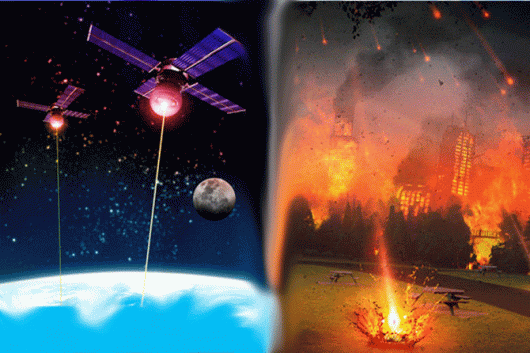
weaponizing space could become a classic case of trying to solve one problem while creating a much worse problem.
It’s time for arms control planning to address the issues raised by this drift toward militarization of space. Space is a place where billions of defense dollars can evaporate quickly and result in more threats about which to be concerned. China and Russia have been proposing mechanisms for space arms control at the United Nations for years; it’s time for the U.S. to cooperate in this effort.
Deploying weapons in space crosses a threshold that cannot be walked back.
The US should negotiate a ban on basing weapons in space, BY JOHN FAIRLAMB, — 02/04/21, https://thehill.com/opinion/national-security/536774-the-us-should-negotiate-a-ban-on-basing-weapons-in-space
The Biden administration is assembling a deep bench of personnel with experience negotiating arms control agreements and already has agreed with Russia to extend the New Start Treaty. It’s clear the administration intends to initiate another look at the 2018 Nuclear Posture Review and the massive buildup in nuclear weapons begun by the Trump administration. While it’s good that the Biden administration intends to resume negotiations to continue nuclear force reductions, the specter of placing weapons in space is another area that requires a serious arms control effort.
Now that separate space organizations have been established, major military commands are advocating to develop new capabilities. Pentagon buzzwords characterize space as a “contested domain” and some consider actual war-fighting in space to be inevitable. Some advocates argue that the U.S. should strive for technological superiority in space to ensure our dominance of that critical domain.
The history of technological advancement in weapons systems shows that any advantage gained usually lasts fewer than five years and guarantees a cycle of ever-increasing cost and new perceptions of threat. Already, there are weapons that can be targeted against space-based assets from non-space domains. Russia and China are believed to have deployed ground-based capabilities to attack satellites, and India joined this club last year by using a ground-based missile to bring down a satellite.
Although it isn’t clear how the Biden administration will shape space policy, during his confirmation hearing, Secretary of Defense Lloyd Austin seemed to signal a shift away from a more muscular approach and back to a focus on space resiliency and protecting U.S. space assets. As one analyst concluded, the language Austin used signals the Biden team wants to “start to lean away from … the pugilistic aspects of what’s been articulated [by the Trump administration].” Responding to a question about what his advice would be to the U.S. Space Command concerning military space operations, Austin stressed measures to protect U.S. assets that don’t include offensive options for taking the fight to adversaries. While not a fully articulated space policy, this is a welcome change of tone after the past few years of heavy breathing about waging war in space.
If the U.S. and other nations continue the current drift toward organizing and equipping to wage war in space, Russia, China and others will strive to improve capabilities to destroy U.S. space assets. Over time, this would greatly increase the threat to the full array of U.S. space-based capabilities. Intelligence, communications, surveillance, targeting and navigation assets already based in space, upon which the Department of Defense (DOD) depends for command and control of military operations, increasingly would be at significant risk. As a consequence, weaponizing space could become a classic case of trying to solve one problem while creating a much worse problem.
For example, buried in the DOD 2020 budget is $150 million for research into putting missile defense assets in space to attack enemy nuclear missiles in the boost phase. If the U.S. or another nation does deploy weapons in space, it would be the first country to do so and likely would be a disaster for strategic stability. To ensure the credibility of their nuclear deterrents, Russia, China and others could be expected to respond by deploying additional and new types of long-range ballistic missiles, as well as missiles employing non-ballistic trajectories that are harder to hit. Russia and China also would strive to improve their ability to destroy U.S. space-based interceptors, which would greatly increase the threat to the full array of U.S. space assets.
It’s time for arms control planning to address the issues raised by this drift toward militarization of space. Space is a place where billions of defense dollars can evaporate quickly and result in more threats about which to be concerned. China and Russia have been proposing mechanisms for space arms control at the United Nations for years; it’s time for the U.S. to cooperate in this effort.
In 2015, Frank Rose, assistant secretary for arms control, verification and compliance in the State Department, called for arms control in space at the Association of Southeast Asian Nations Regional Forum workshop on space security. But, he said the Obama administration opposed a 2008 Russian and Chinese proposal to ban all weapons in space because it was unverifiable, contained no prohibition on developing and stockpiling space arms, and did not address ground-based space weapons such as direct ascent anti-satellite missiles.
Instead of just criticizing others’ proposals, the U.S. should join in the effort and do the hard work of crafting a space arms control agreement that deals with the concerns we have and that can be verified. A legally binding international treaty banning the basing of weapons in space should be the objective.
Let’s be clear: Deploying weapons in space crosses a threshold that cannot be walked back. Given the implications for strategic stability, and the likelihood that such a decision by any nation would set off an expensive space arms race in which any advantage gained would likely be temporary, engaging now to prevent such a debacle seems warranted.
John Fairlamb, Ph.D., is a retired Army colonel with 45 years of government service, much of it in joint service positions formulating and implementing national security strategies and policies, including two four-year details in the Department of State and as the political-military affairs adviser for a major Army command. His doctorate is in comparative defense policy analysis.
America’s new strategy for space nuclear power pays little consideration to safety aspects
 America’s New Strategy for Space Nuclear Power, By Zhanna Malekos Smith. Wednesday, February 3, 2021
Among the flurry of executive orders and proclamations signed during his final weeks in office, President Trump issued two directives that have received little fanfare—about space. One directive concerns enhancing the cybersecurity of GPS satellites. The other is perhaps more exciting: It focuses on exploring Mars and the moon.
USA preparing for war in space
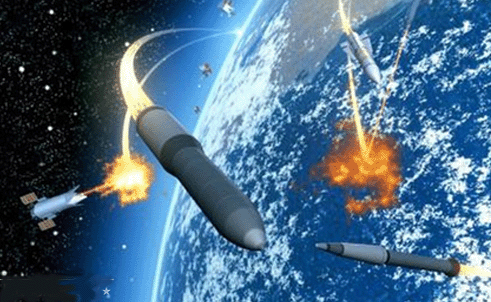
SPACECOM’s New Vision Targets ‘Space Superiority’
“We must have fully integrated offensive and defensive operations across all of our services, as well as our partners,” says Army Gen. James Dickinson, SPACECOM commander.
Breaking Defense, By THERESAHITCHENSon January 28, 2021 “……… “The intended audience is both internal and external,” Army Gen. James Dickinson told me in an interview yesterday. “Internally, the objective is to set the stage for SPACECOM personnel to develop and sustain a warfighting mindset necessary for our mission challenges in this new warfighting domain.”………
Dickinson’s eight-page manifesto, “Never A Day Without Space: Commander’s Vision” — provided to Breaking D — was briefed to SPACECOM today. It will be the “baseline” for future development of subordinate SPACECOM planning guidance, campaign plans, operational plans and other organizational documents required to running the 18-month-old Combatant Command, Dickinson explained.
The general’s stress on the need for both ‘offensive and defensive’ operations to achieve space superiority is not new, even if it makes some US security experts — including some Democrats in Congress — a bit queasy. It is one of the first things his predecessor, Air Force Gen. Jay Raymond who now heads the Space Force, made clear when SPACECOM was stood up in August 2019……..
Unified Command Plan and Missions
As Breaking D readers were first to learn, the revised UCP sent by Chairman of the Joint Chiefs of Staff Gen. Mark Milley to President Trump included a number of changes designed to delineate the role of SPACECOM — designated as a new geographic command with an area of responsibility (AOR) from 100 kilometers above the Earth to, well, infinity and beyond in theory — vice the 10 other Combatant Commands. These include giving SPACECOM the lead in deciding who gets priority use of communications satellites during combat, and what targets missile warning and space surveillance sensors are tasked to monitor. Trump signed the revised 2020 UCP Jan. 13, a spokesperson for the Joint Staff confirmed……..
Dickison elaborated during his conversation with Mitchell Institute Dean Dave Deptula that SPACECOM now has three primary missions: “One, our enduring, no-fail mission to enable warfighting operations in other domains. Two, our future mission as global SATCOM manager and global sensor manager. And three, our current new mission set compelling us to fight and win in the space domain in order to protect and defend our interests there.
“Additionally, this warfighting domain is growing, and this AOR is by far the biggest and is getting bigger, each day,” he added………
The ‘protect and defend’ mission, which would include any offensive action in a conflict, is carried out by the Joint Task Force Space Defense, commanded by Brig. Gen. Tom James. ………
Despite the new UCP, however, Dickinson was coy with me about how exactly the decisions about who supports whom when are actually made, and at what level of the US military hierarchy. “Command decisions reside with the Combatant Commander,” he said, although “many of those decisions may be made well above us depending on the situation.”
Some of this, he said, is because such details remain classified. However, a number of sources intimately familiar with these issues tell me that a big problem is that there simply hasn’t yet been any agreements codified on how those decisions will be made. The hope is that the impending Joint Warfighting Concept, in which space plays a central role, will go some ways toward clarifying those questions………… https://breakingdefense.com/2021/01/spacecoms-new-vision-targets-space-superiority/
The aerospace industry – the goal is weaponry and global dominance
|
Keep Space for Peace! Save the Heavens fro!m Hegemony https://www.womenagainstmilitarymadness.org/articles/2020/12/22/keep-space-for-peace-save-the-heavens-from-hegemony Bruce K. Gagnon
Recently we learned that the aerospace industry is pushing to turn a former naval air station in Brunswick, Maine, into a spaceport. Promising lots of “high tech” jobs, a bill is being pushed in Augusta, our capital, by some of the most “progressive” legislators in the state. Similarly, we are hearing from many other states where launch complexes are being promoted – from Hawaii to New Mexico to Alaska – that the industry wants some of the most pristine places on Earth to become spaceports. Why? A spaceport in Kodiak Island, Alaska (locals call it “Spacepork”), was built some years ago in spite of overwhelming opposition by local residents. They were promised that it would be used only for civilian launches. So far, all the launches at Kodiak have actually been for Pentagon (and Israeli) space-weapons technology tests. We’ve been hearing for several years now that new companies formed by tech-industry billionaires Elon Musk (whose projects include Tesla and SpaceX) and Jeff Bezos (Amazon, Blue Orbit) plan to launch as many as 35,000 mini-sats (satellites) into orbit. Imagine the enormous hole these polluting launches will punch into the ozone layer. The plan is to have a satellite orbiting over the head of every person on Earth 24 hours a day, making it possible for the new 5G wireless technology system to be profitable. Many questions are being raised about the military (dual-use) applications of these satellites as well. Space Force Earlier this year, Trump was able to “stand up” his new high-tech legacy branch of the military, called the Space Force. Congress was overwhelmingly in favor – that means both parties supported it; the only thing the Democrats (who could have stopped it cold in the House of Representatives) wanted to change was the name ¾ to “Space Corps.” They surrendered on that as well. When the new leaders of the Space Force speak about it, they keep using the word “lean” to describe the new service branch. They want to make it sound as though it won’t be a “fiscal burden” to the nation, especially at a time when we have more unemployment than during the Great Depression. But facts are facts, and I can testify that the aerospace-industry publications have been bragging about since the 1980s when Ronald Reagan first proposed Star Wars, that this would be the largest industrial project in the history of the planet. So $15 billion is just the foot in the door. Where will the funds come from to pay for this? Our entitlement programs ¾ Social Security, Medicare, Medicaid, and what little is left of the social safety net –– are on the chopping block to be sacrificed to the aerospace industry. During his presidency, Trump announced that the U.S. rejects the United Nations Outer Space and Moon Treaties that declare the planetary bodies are the “province of all humankind” – meaning that no nation, corporation, or individual can claim ownership of them. Thus the way is open for a new gold rush to grab the planets for resource extraction. And, if Biden were to continue Obama’s legacy, the way will be paved. The Real Missions of Space Force In 2015, Obama signed the U.S. Commercial Space Launch Competitiveness Act into law. The act grants companies the rights to whatever they manage to pluck out of these extraterrestrial bodies. Effectively an extension of capitalism into space, the bill is one of the few during Obama’s presidency that received widespread support from the GOP as well as from the Democrats, because apparently nothing screams bipartisanship louder than asteroid mining. (Asteroids are rocky and metallic objects that orbit the sun but are smaller than planets.)[1] “This is the single greatest recognition of property rights in history,” said Eric Anderson, a founder of Planetary Resources, Inc., a company whose mission it is to mine asteroids. “This legislation establishes the same supportive framework that created the great economies of history, and will encourage the sustained development of space.” I’ve long believed that the Space Force (and before that the Space Command) will have two primary missions: first, to give the U.S. and its Western capitalist allies “control and domination” of Earth; and secondly, the Space Force will be given the task to create the technologies to “control and dominate” the pathway on and off our sacred Mother Earth. In 1989, the U.S. Congress published an internal study called “Military Space Forces: The Next 50 Years.” In this study, the congressional staffer who wrote it explained the need to control the pathway between the Earth and the Moon. He suggested that armed space stations on either side of the Moon would allow the Pentagon to seize the “Earth-Moon gravity well.” He wrote: “Armed forces might lie in wait at that location to hijack rival shipments on return.” So this plan has been in the works for many years – in fact, since a former Nazis first briefed Congress back in 1958. From Nazi Rocket Science to the U.S. Militarizing Space Program Walter Dornberger was Hitler’s head man in charge of his World War II era V-1 and V-2 rocket program. He was the staff link between rocket scientist Wernher von Braun and Hitler. Dornberger, like von Braun and 1,600 other Germans, was smuggled into the U.S. after the war in the secret military program called Operation Paperclip. Speaking at a congressional hearing in 1958, Dornberger insisted that America’s first space priority ought to be to “conquer, occupy, keep and utilize space between the Earth and the Moon.” There has been unanimity in the halls of Congress since Dornberger’s testimony – both parties have faithfully kept the funding for the militarized space program alive and growing. Dornberger would be happy today to see that his Nazi prophecy has largely come to fruition. International Treaties and an Achilles Heel The U.S. has been leading the way to militarize and weaponize space since the beginning of WW II. For a while the former Soviet Union was in the game – until its collapse in 1991. Neither Russia nor China could keep up with the U.S. in the ensuing years, and they continually begged the U.S. to join them in negotiating a treaty to ban all weapons in space – in other words, close the door to the barn before the horse gets out. During Republican and Democrat administrations since Bill Clinton, the response to Moscow and Beijing was the same from Washington – NO. So Russia and China slowly but steadily have moved forward since the early 1990s and have begun to close the space gap – always continuing to urge the creation of a space-weapons ban treaty. But Washington still refuses to even consider it. In fact, the U.S. has gone in the opposite direction of international treaties under Trump – pulling out of the Anti-Ballistic Missile Treaty (ABM), Intermediate-Range Nuclear Forces Treaty (INF), and the Iran Nuclear Deal. Will the U.S. under Biden renew the Strategic Arms Reduction Talks (START), which run out in 2021? It’s all really quite simple – the U.S. has not wanted to be bound by any treaties that limit its goal for “control and domination.” One could say the U.S. has become a renegade or pirate nation controlled by the soulless corporate agenda, which is all about power and greed. This all makes the job of the Global Network[2] terribly difficult. Since our founding in 1992 we’ve been working hard to build an international constituency to keep space for peace. The corporate agenda is determined to block any progress toward that goal. But I’ve always maintained that like everything else, the aerospace industry and its Star Wars project has an Achilles heel. It’s money. The current global virus pandemic is only bringing this reality to bear as never before. We Must Stop an Arms Race in Space! If we hope to beat this insane and provocative plan, then we must starve the beast. We can do that by bringing our national priorities down to earth and fighting for social progress – for programs like Medicare for All and funding to deal with our real problem today: climate crisis. Please help us beat the expensive and dangerous Space Force by demanding our government provide programs that honor life on this lovely planet. Best wishes to all of you. Keep your spirit strong! ~ Bruce K. Gagnon is coordinator of the Global Network Against Weapons & Nuclear Power in Space (keepspace4peace.org) and lives in Bath, Maine. He began working on space issues in 1982. Endnotes [1] Definition from solarviews.com [2] Global Network Against Weapons & Nuclear Power in Space |
|
|
As pandemic cripples America, Donald Trump orders funding for military Small Nuclear Reactors in space

|
Trump orders DoD to explore use of nuclear power for space, Defense News,
By: Aaron Mehta 14 Jan 21, WASHINGTON — In the waning days of his administration, U.S. President Donald Trump has signed an executive order aimed at pushing the Department of Defense toward quickly developing and producing small nuclear reactors for military use — and to see if they could be used by military space vehicles.
The order, signed Jan. 5 and posted publicly Jan. 12, is not the first time the value of nuclear power for military operations has been studied. There is a long history of the Pentagon considering the issue, which proponents believe could alleviate the department’s massive logistics challenge of keeping fuel moving around the world……… In terms of terrestrial efforts, the executive order requires the defense secretary to, within 180 days, “establish and implement a plan to demonstrate” a micro-reactor at a domestic military installation — in other words, setting up an actual test of a nuclear reactor at a U.S. military location. However, that doesn’t mean the first test will be on a military base. One location to keep an eye on is the Nevada National Security Site, a Department of Energy location roughly 65 miles from Las Vegas……. Noted Hans Kristensen of the Federation of American Scientists, “the signing of this at the very last minute of the Trump administration suggests someone is concerned [President-elect Joe Biden] might not support the program.” Specific to space, the order calls for the defense secretary, in consultation with the secretaries of state, commerce and energy as well as the NASA administrator, to “determine whether advanced nuclear reactors can be made to benefit Department of Defense future space power needs” and to “pilot a transportable micro-reactor prototype.” In addition, the order directs an analysis of alternatives for “personnel, regulatory, and technical requirements to inform future decisions with respect to nuclear power usage” as well as “an analysis of United States military uses for space nuclear power and propulsion technologies and an analysis of foreign adversaries’ space power and propulsion programs.” ……… While the order speeds up the timetable for a test of a nuclear reactor at a military installation, the idea of using nuclear power is hardly a new one for the DoD. In fact, the Pentagon currently has two different development tracts for small nuclear reactors. The first is “Project Pele,” an effort to create a small mobile nuclear reactor in the 1-5 MWe power range, being run out of the Strategic Capabilities Office. In March 2020, the department awarded three companies a combined $39.7 million to start design work for Project Pele, with plans to select one firm in 2022 to build and demonstrate a prototype. The second effort is run through the office of the undersecretary of acquisition and sustainment. That effort, ordered in the 2019 National Defense Authorization Act, involves a pilot program aiming to demonstrate the efficacy of a small nuclear reactor, in the 2-10 MWe range, with initial testing at a Department of Energy site around 2023. If all goes well, the goal is to have a permanent small nuclear reactor on a military base around 2027. Even if all those timelines are hit, it is unlikely microreactors could proliferate quickly throughout the military………. https://www.defensenews.com/smr/nuclear-arsenal/2021/01/13/trump-orders-dod-to-explore-use-of-nuclear-power-for-space-systems/ |
|
Never mind health spending: USA aims to be Topp in Space Race

|
U.S. Goes All In On Nuclear Power In Space Race With China. Oil Price.com, By Tsvetana Paraskova – Jan 02, 2021, The United States is doubling down on nuclear power and propulsion systems in the new space race with China. The Trump Administration unveiled in the middle of December a National Strategy for Space Nuclear Power and Propulsion, the so-called Space Policy Directive-6, aiming to develop and use space nuclear power and propulsion (SNPP) systems to achieve scientific, national security, and commercial objectives.In the new space race between Western nations and China, the United States is betting on developing and demonstrating the use of new SNPP capabilities in space.
The strategy on nuclear power and propulsion sets a goal for the U.S. to develop uranium fuel processing capabilities that enable fuel production that is suitable to lunar and planetary surfaces and in-space power, nuclear electric propulsion (NEP), and nuclear thermal propulsion (NTP) applications. Another objective is to “demonstrate a fission power system on the surface of the Moon that is scalable to a power range of 40 kilowatt-electric (kWe) and higher to support a sustained lunar presence and exploration of Mars.” Collaboration with the private sector is also a pillar of the nuclear power and propulsion strategy…….. As part of the U.S. strategy, NASA’s near-term priority will be to mature and demonstrate a fission surface power system on the Moon in the late 2020s, in collaboration with the Department of Energy and industry. Such a system could provide power for sustainable lunar surface operations and test the potential for use on Mars. Earlier in 2020, the Department of Energy said that NASA plans to build a base and a nuclear power plant on the Moon by 2026 and is inviting proposals from companies ready to take on the challenge. The plan will involve the construction of a 10-kW class fission surface power system to be used for demonstrative purposes. The plant is to be manufactured and assembled on Earth and then shipped to the Moon on a launch vehicle. This vehicle will take the plant to Moon orbit, from where a lander will take it to the surface of the satellite. The demonstration will continue for one year, and if successful, it could open the door to other missions on both the Moon and Mars. “Space nuclear power and propulsion is a fundamentally enabling technology for American deep space missions to Mars and beyond. The United States intends to remain the leader among spacefaring Nations, applying nuclear power technology safely, securely, and sustainably in space,” Scott Pace, Deputy Assistant to the President and Executive Secretary of the National Space Council, said in a statement, carried by SpacePolicyOnline.com. The U.S. should continue to enable American entrepreneurs and innovators to further bolster its commercial space industry to continue leading the space race, U.S. Secretary of Commerce Wilbur Ross wrote in an op-ed in December. “Competition is increasing, especially between Western nations and China. Our advantage in this new space race is the U.S. commercial space industry. It is critical that we continue to enable American entrepreneurs and innovators, lest we miss the opportunity and potentially lose the race,” Secretary Ross said. https://oilprice.com/Energy/Energy-General/US-Goes-All-In-On-Nuclear-Power-In-Space-Race-With-China.html |
|
|
The insanity of nuclear power in space
 The Big Push for Nukes in Space, https://www.counterpunch.org/2020/12/15/the-big-push-for-nukes-in-space/?fbclid=IwAR1rGf0qomJlTKuhqCOsTTl3EkKOQzxf2QxOJ-3n0MnxGWNLvybgxXPovTU BY KARL GROSSMAN.– 15 Dec 20, Last week a SpaceX rocket exploded in a fireball at the SpaceX site in Texas. “Fortunately,” reported Lester Holt on NBC TV’s Nightly News, “no one was aboard.”
But what if nuclear materials had been aboard?
The nuclear space issue is one I got into 35 years ago when I learned—from reading a U.S. Department of Energy newsletter—about two space shuttles, one the Challenger which was to be launched the following year with 24.2 pounds of plutonium aboard.
The plutonium the shuttles were to carry aloft in 1986 was to be used as fuel in radioisotope thermoelectric generators—RTGs—that were to provide a small amount of electric power for instruments on space probes to be released from the shuttles once the shuttles achieved orbit.
The plutonium-fueled RTGs had nothing to do with propulsion.
I used the U.S. Freedom of Information Act to ask what would be the consequences of an accident on launch, in the lower or upper atmosphere—and what about the dispersal of deadly plutonium. A few years earlier, I wrote Cover Up: What You Are Not Supposed to Know About Nuclear Power, so I was well familiar with plutonium, considered the most lethal radioactive substance.
For 10 months there was a stonewall of challenges to my FOIA request by DOE and NASA. Finally, I got the information, heavily redacted, with the claim that the likelihood of a shuttle accident releasing plutonium was “small.”
Said one document: “The risk would be small due to the high reliability inherent in the design of the Space Shuttle.” NASA put the odds of a catastrophic shuttle accident at one-in-100,000.
Then, on January 28, 1986 the Challenger blew up.
It was on its next mission—in May 1986—that it was slated to have a plutonium-fueled RTG aboard.
From a pay phone in an appliance store –amid scores of TV sets with that horrible video of the Challenger exploding—I called The Nation magazine and asked the folks there whether they knew that the next launch of the Challenger was to be a nuclear mission. They didn’t.
They had me write an editorial that appeared on The Nation’s front page titled “The Lethal Shuttle.” It began, “Far more than seven people could have died if the explosion that destroyed Challenger had occurred during the next launch…”
And I got deeper and deeper into the nukes-in-space issue—authoring two books, one The Wrong Stuff, presenting three TV documentaries, writing many hundreds of newspaper and magazine articles and speaking widely on the issue.
NASA, incidentally, later in 1986, drastically increased the odds of a catastrophic shuttle accident to one-in-76. It turned out the one-in-100,000 estimate was based on dubious guessing.
I found that accidents involving the use of nuclear power in space is not a sky-is-falling threat. In the then 26 U.S. space nuclear shots, there had been three accident, the worst in 1964 involving a satellite powered by a SNAP 9-A radioisotope thermoelectric generator fueled with plutonium.
The satellite failed to achieve orbit, broke up in the atmosphere as it came crashing back down to Earth, its plutonium dispersing as dust extensively on Earth. Dr. John Gofman, an M.D. and Ph.D., professor of medical physics at the University of California at Berkeley, formerly associate director of Lawrence Livermore National Laboratory, author of Poisoned Power and involved in early studies of plutonium, long pointed to the SNAP 9-A accident as causing an increase in lung cancer on Earth.
Today the use of nuclear in space is being pushed harder than ever.
“US Eyes Building Nuclear Power Plants for Moon and Mars,” declared the headline this July of an Associated Press dispatch. “US Eyes Building Nuclear Power Plants for Moon and Mars”.
As Linda Pentz Gunter, editor at Beyond Nuclear International, recently wrote here on CounterPunch, “Yet undeterred by immorality and expense, and apparently without the slightest concern for the radioactive dirt pile these reactors will produce, NASA and the Department of Energy are eagerly soliciting proposals.” https://www.counterpunch.org/2020/10/21/nukes-on-the-moon/
In July, too, the White House National Space Council issued a strategy for space exploration that includes “nuclear propulsion methods.” “US Ramps Up Planning for Space Nuclear Technology”
General Atomics Electromagnetic Systems has come out with a design for a nuclear propulsion reactor for trips to Mars.
Nuclear propulsion, its promoters are saying, would get astronauts to Mars quicker.
Shouted the headline in Popular Mechanics last month: “The Thermal Nuclear Engine That Could Get Us to Mars in Just 3 Months.”
And Elon Musk, founder and CEO of Space X, has been touting the detonation of nuclear bombs on Mars to, he says, “transform it into an Earth-like planet.” https://www.independent.co.uk/life-style/gadgets-and-tech/news/elon-musk-mars-nuke-humans-live-mirrors-spacex-a9072631.html
As Business Insider explains, Musk “has championed the idea of launching nuclear weapons just over Mars’ poles since 2015. He believes it will help warm the planet and make it more hospitable for human life.”
As space.com says: “The explosions would vaporize a fair chunk of Mars’ ice caps, liberating enough water vapor and carbon dioxide—both potent greenhouse gases—to warm up the planet substantially, the idea goes.” https://www.space.com/elon-musk-nuke-mars-terraforming.html
It’s been projected that it would take more than 10,000 nuclear bombs to carry out the Musk plan.
The nuclear bomb explosions would also would render Mars radioactive.
The nuclear bombs would be carried to Mars on the fleet of 1,000 Starships that Musk wants to build—like the one that blew up this week.
SpaceX is selling T-shirts emblazoned with the words “Nuke Mars.”
Beyond the this completely insane plan to ruin Mars, as on Earth, solar energy can provide all the power needed for would-be settlements on Mars and the Moon. Continue reading
Trump Signs Directive to Bolster Nuclear Power in Space Exploration
|
Trump Signs Directive to Bolster Nuclear Power in Space Exploration, One goal laid out in the new policy is the testing of a fission power system on the moon by the mid- to late 2020s, Scientific American By Mike Wall, SPACE.com on December 21, 2020 Nuclear power will be a big part of the United States’ space exploration efforts going forward, a new policy document affirms. President Donald Trump on Wednesday (Dec. 16) issued Space Policy Directive-6 (SPD-6), which lays out a national strategy for the responsible and effective use of space nuclear power and propulsion (SNPP) systems. “Space nuclear power and propulsion is a fundamentally enabling technology for American deep-space missions to Mars and beyond,” Scott Pace, deputy assistant to the president and executive secretary of the National Space Council, said in an emailed statement Wednesday. “The United States intends to remain the leader among spacefaring nations, applying nuclear power technology safely, securely and sustainably in space.”…….. NASA and the U.S. Department of Energy are working together on a fission-reactor project called Kilopower, which could provide juice for crewed outposts on the moon and Mars. …….. SPD-6 is the sixth space policy directive signed by President Trump, as its name suggests. SPD-1 officially instructed NASA to return astronauts to the moon to help prepare for crewed Mars missions; SPD-2 eased regulations on the private spaceflight industry; SPD-3 aimed to help with space-traffic management; SPD-4 directed the Department of Defense to establish the U.S. Space Force; and SPD-5 laid out a cybersecurity policy for U.S. space systems. As that list indicates, President Trump has been quite active in the space-policy domain. He also resurrected the National Space Council, which had been dormant since the early 1990s. And just last week, he issued a new national space policy, which aims to bolster national security and American leadership in space, among other goals. https://www.scientificamerican.com/article/trump-signs-directive-to-bolster-nuclear-power-in-space-exploration/ |
|
USA to turn the moon into a nuclear weapons site
|
US to turn moon into ‘nuclear weapons site’
By Huang Lanlan Source: Global Times: 2020/12/18, The US ambition to build a nuclear power plant on the moon by 2027, which may contribute to future lunar military projects, shows it seeks space supremacy regardless of the damage and dangers it may cause to people, Chinese experts on military and international relations said.
Establishing a nuclear power plant on the moon by the end of 2027 was included in a number of specific goals in a memorandum signed by US President Donald Trump on Wednesday, which is known as Space Policy Directive 6 (SPD-6). The plant would “support a sustained lunar presence and exploration of Mars,” SPD-6 said. Military purposes are likely to be behind the establishment, Chinese military expert and commentator Song Zhongping said. By setting up a nuclear power plant, which includes exploiting nuclear materials and building equipment like nuclear reactors and uranium enrichment facilities, the US can theoretically turn the moon “into a production site of nuclear weapons,” Song told the Global Times Friday. The moon is rich in helium-3, a material that could be used as fuel to produce energy by nuclear fusion, Song said. In the name of building a nuclear power plant, the US may directly exploit this material on the moon and then construct nuclear fuel-processing plants there, he said. The plan once again shows American unilateralism in space, which runs counter to the will of the international community in terms of lunar issues, Li Haidong, a professor at the Institute of International Relations of the China Foreign Affairs University, said………. As Chang’e-5 successfully completed its lunar trip on Thursday, the signing of SPD-6 also shows the US’ intention of dragging China into a space race, trying to divert China’s attention to an endless consumption of national resources for the race from improving its economy and people’s livelihood, Li said. This is similar to what the US did to the Soviet Union in the 1980s under Ronald Reagan’s “Star Wars” program, he noted.
Its goal of building a lunar nuclear power plant, nonetheless, may hardly be achieved on time by 2027 as the US is stuck in domestic trouble and chaos, such as the ongoing COVID-19 pandemic, Li said. https://www.globaltimes.cn/content/1210357.shtml |
|
In midst of pandemic crisis, more U.S. tax-payer money to go to nuclear power in space
White House Issues Space Policy Directive on Space Nuclear Power and Propulsion. Via Satellite, By Rachel Jewett | December 17, 2020
SPD-6 establishes that the U.S. government will pursue a roadmap for federally-supported space nuclear power and propulsion activities.
Nukes in space
Space exploration – to lead to dangerous nuclear-armed totalitarian societies
Professor warns space exploration will give rise to totalitarian societies equipped with nuclear weapons – but some say his forecast is too pessimistic
- Daniel Deudney is a political science professor at Johns Hopkins University
- He recently published a book titled ‘Dark Skies’ that talks about space expansion
- The text warns that space settlements could become totalitarian societies
- Populations and resources will need to be controlled for survival
- Deudney notes that nuclear weapons will become the gold standard in space
- He fears that the cosmic battles will eventually make their way to Earth
By STACY LIBERATORE FOR DAILYMAIL.COM, 28 October 2020 Space agencies across the world are working tirelessly to design the best ships and technologies for the chance to claim a stake of the final frontier for their country.
Although it may seem like an act of national pride, a professor from Johns Hopkins University warns that space expansion may lead to the extinction of humanity, suggesting it should not be attempted at all.
Daniel Deudney recently published a book titled ‘Dark Skies’ that examines space expansionism through geopolitics revealing cosmic habitats could spark totalitarian empires.
The political science professor also notes that if these settlements stretch across the solar system, nuclear weapons will become the gold standard in war, along with using asteroids to destroy enemy planets – but other experts feel these arguments are ‘too pessimistic.’
‘I argue that the consequences of what has actually happened in space are much less positive than space enthusiasts and many others believe,’ reads ‘Dark Skies.’
‘My case for this darker net assessment of actual space activities centers on the role of space activities in making nuclear war more likely.’
‘In sum, this book argues that the large-scale expansion of human activities into space, past and future, should join the lengthening list of catastrophic and existential threats to humanity, and that the ambitious core of space expansionism should be explicitly relinquished.’
The book’s release comes at a time when many countries are muscling up to head into space.
The US announced a new branch of its armed forces called the US Space Force in 2019, which ‘is designed to protect the interests of the United States in space, deter aggression in the final frontier and conduct prompt and sustained space operations.’
However, Deudney’s concludes that these countries’ efforts will come with serious consequences.
The professor used geopolitics for this work, which studies ‘the practice of states controlling and competing for territory’ – and in this case, space.
Deudeny also explains that he is not opposed to using space in ways that will benefit Earth and is not on a mission to ‘defund space’ by eliminating the many robots and satellites that currently patrol the area.
He is looked at ‘the political and military potential of a system-spanning human civilization only increases the chances of totalitarianism and the deliberate or accidental extinction of human society,’……..
Along with using objects in space, governments have revealed details over the past years for launching nuclear weapons into the final frontier.
NASA is working on a method that would send a nuclear bomb into space aboard a rocket to destroy an asteroid heading towards Earth.
Earlier this year, the US raised concerns that China or Russia may soon detonate a nuclear weapon in space ‘to fry the electronics’ of spacecraft and ‘indiscriminately’ take out satellite.
Although neither of these are a reality, the technology may be in the works and could be used to wage space war…… https://www.dailymail.co.uk/sciencetech/article-8885599/Professor-warns-space-exploration-spark-totalitarian-societies-equipped-nuclear-weapons.html
The very real risks of radiation accidents on Earth, from nuclear reactors in space
|
Ensuring Safety on Earth from Nuclear Sources in Space, Mirage News, 28 Oct 20, In early 1978, the world steeled itself as gravity pulled an uncontrolled satellite powered by a small reactor fueled with 45 kg of highly enriched uranium towards Earth. Since COSMOS 954’s impact point could not be predicted accurately, emergency responders had to assume that an inhabited area could be contaminated, and they feverishly prepared equipment and response procedures. This was the world’s first experience with the uncontrolled re-entry of a space object with radioactive materials. The radioactive materials launched into Earth orbit, or traveling in spacecraft, can potentially harm people or the environment in case of an accident and for which strict emergency response planning and effective information sharing at the international level are required. This was the topic of an IAEA webinar held last week for emergency response experts.
In the majority of nuclear and radiological emergencies there will be enough information to know the location of a potential release of radioactivity, but with space activities the exact location of impact cannot always be predicted. “The IAEA has developed arrangements to share information about any pending nuclear-powered satellite re-entry. Using the data, countries can quickly respond to protect the public and the environment from the radioactivity that might spread as a result of an accident,” said Frederic Stephani, Incident and Emergency Assessment Officer in the IAEA, during the webinar. COSMOS 954 eventually crashed in the Northwest Territories in Canada on 24 January 1978, scattering radioactive debris over a 600 km footprint and spreading radioactivity over 100 000 km2. The clean-up operation, called “Operation Morning Light,” jointly coordinated by Canada and the US, recovered 80 radioactive items…… accidents can occur during the launch, operation and end-of-service mission phases of space nuclear power source applications. These accidents could expose the nuclear power source to extreme physical conditions leading to a radioactive release into the Earth’s atmosphere. …. https://www.miragenews.com/ensuring-safety-on-earth-from-nuclear-sources-in-space/ |
|
1 This Month
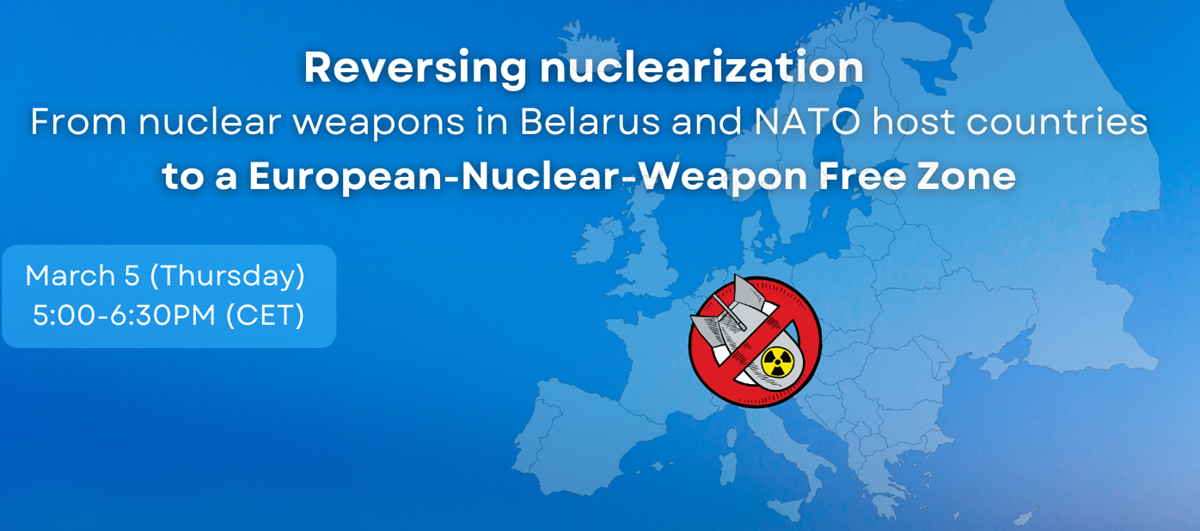
5 March -Online – Reversing nuclearization:
From nuclear weapons in Belarus and NATO host countries to a European-Nuclear-Weapon Free Zone
11am-12:30pm Eastern Time USA / 5pm-6:30pm CET

of the week – Advocating for a
nuclear free beach – https://www.samuellawrencefoundation.org/
The Samuel Lawrence Foundation advocates for a Nuclear Waste Free Beach at San Onofre, join us and take action!

10 March A LIVE WEBINAR THE REAL EFFECTS OF NUCLEAR POWER
What the Industry Isn’t Telling Us
1:00 PM Mountain, 2 pm Central, 3 pm Eastern. Live on the Keepers of the Water Facebook page

18 March Webinar @ 1 PM EST: An Assessment of SMR Projects: The Case of Canada
register for the zoom:
https://us02web.zoom.us/webinar/register/WN_o8BIIOUvQ2ONJR1nta65DQ#/registration

of the week – STOP SMALL MODULAR REACTORS IN CANADA
To see nuclear-related stories in greater depth and intensity – go to https://nuclearinformation.wordpress.com
-
Archives
- March 2026 (51)
- February 2026 (268)
- January 2026 (308)
- December 2025 (358)
- November 2025 (359)
- October 2025 (376)
- September 2025 (258)
- August 2025 (319)
- July 2025 (230)
- June 2025 (348)
- May 2025 (261)
- April 2025 (305)
-
Categories
- 1
- 1 NUCLEAR ISSUES
- business and costs
- climate change
- culture and arts
- ENERGY
- environment
- health
- history
- indigenous issues
- Legal
- marketing of nuclear
- media
- opposition to nuclear
- PERSONAL STORIES
- politics
- politics international
- Religion and ethics
- safety
- secrets,lies and civil liberties
- spinbuster
- technology
- Uranium
- wastes
- weapons and war
- Women
- 2 WORLD
- ACTION
- AFRICA
- Atrocities
- AUSTRALIA
- Christina's notes
- Christina's themes
- culture and arts
- Events
- Fuk 2022
- Fuk 2023
- Fukushima 2017
- Fukushima 2018
- fukushima 2019
- Fukushima 2020
- Fukushima 2021
- general
- global warming
- Humour (God we need it)
- Nuclear
- RARE EARTHS
- Reference
- resources – print
- Resources -audiovicual
- Weekly Newsletter
- World
- World Nuclear
- YouTube
-
RSS
Entries RSS
Comments RSS
 nuclear-news