Small modular reactors aren’t the energy answer for Canada’s remote communities and mines

The energy costs associated with small modular reactors exceed those of diesel-based electricity. Policy-makers should focus on renewables.
by Sarah Froese, Nadja Kunz, M. V. Ramana August 26, 2020 https://policyoptions.irpp.org/magazines/august-2020/small-modular-reactors-arent-the-energy-answer-for-remote-communities-and-mines/
A new type of theoretical nuclear power plant design called small modular reactors (SMRs) has been in the news of late. Earlier this year, at the 2020 Canadian Nuclear Association conference, Minister of Natural Resources Seamus O’Regan announced that the federal government will release an SMR Action Plan this fall. Ontario, New Brunswick and Saskatchewan have announced their backing and possibly some financial support for the development of these reactors.
Promoters suggest that remote communities and off-grid mining operations are promising markets for SMRs in Canada. These communities and mines pay a lot for electricity because they are reliant on diesel generators, and transporting and storing diesel to these locations can be very expensive. Thus, supporters hope, SMRs might be a way to lower electricity costs and carbon dioxide emissions.
We examined this proposition in detail in a recently published paper and concluded that this argument has two problems. First, the electricity that SMRs produce is far more expensive than diesel-based electricity. Second, even ignoring this problem, the total demand for electricity at these proposed markets is insufficient to justify investing in a factory to manufacture the SMRs.
SMRs have been proposed as a way to deal with many problems associated with large nuclear power plants, in particular the high costs of construction, running to tens of billions of dollars. SMR designs have much in common with large nuclear reactors, including, most basically, their reliance on nuclear fission reactions to produce electricity. But they also differ from large nuclear reactors in two ways. First, they have electricity outputs of less than 300 megawatts (MW) and sometimes as low as a few MW, considerably lower than the outputs of 700 to 1500 MW typical of large nuclear reactors. Second, SMR designs use modular means of manufacturing, so that they need only be assembled, rather than fully constructed, at the plant site. While large reactors that have been constructed in recent years have also adopted modular construction, SMR designers hope to rely more substantially on these techniques.
A standard metric used to evaluate the economics of different energy choices is called the levelized cost of energy (LCOE). We calculated that the LCOE for SMRs could be over ten times greater than the LCOE for diesel-based electricity. The cheapest options are hybrid generation systems, with wind or solar meeting a part of the electricity demand and diesel contributing the rest.
Why this high cost? The primary problem is that the small outputs from SMRs run counter to the logic of economies of scale. Larger reactors are more cost-efficient because they produce more electricity for each unit of material (such as concrete and steel) they use and for the number of operators they employ. SMR proponents argue that they can make up for this through the savings from mass manufacture at factories and the learning that comes with manufacturing many reactors. The problem is that building a factory requires a sizable market, sometimes referred to as an order book. Without a large number of orders, the investment needed to build the factory will not be justified.
We estimated the potential market for SMRs at remote mines and communities in Canada. We drew primarily upon two databases produced by Natural Resources Canada regarding mining areas and remote communities. As of 2018, there were 24 remote mining projects that could be candidates for SMR deployment within the next decade. Currently, these projects use diesel generators with a total installed capacity of 617 MW. For remote communities, we calculated a fossil fuel (primarily diesel) generation capacity of 506 MW. But many of these communities had demands that were too low for even the smallest-output SMR under review at the Canadian Nuclear Safety Commission.
Even if all these potential buyers want to adopt SMRs for electricity supply, without regard to the economic or noneconomic factors weighing against the construction of nuclear reactors, the combined demand would likely be much less than 1000 MW. The minimum demand required to justify the cost of producing SMRs would be three to seven times higher.
Furthermore, we concluded that the economics of SMRs don’t compete when compared with other alternatives. The cost of electricity from SMRs was found to be much higher than the cost of wind or solar, or even of the diesel supply currently used in the majority of these mines and communities.
Of course, our estimates for the LCOEs of different sources are dependent on various assumptions. We tried varying these assumptions within reasonable limits and found that the main result — that electricity from SMRs is far more expensive than the corresponding costs of generating electricity using diesel, wind, solar or some combination thereof — remains valid. All else being equal, the assumed capital cost of constructing a SMR would have to decline by over 95 percent to be competitive with a wind-diesel hybrid system. The limited experience with SMRs that are being built around the world suggests that construction costs will be higher, not lower, than advocates promise.
Meanwhile, renewables and storage technologies have seen substantial cost declines over the past decades. Recent estimates place wind, solar and hybrid systems at costs competitive with diesel power. Successful demonstrations suggest that renewable hybrid applications are becoming increasingly feasible for heavy industry, and the implementation of numerous numerous projects in northern communities suggests a high level of social acceptance. Many northern and, in particular, Indigenous communities have an interest in self-determined decision-making and maintaining a good relationship with the land. In June 2019, for example, the Anishinabek Chiefs-in-Assembly, representing 40 First Nations across Ontario, unanimously expressed opposition to SMRs. Grand Council Chief Glen Hare announced that the Anishinabek Nation is “vehemently opposed to any effort to situate SMRs within our territory.”
Instead of focusing on SMRs, policy-makers should bolster support for other renewable generation technologies as key mechanisms to reduce carbon emissions and align with community values.
A Closer Look at Two Operational Small Modular Reactor Designs
There are literally dozens of small modular reactor (SMR) and microreactor designs being developed by different companies around the world, and some of the work has been going on for decades. Yet, only two designs have actually been built and put into commercial operation. POWER takes a closer look at both of them.
Power, by Aaron Larson 1 May 24
Many nuclear power supporters have long thought small modular reactors (SMRs) would revolutionize the industry. Advocates expect SMRs to shorten construction schedules and bring costs down through modularization and factory construction. They often cite numerous other benefits that make SMRs seem like no-brainers, and yet, only two SMR designs have ever been built and placed in commercial operation.
The International Atomic Energy Agency (IAEA) publishes booklets biennially on the status of SMR technology. In the IAEA’s most recent booklet, it notes 25 land-based water-cooled SMRs and another eight marine-based water-cooled designs are under development globally. It also lists 17 high-temperature gas-cooled SMRs, eight liquid-metal-cooled fast-neutron-spectrum SMRs, 13 molten-salt SMRs, and 12 microreactors. If you do the math, that’s 83 SMR designs under development, but only the KLT-40S and HTR-PM are actually operational.
KLT-40S
The KLT-40S is a pressurized water reactor (PWR) that was developed in Russia. It is an advanced version of the KLT-40 reactor, which has been used in nuclear-powered icebreakers. The first KLT-40S units, and, to date, the only two of these units to enter commercial operation, were deployed in the Akademik Lomonosov—the world’s first purpose-built floating nuclear power plant (FNPP, Figure 1 on original).
Main Design Features.………………………………………………………………………………………………………….
Deployment Details.…………………………….
Construction and testing of the FPU was completed in 2017 at the Baltic shipyard. In May 2018, the vessel was towed 4,000 kilometers (km), around Finland and Sweden, to Murmansk, completing the first leg of its journey to Pevek. Fuel loading was completed in Murmansk in October 2018. First criticality was achieved in November 2018, then in August 2019, the vessel embarked on the second leg of its journey—a distance of 4,700 km—towed by two tugboats to the Arctic port town of Pevek, where it was connected to the grid on Dec. 19, 2019. Akademik Lomonosov was fully commissioned on May 22, 2020, and it currently provides heat to the town of Pevek and supplies electricity to the regional Chaun-Bilibino power system.
HTR-PM
On Dec. 6, 2023, China National Nuclear Corp. announced it had commenced commercial operation of the high-temperature gas-cooled modular pebble bed (HTR-PM) reactor demonstrator. The HTR-PM project was constructed at a site in Rongcheng, Shandong Province, roughly midway between Beijing and Shanghai in eastern China…………………………………
Main Design Features.…………………………………………………………………………………………………..
Deployment Details.……………………………………………………………………. The civil work for the nuclear island buildings was completed in 2016 with the first of two reactor pressure vessels installed in March that year. The fuel plant reached its expected production capacity in 2017. Startup commissioning and testing of the primary circuit were finished by the end of 2020. The HTR-PM achieved first criticality in September 2021, and was ultimately grid connected on Dec. 20, 2021.
Spotty Results at Best
While it is laudable that these SMRs—the KLT-40S and HTR-PM—have been placed in commercial operation, their performance since entering service has come under fire. In The World Nuclear Industry Status Report 2023 (WNISR), a Mycle Schneider Consulting Project, co-funded by the German Federal Ministry for the Environment, Nature Conservation, Nuclear Safety, and Consumer Protection, it says both designs have operated at low capacity factors recently.
Concerning the Chinese HTR-PM, the WNISR says, “Between January and December 2022, the reactors operated for only 27 hours out of a possible maximum of 8,760 hours. In the subsequent three months, they seem to have operated at a load factor of around 10 percent.” The Russian units’ performance has been nearly as dismal. “The operating records of the two KLT-40S reactors have been quite poor. According to the IAEA’s PRIS [Power Reactor Information System] database, the two reactors had load factors of just 26.4 and 30.5 percent respectively in 2022, and lifetime load factors of just 34 and 22.4 percent. The reasons for the mediocre power-generation performance remain unclear,” the report says.
Meanwhile, the promises of shortened timelines and lower costs were not borne out by these projects. “The experience so far in constructing these two SMRs as well as estimates for reactor designs like NuScale’s SMR show that these designs are also subject to the historical pattern of cost escalations and time overruns. Those cost escalations do make it even less likely that SMRs will become commercialized, as the collapse of the Carbon Free Power Project involving NuScale reactors in the United States illustrated,” the WNISR says………….. https://www.powermag.com/a-closer-look-at-two-operational-small-modular-reactor-designs/
ARC might need to redesign its SMR technology: former president + US bans import of enriched uranium + more to the story
Susan O’Donnell, 2 May 24 To clarify, there’s currently no enrichment plant in the US that produces HALEU (fuel enriched between 5 and 20 percent), as far as I’m aware. Any nuclear fuel enrichment happening in the U.S. would be for the existing light-water reactors that use fuel enriched to less than 5 percent. My take: the idea that the ARC reactor design could change from using HALEU fuel to low enriched uranium is frankly ridiculous. It would not be the same reactor at all, it would be a completely different design. Quote: “It’s not something that can’t be fixed,” Sawyer said. Fixed? WTF? This whole project is a scam. |
U.S. Senate passes Russian uranium import ban
https://www.ukrinform.net/rubric-economy/3858689-us-senate-passes-russian-uranium-import-ban.html
The article above is about the shortage of HALEU, the fuel currently only available in Russia that is needed by the designs of advanced reactors cooled by liquids other than water. The design for the ARC reactor slated for Point Lepreau in New Brunswick requires HALEU.
New Brunswick’s Telegraph Journal:
ARC might need to redesign its SMR technology: former president
Norm Sawyer points to other companies around the world that pivoted quickly to address the lack of enriched uranium available
Adam Huras
Published May 01, 2024
The former president and CEO of ARC Clean Technology says the company might need to redesign its small modular nuclear reactor technology.
Norm Sawyer points to other companies around the world that pivoted quickly to address the lack of enriched uranium available.
Brunswick News reported earlier this week that ARC is still in search of a new enriched uranium supplier, after it originally planned to buy from Russia.
Meanwhile, Energy Minister Mike Holland says he has been assured that “there’s a queue for North American enriched uranium and we’re in it,” maintaining the company that the Higgs government spent $20 million on won’t be shut out.
Firms around the world developing a new generation of small nuclear reactors to help cut carbon emissions have been forced to face a big problem: The only company that sells the enriched fuel they need is Russian.
“It’s not only ARC, the industry in general is really dealing with the fallout of the war,” Sawyer said, who is now a nuclear consultant through his own firm. “Russia is the main supplier of HALEU around the world.”
High-assay low-enriched uranium (HALEU) is an integral component of the company’s ARC-100 sodium-cooled fast reactor, as well as a number of other advanced reactors currently in development attempting to achieve smaller designs.
But it’s not as simple as finding that enriched uranium closer to home.
While Canada mines uranium – there are currently five uranium mines and mills operating in Canada, all located in northern Saskatchewan – it does not have uranium enrichment plants.
The U.S. opened its first and only enrichment plant last year, operated by Centrus Energy in Ohio, amid a federal push to find a solution to the Russia problem.
It remains the only facility in the U.S. licensed to enrich uranium.
It currently has contracts with two American companies pursuing SMR technology, although it says it could rapidly expand production with federal investment.
One of those, TerraPower, a nuclear reactor developer founded by Bill Gates, has said Russia’s invasion would mean a delay to the deployment of its Natrium reactor by at least two years.
Other companies have pivoted.
Sawyer pointed to Denmark’s Seaborg Technologies that announced last year it would be changing its proposed SMR fuel from HALEU to low-enriched uranium “due to the risks associated with developing a sufficient supply.”
That resulted in design changes.
It was a move the company said was necessary to meet its planned timeline to see a first group of SMRs ready by 2028……………………………………………………..
What I’ve been told that there are a number of things taking place to ensure that there’s a queue for North American enriched uranium and we’re in it,” Holland said.
“That’s what I’ve been told and told definitively.”
Holland said the U.S. has a “vested interest” in aiding Canada and its SMR technology because Canada has the uranium they’re going to need as well.
“There are people saying ‘hey, if Canada is going to be your large supplier we’re going to have to work out, quid pro quo, that we don’t get excluded,’” he said.
Holland maintained that “our toe is stuck in the door so we have an opportunity to be part of that supply chain………………………………..
Sawyer said making a change to a different fuel means components will need to be redesigned.
“Obviously, you design a reactor for the type of fuel you’re going to use so there’s obviously some work to be done to realign the reactor core to the new type of fuel,” he said. “Is it easy? I’m not sure if it’s easy. There is some work to be done, there’s no doubt.”
Sawyer added that there’s two components to SMRs: the reactor design, construction and deployment, and then the fuel.
“Any delay on either one of those sides of the equation could cause a delay later on,” he said.
Five Things the “Nuclear Bros” Don’t Want You to Know About Small Modular Reactors
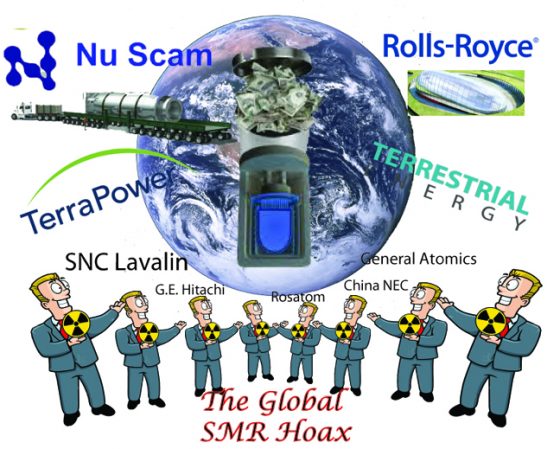
1. SMRs are not more economical than large reactors.
2. SMRs are not generally safer or more secure than large light-water reactors.
3. SMRs will not reduce the problem of what to do with radioactive waste.
4. SMRs cannot be counted on to provide reliable and resilient off-the-grid power for facilities, such as data centers, bitcoin mining, hydrogen or petrochemical production.
5. SMRs do not use fuel more efficiently than large reactors.
Ed Lyman, April 30, 2024 https://blog.ucsusa.org/edwin-lyman/five-things-the-nuclear-bros-dont-want-you-to-know-about-small-modular-reactors/
Even casual followers of energy and climate issues have probably heard about the alleged wonders of small modular nuclear reactors (SMRs). This is due in no small part to the “nuclear bros”: an active and seemingly tireless group of nuclear power advocates who dominate social media discussions on energy by promoting SMRs and other “advanced” nuclear technologies as the only real solution for the climate crisis. But as I showed in my 2013 and 2021 reports, the hype surrounding SMRs is way overblown, and my conclusions remain valid today.
Unfortunately, much of this SMR happy talk is rooted in misinformation, which always brings me back to the same question: If the nuclear bros have such a great SMR story to tell, why do they have to exaggerate so much?
What are SMRs?
SMRs are nuclear reactors that are “small” (defined as 300 megawatts of electrical power or less), can be largely assembled in a centralized facility, and would be installed in a modular fashion at power generation sites. Some proposed SMRs are so tiny (20 megawatts or less) that they are called “micro” reactors. SMRs are distinct from today’s conventional nuclear plants, which are typically around 1,000 megawatts and were largely custom-built. Some SMR designs, such as NuScale, are modified versions of operating water-cooled reactors, while others are radically different designs that use coolants other than water, such as liquid sodium, helium gas, or even molten salts.
To date, however, theoretical interest in SMRs has not translated into many actual reactor orders. The only SMR currently under construction is in China. And in the United States, only one company—TerraPower, founded by Microsoft’s Bill Gates—has applied to the Nuclear Regulatory Commission (NRC) for a permit to build a power reactor (but at 345 megawatts, it technically isn’t even an SMR).
The nuclear industry has pinned its hopes on SMRs primarily because some recent large reactor projects, including Vogtle units 3 and 4 in the state of Georgia, have taken far longer to build and cost far more than originally projected. The failure of these projects to come in on time and under budget undermines arguments that modern nuclear power plants can overcome the problems that have plagued the nuclear industry in the past.
Developers in the industry and the US Department of Energy say that SMRs can be less costly and quicker to build than large reactors and that their modular nature makes it easier to balance power supply and demand. They also argue that reactors in a variety of sizes would be useful for a range of applications beyond grid-scale electrical power, including providing process heat to industrial plants and power to data centers, cryptocurrency mining operations, petrochemical production, and even electrical vehicle charging stations.
Here are five facts about SMRs that the nuclear industry and the “nuclear bros” who push its message don’t want you, the public, to know.
Continue readingFrance Increases State Funding for Advanced Nuclear R&D Project

by Jov Onsat, Rigzone Staff, Thursday, May 02, 2024
The French government has received clearance from the European Commission to provide Electricité de France (EDF) a further EUR 300 million ($321.6 million) for the front-end design phase of a project to develop small modular nuclear reactors (SMRs).
The project by Nuward, the nuclear energy-focused subsidiary of state-owned EDF, aims to come up with a design that has a power output of up to 300 megawatts electric.
The front-end design is the third phase of the five-phase project. The Commission previously approved EUR 50 million ($53.6 million) in French state aid for the second phase, which focused on gathering new knowledge for SMR design and construction.
Under the measure, the aid will take the form of a direct grant of up to EUR 300 million that will cover the R&D [research and development] project until early 2027”, the Commission said in a statement announcing clearance for the new funding from European Union competition regulations. “The measure will support Nuward in sizing the modules and components of the SMRs and validating their integration in the SMRs by means of numerical simulators and laboratory tests.
“Nuward will also carry out industrialization studies relating to the modular design and mass production of SMRs. Finally, the measure will also support Nuward in the preparation of the required safety demonstrations for the approval of the project by the national nuclear safety authorities”.
The Commission recently launched an alliance to accelerate the development of SMRs, following moves by the United Kingdom and United States to commercially scale up the advanced nuclear generation technology.
The public-private coalition aims to come up with a working model by the 2030s. “The Alliance targets a wide range of SMR stakeholders including vendors, utilities, specialized nuclear companies, financial institutions, research organizations, training centers and civil society organizations”, the Commission said in a press release February 9 announcing the initiative…………………..
Earlier the UK government announced an investment of GBP 300 million ($376 million) for the domestic production of high-assay low-enriched uranium (HALEU), challenging Russia’s status as the only commercial manufacturer of the fuel for SMRs. The UK previously funded a program by Rolls-Royce PLCs to design an SMR model, which is currently awaiting approval for deployment in Poland, as announced by the company last week—though the product is still undergoing the regulatory design assessment in the UK.
The UK will become the first country in Europe to launch a high-tech HALEU nuclear fuel program, strengthening supply for new nuclear projects and driving Putin further out of global energy markets”, the UK Department of Energy Security and Net Zero (DESNZ) said in a news release January 7 announcing the HALEU funding.
The DESNZ said GBP 10 million ($12.5 million) has also been allotted to develop sites and promote skills development for the production of other “advanced nuclear fuels”.
The International Atomic Energy Agency says HALEU is only produced in the U.S. and Russia but only the latter makes the fuel at a commercial scale. SMRs need HALEU, which contains five to 20 percent of uranium-235, beyond the five percent level that fuels most of today’s nuclear power plants, according to the United Nations nuclear watchdog.
The UK move was followed by an announcement by the US Department of Energy (DOE) offering contracts worth up to $500 million in total for HALEU production, besides funding offers for SMR design development. “Currently, HALEU is not commercially available from U.S.-based suppliers, and boosting domestic supply could spur the development and deployment of advanced reactors in the United States”, the DOE noted in a media statement January 9 announcing the funding offer.
Last year the U.S. Nuclear Regulator Commission issued the country’s first certification for an SMR design, that of NuScale Power Corp. https://www.rigzone.com/news/france_increases_state_funding_for_advanced_nuclear_rd_project-02-may-2024-176607-article/
Rolls-Royce scales back plans to build nuclear factories in UK
Rolls-Royce has scaled back plans to build two new factories for its small modular reactor (SMR) programme in the UK, following delays to a government design competition.
The FTSE 100 company had originally proposed one factory to make heavy pressure vessels for its SMRs and another to make the building blocks of the reactors.
It had drawn up a final shortlist of locations for the pressure vessels factory, including the International Advanced Manufacturing Park on the outskirts of Sunderland, Teesworks in Redcar and the Gateway industrial park in Deeside, Wales.
But on Friday Rolls confirmed it no longer intends to proceed with that plan because there is no longer time to build the factory and make the first pressure vessels for the early 2030s, when it hopes to complete its first SMRs.
It is still proceeding with work to build the second factory, however.
The company had been waiting for the outcome of an ongoing SMR design competition in the UK – first announced by the Government in 2015 – before it made a decision on the pressure vessel plant.
But that competition has been repeatedly delayed, with the arms length body Great British Nuclear only formally created last summer and winners not due to be announced until this June at the earliest.
Instead the engineering giant will now buy its heavy pressure vessels from a third party supplier.
The large, metal components sit at the heart of nuclear reactors and must be able to withstand extremely high temperatures and pressures. They are only made by a select group of companies, partly due to the need for specialist welding techniques.
Among their number is now Sheffield Forgemasters, which was nationalised by the Ministry of Defence in 2021.
Earlier this month, Sheffield became the sole UK company to gain the qualifications needed to make SMR reactor vessel components.
Despite having shelved its plans for a heavy pressure vessel factory, Rolls is still pressing ahead with plans to build its second factory, which will build the modular units that make up its SMRs.
It is understood that sites shortlisted for the pressure vessel factory will also be contenders for the second plant but no decisions have been made.
On Friday, a spokesman for Rolls-Royce SMR confirmed the company had now “prioritised work on our modules assembly and test facility”, adding: “Our efforts are focused on identifying the best site to support our deployment at pace.”
The company has also not ruled out reviving its plan for a heavy pressure vessel factory at some point in the future, so long as it manages to build up a healthy pipeline of orders.
A Government spokesman said: “Our world leading SMR competition aims to be the fastest of its kind, helping secure billions in investment for the UK, meaning cleaner, cheaper and more secure energy in the long-term.”
Rolls-Royce scales back plans to build nuclear factories in UK

Curtailing comes after repeated delays to an ongoing government design competition
Rolls-Royce has scaled back plans to build two new factories for its small
modular reactor (SMR) programme in the UK, following delays to a government
design competition. The FTSE 100 company had originally proposed one
factory to make heavy pressure vessels for its SMRs and another to make the
building blocks of the reactors.
It had drawn up a final shortlist of
locations for the pressure vessels factory, including the International
Advanced Manufacturing Park on the outskirts of Sunderland, Teesworks in
Redcar and the Gateway industrial park in Deeside, Wales.
But on Friday Rolls confirmed it no longer intends to proceed with that plan because
there is no longer time to build the factory and make the first pressure
vessels for the early 2030s, when it hopes to complete its first SMRs.
It is still proceeding with work to build the second factory, however. The
company had been waiting for the outcome of an ongoing SMR design
competition in the UK – first announced by the Government in 2015 –
before it made a decision on the pressure vessel plant.
But that competition has been repeatedly delayed, with the arms-length body Great
British Nuclear only formally created last summer and winners not due to be
announced until this June at the earliest. Instead the engineering giant
will now buy its heavy pressure vessels from a third party supplier. The
large, metal components sit at the heart of nuclear reactors and must be
able to withstand extremely high temperatures and pressures. They are only
made by a select group of companies, partly due to the need for specialist
welding techniques.
Rolls is still pressing ahead with plans to build its
second factory, which will build the modular units that make up its SMRs.
It is understood that sites shortlisted for the pressure vessel factory
will also be contenders for the second plant but no decisions have been
made.
Telegraph 27th April 2024
https://www.telegraph.co.uk/business/2024/04/27/rolls-royce-plans-build-smr-water-vessel-factory-uk
New Nuclear Energy: Assessing the National Security Risks
https://blogs.gwu.edu/elliott-iistp/research-2/ 26 Apr 24
IISTP Research Professor Sharon Squassoni publishes a comprehensive report assessing the risks of nuclear energy and nuclear weapons.
Read the complete report: “New Nuclear Energy: Assessing the National Security Risks“.
GWU REPORT: NATIONAL SECURITY RISKS GROW WITH NEW NUCLEAR ENERGY
Drone strikes against Ukraine’s nuclear reactors highlight risks
WASHINGTON, DC – April 23, 2024 – Proliferation of nuclear weapons, nuclear terrorism, sabotage, coercion and military operations – these risks associated with nuclear energy can all be expected to grow as countries seek to implement their new nuclear energy objectives, according to a new report published today by George Washington University’s (GWU) Sharon Squassoni. The aim of 22 countries to triple nuclear energy capacity by 2050, announced on the margins of COP-28, was adopted with little thought to the national security implications. The promotion of small modular reactors (SMRs)– specifically tailored to developing countries – will heighten, not diminish risks.
The report by GW professor Sharon Squassoni, “New Nuclear Energy: Assessing the National Security Risks,” comes as drone strikes against Ukrainian nuclear power plants highlight nuclear reactor vulnerabilities. Other national security risks will accompany significant nuclear growth as renewed interest in nuclear energy to reduce greenhouse gas emissions sparks programs across the globe. Squassoni, a professor at GWU’s Elliott School of International Affairs, now researches risk reduction from nuclear energy and nuclear weapons after serving in the State Department, Arms Control and Disarmament Agency and the Congressional Research Service.
Proliferation and nuclear terrorism are the top two national security risks, but sabotage, coercion and military operations pose other risks. An attempt to reduce dependence on foreign suppliers – a national security risk itself — using nuclear energy could worsen the risk of proliferation by motivating fuel cycle independence. SMRs are still in development, with few restrictions on designs. Reactors fueled with highly enriched uranium or plutonium will increase risks of proliferation and terrorism because those materials are weapons-usable. Reactors designed to include lifetime cores will build up plutonium over time. Fast reactor designs that require reprocessing, especially continuous recycling of fuel, could ultimately confer latent nuclear weapons capabilities to many more states. In sum, the kinds of reactors now under consideration do nothing to reduce known risks, and some pose heightened risks. There appears to be no attempt to forge agreement among suppliers or governments to restrict reactor choices that pose greater proliferation risks.
If the mass production of small modular reactors lowers barriers to entry into nuclear energy, there will be many more states deploying nuclear power reactors, including those with significant governance challenges. Russian and Chinese programs to promote nuclear energy target many of those states. Cooperation among key states essential to minimize the safety, security and proliferation risks of nuclear energy is at an all-time low. The call to triple nuclear energy coincides with the disintegration of cooperation, the unraveling of norms and the loss of credibility of international institutions that are crucial to the safe and secure operation of nuclear power.
Potential for small and micro modular reactors to electrify developing regions
Nature Energy (2024)
Abstract
While small-scale nuclear power is typically thought of for niche markets, recent work has suggested that it could help address the massive gaps in energy access in developing countries. However, nuclear energy has safety, governance and economic considerations that affect its deployment. Here we present a global analysis of regions suitable for nuclear reactor deployment based on physical siting criteria, security, governance and economic competitiveness. We use high-resolution population and satellite night-time light data to identify areas in need of electricity. We show that, technically, reactors in the 1–50 MWe range could serve 70.9% of this population. However, economics alone would make microreactors uncompetitive compared with renewables and energy storage for 87% of this population. Grid extensions and small modular nuclear reactors (with more competitive economics) could electrify these populations, but governance issues could limit deployment for all but 20% of this population. Together, governance and economics eliminate 95% of the potential market for microreactors.…………………………………………………………………more https://www.nature.com/articles/s41560-024-01512-y
Say no to small modular reactors: Stop normalizing the exploitation of nature

The Bulletin, By Erin Hurley | April 1, 2024 Erin Hurley is a fourth-year student at St. Thomas University in Fredericton, New Brunswick, where she studies Environment & Society and Journalism. She was a research assistant last year on the Plutonium Project, funded by the Social Sciences and Humanities Research Council (SSHRC), for which she explored news media discourses on proposed small modular reactors in New Brunswick. This year, she is a research assistant on the SSHRC-funded CEDAR (Contesting Energy Discourses through Action Research) Project, for which she is focusing on news media coverage of energy transitions in the province.
Among other global crises, the worsening impacts of climate change are intensifying every year. Last year was the warmest on record and, beginning in March 2023, raging wildfires filled cities across Canada with smoke for months. This year is already shaping up to be warmer than the last. This is why a lot of young people are questioning the very systems we live under. This is why many of us support a rapid and just transition in energy. But in this process, some governments are promoting an expansion of nuclear power, supposedly to solve climate change. I fear that such an expansion will result in my generation having to confront an equally terrifying set of problems resulting from the nuclear fuel chain.
This is precisely what I already see happening around me in the Canadian province of New Brunswick where I live and study. Over the last few years, the province’s government has advocated for and funded the development of what it calls small modular reactors (SMRs). Even though SMR doesn’t include the word “nuclear,” these are nuclear reactors. Ostensibly, these reactors are meant to decarbonize the Canadian economy. But in 2021, New Brunswick Energy Minister Mike Holland protested the 2030 target for phasing out coal in the province, saying new nuclear reactors would not be ready in time to meet that goal. How will the expansion of nuclear power decarbonize the economy if, meanwhile, New Brunswick is still extracting and burning fossil fuels?
The province has funded two companies—Moltex Energy and ARC Clean Technology—to develop small modular reactors. On their websites, Moltex and ARC market nuclear power as “clean,” “carbon free,” and a “clean energy solution.”
Last year, Moltex CEO Rory O’Sullivan spoke to me, my fellow students, and professors working on the Plutonium Project at St. Thomas University in Fredericton, New Brunswick, in which we explored these small modular reactors being proposed for the province to develop an understanding of the assumptions, claims, and implications of these technologies. I remember O’Sullivan as friendly and well-spoken. He emphasized that a transition away from fossil fuels is necessary and that renewable energy is a key element in this transition. Yet he told us that wind farms, for example, could not generate enough energy to sustain our society, and that battery storage was not advanced enough to help with this, and thus renewables could not be considered an effective climate solution on their own. This is why he advocates for small modular reactors—as a necessary supplement to renewables in the energy transition. But, again, he stressed that, at Moltex, they were working to reduce any potential safety risks.
This made me wonder: What about the highly radioactive waste these reactors will produce?
Even if SMRs produce less waste than past nuclear reactors (although not when weighted by how much electricity they produce), spent fuel will remain dangerously radioactive for thousands of years. While nuclear proponents have argued that a deep geological repository would be an effective storage space for the waste, there are many uncertainties surrounding this proposal, and the long-term impacts are unknown. The proposed sites for the repository are located on traditional Indigenous lands in the Wabigoon Lake Ojibway Nation-Ignace and Saugeen Ojibway Nation-South Bruce areas in Ontario. Because the safety of the proposed repository is unproven, storing radioactive waste there would jeopardize the health of the local Indigenous communities and their lands.
Moltex and ARC have advertised reprocessing as a way to recycle waste and use it to power other reactors. However, this is also incredibly dangerous, because once plutonium is separated from used nuclear fuel, it can be used much more easily in the production of atomic weapons. If separated plutonium were to fall into the wrong hands, the result would be nuclear proliferation—an increased number of nuclear weapons across the globe.
In addition to the waste and proliferation problems, small modular reactors will not be built and operating in time to be an effective climate solution. Canada’s climate targets involve decreasing greenhouse gas emissions to 40 per cent below 2005 levels by 2030 and reaching net-zero by 2050. However, ARC predicts that it will finish building its first small modular reactor by 2028 which will “replace the existing coal generation station in 2030” at Point Lepreau Nuclear Generating Station in Saint John, New Brunswick. And Moltex does not expect to have an “operational reactor” until “the early 2030s.”
This timeline will clearly not help Canada reach its decarbonization goal by 2030, and so the country will not be on track for the 2050 goal either. Given these realities, I find it hard to believe that nuclear power is in the best interest of humans, non-human species, or the planet as a whole.
Capitalist nations that prioritize economic growth above all else, such as the United States and Canada, have normalized the exploitation of nature……………………………………………….. more https://thebulletin.org/2024/04/say-no-to-small-modular-reactors-stop-normalizing-the-exploitation-of-nature/#post-heading
New nuclear reactor types will not solve waste and safety issues
26 March 2024 https://www.modernpowersystems.com/news/newsnew-nuclear-reactor-types-will-not-solve-waste-and-safety-issues-11634478
Novel nuclear power plant designs do not resolve the technology’s fundamental challenge of hazardous nuclear waste, a 22 March report commissioned by Germany’s Federal Office for the Safety of Nuclear Waste Management (BASE) has concluded. “None of the alternative reactor types would make a final repository redundant,” the government agency said, according to a report by online news agency Clean Energy Wire.
Despite efforts by producers of Generation IV reactors to “intensively advertise” the concept’s supposed benefits, said BASE, it “could not detect any trends that would make the construction of alternative reactor types at an industrial scale likely in the next years.” On the contrary, the disadvantages and uncertainties from a security perspective would continue to outweigh the technology’s advantages, the study led by the Institute for Applied Ecology (Öko-Institut) found.
New nuclear plant designs, such as small modular reactors (SMR), would not only perpetuate the difficult long-term question of nuclear waste disposal, but also had little to offer for solving short-term climate action problems, BASE added.
The report looked at seven novel reactor types, which according to their producers are more efficient in nuclear fuel use and run more safely and reliably, are economically viable, and cause less radioactive waste. While some of these improvements seem plausible, the report said that central questions regarding safety remain unanswered with all new concepts. “In some areas, there are even disadvantages compared to today’s light water reactors,” which remain the favoured technology in six surveyed countries (USA, Russia, China, South Korea, Poland and Belgium). Alternative reactor types still required “substantial“ research and development, and it would likely still take several decades before they can be deployed at a relevant scale, the researchers added. Promises about new concepts in nuclear technology as a potential boost for climate action therefore had to be considered “not realistic,” they concluded.
While Germany closed down its three last reactors in spring 2023 after a decades-long debate, many other countries continue to rely on nuclear technology or even plan to considerably expand it in a bid to bring down their energy-related greenhouse gas emissions. At the International Atomic Energy Agency’s (IAEA) first ever nuclear energy summit in Brussels earlier March, more than two dozen states called for a revival of the technology, including France, the Netherlands, the USA and Japan. “Without the support of nuclear power, we have no chance to reach our climate targets on time,” International Energy Agency (IEA) chief Fatih Birol said in a report carried by news agency Reuters.
Nuclear power in Europe
The role of nuclear power in Europe’s emissions reduction plans has been a contentious issue for many years, with Germany and France emerging as the main opposing forces between two groups of countries aiming to rely entirely on renewable power or to also use nuclear power in a future climate neutral energy system. While Germany has achieved a substantial expansion of its renewable power capacity and now sources more than half of its electricity that way, the country still faces challenges regarding the required grid modernisation and back-up and storage capacity to complement wind turbines and solar panels. France, on the other hand, has the largest share of nuclear power production of any country but struggles to secure funding for new projects and to comply with cost and construction time plans for existing ones.
The extraordinary financial costs of ‘small’ nuclear power stations

By Alan Finkel, Cosmos, 21 Mar 24
Partial extract from an article to be posted in 360info.org
They’re being touted as the solution to kickstarting a nuclear power industry in Australia.
According to the Opposition’s Minister for Climate Change and Energy, Ted O’Brien, small modular reactors (SMR) could be built within ten-year period if it wins the next election.
However, it would likely take 20 years to commence commercial operation of any nuclear reactors in Australia from the time in-principle approval was reached. To reach that starting point and enable detailed consideration of the challenges and costs of nuclear power, the existing legislative ban on nuclear power in Australia will need to be removed.
There are other obstacles.
While there’s plenty of excitement about SMRs, the problem is there just isn’t enough data about them, mainly because there are none operating in any OECD country.
And it’s unknown when any might be. As Allison Macfarlane, former chair of the US Nuclear Regulatory commission, argues in her article,The end of Oppenheimer’s energy dream, the proposal for small modular reactors to help us in the clean energy transition is fanciful.
The SMR furthest along the US Nuclear Regulatory Commission (NRC) approval process, from the US company NuScale, cancelled its first planned installation in Utah last November when the initial cost blew out to USD$9 billion, corresponding to USD$20 billion per GW.
The only countries with working SMRs are China and Russia.
Micro and large reactors
Micro reactors are intended to generate electrical power up to 10 MW per unit. Although companies such as Rolls Royce are developing these, there do not appear to be any commercial micro modular reactors that have completed their design.
That leaves full-scale reactors, which have also been mentioned as part of a possible Australian nuclear power play.
Korean company KEPCO builds most of the nuclear reactors in Korea and has now built one at Barakah in the United Arab Emirates. This 5.6 GW plant, scheduled to open this year, has taken 16 years to complete and cost USD$24 billion (AUD$36 billion). At 5.6 GW, that is AUD$6.4 billion per GW. Given salaries and skills shortages in Australia, inflation, interest rates and our regulatory requirements, it would cost more and take longer in Australia.
The Hinkley C plant in the UK was supposed to be finished in 2017 but has been delayed again until 2031 – 23 years after approval. The estimated construction cost ballooned to AUD$89 billion. At 3.2 GW electrical power, that is AUD$28 billion per GW.
In the US, the most recent nuclear reactors to be built are the Vogtle 3 and 4built at the existing facility that is home to the Vogtle 1 and 2 reactors. Both were anticipated to be in service in 2016. Vogtle 3 began commercial operation in July 2023. Vogtle 4 is projected to commence operation in the second quarter of 2024 – 15 years after the construction contract was awarded.
Construction cost USD$34 billion (AUD$52 billion) for the combined 2.2 GW output of the two reactors, or AUD$24 billion per GW.
Construction of nuclear plants in the United States has declined dramatically over the years. Approximately 130 were built from the mid 1950s to the mid 1990s. Only four commenced operation in the 30 years from the mid 1990s to now, and at the time of writing there are no nuclear reactors under construction in the United States.
In France, only one nuclear power plant is under construction. The 1.65 GW Flamanville EPR reactor is hoped to be completed and begin to supply electricity later this year, 17 years after construction began. The most recent cost estimate was AUD$22 billion or AUD$13 billion per GW. No other nuclear power plants are planned in France.
These high costs and long delivery durations for full-scale reactors are the reasons SMRs are proposed as a way forward in Australia. However, SMRs are a new technology. There are none in operation or construction in any OECD countries, thus it is not possible to estimate the costs or delivery schedules. NuScale’s investment to date suggests that the capital cost for the first units to be delivered will be very high. ………… https://cosmosmagazine.com/technology/energy/the-extraordinary-financial-costs-of-nuclear-power/
The U.S. Is Betting Big on Small Nuclear Reactors (done up with green paint)

Oil Price, By Felicity Bradstock – Mar 14, 2024,
- After decades of decline, the U.S. is significantly increasing its investment in nuclear energy to address climate change and strengthen energy security.
- The recently passed Atomic Energy Advancement Act simplifies approval processes for novel reactor designs, aiming to expedite the development of new nuclear power plants.
………. The U.S. is set to accelerate the rollout of new nuclear power plants and reactors following the passing of new legislation this month. This follows a movement away from nuclear power for several decades due to the poor political and public perception of nuclear power due to several notable nuclear disasters………………..
This month, the House approved legislation aimed at developing U.S. nuclear power capacity in the coming years, with a vote of 365 to 36. The Atomic Energy Advancement Act was widely approved by both the Democrat and Republican parties ………
……………………………..The law will see that the Nuclear Regulatory Commission (NRC) streamlines its processes for the approval of new reactor designs, and will increase hiring at the commission, reduce fees for applicants, establish financial prizes for novel types of reactors, and encourage the development of nuclear power at the sites of retiring coal plants. The legislation is expected to support the greatest development of U.S. nuclear power of this generation. ……………………………..
The Biden administration has repeatedly demonstrated its support for nuclear power by passing laws and approving funding to keep existing nuclear projects afloat. Two policies, passed in 2021 and 2022, provided the funding needed to save 22 reactors, with further investment being rolled out this year. This financing is expected to keep the existing U.S. nuclear reactor fleet online until at least 2032, by which time the government hopes greater investment will be being made into new nuclear projects. The policies also provide funding for research and development into the next generation of modular, more flexible nuclear plants
The passing of the Atomic Energy Advancement Act is expected to speed up the deployment of new nuclear energy technology, supported by previous Biden administration policies that provide greater investment to the sector. While strict safety regulations must be upheld, the government is putting pressure on the NRC to modernize and approve innovative reactor designs to allow for new nuclear energy capacity to be rolled out …. https://oilprice.com/Alternative-Energy/Nuclear-Power/The-US-Is-Betting-Big-on-Small-Nuclear-Reactors.html
SMRs are useless says the UK’s leading SMR analyst! – 100 per cent renewable energy is much more feasible!

by David Toke, https://100percentrenewableuk.org/smrs-are-useless-says-the-uks-leading-smr-analyst-100-per-cent-renewable-energy-is-much-more-feasible 25 Feb 24
Professor Stephen Thomas, the UK’s leading analyst of ‘small modular (nuclear) reactors’, has concluded that the idea faces a dead end, with no future. Yet the UK continues to give large grants to hopeful companies to develop these white elephants. The Government has proclaimed the need for ‘billions of pounds‘ of investment in SMRs. Meanwhile badly needed district heating networks to be supplied by large-scale heat pumps and a range of other realistic clean energy initiatives go unfunded!
The UK’s political institutions, including the House of Commons Environmental Audit Committee (EAC), continue to promote these fantasy SMRs through one-sided hearings and ignore possibilities for 100% renewable energy scenarios. Has the EAC set up an enquiry into the practicalities of 100 per cent or near 100 per cent renewable energy for the UK? No, it hasn’t, because it seems to prefer to spend time pursuing dead-ends such as SMRs.
Steve Thomas’s analysis lampooned the concept of SMRs when he said ‘The cheap way to produce SMRs is to scale down their failed designs’ (ie to scale down the larger versions of nuclear manufacturers previous failures). This highlights the central silliness of the idea of SMRs. On the one hand nuclear manufacturers built nuclear plant larger to improve economies of scale, but they have not produced economically viable results, so now there are pressures for them to reverse this process and make the resulting smaller nuclear power plant even worse!
He also commented that
‘All things equal, a large PWR/BWR will create less (nuclear) waste than the same capacity of small reactors’.
Thomas concluded that:
- the impression is that large numbers of SMRs are being ordered around the world
- These claims are unproven or misleading or simply wrong
- No modern design SMR is operating, 3 prototype SMRs are under construction (China, Russia, India)
- No current design has completed a full safety review by an experienced & credible regulator. Until this is done, it will not be known if the design is licensable or what the costs would be. So no design of SMR is commercially available to order
You can watch and hear Steve Thomas’s presentation on SMRs in the full youtube recording of our seminar on 100 per cent renewable energy rather than SMRs HERE Please go to 55 minutes into the recording to start watching from the beginning of Steve’s presentation.
The full power point presentation (on its own) can be downloaded from HERE
We shall soon be sending in the petition asking the EAC to launch an enquiry into 100 per cent renewable energy for the UK instead of the one it did on small modular reactors. It should be obvious that faced with new nuclear power failing and fossil fuel carbon capture and storage schemes that do not work we should be urgently looking at how we can run a 100 per cent renewable energy system for the UK! PLEASE SIGN IT NOW! Go to THIS PAGE HERE to sign the petition now!
Exploding Alberta’s Myths about Small Nuclear Reactors

Small nuclear reactors are unproven and years away from being in use. But the Alberta government is presenting them as a way to keep fossil fuels flowing.
The untested technology is more about greenwashing than about cutting emissions.
Tim Rauf 15 Feb 2024, The Tyee
Alberta’s government is really excited about nuclear power.
More specifically, about novel and unproven small modular nuclear reactors. It hopes to use these to help lower the province’s carbon emissions while letting the energy industry continue operating as usual — an enticing prospect to the government given its intention to increase oil and gas production, while still having the energy sector get to net zero by 2050.
Small modular nuclear reactors produce less than one-third of the electricity of a traditional reactor.
The premise is that small reactors are easier to place and build, and cheaper.
Alberta hitched its horse to this wagon with Ontario, New Brunswick and Saskatchewan in 2022, taking part in a strategic plan for small modular reactor development and deployment. Alberta Innovates, the province’s research body, had a feasibility study conducted for it by Pacific Northwest National Laboratory. The study focused on using the reactors for greenhouse-gas-free steam emissions for oilsands projects, electricity generation in our deregulated market and providing an alternative to diesel when supplying power to remote communities.
More recently, Ontario Power Generation and Capital Power out of Edmonton entered into an agreement to assess SMRs for providing nuclear energy to Alberta’s grid. Nathan Neudorf, Alberta’s minister of affordability and utilities, was gleeful. “This partnership represents an exciting and important step forward in our efforts to decarbonize the grid while maintaining on-demand baseload power,” he said of the announcement.
All of this buzz makes it seem like SMRs are just over the horizon, an inevitability that will allow the province to evolve to have a cleaner, modern energy landscape.
But small modular reactors are nowhere near ready for deployment, and won’t be in Alberta for about a decade. That means for 10 years, they’ll provide no GHG-free steam to mitigate emissions.
“It’s still in the design phase,” Kennedy Halvorson said, speaking about the reactors. Halvorson is a conservation specialist with the Alberta Wilderness Association. The reactors are “so far off from being able to be used for us,” Halvorson added. “The earliest projections would be 2030. And we need to be reducing our emissions before 2030. So, we need to have solutions now, basically.”
With SMRs unable to stem the emissions tide for years, it’s confusing as to how they could make enough of a difference to get Alberta to net zero by 2050 (in line with United Nations emissions reduction targets to keep global warming to no more than 1.5 degrees).
Capital Power made similar projections………………………………………………………………………..
Construction itself is only one piece. Adding to that is the need to build a regulatory framework, which Alberta doesn’t have for nuclear…………………………………………………….
Ontario’s nuclear troubles
Listening to these public voices is prudent. We can look east to see what happens when the government and power utilities sidestep the process of getting explicit consent from communities that stand to be affected.
With its status as the nuclear activity hub in Canada, we can use Ontario as a litmus test of sorts and gauge Canada’s track record of care with nuclear. The report card isn’t great. There have been multiple cases of improper consultation with Indigenous Peoples on whose lands the waste, production or extraction sites are placed………………………………………………………………………..
Small reactors face a critical economic challenge
Adding to the timeline troubles are questions as to whether small reactors truly offer that much of an economic advantage, if any, compared with their larger counterparts.
In a previous article Ramana wrote, he pointed to the first reactors as an indication of the answer.
The first reactors started off small. Their size, though, coupled with the exorbitant price tag of nuclear development, meant they couldn’t compete with fossil fuels.
The only thing they could do to reduce the disadvantage was to build larger and larger reactors, Ramana said.

A large reactor that could produce five times as much electricity didn’t cost five times as much to build, he said, improving the return from the investment.
Economically the SMR can’t seem to compete with its larger sibling. Adding this to the delays abundant with nuclear, controversies around construction and communities, and the misalignment of timelines for meeting climate commitments, we need to ask why we’re seeing such a fervent enthusiasm for small modular reactors.
Greenwashing by any other name
The answer is likely a simple one: The Alberta government wants to keep the taps on. Their friends in the energy industry do too. Like carbon capture and sequestration before it, SMRs are the next way to stave off pesky talk of divestment and transition…………………………………………………………….
Deflecting and delaying isn’t the only greenwashing happening either, Halvorson argued. She noted there’s a special kind of tactic that comes with nuclear and other “clean” technology, where only carbon dioxide and greenhouse gas offsets are counted.
“When we reduce it all to just how much CO2 something emits, we’re not getting the full picture of environmental impacts,” Halvorson said. She pointed to water use in nuclear as an example.

“Most nuclear technologies require a massive input of water to work. And as we know, right now we’re in a drought in Alberta. Our water resources are so precious. We already have industries that are using way too much water as is, in a way that’s not allowing our environments and ecosystems to replenish their reserves, like their water resources,” she said.
Despite the cheerleading for nuclear Alberta, where small nuclear reactors will let us enjoy the fruits of fossil fuels (and even produce more) in a cleaner way, the bones don’t read that way. The argument that we can keep on drilling so long as we have that newest silver bullet hasn’t stood up to scrutiny before, and it doesn’t now. https://thetyee.ca/Analysis/2024/02/15/Exploding-Alberta-Myths-Small-Nuclear-Reactors/
1 This Month
10 March A LIVE WEBINAR THE REAL EFFECTS OF NUCLEAR POWER
What the Industry Isn’t Telling Us
1:00 PM Mountain, 2 pm Central, 3 pm Eastern. Live on the Keepers of the Water Facebook page



18 March Webinar @ 1 PM EST: An Assessment of SMR Projects: The Case of Canada
register for the zoom:
https://us02web.zoom.us/webinar/register/WN_o8BIIOUvQ2ONJR1nta65DQ#/registration


of the week – STOP SMALL MODULAR REACTORS IN CANADA
To see nuclear-related stories in greater depth and intensity – go to https://nuclearinformation.wordpress.com
-
Archives
- March 2026 (99)
- February 2026 (268)
- January 2026 (308)
- December 2025 (358)
- November 2025 (359)
- October 2025 (376)
- September 2025 (258)
- August 2025 (319)
- July 2025 (230)
- June 2025 (348)
- May 2025 (261)
- April 2025 (305)
-
Categories
- 1
- 1 NUCLEAR ISSUES
- business and costs
- climate change
- culture and arts
- ENERGY
- environment
- health
- history
- indigenous issues
- Legal
- marketing of nuclear
- media
- opposition to nuclear
- PERSONAL STORIES
- politics
- politics international
- Religion and ethics
- safety
- secrets,lies and civil liberties
- spinbuster
- technology
- Uranium
- wastes
- weapons and war
- Women
- 2 WORLD
- ACTION
- AFRICA
- Atrocities
- AUSTRALIA
- Christina's notes
- Christina's themes
- culture and arts
- Events
- Fuk 2022
- Fuk 2023
- Fukushima 2017
- Fukushima 2018
- fukushima 2019
- Fukushima 2020
- Fukushima 2021
- general
- global warming
- Humour (God we need it)
- Nuclear
- RARE EARTHS
- Reference
- resources – print
- Resources -audiovicual
- Weekly Newsletter
- World
- World Nuclear
- YouTube
-
RSS
Entries RSS
Comments RSS
 nuclear-news