Small Modular Nuclear Reactors (SMRs) now recognised as unviable: governments still pouring money into them
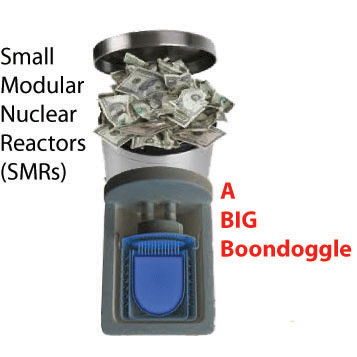 AMRs rise from the ashes of SMRs No2nuclearpower, 29 July 18
On both sides of the Atlantic billions of dollars are being poured into developing small modular reactors. (SMRs) But it seems increasingly unlikely that they will ever be commercially viable, writes Paul Brown on the Climate News Network.
The idea is to build dozens of the reactors (SMRs) in factories in kit form, to be assembled on site, thereby reducing their costs, a bit like the mass production of cars. The problem is finding a market big enough to justify the building of a factory to build nuclear power station kits. For the last 60 years the trend has been to build ever-larger nuclear reactors, hoping that they would pump out so much power that their output would be cheaper per unit than power from smaller stations. However, the cost of large stations has escalated so much that without massive government subsidies they will never be built, because they are not commercially viable. To get costs down, small factory-built reactors seemed the answer. It is not new technology, and efforts to introduce it are nothing new either, with UK hopes high just a few years ago. Small reactors have been built for decades for nuclear submarine propulsion and for ships like icebreakers, but for civilian use they have to produce electricity more cheaply than their renewable competitors, wind and solar power. A number of companies in the UK and North America are developing SMRs, and prototypes are expected to be up and running as early as 2025.
However, the next big step is getting investment in a factory to build them, which will mean getting enough advance orders to justify the cost. A group of pro-nuclear US scientists, who believe that nuclear technology is vital to fight climate change, have concluded that there is not a large enough market to make SMRS work. Their report, published in the Proceedings of the National Academy of Sciences, says that large reactors will be phased out on economic grounds, and that the market for SMRs is too small to be viable. On a market for the possible export of the hundreds of SMRs needed to reach viability, they say none large enough exists.
In the UK, where the government in June poured £200 million ($263.8) into SMR development, a parliamentary briefing paper issued in July lists a whole raft of reasons why the technology may not find a market. The paper’s authors doubt that a mass-produced reactor could be suitable for every site chosen; there might, for instance, be local conditions requiring extra safety features. They also doubt that there is enough of a market for SMRs in the UK to justify building a factory to produce them, because of public opposition to nuclear power and the reactors’ proximity to population centres. And although the industry and the government believe an export market exists, the report suggests this is optimistic, partly because so many countries have already rejected nuclear power
New funding measures for advanced reactor research and manufacturing will help the UK retain and grow its nuclear expertise and signals support for a widening range of SMR applications, according to Nuclear Energy Insider. The UK nuclear industry has broadly welcomed the UK government’s new 200 million-pound ($263.8-million) Nuclear Sector Deal which aims to cut the cost of nuclear power and bolster the UK skills base.
The deal, announced June 27, includes £56m towards the development and licensing of advanced modular reactor (AMR) designs and £32m towards advanced manufacturing research. In addition, the UK and Welsh governments will jointly invest $40 million in new thermal hydraulics testing. The development funding will initially allocate a total £4m to eight non-light water reactor (non-LWR) vendors, to perform detailed technical and commercial feasibility studies. The eight vendors are: Advanced Reactor Concepts; DBD; LeadCold; Moltex Energy (which is planning to build a demonstration SSR-W – Stable Salt Reactor Wasteburner at Point Lepreau in New Brunswick Canada); Tokamak Energy; U-Battery Developments; Ultra Safe Nuclear Corporation and Westinghouse Electric Company UK
In April 2019, three or four of these companies will be selected to receive a total of £40m to accelerate the development of the design over two years. The Office for nuclear regulation will receive £5m to support the process and a further £7m to build regulatory resources to assess and license new designs.
The new development funding schedule indicates the government has slowed down and broadened its approach to SMR deployment since it launched a competition for the best value SMR in March 2016.
The latest funding announcements could, for now, prevent an exodus of UK expertise to other countries supporting SMR development. Several advanced reactor developers are simultaneously pursuing SMR programs in North America, where government support programs are larger
The final selection of SMR designs will come later than originally expected and signals a change in scope and a recognition of multiple potential applications, Mike Middleton, Strategy ManagerNuclear at the Energy Technologies Institute (ETI), said. The funding scope recognises the application of SMR technologies could be “broader than the traditional role as a baseload electricity provider.”
In addition to baseload supply, SMR developers are targeting applications such as renewable energy load following, industrial power and heat, district heating, and hydrogen production.(3)
Meanwhile Rolls-Royce is threatening to shut down its SMR development project unless the government makes a long-term commitment including financial support in the coming months. It has scaled back investment significantly, from several millions to simply paying for “a handful of salaries”, said Warren East, Rolls-Royce chief executive. David Orr, executive vice-president of Rolls-Royce’s SMR programme, said that without comfort from the government on two fronts the project “will not fly. We are coming to crunch time.”
Rolls-Royce wants its technology to be chosen as the first to apply for a licence when a slot is made available later this year. It also wants the government to provide financial support, initially of about £20m, to take the technology through the early stages of the licensing process. This would be match-funded by the consortium, which includes companies such as Laing O’Rouke and Arup. Rolls-Royce is one of several consortia to have bid in a governmentsponsored competition launched in 2015 to find the most viable technology for a new generation of small nuclear power plants.
However, when the nuclear sector deal was finally unveiled last month, the government allocated funding only for more advanced modular reactors (AMRs). SMR’s, which typically use water-cooled reactors similar to existing nuclear power stations, were omitted from specific funding even though they are closer to becoming commercial. This has frustrated those putting forward SMR bids. Rolls-Royce has argued that developing its technology should be regarded as a “national endeavour” to develop nuclear skills that can be used to create an export led industry. (4) http://www.no2nuclearpower.org.uk/wp/wp-content/uploads/2018/07/NuClearNewsNo109.pdf
Small Modular Nuclear Reactors – no commercial future? But they make the nuclear industry LOOK viable

Small modular reactors have little appeal https://climatenewsnetwork.net/small-modular-reactors-have-little-appeal/ July 27, 2018, by Paul Brown , London
The last hope of the nuclear industry for competing with renewables is small modular reactors, but despite political support their future looks bleak.
On both sides of the Atlantic billions of dollars are being poured into developing small modular reactors. But it seems increasingly unlikely that they will ever be commercially viable.
The idea is to build dozens of the reactors (SMRs) in factories in kit form, to be assembled on site, thereby reducing their costs, a bit like the mass production of cars. The problem is finding a market big enough to justify the building of a factory to build nuclear power station kits.
For the last 60 years the trend has been to build ever-larger nuclear reactors, hoping that they would pump out so much power that their output would be cheaper per unit than power from smaller stations. However, the cost of large stations has escalated so much that without massive government subsidies they will never be built, because they are not commercially viable.
To get costs down, small factory-built reactors seemed the answer. It is not new technology, and efforts to introduce it are nothing new either, with UK hopes high just a few years ago. Small reactors have been built for decades for nuclear submarine propulsion and for ships like icebreakers, but for civilian use they have to produce electricity more cheaply than their renewable competitors, wind and solar power.
One of the problems for nuclear weapons states is that they need a workforce of highly skilled engineers and scientists, both to maintain their submarine fleets and constantly to update the nuclear warheads, which degrade over time. So maintaining a civil nuclear industry means there is always a large pool of people with the required training.
Although in the past the UK and US governments have both claimed there is no link between civil and military nuclear industries, it is clear that a skills shortage is now a problem.
It seems that both the industry and the two governments have believed SMRs would be able to solve the shortage and also provide electricity at competitive rates, benefitting from the mass production of components in controlled environments and assembling reactors much like flat-pack furniture.
This is now the official blueprint for success – even though there are no prototypes yet to prove the technology works reliably. But even before that happens, there are serious doubts about whether there is a market for these reactors.
Among the most advanced countries on SMR development are the US, the UK and Canada. Russia has already built SMRs and deployed one of them as a floating power station in the Arctic. But whether this is an economic way of producing power for Russia is not known.
Finding investors
A number of companies in the UK and North America are developing SMRs, and prototypes are expected to be up and running as early as 2025. However, the next big step is getting investment in a factory to build them, which will mean getting enough advance orders to justify the cost.
A group of pro-nuclear US scientists, who believe that nuclear technology is vital to fight climate change, have concluded that there is not a large enough market to make SMRS work.
Their report, published in the Proceedings of the National Academy of Sciences, says that large reactors will be phased out on economic grounds, and that the market for SMRs is too small to be viable. On a market for the possible export of the hundreds of SMRs needed to reach viability, they say none large enough exists.
They conclude: “It should be a source of profound concern for all who care about climate change that, for entirely predictable and resolvable reasons, the United States appears set to virtually lose nuclear power, and thus a wedge of reliable and low-carbon energy, over the next few decades.”
Doubts listed
In the UK, where the government in June poured £200 million ($263.8) into SMR development, a parliamentary briefing paper issued in July lists a whole raft of reasons why the technology may not find a market.
The paper’s authors doubt that a mass-produced reactor could be suitable for every site chosen; there might, for instance, be local conditions requiring extra safety features.
They also doubt that there is enough of a market for SMRs in the UK to justify building a factory to produce them, because of public opposition to nuclear power and the reactors’ proximity to population centres. And although the industry and the government believe an export market exists, the report suggests this is optimistic, partly because so many countries have already rejected nuclear power.
The paper says those countries still keen on buying the technology often have no experience of the nuclear industry. It suggests too that there may be international alarm about nuclear proliferation in some markets. – Climate News Network
Trawsfynydd – a new facility to try to stem the astronomic costs of UK’s “new nuclear”
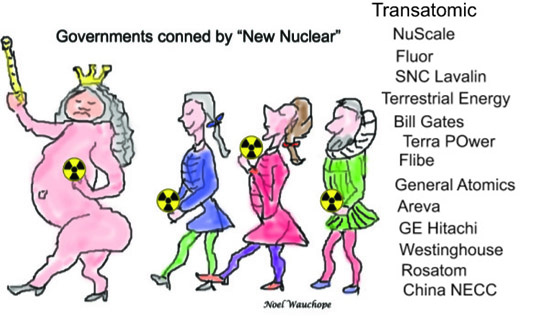
BBC 27th June 2018 , Trawsfynydd A £40m facility to support the design of advanced nuclear technologies
will be developed in north Wales by the Welsh and UK governments. It is in
addition to a £200m UK government nuclear sector deal to be launched in
Trawsfynydd, Gwynedd. … The chief
executive of the company behind plans for Wylfa Newydd on Anglesey welcomed
the proposals.
The UK-wide deal funded by public and private money also
includes: Up to £56m for research and development for “advanced modular
reactors” £86m UK government funding for a national fusion technology
platform at Culham, Oxfordshire. £32m for an advanced manufacturing and
construction programme. £30m for a new national supply chain programme.
A commitment from industry to reduce the cost of new nuclear build projects
by 30% by 2030, and the cost of decommissioning old nuclear sites by 20% by
2030. A new review to look at ways to accelerate the clean-up of nuclear
‘legacy’ sites. A commitment to increasing gender diversity in the civil
nuclear workforce with a target of 40% women in nuclear by 2030.
Business and Energy Secretary Greg Clark said: “This sector deal marks an important
moment for the government and industry to work collectively to deliver the
modern industrial strategy, drive clean growth and ensure civil nuclear
remains an important part of the UK’s energy future.” Alun Cairns,
secretary of state for Wales, said Trawsfynydd has an “exciting future as
the potential site for the new generation of small reactors”. “Trawsfynydd
is ready to be transformed with little upgrade needed to the grid
infrastructure. “It’s in the right place with the right people and good
links to leading ac ademic research institutions in the nuclear sector,” he
said. Duncan Hawthorne, CEO of Horizon Nuclear Power the company behind the
Wylfa Newydd plans, welcomed the proposals.
https://www.bbc.co.uk/news/uk-wales-politics-44634580
Small Modular Nuclear Reactors are NOT going to save the nuclear industry
 The future of nuclear power in the US is bleak http://thehill.com/opinion/energy-environment/393717-the-future-of-nuclear-power-in-the-us-is-bleak, BY M. V. RAMANA, 06/23/18 Presumably as a way to fulfill election promises, President Trump has ordered the use of emergency federal powers designed for war-time crises to financially prop up coal and nuclear power plants.
Nuclear power that was once advertised as being “too cheap to meter” has evidently become too costly for electric utilities to buy. Apart from two 1,000 megawatt reactors being constructed in Georgia at enormous expense to ratepayers (even after subsidies from tax payers), there are no immediate prospects for new nuclear power plants in the United States. What of the longer-term future?
Why SMRs? According to promoters of these scaled-down reactors, they could solve the multiple challenges faced by nuclear power. SMR developers promise lowered costs, decreased production of radioactive waste, reduction or even elimination of the risk of severe accidents, and no contribution to nuclear proliferation. Dozens of companies claim to be developing their own SMR designs, and many have received funding from wealthy private investors and the U.S. Department of Energy.
However, there is little to suggest SMRs will somehow magically remedy all that ails the nuclear industry. SMRs, as the name suggests, produce relatively small amounts of electricity in comparison with currently operational reactors. This puts them at a disadvantage.
One known way to reduce the cost of nuclear electricity has been to build larger reactors because the expenses associated with constructing and operating a reactor do not increase in direct proportion to the power generated. SMRs will, therefore, cost more than large reactors for each unit of generation capacity. Most of the small reactors built in the United States shut down early because they couldn’t compete economically.
SMR proponents argue that they can compensate by savings through mass manufacture in factories and learning how to hold down costs from the experience of constructing lots of reactors. This is a dubious assumption: In both the United States and France, the two countries with the highest numbers of nuclear plants, costs went up, not down, with construction experience.
Even if one were to assume that such “learning” actually occurs, SMRs have to be manufactured by the thousands to achieve meaningful savings. There is simply no market for so many reactors.
Even Westinghouse, the company that has directly or indirectly designed the majority of the world’s nuclear reactors, has realized that there is no market. For a decade or more, Westinghouse pursued a SMR design. But, in 2014, the company abandoned that effort. Its CEO explained: “The problem I have with SMRs is not the technology, it’s not the deployment — it’s that there’s no customers.” Few or no customers means no one would, or should, want to build a factory to construct the modules constituting these SMRs.
What of the claims about safety and nuclear waste? The problem is that the technical demands posed by these different goals conflict with one another, forcing reactor designers to make impossible choices.
For example, safety can be improved by making reactors smaller. But, a smaller reactor, at least the water-cooled reactors that are most likely to be built earliest, will produce more, not less, nuclear waste per unit of electricity they generate because of lower efficiencies. With no long-term solution in sight for nuclear waste, accumulating more radioactive spent fuel aggravates the storage problem.
The poor economic outlook for SMRs also affects safety. Companies that market SMRs propose placing multiple reactors in close proximity to save on costs of associated infrastructure. But this would increase the risk of accidents or the impact of potential accidents on the surrounding population.
At Japan’s Fukushima nuclear complex, explosions at one reactor damaged the spent fuel pool in a co-located reactor. Radiation leaks from one unit made it difficult for emergency workers to approach the other units.
The future of nuclear power in the United States, and indeed in much of the world, is bleak. Small modular reactors will not change that prognosis. There is no point in wasting public money on promoting them.
M. V. Ramana is the Simons chairman in Disarmament, Global and Human Security at the School of Public Policy and Global Affairs, University of British Columbia and the author of “The Power of Promise: Examining Nuclear Energy in India.”
The nuclear power industry is dying under its own weight.New small nuclear reactors too costly, too late
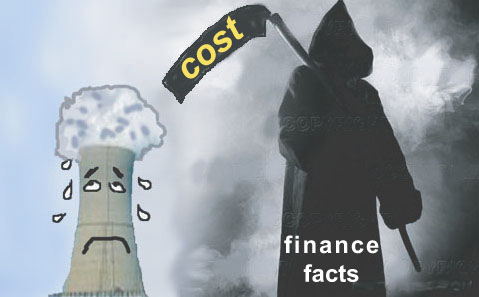 Nuclear Power Won’t Survive Without A Government Handout, Five Thirty Eight, By Maggie Koerth-Baker 14 June 18, Once upon a time, if you were an American who didn’t like nuclear energy, you had to stage sit-ins and marches and chain yourself to various inanimate objects in hopes of closing the nation’s nuclear power plants. Today … all you have to do is sit back and wait.
There are 99 nuclear reactors producing electricity in the United States today. Collectively, they’re responsible for producing about 20 percent of the electricity we use each year. But those reactors are, to put it delicately, of a certain age. The average age of a nuclear power plant in this country is 38 years old (compared with 24 years old for a natural gas power plant). Some are shutting down. New ones aren’t being built. And the ones still operational can’t compete with other sources of power on price. Just last week, several outlets reported on a leaked memo detailing a proposed Trump administration plan directing electric utilities to buy more from nuclear generators and coal plants in an effort to prop up the two struggling industries. The proposal is likely to butt up against political and legal opposition, even from within the electrical industry, in part because it would involve invoking Cold War-era emergency powers that constitute an unprecedented level of federal intervention in electricity markets. But without some type of public assistance, the nuclear industry is likely headed toward oblivion.
“Is [nuclear power] dying under its own weight? Yeah, probably,” said Granger Morgan, professor of engineering and public policy at Carnegie Mellon University.
……… it’s the cost of upkeep that’s prohibitive. Things do fall apart — especially things exposed to radiation on a daily basis. Maintenance and repair, upgrades and rejuvenation all take a lot of capital investment. And right now, that means spending lots of money on power plants that aren’t especially profitable…….
Morgan and other researchers are studying the economic feasibility of investment in newer kinds of nuclear power plants — including different ways of designing the mechanical systems of a reactor and building reactors that are smaller and could be put together on an assembly line. Currently, reactors must be custom-built to each site. Their research showed that new designs are unlikely to be commercially viable in time to seriously address climate change. And in a new study that has not yet been published, they found that the domestic U.S. market for nuclear power isn’t robust enough to justify the investments necessary to build a modular reactor industry. …….https://fivethirtyeight.com/features/nuclear-power-wont-survive-without-a-government-handout/
Terra Power’s Traveling Wave Nuclear Reactor sounds great – BUT!
TerraPower’s Nuclear Reactor Could Power the 21st Century. The traveling-wave reactor and other advanced reactor designs could solve our fossil fuel dependency IEEE Spectrum, By In a world defined by climate change, many experts hope that the electricity grid of the future will be powered entirely by solar, wind, and hydropower. Yet few expect that clean energy grid to manifest soon enough to bring about significant cuts in greenhouse gases within the next few decades. Solar- and wind-generated electricity are growing faster than any other category; nevertheless, together they accounted for less than 2 percent of the world’s primary energy consumption in 2015, according to the Renewable Energy Policy Network for the 21st Century.
To build a bridge to that clean green grid of the future, many experts say we must depend on fission power. ………several U.S. startups are pushing new reactor designs they say will address nuclear’s major shortcomings. In Cambridge, Mass., a startup called Transatomic Power is developing a reactor that runs on a liquid uranium fluoride–lithium fluoride mixture. In Denver, Gen4 Energy is designing a smaller, modular reactor that could be deployed quickly in remote sites.
 In this cluster of nuclear startups, TerraPower, based in Bellevue, Wash., stands out because it has deep pockets and a connection to nuclear-hungry China. Development of the reactor is being funded in part by Bill Gates, who serves as the company’s chairman. And to prove that its design is viable, TerraPower is poised to break ground on a test reactor next year in cooperation with the China National Nuclear Corp. …….
It also releases plenty of energy; after all, Pu-239 is the primary isotope used in modern nuclear weapons. But Levesque says the creation of Pu-239 doesn’t make the reactor a nuclear-proliferation danger—just the opposite. Pu-239 won’t accumulate in the TWR; instead, stray neutrons will split the Pu-239 into a cascade of fission products almost immediately.
In other words, the reactor breeds the highly fissile plutonium fuel it needs right before it burns it, just as Feinberg imagined so many decades ago. Yet the “traveling wave” label refers to something slightly different from the slowly burning, cigar-style reactor. In the TWR, an overhead crane system will maintain a reaction within a ringed portion of the core by moving pins into and out of that zone from elsewhere in the core, like a very large, precise arcade claw machine.
To generate electricity, the TWR uses a more complicated system than today’s reactors, which use the core’s immense heat to boil water and drive a steam turbine to generate usable electricity. In the TWR, the heat will be absorbed by a looping stream of liquid sodium, which leaves the reactor core and then boils water to drive the steam turbine.
 But therein lies a major problem, says Makhijani. Molten sodium can move more heat out of the core than water, and it’s actually less corrosive to metal pipes than hot water is. But it’s a highly toxic metal, and it’s violently flammable when it encounters oxygen. “The problem around the sodium cooling, it’s proved the Achilles’ heel,” he says.
Logan city in Idaho ponders joining in costly and risky Small Modular Nuclear Reactor (SMR) development
 Logan has 10 months to consider modular nuclear reactor program, HJ News.com, By Sean Dolan staff writer, 31 May 18, “……..Right now, Logan is the largest city participating in a plan to build a small modular nuclear reactor just north of Idaho Falls.
The project is still in the development phases, and Logan has several opportunities to pull out of the project, including a coming deadline in March 2019. At that point, UAMPS Chief Legal Officer Mason Baker said, UAMPS will gauge how many cities are participating and decide whether it makes good business sense to keep going. Baker said UAMPS hopes Logan will sign power contracts before the March deadline.
……“There’s all kinds of risks,” said Logan Light and Power Director Mark Montgomery. “There’s first-of-its-kind risk, there’s construction risk, there’s design risk, there’s a regulatory risk and probably other risks that I’m forgetting.”
Nuclear industry’s big gamble on going small – but it mightn’t work!
Small Nuclear Passes a Milestone – But Does it Have a Future?
U.S. regulators for the first time have approved a design for a ‘small modular reactor,’ but it remains to be seen whether going small can save nuclear power. S. News, By Alan Neuhauser, Staff Writer May 22, 2018 “… the nuclear power industry is betting its future on going small.
Even as cheap natural gas and falling prices for solar, wind and battery storage have all but killed the prospects for expensive new nuclear power projects in much of the developed world – and especially the U.S. – a handful of companies is plunging ahead in an effort to design a small modular reactor promised to offer flexible, carbon-free electricity at a competitive price.
Earlier this month, NuScale Power, based in Oregon, passed a significant milestone, earning Phase 1 approval from U.S. regulators for the design of its nearly $3 billion small modular reactor – an early but crucial step in the development of small nuclear technology.
…….. An operational small modular reactor, however, remains a decade or longer away from becoming concrete-and-steel reality. And in that time, the question remains whether the market for costly new nuclear plants – already a challenge, and all but dead in the U.S. – will become even more challenging in the intervening years as renewable and battery prices continue to fall and U.S. gas production booms.
One major consulting firm, which declined to comment on the record, stated bluntly, “There are doubts in terms of the economic viability of these projects.”
Some environmental groups have also shared that assessment: “Unless a number of optimistic assumptions are realized, SMRs are not likely to be a viable solution to the economic and safety problems faced by nuclear power,” the Union of Concerned Scientists, which is generally skeptical of nuclear power, wrote in 2013.
……. NuScale Chief Commercial Officer Tom Mundy has predicted that the first small modular reactors would cost about $100 per MW-hour and drop to about $90 or lower – roughly the same cost that the U.S. Energy Information Administration has estimated for large-scale advanced nuclear projects, including tax credits. Renewables such as new solar or onshore wind, by contrast, cost about $47 and $37, respectively, while advanced natural gas plants cost about $48…….. some organizations remain skeptical of nuclear’s role in addressing climate change, arguing that the technology – even for small modular reactors – remains too vulnerable to accident or deliberate attack and that solar or wind plus battery storage offer a safer option.
The Union of Concerned Scientists, for example, allows that while smaller reactors are less dangerous than larger ones, such a view can be “misleading, because small reactors generate less power than large ones, and therefore more of them are required to meet the same energy needs. Multiple SMRs may actually present a higher risk than a single large reactor, especially if plant owners try to cut costs by reducing support staff or safety equipment per reactor.” ……https://www.usnews.com/news/national-news/articles/2018-05-22/small-nuclear-passes-a-milestone-but-does-it-have-a-future
The future is not looking good for uneconomic Small Modular Nuclear Reactors (SMRs)
Small Modular Nuclear Reactors Will Soon Face a Moment of Reckoning, NuScale is bringing small nuclear alive. But will the concept survive? GreenTech Media , MAY 14, 2018
Small Modular Nuclear Reactors – their connection to nuclear weapons development

Although unstated, by far the most likely source for such support is a continuing national civil nuclear programme. And this where the burgeoning hype around UK development of SMRs comes in. Leading designs for these reactors are derived directly from submarine propulsion. British nuclear submarine reactor manufacturer Rolls-Royce is their most enthusiastic champion. But, amid intense media choreography, links between SMRs and submarines remain (aside from reports of our own work) barely discussed in the UK press.
This neglect is odd, because the issues are very clear. Regretting that military programmes are no longer underwritten by civil nuclear research, a heavily redacted 2014 MoD report expresses serious concerns over the continued viability of the UK nuclear submarine industry. And Rolls-Royce itself is clear that success in securing government investment for SMRs would “relieve the Ministry of Defence of the burden of developing and retaining skills and capability” for the UK’s military nuclear sector.
Why is the UK government so infatuated with nuclear power? https://www.theguardian.com/science/political-science/2018/mar/29/why-is-uk-government-so-infatuated-nuclear-power
As the nuclear option looks less and less sensible, it becomes harder to explain Whitehall’s enthusiasm. Might it be to do with the military? Guardian, Andy Stirling and Phil Johnstone, 29 Mar 18,
Against a worldwide background of declining fortunes for nuclear power, UK policy enthusiasm continues to intensify. Already pursuing one of the most ambitious nuclear new-build agendas in the world, Britain is seeking to buck 50 years of experience to develop an entirely new and untested design of small modular reactors (SMRs). In 2016, then energy and climate secretary, Amber Rudd, summed up the government’s position: “Investing in nuclear is what this government is all about for the next 20 years.”
Despite unique levels of long-term policy support, this nuclear new-build programme is severely delayed, with no chance of operations beginning as intended “significantly before 2025”, Costs have mushroomed, with even government figures showing renewables like offshore wind to already be far more affordable. With renewable costs still plummeting, global investments in these alternatives are now already greater than for all conventional generating technologies put together. With worldwide momentum so clear, the scale of UK nuclear ambitions are an international anomaly.
Unswerving British nuclear support contrasts sharply with obstructive national policy on other technologies. In 2015 various strategies supporting renewables and energy efficiency were abandoned, with the cheapest UK low-carbon power(onshore wind), effectively halted. The consequences of these cuts are now clear. The output of community energy projects has fallen by 99.4%. National investment in renewables has halved. Meanwhile, UK industrial strategy continues to prioritise nuclear. Nuclear R&D gets 12 times as much funding as renewables in the Department for Business, Energy and Industrial Strategy’s “Energy Innovation Programme”. Instead of considering alternatives to spiralling nuclear costs, the UK government is looking to accommodate them with entirely new models of public financing. It seems clear that – for some undeclared reason and regardless of comparative costs or global trends – Britain simply must have new nuclear power.
The depth of this Whitehall bias creates a challenging environment for reasoned debate over British energy policy. To many, it seems scarcely believable that UK plans are so massively out of sync with current trends. The sheer weight of UK nuclear incumbency has successfully marginalised the entirely reasonable understanding that – like many technologies before it – nuclear power is simply going obsolete.
With direct reasons for the UK’s eccentric national position still unstated, we should pay attention to body language. Here, clues may be found in the work of the National Audit Office (NAO). Its 2017 report of 2017 points out serious flaws in the economic case for new nuclear – highlighting “unquantified”, “strategic” reasons why the UK still prioritises new nuclear despite the setbacks and increasingly attractive alternatives. Yet the NAO remains uncharacteristically unclear as to what these reasons might be.
An earlier NAO report may shed more light. Their 2008 costing of military nuclear activities states: “One assumption of the future deterrent programme is that the United Kingdom submarine industry will be sustainable and that the costs of supporting it will not fall directly on the future deterrent programme.” If the costs of keeping the national nuclear submarine industry in business must fall elsewhere, what could that other budget be?
Although unstated, by far the most likely source for such support is a continuing national civil nuclear programme. And this where the burgeoning hype around UK development of SMRs comes in. Leading designs for these reactors are derived directly from submarine propulsion. British nuclear submarine reactor manufacturer Rolls-Royce is their most enthusiastic champion. But, amid intense media choreography, links between SMRs and submarines remain (aside from reports of our own work) barely discussed in the UK press.
This neglect is odd, because the issues are very clear. Regretting that military programmes are no longer underwritten by civil nuclear research, a heavily redacted 2014 MoD report expresses serious concerns over the continued viability of the UK nuclear submarine industry. And Rolls-Royce itself is clear that success in securing government investment for SMRs would “relieve the Ministry of Defence of the burden of developing and retaining skills and capability” for the UK’s military nuclear sector. Other defence sources are also unambiguous that survival of the British nuclear submarine industry depends on continuation of UK civil nuclear power. Many new government initiatives focus intently on realising the military and civil synergies.
Some nuclear enthusiasts have called this analysis a conspiracy theory, but these links are now becoming visible. In response to our own recent evidence to the UK Public Accounts Committee, a senior civil servant briefly acknowledged the connections. And with US civil nuclear programmes collapsing, the submarine links are also strongly emphasised by a former US energy secretary. Nuclear submarines are evidently crucial to Britain’s cherished identity as a “global power”. It seems that Whitehall’s infatuation with civil nuclear energy is in fact a military romance.
So why does the UK debate on these issues remain so muted? It is now beyond serious dispute that nuclear power has been overtaken by the extraordinary pace of progress in renewables. But – for those so minded – the military case for nuclear power remains. In a democracy, it might be expected that these arguments at least be tested in public. So, the real irrationality is that an entire policy arena should so comprehensively fail to debate such crucial issues. In the end, all technologies become obsolete. If we are not honest about UK civil nuclear policy, the danger is that British democracy may go the same way.
Much hype about Small Modular Nuclear Reactors – but are they viable?
Interest in Small Modular Nuclear Reactors Is Growing. So Are Fears They Aren’t Viable
SMRs are the future of nuclear. Will they always be the future? Greentech Media MARCH 14, 2018
Los Alamos Board of Public Utilities – doubtful about viability of Small Modular Nuclear Reactors (SMRs)
BPU has doubts about nuclear power project http://www.lamonitor.com/content/bpu-has-doubts-about-nuclear-power-project, By , February 26, 2018
Some members of the Board of Public Utilities voiced doubt about a possible investment in a small-scale nuclear power project Wednesday during a meeting with the Department of Public Utilities.
The board was expecting answers about what the risk would be to the county if the project went sour.
The project is proposed and designed by Nuscale and consists of 12 50-megawatt light water, nuclear reactor modules. The units would be installed in Idaho.
The Board of Public Utilities is expected make a decision about whether to invest $500,000 in the project in late March.
BPU member Stephen McLin wanted to know why they haven’t given them more definite answers, since the initial Jan. 25 meeting explaining the project.
“These cost commitments that we’re about ready to make… I think that the board members, I can’t really speak for them, but I think we had it in our mind that we were going to be voting on about $500,000 commitment for the next six months or so, and that was going to keep us in a kind of holding pattern until other costs could be fleshed out,” McLin said. “I’m really starting to question the wisdom of making even that investment based on tonight’s performance, these questions have not even been summarized. Why not?”
Deputy Manager Steve Cummins replied they were aiming for the Board of Public Utilities March 6 meeting.
“We are working very diligently, everybody is, for the March 6 meeting. As I mentioned during our introduction, one of the biggest concerns we heard was about cost, exposure and things like that to the county. So, we put a lot of time in the last couple of weeks on the resolution I talked about that’s going to be now made into a contract. Actually, we’re pretty happy about that. We see it as a huge step in the right direction,” Cummins said.
McLin then asked what happens to the county’s financial risk while it waits for the project to be approved by the Nuclear Regulatory Commission. He said he would like to see those numbers at the March 6 meeting.
“The track record is very ugly… 12- to 15-year timelines from the license submission to approval,” Mclin said. “In my mind, I’m calling it the second step for the county. What kind of commitment are we making as we submit that application. I think that’s what got a lot of people concerned. It would be helpful to see a lot of these costs and options laid out. To see them in black and white would be very helpful.”
Board of Public Utilities member Kathleen Taylor feared cost overruns on the project would drive up the costs of the construction, which would then affect the rate they pay for the power from the plant, which is expected to be between $45 and $65 per kilowatt hour.
“I want to see cost overruns and what caused them,” Taylor said. We need to see it in black and white. That’s the stopper. If they can’t build this plant in three our four years or whatever it’s going to take, then we’re off into Never Never Land. I’d like to see it in black and white.
Utilities Manager Tim Glasco said he would provide her slides NuScale provided, but said it would be up to her to decide “if they’re all wet or if they’re any validity to the claims of what they did different” in other projects.
Vain hopes for Small Modular Nuclear Reactors (SMRs) – expensive and there are no customers anyway
Small Modular Reactors for Nuclear Power: Hope or Mirage? https://www.theenergycollective.com/m-v-ramana/2426847/small-modular-reactors-nuclear-power-hope-mirage by
 Supporters of nuclear power hope that small nuclear reactors, unlike large plants, will be able to compete economically with other sources of electricity. But according to M.V. Ramana, a Professor at the University of British Columbia, this is likely to be a vain hope. In fact, according to Ramana, in the absence of a mass market, they may be even more expensive than large plants.
In October 2017, just after Puerto Rico was battered by Hurricane Maria, US Secretary of Energy Rick Perry asked the audience at a conference on clean energy in Washington, D.C.: “Wouldn’t it make abundant good sense if we had small modular reactors that literally you could put in the back of a C-17, transport to an area like Puerto Rico, push it out the back end, crank it up and plug it in? … It could serve hundreds of thousands”.
As exemplified by Secretary Perry’s remarks, small modular reactors (SMRs) have been suggested as a way to supply electricity for communities that inhabit islands or in other remote locations.
In the past decade, wind and solar energy have become significantly cheaper than nuclear power
More generally, many nuclear advocates have suggested that SMRs can deal with all the problems confronting nuclear power, including unfavorable economics, risk of severe accidents, disposing of radioactive waste and the linkage with weapons proliferation. Of these, the key problem responsible for the present status of nuclear energy has been its inability to compete economically with other sources of electricity. As a result, the share of global electricity generated by nuclear power has dropped from 17.5% in 1996 to 10.5% in 2016 and is expected to continue falling.
Still expensive
The inability of nuclear power to compete economically results from two related problems. The first problem is that building a nuclear reactor requires high levels of capital, well beyond the financial capacity of a typical electricity utility, or a small country. This is less difficult for state- owned entities in large countries like China and India, but it does limit how much nuclear power even they can install.
The second problem is that, largely because of high construction costs, nuclear energy is expensive. Electricity from fossil fuels, such as coal and natural gas, has been cheaper historically ‒ especially when costs of natural gas have been low, and no price is imposed on carbon. But, in the past decade, wind and solar energy, which do not emit carbon dioxide either, have become significantly cheaper than nuclear power. As a result, installed renewables have grown tremendously, in drastic contrast to nuclear energy.
How are SMRs supposed to change this picture? As the name suggests, SMRs produce smaller amounts of electricity compared to currently common nuclear power reactors. A smaller reactor is expected to cost less to build. This allows, in principle, smaller private utilities and countries with smaller GDPs to invest in nuclear power. While this may help deal with the first problem, it actually worsens the second problem because small reactors lose out on economies of scale. Larger reactors are cheaper on a per megawatt basis because their material and work requirements do not scale linearly with generation capacity.
“The problem I have with SMRs is not the technology, it’s not the deployment ‒ it’s that there’s no customers”
SMR proponents argue that they can make up for the lost economies of scale by savings through mass manufacture in factories and resultant learning. But, to achieve such savings, these reactors have to be manufactured by the thousands, even under very optimistic assumptions about rates of learning. Rates of learning in nuclear power plant manufacturing have been extremely low; indeed, in both the United States and France, the two countries with the highest number of nuclear plants, costs rose with construction experience.
Ahead of the market
For high learning rates to be achieved, there must be a standardized reactor built in large quantities. Currently dozens of SMR designs are at various stages of development; it is very unlikely that one, or even a few designs, will be chosen by different countries and private entities, discarding the vast majority of designs that are currently being invested in. All of these unlikely occurrences must materialize if small reactors are to become competitive with large nuclear power plants, which are themselves not competitive.
There is a further hurdle to be overcome before these large numbers of SMRs can be built. For a company to invest in a factory to manufacture reactors, it would have to be confident that there is a market for them. This has not been the case and hence no company has invested large sums of its own money to commercialize SMRs.
An example is the Westinghouse Electric Company, which worked on two SMR designs, and tried to get funding from the US Department of Energy (DOE). When it failed in that effort, Westinghouse stopped working on SMRs and decided to focus its efforts on marketing the AP1000 reactor and the decommissioning business. Explaining this decision, Danny Roderick, then president and CEO of Westinghouse, announced: “The problem I have with SMRs is not the technology, it’s not the deployment ‒ it’s that there’s no customers. … The worst thing to do is get ahead of the market”.
Delayed commercialization
Given this state of affairs, it should not be surprising that no SMR has been commercialized. Timelines have been routinely set back. In 2001, for example, a DOE report on prevalent SMR designs concluded that “the most technically mature small modular reactor (SMR) designs and concepts have the potential to be economical and could be made available for deployment before the end of the decade provided that certain technical and licensing issues are addressed”. Nothing of that sort happened; there is no SMR design available for deployment in the United States so far.
There are simply not enough remote communities, with adequate purchasing capacity, to be able to make it financially viable to manufacture SMRs by the thousands
Similar delays have been experienced in other countries too. In Russia, the first SMR that is expected to be deployed is the KLT-40S, which is based on the design of reactors used in the small fleet of nuclear-powered icebreakers that Russia has operated for decades. This programme, too, has been delayed by more than a decade and the estimated costs have ballooned.
South Korea even licensed an SMR for construction in 2012 but no utility has been interested in constructing one, most likely because of the realization that the reactor is too expensive on a per-unit generating-capacity basis. Even the World Nuclear Association stated: “KAERI planned to build a 90 MWe demonstration plant to operate from 2017, but this is not practical or economic in South Korea” (my emphasis).
Likewise, China is building one twin-reactor high- temperature demonstration SMR and some SMR feasibility studies are underway, but plans for 18 additional SMRs have been “dropped” according to the World Nuclear Association, in part because the estimated cost of generating electricity is significantly higher than the generation cost at standard-sized light-water reactors.
No real market demand
On the demand side, many developing countries claim to be interested in SMRs but few seem to be willing to invest in the construction of one. Although many agreements and memoranda of understanding have been signed, there are still no plans for actual construction. Good examples are the cases of Jordan, Ghana and Indonesia, all of which have been touted as promising markets for SMRs, but none of which are buying one.
Neither nuclear reactor companies, nor any governments that back nuclear power, are willing to spend the hundreds of millions, if not a few billions, of dollars to set up SMRs just so that these small and remote communities will have nuclear electricity
Another potential market that is often proffered as a reason for developing SMRs is small and remote communities. There again, the problem is one of numbers. There are simply not enough remote communities, with adequate purchasing capacity, to be able to make it financially viable to manufacture SMRs by the thousands so as to make them competitive with large reactors, let alone other sources of power. Neither nuclear reactor companies, nor any governments that back nuclear power, are willing to spend the hundreds of millions, if not a few billions, of dollars to set up SMRs just so that these small and remote communities will have nuclear electricity.
Meanwhile, other sources of electricity supply, in particular combinations of renewables and storage technologies such as batteries, are fast becoming cheaper. It is likely that they will become cheap enough to produce reliable and affordable electricity, even for these remote and small communities ‒ never mind larger, grid- connected areas ‒ well before SMRs are deployable, let alone economically competitive.
Editor’s note:
Prof. M. V. Ramana is Simons Chair in Disarmament, Global and Human Security at the Liu Institute for Global Issues, as part of the School of Public Policy and Global Affairs at the University of British Columbia, Vancouver. This article was first published in National University of Singapore Energy Studies Institute Bulletin, Vol.10, Issue 6, Dec. 2017, and is republished here with permission.
The not very rosy future for Small Modular Nuclear Reactors
 A year in review: the trends in nuclear construction, Global Construction, . “……Small Modular Reactors (SMRs) and other kinds of so-called ‘advanced reactors’ continue to be positioned as a solution to the problems confronting nuclear power and the still costly renewal requirements of monolithic reactors. SMRs are nuclear power reactors with an electrical output below 300MWe and distinguishable from large reactors by modular design, with prefabrication in offsite factories and the potential for multiple reactors to be deployed at the same site to create bigger power plants. Proponents claim they will be faster, cheaper and less risky to build while safer to operate than large nuclear plants.
NuScale has claimed that “once approved, global demand for SMR plants will create thousands of jobs during manufacturing, construction and operation” and “re-establish US global leadership in nuclear technology, paving the way for NRC approval and subsequent deployment of other advanced nuclear technologies”. It predicts “about 5,575GWe of global electricity will come from SMRs by 2035, equivalent to over 1,000 NuScale Power Modules”.
However, Danny Roderick, former president and CEO of (now bankrupt nuclear services market leader) Westinghouse, once countered: “The problem I have with SMRs is not the technology, it’s not the deployment – it’s that there’s no customers… The worst thing to do is get ahead of the market.” Currently there are no operational NPPs in the world that can be considered fully-fledged SMRs. Several countries and companies are at different stages in the development of SMR technologies. NuScale is the frontrunner to deliver a SMR in Idaho with the initial operational date of 2024. Meanwhile, mPower (another previous beneficiary of Department of Energy funding to the tune of $80m per year) has been struggling to advance a similar project mooted in Tennessee which was terminated in March last year. Elsewhere, South Korea’s System-Integrated Modular Advanced Reactor (SMART) is the first land based SMR to receive regulatory approval anywhere in the world. However, SMR’s are often found to be too expensive on a per-unit generating-capacity basis which has led to this project being shelved. The words of incoming South Korean premier President Moon echo the sentiments of many world leaders now exploring other forms of energy creation: “We will scrap the nuclear-centred policies and move toward a nuclear-free era. We will eliminate all plans to build new nuclear plants.”…. http://www.constructionglobal.com/infrastructure/year-review-trends-nuclear-construction
Holtec and GE Hitachi Nuclear Energy (GEH) are going to try to market Small Modular Nuclear Reactors
 World Nuclear News 15th Feb 2018, Holtec International and GE Hitachi Nuclear Energy (GEH) are to collaborate
on accelerating the commercialisation of Holtec’s SMR-160 small modular
reactor (SMR). Their cooperation will initially include nuclear fuel
development and control rod drive mechanisms. Under a memorandum of
understanding, GEH, Global Nuclear Fuel (GNF), Holtec and SMR Inventec LLC
(SMR LLC) have agreed to enter into a “procompetitive collaboration” to
progress the SMR-160. GNF, a GE-led joint venture with Hitachi and Toshiba,
is primarily known as a supplier of boiling water reactor fuel. SMR LLC is
a wholly-owned subsidiary of Holtec established in 2011 to manage the
development of the SMR-160.
http://www.world-nuclear-news.org/NN-Holtec-and-GEH-team-up-on-advancing-SMR-160-1502184.html
1 This Month



26 September – International Day for the Total Elimination of Nuclear Weapons


PLEASE OPPOSE HR 8255 AND S.3639 – bills would accelerate satellite deployment, with no environmental review or safeguards – https://ncstd5li.quorum.us/campaign/169331/
To see nuclear-related stories in greater depth and intensity – go to https://nuclearinformation.wordpress.com
-
Archives
- September 2026 (245)
- August 2026 (330)
- July 2026 (355)
- June 2026 (287)
- May 2026 (306)
- April 2026 (356)
- March 2026 (251)
- February 2026 (267)
- January 2026 (308)
- December 2025 (358)
- November 2025 (359)
- October 2025 (375)
-
Categories
- 1
- 1 NUCLEAR ISSUES
- business and costs
- climate change
- culture and arts
- ENERGY
- environment
- health
- history
- indigenous issues
- Legal
- marketing of nuclear
- media
- opposition to nuclear
- PERSONAL STORIES
- politics
- politics international
- Religion and ethics
- safety
- secrets,lies and civil liberties
- spinbuster
- technology
- Uranium
- wastes
- weapons and war
- Women
- 2 WORLD
- ACTION
- AFRICA
- Atrocities
- AUSTRALIA
- Christina's notes
- Christina's themes
- culture and arts
- Events
- Fuk 2022
- Fuk 2023
- Fukushima 2017
- Fukushima 2018
- fukushima 2019
- Fukushima 2020
- Fukushima 2021
- general
- global warming
- Humour (God we need it)
- Nuclear
- RARE EARTHS
- Reference
- resources – print
- Resources -audiovicual
- Weekly Newsletter
- World
- World Nuclear
- YouTube
-
RSS
Entries RSS
Comments RSS
 nuclear-news