‘It’s time to pump the brakes on reintroduction of nuclear energy to Trawsfynydd’
By Patrick O’Brien | Columnist |Sunday 16th April 2023
‘It’s time to pump the brakes on reintroduction of nuclear energy to
Trawsfynydd’. Giving SMRs a clean bill of health in advance of any
researched-based demonstration that such is justified is bad enough, but en
route there is a sweeping assertion about the utter desirability of all
nuclear power – past and present.
For any deniers of the proposition, this
is a meltdown moment. SMRs, which can generate up to 300 megawatts, or
about two-thirds less than traditional nuclear power reactors. They are
claimed to be safer because of increased use of smart innovative technology
and inherent safety features.
So how solid is the SMR safety case? The
jury’s out. In 2021, the intergovernmental Nuclear Energy Agency (NEA)
established an expert group on SMRs “to handle safety challenges and
develop a solid scientific basis which supports safety demonstration of the
advanced and innovative technologies used for SMRs”.
But the NEA is clear
that much research on safety remains to be done. The Welsh Government,
meanwhile, is brimming over with enthusiasm, insisting its proposed project
will become essential for the diagnosis and treatment of a number of
diseases, and that its north Wales facility would be a global centre of
excellence in nuclear medicine, making Wales the leading location for
medical radioisotope production in the UK, leading to the creation of
highly skilled jobs over several decades.
But it’s time to slow down. The
NEA’s reticence on safety means it’s necessary for the government – and
Patrick Loxdale – to take a deep breath and, no doubt with difficulty,
reserve judgment.
Cambrian News 15th April 2023
U.S. Senate Weighs Big Plans for Small Reactors

NRC reporting on alternative sources of nuclear fuel, in particular, would be especially noteworthy for SMR developers. Fueling most SMR designs is so-called high-assay low-enriched uranium (HALEU), which has a higher uranium-235 content than larger reactors’ fuel. Currently, the world’s only commercial HALEU provider is TENEX, a Russian state-owned company: a source that has become particularly problematic in the wake of Russia’s aggression in Ukraine. Licensing a more geopolitically tenable HALEU supply chain, then, is a priority for any U.S.-based SMR project.
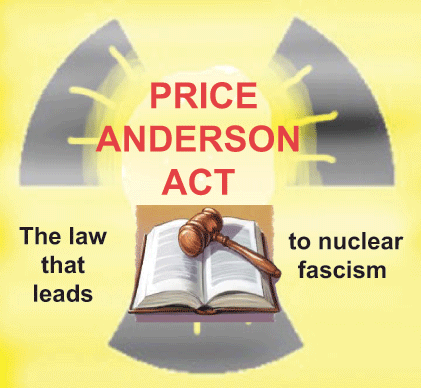
The Price-Anderson Act’s present iteration expires in 2025, and time is ticking. Lawmakers can certainly renew it elsewhere.
But a failure to renew it would throw the entire nuclear industry into uncertainty—SMRs included—potentially delaying deployment,
The ADVANCE Act could give nuclear SMR developers more than a few advancements
RAHUL RAO, 15 Apr 23 IEEE Spectrum,
Small modular reactors (SMRs) power many of today’s nuclear enthusiasts’ clean-energy dreams. ………….
In the U.S., SMR designers, operators, and fuel suppliers must all pass the Nuclear Regulatory Commission (NRC), the U.S. government’s nuclear arbiter. Unfortunately, SMRs don’t fit neatly into the NRC’s aged regulatory scheme, one built for old and established large reactors. That’s at least part of the reason why, on 3 April, a bipartisan group of U.S. senators unveiled the ADVANCE Act, a bill containing a package of nuclear reforms.
Anyone hoping for total renovation of the NRC will be disappointed; the act retains the philosophy that NRC approval is necessary. But the act would order a platter of small, subtle changes to the NRC’s innards. At least some SMR proponents are optimistic that—if the act passes—those changes could smooth the ways for a growing number of SMR developers.
…………. For one, applicants today must pay around $300 for each hour of the NRC’s time. When a single review can take tens of thousands of hours, these fees pile up. Larger firms like Rolls-Royce might be able to afford them, but smaller SMR developers—more than a few of them nascent startups—may struggle. The act would offset some of those costs: around half, according to an NIA estimate.
The act would also establish prizes. “Those prizes involve the first [developers] going through the different regulatory frameworks that the NRC has,” says Erik Cothron, an analyst at the NIA. For instance, the bill would reward the first reactor designer to receive the stamp of Part 53, a new SMR-specific licensing process that Congress ordered the NRC to create in 2018.
Nuclear-themed prizes may make for a fun day at the fair, but their dividends are more than short-term. The prizes, the NIA analysts say, would also pay back developers who might have to bear with a sluggish NRC whose regulators are themselves still learning how to navigate new regulatory routes.
Additionally, the act would require reports on several NRC-related topics, such as: how to license nuclear reactors for applications beyond electricity (such as heating); how to speed up approvals for reactors at previously developed “brownfield” sites (such as depreciated fossil fuel power plants); and how effectively the NRC might license alternative sources of nuclear fuel.
Reports like these might seem like busywork for bureaucrats, but analysts say they serve an important risk-reducing role, giving SMR developers (and investors) a clearer picture of and more confidence in the path ahead.
NRC reporting on alternative sources of nuclear fuel, in particular, would be especially noteworthy for SMR developers. Fueling most SMR designs is so-called high-assay low-enriched uranium (HALEU), which has a higher uranium-235 content than larger reactors’ fuel. Currently, the world’s only commercial HALEU provider is TENEX, a Russian state-owned company: a source that has become particularly problematic in the wake of Russia’s aggression in Ukraine. Licensing a more geopolitically tenable HALEU supply chain, then, is a priority for any U.S.-based SMR project.
Of course, all speculation is moot unless the ADVANCE Act clears Congress.
The Act isn’t Congress’s first recent recent attempt at nuclear reforms. The ADVANCE Act shares multiple provisions and supporters with an earlier bill called the American Nuclear Infrastructure Act (ANIA), first introduced in 2020. However, ANIA never saw the light of legislative day.
The Act isn’t Congress’s first recent recent attempt at nuclear reforms. The ADVANCE Act shares multiple provisions and supporters with an earlier bill called the American Nuclear Infrastructure Act (ANIA), first introduced in 2020. However, ANIA never saw the light of legislative day.
If the ADVANCE Act followed ANIA’s fate, it wouldn’t deal a mortal wound to SMR developers. But one of the ADVANCE Act’s other provisions is crucial to U.S. nuclear energy as a whole: It would renew the Price-Anderson Act, which mandates civilian nuclear plants carry insurance that would compensate members of the public for severe accidents.
The Price-Anderson Act’s present iteration expires in 2025, and time is ticking. Lawmakers can certainly renew it elsewhere. But a failure to renew it would throw the entire nuclear industry into uncertainty—SMRs included—potentially delaying deployment, according to Adam Stein, an analyst at the Breakthrough Institute think tank, which helped give input on earlier drafts of the bill’s text. https://spectrum.ieee.org/small-modular-reactors-advance-act
The Pros And Cons of Modular Nuclear Reactors
By Leonard Hyman & William Tilles – Apr 10, 2023 https://oilprice.com/Alternative-Energy/Nuclear-Power/The-Pros-And-Cons-of-Modular-Nuclear-Reactors.html
- Customization in nuclear power led to isolated and non-transferable experiences and limited the industry’s growth.
- Small modular reactors are a new approach that allows for standardization and assembly line efficiency, but also offer logistical and funding challenges.
- The future of nuclear energy could rely, in part, on the development and implementation of small modular reactors.
Did you ever get the feeling that you’ve seen this movie before, except with another name? The remake, maybe in color this time or with a younger cast? Well, nothing wrong with recycling but not when you get the uncomfortable notion that the actors don’t know that somebody did it before them.
Take nuclear power What went wrong last time around? We suggest that a principal culprit was customization. Almost every utility wanted a nuke tailored to its needs, site by site. Thus, each site had its own problems, and solving them produced little experience that helped anywhere else.
France, of course, was the main exception. The French state, which owned the utility, settled on one design and repeated it again and again. Of course, the French utility had the scale that U.S. and British’s utilities lacked. And the French never shied from dirigisme, state control of the economy. If the government planned to finance, subsidize and insure the industry, it might as well specify what it wanted. Not so in the USA, where we didn’t want the government to tell utilities what to buy, although we had no problem subsidizing and insuring whatever they built.
Today, we applaud the efforts to design nuclear power stations of smaller size, which will achieve economies of scale by constructing identical equipment in a manufacturing setting and shipping the modules to the construction site where they will be assembled. We have yet to establish whether the modular units will be substantially cheaper, and we have a good idea that most of the designs will not solve the nuclear waste problem. We are still determining whether the public will accept the new nukes more warmly than the old ones, too. But we are confident that builders will have less money at risk in any one piece of machinery, which is good.
Here’s our worry. There are at least 21 announced small modular reactor technologies ( as we wrote in a previous report), some with big-name tech backers. It is almost as if some tech entrepreneurs that can no longer find app start-ups to fund have plunged into nuclear energy.
Now, let’s do some rough numbers. There are 439 nuclear power plants in the world (92 in the USA, 56 in France, 54 in China and 37 in Russia, 33 in Japan, and 24 in South Korea). Over the coming 20 years, we believe most of these reactors will have to be retired, some in extreme old age. Figure that the new units might average one-tenth to one-quarter the size of the old ones.
So maybe a requirement for 4000 units over 20 years. Or 200 units per year. Divide that by 20 different designs. If each producer got an equal share, that would mean ten units per year. We don’t know but have to ask whether that number would yield financing for a factory that could achieve economies of scale.
Now add on the nationalism and security issues. Should we expect the USA, France, Russia and China to buy from foreign sources? If they require in-country sourcing, it is more difficult for any manufacturer to achieve real scale. The contestable market for manufacturers might be closer to 100 units per year, maybe less. That might not give room for manufacturing economies of scale.
We do not expect to see reliable analyses of the manufacturing costs of SMRs for some time, if ever, because the information would be a competitive secret. We are not even sure that current cost estimates are reliable, as opposed to come-ons to bring in generator companies to sign memoranda of interest, which are not contracts but might convince backers to put up money to build a factory.
However, let’s assume that manufacturing a reactor in a factory is not much different than manufacturing an airplane or automobile. Each facility ( or firm) has a U-shaped or saucer shaped cost curve. That is, cost per unit is high when volume is low, hits a low point at a a given volume, and then, eventually rises as the firm hits diseconomies of scale. [graph on original]
Average cost per unit at given production volumes
Let’s say that the total market per year for the product is 200 units. With the optimal, low-cost-per-unit production point at 50-60 units, the market couldn’t support more than four manufacturers. Whether the nuclear market can support 21 or four manufacturers depends on presently unknown manufacturing cost curves. As good capitalists, you might ask why consumers should care if a bunch of manufacturers put up plants and don’t get enough business to support them and then go under.
Well, there are several reasons. For one, we don’t want manufacturers hard up for orders and profits to skimp on the production process. The nuclear plant had better operate safely. Second, owners of nukes will need decades of service. Would they buy plants from manufacturers that look like they might not be around when needed?
Third, considering the financial consequences of outages, would they want to take a chance on a cheaper unit or rather pay up for perceived quality? Fourth, and most importantly, would government watchdogs encourage a proliferation of designs, making their jobs harder?
We don’t expect many of these SMR providers to get off the ground, especially if the government, the real backer of the industry, decides to opt for uniformity in order to get economies of scale in manufacturing and in regulation. In short, we’d put our money on the big names with long years of servicing their products.
Finally, SMRs, while welcome, neither substantially reduce nuclear costs nor cure the waste disposal problem, although they should reduce the financial burden inherent in big nuclear projects. In other words, they seem like a better way to pursue nuclear energy, which remains the most expensive, environmentally controversial, non-carbon producer. Is there a better way?
Canadian First Nations do not want small nuclear reactors on their lands

Decolonizing energy and the nuclear narrative of small modular reactors https://policyoptions.irpp.org/magazines/february-2022/decolonizing-energy-and-the-nuclear-narrative-of-small-modular-reactors/
Kebaowek First Nation is calling for an alternative to a planned SMR project, one that won’t undermine proper consultation and leave a toxic legacy.
by Lance Haymond, Tasha Carruthers, Kerrie Blaise, February 7, 2022 In early 2021, the Canadian Nuclear Safety Commission began reviewing the application from a company called Global First Power to build a nuclear reactor at the Chalk River Laboratories site about 200 kilometres northwest of Ottawa.
This project, known as a micro modular reactor project, is an example of the nuclear industry’s latest offering – a small modular reactor (SMR).SMRs are based on the same fundamental physical processes as regular (large) nuclear reactors; they just produce less electricity per plant. They also produce the same dangerous byproducts: plutonium and radioactive fission products (materials that are created by the splitting of uranium nuclei). These are all dangerous to human health and have to be kept away from contact with people and communities for hundreds of thousands of years. No country has so far demonstrated a safe way to deal with these.
Despite these unsolved challenges, the nuclear industry promotes SMRs and nuclear energy as a carbon-free alternative to diesel for powering remote northern communities. The Canadian government has exempted small modular reactors from full federal environmental assessment under the Impact Assessment Act. Many civil society groups have condemned this decision because it allows SMRs to escape the public scrutiny of environmental, health and social impacts.
The proposed new SMR in Chalk River, like the existing facilities, would be located on Algonquin Anishinabeg Nation territory and the lands of Kebaowek First Nation – a First Nation that has never been consulted about the use of its unceded territory and that has been severely affected by past nuclear accidents at the site.
At this critical juncture of climate action and Indigenous reconciliation, Kebaowek First Nation is calling for the SMR project at Chalk River to be cancelled and the focus shifted to solutions that do not undermine the ability of First Nations communities to be properly consulted and that do not leave behind a toxic legacy.
While these reactors are dubbed “small,” it would be a mistake to assume their environmental impact is also “small.” The very first serious nuclear accident in the world involved a small reactor: In 1952, uranium fuel rods in the NRX reactor at Chalk River melted down and the accident led to the release of radioactive materials into the atmosphere and the soil. In 1958, the same reactor suffered another accident when a uranium rod caught fire; some workers exposed to radiation continue to battle for compensation.
What makes these accidents worse – and calls into question the justification for new nuclear development at Chalk River – is that this colonized land is the territory of the Algonquin Anishinabeg Nation territory (which consists of 11 First Nations whose territory stretches along the entire Ottawa River watershed straddling Quebec and Ontario). Kebaowek First Nation, part of the Algonquin Nation, was among those First Nations never consulted about the original nuclear facilities on their unceded territory, and is still struggling to be heard by the federal government and nuclear regulator. Its land has never been relinquished through treaty; its leaders and people were never consulted when Chalk River was chosen as the site for Canada’s first nuclear reactors; and no thought was given to how the nuclear complex might affect the Kitchi Sibi (the Ottawa River).
History is being repeated at Chalk River today as the government pushes ahead with the micro modular reactor project without consent from Kebaowek. Assessments of the project have been scoped so narrowly that they neglect the historical development and continued existence of nuclear facilities on Kebaowek’s traditional territory. The justification for an SMR at this location without full and thorough consideration of historically hosted nuclear plants – for which there was no consultation nor accommodation – is a tenuous starting point and one that threatens the protection of Indigenous rights.
The narrative of nuclear energy in Canada is one of selective storytelling and one that hides the reality of the Indigenous communities that remain deeply affected, first by land being taken away for nuclear reactor construction, and later by the radioactive pollution at the site. All too fitting is the term radioactive colonialism coined by scholars Ward Churchill and Winona LaDuke, to describe the disproportionate impact on Indigenous people and their land as a result of uranium mining and other nuclear developments. In country after country, the uranium that fuels nuclear plants has predominantly been mined from the traditional lands of Indigenous Peoples at the expense of the health of Indigenous Peoples and their self-determination.
Kebaowek First Nation has been vocal in its objection to the continuation of the nuclear industry on its lands without its free prior and informed consent, as is its right under the United Nations Declaration on the Rights of Indigenous Peoples (UNDRIP). Despite requests for the suspension of the SMR project, pending adequate provisions for Indigenous co-operation and the Crown’s legal duty to initiate meaningful consultation, Kebaowek has yet to see its efforts reflected in government decisions and Crown-led processes.
Nuclear is a colonial energy form, but it is also bio-ignorant capitalism – a term coined by scholars Renata Avila and Andrés Arauz to describe the ways in which the current economic order ignores the planetary climate emergency, human and ecological tragedies, and the large-scale impact on nature. The narrative of nuclear as a “clean energy source” is a prime example of this bio-ignorance. Decision-makers have become fixated on carbon emissions as a metric for “clean and green,” ignoring the radioactive impacts and the risks of accidents with the technology.
It is more than 70 years since Chalk River became the site for the splitting of the nucleus. The continuation of nuclear energy production on unceded Indigenous territory without meaningful dialogue is a telling example of continued colonial practices, wherein companies extract value from Indigenous land while polluting it; offer little to no compensation to impacted communities; and abide by timelines driven by the project’s proponents, not the community affected. We need to move away from this colonial model of decision-making and decolonize our energy systems.
The challenge of climate change is urgent, but responses to the crisis must not perpetuate extractivist solutions, typical of colonial thinking, wherein the long-term impacts – from the production of toxic waste to radioactive releases – lead to highly unequal impacts.
The authors thank Justin Roy, councilor and economic development officer at Kebaowek First Nation, and M.V. Ramana, professor at the School of Public Policy and Global Affairs at the University of British Columbia, for contributing to this article.
Small Modular Nuclear Reactors may not be the holy grail for energy security, net zero
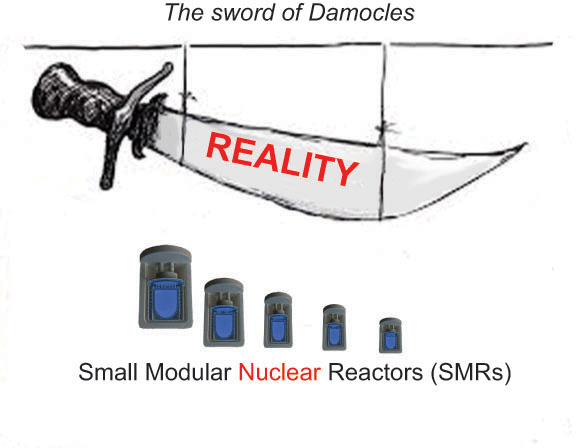
So, if SMRs are the current political flavour of the month, how have we reached this position when there is still no formal approval of the technology from regulators, let alone practical evidence of how it can operate in the real world?
It’s possible to achieve both energy security and the UK’s climate goals without blowing the budget on next-gen nuclear technologies, according to Andrew Warren.
Andrew Warren, Chairman of the British Energy Efficiency Federation. https://electricalreview.co.uk/2023/03/29/smrs-may-not-be-the-holy-grail-for-energy-security-net-zero/
Electrical Review covered in-depth the array of announcements that were made during the Spring Budget, but there was arguably one announcement above all that was most pertinent to the net zero drive. That was when Chancellor Jeremy Hunt reconfirmed – for the fifth time – that the Government intends to create a new Great British Nuclear agency.

It is a name that of itself may bring comfort to all those living on the nuclear-free island of Ireland.
So what will this agency do? Well, the Chancellor explained that, when launched, it will run a competition this year for the UK’s first Small Modular Reactor (SMR). The plan is for it to eventually award £1 billion in co-funding to a winner to build out an SMR plan.
This competition has some distinct echoes. Back in March 2016, the Government launched a competition to identify the best value SMR design for the UK. To the best of my knowledge, nobody has ever claimed that prize, of £250 million.
This re-announcement prompted me to consider the background to this Budget announcement.
It comes at a time in which private sector funding for larger nuclear power stations is proving to be extremely difficult. There is a lengthy list of large pension funds that have publicly refused to get involved with providing capital for the hapless Sizewell C pressurised water reactor project in Suffolk. Meanwhile, European Commission President Ursula von der Leyen is rumoured to be promoting the inclusion of SMRs within the European green investment taxonomy, whilst simultaneously excluding pressurised water reactors which make up most of the existing nuclear fleet.
So, if SMRs are the current political flavour of the month, how have we reached this position when there is still no formal approval of the technology from regulators, let alone practical evidence of how it can operate in the real world?

In January, the UK Government announced that six SMR vendors had applied for their designs to be formally assessed with a view to commercialisation in Britain. The companies have joined a much publicised Rolls-Royce-led consortium and will be subjected to an assessment process carried out by the UK’s Office of Nuclear Regulation (ONR), which will look in exhaustive detail at reactor designs proposed for construction.
Designs that successfully complete the Generic Design Assessment (GDA) – which is expected to take between four and five years – will then be ready to be built anywhere in the country, subject to meeting site-specific requirements.
Why do we need new reactor designs?
Recent results of orders placed for larger nukes are uniformly poor, with reactors invariably late and over budget. Some of the worst cases, notorious projects in Olkiluoto, Finland and Flamanville, France, have seen construction periods of 18 years and costs of three to four times above the expected level.

So, SMRs are being increasingly seen as the new saviours for the nuclear industry. This category embodies a range of technologies, uses and sizes, but relies heavily on features that were the selling points for larger designs. They are smaller than current stations which produce 1,200MW to 1,700MW of electricity. Instead, sizes range from 3MW to about 500MW. The Rolls-Royce design is a 470MW pressurised water reactor, which is bigger than one of the reactors at Fukushima in Japan that suffered serious damage in the 2011 tsunami.
These advanced designs are not new – sodium-cooled fast reactors and high temperature reactors were built as prototypes in the 1950s and 1960s – but successive attempts to build demonstration plants have been short-lived failures. It is hard to see why these technologies should now succeed given their poor record.
A particular usage envisaged for some of the technologies is production of hydrogen. However, as Professor Stephen Thomas of Greenwich University recently pointed out to me, to produce hydrogen efficiently, reactors would need to provide heat at 900°C. This, he said, is “a temperature not yet achieved in any power reactor, not feasible for a pressurised water reactor or boiling water reactor and one that will require new exotic and expensive materials.”
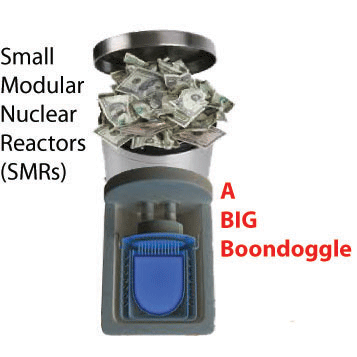
Developers of SMRs like to give the impression that their designs are ready to build, the technology proven, the economic case established and all that is holding them back is Government inactivity. However, taking a reactor design from conception to commercial availability is a lengthy and expensive process taking more than a decade and certainly costing more than £1 billion.
How can the economics of SMRs be tested?
The main claim for SMRs over their predecessors is that being smaller, they can be made in factories as modules using cheaper production line techniques, rather than one-off component fabrication methods being used at Hinkley Point C. The idea is that the module would be delivered to the site on a truck essentially as a ‘flatpack’. This would avoid much of the on-site work which is notoriously difficult to manage and a major cause of the delays and cost overruns that every European large reactor project suffers from.
However, any savings made from factory-built modules will have to compensate for the scale economies lost. A 1,600MW reactor is likely to be much cheaper than 10 reactors of 160MW.
And it will be expensive to test the claim that production line techniques will compensate for lost scale economies. The first reactor constructed will need to be built using production lines if the economics are to be tested. But once the production lines are switched on, they must be fed. Rolls-Royce assumes its production lines will produce two reactors per year and that costs will not reach the target level until about the fifth order. So, if we assume the first reactor takes five years to build, there will be another nine reactors in various stages of construction before a single unit of electricity has been generated from the first, and the viability of the design tested.
This could mean that perhaps about 15 SMRs will need to be under construction before the so-called ‘nth of a kind’ settled-down cost is demonstrated. But once the initial go ahead is given, there will be pressure on the Government to continue to place orders before the design is technically and economically proven, so the production lines do not sit idle.
Will SMRs be a major contributor to meeting the UK’s climate change targets?

The selling point for nuclear power is that it is a relatively low-carbon source of power that can replace fossil fuel electricity generation in the UK and elsewhere. However, by the time SMRs might be deployable in significant numbers, realistically after 2035, it will be too late for them to contribute to reducing greenhouse gas emissions. Electricity is acknowledged to be the easiest sector to decarbonise. If the whole economy is to reach net zero emissions by 2050, then this sector will have to reach that point long before then, probably by 2035. So SMRs appear to be too little, too late.

There is also a fear that SMRs will create more waste than conventional reactors, according to a study recently published in Proceedings of the American National Academy of Sciences. The research notes that SMRs would create far more radioactive waste, per unit of electricity they generate, than conventional reactors by a factor of up to 30. Some of these smaller reactors, with molten salt and sodium-cooled designs, are expected to create waste that needs to go through additional conditioning to make it safe to store in a repository.
And yet, despite the past failures of nuclear power and increasing public scepticism, there remains an appetite within the British Government to give the nuclear industry one more chance.
It remains to be seen whether the Government follows its instinct to continue supporting the sector or whether the amount of public money at risk makes such a decision politically impossible, given the massive underwriting these projects require by consumers and taxpayers.
Nuclear’s specious claims
The claims being made for SMRs will be familiar to long-time observers of the nuclear industry: costs will be dramatically reduced; construction times will be shortened; safety will be improved; there are no significant technical issues to solve; nuclear is an essential element to our energy mix.
In the past such claims have proved hopelessly over-optimistic and there is no reason to believe results would turn out differently this time. Indeed, the nuclear industry may well see itself in this ‘last-chance saloon’.
The risk is not so much that large numbers of SMRs will be built; it is my belief that they won’t be. The risk is that, as in all the previous failed nuclear revivals, the fruitless pursuit of SMRs will divert resources away from options that are cheaper, at least as effective, much less risky, and better able to contribute to energy security and environmental goals. Given the climate emergency we face, surely it is time to finally turn our backs on this failing technology.
Andrew Warren is a former special advisor to the House of Commons environment committee. Special thanks to Greenwich University’s Professor Stephen Thomas for his advice for this piece.
Small nuclear reactors – the global hype and hoax continues, especially in Europe
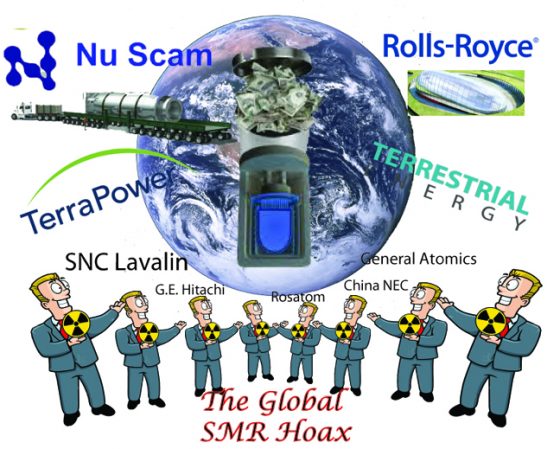
Some 13 European Union countries including Italy on Tuesday signed a joint
declaration urging more research and innovation in the sector of mini
nuclear power reactors as part of a new alliance. The 13 EU countries,
including Italy, are calling for “a favourable industrial and financial
framework for nuclear projects”, promoting “research and innovation in
particular for small modular reactors and advanced modular reactors”.
Ansa 28th March 2023
NuScale Power the canary in the small modular nuclear reactor market
SMRs are being marketed as a solution to the climate crisis, but they’re already far more expensive and take much longer to build than renewable and storage resources – that we already have.
Utility Dive, David Schlissel, 21 Mar 23, Davis Schlissel is the Institute for Energy Economics anf Financial Analysis director of resource planning analysis.
NuScale is hoping to be among the first of about a dozen companies trying to take advantage of the much-hyped market for small modular nuclear reactors or SMR. So far, however, the Oregon-based company is looking like the first canary in the coal-mine.
Considered a leader in the new technology, NuScale is marketing its SMR project by claiming that the reactor design project will save time and money – persistent problems for traditional large nuclear plants.
But NuScale and the Utah Municipal Power Systems, its partner in an SMR project planned for Idaho, announced early in January, that the target price for the power from their proposed modular reactor had risen by 53% from $58/MWh to $89/MWh……..
The announcement has serious implications for all would-be SMR manufacturers………………
the new $89/MWh target price already means that power from the NuScale SMR will be much more expensive than renewable and storage resources even with an estimated $4.2 billion in tax-payer subsidies.
……………………………….. The gap is only going to get larger as the costs of building SMRs rise and costs of renewables and storage continue to decline.
………….. Using SMRs as backups for renewables will not be financially feasible
………………………………….evryone – utilities, ratepayers, legislators, federal officials and the general public, should be very sceptical about theindustry’s current claim that the new SMRs will cost less and be built faster than previous designs. https://www.utilitydive.com/news/nuscale-power-small-modular-reactor-smr-ieefa-uamps/645554/
European Tiny Modular Reactor Deal Starts With Absurdly Expensive Electricity

Already 2.4 times as expensive as very, very expensive Hinkley. First of a kind, so very likely to double or more in price. Very unlikely to be built before 2040 due to long-tailed risks.
Small modular reactors won’t achieve economies of manufacturing scale, won’t be faster to construct, forego efficiency of vertical scaling, won’t be cheaper, aren’t suitable for remote or brownfield coal sites, still face very large security costs, will still be costly and slow to decommission, and still require liability insurance caps. They don’t solve any of the problems that they purport to while intentionally choosing to be less efficient than they could be. They’ve existed since the 1950s and they aren’t any better now than they were then.
By Michael Barnard, 25 Mar 23, https://cleantechnica.com/2023/03/23/european-tiny-modular-reactor-deal-starts-with-absurdly-expensive-electricity/
Supposedly a European energy deal has been reached in which a US firm sells a bunch of tiny nuclear reactors to European countries at an enormous price per GW. It’s hard to think that anybody would ink the deal as described.
It was a Bloomberg piece, and Bloomberg normally gets the facts right, although Bloomberg New Energy Finance gets the framing right far more often. And a bit of evaluation seems to confirm the basics. So let’s tear it apart.
Let’s start with small modular nuclear reactors (SMR). The premise is that they will be a lot cheaper than big nuclear reactors because, you know, modularity. Anything you can manufacture in large numbers drops in price, typically by 20% to 27% for every doubling of units. That’s a truism known as Wright’s Law after the first management consultant who observed it, the experience curve per Boston Consulting Group which happily stole and rebranded it or just the learning curve.
There are a bunch of problems with this premise when it comes to nuclear electricity generation. I’ve written about them, had my content peer-reviewed and included in text books, and debated them with nuclear industry proponents for audiences of a couple of hundred institutional investors likely representing funds worth close to a trillion, so I’m just going to quote myself:
Small modular reactors won’t achieve economies of manufacturing scale, won’t be faster to construct, forego efficiency of vertical scaling, won’t be cheaper, aren’t suitable for remote or brownfield coal sites, still face very large security costs, will still be costly and slow to decommission, and still require liability insurance caps. They don’t solve any of the problems that they purport to while intentionally choosing to be less efficient than they could be. They’ve existed since the 1950s and they aren’t any better now than they were then.
As I discussed with Professor Bent Flyvbjerg, megaprojects expert and author of How Big Things Get Done recently, small modular reactor firms are trying to hunt for an optimized point on the continuum between the efficiencies of big thermal generation and modularity, and I don’t think they are going to find it.
And that’s really true for Last Energy if this reporting is remotely accurate. So what’s the story? Well, apparently they’ve signed a $19 billion deal to supply 34 nuclear reactors that are 20 MW each. Apparently they are going to at least Poland and the UK, although regulatory approval stands in their way.
The first thing that caught my eye was the MW capacity. 34 reactors of 20 MW each only adds up to 680 MW of nameplate capacity. That’s smaller than a billion dollar offshore wind farm that takes ten months to build.
Side note: Nuclear nameplate capacities are usually reported with units of MWe, or megawatts of electricity. That’s because their thermal energy output is perhaps three times the size, but meaningless, as all we care about is the electricity. I just stick with MW usually because the best comparison is to wind and solar which don’t create and waste a lot of heat. However, at 20 MWe, the tininess of the reactor and related thermal generation suggests that the efficiency of turning heat into electricity is probably much worse. That’s the point about thermal generation liking to scale and why everyone building nuclear went bigger in the 1970s and 1980s so that it wouldn’t be as expensive.
So, 20 MW. Is that accurate? I went to their public website, and sure enough, that’s the size. It’s their only claimed product, although they have built and delivered none of them anywhere.
The second thing that caught my attention was the eye-watering price tag, $19 billion. That seems really high even for nuclear, and especially high for only 680 MW.
Maybe this would be reasonable if nuclear normally had capacity factors of 20%, and this tech was operating at 90%, but nuclear globally runs about 90% of the time. It has high uptime, which proponents overstate as an advantage, but is the reality. You can’t actually operate nuclear less than 90% of the time and have it be reasonably priced due to the cost of building the stuff.
How does this compare? Let’s pick the British Hinkley Point C nuclear expansion, one of the most expensive and slowest in the developed world. It is so expensive that the developers demanded and got about $150 per MWh wholesale guaranteed for 35 years with inflation bumps. This when offshore wind energy is running around $50 per MWh wholesale and onshore wind and solar are running around $30 per MWh wholesale. Yeah, Hinkley is absurdly expensive electricity.
Let’s take a walk through memory lane. Hinkley was supposed to deliver electricity for about $24 per MWh when it was originally proposed in 2008, and be in operation by now. Five times the cost per MWh accounting for inflation, so a clear miss. And the current plan is pretending that in 2027 it’s going to be grid-connected, but that’s undoubtedly 2028 at earliest, 20 years after it was originally set in motion, and 11 years after start of construction. So far, so nuclear.
Hinkley’s current cost projection — five years from grid connection, so incredibly likely to rise by billions — is about $40 billion. That’s a lot of amortization per MWh, hence the remarkably high wholesale price. As a reminder, Iceland, which runs 100% on renewables, is delivering consumer retail prices lower than this wholesale price. All of Canada is providing consumer rates below this wholesale cost, although recent news makes it clear that nuclear heavy Ontario are subsidizing consumer rates by US$4.4 billion annually to prevent revolt. Hmmm, is this a trend?
Surely Hinkley must be turning out to be more expensive than this SMR deal? Well, no. Hinkley is building two big, complex, next-generation EPR reactors with 1,630 MW capacity each. That’s 3,260 MW total capacity. That’s almost five times the capacity of the Last Energy SMRs. For only two times the cost.
The ratio is pretty clear. These SMRs will be about 2.4 times the cost per MWh of the very expensive Hinkley facility. All else being equal — and the only reason we have to think this won’t be equal is that nuclear costs always rise, so the $19 billion is likely to be closer to $40 billion — this is already about $360 per MWh wholesale prices for electricity.
What’s the consumer retail price of electricity in the UK? About $340. What about coal heavy Poland? $181.
Yes, the very first announcement of a nuclear deal, probably well over a decade before anything might be connected to the grid, has wholesale rates well over consumer retail rates today.
On original – image of project categories which meet time, budget, and benefits expectations vs ones that don’t, from How Big Things Get Done by Bent Flyvbjerg and Dan Gardner -(nuclear is the worst!)
This is the first version of new material from Flyvbjerg and his team. They have assembled over 16,000 megaprojects’ worth of data on budget, schedule, and asserted benefits vs actuals over 25 categories of projects. This is a view by likelihood of cost overruns. The top of the chart has the least likely categories to go over budget once the shovel hits the ground. The bottom has the categories most likely to go over budget, often by multiples of the original projections. You’ll note where nuclear lies.
SMRs are attempting to fix that by making a bunch of smaller, repeatable reactors instead of big ones. As I pointed out earlier, they are foregoing the efficiencies of being big enough to receive the benefits of physics for thermal generation in order to hunt for a point where modularity optimizes costs and risks sufficiently to make it economically viable.
However, at 2.4 times the cost per MWh of one of the most expensive nuclear generation projects on the planet, clearly they are nowhere near the field, never mind anywhere near the goal. As Flyvbjerg points out several times, first of a kind projects have massive long-talked risks, and Last Energy’s announcement has first of a kind in big neon screaming signage over every part of the deal.
Already 2.4 times as expensive as very, very expensive Hinkley. First of a kind, so very likely to double or more in price. Very unlikely to be built before 2040 due to long-tailed risks. Who exactly signed a deal like this, and why?
UPDATE:
Comments from Lyle Morton, Vice President of Marketing & Communications, Last Energy: Reaching out to clarify an important detail regarding the Last Energy announcement. The $19bn is not a cost figure but the total value of the electricity under contract over the duration of the 4 contracts — which range from 20-24 years.
My take: That’s still a ridiculous $160-$170 per MWh wholesale by the initial terms of the deals before all of the inevitable problems with first of a kind deployments. Even at $160-$170, I’ll believe this only when I see it in operation, at the price point specified, and delivering benefits as promised. I won’t be holding my breath.
The UK Budget pushes nuclear and CCS, and the military link with small nuclear reactors is now overt

‘nuclear submarines would be too costly to build and maintain without an “industrial base” largely funded by elevated consumer electricity bills’.
Renew Extra Weekly, 26 Mar 23
The UK spring budget announced investment of £20bn spread over the next two decades in carbon capture and support for nuclear, with a commitment to ‘spades in the ground on these projects from next year’ as energy security secretary, Grant Shapps, put it
…………………………………. boosting our own sources of clean generation is a must to shield us from future price shocks’. But it’s hard to see how investing in CCS will help- that is fossil based. And, like nuclear, it’s expensive. …………………………………………..
There was very little .. comfort….. in the Budget Red Book, even in the ‘Green Industries’ section (p.64-65). That focussed on CCS/CCUS and nuclear, with SMRs an initial target for the new Great British Nuclear programme, and nuclear ‘to be included in the green taxonomy, subject to consultation, encouraging private investment’.
No mention of the negative impact of the windfall tax (EGL) on renewables. Indeed there is no direct mention of renewables anywhere in the text, and no mention of energy saving, apart from indirectly via 2 year extension of the Climate Change Agreement scheme.
,…………………………………. Greenpeace said: ‘This misguided Budget shows the stranglehold fossil fuel and nuclear lobbies have on this government’.
……………………………………………………… For the moment, since the chancellor said in his budget speech that nuclear was ‘vital to meet our net-zero obligations’, he will be launching ‘the first’ competition for small modular reactors, to be run by Great British Nuclear and ‘completed by the end of this year’. Though Carbon Brief noted that, actually, ‘the government previously launched a £250m competition for small nuclear in 2015, but no winners were announced. Since then, it has offered various pots of money, including “up to” £210m for Rolls Royce to develop its reactor design and “up to” £170m for “advanced” modular reactors.’
In parallel, the Government will be looking to the inclusion nuclear power in the UK ‘Green Taxonomy’. But this isn’t a done deal yet, there will be consultation, and, as was pointed out in an answer to a Parliamentary Question from Carolyn Lucas, ‘with the support of the independent Green Technical Advisory Group and stakeholder engagement, we will take the time to get the taxonomy right to ensure it is usable and effective’. That may lead to quite a debate, as has happened in the EU where the inclusion of nuclear (and gas) in its green taxonomy has been very contentious.
In the UK context, would inclusion actually help? Not everyone thought so- from an investment perspective, the problems were economic not environmental. But, quite apart from being expensive, there were, actually, some environmental issues. Nuclear is low carbon, but not zero carbon. It leads to dangerous waste residues. The pro-nuclear lobby these days sets that against its assumed role in support of variable renewables, but that may not be realistic: nuclear plants are inflexible and get in the way- see my earlier post.
And so the somewhat tired old nuclear debate goes on. With though a new extension- a military and civil nuclear interaction. In the recent Defence Review, the government said that ‘we will proactively look for opportunities to align delivery of the civil and defence nuclear enterprises, seeking synergies where appropriate to ensure a coherent demand signal to our industry and academic partners.’ For University of Sussex Prof. Andy Stirling, that confirmed his view that ‘nuclear submarines would be too costly to build and maintain without an “industrial base” largely funded by elevated consumer electricity bills’.
It certainly does provide more evidence for co-dependence, with ‘joint expansion’ also possibly in mind. Well, whatever the intent, it’s arguably good that the military-civil link is now overt rather than hidden. But it does open up all sorts of strategic issues.
https://renewextraweekly.blogspot.com/2023/03/the-uk-budget-pushes-nuclear-and-ccs.html
Bad news for NuScale.

The unpredictable costs of nuclear have stung another US pioneer. NuScale, which received regulatory approval in January for its Voygr design, is the first SMR to get final approval from the Nuclear Regulatory Commission (NRC) for deployment in the US.
At the same time as it announced approval, however, NuScale that the cost of its systems has expanded, so it now expects to deliver electricity at $90 per MWh, instead of the $55/MWh it initially promised.
That’s significant because, despite receiving $4.2 billion in subsidies, NuScale is now promising electricity which is much more expensive than that from renewable sources such as solar and wind. Without funding from the Inflation Reduction Act and previous government schemes, NuScale’s power would be around $120/MWh, according to Utility Dive.
From : Last Energy claims to have sold 24 nuclear reactors in the UK for £2.4 billion
Last’s 20MW disposable power plants join a queue of six companies selling SMRs in Britain more https://www.datacenterdynamics.com/en/news/last-energy-claims-to-have-sold-24-nuclear-reactors-in-the-uk-for-24-billion/
Rolls Royce marketing its mini nuclear reactors to Sweden, Finland, Czech Republic, but deals could collapse
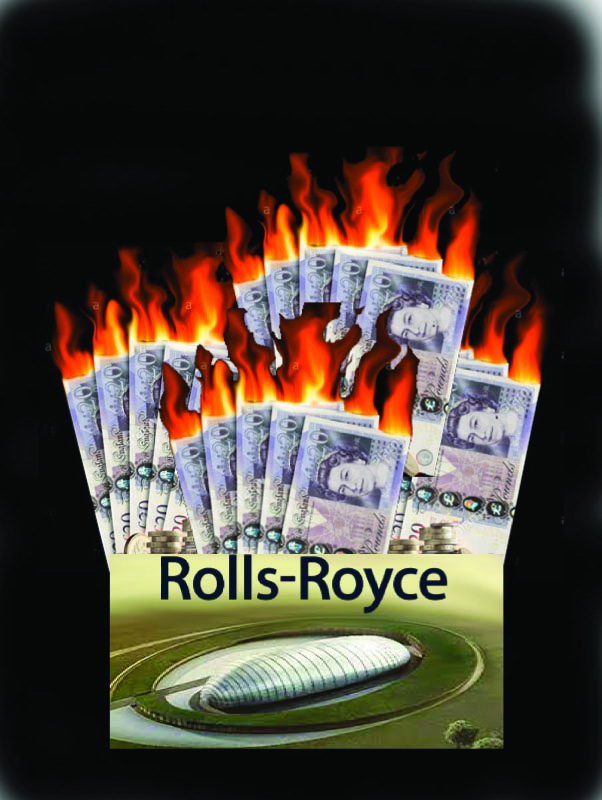
Rolls-Royce could build mini-nuclear reactors in Sweden and Finland under
plans being explored by Helsinki’s national energy company. Finnish
government-owned utility Fortnum has signed an early stage deal with
Rolls-Royce’s nuclear power business to explore uses of its small modular
reactors (SMRs) in the two Nordic countries. Shares in Rolls-Royce jumped
over 6pc in London on the news, amid a broader market rally.
The early stage deal comes as Rolls-Royce awaits a UK government decision on whether
to buy the reactors, which are smaller and cheaper than full scale plants.
Rolls-Royce’s 470MW units cost £1.8bn each. As well as the Finns, the
Czech government is also considering purchasing the technology as part of
efforts to decarbonise energy systems. Despite international interest,
Rolls-Royce has warned that deals may collapse unless Britain signals it
backs the technology by placing its own orders.
Telegraph 21st March 2023
Mini nuclear reactors all the rage, but are they the answer?
Mini nuclear reactors have appeared on the scene as an exciting prospect since the
spring budget, but how do they weigh up to traditional plants?
London-based start-up Newcleo laid out plans over the weekend to raise £900mln to build
small reactors in the UK on the back of the news. US-based developer Last
Energy then announced it had signed a deal to sell 24 of its mini nuclear
plants to UK customers on Monday, with these set to cost just £100mln
each.
Rolls-Royce Holdings PLC, a key player in the industry and the only
firm with SMR tech currently going through the UK’s regulatory process,
said it welcomed the government’s new stance, meanwhile.
What it may not
welcome is heated-up competition, though, with Newcleo among six rival
firms which have already applied to enter the UK’s stringent SMR design
assessment process, and the announcement likely to prompt more –
including Last Energy. Cavendish Nuclear/X-Energy, GE-Hitachi Nuclear
Energy, GMET Nuclear, Holtec Britain, UK Atomics, mark the others which
have submitted applications for their tech, though none are set to match
the size and output of Rolls-Royce’s.
Proactive Investors 21st March 2023
Lesson from Fukushima: Collusion in the nuclear domain
Nuclear power became an unstoppable force, immune to scrutiny by civil society. Its regulation was entrusted to the same government bureaucracy responsible for its promotion.”
Canada has not heeded these warnings. ……. The CNSC, mandated to protect the public and the environment, lobbied government to abolish full impact assessments for most “small modular nuclear reactors” (SMN
By Gordon Edwards & Susan O’Donnell | Opinion | March 13th 2023 https://www.nationalobserver.com/2023/03/13/opinion/lesson-fukushima-collusion-nuclear-domain
—
This month marks the 12th anniversary of the Fukushima disaster, when three nuclear reactors in Japan suffered catastrophic meltdowns.
A tsunami knocked out the reactors’ cooling systems. The plant was shut down, but radioactivity sent temperatures soaring past the melting point of steel.
Radioactive gases mingled with superheated steam and explosive hydrogen gas, which detonated, spreading radioactive contamination over a vast area; 120,000 people were evacuated and 30,000 are still unable to go home.
Radioactively contaminated water from the stricken reactors has accumulated in 1,000 gigantic steel tanks, and despite objections from China, Korea and local fishers, Japan plans to dump it into the Pacific Ocean soon.
What caused this catastrophe? Most people blame the tsunami. The commission of investigation in Japan concluded otherwise. In its report to the National Diet, the commission found the root cause was a lack of good governance.
The accident “was the result of collusion between the government, the regulators and TEPCO [the nuclear company], and the lack of governance by said parties. They effectively betrayed the nation’s right to be safe from nuclear accidents. Therefore, we conclude that the accident was clearly ‘man-made.’ We believe that the root causes were the organizational and regulatory systems that supported faulty rationales for decisions and actions…”
The commission chairman wrote: “What must be admitted — very painfully — is that this was a disaster ‘made in Japan.’ Its fundamental causes are to be found in the ingrained conventions of Japanese culture: our reflexive obedience; our reluctance to question authority; our devotion to ‘sticking with the program’; our groupism; and our insularity… Nuclear power became an unstoppable force, immune to scrutiny by civil society. Its regulation was entrusted to the same government bureaucracy responsible for its promotion.”
Canada has not heeded these warnings. After Justin Trudeau was elected in 2015, his government did away with environmental assessments for any new reactors below a certain size, thus eliminating scrutiny by civil society. This leaves all decision-making in the hands of the Canadian Nuclear Safety Commission (CNSC) — an agency previously identified by an expert review panel as a captured regulator.
The CNSC, mandated to protect the public and the environment, lobbied government to abolish full impact assessments for most “small modular nuclear reactors” (SMNRs).
Back in 2011, in the midst of the media frenzy about the triple meltdown, Canadians were testifying at federal environmental assessment hearings for up to four large nuclear reactors to be built by Ontario Power Generation (OPG) at Darlington, about 50 kilometres east of Toronto’s edge. The Fukushima disaster was cited repeatedly as a warning.
The panel approved OPG’s plan, but the Ontario government was thunderstruck by the price tag, reputed to be over $14 billion per unit, and cancelled the project.
Now OPG wants to build a smaller reactor at the Darlington site. Since a full impact assessment has been ruled out, CNSC is using the report from 12 years ago as the basis for public interventions. The reactor now proposed (the BWRX-300) has no similarity to any of the reactors that were under consideration then or to any operating today in Canada. Ironically, it is a “miniaturized” version of those that melted down at Fukushima.
CNSC is legally linked to the minister of Natural Resources, who is also tasked with promoting the nuclear industry at home and abroad. The International Atomic Energy Agency (IAEA) warns that regulators must be independent of any agency promoting the industry.
One day after Canada’s Infrastructure Bank gave OPG a $970-million “low-interest loan” to develop the BWRX-300 at Darlington, the minister boasted to a Washington audience that it would soon become Canada’s first commercial SMNR.
CNSC president Rumina Velshi lauded the speed at which the licensing is proceeding, saying that Canada would be the first western country to approve an SMNR built for the grid.
CNSC is at least two years from approving the reactor. Nevertheless, OPG held a ground-breaking ceremony at Darlington in December. The licence to construct seems a foregone conclusion. When asked, CNSC freely admitted that from the day of its inception, it has never refused to grant a licence for any major nuclear facility.
Government, regulator and industry are already on board. Collusion? Or just co-operation?
Gordon Edwards is president and co-founder of the Canadian Coalition for Nuclear Responsibility, a not-for-profit corporation established in 1975. He is a retired professor of mathematics and science at Vanier College in Montreal.
Susan O’Donnell is an adjunct professor at St. Thomas University and a member of the Coalition for Responsible Energy Development in New Brunswick.
Rolls-Royce Small Modular Reactor project running out of cash

3 March 2023 https://www.neimagazine.com/news/newsrolls-royce-smr-faces-financial-problems-10648145
UK-based Rolls-Royce SMR says its £500m ($600m) small modular reactor (SMR) programme will run out of cash by the end of 2024, Reuters has reported. Alastair Evans, Government & Corporate Affairs Director at Rolls-Royce SMR noted: “We aren’t asking the government to make an order (for the nuclear units) today but we need to start negotiations on a deployment plan by the middle of this year. We are facing a cliff edge, by December 2024 the money will have run out.” This would put at risk UK government plans to use SMRs to boost energy security and achieve climate targets.
The 470 MWe Rolls-Royce SMR design is based on a small pressurised water reactor. The design was accepted for Generic Design Assessment review in March 2022 and Rolls-Royce SMR expects to receive UK regulatory approval by mid-2024. A Rolls-Royce-led UK SMR consortium aims to build 16 SMRs. The consortium – which includes Assystem, Atkins, BAM Nuttall, Jacobs, Laing O’Rourke, National Nuclear Laboratory, the Nuclear Advanced Manufacturing Research Centre and TWI – expects to complete its first unit in the early 2030s and build up to 10 by 2035.
Rolls-Royce’s SMR development business received a commitment of £210m from the UK government in 2021 but talks on how the projects would be funded are yet to start. Rolls-Royce’s new CEO Tufan Erginbilgic said recently that there was a sense of urgency in its engagement with government. “We built a capable team (and) without any project, sustaining that team will be a big challenge,” he told reporters after the group published full-year results. He noted that it was vital to move quickly, given that rival companies were developing similar technology.
“It is important that we engage therefore with the UK government urgently, and for a project that we can deploy as soon as possible,” he said. Rolls Royce and shareholders in the SMR business – advisory firm BNF Resources Ltd, US Energy company Constellation and Qatar Investment Authority have invested a total of around £280m.
This and the government money have been used to build the business, which employs some 600 staff across Derby, Warrington and Manchester. The funds have enabled it to start the regulatory process to approve the reactor design and identify sites for plants and factories. In November 2022, Rolls-Royce identified four sites with the potential to deploy multiple SMR units: Trawsfynydd (requiring agreement with Nuclear Decommissioning Authority (NDA) – and the Welsh Government); Sellafield (NDA land availability to be confirmed); Wylfa-South (requiring agreement with Horizon Nuclear Power); and Oldbury-North (also requiring agreement with Horizon Nuclear Power).
Rolls-Royce hopes to build the reactors in UK factories. In July 2022, the company announced six potential locations for the factory, shortlisted from more than 100 submissions from local enterprise partnerships and development agencies. They were: Sunderland in Tyne and Wear, Richmond in North Yorkshire, Deeside in Wales, Ferrybridge in Yorkshire, Stallingborough in Lincolnshire and Carlisle in Cumbria. David White, newly appointed Chief Operating Officer of Rolls-Royce SMR, said another two locations – Shotton in Deeside (Wales) and Teesworks in Redcar (North East) – had been added to the list.
The Dream of NuScale Small Nuclear Reactors Hangs in the Balance.
Wired, 27 Feb 23
A cluster of reactors that are just 9 feet in diameter is supposed to start a nuclear energy resurgence. Mounting costs may doom the project.
JORDAN GARCIA, A deputy utilities manager in Los Alamos, New Mexico, is facing an energy crunch that is typical in the American West. For decades, the county-run utility relied on a cheap and steady mix of coal and hydroelectric power. But the region’s dams are aging and drought-parched, and its coal plants are slated to retire.
The county is aiming to fully decarbonize its grid by 2040, and the city has been tapping more solar lately, but batteries are arriving slowly, and Garcia worries about heat waves that strain the grid after the sun goes down. Wind power? He’d take more of it. But there aren’t enough wires stretching from the state’s windy eastern plains to the mesa-top community. “For us it’s pretty dire,” he says.
For the past few years, Garcia has been counting on a unique nuclear experiment to come to the rescue. In 2017, Los Alamos signed up to join a group of other local utilities as an anchor customer of the first small modular reactors, or SMRs, in the US, created by a company called NuScale. The design, which calls for reactors only 9 feet in diameter, had never been built before, but the initial cluster planned in Idaho Falls, Idaho, was promised to be much cheaper than a full-scale reactor and to offer affordable carbon-free energy 24/7.
To Garcia, this felt like a homecoming. Los Alamos, a town with the motto “Where discoveries are made,” is the birthplace of the atom bomb, and experimental reactors ran not far from downtown for much of the 20th century. But it had never actually used nuclear power to keep the lights on.
This month, Los Alamos and other local utilities across the West were facing a weighty decision: whether to pull the plug on their nuclear dream. NuScale had informed members of the group, Utah Associated Municipal Power Systems, or UAMPS, that the estimated costs of building the six 77-MW reactors had risen by more than 50 percent to $9.3 billion. For Garcia, that translated into a jump in the cost of energy from $58 to $89 per megawatt-hour.
…………… Without extra subsidies from the new Inflation Reduction Act—on top of $1.4 billion already committed to the project by the US Department of Energy—the price to energy users in places like Los Alamos would have doubled.
…………. The project’s power output is only 20 percent subscribed, and UAMPS says it will need to reach 80 percent for planning and construction to proceed next year.

Many a “nuclear renaissance” has fizzled.
…………….. Only two [large nuclear] reactors are being built in the US: a pair of 1100-MW units at the Vogtle plant in Georgia, now seven years delayed and $20 billion over their $14 billion budget.
NuScale hopes its smaller reactors can avoid that fate……… Last month, the company was the first of dozens of companies working on SMRs to have a design approved by US regulators. That makes NuScale first in the race to leap from a “paper napkin” reactor, as critics sometimes deride SMRs, to a real one, though the Idaho project involves a revised design that will need its own approval.
The project has hit roadblocks before. It began with 36 utilities signed on, but that number has fluctuated and dropped to 27 last year. In 2020, several municipal utilities dropped out in response to a construction delay and cost increases. Some later rejoined the project after the US Department of Energy upped its commitment to offset some of the costs.
Critics say those price revisions are a sign SMRs are heading down the same path as projects like Vogtle. For nearly a century, the nuclear power industry’s mantra was that building bigger plants would drive down costs. While existing plants aged and new construction withered, SMR companies began promoting a different philosophy, says David Schlissel, an analyst at the Institute for Energy Economics and Fiscal Analysis, claiming that constructing many small reactors would teach builders how to make them more cheaply.
But the evidence for progress is flimsy, says Schlissel, who notes that his 50-year career has spanned many a “nuclear renaissance” that fizzled. When that philosophy was applied in France, where dozens of reactors were built in the 1980s, costs still increased. Claims that “modularity” will help make construction construction more efficient are also suspect, he adds. The new Vogtle reactors involved nearly 1,500 “modular” components that were largely constructed offsite.
Schlissel also believes that NuScale’s current estimates are rosy because they rely on the approval of its newer design that uses less steel, one of the materials driving the cost increases. But regulators may not back that approach, he says. Towns should get out while they can, he advises, before costs climb higher still, and seek out alternatives like geothermal and battery storage. “Let the buyer beware,” he says.
……………….. officials in Morgan, Utah, a small town in the Wasatch Mountains north of Salt Lake City, decided to make a quick exit from the project…….
This year, the city realized it had new alternatives to the rising costs of nuclear power. While the Inflation Reduction Act is expected to help offset the costs of the Idaho plant, it also includes funds to help rural communities start their own energy projects. Bailey wants the city to become more self-reliant, installing its own solar panels and batteries that reserve power overnight.
In this round, Morgan was the only defector, though another Utah city, Parowan, reduced its commitment from 3 MW to 2 MW—just enough to cover the loss of its coal power. But the new agreement with utilities, negotiated during a two-day meeting with UAMPS members this winter, sets the project under a ticking clock. It includes requirements that the price hold steady at $89 per megawatt-hour, and—most worrying to utilities that want the project to succeed—that the project be at least 80 percent subscribed by next year. If it doesn’t hit that threshold, towns will get a refund on most of their expenses so far.
At this point, the utilities have sunk relatively little of their own money into the project, but that will change in 2024 as the project begins to seek site-specific building approvals followed by actual construction. To get the project fully subscribed, the group is talking with utilities elsewhere in the Northwest, where NuScale is competing with other SMR startups, including the Bill Gates–backed TerraPower, which recently signed a feasibility agreement with PacifiCorp, a private utility. Webb of UAMPS says he is optimistic about where the negotiations are headed.
…………………….. For now, the Los Alamos county council voted to formalize a long-planned increase of their share of the NuScale plant’s power, from 1.8 MW to 8.6 MW. Garcia hopes it will help encourage other utilities to take a chance on sparking a nuclear renaissance. https://www.wired.com/story/the-dream-of-mini-nuclear-plants-hangs-in-the-balance/—
1 This Month



26 September – International Day for the Total Elimination of Nuclear Weapons


PLEASE OPPOSE HR 8255 AND S.3639 – bills would accelerate satellite deployment, with no environmental review or safeguards – https://ncstd5li.quorum.us/campaign/169331/
To see nuclear-related stories in greater depth and intensity – go to https://nuclearinformation.wordpress.com
-
Archives
- September 2026 (219)
- August 2026 (330)
- July 2026 (355)
- June 2026 (287)
- May 2026 (306)
- April 2026 (356)
- March 2026 (251)
- February 2026 (267)
- January 2026 (308)
- December 2025 (358)
- November 2025 (359)
- October 2025 (375)
-
Categories
- 1
- 1 NUCLEAR ISSUES
- business and costs
- climate change
- culture and arts
- ENERGY
- environment
- health
- history
- indigenous issues
- Legal
- marketing of nuclear
- media
- opposition to nuclear
- PERSONAL STORIES
- politics
- politics international
- Religion and ethics
- safety
- secrets,lies and civil liberties
- spinbuster
- technology
- Uranium
- wastes
- weapons and war
- Women
- 2 WORLD
- ACTION
- AFRICA
- Atrocities
- AUSTRALIA
- Christina's notes
- Christina's themes
- culture and arts
- Events
- Fuk 2022
- Fuk 2023
- Fukushima 2017
- Fukushima 2018
- fukushima 2019
- Fukushima 2020
- Fukushima 2021
- general
- global warming
- Humour (God we need it)
- Nuclear
- RARE EARTHS
- Reference
- resources – print
- Resources -audiovicual
- Weekly Newsletter
- World
- World Nuclear
- YouTube
-
RSS
Entries RSS
Comments RSS
 nuclear-news