S. Korea urges U.S. to allow ‘peaceful’ nuclear enrichment SEOUL, Sept. 17 (Yonhap) –– South Korea called for the United States to approve it undertaking “peaceful” enrichment of uranium and reprocessing of spent nuclear fuel, a government think tank said Monday, as little progress has been made in bilateral negotiations to revise the countries’ nuclear accord.
Under a 1974 accord with the U.S., South Korea is banned from enriching uranium or reprocessing spent nuclear fuel. The allies have held five rounds of formal negotiations since 2010 to rewrite the bilateral nuclear cooperation treaty, which expires in 2014…..
Some nonproliferation experts say pyroprocessing is not significantly different from reprocessing, and pyroprocessed plutonium could be quickly turned into weapons-grade material….. http://english.yonhapnews.co.kr/national/2012/09/17/38/0301000000AEN20120917002600315F.HTML
USA public waking up to the dangers of MOX nuclear fuel reprocessing
 MOX or not? Gov’t likes weapons fuel, public doesn’t Equities.com, By Eric Fleischauer, The Decatur Daily, Ala.
  McClatchy-Tribune Information Services Sept. 14--The Energy Department believes it is safe to use weapons-grade fuel at Browns Ferry Nuclear Plant, but not many residents attending a public hearing Thursday agreed.
“They don’t need to have it here,” said Sara Crossfield of Athens, who has a farm near the Limestone County plant. “TVA’s charter requires them to protect us.”
U.S. treaties with Russia require the disposal of 50 tons of surplus plutonium. The treaties authorize disposal by recycling the weapons-grade plutonium into mixed-oxide fuel, or MOX, for use in nuclear reactors. MOX is a mixture of plutonium and low-enriched
uranium.
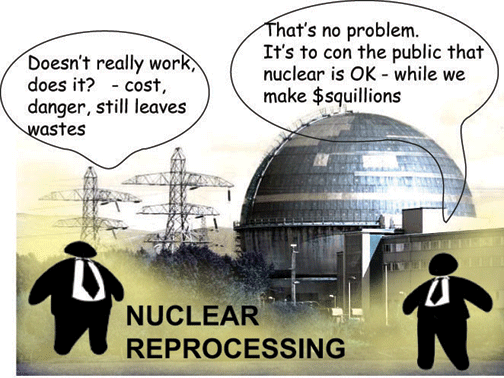
The purpose of Thursday’s public hearing was to receive comments on a draft document describing the environmental impact of using MOX. About 60 people attended.
While MOX is the Energy Department’s preferred alternative for most of the surplus plutonium, the Tennessee Valley Authority said it has no preference. Sachiko McAlhany, document manager for the U.S. Department of Energy, presented a summary of the environmental impact statement. She said the department concluded using MOX “does not appreciably change” the risk posed by conventional uranium fuel.
Neither McAlhany nor a TVA representative, Mick Mastilovic, answered questions at the hearing. The comments from the public will be incorporated into the final environmental impact statement, scheduled for a spring 2013 release.
The plutonium would be reprocessed into MOX at a $6 billion plant in South Carolina, operated by France-based AREVA. It would then have to be transported to Browns Ferry.
Many of the concerns expressed by those attending the hearing involved the cost of creating MOX and the risks involved in transport.
Concerns specific to Browns Ferry focused on the impact of the fuel — which burns at slightly higher temperatures than conventional fuel — on the reactors and the possibility that Browns Ferry would become a terrorist target. Continue reading
Danger of MOX nuclear reprocessing: it’s the plutonium, stupid
 From Plutonium to Power, Spiegal Online 09/07/2012 Russia To Produce Electricity with Former Nukes By Kerstin Brandt “…….What makes the new reactor a particularly delicate case, though, is its fuel.
Of all the bequests of the atomic age, the heavy metal that takes its name from Pluto, god of the underworld, is considered the most dangerous. A nuclear chain reaction initiated with six kilograms (13 pounds) of the material over Nagasaki, Japan, on Aug. 9, 1945, immediately killed 80,000 people. Breathing in just a few milligrams of plutonium dust is fatal to humans.
Vast amounts of this element, which almost never occurs naturally, now exist on Earth. Well more than 1,000 tons of the plutonium, which is one component of spent fuel from nuclear reactors, now sits in spent fuel pools and interim storage facilities, awaiting an indeterminate fate.
Then there are a further estimated 250 tons of weapons-grade plutonium, which consists of the fissile isotope Pu-239 at its highest possible concentration. This is a material produced for a single, military purpose: to trigger the most devastating detonations possible, as reliably as possible.
But what meant power during the arms race has since become a curse. Plutonium is enormously expensive to secure — and completely useless for civilian purposes.
For many years, permanent storage facilities for nuclear waste were the solution of choice among experts in the field. Melted down in a glass matrix and mixed with other highly radioactive nuclear waste, plutonium could be made to disappear deep into the Earth, protected from the elements and from the reach of untrustworthy militaries.
These days, though, that method is essentially off the table, because tough disarmament negotiations reach their goals more quickly when the end result is profit rather than unpredictable storage facility costs. The world’s military superpowers have done this once before: In 1993, as part of the “Megatons to Megawatts” nonproliferation program, the US pledged to buy 500 tons of weapons-grade uranium from Russia. Diluted down to a level suitable for use in a nuclear plant, fuel obtained from Soviet nuclear bombs currently generates one tenth of the United States’ electricity……http://www.spiegel.de/international/world/energy-from-the-bomb-russia-to-produce-electricity-with-former-nukes-a-854318.html
MOX nuclear reprocessing: a Russian project leader’s safety fears
He [ Yevgeny (name changed)] then explains that colleagues and superiors of many years have been leaving the BN-800 project in recent weeks. Their vacated positions, he says, are being given to new employees just starting their careers.
“People who have no experience with the difficulties sodium coolant can cause now head our departments,”… “And you know what? I’m going to leave, too. Or, no, I’m going to run.”
From Plutonium to Power, Spiegal Online 09/07/2012 Russia To Produce Electricity with Former Nukes By Kerstin Brandt “…….. plutonium is not uranium. It’s more toxic and more radioactive, and it’s not easy to dilute.
Yevgeny doesn’t speak English, so he doesn’t understand the disarmament slogan “Global Zero.” Until recently, he was convinced that Russia, alone among world’s countries, had mastered fast reactor technology. He himself worked at Beloyarsk’s fast reactor for many years, after all. But since the plant’s managers assigned him to the construction of the successor model BN-800, Yevgeny has grown doubtful. Continue reading
Dangerous MOX nuclear plant planned, close to highly populated area
About 35,000 people live within 10 miles of the plant. That’s no place for TVA and DOE to be running an experiment with radioactive material in an aging nuclear plant under increased supervision because of major safety problems.
Alabama.com OUR VIEW: Next door, nuclear research, September 09, 2012, By Mike Hollis, The Huntsville Times The Tennessee Valley Authority says it’s willing to consider using a blend of uranium and weapons-grade plutonium as reactor fuel at its Browns Ferry Nuclear Plant near Athens. That’s surprising, given the plant’s safety record.
Part of the problem, critics say, is that this mix of uranium and plutonium oxide fuel, called MOX, makes reactors harder to control, may increase the risk of some types of accidents and raises the threat to public health if an accident results in a major radioactive release. Continue reading
Confusion in Aomori Prefecture about importing radioactive waste
 Aomori Pref. mulling rejecting nuclear waste The Yomiuri Shimbun , 6 Sept 12, AOMORI—The Aomori prefectural government is considering refusing to accept highly radioactive
  waste scheduled to be returned from reprocessing overseas if the central government abolishes its nuclear fuel cycle policy.
The prefectural government was likely prompted to act by recent moves by the central government toward abandoning nuclear power generation.
The village of Rokkasho in the prefecture is home to a spent nuclear fuel reprocessing plant that is considered to be the foundation of the nuclear fuel cycle, in which plutonium and uranium are extracted from spent fuel to be reused.
The plant has yet to begin operating, and spent nuclear fuel from the nation’s nuclear reactors are currently stored at nuclear power plants or at the Rokkasho facility. Some spent nuclear fuel is reprocessed in France and Britain. Vitrified radioactive waste, the highly radioactive waste that is produced in the reprocessing process, has been shipped from Europe to the Vitrified Waste Storage Center at the Rokkasho facility. So far, the plant has received 1,414 containers of vitrified waste, and 28 more are scheduled to be shipped from Britain in October at the earliest. Continue reading
MOX nuclear fuel poses a grave safety threat
DUKE POWERS PLAN TO USE BOMB-PLUTONIUM FUEL CONCEALS HIDDEN DANGERS AND COSTS Steven Dolley Nuclear Control Institute October 18, 2000
“….MOX fuel poses a grave safety threat. Dr. Edwin Lyman, NCI Scientific Director, conducted a MOX fuel safety study using the same computer codes employed by DOE and the Nuclear Regulatory Commission. Dr. Lymans study concluded that, in the event of a severe accident resulting in a large radioactive release, an average of 25% more people would die of cancer if the reactor were using a partial core of plutonium-MOX fuel, as opposed to a full core of conventional uranium fuel. DOE itself has concurred with many of Dr. Lymans findings.
Dr. Lyman also found that the impact of MOX fuel on certain reactor characteristics might also increase the chance that such a severe accident would occur. DOE and Duke dismiss such accidents as extremely improbable—but it must be remembered that the accidents that took place at Three Mile Island, Chernobyl, and the Tokai nuclear-fuel plant in Japan last September all had been similarly dismissed as highly unlikely or even impossible events. Continue reading
Opposition to USA plan to commercialise plutonium wastes at Savannah
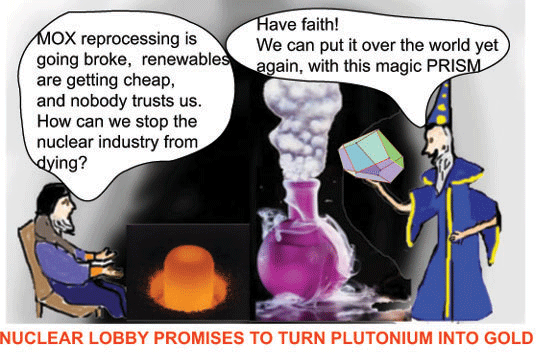 The preferred plan under consideration calls for the shipment of 7.1 metric tons of so-called pits — or cores — of an undisclosed number of nuclear warheads now stored at the Pantex plant in West Texas to Los Alamos National Laboratory in New Mexico and the Savannah River Site for disarmament and processing into fuel for commercial nuclear reactors.
Anti-nuclear activists question plan for shipping plutonium from warheads to New Mexico By Associated Press, August 22 LOS ALAMOS, N.M. — Nuclear watchdogs are fighting a proposal to ship tons of plutonium to New Mexico, including the cores of nuclear warheads that would be dismantled at an aging and structurally questionable lab atop an earthquake fault zone.
Opponents voiced their opposition at a series of public hearings that opened this week on the best way to dispose of the radioactive material as the federal government works to reduce the nation’s nuclear arsenal.
The Department of Energy is studying alternatives for disposing of plutonium in light of federal budget cuts that have derailed plans for new multi-billion-dollar facilities at the Savannah River Site in South Carolina. Continue reading
UK’s dangerous plan to make its piles of nuclear waste a commercial asset
Britain’s previous attempts to convert plutonium into Mox fuel which could then be burned in conventional reactors have proved disastrous, culminating in the premature closure last year of the £1.34bn Sellafield Mox Plant, which was a commercial and technical failure.
 ‘Untested’ nuclear reactors may be used to burn up plutonium waste Feasibility study looks at building revolutionary new facility at Sellafield to dispose of stockpile The Independent, STEVE CONNOR 20 AUGUST 2012 An ambitious plan to rid Britain of its civil plutonium stockpile – the biggest in the world – has come a step closer with the submission of a feasibility study for building revolutionary nuclear reactors to “burn” the waste at Sellafield in Cumbria.
The plan envisages the construction of twin nuclear “fast reactors” at Sellafield that can dispose of the plutonium directly as fuel to generate electricity while ridding the country of a nuclear-waste headache that has dogged governments for half a century. Continue reading
Why molten salt nuclear reactors and thorium nuclear reactors are duds
Thorium: Not ‘green’, not ‘viable’, and not likely Oliver Tickell, April / May 2012. 1. Introduction ”With uranium-based nuclear power continuing its decades-long economicMurky history of Japan’s fast breeder nuclear reactor program
 United States Circumvented Laws To Help Japan Accumulate Tons of Plutonium, DC Bureau By Joseph Trento, on April 9th, 2012“…….From the very start, the Japanese breeder program was predicated on the belief that Japanese industry could do what the Americans and Europeans had failed to do – run the extremely complicated breeder cycle safely and profitably. That belief was rooted in Japan’s national self-confidence, nurtured by two generations of success in manufacturing. Japan’s dedicated and educated workforce and its special brand of quality management made it the world leader in a host of industries. Nuclear power generation would, it was believed, merely be one more success, made possible by Japan’s superior workers and management.
Thirty years ago even Japan’s harshest critics might have agreed that perhaps it could succeed where Western efforts had failed. But that optimism soon faded as a string of nuclear catastrophes demonstrated that nuclear industries are far different than any other. Both the Monju fast-breeder reactor in 1995 and the Tokai reprocessing plant in April 1997 suffered serious, accidental radiation leaks; both accidents were the subjects of attempted cover-ups. Most egregious was the fire and leak of radioactive sodium at the Monju FBR. Japan’s Power Reactor and Nuclear Fuel Development Corporation (PNC), the government corporation that operated Monju, lied repeatedly to the public about the accident. PNC attempted to suppress video footage that showed the cause of the accident: a ruptured pipe in a secondary cooling system that had spilled an estimated two to three tons of radioactive sodium – the largest such leak in the history of fast-breeder technology. One of the reasons PNC gave for releasing the misinformation was that Monju was too important to Japan’s energy program to jeopardize the reactor’s operation. In other words, the public’s safety was secondary to the breeder program.
Had it not been for a courageous act by a group of Fukui prefecture officials in the early morning of December 11, PNC’s attempted cover-up probably would have succeeded. Suspecting a cover-up, the officials entered the plant and secured the videotape. The action came as a direct result of a previous accident at Fukui’s Tsuruga Unit I reactor in the early 1980s. Fukui prefecture officials were not permitted to investigate that mishap. When the Monju accident took place, the officials were determined not to be turned away a second time. Following revelations that the agency itself had been involved in trying to withhold the video, a PNC executive committed suicide……. http://www.dcbureau.org/201204097128/national-se
How fast breeder nuclear reactors were tried in USA, and failed
Despite the efforts of the country’s best minds and nearly limitless budgets, the breeder program did not work. And it was not only the Clinch River team who failed. Breeder programs in Germany, France and the United Kingdom also could not make the leap from lab experiment to commercially viable practice.
United States Circumvented Laws To Help Japan Accumulate Tons of Plutonium, DC Bureau By Joseph Trento, April 9th, 2012.….Reversing Course – Reagan Undermines Carter’s Policies Richard Kennedy One of the most passionate nuclear believers was a career bureaucrat named Richard Kennedy. A former Army officer, he labored in obscurity at the Nuclear Regulatory Commission, his career held hostage by his vehement opposition to President Carter’s nuclear policies. All of that changed after Ronald Reagan’s election in 1980. One of Reagan’s first acts as president was to effectively reverse Carter’s nuclear doctrine, which had barred the United States from using plutonium in civilian power projects with America’s friends or adversaries.
Reagan made Kennedy his right-hand man for nuclear affairs. From his new post as Ambassador at Large for Nuclear Energy, Kennedy oversaw the dismantling of the Carter policies he despised. The new administration rejuvenated American and international reliance on plutonium. Continue reading
PRISM nuclear reactor won’t solve UK’s plutonium problem
Adrian Simper, the strategy director of the UK’s Nuclear Decommissioning Authority, warned last November in an internal memorandum that fast reactors were “not credible” as a solution to Britain’s plutonium problem because they had “still to be demonstrated commercially” and could not be deployed within 25 years.
the plutonium metal, once prepared for the reactor, would be even more vulnerable to theft for making bombs than the powdered oxide.
Are fast-breeder reactors the answer to our nuclear waste nightmare? The Guardian 30 July 12 The battle is intensifying on a decision over a major fast-breeder reactor to deal with the plutonium waste at Sellafield. Fred Pearce “…….Britain has a history of embarrassing failures with MOX, including the closure last year of a $2 billion blending plant that spent 10 years producing a scant amount of fuel. And critics say that, even if it works properly, MOX fuel is an expensive way of generating not much energy, while leaving most of the plutonium intact, albeit in a less dangerous form.
Only fast reactors can consume the plutonium. Many think that will ultimately be the UK choice. If so, the PRISM plant would take five years to license, five years to build, and could destroy probably the world’s most dangerous stockpile of plutonium by the end of the 2020s. GEH has not publicly put a cost on building the plant, but it says it will foot the bill, with the British government only paying by results, as the plutonium is destroyed.
The idea of fast breeders as the ultimate goal of nuclear power engineering goes back to the 1950s, when experts predicted that fast-breeders would generate all Britain’s electricity by the 1970s. But the Clinton administration eventually shut down the U.S.’s research program in 1994. Britain followed soon after, shutting its Dounreay fast-breeder reactor on the north coast of Scotland in 1995. Continue reading
Kyodo: Alarm sounds at MOX reactor in Japan, no “actual leakage” detected — Nuclear fuel loaded inside July 30th, 2012 By ENENews (Subscription Only) Title: Monju alarm on sodium leakage malfunctions Source: Kyodo
Japan Atomic Energy Agency said an alarm was activated early Monday morning indicating a sodium coolant leakage at its Monju prototype fast breeder reactor in Tsuruga, Fukui Prefecture. Continue reading
MOX nuclear reprocessing plant at Savannah River Site
NRC holding public meeting over MOX plant http://www.sacbee.com/2012/07/24/4654152/nrc-holding-public-meeting-over.html The Associated Press, Jul. 24, 2012 COLUMBIA, S.C. — Federal regulators are holding a public meeting to discuss a project to create mixed-oxide fuel at a former nuclear weapons site in South Carolina.
The U.S. Nuclear Regulatory Commission is having the open session on Tuesday at the Savannah River Research Campus in New Ellenton.
Construction on the MOX facility began at the Savannah River Site in 2007. Officials say the plant will be used to convert weapons grade plutonium into fuel that will be sold to run commercial power reactors.
The SRS complex once produced plutonium and tritium for atomic bombs. Officials say the nearly $5 billion MOX facility is on schedule and should be running in 2016.
1 This Month
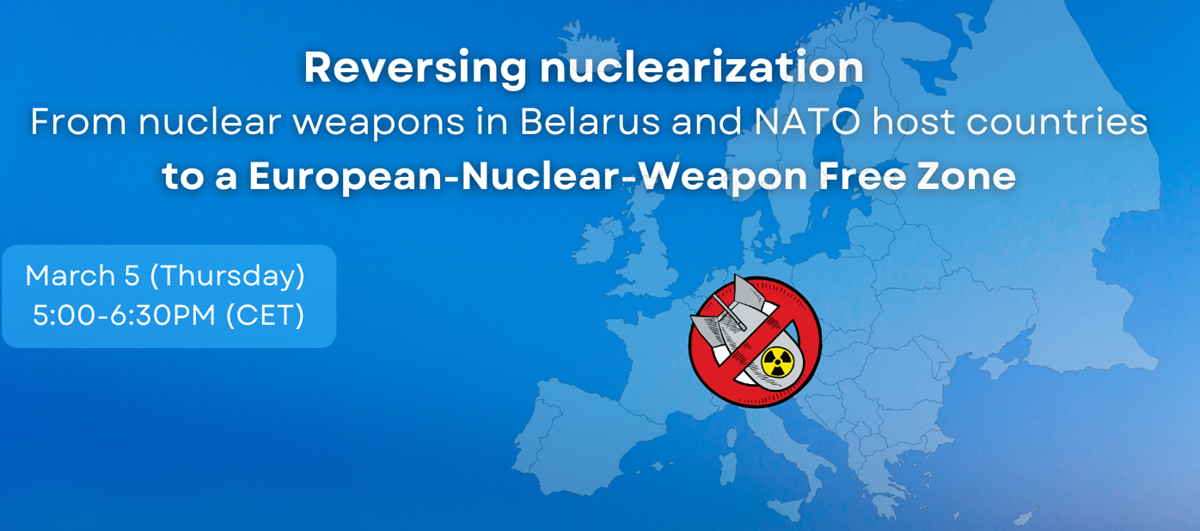
5 March -Online – Reversing nuclearization:
From nuclear weapons in Belarus and NATO host countries to a European-Nuclear-Weapon Free Zone
11am-12:30pm Eastern Time USA / 5pm-6:30pm CET

of the week – Advocating for a
nuclear free beach – https://www.samuellawrencefoundation.org/
The Samuel Lawrence Foundation advocates for a Nuclear Waste Free Beach at San Onofre, join us and take action!

10 March A LIVE WEBINAR THE REAL EFFECTS OF NUCLEAR POWER
What the Industry Isn’t Telling Us
1:00 PM Mountain, 2 pm Central, 3 pm Eastern. Live on the Keepers of the Water Facebook page

18 March Webinar @ 1 PM EST: An Assessment of SMR Projects: The Case of Canada
register for the zoom:
https://us02web.zoom.us/webinar/register/WN_o8BIIOUvQ2ONJR1nta65DQ#/registration

of the week – STOP SMALL MODULAR REACTORS IN CANADA
To see nuclear-related stories in greater depth and intensity – go to https://nuclearinformation.wordpress.com
-
Archives
- March 2026 (51)
- February 2026 (268)
- January 2026 (308)
- December 2025 (358)
- November 2025 (359)
- October 2025 (376)
- September 2025 (258)
- August 2025 (319)
- July 2025 (230)
- June 2025 (348)
- May 2025 (261)
- April 2025 (305)
-
Categories
- 1
- 1 NUCLEAR ISSUES
- business and costs
- climate change
- culture and arts
- ENERGY
- environment
- health
- history
- indigenous issues
- Legal
- marketing of nuclear
- media
- opposition to nuclear
- PERSONAL STORIES
- politics
- politics international
- Religion and ethics
- safety
- secrets,lies and civil liberties
- spinbuster
- technology
- Uranium
- wastes
- weapons and war
- Women
- 2 WORLD
- ACTION
- AFRICA
- Atrocities
- AUSTRALIA
- Christina's notes
- Christina's themes
- culture and arts
- Events
- Fuk 2022
- Fuk 2023
- Fukushima 2017
- Fukushima 2018
- fukushima 2019
- Fukushima 2020
- Fukushima 2021
- general
- global warming
- Humour (God we need it)
- Nuclear
- RARE EARTHS
- Reference
- resources – print
- Resources -audiovicual
- Weekly Newsletter
- World
- World Nuclear
- YouTube
-
RSS
Entries RSS
Comments RSS
 nuclear-news