Integral Fast Nuclear Reactor’s serious problems
Another Take on Pandora’s Promise EARTH ISLAND JOURNAL BY GAR SMITH – JUNE 28, 2013“…….Problems with the IFR Looking beyond the ballyhoo, there are significant concerns about IFRs that Pandora’s Promise fails to address. To date, no breeder reactor has been commercially viable. Arjun Makhijani, president of the Maryland-based Institute for Energy and Environmental Research, shares David McKay’s concern about the 250-plus metric tons of excess plutonium moldering away in storage sites around the world. Makhijani, however, believes the idea that “sodium cooled-fast neutron reactors [could] be built to denature the plutonium reveals a technological optimism that is disconnected from the facts.” While some IFRs “have indeed operated well,” Makhijani notes, “roughly $100 billion have been spent worldwide to try and commercialize these reactors – to no avail.”
Fueled by a uranium-plutonium alloy, IFRs can produce (“breed”) more plutonium than they burn. But this plutonium can be used to produce nuclear weapons, which poses serious diversion and proliferation risks. Also, IFRs are cooled by molten sodium, not water. Sodium can explode when it comes in contact with water and, when exposed to air, sodium ignites and burns furiously. Sodium-cooled reactors are prone to coolant leaks. Fast reactor accidents have occurred in France, Japan, Scotland, at the Fermi 1 reactor in Michigan, and twice at a Simi Valley reactor site in southern California.
Several competing nuclear power designs are cited in Pandora’s Promise, but they receive little screen time. There is a brief mention of Liquid Fluoride Thorium reactors, a Traveling Wave Reactor (Bill Gates’ pet project), and the government’s support for “mini-nukes” that could be installed underground and fired up to power urban skyscrapers. How practical and safe are they? Pandora’s Promise provides few answers. There is no in-depth analysis of the pros and cons of any of these alternatives….. . http://www.earthisland.org/journal/index.php/elist/eListRead/another_take_on_pandoras_promise
Japan gets first shipment of highly radioactive MOX fuel
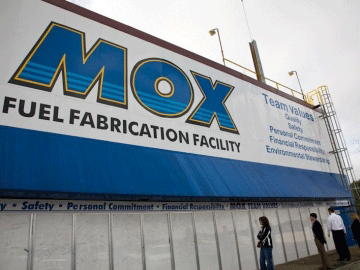 FIRST MOX NUCLEAR SHIPMENT SINCE FUKUSHIMA ARRIVES IN JAPAN http://au.news.yahoo.com/latest/a/-/latest/17766227/first-mox-nuclear-shipment-since-fukushima-arrives-in-japan/ TAKAHAMA, Japan (AFP) 26 June 13, – The first reprocessed nuclear shipment since the disaster at Fukushima arrived under armed guard near the Takahama nuclear plant in Japan on Thursday, an AFP journalist at the scenereported.
The vessel had travelled for around two months with its cargo of MOX fuel — a blend of uranium and plutonium — after being reprocessed in France. The shipment will now be stored because Japan has no working reactors able to use it.
Savannah River MOX project should be shut down
the MOX plant has “become from my point of view a pretty meaningless program” that should now be killed.
“The irony of this whole project is that it basically started with a good goal, of eliminating weapons grade material with the idea that it won’t be available for weapons purposes,” “But then it sort of evolved into this program that provides a fairly significant subsidy to the plutonium economy. So in the end, we will end up with more plutonium.”
How a Massive Nuclear Nonproliferation Effort Led to More Proliferation, The Atlantic, More than a decade of negotiations with Russia produced a clear winner, and it was not the United States. DOUGLAS BIRCH AND R. JEFFREY SMITHJUN 24 2013 SAVANNAH RIVER SITE, South Carolina – A half-finished monolith of raw concrete and rebar rises suddenly from slash pine forests as the public tour bus crests a hill at this heavily-secured site south of rural Aiken……..
Dark clouds hover over this ambitious federal project, 17 years in the making and at least six more from completion–if, indeed, it is ever completed. It lies at the center of one of the United States’ most troubled, technically complex, costly, and controversial efforts to secure nuclear explosive materials left stranded by the end of the Cold War.
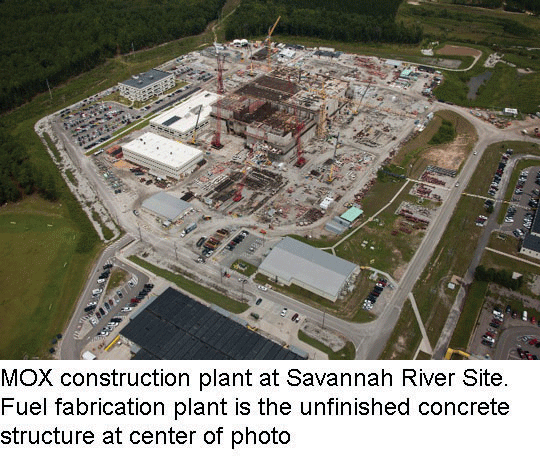
This plant – and another just like it in Russia — is meant to transform one of these materials, plutonium, into commercial reactor fuel that can be burned to provide electricity for homes, schools and factories, essentially turning nuclear “swords into ploughshares.” The aim of the so-called Mixed Oxide, or MOX, plant is to ensure the material never winds up in the hands of terrorists.
In the right hands, only nine pounds of plutonium — an amount about the size of a baseball — could make a bomb as powerful as the one the U.S. dropped on Hiroshima. The world’s military and civilian nuclear programs have produced about 500 metric tons of pure plutonium, an amount that could fuel tens of thousands of nuclear weapons yet fit into a backyard shed. Countries with nuclear programs continue to add roughly two tons to this inventory every year.
Washington has been spending hundreds of millions of dollars annually to help secure or remove plutonium and weapons-grade uranium in dozens of countries. But the U.S.-Russia plutonium disposition program, which includes the Savannah River plant, is the U.S. government’s single most expensive nonproliferation project now, according to Michelle Cann, senior budget analyst with a nonprofit group called Partnership for Global Security. Continue reading
The development of MOX nuclear fuel, and the Global Nuclear Energy Partnership
an industrial-scale facility in America capable of turning plutonium into reactor fuel — a key step on the path to a revived breeder program.
The MOX plant was “the plutonium nose under the tent”
Ernest Moniz…his June 2000 deal, approved by the two country’s presidents, called for both sides to use the  plutonium mostly as a reactor fuel, as Moscow sought.
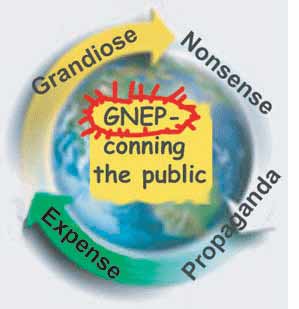 The George W. Bush administration subsequently embraced a plan to promote breeder reactors and the recycling of plutonium, not just domestically, but by other nuclear states including Russia, in a controversial program known as the Global Nuclear Energy Partnership. . Formal papers ordering the start of the MOX plant construction were signed in August 2007 by a former chief of the Bush-Cheney energy policy transition team, according to an internal Energy Department document.
How a Massive Nuclear Nonproliferation Effort Led to More Proliferation, The Atlantic, DOUGLAS BIRCH AND R. JEFFREY SMITHJUN 24 2013 SAVANNAH RIVER SITE, South Carolina “,……….Breeder reactors, in a kind of Atomic Age alchemy, can manufacture more plutonium than they consume, inspiring dreams of almost limitless energy. By generating fast-moving neutrons that transform the uranium mixed into their fuel into additional plutonium, they hold the promise of a significant energy reward: One gram of plutonium can produce more energy than a ton of oil. At one time or another, breeders have been pursued by every major nuclear nation. Continue reading
South Korea and USA planning nuclear pyroprocessing
 Meanwhile, South Korea and the U.S. are set to sign a pact that will allow the two nations to step up their joint research on pyroprocessing technology, said a senior official at Seoul’s foreign ministry.
 If adopted, the pact would enable the International Atomic Energy Agency to guarantee the safety of pyroprocessing technology.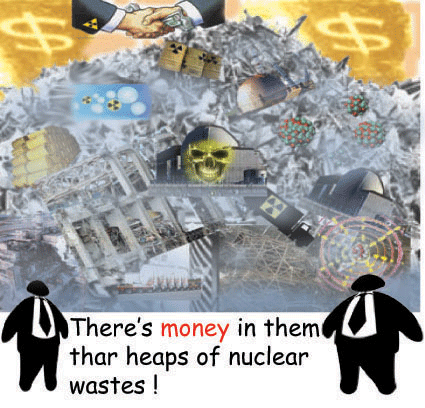
Britain’s rather horrible plutonium and Mixed Oxide Fuel (MOX) dilemma
 “……….The Government wants to try and turn plutonium into a fuel which can be used
Japan’s Monju nuclear reprocessing plant not safe to restart
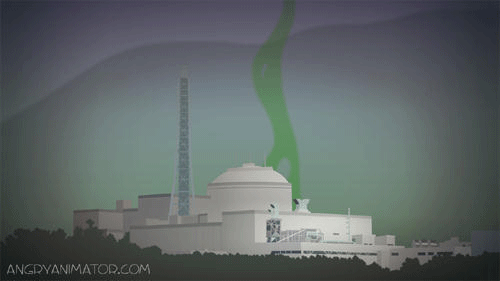
 AUDIO Japan’s nuclear safety record criticised by regulator http://www.radioaustralia.net.au/international/radio/program/connect-asia/japans-nuclear-safety-record-criticised-by-regulator/1132464 17 May 2013, Japan’s nuclear watchdog has refused to give the go-ahead to commission an experimental fast-breeder reactor due to safety concerns. The Monju reactor in the Fukui prefecture has been closed for almost two decades after a leak and a fire in 1995.
The head of the Nuclear Regulation Authority has blasted Monju’s operator for its lack of a safety culture, saying it deserved severe action.
The decision comes as dealing with Japan’s stockpile of nuclear waste becomes more urgent. Reporter: Karon Snowdon Speakers: Professor Andrew O’Neil, Director of the Griffith University Asia Institute; Hajime Matsukubo, International relations director of Tokyo’s Citizens Nuclear Information Centre
The danger of Rokkasho Nuclear Reprocessing Plant
 Concern in US as Japanese nuclear reprocessing plant completed http://www.abc.net.au/am/content/2013/s3760280.htm Mark Willacy reported, May 16, 2013 TONY EASTLEY: It’s taken more than 20 years and $20 billion to build, and in a few months time Japan’s state-of-the-art nuclear reprocessing plant will be ready for operation.
The Rokkasho plant in far northern Japan will be capable of turning used nuclear fuel into eight tonnes of plutonium a year, although the Japanese say this weapons-grade plutonium will be used for power generation only.
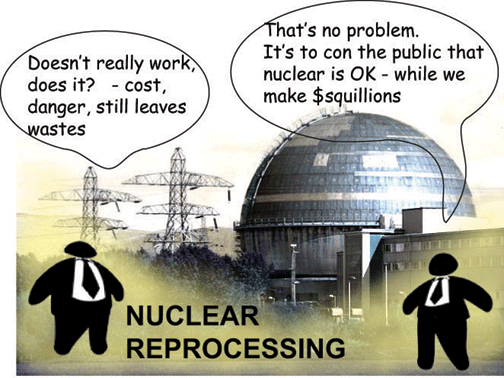
That hasn’t soothed American concerns though. It’s worried about the security of the plutonium stockpiles and the risk that the new plant could stoke a nuclear race in the region.
North Asia correspondent Mark Willacy was given an exclusive look inside the Rokkasho nuclear complex. MARK WILLACY: In the spring sunshine, Keiko Kikukawa tends to her daffodils. The winter snow has finally melted up here in Japan’s far north and her fields are beginning to burst with colour.
When Keiko Kikukawa isn’t selling her flowers, she’s campaigning to uproot what she sees at the biggest pest in this district – the Rokkasho nuclear complex a few kilometres down the road.
“First of all, Rokkasho village has become a dump for radioactive waste from around Japan,” she tells me. “If there was an accident it’d be catastrophic,” she says.
Keiko Kikukawa is talking about the sprawling Rokkasho nuclear re-processing plant.
Its operator, Japan Nuclear Fuel Limited, has spent two decades and $28 billion building the facility……Japan has 17,000 tonnes of spent nuclear fuel sitting in pools across the country. If Rokkasho is given the green light to begin operation, it can turn this fuel into eight tonnes of plutonium every year.
The problem is, this eight tonnes of plutonium will be weapons-grade – meaning it could theoretically be used to make nuclear bombs…..
Japan’s Nuclear Regulation Authority wants Monju reprocessing plant to stay shut
NRA wants Monju to remain shut downhttp://www.japantimes.co.jp/news/2013/05/14/national/nra-wants-monju-to-remain-shut-down/#.UZQmBqJwpLt Lapses seen in JAEA checks of key reactor components KYODO, STAFF REPORT MAY 14, 2013 The Japan Atomic Energy Agency committed grave safety errors in managing the troubled Monju prototype fast-breeder reactor in Fukui Prefecture, and top officials at the Nuclear Regulation Authority said Monday they plan to make sure it stays closed.
The closure order to the government-linked JAEA will effectively dash any hope of trying to restart the reactor by year’s end, dealing another setback to Japan’s long-stalled plan to set up a nuclear fuel recycling system.
In September, the now-defunct Nuclear and Industrial Safety Agency carried out surprise inspections and determined that JAEA failed to regularly check key components of the experimental 280,000-kw reactor, as required by internal rules. Continue reading
Rokkasho nuclear reprocessing plant could lead to nuclear weapons for Japan
Is Japan Developing a Nuclear Weapons Program? By Peter Symonds Global Research, May 07, 2013 Huge reprocessing plant could be used to stockpile plutonium for the future manufacture of nuclear weapons.The Wall Street Journal published an article on May 1 entitled “Japan’s nuclear plan unsettles US.” It indicated concerns in Washington that the opening of a huge reprocessing plant could be used to stockpile plutonium for the future manufacture of nuclear weapons.
The Rokkasho reprocessing facility in northern Honshu can produce nine tonnes of weapons-grade plutonium annually, or enough to construct up to 2,000 bombs. Continue reading
9 tons of plutonium yearly from Japan’s Rokkasho nuclear reprocessing plant
Tokyo’s ability to both enrich uranium and reprocess spent reactor
fuel has allowed it to amass roughly nine tons of weapons-usable
plutonium on its soil. Activating the Rokkasho plant would produce
that much each year, said officials and industry experts.
Japan’s Nuclear Plan Unsettles U.S, WSJ, By JAY SOLOMON and MIHO INADA
2 May 13, TOKYO—Japan is preparing to start up a massive nuclear-fuel
reprocessing plant over the objections of the Obama administration,
which fears the move may stoke a broader race for nuclear technologies
and even weapons in North Asia and the Middle East.
The Rokkasho reprocessing facility, based in Japan’s northern Aomori
prefecture, is capable of producing nine tons of weapons-usable
plutonium annually, said Japanese officials and nuclear-industry
experts, enough to build as many as 2,000 bombs, although Japanese
officials say their program is civilian…… Continue reading
USA government quietly rejects nuclear reprocessing
Steve Skutnik January 17, 2013 There is a hallowed tradition in Washington known as the “Friday Document Dump,” in which news and announcements the government wishes to bury are strategically timed for Friday afternoons, when such announcements tend to fall through the cracks of the typical news cycle (i.e., assuming reporters are even present to cover the event, the strategic timing tends to ensure it will miss the weekend papers, thus effectively “burying” the story by the time the new week rolls around).
Japanese government’s nuclear reprocessing plans likely to be colossal waste of money
But the continued operation of the Monju reactor is uncertain due to
frequent malfunctions. The Japanese government has admitted that it
may not be put into commercial use until 2050, prompting criticism
that the Rokashomura facility was a colossal waste of money.
Japan Could Reprocess Nuclear Fuel from Korea
http://www.energytribune.com/69930/japan-could-reprocess-nuclear-fuel-from-korea-2
January 07, 2013 From Chosun Ilbo The Japanese government is
considering reprocessing spent nuclear fuel rods from Korea, Vietnam
and other Asian countries, the Tokyo Shimbun reported Sunday. Japan is
the only country in the world that has no nuclear weapons but the
facilities to reprocess spent nuclear fuel rods capable of producing
weapons-grade plutonium.
An advisory council to the Democratic Party of Japan in a report last
May said reprocessing spent nuclear fuel rods would “strengthen”
Japan’s diplomacy, security and the country’s economy as well as
“contribute to the peaceful use of atomic energy.”
The report suggests using the Rokashomura nuclear reprocessing plant
in Aomori Prefecture, which will become obsolete if Japan scraps all
its own nuclear power plants in the 2030s. Continue reading
Rokkasho: Japan’s nuclear reprocessing plant – to keep nuclear industry alive
Rokkasho has grown dependent on the reprocessing complex for nearly all its jobs and income.
“Without Rokkasho, we would not get approval to restart the other reactors—not ever,” says a member of the ruling Democratic Party of Japan (DPJ).
Japan’s Nuclear Future, Rokkasho and a hard place The government’s fudge on its nuclear future remains unconvincing http://www.economist.com/news/asia/21566018-governments-fudge-its-nuclear-future-remains-unconvincing-rokkasho-and-hard-place Nov 10th 2012 | ROKKASHO THIS remote north-eastern coastal village in Aomori prefecture would delight a North Korean or Iranian spy. Not because of the rolling countryside, but the uranium-enrichment facility, the plant undergoing testing to make nuclear fuel by reprocessing spent uranium and plutonium, and the stash of a good part of Japan’s stockpiles of more than nine tonnes of separated plutonium—enough, experts say, to make more than 1,000 nuclear warheads.
The Rokkasho plant seems an anomaly in a country that forswearsnuclear weapons and that has shut down all but two of its 54 nuclear reactors. Yet the same government that says it wants to phase out atomic energy by the end of the 2030s also insists that it is committed soon to start reprocessing enough nuclear waste at Rokkasho to provide fuel for Japan’s nuclear-power plants to go flat out into the 2050s.
It does not take much prodding for officials to concede a potential contradiction, big enough to render Japan’s nuclear policy almost meaningless. Continue reading
Nuclear lobbying might succeed in resuscitating the dangerous Monju dream
The [nuclear industry] lobbying has also forestalled scrapping a controversial, 25-year-old fast breeder reactor on the country’s western coast in Fukui prefecture.
25 years and $13 billion after construction began, the Monju fast breeder reactor has managed to produce electricity for only one hour.
“What’s frightening is that it has the property that once it starts running out of control it can’t be stopped,…. What no one can ignore is that Monju is located adjacent to an earthquake fault.
Japan Plans Restart of Controversial Reactor VOA Correspondent Steve Herman was given unprecedented access inside Japan’s Fast Breeder Reactor Research and Development Center at a time when the country is debating its future energy policy in wake of last year’s Fukushima nuclear disaster.
kui Pref., Japan. Steve Herman September 25, 2012 TSURUGA, JAPAN — There has been an ongoing debate in Japan on the best way to obtain a safe and affordable energy supply for the island nation. The nuclear option suffered a setback in March, 2011, when a massive earthquake and devastating tsunami caused a meltdown in reactors at Japan’s main Fukushima-1 nuclear power plant. Continue reading
1 This Month
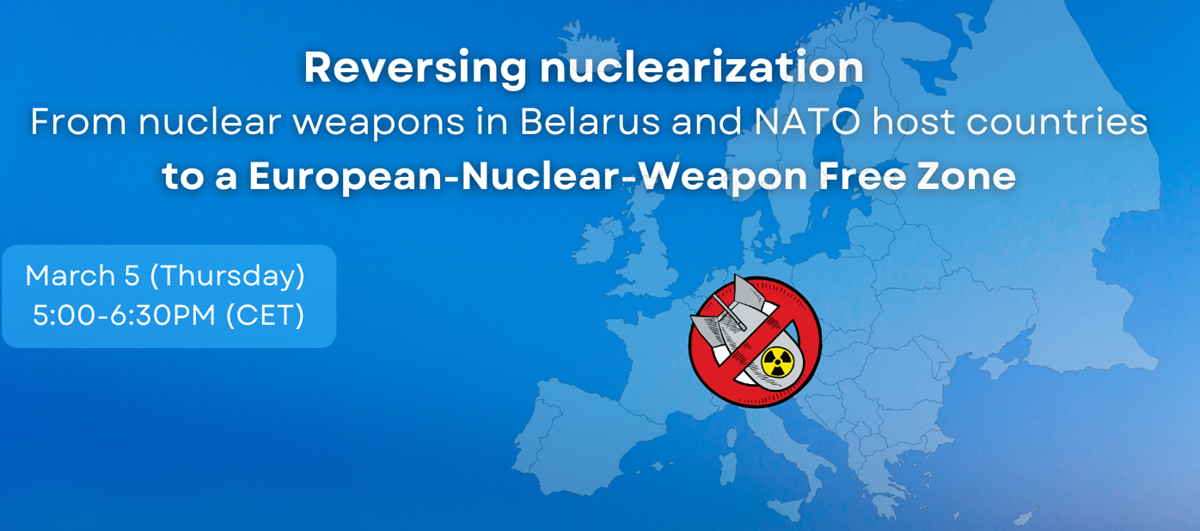
5 March -Online – Reversing nuclearization:
From nuclear weapons in Belarus and NATO host countries to a European-Nuclear-Weapon Free Zone
11am-12:30pm Eastern Time USA / 5pm-6:30pm CET

of the week – Advocating for a
nuclear free beach – https://www.samuellawrencefoundation.org/
The Samuel Lawrence Foundation advocates for a Nuclear Waste Free Beach at San Onofre, join us and take action!

10 March A LIVE WEBINAR THE REAL EFFECTS OF NUCLEAR POWER
What the Industry Isn’t Telling Us
1:00 PM Mountain, 2 pm Central, 3 pm Eastern. Live on the Keepers of the Water Facebook page

18 March Webinar @ 1 PM EST: An Assessment of SMR Projects: The Case of Canada
register for the zoom:
https://us02web.zoom.us/webinar/register/WN_o8BIIOUvQ2ONJR1nta65DQ#/registration

of the week – STOP SMALL MODULAR REACTORS IN CANADA
To see nuclear-related stories in greater depth and intensity – go to https://nuclearinformation.wordpress.com
-
Archives
- March 2026 (51)
- February 2026 (268)
- January 2026 (308)
- December 2025 (358)
- November 2025 (359)
- October 2025 (376)
- September 2025 (258)
- August 2025 (319)
- July 2025 (230)
- June 2025 (348)
- May 2025 (261)
- April 2025 (305)
-
Categories
- 1
- 1 NUCLEAR ISSUES
- business and costs
- climate change
- culture and arts
- ENERGY
- environment
- health
- history
- indigenous issues
- Legal
- marketing of nuclear
- media
- opposition to nuclear
- PERSONAL STORIES
- politics
- politics international
- Religion and ethics
- safety
- secrets,lies and civil liberties
- spinbuster
- technology
- Uranium
- wastes
- weapons and war
- Women
- 2 WORLD
- ACTION
- AFRICA
- Atrocities
- AUSTRALIA
- Christina's notes
- Christina's themes
- culture and arts
- Events
- Fuk 2022
- Fuk 2023
- Fukushima 2017
- Fukushima 2018
- fukushima 2019
- Fukushima 2020
- Fukushima 2021
- general
- global warming
- Humour (God we need it)
- Nuclear
- RARE EARTHS
- Reference
- resources – print
- Resources -audiovicual
- Weekly Newsletter
- World
- World Nuclear
- YouTube
-
RSS
Entries RSS
Comments RSS
 nuclear-news