Russia has nuclear-powered icebreakers. Trump wants USA to have them, too
 Trump Orders Coast Guard To Look Into Building Nuclear-Powered Icebreakers Like Russia. The Trump Orders Coast Guard To Look Into Building Nuclear-Powered Icebreakers Like Russia. The  memo also calls for examining possible defensive armament options to protect these ships against near-peer threats. The Drive, BY JOSEPH TREVITHICK, JUNE 9, 2020 US. President Donald Trump issued a memorandum on Arctic and Antarctic security today that called on the U.S. Coast Guard to explore the possibility of buying nuclear-powered icebreakers, a type of ship that only Russia operates. The same document orders an assessment of what kind of defensive weapons any future icebreakers might carry, specifically to defend against possible threats from “near-peer competitors,” such as Russia or China. The Coast Guard’s tiny existing icebreaking fleets have been in increasingly desperate need of replacement for years now and the service finally awarded a contract for its first new heavy icebreaker, a conventionally-powered design, in decades just over a year ago. memo also calls for examining possible defensive armament options to protect these ships against near-peer threats. The Drive, BY JOSEPH TREVITHICK, JUNE 9, 2020 US. President Donald Trump issued a memorandum on Arctic and Antarctic security today that called on the U.S. Coast Guard to explore the possibility of buying nuclear-powered icebreakers, a type of ship that only Russia operates. The same document orders an assessment of what kind of defensive weapons any future icebreakers might carry, specifically to defend against possible threats from “near-peer competitors,” such as Russia or China. The Coast Guard’s tiny existing icebreaking fleets have been in increasingly desperate need of replacement for years now and the service finally awarded a contract for its first new heavy icebreaker, a conventionally-powered design, in decades just over a year ago.
Trump issued the new Memorandum on Safeguarding U.S. National Interests in the Arctic and Antarctic Regions on June 9, 2020. Despite its more general name, the document is centered entirely on buying icebreakers and related issues. The memo directs the Department of Homeland Security, by way of the Commandant of the Coast Guard, and in cooperation with the Secretary of Defense, Secretary of the Navy, and the Secretary of Energy, to conduct a study of the “benefits and risks of a polar security icebreaking fleet mix that … are appropriately outfitted to meet the objectives of this memorandum.” This is part of a larger assessment of icebreaking requirements that the Secretary of Homeland Security, with help from the Secretary of State, the Secretary of Defense, the Secretary of Commerce, and the Director of the Office of Management and Budget, is now also instructed to conduct……..
nuclear propulsion is costly and complex, and employing it on icebreakers could raise concerns about potential operational and environmental risks for ships that will be primarily operating in regions well known for experiencing extreme weather. Environmental activists have long expressed these concerns with regard to Russia’s nuclear icebreaking fleets, as well as its new floating nuclear powerplants. Taymyr alone has suffered a number of radiation leaks over the years. https://www.thedrive.com/the-war-zone/33971/trump-orders-coast-guard-to-look-into-building-nuclear-powered-icebreakers-like-russia
|
|
Radioactive waste imported from Estonia for iconic Bears Ears, Utah?

Radioactive Waste May Be Dumped Near Bears Ears—Public Comments Requested https://www.adventure-journal.com/2020/06/radioactive-waste-may-be-dumped-near-bears-ears-public-comments-requested/ BY JUSTIN HOUSMAN | JUNE 3, 2020
|
There is a metals plant in the Eastern European nation of Estonia that generates a surplus of uranium-laced waste, as much as 660 tons per year. A uranium mill near Bears Ears National Monument, in southeastern Utah, has applied to the state of Utah to accept the waste which they can process for the uranium. The waste that process generates will be stored on-site at the White Mesa facility, which is about five miles from the Ute Mountain Ute Tribe’s White Mesa reservation. Locals are concerned. Groundwater accessed by the reservation has been contaminated for years. The tribe worries it’s because of the uranium mill, the state argues it has nothing to do with it. “I think it would be the tribe’s preference that the facility shut down,” said Scott Clow, environmental programs director for the tribe. “But that’s a big ask there. “The mill has been there for 38 years now, and that’s a pretty short window of time compared to how long the tribe was there before and how long the tribe is going to be there after the mill, and all of that contamination. “The mill has already become the cheapest alternative for disposal of low-level radioactive waste in North America. Now, it appears that it may become a destination for the materials from around the globe. That is disconcerting and dangerous,” he said. A company called Energy Fuels Resources owns the White Mesa Mill. Andrew Wheeler, currently the head of the EPA, worked as a lobbyist for Energy Fuels Resources in years past, and helped successfully lobby the Trump administration to shrink the size of the Bears Ears monument to allow for more uranium mining possibilities, arguing it was in the national interest to do so. Estonia limits how much of the radioactive material the metals processing plant can store, out of safety concerns, which is why the plant is looking for a place to ship the waste tailings. The White Mesa Mill is the only mill in the country capable of extracting the uranium from the Estonian tailings. The Utah Department of Environmental Quality has asked for public comment before final approval of the shipments can proceed. The original deadline for comment was June 5, but it has recently been extended until July 10. You can email your comment to this address: dwmrcpublic@utah.gov. Instructions for commenting can be found here, in the public notice about the project. |
|
The claim that nuclear power is needed for national security is a masked money-grab


that price won’t only be paid by emptying our wallets . It will also be paid in health and safety. State senators with dollar signs twinkling in their eyes are lining up for relief handouts that will do nothing to fix our healthcare crises — laid bare under the coronavirus crisis — nor our economy. But they are playing the Russia card to get the money.
Make Nuclear Great Again? https://beyondnuclearinternational.org/2020/05/31/make-nuclear-great-again/, May 31, 2020 by beyondnuclearinternational By Linda Pentz Gunter
The claim that nuclear power is needed for national security is a masked money-grab
The US Department of Energy’s assertions about Russian and Chinese supremacy in the nuclear sector is reminiscent of the “Commie plot” rhetoric of the 1950s. But it’s a thinly disguised ploy to feed at the federal subsidies trough and revive a moribund industry.
A few years ago I attended two days of the Nuclear Deterrence Summit, held just outside Washington, DC. In my defense, I’ll say it was a necessity. I really wanted to get inside how these people think. There was plenty of talk about the need for nuclear weapons, their range and potency, all done with a calm equilibrium devoid of conscience. It was chilling.
But it was also the theatre of the absurd. At one point there was actually talk about a “missile gap.” The Russians were getting ahead. This must be stopped. Was I on the set of a remake of Dr. Strangelove? Was this General ‘Buck’ Turgidson railing about “commie plots” and “mineshaft gaps”?
Life, as it turns out, is routinely stranger than any fiction. Turgidson is still with us, and he has extended his brief to include “civilian” nuclear power plants in the competition with the “Ruskies” and now, the Chinese. Continue reading
Green light for Rokkasho nuclear reprocessing plant, but is it viable?

@ú{´RÌgpÏÝjR¿ÄHêSAÂX§ZPºi¤¯ÊMÐ@©çj
The NRA’s approval means the long-troubled and controversial plant has moved closer to going into operation. Here’s a look at the Rokkasho plant and the problems it has faced.
What is the Rokkasho reprocessing plant? The plant at Rokkasho is a 3.8 million square meter facility designed to reprocess spent nuclear fuel from the nation’s nuclear reactors.
Construction began in 1993. Once in operation, the plant’s maximum daily reprocessing capacity will be a cumulative total of 800 tons per year.
During reprocessing, uranium and plutonium are extracted, and the Rokkasho plant is expected to generate up to eight tons of plutonium annually. Both are then turned into a mixed uranium-plutonium oxide (MOX) fuel at a separate MOX fabrication plant, also located in Rokkasho, for use in commercial reactors. Construction on the MOX facility began in 2010 and it’s expected to be completed in 2022.
The Rokkasho reprocessing plant can store up to 3,000 tons of spent nuclear fuel from the nation’s power plants on-site. It’s nearly full however, with over 2,900 tons of high-level waste already waiting to be reprocessed.
Why has it taken until now for the Rokkasho plant to secure approval from the nuclear watchdog? Decades of technical problems and the new safety standards for nuclear power that went into effect after the 2011 triple meltdown at the power plant in Fukushima Prefecture have delayed Rokkasho’s completion date 24 times so far. It took six years for the plant to win approval under the post-3/11 safety standards.
There has also long been concern and unease over the entire project — and not just among traditional anti-nuclear activists — which the government has been forced to address. Japan is the only non-nuclear weapons state pursuing reprocessing. But as far back as the 1970s, as Japan was debating a nuclear reprocessing program, the United States became concerned about a plant producing plutonium that could be used for a nuclear weapons program.
The issue was raised at a Feb. 1, 1977, meeting between U.S. Vice President Walter Mondale and Prime Minister Takeo Fukuda.
“Reprocessing facilities which could produce weapons grade material are simply bomb factories,” noted a declassified U.S. State Department cable on the meeting. “We want to cooperate (with Japan) to keep the problem under control.”
…….. technical mishaps led to plans being made and then scrapped for many years, while arms control experts continued to worry that Japan could end up stockpiling plutonium that could lead to proliferation problems.
After the 2011 disaster, the NRA created tougher measures to minimize damage from natural disasters, forcing more construction and upgrades at the plant, leading to higher costs.
The Tokai plant halted operations in 2007. The decision to scrap it was made in 2014, as it was judged to be unable to meet the new safety standards. But little progress is being made, due to uncertainty over where to store all of the radioactive waste.
Safety concerns over the Rokkasho plant have remained, especially since 2017 when it was revealed that Japan Nuclear Fuel had not carried out mandatory safety standards for 14 years
By the time of the NRA announcement on May 13, the price tag for work at the Rokkasho plant had reached nearly ¥14 trillion.
What happens next? The NRA is soliciting public comment on its decision until June 12, but the Ministry of Economy, Trade, and Industry is expected to formally approve the decision. After that, the Aomori governor would be asked to give his approval, though that is not a legal requirement. The last bureaucratic hurdles would then have been cleared to start operations at the plant by the spring of 2022.
However, there are other issues that could force a delay to the start of reprocessing. Japan had originally envisioned MOX fuel powering between 16 and 18 of the nation’s 54 commercial reactors that were operating before 2011, in place of conventional uranium.
But only four reactors are using it out of the current total of nine officially in operation. MOX fuel is more expensive than conventional uranium fuel, raising questions about how much reprocessed fuel the facilities would need, or want…….
Japan finds itself caught between promises to the international community to reduce its plutonium stockpile through reprocessing at Rokkasho, and questions about whether MOX is still an economically, and politically, viable resource — given the expenses involved and the availability of other fossil fuel and renewable energy resources. https://www.japantimes.co.jp/news/2020/05/31/national/social-issues/aomoris-rokkasho-nuclear-plant-gets-green-light-hurdles-remain/#.XtQfrTozbIU
Trump’s ominous creation of the U.S. Space Force – for the purposes of war

How much will it cost? The vast costs will be shouldered by taxpayers, likely by slashing funding for essential social needs. The aerospace industry has suggested defunding “entitlement programs” to pay for “everything space.” That would likely include cutting Social Security, Medicare, and Medicaid among other social and welfare programs. In his proposed fiscal year 2021 budget, Trump is recommending $15.4 billion for the Space Force. The Space Force, if it is allowed to continue, will clearly be a multi-billion dollar annual affair.
Who will profit?
Raytheon is emerging as a major beneficiary of Space Force work. Perhaps not uncoincidentally, Mark Esper, Trump’s U.S. Secretary of Defense at the time the Space Force was announced, is a former lobbyist for the corporation. Other major contractors for the Space Force will be Northrop Grumman, Boeing and Lockheed-Martin, the world’s biggest military contractor.
Space Force is no laughing matter, May 31, 2020 by beyondnuclearinternational
What started as “a joke” his now deadly serious; and just plain deadly Continue reading
Here’s a supremely unaffordable nuclear fantasy – reactors on the moon and Mars
 NASA Wants to Go Nuclear on the Moon and Mars for Astronaut Settlement, SciTech Daily By AMERICAN CHEMICAL SOCIETY MAY 31, 2020 m It might sound like science fiction, but scientists are preparing to build colonies on the moon and, eventually, Mars. With NASA planning its next human mission to the moon in 2024, researchers are looking for options to power settlements on the lunar surface. According to a new article in Chemical & Engineering News, the weekly newsmagazine of the American Chemical Society, nuclear fission reactors have emerged as top candidates to generate electricity in space.
Time that Japan faced up to the folly of its nuclear fuel cycle dream
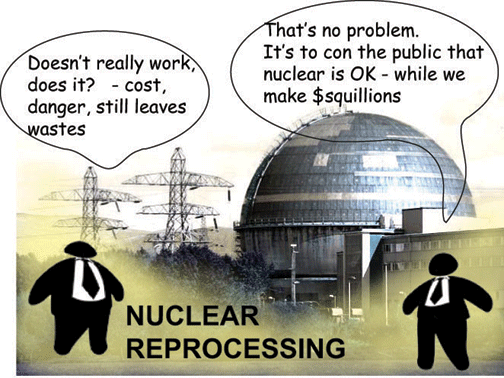
As the situation stands, plutonium will start to pile up with no prospects of it being consumed. Reducing the amount produced is also an issue that needs to be addressed.
The United States and Britain have already pulled out of a nuclear fuel cycle.
|
Editorial: Time to set a course away from Japan’s troubled nuclear fuel cycle https://mainichi.jp/english/articles/20200518/p2a/00m/0na/029000c, May 18, 2020 (Mainichi Japan) The Rokkasho Nuclear Fuel Reprocessing Facility being constructed in the northern Japan prefecture of Aomori has cleared a safety inspection by the Nuclear Regulation Authority (NRA). Spent fuel from Japan’s nuclear power plants will be reprocessed at this facility, which will play a key role in Japan’s “nuclear fuel cycle” policy. Under the policy, uranium and plutonium extracted from such fuel is to be processed for further use. Japan Nuclear Fuel Ltd., the operator of the reprocessing facility, aims to complete construction by autumn next year, but there are no immediate prospects of the facility going into operation. On top of this, due to changes in the circumstances surrounding nuclear power, the meaning of the facility’s existence is no longer clear. The first issue to consider is declining demand for the use of fuel to be reprocessed at the facility. Such fuel was originally destined to go mainly to the Monju fast-breeder reactor in the western Japan prefecture of Fukui, but a spate of problems with the sodium-cooled reactor led to a decision in 2016 to decommission it. There are no plans to construct a replacement facility. There were also plans to use reprocessed fuel at nuclear power stations to generate electricity, but there are only four reactors that can handle it, far fewer than the 16 to 18 originally planned. As the situation stands, plutonium will start to pile up with no prospects of it being consumed. Reducing the amount produced is also an issue that needs to be addressed. Japan already possesses more than 45 metric tons of surplus plutonium, and there are fears in international society that it could be converted for use in nuclear weapons. In 2018, the government pledged to reduce the amount. A realistic approach is not to reprocess the fuel in the first place. Forming the backdrop to Japan’s persistence with fuel reprocessing is the problem of how to handle the large amount of spent nuclear fuel being stored on the grounds of the reprocessing facility. If Japan gives up on its nuclear fuel cycle policy, then the spent fuel will be sent back to nuclear power plants across the country. But those facilities are already pressed for storage space, making it difficult for them to accept the spent fuel. The total cost of the reprocessing facility, including construction and maintenance costs, stands at 14 trillion yen. Some of the cost will be tacked onto electricity bills. There is a need to rethink the question of whether the public is receiving benefits commensurate with the huge investment into the facility. NRA Chairman Toyoshi Fuketa said he would check with the minister of economy, trade and industry whether operation of the reprocessing plant was in line with the nation’s energy policy. In the wake of the 2011 Great East Japan Earthquake and tsunami and the ensuing nuclear disaster, many countries across the world turned in the direction of abandoning nuclear power. There are sufficient uranium resources in the world, and the justification for reprocessing as “effective utilization of limited resources” has faded. The United States and Britain have already pulled out of a nuclear fuel cycle. Japan must avoid a situation in which it wastes time by sticking to a national policy and becomes laden with risks. The country should squarely face up to the fact that it is in a no-win situation, and search for an alternative to the nuclear fuel cycle policy. |
NuScam’s “small nuclear reactor” project runs into yet more trouble

core cooling system that NuScale plans to submit to the NRC on May 20. Instead of resolving the steam generator design issue ahead of design certification, the NRC is deferring to the plant operator Energy Northwest
to resolve the issue during the licensing process, after construction.http://www.energyintel.com/pages/eig_article.aspx?DocId=1072564
Australian politician John Barilaro gets it so wrong about small nuclear reactors
But there is as yet no sign of anything being oven-ready to come to the marketplace, let alone 15 up and running. But there remain some rather disturbing connections between small reactor projects and nuclear weapons proliferation. And Rolls-Royce does offer up one of the most glaring examples. Part of the company’s current sales pitch to the British government includes the argument that a civil small-reactor industry in the UK “would relieve the Ministry of Defence of the burden of developing and retaining skills and capability” for its weapons programme. It may be true. But it is not really Atoms for Peace, , is it?
https://electricalreview.co.uk/features-mm/13082-mystic-meg-from-down-under
Rokkasho nuclear reprocessing, a pointless effort , to postpone coping with plutonium trash

the project should not be kept alive through irresponsible collusion between the government and the power industry to avoid tackling this challenge.
Political leaders should make the tough decision as soon as possible to put the nation on a path toward a new energy future.
|
Japan should end its nonsensical effort to recycle nuclear fuel http://www.asahi.com/ajw/articles/13372798, May 14, 2020 Japanese nuclear regulators have endorsed the safety of a contentious plant to reprocess spent nuclear fuel.
The Nuclear Regulation Authority (NRA) on May 13 approved a draft report on the safety inspection of the reprocessing plant being built in Rokkasho, Aomori Prefecture, by Japan Nuclear Fuel Ltd. The report says the plant meets the new nuclear safety standards introduced after the 2011 Fukushima nuclear disaster. The NRA’s decision represents a big step forward toward bringing the long-delayed Rokkasho reprocessing plant online. Japan’s policy program to establish a nuclear fuel recycling system to recover plutonium from spent nuclear fuel to be reused in reactors, however, is already bankrupt beyond redemption. Operating the reprocessing plant simply does not make sense because of the many problems it entails with regard to nuclear proliferation, cost effectiveness, energy security and other important policy issues. Prime Minister Shinzo Abe’s administration should change its policy concerning nuclear fuel recycling. It would be irresponsible to maintain this unsustainable national policy aimlessly simply because of the NRA’s verdict that the plant meets the new safety standards. TROUBLE-PLAGUED PLANT Continue reading |
Controlled Nuclear Fusion Not Reached

Controlled Nuclear Fusion Not Reached https://ladailypost.com/letter-to-the-editor-controlled-nuclear-fusion-still-not-reached/ Carol A. ClarkMay 15, 2020 By JASON HAGLER (to Daily Post) Los Alamos This is a comment on your recent piece on nuclear fusion. It was misleading in one respect. Both in the title and in the text, it stated that this research was an important step toward the practical use of controlled nuclear fusion. In fact, we are no closer to that goal then we were 60 years ago. The article reported on an important study of plasma physics, but the study made no impact on reaching the goal of electrical energy from fusion. The reason is that fusion has to occur at millions of degrees and the temperature to produce electrical power is many orders of magnitude less. First look at the fairly rapid development of nuclear power from fission. In less than 20 years after the discovery of nuclear fission there were operating nuclear reactors. Soon after we began to have nuclear power reactors. That was primarily because fission occurs at room temperature and by controlling the chain reaction it was simple to take temperatures up enough to generate electricity. In contrast for fusion reaction you have to start with millions of degrees, sustain the reaction to a steady state, contain the extremely hot plasma, and then extract the heat at moderate temperatures. While no technical and engineering problems are insoluble these are very difficult. Containment involves what the scientists call PFM. It stands for Plasma Facing Materials. These containment materials have to stand the intense heat from the plasma. All the experiments so far have been with pulses of magnetic fields to contain the plasma so cooling the containment materials occurs naturally. To produce electric energy you need a steady state fusion reaction and cooling the containment became a severe problem which is not near a solution. So, where does a practical solution for electrical power from fusion stand? It is hardly any nearer than it was 60 years ago. Researchers have learned a great deal about plasma physics, but they are still far away from obtaining electrical energy. They have made almost no important engineering steps toward that goal. |
|
Rokkasho – Japan’s nuclear ‘pie in the sky’
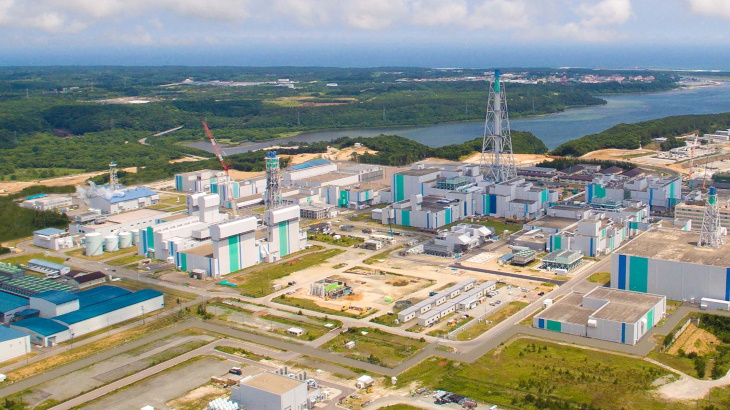 VOX POPULI: Government, nuclear industry badly in need of a reality check http://www.asahi.com/ajw/articles/13375632Vox Populi, Vox Dei is a daily column that runs on Page 1 of The Asahi Shimbun., May 15, 2020 In his 1991 book “Rokkashomura no Kiroku” (Record of Rokkasho village), journalist Satoshi Kamata documented the displacement of residents for a planned large development project in the northern village.
Kamata reproduced an essay written by an elementary school pupil, whose school was earmarked for closure because of the megaproject.
“I detest development more than I could ever say,” the youngster wrote.
The villagers were promised a rosy future, with rows of factories turning their rural community into a vibrant urban center. But none of that happened, and the school closed in 1984.
“All that talk about the factories was a lie,” the child lamented. “I truly hate being made to feel so sad and lonely.”
Instead of this development project that never materialized, the village of Rokkasho in Aomori Prefecture ended up hosting a facility for reprocessing spent nuclear fuel.
A series of delays held up the project for years, but the Nuclear Regulation Authority finally ruled the plant’s safety measures acceptable under its new standards on May 13.
The Rokkasho plant was meant to be the “nucleus” of the nation’s nuclear fuel recycling program of the future, with the purpose of minimizing nuclear waste by reusing spent fuel.
The reprocessed fuel was to be burned in fast-breeder reactors, but efforts to develop a viable fast-breeder reactor have gone nowhere. Attempts to use the reprocessed fuel in conventional nuclear reactors have also stalled.
The whole project has effectively become a proverbial pie in the sky.
But neither the government nor utilities would acknowledge this reality and review the project, apparently because they fear the issue of nuclear waste will become the focus of attention.
I wonder how long they are going to keep their heads in the sand without addressing the thorny problem of how to dispose of nuclear waste.
Here’s a riddle: What cannot be seen when your eyes are open, but can be seen when your eyes are closed? The answer is a dream.
Where the nuclear fuel recycling program is concerned, I imagine the nation’s nuclear community must be dreaming or hallucinating.
‘Small Modular Nuclear Reactor’ entrepreneurs trying to revive dangerous ‘plutonium economy’ dream.

It seems that these two SMNR entrepreneurs in New Brunswick, along with other nuclear “players” worldwide, are trying to revitalize the “plutonium economy” — a nuclear industry dream from the distant past that many believed had been laid to rest because of the failure of plutonium-fuelled breeder reactors almost everywhere, including the US, France, Britain and Japan.
The phrase “plutonium economy” refers to a world in which plutonium is the primary nuclear fuel in the future rather than natural or slightly enriched uranium. Plutonium, a derivative of uranium that does not exist in nature but is created inside every nuclear reactor fuelled with uranium, would thereby become an article of commerce.
The proposed SMNR prototype from ARC Nuclear in Saint John is the ARC-100 reactor (100 megawatts of electricity). It is a liquid sodium-cooled SMNR, based on the 1964 EBR-2 reactor – the Experimental Breeder Reactor #2 in Idaho. Its predecessor, the EBR-1 breeder reactor, had a partial meltdown in 1955, and the Fermi-1 breeder reactor near Detroit, also modelled on the EBR-2, had a partial meltdown in 1966.
Admiral Hyman Rickover, who created the US fleet of nuclear-powered submarines, tried a liquid-sodium-cooled reactor only once, in a submarine called the Sea Wolf. He vowed that he would never do it again. In 1956 he told the US Atomic Energy Commission that liquid sodium-cooled reactors are “expensive to build, complex to operate, susceptible to prolonged shutdown as a result of even minor malfunctions, and difficult and time-consuming to repair.”
The ARC-100 is designed with the capability and explicit intention of reusing or recycling irradiated CANDU fuel. In the prototype phase, the proposal is to use irradiated fuel from NB Power’s Point Lepreau Nuclear Generating Station. Lepreau is a CANDU-6 nuclear reactor.
The other newly proposed NB SMNR prototype is the Moltex “Stable Salt Reactor” (SSR) — also a “fast reactor”, cooled by molten salt, that is likewise intended to re-use or recycle irradiated CANDU fuel, again from the Lepreau reactor in the prototype phase.
The “re-use” (or “recycling”) of “spent nuclear fuel”, also called “used nuclear fuel” or “irradiated nuclear fuel,” is industry code for plutonium extraction. The idea is to transition from uranium to plutonium as a nuclear fuel, because uranium supplies will not outlast dwindling oil supplies. Breeder reactors are designed to use plutonium as a fuel and create (“breed”) even more plutonium while doing so.
It is only possible to re-use or recycle existing used nuclear fuel by somehow accessing the unused “fissile material” in the used fuel. This material is mainly plutonium. Accessing this material involves a chemical procedure called “reprocessing” which was banned in the late 1970s by the Carter administration in the US and the first Pierre Elliot Trudeau administration in Canada. South Korea and Taiwan were likewise forbidden (with pressure from the US) to use this chemical extraction process.
Why did both the US and Canada ban this recycling scheme? Two reasons: 1) it is highly dangerous and polluting to “open up” the used nuclear fuel in order to extract the desired plutonium or U-233; and 2) extracting plutonium creates a civilian traffic in highly dangerous materials (plutonium and U-233) that can be used by governments or criminals or terrorists to make powerful nuclear weapons without the need for terribly sophisticated or readily detectable infrastructure.
Argonne Laboratories in the US, and the South Korean government, have been developing (for more than 10 years now) a new wrinkle on the reprocessing operation which they call “pyroprocessing.” This effort is an attempt to overcome the existing prohibitions on reprocessing and to restart the “plutonium economy.”
Both New Brunswick projects are claiming that their proposed nuclear reactor prototypes would be successful economically. To succeed, they must build and export the reactors by the hundreds in future.
On the contrary, however, the use of plutonium fuel is, and always has been, much more expensive than the use of uranium fuel. This is especially true now, when the price of uranium is exceedingly low and showing very little sign of recovering. In Saskatchewan, Cameco has shut down some of its richest uranium mines and has laid off more than a thousand workers, while reducing the pay of those still working by 25 percent. Under these conditions, it is impossible for plutonium-fuelled reactors to compete with uranium-fuelled reactors.
And to make matters worse for the industry, it is well known that even uranium-fuelled reactors cannot compete with the alternatives such as wind and solar or even natural-gas-fired generators. It is an open question why governments are using public funds to subsidize such uneconomical, dangerous and unsustainable nuclear technologies. It’s not their money after all – it’s ours!
Dr. Gordon Edwards, a scientist and nuclear consultant, is the President of the Canadian Coalition for Nuclear Responsibility. He can be reached at: ccnr@web.ca Note from the NB Media Co-op editors: Dr. Edwards visited New Brunswick in March for a series of public talks on the development of so-called Small Modular Nuclear Reactors. The story of his talk in Saint John can be accessed here. The video of the webinar presentation scheduled for Fredericton can be accessed here.
Canada on verge of investing in plutonium
Gordon Edwards <ccnr@web.ca>\, 26 Apr 2020, It seems that the two SMNR (Small Modular  Nuclear Reactor) entrepreneurs in New Brunswick (Canada), along with other nuclear “players” worldwide, are trying to revitalize the “plutonium economy” — a nuclear industry dream from the distant past that many believed had been laid to rest because of the failure of plutonium-based breeder reactors almost everywhere – e.g. USA, France, Britain, Japan …
UK govt again to try “astronomically expensive” plutonium reprocessing nuclear reactors
Westminster relaunches plutonium reactors despite ‘disastrous’ experience, The National, 26 April, 20 By Rob Edwards This article was brought to you by The Ferret.
THE UK Government is trying to resurrect plutonium-powered reactors despite abandoning a multi-billion bid to make them work in Scotland.
Documents released by the UK Office for Nuclear Regulation (ONR) under freedom of information law reveal that fast reactors, which can burn and breed plutonium, are among “advanced nuclear technologies” being backed by UK ministers.
Two experimental fast reactors were built and tested at a cost of £4 billion over four decades at Dounreay in Caithness. But the programme was closed in 1994 as uneconomic after a series of accidents and leaks.
Now ONR has been funded by the Department for Business, Energy and Industrial Strategy (BEIS) in London to boost its capacity to regulate new designs of fast reactors, along with other advanced nuclear technologies.
Campaigners have condemned the moves to rehabilitate plutonium as a nuclear fuel as “astronomically expensive”, “disastrous” and “mind-boggling”. They point out that it can be made into nuclear bombs and is highly toxic – and the UK has 140 tonnes of it…….
ONR released 23 documents about advanced nuclear technologies in response to a freedom of information request by Dr David Lowry, a London-based research fellow at the US Institute for Resource and Security Studies. They include redacted minutes and notes of meetings from 2019 discussing fast reactors, and are being published by The Ferret.
One note of a meeting in November 2019 shows that ONR attempted to access a huge database on fast reactors maintained by the UK Government’s National Nuclear Laboratory (NNL) in Warrington, Cheshire…..
Two companies have so far won funding under this heading to help develop fast reactors that can burn plutonium. The US power company, Westinghouse, is proposing lead-cooled fast reactors, while another US company called Advanced Reactor Concepts wants to build sodium-cooled fast reactors.
In November 2019 BEIS also announced an £18 million grant to a consortium led by reactor manufacturer, Rolls Royce, to develop a “small modular reactor designed and manufactured in the UK capable of producing cost effective electricity”.
According to Dr Lowry, fast reactors would require building a plutonium fuel fabrication plant. Such plants are “astronomically expensive” and have proved “technical and financial disasters” in the past, he said.
“Any such fabrication plant would be an inevitable target for terrorists wanting to create spectacular iconic disruption of such a high profile plutonium plant, with devastating human health and environmental hazards.”
Lowry was originally told by ONR that it held no documents on advanced nuclear technologies. As well as redacting the 23 documents that have now been released, the nuclear safety regulator is withholding a further 13 documents as commercially confidential – a claim that Lowry dismissed as “fatuous nonsense”.
THE veteran nuclear critic and respected author, Walt Patterson, argued that no fast reactor programme in the world had worked since the 1950s. Even if it did, it would take “centuries” to burn the UK’s 140 tonne plutonium stockpile, and create more radioactive waste with nowhere to go, he said.
“Extraordinary – they never learn do they? I remain perpetually gobsmacked at the lobbying power of the nuclear obsessives,” he told The Ferret. “The mind continue to boggle.”
The Edinburgh-based nuclear consultant, Pete Roche, suggested that renewable energy was the cheapest and most sustainable solution to climate change. “The UK Government seems to be planning some kind of low carbon dystopia with nuclear reactors getting smaller, some of which at least will be fuelled by plutonium,” he said.
“The idea of weapons-useable plutonium fuel being transported on our roads should send shivers down the spine of security experts and emergency planners.”
Another nuclear expert and critic, Dr Ian Fairlie, described BEIS’s renewed interest in fast reactors as problematic. “Experience with them over many years in the US, Russia, France and the UK has shown them to be disastrous and a waste of taxpayers’ money,” he said.
This is not the view taken by the UK Nuclear Industry Association, which brings together nuclear companies. It wants to see the UK’s plutonium being used in reactors rather than disposed of as waste……
“The Scottish Government remains opposed to new nuclear power plants in Scotland,” a spokesperson told The Ferret. “The Scottish Government believes our long term energy needs can be met without the need for new nuclear capacity.”
The UK Department for Business, Energy and Industrial Strategy did not respond to repeated requests to comment. https://www.thenational.scot/news/18405852.westminster-relaunches-plutonium-reactors-despite-disastrous-experience/
1 This Month
29 Jan. Thursday 7-8 p.m. Webinar – World’s Largest Nuclear Station in Port Hope, ON?
To see nuclear-related stories in greater depth and intensity – go to https://nuclearinformation.wordpress.com/



31st January – Challenging the War Machine – a DECLASSIFIED UK SUMMIT


Website of the Week
Now until to February 10, 2026 Radioactive waste storage in France: the debate is finally open! How to participate?
-
Archives
- January 2026 (283)
- December 2025 (358)
- November 2025 (359)
- October 2025 (376)
- September 2025 (258)
- August 2025 (319)
- July 2025 (230)
- June 2025 (348)
- May 2025 (261)
- April 2025 (305)
- March 2025 (319)
- February 2025 (234)
-
Categories
- 1
- 1 NUCLEAR ISSUES
- business and costs
- climate change
- culture and arts
- ENERGY
- environment
- health
- history
- indigenous issues
- Legal
- marketing of nuclear
- media
- opposition to nuclear
- PERSONAL STORIES
- politics
- politics international
- Religion and ethics
- safety
- secrets,lies and civil liberties
- spinbuster
- technology
- Uranium
- wastes
- weapons and war
- Women
- 2 WORLD
- ACTION
- AFRICA
- Atrocities
- AUSTRALIA
- Christina's notes
- Christina's themes
- culture and arts
- Events
- Fuk 2022
- Fuk 2023
- Fukushima 2017
- Fukushima 2018
- fukushima 2019
- Fukushima 2020
- Fukushima 2021
- general
- global warming
- Humour (God we need it)
- Nuclear
- RARE EARTHS
- Reference
- resources – print
- Resources -audiovicual
- Weekly Newsletter
- World
- World Nuclear
- YouTube
-
RSS
Entries RSS
Comments RSS
 nuclear-news