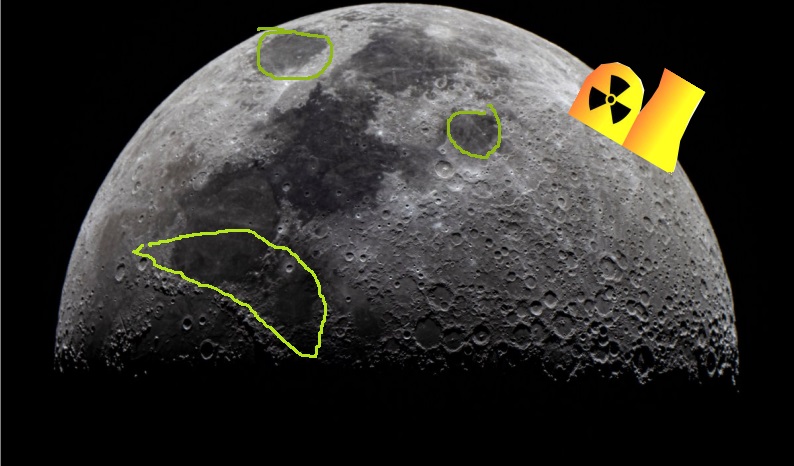
US space agency Nasa will fast-track plans to build a nuclear reactor on the Moon by 2030, according to US media. It is part of US ambitions to build a permanent base for humans to live on the lunar surface. According to Politico, the acting head of Nasa referred to similar plans by China and Russia and said those two countries “could potentially declare a keep-out zone” on the Moon. But questions remain about how realistic the goal and timeframe are, given recent and steep Nasa budget cuts, and some scientists are concerned that the plans are driven by geopolitical goals.
Boeing lands $2.8 billion deal to build next-gen nuclear communications satellites
The ESS satellites are central to U.S. nuclear command, control and communications.
Space News, 3 Aug 25,
WASHINGTON — Boeing won a $2.8 billion contract to develop a new generation of secure military satellites (Evolved Strategic Satellite Communications spacecraft) that will serve as the backbone of the United States’ nuclear command, control and communications network, the U.S. Space Force announced July 3.
The award marks a major milestone in the Pentagon’s effort to modernize its most hardened space-based communication infrastructure. The contract is part of the Evolved Strategic Satellite Communications program, or ESS, which will ultimately replace the current constellation built by Lockheed Martin under the Advanced Extremely High Frequency (AEHF) program.
Boeing edged out Northrop Grumman after a nearly five-year competition that began in 2020, when both aerospace giants were selected to develop prototype systems. The Space Force selected Boeing as the prime contractor for the next phase of the ESS program, which includes development and production of two satellites, with options for two more. If all options are exercised, the contract could reach $3.75 billion.
The first satellite delivery is slated for 2031.
Critical infrastructure for nuclear command
The ESS satellites are designed to provide jam-resistant, always-on communications for the U.S. military’s nuclear command, control, and communications (NC3) architecture. These satellites must function under the most extreme conditions — including in the wake of a nuclear strike — ensuring the President and senior military leaders can communicate securely with deployed forces anywhere in the world.
“The strategic communication mission requires protection, power and always-available capability, even through adversary attempts to interrupt our connectivity,” said Cordell DeLaPeña, the Space Force’s program executive officer overseeing the ESS effort.
Broader $12 billion program
While Boeing’s $2.8 billion development contract is the most visible component, it is only part of a broader $12 billion ESS program that also includes ground systems, cryptographic infrastructure, and user terminals. The terminals, which allow individual military branches to access the ESS network, are acquired separately.
Boeing said its satellite design draws on technology developed for its Wideband Global SATCOM (WGS) satellites and commercial spacecraft it built for SES’s O3b mPOWER broadband constellation.
“This win validates all the investments and innovations we’ve made in our satellite technology,” said Michelle Parker, vice president of Boeing Space Mission Systems.
The ESS satellites will operate in geostationary orbit — 22,000 miles above Earth — where they can provide persistent coverage to specific regions. The full constellation is expected to support global coverage, including the Arctic, an area of growing strategic interest.
The ESS constellation is being built to replace the AEHF network, which was designed and launched over the last two decades to provide similar survivable communications capabilities. Military leaders say growing threats from advanced anti-satellite weapons and electronic warfare systems demand more modern, flexible platforms.
The Space Force is using a cost-reimbursement contracting model for the initial satellite development, a structure more suited to high-risk, high-complexity projects. Under this arrangement, the government pays for allowable costs plus a negotiated profit margin — an approach often used when requirements are not yet fully known and involve extensive non-recurring engineering.
However, future satellites under the ESS program may be procured using fixed-price contracts, which shift more cost risk to the contractor and are generally used once designs mature and production stabilizes.
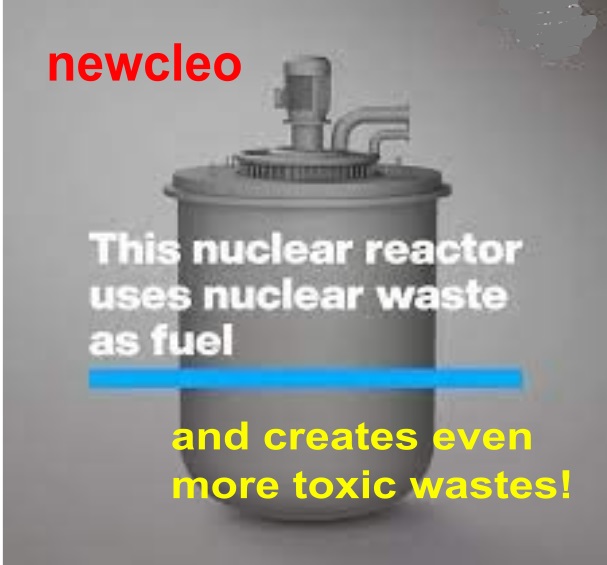
Energy firm newcleo said on Wednesday it would suspend its programme to develop lead-cooled fast reactors (LFR) in Britain and substantially wind down its UK activities due to the lack of support and funding from the government.
LFRs are a type of advanced nuclear reactor technology which are smaller and more efficient than conventional nuclear reactors and can be built in factories and assembled on site to provide heat for industrial processes and hydrogen production.
The firm, established in 2021 and headquartered in Britain, said it had planned to develop up to four such reactors in the UK, producing a total of 800 megawatts, enough to power around 1.6 million homes, and representing around 4 billion pounds ($5 billion) of investment.
The company said it had engaged with successive UK governments on access to the country’s stock of stored plutonium which it had planned to recycle for use in the reactors. “Sadly, despite many attempts to engage with political stakeholders, the UK government has decided to not make its plutonium available for the foreseeable future and to lend its political support and considerable funding to other technologies,” Stefano Buono, founder and CEO of newcleo, said in a statement.
In addition, support and funding have been made available to other small modular reactor technologies but they have not been forthcoming for LFR developers such as newcleo in Britain, the firm said. Instead, it will focus on other important markets. In Slovakia, newcleo said it had created a joint venture with state-owned nuclear company JAVYS to build up to four LFRs powered by the country’s spent nuclear fuel stocks, which has received endorsement from government officials. In June, an agreement with the Lithuanian government was signed based on a similar strategy.
All of these companies also claim their plutonium extraction would utilize new technologies that are “proliferation resistant”—but that, too, is bunk.
The White House has now fully embraced bomb-prone nuclear fuel technology. This should stop before an arms race, atomic terrorism or even nuclear war results
Recent events in Iran demonstrate that dropping “bunker buster” bombs on nuclear plants is not an ideal, or even necessarily effective, way to prevent proliferation. It is far preferable to prevent the spread of nuclear-weapon-usable technologies in the first place.
A simplistic way to achieve that might be to halt the worldwide growth of nuclear power. Public approval of nuclear energy, however, is actually growing in the U.S., and the White House recently announced policies to quadruple American nuclear power by 2050 while also promoting nuclear exports. This surge of support is somewhat surprising, considering that new reactors not only pose radiation risks from nuclear waste and potential accidents but also produce electricity that costs considerably more than solar or wind power (which can be similarly reliable when complemented by batteries). But nuclear power plants are touted for other attributes, including their small footprint, constant output, infrequent refueling, low carbon emissions and ability to produce heat for manufacturing. If customers decide this justifies the higher cost—and are willing to wait about a decade for new reactors—then nuclear energy has a future.
That leaves only one other way to stop the spread of dangerous atomic technology – by prudently limiting nuclear energy to the “bomb-resistant” type, which entirely avoids weapons-usable material by disposing of it as waste, rather than the “bomb-prone” variety that creates proliferation risks by purifying and recycling nuclear explosives.
Regrettably, however, the White House recently directed government officials to facilitate the bomb-prone version in a set of executive orders in May. That decision needs to be reversed before it inadvertently triggers an arms race, atomic terrorism or even nuclear war. As Iran has highlighted, ostensibly peaceful nuclear technology can be misused for a weapons program. That is why, from now on, the U.S. should support only bomb-resistant reactors and nuclear fuel.
Most Americans probably don’t realize that nuclear reactors originally were invented not for electricity or research but to produce a new substance, plutonium, for nuclear weapons such as the one dropped on Nagasaki. Every nuclear reactor produces plutonium (or its equivalent), which can be extracted from the irradiated fuel to make bombs.
This raises three crucial questions about the resulting plutonium: How much of it is produced? What is its quality? And will it be extracted from the irradiated fuel, making it potentially available for weapons?
Bomb-resistant nuclear energy—the only type now deployed in the U.S.—produces less plutonium, which is of lower quality and does not need to be extracted from the irradiated fuel. By contrast, bomb-prone nuclear energy produces more plutonium, which is of higher quality and must be extracted to maintain the fuel cycle.
Of course, a declared facility to extract plutonium in a country lacking nuclear weapons could be monitored, but history shows that international inspectors would stand little chance of detecting—let alone blocking—diversion for bombs. That is why the U.S. made bipartisandecisions in the 1970s to abandon bomb-prone nuclear energy, aiming to establish a responsible precedent for other countries.
In light of today’s growing concerns about nuclear weapons proliferation in East Asia, the Middle East and lately even Europe, one might assume that U.S. industry and government would promote only bomb-resistant nuclear energy—but that is not so. A growing number of venture capitalists and politicians are aggressively supporting technologies to commercialize plutonium fuel. They are doing so despite the security, safety and economic downsides that have doomed previous such efforts. These past failures are evidenced by the fact that of the more than 30 countries with nuclear energy today, including many which previously attempted or considered recycling plutonium, only one (France) still does so on a substantial scale—at considerable financial loss. However, if the U.S. government continues subsidizing nuclear technologies without regard to proliferation risk, then the plutonium entrepreneurs will keep hopping on that gravy train. Eventually, they even may find willing customers for their pricey, bomb-prone technology—but mainly among countries willing to pay a premium for a nuclear-weapon option.
The most egregious proposal has come from start-up Oklo, a company originally spearheaded by venture capitalist Sam Altman (who stepped down as chairman in April). It is pursuing “fast” reactors that can produce larger amounts of higher-quality plutonium, and it has declared the intention to extract plutonium for recycling into fresh fuel. Oklo even says it plans to export this proliferation-prone technology “on a global scale.” The Biden administration and Congress, despite the obvious dangers of dispersing nuclear weapons-usable plutonium around the world, chose to subsidize the company as part of a wholesale push for new nuclear energy. Then the Trump administration picked as secretary of energy an industrialist named Chris Wright, who actually was on Oklo’s board of directors until his confirmation. In 2024, Wright and his wife also madecontributions to a fundraising committee for Trump’s presidential campaign totaling about $458,000, along with contributions to the Republication National Committee of about $289,000. In the first quarter of 2025, Oklo increased its lobbying expenditures by 500 percent compared to the same period last year.
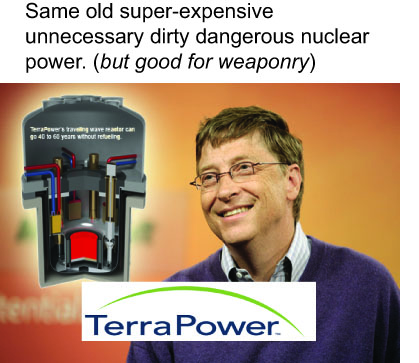
Biden also gave nearly $2 billion to TerraPower, a nuclear energy venture founded by billionaire Bill Gates, for a similar but larger “fast” reactor that also is touted for export. Experts say this inevitably would entail far greater plutonium extraction, even though the company denies any intention to do so. The U.S. Department of Energy also has funded the American branch of Terrestrial Energy, which seeks to build exotic “molten salt” reactors that use liquid rather than solid nuclear fuel. Such fuel must be processed regularly, thereby complicating inspections and creating more opportunities to divert plutonium for bombs.
Most baffling are proposals for large “reprocessing” plants to extract huge amounts of plutonium from irradiated fuel without plausible justification. The company SHINE Technologies, with technical assistance from a firm named Orano, is planning a U.S. pilot plant to process 100 metric tons of spent fuel each year. This would result in the annual extraction of about a metric ton of plutonium—enough for 100 nuclear weapons. SHINE claims the plutonium is valuable to recycle as reactor fuel, but the U.K. recently decided to dispose as waste its entire 140-metric-ton stockpile of civilian plutonium because no one wanted it as fuel. The U.S. similarly has been working to dispose of at least 34 metric tons of undesired plutonium as waste.
Officials from five previous U.S. presidential administrations, and other experts including me, protested in an April 2024 letter to then president Biden that SHINE’s plan would increase “risks of proliferation and nuclear terrorism.” Despite this, President Trump recently issued an executive order in May that directed U.S. officials to approve “privately-funded nuclear fuel recycling, reprocessing, and reactor fuel fabrication technologies … [for] commercial power reactors.” Even more troubling, a separate order directed the government to provide weapons-grade plutonium—retired from our arsenal—directly to private industry as “fuel for advanced nuclear technologies,” which would jump-start bomb-prone nuclear energy before assessing the risks.
SHINE and a similar company, Curio, claim their facilities would slash the country’s radioactive waste stockpile. But realistically, they could barely dent its growth of 2,000 metric tons annually. They also propose to extract valuable radioactive isotopes for medical and space application, but these materials already are available elsewhere at less expense or are needed in such tiny amounts that they require processing only hundreds of kilograms of irradiated fuel annually, not the proposed hundreds of metric tons, which is a thousand times more.
Storm clouds began to form in America’s Atoms for Peace construction program during the late 1950s. Clear-headed analysts identified many pitfalls in constructing commercial atomic power reactors that continue now, 70 years later. This February 10, 1958, opinion piece in Time Magazinewas not just prescient for the failure of the Atoms for Peace program, but also applies to the Small Modular Reactor (SMR) marketing ploy in 2025:
“Industry Asks More Government Help to Speed Program”
… to many U.S. businessmen, a stronger atomic defense is only one side of the coin… they insist that commercial nuclear power must be sped up, or else the U.S. will fall far behind other nations.
The main argument is over how much help the U.S. Government should give private industry. AEC’s [Atomic Energy Commission]position is that nuclear power for peaceful purposes should be largely a private venture, with AEC supplying only limited funds.
Originally, businessmen supported the idea, lest nuclear energy grow into a giant public-power program. Now their position has changed. Even the stoutest private power men feel that the program needs a strong infusion of Government aid because commercial nuclear power is so new, so complex, and so costly that private companies cannot carry the burden alone. …“There isn’t a reactor manufacturer in the U.S. who doesn’t favor Government assistance to get them over the hump.”
The big hump is the fact that conventional U.S. power is so cheap—and nuclear power so expensive—that the U.S. itself has no pressing domestic need for a crash program. … U.S. industry is learning, to its sorrow, that there is a vast gulf between atomic power in the lab and in commercial quantities. Costs have shot up to the point where they discourage even the richest companies… Even the biggest companies find the going rough…. G.E., like the others, thinks that if it could build three big plants in a row, it could learn enough to produce competitive power. But G.E. has no plans at the moment. As one reactor builder says: “Private industry has found that there is no money in atomic energy and no prospect of making any money”… For U.S. consumers, the lag in the commercial nuclear program is no great worry…the U.S. can afford to wait…. There is little doubt among nuclear experts that the U.S. must push ahead much faster than AEC Chairman Strauss is willing to go…. But until nuclear power becomes competitive with present power, he wants the Federal Government to make cash contributions to pay most of the difference between nuclear-and conventional-power construction costs… “The only way our country can achieve competitive nuclear power is through the building of a series of full-scale plants …. Our program must be accelerated.” [1][Emphasis Added]
Several themes from the 1958 Time Magazine opinion piece are identical to today’s unfounded marketing ploys announced by SMR manufacturers and supporters.
First, SMR corporations appeal to nationalistic pride by asserting that the U.S. will fall far behind other nations.
Second, the financial demands by today’s SMR investors and manufacturers are almost identical to those made during the 1950s that emphasized the need for Government subsidies. “There isn’t a reactor manufacturer in the U.S. who does not favor Government assistance to get them over the hump.”
Third, there is an unfounded belief that repeatedly building the same design will somehow reduce costs. “G.E., like the others, thinks that if it could build three big plants in a row, it could learn enough to produce competitive power.”
Forth, the Small Modular Reactor vendors are creating a sense of urgency, pushing nuclear regulators faster than necessary.
“There is little doubt among nuclear experts that the U.S. must push ahead much faster than AEC Chairman Strauss is willing to go…The only way our country can achieve competitive nuclear power is through the building of a series of full-scale plants …Our program must be accelerated.”
Fifth, much less expensive and proven technologies are available to produce electricity, so there is no reason to develop a new, untested, cost-prohibitive SMR nuclear technology. “For U.S. consumers, the lag in the commercial nuclear program is no great worry… the U.S. can afford to wait. …But until nuclear power becomes competitive with present power, he wants the Federal Government to make cash contributions to pay most of the difference between nuclear and conventional-power construction costs”
Following the 1958 Time Magazine Opinion, the business-friendly Forbes Magazine published an excellent one-sentence summary 30 years later pronouncing the utter failure of every single U.S. atomic construction project. By 1985, the economic debacle of building nuclear plants had reached the front cover of Forbes Magazine.
The failure of the U.S. nuclear power program ranks as the largest managerial disaster in business history, a disaster on a monumental scale.[2]
Forbes was one of the first major business magazines to identify the adverse economic implications associated with nuclear power. As a financial magazine, it was a nuclear agnostic, conceptually neither in favor of nor against nuclear, it had no dog in the nuclear fight! It was following the money. In the intervening 40 years since the prescient Forbes cover story, nuclear remains much more costly than renewable alternatives.
The financial and schedule collapse of every nuclear project ever proposed in the U.S. during the last 60 years has been well-documented in thousands of mainstream media articles, in academia, assessments by financial analysts, Statehouses, and, of course, in Congress, before Federal Agencies, and in review by Environmental watchdogs and community nonprofits. Yet in 2025, policymakers and politicians remain enthralled with yet another of the nuclear industry’s latest marketing ploy disguised this time as the Small Modular Reactor.
To rephrase Yogi Berra, Building Small Modular Reactors appears to be “Déjà vu all over again”.
Arnie Gundersen is the Chief Engineer, board member, and resident “science guy” at the Fairewinds Energy Education NGO. Since the catastrophe at Fukushima, Arnie focuses his energy worldwide on the migration of radioactive microparticles. During his multiple trips to Japan, Arnie has met and trained community-volunteer citizen-scientists to study the migration of radioactive microparticles from Fukushima in two co-authored peer-reviewed scientific articles.
Small modular nuclear reactors proved the most expensive technology of the eight options by a large margin, with the report basing its costs on Canada’s Darlington nuclear project, announced in May.
Small modular nuclear reactors proved the most expensive technology of the eight options by a large margin, with the report basing its costs on Canada’s Darlington nuclear project, announced in May.
Next-generation nuclear reactors are the most expensive of all energy-producing technologies, a report has found, and would significantly increase electricity prices in Australia.
Establishing a large-scale nuclear power plant for the first time would also require more than double the typical costs, and estimates for wind projects had inflated by four per cent due to unforeseen requirements.
The CSIRO, Australia’s national science agency, released its GenCost report on Tuesday, revealing rising construction and finance costs would push up prices for energy projects of all kinds in the coming years.
The findings come after a heated debate about introducing nuclear power to Australia and after members of the federal coalition questioned the nation’s reliance on renewable energy projects to achieve net zero by 2050.
The final GenCost report for 2024-2025 analysed the cost of several energy-generating technologies, including variations of coal, gas, nuclear, solar and wind projects.
Renewable technology continued to provide the cheapest energy generation, the report’s lead author and CSIRO chief energy economist Paul Graham said.
“We’re still finding that solar PV and wind with firming is the lowest-cost, new build low-emission technology,” he told AAP.
“In second place is gas with (carbon capture storage) … then large-scale nuclear, black coal with CCS, then the small modular reactors.”
Small modular nuclear reactors proved the most expensive technology of the eight options by a large margin, with the report basing its costs on Canada’s Darlington nuclear project, announced in May.
The 1200-megawatt development is estimated to cost $23.2 billion and will be the first commercial small modular reactor built in a Western country.
The new reactors produce one-third the power of typical nuclear reactors and can be built on sites not suitable for larger plants, but have only been built in China and Russia.
“This is a big deal for Canada – it’s their first nuclear build in 30 years,” Mr Graham said.
“It’s not just about meeting electricity demand … they’ve said a few things that indicate they’re trying to build a nuclear SMR industry and export the technology.”
In addition to the cost of different technologies, the report estimated “premiums” for establishing first-of-a-kind energy projects, with the first large-scale nuclear project expected to command 120 per cent more and the first offshore wind development expected to cost an extra 63 per cent.
The cost of wind projects also grew by four per cent as researchers factored in building work camps to accommodate remote employees, and capital financing costs rose by one per cent.
Developing energy projects was also expected to cost between six and 20 per cent more by 2050, the report found, due to the rising price of materials such as cement and wages, as detailed in a report by Oxford Economics Australia.
Findings from the CSIRO report would help inform the design of future energy infrastructure, Australian Energy Market Operator system design executive general manager Merryn York said.
“We’ll use the capital costs for generation and storage from GenCost in the upcoming Draft Integrated System Plan in December,” she said.
Nuclear technology is banned as an energy source in Australia, which has a target of achieving 82 per cent renewable energy in the national grid by 2030 and reaching net zero by 2050.
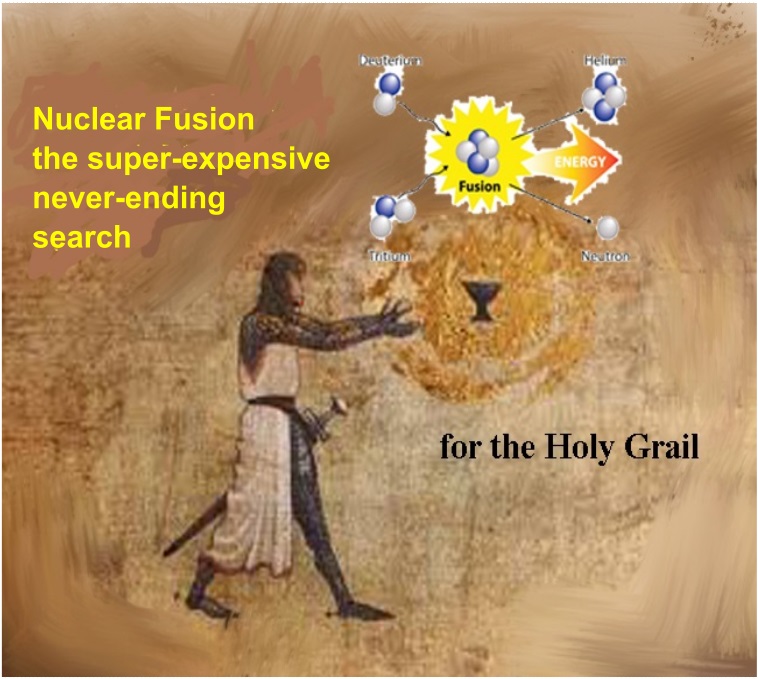
The government has announced it will incorporate all nuclear fusion energy facilities generating at least 50 megawatts (MW) in England into the streamlined nationally significant infrastructure project (NSIP) planning regime, but will drop its proposal to include such developments that fall under this threshold.
A fusion energy start-up claims to have solved the millennia-old challenge of how to turn other metals into gold. Chrysopoeia, commonly known as alchemy, has been pursued by civilisations as far back as ancient Egypt. Now San Francisco-based Marathon Fusion, a start-up focused on using nuclear fusion to generate power, has said the same process could be used to produce gold from mercury.
In an academic paper published last week, Marathon proposes that neutrons released in fusion reactions could be used to produce gold through a process known as nuclear transmutation.
The recent announcement that the UK’s Sizewell C nuclear generation construction’s projected cost has doubled from £20 billion in 2020 to nearly £38 billion today is shocking but predictable. For anyone following Europe’s nuclear power saga, such an escalation is not an anomaly but rather a continuation of a deeply entrenched pattern. This project, part of Europe’s broader push for nuclear power to meet climate goals, is again raising fundamental questions about whether European governments and utilities have truly laid the groundwork for successful nuclear power scaling, or if they continue to underestimate the scale of the task.
To assess what has gone wrong, we can turn to a clear set of criteria for successful nuclear programs that history provides. These criteria are based on the best available evidence from nuclear build-outs globally, and importantly, are grounded in repeated successes and failures documented by energy historians and experts. Seven specific factors emerge as crucial: first, nuclear power programs require a strategic national priority with consistent government oversight and support. Second, successful nuclear programs historically have close alignment with military nuclear objectives, benefiting from established skill sets, infrastructure, and strategic imperatives. Third, reactor programs thrive only when standardized around a single, fully proven reactor design. Fourth, large-scale reactors in the gigawatt range provide significant economies of scale. Fifth, there must be a comprehensive, government-supported training and human resources program. Sixth, deployment should be rapid, continuous, and sustained over two to three decades to leverage learning effects. Finally, successful nuclear deployments involve constructing dozens of reactors, not just a few isolated units, to benefit from economies of scale and accumulated knowledge.
Evaluating Europe’s EPR (European Pressurized Reactor) program against these criteria provides a sobering picture. The strategic national priority criterion has only partially been met. European governments have indeed supported nuclear in principle, yet actual oversight has varied considerably, often shifting responsibilities between private entities, state regulators, and multinational utilities, diluting accountability. There has been no consistent, comprehensive governmental stewardship. Each reactor site faces a new web of bureaucratic complexity rather than benefiting from streamlined regulatory oversight.
The second criterion, integration with military objectives, is entirely absent in the European context. Historically, successful nuclear programs like those in France, the United States, or Russia have been intertwined with military nuclear efforts. The absence of military nuclear integration in contemporary European programs removes a critical element of strategic urgency, funding, and workforce stability. Europe’s nuclear effort remains civilian-only, losing these historical advantages.
Standardization of reactor design has also fallen short. Although the EPR was intended to be Europe’s standardized reactor, actual implementations have seen multiple design modifications, extensive site-specific customizations, and evolving regulatory requirements. Each new European EPR has effectively become another first-of-a-kind construction project, losing almost all potential learning curve benefits. The changes between Flamanville in France, Olkiluoto in Finland, and Hinkley Point C in the United Kingdom illustrate starkly how the promise of standardization has not materialized.
While the fourth criterion of large-scale reactors in the gigawatt class is technically met, this alone has not guaranteed success. Indeed, the EPR’s massive scale of around 1.6 GW per reactor, designed specifically to capture economies of vertical scaling, has perversely contributed to complexity and cost overruns due to an insufficiently mature supply chain, workforce, and management capability. Size alone cannot substitute for weaknesses elsewhere in the development ecosystem.
A major factor missing from Europe’s nuclear plans has been a centralized, government-led workforce training and human resource strategy. Nuclear construction is complex and requires extremely well-trained, specialized and security-cleared personnel who work effectively in teams. Europe’s nuclear workforce remains fragmented, project-based, and heavily reliant on temporary contractors. This workforce structure prevents accumulation of essential expertise and institutional memory. By contrast, successful nuclear builds historically, such as France’s 1970s and 1980s fleet or South Korea’s more recent nuclear expansions, relied explicitly on stable, state-backed workforces built over decades.
The sixth factor, rapid and sustained deployment over a defined two- or three-decade timeframe, has been consistently unmet in Europe. Instead, construction schedules stretch over a decade or longer for individual projects, with significant gaps between reactor starts. Olkiluoto took nearly 18 years from groundbreaking to full commercial operation, while Flamanville has similarly ballooned from a five-year schedule to more than 17 years. Such prolonged and intermittent build-outs destroy continuity, erase institutional memory, and eliminate any hope of learning-based improvements.
Finally, the criterion of dozens of reactors to benefit from learning economies and consistent improvements has not even been approached. The small number of participating European nations have each built just one or two reactors each, without sustained replication. Instead of dozens, Europe’s EPR build-out has delivered exactly two completed reactors outside of China, one each in Finland and France, both massively over budget and delayed. The United Kingdom’s ongoing struggles with Hinkley Point C and now Sizewell underscore the near-complete failure to leverage scale and experience across multiple similar projects.
Bent Flyvbjerg’s extensive research on megaprojects offers important context here. His data demonstrate consistently that nuclear projects routinely underestimate complexity, overestimate potential cost savings, and ignore historical evidence of prior overruns. Flyvbjerg’s findings indicate average overruns for nuclear reactors often range from 120 to 200% above initial estimates. Europe’s EPR experiences align closely with his analysis, underscoring that the fundamental issue is systemic rather than isolated mismanagement or technical miscalculations. The repeated pattern of underestimated costs and schedules aligns precisely with Flyvbjerg’s warnings.
Taking Sizewell C specifically, the now nearly doubled budget and uncertainty about its schedule mirror previous European EPR outcomes. Although the UK government adopted the regulated asset base model to theoretically reduce investor risk, the reality is consumers bear the brunt of these overruns, undermining the economic and political rationale for nuclear. This situation further confirms that without fundamental changes in approach, future EPR projects across Europe will likely replicate these troubling patterns.
The essential takeaway is clear. Unless European governments and industry stakeholders directly address and fulfill the criteria outlined above, nuclear power development in Europe will continue to repeat these costly cycles. Establishing clear national priorities, enforcing rigid reactor standardization, implementing centralized workforce training, committing to sustained rapid deployment, and genuinely standardizing the regulatory environment are non-negotiable if nuclear is to play a significant, reliable, and economically sensible role in Europe’s energy future.
In stark contrast to Europe’s nuclear struggles, renewable energy growth on the continent has significantly exceeded expectations during the same period. Between the mid-2000s, when the first EPR reactors entered construction, and today, Europe’s wind and solar capacity has expanded rapidly, consistently outperforming deployment targets and experiencing steady cost declines. Wind power, both onshore and offshore, has grown by more than tenfold, with major projects routinely delivered within budget and schedule.
Solar power installations have seen even more impressive expansion, driven by sharp decreases in module prices and efficient scaling of supply chains. Unlike nuclear, renewable projects benefit from short construction cycles, standardized designs, and continuous incremental improvements, underscoring Europe’s missed opportunity with nuclear and emphasizing the practical effectiveness of the renewables approach. These advantages show clearly in Flyvbjerg’s data, with wind and solar projects, along with transmission, being the three megaproject categories most likely to come in within initial budgets and schedules.
The stark doubling of Sizewell’s budget is not just a financial shock, it should be a wake-up call. The EPR reactor story in Europe does not have to remain one of perpetual disappointment, but without a realistic recognition of what successful nuclear scale requires, these overruns and delays will continue indefinitely, destroying the business cases that led to their approval in the first place. Europe must either meet these demanding but historically validated conditions for nuclear success or shift decisively toward alternatives capable of meeting its climate and energy goals without the drama and expense that have defined the European nuclear experience to date.
First Light scrambles for funding despite Labour promise to invest £2.5bn in nuclear research. A British nuclear fusion pioneer has warned it risks running out of cash within six months as it races to raise millions of pounds in funding to secure its future. First Light Fusion, which is based in Oxford, is in talks with investors to raise £20m after burning through tens of millions of pounds to develop its novel fusion technology. The start-up, founded in 2011, had sought to develop what it called “projectile fusion”, developing a giant gas-powered gun that would fire a 5p-sized projectile at extreme speeds into a fuel source, sparking a fusion reaction. However, the company abandoned plans to build a prototype reactor earlier this year as it struggled to raise funds.
Energy Secretary to make it easier for developers to build reactors with planning shake-up
Ed Miliband has taken a bet on nuclear fusion one day powering Britain by making it easier for developers to build new reactors with minimal planning restrictions.
Fusion plants are to be included in the UK’s national infrastructure planning system, meaning they can be built in any part of Britain without needing consent from local authorities and with little opportunity for local people to object. Mr Miliband said the aim was to ensure fusion, if it ever works, could rapidly become part of the UK energy system.
COMMENT. The ask for $500-million has been out there for about two years. Deadbeats, all of them involved in this sorry excuse for a project. It’s pathetic.
It comes after review by Canadian Nuclear Safety Commission that it hopes to parlay into newfound investment
ARC Clean Technology says its focus is now raising what is likely still the hundreds of millions of dollars it needs to finish the design work of its small modular nuclear reactor.
It’s a figure that’s likely upwards of $500 million, according to two former ARC CEOs.
That’s with the aim to enable NB Power to submit a license to construct application hopefully by 2027, with a target commercial deployment at Point Lepreau in the early 2030s.
It comes after the completion of a review by the Canadian Nuclear Safety Commission that it hopes to parlay into newfound private investment.
Earlier this week, the country’s safety commission said it identified “no fundamental barriers” to licensing the ARC’s proposed sodium-cooled fast neutron reactor, after completing a second design review that had stretched on for over three years.
It’s a result that ARC is calling a “pivotal step” toward commercial deployment.
That’s while adding it gives the company new “global credibility” in a race to market.
Its focus now is raising new money.
“Our current focus is on advancing strategic partnership and investment discussions to set the stage for the next phase of design work to support a license to construct application,” ARC Clean Technology spokesperson Sandra Donnelly told Brunswick News.
Asked specifically how much money is needed, Donnelly declined to say.
“We continue to evaluate the going forward cost estimate through current discussions with strategic partners,” she said.
“We are not sharing specific numbers.”
ARC’s former CEO Bill Labbe had previously said the ARC-100 would cost $500 million to develop and needed an additional $600 million more in power purchase agreements to move the project forward.
That was after the Higgs government gave $20 million to ARC, while the feds awarded the company another $7 million.
Ottawa also provided NB Power with $5 million to help it prepare for SMRs at Point Lepreau.
The Gallant Liberal government also first spent $10 million on ARC and Moltex, the province’s other company pursuing SMR technology, as they set up offices in Saint John now roughly eight years ago.
In an interview with Brunswick News on Thursday, another former ARC president and CEO, Norm Sawyer, who left the company in 2021 and is now a board member at the National Research Council Canada, pegged the figure needed to likely be between US$500 and $700 million.
“A preliminary design is almost essentially complete,” Sawyer said of the Phase 2 review. “Obviously, the next step needs money.
“They would also have to staff up.”
Sawyer said further design work could involve upwards of 100 employees with intensive final engineering to be completed.
That doesn’t include the construction of a facility at Lepreau, Sawyer said.
Brunswick News first reported last spring that ARC had handed out layoff notices to employees, while confirming that, in parallel, its president and CEO since 2021, Labbe, was leaving the company.
Asked if staffing levels will now change, Donnelly said that’s now “being reviewed as part of preparations for the next phase of design work.”
“It’s a positive step for them, it’s just can they leverage it now to get to the next step which is really investment,” Sawyer said. “I think there’s value there for investors.
“It’s also up to how much risk investors are willing to take. I think the investor would want a PPA (power purchase agreement) first.”
A power purchase agreement is a long-term contract where a nuclear power plant sells electricity to a buyer, often a utility, government, or large energy consumer.
NB Power CEO Lori Clark told a committee of MLAs at the provincial legislature earlier this year that ARC is “looking for investors now.”
Clark herself travelled to South Korea last December to promote ARC’s “commercialization possibilities,” in part to drum up new financial support.
A trilateral collaboration agreement was announced last year between South Korea’s utility, ARC, and NB Power with the goal of establishing “teaming agreements for global small modular reactor fleet deployment.”
ARC also said that it welcomed in February “multiple delegations” from South Korea’s utility.
No financial agreement has been revealed as of yet.
Finding the money necessary to finish design work is integral to building timelines.
“Our next objective is to complete the required design work by 2027 to enable NB Power to submit a license to construct application, with a target commercial deployment in early 2030s,” Donnelly said.
“Timelines will continue to be reviewed as design work and partnership discussions progress.”
The company still faces other challenges.
Brunswick News has also reported that ARC is still in search of a new enriched uranium supplier, after it originally planned to buy from Russia. It’s a problem Sawyer has suggested might result in a redesign of the company’s small modular nuclear reactor technology.
Asked if the concern over an enriched uranium source has been resolved, Donnelly said that “the availability of HALEU (high-assay low-enriched uranium) fuel remains an overall market issue.
“We are encouraged that the HALEU supply chain has advanced significantly over the past year with strong government support in multiple countries, and we continue to evaluate multiple options to secure a fuel supply for the first ARC unit,” she added.
The enriched uranium is an integral component of the company’s ARC-100 sodium-cooled fast reactor.
But it’s not as simple as finding that enriched uranium closer to home. While Canada mines uranium, and there are currently five uranium mines and mills operating in Canada, all located in northern Saskatchewan, it does not have uranium enrichment plants.
The U.S. opened its first and only enrichment plant, operated by Centrus Energy in Ohio, amid a federal push to find a solution to the Russia problem. It remains the only facility in the U.S. licensed to enrich uranium, and has a lineup for SMR firms seeking its fuel.
That said, there appeared to be a glimmer of hope on the uranium front late last year as the Trudeau federal government’s fall economic statement promised support to strengthen nuclear fuel supply chains.
“To support demand for allied enriched nuclear fuel and bolster supply chain resiliency, the 2024 fall economic statement announces the government’s intent to backstop up to $500 million in enriched nuclear fuel purchase contracts from the United States or other allied countries, including high-assay low-enriched uranium (HALEU), subject to further consultations with industry stakeholders on program details, and provide $4 million over 10 years, starting in 2024-25, for Natural Resources Canada to administer the program,” reads the fall mini budget.
The current Carney government has yet to table a budget laying out whether that commitment will continue to go ahead.
The Flamanville EPR (Manche) entered the operating phase in May 2024, with the loading of its fuel . Since then, it has validated its first divergence in September 2024 and the coupling to the electricity grid in December 2024. In 2025, it continues this intense start-up phase with a target of full power during the summer of 2025 .
It is even on schedule, it seems, since it reached 60% of its power , at the beginning of June 2025. It is now aiming for the 80% level where it will have to benefit from the approval of the Nuclear Safety and Radiation Protection Authority (ASNR).
However, he will have to wait a little longer because unit number 3 of the Flamanville Nuclear Power Production Centre (CNPE) is no longer operating.
Investigation and repair on the agenda
On June 19, 2025, at 7:05 p.m., it was shut down as part of the reactor commissioning tests, which require the reactor to undergo numerous and significant power variations.
Reactor No. 2 is also delayed
On Monday, June 16, reactor No. 2 was disconnected from the power grid, “following the activation of the turbine’s automatic protections,” located in the non-nuclear part of the facility. “We detected an oil leak on a component,” EDF confirmed. “The reactor therefore went into automatic protection mode.” Initially, unit No. 2 was scheduled to restart on the evening of Sunday, June 22. However, repairs are taking longer than expected. A new date has therefore been set for Saturday, June 28. However, there is no guarantee.
“This shutdown allowed adjustment operations to be carried out in the engine room, a non-nuclear part of the facilities,” EDF explained . However, the production unit has still not restarted.
It is kept at a standstill to carry out investigations and adjustments on a protection valve of the main primary circuit.EDF, communications department
No official date has been announced yet. ” We are investigating and making repairs to continue the test session,” EDF concluded
A nuclear electromagnetic pulse from a nuclear detonation could affect billions explains Carlos Umaña in an interview
As a companion piece to Umaña’s article about the April 2025 blackout in Europe and his first fears that nuclear war had begun, we republish this interview from Tendencia in 2019.
In 2017, the International Campaign to Abolish Nuclear Weapons (ICAN) won the Nobel Peace Prize in recognition of its decade-long work to ban the atomic bomb.
ICAN is a global alliance whose goal is to raise awareness among people in all countries to pressure their governments to sign a treaty to ban nuclear weapons. The campaign was launched in 2007 and is now active in more than 60 countries.
Carlos Umaña, from Costa Rica, is a member of the International Physicians for the Prevention of Nuclear War (IPPNW), and a member of the International Campaign to Abolish Nuclear Weapons (ICAN).
What is a nuclear electromagnetic pulse?
A nuclear electromagnetic pulse (EMP) is a brief, intense pulse of radio wave that is produced by a nuclear detonation.
Its radius is much greater than the destruction caused by the heat and shock wave of the nuclear weapon. For example, the pulse from an explosion about 100 km high would cover an area of 4 million km2. An explosion about 350 km high could, for example, cover most of North America, with a voltage of a power that is a million times greater than that of a lightning bolt from a thunderstorm. That is, if the detonation of a nuclear bomb is made from a sufficient height, even if there is no such great physical destruction, it could affect the lives of the inhabitants of an entire country or of several countries.
What would be the consequences of detonating a nuclear bomb from a sufficient height?
It would cause extensive disruption of all electrical equipment. Everything within the radius of the EMP wave would cease to function and would literally go dark.
The EMP energy would be absorbed by a large number of metallic objects, including power cables, telephone lines, railroads and antennas. It would be transmitted to computers and electronic equipment. This would directly affect essential circuits for telecommunications, computer systems, transportation networks, etc. In other words, it would affect practically everything to do with technology.
Why talk about humanitarian consequences, if we are talking about technology, not people?
Recently there has been an impetus for the humanitarian nuclear disarmament movement, where there has been talk about how weapons affect people. There is a lot of talk about the direct effects of destruction by heat, blast wave and radiation, the effects of which last for generations and cause a lot of suffering even today.
Today, this issue has become extremely relevant because civilization depends on technology for so many things, including health systems, and so many people would be affected both directly and indirectly, far beyond the catastrophic damage caused by the direct physical elements.
Nuclear bombs have been detonated before, why hasn’t this happened?
Yes, it has. This is known from the havoc they have wreaked at both Hiroshima and Nagasaki (1945) and the 2056 nuclear tests that have been done since then.
The difference between then and now is that our dependence on technology is virtually absolute. If we think about it, almost every aspect of our lives, especially in the urban environment, is tied to technology, both in terms of the electrical devices that take care of more and more of the details of our daily lives, and the global communication and information network that we depend on to function as a society. We’re talking about things from basic telecommunication, to data in the cloud, to the stock market, to digital maps for international flights, and so on.
All cars and planes would be disabled. Police, ambulances and firefighters could not be called. Food could not be distributed, especially in urban centers, nor water. Imagine entire cities without electricity, lights, transportation and food. It would be the end of civilization itself. Modern life as we know it would simply cease to exist.
To what extent are the threats of this happening real?
While North Korea’s arsenal is much smaller than that of the United States, at times of tension between the two countries, the North Korean threat was to detonate a bomb in the U.S. atmosphere to disable a large part of the country.
by Thierry Meyssan, Voltaire Network | Paris (France) | 27 June 2025
The implications of Iran’s nuclear program are not what we think. Tehran renounced the atomic bomb in 1988, but is attempting, with Russia’s cooperation, to discover the secrets of nuclear fusion. If it succeeds, it would help the Southern states decolonize by freeing themselves from oil. As for the implications of the bombing of certain Iranian nuclear sites by the United States, they may also not be what we think. This affair is all the more opaque because it is not possible today to establish a clear distinction between research on civilian nuclear fusion and military fusion.
ince the fall of Iraq, under the blows of the British and the United States, London and Washington have popularized the myth of Iran’s military nuclear program, following on from the myth of Iraq’s weapons of mass destruction. This myth has been taken up by Israeli “revisionist Zionists” (not to be confused with “Zionists” per se) and their leader, Benjamin Netanyahu. For twenty years, Westerners have been inundated with this propaganda and have come to believe it, although announcing for such a long period that Tehran will have “the” bomb “next year” makes no sense.—
However, even if Russia, China, and the United States all agree that there is currently no Iranian military program, everyone clearly sees that Iran is doing something at its nuclear power plants. But what?
In 2005, Mahmoud Ahmadinejad was elected President of the Islamic Republic, replacing Sayyed Mohammad Khatami. He is a scientist whose vision is to liberate colonized peoples. He therefore believes that by mastering the atom, he will enable all peoples to free themselves from Western oil transnationals.
Iran then develops training programs for nuclear scientists in numerous universities. It’s not about creating a small elite of a few hundred specialists, but about training battalions of engineers. There are now tens of thousands of them.
Iran intends to discover how to achieve nuclear fusion, whereas Westerners are content with fission. Fission is the splitting of an atom; while fusion is the joining of atoms, which releases immeasurable energy. Fission is used for our power plants, while, for the time being, fusion is only used for thermonuclear bombs. Mahmoud Ahmadinejad’s project is to use it to generate electricity and share it with developing countries.
This knowledge is revolutionary, in the Khomeinist sense of the term, that is, it allows for an end to the dependence of the Southern states and their economic development. It clashes head-on with the British vision of colonialism, according to which His Majesty had to divide and rule and prevent the development of the colonized. We recall, for example, that London forbade Indians from spinning the cotton they grew themselves so that it could be spun by its factories in Manchester. In response, Mahatma Gandhi set an example for his people and spun his own cotton, defying the British monarchy. Similarly, Mahmoud Ahmadinejad’s project challenges the power of the West and the Anglo-Saxon oil transnationals. It is perfectly understandable to be concerned about Iranian investment in nuclear power because these technologies are, by definition, dual-use, both civilian and military. It is clear that this is not the usual civilian use, and that the detailed discovery of fusion processes could also be used for military purposes. In any case, Iran is seeking an inexhaustible source of energy.
………………………….It should also be remembered that Iran is a signatory to the Treaty on the Non-Proliferation of Nuclear Weapons (NPT). It is for this reason that it is subject to inspections by the International Atomic Energy Agency (IAEA). Since 1988, the IAEA has never found any evidence suggesting that Iran still has a military nuclear program. However, the Agency has asked numerous questions to clarify certain aspects of its civilian program and has received no answers, which is perfectly understandable given the investment in Iranian-Russian fusion research. In practice, documents released by the Iranian press two days before the Israeli attack attest that the IAEA Director, the Argentinian Rafael Grossi, behaves like a spy in the service of Israel, to which he transmits all information from its inspectors; this is despite the fact that Israel is not a signatory to the NPT and therefore not a member of the IAEA.
Tehran submitted a proposal for the “Establishment of a Nuclear Weapon-Free Zone in the Middle East” to the United Nations Conference of the Parties to the NPT on May 4, 2010 [1]. This proposal was well received by all states in the region, with the exception of Israel. Indeed, Tel Aviv, which benefited from transfers of French technology from senior officials of the Fourth Republic, possesses the atomic bomb [2]…………………………………………………………………………………………https://www.voltairenet.org/article222538.html










 nuclear-news