EDF’s plans to produce pink hydrogen at proposed 3.2GW nuclear plant are ‘daft’: argues influential independent analyst Liebreich
EDF’s plans to produce pink hydrogen at proposed 3.2GW nuclear plant are ‘daft’: Liebreich
French utility wants to divert nuclear power to electrolysers at times when the supply of wind and solar is high, but ‘the economics won’t work’, argues the influential independent analyst, Recharge, 2 August 2021 EDF is planning to produce low-carbon “pink” hydrogen at a controversial planned nuclear power plant in the UK only at times when the supply of wind and solar is plentiful — an idea that influential analyst Michael Liebreich has dismissed as “daft”
The French state-backed power giant wants to build the £20bn ($27.8bn) 3.2GW Sizewell C facility on the coast of eastern England, and the UK government is said to be keen to give it the go-ahead as it aims to reach net-zero emissions by 2050.
But in the wake of the hugely expensive Hinkley Point C nuclear power plant in southwest England — which is now under construction after receiving an eye-wateringly high strike price of £92.50/MWh for 35 years (rising with inflation) — the government is wary of committing so much taxpayer money to the project.
In what could be seen as an effort to firm up government support for Sizewell C, which would come on line in 2034, EDF has unveiled plans to use the proposed facility to produce clean hydrogen by diverting electricity to H2-producing electrolysers on days when the supply from wind, solar and hydro are high.
If new nuclear is to have any chance of succeeding it will be by being paired with demand-responsive processes like electrolysis or desalination,” Liebreich wrote on Twitter. “But the idea of making H2 [from nuclear] only with excess power on sunny or windy days is daft: the economics won’t work.”………
Producing hydrogen through electrolysis only at times of excess renewable power has long been derided as uneconomic. This is because using electrolysers only occasionally will significantly increase the levelised cost of the hydrogen (LCOH……….
UK’s nuclear problems
The UK government is said to be considering funding Sizewell C through a “regulated asset base” model, through which consumers would pay a top-up on their electricity bills way before the plant starts generating power. But this would potentially mean that consumers would also have to pay for any cost overruns — a very common problem for the nuclear industry.
According to researchers at the Massachusetts Institute of Technology, the typical nuclear power plant built since 1970 had a cost overrun of 241%. This has meant it has been hard for new nuclear projects to attract investment.
The UK government is said to be considering taking over the 20% stake in Sizewell C currently owned by China General Nuclear Power Group (CGN), after declaring that it no longer wanted Chinese state-owned companies involved in the UK atomic power sector. CGN owns a 33% stake in Hinkley Point C.
Former UK Energy Secretary Ed Davey, who is now the leader of the Liberal Democrat party, says the government’s focus should be on far cheaper wind and solar, rather than expensive, risky nuclear.
“Anything that passes nuclear’s costs on to the taxpayer — costs like nuclear waste management, nuclear station decommissioning, or delays and cost overruns — will be a total betrayal of taxpayers and cost every household in Britain a small fortune,” he said……….. https://www.rechargenews.com/energy-transition/edf-s-plans-to-produce-pink-hydrogen-at-proposed-3-2gw-nuclear-plant-are-daft-liebreich/2-1-1047159
UK Taxpayer funding will pour in, to get Rols Royce’s small modular nuclear reactors happening
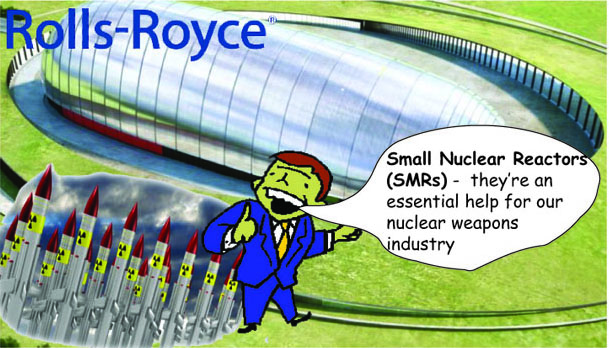
Rolls-Royce lines up funding for mini nuclear reactor revolution. Private
backing for Rolls-led consortium to build new generation of ‘mini nukes’
unlocks hundreds of millions of taxpayer support. Britain has taken a
crucial step towards creating a fleet of mini reactors that would reduce
reliance on Chinese money and nuclear technology after Rolls-Royce secured
investment to build the world’s first production line.
A consortium led by the FTSE 100 engineer has secured at least £210m needed to unlock a
matching amount of taxpayer funding, which will make it the first “small
modular reactors” (SMR) developer to submit its designs to regulators. It
is understood heavyweight financial investors specialising in energy are
now thrashing out the final details of their backing to drive work on the
so-called “mini nuke” power plants.
State support for SMRs – which
each generate about 450 megawatts, about a seventh of the output of
conventional nuclear power stations such as Hinkley Point – was revealed
in the Prime Minister’s ten-point plan for a green industrial revolution
released in the autumn. ………..
SMRs must play a
critical role in our clean energy transition and can open new export
markets worth billions of pounds. “To realise this potential, however,
the Government needs to establish a siting and policy framework by next
year to enable the deployment of a fleet of SMRs and capture the promise of
a net zero [that’s a lie] future.” Although officials are engaging with other businesses
on SMRs, one Whitehall source described the Rolls-led consortium as “by
far the most advanced”.
The UK SMR consortium also includes the National
Nuclear Laboratory and Laing O’Rourke, the construction firm. Ministers
are expected to push for the Office for Nuclear Regulation to prioritise
assessment of the consortium’s SMR design, while simultaneously driving the
planning process to get potential sites.
Telegraph 3rd Aug 2021
Small nuclear reactors, a dangerous experiment, and distraction from real climate action – David Suzuki

Renewables cost less than nuclear, come with fewer health, environmental and weapons-proliferation risks and have been successfully deployed worldwide.
Given rapid advances in energy, grid and storage technologies, along with the absolute urgency of the climate crisis, pursuing nuclear at the expense of renewables is costly, dangerous and unnecessary.
Is smaller better when it comes to nuclear? Pique, By: David Suzuki 1 Aug 21, Nuclear power hasn’t been in the news much since the 2011 Fukushima meltdown in Japan. Thanks to a push by industry and governments, you might soon hear more about how nuclear reactors are now safer and better.
Specifically, the conversation has shifted to “small modular nuclear reactors” or SMNRs, which generate less than 300 megawatts of electricity, compared to up to 1,600 MWe for large reactors.
Some of the 100 or so designs being considered include integral pressurized water reactors, molten salt reactors, high-temperature gas reactors, liquid metal cooled reactors and solid state or heat pipe reactors. To date, the industry is stuck at the prototype stage for all models and none is truly modular in the sense of being manufactured several at a time—an impediment considering the speed at which global heating is worsening.
The benefits touted by industry have convinced many countries, including Canada, to gamble huge sums on nuclear, despite the poor odds. The Small Modular Reactor Action Plan hypes it as the possible “future of Canada’s nuclear industry, with the potential to provide non-emitting energy for a wide range of applications, from grid-scale electricity generation to use in heavy industry and remote communities.” ………
given the seriousness of the climate emergency and the various options for transforming our energy systems to combat it, is nuclear—regardless of size or shape—the way to go? We must rapidly reduce emissions now, and we have readily available technologies to do so.
New nuclear doesn’t make practical or economic sense for now. Building reactors will remain expensive and time-consuming. Studies estimate electricity from small nuclear can cost from four to 10 times that of wind and solar, whose costs continue to drop. SMNRs will require substantial government subsidies.
Even when nuclear has to compete against renewables prepackaged with storage, the latter wins out.
One recent study of 123 countries over 25 years published in Nature Energy found that renewables are much better at reducing greenhouse gas emissions than nuclear—whose benefits in this area are negligible—and that combining nuclear and renewables creates a systemic tension that makes it harder to develop renewables to their potential.
Like all nuclear reactors, SMNRs produce radioactive waste and contribute to increased nuclear weapons proliferation risk—and Canada still has no effective strategy for waste. Nuclear power also requires enormous amounts of water.
Corporate interests often favour large, easily monopolized utilities, arguing that only major fossil fuel, nuclear or hydro power facilities can provide large-scale “baseload” power. But many experts argue the “baseload myth” is baseless—that a flexible system using renewables combined with investments in energy efficiency and a smart grid that helps smooth out demand peaks is far more efficient and cost-effective, especially as energy storage technologies improve.
Even for remote populations, energy systems that empower communities, households, businesses and organizations to generate and store their own energy with solar panels or wind installations and batteries, for example, and technologies like heat-exchange systems for buildings, would be better than nuclear.
Renewables cost less than nuclear, come with fewer health, environmental and weapons-proliferation risks and have been successfully deployed worldwide. Given rapid advances in energy, grid and storage technologies, along with the absolute urgency of the climate crisis, pursuing nuclear at the expense of renewables is costly, dangerous and unnecessary.
David Suzuki is a scientist, broadcaster, author and co-founder of the David Suzuki Foundation. Written with contributions from David Suzuki Foundation Senior Writer and Editor Ian Hanington. https://www.piquenewsmagazine.com/opinion/opinion-is-smaller-better-when-it-comes-to-nuclear-4175458
American public opinion ignored as NASA prioritises colonising Mars, over research to save the climate

63 percent according to a 2018 Pew Research Center survey—believe that NASA should prioritize monitoring Earth’s climate system. Only a minority—18 percent—said that NASA should prioritize sending humans to Mars.
Is using nuclear materials for space travel dangerous, genius, or a little of both? bulletin of the Atomic Scientists , Bulletin of the Atomic Scientists, By Susan D’Agostino | July 28, 2021
The 1977 Soviet satellite Kosmos 954 was supposed to monitor ocean traffic using radar—a technology that works best at short distances. For this reason, the craft traveled in Earth’s low orbit, where solar panels alone could not provide consistent power. And so, the satellite was equipped with a small, efficient, yet powerful nuclear reactor fueled by approximately 50 kg of weapons-grade uranium 235. Within weeks of its launch, Kosmos 954 veered from its path like a drunkard on a walk. The Soviets tried to eject its radioactive core into a higher orbit by way of a safety system designed for that purpose. But the safety system failed. In January 1978, Kosmos 954 burst into the Western Canada skyline, scattering radioactive dust and debris over a nearly 400-mile path. The cleanup and recovery process, which took nearly eight months and started in the subarctic winter, found that virtually all of the satellite fragments were radioactive, including one that was “sufficient to kill a person or number of persons remaining in contact with that part for a few hours.”
Now that the United States has set a goal of a human mission to Mars by 2039, the words “nuclear” and “space” are again popping up together in newspaper headlines. Nuclear propulsion systems for space exploration—should they materialize—are expected to offer significant advantages, including the possibility of sending spacecraft farther, in less time, and more efficiently than traditional chemical propulsion systems. But extreme physical conditions on the launchpad, in space, and during reentry raise questions about risk-mitigation measures, especially when nuclear materials are present.
Why not travel to Mars on a chemically propelled spacecraft? Spaceships that use chemical propellants benefit from tremendous thrust to get the job done. However, they also need to carry fuel and oxidizer to power that incredible upward or forward movement………..
Even if a spacecraft were able to refuel with a chemical propellant in space or magically carry enough chemical propellant for the journey to Mars, the long transit time would present a hazard to the crew……..
In theory, nuclear propulsion for space travel will offer two significant advantages over chemical propulsion. First, since nuclear systems are much more efficient, the amount of fuel required for the journey to Mars is practical. Second, without a need to traverse the shortest path, the flight could take off from Earth and Mars anytime—without delay. The latter would reduce the length of the roundtrip journey and the crew’s exposure to radiation.
Still, attaching what amounts to a nuclear reactor to a human-occupied spaceship is not without risks.
Is the idea of sending nuclear materials into space new? The idea of sending nuclear materials into outer space is not new. And unlike Kosmos 954, many instances have been successful. Since 1961, NASA has powered more than 25 space missions with nuclear materials. The only other practical power option—solar power—is often unavailable in dark, dusty, far-off corners of the solar system.
Likewise, the Atomic Energy Commission launched a nuclear-thermal rocket propulsion research and development program in 1955. …….funding and interest in the programs dried up in the 1970s……
What new plans does the United States have for sending nuclear materials to space? The National Academies’ report released earlier this year recommended that NASA “commit within the year to conducting an extensive and objective assessment of the merits and challenges of using different types of space nuclear propulsion systems and to making significant technology investments this decade.” The report offers a roadmap for developing two different kinds of propulsion systems—nuclear electric and nuclear thermal—for human missions to Mars.
A nuclear electric propulsion system bears some resemblance to a terrestrial power plant. That is, first a fission reactor generates power for electric thrusters. That power positively charges the ions in the gas propellant, after which electric, magnetic, or electrostatic fields accelerate the ions. The accelerated ions are then pushed out through a thruster, which propels the spacecraft.
Alternatively, in a nuclear thermal propulsion system, the reactor operates more as a heat exchanger in which a fuel such as liquid hydrogen is first heated to very high temperatures—up to 4,600 degrees Fahrenheit—that is then exhausted through a rocket nozzle to produce thrust.
“For nuclear thermal propulsion, the challenge is: temperature, temperature, temperature,” Anthony Calomino, a materials and structure research engineer at NASA’s Langley Research Center, said. “There are not many materials that can survive those kinds of temperatures.” ………..
While nuclear electric propulsion systems do not require extreme temperatures, they face a different hurdle. Nuclear electric systems have six subsystems, including a reactor, shield, power conversion, heat rejection, power management and distribution, and electric propulsion systems. The operating power of all of these subsystems will need to be scaled up by orders of magnitude—and in such a way that they continue to work together—before they are ready for space……………..
Why is the United States planning to send humans to Mars anyway? Some argue that the scientific value of a human-crewed Mars mission could be captured by robots at a much lower cost and risk. Others think that humans, whose role in terrestrial climate change is apparent, should first rehabilitate Earth before colonizing other planets. Still others worry that human microbes could contaminate the Red Planet.
Indeed, a majority of Americans—63 percent according to a 2018 Pew Research Center survey—believe that NASA should prioritize monitoring Earth’s climate system. Only a minority—18 percent—said that NASA should prioritize sending humans to Mars……………. https://thebulletin.org/2021/07/is-using-nuclear-materials-for-space-travel-dangerous-genius-or-a-little-of-both/
Jeff Bezos wants to pay NASA $billions to choose HIS company over Elon Musk’s

Jeff Bezos offers Nasa $2bn in exchange for moon mission contract, Guardian, Adam Gabbatt in New York and agencies@adamgabbatt 28 Jul 2021

Billionaire lost out to Elon Musk’s SpaceX in lunar bid
Bezos claims Nasa’s decision will delay moon mission
Jeff Bezos has offered Nasa $2bn – if the US space agency reverses course and chooses his company, Blue Origin, to make a spacecraft designed to land astronauts back on the moon.
In an open letter to the Nasa administrator, Bill Nelson – a former astronaut and Democratic senator from Florida – Bezos, who last week completed a suborbital trip to space, criticised the agency’s decision to award the moon contract to rival company SpaceX, owned by Elon Musk, in April.
Bezos urged Nasa to reconsider and said Blue Origin would waive payments in the government’s current fiscal year and the next after that up to $2bn, and pay for an orbital mission to vet its technology.
Nasa handed Musk’s SpaceX a $2.9bn contract to build a spacecraft to bring astronauts to the lunar surface as early as 2024, rejecting bids from Blue Origin and the defense contractor Dynetics. Nasa had been expected to winnow the field to two companies, but went all in on SpaceX. Blue Origin had partnered with Lockheed Martin, Northrop Grumman and Draper in its bid.
The space agency cited its own funding shortfalls, SpaceX’s proven record of orbital missions and other factors in a contract decision that a senior Nasa official, Kathy Lueders, said represented “what’s the best value to the government”.
At the time Blue Origin said the decision “not only delays but also endangers America’s return to the moon”. The company filed a complaint with the Government Accountability Office, accusing the agency of giving SpaceX an unfair advantage by allowing it to revise its pricing.
In his letter on Monday, Bezos wrote: “Blue Origin will bridge the [Human Landing System] budgetary funding shortfall by waiving all payments in the current and next two government fiscal years up to $2bn to get the program back on track right now.
“This offer is not a deferral, but is an outright and permanent waiver of those payments. This offer provides time for government appropriation actions to catch up.”
In exchange, Bezos said, Blue Origin would accept a firm, fixed-priced contract and cover any system development cost overruns…………….
A Nasa spokesperson said the agency was aware of Bezos’s letter, but declined to comment further, citing the GAO protest filed by Blue Origin. A decision in that case is expected by early August, though industry experts say Blue Origin views the possibility of a reversal as unlikely. https://www.theguardian.com/science/2021/jul/26/jeff-bezos-nasa-blue-origin-space
Moltex Energy’s nuclear pyroprocessing project with plutonium would produce weapons grade material and encourage weapons proliferation
Will Canada remain a credible nonproliferation partner? https://thebulletin.org/2021/07/will-canada-remain-a-credible-nonproliferation-partner/
By Susan O’Donnell, Gordon Edwards | July 26, 2021
Susan O’Donnell Susan O’Donnell is a researcher specializing in technology adoption and environmental issues at the University of New Brunswick.
Gordon Edwards Gordon Edwards is a mathematician, physicist, nuclear consultant, and president of the Canadian Coalition for Nuclear Responsibility,
The recent effort to persuade Canada to sign the Treaty on the Prohibition of Nuclear Weapons has stimulated a lively debate in the public sphere. At the same time, out of the spotlight, the start-up company Moltex Energy received a federal grant to develop a nuclear project in New Brunswick that experts say will undermine Canada’s credibility as a nonproliferation partner.
Moltex wants to extract plutonium from the thousands of used nuclear fuel bundles currently stored as “high-level radioactive waste” at the Point Lepreau reactor site on the Bay of Fundy. The idea is to use the plutonium as fuel for a new nuclear reactor, still in the design stage. If the project is successful, the entire package could be replicated and sold to other countries if the Government of Canada approves the sale.
The recent effort to persuade Canada to sign the Treaty on the Prohibition of Nuclear Weapons has stimulated a lively debate in the public sphere. At the same time, out of the spotlight, the start-up company Moltex Energy received a federal grant to develop a nuclear project in New Brunswick that experts say will undermine Canada’s credibility as a nonproliferation partner.
Moltex wants to extract plutonium from the thousands of used nuclear fuel bundles currently stored as “high-level radioactive waste” at the Point Lepreau reactor site on the Bay of Fundy. The idea is to use the plutonium as fuel for a new nuclear reactor, still in the design stage. If the project is successful, the entire package could be replicated and sold to other countries if the Government of Canada approves the sale.
On May 25, nine US nonproliferation experts sent an open letter to Prime Minister Justin Trudeau expressing concern that by “backing spent-fuel reprocessing and plutonium extraction, the Government of Canada will undermine the global nuclear weapons non-proliferation regime that Canada has done so much to strengthen.”
The nine signatories to the letter include senior White House appointees and other US government advisers who worked under six US presidents: John F. Kennedy, Lyndon B. Johnson, Richard Nixon, George H.W. Bush, Bill Clinton, and Barack Obama; and who hold professorships at the Harvard Kennedy School, University of Maryland, Georgetown University, University of Texas at Austin, George Washington University, and Princeton University.
Plutonium is a human-made element created as a byproduct in every nuclear reactor. It’s a “Jekyll and Hyde” kind of material: on the one hand, it is the stuff that nuclear weapons are made from. On the other hand, it can be used as a nuclear fuel. The crucial question is, can you have one without the other?
India exploded its first nuclear weapon in 1974 using plutonium extracted from a “peaceful” Canadian nuclear reactor given as a gift many years earlier. In the months afterwards, it was discovered that South Korea, Pakistan, Taiwan, and Argentina—all of them customers of Canadian nuclear technology—were well on the way to replicating India’s achievement. Swift action by the US and its allies prevented these countries from acquiring the necessary plutonium extraction facilities (called “reprocessing plants”). To this day, South Korea is not allowed to extract plutonium from used nuclear fuel on its own territory—a long-lasting political legacy of the 1974 Indian explosion and its aftermath—due to proliferation concerns.
Several years after the Indian explosion, the US Carter administration ended federal support for civil reprocessing of spent nuclear fuel in the US out of concern that it would contribute to the proliferation of nuclear weapons by making plutonium more available. At that time, Canada’s policy on reprocessing also changed to accord with the US policy—although no similar high-level announcement was made by the Canadian government.
Moltex is proposing to use a type of plutonium extraction technology called “pyroprocessing,” in which the solid used reactor fuel is converted to a liquid form, dissolved in a very hot bath of molten salt. What happens next is described by Moltex chairman and chief scientist Ian Scott in a recent article in Energy Intelligence. “We then—in a very, very simple process—extract the plutonium selectively from that molten metal. It’s literally a pot. You put the metal in, put salt in the top, mix them up, and the plutonium moves into the salt, and the salt’s our fuel. That’s it. … You tip the crucible and out pours the fuel for our reactor.”
The federal government recently supported the Moltex project with a $50.5-million grant, announced on March 18 by Intergovernmental Affairs Minister Dominic LeBlanc in Saint John.
At the event, LeBlanc and New Brunswick Premier Blaine Higgs described the Moltex project as “recycling” nuclear waste, although in fact barely one-half of one per cent of the used nuclear fuel is potentially available for use as new reactor fuel. That leaves a lot of radioactive waste left over.
From an international perspective, the government grant to Moltex can be seen as Canada sending a signal—giving a green light to plutonium extraction and the reprocessing of used nuclear fuel.
The US experts’ primary concern is that other countries could point to Canada’s support of the Moltex program to help justify its own plutonium acquisition programs. That could undo years of efforts to keep nuclear weapons out of the hands of countries that might want to join the ranks of unofficial nuclear weapons states such as Israel, India, Pakistan, and North Korea. The Moltex project is especially irksome since its proposed pyroprocessing technology is very similar to the one that South Korea has been trying to deploy for almost 10 years.
In their letter, the American experts point out that Japan is currently the only nonnuclear-armed state that reprocesses spent nuclear fuel, a fact that is provoking both domestic and international controversy.
In a follow-up exchange, signatory Frank von Hippel of Princeton University explained that the international controversy is threefold: (1) The United States sees both a nuclear weapons proliferation danger from Japan’s plutonium stockpile and also a nuclear terrorism threat from the possible theft of separated plutonium; (2) China and South Korea see Japan’s plutonium stocks as a basis for a rapid nuclear weaponization; and (3) South Korea’s nuclear-energy R&D community is demanding that the US grant them the same right to separate plutonium as Japan enjoys.
Despite the alarm raised by the nine authors in their letter to Trudeau, they have received no reply from the government. The only response has come from the Moltex CEO Rory O’Sullivan. His reply to a Globe and Mail reporter is similar to his earlier rebuttal in The Hill Times published in his letter to the editor on April 5: the plutonium extracted in the Moltex facility would be “completely unsuitable for use in weapons.”
But the International Atomic Energy Agency (IAEA) has stated that “Nuclear weapons can be fabricated using plutonium containing virtually any combination of plutonium isotopes.” All plutonium is of equal “sensitivity” for purposes of IAEA safeguards in nonnuclear weapon states.
Similarly, a 2009 report by nonproliferation experts from six US national laboratories concluded that pyroprocessing is about as susceptible to misuse for nuclear weapons as the original reprocessing technology used by the military, called PUREX.
In 2011, a US State Department official responsible for US nuclear cooperation agreements with other countries went further by stating that pyroprocessing is just as dangerous from a proliferation point of view as any other kind of plutonium extraction technology, saying: “frankly and positively that pyro-processing is reprocessing. Period. Full stop.”
And, despite years of effort, the IAEA has not yet developed an approach to effectively safeguard pyroprocessing to prevent diversion of plutonium for illicit uses.
Given that history has shown the dangers of promoting the greater availability of plutonium, why is the federal government supporting pyroprocessing?
It is clear the nuclear lobby wants it. In the industry’s report, “Feasibility of Small Modular Reactor Development and Deployment in Canada,” released in March, the reprocessing (which they call “recycling”) of spent nuclear fuel is presented as a key element of the industry’s future plans.
Important national and international issues are at stake, and conscientious Canadians should sit up and take notice. Parliamentarians of all parties owe it to their constituents to demand more accountability. To date however, there has been no democratic open debate or public consultation over the path Canada is charting with nuclear energy.
Countless Canadians have urged Canada to sign the UN Treaty on the Prohibition of Nuclear Weapons that came into force at the end of January this year. Ironically, the government has rebuffed these efforts, claiming that it does not want to “undermine” Canada’s long-standing effort to achieve a Fissile Materials Cut-off Treaty. Such a treaty would, if it ever saw the light of day (which seems increasingly unlikely), stop the production of weapons usable materials such as highly enriched uranium and (you guessed it) plutonium.
So, the Emperor not only has no clothes, but his right hand doesn’t know what his left hand is doing.
Climate change report: Jeff Bezos & the new wild west show

Bezos does not care that each and every one of his joy-ride space launches punches a larger hole in the Earth’s ozone layer exacerbating our climate crisis. This is all about him, his money, his fame, and his super-sized ego.
Climate change report: Jeff Bezos & the new wild west show, https://www.peoplesworld.org/article/climate-change-report-jeff-bezos-the-new-wild-west-show/ July 23, 2021 BY BRUCE GAGNON
Jeff Bezos (the richest man in the world) successfully took his new wild west rodeo show to the edge of space and once returning to Mother Earth had the audacity to lecture us earthlings on a few things. Yahoo News reported Bezos saying:
“We need to take all heavy industry, all polluting industry, and move it into space. And keep Earth as this beautiful gem of a planet that it is.”
In this same interview, Bezos discussed his plans to expand Blue Origin’s space tourism business over the coming decades, a venture that has the potential to pump massive amounts of carbon and other chemicals into the atmosphere. Unlike ground-based emitters like cars or coal-powered plants, rocket emissions are expelled directly into the upper atmosphere, where they linger for years.
Dr. Stuart Parkinson, Executive Director of Scientists for Global Responsibility, writes:….the fuel combination used by [Bezos is] a higher carbon fuel. Research by the University of Colorado indicates that this can damage the stratospheric ozone layer – not only leading to higher levels of damaging ultra-violet radiation reaching the Earth’s surface, but also causing a global heating effect likely to be considerably greater than that from the carbon emissions alone. And the aim of these journeys? A few minutes of ‘zero-gravity’ experience and a nice view. It is hard to see this as anything more than environmental vandalism for the super-rich. As the CEO of Amazon, for years Bezos fought against company efforts to unionize, even amid credible reports of inhumane, exploitative conditions for Amazon delivery drivers and warehouse workers. He said, “I also want to thank every Amazon employee and every Amazon customer because you guys paid for all of this.”
The truth is that virtually all space technology ‘research and development’ since the dawn of the space age was done by NASA and the military industrial complex. That means the taxpayers paid for it. And now when it is possible to make gobs of money from space tourism, colonization and mining, the capitalist dominated US government is eager to privatize space operations. They don’t care what the rest of the world thinks. America, after all, is the ‘exceptional’ nation.
It was during the Obama administration that a new law called Commercial Space Launch Competitiveness Act, sometimes referred to as the Spurring Private Aerospace Competitiveness and Entrepreneurship (SPACE) Act of 2015, was signed by the president.
The UK Independent reported in 2015:Much of the ownership of space is regulated by the “Outer Space Treaty”, a document that was signed by the US and Russia among other countries in the 1960s. As well as saying that the moon and other celestial objects are part of the “common heritage of mankind”, it says that exploration must be peaceful and bans countries from putting weapons on the moon and other celestial bodies. The US government has now thrown out that understanding so that it can get rid of “unnecessary regulations” and make it easier for private American companies to explore space resources commercially. While people won’t actually be able to claim the rock or “celestial body” itself, they will be able to keep everything that they mine out of it.
Planetary Resources, an American company that intends to make money by mining asteroids, said that the new law was the “single greatest recognition of property rights in history”, and that it “establishes the same supportive framework that created the great economies of history, and will encourage the sustained development of space”. So Bezos was wearing the cowboy hat as a message to the world that a new ‘gold rush’ has begun in space and that it will be controlled by rich fat-cat psychopaths like him. They intend to circumvent United Nations space law like the Outer Space and Moon Treaties that state the ‘heavens are the province of all humankind’
Bezos does not care that each and every one of his joy-ride space launches punches a larger hole in the Earth’s ozone layer exacerbating our climate crisis. This is all about him, his money, his fame, and his super-sized ego. If we hope to survive on planet Earth, and give life to the future generations, then the global public must demand that space stooges like Jeff Bezos, Elon Musk, Richard Branson, and the rest of their ilk, are restrained and prevented from playing god.~ Bruce Gagnon Coordinates the Global Network Against Weapons & Nuclear Power in Space. Check out our short space issues videos on our web site.
”Advanced Nuclear Reactors” -desperation to save USA’s nuclear industry – but it’s not likely to work.
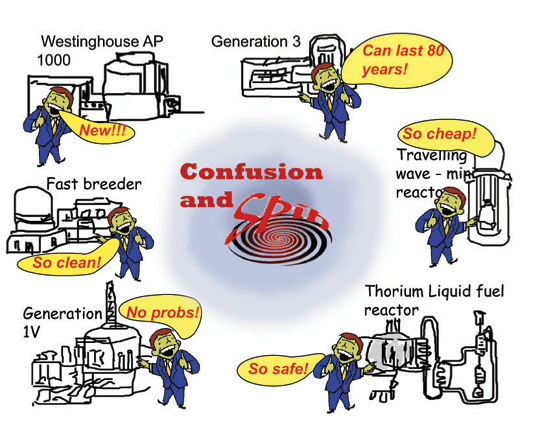
the industry has turned to two other gambits to secure a bigger market share: small, modular light-water reactors, which, because they lack the advantage of economies of scale, would produce even more expensive electricity than conventional reactors; and non-light-water “advanced” reactors, which are largely based on unproven concepts from more than 50 years ago.
Unfortunately, proponents of these non-light-water reactor designs are hyping them as a climate solution and downplaying their safety risks
Advanced’ Nuclear Reactors? Don’t Hold Your Breath. With little hard evidence, their developers maintain they’llb be cheaper, safer and more secure than existing power plants, https://www.scientificamerican.com/article/lsquo-advanced-rsquo-nuclear-reactors-don-rsquo-t-hold-your-breath/Scientific American By Elliott Negin on July 23, 2021
The U.S. nuclear power industry is at an impasse. Since 2003, 11 of the 104 light-water reactors in operation at the time have closed, mainly as a result of aging infrastructure and the inability to compete with natural gas, wind and solar, which are now the cheapest sources of electricity in the United States and most other countries worldwide.
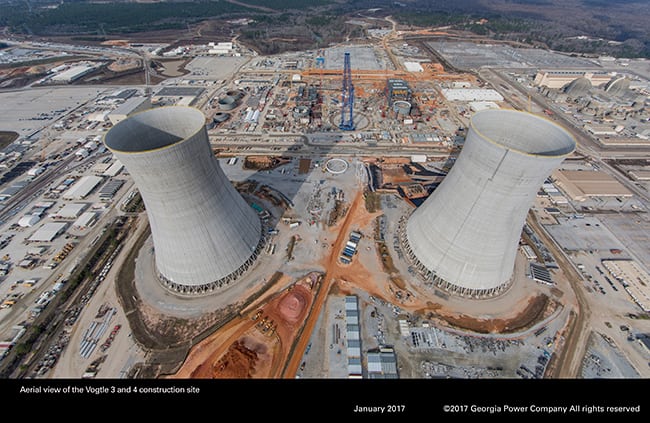
In the early 2000s, the industry promoted a “renaissance” to try to stem its incipient decline, and in 2005, Congress provided nearly $20 billion in federal loan guarantees for new nuclear reactors. The result? Only two new Westinghouse AP1000 light-water reactors, still under construction in Georgia, which will cost at least $14 billion apiece—double their estimated price tags—and take more than twice as long as estimated to be completed. Another two partially built AP1000 reactors in South Carolina were abandoned in 2017 after a $9-billion investment.
Given the struggle to build these standard-sized, 1,000-megawatt light-water reactors, the industry has turned to two other gambits to secure a bigger market share: small, modular light-water reactors, which, because they lack the advantage of economies of scale, would produce even more expensive electricity than conventional reactors; and non-light-water “advanced” reactors, which are largely based on unproven concepts from more than 50 years ago.
Unlike light-water reactors, these non-light-water designs rely on materials other than water for cooling. Some developers contend that these reactors, still in the concept stage, will solve the problems that have plagued light-water reactors and be ready for prime time by the end of this decade.

The siren song of a cheap, safe and secure nuclear reactor on the horizon has attracted the attention of Biden administration officials and some key members of Congress, who are looking for any and all ways to curb carbon emissions. But will so-called advanced reactors provide a powerful tool to combat climate change?

A Union of Concerned Scientists (UCS) analysis of non-light-water reactor concepts in development suggests that outcome may be as likely as Energy Commission Chairman Lewis Strauss’ famous 1954 prediction that electricity generated by nuclear energy would ultimately become “too cheap to meter.” Written by UCS physicist Edwin Lyman, the 140-page report found that these designs are no better—and in some respects significantly worse— than the light-water reactors in operation today.
Lyman took a close look at the claims developers have been making about the three main non-light-water designs: sodium-cooled fast reactors, high-temperature gas-cooled reactors and molten salt–fueled reactors. With little hard evidence, many developers maintain they will be cheaper, safer and more secure than currently operating reactors; will burn uranium fuel more efficiently, produce less radioactive waste, and reduce the risk of nuclear proliferation; and could be commercialized relatively soon. Those claims, however, do not hold up to scrutiny.
One of the sodium-cooled fast reactors, TerraPower’s 345-megawatt Natrium, received considerable media attention earlier this year when company founder Bill Gates touted it during interviews about his new book, How to Avoid a Climate Disaster. In mid-February, Gates told CBS’s 60 Minutes that the Natrium reactor will be safer and cheaper than a conventional light-water reactor and produce less nuclear waste.
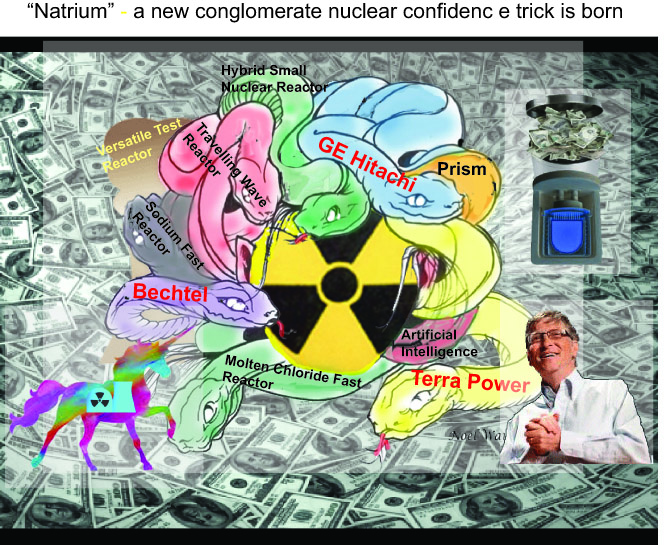
According to the UCS report, however, sodium-cooled fast reactors such as Natrium would likely be less uranium-efficient and would not reduce the amount of waste that requires long-term isolation. They also could experience safety problems that are not an issue for light-water reactors. Sodium coolant, for example, can burn when exposed to air or water, and the Natrium’s design could experience uncontrollable power increases that result in rapid core melting.
In June, TerraPower announced that it would build the first Natrium reactor in Wyoming as part of a 50-50 cost-share program with the Department of Energy. The DOE program originally required TerraPower to have the reactor, still in its early design stage, up and running by 2027. The agency recently changed the target date for commercialization to 2028.
From concept to a commercial unit in seven years?
The new Westinghouse AP1000 light-water reactor provides a cautionary tale. It took more than 30 years of research, development and construction before the first one was built in China and began generating power in 2018. According to the UCS report, if federal regulators require the necessary safety demonstrations, it could take at least 20 years—and billions of dollars in additional costs—to commercialize non-light-water reactors, their associated fuel cycle facilities, and other related infrastructure
The Nuclear Regulatory Commission (NRC) may have to adapt some regulations when licensing reactor technologies that differ significantly in design from the current fleet. Lyman says that should not mean weakening public health and safety standards, finding no justification for the claim that “advanced” reactors will be so much safer and more secure that the NRC can exempt them from fundamental safeguards. On the contrary, because there are so many open questions about these reactors, he says they may need to meet even more stringent requirements.
Finally, it recommends that the DOE and Congress consider spending more research and development dollars on improving the safety and security of light-water reactors, rather than on commercializing immature, overhyped non-light-water reactor designs.
“Unfortunately, proponents of these non-light-water reactor designs are hyping them as a climate solution and downplaying their safety risks,” says Lyman. “Given that it should take at least two decades to commercialize any new nuclear reactor technology if done properly, the non-light-water concepts we reviewed do not offer a near-term solution and could only offer a long-term one if their safety and security risks are adequately addressed.” Any federal appropriations for research, development and deployment of these reactor designs, he says, “should be guided by a realistic assessment of the likely societal benefits that would result from investing billions of taxpayer dollars, not based on wishful thinking.
Perils to austronauts’ health – high radiation and low gravity

High Radiation, Low Gravitation: The Perils of a Trip to Mars, Sunscreen and calcium supplements aren’t enough to protect Mars-bound space travelers from radiation and a lack of gravity in outer space. July 23, 2021 – 17:00Yuen Yiu, Staff Writer (Inside Science) — Back in May, SpaceX launched its Starship SN15 prototype to about the cruising altitude of a commercial airliner before landing it safely. The company claims future versions of the rocket will be able to take 100 passengers at a time to the moon, and even Mars.
But while it’s one thing to send a rocket to Mars, it’s another to send people there alive. And it’s yet another thing to make sure the people can be as healthy as they were when they left Earth.
Besides packing enough fuel and air and water and food for the seven-month-long journey to Mars (and more for a return trip if you want a return ticket), there are other luxuries we enjoy here on Earth that the spaceship will have to provide if we want to stay healthy during the long flight.
Nasty sunburns and zero gravity
Earth’s atmosphere and magnetic field protect us from harmful space radiation, but passengers bound for Mars will lose that protection. So, their spaceship would need to provide some kind of radiation shielding.
Depending on where radiation comes from, it may be made of different particles and have different energies, which would require different means of shielding and pose different levels of danger to our radiation-prone DNA. For example, radiations from energetic particles ejected from the sun behave very differently than cosmic rays from outside our galaxy.
So, how many times more radiation would a Mars-bound astronaut experience compared to what they would experience on Earth?
Enough to be of concern, according to Athanasios Petridis, a physicist from Drake University in Des Moines. According to calculations by his team, high-end estimates for radiation exposure during a round trip to Mars are in the range of several Sieverts (Sv). For reference, the U.S. Nuclear Regulatory Commission has set 0.05 Sv/year as the dose limit for workers who are exposed to radiation at their jobs.
Solar weather also plays a role in the amount of radiation you would get in space. For instance, the 11-year solar cycle affects the amount of radiation the sun emits. However, due to the complicated interplay between sun-generated radiation and cosmic rays from outer space, it may not be worth it to time the launch around these cycles.
“There are enough competing factors in radiation exposure that trying to plan around the solar cycle is like trying to time the stock market, which usually results in losing,” said Kerry Lee, a radiation analyst from NASA in Houston, Texas.
The lack of gravity can also wreak havoc on the human body given enough time. Astronauts aboard space stations have been shown to lose 1 to 1.5 % of the mineral density in their weight-bearing bones every month. They also tend to lose muscle mass, even when exercising as much as they do on Earth. ……….. https://www.insidescience.org/news/high-radiation-low-gravitation-perils-trip-mars
Jeff Bezos and the corporate colonisation of the stars

Jeff Bezos goes to space but not everyone is celebrating, The Age and Sydney Morning Herald, By Chris Zappone, July 23, 2021This week, Jeff Bezos, the richest man in the world and mastermind behind the retail giant Amazon, fulfilled a lifelong ambition and launched into space.
The New Shepard rocket, designed and built by his company, Blue Origin, blasted off from remote west Texas, taking Bezos, his younger brother Mark, Dutch teenager Oliver Daemen and female pioneer of the first space age Mary “Wally” Funk into a 10-minute sub-orbital journey. Bezos’ reusable rocket body returned autonomously to land upright on a launch pad……
Upon landing this week, Bezos — estimated to be worth $US205 billion ($280 billion) — said he had had the “best day ever”.
How does everyone else feel?
While Bezos believes in “going to space to benefit Earth”, his launch was met with as much derision as celebration. No one contested the technological accomplishment. Yet the optics of a billionaire whose fortune has been linked with harsh working conditions and monopolistic business practices fulfilling his personal dream during a raging pandemic triggered a rash of reactions. Bezos didn’t help his own cause by proclaiming: “I want to thank every Amazon employee and customer because you guys paid for this.”
Only last year, a US House Judiciary Committee probe into anti-trust behaviour declared: “Amazon’s pattern of exploiting sellers, enabled by its market dominance, raises serious competition concerns.” US Senator Elizabeth Warren was more pointed. After Blue Origin’s launch, she wrote: “Jeff Bezos forgot to thank all the hardworking Americans who actually paid taxes to keep this country running while he and Amazon paid nothing.” Warren was not alone in voicing such sentiments.
Who is Jeff Bezos?
……….Optimised for profit, growth and speed, Amazon was increasingly called out for anti-competitive practices, demanding the lowest prices from suppliers and punishing those who sold their products cheaper elsewhere. As the technology got more complex, and the company grew more dominant, Amazon could better shape the competitive environment. Bezos even bought one of the most influential publications in the US, The Washington Post, in 2013. Meanwhile, the work pressure became so high in the anti-union company-operated warehouses that employees had to relieve themselves in bottles. Bezos stepped down as CEO this month but remains Amazon’s executive chairman and its largest shareholder.
Why does this week’s launch matter?

Billionaires are locked in a battle to build new space businesses. Richard Branson’s Virgin Galactic flight occurred nine days before Bezos’ launch. Meanwhile, the SpaceX business of fellow billionaire Elon Musk is upping the pace with its reusable Falcon 9 rockets, with 60 launches so far.
After the launch this week, he added: “This sounds fantastical, what I’m about to tell you, but it will happen. We can move all heavy industry and all polluting industry off of Earth and operate it in space.” The prospect of solving the problem of pollution by hoisting dirty industry into space sounds like science fiction.
What happens next?
The space business is set to grow, possibly more than tripling to $US1.4 trillion in the next 20 years on Morgan Stanley numbers. Expect the likes of Blue Origin and SpaceX to take a big bite of that apple. Yet even as space tourism and commercial launch services look set to flourish, public angst grows about inequality. Given the trajectory toward domination by companies like Amazon (and Facebook, Apple, Netflix and Google), Silicon Valley writing its own rules for space has generated some public concern.
Amazon and the tech giants have succeeded in part by growing quickly enough to shape the terms of the industry and overwhelming regulators. If governments can’t effectively regulate the billionaires’ companies or keep abreast of technology on Earth, what hope does the public have for a space that benefits them?
Houston-based Poppy Northcutt, who helped put humans on the moon as a rocket scientist with NASA during the Apollo program, says the billionaire-led space race would bring new worries. “Anyone who knows any of the history of the commercial [ventures] that led the early European exploration of the Indies, Africa, the Americas, Asia would have concerns,” she told The Age and Sydney Morning Herald……..
The question for Bezos, as for the public, will be whether we’re on the road to space colonies in orbit or a corporate colonisation of the stars. https://www.smh.com.au/world/north-america/jeff-bezos-goes-to-space-why-not-everyone-is-celebrating-20210722-p58bzn.html
Bill Gates’fast nuclear reactor ”Natrium” – not so safe and a nuclear weapons proliferation risk

At the March Senate hearing, TerrPower’s CEO described a future for the Natrium project that had almost unlimited export opportunities for Natrium and much larger plants. As Levesque explained, the current Natrium offering is a 345-megawatt (electric) machine—not so small in itself—because that size was what today’s market would accept. As TerraPower gained experience, though, he anticipated “growing Natrium output back up to gigawatt scale,” the size of current large light water reactors. The obvious conclusion is that, despite the current ballyhoo about the economic advantages of small units, TerraPower doesn’t think the smaller units would be as economic as larger ones. The “small” label is apparently just for the easily impressed.
Bill Gates’ Fast Nuclear Reactor: Will It Bomb?, https://nationalinterest.org/blog/buzz/bill-gates%E2%80%99-fast-nuclear-reactor-will-it-bomb-189967 The principal reason for preferring fast reactors, historically the only reason, is to gain the ability to breed plutonium. Thus, the reactor would make and reuse massive quantities of material that could also be used as nuclear explosives in warheads.
by Victor Gilinsky Henry Sokolski 23 July 21, “Fast” means Natrium relies on energetic neutrons as opposed to “slow” neutrons that drive all our current power reactors. That’s also what gives it the “advanced” label. DOE and nuclear enthusiasts have advertised that small, factory-built, modular reactors will be cheaper and safer, and will be so attractive to foreign buyers that they will revive America’s nuclear industry, currently dead in the water; that they will enable the United States to compete in an international market now dominated by China and Russia; and they will provide a solid nuclear industrial base for meeting U.S. military nuclear requirements.
With all these supposed advantages it is not surprising that DOE is pouring money into SMRs. And based on little more than slogans, it is also getting enthusiastic bipartisan Congressional support. To understand what is really going on, one has to look beyond most of DOE’s small reactor projects, mere distractions with little future, to TerraPower’s Natrium. This is not, by the way, the company’s original “traveling wave” concept. That one apparently did not work.
The Natrium project, more than any other, offers the possibility to fulfill the nuclear community’s eighty-year-old nuclear dream to develop a nuclear power plant that can run on all mined uranium, not just on the relatively rare uranium-235 fissile isotope, as current reactors do, thereby vastly increasing fuel resources. It does this by first turning the inert uranium into plutonium and then using the plutonium as fuel. It can even “breed” excess plutonium to fuel new fast reactors. Those outside the nuclear community have no idea of the grip this captivating idea has on nuclear engineers’ minds. It has, however, serious practical drawbacks. What concerns us here is that plutonium is a nuclear explosive—a few kilograms are enough for a bomb, and it is an awful idea to have untold tons of it coursing through commercial channels.
Fast breeder reactors are not exactly a new idea. The DOE’s predecessor agency, the Atomic Energy Commission, pushed fast breeder reactors in the 1970s as the energy solution in what was thought to be a uranium-poor world. It turned out we live in a uranium-rich world, so the expensive project, whose safety problems had not been fully resolved, made no economic sense. Congress canceled the Clinch River Fast Breeder Reactor demonstration project in 1983. Enthusiasts tried but failed to revive fast reactors during the second Bush administration. That effort flopped. Now they are trying again with Natrium, a scaled-up version of a General Electric design for a small sodium-cooled, plutonium-fueled fast breeder reactor (natrium is German for sodium).

TerraPower, of course, is Bill Gates’s company. One might ask, naively, why he of all people needs government support if the Natrium project is as good as he apparently thinks it is, but let us pass over that to focus on what the project technically entails and the difficulties those technical details pose.
Chris Levesque, TerraPower’s CEO, told a March 25 Senate Energy Committee hearing that the Natrium would be fueled with uranium enriched to 20 percent U-235 rather than explosive plutonium. But will that remain the preferred fuel if the Natrium reactor takes off and is offered for export? Currently, only a handful of nations can make 20 percent enriched uranium. It’s hard to believe that foreign customers will want to be tied to a U.S. supply of this fuel.
If they want another source for 20 percent fuel, will the United States go along with foreign enrichers offering it? We currently oppose Iran producing it on grounds that such material is too close to bomb-grade uranium. In a 1976 statement on nuclear policy, President Gerald Ford said the United States would not act in its civilian program in a way contrary to what we ask of others. Has this level of consistency and respect for others gone by the boards?
The thing to remember is that the principal reason for preferring fast reactors, historically the only reason, is to gain the ability to breed plutonium. That is surely what foreign customers will want. The original GE design on which Natrium is based included an onsite reprocessing plant. So configured, the reactor would make and reuse massive quantities of material that could also be used as nuclear explosives in warheads.
The potential weapons link is obvious in India, which has refused to allow international inspections of its fast reactor. And the recent disclosure that China is building two fast reactors more or less under wraps immediately provoked international concerns about Chinese possible weapons plutonium production. The plutonium produced in the fast reactor uranium “blanket” surrounding the reactor core is well over 90 percent plutonium 239, which is ideal for nuclear weapons.
At the March Senate hearing, TerrPower’s CEO described a future for the Natrium project that had almost unlimited export opportunities for Natrium and much larger plants. As Levesque explained, the current Natrium offering is a 345-megawatt (electric) machine—not so small in itself—because that size was what today’s market would accept. As TerraPower gained experience, though, he anticipated “growing Natrium output back up to gigawatt scale,” the size of current large light water reactors. The obvious conclusion is that, despite the current ballyhoo about the economic advantages of small units, TerraPower doesn’t think the smaller units would be as economic as larger ones. The “small” label is apparently just for the easily impressed.

Nor are the touted safety advantages of fast reactors what they seem. The low pressure of sodium-cooled reactors is an advantage. But sodium burns violently when exposed to air or water. And a fast reactor needs a large, concentrated amount of fissile material which becomes more reactive if it loses its coolant. In short, the comparison with the safety of light water reactors is at best a draw.
The March Senate hearing discussion about competing with Russia and China made clear the nuclear industry’s business plan centers on exporting fast reactor technology around the world, however implausible this may be given the cost and safety issues we’ve noted. The question for the U.S. government is, should it be encouraging nuclear technologies that threaten to flood the world with untold tons of plutonium?
Presidents Gerald Ford and Jimmy Carter made it U.S. policy to discourage commercializing of plutonium-fueled reactors. Ford’s words bear repeating: In 1976, he announced that the United States wouldn’t support reliance on plutonium fuel and associated reprocessing of spent fuel until “the world community can effectively overcome the associated risks of proliferation.” Fast reactors like TerraPower’s Natrium don’t meet this test.
Victor Gilinsky serves as program advisor to The Nonproliferation Policy Education Center, is a physicist, and was a commissioner of the U.S. Nuclear Regulatory Commission during the Ford, Carter, and Reagan administrations.
China to activate molten salt nuclear reactor, but it’s not clear if they have solved its safety problems
China to activate world’s first ‘clean’ nuclear reactor in September
Live Science 23 July 21, Plans include building up to 30 reactors in partnered nations. Chinese government scientists have unveiled plans for a first-of-its-kind, experimental nuclear reactor that does not need water for cooling.
The prototype molten-salt nuclear reactor, which runs on liquid thorium rather than uranium, is expected to be safer than traditional reactors because thorium cools and solidifies quickly when exposed to the air, meaning any potential leak would spill much less radiation into the surrounding environment compared with leaks from traditional reactors.
The prototype reactor is expected to be completed next month, with the first tests beginning as early as September………………..
The molten-salt reactor concept was first devised back in 1946 as part of a plan by the predecessor to the U.S. Air Force to create a nuclear-powered supersonic jet.
However, the experiment ran into too many problems, such as corrosion caused by the hot salt and the cracking of pipes, and the project was abandoned in 1954. Since then, several groups have tried to make viable molten-salt reactors, including an experimental reactor at Oak Ridge National Laboratory in Tennessee, but the weak radioactivity of thorium makes it very difficult for fission reactions to build up to sustainable levels without adding uranium.
It is not yet clear how Chinese researchers have solved these technical problems……..
Penis envy taken to extremes? Space billionaires and carbon emissions

Space tourism: environmental vandalism for the super
-rich https://www.sgr.org.uk/resources/space-tourism-environmental-vandalism-super-rich
As billionaires Jeff Bezos and Richard Branson launch the first flights of their space tourism corporations, Dr Stuart Parkinson, SGR, takes a look at the climate impacts.
Responsible Science blog, 20 July 2021 The past few weeks have seen some frightening impacts of climate change – from record-breaking temperatures and major wildfires in western Canada and the USA to unprecedented floods in Germany and Belgium. The hottest temperature reliably recorded on the Earth’s surface – 54.4C – was logged in Death Valley in California on 9 July. [1] Scientists said the heatwave in Canada and the USA at the end of June was “virtually impossible” without human-induced climate change. [2] One thing that is especially striking is that these events are now happening in some of the wealthiest and weather-resilient nations of the world – but even that didn’t stop major death tolls.
The huge threat of global climate disruption is leading to ever more urgent calls for society to rapidly reduce its carbon emissions. It is also clear that technological change alone will not be enough to tackle the problem. A recent report by the Climate Change Committee – the UK government’s main advisory body on the issue – found that 62% of the necessary measures involve societal and behaviour change. [3] Avoiding air travel is one of the most effective changes individuals can make to cut this pollution. For example, the carbon footprint of a return flight from London to Hong Kong – seated in economy-class – is about 3.5 tonnes of carbon dioxide equivalent (tCO2e) [4] – similar to a UK citizen’s average car use for over 10 months. [5] Research by the Institute for Global Environmental Strategies indicates that a globally-sustainable lifestyle carbon footprint in 2020 was 3.9 tCO2e [6] – which gives a clear indication of just how much our society needs to reduce its impacts now (and this figure falls rapidly to 2.5t CO2e by 2030 and then much lower still for 2040 and 2050).
Against this backdrop, we have billionaires travelling in the inaugural flights of their space tourism corporations. On 11 July, Richard Branson flew in Virgin Galactic’s SpaceShipTwo craft, while on 20 July, Jeff Bezos travelled in Blue Origin’s New Shepard. These activities take the climate impacts of flying to considerably more damaging level.
Let’s look at the New Shepard space-craft. Prof Mike Berners-Lee of Lancaster University – a leading expert in carbon footprint analysis – has estimated that a single flight results in emissions of at least 330 tCO2e. [7] With four passengers, this means each one is responsible for over 82 tCO2e – over 20 times the sustainable level for a whole year! And note, this is a conservative estimate. It does not include the additional heating effects of emissions at high altitude, the carbon footprint of developing and manufacturing the space-craft, or the emissions of running the Blue Origin corporation. Furthermore, the fuel combination used by the latest generation of New Shepard craft now includes liquid hydrogen [8] – a higher carbon fuel than those used in Prof Berners-Lee’s calculations.
What about SpaceShipTwo? Although this craft emits markedly less direct carbon emissions per flight than New Shepard, as SGR discussed back in 2016, [9] it uses a fuel combination which emits significant levels of black carbon into the upper atmosphere. Research by the University of Colorado indicates that this can damage the stratospheric ozone layer – not only leading to higher levels of damaging ultra-violet radiation reaching the Earth’s surface, but also causing a global heating effect likely to be considerably greater than that from the carbon emissions alone.
And the aim of these journeys? A few minutes of ‘zero-gravity’ experience and a nice view. It is hard to see this as anything more than environmental vandalism for the super-rich.
Virgin Galactic claims to want to launch a “new age of clean and sustainable access to space” [10]– but they and the others in the space tourism industry clearly fail to understand the level of their own climate impacts, the rapidly increasing severity of the climate emergency, or the scale of action needed to cut carbon emissions to a sustainable level. If governments are serious about trying to prevent ‘dangerous’ climate change, then there is an important step to take immediately: ban space tourism.
Dr Stuart Parkinson is Executive Director of Scientists for Global Responsibility. He has written on climate science and policy for 30 years, and holds a PhD in climate science.
References………
Environmental degradation, illness, international tensions – small nuclear reactors had bad results in the Arctic
The U.S. military’s first attempts at land-based portable nuclear reactors didn’t work out well in terms of environmental contamination, cost, human health and international relations. That history is worth remembering as the military considers new mobile reactors
the U.S. still has no coherent national strategy for nuclear waste disposal, and critics are asking what happens if Pele falls into enemy hands.
The US Army tried portable nuclear power at remote bases 60 years ago – it didn’t go well https://theconversation.com/the-us-army-tried-portable-nuclear-power-at-remote-bases-60-years-ago-it-didnt-go-well-164138
Paul Bierman Fellow of the Gund Institute for Environment, Professor of Natural Resources, University of Vermont, 21 July 21
In a tunnel 40 feet beneath the surface of the Greenland ice sheet, a Geiger counter screamed. It was 1964, the height of the Cold War. U.S. soldiers in the tunnel, 800 miles from the North Pole, were dismantling the Army’s first portable nuclear reactor.
Commanding Officer Joseph Franklin grabbed the radiation detector, ordered his men out and did a quick survey before retreating from the reactor.
He had spent about two minutes exposed to a radiation field he estimated at 2,000 rads per hour, enough to make a person ill. When he came home from Greenland, the Army sent Franklin to the Bethesda Naval Hospital. There, he set off a whole body radiation counter designed to assess victims of nuclear accidents. Franklin was radioactive.
The Army called the reactor portable, even at 330 tons, because it was built from pieces that each fit in a C-130 cargo plane. It was powering Camp Century, one of the military’s most unusual bases.
Camp Century was a series of tunnels built into the Greenland ice sheet and used for both military research and scientific projects. The military boasted that the nuclear reactor there, known as the PM-2A, needed just 44 pounds of uranium to replace a million or more gallons of diesel fuel. Heat from the reactor ran lights and equipment and allowed the 200 or so men at the camp as many hot showers as they wanted in that brutally cold environment.
The PM-2A was the third child in a family of eight Army reactors, several of them experiments in portable nuclear power.
A few were misfits. PM-3A, nicknamed Nukey Poo, was installed at the Navy base at Antarctica’s McMurdo Sound. It made a nuclear mess in the Antarctic, with 438 malfunctions in 10 years including a cracked and leaking containment vessel. SL-1, a stationary low-power nuclear reactor in Idaho, blew up during refueling, killing three men. SM-1 still sits 12 miles from the White House at Fort Belvoir, Virginia. It cost US$2 million to build and is expected to cost $68 million to clean up. The only truly mobile reactor, the ML-1, never really worked.
The U.S. military’s first attempts at land-based portable nuclear reactors didn’t work out well in terms of environmental contamination, cost, human health and international relations. That history is worth remembering as the military considers new mobile reactors.
Nearly 60 years after the PM-2A was installed and the ML-1 project abandoned, the U.S. military is exploring portable land-based nuclear reactors again.
In May 2021, the Pentagon requested $60 million for Project Pele. Its goal: Design and build, within five years, a small, truck-mounted portable nuclear reactor that could be flown to remote locations and war zones. It would be able to be powered up and down for transport within a few days.
The Navy has a long and mostly successful history of mobile nuclear power. The first two nuclear submarines, the Nautilus and the Skate, visited the North Pole in 1958, just before Camp Century was built. Two other nuclear submarines sank in the 1960s – their reactors sit quietly on the Atlantic Ocean floor along with two plutonium-containing nuclear torpedos. Portable reactors on land pose different challenges – any problems are not under thousands of feet of ocean water.
Those in favor of mobile nuclear power for the battlefield claim it will provide nearly unlimited, low-carbon energy without the need for vulnerable supply convoys. Others argue that the costs and risks outweigh the benefits. There are also concerns about nuclear proliferation if mobile reactors are able to avoid international inspection.
A leaking reactor on the Greenland ice sheet
The PM-2A was built in 18 months. It arrived at Thule Air Force Base in Greenland in July 1960 and was dragged 138 miles across the ice sheet in pieces and then assembled at Camp Century.
When the reactor went critical for the first time in October, the engineers turned it off immediately because the PM-2A leaked neutrons, which can harm people. The Army fashioned lead shields and built walls of 55-gallon drums filled with ice and sawdust trying to protect the operators from radiation.
The PM-2A ran for two years, making fossil fuel-free power and heat and far more neutrons than was safe.
Those stray neutrons caused trouble. Steel pipes and the reactor vessel grew increasingly radioactive over time, as did traces of sodium in the snow. Cooling water leaking from the reactor contained dozens of radioactive isotopes potentially exposing personnel to radiation and leaving a legacy in the ice.
When the reactor was dismantled for shipping, its metal pipes shed radioactive dust. Bulldozed snow that was once bathed in neutrons from the reactor released radioactive flakes of ice.
Franklin must have ingested some of the radioactive isotopes that the leaking neutrons made. In 2002, he had a cancerous prostate and kidney removed. By 2015, the cancer spread to his lungs and bones. He died of kidney cancer on March 8, 2017, as a retired, revered and decorated major general.
Camp Century’s radioactive legacy
Camp Century was shut down in 1967. During its eight-year life, scientists had used the base to drill down through the ice sheet and extract an ice core that my colleagues and I are still using today to reveal secrets of the ice sheet’s ancient past. Camp Century, its ice core and climate change are the focus of a book I am now writing.
The PM-2A was found to be highly radioactive and was buried in an Idaho nuclear waste dump. Army “hot waste” dumping records indicate it left radioactive cooling water buried in a sump in the Greenland ice sheet.
When scientists studying Camp Century in 2016 suggested that the warming climate now melting Greenland’s ice could expose the camp and its waste, including lead, fuel oil, PCBs and possibly radiation, by 2100, relations between the U.S, Denmark and Greenland grew tense. Who would be responsible for the cleanup and any environmental damage?
Portable nuclear reactors today
There are major differences between nuclear power production in the 1960s and today.
The Pele reactor’s fuel will be sealed in pellets the size of poppy seeds, and it will be air-cooled so there’s no radioactive coolant to dispose of.
Being able to produce energy with fewer greenhouse emissions is a positive in a warming world. The U.S. military’s liquid fuel use is close to all of Portugal’s or Peru’s. Not having to supply remote bases with as much fuel can also help protect lives in dangerous locations.
But, the U.S. still has no coherent national strategy for nuclear waste disposal, and critics are asking what happens if Pele falls into enemy hands. Researchers at the Nuclear Regulatory Commission and the National Academy of Sciences have previously questioned the risks of nuclear reactors being attacked by terrorists. As proposals for portable reactors undergo review over the coming months, these and other concerns will be drawing attention.
The U.S. military’s first attempts at land-based portable nuclear reactors didn’t work out well in terms of environmental contamination, cost, human health and international relations. That history is worth remembering as the military considers new mobile reactors.
Huge carbon emissions of space tourism
Space tourism: rockets emit 100 times more CO₂ per passenger than flights – imagine a whole industry https://theconversation.com/space-tourism-rockets-emit-100-times-more-co-per-passenger-than-flights-imagine-a-whole-industry-164601
Eloise Marais Associate Professor in Physical Geography, UCLJuly 19, 2021
The commercial race to get tourists to space is heating up between Virgin Group founder Sir Richard Branson and former Amazon CEO Jeff Bezos. On Sunday 11 July, Branson ascended 80 km to reach the edge of space in his piloted Virgin Galactic VSS Unity spaceplane. Bezos’ autonomous Blue Origin rocket is due to launch on July 20, coinciding with the anniversary of the Apollo 11 Moon landing.
Though Bezos loses to Branson in time, he is set to reach higher altitudes (about 120 km). The launch will demonstrate his offering to very wealthy tourists: the opportunity to truly reach outer space. Both tour packages will provide passengers with a brief ten-minute frolic in zero gravity and glimpses of Earth from space. Not to be outdone, Elon Musk’s SpaceX will provide four to five days of orbital travel with its Crew Dragon capsule later in 2021.
What are the environmental consequences of a space tourism industry likely to be? Bezos boasts his Blue Origin rockets are greener than Branson’s VSS Unity. The Blue Engine 3 (BE-3) will launch Bezos, his brother and two guests into space using liquid hydrogen and liquid oxygen propellants. VSS Unity used a hybrid propellant comprised of a solid carbon-based fuel, hydroxyl-terminated polybutadiene (HTPB), and a liquid oxidant, nitrous oxide (laughing gas). The SpaceX Falcon series of reusable rockets will propel the Crew Dragon into orbit using liquid kerosene and liquid oxygen.
Burning these propellants provides the energy needed to launch rockets into space while also generating greenhouse gases and air pollutants. Large quantities of water vapour are produced by burning the BE-3 propellant, while combustion of both the VSS Unity and Falcon fuels produces CO₂, soot and some water vapour. The nitrogen-based oxidant used by VSS Unity also generates nitrogen oxides, compounds that contribute to air pollution closer to Earth.
Roughly two-thirds of the propellant exhaust is released into the stratosphere (12 km-50 km) and mesosphere (50 km-85 km), where it can persist for at least two to three years. The very high temperatures during launch and re-entry (when the protective heat shields of the returning crafts burn up) also convert stable nitrogen in the air into reactive nitrogen oxides.
These gases and particles have many negative effects on the atmosphere. In the stratosphere, nitrogen oxides and chemicals formed from the breakdown of water vapour convert ozone into oxygen, depleting the ozone layer which guards life on Earth against harmful UV radiation. Water vapour also produces stratospheric clouds that provide a surface for this reaction to occur at a faster pace than it otherwise would.
Space tourism and climate change
Exhaust emissions of CO₂ and soot trap heat in the atmosphere, contributing to global warming. Cooling of the atmosphere can also occur, as clouds formed from the emitted water vapour reflect incoming sunlight back to space. A depleted ozone layer would also absorb less incoming sunlight, and so heat the stratosphere less.
Figuring out the overall effect of rocket launches on the atmosphere will require detailed modelling, in order to account for these complex processes and the persistence of these pollutants in the upper atmosphere. Equally important is a clear understanding of how the space tourism industry will develop.
Virgin Galactic anticipates it will offer 400 spaceflights each year to the privileged few who can afford them. Blue Origin and SpaceX have yet to announce their plans. But globally, rocket launches wouldn’t need to increase by much from the current 100 or so performed each year to induce harmful effects that are competitive with other sources, like ozone-depleting chlorofluorocarbons (CFCs), and CO₂ from aircraft.
During launch, rockets can emit between four and ten times more nitrogen oxides than Drax, the largest thermal power plant in the UK, over the same period. CO₂ emissions for the four or so tourists on a space flight will be between 50 and 100 times more than the one to three tonnes per passenger on a long-haul flight.
In order for international regulators to keep up with this nascent industry and control its pollution properly, scientists need a better understanding of the effect these billionaire astronauts will have on our planet’s atmosphere.
1 This Month



26 September – International Day for the Total Elimination of Nuclear Weapons


PLEASE OPPOSE HR 8255 AND S.3639 – bills would accelerate satellite deployment, with no environmental review or safeguards – https://ncstd5li.quorum.us/campaign/169331/
To see nuclear-related stories in greater depth and intensity – go to https://nuclearinformation.wordpress.com
-
Archives
- September 2026 (257)
- August 2026 (330)
- July 2026 (355)
- June 2026 (287)
- May 2026 (306)
- April 2026 (356)
- March 2026 (251)
- February 2026 (267)
- January 2026 (308)
- December 2025 (358)
- November 2025 (359)
- October 2025 (375)
-
Categories
- 1
- 1 NUCLEAR ISSUES
- business and costs
- climate change
- culture and arts
- ENERGY
- environment
- health
- history
- indigenous issues
- Legal
- marketing of nuclear
- media
- opposition to nuclear
- PERSONAL STORIES
- politics
- politics international
- Religion and ethics
- safety
- secrets,lies and civil liberties
- spinbuster
- technology
- Uranium
- wastes
- weapons and war
- Women
- 2 WORLD
- ACTION
- AFRICA
- Atrocities
- AUSTRALIA
- Christina's notes
- Christina's themes
- culture and arts
- Events
- Fuk 2022
- Fuk 2023
- Fukushima 2017
- Fukushima 2018
- fukushima 2019
- Fukushima 2020
- Fukushima 2021
- general
- global warming
- Humour (God we need it)
- Nuclear
- RARE EARTHS
- Reference
- resources – print
- Resources -audiovicual
- Weekly Newsletter
- World
- World Nuclear
- YouTube
-
RSS
Entries RSS
Comments RSS
 nuclear-news