So-called ”cloud” computing means huge electricity use in data so-called ”farms”

Times 4th March 2021, Electricity prices could “dramatically escalate” over the next nine
years — possibly by 260 per cent — because of an increase in demand caused by data centres and the switch to renewable energy, according to research.
A study by the Economic and Social Research Institute (Esri) has found that the size of the increase will depend on public acceptance of renewable energy infrastructure, such as wind farms, and to what extent public objections are taken into account as they are built. About 37 per cent of Ireland’s electricity is from renewable sources and the government has committed to increasing this to 70 per cent by 2030.
Electricity demand is also expected to grow by about 40 per cent in that time, largely due to the requirements of data centres, which support cloud computing and the internet.
https://www.thetimes.co.uk/article/electricity-costs-may-surge-by-260-researchers-warn-w927rlc2p
At last! – some media questioning the story that small nuclear reactors combat climate change
 What’s the Role for New Nuclear Power in the Fight Against Climate Change?
Some fear that small modular reactors could rob cash from more proven low-carbon technologies. Greentech Media, JASON DEIGN MARCH 08, 2021 Small modular reactors (SMRs) — nuclear reactors using novel technologies to fit into much smaller and mass-producible packages than the behemoth nuclear power plants of today — are presented as a way of rapidly decarbonizing the grid in the face of an ever more pressing need to meet climate targets. But some opponents claim new nuclear power could have the opposite effect, slowing the fight against human-caused climate change just when things should be speeding up.In September last year, for example, the Sierra Club Canada Foundation harshly criticized Canada’s plans to foster an SMR industry.SMRs “are not the solution to climate change,” said the organization, citing a University of British Columbia study indicating that energy produced by SMRs could cost up to 10 times as much as power from renewable sources such as wind and solar.
“Critics of SMRs say that developing experimental nuclear reactor technologies will take too long to make a difference on climate change and could drain billions of dollars from public coffers,” said the advocacy group.
Similar challenges have been leveled against U.S. utilities such as Duke Energy and Southern Company that include SMRs in the longer-range suite of options to fully decarbonize their power grids by 2050. Critics question whether the SMRs under development today can be commercialized fast enough to drive down emissions over the next decade or two and whether government funding to drive faster deployment might better be spent on other technologies.
That’s not the only criticism facing new nuclear. In 2014, NuScale Power, which looks likely to become the first Western SMR developer to commercialize a reactor, published a paper on the use of its SMRs for oil recovery and refining applications.
The aim of the paper was to show that SMRs could be instrumental in “reducing the overall carbon footprint of these industrial complexes and preserving valuable fossil resources as feedstock for higher-value products,” according to the authors.
Nevertheless, it doesn’t look good for the nuclear industry’s climate-fighting credentials when one of its upcoming stars is apparently touting wares to the oil and gas sector.
In a written statement, Diane Hughes, NuScale Power’s vice president of marketing and communications, told GTM that the SMR developer “does not comment or discuss what companies we may be talking to regarding potential business opportunities.”……
Doubts over government finance for SMRs
Despite this, the question remains whether it makes sense for governments to put money into SMR research and development when other low-carbon generation technologies can be used to combat climate change right away.
Nuclear skeptics such as David Toke, who researches energy politics at the University of Aberdeen in the U.K., don’t think so. SMRs “are a diversion from the development of energy systems that best mitigate climate change,” he said in an interview.
“Small reactors already exist, and they occupy a very niche zone, which is military marine, mainly. That allows very high costs. But that’s the point: They cost an awful lot of money. Just because something reduces carbon emissions doesn’t mean to say the state ought to encourage it.” ….https://www.greentechmedia.com/articles/read/whats-the-role-for-new-nuclear-power-in-the-climate-change-fight
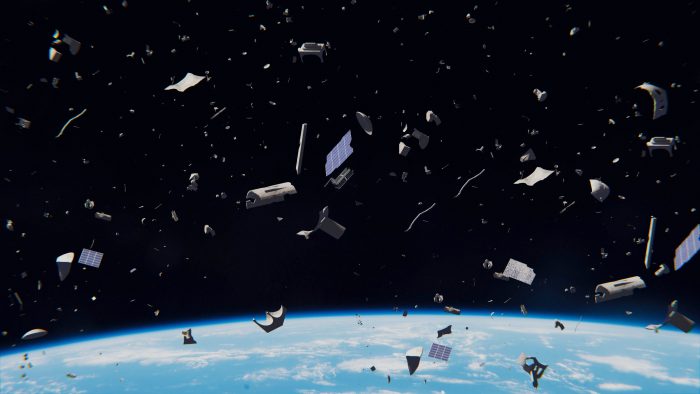
The growing threat of space debris
|
Space Traffic Management https://www.spacedaily.com/reports/Space_Traffic_Management_999.html by Staff Writers for Launchspace, Bethesda MD (SPX) Mar 05, 2021 Those familiar with air traffic management architectures understand the constraints of aircraft flying in the atmosphere, vehicle dynamics and command and control techniques. Unfortunately, space traffic has many more degrees of freedom and much less control capability. Add to this the completely uncontrolled nature of space debris and the reality that most debris objects cannot be tracked and motion cannot be accurately measured or simulated.
In fact, orbiting debris is a product of negligence. Over the first 60 years of space flight, mission plans ended with the completion of in-space operations. Satellites were shut down and left in their orbits, subject to natural influences. Little thought was given to any collateral effects of objects “adrift” in space, because “space” was thought of as “big.”
An analogy might be the ocean disposal of waste items, where junk gets lost in the vastness of the seas, either by sinking to the bottom or by simply drifting with ocean currents. By contrast, a “drifting” satellite remnant in low orbit is travelling at a speed in excess of 7.3 km/sec (16,300 mph). Since orbiting objects can travel in all directions, collisions between satellites and debris can occur at speeds of over 14.6 km/sec (32,600 mph). Of the suspected hundreds-of-thousands of debris objects in low orbits, only about 35,000 are 5 cm (2 inches) or larger in size, and only these can be tracked. The vast majority of the 1014+ junk items remain beyond current tracking capabilities, but are dangerous in terms of causing significant damage to operating satellites. The detrimental effects of space junk grow worse each year, putting international space infrastructures increasingly at risk as our communications, science and security networks rely ever more heavily on the interconnected system of satellites orbiting the skies. While we understand weather and have learned techniques to deal with it, the impact and disposition of orbital debris are not fully understood. Unlike weather, space junk is man-made and, if not properly dealt with, will significantly hinder the world’s future economy and security. It is a growing threat to space-based communications, weather forecasting, banking processes, scientific exploration, Earth observation and future space tourism. Space commerce is growing, and as this industry expands the need for an effective traffic management system will become critical to commercial growth and exploitation of space. At the moment, there are no programs in place to deal with orbital debris, even though new satellites continue to be launched. In fact, more than 50,000 new satellites may enter service in the next few years. New launches contribute to the already-large orbital debris population. With over 60 countries operating in space, the exponentially growing problem of orbital debris will take international collaborations and partnerships to conceive and develop innovative solutions and strategies as part of a worldwide space traffic management architecture. |
|
New Zealand groups oppose launch of U.S. military nuclear satellite

a security expert has suggested it puts New Zealand into “the kill chain” and makes New Zealand a military target.
|
NZ rocket launches may breach nuclear-free laws, say peace groups, The Spinoff
Ollie Neas | 8 Mar 21, Rocket Lab launches of satellites honing US military targeting capabilities have been criticised by the Peace Foundation, which is calling on the PM to step in.Peace groups are calling on the prime minister, Jacinda Ardern, to stop the launch of a controversial US military satellite that is scheduled for lift-off from Mahia this month, saying it may contravene nuclear-free legislation.Rocket Lab’s next mission is due to carry a satellite for the US Army’s Space and Missile Defence Command, called the Gunsmoke-J. The satellite is designed to improve US military targeting capabilities by improving how data is provided to “warfighters”.The satellite has previously been condemned by the Green Party, while a security expert has suggested it puts New Zealand into “the kill chain” and makes New Zealand a military target. Non-profit group The Peace Foundation has now added to those concerns: the launch may breach New Zealand’s nuclear-free laws. In an open letter to the prime minister, the Peace Foundation’s International Affairs and Disarmament Committee says Rocket Lab’s launches for US military agencies risk drawing New Zealand “into supporting the weaponisation of space and the related nuclear arms race”. Satellites contributing to nuclear weapons programmes cannot be approved under New Zealand law. But the Peace Foundation says New Zealand may lack the technical expertise and information necessary to properly assess whether a satellite is making such a contribution. As a result, the Peace Foundation says approvals of US military satellites should be suspended, and approval of the Gunsmoke-J satellite revoked, until greater oversight of space launches is implemented. The letter has been endorsed by 17 civic, peace and religious groups, as well as members of the public………… The US Army says the technology being demonstrated could, among other purposes, assist in “long-range precision fires” – a type of missile used to provide “precision surface-to-surface deep-strike capability”. The minister responsible for approving the satellite, Stuart Nash, told parliament last month that he was “unaware” of its “specific military capabilities”. Otago University conflict resolution and disarmament expert Kevin Clements said it is “astonishing” that Nash was unaware of the Gunsmoke-J’s specific military capabilities. “It is even worse that he is willing to rely on the US Army alone to provide the information required by him and New Zealand’s space agency in relation to the approval process,” Clements said in a statement. “Rocket Lab’s launch programme is increasingly opaque. The precise content of each payload seems intentionally ambiguous and approvals do not seem to take New Zealand’s anti-nuclear legislation into account.” Strong parallel’ with nuclear ships issue The Peace Foundation says there is a “strong parallel” between the launch of US military satellites from New Zealand and the “neither confirm nor deny” issue of the 1980s. The US policy of neither confirming nor denying whether its ships were nuclear armed led to a ban on US warships visiting New Zealand ports – the seminal moment in the anti-nuclear campaign. As with that issue, the Peace Foundation says New Zealand cannot be confident that US military satellites launched from New Zealand are not contributing to nuclear weapons systems. The Peace Foundation says assessing whether the Gunsmoke-J complies with the nuclear free law would require detailed technical knowledge of how the technology might be used in the future. “Increasingly, space-based US military assets are ‘dual-capable’ (can support nuclear and non-nuclear weapons), and dual-capable satellites used for non-nuclear targeting today can easily be used for nuclear targeting tomorrow………. Call to reform space law In light of its concerns, the Peace Foundation says greater oversight is needed over New Zealand’s space regime. It proposes assigning oversight of space launches to the prime minister, strengthening space regulations, and mandating oversight of space-launch activity to the Public Advisory Committee on Disarmament and Arms Control (PACDAC) – a body set up by the Nuclear Free Zone Act to advise the government on disarmament matters. Minutes of PACDAC meetings obtained by The Spinoff under the Official Information Act show the committee has had ongoing concerns about the consistency of space activity with New Zealand’s nuclear free law. Space Agency officials have met with the committee to assure members of the legality of launches. The Peace Foundation also calls for changes to the Technology Safeguards Agreement that New Zealand signed with the US to allow for the transfer of sensitive rocket technology. The treaty requires the US to provide “sufficient information” about its spacecraft to allow New Zealand to assess them, but also allows the US government to veto any space launch from New Zealand. “There are some very big moral questions at stake here,” says Clements. “Is this current Labour government willing for New Zealand soil to be used by Rocket Lab in order to assist US government targeting in conventional and nuclear warfare?” The Peace Foundation’s letter comes a week after Rocket Lab announced that it would list publicly on the Nasdaq stock exchange, with a valuation of $5.7 billion. Although its main launch site and production facility is in New Zealand, Rocket Lab is US owned. Its investors include major US venture capital firms as well as aerospace and defence company Lockheed Martin, which produces nuclear weapons. Rocket Lab also unveiled plans to launch a larger rocket called the Neutron, which will allow it to launch astronauts. Since 2018, Rocket Lab has launched military or intelligence payloads on seven different missions for agencies ranging from US Special Operations Command to the National Reconnaissance Office, a major US spy agency. Rocket Lab says around 30% of its business is for defence agencies. https://thespinoff.co.nz/politics/09-03-2021/nz-rocket-launches-may-breach-nuclear-free-laws-say-peace-groups/ |
|
The radiation danger to astronauts- cancer, heart disease -an ethical problem

“These are all crucial studies to be conducted in order to really understand the risks we’re exposing astronauts to,” says Meerman. “Therefore, we believe we are not there yet and we should debate whether it is safe to expand human space travel significantly
|
Long-distance space travel: addressing the radiation problem https://physicsworld.com/a/long-distance-space-travel-addressing-the-radiation-problem/ 08 Mar 2021 A team of US and Netherlands-based scientists has published a review paper highlighting ways to protect astronauts from the negative cardiovascular health impacts associated with exposure to space radiation during long-distance space travel.Cardiovascular impacts Space radiation is currently regarded as the most limiting factor for long-distance space travel because exposure to it is associated with significant negative effects on the human body. However, data on these effects are currently only available for those members of the Apollo programme that travelled as far as the Moon – too small a number from which to draw any significant conclusions about the effects of the space environment on the human body. In addition, although exposure to space radiation, including galactic cosmic rays and solar “proton storms”, has previously been linked to the development of cancer and neurological problems, data on the consequences of space radiation exposure for the cardiovascular system are lacking. In an effort to address these limitations, researchers based at the University Medical Center (UMC) Utrecht, Leiden University Medical Center, Radboud University and the Technical University Eindhoven in the Netherlands, as well as Stanford University School of Medicine and Rice University in the US, have carried out an exhaustive review of existing evidence to establish what we know about the cardiovascular risks of space radiation. They present their findings in the journal Frontiers in Cardiovascular Medicine.
“You can argue that if NASA, ESA and other space agencies want to expand space travel, both in terms of location – for example, to Mars – and time, astronauts will be exposed to the specific space environment for longer periods of time. However, we currently do not know what the effects of exposure to these space-specific factors are,” says Meerman. “NASA currently sees space radiation as the most limiting factor for long-distance space travel, but the exact short- and long-term effects are not fully understood yet. We are therefore exposing astronauts to extremely uncertain risks. However, research into the effects of space radiation has increased over the past few years and we’re constantly gaining more knowledge on this topic,” she adds. Advanced modelsAccording to Meerman, another important factor in this discussion is the fact that we currently cannot adequately protect astronauts from space radiation. Shielding with radiation-resistant materials is very difficult since exposure levels are far higher than on Earth and the type of radiation is much more penetrating. Pharmacological methods of protecting the cardiovascular system are hampered by the fact that no effective radioprotective compounds have yet been approved. “The most important conclusion is that we actually do not know enough about the exact risks that long-distance space travel pose for the human body. Therefore, in our opinion, we should keep looking for new ways to protect astronauts from the harmful space environment before we expand human space travel,” says Meerman. Moving forward, Meerman stresses that research on the effects of space radiation should incorporate advanced models that provide a more accurate representation of the cardiovascular impacts of space radiation – such as those based on lab-created human cardiac tissue and organ-on-a-chip testing technologies. Studies should also examine the effects of combinatorial exposure to different space radiation particles, as well as combined exposure to space radiation components and other space-specific factors, like microgravity, weightlessness and prolonged hypoxia. “These are all crucial studies to be conducted in order to really understand the risks we’re exposing astronauts to,” says Meerman. “Therefore, we believe we are not there yet and we should debate whether it is safe to expand human space travel significantly.” |
|
The war-mongering lobby embraces AI (artificial intelligence)

The testimony is generously spiked with the China threat thesis
the note of warning in not being too morally shackled becomes a screech.
War Mongering for Artificial Intelligence, https://www.counterpunch.org/2021/03/02/war-mongering-for-artificial-intelligence/ BY BINOY KAMPMARK-2 March 21,
The ghost of Edward Teller must have been doing the rounds between members of the National Commission on Artificial Intelligence. The father of the hydrogen bomb was never one too bothered by the ethical niggles that came with inventing murderous technology. It was not, for instance, “the scientist’s job to determine whether a hydrogen bomb should be constructed, whether it should be used, or how it should be used.” Responsibility, however exercised, rested with the American people and their elected officials.
The application of AI in military systems has plagued the ethicist but excited certain leaders and inventors. Russian President Vladimir Putin has grandiloquently asserted that “it would be impossible to secure the future of our civilization” without a mastery of artificial intelligence, genetics, unmanned weapons systems and hypersonic weapons.
Campaigners against the use of autonomous weapons systems in war have been growing in number. The UN Secretary-General António Guterres is one of them. “Autonomous machines with the power and discretion to select targets and take lives without human involvement,” he wrote on Twitter in March 2019, “are politically unacceptable, morally repugnant and should be prohibited by international law.” The International Committee for Robot Arms Control, the Campaign to Stop Killer Robots and Human Rights Watch are also dedicated to banning lethal autonomous weapons systems. Weapons analysts such as Zachary Kallenborn see that absolute position as untenable, preferring a more modest ban on “the highest-risk weapons: drone swarms and autonomous chemical, biological, radiological, and nuclear weapons”.
The critics of such weapons systems were far away in the Commission’s draft report for Congress. The document has more than a touch of the mad scientist in the bloody service of a master. This stood to reason, given its chairman was Eric Schmidt, technical advisor to Alphabet Inc., parent company of Google, which he was formerly CEO of. With Schmidt holding the reins, we would be guaranteed a show shorn of moral restraint. “The AI promise – that a machine can perceive, decide, and act more quickly, in a more complex environment, with more accuracy than a human – represents a competitive advantage in any field. It will be employed for military ends, by governments and non-state groups.”
In his testimony before the Senate Armed Services Committee on February 23, Schmidt was all about “fundamentals” in keeping the US ascendant.This involved preserving national competitiveness and shaping the military with those fundamentals in mind. But to do so required keeping the eyes of the security establishment wide open for any dangerous competitor. (Schmidt understands Congress well enough to know that spikes in funding and outlays tend to be attached to the promotion of threats.) He sees “the threat of Chinese leadership in key technology areas” as “a national crisis”. In terms of AI, “only the United States and China” had the necessary “resources, commercial might, talent pool, and innovation ecosystem to lead the world”. Within the next decade, Beijing could even “surpass the United States as the world’s AI superpower.”
The testimony is generously spiked with the China threat thesis. “Never before in my lifetime,” he claimed, “have I been more worried that we will soon be displaced by a rival or more aware of what second place means for our economy, our security, and the future of our nation.” He feared that such worries were not being shared by officials, with the DoD treating “software as a low priority”. Here, he could give advice on lessons learned in the spawning enterprises of Silicon Valley, where the principled live short lives. Those dedicated to defence could “form smart teams, drive hard deliverables, and move quickly.” Missiles, he argued, should be built “the way we now build cars: use a design studio to develop and simulate in software.”
This all meant necessarily praising a less repressible form of AI to the heavens, notably in its military applications. Two days of public discussion saw the panel’s vice chairman Robert Work extol the virtues of AI in battle. “It is a moral imperative to at least pursue this hypothesis” claiming that “autonomous weapons will not be indiscriminate unless we design them that way.” The devil is in the human, as it has always been.
In a manner reminiscent of the debates about sharing atomic technology in the aftermath of the Second World War, the Committee urges that the US “pursue a comprehensive strategy in close coordination with our allies and partners for artificial intelligence (AI) innovation and adoption that promotes values critical to free and open societies.” A proposed Emerging Technology Coalition of likeminded powers and partners would focus on the role of “emerging technologies according to democratic norms and values” and “coordinate policies to counter the malign use of these technologies by authoritarian regimes”. Fast forgotten is the fact that distinctions such as authoritarianism and democracy have little meaning at the end of a weapon.
Internal changes are also suggested to ruffle a few feathers. The US State Department comes in for special mention as needing reforms. “There is currently no clear lead for emerging technology policy or diplomacy within the State Department, which hinders the Department’s ability to make strategic technology decisions.” Allies and partners were confused when approaching the State Department as to “which senior official would be their primary point of contact” for a range of topics, be they AI, quantum computing, 5G, biotechnology or new emerging technologies.
Overall, the US government comes in for a battering, reproached for operating “at human speed not machine speed.” It was lagging relative to commercial development of AI. It suffered from “technical deficits that range from digital workforce shortages to inadequate acquisition policies, insufficient network architecture, and weak data practices.”
The official Pentagon policy, as it stands, is that autonomous and semi-autonomous weapons systems should be “designed to allow commanders and operators to exercise appropriate levels of human judgment over the use of force.” In October 2019, the Department of Defence adopted various ethical principles regarding the military use of AI, making the DoD Artificial Intelligence Centre the focal point. These include the provision that, “DoD personnel will exercise appropriate levels of judgment and care, while remaining responsible for the development, deployment, and use of AI capabilities.” The “traceable” principle is also shot through with the principle of human control, with personnel needing to “possess an appropriate understanding of the technology, development processes, and operational methods applicable to AI capabilities”.
The National Commission pays lip service to such protocols, acknowledging that operators, organisations and “the American people” would not support AI machines not “designed with predictability” and “clear principles” in mind. But the note of warning in not being too morally shackled becomes a screech. Risk was “inescapable” and not using AI “to solve real national security challenges risks putting the United States at a disadvantage”. Especially when it comes to China.
Binoy Kampmark was a Commonwealth Scholar at Selwyn College, Cambridge. He lectures at RMIT University, Melbourne. Email: bkampmark@gmail.com
Despite the problems, small nuclear reactor salesmen aggressively marketing: it’s make or break time for the nuclear industry.

Entrepreneurs Look to Small-Scale Nuclear Reactors, The American Society of Mechanical Engineers, Mar 2, 2021, by Michael Abrams ‘‘……… even concepts that are predicated on being small, modular, and fast to build seem locked into decades-long development cycles.
The key to reviving the nuclear power industry is building these small reactors not as projects, but as factory-made products. That’s easier said than done. “Usually, a bunch of nuclear engineers go in a room and then they come out after a year or two, and they have a design that doesn’t have a lot of foundation in realty, and nobody can make it, and the projects dies,” said Kurt Terrani, a senior staff scientist at Oak Ridge National Laboratory………..
In terms of reactor physics, the NuScale concept is fairly bog standard: low-enriched uranium, light-water cooling. In essence, their reactor is just a smaller version of the nuclear plants already in operation. That NuScale didn’t go with a more revolutionary design to mitigate waste or utilize an alternative fuel cycle is no accident. To do so would require the Nuclear Regulatory Commission to come up with an entirely new licensing framework, said José Reyes, cofounder and chief technology officer at NuScale.
“Pressurized water-cooled reactors have benefited from billions of dollars of research and development and millions of hours of operating experience over the past 50 year,” Reyes said. “NuScale went with a more traditional approach to assure a design that is cost-competitive and capable of near-term deployment.”
So far, the concept and design have been convincing enough to win funding from the DoE and to move NuScale farther along in the regulatory process than any of its would-be competitors.
“The whole idea of SMRs is that smaller is better,” said Jacopo Buongiorno, a professor of nuclear science and engineering at MIT and the director of the Center for Advanced Nuclear Energy Systems. “But within the class of small reactors, larger is still better. If you can design a reactor that is still simple, that is still passively safe, that can still be built in a factory, but that generates 300 megawatts, that for sure is going to be more economically attractive than the same thing that generates 60 megawatts.”
Make or Break for Nuclear
Moltex is aiming for build costs at around $2,000 per kW—more than wind or solar, but less than newly built coal or gas plants, let alone competing nuclear concepts. “We’ve believe we’ve come up with a concept that can radically reduce the cost of nuclear power,” ……
Montana legislatures to review the law restricting nuclear developments
At the same time the House was reviewing a bill sponsored by Rep. Derek Skees, R-Kalispell, to remove restrictions on nuclear development, the Senate was at work on Senate Joint Resolution 3, which directs the state to study advanced nuclear reactors. The resolution appears well-positioned to pass — halfway through the session, SJ 3 has garnered unanimous support in the Senate.
Sponsor Terry Gauthier, R-Helena, becomes audibly excited discussing the measure. He said he sees modern nuclear technology as a way for Montana to send electrons to the energy-thirsty markets of the Pacific Northwest by tying into the high-voltage transmission lines leading out of Colstrip……..
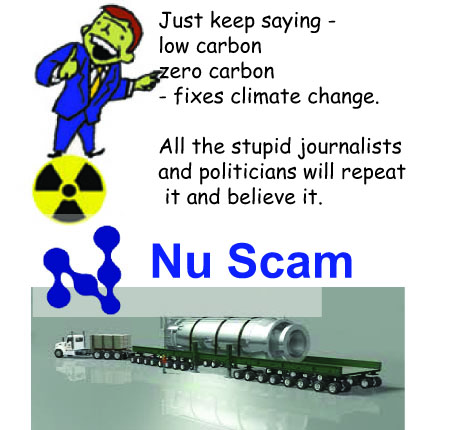 Gauthier is particularly interested in a company called NuScale, based in Portland, Ore., that’s garnered more than $1.3 billion from the federal government to advance its small modular reactor, or SMR, design. It’s the only company that’s received approval from the federal Nuclear Regulatory Commission for that type of design — a significant milestone on the journey to market……….
Much of the debate about the environmental impact associated with nuclear energy is focused on what to do with the spent fuel. Some kinds of nuclear fuel can remain radioactive for hundreds or thousands of years. The U.S. has yet to arrive at a long-term solution for re-using or storing spent fuel, creating a contentious political issue that’s spanned decades.
As is the case with larger-scale traditional nuclear plants, spent fuel from SMRs remains a “significant issue,” according to Darby.
NuScale’s plan is to store used fuel underwater in a stainless-steel lined concrete pool located onsite for at least five years. They say the pool is designed to withstand “a variety of severe natural and human made phenomena” like earthquakes and aircraft impacts. After the five-year period when the used fuel is both hottest and most radioactive has elapsed, it’s moved to a stainless-steel canister surrounded with concrete that’s designed to contain the radioactivity.
The United States doesn’t have a permanent underground repository for high-level nuclear waste, so those concrete containment vessels generally remain on-site or near the plant they came from. A 33-year-old effort to create such a long-term storage repository northwest of Las Vegas is still subject to heated debate. ……….
Another question hanging over nuclear energy development is the price of building a new plant. It’s not uncommon for new construction costs to exceed $1 billion. Concerns about cost increases led several cities that had committed to participate in NuScale’s demonstration plant in Idaho Falls to pull out of the multi-billion-dollar project last year.
NuScale told Montana Free Press that once production is rolling on their product, it anticipates the facility construction cost to be about $2,850 per kilowatt of producing capacity for its largest, 12-module iteration. For comparison, new construction of a natural gas plant averaged about $837 per kilowatt of capacity in 2018, and wind plants clocked in at $1,382, according to the U.S. Energy Information Administration.
Brad Molnar, a Republican senator from Laurel, told MTFP that cost will be an important consideration as the state plots its energy future. He said the study Gauthier is spearheading should involve the Public Service Commission, because it doesn’t make sense to conduct the study without landing on a cost-per-megawatt estimate.
Gauthier knows that nuclear is by no means the least expensive energy source, particularly if calculations are based on a strict dollars-and-cents equation…….
It’s not yet clear if Montana’s 1978 law requiring voter approval before a nuclear energy plant can be built in the state will still be on the books next year. The Legislature is still deciding the fate of HB 273, which would strike that law and remove nuclear projects from the purview of the Major Facility Siting Act.
Sen. Molnar has been asked if he’d carry HB 273 when it’s heard in the Senate, but he said he has reservations about the measure.
“By and large, I’m really hesitant to overturn a [voter] initiative,” he said, adding that the order of operations seems a little off to him.
“First you do the study, then you take action,” he said. “You don’t take action and then do the study.”
As of March 4, both HB 273 and SJ 3 have been transmitted to the Senate and House, respectively, for review. Hearing dates before those chambers’ energy committees have not been set. https://montanafreepress.org/2021/03/04/nuclear-on-the-radar-part-ii/
Is it wise for the Biden administration to fund Small Nuclear Reactors?
|
Climate change and ‘advanced nuclear’ solutions, The Hill, BY GREGORY JACZKO, — 02/23/21
Nuclear power is knocking on the government’s door offering solutions. The Biden platform answered by including so-called “advanced nuclear” in its list of climate options. The question now is will they wisely fund any such efforts?
While talk of advanced nuclear reactors is ubiquitous, a precise definition is elusive. Without a clear target in which to aim, government funds will not hit the mark. Advanced nuclear has become the catch-all for the knight-in-shining-armor reactors that promise to address issues that have kept nuclear a marginal electricity player since its inception. But we need more than this open-ended definition. The Biden administration should support projects only if they can compete with renewables and storage on deployment cost and speed, public safety, waste disposal, operational flexibility and global security. There are none today.
The only advanced nuclear technologies close to realization are called small modular reactors. These reactors are smaller than traditional reactors and are self-contained. These features allow companies to manufacture most of the reactor in a factory and ship it to a plant site. This concept evokes images of smart phones rolling out of factories by the billions — each design identical and mass produced. Their small size reduces the amount of radiation that can be released to the environment, greatly reducing — but not eliminating — safety to a plant’s community….
Yet the economic competitiveness of small modular reactors appears weak. Shrinking the size of a traditional reactor and splitting it among many modules increases the cost of the electricity it produces. It is the same reason airlines fly large capacity jets instead of private jets. You maximize the revenue per area of the aircraft hull. Proponents argue mass production will overcome this problem with fleet-wide economies of scale and construction efficiencies. Only wide scale adoption of the technology would deliver those benefits and there is no obvious market to support that today.
Moreover, the nuclear industry always promises better, faster and cheaper yet it fails to deliver. ……
Small modular designs are only promising to be cheaper than traditional reactors. Current estimates show they are more expensive than renewables, like wind and solar, even with storage and without subsidies. Small reactors have a long way to go to be competitive. Dramatic cost decreases for high-volume energy storage, which address the intermittency of some renewables, make the competitive case for any form of nuclear even tougher.
Even if everything else was lined up perfectly, nuclear has little time to catch up. After reentering the Paris Agreement, the U.S. will again strive to achieve drastic reductions in greenhouse gas emissions (GHG) within the next 10 years. Even in the most optimistic scenario, we won’t see even a handful of small modular nuclear reactors in the U.S. until 2029 or 2030, which means a large-scale impact would come far after the climate tipping point.
What about the other factors like proliferation resistance and waste disposal? For those criteria, small modular reactors offer no advantages over their traditional reactor cousins. Even if the cost factors are addressed, proliferation concerns and waste management will be hurdles.
Most importantly, no small modular reactors have been deployed yet in the United States, despite government efforts. In 2011, the Department of Energy (DOE) offered $400 million grants to support two small modular reactor designs. After providing tens of millions, only one design is still under development. That company originally planned to build a 12-module plant at the Idaho National Laboratory.
Predictably, this project is in trouble. Electricity customers have committed to purchase just a small fraction of the power produced annually by that plant, which now is likely to be scaled down, diminishing the economies of scale from mass production. It will not operate until at least 2030, years behind schedule and too late to help deal with the problem forecast in the best climate models. Despite these challenges, the federal government agreed in concept to a $1.4 billion direct subsidy over 10 years for the project. Without this cash infusion, the project will not meet its already disputed targets for price competitiveness. Such largesse is part of the billions Congress and the Trump administration committed to other advanced reactor concepts, none of which are close to deployment. To avoid wasting money on advanced nuclear reactors, the Biden administration must establish clear metrics for advanced nuclear reactors and apply them rigorously. Only ideas that can meet the pressing timetable of climate demands and electricity market realities deserve a serious look. My list is a good place to start. If advanced reactors cannot meet these metrics, they should not receive funding. Proponents of nuclear power will certainly say that living up to my list is an arduous task. Perhaps it is, but the future of our planet hangs in the balance. That is more important than the profits of an industry. Dr. Gregory Jaczko was the chairman of the U.S. Nuclear Regulatory Commission from 2009 to 2012 and currently develops clean energy projects and teaches at Princeton University. https://thehill.com/opinion/energy-environment/539991-climate-change-and-advanced-nuclear-solutions |
|
The media revels in rockets to Mars, ignores the horrible risk of plutonium pollution
 Plutonium, Perseverance and the Spellbound Press https://www.dailykos.com/stories/2021/2/24/2017916/-Plutonium-Perseverance-and-the-Spellbound-Press, Karl Grossman
With all the media hoopla last week about the Perseverance rover, frequently unreported was that its energy source is plutonium—considered the most lethal of all radioactive substances—and nowhere in media that NASA projected 1-in-960 odds of the plutonium being released in an accident on the mission.
“A ‘1-in-960 chance’ of a deadly plutonium release is a real concern—gamblers in Las Vegas would be happy with those odds,” says Bruce Gagnon, coordinator of the Global Network Against Weapons and Nuclear Power in Space.
Indeed, big-money lotteries have odds far higher than 1-in-960 and routinely people win those lotteries.
Further, NASA’s Supplementary Environmental Impact Statement (SEIS) for the $3.7 billion mission acknowledges that an “alternative” power source for Perseverance could have been solar energy. Solar energy using photovoltaic panels has been the power source for a succession of Mars rovers.
For an accident releasing plutonium on the Perseverance launch—and 1 in 100 rockets undergo major malfunctions on launch mostly by blowing up—NASA in its SEIS described these impacts for the area around the Cape Kennedy under a heading “Impacts of Radiological Releases on the Environment.” Continue reading
NuScale’s small nuclear reactor dream – dead on arrival?
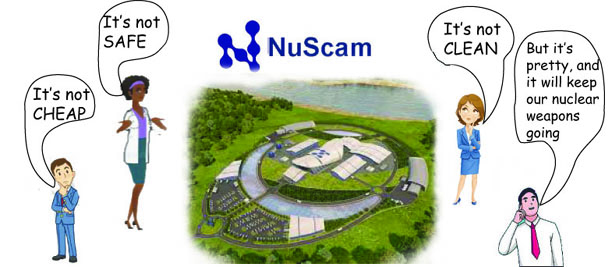
in order to make advanced reactors accessible within the next few decades—even relatively simple reactors, like NuScale’s—the government would need to provide hundreds of billions of dollars in subsidies …… the nuclear dream looks dead on arrival….
Biden’s Other Nuclear Option, Smaller nuclear reactors might be the bridge to a carbon-free economy. But are they worth it? Mother Jones, 22 Feb 21, BOYCE UPHOLT ”………..
But are these investments worth the money—and the risks? New designs or not, nuclear plants face daunting issues of waste disposal, public opposition, and, most of all, staggering costs. We must ramp up our fight against climate change. But whether nuclear is a real part of the solution—or just a long-shot bid to keep a troubled industry alive—is a debate that will come to the fore in the short window we have to overhaul the nation’s energy portfolio.
Few issues divide us as cleanly as nuclear power. According to a 2019 Pew Research Center poll, 49 percent of Americans support opening new plants, while 49 percent are opposed.
The popular argument against nuclear power can be summed up in a few names: Chernobyl. Fukushima. Three Mile Island. Nuclear dread is palpable. Some formerly pro-nuclear countries, like Germany, began phasing out plants in the wake of the 2011 disaster in Japan. The dangers begin well before nuclear fuel arrives at a plant, and persist long afterward; the rods that fuel today’s plants remain radioactive for millennia after their use. How to ethically store this waste remains a Gordian knot nobody has figured out how to cut.
The argument in favor of nuclear power boils down to the urgent need to combat climate change. [Ed, but nuclear does not really combat climate change.]
But if nuclear power is going to help us mitigate climate change, a lot more reactors need to come online, and soon. Eleven nuclear reactors in the United States have been retired since 2012, and eight more will be closed by 2025. (When nuclear plants are retired, utility companies tend to ramp up production at coal- or natural gas–fired plants, a step in the wrong direction for those concerned about lowering emissions.) Since 1970, the construction of the average US plant has wound up costing nearly three-and-a-half times more than the initial projections. Developers have broken ground on just four new reactor sites since Three Mile Island. Two were abandoned after $9 billion was.. sunk into construction; two others, in Georgia, are five years behind schedule. The public is focused on risks, but “nuclear power is not doing well around the world right now for one reason—economics,” says Allison Macfarlane, a former commissioner of the Nuclear Regulatory Commission.
Until Three Mile Island, public support was strong. Dozens of plants came online. In the 1970s, Reyes, seeing an industry full of promise, decided to pursue a degree in nuclear engineering.
……… Utah Associated Municipal Power Systems, a state-owned agency that sells electricity across six Western states aims to offer its members the choice of fully carbon-free power, sees NuScale as the best available option for undergirding its existing wind and solar plants. In 2015, UAMPS announced a plan to build 12 NuScale reactors at the federally run Idaho National Laboratory. NuScale projected total construction costs at $3 billion—nearly a third less than the most recently completed US reactor, which came online in 2016 at a cost of $4.7 billion (though it will supply more power). And the next plant should cost even less, since NuScale’s small reactors will be built on an assembly line, rather than on-site. But the price will drop only if more customers buy them. “Taxes are more popular than nuclear power,” jokes Doug Hunter, the CEO of UAMPS.
To change that perception, Hunter and his team have spent the last few years visiting towns and utility companies that buy power from UAMPS, explaining the potential role of nuclear power and the safety of NuScale’s design. His persistence paid off. By 2020, the majority had signed on to the NuScale project—though only as long as they had plenty of chances to back out if the project went south……….
Even with new technology, we will need to mine uranium—a process that has leached radioactive waste into waterways—and find somewhere to put the spent fuel. (The current practice, which persists at Trojan and will be employed at NuScale’s plants, is to hold waste on-site. This is intended to be a temporary measure, but every attempt to find a permanent disposal site has been stalled by geological constraints and local opposition.) Lloyd Marbet, Director of the non-profit Oregon Conservancy Foundation believes we need to transition away from coal and gas immediately. But he worries that nuclear is too expensive, and a new round of investment might pull money away from more effective, and cleaner, solutions. ……….
These days, he’s watching the industry creep back. A Republican state senator named Brian Boquist has proposed a bill three times that would permit city or county voters to exempt themselves from the 1980 law, allowing a nuclear facility to be built within their borders. (The bill has failed twice; the latest version is with the senate committee.) Boquist does not seem particularly committed to fighting climate change: He and other members of the Republican minority refused to show up to vote on a cap-and-trade bill in early 2020, causing the Senate to fall short of a quorum. (When Gov. Kate Brown threatened to retrieve legislators using state troopers, Boquist said to “send bachelors and come heavily armed.”)
In 2017, as the legislature debated Boquist’s first pro-nuclear bill, Marbet testified that NuScale was making “an end run around [voters] in their quest for corporate profit.” He also noted the company’s ties to the Fluor Corporation. The Texas-based multinational engineering firm that has been NuScale’s majority owner since 2011 has invested $9.9 million in campaign contributions over the past 30 years, with nearly two-thirds going toward Republican candidates. (Fluor is currently under investigation by the Securities and Exchange Commission due to allegedly sloppy accounting practices.)
Marbet admits his view of the industry is jaundiced, but his experiences make him skeptical of NuScale and its claims. He worries, too, that if small reactors take off, operators will revert to old habits, cutting corners to make a buck. He points to a draft rule approved last year by the Nuclear Regulatory Commission, over the objections of FEMA, that would reduce the size of the emergency planning zone around nuclear plants: Rather than a 10-mile-wide circle, a plant would only need an evacuation plan for the space within its fence lines. NRC commissioner Jeff Baran opposed the change, noting it is based on assumptions about small reactors, like NuScale’s, that remain on the drawing board, and might open the door to weakening safety standards for existing plants.
Old-line environmental groups like Greenpeace and the Sierra Club remain staunchly opposed to nuclear power, but politicians have been more open to it.
President Barack Obama was an outspoken proponent of nuclear’s potential. For 2020, the Senate Appropriations Committee unanimously agreed to spend more than President Trump requested on nuclear research, and the Senate is currently considering a bipartisan bill that will streamline the permitting process and establish a national uranium reserve.
Now, as part of his $2 trillion climate plan, Biden is calling for a federal research agency that would pursue carbon-free energy sources, including small reactors. Biden’s was the first Democratic Party platform in 48 years that explicitly supported an expansion of nuclear energy. His pick to lead the Department of Energy—which devotes the majority of its budget to nuclear projects—is former Michigan Gov. Jennifer Granholm, who has little experience in the field. Gina McCarthy, the former EPA administrator who is Biden’s chief domestic climate coordinator, has said that nuclear could play a key role in baseload power supply but indicated that waste disposal issues ought to be resolved before the technology is widely adopted.
A major hurdle for any advanced nuclear product is the regulatory process. NuScale spent more than $500 million developing its licensing application. The path to approval has consumed 12 years already, and it’s not over yet. In the months after my visit to NuScale, the Nuclear Regulatory Commission noted “several potentially risk-significant” questions that remain unanswered about the company’s reactor design, especially about its new version of a steam generator. Nonetheless, the NRC granted its initial approval of the design at the end of the summer; now NuScale awaits official, final certification by the commissioners, which is expected sometime this year. But further analysis of the generators will be required before a license is granted to actually build a plant.
A decade ago, NuScale suggested it might have a plant in operation by 2018. Now construction won’t begin until 2025 at the earliest. The plant at Idaho National Laboratory won’t be fully operational until 2030. Factoring in interest and other costs not included in NuScale’s $3 billion estimate, UAMPS expects a total 40-year lifetime cost of $6 billion for the plant. Some critics see this as the same old story: grand, early promises—a “dog and pony show,” as Marbet calls NuScale’s PR—followed by cost overruns and delays. Reyes intentionally used materials familiar to regulators, so as to speed along the process. But other advanced reactor designs, which use new kinds of fuel and coolant, may face an even slower and more expensive journey.
Recently, nine towns—more than a quarter of the subscribed members—pulled out of UAMPS’s project after changing their minds about their energy needs or worrying that it was becoming a financial sinkhole. (Meanwhile, one new town signed on.) The plant’s economics depend on running near full capacity, which will only happen if utilities outside of UAMPS also buy some of its power. The Department of Energy says it will chip in nearly $1.4 billion over the next nine years, which should help bring down the cost of the plant’s energy. But the projected price—$55 per megawatt-hour—is still above the current costs for solar and wind projects. And the federal money will require annual congressional approval. It’s possible that other new ideas might pop up, competing for limited dollars.
Biden’s climate plan hinges on a massive expenditure on research. What his administration will have to quickly decide, though, is how to divvy that pot. Allison Macfarlane, the former NRC commissioner, told me other industries deserve far more of our resources and attention than nuclear. Batteries, in particular, could steady out the uneven flow of renewables. They may even work better, since nuclear plants are difficult to power up or down in response to changing conditions. Once a pie-in-the-sky idea, battery storage now offers costs at least “in the ballpark” of nuclear, says Stan Kaplan, a former US Energy Information Administration analyst. Prices have dropped 70 percent in the past few years and are projected to drop another 45 percent before NuScale’s plant comes online. California—which also has a moratorium on nuclear builds—is rapidly expanding its storage capacity. Within 10 years, the niche that NuScale is aiming for might already be filled.
……. For nuclear to persist as a hedge, it all but requires government assistance, given the enormous upfront costs of R&D. Another challenge is vetting which projects have real promise. “You have all these reactor vendors pitching their wares, and making all sorts of outrageous and false claims,” says Edwin Lyman, the director of nuclear power safety with the Union of Concerned Scientists. These claims have also been the basis of lowering safety standards, which offers a large indirect subsidy for operators. There needs to be a stronger peer-review process, he says, to make sure the government is only sponsoring truly worthwhile projects.
A recent study from Princeton found that even without nuclear power, the relative cost of a decarbonized energy system in 2050 could be about the same as in 2015, which at the time was a historic low. The study found nuclear could reduce costs even further—if it becomes as cheap as its advocates hope. But Abdulla, the UC San Diego researcher, has calculated that in order to make advanced reactors accessible within the next few decades—even relatively simple reactors, like NuScale’s—the government would need to provide hundreds of billions of dollars in subsidies and substantially simplify the regulatory process. Abdulla believes nuclear energy should have been “an arrow in our quiver.” But given the economics, he says, “I fear the arrow has broken.”
 if money were no object—if we could snap our fingers and scatter reactors across the landscape—…… But if Abdulla’s numbers are right, the nuclear dream looks dead on arrival…. https://www.motherjones.com/environment/2021/02/nuclear-energy-climate-change-nuscale-green-power-uranium/
 A great article. Just one problem. The whole article runs with the assumption that nuclear power is effectively ”low carbon”. Yet this assumption is not challenged. There are several ways in which nuclear power is actually quite high carbon. Just for one comparison with reneewable energy: wind and solar power are delivered directlly to the turbines and panels – with no digging up of fuel required, no regular transport by road, rail etc. The entire nuclear fuel chain with all its steps – mining, milling, conversion, fuel fabrication, reactor, waste ponds, waste canisters , deep repositaory … all this is carbon emitting.
‘Medical Scientific’ committee, stacked with nuclear executives, promotes nuclear power in space
 “The nuclear industry views space as a new—and wide-open—market for their toxic product that has run its dirty course on Mother Earth.”
“Now it appears that the nuclear industry has also infiltrated the National Academies of Sciences, Engineering, and Medicine that has been studying missions to Mars. ”
It’s going to take enormous grassroots action—and efforts by those in public office who understand the error of the space direction being taken—to stop it.
Nuclear Rockets to Mars?, BY KARL GROSSMAN– CounterPunch, 16 Feb 21,
A report advocating rocket propulsion by nuclear power for U.S. missions to Mars, written by a committee packed with individuals deeply involved in nuclear power, was issued last week by the National Academies of Sciences, Engineering and Medicine.
The 104-page report also lays out “synergies” in space nuclear activities between the National Aeronautics and Space Administration and the U.S. military, something not advanced explicitly since the founding of NASA as a civilian agency supposedly in 1958.
The report states: “Space nuclear propulsion and power systems have the potential to provide the United States with military advantages…NASA could benefit programmatically by working with a DoD [Department of Defense] program having national security objectives.”’
The report was produced “by contract” with NASA, it states.
The National Academy of Sciences, Engineering and Medicine (NAS) describes itself as having been “created to advise the nation” with “independent, objective advice to inform policy.”
The 11 members of the committee that put together the report for the National Academy includes: Jonathan W. Cirtain, president of Advanced Technologies, “a subsidiary of BWX Technologies which is the sole manufacturer of nuclear reactors for the U.S. Navy,” the report states; Roger M. Myers, owner of R. Myers Consulting and who previously at Aerojet Rocketdyne “oversaw programs and strategic planning for next-generation in-space missions [that] included nuclear thermal propulsion and nuclear electric power systems; Shannon M. Bragg-Sitton, the “lead for integrated energy systems in the Nuclear Science and Technology Directorate at the Idaho National Laboratory:” Tabitha Dodson, who at the U.S. government’s Defense Advanced Research Project Agency is chief engineer of a program “that is developing a nuclear thermal propulsion system;” Joseph A. Sholtis, Jr., “owner and principal of Sholtis Engineering & Safety Consulting, providing expert nuclear, aerospace, and systems engineering services to government, national laboratories, industry, and academia since 1993.” And so on.
The NAS report is titled: “Space Nuclear Propulsion for Human Mars Exploration.” It is not classified and is available here.
Bruce Gagnon, coordinator of the Global Network Against Weapons and Nuclear Power in Space, from its offices in Maine in the U.S., declared: “The nuclear industry views space as a new—and wide-open—market for their toxic product that has run its dirty course on Mother Earth.”
“During our campaigns in 1989, 1990, and 1997 to stop NASA’s Galileo, Ulysses and Cassini plutonium-fueled space probe launches, we learned that the nuclear industry positioned its agents inside NASA committees that made the decisions on what kinds of power sources would be placed on those deep space missions,” said Gagnon. “Now it appears that the nuclear industry has also infiltrated the National Academies of Sciences, Engineering, and Medicine that has been studying missions to Mars. The recommendation, not any surprise, is that nuclear reactors are the best way to power a Mars mission.”
“It’s not the best for us Earthlings because the Department of Energy has a bad track record of human and environmental contamination as they fabricate nuclear devices. An accident at launch could have catastrophic consequences.”
Stated Gagnon: “We fought the DoE and NASA on those previous nuclear launches and are entering the battle again. The nuclear industry has its sights set on nuclear-powered mining colonies on an assortment of planetary bodies—all necessitating legions of nuclear devices being produced at DoE and then launched on rockets that blow up from time to time.”
“We urge the public to help us pressure NASA and DoE to say no to nukes in space. We’ve got to protect life here on this planet. We are in the middle of a pandemic and people have lost jobs, homes, health care and even food on their table.”
“Trips to Mars can wait,” said Gagnon.
There have been accidents in the history of the U.S.—and also the former Soviet Union and now Russia—using nuclear power in space……
(Article goes on to explain how solar power can be, and is being used for space travel and research)
The NAS committee, however, was mainly interested in a choice between a “nuclear thermal propulsion” (NTP) or “nuclear electric propulsion” (NEP) for rocket propulsion…….
“Advanced nuclear propulsion systems (along or in combination with chemical propulsion systems) have the potential to substantially reduce trip time” to Mars “compared to fully non-nuclear approaches,” says the report.
An issue: radioactivity from either of the systems affecting human beings on the rockets with nuclear reactors propelling them. Back after World War II with the Cold War beginning, the U.S. began working on bombers propelled by onboard nuclear reactors—even built one. The idea was that such bombers could stay aloft for days ready to drop nuclear weapons on the Soviet Union. No crews would need to be scrambled and bombers then sent aloft.
But, as The Atlantic magazine noted in a 2019 article titled, “Why There Are No Nuclear Airplanes”:
“The problem of shielding pilots from the reactor’s radiation proved even more difficult. What good would a plane be that killed its own pilots? To protect the crew from radioactivity, the reactor needed thick and heavy layers of shielding. But to take off, the plane needed to be as light as possible. Adequate shielding seemed incompatible with flight. Still, engineers theorized that the weight saved from needing no fuel might be enough to offset the reactor and its shielding. The United States spent 16 years tinkering with the idea, to no avail”
The Eisenhower administration concluded that the program was unnecessary, dangerous, and too expensive. On March 28, 1961, the newly inaugurated President John F. Kennedy canceled the program. Proposals for nuclear-powered airplanes have popped up since then, but the fear of radiation and the lack of funding have kept all such ideas down.”……
The “synergies” in space nuclear activities between NASA and the U.S. military advanced in the NAS report mark a change in public acknowledgement. The agency was supposed to have a distinctly civilian orientation, encouraging peaceful applications in space science.
However, throughout the decades there have been numerous reports on its close relationship with the U.S. military—notably during the period of NASA Space Shuttle flights. As a 2018 piece in Smithsonian Magazine noted, “During the heyday of the space shuttle, NASA would routinely ferry classified payloads into orbit for the Department of Deense among other projects the agencies have collaborated on.”
With the formation of a U.S. Space Force by the Trump administration in 2019, the NASA-Pentagon link would appear to be coming out of the shadows, as indicated by the NAS report. The Biden administration is not intending to eliminate the Space Force, despite the landmark Outer Space Treaty of 1967 put together by the U.S., the then Soviet Union and the U.K, setting aside space for peaceful purposes. It is giving the new sixth branch of U.S. armed forces “full support,” according to his spokesperson Jen Psaki.
The NAS report says, “Areas of common interest include (1) fundamental questions about the development and testing of materials (such as reactor fuels and moderators) that can survive NTP conditions and (2) advancing modeling and simulation capabilities that are relevant to NTP.” And, “Additionally, a NASA NTP system could potentially use a scaled-up version of a DoD reactor, depending on the design.”
It declares: “Threats to U.S. space assets are increasing. They include anti-satellite weapons and counter-space activities. Crossing vast distances of space rapidly with a reasonably sized vehicle in response to these threats requires a propulsion system with high Isp [Specific Impulse] and thrust. This could be especially important in a high-tempo military conflict.”
Moreover, on December 19, just before he was to leave office, Trump signed Space Policy Directive-6, titled “National Strategy for Space Nuclear Propulsion.” Its provisions include: “DoD [Department of Defense] and NASA, in cooperation with DOE [Department of Energy}, and with other agencies and private-sector partners, as appropriate, should evaluate technology options and associated key technical challenges for an NTP [Nuclear Thermal Propulsion] system, including reactor designs, power conversion, and thermal management. DoD and NASA should work with their partners to evaluate and use opportunities for commonality with other SNPP [Space Nuclear Power and Propulsion] needs, terrestrial power needs, and reactor demonstration projects planned by agencies and the private sector.”
It continues: “DoD, in coordination with DOE and other agencies, and with private sector partners, as appropriate, should develop reactor and propulsion system technologies that will resolve the key technical challenges in areas such as reactor design and production, propulsion system and spacecraft design, and SNPP system integration.”
It’s going to take enormous grassroots action—and efforts by those in public office who understand the error of the space direction being taken—to stop it.
Karl Grossman, professor of journalism at State University of New York/College at Old Westbury, and is the author of the book, The Wrong Stuff: The Space’s Program’s Nuclear Threat to Our Planet, and the Beyond Nuclear handbook, The U.S. Space Force and the dangers of nuclear power and nuclear war in space. Grossman is an associate of the media watch group Fairness and Accuracy in Reporting (FAIR). He is a contributor to Hopeless: Barack Obama and the Politics of Illusion. more https://www.counterpunch.org/2021/02/16/nuclear-rockets-to-mars/

Solar sails for space voyages
 Nuclear Rockets to Mars?, BY KARL GROSSMAN– CounterPunch, 16 Feb 21,”………. As for rocket propulsion in the vacuum of space, it doesn’t take much conventional chemical propulsion to move a spacecraft—and fast.
And there was a comprehensive story in New Scientist magazine this past October on “The new age of sail,” as it was headlined. The subhead: “We are on the cusp of a new type of space travel that can take us to places no rocket could ever visit.”
The article began by relating 17th Century astronomer Johanne Kepler observing comets and seeing “that their tails always pointed away from the sun, no matter which direction they were traveling. To Kepler, it meant only one thing: the comet tails were being blown from the sun.”
Indeed, “the sun produces a wind in space” and “it can be harnessed,” said the piece. “First, there are particles of light streaming from the sun constantly, each carrying a tiny bit of momentum. Second, there is a flow of charged particles, mostly protons and electrons, also moving outwards from the sun. We call the charged particles the solar wind, but both streams are blowing a gale”—that’s in the vacuum of space.
Japan launched its Ikaros spacecraft in 2010—sailing in space using the energy from the sun. The LightSail 2 mission of The Planetary Society was launched in 2019—and it’s still up in space, flying with the sun’s energy.
New systems using solar power are being developed – past the current use of thin-film such as Mylar for solar sails.
The New Scientist article spoke of scientists “who want to use these new techniques to set a course for worlds currently far beyond our reach—namely the planets orbiting our nearest star, Alpha Centauri.”……. more https://www.counterpunch.org/2021/02/16/nuclear-rockets-to-mars/
Accidents in both USA’s and Russia’s use of nuclear power in space
 Nuclear Rockets to Mars?, BY KARL GROSSMAN– CounterPunch, 16 Feb 21”…………There have been accidents in the history of the U.S.—and also the former Soviet Union and now Russia—using nuclear power in space.
And the NAS report, deep into it, does acknowledge how accidents can happen with its new scheme of using nuclear power on rockets for missions to Mars.
It says: “Safety assurance for nuclear systems is essential to protect operating personnel as well as the general public and Earth’s environment.” Thus under the report’s plan, the rockets with the nuclear reactors onboard would be launched “with fresh [uranium] fuel before they have operated at power to ensure that the amount of radioactivity on board remains as low as practicable.” The plans include “restricting reactor startup and operations in space until spacecraft are in nuclear safe orbits or trajectories that ensure safety of Earth’s population and environment” But, “Additional policies and practices need to be established to prevent unintended system reentry during return to Earth after reactors have been operated for extended periods of time.”
The worst U.S. accident involving the use of nuclear power in space came in 1964 when the U.S. satellite Transit 5BN-3, powered by a SNAP-9A plutonium-fueled radioisotope thermoelectric generator, failed to achieve orbit and fell from the sky, disintegrating as it burned up in the atmosphere, globally spreading plutonium—considering the deadliest of all radioactive substances. That accident was long linked to a spike in global lung cancer rates where the plutonium was spread, by Dr. John Gofman, an M.D. and Ph. D., a professor of medical physics at the University of California at Berkeley. He also had been involved in developing some of the first methods for isolating plutonium for the Manhattan Project.
NASA, after the SNAP-9A (SNAP for Systems Nuclear Auxiliary Power) accident became a pioneer in developing solar photovoltaic power. All U.S. satellites now are energized by solar power, as is the International Space Station.
The worst accident involving nuclear power in space in the Soviet/Russian space program occurred in 1978 when the Cosmos 954 satellite with a nuclear reactor aboard fell from orbit and spread radioactive debris over a 373-mile swath from Great Slave Lake to Baker Lake in Canada. There were 110 pounds of highly-enriched (nearly 90 percent) of uranium fuel on Cosmos 954.
Highly-enriched uranium—90 percent is atomic bomb-grade—would be used in one reactor design proposed in the NAS report. And thus there is a passage about it under “Proliferation and security.” It states that “HEU [highly enriched uranium] fuel, by virtue of the ease with which it could be diverted to the production of nuclear weapons, is a higher value target than HALEU [high assay low enriched uranium], especially during launch and reentry accidents away from the launch site. As a result, HEU is viewed by nonproliferation experts as requiring more security considerations. In addition, if the United States uses HEU for space reactors, it could become more difficult to convince other countries to reduce their use of HEU in civilian applications.”
As for rocket propulsion in the vacuum of space, it doesn’t take much conventional chemical propulsion to move a spacecraft—and fast……..more https://www.counterpunch.org/2021/02/16/nuclear-rockets-to-mars/
Big trouble ahead, on regulation issues, for countries desperately trying to export small nuclear reactors
Regulatory Harmonization: An Upcoming Hurdle for SMRs?Nuclear developers may have problems selling small modular reactors abroad. GreenTech Media JASON DEIGN FEBRUARY 15, 2021 The nuclear industry is betting on small modular reactors (SMRs) to regain its competitive edge in markets such as the U.S. and Canada. Proponents say the reactors can be built cheaply once multiple units start being ordered and can even lead to lucrative export opportunities.There’s just one problem. If you build an SMR in the U.S., for example, you can’t sell it in Canada until Canadian regulators have approved the design. And the same goes for every other nuclear market in the world. Even nuclear insiders recognize that this could be a big issue for SMRs.
Regulatory harmonization has a lot to do with whether or not SMRs are going to be able to achieve cost competitiveness,” stated John Gorman, president and CEO of the Canadian Nuclear Association, in an interview.
… national regulations cover everything from food safety to vehicle emissions.
But the hyper-safety-conscious nuclear industry takes regulation to a whole new level. The SMR manufacturer NuScale, for example, claims to have spent more than $500 million, plus 2 million labor hours, in the process of passing its U.S. Nuclear Regulatory Commission Design Certification Application…….
National regulations are not just highly detailed but also wildly divergent. The differences between the regulatory regimes in the U.S. and the U.K., for example, reflect not just different jurisdictions but entirely different safety philosophies.
……… even a regulatory approval from the Canadian Nuclear Safety Commission won’t pass muster in the U.S.,,,,, https://www.greentechmedia.com/articles/read/regulatory-harmonization-an-upcoming-hurdle-for-smrs
1 This Month
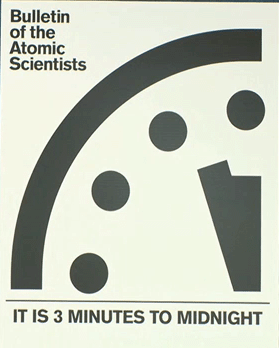
Watch the 2026 Doomsday Clock unveiling live here on January 27 at 10 a.m. EST
To see nuclear-related stories in greater depth and intensity – go to https://nuclearinformation.wordpress.com/

29 Jan. Thursday 7-8 p.m. Webinar – World’s Largest Nuclear Station in Port Hope, ON?


31st January – Challenging the War Machine – a DECLASSIFIED UK SUMMIT

Website of the Week
Now until to February 10, 2026 Radioactive waste storage in France: the debate is finally open! How to participate?
-
Archives
- January 2026 (277)
- December 2025 (358)
- November 2025 (359)
- October 2025 (376)
- September 2025 (258)
- August 2025 (319)
- July 2025 (230)
- June 2025 (348)
- May 2025 (261)
- April 2025 (305)
- March 2025 (319)
- February 2025 (234)
-
Categories
- 1
- 1 NUCLEAR ISSUES
- business and costs
- climate change
- culture and arts
- ENERGY
- environment
- health
- history
- indigenous issues
- Legal
- marketing of nuclear
- media
- opposition to nuclear
- PERSONAL STORIES
- politics
- politics international
- Religion and ethics
- safety
- secrets,lies and civil liberties
- spinbuster
- technology
- Uranium
- wastes
- weapons and war
- Women
- 2 WORLD
- ACTION
- AFRICA
- Atrocities
- AUSTRALIA
- Christina's notes
- Christina's themes
- culture and arts
- Events
- Fuk 2022
- Fuk 2023
- Fukushima 2017
- Fukushima 2018
- fukushima 2019
- Fukushima 2020
- Fukushima 2021
- general
- global warming
- Humour (God we need it)
- Nuclear
- RARE EARTHS
- Reference
- resources – print
- Resources -audiovicual
- Weekly Newsletter
- World
- World Nuclear
- YouTube
-
RSS
Entries RSS
Comments RSS
 nuclear-news