Why investors should be wary of small nuclear reactors

NuScale has some big challenges.
NuScale announced that completion of the project would be delayed by three years to 2030 and estimated the cost had climbed from $4.2 billion to $6.1 billion. This is a familiar old song in the nuclear energy sector: Big schedule delays and big cost-overruns.
M. V. Ramana, a physicist at the University of British Columbia who works on public policy was not surprised that so many utilities backed-out of the project. “They (utility companies) ought to be seeing the writing on the wall and getting out by the dozens.”
at least one study says that small nuclear power plants will generate more waste than conventional reactors.
NuScale: Finally Time For Small Module Nuclear Reactors?
Summary
- Small module nuclear reactors have been discussed and researched for decades – going back to at least my college engineering days in the 1970s.
- Yet for a variety of reasons, small module reactors (“SMR”) have never become a reality.
- NuScale Power wants to change that and at the present time, the company appears to be the planet’s best chance to do so.
- Today I’ll discuss my sense of NuScale’s chances of success and whether or not the stock is a good fit for an investor’s “speculative growth” bucket.
…………………………………………. My sense is that many of NuScale’s potential utility customers are waiting for – what I consider to be the “proof-of-concept” plant – to be built in Idaho.
Valuation
After a big jump in the stock price in July, NuScale currently has a $3.3 billion market cap (and a 13.7% short position):
……………… In June, NuScale gave a financial update re-affirming guidance for (only) $16 million in FY22 revenue. For the three-month period ending March 31, 2022, the company reported:
- Total available capital was $383.7 million.
- Revenue of $2.4 million and a net loss of $(23.4) million compared to revenue of $0.7 million and a net loss of $(22.7) million for the same period in 2021.
- Research and development expenses of $24.4 million compared to $18.8 million for the same period in 2021.
Clearly the company is burning cash. However, even if the cash burn grew to, say, $30 million per quarter, the available capital would last more than three years.
Risks
However, NuScale has some big challenges. Back in 2020, several utility companies within the UAMPS group backed-out of the deal to build the first NuScale SMR power plant. Even with the infusion of U.S. federal dollars, NuScale announced that completion of the project would be delayed by three years to 2030 and estimated the cost had climbed from $4.2 billion to $6.1 billion. This is a familiar old song in the nuclear energy sector: Big schedule delays and big cost-overruns. It was a big-blow: After all, the whole idea behind a small scale modular nuclear plant was to reduce the risk of both schedule and expense.
According to the previously reference source, critics of the project said it will be “untenably expensive.” M. V. Ramana, a physicist at the University of British Columbia who works on public policy was not surprised that so many utilities backed-out of the project. “They (utility companies) ought to be seeing the writing on the wall and getting out by the dozens.”
The Department of Energy (“DOE”) previously agreed to $1.4 billion in funding for the project. However, as I reported above, the cost estimate for the project now is $6.1 billion. That’s a big gap in funding. Further, at that price, investors need to question whether or not renewable solar and wind capacity would be better back-stopped by battery backup, and more wind and solar capacity additions, as opposed to an SMR.
Meantime, I personally would be much more supportive of the effort if NuScale had a partnership of some sort, or at least a well publicized plan, to re-process or store spent radioactive fuel. That’s especially the case given that at least one study says that small nuclear power plants will generate more waste than conventional reactors. The report said SMRs would create up to 30x more radioactive waste per unit of electricity generated as compared to conventional reactors. According to Reuters, Lindsay Krall – the study’s lead author – said:
Even if (the U.S.) had a robust waste management program, we think there would be a lot of challenges to deal with some of the SMR waste.
The study said NuScale’s reactor would produce ~1.7x more waste per energy equivalent than traditional reactors. NuScale countered that the study used “outdated design information and incorrect assumptions about the plants.”
Summary and Conclusions
In theory, small module nuclear reactors sound like a great idea. And they have been sounding like a great idea for decades. Yet despite all the technology available to man, and the pressing threat of global warming, no small module nuclear reactor has yet to be built in the United States. And that should tell the investor something. https://seekingalpha.com/article/4530416-nuscale-time-for-small-module-nuclear-reacto
US regulators approve small nuclear reactors – BUT – costs, delays, too late for climate help
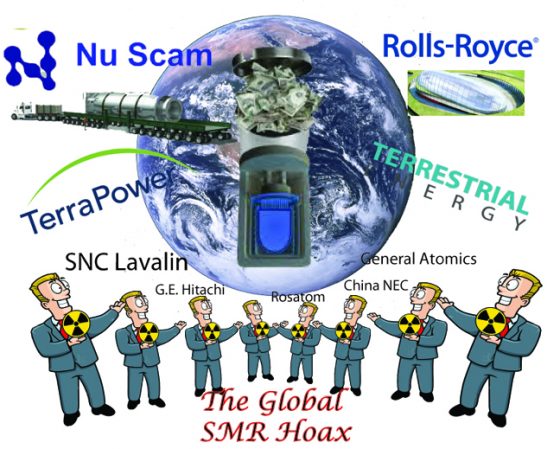
The First Small Modular Nuclear Reactor Was Just Approved by US Regulators, Singularity Hub, By Edd Gent-August 5, 2022
…………………………………… questions have been raised about whether SMRs will really live up to their billing as a cheaper, safer alternative to traditional nuclear power plants. A study published in Proceedings of the National Academy of Sciences in May found that contrary to the claims of SMR makers, these smaller reactors are actually likely to produce more radioactive waste than conventional plants.
In an article in Counterpunch, nuclear power expert M.V. Ramana also points out that the cost of renewable energy like wind and solar is already lower than that of nuclear, and continuing to fall rapidly. In contrast, nuclear power has actually become more expensive over the years.
SMRs could cost more than bigger nuclear plants, he adds, because they don’t have the same economy of scale. In theory this could be offset through mass manufacture, but only if companies receive orders in the hundreds. Tellingly, some utilities have already backed out of NuScale’s first project over cost concerns.
Perhaps even more importantly, notes Ramana, SMRs are unlikely to be ready in time to contribute to the climate fight. Projects aren’t expected to come online until the end of the decade, by which time the IPCC says we already need to have made drastic emissions reductions.
The technology has some powerful boosters though, not least President Joe Biden, who recently touted NuScale’s “groundbreaking American technology” while announcing a grant for an SMR plant the company will build in Romania. Engineering giant Rolls-Royce also recently announced a shortlist for the location of its future SMR factory, which will be used to build 16 SMRs for the UK government by 2050.
Whether SMRs can deliver on their promise remains to be seen, but given the scope of the climate challenge facing us, exploring all available options seems wise. https://singularityhub.com/2022/08/05/the-first-small-modular-nuclear-reactor-design-was-just-approved-by-us-regulators/
Small nuclear reactors produce more radioactive trash than large ones do- American Academy of Sciences

Despite being hailed as the future of electricity generation in the UK,
small nuclear reactors may actually produce more waste than their larger
counterparts, as our Gossage Gossip columnist explains.
A planned new generation of small nuclear reactors will create more waste than
conventional reactors, according to an authoritative new study.
The projects, called small modular reactors (SMR), are designed to be simpler
and safer than conventional plants in the case of an accident. They are
also expected to be built in factories and shipped to locations across the
world, as opposed to today’s massive reactors, which are built on-site
and typically run billions of pounds over budget. SMR backers maintain they
are a safe way to boost generation of virtually emissions-free electricity.
But the reactors would create far more radioactive waste per unit of
electricity they generate than conventional reactors by a factor of up to
30, according to a study published in the Proceedings of the American
National Academy of Sciences.
Some of these smaller reactors, with molten
salt and sodium-cooled designs, are expected to create waste that needs to
go through additional conditioning to make it safe to store in a
repository.
Allison Macfarlane, a co-author of the study and former head of
the US Nuclear Regulatory Commission, said SMR designers ‘don’t pay
that much attention in general to the waste, because the thing that makes
money for them is the reactor. But it is important to know about the waste
products, and whether they’re going to pose such difficulties in managing
and then disposing of them. Which they are.’
Electrical Review 2nd Aug 2022
Small nuclear reactors will bleed us dry and won’t solve climate change – unfounded promises

there is every reason to believe that if and when a NuScale SMR is built, its final cost too will vastly exceed current official estimates.
Unfounded promises — Beyond Nuclear International Small Modular Reactors epitomize culture that embraces exaggeration
By M.V. Ramana
In 2006, Elizabeth Holmes, founder of a Silicon Valley startup company called Theranos, was featured in Inc magazine’s annual list of 30 under 30 entrepreneurs. Her entrepreneurship involved blood, or more precisely, testing blood. Instead of the usual vials of blood, Holmes claimed to be able to obtain precise results about the health of patients using a very small sample of blood drawn from just a pinprick.
The promise was enticing and Holmes had a great run for a decade. She was supported by a bevy of celebrities and powerful individuals, including former U.S. secretaries of state Henry Kissinger and George Shultz, James Mattis, who later served as U.S. secretary of defense, and media mogul Rupert Murdoch. Not that any of them would be expected to know much about medical science or blood testing. But all that public endorsement helped. As did savvy marketing by Holmes. Theranos raised over $700 million from investors, and receive a market valuation of nearly $9 billion by 2014.
The downfall started the following year, when the Wall Street Journal exposed that Theranos was actually using standard blood tests behind the scenes because its technology did not really work. In January 2022, Holmes was found guilty of defrauding investors.
The second part of the Theranos story is an exception. In a culture which praises a strategy of routine exaggeration, encapsulated by the slogan “fake it till you make it”, it is rare for a tech CEO being found guilty of making false promises. But the first part of Theranos story—hype, advertisement, and belief in impossible promises—is very much the norm, and not just in the case of companies involved in the health care industry.
Small Modular Nuclear Reactors
Nuclear power offers a great example. In 2003, an important study produced by nuclear advocates at the Massachusetts Institute of Technology identified costs, safety, proliferation and waste as the four “unresolved problems” with nuclear power. Not surprisingly, then, companies trying to sell new reactor designs claim that their product will be cheaper, will produce less—or no—radioactive waste, be immune to accidents, and not contribute to nuclear proliferation. These tantalizing promises are the equivalent of testing blood with a pin prick.
And, as was the case with Theranos, many such companies have been backed up by wealthy investors and influential spokespeople, who have typically had as much to do with nuclear power as Kissinger had to with testing blood. Examples include Peter Thiel, the Silicon Valley investor; Stephen Harper, the former Prime Minister of Canada; and Richard Branson, the founder of the Virgin group. But just as the Theranos product did not do what Elizabeth Holmes and her backers were claiming, new nuclear reactor designs will not solve the multiple challenges faced by nuclear power.
One class of nuclear reactors that have been extensively promoted in this vein during the last decade are Small Modular Reactors (SMRs). The promotion has been productive for these companies, especially in Canada. Some of these companies have received large amounts of funding from the national and provincial governments. This includes Terrestrial Energy that received CAD 20 million and Moltex that received CAD 50.5 million, both from the Federal Government. The province of New Brunswick added to these by awarding CAD 5 million to Moltex and CAD 25 million in all to ARC-100.
All these companies have made various claims about the above mentioned problems. Moltex, for example, claims that its reactor design “reduces waste”, a claim also made by ARC-100. ARC-100 also claims to be inherently safe, while Terrestrial claims to be cost-competive. Both Terrestrial and ARC-100 claim to do well on proliferation resistance. In general, no design will admit to failing on any of these challenges.
Dealing with any of these challenges—safety enhancement, proliferation resistance, decreased generation of waste, and cost reduction—will have to be reflected in the technical design of the nuclear reactor. The problem is that each of these goals will drive the requirements on the reactor design in different, sometimes opposing, directions.
Economics
The hardest challenge is economics. Nuclear energy is an expensive way to generate electricity. In the 2021 edition of its annual cost report, Lazard, the Wall Street firm, estimated that the levelized cost of electricity from new nuclear plants will be between $131 and $204 per megawatt hour; in contrast, newly constructed utility-scale solar and wind plants produce electricity at somewhere between $26 and $50 per megawatt hour according to Lazard. The gap between nuclear power and renewables is large, and is growing larger. While nuclear costs have increased with time, the levelized cost of electricity for solar and wind have declined rapidly, and this is expected to continue over the coming decades.
Even operating costs for nuclear power plants are high and many reactors have been shut down because they are unprofitable. In 2018, NextEra, a large electric utility company in the United States, decided to shut down the Duane Arnold nuclear reactor, because it estimated that replacing nuclear with wind power will “save customers nearly $300 million in energy costs, on a net present value basis.”
The high cost of constructing and operating nuclear plants is a key driver of the decline of nuclear power around the world. In 1996, nuclear energy’s share of global commercial gross electricity generation peaked at 17.5 percent. By 2020, that had fallen to 10.1 percent, a 40 percent decline.
The high costs described above are for large nuclear power plants. SMRs, as the name suggests, produce relatively small amounts of electricity in comparison. Economically, this is a disadvantage. When the power output of the reactor decreases, it generates less revenue for the owning utility, but the cost of constructing the reactor is not proportionately smaller. SMRs will, therefore, cost more than large reactors for each unit (megawatt) of generation capacity. This makes electricity from small reactors more expensive. This is why most of the early small reactors built in the United States shut down early: they just couldn’t compete economically.
SMR proponents argue that the lost economies of scale will be compensated by savings through mass manufacture in factories and as these plants are built in large numbers costs will go down. But this claim is not very tenable. Historically, in the United States and France, the countries with the highest number of nuclear plants, costs went up, not down, with experience. Further, to achieve such savings, these reactors have to be manufactured by the hundreds, if not the thousands, even under very optimistic assumptions about rates of learning. Finally, even if SMRs were to become comparable in cost per unit capacity of large nuclear reactors, that would not be sufficient to make them economically competitive, because their electricity production cost would still be far higher than solar and wind energy.
…………………………………………. Cost escalations are already apparent in the case of the NuScale SMR, arguably the design that is most developed in the West. The estimated cost of the Utah Association of Municipal Power Systems project went from approximately $3 billion in 2014 to $6.1 billion in 2020—this is to build twelve units of the NuScale SMR that were to generate 600 megawatts of power. The cost was so high that NuScale had to change its offering to a smaller number of units that produce only 462 megawatts, but at a cost of $5.32 billion. In other words, the cost per kilowatt of generation capacity is around $11,500 (US dollars). That figure is around 80 percent more than the per kilowatt cost of the infamous Vogtle project at the time its construction started. Since that initial estimate of $14 billion for the two AP1000 reactors, the estimated cost of the much delayed project has escalated beyond $30 billion. As with the AP1000 reactors, there is every reason to believe that if and when a NuScale SMR is built, its final cost too will vastly exceed current official estimates. ……………
Timelines
The other promise made by SMR developers is how fast they can be deployed. GE-Hitachi, for example, claims that an SMR could be “complete as early as 2028” at the Darlington site. ARC-100 described an operational date of 2029 as an “aggressive but achievable target”.
Again, the historical record suggests otherwise. Consider NuScale. In 2008, the company projected that “a NuScale plant could be producing electricity by 2015-16”. As of 2022, the company projects 2029-30 as the date for start of generation. Russia’s KLT-40S, a reactor deployed on a barge, offers another example. When construction started in 2007, the reactor was projected to start operations in October 2010. It was actually commissioned a whole decade later, in May 2020.
The SMR designs being considered in Canada are even further off. In December 2021, Ontario Power Generation chose the BWRX-300 for the Darlington site. That design is based on GE-Hitachi’s Economical Simplified Boiling Water Reactor (ESBWR) design, which was submitted for licensing to the U.S. Nuclear Regulatory Commission in 2005. That ESBWR design was changed nine times; the NRC finally approved revision 10 from 2014. If the Canadian Nuclear Safety Commission does its due diligence, it might be 2030 or later before the BWRX-300 is even licensed for construction. That assumes that the BWRX-300 design remains unchanged. And, then, of course, there will be the inevitable delays (and cost escalations) during construction. ………….
Waste, Proliferation and Safety
Small reactors also cause all of the usual problems: the risk of severe accidents, the production of radioactive waste, and the potential for nuclear weapons proliferation. …………
…………… small modular reactor proposals often envision building multiple reactors at a site. The aim is to lower costs by taking advantage of common infrastructure elements. The configuration offered by NuScale, for example, has twelve reactor modules at each site, although it also offers four- and six-unit versions. With multiple reactors, the combined radioactive inventories might be comparable to that of a large reactor. Multiple reactors at a site increase the risk that an accident at one unit might either induce accidents at other reactors or make it harder to take preventive actions at others. This is especially the case if the underlying reason for the accident is a common one that affects all of the reactors, such as an earthquake. In the case of the accidents at Japan’s Fukushima Daiichi plant, explosions at one reactor damaged the spent fuel pool in a co-located reactor. Radiation leaks from one unit made it difficult for emergency workers to approach the other units. ……………………………
Claims by SMR proponents about not producing waste are not credible, especially if waste is understood not as one kind of material but a number of different streams. A recent paper in the Proceedings of the National Academy of Sciences examined three specific SMR designs and calculates that “relative to a gigawatt-scale PWR” these three will produce up to 5.5 times more spent fuel, 30 times more long-lived low and intermediate level waste, and 35 times more short-lived low and intermediate level waste. In other words, in comparison with large light water reactors, SMRs produce more, not less, waste per unit of electricity generated. As Paul Dorfman from the University of Sussex commented, “compared with existing conventional reactors, SMRs would increase the volume and complexity of the nuclear waste problem”.
Further, some of the SMR designs involve the use of materials that are corrosive and/or pyrophoric. Dealing with these forms is more complicated. For example, the ARC-100 design will use sodium that cannot be disposed of in geological repositories without extensive processing. Such processing has never been carried out at scale. The difference in chemical properties mean that the methods developed for dealing with waste from CANDU reactors will not work as such for these wastes.
Many SMR designs also make the problem of proliferation worse. Unlike the CANDU reactor design that uses natural uranium, many SMR designs use fuel forms that require either enriched uranium or plutonium. Either plutonium or uranium that is highly enriched in the uranium-235 isotope can be used to make nuclear weapons. Because uranium enrichment facilities can be reconfigured to alter enrichment levels, it is possible for a uranium enrichment facility designed to produce fuel for a reactor to be reconfigured to produce fuel for a bomb. All else being equal, nuclear reactor designs that require fuel with higher levels of uranium enrichment pose a greater proliferation risk—this is the reason for the international effort to convert highly enriched uranium fueled research reactors to low enriched uranium fuel or shutting them down.
Plutonium is created in all nuclear power plants that use uranium fuel, but it is produced alongside intensely radioactive fission products. Practically any mixture of plutonium isotopes could be used for making weapons. Using the plutonium either to fabricate nuclear fuel or to make nuclear weapons, require the “reprocessing” of the spent fuel. Canada has not reprocessed its power reactor spent fuel, but some SMR designs, such as the Moltex design, propose to “recycle” CANDU spent fuel. Last year, nine US nonproliferation experts wrote to Prime Minister Justin Trudeau expressing serious concerns “about the technology Moltex proposes to use.”
The proliferation problem is made worse by SMRs in many ways. ……………………..
Conclusion
The saga of Theranos should remind us to be skeptical of unfounded promises. Such promises are the fuel that drive the current interest in small modular nuclear reactors………
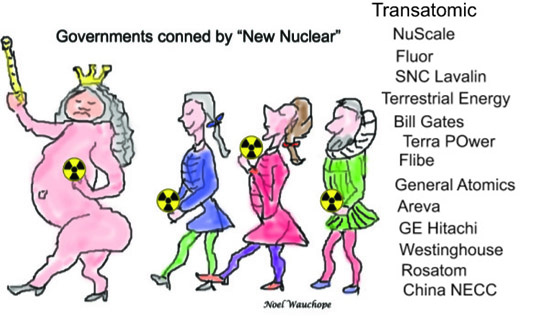
Rather than seeing the writing on the wall, unfortunately, government agencies are wasting money on funding small modular reactor proposals. Worse, they seek to justify such funding by repeating the tall claims made by promoters of these technologies…… https://beyondnuclearinternational.org/2022/07/31/unfounded-promises00
MidAmerican shouldn’t waste money studying small nuclear reactors
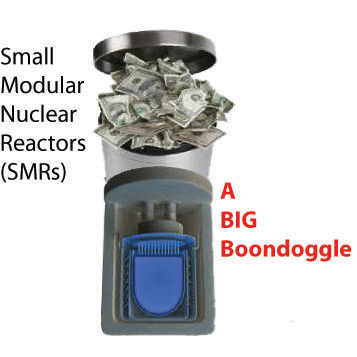
Small modular reactors and nuclear power represent a dangerous distraction from the changes needed to deal with global warming. https://www.desmoinesregister.com/story/opinion/columnists/iowa-view/2022/07/24/midamerican-energy-small-nuclear-reactors-uneconomical/10104142002/ Dr. Maureen McCue and Dr. M.V. Ramana, Yet again, MidAmerican Energy has expressed an interest in studying nuclear reactors for Iowa. Earlier, between 2010 and 2013, MidAmerican studied the feasibility of nuclear power for Iowa and concluded that it didn’t make sense. This time around, MidAmerican does not even have to embark on the study. We know already that the newest offerings from the nuclear industry, Small Modular Reactors, or SMRs, carry the same economic and environmental risks as their larger predecessors and make no sense for Iowa, or anywhere else for that matter.
In 2013, the Wall Street firm Lazard estimated that the cost of generating electricity at a new nuclear plant in the United States will be between $86 and $122 per megawatt-hour. Last November, Lazard estimated that the corresponding cost will be between $131 and $204 per megawatt-hour. During the same eight years, renewables have plummeted in cost, and the 2021 estimates of electricity from newly constructed utility-scale solar and wind plants range between $26 and $50 per megawatt-hour. Nuclear power is simply not economically competitive.
SMRs will be even less competitive. Building and operating SMRs will cost more than large reactors for each unit (megawatt) of generation capacity. A reactor that generates five times as much power will not require five times as much concrete or five times as many workers. This makes electricity from small reactors more expensive; many small reactors built in the United States were financially uncompetitive and shut down early.
The estimated cost of constructing a plant with 600 megawatts of electricity from NuScale SMRs, arguably the design closest to deployment in the United States, increased from about $3 billion in 2014 to $6.1 billion in 2020. The cost was so high that at least ten members of Utah Associated Municipal Power Systems canceled their contracts. NuScale then changed its proposed plant configuration to fewer reactors that produce only 462 megawatts at a cost of $5.32 billion. For each kilowatt of electrical generation capacity, that estimate is around 80% more than the per-kilowatt cost of the Vogtle project in Georgia — before its cost exploded from $14 billion to over $30 billion. Based on the historical experience with nuclear reactor construction, SMRs are very likely to cost much more than initially expected.
And they will be delayed. In 2008, officials announced that “a NuScale plant could be producing electricity by 2015-16.” Currently, the Utah project is projected to start operating in 2029-30. All this before the inevitable setbacks that will occur once construction starts.
Time is critical to dealing with global warming. According to the Intergovernmental Panel on Climate Change, emissions have to be reduced drastically by 2030 to stop irreversible damage from climate change.
Small reactors also are associated with all of the usual problems with nuclear power: severe accidents, the production of radioactive waste, and the potential for nuclear weapons proliferation. Indeed, some of these problems could be worse. For each unit of electricity generated, SMRs will actually produce more nuclear waste than large reactors. Whether generated by a large or small plant, nuclear waste remains radioactive and dangerous for hundreds of thousands of years. There is no demonstrated solution to permanently isolate this lethal waste, for both technical and social reasons.
Most new nuclear reactor designs will rely on water sources for cooling. Nuclear plants have some of the highest water withdrawal requirements; in the United States, the median value for water withdrawal was calculated as 44,350 gallons per megawatt-hour of electricity generated, roughly four times the corresponding figure for a combined cycle natural gas plant. Renewables require little or no water because there is no heat production. Iowa’s lakes and rivers are already challenged by the warming climate, existing power plants, and polluting industries.
In medicine, a basic principle used to guide our decisions is “first, do no harm.” That principle will be violated if Iowa embarks on building SMRs. Small modular reactors and nuclear power represent a dangerous distraction from the changes needed to deal with global warming. Investing in these technologies will divert money away from more sustainable and rapidly constructed solutions, including wind and solar energy, microgrids, batteries and other forms of energy storage, and energy-efficient devices.
NASA, Russian space agency sign deal to share space station flights – Roscosmos
Yahoo News, Joey Roulette July 15, 2022 (Reuters) -NASA and Russia’s space agency Roscosmos have signed a long-sought agreement to integrate flights to the International Space Station, allowing Russian cosmonauts to fly on U.S.-made spacecraft in exchange for American astronauts being able to ride on Russia’s Soyuz, the agencies said Friday.
NASA and Russia’s space agency Roscosmos have signed a long-sought agreement to integrate flights to the International Space Station, allowing Russian cosmonauts to fly on U.S.-made spacecraft in exchange for American astronauts being able to ride on Russia’s Soyuz, the agencies said Friday.
“The agreement is in the interests of Russia and the United States and will promote the development of cooperation within the framework of the ISS program,” Roscosmos said in a statement, adding it will facilitate the “exploration of outer space for peaceful purposes.”
NASA and Roscosmos, the two-decade-old space station’s core partners, have sought for years to renew routine integrated crewed flights as part of the agencies’ long-standing civil alliance, now one of the last links of cooperation between the United States and Russia as tensions flare over the war in Ukraine.
The first integrated flights under the new agreement will come in September, NASA said, with U.S. astronaut Frank Rubio launching to the space station from the Moscow-leased Baikonur Cosmodrome in Kazakhstan alongside two cosmonauts, Sergey Prokopyev and Dmitry Petelin.
In exchange, cosmonaut Anna Kikina will join two U.S. astronauts and a Japanese astronaut on a SpaceX Crew Dragon flight to the orbital laboratory, launching from NASA’s Kennedy Space Center in Florida.
The two agencies had previously shared astronaut seats on the U.S. shuttle and the Russian Soyuz spacecraft.
After the shuttle’s retirement in 2011, the U.S. relied on Russia’s Soyuz for sending American astronauts to the space station until 2020, when SpaceX’s Crew Dragon capsule revived NASA’s human spaceflight capability and began routine ISS flights from Florida……………………….. more https://www.yahoo.com/news/nasa-russian-space-agency-sign-132725285.html
YES! Experimental nuclear reactors (SMRs) DO need an impact assessment: Speak Out!

https://www.cleanairalliance.org/yes-smrs-need-assessment/ 15 July 22 The nuclear industry plans to build experimental nuclear reactors (SMRs) in New Brunswick, aiming that one day they can be used in different towns and remote communities across Canada.
Pressure from the nuclear industry lobby changed our federal environmental assessment law in 2019, exempting many nuclear projects like SMRs from undergoing a full environmental impact assessment (IA)
The exemption not only erodes public involvement and oversight of the project but also means there will be no full reckoning of the alternatives to the energy project and its impacts to social, economic, Indigenous and environmental values.
The Coalition for Responsible Energy Development in New Brunswick (CRED-NB) is challenging the exemption for the “SMR Demonstration Project” planned for Point Lepreau on the Bay of Fundy.
CRED-NB is asking the federal government to order an impact assessment for this project which could have profound and lasting impacts on the Bay of Fundy and the coastal communities and marine life it supports.
For more information about why an impact assessment is required, please read the full request by CRED-NB to federal Environment Minister Steven Guilbeault,HERE
Please join us in this effort. Use our action tool to write Minister Guilbeault to support the CRED-NB request for a full impact assessment for the SMR Demonstration Project.
Your message will be sent to Minister Guilbeault, other relevant members of the federal Cabinet, your MP, leaders of the federal opposition parties, and provincial representatives in New Brunswick.
Say “yes” to an impact assessment for nuclear experiment on the Bay of Fundy.
This is not just a New Brunswick issue. If successful, these SMRs could be deployed in hundreds of communities across the country, their radioactive waste added to our existing stockpiles for which no solution currently exists.
Coalition for Responsible Energy Development in New Brunswick (CRED-NB) 15 July 22, To learn what this nuclear project on the Bay of Fundy is all about, read our request to federal Environment Minister Steven Guilbeault HERE. (French version HERE.)
Once again, NB Power wants to limit public input on their latest experiment. But this time it’s a nuclear experiment! We need to have a say!
The nuclear industry wants to build experimental nuclear reactors (SMRs) at Point Lepreau on the Bay of Fundy in New Brunswick. They want to do it without a federal impact assessment!
This means the public will have limited input, it’s not fair and it’s not right.
Pressure from the nuclear industry lobby changed our federal environmental assessment law in 2019, exempting SMRs from undergoing a full environmental impact assessment (IA).
We’re asking the federal government to order an impact assessment for this nuclear experiment which could have profound and lasting impacts on the Bay of Fundy and the coastal communities and marine life it supports.
Click here to use our action tool to write to Minister Guilbeault to support our request – it takes less than a minute! We’re working with the Ontario Clean Air Alliance to gather support across the country. Please use it and share!
The Coalition for Responsible Energy Development in New Brunswick (CRED-NB) is challenging the exemption for the “SMR Demonstration Project” at Point Lepreau on the Bay of Fundy. and asking asking the federal government to step in and order the project undergo a full, IA under the Impact Assessment Act.
For more information about why an impact assessment is required, read the formal request to federal Environment Minister Steven Guilbeault HERE. (French version HERE.)
The current exemption not only erodes public involvement and oversight of the project but also means there will be no full reckoning of the alternatives to the energy project and its impacts to social, economic, Indigenous and environmental values.
In contrast, an IA is a “look before you leap” process allowing the public to weigh in on alternatives to the project, risks emanating from all stages of the project (from building to eventual decommissioning and oversight of the radioactive materials) and the project’s cumulative social, economic and environmental impacts.
CRED-NB is asking people across Canada to support the campaign. This is not just a New Brunswick issue. If successful, these SMRs could be deployed in hundreds of communities across the country, their radioactive waste added to our existing stockpiles for which no solution currently exists.
Please join us in this effort. Use our action tool to write Minister Guilbeault to support the CRED-NB request for a full impact assessment for the SMR demonstration project.……. more https://crednb.ca/dr/
More delays for the multi-billion-euro ITER nuclear fusion project in France
The multi-billion-euro ITER nuclear fusion project in France faces yet
more delays because transport sanctions imposed in response to the invasion
of Ukraine could stop key parts from Russia reaching Europe, according to a
senior official in Europe’s contribution to the initiative. Leonardo
Biagioni, deputy chief financial officer at Fusion for Energy, which
manages Europe’s contribution to ITER, said that sanctions would “most
likely” delay the project. Speaking this morning at the EuroScience Open
Forum (ESOF) in Leiden, he said that transport sanctions against Russia,
including restrictions on Russian registered vessels docking in European
ports, risk making it hard to move parts manufactured by Russia to ITER’s
site in the south of France.
Science Business 14th July 2022
https://sciencebusiness.net/news/iter-faces-further-delays-if-key-parts-stuck-russia
New Energy Security Bill waters down regulation for fusion, warns Nuclear Free Local Authorities
As the Nuclear Free Local Authorities have feared, following a pre-Christmas BEIS consultation, the Johnson Government has recently revealed its plans to relax the regulatory regime applicable to future fusion reactors by choosing not to classify them as ‘nuclear installations’.
Fission nuclear reactors are subject to nuclear site licencing requirements overseen by the Office of Nuclear Regulation under the Nuclear Installations Act 1965 (NIA 1965), but government ministers have now decided that fusion plants should instead be regulated by the Health and Safety Executive and Environment Agency like other industrial facilities. The new Energy Security Bill just introduced to Parliament by the Business Secretary will exclude fusion reactors from the provisions of the NIA 1965.
Ministers claim that fusion does not present the same ‘higher hazards’ found in fission plants, but the NFLA fears that their decision is about making the UK attractive to investors in their haste to make the UK a ‘fusion industry superpower’ rather than prioritising public safety.
In its response to the Department of Business, Energy and Industrial Strategy (BEIS) consultation, the NFLA had called for ‘no watering down’ of the regime, challenging the notion that fusion was largely without risk.
For research commissioned by the NFLA revealed that fusion would result in the production of large quantities of radioactive waste, with the risk that radioactive tritium could enter the water supply. Fusion also requires immense temperatures, hotter than the sun, to spark and sustain a fusion reaction and this energy must be safely contained using challenging and unproven engineering solutions. Operation would also result in the whole structure being subjected to prolonged exposure to neutron radiation, a situation which if not carefully monitored could result in the very integrity of the reactor vessel being placed in jeopardy.
The Chair of the NFLA Steering Committee, Councillor David Blackburn, said: “The NFLA’s view is that the government’s decision is misguided. It seems blasé to treat a fusion plant for regulatory purposes in the same way as a factory making chemical products. Fusion presents some of the same hazards and challenges as fission, but some are new; surely then fusion is nuclear and so a plant utilizing this technology must be a ‘nuclear installation’.
“In the view of the NFLA, there is no logical reason on safety grounds not to apply the same regulatory regime to fusion reactors as fission reactors. By signalling through the Energy Security Act their determination to exclude fusion from the rigours of the licencing regime, it seems clear that the present government is more focused on reducing the regulatory and cost burden on investors and commercial operators entering the market, putting expediency and profits before public safety.”
On waste management and decommissioning, the government’s position is even more unclear with ministers calling it ‘premature’ to outline clear proposals at this time, something the NFLA is especially perturbed about.
Councillor Blackburn added: “It is a shame that ministers have missed a trick by refusing to state clearly that future operators will have to share a greater burden of the cost of decommissioning and waste management, rather than passing the bill to the Nuclear Liabilities Fund and ultimately the British taxpayer.”
The Corporatization of Space.

The Corporatization of Just About Everything,
Consortium News, Tom Valovic, July 6, 2022………………………………………… let’s draw on the self-declared wisdom of Time magazine for guidance. (This is a publication that’s now in the Big Tech/Big Media” camp as it’s now owned by the CEO of Salesforce.com). In the same issue, another article gushed over the fact that corporations are poised to dominate the exploration and use of space:“….NASA made it clear that when that clock does toll, the U.S. will be getting out of the space station game, likely for good. Instead, the space agency signed a $415.6 million seed money deal with three companies — Blue Origin, Nanoracks, and Northrop Grumman — to develop their own private space stations, on which NASA and other customers could lease space for professional crews and tourists. The article goes on to point out that, in a press statement, a NASA spokesperson boasted that….
” NASA is once again leading the way to commercialize space activities” and that “we are partnering with U.S. companies to develop the space destinations where people can visit, live, and work.”
It seems abundantly clear that the top-down corporate model of governance is fundamentally anti-democratic by its very nature and the waning power and direction of our democratic institutions worldwide has much to do with this fact.
…. uncontrolled and uncontrollable market forces are no substitute for thoughtful and enlightened public policy and democratic norms. Granted, this is in short supply these days but allowing corporations to fill that void is hardly a solution.
As our glorious planet continues to experience crisis after crisis, it’s sad and troubling that there seems to be no shortage of profiteers looking to make an easy buck off the spoils. It seems abundantly clear that the top-down corporate model of governance is fundamentally anti-democratic by its very nature and the waning power and direction of our democratic institutions worldwide has much to do with this fact……. https://consortiumnews.com/2022/07/06/the-corporatization-of-just-about-everything/
Tom Valovic is a journalist and the author of Digital Mythologies (Rutgers University Press), a series of essays that explored emerging social and political issues raised by the advent of the Internet. He has served as a consultant to the former Congressional Office of Technology Assessment. Tom has written about the effects of technology on society for a variety of publications including Columbia University’s Media Studies Journal, the Boston Globe, and the San Francisco Examiner, among others.
Enthusiastic space travel publicity avoids mentioning radiation danger
We need to talk about radiation in space, Cosmos By Jamie Seidel/1 July 2022,
Escape from it all: go above and beyond in your quest for relaxation. Space hotels promise to capitalise on the ultimate dream. But there’s an elephant in orbit, and nobody’s talking about it.
“We’ve seen a lot of great concept designs for orbital hotels lately,” says Dr Iwan Cornelius. “But none of them seem worried about radiation.”
Cornelius is the managing director of Amentum Scientific, an Australian predictive scientific modelling company that quantifies the risks of radiation exposure for the aviation, transport, mining and space industries.
“I’m guessing being sick in space is not good,” the former radiation worker quips. “It’s a long way to your local GP – and the emergency department.”
Radiation exposure has bothered NASA since the earliest days of its space programs. It’s why the International Space Station (ISS) has a tiny bunker surrounded by water and equipment where astronauts can hunker down.
Space tourism is closer to reality than you think – but a few important things remain to be ironed out.
Escape from it all: go above and beyond in your quest for relaxation. Space hotels promise to capitalise on the ultimate dream. But there’s an elephant in orbit, and nobody’s talking about it.
“We’ve seen a lot of great concept designs for orbital hotels lately,” says Dr Iwan Cornelius. “But none of them seem worried about radiation.”
Cornelius is the managing director of Amentum Scientific, an Australian predictive scientific modelling company that quantifies the risks of radiation exposure for the aviation, transport, mining and space industries.
“I’m guessing being sick in space is not good,” the former radiation worker quips. “It’s a long way to your local GP – and the emergency department.”
Radiation exposure has bothered NASA since the earliest days of its space programs. It’s why the International Space Station (ISS) has a tiny bunker surrounded by water and equipment where astronauts can hunker down.
“One thing you’ll notice with all these concept diagrams for space hotels is there’s not a lot of information about a radiation refuge.”
…………… “If we’re talking about a packed hotel in space, where will they go?” Cornelius asks. “How long will it take to get there? Does everyone get access to a shelter – including staff? I don’t know if this is being thought through”.
And solar events aren’t the only space radiation source…………………………….
NASA to spend $15 billion of tax-payers’ money on designs for nuclear reactors on the moon.

In a newly announced initiative, NASA has commissioned three individual
companies to produce plans for the possible use of nuclear power bases on
the Moon. With the potential of such bases becoming more than just a
concept by the late 2020s, the three companies involved – Lockheed Martin,
Westinghouse, and a joint effort between Intuitive Machines and X-Energy
named XI – will command the contract value of an estimated $5 billion each
for their individual designs of lunar-based nuclear fission system.
The National (Wales) 27th June 2022
Small modular nukes fall short on climate promises, new study suggests.

SMRs are inherently less efficient, hence the “higher volumes and greater complexity” of the waste, says the study. SMRs leak more neutrons, which impairs the self-sustaining nuclear reaction.
GreenBiz, By Clifford Maynes, 1 July 22, Small modular reactors (SMRs), seen by the beleaguered nuclear industry as a shining hope for a global revival, may have hit a serious snag. A new study finds that mini-nuclear power stations produce higher volumes of radioactive waste per unit of generation than larger-scale traditional ones.
The United States, the United Kingdom and Canada are among the countries investing in SMRs on the hope of a cheaper, faster way to build out nuclear capacity. In Canada, the federal government is leading and funding a “Team Canada” approach involving several provinces, industry players, and others, envisioning SMRs as “a source of safe, clean, affordable energy, opening opportunities for a resilient, low-carbon future and capturing benefits for Canada and Canadians.”
In Ontario, the Ford government selected GE Hitachi to build an SMR at the Darlington nuclear plant site, with a projected in-service date of 2028.
Now, however, the first independent assessment of radioactive waste from SMRs has modeled the waste from three SMR designs, Toshiba, NuScale and Terrestrial Energy. The conclusion: “SMRs could increase the volume of short-lived low and intermediate level wastes… by up to 35 times compared to a large conventional reactor,” New Scientist reports.

“For the long-lived equivalent waste, SMRs would produce up to 30 times more,” the story adds. For spent nuclear fuel, up to five times more.
Stanford University’s Lindsay Krall, who led the research, said information from the industry is “promotional,” echoing past criticisms that SMRs are still “PowerPoint reactors” with no detailed engineering to back up the concept. “SMR performed worse on nearly all of our metrics compared to standard commercial reactors,” Krall said.
SMRs are inherently less efficient, hence the “higher volumes and greater complexity” of the waste, says the study. SMRs leak more neutrons, which impairs the self-sustaining nuclear reaction.
“The study concludes that, overall, small modular designs are inferior to conventional reactors with respect to radioactive waste generation, management requirements, and disposal options,” Stanford News reports.
“The research team estimated that after 10,000 years, the radiotoxicity of plutonium in spent fuels discharged from the three study modules would be at least 50 percent higher than the plutonium in conventional spent fuel per unit energy extracted.”
……………………………………. Proponents hope SMRs will have “small is beautiful” appeal and focus on their potential to reduce greenhouse gas emissions. But critics say they sidestep public concerns about accidents, wastes, cost and other impacts, noting that SMRs aren’t small: the Darlington reactor will be rated at 300 megawatts, about a third the size of the existing Candu reactors on the site, and more than half the size of the units at the nearby Pickering station.
SMRs are also new and unproven, critics warn. They say there is no reason to think SMR construction will be exempt from the massive cost overruns and completion delays that typically plague reactor construction, and megaprojects in general. And there is no real-world experience to date to demonstrate that SMRs can be built on time and on budget.
The biggest concern is that SMRs will soak up investment dollars and grid capacity that should go to proven, successful renewables such as solar and wind, which can be rapidly deployed and have falling rather than escalating costs. Because of the time lag, nuclear is not expected to make a large contribution to meeting the immediate, global goal of reducing global greenhouse gas emissions by 45 percent by 2030. The Intergovernmental Panel on Climate Change noted in its sixth assessment that small-scale, distributed energy sources such as wind and solar had exceeded expectations, while large, centralized technologies such as nuclear had fallen short.
“It takes too long to site and build nuclear reactors, especially compared to solar and wind installations,” said MIT researcher Kate Brown. https://www.greenbiz.com/article/small-modular-nukes-fall-short-climate-promises-new-study-suggests
Lost in space: Astronauts struggle to regain bone density
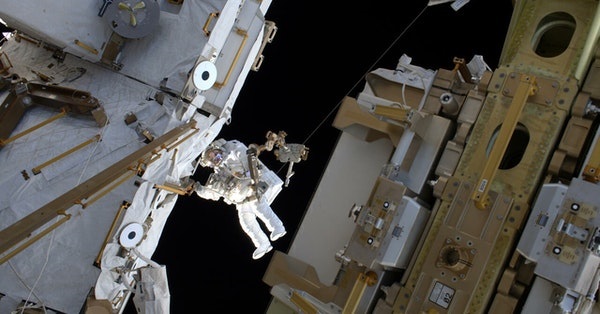
France 24 30/06/2022 Paris (AFP) – Astronauts lose decades’ worth of bone mass in space that many do not recover even after a year back on Earth, researchers said Thursday, warning that it could be a “big concern” for future missions to Mars.
Previous research has shown astronauts lose between one to two percent of bone density for every month spent in space, as the lack of gravity takes the pressure off their legs when it comes to standing and walking.
To find out how astronauts recover once their feet are back on the ground, a new study scanned the wrists and ankles of 17 astronauts before, during and after a stay on the International Space Station.
The bone density lost by astronauts was equivalent to how much they would shed in several decades if they were back on Earth, said study co-author Steven Boyd of Canada’s University of Calgary and director of the McCaig Institute for Bone and Joint Health.
The researchers found that the shinbone density of nine of the astronauts had not fully recovered after a year on Earth — and were still lacking around a decade’s worth of bone mass.
The astronauts who went on the longest missions, which ranged from four to seven months on the ISS, were the slowest to recover.
“The longer you spend in space, the more bone you lose,” Boyd told AFP.
Boyd said it is a “big concern” for planned for future missions to Mars, which could see astronauts spend years in space……………………..
Guillemette Gauquelin-Koch, the head of medicine research at France’s CNES space agency, said that the weightlessness experienced in space is “most drastic physical inactivity there is”.
“Even with two hours of sport a day, it is like you are bedridden for the other 22 hours,” said the doctor, who was not part of the study.
“It will not be easy for the crew to set foot on Martian soil when they arrive — it’s very disabling.”…………………………………. https://www.france24.com/en/live-news/20220630-lost-in-space-astronauts-struggle-to-regain-bone-density—
1 This Month
To see nuclear-related stories in greater depth and intensity – go to https://nuclearinformation.wordpress.com/

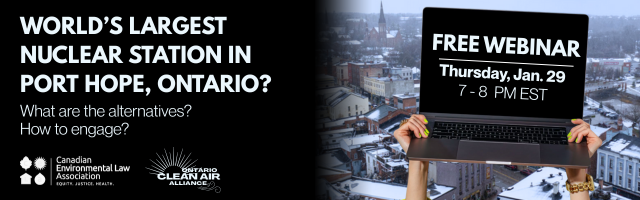
29 Jan. Thursday 7-8 p.m. Webinar – World’s Largest Nuclear Station in Port Hope, ON?

31st January – Challenging the War Machine – a DECLASSIFIED UK SUMMIT


Website of the Week
Now until to February 10, 2026 Radioactive waste storage in France: the debate is finally open! How to participate?
-
Archives
- January 2026 (271)
- December 2025 (358)
- November 2025 (359)
- October 2025 (376)
- September 2025 (258)
- August 2025 (319)
- July 2025 (230)
- June 2025 (348)
- May 2025 (261)
- April 2025 (305)
- March 2025 (319)
- February 2025 (234)
-
Categories
- 1
- 1 NUCLEAR ISSUES
- business and costs
- climate change
- culture and arts
- ENERGY
- environment
- health
- history
- indigenous issues
- Legal
- marketing of nuclear
- media
- opposition to nuclear
- PERSONAL STORIES
- politics
- politics international
- Religion and ethics
- safety
- secrets,lies and civil liberties
- spinbuster
- technology
- Uranium
- wastes
- weapons and war
- Women
- 2 WORLD
- ACTION
- AFRICA
- Atrocities
- AUSTRALIA
- Christina's notes
- Christina's themes
- culture and arts
- Events
- Fuk 2022
- Fuk 2023
- Fukushima 2017
- Fukushima 2018
- fukushima 2019
- Fukushima 2020
- Fukushima 2021
- general
- global warming
- Humour (God we need it)
- Nuclear
- RARE EARTHS
- Reference
- resources – print
- Resources -audiovicual
- Weekly Newsletter
- World
- World Nuclear
- YouTube
-
RSS
Entries RSS
Comments RSS
 nuclear-news