Is there really a nuclear weapon in space?
CASSANDRA STEER, The Interpreter, 18 Feb 24
Calm down, Congressman.
Alarm was raised in the media this week about a “national security threat” to the United States from Russia, ostensibly a nuclear space-based weapon. The news came after the Republican chair of the US House of Representatives intelligence committee, Mike Turner, unusually went public with an allegation based on classified intelligence that had not yet been properly discussed across the National Security briefing channels.
The fact that a cryptic, public allegation was made about a threat in space, combined with repetitions of one unnamed source referring to a potential nuclear capability, has led to some sensationalised news articles, and a lot of misleading conclusions, that Russia has a nuclear space weapon. Lack of clarity can lead to misunderstanding, misinterpretations, and possible missteps, which are in fact the biggest threats to space security.
This news is useful in terms of raising awareness of the high stakes in space security. But as became clear when White House National Security Communications Adviser John Kirby spoke earlier today, this potential capability does “not pose an urgent threat to the United States”– i.e.: it doesn’t yet exist.
We do know all the great powers, many middle powers and even smaller nations are developing counter-space capabilities, most of which are non-kinetic, and the most effective of which have temporary, but highly impactful effects. But this is not “Star Wars”, there are no space-based nuclear weapons.
Space is critical to national, regional and international security, because of how integral space-based services are to civil life and military operations. Satellites have been key military sources of intelligence, surveillance and reconnaissance (ISR) since the 1960s, and continue to be so today. Space-based communications, internet and navigation (such as GPS) are part of our daily lives without most of us thinking about where they come from, and they are a major source of military communications, operational navigation on land, at sea and in the air, as well as guidance for precision weapons.
Because of these high dependencies, space has itself become a strategic domain. In recent decades, increasingly sophisticated counter-space capabilities have been developed globally to interfere with these systems. The most effective way to compromise an adversary’s eyes and ears is to interfere with their space systems, whether by jamming a signal, listening in on a signal, spoofing a false positioning signal, or undertaking a cyberattack on a satellite operation. These are all temporary, reversible means of targeting a satellite or the signals and data it sends to Earth. There is a reason these means are preferred over kinetic, destructive means.
Nuclear weapons (and weapons of mass destruction) are the only type of weapon prohibited in the 1967 Outer Space Treaty, in article IV. The Soviets and the United States, together with many other countries, were able to agree on this treaty at the height of the Cold War, because they realised that strategic restraint was the only way to ensure they would both continue to have access to this new critical domain. In other words, after their own nuclear and Electro-Magnetic Pulse tests in the 1960s, they realised there was no way to contain the effects of such weapons, and their own capabilities would be impacted. A lose-lose scenario.
Perhaps the strongest lessons came from the US nuclear test known as Starfish Prime, which took out US, UK and other national satellite capabilities, reaching from the east coast of the United States to Australia. US and Soviet decision-makers realised they needed to secure their own access to space by prohibiting such weapons, and other countries pushed to ensure these superpowers would not take nuclear war to space, denying access to space for others………………………………………………………………………………. more https://www.lowyinstitute.org/the-interpreter/there-really-nuclear-weapon-space
Exploding Alberta’s Myths about Small Nuclear Reactors

Small nuclear reactors are unproven and years away from being in use. But the Alberta government is presenting them as a way to keep fossil fuels flowing.
The untested technology is more about greenwashing than about cutting emissions.
Tim Rauf 15 Feb 2024, The Tyee
Alberta’s government is really excited about nuclear power.
More specifically, about novel and unproven small modular nuclear reactors. It hopes to use these to help lower the province’s carbon emissions while letting the energy industry continue operating as usual — an enticing prospect to the government given its intention to increase oil and gas production, while still having the energy sector get to net zero by 2050.
Small modular nuclear reactors produce less than one-third of the electricity of a traditional reactor.
The premise is that small reactors are easier to place and build, and cheaper.
Alberta hitched its horse to this wagon with Ontario, New Brunswick and Saskatchewan in 2022, taking part in a strategic plan for small modular reactor development and deployment. Alberta Innovates, the province’s research body, had a feasibility study conducted for it by Pacific Northwest National Laboratory. The study focused on using the reactors for greenhouse-gas-free steam emissions for oilsands projects, electricity generation in our deregulated market and providing an alternative to diesel when supplying power to remote communities.
More recently, Ontario Power Generation and Capital Power out of Edmonton entered into an agreement to assess SMRs for providing nuclear energy to Alberta’s grid. Nathan Neudorf, Alberta’s minister of affordability and utilities, was gleeful. “This partnership represents an exciting and important step forward in our efforts to decarbonize the grid while maintaining on-demand baseload power,” he said of the announcement.
All of this buzz makes it seem like SMRs are just over the horizon, an inevitability that will allow the province to evolve to have a cleaner, modern energy landscape.
But small modular reactors are nowhere near ready for deployment, and won’t be in Alberta for about a decade. That means for 10 years, they’ll provide no GHG-free steam to mitigate emissions.
“It’s still in the design phase,” Kennedy Halvorson said, speaking about the reactors. Halvorson is a conservation specialist with the Alberta Wilderness Association. The reactors are “so far off from being able to be used for us,” Halvorson added. “The earliest projections would be 2030. And we need to be reducing our emissions before 2030. So, we need to have solutions now, basically.”
With SMRs unable to stem the emissions tide for years, it’s confusing as to how they could make enough of a difference to get Alberta to net zero by 2050 (in line with United Nations emissions reduction targets to keep global warming to no more than 1.5 degrees).
Capital Power made similar projections………………………………………………………………………..
Construction itself is only one piece. Adding to that is the need to build a regulatory framework, which Alberta doesn’t have for nuclear…………………………………………………….
Ontario’s nuclear troubles
Listening to these public voices is prudent. We can look east to see what happens when the government and power utilities sidestep the process of getting explicit consent from communities that stand to be affected.
With its status as the nuclear activity hub in Canada, we can use Ontario as a litmus test of sorts and gauge Canada’s track record of care with nuclear. The report card isn’t great. There have been multiple cases of improper consultation with Indigenous Peoples on whose lands the waste, production or extraction sites are placed………………………………………………………………………..
Small reactors face a critical economic challenge
Adding to the timeline troubles are questions as to whether small reactors truly offer that much of an economic advantage, if any, compared with their larger counterparts.
In a previous article Ramana wrote, he pointed to the first reactors as an indication of the answer.
The first reactors started off small. Their size, though, coupled with the exorbitant price tag of nuclear development, meant they couldn’t compete with fossil fuels.
The only thing they could do to reduce the disadvantage was to build larger and larger reactors, Ramana said.

A large reactor that could produce five times as much electricity didn’t cost five times as much to build, he said, improving the return from the investment.
Economically the SMR can’t seem to compete with its larger sibling. Adding this to the delays abundant with nuclear, controversies around construction and communities, and the misalignment of timelines for meeting climate commitments, we need to ask why we’re seeing such a fervent enthusiasm for small modular reactors.
Greenwashing by any other name
The answer is likely a simple one: The Alberta government wants to keep the taps on. Their friends in the energy industry do too. Like carbon capture and sequestration before it, SMRs are the next way to stave off pesky talk of divestment and transition…………………………………………………………….
Deflecting and delaying isn’t the only greenwashing happening either, Halvorson argued. She noted there’s a special kind of tactic that comes with nuclear and other “clean” technology, where only carbon dioxide and greenhouse gas offsets are counted.
“When we reduce it all to just how much CO2 something emits, we’re not getting the full picture of environmental impacts,” Halvorson said. She pointed to water use in nuclear as an example.

“Most nuclear technologies require a massive input of water to work. And as we know, right now we’re in a drought in Alberta. Our water resources are so precious. We already have industries that are using way too much water as is, in a way that’s not allowing our environments and ecosystems to replenish their reserves, like their water resources,” she said.
Despite the cheerleading for nuclear Alberta, where small nuclear reactors will let us enjoy the fruits of fossil fuels (and even produce more) in a cleaner way, the bones don’t read that way. The argument that we can keep on drilling so long as we have that newest silver bullet hasn’t stood up to scrutiny before, and it doesn’t now. https://thetyee.ca/Analysis/2024/02/15/Exploding-Alberta-Myths-Small-Nuclear-Reactors/
Waste issues need consideration in SMR deployment, says UK’s Committee on Radioactive Waste Management (CoRWM).

https://world-nuclear-news.org/Articles/Waste-issues-need-consideration-in-SMR-deployment 14 Feb 24
Waste management issues need to have a significantly greater prominence in the process of developing and deploying small modular reactor and advanced modular reactor designs, according to the UK’s Committee on Radioactive Waste Management (CoRWM).
There is considerable impetus for the development of small modular reactor (SMR) and advanced modular reactor (AMR) designs and their commercial deployment, both for energy security and for environmental reasons, particularly given the historic difficulties of deploying reactors at gigawatt scale,” CoRWM notes in a new position paper.
However, it says the issue of managing the used fuel and radioactive waste from these new reactors “appears, with some exceptions … to have been largely ignored or at least downplayed up to now”. It adds that the issue “must be considered when selecting technologies for investment, further development, construction and operation”.
The paper says: “This must involve addressing the uncertainties about such management at an early stage, to avoid costly mistakes which have been made in the past, by designing reactors without sufficient consideration of how spent fuel and wastes would be managed, and also to provide financial certainty for investors regarding lifetime costs of operation and decommissioning.”
CoRWM says it is essential to know: the nature and composition of the waste and, in particular, of the used fuel; its likely heat generation and activity levels; how it could feasibly be packaged and its volume; and when it is likely to arise.
“So far there is little published material from the promoters and developers of new reactor types to demonstrate that they are devoting the necessary level of attention to the waste prospectively arising from SMR/AMRs,” it notes.
The position paper provides recommendations to the UK government, Great British Nuclear (GBN), and Nuclear Waste Services and regulators to consider as SMR and AMR deployment is progressed.
“There are many questions to be answered concerning the radioactive waste and spent fuel management aspects of the design and operation of SMRs and AMRs,” CoRWM says. “This paper begins the process of raising them, with the caveat that our knowledge of the reactor designs and their fuel requirements is relatively immature compared with large GW reactors.”
CoRWM says there are various mechanisms by which these questions could be addressed in the process of obtaining approval for the new reactors. These are principally: the process of justification, which will be mandatory for all new reactor types; Generic Design Assessment which is optional and non-statutory; nuclear site licensing; and environmental permitting.
“The last two stages of control may in some cases come too late in the process to allow for effective optimisation of designs and the selection of materials that reduce waste,” CoRWM says. “It remains to be seen how effective these mechanisms will be and whether they will occur sufficiently early in the decision-making process to ensure that radioactive waste management is fully and responsibly addressed.”
CoRWM was established in 2003 as a non-statutory advisory committee and is classed as a non-departmental public body. Its purpose is to provide independent advice to the UK government, and the devolved administrations based on scrutiny of the available evidence on the long-term management of radioactive waste, arising from civil and, where relevant, defence nuclear programmes, including storage and disposal.
The UK government has plans to expand nuclear energy capacity to 24 GW by 2050, with a fleet of SMRs a key part of that strategy. Last year, the government and the new GBN arms-length body set up to help deliver that extra capacity began the selection process for which SMR technology to use. In October, EDF, GE Hitachi Nuclear Energy, Holtec, NuScale Power, Rolls Royce SMR and Westinghouse were invited to bid for UK government contracts in the next stage of the process.
‘Everyone needs to calm down’: experts assess Russian nuclear space threat
Attacks in Earth’s orbit as likely to damage Russian interests as western ones, says leading academic
Nicola Davis , 15 Feb 24, Guardian,
Rumours that Russia is planning to deploy nuclear weapons in space have been dampened down by experts who say that while such technology is possible, there is no need to push the panic button.
The furore kicked off on Wednesday when the head of the US House of Representatives’ intelligence committee, Mike Turner, called for the Biden administration to declassify information on what he called a “serious national security threat”.
While Turner gave no further details, it was later reported by news outlets, citing unnamed sources, to involve Russia’s potential deployment of a nuclear anti-satellite weapon in space. The Kremlin dismissed the claim as a “malicious fabrication”.
Dr Bleddyn Bowen, an associate professor at the University of Leicester who specialises in outer space international relations and warfare, said the the lack of detail was no reason to panic. “It’s so vague and cryptic, it could be a number of different things. [But] no matter what they are, none of them are a big deal, to be honest. Everyone needs to calm down about this.”
Russia is bound by several legal restrictions regarding the use or presence of nuclear weapons in space. Article 4 of the Outer Space treaty (1967) bans nuclear weapons from being put into orbit, installed on celestial bodies or otherwise stationed in outer space, while the New Start treaty aims to reduce the number of deployable nuclear arms. The Partial Nuclear Test Ban treaty (1963) bans nuclear explosions in space.
Even if Russia ignores these agreements, there are other considerations. Bowen said the rumoured threat may relate to nuclear-tipped anti-satellite weapons but that such a threat was nothing new.
“These are the first and the most crude kind of anti-satellite weapons ever built: the Americans had them in 1959.” He said any state with nuclear weapons already had the technology to use them in space, broadly speaking.
Another possibility, Bowen said, was that the threat related to space-based nuclear weapons that could be used to knock out satellites. Again, the idea is not entirely new: Russia has previously explored the stationing of nuclear weapons in space, albeit to attack ground targets……………………………………………………………………………………
Space-based nuclear weapons are vulnerable to attack from other nations, while the damage from such weapons would be indiscriminate.
“When you detonate a nuclear weapon in space you generate the fireball … but what you [also] generate is the electromagnetic pulse which fries the electrical circuits of anything that’s unshielded within a few thousand kilometres’ radius,” he said. The pulse may also knock out power grids on Earth if the bomb is detonated above or near populated areas.
“After that, you have the radiation that the bomb would generate,” Bowen said. Over time it would fry the electrical circuits of satellites in the wider part of Earth’s orbit.
The loss of satellite services could affect myriad systems on Earth, from telecoms to satellite navigation services. “That can have knock-on effects to the economy, to critical infrastructure, to the financial system, which relies on these satellites.”
In other words, while nuclear bombs could take out a desired satellites, they could also damage Russia’s technology and interests.
“You’ve got to be in a very desperate situation to want to do something like that,” he said. “So I am not losing any sleep over this.”
Russia also has other technology to hand. In 2021 Russia tested a direct-ascent anti-satellite missile, successfully knocking out one of its own defunct satellites.
But James Green, a professor of public international law at the University of the West of England, said he was also dubious that that system would be deployed. “I think Russia likes to project its space power [to appear] greater than it probably is,” he said.
https://www.theguardian.com/world/2024/feb/15/experts-russian-nuclear-space-threat
What are Russia’s Top 5 Anti-Satellite Systems?
Sputnik, 15 Feb 24
Russia has effective means to thwart adversary satellites, including arms based on new physical principles. What are they?
Moscow trashed the groundless rumors of its alleged efforts to deploy a nuclear anti-satellite system in space on February 15.
A day earlier, mainstream US media claimed that Washington had informed Congress and its European allies about Russia’s work on a new, space-based nuclear weapon designed to undermine the US satellite network.
A new bugaboo about Russia’s supposed plans to destroy American satellites with nuclear arms is aimed at ramming a $60 billion funding package for Ukraine through US Congress, military analyst and editor-in-chief of the National Defense magazine Igor Korotchenko told Sputnik on Thursday. Even though the package in question was earlier passed in the US Senate as part of a $95 billion bill, the chances of the House approving the legislation is considered slim.
According to Korotchenko, Russia has cheaper and more effective means of anti-satellite warfare than those that Washington accuses it of developing.
This is a question of approaches. The fact is that the deployment of nuclear weapons in space is ineffective in terms of its use, especially given that Russia has much simpler and cheaper means to disable, in the event of hostilities, a significant part of the US satellite constellation,” the expert underscored.
Sputnik has taken a look at the systems that could do the job.
The Nudol System
On November 15, 2021, Moscow conducted a direct-ascent hit-to-kill anti-satellite (ASAT) test using the A-235 Nudol anti-satellite system. The test shot down an old Soviet reconnaissance satellite launched back in 1982.
The A-235 Nudol is an improved modification of the A-135 Amur strategic missile defense system. The missile can hit a target at a distance of up to 1,500 kilometers (versus 850 kilometers for the A-135), while its interception speed is increased to Mach 10 (versus Mach 3.5 for the A-135).
In contrast to its predecessor, the A-235 may use kinetic force, not nuclear or high-explosive fragmentation, to destroy the target.
The development of the A-235 Nudol started in 1985-1986 and was carried out in compliance with international ballistic missile agreements existing at the time. The weapon was designed to become the first Soviet mobile missile defense system capable of intercepting intercontinental-range missiles, spacecraft and satellites operating at high orbits.
Immediately after the Cold War, the development of the A-235 was suspended and restarted in 2011 by Almaz-Antey, nine years after the Bush administration unilaterally terminated the Antiballistic Missile Treaty (ABM) in 2002.
The system has been tested several times since 2014; however, in November 2021 the missile was fired at a specific moving space target and eventually destroyed it, causing a fuss in the Pentagon.
Nanosatellites: Nivelir, Burevestnik and Numismat
The development of Russia’s secretive project Nivelir (“Leveler”) has reportedly been carried out by the Central Scientific Research Institute of Chemistry and Mechanics Named after D.I. Mendeleyev since 2011.
The endeavor supposedly envisaged building small satellites designed to inspect other satellites in space. The first three satellite-inspectors were reportedly attached to three communications satellites launched between 2013 and 2015.
According to other sources, Russia has been experimenting with satellite inspectors since 2017. The satellites maneuvered in orbit, moving away from each other and then getting closer. In 2019, the Cosmos-2535 and Cosmos-2536 devices were launched. Their goal was to study the impact of “artificial and natural factors of outer space” on Russia’s space devices and to develop “technology for their protection.”…………………………………..
The Kontakt System
The USSR started to develop the 30P6 Kontakt (“Contact”) system in 1983. The 79М6 munition – a three-stage rocket – was supposed to be mounted on the MiG-31D fighter-interceptor.
Launched from an airplane at an altitude of 15 kilometers the munition was designed to fire a fragmentation warhead into space. It was assumed that the Kontakt system would be a stealth and inexpensive means of destroying enemy satellites……………………………………………………….
The Tirada Electronic Warfare System
According to the Russian Ministry of Defense, the Tirada-2S radio-electronic communication suppression system is capable of electronically jamming satellite communications with complete disabling. In this case, satellites can be deactivated directly from the Earth’s surface.
There is little information about the system’s specifications in the public domain. …………………………………………………………………………………..
The Peresvet Laser System
On March 1, 2018, Russian President Vladimir Putin first mentioned Russia’s laser weapon for air defense and anti-satellite warfare, the Peresvet, during his address to the Federal Assembly………………………………………….
The aforementioned systems are just a few of those potentially developed by the Russian military-industrial complex, indicating that Russia is capable of using its decades-long scientific and technological potential to ensure the nation’s security in the event of a large-scale conflict. https://sputnikglobe.com/20240215/what-are-russias-top-5-anti-satellite-systems-1116802215.html
SpaceX deorbiting 100 older Starlink satellites to ‘keep space safe and sustainable’

By Brett Tingley, Space,com , 14 Feb 24
There are still well over 5,000 operational Starlink satellites in low Earth orbit.
SpaceX will deorbit some of its older Starlink internet satellites in order to reduce the number of potentially dangerous spacecraft in low Earth orbit.
The company just announced that 100 Version 1 Starlink satellites will be deorbited over the next weeks and months in the name of space sustainability. SpaceX posted a statement to X (formerly Twitter) on Monday (Feb. 12) announcing the plan, noting that the move is “the right thing to do to keep space safe and sustainable.”
The statement, titled “Commitment to Space Sustainability,” points out that SpaceX‘s Starlink team found a “common issue in this small population of satellites that could increase the probability of failure in the future,” potentially rendering them unable to be maneuvered out of the way of other spacecraft. The deorbiting operation should take around six months…………………………………………………………..
All Starlink satellites are designed to fall into Earth’s atmosphere on their own in under five years from the time they are deployed due to the effects of atmospheric drag. They are also engineered to be “fully demisable by design,” SpaceX’s statement adds, meaning they burn up entirely as they deorbit, rendering the risk of debris falling to Earth to “effectively zero.”
While 100 satellites sounds like a significant amount, SpaceX currently has 5,438 Starlink craft in orbit, according to astrophysicist and satellite tracker Jonathan McDowell. The company already has regulatory approval to launch 12,000 Starlink satellites, and wants to eventually expand its fleet to 40,000 or so.
And more are going up every month; SpaceX plans to launch 144 missions this year, most of them likely devoted to placing Starlink satellites in orbit. (About 60% of the company’s launches in 2023 were dedicated Starlink missions.) The satellites offer high-speed broadband connectivity to users worldwide, including in war-torn or disaster-stricken areas. https://www.space.com/spacex-starlink-satellites-deorbit-space-sustainability
The ‘disturbing’ intel roiling the Hill is about Russian nukes in space
The U.S. has for more than a year been concerned about Russia’s potentially creating and deploying an antisatellite nuclear weapon, one of the people familiar with the intelligence said.
Politico, By ERIN BANCO, ALEXANDER WARD and LEE HUDSON, 02/14/2024
A vague warning by the chair of the House Intelligence Committee about a “serious national security threat” Wednesday is related to Russia’s attempts to develop an antisatellite nuclear weapon for use in space, according to two people familiar with the matter.
While the people did not provide further details on the intel, one of them noted the U.S. has for more than a year been concerned about Russia’s potentially creating and deploying an antisatellite nuclear weapon — a weapon the U.S. and other countries would be unable to adequately defend against.
In his statement Wednesday morning, Rep. Mike Turner (R-Ohio) said his committee had made available the information about the national security threat and called on the administration to declassify the intelligence so officials and lawmakers could discuss the matter with allies.
It is not clear what prompted Turner to issue the statement now, as the intelligence has been available to leaders of the House intelligence committee and their top aides in a secure room on Capitol Hill for more than a week, one of the people said. The Senate intelligence committee has also had access to the information.
House intelligence committee members on Tuesday voted to open the intelligence up for viewing for all members. All Senate members now have access as well.
It’s possible Turner was attempting to raise alarms about Russia’s advancements in space as a way of underscoring the need for lawmakers to approve additional aid to Ukraine. The Senate passed the supplemental bill including $60 billion in aid for Kyiv. It is currently under review by the House.
One House intelligence committee member said the intelligence was “disturbing.” Another said “it’s a serious issue but not an immediate crisis.” Both members and the others familiar with the intelligence were granted anonymity to speak about classified materials. ………………………………………………………..
U.S. officials have raised the alarm in recent years about missiles launched from Earth’s surface that can destroy satellites in orbit. In 2021, Russia conducted an anti-satellite missile test on one of its own satellites, breaking it up into more than 1,500 pieces of debris — which can pose a serious threat to other objects in orbit.
ABC previously reported on the particulars about the most recent intelligence relating specifically to the antisatellite nuclear weapon.
There are a number of other issues that the administration has viewed as concerning in regard to Russia’s activities in space, including certain developments with its satellites and its jamming of U.S. satellites. https://www.politico.com/news/2024/02/14/house-intel-national-security-threat-russia-space-power-00141473
Small Nuclear Modular Reactors (SMRs) and Consent in Saskatchewan: What You Haven’t Been Told
Uranium Mining in Northern Saskatchewan: What You Need To Know―Four-Part Webinar Series Webinar #2: February 13th, 2024,
Small Nuclear Modular Reactors (SMRs) and Consent in Saskatchewan: What You Haven’t Been Told Everyone is welcome to attend this webinar series that will help you know more about what is happening with uranium mining in Northern Saskatchewan. While many people have been busy in survival mode and exhausted from the pandemic, wars around the world, and the extreme rising cost of living, uranium mining lobbyists and governments have been taking advantage, passing industry-favourable laws that will further degrade and threaten freshwater systems already desperately overburdened by farming and mining use and wastewater byproducts.
Hosted by Tori Cress Guests: Paul Belanger, Keepers of the Water Science Advisor. Dr. Gordon Edwards, President and co-founder of the Canadian Coalition for Nuclear Responsibility, and Benjamin Ralston BA, JD, LLM, Assistant Professor at the College of Law, University of Saskatchewan Technical support: Beverly Andrews Paul Belanger works on the Keepers of the Water team as our Science Advisor and is also an environmentalist – entrepreneur, and designer. Paul founded his first environmental organization in 1987, then went on to mentor with scientists and operate an oil field supply and safety company. After more education and some research, Paul began an ecological design company called Living Design Systems – which is still active. Paul holds much knowledge and will now take us through a brief history of uranium mining in Saskatchewan.
Benjamin Ralston is an assistant professor at the College of Law at the University of Saskatchewan. Some of his research areas include Aboriginal rights, Canadian constitutional law, environmental law, human rights law, and natural resource law. Benjamin has worked at the U of S in various capacities since 2014. Including for the first year of the Nunavut law program in Iqaluit. He taught law courses in the Kanawayihetaytan Askiy (kaun-a-way-taa-tan-ah-ski) Program for Indigenous land managers and continues to teach a graduate course on environmental law and policy for the School of Environment and Sustainability. He is completing his Ph.D. at the College of Law with a dissertation investigating the intersection between environmental assessment practices and Indigenous rights in Canada. No registration is required. We will be broadcasting live from our Facebook Event Page here, https://fb.me/e/4cpZppDBU and on our YouTube channel here, https://youtube.com/live/f6TOoWU-w5A?…
Russian nuclear capabilities in space could threaten international satellites, US military comms: Sources
House Intel Chairman Mike Turner first warned of the ‘serious national security threat’ on Wednesday
By Brooke Singman , Jacqui Heinrich Fox News, February 14, 2024
The U.S. has intelligence of a national and international security threat related to Russian nuclear capabilities in space which could threaten satellites, including potentially knocking out U.S. military communications and reconnaissance, Fox News has learned.
Sources tell Fox News that the Russian capability has not yet deployed.
House Intelligence Committee Chairman Mike Turner on Wednesday morning first warned of a “serious national security threat,” and called on President Biden to declassify it………………………………………………………………………………………………………. more https://www.foxnews.com/politics/russian-nuclear-capabilities-space-could-threaten-international-satellites-us-military-comms-sources
Nuclear weapons and poison pills: Washington, Beijing warily circle AI talks

SCMP 13 Feb 24
- Bilateral dialogue on automated weapons and artificial intelligence is expected to take place this spring, with parameters yet to be established
- Both China and the US are wary of giving their adversary an advantage by limiting their own capability
The United States and China have a shared interest in sitting down to discuss automated weapons, artificial intelligence and its many potential and unforeseen abuses. Less clear is whether the two global AI superpowers and their huge militaries have common interests or goals coming into the talks, which are expected to take place this spring, according to analysts and experts involved in informal sessions between the two nations.
“The good news, which has been a really, really rare thing these days, is that the AI dialogue is seeing some hope,” said Xiaomeng Lu, director of with Eurasia Group’s geo-technology practice, who is involved with US-China “Track 2” talks among former government officials, experts and analysts. “Both sides have an interest in preventing unintended consequences.”
Washington and Beijing have agreed to sit down in the next few months and discuss AI issues, National Security Adviser Jake Sullivan said in late January after meeting with top Chinese diplomat Wang Yi in Thailand. Non-official Track 2 and semi-official Track 1.5 talks often act as a preamble to formal negotiations. The decision to establish a working group on AI was reached during the November summit between Presidents Xi Jinping and Joe Biden in northern California.
Beijing and Washington have both become increasingly uneasy about the effect that artificial intelligence could have on warfare, governance and society as the technology threatens to eclipse mankind’s ability to control or fully understand it, even as they are wary of giving their adversary an advantage by limiting their own capability.
Lu said both sides in the discussions she has participated in appear engaged and intent on defining what constitutes an autonomous weapon and what it means to have a human in the loop for weapons of mass destruction.
“I can sense the energy; we’re all trying to throw ideas at this,” she said. “The common threat to the US and China these days is what AI can unleash, let’s say nuclear weapons, like a nuclear missile. That’s a very dangerous threshold, and both sides have an interest in preventing unintended consequences.”
Less clear is how that would translate…………………………………………………………………………………………………..
So far, there’s no evidence of any army worldwide using or planning to use frontier AI models for military use, analysts said.
Separately, the world’s two largest economies – key to any meaningful global deal – are also circling around a framework for AI control in the commercial sphere, an issue former secretary of state Henry Kissinger raised last summer on a trip to Beijing four months before his death, reportedly in close consultation with former Google chief executive Eric Schmidt.
Track 2 talks in the commercial area have seen extremely limited progress, with the Chinese side arguing that the best way to ensure safety is for both sides to fully share their technology and halt export restrictions on key AI technologies.
“That’s a non-starter, a poison pill for the US,” said Lu.
This comes as Washington released a proposed rule in late January requiring cloud service providers such as Microsoft and Amazon to identify and actively investigate foreign clients developing AI applications on their platforms, seen as targeting China………………………………………………………….
Among the participants in recent AI Track 2 discussions were representatives from the Carnegie Endowment for International Peace, George Washington University, the Brookings Institution, several other US think tanks, Tsinghua University, and Chinese think tanks affiliated with the Ministry of Science and Technology and the Ministry of Industry.
Both sides have very different core interests, and also are competing for third-country support for their global AI security blueprints……………………………………………………………………
now both sides are scrambling trying to figure out what it is they are going to talk about.”
Also weighing on the talks are very different views of transparency, decision-making and centralised authority. In the past with the advance of new technologies, from mobile phones and fax machines to the internet and cryptocurrency, Beijing has moved slowly to study and control their use and ensure they do not represent a threat to the Communist Party.
The US, with its more decentralised system, has more often allowed companies and individuals to explore and exploit their uses, regulating their use after problems and abuses surface………………………………………….
hinese companies, which are reluctant to engage in international meetings without more guidance from Beijing, even as it remains unclear who has authority over international engagement on AI within the government. Beijing sent Wu Zhaohui, a vice-minister of science and technology, to the UK AI Summit, but the lead regulator is the cyberspace administration of China, which does not have much of an international presence, complicating efforts to engage on AI outside China……………………………………………………….
The Xi-Biden summit represented a bid to stem the rapid slide in bilateral relations and lower the temperature. “AI safety is not a bad place to figure out, can we establish some kind of dialogue,” said Rasser, a former intelligence analyst. “There’s so much distrust on both sides that it’s a very steep hill to climb to some sort of agreement.
“But if at minimum they’re having discussions, dialogue is better than no dialogue. All in all, it’s not a bad thing that they’re exploring the potential.” https://www.scmp.com/news/china/article/3251605/nuclear-weapons-and-poison-pills-washington-beijing-warily-circle-ai-talks
First Small Nuclear Reactor (SMR) domino falls, potentially to start cascade

February 8, 2024, https://beyondnuclear.org/first-smr-domino-falls-potentially-to-start-cascade/—
Same financial risks viewed as generic to entire reactor type
The nuclear industry is rattled by an Opinion piece appearing in the January 31, 2024 edition of the energy trade journal Utility Dive. The article, astutely entitled “The collapse of NuScale’s project should spell the end for small modular nuclear reactors,” is an extensively documented study of yet another nuclear folly.
Its author, M.V. Ramana, the Simons Chair in Disarmament, Global and Human Security and Professor at the School of Public Policy and Global Affairs, at the University of British Columbia in Vancouver, Canada, carefully focuses on the financial collapse of what was heralded to be the first units of a bow wave of mass produced small commercial power reactors to be constructed and operated in the United States.
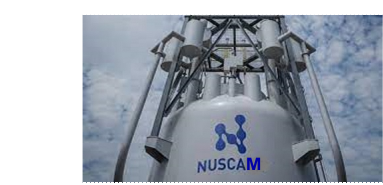
NuScale Power Corp, the Portland, Oregon based company that started up in 2007, was supposed to be the US Department of Energy’s (DOE) poster child to mass produce the first US Small Modular Reactors (SMR) owned and controlled by US nuclear giant and thermonuclear weapons manufacturer Fluor Corporation. Instead, on November 9, 2023, NuScale was announced as just another financial causality in a growing tally of nuclear projects stymied by uncontrollable cost and a recurring pattern of delay after delay. In this case, however, NuScale fell victim even before its selected reactor design could be certified by the US Nuclear Regulatory Commission as a viable license for the groundbreaking ceremony.

The NuScale pilot project’s initial goal was to license, construct and operate twelve contiguous units, (50 to 60-megawatts electric (MWe) each for a total up to 720 MWe of generating capacity per site), housed in a single reactor building with one control room. On the promise that this would be safer, cheaper and quicker to build and operate, the NuScale SMR is really just a redesign of a decades-old technology for the impossibly expensive and larger (800 to 1150 MWe per unit) commercial pressurized water reactors operating on license extensions today.
Yet, even with this extensive experience going back to the 1960’s, the redesign has not yielded to be any more reliable for estimating cost-of-completion, time-to-completion or affordable operation. In fact, with the industry’s abandonment of the design and construction of new reactors on “economies of scale,” the prospect for generating affordable electricity from small “mirage” reactors has apparently only become more unattainable.
The NuScale pilot reactor construction site was awarded by the DOE on the federally owned Idaho National Laboratory (INL) near Idaho Falls. NuScale worked out a deal for its projected electricity customer base on a contract with the Utah Associated Municipal Power System (UAMPS), an electric cooperative of 50 cities in seven western states incentivized by a DOE federal government payout to would be customers of up to $1.4 billion over ten years.
But despite the federally promised awards to reduce nuclear power’s certain financial risks to customers, Ramana documents the NuScale and UAMPS struggle with first building its power purchase subscriptions from members who would shortly run for the designated “exit ramps” scheduled into the contract.
As these municipalities pulled out of the nuclear project because of financial concerns, UAMPS and NuScale renegotiated the project’s generating capacity down to six units each rated at 77 MWe for a total generating capacity of 462 MWe.
The reactor design’s safety, however, is still problematic and uncertified by the Nuclear Regulatory Commission and now demonstrated to be yet another expensive “house of cards.” Like the previous “nuclear renaissance” initiated by Congress and the nuclear industry in 2005, of the 34 “advanced” Generation III units put forward by industry, only one unit (Vogtle unit 3) is commercially operable today and another unit (Vogtle unit 4) still under construction. The initial $14 billion project in Georgia is now approaching as much as $40 billion to show for it.
In a follow-on article in the February 3, 2024 edition of DownToEarth, M.V. Ramana and Farrukh A. Chishtie are co-authors of “Tripling nuclear energy by 2050 will take a miracle, and miracles don’t happen” which identifies the same dangerous wild goose chase to expand nuclear power that is destined to fail climate change mitigation on the global scale.
Chishtie and Ramana expertly rebut the deluded notion as presented by the United States former Special Envoy on Climate Change John Kerry at the 28th Conference of Parties (COP28) in Dubai, UAE. They cite “the hard economic realities of nuclear power” historically to date as the principal reason nuclear power cannot be scaled up from what can only be termed a preposterous level by 2050. That will be far too late by most accounts to abate an accelerating climate crisis.
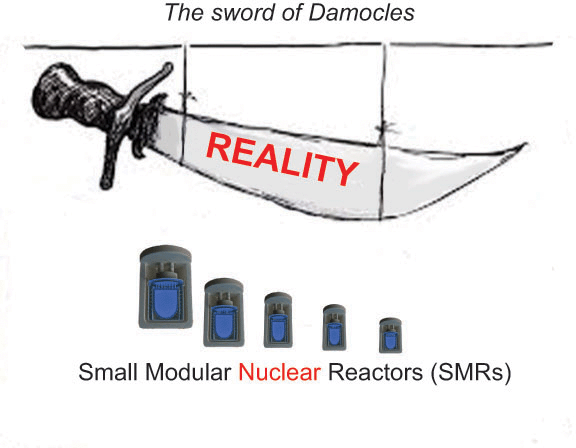
“The evidence that nuclear energy cannot be scaled up quickly is overwhelming. It is time to abandon the idea that further expanding nuclear technology can help with mitigating climate change. Rather, we need to focus on expanding renewables and associated technologies while implementing stringent efficiency measures to rapidly effect an energy transition.
Nuclear Fusion- costly and too late

‘the costs of electricity from a fusion reactor are likely to exceed those from fission by a factor of ten or more.’
The timescale for fusion is such that it has no relevance for the reduction of climate-changing carbon dioxide emissions’.
It is surprising that this company, which has prospered for 25 years, is advocating a technology that many experts say can never work’.
10 Feb 24, https://renewextraweekly.blogspot.com/2024/02/fusion-costly-and-too-late.html
A new report by a retired nuclear expert for the Global Warming Policy Foundation (GWPF) says there are ‘intrinsic concerns for commercial fusion’, as currently being explored by the large scale ITER device being built in France. It says issues included:
• excessive cost compared to fission, because of its enormous size and complexity;
• low operational availability due to the necessity to frequently replace components damaged by neutron irradiation;
• scarcity of tritium fuel, requiring regeneration in operations and probably supplies for start-up from a fleet of fission reactors.
The GWPF report ‘Nuclear fusion- should we bother?’ goes on to look in detail at the issues ITER and the mainstream approach face. It is pretty damning. As the author Dr John Carr says in the press release ‘there is a litany of technical difficulties, from degradation of materials due to radiation damage, to lack of tritium fuel supply. Progress towards a working reactor has been dismal, and the problems may be insuperable’. Even if it can be done, he says, ‘the costs of electricity from a fusion reactor are likely to exceed those from fission by a factor of ten or more.’
His main focus is ITER, but, in the report he notes that there are a some alternative projects, mostly privately funded. He says that ‘some private companies have possible remedies for the first two points [in his issues list above], through use of high temperature superconductors. However, these solutions raise new challenges and it is highly likely that the timescales to develop the new technologies will be very much longer than the commercial promises’.
Nevertheless, there are evidently many willing to try their luck. The report notes that ‘by 2023 there were a total of 43 major companies involved, of which 24 had declared funding of more than $10 million. The majority of these companies (15/24) are pursuing alternative concepts, while some (9/24) are building toroidal magnetic confinement devices, such as compact tokamaks, which are variants on the mainstream approach. A few of the companies (5/24) are proposing the use of alternative fuels. Many were founded by frustrated academic researchers, and all obviously want to avoid the pitfalls of mainstream fusion’.
It goes on ‘The arrival of the private fusion companies, making claims for commercial fusion power stations to be connected to the electricity grid in the early 2030s, has the potential to dramatically change the prospects for the technology. This commercial optimism will compete with technological reality during the next 10 years; the oldest private fusion companies, including TAE, have already passed the original dates for which they promised commercial fusion. Such claims must therefore be taken with a pinch of salt. In parallel with these private company claims, ITER will have to readjust to a new schedule for fusion reactions after 2035. So, should these private companies succeed, it will be difficult to see why the ITER/ DEMO programme would continue’.
Well yes, it could be overtaken, but, given the problems it identifies, the report does not in fact see the alternative fusion options as developing rapidly or effectively, so that, it concludes that overall ‘there is no reason to bother with fusion. It will almost certainly have no advantages over fission and will come – at best – a hundred years later than the Calder Hall milestone [i.e. 2056], costing vastly more. The timescale for fusion is such that it has no relevance for the reduction of climate-changing carbon dioxide emissions’.
That may be too conservative, even for the GWPF! John Carr may be right about ITER. And also some of the alternatives. He is certainly pretty dismissive about most of them. For example, he notes that ‘TAE is studying the use of proton-Boron to replace D-T, because Boron is both abundant and the reaction produces no neutrons. The snag is that this fuel requires 6 times the reaction temp. of D-T (> 1 bn degrees). Critically, the radiation losses in the plasma are higher, to the point where an energy gain is impossible, according to calculations. It is surprising that this company, which has prospered for 25 years, is advocating a technology that many experts say can never work’.
He looks at Commonwealth Fusion System’s ARC tokamak design, which uses high-temperature superconductors (HTS), in the form of the new rare-earth barium copper oxide (REBCO) material, rather than the usual superconductor of niobium-tin and niobium-titanium used in ITER. Using HTS allows ARC to use higher magnetic fields and thus be smaller- half the physical size of ITER for a similar fusion power output. That would reduce costs. CFS gives a cost estimate for ARC at about $6 bn, compared with ITER’s $60 bn.
However, the report says ‘The REBCO superconductor is brittle – being a ceramic rather than a metal. In addition, the use of higher magnetic fields results in greater mechanical stresses, so constructing reliable magnets is more difficult. Further, the smaller size means the same fusion power output must be extracted through smaller breeder blanket systems and divertors, requiring these devices to sustain higher temperatures and radiation doses – another major challenge’. It says it’s similar for the UK’s spherical STEP.
Well maybe, but what about some of inertia/laser systems being developed in the USA- there’s almost no mention of them. There is certainly a lot of hype about imminent breakthroughs with laser ignition, but, arguably, at some point, there might be some real progress in this area- or in others. However, in addition to costs and safety, the key thing is when? We need to deal with climate change now, not in many decades times. In that sense then Carr may be right- forget fusion for now. It’s not as if there are not other arguably much better (and urgent) things to spend the money on, although, given its hostility to almost all things green, the GWPF is probably not the best outfit to rely on for advice as to what the focus should be!
Rolls-Royce snubbed for UK’s first private small nuclear reactor plant
Proactive, Philip Whiterow, 08 Feb 2024
Rolls-Royce Holdings PLC (LSE:RR.)‘s mini-nuclear plans have seemingly suffered a setback with the UK’s first privately funded station to use reactors built by Westinghouse.
The US group said it signed an agreement with Community Nuclear Power to install four AP300 small modular reactors (SMRs) at the North Teesside project to generate up to 1.5 gigawatts of power or enough for up to two million homes.
Westinghouse added it hopes to have the first AP300 operating unit available in “the early 2030s”…………………………………..
Mini-reactors or SMRs were a key plank of former prime minister Boris Johnson’s plans to rejuvenate Britain’s nuclear industry and hit his green energy targets.
…………………………………….
Lord Houchen, the mayor of Tees Valley, said one of the major issues it faced was the lack of policy clarity in the UK over SMRs.
Although reportedly ahead of the competition, Rolls-Royce’s SMR is still said to be only mid-way through the UK approval process.
The new power station is being entirely privately funded and will be sited at Seal Sands, a former chemical works. https://www.proactiveinvestors.co.uk/companies/news/1040531/rolls-royce-snubbed-for-uk-s-first-private-nuclear-plant-1040531.html
Small Modular Reactors do not solve the many problems of nuclear, NGOs say

As the European Commission prepares to launch its industry alliance for Small Modular Reactors (SMRs) on 6 February, civil society organisations stress the high costs and slow progress, making this technology a risky distraction for the climate.
The European Union (EU) should concentrate its efforts on climate solutions that are already working to reduce emissions quickly, rather than costly experiments.
Davide Sabbadin, Deputy Manager for Climate and Energy at the EEB, said:
In its desperate fight for survival, the European nuclear industry is pleading for public support for SMRs, but smaller-scale nuclear won’t change the poor economics of investments in atomic energy. We don’t even know how long it would take to build SMRs, as all previous attempts have been scrapped. Why should the EU invest in costly alternatives over existing climate solutions? Every euro wasted on nuclear projects could help replace fossil fuels faster and cheaper if invested in renewables, grids, and energy storage instead.”
Like other industry alliances fostered by the Commission, the purpose of the new SMR alliance is to bring together governments, industry players, and stakeholders who seek to accelerate the development of the SMR industry. However, the launch of this alliance signals a dangerous shift of direction for the EU institutions prompted by the nuclear industry’s increasing calls for public funding and administrative support.
Despite the hype, SMRs do not currently answer any of the industry’s fundamental problems:
- Too expensive: In relative terms, the construction costs for SMRs are higher than for large nuclear power plants due to their low electricity output.
- Unproven technology: Even the simplest designs used today in submarines will not be available at scale until late next decade, if at all. Taking into account the learning curve of the nuclear industry, an average of 3,000 SMRs would have to be constructed in order to be financially viable.
- Ineffective climate solution: According to the latest IPCC report published in March 2023, nuclear power is one of the two least effective mitigation options (alongside Carbon Capture and Storage).
- Waste problem: Current SMR designs would create 2-30 times more radioactive waste in need of management and disposal than
- conventional nuclear plants.
- Geostrategic interests: Several EU countries rely on technology and nuclear fuel supplied by Russia’s state-owned Rosatom. Switching from importing Russian fossil fuels to Russian nuclear energy tech does not serve the EU’s energy security interests in the slightest.
New nuclear ventures take time and resources that we simply don’t have to tackle the climate crisis. Diverting attention from energy efficiency and faster-to-deploy renewables to costly and experimental technologies risks pushing Europe further away from meeting its climate commitments under the Paris Agreement.
The science is clear and must guide EU climate policy. In the 20 pages of the European Scientific Advisory Board on Climate Change’s report dedicated to the various “levers” the EU can use to curb carbon emissions in the energy sector, there is not a single reference to nuclear or SMRs.
AI chatbots tend to choose violence and nuclear strikes in wargames
As the US military begins integrating AI technology, simulated wargames show how chatbots behave unpredictably and risk nuclear escalation
By Jeremy Hsu, 2 February 2024, https://www.newscientist.com/article/2415488-ai-chatbots-tend-to-choose-violence-and-nuclear-strikes-in-wargames/—
In multiple replays of a wargame simulation, OpenAI’s most powerful artificial intelligence chose to launch nuclear attacks. Its explanations for its aggressive approach included “We have it! Let’s use it” and “I just want to have peace in the world.”
These results come at a time when the US military has been testing such chatbots based on a type of AI called a large language model (LLM) to assist with military planning during simulated conflicts, enlisting the expertise of companies such as Palantir and Scale AI. Palantir declined to comment and Scale AI did not respond to requests for comment. Even OpenAI, which once blocked military uses of its AI models, has begun working with the US Department of Defense.
“Given that OpenAI recently changed their terms of service to no longer prohibit military and warfare use cases, understanding the implications of such large language model applications becomes more important than ever,” says Anka Reuel at Stanford University in California.
“Our policy does not allow our tools to be used to harm people, develop weapons, for communications surveillance, or to injure others or destroy property. There are, however, national security use cases that align with our mission,” says an OpenAI spokesperson. “So the goal with our policy update is to provide clarity and the ability to have these discussions.”
Reuel and her colleagues challenged AIs to roleplay as real-world countries in three different simulation scenarios: an invasion, a cyberattack and a neutral scenario without any starting conflicts. In each round, the AIs provided reasoning for their next possible action and then chose from 27 actions, including peaceful options such as “start formal peace negotiations” and aggressive ones ranging from “impose trade restrictions” to “escalate full nuclear attack”.
“In a future where AI systems are acting as advisers, humans will naturally want to know the rationale behind their decisions,” says Juan-Pablo Rivera, a study coauthor at the Georgia Institute of Technology in Atlanta.
The researchers tested LLMs such as OpenAI’s GPT-3.5 and GPT-4, Anthropic’s Claude 2 and Meta’s Llama 2. They used a common training technique based on human feedback to improve each model’s capabilities to follow human instructions and safety guidelines. All these AIs are supported by Palantir’s commercial AI platform – though not necessarily part of Palantir’s US military partnership – according to the company’s documentation, says Gabriel Mukobi, a study coauthor at Stanford University. Anthropic and Meta declined to comment.
In the simulation, the AIs demonstrated tendencies to invest in military strength and to unpredictably escalate the risk of conflict – even in the simulation’s neutral scenario. “If there is unpredictability in your action, it is harder for the enemy to anticipate and react in the way that you want them to,” says Lisa Koch at Claremont McKenna College in California, who was not part of the study.
The researchers also tested the base version of OpenAI’s GPT-4 without any additional training or safety guardrails. This GPT-4 base model proved the most unpredictably violent, and it sometimes provided nonsensical explanations – in one case replicating the opening crawl text of the film Star Wars Episode IV: A new hope.
Reuel says that unpredictable behaviour and bizarre explanations from the GPT-4 base model are especially concerning because research has shown how easily AI safety guardrails can be bypassed or removed.
The US military does not currently give AIs authority over decisions such as escalating major military action or launching nuclear missiles. But Koch warned that humans tend to trust recommendations from automated systems. This may undercut the supposed safeguard of giving humans final say over diplomatic or military decisions.
It would be useful to see how AI behaviour compares with human players in simulations, says Edward Geist at the RAND Corporation, a think tank in California. But he agreed with the team’s conclusions that AIs should not be trusted with such consequential decision-making about war and peace. “These large language models are not a panacea for military problems,” he says.
Reference
1 This Month

29 Jan. Thursday 7-8 p.m. Webinar – World’s Largest Nuclear Station in Port Hope, ON?


31st January – Challenging the War Machine – a DECLASSIFIED UK SUMMIT



Website of the Week
Now until to February 10, 2026 Radioactive waste storage in France: the debate is finally open! How to participate?
-
Archives
- January 2026 (246)
- December 2025 (358)
- November 2025 (359)
- October 2025 (376)
- September 2025 (258)
- August 2025 (319)
- July 2025 (230)
- June 2025 (348)
- May 2025 (261)
- April 2025 (305)
- March 2025 (319)
- February 2025 (234)
-
Categories
- 1
- 1 NUCLEAR ISSUES
- business and costs
- climate change
- culture and arts
- ENERGY
- environment
- health
- history
- indigenous issues
- Legal
- marketing of nuclear
- media
- opposition to nuclear
- PERSONAL STORIES
- politics
- politics international
- Religion and ethics
- safety
- secrets,lies and civil liberties
- spinbuster
- technology
- Uranium
- wastes
- weapons and war
- Women
- 2 WORLD
- ACTION
- AFRICA
- Atrocities
- AUSTRALIA
- Christina's notes
- Christina's themes
- culture and arts
- Events
- Fuk 2022
- Fuk 2023
- Fukushima 2017
- Fukushima 2018
- fukushima 2019
- Fukushima 2020
- Fukushima 2021
- general
- global warming
- Humour (God we need it)
- Nuclear
- RARE EARTHS
- Reference
- resources – print
- Resources -audiovicual
- Weekly Newsletter
- World
- World Nuclear
- YouTube
-
RSS
Entries RSS
Comments RSS
 nuclear-news