Scotland wants no part in further dangerous nuclear experiments
Frances McKie:
IN 1976 the British Government accepted the
findings of the Flowers Report, which advised: “It would be morally wrong
to commit future generations to the consequences of fission power on a
massive scale unless it has been established beyond reasonable doubt that
at least one method exists for the safe isolation of these wastes for the
indefinite future.”
In 1987, I attended a Venstre political conference in
Norway where Professor Torbjorn Sikkeland, the distinguished nuclear
physicist and radiation biophysicist, explained, with illustrations, that
nuclear fuels and nuclear waste would never be safely or securely
contained: they are simply too corrosive.
At the same conference, Professor
Sikkeland also declared that it was accepted by his colleagues that
hydrogen was the answer to world energy needs but it was unlikely to emerge
as an option while the nuclear lobby stood in the way of necessary research
and investment.
30 years later, radiation corrosion still plagues nuclear
reactors wherever and however they are built; there is still no safe
containment for the corrosive nature of nuclear waste In 2025, however,
despite the 40-year-old commitment to the common sense and morality of the
Flowers Report, we now have a desperate government in Westminster:
economically bankrupt, at the mercy of whatever corporate lobbyists come
their way.
Westminster, flailing around with post-Brexit bankruptcy, does
not have a meaningful energy, environment or defence policy: it has just
broadcast its latest version of panicky, ridiculous and dangerous ideas.
Scotland should have nothing to do with them – but continue calmly with
policies which bypass more failed nuclear experiments and the production of
nuclear waste that no-one, still, knows how to contain.
The National 20th June 2025, https://www.thenational.scot/community/25253405.scotland-wants-no-part-dangerous-nuclear-experiments/
Small Modular Nuclear Reactors (SMRs) are nothing but a Big Boondoggle.

Guardian 13th June 2025, Dr Ian Fairlie
Independent consultant on radioactivity in the environment; vice-president, Campaign for Nuclear Disarmament
The more I read about the government’s nuclear intentions, the more it sounds like HS2 all over again, ie another financial boondoggle. Where are the detailed costings? What is our experience with cost overruns, eg at Hinkley Point C? What is the overseas experience with pressurised water reactors (the kind proposed for Sizewell C) at Olkiluoto, at Flamanville, at Taishan? Uniformly bad in all cases, actually.
No matter which way you look at this, viz the future cost overruns, the facts that we consumers will be on the hook for them, that reactors are never constructed on time, that nuclear wastes are unaudited, that we have to import all our uranium, that the UN’s Intergovernmental Panel on Climate Change stated in 2023 that renewables are 10 times better than nuclear at lowering carbon emissions, all point to a remarkably poor decision by the government, sad to say. https://www.theguardian.com/environment/2025/jun/13/spending-billions-on-unclean-risky-energy-what-a-nuclear-waste
Small modular nuclear reactors are NOT a “cutting edge” technology.

Sarah Darby, Emerita research fellow, Environmental Change Institute,
Guardian 13th June2025
As Nils Pratley says, Great British Energy’s budget has been nuked to divert funding away from local energy initiatives (11 June). But let’s get away from the idea that SMRs are a cutting-edge technology. Rolls-Royce is proposing a 470MW reactor, the same size as the first-generation Magnox reactors. Their “small” modular reactor, if it ever emerges, will use the familiar method of generating a lot of heat in a very complex and expensive manner, in order to boil water and turn a turbine. It will bequeath yet more radioactive waste to add to the burden and risk at Sellafield.
In the meantime, if government SMR funding continues, it takes money away from opportunities for cutting-edge technical and social innovation, discovery and training all around the country, as schools, hospitals, community groups, network operators and all of us get to grips with renewables-based systems. This sort of innovation is necessary, it’s already benefiting us and it needs full-on government support rather than uneasy compromises with an increasingly redundant nuclear industry.
https://www.theguardian.com/environment/2025/jun/13/spending-billions-on-unclean-risky-energy-what-a-nuclear-waste
Spending billions on unclean, risky energy? What a nuclear waste!

Laurie Hill, MBA student, Cambridge Judge Business School 13 June 25
Rolls-Royce pressurised water reactors have powered British nuclear subs since 1966, but small modular reactors (SMRs) aren’t yet proven at scale anywhere on land (Rolls-Royce named winning bidder for UK small nuclear reactors, 10 June). Only three are operating worldwide: two in Russia, one in China. Argentina is constructing the world’s fourth; is Labour simply keen to keep up with historical geopolitical rivals (Sizewell C power station to be built as part of UK’s £14bn nuclear investment, 10 June)?
The Institute for Energy Economics and Financial Analysis (IEEFA) reported actual cost overruns of 300% to 700% for all four projects. Rolls-Royce claims costs of £35 to £50 per MWh; so should we triple this? The government says the SMR project would create 3,000 new low-carbon British jobs, but at what cost? The energy secretary, Ed Miliband, can’t know the true costs yet, and three reactors doesn’t scream “economies of scale”.
Yet £2.5bn is already 10 times more than Great British Energy has invested into simple, cheap rooftop solar, which democratises energy savings. The true cost of renewables must consider intermittency and balancing costs, but why not invest more in flexibility through distributed renewables and grid-scale storage? And what of energy security? SMRs may mitigate against Putin snipping offshore wind cables, but increased reliance on imported uranium, and a heightened nuclear waste security threat, are significant risks.
Last May, the IEEFA concluded that SMRs “are still too expensive, too slow and too risky”, and that we “should embrace the reality that renewables, not SMRs, are the near-term solution to the energy transition”. Has this truly changed? The climate crisis requires scaling all feasible solutions as fast as possible, but, with limited capital, we should prioritise those that make economic sense today. https://www.theguardian.com/environment/2025/jun/13/spending-billions-on-unclean-risky-energy-what-a-nuclear-waste
Elon Musk promises more risky launches after sixth Starship failure
Sara Webb, Lecturer, Centre for Astrophysics and Supercomputing, Swinburne University of Technology May 30, 2025, https://theconversation.com/elon-musk-promises-more-risky-launches-after-sixth-starship-failure-257726?utm_medium=email&utm_campaign=The%20Weekender%2031%20May%202025&utm_content=The%20Weekender%2031%20May%202025+CID_582867a545e37e29eece86475cd84bb4&utm_source=campaign_monitor&utm_term=Elon%20Musk%20promises%20more%20risky%20launches%20after%20sixth%20Starship%20failure
What goes up must come down, and earlier this week yet another of SpaceX’s Starships, the biggest and most powerful type of rocket ever built, came back down to Earth in spectacular fashion. In the sky above the Indian Ocean, it exploded.
This was the ninth test flight for the rocket, and the third catastrophic failure in a row, just this year.
Is this what we should expect from the very ship some are counting on to take humans further than we’ve ever been in the solar system? Or does this failure point to deeper concerns within the broader program?
A decade of development
The Starship program from Elon Musk’s space technology company, SpaceX, has been in development for more than a decade now and has undergone many iterations in its overall design and goals.
The Starship concept is based upon the SpaceX Raptor engines to be used in a multistage system. In a multistage rocket system, there are often two or three separate blocks with their own engine and fuel reserves. These are particularly important for leaving Earth’s orbit and travelling to the Moon, Mars and beyond.
With Starship, the key factor is the ability to land and reuse vast amounts of the rocket stages again and again. The company’s Falcon 9 vehicles, which used this model, were fantastically successful.
Initial tests of Starship began in 2018 with two low-altitude flights showing early success. Subsequent flights have faced numerous challenges with now four complete failures, two partial failures and three successes overall.
Just two days ago, during the latest failed attempt, I watched alongside more than 200 other space industry experts at the Australian Space Summit in Sydney. Broadcast live on a giant screen, the launch generated an excited buzz – which soon turned to reserved murmurs.
Of course, designing and launching rockets is hard, and failures are to be expected. However, a third catastrophic failure within six months demands a pause for reflection.
On this particular test flight, as Starship positioned itself for atmospheric re-entry, one of its 13 engines failed to ignite. Shortly after, a booster appeared to explode, leading to a complete loss of control. The rocket ultimately broke apart over the Indian Ocean, which tonnes of debris will now call home.
Polluting Earth in pursuit of space
We don’t know the exact financial cost of each test flight. But Musk has previously said it is about US$50–100 million.
The exact environmental cost of the Starship program – and its repeated failures – is even harder to quantify.
For example, a failed test flight in 2023 left the town of Port Isabel, Texas, which is located beside the launch site, shaking and covered in a thick cloud of dirt. Debris from the exploded rocket smashed cars. Residents told the New York Times they were terrified. They also had to clean up the mess from the flight.
Then, in September 2024, SpaceX was fined by the US Environmental Protection Agency and the Texas Commission on Environmental Quality for 14 separate incidents since 2022 where the launch facilities discharged polluted water into Texas waterways. Musk denied these claims.
That same month, the US Federal Aviation Administration (FAA) proposed a fine of US$633,009 in civil penalties should be issued to SpaceX. This was on the grounds of using an unapproved launch control room and other violations during 2023. Musk denied these claims too and threatened to countersue the FAA for “regulatory overreach”.
It’s unclear if this suit was ever filed.
Two other failed launches in January and March this year also rained rocket debris over the Caribbean, and disrupted hundreds of commercial flights, including 80 which needed to be diverted and more than 400 requiring delayed takeoff to ensure they were entering safe air space.
Success of different space programs
Until last year, the FAA allowed SpaceX to try up to five Starship launches a year. This month, the figure was increased to 25.
A lot can go wrong during a launch of a vehicle to space. And there is a long way to go until we can properly judge whether Starship successfully meets its mission goals.
We can, however, look at past programs to understand typical success rates seen across different rocketry programs.
The Saturn V rocket, the workhorse of the Apollo era, had a total of 13 launches, with only one partial failure. It underwent three full ground tests before flight.
SpaceX’s own Falcon 9 rocket, has had more than 478 successful launches, only two in flight failures, one partial failure and one pre-flight destruction.
The Antares rocket, by Orbital Sciences Corporation (later Orbital ATK and Northrop Grumman) launched a total of 18 times, with one failure.
The Soyuz rocket, originally a Soviet expendable carrier rocket designed in the 1960s, launched a total of 32 times, with two failures.
No sign of caution
Of course, we can’t fairly compare all other rockets with the Starship. Its goals are certainly novel as a reusable heavy-class rocket.
But this latest failure does raise some questions. Will the Starship program ever see success – and if so when? And what are the limits of our tolerance as a society to the pollution of Earth in the pursuit of the goal to space?
For a rocketry program that’s moving so fast, developing novel and complex technology, and experiencing several repeated failures, many people might expect caution from now on. Musk, however, has other plans.
Shortly after the most recent Starship failure, he announced on X (formerly Twitter), that the next test flights would occur at a faster pace: one every three to four weeks.
China unveils world’s first AI nuke inspector
China creates artificial intelligence system to oversee nuclear warhead detection despite concerns it could leak tech secrets
China creates artificial
intelligence system to oversee nuclear warhead detection despite concerns
it could leak tech secrets. Chinese scientists have developed an artificial
intelligence system that can distinguish real nuclear warheads from decoys,
marking the world’s first AI-driven solution for arms control
verification. The technology, disclosed in a peer-reviewed paper published
in April by researchers with the China Institute of Atomic Energy (CIAE),
could bolster Beijing’s stance in stalled international disarmament talks
while fuelling debate on the role of AI in managing weapons of mass
destruction.
South China Morning Post 30th May 2025, https://www.scmp.com/news/china/science/article/3312270/china-unveils-worlds-first-ai-nuke-inspector
Trump’s new ‘gold standard’ rule will destroy American science as we know it
Guardian, Colette Delawalla, Victor Ambros, Carl Bergstrom, Carol Greider, Michael Mann and Brian Nosek, 29 May 25
The new executive order allows political appointees to undermine research they oppose, paving the way for state-controlled science.
Science is under siege.
On Friday evening, the White House released an executive order called Restoring Gold Standard Science. At face value, this order promises a commitment to federally funded research that is “transparent, rigorous, and impactful” and policy that is informed by “the most credible, reliable, and impartial scientific evidence available”. But hidden beneath the scientific rhetoric is a plan that would destroy scientific independence in the US by giving political appointees the latitude to dismiss entire bodies of research and punish researchers who fail to fall in line with the current administration’s objectives. In other words: this is Fool’s-Gold Standard Science…………………………………………………………………………………………………….
https://www.theguardian.com/commentisfree/2025/may/29/trump-american-science
SpaceX loses contact with its Starship on 9th test flight after last 2 went down in flames
CBS News, By William Harwood, May 28, 2025
After spectacular back-to-back upper stage failures in January and March, SpaceX launched another Super Heavy-Starship rocket Tuesday on the program’s ninth test flight, but ran into fresh problems that resulted in the loss of both stages before they could carry out controlled descents to splashdown.
The Super Heavy first stage, following a deliberately steeper, more stressful descent trajectory toward splashdown near the Texas Gulf Coast, suffered a catastrophic failure at the moment its engines reignited for what would have been a relatively gentle splashdown.
But a few minutes later, a door on the side of the rocket failed to open, preventing the planned release of simulated Starlink satellites in a test of the rocket’s Pez-like deployment system.
SpaceX confirmed the stage had been lost, but given the extreme nature of the testing, the loss was not an out-of-the-blue surprise. The Starship upper stage, meanwhile, managed to make it into its planned suborbital trajectory after an apparently flawless performance from its six engines.
With that test deferred to a future flight, SpaceX engineers hoped to reignite a single Raptor engine to test its start-up capability in space. But an apparent propellant leak put the spacecraft into a slow spin that ruled out the restart and a controlled reentry and splashdown.
The Starship has to enter at the right angle and in a precise orientation to survive reentry heating and aerodynamic “loads.” Entering in a spin doomed the Starship to a catastrophic breakup…………………………………………………………………………………………………………………………………………………………………………………………..As a result of the high-stress tests, SpaceX targeted a splashdown in the Gulf instead of attempting a launch pad capture where critical infrastructure could be damaged in a landing mishap.
As it turned out, that was a good decision.
Launch attempt follows two Starship breakups
Tuesday’s launch came on the heels of back-to-back Starship upper stage breakups during the two previous test flights that generated spectacular showers of flaming debris along the flight paths……………………………………………………………………………………………………………..
SpaceX made changes after two catastrophic explosions
The last two Starships, launched Jan. 16 and March 6, both ended with unrelated catastrophic explosions as they neared their planned sub-orbital trajectories.
During the January flight, a propellant leak in an unpressurized “attic” above the Raptor engines led to sustained fires that eventually triggered shutdown of all but one of the spacecraft’s engines. Telemetry was lost eight minutes and 20 seconds after launch and moments later, the vehicle broke apart………………………………………………………………………………………………..https://www.cbsnews.com/news/spacex-super-heavy-starship-launch-ninth-test-flight/
Trump’s Golden Dome: Star Wars is back
Bruce Gagnon is coordinator of the Global Network Against Weapons & Nuclear Power in Space. He offers his own reflections on organizing and the state of America’s declining empire….
Saturday, May 24, 2025, https://space4peace.blogspot.com/2025/05/trumps-golden-dome-star-wars-is-back.html?utm_source=substack&utm_medium=email
Today the Military Industrial Complex is marching towards world dominance through space technology on behalf of global corporate interests. To understand how and why the space program will be used to fight all future wars on Earth from space, it’s important to understand how the public has been misled about the origins and true purpose of the space program.
Trump calls for a renewal of Ronald Reagan’s 1980’s vision of SDI (Strategic Defense Initiative), popularly called Star Wars. The program is a massive boondoggle in the works. Early estimates are that Trump’s ‘Golden Dome’ would cost from $500 billion to trillions of dollars. The recipients of this largess would be weapons corporations like Lockheed Martin, Raytheon and Space X.
Major cutbacks in social and environmental programs will be required to help fund this insanity.
Golden Dome would spur a new space weapons arms race that will destabilize our planet and beyond.
This documentary Arsenal of Hypocrisy features Global Network Coordinator Bruce Gagnon, Noam Chomsky and Apollo 14 astronaut Edgar Mitchell talking about the dangers of moving the arms race into space.
The one-hour production includes archival footage of Nazi rocket tech brought to U.S. after WW2, Pentagon documents, and clearly outlines the U.S. plan to “control and dominate” space and the Earth below.
The video spells out the dangers of the Bush-era “Nuclear Systems Initiative” that will expand the use of nuclear power in space by building Project Prometheus — the nuclear rocket.
Mitchell, the 6th man to walk on the Moon, warns that a war in space would create massive bits of space junk that would create a mine field surrounding the Earth making it virtually impossible to launch anything into the heavens. Mitchell calls space a fragile environment that must be protected.
Noam Chomsky talks about how the U.S. intends to use space technology to control the Earth and reminds the viewer that the U.S. has refused for many years to negotiate a global ban on weapons in space at the United Nations. He also speaks about the role of the media in suppressing this important issue.
The video also contains archival sound of President Dwight Eisenhower in 1961 warning the American people about the power of the military industrial complex.
Arsenal of Hypocrisy was produced in 2003 by filmmaker Randy Atkins from Gainesville, Florida. It is still highly relevant today.
The video was featured at the New York International Independent Film and Video Festival 2004.
China and Russia plan to build nuclear power station on moon
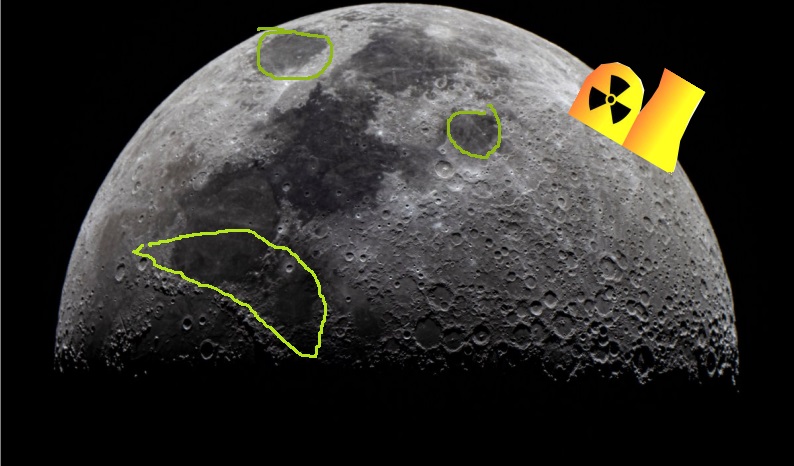
China and Russia plan to build a nuclear reactor on the moon by 2035 to
power a permanent lunar base. The International Lunar Research Station
(ILRS) will rely on the power plant for its scientific research. The IRLS
involves over a dozen international partners and is seen as a rival program
to NASA’s Artemis Program.
Deutsche Welle 16th May 2025, https://www.dw.com/en/china-and-russia-plan-to-build-nuclear-power-station-on-moon/a-72565465
Amory Lovins: Artificial Intelligence Meets Natural Stupidity: Managing the Risks.
Future electricity needs for artificial intelligence (AI) are
wildly uncertain—shaped by unproven concepts, disputed performance,
limited trust, volatile markets, unpredictable adoption, and technical
efficiency that quadruples roughly each year.
Yet a speculative surge is driving massive investment in data centers and new electricity supplies, risking a 12-figure overbuild. Avoiding an electricity bubble requires
clear-eyed analysis, disciplined planning, and using markets to allocate
risks fairly to potential beneficiaries.
A cautionary history: In 1999, the US coal industry claimed that information technology would need half thenation’s electricity by 2020, so a strong economy required far more
coal-fired power stations. Such claims were spectacularly wrong but widely
believed, even by top officials. Hundreds of unneeded power plants were
built, hurting investors. Despite that costly lesson, similar dynamics are
now unfolding again.
Integrative Design for Radical Energy Efficiency Learning Hub 16th May
2025
https://integrative-design-for-radical-energy-efficiency.stanford.edu/amory-lovins
AWS says Britain needs more nuclear power to feed AI data center surge
CEO warns energy demands will overwhelm grid without extra generation capacity
The UK needs more nuclear energy generation just to power all the AI
datacenters that are going to be built, according to the head of Amazon Web
Services (AWS). In an interview with the BBC, AWS chief executive Matt
Garman said the world is going to have to build new technologies to cope
with the projected energy demands of all the bit barns that are planned to
support AI. “I believe nuclear is a big part of that, particularly as we
look ten years out,” he said. AWS has already confirmed plans to invest £8
billion ($10.6 billion) on building out its digital and AI infrastructure
in Britain between now and the end of 2028 to meet “the growing needs of
our customers and partners.”
The Register 16th May 2025 https://www.theregister.com/2025/05/16/amazon_nuclear_power_britain/
Status and Trends of the Global Nuclear Industry: A Cruel Reality Check

May 13, 2025, By: Mycle Schneider, https://nationalinterest.org/blog/energy-world/status-and-trends-of-the-global-nuclear-industry-a-cruel-reality-check
Trends in the global nuclear industry indicate a high probability that its ferocious rivals have digested its lunch before it has demonstrated that it can actually keep its promises on the ground. That’s the cruel reality.
The excitement is palpable. Enthusiasm in the nuclear community is overwhelming. Red tape is being cut. The nuclear revival is on its way. The New York Times reported that the Administration “formally specified the steps it will take to revive commercial nuclear power, an industry whose current problems the Administration regards as largely due to overregulation by the Government.” The President ordered the Secretary of Energy “to give high priority to recommending ways to speed the regulatory and licensing process for new plants.”
That was in 1981, and the president was Ronald Reagan. Ever since, at least once every decade, a global nuclear renaissance has been proclaimed by industry representatives and policymakers.
What happened in the real world? For the past eighteen years, the annual World Nuclear Industry Status Report, researched by an international team of interdisciplinary experts from universities and think tanks around the world that I coordinate, attempts just that: a periodical reality check on the status and trends of the industry.
Trends in the Global Nuclear Industry
Most of the industry indicators peaked a long time ago. The largest number of units, 438, operated in 2002. With regards to commercial power, nuclear’s slice of the energy pie reached its zenith in 1996 at 17.5 percent. Startups of new reactors peaked in 1984-1985 at thirty-three per year, with only three closed in each of those years. The most units, 234, were under construction in 1979, and the number of construction starts saw its historic maximum at forty-four in 1976.
In comparison, in 2024, seven new reactors started up in the world, while four were closed. That is a net addition of three units, one-tenth of the level seen in the mid 1980s. The share of nuclear declined to around nine percent, about half of the level that existed three decades ago. As of the beginning of 2025, there were 411 reactors operating, and sixty under construction, of which twenty-nine are in China, but not a single one is on the entire American continent from Alaska to Cape Horn. The only indicator in 2024 that marginally exceeded a previous record set in 2006 is operating nuclear capacity – by four gigawatts (GW) or a one percent increase in eighteen years. Total global nuclear electricity generation also has likely exceeded the previous 2006-peak by two percent or so, but official numbers are not yet available.
In the United States, over the past forty years since Reagan’s nuclear revival efforts, Westinghouse started construction on just four AP1000 reactors, all in 2013 – two in South Carolina and two in Georgia. The builder claimed that “by using modular construction methods, Westinghouse and its project partners will be able to build the AP1000 in 36 months.” Four years later, after an investment of nearly $10 billion and nine rate increases for local electricity customers, Westinghouse went bankrupt and abandoned the construction at the V.C. Summer site in South Carolina.
The economic disaster had a serious legal aftermath, and four former utility and industry executives were sentenced to prison or home detention. The last one was Jeffrey Alan Benjamin, former senior vice president for new plants and major projects at the Westinghouse Electric Company who “directly supervised all new nuclear projects worldwide during the V.C. Summer project” and who, in November 2024, was sentenced to federal prison for causing the builder-utility SCANA “to keep false records in connection with the failed V.C. Summer nuclear construction project.”
Historically, on a global average, one in nine reactors listed as under construction at some point in time have been given up at various stages of advancement.
In the United States, the other two AP1000s at the Vogtle site in Georgia made it to the grid after, respectively, ten and eleven years of construction at an all-in cost of around $35 billion. Georgia Public Services Commission staff calculated that “the cost increases and schedule delays have completely eliminated any benefit [of Vogtle-3 and -4] on a life-cycle cost basis.”
In 2025, ninety-three percent of the capacity added to the U.S. grid is expected to come from solar (fifty-two percent), wind (twelve percent), and battery storage (twenty-nine percent). For 2025, the U.S. Energy Information Administration predicts a twenty-six-percent growth of solar capacity to exceed 150 GW in total. Texas alone is on track to host, by the end of the year, forty GW of solar, over forty GW of wind, and twenty GW of grid-connected battery storage.
Over the past two decades, 2005-2024, we have seen 104 reactor startups and 101 closures in the world. However, fifty-one of the new grid connections were in China, where no closures have occurred. In other words, the world outside China saw only fifty-three startups but 101 closures, a significant net decline of forty-eight units.
Changes in Nuclear Power
Were there any fundamental changes towards the end of the twenty-year period? Yes, Russia became the dominant international vendor. Over the past five years, 2020–2024, forty construction starts took place, of which twenty-six were in China, one was in Pakistan (by Chinese companies) and the remaining thirteen were implemented by Russian companies in Egypt, India, Türkiye, and at home. Basically, recent nuclear construction efforts can be summed up by saying China builds at home and Russia abroad.
Even China’s nuclear expansion is dwarfed by its renewables buildout. Three new reactors totaling 3.5 GW were connected to the Chinese grid in 2024 – just 0.8 percent of total capacity additions – while 357 GW of solar (278 GW) and wind (seventy-nine GW) capacity – together eighty-three percent of the total – was added at the same time, according to National Energy Administration data. Even if nuclear plants in China generate on average seven times more power per GW than solar and close to four times more than wind, solar and wind each generated two times more electricity than nuclear in 2024. Consequently, the share of nuclear power in the national electricity mix shrunk slightly to around 4.5 percent.
There are countless announcements of nuclear projects around the world, policy decisions, budget allocations, and design developments – especially on SMRs, which seem to be more appropriately called small miraculous reactors – but in the end, the question is what happens on the ground. For the time being, nuclear power remains irrelevant in the world market for electricity generating machines. And potential builders, other than the Chinese and Russians, have yet to prove that they are able to design, build, and commission within tight time-frames and budget constraints. Competitors on the renewable and storage side are accelerating implementation now. The probability is high that these ferocious rivals have digested nuclear’s lunch before the atomic industry has demonstrated that it can actually keep its promises on the ground. That’s the cruel reality.
Mycle Schneider is an international energy and nuclear policy analyst based in Paris, France. He is the initiator, editor, and publisher of the annual World Nuclear Industry Status Report and has worked on these issues for over four decades.
Why small modular reactors do not exist – history gives the answer.
David Toke, Jan 15, 2025, https://davidtoke.substack.com/p/why-small-modular-reactors-do-not
In recent years we have seen many stories with an upbeat message about small modular reactors (SMRs) and ‘races’ to develop them. But in fact, the concept of SMR is a bogus term that tries to give the impression that something new in nuclear power is afoot. It most certainly is not. In fact what are called SMRs cannot easily be distinguished from nuclear power plants that were built in the 1940s to 1960s, long before the SMR notion was invented. The term SMR does not exist as a useful definable concept.
Even examples of new so-called SMRs are practically non-existent around the world when it comes to operating projects. But there has been a tremendous amount of hype. Indeed the hype seems to grow in inverse proportion to the lack of any projects being completed. First, a definition:
According to the International Atomic Energy Agency:
‘Small modular reactors (SMRs) are advanced nuclear reactors that have a power capacity of up to 300 MW(e) per unit, which is about one-third of the generating capacity of traditional nuclear power reactors. SMRs, which can produce a large amount of low-carbon electricity, are:
- Small – physically a fraction of the size of a conventional nuclear power reactor.
- Modular – making it possible for systems and components to be factory-assembled and transported as a unit to a location for installation.
- Reactors – harnessing nuclear fission to generate heat to produce energy.’ (Ref: see HERE
Yet the problem with this definition is that none of this represents anything new i.e. something that has not been done long ago. The term ‘advanced’ is vague and does not seem to exclude approaches that have been tried before. The notion of modular is even more misleading in practice. That is because having smaller reactors reduces the scope for factory production of components.
There are fewer economies of scale for small reactors compared to making parts for larger-scale reactors (which require more parts of a particular type). The word ‘reactor’ is not new. So what’s new? Certainly nothing, in my view, to warrant the ascription of ‘fourth generation’ nuclear designs that these so-called SMR proposals have often been given.
In practice, even projects that are called SMRs are very, very few in operation around the world. There are very few even under construction, and the ones that are seem to be taking a long time to build. That is, according to the International Atomic Energy Agency. So how can we explain this apparent contrast between, as the media stories put it ‘races’ to develop SMRs, and reality?
The problems with the concept of SMRs can be explained by reference to the historical development of nuclear power. In the 1950s and 1960s, the nuclear industry found that the (then) existing designs of small(er) reactors, what is now called SMRs, were uneconomic compared to larger reactors. As a result, the industry developed larger reactor types. The larger reactors, of course, have had very big construction problems and costs. However, this should not obscure the fact that in comparison the smaller reactors were even worse. Let us look at some of the reactor history in terms of size.
Originally, after WW2, the first electricity-generating nuclear reactors were designed for nuclear submarines. These pressurised water reactors (PWRs) range from a few MWe to over 100MWe for the largest submarines today. I would say that they are the original small nuclear reactors. Indeed here it gets a bit confusing. Why aren’t these submarine reactors called small modular reactors? Essentially, I think, because they do not fit into the current narrative which tries to give the impression that there is a new type of advanced reactor called an SMR.
Small reactors were then designed, starting in the 1950s, for land-based operations to supply mainstream electricity grids. Then design sizes increased and PWRs became the dominant technology throughout the world. Chart 1 shows how nuclear reactor sizes have increased over the decades in the case of the UK. You can see how the average design size for reactors increased from around 100 MW in the 1950s, to 400 MW in the 1960s, over 500 MW in the 1970s, and then to over 1000MW since the 1980s.
There is a very good reason that design sizes increased from the 1950s onwards. Indeed this reason seems to have been mostly overlooked in the blizzard of press releases about small modular reactors. It is all to do with the economies of scale.
There was a (at the time, well-regarded) book published in 1978 by Bupp and Derian (see later reference). This summed up the reason why the rush of ordering nuclear reactors in the USA came to an end in the 1970s. It has great relevance to the issue of small reactors today. It is all to do with the size and cost and also the safety requirements of reactors. They said:
‘In 1955 a 180 MW light water reactor design called for more than 30 tons of structural steel and about one-third of a cubic yard of concrete per MW. By 1965 a much larger plant of about 550MW required less than half as much of these materials per megawatt of capacity. These efficiencies reflect classic ‘economies of scale’. Then, in the late 1960s, the trend reversed. Larger light water plants began to require more, not less, structural materials per unit of capacity; by 1975, the steel and concrete needed per megawatt for 1,200 MW plant approximately equaled the 1960 requirement for a 200-300 MW design. This reversal was a direct consequence of stricter safety and environmental protection requirements laid down during this period. More stringent safety requirements meant thicker concrete walls.’1
So, essentially, nuclear power plants became bigger because of the drive for economies of scale. A big reason why nuclear power did not continue to become cheaper was because, by the 1970s, demands for stricter safety precautions were being translated into regulations. This meant that the progress in reduced costs had been reversed. More recent (so-called Generation 3) nuclear designs have been based on the hope that ever-bigger reactors with better safety designs would once again pave the way to cheaper nuclear reactors. It has not, of course, happened.
In other words, small modular reactors will not produce cheaper outcomes. Arguing for such a proposition flies in the face of history, not to mention basic engineering economic theory. That is, of course, if we assume that small reactors have to deliver the same safety levels as big reactors. Yet it is difficult to see the regulators scrapping the main safety requirements accumulated since the 1960s just for small nuclear reactors. Why would they? Having a much larger number of smaller reactors would increase the risk of there being a serious accident at one of them.
Progress in constructing new small reactors
This is extremely thin. Only two operating so-called SMRs were identified by the International Atomic Energy Agency in 2024, and there are very few others (three in fact) listed as under construction (see HERE page 13). So far as I can see all are very well supported by direct state or research demonstration funds. That is they are nowhere near becoming commercial propositions able to survive on the promise of privately funded bank loans and equity investment.
Of the two so-called SMR plants in operation, one is a 200 MWe reactor built in China (See HERE) – which as you can see in Chart 1 is actually rather bigger than the average reactor size in the UK designed in the 1950s. Not only that, but it took a total of 12 years to construct (see HERE). The other operational project is based on a ship in Russia. This could be described as a variation on a submarine reactor built to support a very niche market, with financing details not available.
One of the three of the three so-called SMRs under construction is being built in Argentina (and whose funding stream is threatened by Government cutbacks). This has a 32MWe reactor and is a variant of a PWR. Construction began in 2014. This is oriented mainly not to electricity production but to an extremely limited market in radioactive products.
The second is a 300 MWe ‘fast’ reactor being built in Russia. Fast reactors are certainly not new. They have been tried in various countries before (including the UK) and have not been commercially successful.
A third, much publicised, development is the 150 MWe Kairos reactor in the USA. This power plant is sited at East Tennessee Technology Park. The US Government’s Department of Energy is supporting the construction of the project. It is a ‘pebble’ bed high temperature, gas cooled reactor. Although called ‘Advanced’ pebble bed reactors were first mooted in the 1940s and have been tried and discontinued before.
Indeed, as Steve Thomas has said about the notion of ‘Advanced’ reactors (see HERE) ‘The advanced designs are not new. For example, sodium cooled fast reactors and high temperature reactors were built as prototypes in the 1950s and 1960s but successive attempts to build demonstration plants have been short-lived failures. It is hard to see why these technologies should now succeed given their poor record. Other designs have been talked about for decades but have not even been built as prototype power reactors – so again it is hard to see why the problems that prevented their deployment to date will be overcome.’
Other variants, including thorium-based plants are proposed (most recently in China). On the one hand, all of these ideas have been tried before, but are being presented as ‘new’ developments. They have failed before. These warmed-up versions of previously tried technical nuclear fission variants do not solve nuclear power’s basic cost problems. These problems involve too much steel, and concrete and the need for unique, very expensive, types of parts and techniques that are too specialist to be sourced from standard industrial supply chains.
This (Kairos) project was made famous by an announcement from Google to buy power from it. However, beyond that, I have no information about how much money Google has actually spent on the project or indeed how much it has agreed to pay for the power the reactor will produce.
Indeed the Autumn of 2024 saw a flurry of announcements of support for so-called SMRs from ‘Tech Giants’. However, the terms of the financial support were generally vague. The announcements were made just prior to the General Election and seemed to respond to the rising hype about powerful AI. In a different blog post I analyse this AI over-hype, (see HERE).
Of course, we can all agree to buy power from people for a specified price by agreeing to PPAs. No commitment to part with money is necessarily required. Whether banks and equity investors are willing to lend money to the energy project in question on the basis of such PPAs is an entirely separate matter.
SMRs in the UK
There are no projects called SMRs operating in the UK. None are under construction and none are in the process of getting anywhere near construction starts. The UK Government for its part, amongst a fanfare of publicity about support for SMRs, promises an aim of ‘deploying a First-of-a-Kind SMR by the early 2030s’ (See HERE). Of course, as Chart 1 above implies, there used to be reactors that are small enough to fit the definition of ‘SMR’. They just weren’t called SMRs at the time.
Indeed, Rolls Royce, has, for several years been promoting their so-called small modular reactor (SMR) design. This is rather larger than a lot of past British nuclear power plants, albeit none still in operation. Their proposed (so-called) SMR design has gone up to 470MWe (See HERE). It uses PWR technology.
This proposed project is rather larger, for example than the 235 MW units which comprised Hinkley A nuclear power station. This power plant began construction in 1957, started generation in 1966, and stopped generating electricity to the grid in 1999. When construction of this project began such a nuclear power plant would have been called large, not small!
I do not understand the claims made by Rolls Royce for their ‘SMR’ to be called modular. The power plant has to be constructed on-site. As I have already stated I do not understand why there is more, or even as much, scope for mass production of parts compared to a conventional reactor such as that being built at Hinkley C.
I could say much the same about Holtec, a US nuclear services company who are promoting a 300 MW reactor – again not really that small. Like Rolls Royce, it has been exciting local people in places in Yorkshire with talk of building factories. This seems unlikely to happen without, essentially the UK Government paying for all or at least much of the project.
My prize for the most ingenious piece of SMR promotion are the claims made by ‘Last Energy’, who are promoting what they describe as a 20 MW PWR reactor. A headline appeared on the Data Centre Dynamics website saying ‘Last Energy claims to have sold 24 nuclear reactors in the UK for £2.4 billion’ (see HERE). Associated with this was another story in Power Magazine saying (see HERE) that the company had secured PPAs for 34 power plants in the UK and Poland, something that was described as ‘extraordinary progress’.
I cannot see any evidence that these power plants are being constructed, ie ‘concrete poured’ at any site. However, it is claimed that the first project will be finished by 2027. There are reports that the company has been conducting site surveys in Wales (see HERE).
What I find especially puzzling about the Last Energy promotion is the lack of a mention on a specific page on the website of the Office of Nuclear Regulation (ONR). In order for a new design of a nuclear power plant to be licensed to generate in the UK, it has to be approved for what is a very lengthy (several years) and very expensive (many £millions) Generic Design Assessment (GDA). However, there is no mention of Last Energy on the ONR information page giving the current and completed GDAs (see HERE).
Why is all this so-called ‘SMR’ activity happening now?
There are two interrelated factors in operation here; material rewards and political-psychological pressures. Material factors include the designation of governmental programmes to fund demonstrations of so-called SMRs. The second is the possibility of raising share capital to fund projects labeled as ‘SMR’.
Of course this in itself does not explain why this has happened in recent years. An excerpt from an opinion piece published in the Guardian in September 2015 can give us an important clue to the political psychology involved. In an article entitled ‘We are pro-nuclear, but Hinkley C must be scrapped’, written by George Monbiot, Mark Lynas and Chris Goodall, there was a subtitle: ‘Overpriced, overcomplicated and overdue, the Hinkley project needs to be killed off and the money invested into other low-carbon technologies’. The authors’ recommendations for alternative funding went on to say: ‘We would like to see the government produce a comparative study of nuclear technologies, including the many proposed designs for small modular reactor, and make decisions according to viability and price’ (See HERE)
What this looks like to me is a face-saving device. It tries to deal with the (recently re-discovered) fact that new nuclear power stations are much too expensive. I interpret this as a piece of cognitive dissonance to deal with the very apparent limitations of environmentalists trying to promote nuclear power as a response to climate change.
This is a form of cognitive denial of the obvious; that nuclear power is extremely expensive and difficult and very longwinded to deliver. SMRs have been at least partly invented to serve the purpose of shifting mental attention from this fact, a form of denial. The denial is sugar-coated with the notion that we can escape reality by embracing so-called SMRs.
This cognitive dissonance allows people to carry on believing in and promoting nuclear power in spite of reality. A new SMR alternative reality is created. This fills the void created by dull reality.
This, in practice, diverts attention from the central cost problems of nuclear power. These are the quantities of steel and concrete needed to build nuclear power stations, the need for unique types of very expensive parts, and the need for exacting, highly specialised processes of building the reactors. Making smaller nuclear plants will not solve these problems. Indeed it makes them worse insofar as this reduces the possibilities for economies of scale.
Now I am not trying to heap the blame for the SMR fantasies on Monbiot, Lynas, and Goodall – at least not entirely! There is a large well of public wishful thinking attached to things with the word ‘nuclear’ in them and this well can be tapped by concerted, if flimsily-based efforts. The promoters of the so-called SMR technologies are the ones who have ignored history to produce what is, in essence, a warmed-up version of a long-discarded set of nuclear technological ideas and practices. Indeed I would class this stream of historical re-interpretation as an example of the use of postmodernism in the nuclear industry.
SMRs as nuclear postmodernism
Postmodernism emerged originally in architecture. It was, put simply, about reviving ancient, or at least old, building designs and using them in contemporary building design (See HERE). The old is presented therefore as the new. For buildings, that’s a pretty harmless, indeed often pleasing, pathway to adopt. However, to present old (smaller) sizes of nuclear power stations (often mixed in with long discarded design ideas) as new and call them ‘Advanced’ nuclear technologies is, in my view, doing a great disservice to us all. It skews public debate relatively against real green energy options by presenting an option (so-called SMRs) that does not exist.
Social scientists are often derided for talking about postmodernism. Yet here we see the apparent apotheosis of natural science, the nuclear sector, engaging in precisely this sort of approach. They are presenting the technologies of the 1940s to 1960s as ‘new’. We should not have to take it seriously. Many people in the nuclear industry are either living in their own alternative postmodern reality or at least are tolerating this non-existent vision.
There may be a small number of demonstration projects constructed that are called SMRs. They are, and will be, expensive and take a long to build. But they are really just warmed-up old-style versions of the 1950s-1960s-sized reactors, mixed in sometimes with tried and failed techniques. They certainly do not represent an ‘advanced’ path for a nuclear-powered future. As a concept, Small Modular Reactors have no existence outside of a postmodernist nuclear industry fantasy.
I invite people to listen to Bonzo Dog’s old hit ‘Urban Spaceman’ (see HERE). The general spirit and especially the last couple of lines of the song seem especially apposite to a discussion of so-called SMRs.
After I wrote this post came the news that the Ontario Government has given the go-ahead to the so-called SMR project at Darlington. Acclaimed as a breakthrough, it may only be a breakthrough as being the most expensive nuclear power scheme in history. Its starting price, as around $21 billion (Canadian dollars, see HERE) for 1.2 GW is almost exactly the same as the final price of the Flamanville EPR reactor in France built by EDF. This came in at €13 billion, roughly 4 times its original price tag (see HERE). Yet Flamanville has a generating capacity of 1.63 GW, that is around a third larger than the sum of the capacities of the four new Ontario reactors! So the Darlington scheme is already a third more expensive than Flamanville!

The crucial difference between the new Ontario scheme and the French power plant at Flamanville is that construction is only about to start at the Canadian scheme. So, let's repeat this. The (spuriously) acclaimed Ontario SMR scheme is already around a third more expensive than the widely panned super-expensive French Flamanville EPR even before the inevitable construction cost increases start piling up!

Given that all nuclear power plant built in the West this century have all come in a great deal more expensive than projected before construction, the cost will spiral even farther upwards. It is likely that the Ontario SMR project will win the prize of the most expensive nuclear project (per GW) this century! Even at its projected price the Ontario SMR scheme is calculated by the Ontario Clean Air Alliance to be up to 8xs more expensive than wind power (See HERE) This puts my arguments in this post in perspective, SMRs are going to be a lot more expensive than conventional nuclear power!
pages 156-157, Bupp, I, and Derian, J-C. 1978. Light Water: How the Nuclear Dream Dissolved. New York: Basic Books
Ontario’s Costly Nuclear Folly

May 12, 2025 • David Robertson, https://socialistproject.ca/2025/05/ontarios-costly-nuclear-folly/#more
The last time the nuclear industry got its way in the province, Ontario Hydro spent over two decades building 20 nuclear reactors. It was a mash-up of missed deadlines, cost overruns, and a troubling pattern of declining nuclear performance.
Even more troubling, the last generation of nuclear reactors forced Ontario Hydro to the edge of bankruptcy. And it saddled us with a mountain of nuclear debt that we are still paying off.
The Conservative government of Doug Ford is now repeating those costly mistakes in the largest expansion of the nuclear industry in Canada’s history. A nuclear blunder on steroids.
Part 1: Past Debt Due
In 1999, Ontario Hydro collapsed under the staggering weight of its nuclear debt. When the account books were opened, the reality hit home. At the time, Hydro’s assets were valued at $17.2-billion but its debt amounted to $38.1-billion. The government was faced with a stranded debt of $20.9-billion.
In response, the government of the day split Ontario Hydro into five separate organizations. Ontario Power Generation took over the generating facilities (hydro, coal, gas, nuclear) and Hydro One, later privatized, inherited the transmission grid. Neither of these organizations would survive if they had to carry the debt. The government was aware that any future hopes of privatizing the successors of Ontario Hydro would be scuttled if investors had to absorb the debt. The debt was transferred to Ontario families through special charges on electricity bills (until 2018), regular electricity bills, and the tax system. It was the world’s largest nuclear bailout, one we are still paying.
The Ontario Electrical Financial Corporation is one of the five Ontario Hydro successor entities. It was set up to manage and service the long-term debt of the former Ontario Hydro. According to its 2024 Annual Report, the total debt, twenty-five years later, is still $12.1-billion. In 2024, OEFC paid $626-million in interest charges alone, an amount that is recouped from taxpayers and ratepayers. In its financial statements the organization notes that its longest-term debt issue matures on December 2, 2050. In 2050, Ontario will still be paying the debt of the failed nuclear program of the 1970s and 80s.
Part 2: Repeating Past Mistakes
Ontario Power Generation (OPG) is owned by the government of Ontario. OPG is leading Ontario’s nuclear resurrection. It is aided and abetted by the IESO (Independent Electricity System Operator) another surviving offshoot of the collapse of Ontario Hydro. And it is directed by a series of government policy announcements and legislative initiatives. These directives put nuclear on the fast track while shouldering aside clean, cost-effective, and safe renewables.
It is an astonishing nuclear industry coup. Without putting up their own money, without bearing the financial risks, the nuclear industry has captured Ontario’s energy policy and turned crown agencies into nuclear cheerleaders.
Even a few years ago this would have seemed impossible. The nuclear industry was on the ropes. Catastrophic nuclear accidents at Three Mile Isle in the US, Chernobyl in Ukraine, and Fukushima in Japan had severely tarnished the nuclear safety image. All around the world, the cost overruns and lengthy build times of nuclear plants had chilled utility and government interest in more nuclear plants. In Europe, only one nuclear plant has been built and come on line since 2000.
In Ontario, the last nuclear reactor went into operation in 1993. Nuclear plants that had been forecast to operate for 40 years showed major signs of early ageing after about ten years. Most of the existing nuclear fleet was rapidly reaching its best before dates. Safety and operational issues plagued the industry. The four units at Pickering had been shutdown because of safety reasons. And shut down again. By 1993, Bruce A’s performance, as a result of ‘fretting’ pressure tubes, had drastically declined. In 1997, Ontario Hydro announced that it would temporarily shut down its oldest seven reactors. By that time, the escalating costs of the newest reactors at the Darlington site were already a cautionary tale. Originally billed in 1978 at $3.9-billion, the final cost in 1993 had more than tripled to $14.4-billion (1993 dollars).
The first generation of nuclear plants had clearly demonstrated the failure of the nuclear industry to deliver electricity on time and on budget. It also demonstrated that nuclear reactors couldn’t provide affordable electricity. In fact, Ontario Hydro’s last public cost comparison (1999) revealed the cost of nuclear energy to be more than six times the cost of hydro electricity. (7.72 c/kWh vs $1.09)
Part 3: The Nuclear Resurrection

It seems that all those ‘hard lessons’ learned have been willfully forgotten. The Ford government has now launched a multipoint nuclear power offensive. It has passed legislation to ensure that nuclear is Ontario’s energy priority. It has made commitments to build untested and costly small modular reactors (SMRs). It has decided to refurbish antiquated nuclear plants (Pickering) when there is no business case to do so. It has announced as the centrepiece of its energy policy the irrational goal of becoming a nuclear energy superpower. And it has opened the public purse to the appetite of the nuclear industry.
It is a power play with some revealing features.
3a. A Propaganda Push

In 2023, OPG launched a series of propaganda ads. The ads, in bus shelters and transit, print, and television, were designed to overcome public skepticism and convince us that a new generation of nuclear was safe, reliable, and clean. The company behind the pubic relations campaign made the following claim: “For years, popular culture has distorted perceptions about nuclear power with false narratives that served to stoke fear.” They go on: “The campaign is intended to recast nuclear power as a “true hero” of the province’s clean energy mix.”
Some of the ads focused on Gen Z and Tik Tok with the cartoon character “Pelly the uranium pellet.” Others were tailored to older generations who were well aware of the problems with the nuclear industry and there were ads which simply made outrageous claims. For example, the ad for Small Modular Reactors declared that “SMRs are clean and reliable.” Quite the claim since none have been built.
The ad campaign effectively echoed the industry’s talking points, talking points that have become the mantra of the Ford government. Nuclear energy is now described by Ontario’s energy minister as “clean,” “non-emitting,” “reliable,” and “fundamental to our future.”
3b. A revolving door between the government and the industry
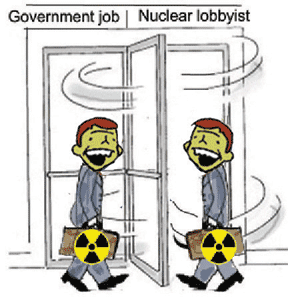
Back in June 2024, former Energy Minister Todd Smith left the government, after spending billions on the nuclear industry and promising billions more. Upon his departure, Todd Smith landed a job as a VP of CANDU Energy Inc. CANDU Energy Inc was created when SNC-Lavalin purchased the commercial reactor division of Atomic Energy of Canada Limited from the federal government in 2011. In an effort to distance itself from its scandal ridden past, SNC-Lavalin has since changed its name to AtkinsRealis. The company is heavily involved in the refurbishment of Ontario nuclear plants and the plans for new builds.
3c. The technological hype of SMRs
Small Modular Reactors (SMRs) are not small and they are not that modular. And they are not that new. The designs, of which there are about 54, have been kicking around for a long time. It’s just that no one wanted to build them, and investors were loathe to put up their own money. The fate of SMRs changed when the nuclear industry convinced governments in Canada to develop what it called the “SMR Roadmap.” The “Roadmap,” largely produced by the industry, was all hype and little substance, but it was enough to convince the Ford government to join the parade.
The World Nuclear Industry Status Review is an annual independent assessment of the global nuclear industry. In its 2022 review, it concluded:
“Small modular (nuclear) reactors or SMRs continue to hog the headlines in many countries, even though all the evidence so far shows that they will likely face major economic challenges and not be competitive on the electricity market. Despite this evidence, nuclear advocates argue that these untested reactor designs are the solution to the nuclear industry’s woes.”
In the 2024 edition of the review, the analysts note: “The gap between hype about Small Modular Reactors (SMRs) and reality continues to grow. The nuclear industry and multiple governments are doubling down on their investments into SMRs, both in monetary and political terms.”
3d. Over-the-top visioning and ideological straw men
Stephen Lecce became the Minister of Energy in June 2024. Shortly afterwards, he travelled to the US where he made a pitch to western leaders and industry movers and shakers. He told them that Ontario is building a blueprint for a nuclear energy future.
A CP wire story put it this way: “Ontario is selling itself as the nuclear North Star to guide the direction of American power.”
Speaking to a largely American audience, he said it’s time to “rid our economies of any dependence on these foreign states that … do not share our democratic embrace,” (Oops).
The minister’s early charm offensive turned more aggressive back home when he criticized those who support renewable energy as” ideologues” who want to “romanticize certain resources.” As he told the National Post, “We are seeing forces on the left, the illiberal left, who cannot come to terms with the fact that in order to decarbonize we’re going to need nuclear.”
The commitment to nuclear was further baked into Ontario’s future when the Ford government released its energy vision in October 2024. The document ironically entitled “Ontario’s Affordable Energy Future” sets the stage for a massive build out of nuclear power.
It also makes it clear that Ontario has set its sights on becoming a nuclear energy superpower in the hopes of selling expensive nuclear electricity to the US and costly nuclear technology to the world.
Reflecting the grandiose aspirations of a would-be energy superpower the Minister declared that “this was Ontario’s moment.”
3e. The legislative lock-in
In December 2024, the government passed the misnamed “Affordable Energy Act” (Bill 214) The legislation has many troubling aspects. Various sections of the act restrict public consultation, further erode the independence of regulatory tribunals, and shifts more decision making to the government. But most alarming is how the government has used the Act to give preference and priority to nuclear power. Section 25.29 (2) of the Act refers to, “the prioritization of nuclear power generation to meet future increases in the demand for electricity …”
3f. The commitment to underwrite the costs of nuclear
The government is bankrolling the nuclear expansion with public money because investors don’t want their own money at risk. The costs of nuclear power have driven private investors away. Even with massive subsidies from governments, investors are reluctant to ante up.
A spokesperson for the government-owned Ontario Power Generation made the point very clear when commenting on small modular reactors.
Kim Lauritsen is a senior OPG vice-president. She told a Global Business conference audience that the crown corporation was willing to take the “first-mover risk.”
As she put it: “Because they (small modular reactors) take too long and the industry needs to see that these things can be built successfully, to give investors the confidence and really get the ball rolling for other jurisdictions.”
Because investors are nervous and because Ontario wants to show the way for other jurisdictions, the Ford government is prepared to saddle Ontario families and future generations with the exorbitant costs of nuclear power.
Part 4: The nuclear three-prong plug: Refurbishments, SMRs and New Large Scale Reactors
Refurbishments
The Ontario government is spending billions to refurbish old nuclear plants. Fourteen reactors are scheduled to be rejuvenated – 6 at Bruce, 4 at Darlington, and 4 at Pickering. The repair schedule for existing nuclear plants stretches out for decades. While these reactors are off line, the government plans to make up the electricity shortfall with more climate wrecking, fossil-gas generating plants.
The cost of the refurbishments will be in excess of $40-billion. That forty billion and the millions more in interest charges will find its way onto our electricity bills.
As our electricity bills go up, so does political pressure and when that pressure reaches a tipping point, the government steps in with subsidies to help reduce electricity bills. It is a repeated pattern in Ontario.
A recent report from the Government’s Financial Accountability Office (FAO) projected the cost of current electricity subsidies to be $118-billion over the next 20 years. These are not all nuclear electricity subsidies. But as we spend more on nuclear and nuclear increases the cost of electricity and governments are pressured to reduce the cost of electricity, there will be even more subsidies to shift the costs from our electricity bills to our taxes.
Small Modular Reactors (SMRs)
In addition to the massive refurbishment program the Ford government has announced a series of nuclear new builds.
There will be four new small modular reactors (SMRs) built at the Darlington nuclear location. Site preparation work is already underway on the first one. OPG has convinced the Canadian Nuclear Safety Commission to forego an environmental impact assessment, relying instead on an assessment that had been done years ago on the site for a different project.
The government has selected the GE-Hitachi BWRX-300 design. This is based on a design that has been kicking around for about 20 years and has had to be redesigned about ten times. It still has never been built. The engineering designs for Darlington have again been changed, making the small modular reactor less small and even less modular.

OPG has not released a cost estimate for the reactors. But there are some indications of the probable magnitude. In the US, the only SMR project that had been approved by the US federal government was NuScale in the mid-west. The project was cancelled because of escalating costs. Originally estimated at $3-billion (US), it was terminated in 2024 when the projected costs reached $9.3-billion (US).
The Tennessee Valley Authority, a large power utility in the US, has partnered with the OPG to promote the GE-Hitachi SMR. The TVA recently provided some estimates of the costs of building the SMR in the US. It indicated that the cost of the first reactor could be about $5.4-billion (US). It hoped the costs could be reduced to about $3.7-billion (US) if more were built. These costs do not include any interest charges, cost overruns, or missed deadlines.
If we assume the lower cost and convert to Canadian dollars, the price tag for the four SMRs at Darlington would be about $20-billion before things go wrong. In 2019, the company’s indicated the costs would have to be below $1-billion (US).
New Large Scale Nuclear Reactors
In July 2023, the Ontario government announced its support to expand the capacity of the Bruce nuclear power plant near Kincardine. The Bruce nuclear generating station is owned by OPG but operated by Bruce Power, a private consortium. Bruce Power is planning a major expansion of the site’s generating capacity. At present, six of the eight reactors are being refurbished. This new development, if it goes ahead, will add an additional 4800 MW, which would require building four or five new reactors. Admittedly, it is early days, and no costs have been provided.
Port Hope
In January 2025, the Ontario government announced that it was in the preliminary stages of a massive new nuclear plant that could be built at the OPG site in Wesleyville, near Port Hope. Officials have suggested the plant could have a capacity of 8,000 to 10,000 megawatts and be in operation by the 2040s. Achieving that generating capacity would require building eight or more nuclear reactors.
Part 5: Calculating the Costs
Continue reading1 This Month

To see nuclear-related stories in greater depth and intensity – go to https://nuclearinformation.wordpress.com
-
Archives
- September 2026 (194)
- August 2026 (330)
- July 2026 (355)
- June 2026 (287)
- May 2026 (306)
- April 2026 (356)
- March 2026 (251)
- February 2026 (267)
- January 2026 (308)
- December 2025 (358)
- November 2025 (359)
- October 2025 (375)
-
Categories
- 1
- 1 NUCLEAR ISSUES
- business and costs
- climate change
- culture and arts
- ENERGY
- environment
- health
- history
- indigenous issues
- Legal
- marketing of nuclear
- media
- opposition to nuclear
- PERSONAL STORIES
- politics
- politics international
- Religion and ethics
- safety
- secrets,lies and civil liberties
- spinbuster
- technology
- Uranium
- wastes
- weapons and war
- Women
- 2 WORLD
- ACTION
- AFRICA
- Atrocities
- AUSTRALIA
- Christina's notes
- Christina's themes
- culture and arts
- Events
- Fuk 2022
- Fuk 2023
- Fukushima 2017
- Fukushima 2018
- fukushima 2019
- Fukushima 2020
- Fukushima 2021
- general
- global warming
- Humour (God we need it)
- Nuclear
- RARE EARTHS
- Reference
- resources – print
- Resources -audiovicual
- Weekly Newsletter
- World
- World Nuclear
- YouTube
-
RSS
Entries RSS
Comments RSS
 nuclear-news