Continued Propaganda About AI and Nuclear Power
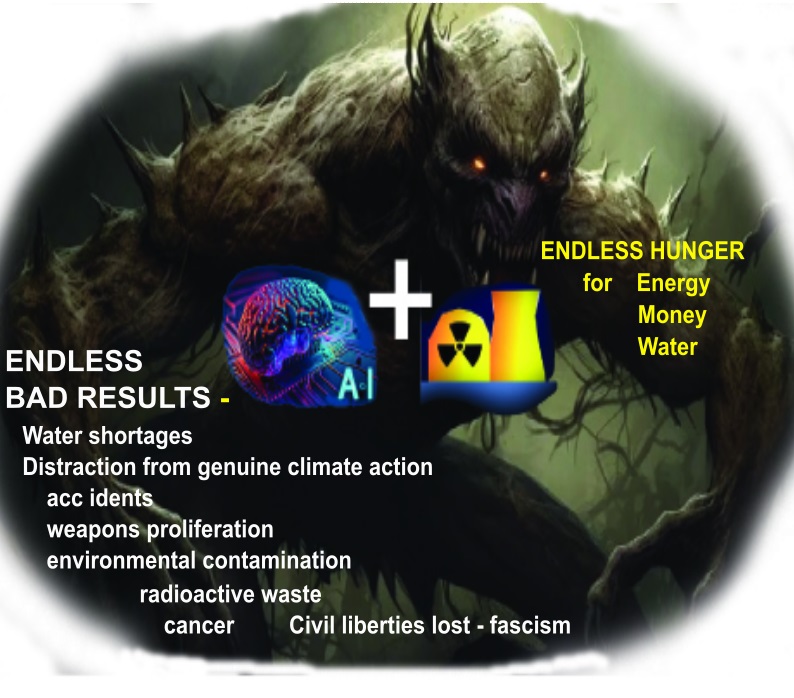
One effect of this slew of propaganda has been the near silence on the question of whether such growth of data centers or AI is desirable, even though there is ample evidence of the enormous environmental impacts of developing AI and building hyperscale data centers. Or for that matter the desirability of nuclear power.
M.V. Ramana, 13 Mar 25, https://www.counterpunch.org/2025/03/13/continued-propaganda-about-ai-and-nuclear-power/
One bright spot amidst all the terrible news last couple of months was the market’s reaction to DeepSeek, with BigTech firms like Nvidia and Microsoft and Google taking major hits in their capitalizations. Billionaires Nvidia’s Jensen Huang and Oracle’s Larry Ellison—who had, just a few days back, been part of Donald Trump’s first news conference—lost a combined 48 billion dollars in paper money. As a good friend of mine, who shall go unnamed because of their use of an expletive, said “I hate all AI, but it’s hard to not feel joy that these asshats are losing a lot of money.”
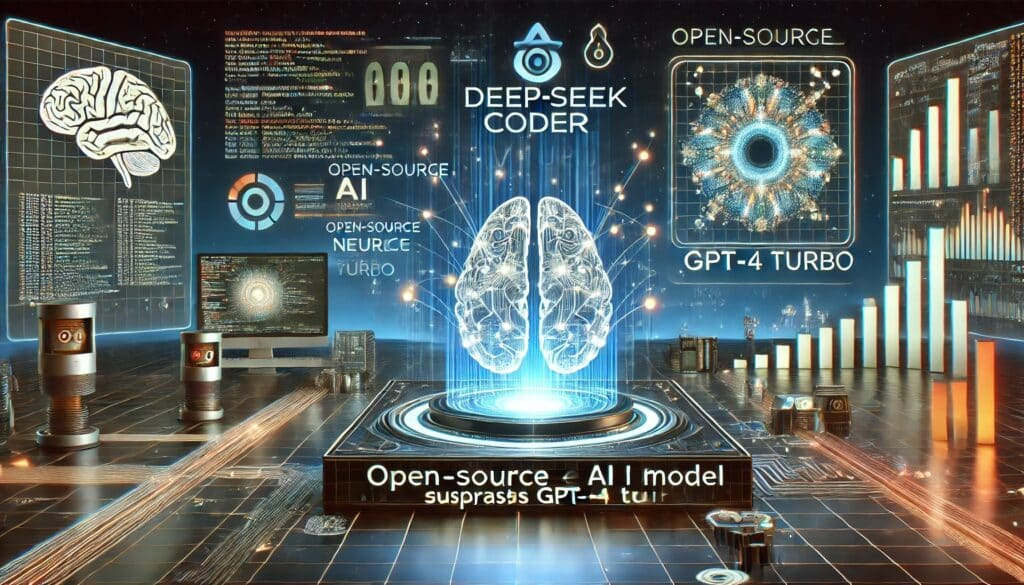
Another set of companies lost large fractions of their stock valuations: U.S. power, utility and natural gas companies. Electric utilities like Constellation, Vistra and Talen had gained stock value on the basis of the argument that there would be a major increase in demand for energy due to data centers and AI, allowing them to invest in new power plants and expensive nuclear projects (such as small modular reactor), and profit from this process. [The other source of revenue, at least in the case of Constellation, was government largesse.] The much lower energy demand from DeepSeek, at least as reported, renders these plans questionable at best.
Remembering Past Ranfare
But we have been here before. Consider, for example, the arguments made for building the V. C. Summer nuclear project in South Carolina. That project came out of the hype cycle during the first decade of this century, during one of the many so-called nuclear renaissances that have been regularly announced since the 1980s. [In 1985, for example, Oak Ridge National Laboratory Director Alvin Weinberg predicted such a renaissance and a second nuclear era—that is yet to materialize.] During the hype cycle in the first decade of this century, utility companies proposed constructing more than 30 reactors, of which only four proceeded to construction. Two of these reactors were in South Carolina.

As with most nuclear projects, public funding was critical. The funding came through the 2005 Energy Policy Act, the main legislative outcome from President George W. Bush’s push for nuclear power, which offered several incentives, including production tax credits that were valued at approximately $2.2 billion for V. C. Summer.
The justification offered by the CEO of the South Carolina Electric & Gas Company to the state’s Public Service Commission was the expectation that the company’s energy sales would increase by 22 percent between 2006 and 2016, and by nearly 30 percent by 2019. In fact, South Carolina Electric & Gas Company’s energy sales declined by 3 percent by the time 2016 rolled in. [Such mistakes are standard in the history of nuclear power. In the 1970s, the U.S. Atomic Energy Commission and utility companies were projecting that “about one thousand large nuclear power reactors” would be built “by the year 2000 and about two thousand, mostly breeder reactors, by 2010” on the basis of the grossly exaggerated estimates of how rapidly electricity production would grow during the same period. It turned out that “utilities were projecting four to nine times more electric power would be produced in the United States by nuclear power in 2000 than actually happened”.] In the case of South Carolina, the wrong projection about energy sales was the basis of the $9 billion plus spent on the abandoned V. C. Summer project.
The Racket Continues
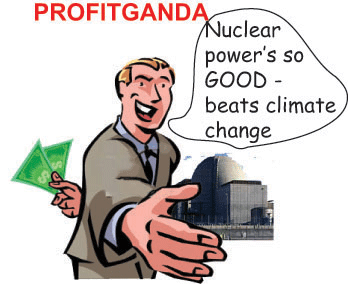
With no sense of shame for that failure, one of the two companies involved in that fiasco recently expressed an interest in selling this project. On January 22, Santee Cooper’s President and CEO wrote, “We are seeing renewed interest in nuclear energy, fueled by advanced manufacturing investments, AI-driven data center demand, and the tech industry’s zero-carbon targets…Considering the long timelines required to bring new nuclear units online, Santee Cooper has a unique opportunity to explore options for Summer Units 2 and 3 and their related assets that could allow someone to generate reliable, carbon emissions-free electricity on a meaningfully shortened timeline”.

A couple of numbers to put those claims about timelines in perspective: the average nuclear reactor takes about 10 years to go from the beginning of construction—usually marked by when concrete is poured into the ground—to when it starts generating electricity. But one cannot go from deciding to build a reactor to pouring concrete in the ground overnight. It takes about five to ten years needed before the physical activities involved in building a reactor to obtain the environmental permits, and the safety evaluations, carry out public hearings (at least where they are held), and, most importantly, raise the tens of billions of dollars needed. Thus, even the “meaningfully shortened timeline” will mean upwards of a decade.
Going by the aftermath of the Deepseek, the AI and data center driven energy demand bubble seems to have crashed on a timeline far shorter than even that supposedly “meaningfully shortened timeline”. There is good reason to expect that this AI bubble wasn’t going to last, for there was no real business case to allow for the investment of billions. What DeepSeek did was to also show that the billions weren’t needed. As Emily Bender, a computer scientist who co-authored the famous paper about large language models that coined the term stochastic parrots, put it: “The emperor still has no clothes, but it’s very distressing to the emperor that their non-clothes can be made so much more cheaply.”
But utility companies are not giving up. At a recent meeting organized by the Nuclear Energy Institute, the lobbying organization for the nuclear industry, the Chief Financial Officer of Constellation Energy, the company owning the most nuclear reactors in the United States, admitted that the DeepSeek announcement “wasn’t a fun day” but maintained that it does not “change the demand outlook for power from the data economy. It’s going to come.” Likewise, during an “earnings call” earlier in February, Duke Energy President Harry Sideris maintained that data center hyperscalers are “full speed ahead”.
Looking Deeper
Such repetition, even in the face of profound questions about whether such a growth will occur, is to be expected, for it is key to the stock price evaluations and market capitalizations of these companies. The constant reiteration of the need for more and more electricity and other resources also adopts other narrative devices shown to be effective in a wide variety of settings, for example, pointing to the possibility that China would take the lead in some technological field or the other, and explicitly or implicitly arguing how utterly unacceptable that state of affairs would be. Never asking whether it even matters who wins this race for AI. These tropes and assertions about running out of power contribute to creating the economic equivalent of what Stuart Hall termed “moral panic”, thus allowing possible opposition to be overruled.
One effect of this slew of propaganda has been the near silence on the question of whether such growth of data centers or AI is desirable, even though there is ample evidence of the enormous environmental impacts of developing AI and building hyperscale data centers. Or for that matter the desirability of nuclear power.
As Lewis Mumford once despaired: “our technocrats are so committed to the worship of the sacred cow of technology that they say in effect: Let the machine prevail, though the earth be poisoned, the air be polluted, the food and water be contaminated, and mankind itself be condemned to a dreary and useless life, on a planet no more fit to support life than the sterile surface of the moon”.
But, of course, we live in a time of monsters. At a time when the levers of power are wielded by a megalomaniac who would like to colonize Mars, and despoil its already sterile environment.
M. V. Ramana is the Simons Chair in Disarmament, Global and Human Security at the School of Public Policy and Global Affairs, University of British Columbia and the author of The Power of Promise: Examining Nuclear Energy in India.
The nuclear industry continues to infiltrate education.

COMMENT. Well, there will always be a need for workers to shut down this poisonous industry, and deal with the radioactive trash
1 Future innovators with the ‘Evolve’ work experience programme. Sellafield Ltd invites Year 10 learners with an interest in robotics and
artificial intelligence (AI) to participate in the ‘Evolve’ work
experience programme. So far, more than 100 students have been involved in
Evolve, with participants currently coming from 11 different schools in
West Cumbria, as well as home-educated learners. This 5-day programme takes
place on selected weeks throughout the year and aims to equip students with
essential skills for their future careers.
Sellafield Ltd, 13th March 2025,
https://www.gov.uk/government/news/future-innovators-with-the-evolve-work-experience-programme
Let’s hear it for the ‘blockers’ – support common sense, not nonsense!
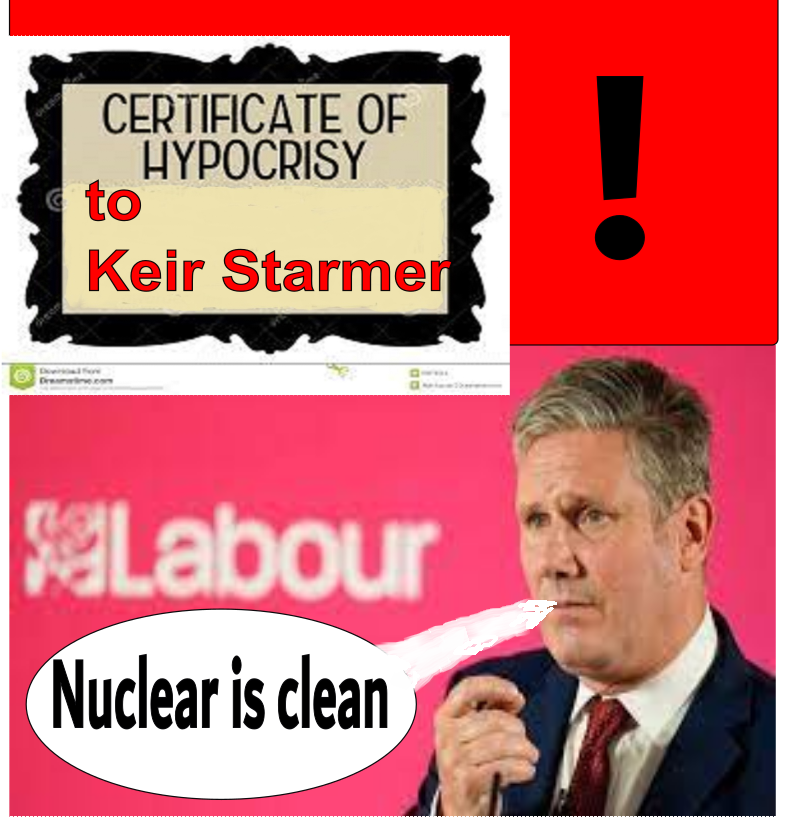
BANNG.info 10 March 2025 Andrew Blowers discusses this in the March 2025 edition of Regional Life, https://www.banng.info/news/regional-life/blockers/
With the headline ‘Government rips up rules to fire-up nuclear power’, the Prime Minister launched an intemperate assault on the ‘blockers who have strangled our chances of cheaper energy, growth and jobs for far too long.’
If blocking means using common sense to protect the public and environments from dangerous, destructive developments like new nuclear, then BANNG along with many other groups is proud to be a ‘blocker’.
The PM’s outrageous attack on environmentalists, conservation groups, councils and even regulators was a stream of assertions, misjudgements, half-truths and nonsense.
Let’s look at some of the claims made and our responses:
1) ‘Blockers create delay and obstruction’: Big infrastructure projects must be properly scrutinised to ensure safety and environmental protection.
2) ‘Investors are held back’: On the contrary, it is investors who hold back, pulling out of major projects at Sellafield, Wylfa and Bradwell and still no sign of investors chomping at the bit to get Sizewell C off the ground.
3) ‘Projects are suffocated by regulations’: Regulation focuses on public safety and environmental protection. Cutting rules or corners is a charter for unconstrained development and can lead to disasters like Grenfell Tower. More regulation not less is needed to achieve net zero.
4) ‘Growth is blocked by trivial objections’: The PM scoffs at the campaign by ‘blockers’ to ensure acoustic deterrents are installed to prevent millions of fish being killed at Hinkley Point C through entrapment in the cooling pipes. He is offended when Sizewell C campaigners take EDF to court for destroying a precious native woodland or for failing to secure adequate water supply for the gigantic power station before the go-ahead has been given. Efforts to protect species, heritage and environments from destruction should be supported, not denigrated by uninformed politicians.
5) ‘Rip up planning rules to prioritise growth’: For years nuclear development was ‘restricted’ to eight “potentially suitable” sites [including Bradwell] as part of archaic planning rules that haven’t been looked at since 2011. In fact, apart from Hinkley Point C and Sizewell C, it was developers who shied away from the eight sites, not planners who blocked development.
6) ‘Build nuclear stations in the places that need them’: In effect, the Government has now conceded by scrapping the set list of eight sites and introducing an alternative siting strategy – effectively a developer-led free-for-all so firms can start building nuclear stations ‘in the places that need them.’ Even so, some of the eight sites are already earmarked for clusters of Small Modular reactors (SMRs) – the (not so) mini nuclear power stations that have yet to be developed, let alone deployed. Finding locations where they are supposedly needed is not the same as finding sites where they are wanted. The old problems of safety, radioactive waste and cooling water will arise and provoke resistance from local ‘blockers’.
Paradoxically, Bradwell is likely to be by-passed in the surge for new sites. It is, at long last, delisted and its remote location and vulnerable coastal conditions make it absolutely unsuitable.
So, let’s hear it for the ‘blockers like BANNG and the 10,000 signatories from around the Blackwater of our face-to-face Petition, who put common sense before nonsense to protect local environments and communities.
Nuclear power’s global stagnation


There were no ‘small modular reactor’ (SMR) startups in 2024. Indeed there has never been a single SMR startup.
If you count so-called SMRs that are not built using factory ‘modular’ construction techniques, then there has still been just one each in China and Russia.
Dr Jim Green , 10th March 2025 ,
https://theecologist.org/2025/mar/10/nuclear-powers-global-stagnation
The proponents of nuclear power rely on an excessive optimism which, once again, sits in stark contrast to the reality of the decades-long stagnation the industry worldwide. That contrast is the subject of our new report for the EnergyScience Coalition.
The latest nuclear proposals are built on three speculations, each of which is a castle built on sand.
First, we have the projected AI-related energy demand. This ignores emerging evidence that such projections are overblown. For example, the new leading AI entrant DeepSeek requires just 10 percent of the energy of competitors. This is a repeat of the claims of the nuclear power proponents of the 1970’s whose projected demand that never eventuated.
Grids
Second, then we see speculative techno-optimism that new technologies such as small modular reactors will resolve industry project management issues. These small reactors are unproven.
Third, finally we note the prospective wish fulfilment, where dozens of nuclear ‘newcomer’ countries are offered as saviours. This is despite the hero countries in a large majority of cases not having reactor approvals and funding in place.
So what is the actual state of nuclear power in 2025? Worldwide nuclear power capacity was 371 gigawatts (GW) at the end of last year. That figure is near-identical to capacity of 368 GW two decades earlier in 2005.
A review by the World Nuclear Industry Status Report notes that seven new reactors were connected to grids last year while four reactors were permanently closed. The net increase in operating nuclear capacity was 4.3 gigawatts (GW).
Ageing reactors
The industry faces a daunting challenge just to maintain its pattern of stagnation, let alone achieve any growth. As of Wednesday, 1 January 2025, the mean age of the nuclear power reactor fleet was 32.1 years. In 1990, the mean age was just 11.3 years.
The International Atomic Energy Agency projects the closure of 325 GW of nuclear capacity from 2018 to 2050 due simply to the ageing of the reactor fleet ‒ that’s 88 percent of current worldwide capacity.
There were no ‘small modular reactor’ (SMR) startups in 2024. Indeed there has never been a single SMR startup. If you count so-called SMRs that are not built using factory ‘modular’ construction techniques, then there has still been just one each in China and Russia.
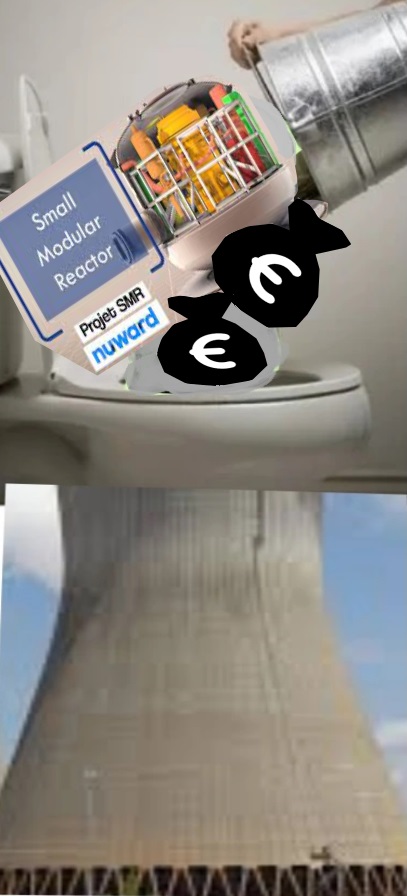
The SMR sector continues to go nowhere, with further setbacks in 2024. The Nuward project in France has been suspended. This followed previous decisions to abandon four other SMR projects and the bankruptcy of US company Ultra Safe Nuclear.
Renewables
In striking contrast to nuclear power’s marginal gain of 4.3 GW in 2024, the International Energy Agency’s October 2024 ‘Renewables 2024’ report estimates 666 GW of global renewable capacity additions in 2024.
Based on the Agency’s estimate, renewables capacity growth was 155 times greater than that of nuclear power. In China, the ratio was 100:1 last year.
The International Energy Agency expects renewables to jump sharply from 30 percent of global electricity generation in 2023 to 46 percent in 2030.
Conversely, nuclear power’s share of global electricity generation has fallen steadily since the 1990s. As of 2025, nuclear power accounted for 9.15 percent of global electricity production, barely half of its peak of 17.5 percent in 1996.
Renewable investments were 21 times greater than nuclear investments. A Bloomberg analysis finds that renewable energy investments reached $US728 billion in 2024, up eight percent on the previous year. This compares with nuclear investment that remains flat at US$34.2 billion.
Renewable costs have fallen sharply, in contrast to massive cost overruns with nuclear projects. Lazard investment firm data shows that utility-scale solar and onshore wind became cheaper than nuclear power from 2010‒2015.
From 2009‒2024, the cost of utility-scale solar fell 83 percent; the cost of onshore wind fell 63 percent; while nuclear costs increased 49 percent.
Newcomer
Claims that between 40 and 50 countries are actively considering or planning to introduce nuclear power, in addition to the 32 countries currently operating reactors, do not withstand scrutiny.
At the start of this year reactors were under construction in just 13 countries, two less than a year earlier. Seven percent of the world’s countries are building reactors – 93 percent are not.
Of the 13 countries building reactors, only three are potential nuclear newcomer countries building their first plant: Egypt, Bangladesh and Turkiye. In those three countries, the nuclear projects are led by Russian nuclear agencies with significant up-front funding from the Russian state.
The World Nuclear Association observes that apart from those three countries, no countries meet its criteria of having ‘planned’ reactors: those with “approvals, funding or commitment in place, mostly expected to be in operation within the next 15 years”.
The number of potential newcomer countries with approvals and funding in place, or construction underway, is just three and those projects are funded heavily by the Russian state.
Phase-outs
There is no evidence of a forthcoming wave of nuclear newcomer countries.
At most there will be a trickle, as has been the historical pattern. There has in fact been just seven newcomer countries over the past 40 years, and just three in the current century.
The number of countries operating power reactors in 1996–1997 reached 32. Since then, newcomer countries have been matched by countries completing nuclear phase-outs and thus the number is stuck at 32. And less than one-third of those countries are building reactors.
It is doubtful whether the number of nuclear newcomer countries will match the number of countries completing phase-outs in 20 to 30 years’ time.
Capital strike

Nuclear power just can’t compete economically. The industry’s greatest problem at the moment is a recognition of this by investors, resulting in a capital strike.
Even with generous government and taxpayer subsidies, it has become difficult or impossible to fund new reactors ‒ especially outside the sphere of China and Russia’s projects at home and abroad.
Who would bet tens of billions of dollars on nuclear power projects when the recent history in countries with vast expertise and experience has been disastrous?
In France, the latest cost estimate for the only recent reactor construction project, the 1.6 GW Flamanville EPR, increased seven-fold from €3.3 billion to €23.7 billion for just one reactor. Construction took 17 years. No reactors are currently under construction in France.
And this problem sits alongside the risk of Fukushima-scale disasters, the risk of weapons proliferation, the risk of attacks on nuclear plants and the risks from the intractable nuclear waste legacy.
Some of these risks have already come to pass, as with the reality of attacks on nuclear plants in Ukraine.
Bankruptcy
In the US, one project in South Carolina, comprising two Westinghouse AP1000 reactors, was abandoned in 2017 after at least US$9 billion was spent.
Westinghouse declared bankruptcy immediately after the cancellation of the South Carolina project, and its debts almost forced its parent company Toshiba into bankruptcy. All that remains is the nukegate scandal: an avalanche of legal action, including criminal cases.
The only other reactor construction project in the US ‒ the twin-reactor Vogtle project in the state of Georgia ‒ reached completion at a cost 12 times higher than early estimates. The final cost of the Vogtle project was at least US$17 billion per reactor. Completion was about seven years behind schedule.
No power reactors are currently under construction in the US. Thirteen reactors have been permanently shut down over the past 15 years.
Subsidies

The situation is just as bleak in the UK where there have been 24 permanent reactor shut-downs since the last reactor startup 30 years ago, in 1995.
The 3.2 GW twin-reactor Hinkley Point project in Somerset was meant to be complete in 2017 but construction didn’t even begin until 2018. The estimated completion date has been pushed back to as late as 2031. The latest cost estimate ‒ £23 billion per reactor ‒ is 11.5 times higher than early estimates.
The UK National Audit Office estimates that taxpayer subsidies for the Hinkley Point project could amount to A$60.8 billion and the UK Parliament’s Public Accounts Committee said that “consumers are left footing the bill and the poorest consumers will be hit hardest.”
The estimated cost of the planned 3.2 GW twin-reactor Sizewell C project in the UK has jumped to nearly £40 billion – or £20 billion per reactor – which is twice the cost estimate in 2020.
Securing funding to allow construction to begin at Sizewell is proving to be difficult and protracted despite a new ‘Regulated Asset Base’ funding model which foists the enormous risk of enormous cost overruns onto taxpayers and electricity bill payers. Securing funding to complete the Hinkley Point project is also proving difficult.
Lessons
France, the US and the UK have vast nuclear expertise and experience. They all enjoy synergies between civil and military nuclear programs ‒ President Macron said in a 2020 speech that without nuclear power in France there would be no nuclear weapons, and vice versa.
All of the above-mentioned construction projects were or are on existing nuclear sites. All projects were or are long delayed and tens of billions of dollars over-budget.
Claims that potential nuclear newcomer countries, without any of those advantages, could build reactors quickly and cheaply are simply not credible.
This Author
Dr Jim Green, national nuclear campaigner with Friends of the Earth Australia and a member of the Nuclear Consulting Group.
A report expanding on these issues is posted at the EnergyScience Coalition website. The report is co-authored by Darrin Durant, associate professor in science and technology studies at the University of Melbourne, Jim Falk, professorial fellow in the school of geography, earth and atmospheric sciences at the University of Melbourne and emeritus professor at the University of Wollongong and Dr Jim Green.
University of Suffolk co-opted by the nuclear industry.

Ipswich jobs fair showcases Sizewell C opportunities
The University of Suffolk hosted a jobs fair showcasing Sizewell C
opportunities. More than 200 people attended the event, organised by the
Department of Work and Pensions (DWP) and Sizewell C. The fair provided
information on the thousands of jobs, apprenticeships, and training
opportunities available at the nuclear power plant. Attendees had the
chance to connect with local companies in the Sizewell C supply chain, as
well as colleges and charities.
Ipswich Star 7th March 2025 https://www.ipswichstar.co.uk/news/24986367.ipswich-jobs-fair-showcases-sizewell-c-opportunities/
Anas Sarwar’s insistences on nuclear energy serves wrong people.

Last week, Anas Sarwar challenged John Swinney over his
determination to continue SNP policy that uses planning to veto new nuclear
power plants in Scotland. Sarwar announced at FMQs that 29% of the energy
mix that morning came from nuclear.
John Swinney pointed out 70% came from
renewables and suggested Labour would only muddy the water for investors in
Scotland if they focused unduly on the “junior partner” in the energy
mix.
Sarwar then pointed out China has built 29 nuclear power plants. Fine
– China has also built two-thirds of the world’s wind and solar
resource, yet its use of coal also makes it the world’s largest emitter.
Which tells us what precisely? Forget China – focus on Scotland. Scotland
backing nuclear is like geothermal and hydro-powered Iceland backing gas.
It makes no sense at all. Our destiny is to develop clean, green baseload
energy sources for ourselves and the rest of the world.
What’s so wrong with nuclear?
Jings, where to start? Nuclear costs more to produce, plants
take far longer to construct, leave behind radioactive waste and depend
largely on highly enriched uranium derived from Russia and workers forced
to risk radiation and exploitation.
Wind critics complain that
intermittency means baseload (flick of a switch) energy like gas must be
ready for wind-free days. But nuclear isn’t flick of a switch either –
it takes too long to power up and down so stays permanently on (apart from
planned maintenance) even when wind is high.
Last year, six international
academics were so worried about Labour’s new stance, they issued a joint
statement. Maybe it didn’t reach the new Prime Minister, but it was
published in The National. Professor Steve Thomas, Dr Paul Dorfman,
Professor MV Ramana, Professor Amory Lovins and Tetsunari Iida stated that
after 60 years of commercial history, “nuclear power is further from, not
nearer to, survival without massive public subsidies”, and contributes as
much electricity in one year as renewables add in three days.
Nuclear isn’t cheaper – anywhere. The German Institute for Economic Research
examined 674 nuclear power plants built across the world since 1951 and
found the average plant made a loss of €4.8 billion. It also isn’t
greener – the International Panel on Climate Change says renewables are
now 10 times more efficient than nuclear at CO2 mitigation.
And it certainly isn’t quicker. Professor Naomi Oreskes from Harvard University
wrote in Scientific American: “The most recent US nuclear power reactors
were started in 2013 and are still not finished. That’s the problem with
imagined ‘breakthrough’ technologies. The breakthrough can be sudden,
but implementation is slow.” [Sarwar] wrote a column for the Daily Record
which insisted: “John Swinney could end the SNP’s ideological
opposition to nuclear power, with the stroke of a pen.” Ah, Anas. The
boot’s on the other foot.
Opposition to nuclear in Scotland isn’t
ideological. But Labour’s deep attachment certainly is. Anas Sarwar also
contended that if Swinney backed nuclear, “he could unlock billions of
pounds of investment in Scotland and create spates of new quality jobs”.
Mmm. Spates. Maybe this was written in a hurry. Like the billions not
invested by the City of London in Sizewell or Hinkley C over the past
decade? Come on.
So, what’s Labour’s nuclear love-in really about? Some
think Starmer inherited “an absolute monster” after the Tories’ bad
decision to put billions of public cash into Sizewell. But others like
Professor Andrew Stirling and senior research fellow Philip Johnstone
advanced a different theory in the latest edition of the European:
“Nuclear affections are a military romance. Powerful defence interests
– with characteristic secrecy and highly active PR – are mostly driving
the dogged persistence.”
The National 13th Feb 2025, https://www.thenational.scot/politics/24931561.anas-sarwars-insistences-nuclear-energy-serves-wrong-people/
Nimbys. Naysayers. Traitors. Children take note, why learn oracy when insults will do?
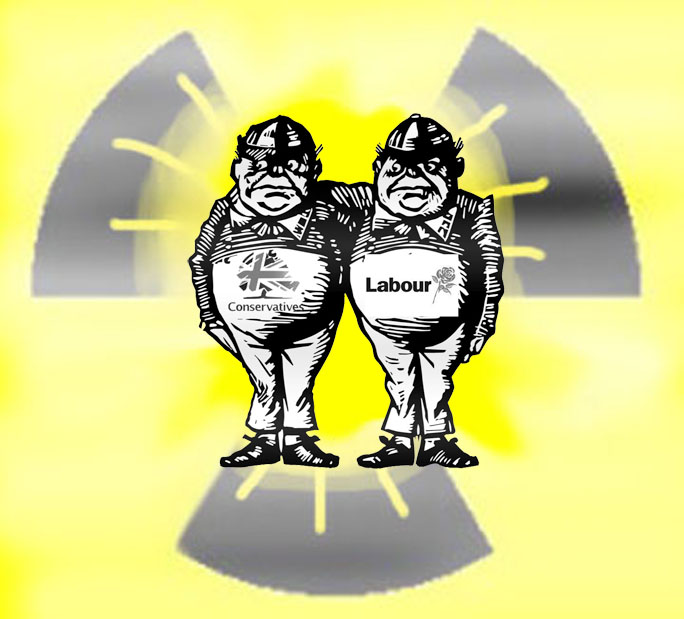
Catherine Bennett, Guardian, 9th Feb 2025
Keir Starmer’s rhetoric against green campaigners appears to have taken a playground turn.
Before the last election, in what was billed as his “most personal interview yet”, Keir Starmer said: “I’m not in the habit of bandying insults around”. It was once part of his appeal, or meant to be, that his speech was polite, even to the point of colourless, in contrast to the ugly gibberish streaming out of Boris Johnson, then Liz Truss. When the Tories went low, Starmer went sorrowful headteacher. “I don’t think Boris Johnson is a bad man,” he said in one speech, “I think he is a trivial man.”
His favourite word, these days, is “nimbys”. Starmer uses it so freely he’s personally breathed new life into the original acronym (“not in my back yard”), revealing along the way its largely unexplored potential to create national disharmony. Why restrict such a genius jibe to arguments about ring roads and executive homes?
Last week’s headlines about his plan for nuclear power expansion – typically, “Starmer to ‘push past nimbyism’ in pledge to expand nuclear power sites” – are only the latest in which Starmer demonstrates how any opposition to any scheme with environmental consequences can be represented, by a skilled litigator like himself, as nimbyism: purely selfish, irrational and against the common good. Unlike the visionary tech overlords such as Google, Meta and Amazon, which Starmer invited, in the same speech, to profit, with their data centres, from the UK nimbys’ certain defeat. His government’s pro-nuclear press release featured praise from similarly patriotic, non-nimby-infested corporations, such as EDF and Microsoft.
It is thanks to Starmer we now understand that Greenpeace and other environmental campaigners – actually anyone with questions about, for instance, the disposal of nuclear waste – are essentially indistinguishable from other varieties of nimby he has been insulting for a while, so as to trivialise in advance any disquiet about Labour’s plans to tear up planning regulations.
Look beyond the acronym’s “back yard” element: now any non-local objection to 150 infrastructure projects, all evidently beyond criticism, also identifies a person as, in his eyes, the enemy of his “working people”.
…………………………..“There are countless more examples of Nimbys and zealots gumming up the legal system,” he wrote, “often for their own ideological blindspots to stop the Government building the infrastructure the country needs.” Anti-growth traitors, the lot of them. “They want to win for themselves,” Starmer raved, “not for the country.”………………………………………..
For prominent Tory idealists, there must be validation in Starmer’s promise to fulfil their dreams, never properly realised, of humbling environmentalists and trashing planning restrictions (in places where they don’t live). Not forgetting the satisfaction of seeing Starmer recycle, for Labour, their exact same phrases, sometimes wearing the same accessories – hard hats and hi-vis jackets – for the benefit of vanity photographers recently declassified as a Tory outrage.
Since it can’t be plagiarism, only shared passion can explain why Starmer and David Cameron have phrased their ambitions in identical terms, in wanting, say, a “bonfire of red tape” (Starmer 2024; Cameron 2014). Starmer thinks regulations are “suffocating” (likewise Cameron); Starmer says “we are the builders” (ditto George Osborne); Starmer wants to end “dithering” (Cameron, “cut through the dither”); Starmer declares Britain “open for business” (Cameron, same, 2012); Starmer confronts those “talking our country down” (so did Cameron, 2011).
To judge by their interchangeable expressions of annoyance, hostility to environmental protections is also common ground for Reeves and Osborne. For him, they placed “ridiculous costs on British businesses”; for her, they make “delivering major infrastructure in our country far too expensive”. In 2012, the vice-president of the RSPB, Britain’s largest nature conservation charity, called Osborne “a bloody idiot”.
…………………………The teaching of “oracy” in schools was once a priority for Starmer. Confident speaking, he said, gives “an inner belief to make your case in any environment”. Whatever explains his recent change in style, the debacle is not without educational value. Kids, if you go in for name-calling, offensive misrepresentation and unconvincing assertions of your superior judgement, the finest voice coach may struggle to transform it into persuasive oracy. Even when, as with Starmer’s nimbys, your targets were, only months ago, your friends. https://www.theguardian.com/commentisfree/2025/feb/09/nimbys-naysayers-traitors-children-take-note-why-learn-oracy-when-insults-will-do
UK’s new government taxonomy will greenwash nuclear

It would be easy to miss the oblique reference buried in the document where it states that ‘the government proposes that nuclear energy will be classified as green in any future UK Green Taxonomy’. This proposal will be the subject of a further consultation.
Treasury officials and ministers are looking to officially rebrand nuclear power as ‘green energy’ in their latest taxonomy plan; a move the NFLAs will continue to expose and oppose.
Mirroring moves first made by the European Commission, and mooted by the previous Conservative Government, a consultation has now concluded on whether Ministers should establish a new ‘UK Green Taxonomy’ which is described as a ‘useful tool’ in the UK’s ambition ‘to be the world leader in sustainable finance’.
The consultation document describes a taxonomy as ‘a classification tool which provides its users with a common framework to define which economic activities support climate, environmental or wider sustainability objectives’. In essence, it is a mechanism to judge whether an investment is deemed to be ‘green’; if in the case of energy, the technology is judged ‘green’ financial bodies will be better able to justify investing in it to their share- or bondholders.
It would be easy to miss the oblique reference buried in the document where it states that ‘the government proposes that nuclear energy will be classified as green in any future UK Green Taxonomy’. This proposal will be the subject of a further consultation.
Two years ago, we set out in a letter to then Conservative Chancellor Jeremy Hunt in response to his plans to introduce a similar taxonomy a list ‘of the carbon-intensive and environmentally damaging activities that accompany civil nuclear power projects’:
- the mining of uranium and its processing and manufacture into fuel rods which leaves ‘behind environmental degradation, radioactive contamination, and chronic ill-health from exposure to that radiation amongst the local workforce and the host community (usually poor and Indigenous)’
- the construction of a nuclear power plant which ‘requires the employment of vast amounts of concrete, steel and numerous other materials, many years of labour, and many millions of vehicles and personnel movements onto and off site’
- the operation of a nuclear power station necessitating ‘the transportation of fuel rods, waste, other materials and the labour force onto and off the site; the daily use of millions of gallons of seawater with the deaths of millions of fish; and the employment of its own generated electricity for cooling the plant and any stockpiled radioactive waste’
- ongoing nuclear operations which lead to ‘the contamination of the environment surrounding the plant, local beaches, the sea, neighbouring water courses and air’
And, above all, after the closure of the nuclear power station, the need to engage in the costly and prolonged decommissioning of the plant, the decontamination of the site, and the management and treatment of the radioactive waste involves processes that are ‘incredibly resource intensive.’
Green, we don’t think so.
A former Miss America takes her nuclear sales pitch to audiences in Australia

By Hilary Whiteman, CNN, February 6, 2025, Brisbane, Australia,
Nuclear engineer and former Miss America Grace Stanke has entered the fierce debate in Australia over its future energy policy with a 10-day national tour extolling the benefits of nuclear power in a country where it’s been banned for almost 30 years.
The speaking tour is familiar territory for the 22-year-old former beauty queen, who said she studied nuclear engineering as a “flex,” but now works for US energy giant Constellation as a spokesperson and as an engineer on its nuclear team.
Her recent arrival comes at a delicate time in Australia, months before a national election that could put the opposition Liberal Party in power, along with its promises to build seven nuclear power stations – upending the current Labor government’s plan to rely on renewable energy and gas.
For several days, Stanke has been speaking to hundreds of Australians, in events organized by Nuclear for Australia (NFA), a charity founded by 18-year-old Will Shackel, who has received backing from a wealthy Australian pro-nuclear entrepreneur.
Most talks were well-attended by attentive crowds, but not all audience members were impressed by Stanke’s message.
As she started to speak in Brisbane last Friday, a woman in the audience began shouting, becoming the first of several people to be ejected from the room as other attendees booed and jeered. One woman who was physically pushed from the premises by a security guard has since filed a formal complaint.
……………Those against nuclear power say it’s too expensive, too unsafe and too slow to replace Australia’s coal-fired power stations that would need to keep burning for several more years until nuclear plants came online.
………………….A numbers game
Australia banned nuclear energy in 1998 as part of a political deal to win approval for the country’s first and only nuclear research facility that’s still operating in southern Sydney.
A change in government in an election, to be held before mid-May, would see seven nuclear reactors built in five states to provide power alongside renewable energy – a bold shift in direction that would not only require changes to federal law, but amendments to laws in states where premiers oppose nuclear power.
According to the plan proposed by Liberal Party leader Peter Dutton, the nuclear reactors would be funded by 331 billion Australian dollars ($206 billion) in public money and the first could be working by 2035.
Both forecasts are disputed as underestimates by the government acting on the advice of the country’s independent science agency – the Commonwealth Scientific and Industrial Research Organisation (CSIRO) – which says renewables are still the cheapest and the most efficient way for Australia to reach net zero by 2050.
…………………..“I do believe that a strong grid requires both renewables and nuclear energy combined,” Ms Stanke said, referring to the argument for a “baseload” energy source that doesn’t rely on unpredictable weather.
That argument is challenged by experts worldwide, who say the need for “baseload” energy is an outdated concept, and that stability can be achieved by other means, including batteries.
……………………………………………..Advance, a conservative campaign group that says it works to counter “woke politicians and elitist activist groups” is promoting a 48-minute documentary it claims tells the “untold stories” of farmers whose “lives have been upended by the rapid rollout of wind and solar projects.”
………………………………….Rural areas where opposition is building to renewable projects are fertile ground for Shackel and his nuclear campaign. He’s already visited some areas earmarked for power stations under the Liberal proposal. And while he says NFA isn’t politically aligned with either of the major parties, he accepts he’s doing some of the groundwork to bring the community on side………………………….
Nuclear ‘foolishness’
Bringing a former Miss America to Australia was part of a plan to raise support for nuclear power among Australian women, who according to one survey are far less enthusiastic than men about the proposal.
According to several people who attended sessions in various states, the audience was dominated by older men, many of whom didn’t seem to need convincing.
Jane McNicol, the first protester escorted from the room in Brisbane, told CNN she’s been an anti-nuclear campaigner since the 1980s. She said she stood up to “ensure that this foolishness does not take off.”
“It’s just a way of spinning the fossil fuel industry out for a bit longer, and we cannot afford to do that,” she said. “You can see how the climate is collapsing around us. Look at Los Angeles. Those poor people over there lost everything.”
Others said the panel – which included local nuclear experts – made generalizations and didn’t get to the nub of issues specific to their area, like the potential strain they say a nuclear power station could have on resources in Victoria’s Latrobe Valley.
“There is literally no water for a nuclear power station. The existing allocation is already committed to mine repair,” said Adrian Cosgriff, a member of community advocacy group Voices of the Valley, who attended the Melbourne talk.
“Australians know nuclear power exists. That’s fine. It’s just not suitable for here. That’s kind of the argument,” he said.
David Hood, a civil and environmental engineer who attended the Brisbane talk, said: “Renewables are working right now. We can’t wait 10 to 20 years for higher cost and risky nuclear energy.”
Stanke and Shackel delivered a parliamentary briefing in Parliament House, Canberra on Wednesday, to politicians and aides across the political spectrum.
Prime Minister Anthony Albanese was unsurprisingly not in attendance, having already labelled his political rival’s nuclear proposal as “madness” and a “fantasy, dreamed-up to delay real action on climate change.”……………. https://edition.cnn.com/2025/02/06/australia/australia-nuclear-debate-grace-stanke-intl-hnk-dst/index.html
Former Miss America’s Australian nuclear tour clouded by Chinese AI blow to her employer

Royce Kurmelovs, Jan 30, 2025, https://reneweconomy.com.au/former-miss-americas-australian-nuclear-tour-clouded-by-chinese-ai-blow-to-her-employer/
Miss America 2023 winner Grace Stanke has begun her Australian tour to promote nuclear power, just as the US energy giant that employs her has taken a big market hit after Chinese company DeepSeek claimed to have found a cheaper way to make AI.
Stanke, who flew into Perth on Wednesday, is a nuclear engineer who works in public relations for Constellation to promote nuclear technology, and has been brought out for an Australian tour by campaign group Nuclear For Australia in an attempt to drum up local support for the technology.
Nuclear For Australia is nominally headed by 18-year-old Will Shackel. But Stanke’s tour has reportedly been bankrolled by Australian businessman Dick Smith, who also provided the funding to establish the group.
The tour comes amid an aggressive expansion drive by Constellation, which holds a suite of nuclear and fossil fuel assets. According to the company’s 2024 Sustainability Report, nuclear makes up 67% of its generation capacity, with natural gas and oil making up 25% and renewables and storage accounting for 8%.
Constellation has increasingly been looking to capitalise on the development of AI as a driver in future electricity demand that it hopes to meet with nuclear power.
In September last year the company announced it would buy the Three Mile End nuclear facility under a deal to supply Microsoft with power to run its AI data centres.
Earlier in January, Constellation bought out rival Calvine for $US 27 billion, a move that meant it acquired the company’s gas-plants.
As gas-peaking plants currently help smooth out spikes in the wholesale electricity market by turning on during periods of high demand — at the expense of nuclear generators — the acquisition potentially gives Constellation greater influence over wholesale prices.
Late last week, President Donald Trump announced the US would pour $US 500 billion into AI development in what has been described as an “arms race” with China, a decision welcomed by Constellation CEO Joe Dominguez.
“President Trump is right that sustaining and enhancing America’s global AI dominance goes hand in hand with reliable, abundant American electricity,” he said. “Data center developers, generators, utilities, and other stakeholders should continue to work together to accomplish the President’s goals on behalf of the American people.”
On Tuesday, however, the assumption that power-hungry chipsets needed to train and run AI data centres would continue to drive demand for “clean” nuclear power ran into a wall.
Chinese firm DeepSeek announced it developed an open large-language model (LLM) that provides roughly the same service as ChatGPT with a smaller team and a fraction of the hardware as their US counterparts.
With the Chinese market subject to sanctions that limit access to the full-power graphics processing units (GPUs) needed to build their own models, the company was forced to find a workaround to do more with less.
These GPUs perform the calculations needed to drive LLMs and are manufactured by chipmaker Nvidia that was, until Wednesday, considered the world’s most valuable publicly-traded company with a market cap of $3.45 trillion. That changed with the latest news from DeepSeek.
In December, DeepSeek claimed it cost (USD) $5.6m and two months to develop its V3 model – a portion of what it cost to create ChatGPT. The accuracy of this figure, however, is questionable as the price of electricity is unknown.
Last week the company released the full version of its R1 model that it said is 30-times cheaper to run than equivalent models produced by US competitors such as OpenAI. The company has not released the training data, but has published papers outlining its methods, effectively allowing anyone to take DeepSeek work and expand upon it for free.
The announcement of a cheaper, less-demanding model triggered a massive 17% drop in Nvidia shares — wiping off $USD593bn, and knocked 20 per cent off the price of Constellation shares. By Thursday Constellation’s performance had partially recovered but not nearly enough to make up for Tuesday’s losses.
These events coincide with the arrival of 22-year-old Stanke, now a pro-nuclear influencer, in Australia to help local campaigns sell the technology to the Australian public.
Her tour includes appearances in Perth, Brisbane, Melbourne, Adelaide and Sydney, a parliamentary briefing and appearances at private events, including a community meeting in Lithgow, New South Wales.
The town selection is interesting as it has been a flashpoint for an anti-wind and anti-renewables campaign and has traditionally been a strong Nationals stronghold.
Lithgow falls within the federal seat of Calare which is currently held by federal independent Andrew Gee, who resigned from the National Party in 2022 over its opposition to the Indigenous Voice to Parliament.
University of Cumbria’s central role in new £4.9 million nuclear robotics and AI cluster.

University of Cumbria is part of a consortium with
UK Atomic Energy Authority, University of Oxford and University of
Manchester to develop a new nuclear robotics and AI cluster linking Cumbria
and Oxfordshire. Awarded £4.9 million, the cluster is the largest of seven
new projects supported through an overall funding package of £22 million
from the UK Research and Innovation (UKRI) Engineering and Physical
Sciences Research Council (EPSRC) Place Based Impact Acceleration Account
(PBIAA) scheme to strengthen emerging and existing research and innovation
clusters to kickstart economic growth and address regional needs.
University of Cumbria 6th Jan 2025
https://news.cumbria.ac.uk/news/university-of-cumbrias-central-role-in-new-gbp-4-9-million-nuclear-robotics-and-ai-cluster
Congress Revives Cold War Tactics With New Anti-Communism School Curriculum

The Crucial Communism Teaching Act
Even many members of the Progressive Caucus voted in favor, proving that anti-communism is as popular on the left as it is on the right.
a quickly-escalating Cold War against China
December 14, 2024 Alan MacLeod, https://www.mintpressnews.com/congress-revives-cold-war-tactics-with-new-anti-communism-school-curriculum/288830/
Congress has just passed a new bill that will see the U.S. spend huge sums of money redesigning much of the public school system around the ideology of anti-communism. The “Crucial Communism Teaching Act” is now being read in the Senate, where it is all but certain to pass. The move comes amid growing public anger at the economic system and increased public support for socialism.
The Crucial Communism Teaching Act, in its own words, is designed to teach children that “certain political ideologies, including communism and totalitarianism…conflict with the principles of freedom and democracy that are essential to the founding of the United States.”
Although sponsored by Republicans, it enjoys widespread support from Democrats and is focused on China, Venezuela, Cuba and other targets of U.S. empire. The wording of the bill has many worried that this will be a centerpiece of a new era of anti-communist hysteria, similar to previous McCarthyist periods.
The curriculum will be designed by the controversial Victims of Communism Memorial Foundation and will ensure all American high school students “understand the dangers of communism and similar political ideologies” and “learn that communism has led to the deaths of over 100,000,000 victims worldwide.” It will also develop a series titled “Portraits in Patriotism,” that will expose students to individuals who are “victims of the political ideologies” in question.
A Discredited Book
The 100 million figure originates with the notorious pseudoscience text, “The Black Book of Communism.” A collection of political essays, the book’s central claim is that 100 million people have perished as a result of the communist ideology. However, even many of its contributors and co-writers have distanced themselves from it, claiming that the lead author was “obsessed” with reaching the 100 million figure, to the point that he simply conjured millions of deaths from nowhere.
Its methodology was also universally panned, with many pointing out that the tens of millions of Soviet and Nazi losses during World War II were attributed to communist ideology. This means that both Adolf Hitler himself and many of his victims are counted towards the vastly overinflated figure. The book was condemned by Holocaust remembrance groups as whitewashing and even lionizing genocidal fascist groups as anti-communist heroes.
The principal organization promoting the 100 million figure today is the Victims of Communism Memorial Foundation, which has shown a similar level of both anti-communist devotion and methodological rigor. The group, set up by the U.S. government in 1993, added all worldwide COVID-19 deaths to the victims of communism list, arguing that the coronavirus was a communist disease because it originated in China. It is these people who will be designing the new curriculum that will be taught in social studies, government, history, and economics classes across the country.
China Hawks
One of the central goals of the bill is also to “ensure that high school students in the United States understand that 1,500,000,000 people still suffer under communism.” This is a clear reference to China, a rapidly developing country that, in just two generations, has gone from one of the poorest on Earth to a global superpower, challenging and even surpassing the United States on many quality-of-life indicators.
The bill goes on to detail how the school curriculum will “focus on ongoing human rights abuses by such regimes, such as the treatment of Uyghurs in the Xinjiang Uyghur Autonomous Region” by the Chinese “regime” and its “aggression” towards “pro-democracy protests in Hong Kong,” and Taiwan, who it labels “a democratic friend of the United States.”
Furthermore, many of the Victims of Communism Memorial Foundation’s “Witness Project” case studies – likely the source for the “Portraits in Patriotism” series – are from China. This includes Rushan Abbas, the founder and executive director of the Campaign for Uyghurs, a pressure group funded by CIA front organization, the National Endowment for Democracy. Abbas was also previously employed as a translator at the notorious Guantánamo Bay torture camp.
The U.S. is currently engaged in a quickly-escalating Cold War against China that includes channeling money and support to separatist movements, including those in Xinjiang, Hong Kong and Taiwan, as MintPress News has reported. In September, the House of Representatives passed a bill that authorized $1.6 billion to be spent on anti-Chinese messaging worldwide.
Latin America: a Model and a Target
The other major target of the bill will likely be socialist or communist-led governments in Latin America. The act’s sponsor is Maria Elvira Salazar, a Republican Congressperson representing Miami. A part of Florida’s famously conservative Cuban-American community, in 2023, she introduced the FORCE Act, which attempted to block any U.S. president from normalizing relations with Cuba unless its government is overthrown. She has repeatedly condemned President Biden for easing the (illegal) U.S. sanctions on Venezuela. And in July, she denounced what she described as the “socialist curse in Central America and the Caribbean,” singling out Cuban, Venezuela, Honduras, and Nicaragua as countries requiring regime change.
She is, however, an avid supporter of the far-right President of Argentina, Javier Milei, accepting his invitation to attend his inauguration. Argentina, she said, “is going to set the course and point of reference for the rest of Latin America as to the way that a country should be governed… Free market economy, small government, individual liberties, freedom, private sector, no corruption, that’s what we’re trying to do.”
Perhaps the only foreign country she praises more than Argentina is Israel, whose actions she has supported at every step, even going so far as to denounce what she called the “one-sided pressure for a ceasefire” in Gaza.
Salazar’s bill passed easily, 327-62, with limited opposition from Democrats or Republicans, who voted for and against it in roughly equal measures. Even many members of the Progressive Caucus voted in favor, proving that anti-communism is as popular on the left as it is on the right.
A New McCarthyism?
The imminent passing of the Crucial Communism Teaching Act harkens back to earlier anti-communist periods in American history, namely the Red Scare of the 1910s and the McCarthyist era of the 1940s and 1950s. During those times, organized labor movements were ruthlessly attacked, workers from all professions, including professors, government officials, and teachers, were fired en masse, and some of America’s brightest minds had their careers derailed due to their political leanings. This included singer Paul Robeson, actors like Charlie Chaplain and Marilyn Monroe, playwright Arthur Miller and scientist Albert Einstein.
The point of these operations was to break any opposition to the power of the state and big business and ensure the United States maintained its capitalist course. Today, however, fewer Americans than ever are happy with the current political and economic system. A recent Gallup study found that only 22% of the public are satisfied with how things are going, with a majority responding that they are “very dissatisfied.” Living standards have been stagnating or dropping for decades, and alternative economic systems are becoming more desirable. A 2019 poll from Axios found that 48% of adults under 35 prefer socialism to capitalism, including 57% of female respondents.
There are some signs that Washington is slowly moving towards a new McCarthyist era. President Trump, for example, has promised to carry out mass deportations of leftists once he becomes president, stating:
I will order my government to deny entry to all communists and all Marxists. Those who come to join our country must love our country. We don’t want them if they want to destroy our country… So we’re going to be keeping foreign Christian-hating communists, socialists, and Marxists out of America.”
“At the end of the day, either the communists destroy America, or we destroy the communists,” he explained. But he also stated that American citizens espousing anti-capitalist views would be purged. “My question is, what are we going to do with the ones that are already here, that grew up here? I think we have to pass a new law for them,” he said.
That Trump would actually deport millions of American citizens en masse appears like too drastic a step right now, but it is clear that both Democrats and Republicans are serious in their anti-communist convictions. Therefore, the Crucial Communism Teaching Act will likely only be the start of this campaign.
Is big tech going all in on nuclear? Google and Microsoft have just pledged $45 billion on renewables
Sophie Vorrath, Dec 13, 2024, Renew Economy
https://reneweconomy.com.au/is-big-tech-going-all-in-on-nuclear-google-and-microsoft-have-pledged-45-billion-spend-on-renewables/
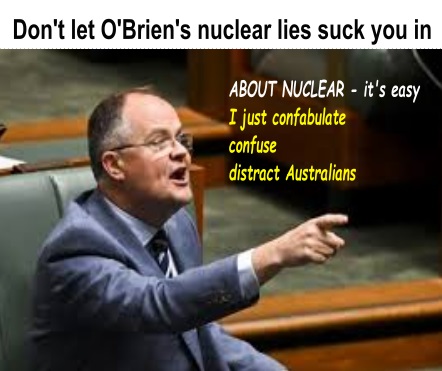
Did you hear the one about big tech going nuclear? One of the lines being trotted out in support of nuclear power by shadow energy minister Ted O’Brien – and faithfully reproduced by the Murdoch press – is that everyone’s doing it, including global tech giants Google and Microsoft.
“Not only does Labor claim to know the economics of nuclear better than companies like Microsoft who signed a massive nuclear deal, but they also think they can run the numbers better than (US banks and financiers) who have come out in favour of nuclear energy,” O’Brien said in September.
Microsoft did announce, in September, a 20 year power purchase agreement with Constellation Energy to reboot one unit at the mothballed Three Mile Island nuclear power plant in Pennsylvania and rebadge it as the Crane Clean Energy Centre.
Three Mile Island was, in 1979, the site of the worst commercial nuclear power accident in US history. It was shuttered in 2019 for economic reasons, with Constellation’s then parent company Exelon Corp, saying in 2017 that its closure was due to lack of financial rescue from the state.
This is not unusual. According to TechCrunch, in the last decade, seven nuclear reactors have been decommissioned in the US, while only two new ones have been switched on.
Notwithstanding the fact that restarting a nuclear plant that has been shut down for five years has never been done before (according to reports, Constellation Energy is reportedly seeking a taxpayer-subsidised loan it hopes will save it $122 million in borrowing costs) this somewhat baffling deal is expected to supply around 850 MW.
Google, meanwhile, in October announced plans to invest in small modular reactors to meet its own growing data centre needs and Amazon followed suit, with news of “three new agreements to support the development of nuclear energy projects,” again with a focus on the the as-yet commercially unproven SMR technology.
So, yes – all three of these companies have recently announced plans to invest in nuclear power – albeit in markets where it already exists (although not in the case of SMRs) and in technology and applications that are highly speculative.
Does this mean they have come over all Team Nuclear? Hardly.
Amazon, as it bragged in October, has been the largest corporate purchaser of renewable energy in the world for four years running, according to Bloomberg NEF, having invested billions of dollars in more than 500 solar and wind projects globally, which together are capable of generating enough energy to power the equivalent of 7.6 million US homes.
Amazon met its goal of sourcing 100% of the electricity its uses with renewable energy in 2023 – seven years ahead of the 2030 target.
Google announced just this week that it was funding $US20 billion ($A31 billion) worth of renewable power projects across the US, in a deal with Intersect Power and investment fund TPG Rise Climate to develop power to drive several gigawatt-scale data centers.
Microsoft, last week, joined a US investor Acadia Infrastructure Capital and other companies to launch the Climate and Communities Investment Coalition (CCIC) to develop a $US9 billion ($A14 billion) pipeline of renewable energy projects across the country, as reported in Reuters.
On its website, Microsoft says it invested in over 23.6 million megawatt-hours of renewable energy in 2023 financial year – “enough to power Paris with renewable electricity for about two years.”
Earlier this year, the company announced plans to procure some 9.5GW of solar panels from Qcells for PPAs through 2032 – adding about 1.5GW every year. In April Microsoft revealed in a job listing that it had more than 20GW of renewable energy under contract.
Tony Blair think tank says UK needs to build new nuclear ‘at pace’.

“The latest example is today’s report for the Tony Blair Institute – which effectively ignores the poor comparative performance, costs and build times, of nuclear compared to zero carbon alternatives.“
“If it is inadvertently deceived by military pressures into ignoring the real growing obsolescence of nuclear power in the face of renewable alternatives, then
democracy itself is at risk.”
By Tom Pashby New Civil Engineer 2nd Dec 2024
The UK needs to build new nuclear “at pace” if it wants to remain competitive against similar countries pursuing nuclear power programmes, according to a report from the Tony Blair Institute for Global Change (TBIGC).
It structured its recommendations to the UK Government around
three main points. The first was that the UK should “create a modernised,
streamlined and efficient planning and regulatory regime for new nuclear
technologies. This would reduce delays and enhance the standardisation
required to unlock new low-cost projects at scale.”
It specifically called out the Office for Nuclear (ONR) Regulation, the UK Government’s
nuclear sector regulator, saying it recommended that the government require
the ONR “to regard approval of a single reactor as the basis for fleet
approval, to standardise design across deployment.” It also suggested:
“Introducing a two-year limit for the ONR and Environment Agency to
license nuclear reactors that are similar to previously licensed
designs.”
The report continued in its recommendations: “Second, the UK
government should use the conclusion of its ongoing SMR competition to help
kick-start the SMR pipeline.” It said this would “create options” for
the government to buy SMR capacity for use on the national grid.
And third, it said: “The government should deepen the UK-US partnership on SMR and
the deployment of advanced modular reactors (AMRs), also known as Gen IV
reactors, including cooperation on fuels, financing and supply-chain
development.”
Nuclear Free Local Authorities (NFLAs) says it is “the
voice for local authorities opposed to civil nuclear power and in favour of
renewables.” NFLAs policy adviser Pete Roche said: “Tony Blair’s
Institute is clearly not keeping up with the latest research which shows
that 100% renewable energy scenarios are perfectly feasible, require less
energy, cost less and create more jobs than business as usual scenarios.
“Instead it has fallen for a fantasy promoted by the nuclear industry
which can only increase our electricity bills and will fail to reduce
carbon emissions in time to protect us from rising temperatures.”
Academic says case for nuclear ‘at its weakest’ University of Sussex
professor of science and technology policy Andy Stirling said: “Whatever
opinion is held on issues around nuclear power, the same simple question
pops up, ‘Why has support for nuclear power grown most noisy, just as the
case is at its weakest?’
“The latest example is today’s report for
the Tony Blair Institute – which effectively ignores the poor comparative
performance, costs and build times, of nuclear compared to zero carbon
alternatives. “Over the past two decades, the relative competitiveness of
nuclear power and renewables-based zero carbon strategies has shifted
massively in favour of the latter.
As a recent Royal Society report
confirms, there is no level of nuclear contribution to UK electricity
supply that does anything other than raise electricity prices.” Stirling
went on to say it is “increasingly only in situations dominated by
entrenched military interests or shadily-funded thinktanks, that the
clamour of emotive nuclear outbursts is most loudly heard. “For media
coverage to become skewed by this noise threatens more than just energy
futures and the future efficacy of climate action.
“If it is inadvertently deceived by military pressures into ignoring the real growing
obsolescence of nuclear power in the face of renewable alternatives, then
democracy itself is at risk.”
New Civil Engineer 2nd Dec 2024
https://www.newcivilengineer.com/latest/tony-blair-think-tank-says-uk-needs-to-build-new-nuclear-at-pace-02-12-2024/
Midlands Regional Hub for Nuclear Skills officially launched
A new Midlands Regional Hub for Nuclear Skills has been endorsed by the
Nuclear Skills Delivery Board to help develop the future nuclear workforce.
The Hub was launched at an event hosted by the University of Derby with
Rolls-Royce as the prime sponsor.
The government, in partnership with the
civil and defence nuclear industry, are making significant long-term
investments in nuclear skills, jobs and education to help the sector fill
40,000 new jobs by the end of the decade. The National Nuclear Strategic
Plan for Skills (NNSPS) was launched in May 2024 to address the national
nuclear skills shortage and sets out targeted action that the UK will take
to ensure it has the required skills to support the UK’s nuclear
ambitions. Ensuring the delivery of the NNSPS is the Nuclear Skills
Executive Council (NSEC) which brings together CEOs from across key sector
organisations.
Derby University 2nd Dec 2024 https://www.derby.ac.uk/news/2024/midlands-regional-hub-for-nuclear-skills-officially-launched/
1 This Month



Shut down the radiation-damaged Heysham nuclear reactors now
To see nuclear-related stories in greater depth and intensity – go to https://nuclearinformation.wordpress.com

Say No to NASA’s Reckless Nuclear Reactor on the Moon
Say No to NASA’s Reckless Nuclear Reactor on the Moon
-
Archives
- October 2026 (256)
- September 2026 (339)
- August 2026 (330)
- July 2026 (355)
- June 2026 (287)
- May 2026 (306)
- April 2026 (356)
- March 2026 (251)
- February 2026 (267)
- January 2026 (308)
- December 2025 (358)
- November 2025 (359)
-
Categories
- 1
- 1 NUCLEAR ISSUES
- business and costs
- climate change
- culture and arts
- ENERGY
- environment
- health
- history
- indigenous issues
- Legal
- marketing of nuclear
- media
- opposition to nuclear
- PERSONAL STORIES
- politics
- politics international
- Religion and ethics
- safety
- secrets,lies and civil liberties
- spinbuster
- technology
- Uranium
- wastes
- weapons and war
- Women
- 2 WORLD
- ACTION
- AFRICA
- Atrocities
- AUSTRALIA
- Christina's notes
- Christina's themes
- culture and arts
- Events
- Fuk 2022
- Fuk 2023
- Fukushima 2017
- Fukushima 2018
- fukushima 2019
- Fukushima 2020
- Fukushima 2021
- general
- global warming
- Humour (God we need it)
- Nuclear
- RARE EARTHS
- Reference
- resources – print
- Resources -audiovicual
- Weekly Newsletter
- World
- World Nuclear
- YouTube
-
RSS
Entries RSS
Comments RSS

