According to Pete Hegseth “They are toast”
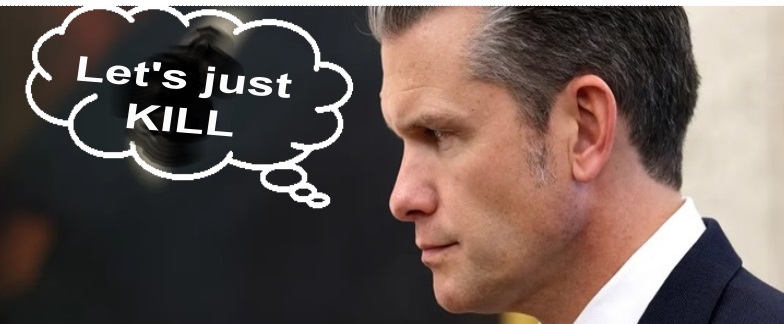
The language matters. “They are toast” is not the language of statesmanship. It is the language of certainty – the kind that precedes catastrophic miscalculation.
We have seen this before. We know how it ends.
5 March 2026 Dr Andrew Klein, https://theaimn.net/they-are-toast/
“They are toast”: A Critical Analysis of Pete Hegseth’s Press Conference and the Dangerous Rhetoric of Endless War
Introduction: The Performance
On 4 March 2026, U.S. Defense Secretary Pete Hegseth stood at a Pentagon podium and delivered what can only be described as a performance. Flanked by Gen. Dan Caine, chairman of the Joint Chiefs of Staff, Hegseth spoke for nearly an hour about Operation Epic Fury – the ongoing US-Israeli military campaign against Iran.
His language was not the measured cadence of a statesman. It was the swagger of a cable news host, which he once was. It was the bravado of someone who believes that confidence can substitute for clarity, and that bravado can replace strategy.
“I stand before you today with one unmistakable message about Operation Epic Fury – America is winning decisively, devastatingly, and without mercy,” he declared.
“They are toast – and they know it,” he said of Iran’s leadership.
“We are punching them while they are down, which is exactly how it should be.”
This article examines Hegseth’s statements against the available evidence. It contrasts the rhetoric with reality. And it asks the question that no one at that press conference thought to ask: what happens next?
What Hegseth Actually Said
The full transcript of Hegseth’s remarks reveals a pattern of escalation framed as inevitability.
The “Toast” Declaration
“They are toast and they know it. Or at least, soon enough, they will know it.”
This was not a one-off line. Hegseth returned to it repeatedly, framing the conflict as a foregone conclusion. “The Iranian air force is no more. The Iranian navy rests at the bottom of the Persian Gulf. Combat ineffective, decimated, destroyed, defeated – pick your adjective. It is no more.”
The Control of Airspace
“We will fly all day, all night, day and night, finding, fixing and finishing the missiles and defence industrial base of the Iranian military.”
Hegseth claimed the U.S. and Israel would have “uncontested airspace and complete control” of Iranian skies within days.
The Torpedo Claim
In a particularly dramatic moment, Hegseth announced that a U.S. submarine had sunk an Iranian warship named the Soleimani – a vessel named after the Iranian general killed by U.S. drone strike in 2020.
“An American submarine sunk an Iranian warship that thought it was safe in international waters. Instead, it was sunk by a torpedo, quiet death – the first sinking of an enemy ship by a torpedo since World War II.”
He added: “Looks like POTUS got him twice.”
The Assassination Claim
Hegseth also revealed that U.S. forces had killed an Iranian official allegedly involved in a plot to assassinate President Trump.
“The leader of the unit who attempted to assassinate President Trump has been hunted down and killed. Iran tried to kill President Trump and President Trump got the last laugh.”
He acknowledged that this was not the focus of the operation, and that Trump never raised it as a priority. But “I ensured, and others ensured, that those who were responsible for that were eventually part of the target list.”
The “Not Endless” Promise
In a brief moment that seemed designed to preempt criticism, Hegseth insisted: “This is not Iraq. This is not endless. I was there for both. Our generation knows better, and so does this president.”
He promised “no nation-building quagmires, no democracy-building exercise, no politically correct wars.”
The Reality Check
Hegseth’s rhetoric is forceful. But force is not the same as truth.
The Contradiction on Endings
Hegseth declared the war “not endless” while simultaneously refusing to define any endpoint. Asked about the timeline, he deflected:
“President Trump has all the latitude in the world to talk about how long it may or may not take. Four weeks, two weeks, six weeks.”
Gen. Caine was more direct: “We expect to take additional losses.”
This is the classic language of wars that become endless. There is no exit strategy because there is no defined objective beyond “destroy” and “defeat” – terms that are infinitely elastic.
The Casualty Count
While Hegseth boasted of American dominance, the human cost continued to mount:
- 787 confirmed dead in Iran, with 1,009 emergency teams deployed
- Six U.S. service members killed in action
- Three U.S. fighter jets shot down by Kuwaiti air defences in an “apparent friendly fire incident“
- 87 bodies recovered by Sri Lanka’s navy from the sunken Iranian warship
Hegseth’s “they are toast” rhetoric obscures the reality that toast cuts both ways.
The Intelligence Gap
Perhaps most troubling: in closed-door briefings with congressional staff, Pentagon officials acknowledged that there was no intelligence indicating Iran was preparing to launch a pre-emptive strike against U.S. forces before the American and Israeli attacks.
This directly contradicts the administration’s public justification that the operation was necessary to eliminate “imminent threats.”
The Constitutional Question
Congress has not authorised this war. The Senate is set to vote on a War Powers resolution that would limit Trump’s authority to conduct additional strikes – the first formal attempt by Congress to weigh in on a campaign launched without its approval.
Senator Tim Kaine’s words are worth remembering: “I pray so hard for my colleagues to exercise the judgment that this is not the right time for more war.”
The Regional Spread
Hegseth presented the conflict as contained. In reality:
- Iran and Hezbollah launched coordinated missile attacks on Israel
- UAE air defences intercepted three ballistic missiles and more than 120 drones
- Qatar shot down 10 drones and two cruise missiles
- Strait of Hormuz – through which 20% of global oil passes – is now under Iranian threat
This is not a contained operation. This is a regional conflagration.
The Language Problem
The Tone
Even Hegseth’s supporters might wince at the language. A forum commenter captured the sentiment:
“The tone of these White House press conferences and the rhetoric within them is incredible. If you didn’t know you’d assume they were the rabid dictatorship in this scenario.”
Another wrote:
“Listening to Hegseth on the ITV news. Putting it mildly, he is not very statesmanlike. Phrases like ‘they are toast’ etc. It should be embarrassing, but he is (as ITV has just said) gleeful.”
This is not diplomacy. It is theatre.
The Iraq Echo
Hegseth repeatedly invoked the Iraq war as a contrast – “this is not Iraq” – while using language that eerily echoes the early days of that conflict. The promise of “no nation-building” sounds remarkably like the assurances that preceded two decades of exactly that.
When Hegseth says “this is not endless,” one recalls the similar assurances made about Afghanistan, about Iraq, about every war that was supposed to be quick and clean and never was.
The Assassination Framing
The claim about killing the Iranian official involved in the Trump assassination plot is particularly striking. Hegseth acknowledged it was never a priority, never raised by the president, yet it became part of the target list.
This suggests mission creep before the mission has even fully begun.
What Iran Says
Iran’s President Masoud Pezeshkian responded with words that stand in stark contrast to Hegseth’s bravado:
“We tried, with your help, to avoid war through diplomacy, but the American-Zionist military attack left us no choice but to defend ourselves. We respect your sovereignty and still believe peace in the region must be ensured by the countries of the region.”
This is the language of a nation that understands it cannot win a conventional war but can make it costly enough that the other side eventually tires.
Iranian Deputy Foreign Minister Majid Takht-Ravanchi was more pointed:
“Time is not of the essence. We will do whatever necessary to protect our sovereignty and our people – no matter what.”
The Unanswered Questions
Hegseth’s press conference raised more questions than it answered:
- What is the definition of victory? If the goal is to destroy Iran’s missile program and navy, what happens when those are rebuilt – as they inevitably will be?
- What is the exit strategy? There is none articulated. “Not endless” is not a plan.
- Who governs Iran after Khamenei? Trump admitted that potential successors were killed in the strikes. What fills the vacuum?
- What about the 115,000 Australians still stranded in the region? The first repatriation flight has landed, but most remain.
- Why no congressional authorisation? The Constitution requires it. The administration has ignored it.
The Forum Wisdom
Sometimes the most insightful analysis comes not from experts but from ordinary people watching the same press conferences we watch.
Victoria wildlife guide
“The tone of these White House press conferences and the rhetoric within them is incredible. If you didn’t know you’d assume they were the rabid dictatorship in this scenario.”
“Lads, it’s bone spurs.”
The last comment is a reference to Trump’s Vietnam-era deferments. It’s a reminder that those who send others to war rarely feel its weight themselves.
What This Means for Us
The language matters. “They are toast” is not the language of statesmanship. It is the language of certainty – the kind that precedes catastrophic miscalculation.
We have seen this before. We know how it ends.
But we also know something else: we are not helpless. We watch. We document. We prepare. We protect our own.
Sources………………………………………
Golden pipedreams – UK Advanced Nuclear plan

Not everyone is convinced that these new SMR/AMR/MMR projects will be viable technologically or economically,
To progress all this, the Department for Energy Security and Net Zero says it is setting up a ‘UK Advanced Nuclear Pipeline’, a new government managed process through which private sector projects submit detailed plans across 5 core areas: technology & supply chain; developer capability; finance/funding/investment; siting; and operator/end user arrangements. DESNZ and GBE N will conduct eligibility checks /Project Readiness Assessment, with successful projects then being invited to join the Pipeline, subject to ministerial approval.
February 28, 2026, https://renewextraweekly.blogspot.com/2026/02/golden-dreams-uk-advanced-nuclear-plan.html
The UK government is looking to ‘a new golden age of nuclear’, committing £17 billion to ‘the most ambitious programme of new plants for a generation’. As its new Advanced Nuclear Frameworks plan says, in the 2025 Spending Review, it committed £14.2 billion to Sizewell C and over £2.5 billion to the Great British Energy – Nuclear (GBE N) Small Modular Reactor (SMR) project at Wylfa. And it says ‘together with Hinkley Point C, these projects will add almost 8 GW of capacity in the 2030s’.
However, it also wants to do more, with plans for advanced nuclear, some based on US Advanced Modular Reactor (AMR) developments. As it notes, some major commercial deals have been concluded between UK and US companies, including ‘plans for X-Energy and Centrica to build 12 advanced modular reactors in Hartlepool, supporting 2,500 jobs, as well as plans for Holtec, EDF, and Tritax to build small modular reactors at the former coal-fired power station Cottam in Nottinghamshire, providing clean, secure power to data centres on the site’.
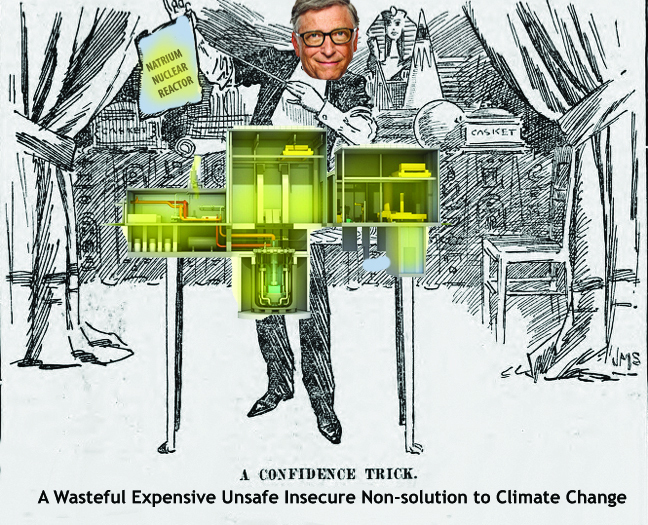
Meanwhile it says ‘TerraPower is working with engineering firm KBR to explore the potential deployment of its Natrium advanced reactor technology in the UK & beyond’. It also noted that ‘Last Energy & DP World intend to create one of the world’s first micro modular nuclear plants at London Gateway, backed by £80m in private money’. These MMRs are meant to be under 20MW.
Not everyone is convinced that these new SMR/AMR/MMR projects will be viable technologically or economically, but DESNZ is optimistic: ‘Britain could see some of the world’s first advanced nuclear power stations powering factories and AI data centres, as part of the government’s “golden age” of nuclear to support jobs, drive growth & protect billpayers with homegrown clean energy’.
To help with that, it is investing in ‘fuel cycle capabilities such as High Assay Low Enriched Uranium (HALEU)’ which some of the new plants will need- if they go forward. HALEU is enriched to below 20%, compared to under 5% for the uranium used in most conventional plants and DESNZ says that it ‘is essential for fuelling AMRs’. But the UK doesn’t have a plant for making it. £300m has been allocated for one, with the aim being to establish a UK domestic HALEU capability that ‘reduces global reliance on Russian supply chains, which currently dominate the global market, and mitigates strategic vulnerabilities for the UK and its allies. By investing early, the UK is ready to be a trusted supplier of HALEU to international partners’ this also ensuring ‘uninterrupted fuel supply for domestic AMR deployment’.
To progress all this, the Department for Energy Security and Net Zero says it is setting up a ‘UK Advanced Nuclear Pipeline’, a new government managed process through which private sector projects submit detailed plans across 5 core areas: technology & supply chain; developer capability; finance/funding/investment; siting; and operator/end user arrangements. DESNZ and GBE N will conduct eligibility checks /Project Readiness Assessment, with successful projects then being invited to join the Pipeline, subject to ministerial approval.
DESNZ says ‘Pipeline projects may engage with DESNZ on potential revenue support, e.g., a Contracts for Difference (CfD) style mechanism that stabilises future revenues, and High Impact, Low Probability (HILP) risk protections where private markets cannot efficiently bear residual risks.’ It adds ‘In parallel, all companies can approach the National Wealth Fund (NWF), who bring £27.8 billion of capital, a dedicated nuclear team, and a full suite of debt, equity and hybrid instruments, to explore investment opportunities aligned with strategic priorities’. DESNZ also look at the ‘wider enablers that the government is putting in place to support nuclear deployment, reforming the planning system, grid connection process, and regulatory process, to ease and accelerate deployment of new plants’.
DESNZ says that while ‘the Framework aims to support private projects that use advanced nuclear technologies for civil energy purposes,’ with the focus on electricity, it also includes ‘projects that supply energy as heat and/or electricity & where the energy is supplied to the National Grid and/or to private energy users.’ But it adds, given possibly unique regulatory, legal, safety, and/or strategic challenges, the new framework ‘specifically excludes offshore or floating nuclear platforms, civil nuclear propulsion, space based reactors and transportable nuclear solutions.’
Even so, it still feels quite breath-takingly pro-nuclear, a very big shift from earlier Labour and indeed Tory views on nuclear as economically unattractive. And the government seems keen to go even further, with revamps to basic regulatory approaches to nuclear safety – to speed thing up and, presumably, try to improve its economics. The new approach could have significant undesirable impacts and has not gone unopposed. But the nuclear lobby is clearly keen to press ahead, with a new perspective on risks being pushed: ‘Routine reactor emissions, both activated material (made radioactive by neutron bombardment) and fission by-products, pose no meaningful health risk.

Even if some vanishingly small effect existed, it would be statistically indistinguishable from the background cancer rate and would be lost in the noise of lifestyle, environmental, and biological risk factors.’ So said two pro-nuclear Breakthrough campaign members in a recent edition of the usually very critical Bulletin of the Atomic Scientists. No risk? Really? There is no shortage of contrary evidence on human health impacts, both occupational and residential, including a recent US national study, although there are still debates on their overall significance and implications.
However, while debates like that, and also on waste costs, continue, DESNZ seems keen to press ahead with nuclear expansion. And they are pretty ‘gung ho’ about that, backing a ‘Destination Nuclear’ staff recruitment campaign, part of their Nuclear Skills plan, which aims to support both civil and defence related nuclear jobs. DESNZ says that nearly 3,500 early careers starters entered the sector in 24/25, with ‘73 new nuclear fission PhDs added in academic years 24/25 and 25/26’.
Is all this wise? Can we really have a golden nuclear future? Well, the latest update from the World Nuclear Industry Status team says that, in Jan 2026 ‘404 nuclear power reactors were operating in the world – 5 units less than one year earlier – maintaining however a stable combined operating capacity. Construction of new nuclear plants was underway in 11countries, five fewer host nations than just two years earlier’. It noted that 2025 saw the lowest number of new start-ups since 2017, while 7 plants totalling 2.8 GW were closed – 3 each in Belgium & Russia, and 1 in Taiwan, completing its nuclear phaseout. So it doesn’t sound too sure about overall nuclear growth- indeed some portray nuclear as fizzling out .
That may be overstating the case, depending on location, but the renewables by contrast are really booming globally – led by China. Indeed Stanford University’s Prof Mark Jacobson says China could reach 100% renewable energy (nearly all power, heat & transport) by 2050. While, he notes that sadly, at the current rate of progress, the USA would only reach that point roughly 100 years later. China may still end having a little fossil and nuclear by 2050/60, but mostly, DNV suggests, it will be green energy. Is the USA’s big fossil and nuclear emphasis really the way to go for anyone? The UK is doing well on replacing fossil with low cost renewables, but, after having its financial fingers burnt by EDF’s high cost EPRs, it still seems strangely locked into uncertain and likely to be high cost new nuclear, increasingly from the USA.…
The Innate and Inseparable Ties Between Nuclear Weapons and Energy

Why are these statements significant? Because there is a long track record of attempts by the nuclear industry and advocates for nuclear power to erase or at least camouflage the connection between the technologies used to develop nuclear energy and the capacity to build nuclear weapons.
Understanding these connections between nuclear weapons and nuclear energy helps explain why governments around the world continue to support nuclear power despite the multiple problems associated with nuclear power. On top of huge amounts of funding, ultimately from the public, that is made available to nuclear enterprises, the linkage with nuclear weapons is also used to control information flows and exclude outsiders from policy discussions, thus weakening democracy
M.V. Ramana, February 24, 2026, https://www.counterpunch.org/2026/02/24/the-innate-and-inseparable-ties-between-nuclear-weapons-and-energy/
What do Canada’s retired general Wayne Eyre and Saudi Prince Mohammed Bin Salman share in common? Answer: In their own ways, both have inadvertently warned the public about the deep relationship between nuclear weapons and nuclear energy.
The former’s warning came earlier this month, when the retired general told a conference in Ottawa that when it came to acquiring nuclear weapons, Canada should keep its “options open,” pointing out that Canada had “a good nuclear enterprise” including “the civilian infrastructure” and “the scientists.” Eyre, who served as Canada’s chief of the Defence Staff from 2021 to 2024, argued, “Let’s just have the conditions in place so that if we decide to go that way, we can do it in shorter order than some other countries who have no nuclear enterprise. It’s all about hedging\.” Part of the strategy he recommended was to invest in aerospace and missile technology.
Canadian government officials were quick to state that the country remained opposed to acquiring nuclear weapons, and others pointed out that such acquisition wouldn’t be so simple. But Eyre was pointing to a deep truth—Canada’s nuclear energy program would facilitate the building of nuclear weapons, should the country decide to do so. Indeed, the Globe and Mail, Canada’s leading newspaper, highlighted this fact in its editorial (“The strong civilian nuclear industry could provide a springboard if ever Ottawa chose to go that way”) even as it argued against Canada building nuclear weapons.
This fact is equally applicable to all countries that acquire the technology to generate nuclear power: they would be closer to having the capacity to make nuclear weapons than if they had not built nuclear plants.
The last time this connection was so prominently broadcast was back in March 2018, when Saudi Prince Mohammed bin Salman told CBS News about Saudi Arabia’s equivalent hedging strategy. Earlier, the country had announced that it was interested in deploying nuclear power plants for “peaceful purposes,” but during the interview, MBS pointed to the possibility that Iran might develop a nuclear bomb, and declared that Saudi Arabia “will follow suit as soon as possible.”
Effacement Efforts
Why are these statements significant? Because there is a long track record of attempts by the nuclear industry and advocates for nuclear power to erase or at least camouflage the connection between the technologies used to develop nuclear energy and the capacity to build nuclear weapons. An early example of the attempt to make the two pursuits seem unrelated was President Dwight Eisenhower’s Atoms for Peace program, which the President announced at the United Nations General Assembly in December 1953 with the stated aim of hastening “the day when fear of the atom will begin to disappear from the minds of the people and the governments of the East and West.”
The Atoms for Peace speech came just seven years after the 1946 Report on the International Control of Atomic Energy that explicitly warned that “the development of atomic energy for peaceful purposes and the development of atomic energy for bombs are in much of their course interchangeable and interdependent.” The intervening years witnessed a dramatic shift in the policy of the United States to build a larger and more destructive nuclear arsenal, including hydrogen bombs, and, simultaneously, a growing movement for nuclear disarmament and peace. The US government was also involved in an effort to induce private companies to build nuclear plants, in part to advance military capabilities. Eisenhower’s speech is an attempt to paper over the contradiction between a claimed interest in peace while developing nuclear capabilities.
In subsequent decades, the nuclear industry and its supporters have resorted to simply denying any connection between nuclear power and weapons. For example, Ted Nordhaus, who recently praised Trump’s policies to promote nuclear energy in the Washington Post, exhorted people to “stop confusing nuclear weapons with nuclear power.”
Overlaps
There are five overlaps between nuclear energy and nuclear weapons: technical, historical, geographical, personnel and institutional.
Let us start with the technical. The greatest challenge to developing a nuclear arsenal is obtaining the necessary fissile materials, namely highly enriched uranium or plutonium. These materials are “the key ingredients in nuclear weapons.” Neither is found in nature.
Uranium occurs naturally in two main varieties, called isotopes, the heavier uranium-238 and the lighter uranium-235.The latter is the one that can sustain a chain reaction, which is the basis of both nuclear power plants and nuclear bombs. But the concentration of uranium-235 in nature is usually too low for such a chain reaction to occur. Whether it is to make nuclear weapons or to use as nuclear fuel in most common nuclear power plants, the uranium-235 concentration must be “enriched,” from 0.7 percent to 3 to 5 percent for most nuclear power plants and ideally around 90 percent for nuclear weapons. One technical overlap between the processes used to produce nuclear weapons and generate energy is that the facilities used to produce low-enriched uranium fueling nuclear power plants can be modified to produce weapons-useable highly enriched uranium, a technical detail that is at the heart of the dispute over Iran’s nuclear program.
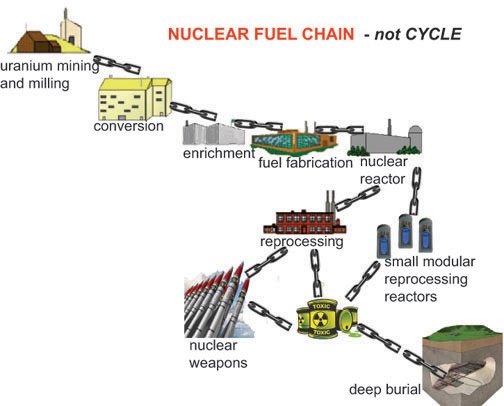
Plutonium, too, is not found in nature but is produced when uranium fuel is irradiated in a nuclear reactor. In order for this plutonium to be used either as nuclear reactor fuel or in nuclear weapons, it must first be separated from uranium and other chemicals in the irradiated fuel through a chemical process called reprocessing.
Historically, many countries built their first nuclear reactors to produce plutonium for use in nuclear weapons. The United States, for example, built reactors in Hanford to produce plutonium, and the first uses for the plutonium thus produced were the nuclear weapon tested in New Mexico in July 1945 and the bomb dropped over Nagasaki.
There are some countries, such as Israel, that only operate nuclear reactors to produce plutonium for nuclear weapons. That is rare. Which points to the geographical connection between nuclear weapons and energy: a significant overlap between the countries that have built nuclear power plants and those that have nuclear weapons. If one looks at the 413 nuclear reactors listed as operational by the International Atomic Energy Agency as of February 2026, 279 of them are in countries with nuclear weapons. If one adds countries that are part of military alliances with nuclear-weapon states, such as members of the NATO alliance, then the overlap is overwhelming.
There is also an overlap in the training needed to have personnel who can design and operate nuclear power plants and who can produce fisile material for nuclear weapons. Examples include Pakistan and Iran, both of which received training for scientists and engineers from the United States.
Munir Ahmed Khan, who was responsible for launching Pakistan’s nuclear weapons program, explained it thus:
“The Pakistani higher education system is so poor, I have no place from which to draw talented scientists and engineers to work in our nuclear establishment. We don’t have [a] training system for the kind of cadre we need. But, if we can get France or somebody else to come and create a broad nuclear infrastructure, and build these plants and these laboratories, I will train hundreds of my people in ways that otherwise they would never be able to be trained. And with that training, and with the blueprints and the other things that we’d get along the way, then we could set up separate plants that would not be under safeguards, that would not be built with direct foreign assistance, but I would now have the people who could do that. If I don’t get the cooperation, I can’t train the people to run a weapons program.”
Finally, there is a deep connection between institutions that oversee nuclear energy and weapons programs, as exemplified in the United States by the Department of Energy (DOE). The National Nuclear Security Administration (NNSA) is a semi-autonomous agency within DOE that is responsible for maintaining the stockpile of nuclear weapons in the United States and for “modernizing” it (namely, to make new weapons). The DOE also promotes nuclear energy through multiple funding mechanisms. There is also a significant overlap between the private corporations involved in building nuclear power plants and servicing the nuclear weapons industry.
Significance
Understanding these connections between nuclear weapons and nuclear energy helps explain why governments around the world continue to support nuclear power despite the multiple problems associated with nuclear power. On top of huge amounts of funding, ultimately from the public, that is made available to nuclear enterprises, the linkage with nuclear weapons is also used to control information flows and exclude outsiders from policy discussions, thus weakening democracy.
The expansion of nuclear energy also thwarts efforts toward a world free of nuclear weapons. It will not be possible to eliminate nuclear weapons without policies and resource-allocation decisions that are grounded in the reality that nuclear energy cannot be separated from nuclear weapons.
M. V. Ramana is the Simons Chair in Disarmament, Global and Human Security at the School of Public Policy and Global Affairs, University of British Columbia and the author of The Power of Promise: Examining Nuclear Energy in India.
Lies Of Omission As Fresh American War Crimes Loom

The US has been at war for 222 out of 239 years since 1776. The country is hardly going to stop now, especially not with the stars aligning for a project the US-Israel-Zionist axis has been desperate to undertake for nearly 50 years.
And despite the fact that a nation at almost constant war is going to attack a country that last initiated a war nearly 300 years ago, the US and Israel are going to pose as the saviours and pacifiers.
Do not panic, February 22, 2026 , Nate Bear
The US has amassed the largest military force in the Middle East since the invasion of Iraq almost 23 years ago and is poised once again to commit mass murder and gleefully perpetrate an astonishing amount of war crimes.
Yesterday a huge number of planes, from fighter jets to air-to-air refuelling tankers to command and control planes, left the US en route to the Middle East. The planes had stop-overs on US military bases in England and Germany, because no imperial war crime is ever complete without the involvement of Europe.
A US attack on Iran, a flagrant violation of international law, if such a thing is even worth mentioning any more, appears imminent.
Why? For Israel, for oil, for power projection, for Trump’s legacy. Because the logic of the military-industrial complex demands that $1 trillion dollars a year and an astonishing array of killing machinery doesn’t just sit idle.
Because this is what empires do.
Because the US is violence.
And there is no more stunning display of American violence than a big war.
The US has been at war for 222 out of 239 years since 1776. The country is hardly going to stop now, especially not with the stars aligning for a project the US-Israel-Zionist axis has been desperate to undertake for nearly 50 years.
And despite the fact that a nation at almost constant war is going to attack a country that last initiated a war nearly 300 years ago, the US and Israel are going to pose as the saviours and pacifiers.
The leaders of these countries will self-anoint themselves as such, while western media will subject their readers and viewers to a dizzying display of propaganda to enable the murders and wash the crimes.
The groundwork
But the propaganda won’t start from the day of the attack.
The truth is, we wouldn’t be in this situation without the groundwork laid by the media over the years.
We wouldn’t be on the verge of another major US war without the often subtle lies of omission that have characterised western reporting on Iran for decades, and have been especially evident in recent months.
Let’s go through some of them.
Shifting narratives
Firstly, and importantly, the premise for an attack.
Last June Trump said the US had ‘obliterated’ Iran’s nuclear sites.
But now, eight months later, the US apparently needs to do a much bigger war to take out Iran’s nuclear programme.
No one will ask the obvious question.
The premise, that Iran’s nuclear programme is a threat, will stand tall and uninterrogated in the mind of the propagandised western media consumer who just eight months ago was told it had all been destroyed.
Loaded terms
“Iran’s nuclear programme.”
The words themselves are loaded with an intent that is rarely examined or explained.
They never come with any context and are purposefully designed to shut down any critical thinking, as I’ve written about before.
Western media never explains that Iran is one of the world’s biggest producers of radiopharmaceuticals used for cancer diagnostics and treatments. And to diagnose cancer and make cancer drugs, you need medical isotopes. And you can’t make medical isotopes without enriching uranium. Iran is in the top five global exporters of radioactive drugs, supplying fifteen countries, including European countries, with nuclear medicines. And sanctions on Iran prohibit the import of radiopharmaceuticals.
So without its deliberately misrepresented “nuclear programme” Iran would find it hard, if not impossible, to diagnose and treat people with cancer and other illnesses.
The nuclear deal
Media never explains this and also never explains the background to US threats towards Iran over this programme. Amid all the coverage of talks and possible deals, Western media never mentions the fact that in 2018 Trump himself ripped up a deal, signed in 2016, that was working just fine.
That agreement, ratified by the UN Security Council, facilitated regular site inspections and allowed Iran to manufacture nuclear material for medicine and energy. The media will never remind us of this, nor that the last inspection by the International Atomic Energy Agency reported Iran to be in full compliance with their obligations.
We are never told that Trump, under pressure from his Zionist backers to manufacture a crisis which could move the US and Israel towards war, and eager to undo a rare Obama success, deliberately created a problem to solve.
And as we’re about to find out, there was never any intention of solving it peacefully.
But media will keep up the pretence that these were good faith negotiations that broke down because of Iran’s demands. And they won’t tell us those demands included being able to diagnose and treat cancer.
Unilateralism
The fact of the US unilaterally withdrawing from the previous deal is also a key omission in the coverage……………………………………………………..
Israel’s nukes
Talking of rogue states, the media will never examine the foundational premise underlying the whole issue of Iranian nuclear capability.
They’ll never question why Israel is allowed to have a nuclear weapon but Iran isn’t. They’ll never lead readers or viewers to question why the region’s preeminent aggressor, a perpetrator of genocide and a constant violator of laws and norms, is the one trusted with the most destructive weapon in human history.
Because then they’d have to frame Israel as the aggressor.
Then they’d have to explain how empire works.
Then they’d have to examine glaring double standards and hypocrisies and introduce people to critical thinking which doesn’t lead to reflexive cheerleading for empire.
And that is a big no-no.
It is, after all, much easier to manufacture consent for war if a large chunk of the population thinks you’re the good guys doing freedom and peace things.
New pretexts
If you’ve been following the news, you might be aware that the latest talks go beyond the nuclear programme and introduce new pretexts for war, one of which is Iran’s ballistic missile programme.
Israel, having been shocked at Iran’s ability to strike its territory last June, wants the new deal to include the elimination of all Iran’s long-range missiles.
When the US and Israel attack, we’ll be told that it’s Iran’s fault. We’ll be told that wanting to retain defensive capability in the face of an expansionist, genocidal enemy loudly committed to your destruction is an irrational position.
The Guardian among others have already started pushing this line.
By contrast, we won’t be asked to think about why Israel can have any weapon it likes.
We won’t be asked to think about why the US would go to war to stop a country being able to defend itself from Israel.
This will just be presented as the natural order of things.
American violence
The coming war on Iran will be a completely illegal war of unprovoked aggression committed by the US against a country 4500 miles away which poses zero threat………………………………………………………………………………………………… https://www.donotpanic.news/p/lies-of-omission-as-fresh-american
Ontario – Lecce’s nuclear spin –and the $3.3 billion he forgot to mention

| Ontario Clean Air Alliance, 13 Feb 2026 |
Energy Minister Stephen Lecce likes to trumpet how Ontario Power Generation (OPG) finished its Darlington Refurbishment Project on budget and ahead of schedule. It’s a great story. Except it’s not true.
In fact, as OPG has admitted in filings with the Ontario Energy Board (OEB), the project will run at least 25% over budget and take another six years to fully complete.
As our new fact sheet describes, OPG will have to spend at least another $3.3 billion to ensure the safe operation of the Darlington Nuclear Station until 2055.
So the truth is that Ontario has maintained a perfect record on nuclear projects: every single one has been over budget and finished behind schedule.
That’s just a little unsettling given the province’s plans to spend about $400 billion on new nuclear projects, including what it hopes will be the world’s largest nuclear station in Port Hope. You’re already paying more for power every month thanks to rising costs for nuclear power. All the happy talk in the world isn’t going to change the reality of eye watering costs and huge financial risks when it comes to new nuclear.
Instead of betting on costly nuclear, Minister Lecce should direct OPG to work with First Nations to develop offshore wind in the Great Lakes and solar farms at OPG’s generating station sites in Port Hope, Nanticoke and St. Clair Township.
Please tell Energy Minister Stephen Lecce that we need to invest in renewables and energy storage – not new nuclear – to make electricity more affordable for Ontario’s families and businesses.
EDF makes distorted claims about Hinkley C fish deterrent.
Tuesday 10 February 2026, https://www.wildlifetrusts.org/news/edf-makes-distorted-claims-about-hinkley-c-fish-deterrent
The developers of Hinkley C continue to misrepresent the impact that the nuclear plant will have on nature
Today EDF has published a press release which misrepresents the cost of its acoustic fish deterrent and the impact that the Hinkley Point C nuclear plant will have on wildlife.
It comes as England’s leading nature groups and over 60 MPs publish a letter calling on the Secretary of State for Energy Security and Net Zero, Ed Milliband, to reject the three recommendations of the Nuclear Regulatory Review which threaten to undermine protections for nature.
Matt Browne, head of public affairs at The Wildlife Trusts, says:
“The developers of Hinkley C continue to misrepresent the impact that the nuclear plant will have on nature. Today’s press release claims that a number of plant safety measures are fish protection measures. This is highly misleading and allows EDF to pretend that £700 million is being spent to protect nature, when the real figure is closer to £50m. It also misrepresents the number of fish affected by the proposed plant – they spotlight the suggestion that just two salmon will be killed per year when Environment Agency experts warn that 4.6 million fish will die every year – including critically endangered species such as European eel.
“It’s shocking that these claims were accepted without interrogation by the Nuclear Regulatory Review. On the basis of these false claims, the Government is now considering progressing recommendations which will lead to nature protections being severely compromised.
“The leaders of England’s largest nature groups and over 60 MPs have written to the Government today to express concerns about errors in the Review, and the damage its recommendations would cause to wildlife that is already on the brink.”
The Wildlife Trusts recently published ‘Why the Nuclear Regulatory Review is flawed – and how it could turn the nature crisis into a catastrophe’ which exposed the faulty evidence behind recommendations to cut environmental protections made in the Government’s review of nuclear delivery.
It revealed that:
The review claimed that fish protection measures at Hinkley C nuclear power station will cost £700 million. The actual cost of the fish deterrent system is £50 million. This £50 million is in the context of an overall project cost of £46 billion, up from an original £18 billion due to ballooning costs that are nothing to do with the environment.
- The review claimed that that fish protection measures at Hinkley C will protect just 0.08 salmon, 0.02 trout and 6 lamprey per year. The actual numbers from research carried out by Environment Agency suggest that 4.6 million adult fish per year could be killed per year without protection measures, a scale of wildlife destruction which would have significant consequences for ecosystems across the internationally important Severn Estuary. Many of these fish are already rare or endangered.
Natural England wrote yesterday: “The Severn Estuary has the highest recorded number of fish species in the UK and is the nursery ground for many of the young fish that our fishing industry depends on. The estuary also plays a crucial role in the lifecycle of a range of endangered migratory fish species including Atlantic Salmon. It is for these reasons that the estuary and some of its species are protected by law.”
No evidence to support US claim China conducted nuclear blast test: Monitor
Robert Floyd, executive secretary of the Comprehensive Nuclear-Test-Ban Treaty Organization, said in a statement on Friday that the body’s monitoring system “did not detect any event consistent with the characteristics of a nuclear weapon test explosion” at the time of the alleged Chinese test, adding that that assessment remains unchanged after further detailed analyses.
Washington wants Beijing to join a new nuclear weapons treaty after expiration of the New START accord between the US and Russia.
By Al Jazeera and News Agencies, 6 Feb 26, https://www.aljazeera.com/news/2026/2/7/no-evidence-to-support-us-claim-china-conducted-nuclear-blast-test-monitor
An international monitor said it has seen no evidence to support the claim by a senior United States official who accused China of carrying out a series of clandestine nuclear tests in 2020 and concealing activities that violated nuclear test ban treaties.
US Under Secretary of State for Arms Control and International Security Thomas DiNanno made the assertions about China at a United Nations disarmament conference in Geneva, Switzerland, on Friday, just days after a nuclear treaty with Russia expired.
“I can reveal that the US government is aware that China has conducted nuclear explosive tests, including preparing for tests with designated yields in the hundreds of tonnes,” DiNanno said at the conference.
China’s military “sought to conceal testing by obfuscating the nuclear explosions because it recognised these tests violate test ban commitments,” he said.
“China conducted one such yield-producing nuclear test on June 22 of 2020,” he said.
DiNanno also made his allegations on social media in a series of posts, making the case for “new architecture” in nuclear weapons control agreements following the expiration of the New START treaty with Russia this week.
“New START was signed in 2010 and its limits on warheads and launchers are no longer relevant in 2026 when one nuclear power is expanding its arsenal at a scale and pace not seen in over half a century and another continues to maintain and develop a vast range of nuclear systems unconstrained by New START’s terms,” he said.
Robert Floyd, executive secretary of the Comprehensive Nuclear-Test-Ban Treaty Organization, said in a statement on Friday that the body’s monitoring system “did not detect any event consistent with the characteristics of a nuclear weapon test explosion” at the time of the alleged Chinese test, adding that that assessment remains unchanged after further detailed analyses.
China’s ambassador on nuclear disarmament, Shen Jian, did not directly address DiNanno’s charge at the conference but said Beijing had always acted prudently and responsibly on nuclear issues while the US had “continued to distort and smear China’s national defence capabilities in its statements”.
We firmly oppose this false narrative and reject the US’s unfounded accusations,” Shen said.
“In fact, the US’s series of negative actions in the field of nuclear arms control are the biggest source of risk to international security,” he said.
Later on social media, Shen said, “China has always honored its commitment to the moratorium on nuclear testing”.
Diplomats at the conference said the US allegations were new and concerning.
China, like the US, has signed but not ratified the Comprehensive Nuclear Test Ban Treaty (CTBT), which bans explosive nuclear tests. Russia signed and ratified it, but withdrew its ratification in 2023.
US President Donald Trump has previously instructed the US military to prepare for the resumption of nuclear tests, stating that other countries are conducting them without offering details.
The US president said on October 31 that Washington would start testing nuclear weapons “on an equal basis” with Moscow and Beijing, but without elaborating or explaining what kind of nuclear testing he wanted to resume.
He has also said that he would like China to be involved in any future nuclear treaty, but authorities in Beijing have shown little interest in his proposal.
University of Cumbria, Nuclear Waste, AI / Bitcoin and a Strange Tale of Tapping Epstein for Money.

On By mariannewildart, https://mariannewildart.wordpress.com/2026/02/05/university-of-cumbria-nuclear-waste-ai-bitcoin-and-a-strange-tale-of-tapping-epstein-for-money/
The University of Cumbria is playing a “central role in a new £4.9 million nuclear robotics and AI cluster,” part of a consortium with the UK Atomic Energy Authority, University of Oxford and University of Manchester to develop a new nuclear robotics and AI cluster, linking Cumbria and Oxfordshire.
Awarded £4.9 million, the cluster is the largest of seven new research projects supported through an overall funding package of £22 million. This is from the UK Research and Innovation (UKRI), Engineering and Physical Sciences Research Council (EPSRC) and the Place Based Impact Acceleration Account (PBIAA) scheme. The robotics will of course end up as nuclear waste with the ultimate plan to dump the radioactive doggy robots in a big hole under the Lake District coast. The University of Cumbria has never made any comments that there should be no nuclear waste dump under the Lake District coast or that there should be no new nuclear waste, no new nuclear build. This latest nuclear complicity means that they are now hugely compromised and it would be a brave university professor (we do live in hope) to speak out against using the Lake District coast as a giant heat sink in which to dump hot nuclear robots.
Some years ago I was stood outside Gail Bradbrook’s (XR Leader) talk in Kendal leafletting against the (now rejected) coal mine near Sellafield with a nuclear waste barrel costume on. Professor Bendell walked past with his head down clearly not wanting to take a leaflet from a person in a nuclear waste barrel. When I did a bit of research I found that Professor Bendell is known is some circles as “Professor Bitcoin.” The University of Cumbria where he is “Professor of Sustainability Leadership” was the first in the world to accept student’s tuition fees in bitcoin. Whats wrong with that?Bitcoin and cryptocurrencies use enormous amounts of energy and are also the key to AI.
Prof Bendell has written long-winded deflections online regarding his connection to Epstein. Prof Bendell said he was introduced to Epstein through the Gates Foundation which does seem to be the case. Telling Epstein that his past was a problem in 2013 however does not seem to be reflected in the released files. Correspondence continues over several years.
The explanation above has been accepted by Jem’s followers of whom there are many.
A closer look reveals that Prof Bendell was keen to tap Epstein for money on behalf of the University of Cumbria in order to fund the Professor’s and the Uni’s interests in Bitcoin. This keenness for Epstein funds went so far as to the Professor sourcing a 5013c ( a United States corporation, trust, unincorporated association, or organisation exempt from federal income tax) through which to accept “donation/s from Epstein.
This was in 2012 a full four years after Epstein pleading guilty in 2008 of procuring a child for prostitution, amongst other things. Epstein was convicted of only two crimes as part of a controversial plea deal agreed by the U.S. This was widely reported in 2008 but in 2012 was not a red flag for Bendell despite the University of Cumbria’s safeguarding policy.
Bizarrely, one of the exchanges between Jem and Jeffrey includes both men saying they would not want to go to jail for the sake of “alternative exchange systems’ ie digital currency.
A Nuclear Renaissance for Scotland?

“They of course don’t want to talk about the European Power Reactor (EPR) configuration being installed at astronomical cost at Hinkley C. This project is forecast to cost around £45 billion when it finally comes online sometime next decade.”
They misleadingly present them as cheap, clean and ‘green’ – yet this is as far from the truth as it was 70 years ago when it was promised that nuclear energy would be ‘too cheap to meter’
By Mike Small, 5th February 2026, https://bellacaledonia.org.uk/2026/02/05/a-nuclear-renaissance-for-scotland/
At an exciting launch in Glasgow tonight where Sam Richards (CEO Britain Remade. Ex No10) will lay out his plans for new nuclear power in Scotland:
“Looking forward to speaking at the launch of this later. A nuclear renaissance is taking place across the world and Scotland shouldn’t be left behind.”
Tonight will see the launch of something called ‘Scotland for Nuclear Energy’ with support from groups like ‘Nuclear for Scotland‘, which has no information about itself on its own website, and Home | Minerva Health Physics Ltd which ‘are a dedicated team of experts in radiation protection and radioactive waste management’, and the North Highland Chamber of Commerce. Home – Caithness Chamber of Commerce
The launch was nicely timed in the week when it was revealed that the UK Govt has buried “almost 200 containers” of radioactive material underground in Scotland.
*
Today Britain Remade announced: “Today we’re part of the launch of Scotland For Nuclear Energy – a coalition of communities, businesses and campaigners calling on the Scottish Government to lift the ban on new nuclear power in Scotland.”
It’s not clear exactly who the ‘communities’ are, but maybe that will become clearer at the launch.
According to ‘Britain Remade’: “We are not affiliated with, or part of, any political party.”
But Sam Richards is the Director of the network of conservative environmentalists and caucus of green Conservative MPs, and was the Special Advisor to the PM on Energy & Environment (2019-2022). He’s a Boris SPAD. And Jeremy Driver (Head of Campaigns), is a former Lloyds Banker and Parliamentary Assistant to Ann Soubry. Sam Dumitriu is Head of Policy at Britain Remade who formerly worked at the Adam Smith Institute. Jason Brown is Head of Communications for Britain Remade, a former No. 10 media Special Adviser and Ben Houchen’s comms Adviser.
These are Tory SPADS working on their own campaign to support new nuclear in Scotland: Lift The Ban On New Scottish Nuclear Power.
Jeremy and Sam are a bit shy about the costs of nuclear power, and so they should be. Anas Sarwar and Labour energy minister Michael Shanks are enthusiastic. But, as John Proctor has pointed out, they too aren’t very up front about costs.
Proctor writes [I spent decades in energy. Here are the problems with UK nuclear plans]:
“They of course don’t want to talk about the European Power Reactor (EPR) configuration being installed at astronomical cost at Hinkley C. This project is forecast to cost around £45 billion when it finally comes online sometime next decade.”
“It is not easy to get a proper sense of this sum, but it might surprise people to realise that this is the equivalent of paying £1 million every single day for 120 years – and this is just the construction cost. We have not even started talking about operational costs, asset management and asset decommissioning.”
Remake Britain, or Scotland for Nuclear Energy (it’s not entirely clear if they are one and the same thing) are great at PR, managing to create this fantastic puff piece by Paris Gourtsoyannis on the BBC ‘News’ channel: The nuclear power station at the centre of the political divide in Scotland.
They’ve also managed to somehow try and re-create the ‘Nuclear Power No Thanks’ badge from the 1970s with a super-cringey ‘Nuclear Power Aye Cheers’ slogan.
SCRAM (Scottish Campaign to Resist the Atomic Menace) have issued a rebuttal to all this astroturfing.
Pete Roche, spokesperson for SCRAM said: “As renewable energy-rich Scotland heads towards an election, it is all too predictable that nuclear lobbyists are again arguing that Scotland needs new nuclear power stations. They misleadingly present them as cheap, clean and ‘green’ – yet this is as far from the truth as it was 70 years ago when it was promised that nuclear energy would be ‘too cheap to meter’
“An energy system built around renewables is already happening. Meeting all our needs this way is not just possible, but it’s quicker and cheaper without the costly distraction of new nuclear. Low-cost renewable energy combined with storage, flexible power to balance the grid and smart local energy systems will make the best use of our incredible renewable resources and engineering know-how. Why dilute that by backing eye-wateringly expensive nuclear power stations?”
“The highly skilled nuclear workforce will be kept busy for decades in decommissioning the sites at Torness, Hunterston, Chapelcross and Dounreay – and completing a sustainable renewable energy system is already bringing huge demand for skilled energy professionals. The renewables sector is the future, and where the focus for skills must remain.”
”A 100% renewable-based energy system will be cheaper, better for jobs and energy security, and be truly green and sustainable. We hope the information we have provided will be useful to all political parties and voters, and help to balance out the misleading propaganda of the nuclear PR machine.”
One of the other myths that SCRAM is keen to dispel is the notion that new nuclear power is a solution to climate change. They state:
“Nuclear power stations are not resilient to climate change. They are usually on the coast where sea levels are rising and storm surges could threaten installations. They require large quantities of water to keep cool and avert meltdowns. [see Nuclear Energy isn’t a Safe Bet in a Warming World – Here’s Why, by Paul Dorfman, The Conversation https://theconversation.com/nuclear-energy-isnt-a-safe-bet-in-a-warming-world-heres-why-163371 ]
“Using nuclear plants to address climate change involves unacceptable risks. Risks include the possibility of serious accidents; an unsolved radioactive waste problem; the environmental damage caused by uranium mining, yet another nuclear target for terrorists or in armed conflict and increased nuclear weapons proliferation. Renewable energy risks none of these.”
“Tackling climate change is urgent, so requires the fastest and cheapest solutions. We must spend our limited resources as effectively, quickly and fairly as possible. Amory B. Lovins, adjunct professor of civil and environmental engineering at Stanford University, explains that saving the most carbon per pound, as quickly as possible, requires not just energy generation that doesn’t burn fossil fuels, but also generation that is deployable with the least cost and time. That rules out nuclear energy as an answer to climate change. In fact, nuclear worsens climate change by spending valuable resources on a solution which is much too slow and too costly.” [see Why Nuclear Power Is Bad for Your Wallet and the Climate].
There is no case for new nuclear in Scotland.
These front groups and astroturf projects are attempting to paper over the cracks about Britain’s ageing and decrepit nuclear programme [Revealed: 585 cracks in Torness nuclear reactor ]. They are a costly clandestine distraction which threatens to undermine the urgent need to shift to clean energy and decarbonise the economy.
Looking to Blame Anyone But Israel for Youth’s Anti-Israel Turn
Ari Paul, February 5, 2026, https://fair.org/home/looking-to-blame-anyone-but-israel-for-youths-anti-israel-turn/
Younger Americans are turning against Israel. “On both the left and the right, young Americans are growing more skeptical of offering unconditional US support to Israel,” Politico (9/29/25) reported. Brookings (8/6/25) ran the headline “Support for Israel Continues to Deteriorate, Especially Among Democrats and Young People.” According to the Forward (11/21/25), “Younger Jews are more than twice as likely to identify as anti-Zionist than the overall population.
Pro-Israel media are looking for blame. It’s often easy to paint youth opinion that is out of sync with official state policy as emotionally driven social justice warriorism, the result of hearts not yet hardened by life’s cold realities. The Zionist media narrative is looking for the culprits who have apparently miseducated our youth, turning them not just into Israel critics, but Jew haters.
‘Panicked’ by young people
At the Atlantic (12/15/25), Yair Rosenberg wrote a piece headlined “The More I’m Around Young People, the More Panicked I Am,’” with the subhead, “Anti-Jewish prejudice isn’t a partisan divide—it’s a generational one.” To his credit, Rosenberg starts off reporting on very real instances of antisemitism, but then watch carefully what he does in the middle:
Young people also tend to be more critical of Israel than their elders, leading a minority to excuse or even perpetuate anti-Jewish acts in America in the name of Palestine. These critics are likely to consume anti-Israel content on their social-media apps of choice. The platforms then funnel some of those users toward antisemitic material—a sort of algorithmic escalator that ends up radicalizing a percentage of them.
In the first sentence, the only evidence Rosenberg cites is a link to his own article (Atlantic, 5/22/25) about how “Elias Rodriguez allegedly shot and killed two people as they were exiting an event at the Capital Jewish Museum,” with the headline “A Dangerous Disguise for Antisemitism.” Rosenberg said the “assailant used the Palestinian struggle as a pretext to harm Jews.”
But as I have previously written (FAIR.org, 5/29/25), much of the media framed this attack as antisemitic without any factual basis. While there was plenty of evidence that the act was political, with Rodiguez’s manifesto denouncing Israel as a “genocidal apartheid state,” there wasn’t any evidence that the attacker held antisemitic views, or targeted the event because of the faith of the victims. If someone obsessed with Saudi Arabia’s aggression in Yemen killed two Muslim workers at the Saudi embassy, that would certainly be anti-Saudi political violence, but not necessarily anti-Muslim terror.
‘Sewer of filth and lies’
Rosenberg doesn’t quite say that today’s young critics of Israel are necessarily antisemites, but argues that by putting anti-Israel content on social media, they’re helping to drive traffic to actual antisemitism. This is a framing that lets Elon Musk—who famously gave a Nazi salute at Donald Trump’s second inauguration—off the hook for overseeing the rise of this antisemitic content on X (CNN, 9/29/25).

Politico (9/29/25) cites Israel’s “latest moves to launch a ground offensive in Gaza City…and deny evidence of widespread famine” as reasons for the country’s loss of support among young people.
Younger Americans are turning against Israel. “On both the left and the right, young Americans are growing more skeptical of offering unconditional US support to Israel,” Politico (9/29/25) reported. Brookings (8/6/25) ran the headline “Support for Israel Continues to Deteriorate, Especially Among Democrats and Young People.” According to the Forward (11/21/25), “Younger Jews are more than twice as likely to identify as anti-Zionist than the overall population.”
Pro-Israel media are looking for blame. It’s often easy to paint youth opinion that is out of sync with official state policy as emotionally driven social justice warriorism, the result of hearts not yet hardened by life’s cold realities. The Zionist media narrative is looking for the culprits who have apparently miseducated our youth, turning them not just into Israel critics, but Jew haters.
‘Panicked’ by young people

“Younger Americans…are likely to trust and get their news from lightly moderated social-media platforms,” writes Yair Rosenberg (Atlantic, 12/15/25), “which often advantage the extreme opinions, conspiracy theories, and conflict-stoking content that drive engagement.”
At the Atlantic (12/15/25), Yair Rosenberg wrote a piece headlined “The More I’m Around Young People, the More Panicked I Am,’” with the subhead, “Anti-Jewish prejudice isn’t a partisan divide—it’s a generational one.” To his credit, Rosenberg starts off reporting on very real instances of antisemitism, but then watch carefully what he does in the middle:
Young people also tend to be more critical of Israel than their elders, leading a minority to excuse or even perpetuate anti-Jewish acts in America in the name of Palestine. These critics are likely to consume anti-Israel content on their social-media apps of choice. The platforms then funnel some of those users toward antisemitic material—a sort of algorithmic escalator that ends up radicalizing a percentage of them.
In the first sentence, the only evidence Rosenberg cites is a link to his own article (Atlantic, 5/22/25) about how “Elias Rodriguez allegedly shot and killed two people as they were exiting an event at the Capital Jewish Museum,” with the headline “A Dangerous Disguise for Antisemitism.” Rosenberg said the “assailant used the Palestinian struggle as a pretext to harm Jews.”
But as I have previously written (FAIR.org, 5/29/25), much of the media framed this attack as antisemitic without any factual basis. While there was plenty of evidence that the act was political, with Rodiguez’s manifesto denouncing Israel as a “genocidal apartheid state,” there wasn’t any evidence that the attacker held antisemitic views, or targeted the event because of the faith of the victims. If someone obsessed with Saudi Arabia’s aggression in Yemen killed two Muslim workers at the Saudi embassy, that would certainly be anti-Saudi political violence, but not necessarily anti-Muslim terror.
‘Sewer of filth and lies’

The root of the antisemitism problem at X is not criticism of Israeli war crimes (FAIR.org, 1/23/25).
Rosenberg doesn’t quite say that today’s young critics of Israel are necessarily antisemites, but argues that by putting anti-Israel content on social media, they’re helping to drive traffic to actual antisemitism. This is a framing that lets Elon Musk—who famously gave a Nazi salute at Donald Trump’s second inauguration—off the hook for overseeing the rise of this antisemitic content on X (CNN, 9/29/25).
Nor does he recognize that Meta is aggressively policing against criticism of Israel, even as it ends efforts to proactively screen out hate speech like antisemitism (Washington Post, 2/25/25). Last year, Meta announced “that it will expand its policies to classify the misuse of the term ‘Zionist’ as a proxy for ‘Jews’ as antisemitic and Tier 1 hate speech” (World Jewish Congress, 6/9/24). Al Jazeera (10/24/24) also reported on “testimonies of routine deletion of Palestine-related posts and a deep-seated pro-Israel bias” at Meta.
Rosenberg is rightly concerned that there are too many far-right extremists promoting white nationalism and antisemitism on social media networks (Wired, 5/2/24; PBS, 8/13/24), and these corporate regimes are too tolerant of such activity on their sites. But Rosenberg manages to twist this into an argument that young people need to shut up about Gaza.
Of course, many people are upset about anti-Israel content on social media not because it leads to antisemitism, but because it’s anti-Israel: The reason for the shift in youth opinion isn’t Israel’s behavior, the argument goes, but social media’s influence. Hillary Clinton blames youth criticism of Israel on TikTok (Hollywood Reporter, 12/2/25). The Australian (12/12/25) wrote: “Young people live now on social media. And social media is an unregulated sewer of lies and filth.” The Israeli government has reportedly recruited social media personalities and public relations firms to tell its version of the story (Jerusalem Post, 10/3/25; Al Jazeera, 10/30/25).
‘Brainwashed’ into opposing sex pests
The issue of this generational divide is the center of a piece at Free Press (12/17/25) by Olivia Reingold, called “The Jewish Parents Who Raised Mamdani Voters.” For the unacquainted, Free Press was bought by Paramount (10/6/25), now controlled by oligarch David Ellison, thus turning the once-marginal publication into the closest thing the right has to the New Yorker. (The acquisition also elevated Free Press co-founder Bari Weiss, noted right-wing pundit, to CBS News editor-in-chief.)
Free Press quoted one parent in particular, Sagra Maceira de Rosen, whose bio describes her as “chair of SIO Global, an investment and advisory firm working with private equity and investment.” She said she was “horrified” that Mamdani won the election. What’s worse for her was that her grown child campaigned for him. “I fear that kids I care for—my children—are brainwashed.”
Parents looked for answers. Reingold reported:
They wondered if they should have parented differently. Did their children get enough Jewish education? Were they brainwashed by their elite private schools? Where did they go wrong?
“Maybe I failed in the sense that the kids didn’t go to Israel enough,” a 63-year-old physician in Greenpoint, Brooklyn, told me. He said his daughter, a civil rights attorney, holds anti-Zionist views and refused to vote for former New York Gov. Andrew Cuomo due to his alleged sexual harassment. “It would’ve been better if they went more, just to see the lies they’re being told.”
It’s not clear if the doctor or Reingold knows what they’re saying here. Jewish kids need to 1) go to Israel to get indoctrinated and 2) stop being appalled by sexual harassment. These issues are more connected than one might think, as a Jewish Currents (4/18/18) investigation by Lilith executive editor Sarah Seltzer found widespread problems of sexual violence within Birthright, the program offering young Jews free guided trips to Israel.
Lacking ‘a capacity for critical thinking’
Another parent, Lisa Fields Lewis, lamented that her grown children liked Mamdani:
Lewis was raised by an Israeli mother; her father survived Bergen-Belsen concentration camp. She said the rise of Mamdani awakened a “generational trauma” in her. Now, she can’t shake the feeling that history is repeating itself. And kids don’t seem to realize just how dangerous Mamdani’s views are, Lewis said.
With Mamdani set to be sworn in just after midnight on January 1, Lewis doesn’t know if their relationship can return to normal any time soon. “I feel sad,” Lewis said. “I feel envious of my friends whose kids are proud Zionists, or at least have the capacity for critical thinking.”
It’s not FAIR’s job to comment on others’ parenting skills, but Lewis just told the world she thinks her children don’t have a “capacity for critical thinking”; the tension in this household might have to do with a lack of respect, rather than just differing politics. What’s really dangerous here is that the author doesn’t challenge the absurd suggestion that “Mamdani’s promise of providing free buses and righting the city’s widening income gap” is the first step in sending the Jews to the camps.
By what measure does the Free Press think Mamdani is dangerous for Jews? It pointed out that he “has consistently denied Israel’s right to exist as a Jewish state,” saying instead that “Israel should exist ‘with equal rights for all’—a bar the nation already meets.”
Reingold can’t decide what she wants here: a Jewish state or a state that doesn’t discriminate. Maintaining the former requires preventing the latter, as Palestinians that have been under Israeli control for nearly 60 years need to be denied the right to vote in Israeli elections. Jews from anywhere in the world have a “right to return” to Israel, but non-Jewish refugees from pre-1948 Palestine do not. A number of human rights groups, including an Israeli one, have found that the legal separation of peoples in Israel proper and the Occupied Territories amounts to apartheid (B’Tselem, 1/12/21; Human Rights Watch, 4/27/21).
Reingold went on, “More recently, the mayor-elect has caught flack for his controversial appointments to his transition committees, which include fringe anti-Zionist rabbis.” Again, there’s nothing here that represents antisemitism–instead, there’s inclusion of Jews. The problem is that Mamdani is close to clergy whose politics don’t align with the Weiss editorial regime. To put things into perspective, Mamdani won a third of the city’s Jewish vote (Jewish Telegraphic Agency, 11/5/25)—not a majority, but not exactly a “fringe” either.
‘A problem of disobedient children’
These pieces spend a lot of ink displaying anxiety for this generational divide, but never really ask why it exists. If they did that, they might find out that while many in the older generation could indulge the fantasy that a pre-Netanyahu Israel was engaged in a peace process, when mainstream Israeli leaders paid lip service to the idea of a two-state solution, younger Jews only know a place of extreme bellicosity.
Any voter in their 20s doesn’t remember the Oslo Accords or Yitzhak Rabin shaking hands with Yasser Arafat (Conversation, 9/12/23). Instead, what they know is a country that has mostly been under the control of the right-wing Likud party and its extremist allies, an anti-democratic slide into authoritarianism (Haaretz, 10/30/25; Committee to Protect Journalists, 12/11/25), government corruption (New York Times, 11/30/25), settlement expansion (UN News, 9/29/25), alliances with the European far right (CNN, 3/26/25; Foreign Policy, 5/9/25) and several lopsided wars against Gaza.
But neither the Atlantic nor the Free Press can say this. The answer can’t be that Israel’s actions against Palestinians and its decaying political system are turning people off. No, the problem is that young people are led astray by social media and distance from real education.
“While Israel’s actions have always been structured by apartheid and ethnic cleansing, the scale and the visibility of its structural violence has been placed at the center of American political discourse,” said Benjamin Balthaser, author of Citizens of the Whole World: Anti-Zionism and the Cultures of the American Jewish Left. “Americans, not just Jews, are compelled to respond.”
He added, “That the Free Press sees this as a problem of disobedient children or a lack of Torah school is not unlike Hillary Clinton blaming outrage at Israel on TikTok videos and social media.
Let’s stop pretending AUKUS makes us safer

Margaret Beavis, February 2, 2026 —https://www.theage.com.au/national/let-s-stop-pretending-aukus-makes-us-safer-20260202-p5nysl.html
A couple of weeks ago, Canadian Prime Minister Mark Carney highlighted the need for
“naming reality”. Accordingly, we have to “name” the wishful thinking that is AUKUS. While it
is clear Australia needs a credible submarine capability, the AUKUS plan is neither credible
nor capable of meeting Australia’s defence needs. The Australian Defence Force has
correctly described this as a high-risk project – with no Plan B.
It is highly questionable whether a few nuclear-powered submarines (SSNs) will be effective
in defending Australia: too big for our northern waters, too few, difficult to man, unreliable
and potentially obsolete by 2050, if not before. But not to worry – they will probably never
come.
It is very unlikely, under the AUKUS Pillar I agreement, that the US will sell us three to five
Virginia-class nuclear-powered submarines, given US legislation, ongoing US shipyard
sustainment difficulties and major build delays.
The US legislation is very clear. The AUKUS Submarine Transfer Authorization Act, Code
10431, says that the transfer of Virginia-class submarines to Australia “will not degrade the
United States undersea capabilities”.
To meet its own needs, the US must build two Virginia-class SSNs per year. To supply
Australia, it must build at a rate of 2.33 annually; the current rate is 1.13 and has proved very
resistant to increasing, despite major increases in funding (by $US9 billion since 2018).
Australia’s $US3.3 billion contribution is not enough. In addition, the US is now prioritising
construction of the much larger Columbia submarines, making increased production rates of
Virginia-class submarines even less likely.
Operational availability is also a problem, though seldom mentioned. Rear Admiral Jonathan
Rucker, the program executive officer for Attack submarines, noted that with the “Virginia-
class of Attack submarines suffering from maintenance woes and low operational availability,
the US Navy is working to ensure its next Attack submarine is easier to sustain”. This makes
it even less likely the US can spare submarines. Even if they do – how available will they
be? Indeed, during a conflict, would we even get spare parts if US subs needed them too?
How many times does Australia need to be told this a very long shot? Last year, the US
Navy’s Chief of Operations Admiral Daryl Caudle testified that there are “no magic beans” to
boosting the US’ shipbuilding capacity. UK submarine building is even more behind, but that
is another story.
Elbridge Colby, the US under-secretary of defence for policy, said in 2024 that “it would be
crazy for the United States to give away its single most important asset for a conflict with
China over Taiwan when it doesn’t have enough already … money is not the only issue – it’s
also time, limits on our workforce, so both sides of this vitally important alliance need to look
reality in the face.”
From our partners
Late last year, his Pentagon review of AUKUS was reportedly significantly modified by the
president’s office before Trump declared AUKUS was “full steam ahead”.
The US Congressional Research Service in October 2024 proposed that Australia did not
receive any US SSNs but focused on other defence capabilities. It noted that “there is little
indication that, prior to announcing the AUKUS Pillar I project … an analysis of alternatives
or equivalent rigorous comparative analysis was conducted to examine whether Pillar I
would be a more cost-effective way to spend defence resources”.
So why is the US keen to go ahead with this? The benefits for it are obvious. Much more
important than the (non-refundable) billions of dollars is having a new base at Garden Island
and a new maintenance shipyard at Henderson in WA. Even better, the AUKUS agreement
locks us into US war-fighting plans for the next 40 years. Decisions when Australia goes to
war will be made in DC, not in Canberra.
Current US missile and warhead developments mean Virginia-class subs (in reality US-
operated subs) will probably carry nuclear missiles by the early 2030s. The initial assurance
that they would not be nuclear-armed has vanished, just as the initial assurance we would
not end up with the weapons-grade nuclear waste has vanished.
Fuel for these subs requires serious enrichment technology, significantly weakening nuclear
non-proliferation norms. Japan, South Korea, Iran and Turkey are now interested in this
technology. Also, which lucky community will host the high-level nuclear waste?
‘High probability of failure’: Former top official’s dire AUKUS warning
By hosting these submarines (and nuclear-capable B-52 bombers in the Northern Territory),
we not only lose sovereignty but also become a target ourselves. These submarines are too
big to defend Australia’s northern waters, and there will be too few of them – if any – toprovide meaningful defence. Advances in underwater detection technology will probably render them obsolete by 2050, if not before.
Finally, the massive cost of these submarines will cannibalise spending on other more
effective defence weaponry. It will also limit funds available for health, education and other
critical social needs. Austerity in the UK has severely damaged the NHS, once a source of
national pride. Don’t think it can’t happen here.
AUKUS Pillar II and the UK submarines are also extremely problematic, but that needs
another article.
We must have a public independent review of AUKUS. We need to consider alternatives that
are more cost-effective and in our national interest. Sovereignty matters.
Defence secrecy is no excuse, and wishful thinking is very poor strategy. It is time to stop
gaslighting the public.
Dr Margaret Beavis is the vice president of the Medical Association for Prevention of
War.
There’s a lot of hype around small modular reactors.
From Steve Thomas, Emeritus Professor of Energy Policy, University of Greenwich, London SE10, UK, 30 Jan 26 https://www.ft.com/content/085e92e6-2f7f-4381-9416-0aa59fa3a3
Richard Ollington (“Small nuclear reactors are worth the wait”, Opinion, January 16) makes three claims. First, that small modular reactors (SMRs) will get quicker and easier to build, citing the French programme as evidence. Second, Russia is building large numbers of SMRs and third, improving existing reactors and reviving retired ones could add 40GW of nuclear capacity. None of these claims stands up to scrutiny. Over the 15 years of the French programme, the real cost of reactors increased by some 60 per cent. Construction of the first eight reactors averaged 70 months while the last eight averaged 135 months.
Russia has completed only two SMRs and has one under construction. The two completed ones are barge-mounted reactors providing heat and power to an isolated Siberian community. They took 13 years to build and have a reliability of 40 per cent. Restarting two retired reactors (1.6GW), one owned by Meta, the other by Microsoft, is actively being considered, but awaits approval from the US Nuclear Regulatory Commission before decisions can be taken to bring them back to life. The increasing concentration of carbon in the atmosphere will not wait a decade to see if the ambitious claims for SMRs are met. So even if we were to believe the hype surrounding SMRs, we cannot afford to wait to see if they prove viable.
The Justifications For War With Iran Keep Changing
The justifications for war with Iran keep changing. First it’s nukes, then it’s conventional missiles, then it’s protesters, and now it’s back to nukes again. Kinda seems like war with Iran is itself the objective, and they’re just making up excuses to get there.
As the US moves war machinery to the middle east and holds multi-day war games throughout the region, President Trump and his handlers have been posting threats to the Iranian government on social media warning them to “make a deal” on nuclear weapons.
The following appeared on Trump’s Truth Social account on Wednesday:
“A massive Armada is heading to Iran. It is moving quickly, with great power, enthusiasm, and purpose. It is a larger fleet, headed by the great Aircraft Carrier Abraham Lincoln, than that sent to Venezuela. Like with Venezuela, it is, ready, willing, and able to rapidly fulfill its mission, with speed and violence, if necessary. Hopefully Iran will quickly “Come to the Table” and negotiate a fair and equitable deal — NO NUCLEAR WEAPONS — one that is good for all parties. Time is running out, it is truly of the essence! As I told Iran once before, MAKE A DEAL! They didn’t, and there was “Operation Midnight Hammer,” a major destruction of Iran. The next attack will be far worse! Don’t make that happen again. Thank you for your attention to this matter! President DONALD J. TRUMP”
It’s interesting that we’re back on the subject of needing to bomb Iran because of nuclear weapons, given that just a couple of weeks ago we were being told it was very, very important for the US to bomb Iran because of Iran’s mistreatment of protesters. Earlier this month Trump was openly saying “Iranian Patriots, KEEP PROTESTING — TAKE OVER YOUR INSTITUTIONS!!!… HELP IS ON ITS WAY” while issuing threats to the Iranian government not to respond violently to the uprising. The president then backed off of these threats, reportedly at the urging of Benjamin Netanyahu who told him Israel needed more time to prepare for war.
Prior to that, Trump was saying he would bomb Iran if it continued expanding its conventional missile program. Asked about reports that the US and Israel were discussing plans to strike Iran to stop it from building on its ballistic missile arsenal and reconstructing its air defenses that were damaged in the Twelve Day War, the president told the press “I hope they’re not trying to build up again because if they are, we’re going have no choice but very quickly to eradicate that buildup.”
The US justified its airstrikes on Iranian energy infrastructure during the Twelve Day War by citing concerns that Tehran was building a nuclear weapon, after which Trump confidently proclaimed that “All three nuclear sites in Iran were completely destroyed and/or OBLITERATED. It would take years to bring them back into service.”
And yet here we are a few months later back on the subject of nuclear weapons, with the US president citing urgent concerns over nukes to justify its renewed brinkmanship with Iran.
I kinda think they’re lying to us, folks.
Artificial intelligence will not revive the nuclear industry
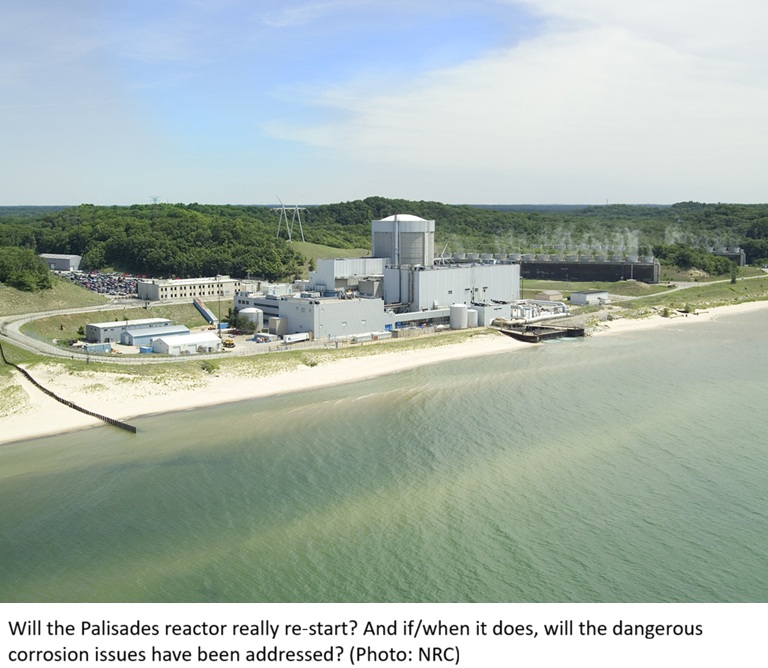
by beyondnuclearinternational, https://beyondnuclearinternational.org/2026/01/25/artificial-intelligence-will-not-revive-the-nuclear-industry/
On the contrary, we need renewable energy and natural intelligence, writes Stéphane Lhomme
The current boom in artificial intelligence is accompanied by a massive increase in energy and water consumption, and, according to what we are told, this phenomenon is only just beginning and will grow exponentially.
However, far from taking measures to stop or at least slow down this phenomenon, industrial and political leaders are instead competing with announcements and decisions to support it. As a result, various countries, including France, are trying to attract data centers by promising their owners, mainly the famous GAFAM (Google, Amazon, Facebook, Apple, Microsoft), to provide them with cheap and, above all, “green” electricity.
France is offering its nuclear power because, as everyone knows, nuclear power is “clean”… if we are willing to forget the devastation caused by uranium mines, the massive radioactive, chemical, and thermal discharges from power plants into rivers and oceans, radioactive waste, and the occasional contamination of an entire country or continent (during disasters such as Fukushima and Chernobyl).

During the World Nuclear Energy Exhibition (WNE) held in Paris from November 4 to 6, 2025, the vast majority of the media reported the countless announcements about a supposed “return to favor of nuclear power,” which, however, is just as illusory as the “great return of nuclear power” announced in the early 2000s – already accompanied by much fanfare at the time – by the same media outlets and sometimes the same journalists, who are taking advantage of the general amnesia of our “information” societies.
Despite the efforts of the high priestess of nuclear power at the time, Ms. Lauvergeon, revered by most of the media (always the same ones!) before leading her company Areva into bankruptcy (we are still waiting for the investigations that have been ongoing for 15 years to result in a trial), there was no “great comeback.”
Producing 17.1% of the world’s electricity in 2001, nuclear power has since seen its share steadily decline to below 10% in 2020 and below 9% in 2024 (8.97% to be exact). A veritable collapse as a “return to favor.” But we would have to believe that this time, buoyed by GAFAM and their unlimited checkbooks, the nuclear industry will truly experience a golden age (or rather a plutonium age). Let’s take a look at some of the thunderous announcements made in recent months.
Last June, Google announced that it would be relying on nuclear fusion to power its data centers! Let’s just remember that for 70 years, the major nuclear powers have failed completely in this endeavor, even when they joined forces in the Iter project in Cadarache (Bouches-du-Rhône). If nuclear fusion really is what powers Google, then this search engine is bound to shut down quickly!

In fact, last October, Google fell back on a plan B: restarting the Duane Arnold nuclear power plant in Iowa, which had been shut down since 2020. Never one to be late in relaying the nuclear industry’s announcements, AFP produced a dispatch reminding readers that this was the third project of its kind.
Indeed, the restart of the Palisades nuclear power plant in Michigan has been announced for 2023. But almost no one mentioned the official report of October 2024 revealing that the reactor, which had been shut down for several years, was severely affected by corrosion.
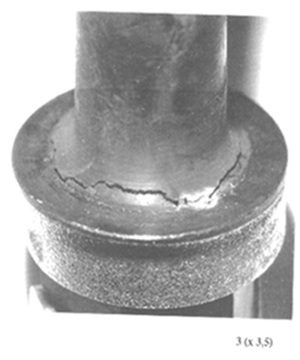
In reality, it is highly likely that this plant will never restart, nor will the Duane Arnold or Three Mile Island plants: in the latter case, the plan is to restart reactor 1, which was shut down in 2019, and not reactor 2 (whose core melted during a serious accident in 1979), as reported by the media, which we will charitably describe as inattentive.
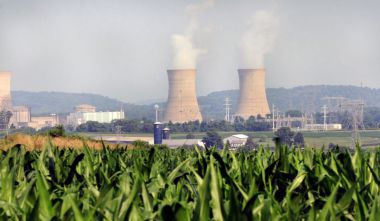
Another avenue for the supposed “return to favor of nuclear power” and its ability to fuel the insane consumption of AI is that of the famous SMRs, small modular reactors, which are of course touted as being “safe, easy to build, and inexpensive.” So all we had to do was think of it.

However, the 127 SMR projects identified worldwide by the OECD’s Nuclear Energy Agency, far from making this idea a reality, show instead a total lack of focus: many start-ups are chasing subsidies generously granted by politicians who are ignorant and, above all, terrified of being seen as dinosaurs who have missed the boat on renewal.
The SMR bubble is about to burst. In France, the main start-ups (Naarea, Newcléo, Jimmy, etc.) are in serious difficulty or have already suspended payments, and EDF’s Nuward project has been postponed indefinitely. In the US, the only project that had made any progress, NuScale, has already closed down.

After initially announcing the construction of new nuclear reactors (large or SMRs), then falling back on restarting shut-down reactors, GAFAM companies are now cautiously turning to existing facilities. In the US, for example, gas-fired power plants are being called upon. In addition, Meta (Facebook) has signed an agreement to purchase the output of the Clinton nuclear power plant (Illinois), a plant that is currently in operation: this is safer than relying on virtual or shut-down plants!
It is already clear that, wherever data centers are built, GAFAM will monopolize electricity production to the detriment of the population. This situation, which one might have thought was the stuff of science fiction, is already a reality in the US, for example in Virginia, Georgia, and Arizona, where the population is deprived of water, which is monopolized for cooling the numerous data centers built in these states, which attracted them by exempting them from taxes (again to the detriment of the population).
The same is true, for example, in Chile and already, or soon, in all countries that have had the bad idea of welcoming these famous data centers. Selfishly, we can only hope that, despite the grandstanding of the showman Macron, France will fail to attract data centers. It will then be the “winners” of this absurd race who will fall victim to GAFAM, and thus there will be electricity and water left for the needs of the French population. It should also be noted that various countries are beginning to take measures to slow down or suspend the installation of data centers.
Unfortunately, it is to be feared that nothing and no one will put a stop to the madness of AI and its senseless consumption of electricity (not to mention the “mining” of bitcoins and other cryptocurrencies, an activity that also consumes a tremendous amount of energy and water).
However, contrary to what is claimed in the numerous articles mentioned above, nuclear power will not be able to meet this demand: as demonstrated by the failures of large reactors—EPR (France) and AP1000 (USA)—as well as SMRs, the construction of nuclear power plants is far too uncertain, slow, and costly.
Moreover, according to the International Energy Agency, since 2020, 90% of new electricity generation capacity worldwide has been renewable, which is much cheaper than nuclear power and, above all, can be brought online very quickly. AI will therefore not save nuclear power; quite the contrary: once they have finished with their absurd announcements, even the GAFAM companies will turn away from it and choose realistic options. That said, while it is of course much better for electricity to be renewable rather than nuclear, one wonders where the progress will be if it is monopolized to power AI rather than meet the needs of the population.
On this subject, there is still time to cancel the senseless EPR reactor projects (even renamed EPR2 to make them seem like an improvement), which EDF is proving incapable of building and operating, and to devote the available money to realistic, decentralized energy efficiency and renewable energy projects that are supported by and for the population: Natural intelligence and renewables rather than artificial “intelligence” and nuclear power.
Stéphane Lhomme is the founder and director of Observatoire du nucléaire. This article was originally published by Observatoire du nucléaire.
3 Myths About the Shah of Iran — “Dictator, CIA Puppet, Brutal”
Quick article debunking Cold War-era propaganda that’s still being repeated
SL Kanthan, Jan 22, 2026, https://slkanthan.substack.com/p/3-myths-about-the-shah-of-iran-dictator?utm_source=post-email-title&publication_id=844398&post_id=185383071&utm_campaign=email-post-title&isFreemail=true&r=ln98x&triedRedirect=true&utm_medium=email
Now that Iran is experiencing the biggest protests since the Islamic Revolution of 1979, there is renewed interest in the history of the country during the Shah era. This is a short article to debunk three myths about the Shah of Iran. I have written a much longer article on this topic — here is the link. Okay, let’s look at the myths and debunk/clarify them.
The three talking points to demonize Mohammad Reza Pahlavi are:
- He was a dictator
- He was a puppet of the US, since he was installed by the CIA in the 1953 coup
- He ran a brutal secret police known as the SAVA
All of these accusations have some truths and some lies. The claims are exaggerated and miss the context.
Shah being a Dictator
First, the Shah was a monarch and would be considered a “dictator” by today’s Western standards. But, in those years, most countries in the world were under dictatorships — left or right. From the Soviet Union and the Eastern bloc to China and the Middle East to Latin America and even Spain and South Korea, dictators ruled the world!
What matters is this: Iranians had incomparably more political freedom, more economic freedom and more social freedom under the Shah than under the current theocratic regime in Iran.
Below [on original] is a photo of protesters — in Tehran from 1978 — with a sign that says, “Down with the Shah, the blood-sucker.” Can you imagine a similar sign today that says, “Down with Khamenei, the blood-sucker”? The protesters will be hanged from a crane.
Anti-Shah groups such as liberal university students, communists (like the Tudeh Party), and Islamic extremists thrived in Iran under the Shah. A terrorist group named as Fedayeen of Islam tried to assassinate the Shah — they fired five bullets, of which 4 narrowly missed, and one hit him in the shoulder.
Ironically, all the anti-Shah groups were brutally suppressed and eliminated by their former ally, Khomeini, after the revolution.
Within a month after coming to power, Khomeini denounced leftist Iranians as “non-Muslims” who “are at war with the philosophical beliefs of Islam.”
One year later, the Ayatollah openly declared a jihad on Iran’s liberals, Marxists and communists.
During the Shah’s rule, Iran had a parliament (majlis) which was freely elected by the people. In fact, one of the Prime Ministers — Mossadegh — was so powerful that the Shah had to flee the country for a couple of days in 1953!
The simple fact is that, if the Shah were a true dictator, there would have been no revolution in 1979!
Shah was a Puppet of the USA
This is a Soviet-era propaganda that is still being repeated today — remember that during the Cold War, both the US and the USSR were fighting over control of Iran, a very strategic country in terms of resources, influence and location.
The USSR was funding communist groups within Iran to destabilize the Shah’s government. And from radio stations near the Iranian border, the Soviets were blasting anti-Shah propaganda 7 hours a day.
The Shah was a very Westernized man who gravitated towards the US/Europe. But, of course, in such relations, the US would naturally have more power.
But he was not a “puppet.” In fact, the CIA complained in a classified psychological profile that the Shah was a “megalomaniac” who followed his “own plans, while disregarding US interests.” Not the description of a subservient leader.
The Shah also met with Soviet leaders in an act of extraordinary diplomacy during the intense Cold War. Here he is [on original] in Moscow with his wife Soraya in 1956:
About that infamous 1953 CIA coup: It was a coup to stop a coup
Contrary to the popular myth, the Shah was NOT installed by the CIA in a 1953 coup. He had actually come to power in 1941– that was 12 years before the coup and even 6 years before the CIA was created!
But… here is the nuance. The CIA certainly carried out the coup and helped the Shah, who had left/fled the country for 3–4 days.
Here is what happened:
Iranian Prime Minister Mossadegh was an influential and ambitious populist, who nationalized the oil sector in 1951. But it was a total disaster — Iran’s oil production fell a staggering 95% over the next two years, as the British withdrew all their technicians, and Iranians did not have the skill to operate the refineries.
At that point, the Shah tried to fire Mossadegh, but couldn’t. (So much for being a brutal dictator). Afraid of a coup or worse (assassination), the Shah fled to Italy for a couple of days.
At the same time, powerful Western oil interests and the deep state (MI6/CIA) were waiting for an opportunity to get rid of Mossadegh. Hence the CIA coup of 1953.
It was a coup to stop a coup.
SAVAK — The Shah’s Brutal Secret Police
After the 1953 coup discussed above, the Shah sought help from the West. That’s why SAVAK was created in 1957 with help from the CIA and MI6. Yes, SAVAK was ruthless, operated outside the law, and engaged in spying, arrests, torture etc.
But guess what happened after the Islamic Revolution? SAVAK was not dismantled, but simply renamed as SAVAMA! In fact, the deputy chief of SAVAK — General Hossein Fardoust — became the head of SAVAMA. All the infrastructure, files, intelligence, torture methods, along with most intel agents continued under Khomeini.
The anti-Shah people never talk about this inconvenient fact.
Conclusion
For ideologues on the far left, a good dictator is an anti-American dictator. So, they worship Stalin, Fidel Castro, Islamic regime in Iran etc., while hating on the Shah.
This is a short summary. You can read my much longer article on Substack:
1 This Month
10 March A LIVE WEBINAR THE REAL EFFECTS OF NUCLEAR POWER
What the Industry Isn’t Telling Us
1:00 PM Mountain, 2 pm Central, 3 pm Eastern. Live on the Keepers of the Water Facebook page



18 March Webinar @ 1 PM EST: An Assessment of SMR Projects: The Case of Canada
register for the zoom:
https://us02web.zoom.us/webinar/register/WN_o8BIIOUvQ2ONJR1nta65DQ#/registration


of the week – STOP SMALL MODULAR REACTORS IN CANADA
To see nuclear-related stories in greater depth and intensity – go to https://nuclearinformation.wordpress.com
-
Archives
- March 2026 (99)
- February 2026 (268)
- January 2026 (308)
- December 2025 (358)
- November 2025 (359)
- October 2025 (376)
- September 2025 (258)
- August 2025 (319)
- July 2025 (230)
- June 2025 (348)
- May 2025 (261)
- April 2025 (305)
-
Categories
- 1
- 1 NUCLEAR ISSUES
- business and costs
- climate change
- culture and arts
- ENERGY
- environment
- health
- history
- indigenous issues
- Legal
- marketing of nuclear
- media
- opposition to nuclear
- PERSONAL STORIES
- politics
- politics international
- Religion and ethics
- safety
- secrets,lies and civil liberties
- spinbuster
- technology
- Uranium
- wastes
- weapons and war
- Women
- 2 WORLD
- ACTION
- AFRICA
- Atrocities
- AUSTRALIA
- Christina's notes
- Christina's themes
- culture and arts
- Events
- Fuk 2022
- Fuk 2023
- Fukushima 2017
- Fukushima 2018
- fukushima 2019
- Fukushima 2020
- Fukushima 2021
- general
- global warming
- Humour (God we need it)
- Nuclear
- RARE EARTHS
- Reference
- resources – print
- Resources -audiovicual
- Weekly Newsletter
- World
- World Nuclear
- YouTube
-
RSS
Entries RSS
Comments RSS
 nuclear-news