More reports of drones flying near Paolo Verde nuclear power plant, and others, and over spent nuclear fuel storage sites
 Dozens More Mystery Drone Incursions Over U.S. Nuclear Power Plants Revealed, Forbes, David Hambling– 7 Sept 20, Forbes recently described how a swarm of drones flew in a restricted area at Palo Verde Nuclear Power Plant on two successive nights last September. A new cache of documents obtained under the Freedom of Information Act (FoIA) reveals how 24 nuclear sites suffered at least 57 drone incursions from 2015 to 2019 – and Palo Verde itself was overflown again in December, despite new security measures.
A 2003 report noted how vulnerable such pools were to terrorist action, simply by making a hole in the pool to drain out the cooling water and causing the stored fuel to overheat: “We warned that U.S. spent fuel pools were vulnerable to acts of terror. The drainage of a pool might cause a catastrophic radiation fire, which could render an area uninhabitable much greater than that created by the Chernobyl accident.”
EDF’s Economic Statement on impact of Sizewell nuclear project – gives unproven, misleading evidence
 Stop Sizewell C 3rd Sept 2020, An independent review of EDF’s Economic Statement, assessing the impacts of Sizewell C to Suffolk’s local economy, has concluded that the project threatens “profitability and, in some cases, viability” of some local businesses, while others will be “at an immediate disadvantage when bidding for contracts”.
The report, Sizewell Economic Statement – Response, by highly-regarded independent research and analysis consultancy Development Economics, reveals multiple areas where EDF’s claimed benefits are over-optimistic, unproven or misleading, frequently omitting
evidence to support its figures or relying on “erroneous analysis”.
It concludes, critically, that EDF’s Economic Statement “fails to meet the minimum requirements of the legislation”, with no serious attempt to measure the deterrent effect on tourists and their expenditure, traffic congestion or competition for skills and labour.
The National Policy Statement EN-6 requires that applicants for major nuclear energy projects take into account ‘potential pressures on local and regional resources, demographic change and economic benefit’.
Iran claims it’s identified saboteurs behind blast at nuclear site
this year and knows their motives for attacking the facility, an Iranian official said on Sunday.Atomic Energy Organization of Iran spokesman Behrouz Kamalvandi said during a television interview that the July incident at the Natanz facility was “an act of sabotage” and the investigation is still ongoing.
“As far as we know, they have identified the culprits and know their incentives and methods and actually, they have full knowledge over the issue,” Kamalvandi said, according to an English-language report on his remarks by the semi-official Fars News Agency. ……
Under the nuclear accord officially known as the Joint Comprehensive Plan of Action, Iran committed to limiting its nuclear program in exchange for sanctions relief.
But the JCPOA has been on life-support since the US withdrew from it and reimposed unilateral sanctions in 2018.
Iran has since taken small but escalatory steps away from compliance with the agreement, as it presses for the sanctions relief it was promised. Some of those steps are believed to have been at the Natanz nuclear site.
The US is currently engaged in a likely doomed bid to renew international sanctions against Iran at the UN, despite Trump’s withdrawal from the accord.https://www.timesofisrael.com/iran-claims-its-identified-saboteurs-behind-blast-at-nuclear-site/
U.S. Court fins that mass surveillance program exposed by Snowden was illegal
 U.S. court: Mass surveillance program exposed by Snowden was illegal, Raphael Satter, (Reuters) 4 Sept 20, – Seven years after former National Security Agency contractor Edward Snowden blew the whistle on the mass surveillance of Americans’ telephone records, an appeals court has found the program was unlawful – and that the U.S. intelligence leaders who publicly defended it were not telling the truth.In a ruling handed down on Wednesday, the U.S. Court of Appeals for the Ninth Circuit said the warrantless telephone dragnet that secretly collected millions of Americans’ telephone records violated the Foreign Intelligence Surveillance Act and may well have been unconstitutional.
Snowden, who fled to Russia in the aftermath of the 2013 disclosures and still faces U.S. espionage charges, said on Twitter that the ruling was a vindication of his decision to go public with evidence of the National Security Agency’s domestic eavesdropping operation. …….
“Today’s ruling is a victory for our privacy rights,” the ACLU said in a statement, saying it “makes plain that the NSA’s bulk collection of Americans’ phone records violated the Constitution.”
Reporting by Raphael Satter; Editing by Tom Brown https://www.reuters.com/article/us-usa-nsa-spying-idUSKBN25T3CK?fbclid=IwAR3sRR-njWN8HPgtFcejytlwQP7TV5Ca0HqxOYy-PhSL-AnnEE5fL3krU5w
Ohio lawmakers wrangle over how to repeal crooked nuclear bailout law
 Meanwhile, Ohio Has Its Own Nuclear Debate, Inside Clean Energy: BY DAN GEARINO – 4 Sept 20, Ohio lawmakers talked this week about whether—and how—to repeal a 2019 nuclear bailout law whose main backers are now the subject of a federal bribery probe.
On a superficial level, the discussions in Ohio and Illinois have a lot in common with talk about the role of nuclear power in the energy system, and lots of intrigue from federal prosecutors. For more details, see my story from July.
But the tone in Ohio is different, largely because the state government is controlled by Republicans who place little value on making a smooth transition to clean energy.
“I’ve never known this state or this General Assembly to be overly concerned with the environment,” said Thomas Suddes, who teaches at Ohio University and writes about state politics for The Plain Dealer in Cleveland.
He said both parties tend to value retaining jobs for constituents and helping party allies, and that this usually takes precedence over ideology.
Closing the nuclear plants would cost thousands of jobs, and a bill repealing the subsidies could be used in arguments ahead of the November election to portray lawmakers as insensitive to local concerns in the areas that host the plants.
So, even with the bribery scandal, there is a natural reluctance to repeal the bill, which makes Suddes doubtful that any substantial action will happen in the next few months.
“The cautious thing to do for a lot of incumbents would be to leave it alone,” he said.
Gov. Mike DeWine and some legislators have said they want to repeal and replace the 2019 law. But the governor and many others say they still support many of the law’s provisions, including subsidies for the state’s two nuclear power plants, owned by Energy Harbor, the company formerly known as FirstEnergy Solutions.
For now, there is nothing approaching consensus on what a replacement should look like.
House Speaker Robert Cupp has said he favored repealing and replacing the law, although he has given no specifics about a replacement. He said this week that he will appoint a special committee to study the issue, which is likely to mean there will not be quick action on a repeal…………
Randi Leppla, the lead energy attorney for the Ohio Environmental Council Action Fund, said the situation with the repeal effort seems to change “hour by hour.”
“It’s very, very clear that what we need to be doing is ripping this off the books and starting over from scratch,” she said. “This bill is corrupt from the bottom up, and it’s really just bad policy for Ohio.”
In addition to the nuclear bailout, the Ohio law subsidizes two coal-fired power plants and eliminates state requirements that utilities meet annual benchmarks for renewable energy and energy conservation.
The combination of policies harmful to the environment have made the Ohio law an example of a nuclear bailout that has little public benefit, according to the Union of Concerned Scientists and many others.
At least for now, Ohio leaders are doing little to erase this dubious distinction. https://insideclimatenews.org/news/02092020/inside-clean-energy-nuclear-illinois-ohio
Small nuclear reactor NuScam’s parent company Fluor sued over allegations of insider trading and deception

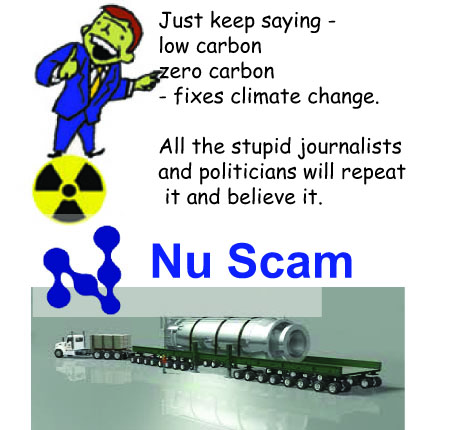 Fluor Board Sued Over Insider Trading, Accounting Allegations, Mike Leonard, Legal Reporter, Aug. 14, 2020, COURT: Del. Ch., TRACK DOCKET: No. 2020-0655 (Bloomberg Law Subscription, JUDGE: J. Travis Laster (Bloomberg Law Subscription), COMPANY INFO: Fluor Corp. (Bloomberg Law Subscripti
The board of Fluor Corp., a leading engineering and construction conglomerate that does significant business with the federal government, has been hit with a Delaware lawsuit claiming several of its members sold stock at inflated prices while conspiring to mask the company’s deteriorating finances.
“At the same time,” Fluor’s board and top executives “engaged in a pattern” of having the company “repurchase its own shares at over-inflated prices,” the 98-page Chancery Court complaint says. “This repurchase of inflated stock cost the company over $1.6 billion.”
The heavily redacted derivative suit, made public Wednesday, comes about three months after Fluor……….(subscribers only) https://news.bloomberglaw.com/mergers-and-antitrust/fluor-board-sued-over-insider-trading-accounting-allegations
Nuclear corruption in Ohio: HB 6 was never about jobs and communities by keeping nuclear plants open
HB 6 was never about jobs and communities by keeping nuclear plants open. In fact, First Energy Solutions refused to show legislators there was a need for the bailout. Yet, their own numbers posted on the company’s website show subsidies were never needed and, with the subsidy secure, they paid shareholders $800 million! That’s not done by a company in dire straits. Electricity customers should never have been forced to pay for this – especially now when hospitals, households, small businesses, schools and communities are struggling. ...
|
Ohioans should take notice when they hear the word “subsidy” because it refers to your money. That’s why most Ohioans have opposed House Bill 6 – the bailout of power plants owned by First Energy Solutions (now Energy Harbor) that will be tacked onto your electricity bill – from the beginning. And you really have no choice because we all need electricity. HB 6 should have never happened. But because of greed, it was secretly conceived through alleged corruption via the Ohio legislature rather than what should have been settled through a private bankruptcy process. An intimidating monopoly and indicted politician stand accused of perverting the legislative process with some $60 million spent to shift the billion-dollar subsidy from shareholders to Ohioans. That’s why Vistra has vigorously fought against this tainted legislation from the start. First, when HB 6 was before lawmakers and the corruption not yet alleged, we were a member of Ohioans Against Nuke Bailouts. Then, after the legislature passed HB 6 and the governor signed it, we pressed on as a member of Ohioans Against Corporate Bailouts, advocating to let Ohioans vote, as allowed by the state constitution, on whether they’d like their money used to bailout select companies. With the corruption that fueled HB 6 now exposed in a criminal indictment, we continue to fight, demanding the immediate and complete repeal of HB 6 as members of the Coalition to Restore Public Trust. We now know, through the substantial and mounting evidence amassed in the FBI’s investigation, that the real winners of HB 6 were a politician and his cronies, charged with racketeering and bribery, and the Wall Street owners of First Energy and First Energy Solutions. The losers are Ohioans still on the hook today to pay more than a billion dollars – unless Ohio legislators act to immediately repeal HB 6 in its entirety. HB 6 was never about jobs and communities by keeping nuclear plants open. In fact, First Energy Solutions refused to show legislators there was a need for the bailout. Yet, their own numbers posted on the company’s website show subsidies were never needed and, with the subsidy secure, they paid shareholders $800 million! That’s not done by a company in dire straits. Electricity customers should never have been forced to pay for this – especially now when hospitals, households, small businesses, schools and communities are struggling. …….. https://www.cincinnati.com/story/opinion/2020/09/01/opinion-nuclear-bailout-corruption-kills-public-trust-and-competition/3455443001/ |
|
Nuclear waste – another great injustice to indigenous people, and people of color
|
Add nuclear waste to list of social injustices, https://calmatters.org/commentary/my-turn/2020/08/add-nuclear-waste-to-list-of-social-injustices/, 31 Aug 20, – By Chelsi Sparti As national attention centers on racial injustices, a report by Rep. Mike Levin of California exposes yet another assault upon Black, Indigenous and people of color: they are especially vulnerable to harm from our handling and storage of radioactive waste. Across the country, as waste from aging nuclear power plants piles up by the ton, investor-owned utilities and their contractors continue to eye Indigenous lands as dumping sites. To reach these sites, the deadly material would travel unannounced on railways through hundreds of socioeconomically-disadvantaged neighborhoods. From the initial extraction of raw uranium to the eventual, millennia-long storage of spent nuclear fuel, the nuclear industry relies upon the exploitation of rural, Indigenous lands, states the June report by Levin, a Democrat from San Juan Capistrano. The “Report of the San Onofre Nuclear Generating Station Task Force” urges Congress to approve a siting process that aligns with recommendations of the Blue Ribbon Commission on America’s Nuclear Future, which calls for tribal leaders and local governments to have a “meaningful consultative role in important decisions” on nuclear waste storage. Those decisions will determine the permanent disposition of nuclear waste from 65 low-quality storage sites in 33 states. Drafted by scientists and policymakers over 18 months, the task force report contains new scientific discoveries and 30 policy recommendations. Action is expected on eight of them this year. Across the nation, Americans of all income levels are surrounded by radioactive material that remains deadly for more than 200,000 years and is impossible to clean up. In California, spent fuel stockpiles have accumulated at the Humboldt Bay, Diablo Canyon, Rancho Seco and San Onofre reactor sites. At San Onofre alone, 3.6 million pounds of radioactive waste is lodged in temporary storage about 100 feet from the rising ocean. Radioactive waste is an issue made worse by decades of inaction. Clearly, the nuclear industry is determined to unload its waste at the doorsteps of working-class, BIPOC communities. Even today, as the federal government deploys forces to U.S. cities to impose its will upon protesters for racial justice, the next generation of nuclear energy – in the form of “advanced reactors” – is poised to move closer to urban centers, according to an NRC memo. Black, Indigenous and people of color communities have a lot to be angry about. Their outrage should include demands to protect people of color from exposure to hazardous waste for the sake of nuclear industry profits.
|
|
|
A string of USA nuclear scandals: bribes, corrupt politics and lies, in effort to keep the industry alive

|
Nuclear Industry Politics: Bribes, Corruption and Lies https://www.ewg.org/energy/23289/nuclear-industry-politics-bribes-corruption-and-lies?utm_campaign=EWG+Content&utm_content=1598472836&utm_medium=Social&utm_source=facebook&fbclid=IwAR1paLNGDeZaXdPj0OfluAkJC31n5WWzJdlOTUamCB5IA5The U.S. nuclear industry knows it can’t compete fairly on the open market with safe, clean, cost-effective renewable energy sources like solar, wind and storage batteries, so it’s turning to illegal and unsavory tactics. This year, a string of scandals has exposed how some utilities are willing to use bribes, corrupt politics and lies to keep aging reactors online and planned new plants alive.
|
|
Big oil looks to solve its problems by flooding Africa and Asia with plastic
Big Oil Is in Trouble. Its Plan: Flood Africa With Plastic. https://www.nytimes.com/2020/08/30/climate/oil-kenya-africa-plastics-trade.html
Faced with plunging profits and a climate crisis that threatens fossil fuels, the industry is demanding a trade deal that weakens Kenya’s rules on plastics and on imports of American trash. NYT, By Hiroko Tabuchi, Michael Corkery and Carlos Mureithi, Aug. 30, 2020
Confronting a climate crisis that threatens the fossil fuel industry, oil companies are racing to make more plastic. But they face two problems: Many markets are already awash with plastic, and few countries are willing to be dumping grounds for the world’s plastic waste……..
Last year, Kenya was one of many countries around the world that signed on to a global agreement to stop importing plastic waste — a pact strongly opposed by the chemical industry. Emails reviewed by The Times showed industry representatives, many of them former trade officials, working with U.S. negotiators last year to try to stall those rules.
The industry thinks it has found a solution to both problems in Africa.
According to documents reviewed by The New York Times, an industry group representing the world’s largest chemical makers and fossil fuel companies is lobbying to influence United States trade negotiations with Kenya, one of Africa’s biggest economies, to reverse its strict limits on plastics — including a tough plastic-bag ban. It is also pressing for Kenya to continue importing foreign plastic garbage, a practice it has pledged to limit.
Plastics makers are looking well beyond Kenya’s borders. “We anticipate that Kenya could serve in the future as a hub for supplying U.S.-made chemicals and plastics to other markets in Africa through this trade agreement,” Ed Brzytwa, the director of international trade for the American Chemistry Council, wrote in an April 28 letter to the Office of the United States Trade Representative.
The United States and Kenya are in the midst of trade negotiations and the Kenyan president, Uhuru Kenyatta, has made clear he is eager to strike a deal. But the behind-the-scenes lobbying by the petroleum companies has spread concern among environmental groups in Kenya and beyond that have been working to reduce both plastic use and waste.
Kenya, like many countries, has wrestled with the proliferation of plastic. It passed a stringent law against plastic bags in 2017, and last year was one of many nations around the world that signed on to a global agreement to stop importing plastic waste — a pact strongly opposed by the chemical industry.
The chemistry council’s plastics proposals would “inevitably mean more plastic and chemicals in the environment,” said Griffins Ochieng, executive director for the Centre for Environmental Justice and Development, a nonprofit group based in Nairobi that works on the problem of plastic waste in Kenya. “It’s shocking.”
The plastics proposal reflects an oil industry contemplating its inevitable decline as the world fights climate change. Profits are plunging amid the coronavirus pandemic, and the industry is fearful that climate change will force the world to retreat from burning fossil fuels. Producers are scrambling to find new uses for
an oversupply of oil and gas. Wind and solar power are becoming increasingly affordable, and governments are weighing new policies to fight climate change by reducing the burning of fossil fuels.
Pivoting to plastics, the industry has spent more than $200 billion on chemical and manufacturing plants in the United States over the past decade. But the United States already consumes as much as 16 times more plastic than many poor nations, and a backlash against single-use plastics has made it tougher to sell more at home……….
The Kenya proposal “really sets off alarm bells,” said Sharon Treat, a senior lawyer at the nonpartisan Institute for Agriculture and Trade Policy who has worked for more than a decade advising trade talks in both the Trump and Obama administrations. Corporate lobbyists “frequently offer up very specific proposals, which the government then takes up,” she said. ………..
The plastics industry’s proposals could also make it tougher for to regulate plastics in the United States, since a trade deal would apply to both sides.
The records, obtained through Freedom of Information Act requests by Unearthed, a London-based affiliate of the environmental group Greenpeace, paint a picture of close ties between the trade representatives, administration officials and industry representatives. …………..
Kenya isn’t the only country taking measures to curb plastics. A recent report by the United Nations counted 127 countries with policies on the books to regulate or limit use.
In response, the industry has tried to address the plastics issue. The Alliance to End Plastic Waste — formed by oil giants like Exxon Mobil and Chevron, as well as chemical companies like Dow — last year pledged $1.5 billion to fight plastic pollution. That figure, critics point out, is a small fraction of what the industry has invested in plastic infrastructure.
Manufacturers “say they will address plastic waste, but we say plastic itself is the problem,” Mr. Ochieng said. “An exponential growth in plastics production is just not something we can handle.”………….
Despite the industry opposition, last year more than 180 countries agreed to the restrictions. Starting next year, the new rules are expected to greatly reduce the ability of rich nations to send unwanted trash to poorer countries. The United States, which has not yet ratified the Basel Convention, won’t be able send waste to Basel member nations at all……
That setback has re-energized industry to seek deals with individual countries to boost the market for plastics, and find new destinations for plastic waste, analysts say.
In Nairobi, local groups are worried. “My concern is that Kenya will become a dumping ground for plastics,” said Dorothy Otieno of the Centre for Environmental Justice and Development. “And not just for Kenya, but all of Africa.” https://www.nytimes.com/2020/08/30/climate/oil-kenya-africa-plastics-trade.html
Climate science deniers jump on to Far Right with QAnon conspiracy group
In May, a second Q-Drop riffed on climate change, with a link to a snarky tweet about science and the Swedish teen climate activist Greta Thunberg by a would-be House Republican who’d lost her primary race in March.
Both of those Q-Drops were picked up by a report commissioned by a coalition of environmental groups and conducted by the research firm Graphika, which found that a group of vocal climate science deniers began using QAnon hashtags in May — and they haven’t stopped since.
“The QAnon movement hasn’t traditionally covered climate change, but in May, when an influential QAnon account tweeted about climate denial, there was a notable and sustained increase of QAnon content shared within the climate denial group,” Michael Khoo, an advisor on disinformation for the environmental group Friends of the Earth, and Melissa Ryan, CEO of CARD Strategies and author of the Ctrl Alt-Right Delete weekly newsletters, wrote in an article published today on Medium.
Asked and Answered
The questions that Q advanced on climate change have been asked and answered — as essentially all of the burning questions on climate science still churning around in climate denial circles have been.
And today, as the impacts of a warming climate are accelerating, it is very clear that we collectively have little time to spare waiting until those who haven’t been keeping up with, or who refuse to acknowledge, the scientific consensus are convinced. The longer the world waits to slash greenhouse gas pollution, the less chance we collectively have to calm the worst impacts of a warming world, according to the world’s top climate experts, and if we don’t, climate change could make all of the calamities we’ve faced in 2020 soon pale in comparison.
Q, however, raised different concerns about climate action.
“Who audits where the money goes?” the December Q-Drop asked, linking to an article about the Green Climate Fund, which provides funding to help developing countries reduce their greenhouse gas emissions to help them meet their Paris Agreement goals.
Nevermind that if you want the audits of the Green Climate Fund alluded to in the Q-Drop, the answer is extraordinarily unmysterious and unglamorous: the audited financial statements are posted online and they’re done by accountants. Nevermind also that the Paris Agreement itself was never fundamentally about the movement of money, but instead involves countries promising to regulate pollution inside their borders — something we’re still continuing to fail to do, both in the United States and worldwide.
And nevermind that the U.S., whose politicians the Q-Drop implies are pocketing money somehow along the way, has nearly walked away from both the Paris Agreement and the Green Climate Fund. That’s despite the glaring fact that the U.S. has been the world’s worst climate polluter since 1750, meaning that this country has played the single largest role in causing the very problem that the global climate pact attempts to (somewhat) address.
To turn Q’s question around, one very basic question Q has never answered is who exactly they are — and to what extent, if any, they’ve sought to monetize the power and influence they’ve been busy amassing. “At this point, who’s behind it is speculation more than anything,” Ryan told DeSmog.
Another key part of the problem — as ever — is that climate science deniers publicly talk a lot more than others. Whereas in years past, mainstream media was faulted for giving climate science deniers a misleading amount of airtime, today, they’re using social media to achieve the same ends. Graphika’s research found that for every social media post by the vocal climate scientists and environmentalists they studied, the vocal climate science deniers they studied posted four times.
“On average, they observed that the Climate Denial group was about four times ‘louder’ (number of tweets relative to the group size) than the Climate Science group,” Khoo and Ryan, both advisors to a coalition of environmental groups that commissioned Graphika’s research, wrote.
Clutching at Q’s Coattails
Not only is QAnon taking up climate denial, but prominent climate deniers have been taking up QAnon.
“The other thing we see is that the right needs QAnon more and more to amplify their messaging,” said Ryan.
Take, for example, Naomi Seibt, a young German YouTuber who has questioned climate science and who has worked with the Heartland Institute, a U.S. think tank and notorious promoter of climate science denial………….
As in Germany, white supremacists in the U.S. have increasingly engaged in racially motivated “mass shooter” armed attacks on unarmed people. And QAnon followers have also begun committing violent acts. “I think it’s also important to remember that the FBI has declared QAnon a domestic terrorism threat,” said Ryan, “and QAnon has inspired kidnappings, it has inspired at least one murder, it has inspired arson, there is a real danger from these folks who are drawn to this and become just embroiled in it.”…………
Social Media Fail
Khoo and Ryan pointed to the ways that social media companies for years failed to conduct the most basic scrutiny of information that they publish online and allowed all sorts of demonstrably false information to be repeated in an endless rumor mill online.
“Facebook has policies that let Trump lie uninterrupted,” they wrote. “And when climate deniers get a simple fact-check on Facebook, members of Congress themselves have sent letters to company executives to complain.”
All of this can, of course, have significant policy consequences in the real world.
“The danger for environmental advocates and for the planet is that QAnon could be the energy that stops a big push for any meaningful climate action,” Khoo told DeSmog. “If a Green New Deal is the next thing, we could see QAnon followers serving as the foot soldiers in that war.”
There’s also the risk that fossil fuel companies and trade organizations might jump on the QAnon bandwagon, inspired by the conspiracy theory’s popularity. Last week, President Trump praised the movement, claiming not to know much about it except that “they like me very much.”
“If QAnon becomes more mainstream,” Ryan said, “I could see a scenario where industry groups that are invested in climate denial and fossil fuels and such will be incentivized to embrace QAnon or rely on those tactics and networks.”
The other risk is that conspiracy theorizing, when mixed with social media, can not only bring in adherents, it can also raise money.
“The new addition to this history of climate capitalism is the capitalism behind the clicks, the monetizing of disinformation that happens on all the platforms,” Khoo and Ryan wrote. “Virality is central to the profit model, as are ads. Whether or not they’re true is secondary, from a business perspective.”
And the reality is that QAnon has been growing, with NBC News reporting earlier this month that Facebook discovered QAnon accounts and pages have attracted over 3 million member and follower accounts.
Last week, Facebook removed nearly 800 QAnon groups and took some steps to restrict QAnon hashtags and other social media. That follows moves by Twitter to take down roughly 7,000 Twitter accounts and designating QAnon as “coordinated harmful activity.”
Some see that as far too little, far too late. “They’ve had three years of almost unfettered access outside of certain platforms to develop and expand,” Brian Friedberg, a senior researcher at the Harvard Shorenstein Center’s Technology and Social Change Project, told MIT Technology Review in July.
As of press time, Facebook and Heartland have not responded to questions from DeSmog. https://www.desmogblog.com/2020/08/27/qanon-conspiracy-naomi-seibt-climate-science-deniers?utm_source=DeSmog%20Weekly%20Newsletter
FirstEnergy heavily involved in the corruption-filled Ohio nuclear stations bailout
 FirstEnergy had big stake in tainted nuclear plant bailout,
  Chattanooga Times Free Press, August 28th, 2020 | by MARK GILLISPIE and JOHN SEEWER / The Associated Press CLEVELAND (AP) — FirstEnergy Corp. was once blamed for its part in triggering North America’s largest blackout nearly 20 years ago. Now, the multistate power company is again facing intense scrutiny — this time for its role in an alleged $60 million bribery scheme that has ensnared one of Ohio’s most powerful politicians.While FirstEnergy and its executives have denied wrongdoing and have not been criminally charged, federal investigators say the company secretly funneled millions to secure a $1 billion legislative bailout for two unprofitable Ohio nuclear plants then operated by an independently controlled subsidiary called FirstEnergy Solutions.
Officials from the Akron-based corporation, including CEO Chuck Jones, have long insisted FirstEnergy Corp. had no financial stake in rescuing the plants because they were operated by FirstEnergy Solutions. Yet nearly all of the money used to fund the scheme, authorities said, came from the corporation itself.
Critics say the bailout bill, known as HB6, helped smooth the way for FirstEnergy to officially shift ownership of the nuclear plants and two coal-burning power plants to its creditors in federal bankruptcy court in February. Shedding the plants allowed the corporation to focus on its profitable business of powering 6 million customers in Ohio and other states.
Ashley Brown, executive director of the Harvard Electricity Policy Group at Harvard University’s John F. Kennedy School of Government and a member of the Public Utilities Commission of Ohio from 1983 to 1993, said the bailout legislation clearly benefited FirstEnergy Corp.
“I think there’s no question that FirstEnergy was acting in its own self-interest,” Brown said. “Ordinarily, there’s nothing particularly wrong with that. But HB6 skewed everything.”
‘Company A’
After its bailout-driven success, FirstEnergy’s fortunes took an unwelcome turn July 21.
That’s when federal authorities released a criminal complaint detailing how “Company A” — a clear reference to FirstEnergy — spent $60 million to get a well-known Republican named Larry Householder selected as Ohio’s House speaker, finance his bailout passage efforts and prevent Ohioans from having their say about the legislation at the polls.
FirstEnergy’s stock price plummeted nearly 35% within two days and has yet to rebound. Independent board members have called for an internal investigation and shareholders have filed at least four potential class-action lawsuits alleging FirstEnergy’s executives committed fraud and concealed an “illicit campaign” to secure the bailout.
“The company’s most senior executives, including its CEO defendant Jones, were directly involved in and oversaw these efforts, placing the company and its shareholders at extreme risk of legal, reputational and financial harm,” one lawsuit said………
The corporation funneled $38 million to a dark money group to finance a dirty tricks campaign that prevented bailout opponents from gathering enough signatures to place a referendum on the ballot, federal authorities alleged.
FirstEnergy also benefited from a last-minute change to the bailout legislation that essentially allowed the utility to charge retail customers more for lost revenue, a sweetener that Jones said made roughly one-third of the company’s business “recession proof.”
While the utility said the add-on would stabilize rates for customers, an analysis released by the Ohio Manufacturers Association estimated FirstEnergy could reap $355 million in unearned revenue through 2024.
Federal investigators said the add-on “likely came as a result of the successful influence campaign” waged by Householder and his four associates, all of whom were indicted on federal racketeering charges last month. The associates have pleaded not guilty, while Householder has been given more time to find a new attorney. ………
with state and federal officials reluctant to help, the FirstEnergy Solutions subsidiary announced in March 2018 that it would close the plants in 2021. The subsidiary filed for bankruptcy three days later, saying it had $7.2 billion in assets and $3.1 billion in debt as of Dec. 31, 2016.
By that time, according to federal authorities, the bribery scheme had already been set in motion.
Two months after Householder flew on a company plane to President Donald Trump’s inauguration in January 2017, FirstEnergy wired $250,000 into the bank account of Generation Now — a dark money group created to promote “social welfare” under a provision of federal tax law that shields its funding sources or spending. Authorities say Householder controlled Generation Now as part of the alleged scheme.
Of the $60 million eventually funneled by FirstEnergy to Generation Now through the end of 2019, $42 million came from an entity called FirstEnergy Services that is overseen by Jones and his corporate team, the criminal complaint said.
……….Jonathan Entin, a law professor emeritus at Case Western Reserve University in Cleveland, said there is no way for FirstEnergy “to spin this.”
“They cannot credibly say they’re completely innocent bystanders even if they did not break the law,” Entin said. “It’s really hard to believe they were completely ignorant of what was happening.”
……….The bailout legislation became law last October, the day after the anti-bailout referendum effort failed. By February of this year, FirstEnergy appeared to have gotten what it wanted: FirstEnergy Solutions had emerged from bankruptcy as a new privately held company called Energy Harbor. FirstEnergy Corp. was out of the power generation business and was now a regulated electric transmission company, feeding power to 6 million customers in six states.
And it was good, at least initially, for FirstEnergy’s bottom line, its shareholders, and the FirstEnergy leadership team.
The company, in a Securities and Exchange Commission filing early this year, said Jones’ total compensation in 2019 was nearly $21 million, including a $1.6 million performance-based salary bonus for that year and $18 million in performance-based stock units for a three-year period ending in 2019.
Now, 17 summers after a tree branch touched a high-voltage line and a computer malfunction at FirstEnergy unraveled into a massive blackout in the U.S. northeast and Canada, the company again finds itself on the defensive.
“If it turns out what FirstEnergy went over the line, the question is who will be held responsible,” Entin said. “Will it be individuals? Or will it be the company?” https://www.timesfreepress.com/news/business/aroundregion/story/2020/aug/28/firstenergy-stake-tainted-nuclear-plant-bailout/530974/
Ohio Attorney General could seek injunction to stop nuclear plant surcharge
Ohio AG Yost considering lawsuit to halt nuclear plant surcharge, LIZ SKALKA. The Blade. lskalka@theblade.com–26 Aug 20, COLUMBUS — Ohio Attorney General Dave Yost on Wednesday said he’s prepared to seek an injunction that would stop the imposition of a ratepayer surcharge flowing to two northern Ohio nuclear power plants at the center of the $61-million statehouse corruption scandal.Mr. Yost, a Republican, indicated he’s considering moving ahead with a lawsuit as the Ohio Senate prepares to return to Columbus next week to discuss repealing or replacing the energy law, House Bill 6, at the heart of the scandal.
Pressuring lawmakers to act quickly on what will be a complex process, Mr. Yost said he could file a lawsuit as soon as September if the legislature doesn’t move swiftly to repeal the law. He declined to set a deadline or elaborate on what might trigger him to file, except to say he supports a repeal……..
Lawmakers have debated how to handle the controversial law since former House Speaker Larry Householder (R., Glenford) and four others were charged in July with conspiring to funnel $61 million from FirstEnergy and related interests to help elect Mr. Householder’s allies who would then elevate him to speaker. The political power he gained was used to pass the energy law.
Its key feature is a new surcharge to FirstEnergy Solutions’ customers monthly bills beginning in 2021 to generate $150 million a year to support the struggling nuclear plants and $20 million a year for solar projects.
House Republicans and Democrats have introduced separate repeal bills that would block the new subsidies while restoring mandates that utilities obtain more of their power from renewable sources.
A bipartisan measure doing the same thing has been introduced in the Senate.
Mr. Yost said a lawsuit would stop a billion-dollar revenue stream from flowing to the nuclear plants while lawmakers deal with the fallout from the corruption scandal. ……
The Coalition to Restore Public Trust, a pro-repeal group, applauded Mr. Yost.
“The potential injunction sought by AG Yost should serve as further notice to Ohio’s legislature that they must move expeditiously to remove this tainted legislation from Ohio law,” executive director Michael Hartley said in a statement. https://www.toledoblade.com/business/energy/2020/08/26/ohio-ag-yost-considering-lawsuit-to-halt-nuclear-plant-charge/stories/20200826129
Iran says sabotage caused explosion at Natanz nuclear site
|
Iran says sabotage caused explosion at Natanz nuclear site, Aljazeera, 23 Aug 20
Spokesman for Atomic Energy Organization says authorities will reveal ‘in due time the reason behind blast’ in July. Iran’s Atomic Energy Organization has said an explosion last month that damaged the country’s Natanz nuclear facility was the result of “sabotage”.”Security investigations confirm this was sabotage and what is certain is that an explosion took place in Natanz,” spokesman Behrouz Kamalvandi said on Sunday. “But how this explosion took place and with what materials … will be announced by security officials in due course,” he was quoted as saying by state news agency IRNA. The Natanz uranium enrichment site, much of which is underground, is one of several Iranian facilities monitored by inspectors of the International Atomic Energy Agency (IAEA), the UN nuclear watchdog. Iran’s top security body said after the blast on July 2 that the cause had been determined but would be announced later “for security reasons”. Officials said the incident had caused significant damage that could slow the development of advanced uranium enrichment centrifuges. Some Iranian officials have previously said the explosion may have been the result of cyber-sabotage, warning that Tehran would retaliate against any country carrying out such attacks…….. Tehran denies ever seeking nuclear weapons. Iran agreed to curb its nuclear programme in exchange for the removal of most international sanctions in a deal reached between Tehran and six world powers in 2015…… The deal only allows Iran to enrich uranium at Natanz facility, with just over 5,000 first-generation IR-1 centrifuges. On Monday, IAEA head Rafael Mariano Grossi will visit Iran for the first time since taking up the role in December last year. The IAEA said in a statement Grossi will address Iran’s cooperation with the agency, particularly access for its inspectors to certain sites……..https://www.aljazeera.com/news/2020/08/iranian-official-sabotage-caused-fire-natanz-nuclear-site-200823174331248.html |
|
Biggest bribery and money-laundering bust in Ohio history, but the crooked pro nuclear law still stands!
 Opinion: How bad nuclear plant bailout legislation got passed
Now the law is forcing Ohio taxpayers to cough up $1.3 billion in subsidies to prop up two aging nuclear plants – quashing cheaper natural gas and zero-emissions renewables like wind and solar. It also memorialized taxpayer subsidies for ailing coal plants – including, because Householder and his alleged co-conspirators were apparently feeling neighborly, for a coal plant across the border in Indiana.
But let’s not lose sight of FirstEnergy. The opaque electric utility had already long shirked accountability for its actions, cloaking itself in expendable subsidiaries and opposing virtually any measure to improve Ohio’s air and water, which the utility has long been responsible for befouling. This time, to protect its toxic nuclear and coal assets, the company apparently happily engaged in what even the scheme’s conspirators allegedly openly referred to as “pay to play,” buying Ohio lawmakers for a song compared to the $1.3 billion the utility now stands to skim from Ohioans’ pockets.
We have yet to see how many more dominoes fall. There’s Sam “The Randazzler” Randazzo, the supposed ex-lobbyist and current public utilities commission chair, who seems to have much to answer for in the scheme. And FirstEnergy, it appears, didn’t stop at allegedly buying Ohio politicians. Even after the law passed, it spent another $38 million in an apparent dark-money campaign to make sure it’d stopped Ohio’s vital transition to a clean energy economy – the prospect of thousands of new clean jobs, not to mention saving the Earth, apparently not enough when compared to FirstEnergy profit margins and executives’ Christmas bonuses
Even as the feds continue following the money, we know what must happen: Gov. DeWine, who unenthusiastically signed the bill, is now calling for its repeal – a crucial first step toward righting this eye-popping wrong. As we now know, courtesy of the FBI and Justice Department, supporting these ailing power plants was nothing more than a successful bid to line executives’ pockets – and, it seems, buy the house speaker a vacation home in Florida. As we continue to learn who knew what when, erasing this law will clear the way for cleaner, far cheaper, truly market-competitive resources like natural gas and renewables to power our homes and businesses.
Ohioans deserve better – more honest politicians, truly transparent electricity providers, cleaner air and water. Repealing this law, and holding our officials to account, is the way to get there.
Jigar Shah is president of Generate Capital, a San Francisco-based finance company that builds, owns and operates renewable energy infrastructure.
1 This Month
Chernobyl: The Lost Tapes – A good documentary on Chernobyl on SBS available On Demand for the next 3 weeks– https://www.sbs.com.au/ondemand/tv-program/chernobyl-the-lost-tapes/2352741955560

of the week–London Campaign for Nuclear Disarmament

Tell the Ukrainian Government to Drop Prosecution of Peace Activist Yurii Sheliazhenko
To see nuclear-related stories in greater depth and intensity – go to https://nuclearinformation.wordpress.com
-
Archives
- April 2026 (139)
- March 2026 (251)
- February 2026 (268)
- January 2026 (308)
- December 2025 (358)
- November 2025 (359)
- October 2025 (376)
- September 2025 (257)
- August 2025 (319)
- July 2025 (230)
- June 2025 (348)
- May 2025 (261)
-
Categories
- 1
- 1 NUCLEAR ISSUES
- business and costs
- climate change
- culture and arts
- ENERGY
- environment
- health
- history
- indigenous issues
- Legal
- marketing of nuclear
- media
- opposition to nuclear
- PERSONAL STORIES
- politics
- politics international
- Religion and ethics
- safety
- secrets,lies and civil liberties
- spinbuster
- technology
- Uranium
- wastes
- weapons and war
- Women
- 2 WORLD
- ACTION
- AFRICA
- Atrocities
- AUSTRALIA
- Christina's notes
- Christina's themes
- culture and arts
- Events
- Fuk 2022
- Fuk 2023
- Fukushima 2017
- Fukushima 2018
- fukushima 2019
- Fukushima 2020
- Fukushima 2021
- general
- global warming
- Humour (God we need it)
- Nuclear
- RARE EARTHS
- Reference
- resources – print
- Resources -audiovicual
- Weekly Newsletter
- World
- World Nuclear
- YouTube
-
RSS
Entries RSS
Comments RSS
 nuclear-news