The disgraceful case mounted against Assange by a corrupt U.S. Department of Justice and their hired guns in Britain.
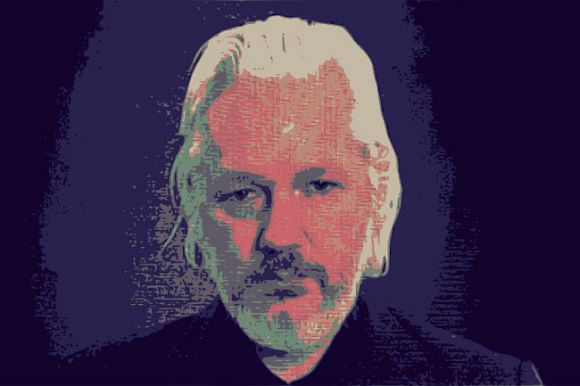
It is this institutional lying and duplicity that Julian Assange brought into the open and in so doing performed perhaps the greatest public service of any journalist in modern times.
JOHN PILGER: U.S. wins extradition appeal against Julian Assange, Independent Australia, By John Pilger | 11 December 2021, ”…….. Miscarriage of justice is an inadequate term in these circumstances. It took the bewigged courtiers of Britain’s ancien regime just nine minutes on Friday to uphold an American appeal against a District Court judge’s acceptance in January of a cataract of evidence that hell on Earth awaited Assange across the Atlantic: a hell in which, it was expertly predicted, he would find a way to take his own life.
Volumes of witness by people of distinction, who examined and studied Julian and diagnosed his autism and his Asperger’s Syndrome and revealed that he had already come within an ace of killing himself at Belmarsh Prison, Britain’s very own hell, were ignored.
The recent confession of a crucial FBI informant and prosecution stooge, a fraudster and serial liar, that he had fabricated his evidence against Julian was ignored. The revelation that the Spanish-run security firm at the Ecuadorean embassy in London, where Julian had been granted political refuge, was a CIA front that spied on Julian’s lawyers and doctors and confidants (myself included) — that, too, was ignored.
The recent journalistic disclosure, repeated graphically by defence counsel before the High Court in October, that the CIA had planned to murder Julian in London — even that was ignored.
Each of these “matters”, as lawyers like to say, was enough on its own for a judge upholding the law to throw out the disgraceful case mounted against Assange by a corrupt U.S. Department of Justice and their hired guns in Britain. Julian’s state of mind, bellowed James Lewis, QC, America’s man at the Old Bailey last year, was no more than “malingering” — an archaic Victorian term used to deny the very existence of mental illness.
To Lewis, almost every defence witness, including those who described from the depth of their experience and knowledge the barbaric American prison system, was to be interrupted, abused, discredited. Sitting behind him, passing him notes, was his American conductor: young, short-haired, clearly an Ivy League man on the rise.
In their nine minutes of dismissal of the fate of journalist Assange, two of the most senior judges in Britain, including the Lord Chief Justice, Lord Burnett (a lifelong buddy of Sir Alan Duncan, Boris Johnson’s former Foreign Minister who arranged the brutal police kidnapping of Assange from the Ecuadorean embassy) referred to not one of a litany of truths aired at previous hearings in the District Court.
These were truths that had struggled to be heard in a lower court presided over by a weirdly hostile judge, Vanessa Baraitser. Her insulting behaviour towards a clearly stricken Assange, struggling through a fog of prison-dispensed medication to remember his name, is unforgettable.
What was truly shocking on Friday was that the High Court Judges – Lord Burnett and Lord Justice Timothy Holroyde, who read out their words – showed no hesitation in sending Julian to his death, living or otherwise. They offered no mitigation, no suggestion that they had agonised over legalities or even basic morality.
Their ruling in favour, if not on behalf of the United States, is based squarely on transparently fraudulent “assurances” scrabbled together by the Biden Administration when it looked in January like justice might prevail.
These “assurances” are that once in American custody, Assange will not be subject to the Orwellian SAMs – Special Administrative Measures – which would make him an un-person; that he will not be imprisoned at ADX Florence, a prison in Colorado long condemned by jurists and human rights groups as illegal: “a pit of punishment and disappearance”; that he can be transferred to an Australian prison to finish his sentence there.
The absurdity lies in what the Judges omitted to say. In offering its “assurances”, the U.S. reserves the right not to guarantee anything should Assange do something that displeases his gaolers. In other words, as Amnesty International has pointed out, it reserves the right to break any promise.
There are abundant examples of the U.S. doing just that. As investigative journalist Richard Medhurst revealed last month, David Mendoza Herrarte was extradited from Spain to the U.S. on the “promise” that he would serve his sentence in Spain. The Spanish courts regarded this as a binding condition.
Medhurst wrote:
‘Classified documents reveal the diplomatic assurances given by the U.S. Embassy in Madrid and how the U.S. violated the conditions of the extradition. Mendoza spent over six years in the U.S. trying to return to Spain. Court documents show the United States denied his transfer application multiple times.’
The High Court Judges – who were aware of the Mendoza case and of Washington’s habitual duplicity – describe the “assurances” not to be beastly to Julian Assange as a “solemn undertaking offered by one government to another”. This article would stretch into infinity if I listed the times the rapacious United States has broken “solemn undertakings” to governments, such as treaties that are summarily torn up and civil wars that are fuelled. It is the way Washington has ruled the world, and before it Britain — the way of imperial power, as history teaches us.
It is this institutional lying and duplicity that Julian Assange brought into the open and in so doing performed perhaps the greatest public service of any journalist in modern times.
Julian himself has been a prisoner of lying governments for more than a decade now. During these long years, I have sat in many courts as the United States has sought to manipulate the law to silence him and WikiLeaks………….. https://independentaustralia.net/life/life-display/john-pilger-us-wins-extradition-appeal-against-julian-assange,15842
Federal inspector falsified safety reports at North Anna nuclear plant.

Federal inspector falsified safety reports at North Anna nuclear plant, https://www.wric.com/news/virginia-news/breaking-federal-inspector-falsified-safety-reports-at-north-anna-nuclear-plant/by: Jakob CordesPosted: Dec 14, 2021 CHARLOTTESVILLE, Va. (WRIC) — A federal inspector who led safety efforts at the North Anna Nuclear Power Plant in Louisa County plead guilty this week to falsifying safety inspection reports.
The charges were filed after Gregory Croon’s retirement from the Nuclear Regulatory Commission (NRC) in 2020. In a press release, the Department of Justice’s (DOJ) Office of the Inspector General (OIG) said the charges were a result of a joint investigation between the OIG and NRC.
According to court documents obtained by 8News, Croon worked at the power plant for four years and was the senior inspector at the North Anna facility, overseeing safety inspections for the entire plant.
Over three separate quarterly reports in 2017, Croon was found to have lied about on-site inspections of key fire and flood safety systems, describing the completion of inspections that never actually took place. The systems in question included fire suppression mechanisms and flood barriers protecting key equipment.
While only a few specific instances of falsification were described in court documents, a statement of facts signed by Croon stated that for years he “allowed days or even weeks to pass without entering North Anna.”
Court documents go on to say that his immediate supervisor told him on several occasions to conduct physical inspections more frequently, but that Croon continued to avoid the plant.
The North Anna Nuclear Nuclear Generating Station is a 1892 Megawatt plant located on the shores of Lake Anna in Louisa County. It’s situated near major population centers in Central Virginia, about 60 miles from Richmond and 50 miles from Charlottesville.
“The accuracy of NRC inspection reports is critical to the NRC’s oversight of licensees’ safe operation of nuclear power plants around the nation,” said NRC Inspector General Robert J. Feitel. “Croon’s false statements could have jeopardized that safety oversight function.”
At a Dec. 13 hearing before the Hon. Judge Norman K. Moon in the Western District Court of Virginia, Croon submitted a guilty, signing a plea agreement with prosecutors that would allow him to avoid jail time but carries a term of probation and a potential fine of up to $9,500.
Croon was released on bond but will reappear before the court in Charlottesville for a sentencing hearing on March 7, 2022.
Classified Documents Invalidate United States’ Appeal Against Assange — Richard Medhurst
‘‘I’m scared that will be Assange. They will make him go nuts.”
“I’m a nobody. If they’re capable of doing this to me, just imagine what they can do to Assange.”
The United States Broke Diplomatic Assurances for David Mendoza, It Will Do the Same with Julian Assange Richard Medhurst’s Newsletter
| Richard MedhurstNov 29 |
| Richard Medhurst Nov 29 In 2009, David Mendoza Herrarte was extradited from Spain to the United States, on condition he be allowed to serve his sentence in SpainClassified documents reveal the diplomatic assurances given by the U.S. Embassy in Madrid and how the U.S. violated the conditions of his extraditionMendoza spent over 6 years in the United States trying to return to Spain. Court documents show how the United States denied his transfer application multiple timesWhile in prison, Mendoza sued the United States, and Spain for failing to uphold the conditions of his extradition and violating his human rights. His case was recently taken up by the United Nations |
- Mendoza’s case was raised last month in the English High Court, where the United States is attempting to extradite Julian Assange to the U.S.
- The United States has offered similar diplomatic assurances that Assange could serve a sentence in Australia
- Assange’s lawyers cite Mendoza’s case as evidence that these assurances cannot be trusted
- James Lewis, the lead U.S. prosecutor, said that these assurances are bulletproof. He told the High Court that, “The United States have never broken a diplomatic assurance, ever”. Court documents and diplomatic assurances obtained by Richard Medhurst show this to be untrue
- David Mendoza Herrarte was born and raised in the United States. His mother being from Spain, he would go there every summer, describing it to me as his second home. He is both an American and Spanish national.
Mendoza was wanted by the United States for drug trafficking. In the early 2000s, he used helicopters to transport marijuana, known commonly as BC Bud, from Canada across the U.S. border into Seattle. Today, marijuana is legal in Seattle……………………………………………… - The diplomatic assurance did not specifically state that Mendoza would be sent to Spain to serve his sentence. It only said that the United States “does not object to Mendoza making an application to serve his sentence in Spain”– something the United States cannot object to anyway, as it is every prisoner’s right to apply for a treaty transfer.
Mendoza tells me, “This shows the deviance of these people. They use this ambiguous language on purpose. There’s precedent in federal court that if they don’t specifically agree to the transfer, it’s not valid”.
Recently, the United States offered similar diplomatic assurances to the United Kingdom, namely that Assange could could serve a sentence in his home country of Australia.
Mendoza says for this to be valid, the diplomatic assurances from the U.S. must explicitly state in advance that the U.S. Department of Justice and Australia accept Assange’s transfer— otherwise it’s meaningless.
“With the Assange thing, I can see it black and white. They [Australia] are not going to do a thing. Under the treaty, all three parties must agree: Julian, Australia, and the United States. But the U.S. can tell Australia behind the scenes: ‘screw this guy, don’t do anything’.”
- The Convention on the Transfer of Sentenced Persons specifically states under Article 3 (f) that a sentenced person may be transferred “if the sentencing and administering States agree to the transfer.” (The administering state meaning Australia)Being one of the few journalists to cover Assange’s extradition, I can confirm that as of now Australia has not given any indication that it would accept Julian Assange’s request to serve a sentence there, should he apply……….
- April 2009: David Mendoza Herrarte is extradited to the United States
After signing the Acta de Entrega, Mendoza was officially under U.S. jurisdiction. He recalls being handed over to U.S. authorities: “The first thing they do when they get you, is they strip you naked. The marshals look in your mouth, your ass, your ears, every orifice. They attempt to humiliate you in every fashion: ‘Squat! Now do this…’. They tell you: you’re under US jurisdiction now, and our law is what is going to apply to you.”
June 2009: Once in the United States, Mendoza took part in what is known as an arbitration hearing or settlement conference. This is where plea bargains are hashed out in the presence of the judge, between prosecutors and defendant……………………………………………
- It now became clear that the United States never intended to send Mendoza back to Spain. They had squeezed him for every last penny, then violated the diplomatic assurances given to Spain………….
- Mendoza expects the United States government will play the same trick on Assange if they refuse to send him to Australia and he contests it in court.“Within that note, it must specifically state that Julian has a right to contest non-compliance of the United States, even as a non-signatory to the treaty. Because the US will start playing games.”…………….
- Instead of being sent to Spain immediately to carry out his sentence, Mendoza was told to apply for a treaty transfer. He applied, and the answer from the United States was ‘no’……………
In total, Mendoza applied three times for treaty transfer to Spain. All three applications were denied, violating the conditions of his extradition. Each time he applied, he had to wait 8 months for a decision, and even longer to apply again. The denial states: “There is no administrative appeal from this decision. Unless otherwise noted above, the prisoner may reapply two years after this denial.”
Mendoza told me: “That’s when I realized I’m in the wrong court. I’m going to get nothing here. ……………………..
The other assurance offered by the United States appears to state that Assange would not be jailed at ADX Florence or placed under oppressive prison conditions known as Special Administrative Measures (SAMs).
Similiar to those offered for Mendoza, the assurances for Assange are ambiguous and vaguely-worded. The United States says he will not be subject to SAMs or imprisoned at ADX unless “in the event that, after entry of this assurance, he was to commit any future act that met the test for the imposition of a SAM pursuant to 28 C.F.R. § 501.2 or § 501.3”
Once in U.S. custody, the United States could simply allege that Assange did something that “met the test for the imposition of a SAM”, place him in isolation, and then claim that it never violated its assurances, because it already gave itself a backdoor to do so.
This is why Mendoza told me that assurances must be explicitly spelled out, with no room for derogation.
Assange’s extradition was blocked by a UK judge in January 2021, on grounds that U.S. prison conditions would be too oppressive, leading him to commit suicide.
While in the U.S., Mendoza was imprisoned at a medium-high security facility in Englewood, Colorado. This is near ADX Florence, where Assange is likely to be sent.
“Believe me, European prisons aren’t nice. But U.S. prisons are much worse. I was in Colorado, one of the biggest s–tholes I’ve ever been to. It was dirty; they let you out of your cell one hour a day– when they decided, not when I wanted.”…….. It’s 3am, for example, they would buzz you and say: do you want your hour of recreation?”. Prisoners who declined would not be able to leave their cell until the next day.
Mendoza explained to me the process of dehumanization and sleep deprivation in prison: “You don’t have a name; you have a number, and you have to repeat it during every count. Counts are every three hours in higher security federal prisons. Another thing guards would do is instead of pointing their flashlight up to the ceiling, they would flash it right in your face.”
“I’m scared that will be Assange. They will make him go nuts. The only thing that kept me sane is this legal work; writing to the judges and the press, going after the United States in civil court.”
What Mendoza went through is a step down from what Assange would be in. Not only is ADX Florence a federal super-maximum prison, but Assange would also be placed under Special Administrative Measures (SAMs), in extreme isolation.
Mendoza tells me that visitation had to be approved by specific people. ……………………
Mendoza’s case is an incredible story on its own merits.
Nevertheless, it must be examined in the context of Assange’s extradition. When James Lewis told High Court judges that “the United States have never broken a diplomatic assurance, ever”— this is simply untrue.
The above documents [on original] make it clear that the United States violated its agreement and broke diplomatic assurances to Spain. Mendoza was to be returned to Spain to carry out his sentence, instead he spent six years and nine months in various U.S. prisons. Only after suing both the United States and Spain— his own countries— for failing to enforce the conditions of his extradition, was he allowed to return. Only after the Spanish Supreme Court ruled in his favor, threatening the U.S.-Spain Extradition Treaty itself, could he compel the United States to enforce the conditions of his extradition and return him to Spain.
Mendoza was fortunate enough to have the Spanish Supreme Court, senior judges and public on his side. Were the United States to violate the assurances of Assange’s extradition, it is extremely unlikely given the “Special Relationship” between the U.K. and U.S., that Assange would be able to successfully lobby the British government into compelling the U.S. to uphold the conditions of his extradition.
James Lewis told the English High Court that diplomatic assurances are “solemn undertakings, given out at the highest order; they are not dished out like smarties”. He is correct. It is therefore incumbent on the Court to consider what happened to Mendoza, for whom the United States did offer diplomatic assurances, and assess whether those offered for Assange are adequate, but more importantly, whether they can be enforced once he is no longer under British jurisdiction.
Mendoza’s experience shows that for Assange, any diplomatic assurances or agreements must be written in explicit language and signed by all parties, including Assange, so that in the eventuality of non-compliance, he may be afforded the opportunity to contest this in court, despite his status as a non-signatory of the United Kingdom-United States Extradition Treaty.
Mendoza’s case offers the Court extraordinary insight into the innerworkings of American diplomacy, legal proceedings, and extradition to the United States. It is a serious warning which High Court Justices should heed, who at their discretion, have the power to prevent gross miscarriages of justice which gravely imperil the respondent, before they arise.
“I’m a nobody. If they’re capable of doing this to me, just imagine what they can do to Assange.” https://richardmedhurst.substack.com/p/mendoza
What’s next for Julian Assange? and for media freedom?
”If the United States is able to be successful in the prosecution of Julian Assange, it will set a very dangerous precedent for anybody publishing any material in the public interest that exposes US military secrets.”.
A UK court has cleared Julian Assange’s extradition to the US. Here’s what happens next
The 50-year-old Australian founded the WikiLeaks website in 2006 and has been held in detention since 2019 as a lengthy legal process continues over espionage charges. SBS, By Alexander Britton, 14 Dec 21
Attempts to see WikiLeaks founder Julian Assange face criminal charges in a United States court moved a step closer after Washington recently won an appeal over his extradition.
But the legal battle is far from over, with the legal wrangling set to continue into 2022 as Assange’s team pledged to have the case heard at the United Kingdom’s highest court.
Who is Julian Assange and why is he wanted by the US?
Julian Assange is a 50-year-old Australian who founded WikiLeaks, a site that publishes leaked materials from a variety of sources.
Set up in 2006, the site is widely known for its release of footage showing a 2007 US airstrike in Baghdad that killed journalists and civilians titled Collateral Murder.
He is wanted by the US for alleged violations of the country’s Espionage Act by publishing military and diplomatic files in 2010.
Should he be convicted, the maximum jail term could be 175 years……………………
Why does the case raise media freedom concerns?
Assange’s case has “dangerous implications for the future of journalism”, the secretary-general of Reporters Without Borders Christophe Deloire said.
They believe he has been targeted for his contributions to journalism and is facing “possible life imprisonment for publishing information in the public interest”.
This view is shared by MEAA Media federal president Marcus Strom who told SBS News: “This is an attempt by the United States to set a precedent, to intimidate the coverage of national security journalism.
“If the United States is able to be successful in the prosecution of Julian Assange, it will set a very dangerous precedent for anybody publishing any material in the public interest that exposes US military secrets.”………………………………
How have 11 years in detention impacted his health?
Assange’s legal team have raised concerns that the prolonged legal case has had a highly detrimental impact on his physical and mental health.
His fiancée Stella Moris told the UK’s Mail on Sunday that Assange had a mini-stroke during the October appeal, leaving him with memory loss and signs of neurological damage.
She was quoted by the paper as saying: “I believe this constant chess game, battle after battle, the extreme stress, is what caused Julian’s stroke on October 27.”
Doctors for Assange, a group set up in 2019, referred to Assange’s health as being in a “dire state” due to “his prolonged psychological torture”, while Nils Melzer, the UN’s special rapporteur on torture, said he was “crushed as a person”.
What has the reaction been in Australia and around the world?
Pressure has been placed on the Australian government to intervene in Assange’s case. Senator Rex Patrick urged Deputy Prime Minister Barnaby Joyce to make a case to the US Secretary of State while in isolation in the country, and Independent MP Andrew Wilkie said Prime Minister Scott Morrison needed to pick up the phone and “end this lunacy”.
Newspaper editorials have also made the case for Canberra to discuss the matter with counterparts in Washington and London, and international bodies have pushed for Assange’s release.
The Sydney Morning Herald wrote: “Prime Minister Scott Morrison should encourage Mr Biden to free Mr Assange. There is a strong humanitarian and pragmatic case to look for a way out of this Kafkaesque nightmare”.
Anthony Bellanger, general secretary of the International Federation of Journalists, said the ruling was a “major blow”.
Others calling for his release have included Amnesty International, who said the “indictment poses a grave threat to press freedom both in the United States and abroad”.
What could happen now?
Following the successful appeal from the US, the judges ruled the case should return to Westminster Magistrates’ Court for a district judge to formally send it to UK Home Secretary Priti Patel.
But Ms Moris has said lawyers will push for the case to be referred up to the UK’s highest court, the Supreme Court.
His legal team have also suggested New Zealand act as a peacemaker between the various parties in the case.
The group, including New Zealand-based lawyer Craig Tuck, want Prime Minister Jacinda Ardern to make representations to US President Joe Biden or UK Prime Minister Boris Johnson to end the “politically motivated prosecution”.
“This is something our prime minister could address by picking up the phone to president Biden or prime minister Johnson and saying, ‘Hey, enough’s enough. Let’s bury the hatchet and not in Julian’s head’,” Mr Tuck told Radio NZ.
With additional reporting from AFP and AAP. https://www.sbs.com.au/news/a-british-court-has-cleared-julian-assange-s-extradition-to-the-us-here-s-what-happens-next/03d8802e-798d-46fd-9359-eb70a052c30b
Independent MP Andrew Wilkie implores the Australian Prime Minister to pick up the phone to the US president and UK prime minister to end the prosecution of Julian Assange.
MP urges PM to pick up phone over Assange, https://www.mandurahmail.com.au/story/7548246/mp-urges-pm-to-pick-up-phone-over-assange/?cs=9397Dominic Giannini
MP urges PM to pick up phone over Assange, https://www.mandurahmail.com.au/story/7548246/mp-urges-pm-to-pick-up-phone-over-assange/?cs=9397
- Dominic Giannini 12 Dec 21
Independent MP Andrew Wilkie has implored the prime minister to pick up the phone to the US president and UK prime minister to end the prosecution of Julian Assange.
The former intelligence analyst said the prosecution of Mr Assange has always been political which meant it could be solved politically by Prime Minister Scott Morrison.
“The reality is this has always been an intensively political matter and it can be solved politically by Scott Morrison picking up the phone to Joe Biden and Boris Johnson,” Mr Wilkie told the ABC.
It comes after reports the 50-year-old WikiLeaks founder suffered a stroke in prison in October.
“Jail is killing Julian Assange,” Mr Wilkie said.
“There is no way he will survive continued incarceration in the UK.”
Mr Assange has just suffered a legal blow after the UK High Court ruled he could be extradited to face charges in the US.
Mr Assange’s lawyers say they intend to appeal the decision in the UK’s highest court.
Australian government urged to push UK and US to free Julian Assange.
Australian government urged to push UK and US to free Julian Assange, SBS , 12 Dec 21,
Australia’s Department of Foreign Affairs and Trade says officials have raised issues of due legal process and access to proper medical care for Julian Assange with officials in the UK and the US. By Alexander Britton
The Australian government has been urged to weigh in on the case of WikiLeaks founder Julian Assange as supporters vowed to continue to fight against his extradition……………..
Senator Rex Patrick told SBS News the Australian government has not placed enough pressure on the US and UK governments about the case but was hopeful “common sense will prevail”.
He said: “We have a Deputy Prime Minister (Barnaby Joyce) who spoke in support of Julian Assange while on the backbench who is in Washington in quarantine.
“He could be using his time pushing his views, speaking to the (US) Secretary of State.
“The Deputy Prime Minister was very clear as to what the Government should be doing, but has remained quiet since he rejoined the cabinet.”
‘Dangerous and misguided’
In a statement, Mr Joyce said: “My position remains the same….In regards to the current UK proceedings, I note he was not in the US at the time of the action he is accused nor was he a US citizen at the time so should not be bound to US laws.”
The US said the release of the classified information put lives in danger, but Mr Assange’s backers say the case is retaliation for his exposing of wrongdoing in overseas conflicts.
His fiancee, Stella Moris, said his legal team would appeal against the decision and said Friday’s verdict at the Royal Courts of Justice in London was “dangerous and misguided”.
“This goes to the fundamentals of press freedom and of democracy. We will fight,” she said outside the court.
“Every generation has an epic fight to fight, and this is ours because Julian represents the fundamentals of what it means to live in a free society, of what it means to have press freedom.”
The ruling has been the subject of criticism from a range of campaign groups, as well as a number of politicians in Australia.
Labor MP Julian Hill said the Australian government “must stand up to the US and the UK and stop this extradition”.
In a series of tweets, he said: “Julian Assange, an Australian citizen is fighting for his life in London, as the USA seeks his extradition to face an effective death sentence.
“This Australian, who exposed US war crimes, is treated worse than a war criminal. He’s NOT receiving a fair trial.
“There will never be a legal solution to Julian Assange’s case. It is an inherently political witch-hunt.
“The Australian Government must stand up to the US and the UK and stop this extradition.”
Federal Independent MP Andrew Wilkie urged Prime Minister Scott Morrison to “end the lunacy” and demand the release of Mr Assange.
“The PM must end this lunacy, pick up the phone to his counterparts in the US and UK, and urge them to release Mr Assange immediately and allow him to return to Australia. He is a hero, not a villain, and journalism is not a crime.”
Greens senator Janet Rice added: “Julian Assange’s prosecution has always been political. It’s going to need a political response from our government to get justice for him.”
And MP George Christensen, who introduced a private bill to address the illegal detention of journalists last month, titled “free Julian Assange”, called on US President Joe Biden to drop the case.
He wrote on Facebook: “A foreign court just ruled that an Australian journalist – Julian Assange – should be extradited to another foreign nation to face trumped-up charges of hacking and espionage.
“This is an affront to freedom of speech and Australian sovereignty.”
Concerns about Assange’s health………..
The legal wrangling will go to the Supreme Court, the United Kingdom’s final court of appeal.
Amnesty International’s Europe Director Nils Muižnieks said the decision was a “travesty of justice”.
“The US government’s indictment poses a grave threat to press freedom both in the United States and abroad.”
While Nils Melzer, the UN’s special rapporteur on torture, noted the court’s decision came on the same day as Human Rights Day and expressed concerns about Mr Assange’s health.
He said: “It’s just like a car crash happening in slow motion and every now and then someone asking you to comment on what you’re seeing.
“Well it’s still a car crash happening in slow motion, we know exactly what’s at the end of this.
“At the end, Julian Assange is crushed as a person and our rights have been done away with.”……………..
A Department of Foreign Affairs and Trade spokesperson said they have made available consular assistance and continue to monitor the case. [ed note: a fat lot of good that will do!]………….. https://www.sbs.com.au/news/australian-government-urged-to-push-uk-and-us-to-free-julian-assange_1/057ebae4-4cc9-40ba-9536-f6a2b74cf6e7
Assange facing extradition to US: where is the outrage?
“How can it be fair, how can it be right, how can it be possible, to extradite Julian to the very country which plotted to kill him?”
Assange facing extradition to US: where is the outrage? https://redflag.org.au/article/assange-facing-extradition-us-where-outrageTom Gilchrist11 December 2021
The US government has won its appeal against Wikileaks founder Julian Assange, with the UK’s High Court overturning an earlier decision to block Assange’s extradition to the US. The case will now be sent back to the Magistrates Court with instructions to allow the UK Home Secretary Priti Patel to approve or deny the extradition request.
This is a massive blow to press freedom. Assange faces one charge of conspiracy and 17 espionage charges, begun by the Trump administration but continued by the Biden administration. These 17 espionage charges relate to the publication and release of secret government documents, a crucial right for serious journalists trying to hold governments to account. As a statement from Wikileaks in response to the ruling puts its, Assange is “accused of publishing true information revealing crimes committed by the US government in the Guantanamo Bay detention camp, Iraq, and Afghanistan, and details of CIA torture and rendition”.
For telling the truth about these war crimes Assange has faced a decade long campaign of persecution. As Amnesty International’s Europe Director Nils Muižnieks said in response to the High Court decision: “The US government’s indictment poses a grave threat to press freedom both in the United States and abroad. If upheld, it would undermine the key role of journalists and publishers in scrutinising governments and exposing their misdeeds, and would leave journalists everywhere looking over their shoulders.” Muižnieks has labelled the decision a “travesty of justice”.
In the earlier decision in January which blocked Assange’s extradition, District Judge Vanessa Baraitser ruled that the harsh conditions of the US prison system would put Assange at an unreasonable risk of suicide. The High Court has allowed the appeal against this decision on the basis of various “assurances” given by the US government to Assange. These included assurances that he would not be subjected to Special Administrative Measures which restrict contact with the outside world, and that he would be allowed to serve his sentence in Australia if the Australian government made such a request.
These assurances, however, come with caveats. The US government has said that they must be allowed to hold Assange in these restrictive conditions if they fear he could be responsible for a “breach” of “national security”. As Muižnieks argues “The fact that the US has reserved the right to change its mind at any time means that these assurances are not worth the paper they are written on”.
Earlier this year an investigative report from Yahoo! News revealed that leading figures in the US government had discussed the possibility of kidnapping or assassinating Assange during the seven years he was taking refuge in the Ecuadorian embassy in London. Over the last decade it has subjected Assange to a campaign of persecution which Nils Melzer, the United Nations special rapporteur on torture, says amounts to psychological torture. The idea that this same government is now able to give assurances that it cares about the health and safety of Assange is absurd. As Stella Moris, Assange’s partner, says “How can it be fair, how can it be right, how can it be possible, to extradite Julian to the very country which plotted to kill him?”
Moris is a part of Assange’s legal team and says they will be appealing the decision. Such an appeal would be heard by the UK Supreme Court. Assange, meanwhile, remains imprisoned indefinitely in a maximum-security UK prison.
As one of the world’s most high-profile political prisoners, and an Australian national, the Australian media and government might be expected to be up in arms over the plight of Assange. But the shameful lack of concern about his fate persists. Loyalty to the US empire, and willingness to cover up its many crimes, comes first for Australian capitalism.
Appeal to UK’s Supreme Court will just lengthen Julian Assange’s legal torment
Edward Fitzgerald QC, for Assange, previously told the High Court that Australia had not indicated whether it would accept Assange, who “will most likely be dead before it can have any purchase, if it ever could”……..
Assange lawyers eye UK Supreme Court, The North West Star.Jess Glass and Tom Pilgrim, PA
11 Dec 21, Julian Assange’s lawyers intend to take his case to the Supreme Court, his fiancee says, after the High Court allowed the WikiLeaks founder’s extradition to the United States.
Assange, 50, is wanted in the US over an alleged conspiracy to obtain and disclose classified information following WikiLeaks’ publication of hundreds of thousands of leaked documents relating to the Afghanistan and Iraq wars
US authorities brought a High Court challenge against a January ruling by then-district judge Vanessa Baraitser that Assange should not be sent to the US, in which she cited a real and “oppressive” risk of suicide.
After a two-day hearing in October, the Lord Chief Justice Lord Burnett, sitting with Lord Justice Holroyde, ruled in favour of the US on Friday………..
The judges ordered that the case must return to Westminster Magistrates’ Court for a district judge to formally send it to UK Home Secretary Priti Patel.
Assange’s fiancee Stella Moris called the ruling “dangerous and misguided” and said his lawyers intended to seek an appeal at the Supreme Court……..
The legal wrangling will go to the Supreme Court, the United Kingdom’s final court of appeal.
“It is highly disturbing that a UK court has overturned a decision not to extradite Julian Assange, accepting vague assurances by the United States government,” Assange’s lawyer Barry Pollack said.
“Mr Assange will seek review of this decision by the UK Supreme Court.”
Supporters of Assange gathered outside of the court after the ruling, chanting “free Julian Assange” and “no extradition”.
They tied hundreds of yellow ribbons to the court’s gates and held up placards saying “journalism is not a crime”.
If Assange’s lawyers do take his case to the Supreme Court, justices will first decide whether to hear the case before any appeal is heard.
During October’s hearing, James Lewis QC for the US said that the “binding” diplomatic assurances made were a “solemn matter” and “are not dished out like Smarties”.
The assurances included that Assange would not be held in a so-called “ADX” maximum security prison in Colorado or submitted to special administrative measures (SAMs) and that he could be transferred to Australia to serve his sentence if convicted.
But lawyers representing Assange had argued that the assurances over the WikiLeaks founder’s potential treatment were “meaningless” and “vague”.
Edward Fitzgerald QC, for Assange, previously told the High Court that Australia had not indicated whether it would accept Assange, who “will most likely be dead before it can have any purchase, if it ever could”……..
The United Nations’ special rapporteur on torture Nils Melzer sharply criticised the verdict.
“This is a shortcoming for the British judiciary,” Melzer told the DPA news agency on Friday.
“You can think what you want about Assange but he is not in a condition to be extradited,” he said, referring to a “politically motivated verdict”.
with reporting from Reuters and DPA https://www.northweststar.com.au/story/7547237/assange-lawyers-eye-uk-supreme-court/?cs=13136
The latest court case for Australian Julian Assange – and the death of democracy
Assange is too important to the establishment to let get away. No matter that the C.I.A. wanted to kill him; no matter that the C.I.A. spied on his privileged conversations with his lawyers; no matter that the chief witness in the computer conspiracy charge admitted he made it all up.
The Old Boy Network of trust between the rulers of the Anglo-Saxon powers was enough.
To save their hides from more exposure about how they try to violently and deceptively dominate the world, they are willing to sacrifice the last vestiges of their pretend democracy.
Julian Assange is that important to them.
Democracy Dying in the Darkness of the Assange Case https://consortiumnews.com/2021/12/10/democracy-dying-in-the-darkness-of-the-assange-case/ December 10, 2021 The establishment figures on the bench took American promises as “solemn undertakings from one government to another” because Assange is too important to let go, By Joe Lauria.
It is a very dark day indeed for the future of press freedom. If Julian Assange does not find relief at the U.K. Supreme Court, it won’t be an exaggeration to say that democracy, already on life support, is done for. The U.S., and its best ally Britain, have behaved in this affair no better than any tinpot dictator tossing a critical reporter into a dungeon.
This judgement by the High Court today to allow Assange’s extradition to the U.S. comes on U.N. Human Rights Day; the day that Washington concluded its so-called Democracy Summit and the day when the Nobel Prize was awarded to two journalists, one of whom dismissed Julian Assange and said the purpose of journalism is to support national security.
That’s exactly what the national security state wants from its journalists. And they reward them with the highest honors. Assange did the opposite. He fulfilled journalism’s supreme purpose and he may be about to pay for it with his life.
The Choices Available
The High Court could have denied extradition to a country whose intelligence service plotted to kill or kidnap him. It could have sent the case back to magistrate’s court to be reheard.
Instead Lord Chief Justice Ian Burnett and Lord Justice Timothy Holroyde found an extremely narrow way to overturn the lower court’s decision not to extradite Assange.
Continue readingEven when he is silenced, immobilized, locked up and hidden from public view, Julian Assange continues to shine a light on the abusive mechanisms of power.
Assange: The Masks are Crumbling https://consortiumnews.com/2021/12/10/assange-the-masks-are-crumbling/
December 10, 2021 The U.S. and its allies don’t care about press freedom beyond the extent it can be used to conduct propaganda, writes Caitlin Johnstone after the High Court’s ruling against Julian Assange. By Caitlin Johnstone
CaitlinJohnstone.com The U.S. government has won its appeal against a lower British court’s rejection of its extradition request to prosecute Julian Assange for journalistic activity under the Espionage Act. Rather than going free, the WikiLeaks founder will continue to languish in Belmarsh Prison where he has already spent over two and a half years despite having been convicted of no crime.
“As a result, that extradition request will now be sent to British Home Secretary Prita Patel, who technically must approve all extradition requests but, given the U.K. Government’s long-time subservience to the U.S. security state, is all but certain to rubber-stamp it,” writes Glenn Greenwald. “Assange’s representatives, including his fiancee Stella Morris, have vowed to appeal the ruling, but today’s victory for the U.S. means that Assange’s freedom, if it ever comes, is further away than ever: not months but years even under the best of circumstances.”
“Mark this day as fascism casts off its disguises,” tweeted journalist John Pilger of the ruling.
This ruling, which allows the U.S. to continue working to extradite a journalist for exposing U.S. war crimes, comes on the final day of Washington’s so-called “Summit for Democracy“, where the U.S. secretary of state made a grandiose show about of press freedom playing “an indispensable role in informing the public, holding governments accountable, and telling stories that otherwise would not be told.” And then adding: “The U.S. will continue to stand up for the brave and necessary work of journalists around the world.”
This ruling also comes on UN Human Rights Day.
This ruling comes on the same day two journalists formally received the Nobel Peace Prizes they’d been awarded and demanded protections for journalists in their acceptance speeches.
This ruling comes as the U.S. government pledges hundreds of millions of dollars in support for “independent media” around the world in coordination with British state media.
This ruling comes after it was revealed that the C.I.A. drew up plans to kidnap and assassinate Assange in the Ecuadorian embassy after the 2017 Vault 7 releases embarrassed the agency.
This ruling comes after it was revealed that C.I.A. proxies spied on Assange and his lawyers at the Ecuadorian embassy, thereby making a fair trial in the United States impossible.
This ruling comes after it was revealed that the U.S. prosecution relied on false testimony from a diagnosed sociopath and convicted child molester.
This ruling comes after recent investigative reports on civilian-slaughtering U.S. airstrikes reminded us why it’s so important for the press to be able to conduct critical coverage of the most powerful military force ever assembled.
The facts are in and the case is closed: the U.S. and its allies do not care about press freedoms beyond the extent that they can be used to conduct propaganda. The way journalists who offend the powerful are dealt with by the U.S. government and the way they are dealt with by the Saudi monarchy differ only in terms of speed and messiness.
The masks are crumbling. Even when he is silenced, immobilized, locked up and hidden from public view, Julian Assange continues to shine a light on the abusive mechanisms of power. He is arguably exposing them more now than ever before.
As fascism casts off its disguises, it becomes more and more important to highlight the hypocrisy, fraudulence and depravity of the people who rule our world.
In the next extradition court case for Julian Assange, we can expect the judge there to be very biased against Assange

Now the most powerful judge in England and Wales, Burnett will soon rule on Assange’s extradition case. The founder of WikiLeaks faces life imprisonment in the US. ……………………
As minister, Duncan did not hide his opposition to Julian Assange, calling him a “miserable little worm” in parliament in March 2018.
Duncan watched UK police pulling the WikiLeaks publisher from the Ecuadorian embassy via a live-feed in the Operations Room at the top of the Foreign Office.
He later admitted he was “trying to keep the smirk off [his] face”, and hosted drinks at his parliamentary office for the team involved in the eviction.
ASSANGE JUDGE IS 40-YEAR ‘GOOD FRIEND’ OF MINISTER WHO ORCHESTRATED HIS ARREST
Julian Assange’s fate lies in the hands of an appeal judge who is a close friend of Sir Alan Duncan – the former foreign minister who called Assange a “miserable little worm” in parliament. DECLASSIFIED UK
MATT KENNARD AND MARK CURTIS 2 DECEMBER 2021 LORD CHIEF JUSTICE IAN BURNETT, THE JUDGE THAT WILL SOON DECIDE JULIAN ASSANGE’S FATE, IS A CLOSE PERSONAL FRIEND OF SIR ALAN DUNCAN, WHO AS FOREIGN MINISTER ARRANGED ASSANGE’S EVICTION FROM THE ECUADORIAN EMBASSY.
The two have known each other since their student days at Oxford in the 1970s, when Duncan called Burnett “the Judge”. Burnett and his wife attended Duncan’s birthday dinner at a members-only London club in 2017, when Burnett was a judge at the court of appeal.
Now the most powerful judge in England and Wales, Burnett will soon rule on Assange’s extradition case. The founder of WikiLeaks faces life imprisonment in the US. ……………………
As minister, Duncan did not hide his opposition to Julian Assange, calling him a “miserable little worm” in parliament in March 2018.
In his diaries, Duncan refers to the “supposed human rights of Julian Assange”. He admits to arranging a Daily Mail hit piece on Assange that was published the day after the journalist’s arrest in April 2019.
Duncan watched UK police pulling the WikiLeaks publisher from the Ecuadorian embassy via a live-feed in the Operations Room at the top of the Foreign Office.
He later admitted he was “trying to keep the smirk off [his] face”, and hosted drinks at his parliamentary office for the team involved in the eviction.
Duncan then flew to Ecuador to meet President Lenín Moreno in order to “say thank you” for handing over Assange. Duncan reported he gave Moreno “a beautiful porcelain plate from the Buckingham Palace gift shop.”
“Job done,” he added………………………………. https://declassifieduk.org/assange-judge-is-40-year-good-friend-of-minister-who-orchestrated-his-arrest/
UK government secretive about its Net Zero strategy, especially on tax-payer funded projects like small nuclear power plants.

UK refuses to release document showing Net Zero Strategy CO2 savings, New Scientist, 1 December 2021, By Adam Vaughan
The UK government Department for Business, Energy and Industrial Strategy (BEIS) has turned down a freedom of information request that would allow independent scrutiny of its plan for net-zero greenhouse gas emissions.
The UK government has refused a freedom of information request to release a spreadsheet showing how much its landmark Net Zero Strategy will cut carbon emissions for individual measures, such as backing a new nuclear power station and fitting new electric car chargers.
Withholding the document smacks of “secrecy and subterfuge” and prevents the public from being able to interrogate the estimated impacts of the measures, says Ed Matthew at climate change think tank E3G.
The publication of the government’s Net Zero Strategy on 19 October was a key moment ahead of the COP26 climate summit, laying out in detail how the UK plans to reach its 2050 commitment to net-zero greenhouse gas emissions in the coming years.
Previous government blueprints for decarbonisation, such as the 2020 10-point green plan and 2017 clean growth strategy, have spelled out estimates of exactly how much individual policies will cut emissions. But the Net Zero Strategy failed to provide any such breakdown, which observers said showed a lack of transparency that hampered independent scrutiny.
Government officials conceded that there was a spreadsheet containing all the figures, but said they wouldn’t release it. Now, the Department for Business, Energy and Industrial Strategy (BEIS) has refused a freedom of information request by New Scientist to publish the document. It declined the request on the grounds that it involves the disclosure of internal communications…………….
The strategy does show top-level estimates of how much emissions will change for different sectors, such as power, buildings and farming, between now and 2050. But it doesn’t break down individual measures, including backing new hydrogen production or developing new small nuclear plants, both of which will be supported by hundreds of millions of pounds in public funding.
“Ministers are behaving like a shady dealer asking customers to buy a product without seeing it first,” says John Sauven at Greenpeace UK. He is calling on BEIS to publish the spreadsheet: “The best thing would be for the government to release the numbers behind the plan and allow experts to kick the tyres on it”.
The document is likely to include estimates of how extensively various technologies will be employed and their impacts on greenhouse gas emissions in the UK. There may be a mismatch between what the government has committed to publicly, such as a Conservative party manifesto pledge to quadruple offshore wind capacity by 2030, and the estimates that are being withheld, for example………..
New Scientist has appealed the decision not to publish the document. https://www.newscientist.com/article/2299318-uk-refuses-to-release-document-showing-net-zero-strategy-co2-savings/#ixzz7Drfyfmii
Belene nuclear plant: Bulgarian far-right leader threatens to send opponents to a labour camp
Belene nuclear plant: Bulgarian far-right leader threatens to send opponents to a labour camp, By Krassen Nikolov | EURACTIV.bg 26 Nov 21,
Kostadin Kostadinov, leader of the pro-Russian far-right party ‘Vazrazhdane’ (Revival), started his first term as an MP by threatening to deport all those who oppose the Belene nuclear power plant to the town’s communist-era forced labour camp.
The Belene NPP is an unfinished project that dates back to the 1980s. Bulgaria has invested €600 million in it. 26 Nov 2021 ……..
Vazrazhdane’ won just under 5% in the parliamentary elections due to its consistent policy of disparaging the pandemic, resistance to COVID vaccines and green certificates. Now the party is beginning to expand on the energy issue. Vazrazhdane has 13 out of 240 MPs in the new parliament…….
Belene NPP is the last remaining project of the so-called Russian Grand Slam in Bulgaria, which was agreed between the Presidents of Bulgaria and Russia Georgi Parvanov and Vladimir Putin. The others were the South Stream gas pipeline and the Burgas-Alexandroupolis oil pipeline. https://www.euractiv.com/section/politics/short_news/belene-nuclear-plant/
1 This Month



26 September – International Day for the Total Elimination of Nuclear Weapons


PLEASE OPPOSE HR 8255 AND S.3639 – bills would accelerate satellite deployment, with no environmental review or safeguards – https://ncstd5li.quorum.us/campaign/169331/
To see nuclear-related stories in greater depth and intensity – go to https://nuclearinformation.wordpress.com
-
Archives
- September 2026 (233)
- August 2026 (330)
- July 2026 (355)
- June 2026 (287)
- May 2026 (306)
- April 2026 (356)
- March 2026 (251)
- February 2026 (267)
- January 2026 (308)
- December 2025 (358)
- November 2025 (359)
- October 2025 (375)
-
Categories
- 1
- 1 NUCLEAR ISSUES
- business and costs
- climate change
- culture and arts
- ENERGY
- environment
- health
- history
- indigenous issues
- Legal
- marketing of nuclear
- media
- opposition to nuclear
- PERSONAL STORIES
- politics
- politics international
- Religion and ethics
- safety
- secrets,lies and civil liberties
- spinbuster
- technology
- Uranium
- wastes
- weapons and war
- Women
- 2 WORLD
- ACTION
- AFRICA
- Atrocities
- AUSTRALIA
- Christina's notes
- Christina's themes
- culture and arts
- Events
- Fuk 2022
- Fuk 2023
- Fukushima 2017
- Fukushima 2018
- fukushima 2019
- Fukushima 2020
- Fukushima 2021
- general
- global warming
- Humour (God we need it)
- Nuclear
- RARE EARTHS
- Reference
- resources – print
- Resources -audiovicual
- Weekly Newsletter
- World
- World Nuclear
- YouTube
-
RSS
Entries RSS
Comments RSS
 nuclear-news