Mendacious Rationales: The Lies Behind Operation Lion’s Roar
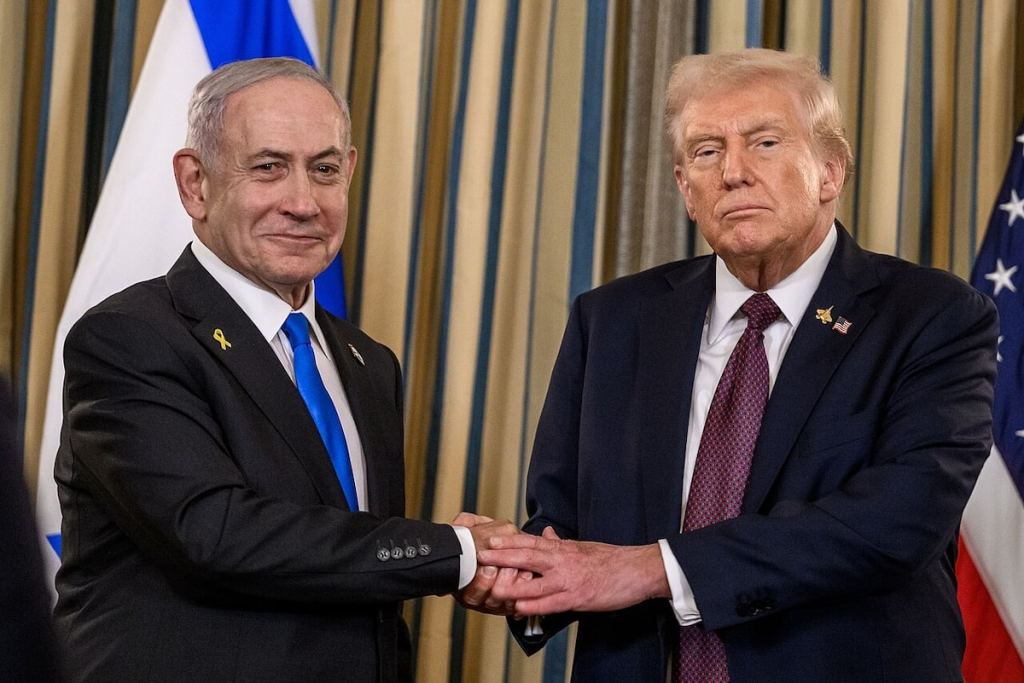
The difference here is that neither the US nor Israel are willing to commit ground forces. They will kill key leaders and figures across the Iranian regime, leaving an inchoate resistance against the clerics to seize the day. I
1 March 2026 Dr Binoy Kampmark, https://theaimn.net/mendacious-rationales-the-lies-behind-operation-lions-roar/
Many in the United States would scarcely identify the difference between Iran and Iraq, both countries based on ancient civilisations so chronologically distant as to be fiction. If not Marvel, it’s not marvellous. But another fiction came into play towards the end of February as the United States and Israel reprised their role as world rogues and crockery breakers by attacking Iran for a second time in less than a year in a joint campaign called Operation Lion’s Roar and Epic Fury. Following the vulgar playbook on regime change used against Iraq in 2003 by the US-led forces, a variation of the same theme is being used against Iran.
The difference here is that neither the US nor Israel are willing to commit ground forces. They will kill key leaders and figures across the Iranian regime, leaving an inchoate resistance against the clerics to seize the day. Iran’s supreme leader, Ayatollah Ali Khamenei, has apparently been killed, with US President Donald J. Trump calling him “one of the most evil people in history.” Israel also claims that the opening strikes killed seven senior defence and intelligence officials, including Khamenei’s top security advisor Ali Shamkhani, Islamic Revolutionary Guards Corps Commander Mohammad Pakpour, Defence Minister Aziz Nasirzadeh and the chief of Iranian military intelligence Saleh Asadi.
The February 28 statement from Trump posted on Truth Social as an 8-minute video declared that the objective of the attack was “to defend the American people by eliminating imminent threats from the Iranian regime.” This was curious given the previous US-Israeli attacks in June 2025 that had apparently “obliterated the regime’s nuclear program at Fordo, Natanz and Isfahan.” Then efforts were supposedly made on his part to seek a deal to prevent Iran ever pursuing nuclear weapons. “We tried. They wanted to do it. They didn’t want to do it. Again they wanted to.”
In this haze of confusion, Trump had concluded that Tehran had, after all, decided to “rebuild their nuclear program and to continue developing long range missiles that can now threaten our very good friends and allies in Europe, our troops stationed overseas, and could soon reach the American homeland.” Their missile industry would be razed, the navy annihilated, the proxies crippled. Members of the Islamic Revolutionary Guard would receive total immunity if they laid down their weapons, “or you will face certain death.” As for the unspecified “great proud people of Iran,” they should stay sheltered as the bombing continued. When done, the government “will be yours to take.”
Israeli Prime Minister Benjamin Netanyahu’s statement also confirmed the objective of ending “the threat of the Ayatollah regime in Iran.” That regime had domestically repressed its citizens, “instilled fear in the peoples of the region,” created a global terror network, “invested enormous resources to develop atomic bombs and tens of thousands of missiles intended, as it defined it, to erase Israel from the map of the world.” They armed “terrorist proxies.”
Even more stridently, and fanatically than Trump, Netanyahu restated those themes of existential threat and untrustworthiness so characteristic of the wicked Persian. Despite “a decisive blow” being struck against the regime and its proxies last June, “the wounded predator has not ceased its attempts to recover, for the same purpose, to destroy us.” (Evidently not that decisive, then.) Having stated every year for years that Iran would develop the means to destroy Israel within a short time, he came up with another fictional twist: not only were the tyrants “plotting to rebuild their nuclear and missile capabilities,” they were also placing them “underground, where we cannot reach them. If we do not stop them now, they will become invulnerable.”
The tissues of lies in both statements are impressive and incorrigible. Operation Midnight Hammer had seemingly not obliterated Iran’s nuclear facilities, suggesting they had been ineffectual, indulgent or incompetent. And why bother keeping the US-Iranian dialogue on Teheran’s nuclear program going if a military solution proved inevitable? For a President who boasts about his ability to make deals, few are being brokered of late.
Both Israel and the US used the same verbal formulae as before: exaggerate the capabilities of Iran to build consensus for an illegal war; exaggerate a military prowess of such biblical force that simply does not exist. Again, there are too many chilling parallels to the pattern followed by the George W. Bush administration leading up to the pre-emptive attack on Iraq in March 2003. Imminent threats were very much part of the hysterical argot then in justifying the removal of Saddam Hussein.
Needing justifications plucked out of thin air, the US government sought propping evidence from the United Kingdom. Prime Minister Tony Blair duly supplied the infamous 2002 dossier with the chilling claim that Iraqi forces could deploy chemical and biological weapons within 45 minutes of being ordered to do so. (This nicely supplemented the fabricated claim that Saddam Hussein was also pursuing a nuclear weapons program with the purchase of 500 tonnes of yellowcake uranium powder from Niger.) The key official behind the dossier, the diligent arms expert David Kelly, committed suicide in despairing disgust, having been ordered to include the 45-minute claim. No such weapons were ever found, and a central rationale of the invasion collapsed. The United States, UK, Australia and a motley crew of coalition members were found to be brigands.
There will, no doubt, be some cheer within Iran at these strikes, notably from the young who have suffered at the hands of a clerical, authoritarian regime. Washington’s allies will snivel with coerced approval citing the brutality of Iran’s regime while ignoring breaches of international law they are condoning. (Australia’s response was particularly despicable.) The Shia-Sunni division will be tested, with various US bases and military assets already struck in the Gulf States by a regime trying to survive. The United Nations will continue being treated like a bed-ridden dowager whose influence was from another day, conduct more contemptible even than 2003 when many Western states did, at the very least, show solidarity in rejecting the use of force by the United States and its allies in the absence of a Security Council resolution. In the meantime, American diplomats who open their frontier-stretched mouths claiming interest for peace and negotiations should make everyone reach for the gun.
Trump’s War of Choice: Oman Reveals Iran Agreement Was Imminent
February 28, 2026, by Joshua Scheer, https://scheerpost.com/2026/02/28/trumps-war-of-choice-oman-reveals-iran-agreement-was-imminent/
Hours before U.S. bombs began falling on Iran, a quiet but extraordinary diplomatic revelation aired on American television.
On CBS’s Face the Nation, Omani Foreign Minister Badr Albusaidi—the chief mediator between Washington and Tehran—stated plainly that a nuclear agreement between the United States and Iran was “within our reach.”
It was not vague optimism. It was a detailed outline of concessions.
According to Albusaidi, Iran had agreed to something that went beyond the 2015 nuclear accord negotiated under Barack Obama—a deal later abandoned by Donald Trump. This time, Tehran had committed not merely to limits on enrichment, but to zero stockpiling of enriched nuclear material. No accumulation. No reserve. Full and comprehensive verification by the International Atomic Energy Agency.
“If you cannot stockpile material that is enriched,” Albusaidi explained, “then there is no way you can actually create a bomb.”
In other words: the central justification for war was being diplomatically neutralized.
And yet, within hours, Trump announced military strikes on Iran and signaled a campaign aimed not at containment, but regime change.
The Timing Speaks Volumes
Oman has long served as a discreet intermediary in U.S.–Iran diplomacy. It is known for caution, not grandstanding. For Albusaidi to go public—on a flagship American news program—was highly unusual.
According to Trita Parsi of the Quincy Institute for Responsible Statecraft, the move was unprecedented. Oman’s message was clear: diplomacy had produced real progress. Trump could have declared victory.
Instead, he declared war.
If Albusaidi’s account is accurate, then the administration’s claim that Iran “rejected every opportunity” to curb nuclear ambitions collapses under scrutiny. What was preempted was not an imminent nuclear breakout—it was a diplomatic breakthrough.
War of Choice, Not Necessity
The United States Constitution vests the power to declare war in Congress. No such declaration has been issued. International law permits force only in response to an armed attack or with authorization from the United Nations Security Council. Neither condition appears to have been met.
This is not a defensive war. It is a war of choice.
And it is a deeply unpopular one. A recent survey found that only 21% of Americans support initiating an attack on Iran under current circumstances. The public understands something Washington elites often ignore: wars in the Middle East do not remain limited, surgical, or contained. They metastasize.
The echoes of 2003 are unmistakable.
Diplomacy Sabotaged
The tragedy is not only that bombs are falling. It is that negotiations were ongoing. Additional talks were scheduled for next week. The diplomatic channel was open.
By launching strikes at the moment mediation was yielding results, the administration has sent a stark message—not just to Iran, but to the world: agreements reached through dialogue can be nullified by executive fiat.
This damages more than a single negotiation. It undermines the credibility of American diplomacy itself.
If zero stockpiling under full IAEA verification was indeed on the table, then the choice before Washington was clear: accept an enforceable nonproliferation framework—or escalate toward regional war.
The administration chose escalation.
The Broader Implication
Regime-change wars have a long and destructive history in U.S. foreign policy. They rarely produce democracy. They often produce chaos, extremism, and prolonged suffering—for civilians first and foremost.
The question now is not simply whether this war is legal or justified. It is whether it was avoidable.
The Omani foreign minister’s televised appeal suggests that it was.
Peace, he said, was within reach.
And then the bombs began.
National Endowment for Democracy leader cut off in Congress after boasting of ‘deploying’ 200 Starlinks to Iran amid violence.

The National Endowment for Democracy’s president, Damon Wilson, bragged to a House committee of his group’s aggressive efforts to spark unrest in Iran, including by smuggling Starlink terminals and fashioning anti-Iran narratives for the media.
Max Blumenthal and Wyatt Reed, The Grayzone, February 24, 2026

Damon Wilson, the head of the National Endowment for Democracy (NED), was interrupted by a member of Congress during a House oversight hearing on February 24 after revealing that his agency “began supporting the deployment [and] operation of about 200 Starlinks early on” amid the violence which swept through Iran last month.
Before he could finish the sentence, he was cut off by the ranking member of the House Subcommittee on State, Foreign Operations, and Related Programs, Rep. Lois Frankel, who told Wilson: “You know what, I’m going to interrupt you – we’d better not talk about it.”
Wilson’s comments had been prompted by a question from Frankel, who requested details of what appears to be a new and apparently secret initiative by the State Department to provide Starlink terminals to Iranians.
Wilson appeared to take credit for both the recent unrest and Iran and subsequent media framing of the chaos. “What we’re seeing today, the Endowment has been making investments over years that have ensured that there have been secure communications, including Starlinks… that allowed information to go both in and out of the country,” he stated.
According to the New York Times, the Elon Musk-produced internet systems had been smuggled into the country by a “ragtag network of activists, developers and engineers [who] pierced Iran’s digital barricades.” It is clear now that the NED was at least partly responsible for funding and coordinating that network.
With Starlink emerging as a key weapon in the information war waged against Iran, it’s unclear how anti-government actors have managed to smuggle the devices into the country. But a recent incident in which a senior Dutch diplomat was caught trying to sneak multiple Starlink units and satellite phones through security at Iran’s Imam Khomeini Airport gives a hint.
The National Endowment for Democracy was founded in 1982 under the auspices of then-CIA Director William Casey to topple socialist and independent governments through the direct sponsorship of NGO’s, media organizations and political parties. “A lot of what we do today was done covertly 25 years ago by the CIA,” NED co-founder Allen Weinstein said of the Endowment’s work in 1991.
Despite its mission of promoting transparency and “fundamental freedoms” abroad, the NED is now a dark money group which conceals the names of its local partners under a “duty of care” policy announced in 2025. During his congressional testimony this February, Wilson insisted the policy was necessary for the security of grantees on the ground.
The NED’s work to smuggle Starlink terminals into Iran is therefore a covert operation aimed at promoting unrest. And according to Wilson, it is now a key part of the Endowment’s most aggressive initiative.
Iran “has been a huge priority for the Endowment. Iran has been, since I arrived at the Endowment, our fastest-growing program,” Wilson told Frankel.
“It’s now one of our largest programs globally, that involves both direct partners – Iranian groups – as well as our core institutes.”…………………………………………………………………………………………..
Violent regime change riots erupted again this January 8 and 9 across Iran, resulting in the burning of police stations, hundreds of mosques and worship sites, government buildings, marketplaces and lethal mob assaults on unarmed guards as well as police officers. The violence only stopped when Iranian security services imposed an internet blackout and neutralized thousands of Starlink terminals.
The Iranian government has provided the names and identification numbers of over 3000 citizens who were killed during the two days of rioting. But as The Grayzone reported, the NED-funded NGO, Human Rights Activists in Iran, initially claimed the death toll was over twice as high.
Now, as mainstream outlets like The Guardian cite dubious monarchist sources to exaggerate the death toll even further, the NED’s Wilson has revealed that his organization is working with “human rights networks” to “provide international media and other credible sources of what’s happened.”
…………………………………………… Rep. Frankel closed the session by suggesting that the US government was mirroring many of the repressive tactics the NED condemned abroad: “Political enemies being imprisoned by autocratic leaders. Masked men going into homes and terrorizing people. Certainly can understand why so many people are fleeing their countries. Unfortunately, it sounds very sad, because it sounds like the story that’s going on here.” https://thegrayzone.com/2026/02/24/ned-congress-starlinks-iran-violence/
DOOMSDAY: The Suicide Pact Nobody Voted For

COMMENT. I really do not know what to think about this one.
I am aware that Russia busily does lots of propaganda – which we must read with a sceptical eye. But so does the West.
And I’m sorry to say it -but the idea that the West might supply Ukraine with some sort of covert nuclear weaponry – that’s not such a wayout idea.
Islander Reports, Gerry Nolan, Feb 25, 2026, https://islanderreports.substack.com/p/doomsday-the-suicide-pact-nobody
Russia accuses Ukraine of seeking to acquire nuclear weapon with help from UK and France
Reuters, Wed, February 25, 2026, https://www.reuters.com/world/europe/russia-accuses-ukraine-seeking-acquire-nuclear-weapon-with-help-uk-france-2026-02-24/
DOOMSDAY is the only word that fits — but let’s name the madness with the surgical clarity this moment demands. On the fourth anniversary of a war they have already lost, London and Paris have apparently decided the answer is not negotiation, not dignity, not the elementary statecraft of knowing when you are beaten — but nuclear escalation into the abyss. We are well past the point of any strategy on NATO’s part — there is only one word to describe the insanity, and that word is pathology.
Russia’s SVR names the weapon with the kind of clinical specificity that cannot be dismissed as propaganda: France’s TN75 miniaturized thermonuclear warhead, the crown jewel of the M51 submarine-launched ballistic missile — to be covertly dismembered, smuggled in components, transferred to Kyiv, and cosmetically disguised as a Ukrainian “indigenous development.”
A lie so architecturally transparent it insults every arms inspector, every treaty signatory, every breathing human being who has spent eighty years constructing the fragile scaffolding of nuclear non-proliferation. Kiev on cue calls it an absurd lie. Paris calls it blatant disinformation. London says there is “no truth to this.” And yet not one of them has called an emergency press conference to repudiate. Not one has or will provide anything of material and consequence to clear their name. They have issued banal statements — the diplomatic equivalent of a man caught with his hand in the vault saying he was simply checking the lock.
And here is the question that neither London nor Paris can answer — because no democratic process on earth has ever asked it. No voter in France went to the polls to authorise the covert transfer of thermonuclear warheads to an active war zone. No British citizen marked a ballot for a policy that Russian doctrine formally classifies as a joint act of war against a nuclear power. No electorate in Europe or America — not one — was consulted on the decision to sleepwalk their children to the edge of the nuclear precipice. Power of this magnitude, exercised in this darkness, over consequences this irreversible, was simply taken — pocketed in the corridor of an intelligence briefing, ratified by no one, answerable to nothing.
These are not the moves of men who believe they are winning. These are the desperate, clock-burning sacrifices of players who have already lost the board — and are now reaching across the table to upturn it entirely, praying the chaos spares them the humiliation of checkmate. Four years of weapons, treasure, blood, and Western credibility fed into the Ukrainian furnace — and the front line tells the only truth that matters. The empire of narrative cannot survive contact with artillery mathematics. They know the position is lost. This is what lost looks like when the men responsible have nuclear access and no accountability.
And Germany — Germany, the nation that carries within its civilizational bone marrow the precise and irreversible cost of catastrophic military hubris — said no. Berlin walked. The SVR records it with almost contemptuous brevity: Germany “wisely refused to participate in this dangerous adventure.” Let that land like a sentence from a war crimes tribunal. The country that gave the twentieth century its two defining lessons in what happens when European leaders mistake belligerence for strategy — that country looked at the plan, looked at the men presenting it, and quietly pushed back its chair. The defeated always betray themselves in their final moves. Nothing in the entire arc of this conflict has announced strategic bankruptcy with more devastating eloquence than the moment your most historically scarred, most catastrophe-literate ally looks at your masterstroke and walks out without a word.
Russia’s nuclear posture requires no interpretation, no Kremlinology, no specialist decoder. It is written in language so unambiguous that ignorance is impossible and innocence is forfeit: aggression by a non-nuclear state backed by a nuclear power constitutes a joint attack — on both. Not metaphor. Not negotiating flourish. A published military-legal framework with four years of enforced red lines behind it. A wall of iron. The Federation Council has formally called on London, Paris, the UN Security Council, and the IAEA to investigate. Peskov has confirmed it enters the Geneva room. Medvedev has said what follows in language requiring no translation. They are not bluffing. They have never needed to. And yet here are Starmer and Macron — Dr. Strangelove without the self-awareness, without the dark comedy, without even the saving grace of fictional distance — triggering, knowingly, what their own doctrine names as nuclear war.
Look at the photograph used by Reuters capturing the arrogance and incompetence like so many other photos do. Four incompetent men outside the black door of Number 10 — handshakes, dark suits, the performance of gravity. They do not look like men who know they are already ghosts. That is the most terrifying thing about them — they never do. What we are witnessing in real time, on the precise anniversary of the war’s ignition, is not statecraft. It is not strategy. It is not even desperation with a plan. It is a collective suicide pact authored by a defeated establishment so hollowed out by its own mythology, so physically incapable of absorbing the verdict of the battlefield, that they are still pushing pawns across a board with no squares remaining — too blind to see the checkmate, too arrogant to hear the piece hit the floor.
History will not struggle to name what this was. The tragedy is that there may be no historians left to write it.
Why Epstein’s Links to the CIA Are So Important
The word unclassified potentially gives Trump and the CIA wide latitude to hold back Epstein-related materials that they claim are too sensitive to release.
We won’t know the full truth about his crimes until the extent of his ties to US intelligence are clear.
Jeet Heer, January 2026, https://www.thenation.com/article/society/jeffrey-epstein-cia-ties/
On November 18, Donald Trump suffered a major political defeat when the House of Representatives passed the Epstein Files Transparency Act by a nearly unanimous vote: 427–1. But while emphatic, the House measure included a significant proviso that might yet prevent a full reckoning with Jeffrey Epstein’s crimes.
Trump had fought for months against the bill, which was drafted by a bipartisan coalition created by California Democrat Ro Khanna and Kentucky Republican Thomas Massie. In the end, the strong public revulsion for Epstein’s crimes made opposing the bill untenable. But the final version specified that the Department of Justice must make public “all unclassified” documents on Epstein
The word unclassified potentially gives Trump and the CIA wide latitude to hold back Epstein-related materials that they claim are too sensitive to release. In this, they have the support of House Speaker Mike Johnson, who insisted that US intelligence agencies be allowed to “protect their critical sources and methods. It is incredibly dangerous to demand that officials or employees of the DOJ declassify material that originated in other agencies and intelligence agencies.”
Johnson’s words stand in stark contrast to the remarks by Marjorie Taylor Greene, one of four dissident House Republicans who forced Trump to abandon his opposition to the Epstein bill. “The real test will be: Will the Department of Justice release the files, or will it all remain tied up in investigations?” she asked in a November 18 press conference. “Will the CIA release the files?” Greene—perhaps feeling too bruised by the clash with Trump, who attacked her repeatedly over her Epstein heresy—subsequently announced that she will be retiring from Congress. But her words still cut to the heart of why getting……………………………………..[Subscribers only]
The Israeli Government Installed and Maintained Security System at Epstein Apartment
Security equipment and alarms were installed by the Israeli government at a notorious Manhattan residence frequented by former PM Ehud Barak.
Ryan Grim and Murtaza Hussain, Feb 19, 2026 https://www.dropsitenews.com/p/israeli-government-surveillance-epstein-apartment-66th-street-ehud-barak
The Israeli government installed security equipment and controlled access to a Manhattan apartment building managed by convicted sex offender Jeffrey Epstein, according to a set of emails recently released by the Department of Justice. The equipment was installed starting in early 2016 at 301 E. 66th Street—the residence where former Israeli Prime Minister Ehud Barak frequently stayed for stretches at a time.
The security operation at “Ehud’s apartment” was in place for at least two years, emails from the DOJ disclosure show, with officials from the Israeli permanent mission to the United Nations corresponding regularly with Epstein’s staff regarding security. The apartment was technically owned by a company connected to Epstein’s brother, Mark Epstein, but was effectively controlled by Jeffrey Epstein. Units in the building were frequently loaned out to Epstein’s contacts and used to house underage models.
Rafi Shlomo, then-director of protective service at the Israeli mission to the United Nations in New York and head of Barak’s security, corresponded with Epstein employees to arrange meetings to discuss security and coordinate installation of specialized surveillance equipment at the 66th Street residence. Shlomo personally controlled access to the apartment for guests and even conducted background checks on cleaners and Epstein’s employees.
Under Israeli law, former prime ministers and other high ranking officials typically receive security services after they leave office. According to the emails, Epstein personally approved the installation of the equipment and authorized meetings between his staff and Israeli security officials.
Ehud Barak and the Israeli mission to the United Nations did not respond to requests for comment.
At the time of Epstein’s death in 2019, Barak downplayed his connection to the disgraced financier, stating that while he had met with Epstein several times, he “didn’t support me or pay me.”
Prime Minister Benjamin Netanyahu recently suggested that Epstein’s close ties to Barak, a longtime Labor Party official and rival of Netanyahu, undermine rather than strengthen the case for Epstein’s ties to Israel. “Jeffrey Epstein’s unusual close relationship with Ehud Barak doesn’t suggest Epstein worked for Israel. It proves the opposite,” Netanyahu said. “Stuck on his election loss from over two decades ago, Barak has for years obsessively attempted to undermine Israeli democracy by working with the anti-Zionist radical left in failed attempts to overthrow the elected Israeli government.”
A January 2016 email exchange between Barak’s wife, Nili Priell, and an Epstein employee—whose name is partially redacted but appears from other communications to be his longtime assistant Lesley Groff—discussed installing alarms and surveillance equipment at the residence, including six “sensors sticked to the windows,” and the ability to remotely control access to the premises. Priell informed Epstein’s staff that, “They can neutralize the system from far, before you need somebody to enter the appartment. the only thing to do is call Rafi from the consulate and let him know who and when is entering.”
The correspondence also indicated that the work done by the Israeli government was significant enough that it required Epstein to personally approve it. “Jeffrey says he does not mind holes in the walls and this is all just fine!” Groff wrote to Barak and Priell.
The mission was in regular touch with Epstein’s representatives over multiple visits by Barak and his wife throughout 2016 and 2017.
In a January 2017 email to Shlomo—with the subject line “Jeffrey Epstein RE Ehud’s apartment”—an Epstein assistant provided Israeli officials with a list of employees who would need access to the apartment, adding, “I understand from you already have a copy of her ID from awhile ago…she is the maid and has been going in and out of the apartment for a long time now!” A few weeks later, they wrote to Epstein himself that, “Rafi, the head of Ehud”s security, is asking if I could meet him at 4pm on Tues. 14th at his office (800 2nd Ave and 42nd) re Ehud’s apartment.” Epstein approved the meeting.
The correspondence continued throughout that year—in August an assistant for Epstein reached out again to Shlomo to inform him of yet another stay by Barak and his wife at the Epstein residence. By November 2017, Shlomo had been replaced by another Israeli official who managed security and surveillance for Barak.
Barak’s longtime aide Yoni Koren, who died in 2023, was another frequent guest at Epstein’s 66th Street apartment. Koren stayed at the apartment on multiple occasions—including in 2013, while he was still actively serving as “bureau chief” for the Israeli Ministry of Defense, according to calendars released by the House Oversight Committee investigation into Epstein and emails released by Distributed Denial of Secrets. Email correspondence from Barak’s inbox also showed Koren exchanging information with Epstein for a wire transfer, as previously reported by Drop Site.
New emails released by the Department of Justice showed that Koren continued to stay at Epstein’s apartment while receiving medical treatment in New York up until the second arrest and death of the financier in 2019.
Epstein, Yermak and Zelensky
Comment: The primary recipient of Epstein blackmail information is Israel, the country that ‘produced Epstein’. It will remain ‘useful’ for decades.
At this stage, 25 of Epstein’s targets have negotiated with the federal prosecutor. They have paid substantial sums to avoid prosecution and to ensure their names are not published. In the first 3 million documents released, all references to them have been redacted, while those of their victims appear in full.
Thierry Meyssan, voltairenet.com, Tue, 17 Feb 2026, https://www.sott.net/article/504755-Epstein-Yermak-and-Zelensky
While Epstein may have seemed to enjoy committing his crimes, we must not forget that he worked for a secret service, Mossad. The horrors he perpetrated were primarily a means of blackmailing his associates. Although, for the moment, no Ukrainian figure has been directly implicated, numerous elements compel us to investigate who in Ukraine supplied children to the Epstein network.
The Epstein affair has shaken all developed nations. To summarize the facts: billionaire Jeffrey Epstein organized a network of informants for Mossad and the Franco-Swiss branch of the Rothschilds. In order to gain leverage over them, he gradually drew his targets (scientists, financiers, and politicians) into a series of increasingly atrocious games. Initially, he offered them extramarital affairs, then relationships with increasingly younger partners, and finally, he involved them in torture, murder, and cannibalism.People who rise to positions of power in society may feel the need to test the extent of their influence. They can only measure it by the magnitude of their transgressions, engaging in universally condemned practices with impunity.
This type of blackmail is not new. In France, we saw the Doucé affair (1990), and in Belgium, the Dutroux affair (1995-1996). The targets of this blackmail were never brought to light. A few names of prominent figures were merely mentioned, but the high-ranking criminals were never arrested. What is new in the Epstein case is that the US justice system has 9 million pages of documents, a third of which it has already released to the public.
The Doucé and Dutroux cases were blackmail schemes perpetrated by NATO intelligence services. Their targets were not limited to France and Belgium, but extended throughout the European Union. Those targeted were left unmolested and available for future operations.
At this stage, 25 of Epstein’s targets have negotiated with the federal prosecutor. They have paid substantial sums to avoid prosecution and to ensure their names are not published. In the first 3 million documents released, all references to them have been redacted, while those of their victims appear in full.
We don’t know how the US Department of Justice chose the order in which to release the documents it possesses. For the moment, they only implicate European figures and spare its targets in the United States. Perhaps this is a coincidence, perhaps it’s a way to destabilize allies while waiting for public opinion, disgusted, to tire of the situation.
We know, however, that former and current heads of state and government are implicated. Some have leaked economic, financial, or commercial data; others, political, military, or diplomatic secrets. All have committed acts that fall under criminal law and betrayed their country.Each time, unbeknownst to them,the recipient of this information was the State of Israel, or at least a faction within its government.
On a recurring basis, informants, some of whom were manipulated witnesses, others mentally ill and sometimes – much more rarely – genuine witnesses, denounced the participation of personalities in satanic cults.
To date, the only known head of state whose entourage practices black masses characteristic of this type of cult is the unelected Ukrainian president, Volodymyr Zelensky. For several years, appalling rumors have circulated about him without any possibility of verification. However, on January 31, Yulia Mendel, Zelensky’s former press secretary, revealed that his trusted confidant, Andriy Yermak, the former head of his now-disgraced administration, practices black masses [ 1 ] . He brought in Chabad magicians from Israel, Georgia, and Latin America. According to her, “Yermak burned herbs and collected bodily fluids to make dolls.” Within two weeks, the Ukrainian internet was flooded with caricatures and jokes about “Yermak the Magician,” who had predicted to Zelensky that Russia would never intervene in Ukraine. Under the pseudonym “Ali Baba”, Yermak was also at the head of a vast corruption network, revealed during Operation Midas [ 2 ] .
Since his suspension, Yermak has resumed his work as a lawyer. According to the Ukrainian press, he goes to the gym every morning and then to his office in the afternoon. Journalists, who follow him everywhere he goes, have observed him visiting the homes of Oleksandr Kamyshin, the director of the railways, and Rustem Umierov, secretary of the National Security and Defense Council of Ukraine, who is currently under investigation in the Midas case. Most notably, he visited Yevgen Korniychuk, the controversial former Minister of Justice who served as ambassador to Israel (2021-2023). Korniychuk is the son-in-law of Vasyl Onopenko, the president of the Supreme Court. Finally, Yermak’s lawyer, Ihor Fomin, and Yevgen Korniychuk went together to see Timur Mindich (Volodymyr Zelensky’s business associate, now a fugitive) in Herzliya (Israel) [ 3 ]
Among the third of Epstein’s known documents are several Ukrainian passports, but the Justice Department has redacted the names, addresses, and photos of the holders with whom Epstein associated. Furthermore, other documents attest that Epstein traveled to Kyiv several times and tasked the Frenchman Jean-Luc Brunel with shopping there. Brunel was the director of the modeling agencies Karin Models (Paris) and E=MC2 (Miami). He was indicted in France for pimping and had the good sense (like Epstein) to “commit suicide” in La Santé prison. Timur Mindichwas also the director of the Fire Point modeling agency (Kyiv). It remains unknown, however, how many young Ukrainian men and women fell victim to their schemes.
It is in this context that Mr. Volodymyr Vatras, a member of the Legal Commission of the Verkhovna Rada (Parliament), submitted, on February 6, 2026, a draft reform of the Ukrainian Civil Code [ 4 ] .
Besides protecting the reputation of those prosecuted for corruption until their final conviction, this bill lowers the age of marriage to 14. Let’s be clear about what this means: consequently, any prosecution for child abduction or rape of children aged 14 to 18 will become impossible under other Ukrainian laws. The Ukrainian press is calling it “state-sponsored pedophilia” [ 5 ] . Many Ukrainians, citing the Convention on the Rights of the Child, have launched petitions against this regressive reform [ 6 ] . You still haven’t grasped what this means: this reform will be retroactive and will apply to all acts committed after 2014 (i.e., the Maidan coup). This reform abolishes the provisions of the Ukrainian Criminal Code against pedophilia [ 7 ] .
Do you know of any state in the world, today or in the past, that has retroactively lowered the marriage age? No, obviously not.
It is worth recalling that the Ukrainian government accuses Russia of abducting 900,000 children. Moscow, which disputes this figure, maintains that it did not capture them, but rather collected them from the battlefield and brought them to Russia to protect them from the war. To date, Ukraine has only released a list of 339 children whose names the Zelensky administration is demanding. Where are the thousands of others?
The answer lies somewhere in the still-secret 6 million pages of the Epstein case. Hunter Biden’s medical experiments on Ukrainian soldiers outraged you; the Zelensky clique’s abductions of Ukrainian children will make you sick.
Speaking before the Verkhovna Rada on February 11, MP Inna Sovsun declared:
“The standard that the members of the Law Commission are trying to pass, regarding marriage with 14-year-olds, is pure barbarity. It contradicts common sense and European standards. We don’t know how many other problems this code contains. Therefore, I join the demands of lawyers to remove the draft Civil Code from consideration, to examine it carefully again in committee, to discuss it in society, and only then to submit it to Parliament.”
Ruslan Stefanchuk, the Speaker of the Verkhovna Rada and ideologue of the Servant of the People party (Zelensky’s party), was heavily involved both in drafting this Civil Code and in defending it before his assembly. He is a scientist and educator who has long worked with children. He, too, is implicated in the Midas case. But all the experts have pointed out that his statements do not correspond to the text as presented.Stefanchuk was in Washington last week. On February 7, he met with Riley M. Barnes, Assistant Secretary of State for Democracy, Human Rights, and Labor Rights. He explained at length that no Ukrainian children had disappeared, but that 900,000 had been captured by Russia.
Back in Kyiv, Ruslan Stefanchuk faced a public outcry. He admitted that he could not, in its current form, submit the draft of the new Civil Code to a parliamentary vote. But the problem that this reform clumsily attempted to bury remained.
We currently know only a third of the Epstein case. When we have more information, we will need to inventory the information he possessed and examine how Israel used it.
References:…………………………………………………………………………………………………….
Beijing moves to contain Mossad’s expanding reach in Iran

Israeli intelligence operations inside Iran have alarmed Beijing, which saw them as a new model of intelligence warfare, prompting deeper technological, security, and strategic cooperation with Tehran.
Nadia Helmy, The Cradle, FEB 17, 2026
Chinese military experts and intelligence agencies increasingly describe Mossad’s deep infiltration into Iran as opening a “Pandora’s box” of global security risks.
From Beijing’s perspective, Israeli and US intelligence operations – particularly those expanding after 2015 and accelerating through 2025–2026 – mark the evolution of a new battlespace. Mossad’s ability to embed agents, compromise sensitive databases, disable radar networks, and facilitate precision strikes from inside Iranian territory is interpreted as a shift toward what Chinese analysts call ‘Informationized and Intelligent’ Warfare.
This represents the convergence of cyber sabotage, internal recruitment, technological penetration, and operational coordination – a hybrid model in which intelligence operations hollow out defensive infrastructure before kinetic action begins.
For China, the implications extend well beyond Iran.
Intelligence warfare as a precursor
Within Chinese security discourse, Israel’s operations in Iran are frequently cited as evidence that intelligence warfare now precedes kinetic engagement.
Military expert Fu Qianshao, a former analyst in the Chinese Air Force, characterized Mossad’s success in planting agents and disabling Iranian radar and air defense systems from within as a “new pattern of intelligence warfare.” The June 2025 Israeli strikes on the Islamic Republic, which reportedly faced minimal resistance due to compromised systems, reinforced this assessment.
Fu argued that such tactics transcend traditional battlefield engagement. Instead of confronting air defenses externally, Mossad undermined them internally – neutralizing deterrence before aircraft entered contested airspace.
Another Chinese military expert, Yan Wei, echoed this concern, emphasizing that the penetration of sensitive Iranian facilities exposed structural weaknesses rather than merely technological gaps. Legal safeguards and routine security protocols, he suggested, are insufficient against intelligence operations that exploit bureaucratic vulnerabilities and internal access points.
Professor Li Li, a Chinese expert on West Asian affairs, has pointed to Israeli cyber operations targeting research centers and infrastructure as evidence of intelligence warfare functioning as a force multiplier. Unlike conventional attacks, these operations blur the line between espionage and sabotage, complicating retaliation.
Tian Wenlin, director of the Institute of Middle Eastern Studies at Renmin University, warned that sustained intelligence incursions could pressure Tehran to accelerate its nuclear capabilities as a defensive countermeasure……………………………………………………………………………………………………………………………………………………………….https://thecradle.co/articles/beijing-moves-to-contain-mossads-expanding-reach-in-iran
The global elite in the shadow of Jeffrey Epstein
17 February 2026 AIMN Editorial, https://theaimn.net/the-global-elite-in-the-shadow-of-jeffrey-epstein/
The mainstream media is largely ignoring the real scandal in this story.
By Antony Loewenstein
For years, I mostly ignored the Jeffrey Epstein story. Not because it wasn’t interesting and relevant but there was a distinct lack of hard evidence backing the (often) wild conspiracy theories connecting Epstein to the global political and financial elites, and Israel.
It’s now undeniable that Epstein was incredibly close to Israeli intelligence, a fact that remains largely ignored in the Western media. What this says about the nature of Epstein’s vast criminality, against children and women, speaks volumes about the wilful blindness expressed by legacy media outlets.
The US outlet, Drop Site News, have produced many stunning stories on how Epstein became a key power broker connecting Israel and its defence/surveillance sectors to innumerable nations from Mongolia to the Ivory Coast.
One of the writers of these investigations, Murtaza Hussain, explains both the significance of the revelations and the reticence of corporate media to explore it:
Because of elite capture of many institutions, the coverage of Epstein’s activities by establishment news outlets feels a lot more like damage control than accountability. Despite his extensively documented political influence and even his role in shaping frontier research in AI and biotechnology, Epstein himself has attempted to be quarantined as merely a “con-man” and “dead pervert.” What is being covered up here are not his sexual abuses, but what his role and activities reveal about how power actually operates today.
With some notable exceptions, the general public has had to read independent mediato really understand the Epstein scandal while outlets like the New York Times produce huge amounts of coverage and mostly ignore the late paedophiles’ ties to global intelligence networks.
On my recently launched weekly podcast series, I examined how Epstein, Israel and former Israeli Prime Minister Ehud Barak were key nodes in an international campaign to deepen the Jewish state’s influence:
Uranium Neo-colonialism in Mongolia: Crime but No Punishment

The unexplained illnesses and deaths of animals, a desert veterinary clinic run by a uranium mining corporation, and its attempts to ignore the troubling facts are perplexing.
Orano has set a stark precedent, demonstrating that even lenient mining laws are no real constraint. According to activists, the company simply ignored the required environmental impact assessment for some of its ISL mining projects in Dornogobi Aimag. Coincidentally, Orano was also bribing officials to secure mining licenses during this same period.
Environmentalists square off against a French mining company.
By Tatyana Ivanova | February 12, 2026, https://fpif.org/uranium-neo-colonialism-in-mongolia-crime-but-no-punishment/
On a warm April 1st day last year, Budee Khekhee, head of local non-profit The Power of Unity for the Sake of Our Homeland, led a team into the Gobi Desert to investigate reports of a mysterious illness causing the death of wild and domestic animals, which he obtained from the local herders. A former resident who’d assisted his father’s veterinary work, Budee knew the terrain and knew authorities had ignored previous alarms.
In Zamyn Ud, they spotted numerous white-tailed gazelles lying on the ground, unable to get up, and twitching their legs convulsively. The activists livestreamed their discovery. “My heart was overwhelmed with despair,” Budee later testified. “I realized I couldn’t just abandon them here to die.”
Suspecting that the epidemic was caused by French uranium company Orano’s in-situ leach operations, he loaded four gazelles aboard a truck and drove to the corporation’s clinic gate, broadcasting on Facebook. Orano had built and was operating a veterinary clinic in the mining area. Budee didn’t trust them a lot, but he hoped that the staff would assist in rescuing the animals. Those hopes were dashed when, after two hours of standing outside the locked clinic doors, no one appeared, and the animals died. Left with little choice, the activists dissected the gazelles’ bodies and took tissue samples for independent analysis. They livestreamed their actions to Facebook.
For many Mongolian herders, resource neocolonialism is not an abstract concept. They have resulted in tangible losses, illness, and deaths. Descendants of the Mongol Empire now face uranium mining invaders. After the Soviets departed—leaving behind a legacy of toxic mining—the “clean” French uranium industry arrived, reproducing similar patterns of corruption while poisoning the land. At the same time, these colonialists have participated in the persecution of environmental activists.
Should they be held accountable before domestic and international communities?
The Revenge
In official reports, human rights defenders often refer to the persecution of activists as “unjust” or “disproportional punishment.” However, what happened in the case of the Mongolian herders was closer to pure revenge. Unidentified individuals made police reports accusing Khekhee of illegal hunting. He was subjected to repeated questioning for several months after the criminal investigation began.
The local prosecutor’s office then reclassified the matter as an administrative offense. The state’s Environmental Protection Office determined that Khekhee illegally pursued and killed four gazelles. They penalized him $1,200, a substantial sum for an average Mongolian. His July appeal was denied in full in September, but the court of first instance postponed the sentence for three months, thereby conceding that the case lacked merit.
Neither the investigation nor the court determined why Budee Khekhee allegedly needed to kill the gazelles. However, a local journalist discovered the “motive,” writing in August 2025 that it was done “to mislead the public about the consequences of uranium mining by the joint Mongolian-French enterprise ‘Badrakh Energy’ LLC.”
Prosecution for Independent Dosimetry
The unexplained illnesses and deaths of animals, a desert veterinary clinic run by a uranium mining corporation, and its attempts to ignore the troubling facts are perplexing. Especially when combined with the absurd accusation of poaching directed at an environmental activist whose action was widely livestreamed. When connected to other similar events, a pattern emerges.
In mid-August 2025, the same non-profit invited Russian nuclear physicist Andrey Ozharovskiy to conduct dosimetry measurements. Their focus on radioactive pollution was encouraged by groundwater assessments, which had revealed high uranium and arsenic levels in the area. Ozharovskiy, who had extensive experience in identifying radioactive sources, agreed to come. He entered Mongolia legally with his dosimetry and spectrometry equipment for “business purposes.”
On August 15–17, activists drove him along dirt roads in the Gobi Desert to Orano’s pilot ISL uranium extraction wells, where locals reported trucks carrying pregnant solution or liquid waste. It didn’t take the Russian expert long to discover three dried-up puddles emitting gamma radiation 20-50 times above background levels. Spectrometry identified uranium decay products—radium-226, bismuth-214, and lead-214, which, according to Ozharovskiy, was consistent with mining spills rather than natural radiation. The activists published their finding on social media, and this is how the Mongolian authorities learned about the expedition.
The group later traveled across Mongolia along similar dirt roads to Maradai. On August 19, while measuring radiation near abandoned Soviet mining sites, the group was detained by a border officer and some people in plain clothes. According to the activists, the authorities used drones to spot them in the desert. After spending a day or two in several offices, Ozharovskiy was transferred to the Main Intelligence Directorate in Ulaanbaatar. There, after being questioned, he was told that he was suspected of espionage and immigration violations.
Although the authorities released Ozharovskiy, they took his passport so that he couldn’t leave the country. A few days later he was taken again, forced to admit administrative violations, including using unregistered dosimetry devices, and to pay a fine. Then they brought him to the border with Russia and expelled him without his belongings but with a 10-year entry ban. The local activists, meanwhile, have spoken of intimidation, police reporting requirements, smartphone searches, and non-disclosure agreements.
In the same days the Mongolian Nuclear Regulatory Commission issued a formal statement, where accused Ozharovskiy of spreading false information about radiation background. Some media labeled the activists foreign agents undermining Franco-Mongolian projects in Russia’s interest.
A System That Favors Abuse and Distrust
Mongolian law prohibits radiation measurements using devices that haven’t been registered with the country’s Nuclear Regulatory Commission. After his first detention, Ozharovskiy donated some of his measuring devices to the non-profit. Activists brought them to the NRC but were denied certification with no clear explanation. The only reason provided, though invalid, was that the devices belonged to a Russian citizen.
The activists explained why they hadn’t registered the devices beforehand: they didn’t want authorities to know about their survey in advance. “If they knew about the devices, they wouldn’t let us measure anyway,” one activist said. “We don’t trust them,” Khekhee added.
This distrust is entirely justified given the broader context documented by prominent human rights organizations. Mongolia has earned a reputation for cracking down on critics and human rights defenders, particularly those challenging the mining industry. Amnesty International’s 2024 report documents that criticism of authorities and mining corporations has become effectively criminalized. According to the report Our Land, these corporations commit massive environmental violations, causing significant environmental pollution and deterioration of public health, and undermining traditional Mongolian livelihoods. To attract investors, Mongolian mining lobbyists even managed to pass corporate-friendly legislation. According to Our Land, in 2006 and again in 2013–2015 they weakened environmental safeguards, reducing water protection zones and allowing mining on private and even protected lands.
Another Face of the French Republic
Continue readingUK ignores corruption scandals when awarding major military contracts.

Freedom of Information requests reveal Britain’s trade department collected “no information” about fines issued to UK military suppliers for corruption.
JOHN McEVOY, 4 February 2026, https://www.declassifieduk.org/uk-ignores-corruption-scandals-when-awarding-major-military-contracts/
The Ministry of Defence is reportedly set to award a £2 billion contract to a consortium led by Raytheon UK despite major corruption and fraud violations recently levelled against its American parent company RTX.
The contract, which aims to modernise the army’s training infrastructure using “advanced simulation”, will be awarded through a competitive process in which Raytheon UK seeks to displace a rival bid led by Israel’s Elbit Systems UK.
RTX is already a major supplier to the UK Ministry of Defence, having completed integration trials for the Paveway precision-guided missile on the Typhoon aircraft in 2025.
The company says it has a “decades-long partnership with the British army”, and holds licences to export F-35 fighter jet components which are used by Israel.
Yet in 2024, RTX faced significant legal sanctions in the US relating to alleged bribery of foreign officials, defective pricing, and export control violations.
The company settled several federal investigations with overall penalties exceeding $950 million.
Crucially, Freedom of Information requests suggest that UK export-licensing authorities have taken no action in response to these developments.
The Department for Business and Trade and the Export Control Joint Unit (ECJU) said in October 2025 they hold no internal correspondence, briefs, or risk assessments relating to the RTX enforcement actions.
This is despite the UK’s own guidelines for military export licences explicitly requiring ongoing assessment of risk of diversion, misuse, and breach of international humanitarian law.
The guidelines also direct authorities to consider exporter conduct and compliance history.
In response to further FOI requests, the Ministry of Defence also refused to clarify whether RTX’s enforcement actions abroad were internally discussed when deliberating the award of major contracts to the company.
This apparent inaction raises fundamental questions about whether systemic reassessment of exporter behaviour takes place when serious misconduct comes to light.
It also comes as the UK’s National Audit Office has found in a new report released last week that the defence ministry could “make significant savings” if it better managed losses from economic crimes, including procurement fraud.
The business and trade department and defence ministry did not respond to requests for comment about whether they consider foreign corruption scandals when awarding export licences or training contracts to firms.
Raytheon has been the subject of past enforcement controversies in Britain, with the company refusing to explain its activities to the government’s committees on arms export control in 2019 while arming Saudi Arabia’s brutal war on Yemen.
Its competitor for the army training contract, Elbit Systems, is also facing accusations of breaching business appointment rules while continuing to hold export licences granted by the ECJU.
Campaign Against Arms Trade (CAAT) spokesperson Emily Apple told Declassified: “Time and again successive governments have lied, repeatedly telling us the UK has one of the most robust arms export control systems in the world. Nothing could be further from the truth”.
The business and trade department said: “The UK operates one of the most robust and transparent export control regimes in the world.
“All export licensing decisions are made in line with our Strategic Export Licensing Criteria, and our assessments take all information relevant to the risk of diversion or misuse into account”.
Moog
The issue is not unique to RTX.
Another defence contractor, Moog Inc., resolved a Foreign Corrupt Practices Act (FCPA) administrative order in October 2024 involving bribery by its Indian subsidiary.
The FCPA is a US federal law which makes it illegal for US persons or companies to bribe foreign government officials to gain a business advantage.
However, the ECJU also holds “no information” about any discussions relating to that FCPA order, according to the FOI documents seen by Declassified.
Together, the RTX and Moog cases represent the only publicly reported defence industry FCPA-related enforcement actions in 2024.
Moog currently holds UK licenses to export components for trainer aircraft used by the Israeli air force, and contributes to the global F-35 programme.
Public information raises further questions about how Moog’s compliance oversight function was structured during the period in which these violations allegedly occurred.
According to a LinkedIn profile, Moog’s compliance manager has had oversight of both Moog UK and Moog India since before 2020 — the period during which the company’s Indian subsidiary was later found by US authorities to have engaged in bribery of state officials.
“While the existence of a group-level compliance function does not itself imply wrongdoing, it underscores that Moog’s UK operations were not operating in isolation from wider corporate compliance arrangements at the time, and raises legitimate questions about how compliance risks were identified, escalated, and addressed across the group”, said Emily Apple from CAAT.
Despite these questions, Moog Wolverhampton has not been subject to an ECJU compliance visit since 2022, according to further FOI requests issued in November.
This is notable given that the site was inspected twice within a two-month period that year, a pattern potentially associated with follow-up or remedial reviews.
Yet the company’s sites in Britain have apparently not been revisited in the three years since, including after Moog’s US parent company agreed a major FCPA settlement in 2024.
Emily Apple added: “Whether it’s ignoring corruption scandals, or trampling over international law, it appears there are no limits to the steps the government is prepared to take to prioritise arms dealers’ profits. This is a system beyond reform. It is out of control, devoid of ethics and operating beyond the law”.
Moog and RTX did not respond to requests for comment.
University of Cumbria, Nuclear Waste, AI / Bitcoin and a Strange Tale of Tapping Epstein for Money.

On By mariannewildart, https://mariannewildart.wordpress.com/2026/02/05/university-of-cumbria-nuclear-waste-ai-bitcoin-and-a-strange-tale-of-tapping-epstein-for-money/
The University of Cumbria is playing a “central role in a new £4.9 million nuclear robotics and AI cluster,” part of a consortium with the UK Atomic Energy Authority, University of Oxford and University of Manchester to develop a new nuclear robotics and AI cluster, linking Cumbria and Oxfordshire.
Awarded £4.9 million, the cluster is the largest of seven new research projects supported through an overall funding package of £22 million. This is from the UK Research and Innovation (UKRI), Engineering and Physical Sciences Research Council (EPSRC) and the Place Based Impact Acceleration Account (PBIAA) scheme. The robotics will of course end up as nuclear waste with the ultimate plan to dump the radioactive doggy robots in a big hole under the Lake District coast. The University of Cumbria has never made any comments that there should be no nuclear waste dump under the Lake District coast or that there should be no new nuclear waste, no new nuclear build. This latest nuclear complicity means that they are now hugely compromised and it would be a brave university professor (we do live in hope) to speak out against using the Lake District coast as a giant heat sink in which to dump hot nuclear robots.
Some years ago I was stood outside Gail Bradbrook’s (XR Leader) talk in Kendal leafletting against the (now rejected) coal mine near Sellafield with a nuclear waste barrel costume on. Professor Bendell walked past with his head down clearly not wanting to take a leaflet from a person in a nuclear waste barrel. When I did a bit of research I found that Professor Bendell is known is some circles as “Professor Bitcoin.” The University of Cumbria where he is “Professor of Sustainability Leadership” was the first in the world to accept student’s tuition fees in bitcoin. Whats wrong with that?Bitcoin and cryptocurrencies use enormous amounts of energy and are also the key to AI.
Prof Bendell has written long-winded deflections online regarding his connection to Epstein. Prof Bendell said he was introduced to Epstein through the Gates Foundation which does seem to be the case. Telling Epstein that his past was a problem in 2013 however does not seem to be reflected in the released files. Correspondence continues over several years.
The explanation above has been accepted by Jem’s followers of whom there are many.
A closer look reveals that Prof Bendell was keen to tap Epstein for money on behalf of the University of Cumbria in order to fund the Professor’s and the Uni’s interests in Bitcoin. This keenness for Epstein funds went so far as to the Professor sourcing a 5013c ( a United States corporation, trust, unincorporated association, or organisation exempt from federal income tax) through which to accept “donation/s from Epstein.
This was in 2012 a full four years after Epstein pleading guilty in 2008 of procuring a child for prostitution, amongst other things. Epstein was convicted of only two crimes as part of a controversial plea deal agreed by the U.S. This was widely reported in 2008 but in 2012 was not a red flag for Bendell despite the University of Cumbria’s safeguarding policy.
Bizarrely, one of the exchanges between Jem and Jeffrey includes both men saying they would not want to go to jail for the sake of “alternative exchange systems’ ie digital currency.
As Trump Threatens Weekend Strike on Iran, Albanese Pretends Pine Gap Isn’t Complicit

1 February 2026 David Tyler AIM Extra
Albanese’s Iran Illusion: How Australia Sleepwalks into Someone Else’s War
While our federal government waffles on about rules based order, Iran is rewriting the rules of modern warfare. Trump is threatening regime-change. The Strait of Hormuz has become a kill box where $13 billion aircraft carriers play sitting duck to lethal, glorified speedboats, where cyberattacks double as deterrence, and where Australia, ever the loyal deputy, pretends it’s all someone else’s problem. Labor’s silence isn’t prudence. It’s complicity in a US strategy that’s already unravelling, and we’ve got the scars to prove it.
Trump already bombed Iran once. In June 2025, Operation Midnight Hammer saw seven B-2 stealth bombers drop bunker-busters on three nuclear facilities while Pine Gap provided the targeting data. Iran’s face-saving response, a telegraphed missile strike on Al Udeid Air Base in Qatar, fooled no one. But it burned through 25% of America’s total THAAD interceptor stockpiles, missiles the US produces at a rate of roughly one per month. Now Trump’s threatening round two, this time with explicit regime-change goals, and Albanese still won’t acknowledge that Australia’s uncritical alignment has painted a target on our own facilities.
The real damage? Washington’s isolation campaign isn’t weakening Tehran. It’s shoving Iran into Beijing and Moscow’s arms, locking in an anti-Western axis that thrives on American blunders, while teaching every threshold nuclear state that compliance buys nothing but bombs. Why won’t Labor admit the scale of the mess? Because doing so would mean confessing its own role in a policy already fraying at the seams.
Iran’s Budget Warfare: Turning American Strength into Liability
Iran isn’t trying to match the US ship for ship. The Islamic Revolutionary Guard Corps has crafted a playbook that turns American firepower into dead weight: coastal swarms, cyber harassment, proxy deterrence. The goal isn’t winning a war. It’s making escalation so unpredictable, expensive, and politically toxic that the US thinks twice before starting one.
In the cramped waters of the Strait, even Iran’s modest fleet of fast-attack craft becomes a force multiplier. The IRGC doesn’t need a knockout punch, just enough chaos to trap US commanders in a no-win scenario. Push ahead and risk humiliation. Retreat and signal weakness. Dither in the middle while morale drains away. So far, the Pentagon has mostly chosen door number three, proving you can outspend your opponent by billions and still lose the initiative to speedboats and audacity.
The Strait of Hormuz: Where Geography Beats Firepower
The USS Abraham Lincoln isn’t just another, elderly ship in the Strait. It’s a floating monument to American overreach, now redeployed for what Trump calls an “armada larger than Venezuela,” the latest regime-change operation on his scorecard. Iran’s swarm tactics don’t need to sink a nuclear-powered carrier to succeed. They just need to make every transit a gamble, every patrol a potential disaster.

The IRGC’s speedboats may look like dinghies, but in these confined waters where 20% of the world’s oil flows, they’re a constant reminder: geography, not firepower, decides who blinks first. Tehran isn’t trying to win a shootout. It’s turning the Strait into a quagmire where the US loses whether it escalates or backs down, and every crisis burns through irreplaceable defensive systems while China takes notes.
Cyber Jihad: How Iran Turned Hacking into Deterrence
Iran may not match Russia or China’s cyber prowess, but it doesn’t need to. Its campaigns against US, Israeli, and Gulf targets aren’t about knockout blows. They’re about raising costs, sowing doubt, ensuring any strike on Iranian soil comes with a digital counterpunch. From disrupting Saudi oil facilities to probing Israeli water systems, Tehran’s message is simple: hit us, and we hit back, not just with missiles, but with chaos in your backyard.
At home, the regime has weaponised the internet itself, using imported surveillance tech and homegrown censorship to crush dissent. Since January 8, Iran’s internet connectivity has been throttled to 1% of normal levels, a digital blackout designed to hide what appears to be one of the bloodiest crackdowns in modern Iranian history. It’s crude, effective, and one more layer of deterrence the Pentagon now factors into every war plan.
The Massacres Under the Blackout: What Trump’s “Humanitarian” Intervention Ignores
Here’s what Trump won’t mention when he frames the next strike as protecting Iranian protesters: his administration is planning regime change in a country already reeling from mass killings. Since late December, Iran has experienced its largest uprising since 1979, sparked by currency collapse and spreading nationwide. The regime’s response has been catastrophic…………………………………………………………………………………………………………………………………………………………………………………….
The Pine Gap Paradox: Australia’s Uncritical Complicity
Australia isn’t a neutral observer. Through Pine Gap, we provided the intelligence backbone enabling the June 2025 strikes on Iranian nuclear facilities, operations now drawing genocide allegations at the ICJ given the broader context of US-Israeli coordination. That makes us complicit, and Tehran has noticed.
Iranian Brigadier General Mohammad Akraminia was explicit in his warning: if the US strikes again, “the scope of war will certainly extend across the entire region… From the Zionist regime to countries that host American military bases, all will be within range of our missiles and drones.” That’s not bluster. That’s a direct threat to Australian facilities, delivered after we’d already enabled one round of strikes.
The Herzog visit crystallises Labor’s paralysis. Albanese frames it as “solidarity” with Jewish Australians, but the timing, amid ICJ hearings, domestic protests, and credible reports of an “imminent” second US strike aimed at regime change, screams political theatre. Hosting an Israeli president while Pine Gap’s data flows unrestricted into contested operations isn’t tone-deaf. It’s a neon sign for Iranian retaliation: cyberattacks, grey-zone harassment, or worse.
Yet Albanese won’t acknowledge the risks, because doing so would mean admitting our uncritical alignment with Washington has made us a target. So we get silence, deflection, empty platitudes about “shared values,” while senior US military officials tell Middle Eastern allies that Trump may strike Iran “as soon as this weekend.”
Greg Moriarty, our ambassador in Washington, saw this coming. His warnings about blowback from sanctions and military-first strategies should be shaping the debate. Instead, they’ve been sidelined, because realism doesn’t win elections, and admitting the Pine Gap Paradox would require honesty this government doesn’t possess.
The Nuclear Cascade: What Comes After Trump Bombs Iran Again
If Trump follows through, the consequences extend far beyond the Middle East. Every regional power watching this crisis is recalculating. Saudi Arabia has made no secret of its nuclear ambitions, with Crown Prince Mohammed bin Salman publicly declaring the kingdom would pursue weapons if Iran did. Riyadh’s deepening defence cooperation with nuclear-armed Pakistan isn’t coincidence. It’s a hedge against American unreliability and regional instability……………………….
Crossroads: The Choice Albanese Won’t Make
Australia still has options, but the window is closing fast. We can deepen our operational integration with the US, provide targeting for regime-change strikes, and hope Iran decides we’re more trouble than we’re worth. Or we can use our position inside the American security ecosystem to argue for de-escalation, regional guarantees, diplomacy over another roll of the dice with irreplaceable defensive systems and global proliferation architecture.
The second path means telling a distracted superpower our support has limits, that we won’t sign a blank cheque for a strategy multiplying our exposure while delivering only drift. It means acknowledging publicly that Pine Gap’s role in the June strikes has already made Australia complicit, and that a second round aimed at regime change crosses a line we should never have approached.
But if Albanese won’t level with the public about the stakes, we risk sleepwalking into a conflict shaped by other people’s decisions, on other people’s timelines, with Australian facilities providing the targeting data that helps trigger a regional war and global nuclear cascade.
Drop Site News reports the strike could come “as soon as this weekend.” Common Dreams notes 56% of Americans already believe Trump has gone too far with military interventions. Even many Iranian protesters warn the US will exploit their struggle rather than support it. The pieces are in place for a catastrophic escalation, one that makes the June strikes look like a warning shot.
The question isn’t whether Australia can afford to speak plainly about these risks. It’s whether we can afford not to, and whether Albanese has the courage to admit that our “shared values” with Washington don’t extend to enabling regime-change operations that will make us targets while accelerating nuclear proliferation across the Middle East.
The silence from Canberra isn’t prudence. It’s complicity. And if Trump pulls the trigger this weekend, Albanese’s refusal to acknowledge our role will look less like diplomacy and more like dereliction.
This article was originally published on URBAN WRONSKI WRITES, https://theaimn.net/as-trump-threatens-weekend-strike-on-iran-albanese-pretends-pine-gap-isnt-complicit/
Australia: HRF, Jewish Council and ANIC Demand Arrest or Entry Ban of Israeli President

January 30th 2026, https://www.hindrajabfoundation.org/posts/australia-hrf-jewish-council-and-anic-demand-arrest-or-entry-ban-of-israeli-president
In a historic joint action, the Hind Rajab Foundation (HRF), the Jewish Council of Australia, and the Australian National Imams Council (ANIC), have lodged a formal legal complaint to have Israeli President Isaac Herzog arrested or barred from entering Australia. The groups, represented by renowned barrister Robert Richter KC, allege that Herzog has incited genocide and aided and abetted war crimes, rendering him unfit to enter the country under Australian law.
The 30-page submission, sent yesterday to Attorney-General Michelle Rowland, Home Affairs Minister Tony Burke and the Australian Federal Police (AFP), warns that the President’s visit is “highly inflammatory”.
The groups are calling on the AFP to initiate a criminal investigation of Herzog under the Commonwealth Criminal Code.
The urgent request details a “sustained pattern of incitement and hate speech” by the President, specifically citing:
- The “Entire Nation” Declaration: Herzog’s October 2023 statement that there are no “uninvolved” civilians in Gaza, which the groups argue stripped 2.3 million people of their protected status under international humanitarian law and urged the IDF to treat the entire population as a military target.
- Famine Denial: Herzog’s August 2025 claims that images of starving Gazan children were “staged”—a statement made while famine was setting in and which the brief describes as a “conscious effort to obscure war crimes”.
- Endorsement of Military Operations Involving War Crimes: A December 2023 visit to the Nahal Oz military base where Herzog reportedly “encouraged” troops 48 hours before the “wanton destruction” and “flattening” of the Palestinian town of Khuza’a.
The submission rejects any claim that Herzog has diplomatic immunity, citing the Nuremberg Principles and international law to argue that heads of state have no shield against charges of genocide or war crimes. The groups warn that if the government fails to act, it would signal “acquiescence to genocidal rhetoric”.
“If the Prime Minister of Israel is not permitted to visit Australia, the President should not be allowed to act as his surrogate,” the complaint states, referencing the International Criminal Court’s arrest warrants for Israeli Prime Minister Benjamin Netanyahu.
Dyab Abou Jahjah, Hind Rajab Foundation:
“When a head of state publicly denies civilian protection, dismisses famine, and encourages military operations marked by widespread civilian harm and destruction, those acts carry legal consequences everywhere. No country — including Australia — should become a safe haven for individuals credibly accused of inciting genocide or aiding and abetting war crimes. Australia has a duty to uphold the rule of law and protect its communities from such threats.”
Ohad Kozminsky, Executive Member, Jewish Council of Australia:
“President Herzog represents a state found to be committing genocide in Gaza. His presence in Australia would identify this state with Australian Jews, which risks exacerbating social division and endangering Australian Jewish communities. We stand firmly against all forms of racism, and President Herzog’s statements attributing collective guilt to an entire people are a textbook manifestation of anti-Palestinian racism and Israel’s ongoing campaign of dehumanisation.”
Bilal Rauf, Senior Advisor, Australian National Imams Council (ANIC):
“In recent times, Australia’s social cohesion has been under threat. Now more than ever, it is incumbent upon all of us, particularly our political leaders, to seek to protect our social cohesion as a country and society and ensure that individuals who may inflame the situation by their very presence, are not permitted into our country. The proposed visit by the Israeli President Isaac Herzog, a highly controversial foreign head of state accused of serious international crimes, risks inflaming social tensions, undermining Australia’s hate-speech protections, and placing Australian communities at risk. ANIC calls on the Government, which has hurriedly passed laws in the name of social cohesion, to refuse or cancel any visa held by President Herzog. In pursuing this, among other outcomes, ANIC joins with the Jewish Council of Australia and the Hind Rajab Foundation, in pursuing the complaint.”
‘We are back in the Middle Ages’: How the EU literally starves dissenting experts like Jacques Baud.
No one is safe from the ‘Russian propaganda’ sanctions – even those who never touch Russian sources. Baud is one of nearly 60 public figures under sanctions from the EU
Eva Karene Bartlett, Jan 29, 2026
On December 15, 2025, the European Union slapped sanctions on former Swiss intelligence officer and ex-NATO employee Jacques Baud. No day in court, no charges filed, just abrupt, suffocating, sanctions.
Why did the EU sanction Baud? For “Russian propaganda,” of course, although many of the sources he cites in his reports on the West provoking war with Russia years prior to Russia’s military operation are Western and Ukrainian – including the SBU and Aleksey Arestovich, a former adviser to Vladimir Zelensky.
Welcome to the latest EU insanity.
Widely respected for his deep knowledge and analysis, much of which is based on his own research while working with NATO, Baud has grown increasingly popular over the years, appearing on numerous podcasts and interviews, authoring numerous books and articles as well.
Since Russia began its military operation in Ukraine, Western media have been howling about an “unprovoked invasion.” Baud has written and spoken extensively about realities which counter this claim: facts on the ground prior to February 2022, going back (unlike most legacy media who have developed selective amnesia) to even before the 2014 Maidan coup.
What is interesting about Baud is he does not use Russian sources to back his claims and he has not taken a public position in favor of either Russia or Ukraine.
He has simply analyzed the situation, based on information he had access to. How did he have access to this information? In 2014, when working for NATO in charge of countering proliferation of small arms, he was tasked with investigating accusations of Russia supplying arms to Donbass resistance.
He wrote of this in 2022, noting, “The information we received then came almost entirely from Polish intelligence services and did not ‘fit’ with the information coming from the OSCE – despite rather crude allegations, there were no deliveries of weapons and military equipment from Russia.”
“The rebels were armed thanks to the defection of Russian-speaking Ukrainian units that went over to the rebel side. As Ukrainian failures continued, tank, artillery and anti-aircraft battalions swelled the ranks of the autonomists.”
As a result of his research, he was also able to unequivocally debunk accusations of Russia sending military units into Donbass, by quoting the SBU (Ukrainian security service) itself as well as other Ukrainian sources.
In a September 2024 interview I did with Baud, he spoke of this.
“I can categorically say no, there were no Russian forces in Donbass. The guy you encountered (I had mentioned meeting one sole Russian former soldier when I went to the Donbass in 2019) represents exactly the kind of Russian presence that was at that time, recognized by the SBU and recognized also by the Ukrainian Chief of Staff.
“In a public interview in 2015, just after the signature of the Minsk Agreement 2, the head of the Ukrainian General Staff said publicly that there were no Russian military units fighting in Donbass; that there were only individual soldiers exactly the same case as the one you just mentioned.”
It is clear he is not citing Russian information (or “propaganda”) but Ukrainian and Western sources. An even better illustration of this is what he had to say about the prelude to Russia commencing its Special Military Operation in February 2022.
Referring to a March 2021 decree by Zelensky (to take back Crimea and the south of Ukraine), Baud spoke of an interview two years prior with Zelensky’s former adviser, Arestovich.
“He says in order to join NATO, we had to have a war with Russia. When the interviewer asked him when would this conflict happen, Arestovich says end of 2021 or 2022.” A position, Baud noted, which aligned with a March 2019 300-page document published by the Rand Corporation, “that explains how to defeat and to destabilize Russia.
The EU is almost certainly pissed off that Baud likewise demolished the Western propaganda claims about Russia invading Crimea in 2014. He told me, “The Ukrainian army at that time was a conscript army, meaning that within the Ukrainian army you had both Ukrainian speakers and Russian speakers. When the army was ordered to shoot or to fight against demonstrators, those who were Russian speakers just defected, they just changed side. They just went to support the protesters and they became in fact those the famous ‘little green men’.”
Keep in mind that Baud was working for NATO then. “There was absolutely not the slightest indication that Russia brought new troops to Crimea. Based on the status of force agreement signed between Russia and Ukraine, you had up to 25,000 Russian troops stationed in the Crimean peninsula. At that time they were not even 25,000, there were 22,000. A Ukrainian lawmaker on Ukrainian TV said that out of the 20,000 (sic) Ukrainian soldiers that were deployed in Crimea, 20,000 defected to the Russian-speaking side.”
As for “Russian propaganda,” it is a term bandied about quite easily by legacy media and NATO mouthpieces to taint reputations or lead to censorship of voices. The war backers are upset that their own “Russia started it” propaganda isn’t working
Sanctions prevent Baud from even buying food
Baud lives in Brussels, and now as a result of the sanctions is unable to even buy food for himself. Nor can well-intending people do so on his behalf. In an interview on Dialogue Works at the end of December, 2025, Baud said:
“Yesterday, a friend of mine tried from Switzerland to buy food for me, to be delivered to my home (in Belgium). She could order, but the payment was blocked. Any delivery to my home is prohibited, even if the funds come from Switzerland.”
People who are aware of his unjust situation have been physically bringing him food, to alleviate his inability to purchase it himself.
In a more recent interview on Judging Freedom, Baud highlighted that his case was a foreign policy decision, denying him due process.
“This is not a decision that has been taken by any court. I was not judged by anybody. In fact I was not in front of a jury. I could not present my case. I could not defend my case. This decision was not taken by a court but by the council of the foreign ministers of the European union.”
The most he can do, Baud explained, is, “go to the European Court of Justice and try to make my case saying that the decision was not just, and the court of justice may then study the case and have an assessment on that.” Even if the court concludes the sanctions are not justified, all it can then do is “advise the council of foreign ministers to change their mind.”
Given that the sanctions against Baud are punitive for his not toeing the line, it is unlikely minds will be changed.
A growing list of EU sanctioned voices
Jacques Baud isn’t the first to be sanctioned by the EU. Many journalists and public figures have been sanctioned for their writings or words on the Donbass, Crimea, corruption in Ukraine, and so on…………………………………………………………………………. https://evakarenebartlett.substack.com/p/we-are-back-in-the-middle-ages-how?utm_source=post-email-title&publication_id=3046064&post_id=185812458&utm_campaign=email-post-title&isFreemail=true&r=1ise1&triedRedirect=true&utm_medium=email
1 This Month

of the week – Shut Down Drone Warfare!


Tell the Ukrainian Government to Drop Prosecution of Peace Activist Yurii Sheliazhenko

Petition to revoke the licensing of the Near Surface Nuclear Disposal Facility (NSDF) at Chalk River. https://www.ourcommons.ca/petitions/en/Petition/Details?Petition=e-7247
To see nuclear-related stories in greater depth and intensity – go to https://nuclearinformation.wordpress.com
-
Archives
- March 2026 (237)
- February 2026 (268)
- January 2026 (308)
- December 2025 (358)
- November 2025 (359)
- October 2025 (376)
- September 2025 (257)
- August 2025 (319)
- July 2025 (230)
- June 2025 (348)
- May 2025 (261)
- April 2025 (305)
-
Categories
- 1
- 1 NUCLEAR ISSUES
- business and costs
- climate change
- culture and arts
- ENERGY
- environment
- health
- history
- indigenous issues
- Legal
- marketing of nuclear
- media
- opposition to nuclear
- PERSONAL STORIES
- politics
- politics international
- Religion and ethics
- safety
- secrets,lies and civil liberties
- spinbuster
- technology
- Uranium
- wastes
- weapons and war
- Women
- 2 WORLD
- ACTION
- AFRICA
- Atrocities
- AUSTRALIA
- Christina's notes
- Christina's themes
- culture and arts
- Events
- Fuk 2022
- Fuk 2023
- Fukushima 2017
- Fukushima 2018
- fukushima 2019
- Fukushima 2020
- Fukushima 2021
- general
- global warming
- Humour (God we need it)
- Nuclear
- RARE EARTHS
- Reference
- resources – print
- Resources -audiovicual
- Weekly Newsletter
- World
- World Nuclear
- YouTube
-
RSS
Entries RSS
Comments RSS
 nuclear-news