Secret transport of highly enriched uranium, from Ontario to South Carolina
 How should any public right to know be weighed next conflicting needs of secrecy and security?
 Uranium convoy heading your way? North Country Public radio, February 17th, 2013 by Lucy Martin “….sometime soon an armed convoy of trucks carrying depleted uranium may be trundling down roads between a nuclear facility in Chalk River Ontario and a reprocessing site in South Carolina.
For obvious reasons, specifics about transporting highly-enriched uranium (HEU) are not being publicized. As the crow flies, though, such a journey could easily involve cutting across New York State.
Here’s the story as reported in the Ottawa CItizen this week by Ian MacLeod:
…a 2011 federal government memo says the Canadian Nuclear Safety Commission (CNSC) considers it unnecessary to hold public sessions that would allow citizens to ask questions and comment on the HEU repatriations to the U.S. The CNSC declined to comment on the memo Tuesday.
Documents from the U.S. Nuclear Regulatory Commission say an “expedited” approval is being sought for transport of the liquid HEU. It is believed to be the first time such a highly radioactive solution has been transported by road in North America and, according to U.S. commission documents, could happen as early as August. Continue reading
Australian Mossad agent’s death prevented him for whistleblowing about Israel’s secrets
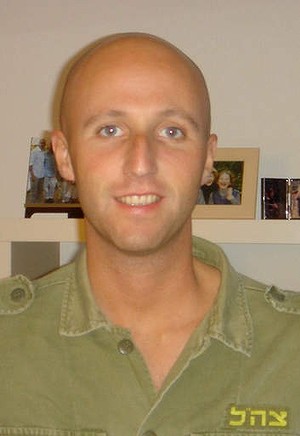 Mossad agent known as prisoner X linked to killing of Hamas leader: Report http://www.presstv.ir/detail/2013/02/15/289034/prisoner-x-linked-to-hamas-chief-murder/ 15 Feb 13, The Australian-Israeli ‘Mossad agent’ who has become known as ‘Prisoner X’ may have been linked to the assassination of a Hamas commander in Dubai in 2010, the same year he was found dead in a maximum security jail near Tel Aviv, a report says.
According to a report by the New York Times quoting the Kuwaiti daily Al Jarida on Thursday, Ben Zygier, identified as Prisoner X, was among the 26 suspects in a murder plot in which Mahmoud al-Mabhouh, a Hamas official, was tracked and killed in his hotel room hours after his arrival in Dubai, the United Arab Emirates, in January 2010.
The assassins had reportedly used fake passports from Australia, Britain, Ireland, Germany and France, among other countries.
The report added that ‘Prisoner X’, who apparently spent a decade working for Mossad, had provided the officials in Dubai with “names and pictures and accurate details” in exchange for protection.
However, the Israeli regime kidnapped him from his hideout and jailed him over treason nearly a month after the operation over the speculation that he had been on the verge of exposing Tel Aviv’s secrets about the passports.
Australian media also quoted a security official familiar with the case as saying that Zygier “may well have been about to blow the whistle, but he never got the chance.” Continue reading
Secret funding supplied to USA anti-wind power front groups
 Media campaign against windfarms funded by anonymous conservatives http://www.guardian.co.uk/environment/2013/feb/15/media-campaign-windfarms-conservatives/print Suzanne Goldenberg, US environment correspondent guardian.co.uk, 15 February 2013
Secretive funding network channelled millions to stop state governments moving towards renewable energy Conservatives used a pair of secretive trusts to fund a media campaign against windfarms and solar projects, and to block state agencies from planning for future sea-level rise, the Guardian has learned.
The trusts, Donors Trust and Donors Capital Fund, served as the bankers of the conservative movement over the past decade. Promising anonymity to their conservative billionaire patrons, the trusts between them channelled nearly $120m to contrarian thinktanks and activists, wrecking the chances of getting Congress to act on climate change.
Now the Guardian can reveal the latest project of the secretive funding network: a campaign to stop state governments moving towards renewable energy.
The campaign against wind and solar power was led by a relatively new entity, theFranklin Centre for Government and Public Integrity. The Franklin Centre did not exist before 2009, but it has quickly become a protege of Donors Trust. Continue reading
Youtube: Japan’s media censorship of Fukushima radiation news
 Youtube: How Japanese media censors information about Fukushima nuckear radiation Issues of Radioactive Exposure are Considered Taboo on Japanese Media https://www.youtube.com/watch?v=NHtbi1Q4aZ8
 Watch: Japanese journalists reveal radiation cover-up after Fukushima (VIDEO) http://enenews.com/watch-japanese-journalists-reveal-radiation-cover-up-after-fukushima-video
 Title: Issues of Radioactive Exposure are Considered Taboo on Japanese Media
Source: World Network for Saving Children from Radiation
Date Recorded: Dec. 20, 2012
Date Published: Feb. 13, 2013
Takashi Uesugi, Journalist: I can only write about the reality of nuclear power […] Anything implying the danger of radiation is not [accepted].
Kazuhiro Haraguchi, former Minister of Internal Affairs and Communications: It is still taboo to talk about radiation exposure […] In June 2011 […] we also demanded the government evacuate at least women and children. […] I think it is the Japanese government [that made it a taboo to discuss radiation exposure].
Watch the video here
Death of Ben Zygier and the failure of Israel’s spy agency Mossad to keep this quiet
Why Israel Couldn’t Contain Prisoner X Story, The Daily Beast, by Dan Goldenblatt Feb 14, 2013 Even with the increased flow of information about Prisoner X—Ben Zygier, aka Ben Alon, aka Ben Allen, aka…—we will probably never really know the truth. What could be the chain of events that led a good Jewish boy from Melbourne, Australia, who, it was confirmed by Israel, worked for the Mossad for 10 years, to end up as an anonymous prisoner in complete isolation in Israel’s most secure and watched prison cell? The fact that under what was supposed to be 24-7-365 observation he also succeeded to hang himself only adds to the mystery. Continue reading
Japan’s government curtails press freedom about Fukushima nuclear situation
Nuclear power and press freedom, Japan Times, FEB 10, 2013 Japan fell
from 22nd place to 53rd in the rankings of press freedom last year,
according to the nonprofit organization Reporters Without Borders.
 Japan’s plummet was attributed to a single factor — the lack of access
to information related to the disaster at Tokyo Electric Power Co.’s
Fukushima No. 1 nuclear power plant.
In the past, Japan could be relatively proud of its reputation for
press freedom compared with that of most countries. But being ranked
lower lately than countries such as El Salvador or Haiti is an
embarrassing reminder that press freedom can quickly erode under
pressure from the government and corporations.
In reporting on the serious disaster at the Fukushima No. 1 nuclear
power plant, many reporters have met with restricted access, lack of
transparency and even lawsuits. Continue reading
Iceland’s step forward for freedom of information
Iceland wants to be seen as the ideal place for online media and data storage banks to locate their servers in order to shield themselves from the threats of censorship, filtering and closure, and to provide the best protection for the personal data of their users.
NEW LEGISLATION TO PROVIDE EXEMPLARY PROTECTION FOR FREEDOM OF INFORMATION 21 JUNE 2010. HTTP://EN.RSF.ORG/ISLANDE-NOUVEL-ARTICLE-18-06-2010,37771.HTML Iceland’s parliament, the Alpinghi, has unanimously approved a resolution known as the Icelandic Modern Media Initiative (IMMI) that calls on the government to draft legislation in line with its recommendations for the protection of media, journalists and bloggers.
Reporters Without Borders hails this ambitious and positive initiative, adopted on 15 June, and calls on the government to do its utmost to respect the parliament’s will when it drafts the law.
“This proposal is on the right track,” Reporters Without Borders said. “It regards freedom of expression as a fundamental right and would create optimal conditions for investigative journalism. Even if the precise impact of this proposed law remains to be seen, especially as regard journalists’ legal protection, Iceland has established itself as a pioneer.”
The press freedom organisation added: “We hope this will serve as an example to other governments. It is certainly a promising departure from the general tendency, especially in democratic countries, for press freedom to be eroded and for harassment of journalists and their sources to increase.” Continue reading
TEPCO tried to cover up evidence that earthquake, not tsunami, caused nuclear disaster
“(TEPCO’s explanation) was absolutely false and seriously obstructed the investigation,” Mitsuhiko Tanaka, a former member of the now-disbanded Diet commission, said in a statement submitted to the chiefs of the two Diet chambers on Feb. 7.
 TEPCO suspected of false account to Diet panel http://www3.nhk.or.jp/daily/english/20130207_19.html
Title: TEPCO ‘blocked’ nuclear accident investigation: panel member
Source: Kyodo
Date: February 07, 2013
[Tepco] blocked an attempt by a Diet-appointed panel to enter the No. 1 reactor building at the Fukushima Daiichi complex for an accident investigation last year, saying the unit was “in complete darkness,” which was not true, a member of the panel said Thursday.
The panel members were seeking to determine whether important equipment of the No. 1 reactor had suffered damage as a result of the earthquake on March 11, 2011, before ensuing tsunami ravaged the plant […] Continue reading
Alarm over USA’s so-called “legal,” “ethical” “wise” drone killings
 The memo says the U.S. can carry out targeted drone executions even when the U.S. doesn’t have “clear evidence that a specific attack in U.S. persons and interests will take place in the immediate future.”
The White House this week defended the drone program as “legal,” “ethical” and “wise.”
 Congress gets Obama data on use of drones, By Susan Crabtree The Washington Times, February 6, 2013 White House gives in before Brennan hearing With the fate of his pick to head the CIA in danger, President Obama reversed course Wednesday night and released to Congress the classified legal advice that the Justice Department has given the White House on using drones to execute American citizens in the war on terrorism.
The about-face came less than a day before John O. Brennan, Mr. Obama’s homeland security adviser and his pick to be CIA director, was to face a Senate confirmation hearing, and hours after Sen. Ron Wyden, Oregon Democrat, threatened to hold up the appointment unless more information was forthcoming. Continue reading
Secrecy over UK’s freeloader nuclear industry
 Negotiations on new nuclear power plants ‘need more scrutiny’ BBC News, 7 February 2013 The cost of cleaning up the Sellafield nuclear waste site has reached £67.5bn, according to MPs Lib Dem MP Martin Horwood has called for a “pause” in negotiations over new nuclear power stations to allow parliamentary scrutiny of whether they were likely to result in a good deal. He urged the government to ensure that the construction of new nuclear power stations was not subsidised.
Mr Horwood likened the nuclear industry to a “freeloader”…..Leading a Commons debate on the subject, Mr Horwood said the use of subsidies for renewable energy was “justified”.
But he said of the nuclear industry: “Wouldn’t it be extraordinary if into this exciting young, diverse and competitive energy market we found that a 56-year-old freeloader, a tailgater left over from another era was trying to slip in unnoticed and pick up all the same kind of advantages and support?”
‘Lack of transparency’
Mr Horwood claimed negotiations on the “strike price” – or minimum price for nuclear generated power – are going on “behind closed doors, as we speak, before the relevant legislation has even passed through this House”…..
Joan Walley, the Labour chair of the Environment Select Committee, supported Mr Horwood’s plan.
She said there was a “complete lack of transparency” because of commercial confidentiality agreements with energy firms.
“Is new nuclear going ahead with or without public subsidy? I think the plain truth is we have no way of telling,” she told MPs….. http://www.bbc.co.uk/news/uk-politics-21374879
USA Senator calls for investigation into administration of San Onofre nuclear power plant
 Barbara Boxer On San Onofre: Nuclear Power Plant Should Be Investigated
HUFFINGTON POST, By MICHAEL R. BLOOD 02/06/13 LOS ANGELES — California Sen. Barbara Boxer pressed federal regulators Wednesday to open an investigation into equipment problems at the shuttered San Onofre nuclear power plant.
In a letter to the Nuclear Regulatory Commission, the Democrat said information in a previously unreleased report shows operator Southern California Edison and the company that built the plant’s ailing steam generators, Mitsubishi Heavy Industries, were aware of design problems before the equipment was installed.
Edison spokeswoman Maureen Brown did not immediately respond to an email and phone message seeking comment. Mitsubishi spokesman Patrick Boyle did not immediately respond to an email or phone message seeking comment……. Continue reading
Criminal gangs in the money again in Japan – now in “nuclear waste disposal”
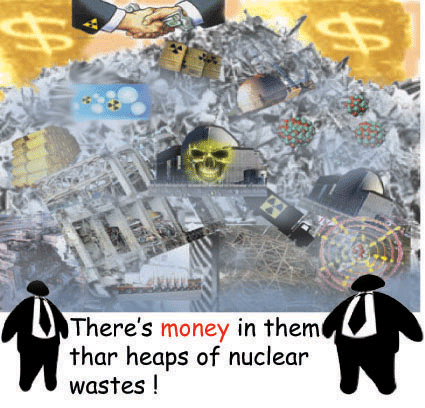 Asahi: Gangsters cashing in on Fukushima disaster — Involved in “disposal of waste” http://enenews.com/asahi-gangsters-cashing-fukushima-disaster-involved-disposal-waste
Title: Gangster illegally hired workers for decontamination projects
Source: AJW by The Asahi Shimbun
Author: KENJI OGATA
Date: January 31, 2013
Criminal organizations are cashing in on the disaster that shook Japan nearly two years ago by sinking their claws into all aspects of recovery operations to skim off handsome profits.
Police have just turned up an instance of a gang member brazenly providing laborers to help clean up contaminated areas in Fukushima Prefecture, and pocketing part of their wages. […]
“The recovery operations involve a lot of money, so they are a godsend for gangs that have trouble making money due to a police crackdown on gang activities,” a gang insider said.
The man said these groups have been involved in the demolition of buildings and the disposal of waste in devastated areas. […]
See also: Police make arrest over cleanup workers at Fukushima Daiichi — Crime syndicate “allegedly participated in containment work for the damaged facilities”
Nuclear company Exelon under-reported decommissioning costs
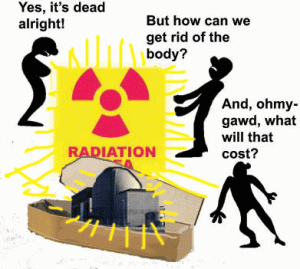 Exelon Probed on Nuclear Funding Shortfall, Bloomberg, By Julie Johnsson – Feb 1, 2013 Exelon Corp. (EXC), the largest U.S. nuclear operator, “deliberately” under-reported for four years the amount of money needed to retire its reactors, the U.S. Nuclear Regulatory Commission said.
Exelon, based in Chicago, faces “escalated enforcement action” for the financial reporting errors that may total as much $140,000 for each day of the violation, Scott Burnell, a spokesman for the regulatory agency, said in a phone interview today. The agency asked Exelon to explain the errors for the years 2005-2007 and 2009 in a Jan. 31 letter.
The investigation is “very unusual” and may be the first related to contributions to a federal nuclear decommissioning trust fund, Anneliese Simmons, a financial analyst with the commission’s Office of Nuclear Reactor Regulation, said in a phone interview. The shortfall totaled $1 billion in 2009. The company is now in compliance, Simmons said….. http://www.bloomberg.com/news/2013-02-01/exelon-probed-on-nuclear-funding-shortfall-u-s-says.html
Freedom of press in Japan has gone down drastically, since Fukushima nuclear disaster
 Jiji: Japan plummets in press freedom list — “Almost zero respect for access to information related to Fukushima… Should sound an alarm” -Group http://enenews.com/jiji-japan-plummets-press-freedom-list-almost-respect-access-information-related-fukushima-sharp-fall-sound-alarm
Title: Japan dives to 53rd in press freedom list
Source: Jiji Press
Date: Jan. 30, 2013
Japan plummeted to 53rd from 22nd last year in the 2013 press freedom ranking released by Reporters Without Borders, a Paris-based nonprofit organization, on Wednesday.
Japan “has been affected by a lack of transparency and almost zero respect for access to information on subjects directly or indirectly related to Fukushima,” the group said in a statement, referring to the crisis at Tokyo Electric Power Co.’s crippled Fukushima No. 1 nuclear power plant. “This sharp fall should sound an alarm,” it added. […]
See also: Professor: Goebbels would smile in his grave to see how nuclear establishment handled disaster (AUDIO)
Why spread an unlikely story of explosion at Iran nuclear plant??
 Not for nothing have the major news organizations ignored Kahlili’s Fordow report. Beyond his questionable credibility, there is no supporting evidence. If a large explosion did occur at Fordow a week ago, why have no satellite photos appeared of dozens of vehicles on the site involved in rescue operations? And if there are 240 workers trapped underground, how come no worried relatives have expressed concern on one of the social networks? Iran may have a repressive regime, but tens of millions of citizens are connected to the Internet and are experts at evading the regime’s attempts to monitor and filter their communications. Something would have come out by now.
 Who spread reports of an ‘explosion’ at Iran’s Fordow nuclear plant and why?
According to the report, the explosion in Fordow seriously damaged many of the centrifuges in the plant and trapped underground 240 employees who have yet to be rescued. But if this is true, why have the major news networks dismissed it?
Haaretz, By Anshel Pfeffer | Jan.27, 2013 The Internet has been abuzz over the last couple of days with an uncorroborated report regarding a huge explosion in the underground uranium enrichment plant at Fordow in Iran. According to the report, the explosion seriously damaged many of the centrifuges in the plant and trapped underground 240 employees who have yet to be rescued.
If this is true, it will be the most serious sabotage caused yet to the Iranian nuclear program. If this is true.
The main problem with the report is that no supporting evidence has appeared so far from any reliable sources to corroborate it, nor has a statements been released from an official source in Iran or any other country. All the main Western news organizations with contacts and sources in the intelligence community have steered well away from the story. (In Israel, only the tabloid Yedioth Ahronoth, which splashed the story on the front page of its Sunday edition, took notice of the story.)
Perhaps it’s the identity of the report’s author which leads to the disbelief: Reza Kahlili, an Iranian exile with an interesting past who is well known to many reporters covering intelligence and Iranian affairs. He published the report on the explosion, which apparently took place on Monday, the eve of the Israeli elections, on World News Daily, a veteran website with close contacts to the far-right in the United States. Kahlili himself is a frequent speaker at events organized by right-wing organizations and those that support the right in Israel. It’s not hard to realize why. In an interview he gave Haaretz two years ago, upon the publication of his book “A Time To Betray”, Kalili set out a worldview on Iran that was surprisingly similar to that of Prime Minister Benjamin Netanyahu. He also compared the regime in Tehran to that of the Nazis, and called upon Israel to bomb Iran’s nuclear installations…… Continue reading
1 This Month
26 September – International Day for the Total Elimination of Nuclear Weapons





PLEASE OPPOSE HR 8255 AND S.3639 – bills would accelerate satellite deployment, with no environmental review or safeguards – https://ncstd5li.quorum.us/campaign/169331/
To see nuclear-related stories in greater depth and intensity – go to https://nuclearinformation.wordpress.com
-
Archives
- September 2026 (291)
- August 2026 (330)
- July 2026 (355)
- June 2026 (287)
- May 2026 (306)
- April 2026 (356)
- March 2026 (251)
- February 2026 (267)
- January 2026 (308)
- December 2025 (358)
- November 2025 (359)
- October 2025 (375)
-
Categories
- 1
- 1 NUCLEAR ISSUES
- business and costs
- climate change
- culture and arts
- ENERGY
- environment
- health
- history
- indigenous issues
- Legal
- marketing of nuclear
- media
- opposition to nuclear
- PERSONAL STORIES
- politics
- politics international
- Religion and ethics
- safety
- secrets,lies and civil liberties
- spinbuster
- technology
- Uranium
- wastes
- weapons and war
- Women
- 2 WORLD
- ACTION
- AFRICA
- Atrocities
- AUSTRALIA
- Christina's notes
- Christina's themes
- culture and arts
- Events
- Fuk 2022
- Fuk 2023
- Fukushima 2017
- Fukushima 2018
- fukushima 2019
- Fukushima 2020
- Fukushima 2021
- general
- global warming
- Humour (God we need it)
- Nuclear
- RARE EARTHS
- Reference
- resources – print
- Resources -audiovicual
- Weekly Newsletter
- World
- World Nuclear
- YouTube
-
RSS
Entries RSS
Comments RSS

