-
Attacks could pave way to disrupt U.S. electric grid
-
Kansas site is among those trying to eject intruders
-
Hackers working for a foreign government recently breached at least a dozen U.S. power plants, including the Wolf Creek nuclear facility in Kansas, according to current and former U.S. officials, sparking concerns the attackers were searching for vulnerabilities in the electrical grid.
The rivals could be positioning themselves to eventually disrupt the nation’s power supply, warned the officials, who noted that a general alert was distributed to utilities a week ago. Adding to those concerns, hackers recently infiltrated an unidentified company that makes control systems for equipment used in the power industry, an attack that officials believe may be related.
The chief suspect is Russia, according to three people familiar with the continuing effort to eject the hackers from the computer networks. One of those networks belongs to an aging nuclear generating facility known as Wolf Creek — owned by Westar Energy Inc., Great Plains Energy Inc. and Kansas Electric Power Cooperative Inc. — on a lake shore near Burlington, Kansas.
- The possibility of a Russia connection is particularly worrisome, former and current officials say, because Russian hackers have previously taken down parts of the electrical grid in Ukraine and appear to be testing increasingly advanced tools to disrupt power supplies…….
- Several private security firms are studying data on the attacks, but none has linked the work to a particular hacking team or country…….
- Many of the power plants are conventional, but the targeting of a nuclear facility adds to the pressure. While the core of a nuclear generator is heavily protected, a sudden shutdown of the turbine can trigger safety systems. These safety devices are designed to disperse excess heat while the nuclear reaction is halted, but the safety systems themselves may be vulnerable to attack.
Homeland Security and the FBI sent out a general warning about the cyberattack to utilities and related parties on June 28, though it contained few details or the number of plants affected. The government said it was most concerned about the “persistence” of the attacks on choke points of the U.S. power supply. That language suggests hackers are trying to establish backdoors on the plants’ systems for later use, according to a former senior DHS official who asked not to be identified.
Those backdoors can be used to insert software specifically designed to penetrate a facility’s operational controls and disrupt critical systems, according to Galina Antova, co-founder of Claroty, a New York firm that specializes in securing industrial control systems.
“We’re moving to a point where a major attack like this is very, very possible,” Antova said. “Once you’re into the control systems — and you can get into the control systems by hacking into the plant’s regular computer network — then the basic security mechanisms you’d expect are simply not there.”
- The situation is a little different at nuclear facilities. Backup power supplies and other safeguards at nuclear sites are meant to ensure that “you can’t really cause a nuclear plant to melt down just by taking out the secondary systems that are connected to the grid,” Edwin Lyman, a nuclear expert with the Union of Concerned Scientists, said in a phone interview.
The operating systems at nuclear plants also tend to be legacy controls built decades ago and don’t have digital control systems that can be exploited by hackers. Wolf Creek, for example, began operations in 1985. “They’re relatively impervious to that kind of attack,” Lyman said….. https://www.bloomberg.com/news/articles/2017-07-07/russians-are-said-to-be-suspects-in-hacks-involving-nuclear-site
Cover-up of the true radiation effects in southern Russian Urals
 In conferences debating the number of victims of the Chernobyl accident, officials who draw paychecks
  from nuclear lobbies make similar arguments about alcohol abuse and “radiophobia”—stress-related illnesses caused by fear of radiation.
 Strange illnesses in one of the most contaminated towns in the world challenge what we think we know about the dangers of radioactivity.Slate, By Kate Brown, April 18, 2013, “……What do we know about communities living on contaminated terrain? Two years after the meltdown of three reactors in Fukushima, Japan, the World Health Organization forecasts that there will be no significant rise in cancers among people living nearby. These projections are based on guesses from models calculated from prior studies, mostly of Japanese people who survived Hiroshima and Nagasaki. Yet when Japanese scientists and inspected the bodies of 38,000 children living in the Fukushima Prefecture, they found 36 percent had abnormal growths on their thyroids a year after the accident.
We have grown accustomed to this scenario—media attention to nuclear accidents followed by a long, slow quarrel among scientists about whether the spilled fission products will damage human bodies or not. It will take decades to learn the public health impact of the 2011 meltdown. By then, most of the public will have lost interest. But there are other ways to get at this question of what it means to live on earth sullied with decaying radioactive isotopes.
No one has lived longer on contaminated terrain than people in the village of Muslumovo in the southern Russian Urals located downstream from the Maiak plutonium plant, built in 1948 to produce Soviet bomb cores. Unlike the S.T.A.L.K.E.R. game, daily life in Muslumovo is terrifyingly banal: long waits at medical clinics, worries over the price of prescriptions, reams of paperwork related to compensation and disability claims, sick kids, unemployment, poverty, and chronic illness.
I showed up in Muslumovo on a Saturday morning in August 2009. Muslumovo is a big village, sprawled inside a crooked elbow of the Techa River, which is slow, sluggish, and considered to be the world’s most radioactive. The village center has a train station, a few apartment buildings, and a corner store. Marat Akhmadeev met me at the station in his Soviet vintage car, dusty and dented. We jolted up and down on the choppy seas of the unpaved streets. Muslumovo is a strange village—half there and half gone. Many houses are abandoned, some partly dismantled, exposing weathered wallpaper and overturned appliances.
The Techa became a flowing radioactive reservoir in 1949 when engineers at the plutonium plant ran out of underground storage containers for high-level radioactive waste. A Dixie cup of this waste could kill everyone in a large ballroom. Compelled by the arms race, the plant director ordered it dumped in the Techa River. The men running the plant didn’t tell anyone about this decision. The 28,000 Russian, Bashkir, and Tatar farmers living on the river—drinking, cooking, and bathing with river water—had no idea. In the 1950s and ’60s special forces resettled most of the 16 contaminated villages on the Techa, but a few villages were too large and expensive to move, so they stayed. Muslumovo is one.
There’s no work in Muslumovo. A person either commutes 60 miles to the industrial city of Cheliabinsk or farms a patch of land of the long-defunct Muslumovo collective farm. Marat farms, living off the land—a term that takes on new meaning in Muslumovo, where in 2008, an American team found domestic interiors registering radiation at 40 times above the background level. After we pulled up at Marat’s house, his teenage son silently trailed us. Noticing a twitch in the boy’s step, I turned to look at him. His mouth drooped and fingers twisted, as he mouthed a stuttered greeting. Marat explained, “This is Kareem,nash luchevik,” meaning “our radiant one,” said in an off-hand manner, as if every family has a luchevik……
There is a legal contest going on over the health of the people of Muslumovo: whether they are sick and, if so, ill from the radioactive isotopes dumped in the river or from poor diets and alcohol abuse. Medical evidence has been contradictory. In 1959, Soviet scientist A. N. Marei wrote a dissertation in which he argued that the Techa villagers were in poor health because of their poor diets. In 1960, in contrast, local Soviet officials linked the river-dwellers’ illnesses to the contaminated river. This debate between nature (radiation) and nurture (lifestyle) has been going on a long time…….
Over the years, FIB-4 doctors had diagnosed 935 people on the Techa River with chronic radiation syndrome. But as thousands of people in Ukraine worried about their exposures from the Chernobyl blast, Soviet medical officials backpedaled on the FIB-4 doctors’ original findings. In 1991, Angelina Gus’kova, the chief official voice in evaluating Chernobyl health problems, argued that in fact there were only 66 cases of chronic radiation syndrome among the Techa River people. The rest, she claimed, suffered from more prosaic diseases such as brucellosis, tuberculosis, hepatitis, and rheumatism caused by poor diets and sanitation. As American researchers supported by the Department of Energy have taken over as lead researchers of studies in Muslumovo, the diagnosis of chronic radiation syndrome has largely dropped from the radar. Meanwhile, Russian officials, worried about lawsuits, charged that many people in Muslumovo had dreamed up illnesses in order to sue for compensation. These people, they said, had no chronic radiation disease but were chronic welfare cases looking for handouts.
The trope of ignorant, genetically deficient, and drunken villagers is a common one in Russia. In the southern Urals in the past few decades, the cliché has been useful in glossing over the human suffering connected to uncontrolled dumping into the Techa River. In conferences debating the number of victims of the Chernobyl accident, officials who draw paychecks from nuclear lobbies make similar arguments about alcohol abuse and “radiophobia”—stress-related illnesses caused by fear of radiation. It would be a mistake, however, to allow the longstanding politicization of medical studies to overtake this very important, yet overlooked, place for our understanding of radiation’s effects on human bodies. Reprinted from Plutopia: Nuclear Families, Atomic Cities, and the Great Soviet and American Plutonium Disasters by Kate Brown with permission from Oxford University Press USA. http://www.slate.com/articles/health_and_science/medical_examiner/2013/04/nuclear_contamination_in_former_ussr_radioactivity_in_muslomovo_on_techa.html
Questions on safety of USA nuclear stations, risks of cyber attacks

 Cyber attacks target nuclear power plants. Is Oyster Creek safe? LACEY – Computer hackers, not content with mucking around with U.S. commerce and elections, have trained their sights on nuclear power plants, prompting questions about cyber security at Oyster Creek.
Senator Edward Markey calls for U.S. govt to reveal details of nuclear plant cyber attacks
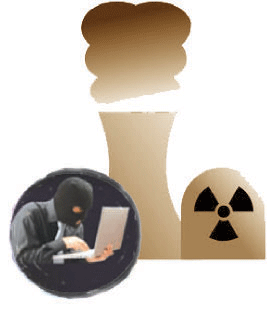 US Senator demands details of nuclear plant cyber attacks, Nuclear Energy Insider, Jul 12, 2017 US Senator demands details of cyber attacks on nuclear reactors
Senator Edward Markey has called for U.S. federal government departments to reveal how many nuclear power plants have been impacted by cyber attacks and demonstrate sufficient cyber security measures are in place, following media reports of security breaches.
Last week the New York Times reported a persistent cyber security threat targeted personnel working for nuclear plant operators and manufacturers of plant control systems, citing a classified report by the Department of Homeland Security. Bloomberg reported that the chief suspect in these attacks was Russia, which is also suspected of disrupting energy infrastructure in Ukraine.
Senator Markey demanded further details in a letter sent to federal government departments on July 10. Markey is a member of a U.S. subcommittee for international cyber security and sits on the Senate Foreign Relations Committee.
“The Department of Homeland Security has stated that the impact of these attacks ‘appears to be limited to administrative and business networks.’ However, there is no guarantee that malicious code could not migrate to physical control systems through the errant or unauthorized use of removable storage devices,” Senator Markey said in the letter.
“Furthermore, administrative and business networks could contain information relevant to the safety and security of nuclear plants, as well as personal information about the plant personnel. Malicious actors could use sensitive data to undermine plant security,” he said……..http://analysis.nuclearenergyinsider.com/us-senator-demands-details-nuclear-plant-cyber-attacks-uk-hinkley-build-cost-rises-8
Japan’s Anticonspiracy Law – risk of abuse of power
The revised organized crime punishment law now newly enables authorities to criminalize people planning and preparing to commit acts of terrorism and other serious offenses.
Noting that Japan can ratify the U.N. Convention against Transnational Organized Crime following the enforcement of the law, a senior police official expressed hopes that the country will be able to “cooperate more smoothly with other signatories in criminal investigations and handovers of suspects,” leading to progress in probes into organized crimes.
The official brushed aside concerns over possible abuse of the law by investigative authorities. Any compulsory investigations require search warrants from courts, meaning that such probes are subject to judicial scrutiny, the official noted.
Still, the official said that the application of the law to specific cases will have to be considered carefully, citing parliamentary debates on the legislation during which opposition parties strongly opposed the legislation.
Anticonspiracy Law Comes into Force in Japan
Tokyo, July 11 (Jiji Press)–The anticonspiracy law took effect in Japan on Tuesday, allowing authorities to criminalize planning and preparations to commit serious crimes, including terrorist attacks.
The government now plans to ratify promptly the U.N. Convention against Transnational Organized Crime so that the country can share investigative information about organized crimes with other nations.
Under the law, a group of two or more people can be punished for plotting a crime at the planning stage, or before committing it, if any member starts an act of preparation for the crime.
The Diet, Japan’s parliament, enacted the law last month, with support from the ruling coalition of the Liberal Democratic Party and Komeito, as well as Nippon Ishin no Kai, an opposition party.
During Diet debates on the controversial law, opposition parties expressed concerns that investigative authorities may use the law arbitrarily.
Corruption in Israel-Germany submarine deal – suspects held
 Suspects remanded in Israel-Germany submarine deal probe, JERUSALEM (Reuters) by Maayan Lubell, JULY 10, 2017- Three suspects were remanded in custody and a fourth ordered held under house arrest on Monday after Israeli police questioned six people on suspicion of corruption in a $2 billion deal to buy submarines and patrol craft from Germany.
The 2016 deal has been under public scrutiny since it emerged that Prime Minister Benjamin Netanyahu’s personal lawyer also represented the local agent of the German conglomerate ThyssenKrupp Marine Systems set to build the vessels.
The six, who were questioned under caution on suspicion of bribery, fraud and tax offences, include public officials and private citizens, police spokeswoman Luba Samri said. No further details were immediately available.
German authorities also are looking into the deal.
In June, German magazine Der Spiegel reported Germany’s national security council had approved the sale of the three nuclear-capable submarines to Israel and that authorities inserted a clause into the contract giving it the right to void it if corruption allegations were proven…… https://www.reuters.com/article/us-israel-corruption-germany-idUSKBN19V15U?il=0
Nuclear facilities targeted by hackers – say USA Homeland Security Dept. and F.B.I.
Hackers Are Targeting Nuclear Facilities, Homeland Security Dept. and F.B.I. Say, NYT, JULY 6, 2017, Since May, hackers have been penetrating the computer networks of companies that operate nuclear power stations and other energy facilities, as well as manufacturing plants in the United States and other countries.
Suspicion falls on Russia, in the hacking of USA nuclear sites
Russians Are Said to Be Suspects in Nuclear Site Hackings, Bloomberg, By Michael Riley, Jennifer A Dlouhy, and Bryan Gruley 6 July 2017Pentagon now withholding results of nuclear weapons inspection
Pentagon withholding nuclear weapons inspection results: report http://thehill.com/policy/defense/340599-pentagon-withholding-nuclear-weapons-inspection-results-report BY MAX GREENWOOD – 07/04/17 The Pentagon has started withholding the results of inspections of its nuclear weapons operations, The Associated Press reported Tuesday.
Overall inspection results, such as “pass-fail” grades, at the country’s nuclear weapons facilities were previously made public. But the Pentagon told the AP that by ending such disclosures, it’s hoping to withhold key information about the U.S. nuclear arsenal from the country’s adversaries.
U.S. nuclear weapons operations have faced a bevy of embarrassing failings and shortcomings in past year stemming from security blunders, substandard performance, insufficient funding and poor leadership.
By withholding inspection results, the Pentagon is following a recommendation generated by an internal review of shortcomings in the country’s nuclear arsenal, including where and how the weapons are kept and the workers responsible for them.
Chuck Hagel, the former defense secretary under former President Barack Obama, ordered the internal review, as well as a separate study by an independent group, in 2014.
The recommendation to withhold inspection results was put forward in the internal review, which remains secret.
The Air Force personnel office posted on its website last month that the overall results of the inspections could no longer appear in personnel documents, such as performance reports. But that change began taking effect in the Navy in March, according to the AP. The Navy oversees the country’s submarine-launched ballistic missiles, while the Air Force operates aerial bombers and land-based missiles — in all, the three components that make up the nuclear triad.
Afghanistan: information that US military are smuggling uranium out of Afghanistan
US military could be smuggling uranium out of Afghanistan, locals say https://www.timesca.com/index.php/news/18272-us-military-could-be-smuggling-uranium-out-of-afghanistan-locals-say, 30 June 2017 KABUL (TCA) — A member of the Afghan parliament from Helmand Province and local residents have told Russia’s Sputnik Afghanistan news agency that the US military could be smuggling uranium, as well as other rare elements and natural resources, out of the village of Khanashin in the country’s southern province of Helmand.
Helmand is one of the most turbulent provinces in Afghanistan, and is a center of the country’s mining industry and the shadowy drug-smuggling industry. There are four deposits of uranium, magnetite, apatite and carbonite in the south of this region, in the southern village of Khanashin, just 160 km from the border with Pakistan.
According to earlier geological exploration works, the province has lucrative uranium and thorium deposits. It also contains vast resources of tantalum and other rare elements.
According to NASA estimates, there are also deposits of copper, iron and other metals worth of $81.2 billion. Until now, there was no industrial uranium mining in Afghanistan. During Taliban rule, the captives did all the mining.
Deputies of the lower chamber of the country’s parliament from the province of Helmand have repeatedly said that much evidence exists that uranium from Khanashin is being smuggled out in US cargo planes, Sputnik Afghanistan quotes local media reports as saying.
The deputies said that the US military have set up their military base near the uranium mines and smuggle uranium through it.
The deputies said that since the US military intervention back in 2001, the Americans and their British allies have concentrated their bases in this particular province as the largest uranium resources are concentrated there. The uranium deposit in Khanashin was previously controlled by the Taliban. However since the foreign troops set up their air bases and air fields, which are working around the clock, in the neighboring settlement of Garmsi, the deposit has been since controlled by them.
Local residents confirmed to Sputnik Afghanistan that at nights, the US military are smuggling out uranium in trucks and then in cargo planes.
Cleanup of radioactive contamination at the Hunters Point Shipyard was marred by widespread fraud
The cleanup of radioactive contamination at the Hunters Point Shipyard was marred by widespread fraud, faked soil samples, and a high-pressure culture where speed was valued over accuracy and safety, according to four former site workers.
On Thursday, the four whistle-blowers, including a radiation safety officer who reported directly to the Nuclear Regulatory Commission, gathered with environmentalists to describe the problems with the cleanup, which has cost the federal government $600 million. In the background, construction crews were at work redeveloping the property, where 1,200 units of housing, millions of square feet of commercial space and hundreds of acres of parks are planned.
David Anton, an attorney for the workers, said the Navy and the Environmental Protection Agency — as well as the district attorney and state attorney general — should immediately launch investigations into the cleanup, a process that should include interviews with former workers and the retesting of the soil at the site. Also, the nonprofit Greenaction for Healthand Environmental Justice filed a petition with the NRC to revoke the license of contractor Tetra Tech, which oversaw the cleanup at the Superfund site.
Questions over the accuracy of the soil tests emerged in October 2012, when the Navy discovered that some results were inconsistent with results from previous samples collected in the same areas. While the dirt in question was identified as having been collected from beneath a lab used to conduct radiation tests on animals, an internal investigation found that in at least 386 cases it had been pulled from areas already given a clean bill for radiological contamination.
Robert McClain, a radiation technician who worked at the site in 2005, said Tetra Tech management ordered him to increase the speed of a conveyor-belt system he operated — even though the soil carried by the belt could not be properly tested for contaminants at the faster speed.
“Management was production-driven,” he said. “They wanted to run it faster so they could get the soil moved. I was told by Tetra Tech officials that I didn’t know what I was doing. I have 25 years experience in the nuclear power business.”
In a statement, Tetra Tech spokesman Charlie MacPherson said the company “emphatically denies the allegations made by individuals at today’s news conference that Tetra Tech engaged in a cover-up of fraud on the Hunters Point Naval Shipyard.”
FivePoint Holdings, the company developing the property, said its “utmost concern is the safety of our residents and employees. We are confident in the oversight process of the Environmental Protection Agency and other local and state agencies to insure when we take title of a parcel it is up to the standard consistent with the designated uses.”
J.K. Dineen is a San Francisco Chronicle staff writer. Email: jdineen@sfchronicle.com
A U.S. business nuclear network hacked: this could lead to more serious nuclear risks
Hackers breached a US nuclear power plant’s network, and it could be a ‘big danger’, Business Insider, SONAM SHETH JUN 30, 2017
Cyber intrusion at USA multiple nuclear power generation sites this year
Nuclear breach opens new chapter in cyber struggle, Energywire: Tuesday, June 27, 2017 U.S. authorities are investigating a cyber intrusion affecting multiple nuclear power generation sites this year, E&E News has learned.
There is no evidence that the nuclear energy industry’s highly regulated safety systems were compromised. But any cybersecurity breach — targeted or not — at closely guarded U.S. nuclear reactors marks an escalation of hackers’ probes into U.S. critical infrastructure.
Electricity-sector officials confirmed yesterday that they are working to unpack the significance of the secretive cyber event, code named “Nuclear 17.”
Asked about the case, a representative from the North American Electric Reliability Corp. (NERC) said the nonprofit grid overseer “is aware of an incident” and has shared information with its members through a secure portal.
U.S. energy utilities pass around information on the latest hacking threats and vulnerabilities through NERC’s Electricity Information Sharing and Analysis Center. That organization “is working closely with the government to better understand any implications this incident might have for the electricity industry,” NERC spokeswoman Kimberly Mielcarek said in an emailed statement.
E&E News has reached out to nearly two dozen owners and operators of nuclear power plants for comment. None of the companies that replied by last night shared additional information on the incident, the details of which may be classified…….
Nuclear 17 and recent threats
An incident of this kind would almost certainly attract the attention of the Department of Homeland Security and the broader intelligence community, though a DHS spokesman did not confirm whether the agency was involved yesterday. If the threat rises to a certain level, members of Congress with intelligence oversight would also be looped in. Senate staff members would not confirm if they’re looking into the nuclear breach when asked for comment yesterday afternoon.
Even relatively routine cyber intrusions at sensitive facilities can trigger a high-level response from government and industry, given the potential stakes involved. In another recent nuclear breach, a South Korean state-owned utility reported losing potentially sensitive data to hackers in 2014 and 2015, though the attackers didn’t get into operational systems (Energywire, July 14, 2015).
Earlier this month, however, back-to-back cybersecurity warnings from U.S. officials put grid operators on high alert.
The twin threats came from Hidden Cobra, the U.S. government’s nickname for North Korean government-sponsored hackers, and Electrum, a separate group that cybersecurity firm Dragos Inc. has linked to a first-of-its-kind hacking tool designed to disrupt power grids.
NERC posted its first public alert of the year this month about that grid-focused malware, which Dragos calls “CrashOverride.” Experts claim it was used last December to briefly knock out power to part of Ukraine in an attack tentatively linked to Russia-based hackers. DHS issued its own alert about CrashOverride, then followed up with a separate report on a far-reaching campaign of North Korean cyber activity hitting “critical infrastructure sectors” in the United States and globally.
It’s not clear where Nuclear 17 fits into that timeline of recent cyber events. But even if it never jeopardized nuclear processes or grid reliability, a successful breach of non-safety systems at a nuclear power plant is troubling, said David Lochbaum, director of the Nuclear Safety Project for the Union of Concerned Scientists.
“If they are able to introduce mayhem there, what else could they do?” he said.
Nuclear plants had an extra margin of safety in their legacy controls that were “old tech” and thus harder for outsiders to penetrate. “As more and more systems are converted to digital controls, there could be more and more opportunities for problems to crop up, deliberate or inadvertent,” Lochbaum said.
“The Nuclear Regulatory Commission and the industry are not unaware of that threat,” he added. Even if safety systems were not apparently affected as part of Nuclear 17, malicious actions directed against comparatively less critical equipment could still have knock-on effects if hackers managed to unexpectedly disconnect a nuclear plant from the grid, experts say.
Such a sudden disruption would send a pressure “pulse” back to the reactor and turbine, which would still be generating electricity with no place to send it. The reactor would immediately “trip,” setting in motion a series of planned actions designed to bring the reactor to a safe shutdown condition…… https://www.eenews.net/stories/1060056628
South Africa’s govt and nuclear power utility Eskom undermine renewable energy development
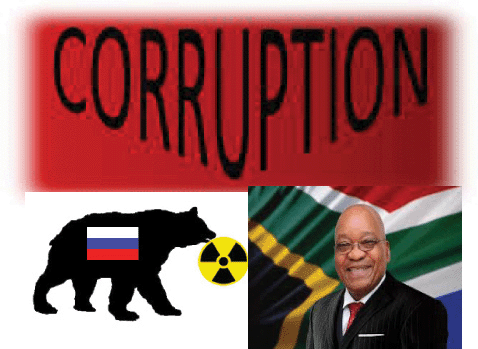 Nuclear and coal lobbies threaten to scupper renewables in South Africa The Conversation, Professor of Physics, University of Johannesburg June 27, 2017 South African power utility Eskom recently repeated that it will not conclude supply contracts with the developers of new renewable energy power stations. These developers were selected under a programme to facilitate private sector involvement in the building of medium-sized renewable energy power stations.
The programme has won plaudits for its success in facilitating the establishment of multiple solar and wind farms in record time. But Eskom is once again stalling.
The power utility’s stand threatens the viability of the entire renewable energy sector in the country. It’s hostility also defies logic given that the whole world is embracing renewable energy as key to a clean energy future and combating climate change.
So what lies behind the opposition?
The answer lies in the fact that two powerful lobbies are at work in South Africa. One is pro-coal, the other pro-nuclear. This has made the success of the renewable energy projects a target for attacks from interested parties in both. Disrupting the renewable energy sector would ensure that the coal sector remains dominant. And that, over time, it is gradually displaced by nuclear.
The lobby groups attached to coal and nuclear appear to have had powerful allies on the state utility’s board. There is mounting evidence that they have been furthering the interests of a group linked to the Gupta family. It in turn has been accused of capturing state entities to further its own ends, as well as those of President Jacob Zuma, his family and allies.
t has also been widely argued that the massively expensive proposed nuclear build is being driven by the same interest groups.
The battle over renewables is therefore closely linked to a wider political confrontation over control of key aspects of the South African economy.
Eskom’s flawed argument
The renewables dispute centres on the state utility’s refusal to endorse 1121 MW of new renewable energy….
The Public Enterprises Minister Lynne Brown has been disingenuous in citing cost as a reason to stop the last phase of renewables. The higher costs she recently quoted were presumably those associated with the first round of renewable energy projects. These contracts were concluded in 2012 and prices for renewables have come down considerably since.
For its part Eskom has pointed to the oversupply of electricity as the reason for its objection. But elsewhere it has trumpeted the need for more nuclear power. It can’t have it both ways.
Powerful forces at play
Until two years ago Eskom was seen as a neutral player committed to effectively provide electric power in the best interests of the country. It threw its weight behind previous power procurement plans.
But that all changed in 2015 after Brian Molefe was appointed CEO.
Molefe and his successor Matshela Koko are both linked to the controversial Gupta family. Their names featured in the Public Protector’s State of Capture report as well as in a bulk leak of emails which implicated the Guptas and other leading figures in the state capture network.
Molefe and Koko played a pivotal role in helping the Guptas purchase a coal mine – the Optimum mine – and to secure a lucrative coal supply contract with Eskom. Both are also strongly pro-nuclear. They have also gone on record to argue that renewable energy is too expensive……https://theconversation.com/nuclear-and-coal-lobbies-threaten-to-scupper-renewables-in-south-africa-79799
Hackers trading passwords used by managers at British nuclear power plants
 Russian hackers trade passwords used by managers at British nuclear power plants – including ‘Rad1at10n’ and ‘Nuclear1’ http://www.dailymail.co.uk/news/article-4635420/Russian-hackers-trade-passwords-UK-nuclear-plant-staff.html,
- The passwords of two senior EDF nuclear plant managers were traded online
- French-owned firm EDF Energy operates all 15 of Britain’s nuclear reactors
- Comes as thousands of government officials – including MPs – were hacked
The passwords – ‘Nuclear1’ and ‘Radiat10n’ – are thought to have been used on the business site LinkedIn.
They were being traded by hackers who had easily guessed the letters and numbers.
EDF, which operates Britain’s 15 nuclear reactors, did not comment about the breach.
But the French-owned firm did say, according to The Times, that it is ‘continually reviewing its defences and preparedness in this area’.
The lists on which the passwords appeared were traded privately before being made public.
It comes as around 1,000 British MPs and parliamentary staff, 7,000 police employees and more than 1,000 Foreign Office officials were all understood to have had confidential information traded online without their knowledge.Even some of the prime minister’s closest government ministers, including education secretary, Justine Greening, and business secretary, Greg Clark, are thought to have been affected by the hack.
The huge database was being sold for just £2, with the low price justified by the fact it had already spent months being passed around. Its original price is likely to have been much higher.
Hackers can easily guess many passwords, especially those which are merely a word associated with a certain person but with ‘3’ instead of ‘E’ or ‘1’ instead of ‘I’.
There have been warnings that the hacked passwords could be used to blackmail workers in sensitive jobs, or even to break into government servers.
Nuclear deal with Russia is central to the corruption in South Africa
There’s more to state capture than meets the eye, News24, Sipho Pityana, 23 June 17, The leadership crisis and the ravaging uncertainty that South Africa is going through now affect all of us.
I say this because the ethical failures committed by Zuma are not confined to the president’s office. They are cascading down, like a disease, into every aspect of South African life. They are killing our country, and killing us with it. Every extra day Zuma remains in power, this erosion continues and our crisis deepens.
Zuma’s strategy is simple: keep the ANC firmly captured by stealing the leadership elections at the party’s elective conference in December, and install his protégé. His successor as president of the ANC – and, subsequently, the country – would make sure that he not only stays out of jail, but also that the state capture project continues unabated…….
Finally, there is Russia. The Russians have a very, very keen interest in the nuclear energy deals that the president allegedly signed irregularly on our behalf, which our courts have now stalled. There are billions of rands at stake. We have already seen indications that a deal is in the making, and there are consistent allegations that the captains of state capture, Zuma and the Guptas, have already received – or at least stand to get – massive kickbacks from any Russian nuclear energy deal.Given the scale of the deals (estimated at about R1.8 trillion), even a small kickback is going to run into hundreds of millions. And, as we’ve seen from the various reports on state capture – from the SACC, the Public Affairs Research Institute and the former Public Protector herself – the kickbacks are never small.
So if you join the dots: in effect, and based merely on the uncontested evidence we have at hand, we have a president and his cronies who stand at the centre of a global crime network that involves China, Russia, Asia, the Middle East and certain parts of Africa.
…….you have a South African president with an even more broken ethical compass than Trump? A president who is prepared to let business interests take precedence over the national interest? A president who is prepared to sell his own country to the highest bidder?……….
1 This Month
To see nuclear-related stories in greater depth and intensity – go to https://nuclearinformation.wordpress.com/
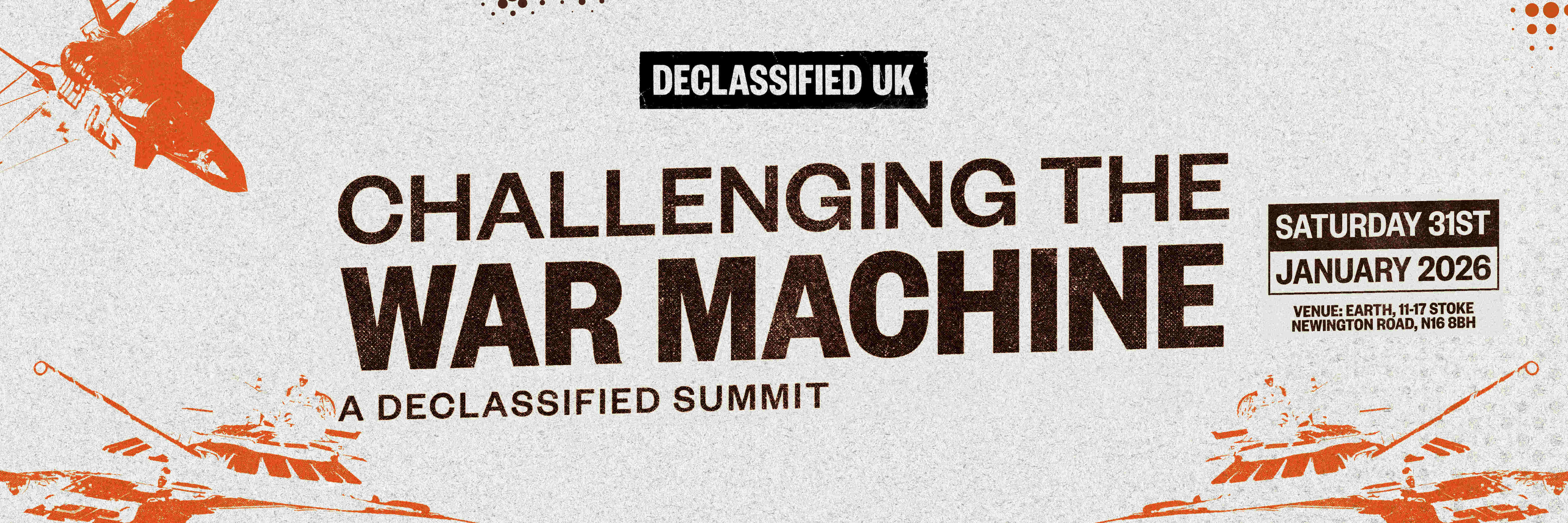
31st January – Challenging the War Machine – a DECLASSIFIED UK SUMMIT



Website of the Week
Now until to February 10, 2026 Radioactive waste storage in France: the debate is finally open! How to participate?
-
Archives
- January 2026 (306)
- December 2025 (358)
- November 2025 (359)
- October 2025 (376)
- September 2025 (258)
- August 2025 (319)
- July 2025 (230)
- June 2025 (348)
- May 2025 (261)
- April 2025 (305)
- March 2025 (319)
- February 2025 (234)
-
Categories
- 1
- 1 NUCLEAR ISSUES
- business and costs
- climate change
- culture and arts
- ENERGY
- environment
- health
- history
- indigenous issues
- Legal
- marketing of nuclear
- media
- opposition to nuclear
- PERSONAL STORIES
- politics
- politics international
- Religion and ethics
- safety
- secrets,lies and civil liberties
- spinbuster
- technology
- Uranium
- wastes
- weapons and war
- Women
- 2 WORLD
- ACTION
- AFRICA
- Atrocities
- AUSTRALIA
- Christina's notes
- Christina's themes
- culture and arts
- Events
- Fuk 2022
- Fuk 2023
- Fukushima 2017
- Fukushima 2018
- fukushima 2019
- Fukushima 2020
- Fukushima 2021
- general
- global warming
- Humour (God we need it)
- Nuclear
- RARE EARTHS
- Reference
- resources – print
- Resources -audiovicual
- Weekly Newsletter
- World
- World Nuclear
- YouTube
-
RSS
Entries RSS
Comments RSS
 nuclear-news