Abe’s second strike against freedoms

 The Abe administration has reportedly started preparations for introducing the “crime of conspiracy” by revising the law on the punishment of organized crime and the control of proceeds resulting from crime. Although it has not been decided when a revision bill will be submitted to the Diet, there is the danger that it will give the government a strong weapon to control civic movements, especially those that oppose government policies.
The recently enacted state secrets law will not only greatly limit people’s access to government information but also punish those who try to get secret information even if they didn’t know it was designated as secret.
The introduction of the crime of conspiracy will further weaken freedoms that have already been hollowed out by the secrecy law. So it is important for citizens to start a widely based action to stop this move by the administration.
If the crime of conspiracy is introduced, one could be punished for joining others to plan a crime even if it is not actually carried out or even if no concrete preparations have been made — a huge departure from the current principle that arrests can be made only when a crime has actually been committed or attempted.http://www.japantimes.co.jp/opinion/2013/12/22/editorials/abes-second-strike-against-freedoms/#.Urhe-6VRGf0
Edward Snowden – Guardian Person of the Year
 Snowden wins Guardian Person of Year, boosts Targeted Individuals’ credibility Deborah Dupre Human Rights Examiner 12 Dec 13, Whistleblower Edward Snowden has beenawarded the Guardian Person of the Year 2013 on Monday for exposing some of what every targeted individual survivor wants the world to know regarding surveillance human rights privacy abuses, but not that 24/7 surveillance is used to terrorize millions of innocent corporate-government victims.
“For the second year in a row, a young American whistleblower alarmed at the unfettered and at times cynical deployment of power by the world’s foremost superpower has been voted the Guardian’s person of the year,” reported Lori Price of Citizens for Legitimate Government……….Targeted individuals, however, are far from “few.” Everyone of them knows first-hand about surveillance issues.
As one such targeted person, Katherine Moore, points out, a2009 Department of Justice survey revealed that 5.9 million Americans are targeted individuals. These innocent Americans are victims of surveillance “targeting” by large corporations, extremist groups, and/or outlaw factions of state, local, and federal law enforcement, according to Moore.
Those innocent targeted individuals have known and unsuccessfully reported to media and human rights groups for years what Snowden finally did in a way that media could no longer dismiss……….http://www.examiner.com/article/snowden-wins-guardian-person-of-year-boosts-targeted-individuals-credibility?CID=examiner_alerts_article
Japan’s state secrets law criminalises investigative journalism
 Japan enacts state secrets law late Friday night amid revolt — “It criminalizes investigative journalism” — Terrorism defined as “imposing one’s opinions on others”http://enenews.com/secrets-law-passes-late-friday-night-amid-revolt-mushrooming-opposition-it-criminalizes-investigative-journalism-terrorism-defined-as-imposing-ones-opinions-on-others-protesto
Japan Times, , Dec. 6, 2013: Following political turmoil that rocked the Diet over the past week, ruling block Upper House members finally enacted the contentious state secrets bill late Friday night. Earlier in the day, opposition parties intensified their protests in vain over a law that’s being criticizing for not creating an independent oversight body capable of preventing the government from hiding inconvenient information at its discretion.
Businessweek, Dec. 6, 2013: Prime Minister Shinzo Abe secured final passage of a bill granting Japan’s government sweeping powers to declare state secrets, a measure aimed at shoring up defense ties with the U.S. that prompted a public backlash and revolt by the opposition.
Asahi Shimbun, , Dec. 6, 2013: Kazuo Shii, chief of the Japanese Communist Party, described the ruling coalition’s behavior as “tyrannical, arrogant and disorderly.” The ruling coalition believed prolonging the Diet debate any longer could backfire, only fueling the mushrooming opposition to the bill, and lead to a further decline in approval ratings for Abe’s Cabinet and hold on power. An Asahi Shimbun survey taken between Nov. 30-Dec. 1 showed the Cabinet’s approval rating at 49 percent, dipping below 50 percent for the first time since he took power in December 2012. Officials in the Abe administration foresee the public eventually forgetting about the controversy, once the legislation is approved.
GlobalPost,, Dec. 6, 2013: Here are four disturbing ways the bill could be a democracy muzzler. It defines terrorism as imposing one’s opinions on others […] According to Article 12, terrorism is partially defined as an activity that forces “political and other principles or opinions on the state or other people.” In other words, throw up a rowdy anti-government protest, and the judiciary can find a reason to lock you away. It criminalizes investigative journalism […] Journalists can be prosecuted for “improperly accessing” classified documents or “conspiring” to leak them. Even asking an official to take a look at classified documents could constitute “conspiracy,” leading to up to five years in prison. “Instigating” the release of government secrets, meanwhile, carries up to 10 years in the dock. […] Basically, anything can be a secret […] administrators can make the opaque decisions to classify a document even if their work hardly relates to national security. That effectively allows them to hide any embarrassing piece of evidence, and then pursue the journalists and bloggers who make it public. […]
Women’s and community groups angered at Japan’s new secrecy law
Yuri Horie, [ ed: I have doubts on this name – it might be incorrect] president of the Japan Federation of Women’s Organizations (Fudanren), said, “We must not allow for a repeat of the mistake that lead to the war with women’s eyes, ears and mouths shut off.”
Fukushima residents furious at lower house passage of contentious secrecy bill – Mainichi, 27 Nov 13, FUKUSHIMA — Residents here are angry over the ruling bloc’s railroading of a highly controversial state secrets protection bill through the House of Representatives on the evening of Nov. 26 — just one day after voicing strong opposition to the legislation at a public hearing.
At the lower house special committee’s public hearing on the legislation held in Fukushima on Nov. 25, all of the seven local residents who were invited to state their opinions voiced opposition to or concerns about the government-sponsored secrecy bill. They voiced fear that information related to the Fukushima nuclear disaster could be designated as “special secrets.” Their opinions, however, were not reflected in Diet deliberations. Therefore, they became infuriated at the quick-and-dirty passage of the bill through the lower house. One of the residents angrily said, “How far are they going to go in fooling us?” Continue reading
Hanford cracks down on safety whistleblowers
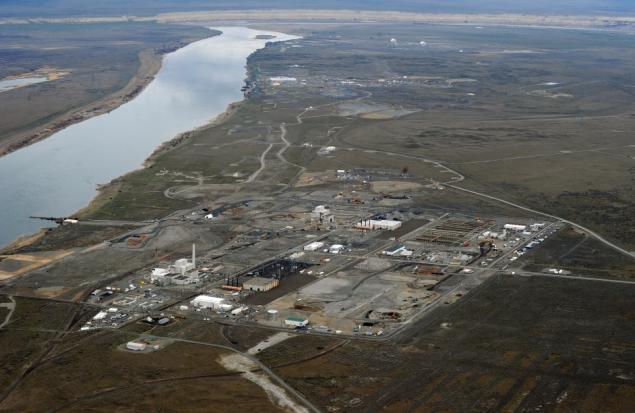 Hanford nuclear site clean-up: The mess gets worse NBC News Investigations, By Rebecca LaFlure, The Center for Public Integrity 18 Nov 13 “……….In addition to the cost increases, construction delays and critical reports, employees and independent agencies have said DOE and contractor officials overseeing the project created a workplace climate that discourages employees from raising technical and safety concerns.
The most prominent of the plant’s whistleblowers is Walter Tamosaitis, the project’s former research and technical manager for URS, the prime subcontractor to Bechtel.
Tamosaitis’s troubles began after a 2010 meeting with Bechtel and URS managers, at which he turned over a list of technical issues that he said could affect plant safety, including continuing uncertainties about how the wastes should be kept mixed to stop them from settling into a critical mass and causing a chain reaction. If that happened, the resulting explosion would release deadly radiation.
Two days later, on July 2, URS, acting under orders from a Bechtel executive, pulled him from the project, according to a federal court complaint Tamosaitis filed in November 2011. He was reassigned to a basement office and stripped of supervisory responsibilities…….
Other technical managers have also alleged retaliation for expressing safety concerns. Donna Busche, a URS employee and the plant’s manager of environmental and nuclear safety, filed a lawsuit against Bechtel and URS in February claiming the companies treated her as a “roadblock to meeting deadlines.” URS and Bechtel officials excluded her from meetings and belittled her authority, she alleged. The companies deny it.
Busche said her troubles escalated after she questioned DOE’s judgment at an Oct. 7, 2010, safety board hearing about how much radiation might escape in the event of an accident at the plant. Board officials had expressed concern that DOE’s calculations may underestimate the threat, but Ines Triay, then DOE’s assistant secretary for environmental management, defended the calculations…….http://investigations.nbcnews.com/_news/2013/11/18/21482804-hanford-nuclear-site-clean-up-the-mess-gets-worse?lite
Japan’s new legislation could make it a crime to reveal truth about Fukushima conditions
 Censorship and Dispossession in Japan http://majiasblog.blogspot.jp/2013/11/censorship-and-dispossession-in-japan.html Developments in Japan are concerning: First, according to The Asahi Shimbun, Japan’s Nuclear Regulatory Authority (NRA) is trying to accelerate returning people to Fukushima prefecture by measuring citizen exposure levels using individual dosimeters instead of official air sampling. The Asahi notes dosimeters have much lower readings than official air sampling and that the NRA’s draft policy has no discussion of health impacts.
The proposed exposure level for returning evacuees is 20 millisieverts based on dosimeter readings alone (no inclusion of estimates of exposure from contaminated food, water, and bio-accumulation).
Second, anti-nuclear groups in Japan have been subject to denial of service attacks since September. I had heard rumors this was occurring. I’m grateful The Asahi Shimbun reported it.
I am reminded that Japan is trying to pass new whistle-blower laws that criminally prosecute any whistle-blower who reveals corporate or government secrets (seehttp://rt.com/news/japan-state-secrets-law-712/)
The new whistleblower law and the concerted attacks against anti-nuclear groups together indicate pretty clearly that elements of the Japanese state/industry are reacting fascistically to deteriorating conditions at Daiichi.
That fascistic mindset is what is driving efforts to push evacuees back into very contaminated areas. Daiichi hasn’t been stable since March 9 2011 and cold shutdown is a myth spun by TEPCO and the global nuclear mafia. In truth, the Daiichi site is getting hotter, rather than cooling, and the NRA is trying to push people back, while new legislation could make it a crime to reveal real plant conditions, and anti-nuclear groups are being censored through denial of service attacks.
You should be worried because your nation could be next.
Japan’s Designated Secrets Bill’ threatens journalists
 Foreign Correspondents’ Club calls for abolition of ‘secrets protection’ bill November 12, 2013 http://www.japan-press.co.jp/modules/news/index.php?id=6621
The statement expresses deep concern that provisions of the bill along with ruling bloc lawmakers’ remarks in regard to the bill indicate the potential of prosecution and imprisonment of journalists.
The statement points out that to uncover secrets about hidden activities of government and politicians and informing the public of such secrets is the very essence of investigative journalism. It stresses, “Such journalism is not a crime, but rather a crucial part of the checks-and-balances that go hand-in-hand with democracy.”
Nevertheless, the bill hints that the freedom of the press is “no longer a constitutional right, but merely something for which government officials must show ‘sufficient consideration’,” the statement states.
Criticizing the bill banning news gathering with the use of “inappropriate methods”, the statement states, “Such vague language could be, in effect, a license for government officials to prosecute journalists almost as they please.”
The statement urges the government to abolish the bill, or “to redraft it so substantially that it ceases to pose a threat to both journalism and to the democratic future of the Japanese nation.” On the same day, eight well-known TV journalists at a press conference at the Nippon Press Center building said that the government should abandon the new legislation for secrets protection.
One of the eight journalists, Torigoe Shuntaro said, “I will do everything possible to get the bill scrapped.”
In USA nuclear whistleblowers are at risk
 Nuclear Regulatory Commission Strips Whistleblower Protection by grtv 14 Nov 13, In sworn testimony in Monroe, Michigan, the NRC admitted that it has stripped whistleblower protection from the licensing of new nuclear power plants.
By flip-flopping on what it means to be an applicant, the whistleblowers who are truly looking to protect the public health and safety are having their lives and livelihoods jeopardized.
Fairewinds Chief Engineer Arnie Gundersen discusses what this means as utilities look for short cuts and cheaper ways to build new nukes.Arnie http://tv.globalresearch.ca/2013/11/nuclear-regulatory-commission-strips-whistleblower-protection?utm_source=rss&utm_medium=rss&utm_campaign=nuclear-regulatory-commission-strips-whistleblower-protection
Japan blocks interviews with Fukushima residents
Top nuclear official blocks interviews with people over Fukushima exposures; Only allowed to talk to “friendly” gov’t leaders — Reuters: “No matter how hard they try, radiation isn’t going down” -Resident (VIDEO) http://enenews.com/top-nuclear-official-blocks-interviews-with-people-over-fukushima-exposures-only-allowed-to-talk-to-friendly-govt-leaders-reuters-no-matter-how-hard-they-try-radiation-isnt-going-down
The Mainichi, Nov. 11, 2013: NRA chairman blocks interviews with Fukushima residents over exposure doses […] NRA Chairman Shunichi Tanaka intervened to limit such interviews to friendly local government leaders, the Mainichi Shimbun has learned. Tanaka’s action is igniting a chorus of protests from members of the NRA’s expert panel […] The panel under NRA Commissioner Kayoko Nakamura’s leadership started deliberations in September by inviting five outside experts, including those in charge of emergency radiation medicine. […] However, when NRA Chairman Tanaka learned of the proposal in late October he rejected it […] Masafumi Yokemoto, professor of environmental policy at Osaka City University […] criticizes NRA Chairman Tanaka for meddling in the expert panel’s deliberations and blocking interviews with evacuees to draw a foregone conclusion that the repatriation of evacuees is the only viable option. […]
Reuters, , Nov. 11, 2013: […] Some had hoped the decontamination project employing thousands of temporary workers to strip trees, spray roads and remove topsoil would be enough […] 90 percent of the projected reduction in radiation comes from natural decay of radioactive particles over time.[…] “No matter how hard they try to decontaminate, radiation isn’t going down. So even though we have decided to go back, we can’t,” said Keiko Shioi, a 59-year-old housewife from Naraha, near the nuclear plant. […]
NHK WORLD, Nov. 11, 2013: Experts call for change in radiation measuring […] A panel of experts is urging the Japanese government to change the way it measures radiation exposure for evacuees from the Fukushima nuclear accident when they return home. […] To date, officials have estimated exposure based on radiation levels in the environment. But the panel says they should measures exposure by equipping individuals with radiation monitors called dosimeters. Radiation measurements made by dosimeters tend to be one-third to one-seventh of readings estimated through environmental monitoring. […] The panel also calls for assigning local government officials and health nurses as advisors in each community. […]
NHK Newsline, Nov. 11, 2013 (h/t Anonymous tip): […] The proposal comes at a time when the government is aiming to lift the evacuation advisory for areas where annual radiation doses are estimated at 20 millisieverts or lower. […] The new method is expected to help promote returns of evacuees as well as reduce costs for decontaminating areas tainted by radioactive fallout.
NHK Newsline, Nov. 11, 2013 (at 0:45 in): Readings on such devices [personal dosimeters] tend to be one-third to one-seventh lower than estimates based on environmental monitoring. […] Radiation measurements made by dosimeters tend to be one-third to one-seventh of readings estimated through environmental monitoring. […] “Individual monitor readings don’t necessarily reflect different radiation levels in a household.” -Fukushima evacuee
Watch NHK’s broadcast here
How badly Hansford nuclear whistleblower was treated
Shocking Treatment of US Nuclear Whisteblowers: Sent to office in basement with rat poison after warning of Fukushima-like explosion — Another given office in storage room with drums of radioactive waste and asbestos soon after having chemotherapy (VIDEO) http://enenews.com/shocking-treatment-of-us-nuclear-whisteblowers-sent-to-office-in-basement-with-rat-poison-after-warning-of-fukushima-like-explosion-another-given-office-in-storage-room-with-drums-of-radioactive-w
KING 5 News,, Nov. 1, 2013: Hanford whistleblower: ‘I was now the enemy’ […] [Dr. Walt] Tamosaitis determined that the mixers, as designed, would not be able to mix the waste sufficiently, posing a risk that heavy radioactive elements would collect at the bottom of the tanks and begin a nuclear chain reaction. The reaction, in turn, would generate large amounts of explosive hydrogen gas (a similar hydrogen build up at the Fukushima nuclear plant in Japan caused large explosions after the 2011 Tsunami damaged that facility). […] “The worst case scenario would be a criticality and trapping of hydrogen gas which could lead to a hydrogen explosion,” said Tamosaitis. […] URS moved Tamosaitis to another building where he was assigned to a makeshift office in the basement. He sat alone in a cramped space full of storage boxes, rat poison feeders and copy machines. He was not assigned any work and had no boss to report to. “The message was, ‘Don’t do what Walter did. Don’t raise issues. Shut up (and) do what we say,’” said Tamosaitis. […] The Defense Nuclear Facility Safety Board and the Government Accountability Office both issued reports highlighting Tamosaitis’ work. And in early 2012 Energy Secretary Steven Chu ordered a halt to WTP construction. Continue reading
Unemployed Japanese tricked into dangerous jobs at Fukushima
‘Nuclear Slaves’ at Fukushima: Workers have debts paid off, forced to stay as ‘indentured servants’ — Foreign workers may soon be needed at plant, official reveals http://enenews.com/nuclear-slaves-at-fukushima-workers-have-debts-paid-off-forced-to-stay-as-indentured-servants-foreign-workers-may-soon-be-needed-at-plant-reveals-tepco-vp
Voice of Russia, Oct. 27, 2013: “Nuclear slaves” discovered at Fukushima […] An in-depth journalistic investigation uncovered that thousands of unemployed Japanese were tricked into working underpaid and highly dangerous jobs on the site of Fukushima’s nuclear disaster. […] Yakuza act as enforcers who keep the “nuclear slaves” from complaining or leaving their jobs. […] Reuters reports that “labor brokers” […] resort to “buying” laborers by paying off their debts and then forcing them to work in hazardous conditions until their debt to the “labor broker” is paid off. Such “employment schemes” are commonly referred to as “indentured servitude” and are a form of slavery […] Lake Barrett, a former US nuclear regulator and an advisor to Tepco, told the news agency that existing practices won’t be changed for Fukushima decontamination: “There’s been a century of tradition of big Japanese companies using contractors, and that’s just the way it is in Japan. You’re not going to change that overnight just because you have a new job here, so I think you have to adapt.”
Asahi Oct. 28, 2013: TEPCO President Naomi Hirose […] explained that it is getting difficult for the utility to secure sufficient manpower at the plant and that it was grappling with tasks the company was not familiar with.
AP,, Oct. 28, 2013: Hirose acknowledged that TEPCO is having trouble finding a stable pool of workers at the plant […] TEPCO Vice President Zengo Aizawa said […] that uncertainty remains over the long-term decommissioning process. “We are not sure about our long-term staffing situation during the upcoming process of debris removal, which requires different skills,” Aizawa told a news conference. Asked if the company may have to consider hiring foreign workers, he said TEPCO is open to that idea even though it’s not an immediate option. […] [Shunichi Tanaka, chairman of the NRA] called on Hirose to implement sweeping steps to safeguard workers from high doses of radiation and other troubles […]
AUDIO: Japan’s new Bill to restrict freedom of information
 AUDIO: Japanese secrets legislation prompts rights concerns Radio Australia, 28 October 2013, A legislative push by Japan’s government to clamp down on intelligence leaks is set to pass the country’s parliament, sparking major concerns about Freedom of Information. Shinzo Abe’s Liberal Democratic Party has given cabinet approval for a State secrets bill, which will give government departments free reign to classify information if they deem it sensitive. Continue reading
Edward Snowden revealed enormous surveillance powers of US UK governments
 The totalitarian state in Orwell’s Nineteen Eighty-Four would need no broader legal justification than that: it really does allow a government to do anything it likes. It was at this point that I became convinced that Snowden’s revelations are not just interesting or important but vital, because the state is about to get powers that no state has ever had, and we need to have a public debate about those powers and what their limits are to be..
 The Snowden files: why the British public should be worried about GCHQ John Lanchester The Guardian, Friday 4 October 2013
When the Guardian offered John Lanchester access to the GCHQ files, the journalist and novelist was initially unconvinced. But what the papers told him was alarming: that Britain is sliding towards an entirely new kind of surveillance society………
Problems and risks
The problems with GCHQ are to be found in the margins of the material – though they are at the centre of the revelations that have been extracted from the Snowden disclosures, and with good reason. The problem and the risk comes in the area of mass capture of data, or strategic surveillance. This is the kind of intelligence gathering that sucks in data from everyone, everywhere: from phones, internet use from email to website visits, social networking, instant messaging and video calls, and even areas such as video gaming; in short, everything digital. Continue reading
“Police state ” methods used to promote nuclear power in Japan
Official: “Police state methods” used by gov’t to promote nuclear power (VIDEO) http://enenews.com/official-police-state-methods-govt-promote-nuclear-power-video
September 24th, 2013
By ENENews
Title: Tatsuya Murakami, Mayor of Tokai-mura in Ibaraki Prefecture
Source: Foreign Correspondents’ Club of Japan
Date: Sept. 5, 2013
Tatsuya Murakami, Mayor of Tokai-mura
Tatsuya Murakami, Mayor of Tokai-mura in Ibaraki Prefecture: When I consider what has been done in the past, the national government has had the state policy of promoting nuclear power.
And the way that they have promoted nuclear power has been very similar to the way a kind of bad government would operate.
In other words, they have used sort of military, police state methods in order to promote nuclear power, and I’m not in favor of that kind of action at all.
But having said all of this, concerning the severity of this accident I think the state must step in.
Watch the FCCJ event here
Japanese government spreading misinformation about radiation – says famous actress Norika Fujiwara
 Famous Japanese Actress: Gov’t is covering up Fukushima crisis — “Our nation has a right to know” — People who write the truth on Internet will be punished under new law — TV stars in Japan are to never discuss political views http://enenews.com/famous-japanese-actress-accuses-govt-of-fukushima-cover-up-our-nation-has-a-right-to-know-says-people-who-write-the-truth-on-internet-will-be-punished-under-new-law-stars-expected-to-ne
Japan Times, Sept. 18, 2013: Norika Fujiwara [former Miss Japan] has broken an unwritten rule of the television business: sharing her political views. The popular model and actress has come out against a bill that stiffens penalties against civil servants who leak classified information. […]
In a message posted on Friday, Fujiwara accused the government of covering up the truth about the crisis at the Fukushima nuclear plant, and spreading misinformation about radiation and leaks of radioactive water there. “As a citizen I am really concerned about it,” Fujiwara wrote in another message. “Our nation has a right to know.” […] “Once the bill is signed, the people who will write the truth on the Internet (or through other means) will be punished,” she stressed. […]
Tokyo Reporter,, Sept. 15, 2013: Norika Fujiwara says Secret Security Act could allow government to withhold information, such as radiation readings […]
1 This Month


10 March A LIVE WEBINAR THE REAL EFFECTS OF NUCLEAR POWER
What the Industry Isn’t Telling Us
1:00 PM Mountain, 2 pm Central, 3 pm Eastern. Live on the Keepers of the Water Facebook page


18 March Webinar @ 1 PM EST: An Assessment of SMR Projects: The Case of Canada
register for the zoom:
https://us02web.zoom.us/webinar/register/WN_o8BIIOUvQ2ONJR1nta65DQ#/registration


of the week – STOP SMALL MODULAR REACTORS IN CANADA
To see nuclear-related stories in greater depth and intensity – go to https://nuclearinformation.wordpress.com
-
Archives
- March 2026 (75)
- February 2026 (268)
- January 2026 (308)
- December 2025 (358)
- November 2025 (359)
- October 2025 (376)
- September 2025 (258)
- August 2025 (319)
- July 2025 (230)
- June 2025 (348)
- May 2025 (261)
- April 2025 (305)
-
Categories
- 1
- 1 NUCLEAR ISSUES
- business and costs
- climate change
- culture and arts
- ENERGY
- environment
- health
- history
- indigenous issues
- Legal
- marketing of nuclear
- media
- opposition to nuclear
- PERSONAL STORIES
- politics
- politics international
- Religion and ethics
- safety
- secrets,lies and civil liberties
- spinbuster
- technology
- Uranium
- wastes
- weapons and war
- Women
- 2 WORLD
- ACTION
- AFRICA
- Atrocities
- AUSTRALIA
- Christina's notes
- Christina's themes
- culture and arts
- Events
- Fuk 2022
- Fuk 2023
- Fukushima 2017
- Fukushima 2018
- fukushima 2019
- Fukushima 2020
- Fukushima 2021
- general
- global warming
- Humour (God we need it)
- Nuclear
- RARE EARTHS
- Reference
- resources – print
- Resources -audiovicual
- Weekly Newsletter
- World
- World Nuclear
- YouTube
-
RSS
Entries RSS
Comments RSS
 nuclear-news