Can the UK fast-track nuclear power without cutting corners on safety?

The UK’s nuclear regulator is being asked to consider radically
different designs on a scale and pace never before seen. That’s partly
why, as part of the deal, the two countries have agreed to accept each
other’s safety checks. The government claims this will “halve the time
for a nuclear project to be licensed”. The question is whether this can
be done as safely.
The US and UK take fundamentally different approaches to
nuclear regulation. The US’s Nuclear Regulation Commission (NRC) takes a
“prescriptive” approach. It sets detailed rules based on its own
research and enforces them directly. Like police setting speed limits, the
regulator decides the standards and then ensures nuclear operators meet
them. If an accident happens, operators can point to meeting every
requirement as evidence they followed the rules. They could even
legitimately blame the regulator.
The UK’s Office for Nuclear Regulation
(ONR) takes a “descriptive” approach. It sets broad standards but
leaves operators to prove how they will meet them. In road terms, the US
sets the speed limit and checks drivers obey it. The UK simply says cars
must stay on the road, leaving drivers to decide their own limits, prove
they’re safe, and take full responsibility if they crash. These two
approaches are driven to a large extent by the two country’s history and
make up of their nuclear industries. So while UK-US collaboration could
boost Britain’s nuclear industry and accelerate the path to low-carbon
energy, independence and transparency will be essential. Any perception of
corner cutting or transatlantic political interference could undermine
public trust and derail Britain’s nuclear ambitions.
The Conversation 18th Sept 2025, https://theconversation.com/can-the-uk-fast-track-nuclear-power-without-cutting-corners-on-safety-265614
UK hands over its nuclear safety conditions to Trump’s administration?
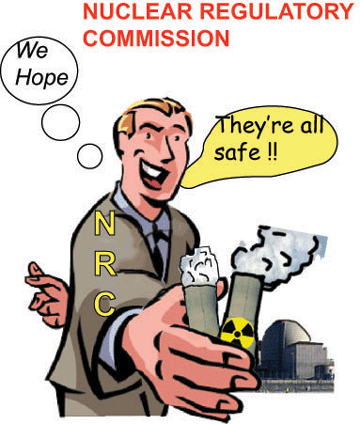
It is both ironic and worrying to read that the
government is proposing to blindly accept assessments by US safety
regulators in its panic to build new nuclear reactors (“Deal with US to
fast-track mini nuclear reactors”, news, Sep 15).
The public voted in
2016 to leave the European Union in order to increase sovereignty over
important decisions for this country, and to enable government decisions to
be made more accountably and closer to home. The irony is that less than
ten years later the government has decided to hand over crucial nuclear
safety decisions to the Trump administration.
The worry is that the US
Nuclear Regulatory Commission has conflicting roles as both a regulator and
a sales organisation promoting US nuclear technology. Its approval process
has been described as rubber-stamping, and it has widely been criticised
for the influence that the nuclear industry has in its decisions.
The organisation is facing cuts in its workforce from the Trump government, and the president will be appointing new commissioners to the NRC who share his own views on safety and environmental protections. It is hard to comprehend how this proposal will maintain safety standards or encourage communities that suddenly face having a new nuclear reactor built in their locality to welcome such development. The move is purely a leg-up for the US nuclear industry, and has nothing to do with the interests of the British public.
The Times 16th Sept 2025. https://www.thetimes.com/comment/letters-to-editor/article/times-letters-public-disapproval-trump-state-visit-7rs33trdn
UK Ministry of Defence dismiss MP’ s call for inquiry into trident bases nuclear leaks.

THE Ministry of Defence (MoD) has dismissed calls from an SNP MSP for a
public inquiry into nuclear leaks at Trident bases, claiming it is
“factually incorrect” to suggest they posed a safety risk.
Earlier this week Bill Kidd, the Glasgow Anniesland MSP, held a debate on reported nuclear safety incidents at Faslane and Coulport, where Britain’s nuclear fleet and arsenal are stored.
Kidd secured the backing of 28 MSPs from the
SNP, Scottish Greens, Scottish Labour, Alba, and one independent. However,
the motion was not voted on as it was debated as member’s business after
decision time.
It comes after The Ferret revealed that nuclear waste leaked
into Loch Long, in Argyll and Bute. The outlet reported that pipe bursts
were recorded in 2010, two in 2019, and two more in 2021. After an FOI
battle that lasted six years, the Scottish Environment Protection Agency
(Sepa) – the environment watchdog – stated the Royal Navy failed to
properly maintain a network of 1500 pipes at the Coulport armaments depot,
on the banks of Loch Long.
The National 19th Sept 2025, https://www.thenational.scot/news/25481047.mod-dismiss-snp-msp-call-inquiry-trident-bases-nuclear-leaks/
IAEA reports “serious safety risks” at Zaporizhzhia Nuclear Power Plant.
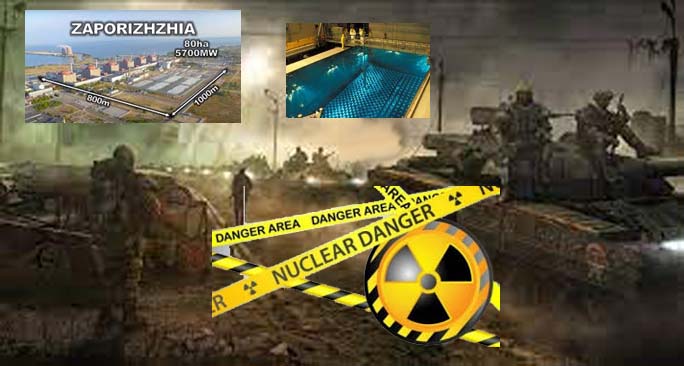
International Atomic Energy Agency (IAEA) Director General Rafael Grossi
has reported that six of the seven power transmission lines of the
Zaporizhzhia Nuclear Power Plant (ZNPP) have been compromised, leaving only
one functioning off-site line, which poses serious safety risks.
Ukrainska Pravada 9th Sept 2025, https://www.pravda.com.ua/eng/news/2025/09/9/7529932/
Nuclear Sites Dotted Across Ukraine Pose Threat of Radiation Disaster
Each day of war risks a strike on sites that could scatter radioactive material. Officials say one laboratory near the front has been hit dozens of times.
New York Times 9th Sept 2025, https://www.nytimes.com/2025/09/09/world/europe/nuclear-sites-ukraine-russia-war.html
Ukraine drones hit training centre at Zaporizhzhia nuclear plant, Russian management says

By Reuters, September 7, 2025 https://www.reuters.com/world/ukraine-drones-hit-training-centre-zaporizhzhia-nuclear-plant-russian-management-2025-09-06/
Sept 7 (Reuters) – Ukrainian drones hit the roof of the Zaporizhzhia nuclear plant training centre, causing no major damage and no increase in radiation levels, the Russian-installed administration of the Russia-held plant in Ukraine said on Saturday.
The strike occurred about 300 meters (984 ft) from a reactor unit, the administration said in a statement on the Telegram messaging app.
“This centre is unique — it houses the world’s only full-scale simulator of a reactor hall, which is critically important for staff training,” the statement said.
The station, Europe’s biggest nuclear power plant with six reactors, is not operating but still requires power to keep its nuclear fuel cool.
The attack caused no disruptions to the plant’s operation, the administration said.
“Operational safety limits were not violated and radiation levels remain normal,” the administration said.
There was no immediate comment from Ukraine. Reuters could not independently verify the Russian report.
Russian forces seized the Zaporizhzhia plant in the first weeks of Russia’s February 2022 invasion of Ukraine. Each side regularly accuses the other of firing or taking other actions that could trigger a nuclear accident.
Reporting by Lidia Kelly in Melbourne
Jellyfish Force another French Nuclear Reactor to Shut Down
By Charles Kennedy – Sep 04, 2025,
https://oilprice.com/Latest-Energy-News/World-News/Jellyfish-Force-another-French-Nuclear-Reactor-to-Shut-Down.html
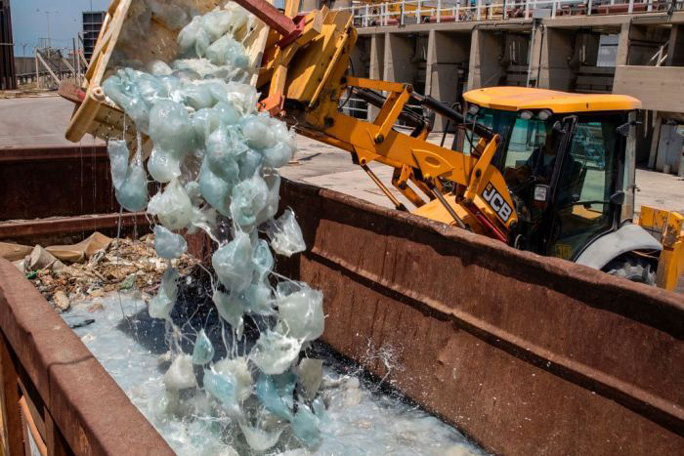
For a second time in three weeks, a swarm of jellyfish has forced the closure of a nuclear reactor in France in another curious incident in which jellyfish entered the filters of the water cooling systems.
The Paluel nuclear power plant in Normandy, northern France, saw its electricity generation nearly halve by 2.4 gigawatts (GW) out of a total 5.2-GW capacity, due to the presence of jellyfish that have entered the filtering system, French operator EDF said on Thursday, as carried by Reuters.
One of four reactors at Paluel was shut down while power output at another reactor was curtailed to prevent further disruption due to the jellyfish swarm.
oday’s incident at Paluel occurred just over three weeks after a jellyfish swarm clogged the cooling system of the Gravelines nuclear power plant near Dunkerque and Calais. As a result, four of six units at one of France’s largest nuclear power plants automatically switched off, while the remaining two units were already shut down for planned maintenance. Gravelines has six reactors, each with a capacity of 900 megawatts (MW).
At the time, France’s EDF said there was “no impact on the safety of the facilities, the safety of personnel, or the environment.”
Reactors at the Gravelines power plant are cooled from a canal linked to the North Sea, where jellyfish are swarming near the coast during hot weather and warm waters.
Global warming can worsen the jellyfish problem in waters cooling reactors close to seas, scientists have warned.
In recent years, heatwaves and too hot waters in rivers have disrupted France’s nuclear power generation, too.
France’s nuclear power generation accounts for around 70% of its electricity mix, and when its reactors are fully operational, it is a net exporter of electricity to other European countries.
But in 2022 and 2023, EDF was forced to curb power generation at some nuclear plants as heatwaves raised the temperatures of rivers. The power plant operator had to limit electricity output because of environmental regulations for using river water for cooling nuclear reactors.
It’s past time to start protecting U.S. nuclear power reactors from drones.

September 3, 2025
In January, I shared a Bulletin of Atomic Scientists piece with you in which I recommended President Trump protect our nuclear power plants from drone strikes.
In the attached piece, “It’s past time to start protecting U.S. nuclear power reactors from drones,” I return to this topic. Over the last eight months, more drones have overflown American nuclear power plants. Meanwhile, the House Armed Services Committee has proposed legislation authorizing the Secretary of Energy to defend Energy Department-operated nuclear plants against drone attacks.
What’s missing is authority for civilian nuclear power plant operators to protect their plants against such threats. These reactors produce 19 percent of America’s electricity.
In the piece below, I recommend that the congressional committees with jurisdiction over these civilian plants—the energy and homeland security committees—grant the operators similar authority to destroy or disable threatening drones.
I also propose that the Energy Department’s National Nuclear Security Administration launch a “Nuclear Security Initiative” to ensure American reactors don’t become attractive military targets.
NPEC 3rd Sept 2025, https://npolicy.org/its-past-time-to-start-protecting-u-s-nuclear-power-reactors-from-drones/
Attacks on nuclear plants are being normalised – and the consequences could be disastrous

Nuclear power plants have become significant pawns in the Russia-Ukraine war
Molly Blackall, Global Affairs Correspondent, iNews 29th Aug 2025
Attacks on and around nuclear sites have become increasingly normalised during the war in Ukraine and the consequences could be disastrous, military watchers have warned.
Russia accused Ukraine this week of launching a drone attack which damaged Kursk nuclear power plant, which sits around 37 miles from the Ukrainian border, on Sunday.
The power plant authorities said that air defences shot down a drone that detonated near by just after midnight.
The incident damaged an auxiliary transformer and caused the plant capacity to drop by 50 per cent, they said.
The incident came on the day that Ukraine marked its 34th anniversary of independence from the Soviet Union.
Ukraine has not commented on the incident, but one Ukrainian military insider told The i Paper that troops had been ordered not to attack the plant during previous operations near by.
Another insider indicated it may have been accidental, saying that drone pilots work seven days a week and that unexpected outcomes sometimes cropped up.
There have long been fears of a nuclear incident as a result of the Russian invasion, with fighting taking place close to two major plants: Kursk and Ukraine’s Zaporizhzhia, which is the largest nuclear plant in Europe.
The International Atomic Energy Agency, the UN’s nuclear watchdog, reported that radiation was at normal levels around the Kursk plant following the attack.
‘Previously shocking acts’ are now normal
Military experts said that fighting in and around nuclear plants was becoming increasingly normalised……………..
Dr Marina Miron, a war studies expert at King’s College London, said that attacks on nuclear plants “may becoming somewhat normalised, which is in itself disconcerting”.
“When it happens the first time everyone is shocked and you see all the headlines. Then the IAEA reports that there was no rise in radiation levels and then things calm down and after an nth time this becomes sort of normal.”
The plants have become significant pawns in the war.
“When Ukraine counter-invaded Russia last year, the idea was to take the Kursk power plant and probably exchange it for Zaporizhzhia power plant, so that they could then say, we’ll trade you; give us that one, and we’ll give you yours back,” Miron said.
Darya Dolzikova, a nuclear expert at the Royal United Services Institute (RUSI) in London, previously warned that military activity around nuclear sites “should not be normalised” but that such attacks may become more common.
“The expected growth of the importance of nuclear power in the global energy mix in the coming decades may increase the likelihood that future armed conflict will see greater targeting of nuclear energy infrastructure,” she said.
As well as causing infrastructural damage to an adversary or sending strong military signals, the “psychological salience” of nuclear sites mean they may be used for “escalatory, deterrent or coercive purposes”.
It may also be a deliberate tactic to release radioactive material to make an area into a no-go zone, but could inadvertently expand to “friendly” areas or escalate the conflict it it seeps into a third country.
Attacks on nuclear sites ‘increasing danger’ of radiological accident
Lukasz Kulesa, director of nuclear policy at RUSI, said that while most nuclear reactors were relatively “well protected against attacks and accidents through their reinforced structures, this is not always the case”.
“Some reactors in Russia, including at the Kursk nuclear power plant, lack such a protective concrete dome, which makes them more vulnerable and dangerous in case of an attack,” he said.
“Artillery or drone attacks and other military activities can also threaten staff and personnel working at the site, and damage or destroy support infrastructure crucial for the functioning of the power plant, such as water supply and power grid connections and generators, or spent nuclear fuel storage sites.
“All such attacks disturb the operations of nuclear power plants and increase the danger, and the most serious ones can cause a direct threat of a radiological incident.”
Kulesa warned that “the fact that previous incidents related to the nuclear security of Zaporizhzhia power plant had not resulted in a nuclear accident should not be a reason for complacency”.
“There remains a danger that international norms with regards to the prohibition of military attacks against nuclear power plants, and the efforts by the IAEA to clarify and strengthen nuclear safety and security norms during armed conflicts would be ignored in other conflicts.”
However, Bollfrass said that these attacks were “unlikely to bring about the next Chernobyl”.
“The most serious damage has been to facilities themselves and their ability to deliver electricity, and the integrity of Ukraine’s energy grid as a whole,” he said.
“Something like a missile hitting stored spent fuel or an operating reactor would create a serious radiological hazard, but neither side has shown any interest in doing so. Most hits on or near nuclear power plants have been inflicted by drones with much less powerful warheads.”
https://inews.co.uk/news/world/attacks-nuclear-plants-normalised-consequences-disastrous-3878805
US nuclear safety regulators say their jobs could be at risk under Trump
By Timothy Gardner, September 4, 2025, https://www.reuters.com/world/us/us-nuclear-safety-regulators-say-their-jobs-could-be-risk-under-trump-2025-09-03/
- Summary
- Pressure high on nuclear regulators after Trump orders
- Trump wants to quadruple nuclear power capacity by 2050
- Commissioner: hard to make safety calls if more staff leave
WASHINGTON, Sept 3 (Reuters) – Two of the three remaining commissioners at the Nuclear Regulatory Commission, the U.S. nuclear safety watchdog, told a Senate hearing on Wednesday they feel President Donald Trump could fire them if they obstruct his goal to approve reactors faster.
Trump signed executive orders in May that set goals of fast-tracking new reactor licenses and quadrupling U.S. nuclear energy capacity by 2050 to boost the power grid, while also reducing staffing at the NRC.
Trump later fired Commissioner Chris Hanson, a Democrat, while Commissioner Annie Caputo, a Republican, left in July, saying she wanted to more fully focus on her family. That brought the traditionally five-member panel down to three.
Commissioner Matthew Marzano, a Democrat, told the hearing he felt he could be fired by the administration if he decides a new reactor design is unsafe and declines to license it.
Commissioner Bradley Crowell, also a Democrat, said he felt on “any given day I could be fired by the administration for reasons unknown.”
The White House did not immediately respond to a request for comment.
NRC Chairman David Wright, a Republican, said the agency has five applications from so-called advanced nuclear reactors that it is reviewing and it expects another 25 to 30 soon.
Wright declined to say whether he felt he could be fired, saying it would be “speculation.”
But he said NRC should not approve incomplete applications from companies looking to build new nuclear plants, even if it means missing an 18-month approval deadline set in Trump’s executive orders.
Senator Sheldon Whitehouse, a Democrat who supports nuclear energy for its potential to reduce greenhouse gas emissions, said about a dozen senior level managers at the NRC have left or announced they will leave since January, and that 143 staff departed between January and June.
“It’s a personnel bloodbath,” Whitehouse said. “The industry stands or falls on the NRC’s gold-standard reputation for nuclear safety. It’s now in jeopardy.”
Crowell said if the agency lost any more staff, it would be tough to credibly make safety cases on the timeline in Trump’s orders.
EDF’s Heysham 1 and Hartlepool nuclear plants to operate for further 12 months
New Civil Engineer, 02 Sep, 2025 By Tom Pashby
The operational lives of the Heysham 1 and Hartlepool nuclear power plants have been extended by 12 months by their operator EDF………………
Hartlepool, Heysham 1, Heysham 2 and Torness all underwent reviews by EDF in December 2024 to assess how long they can continue to generate electricity. Heysham 1 and Hartlepool were scheduled to stop producing power in March 2027.
At the time, an EDF spokesperson explained to NCE that the best-case scenario for the Heysham 1 and Hartlepool power stations was that they could justify a one-year extension. However, that was caveated with a need to await the outcomes of “important inspection and safety case milestones”, which were due to be completed in 2025.
Those milestones have now passed and the results were positive for the power stations. When EDF’s executive and licensee boards met yesterday, 1 September, they gave approval to extend the lives of the nuclear stations, so Heysham 1 and Hartlepool will now likely operate through to at least March 2028.
A statement from EDF on 2 September said: “Heysham 2 and Torness, which are both scheduled to generate until March 2030, were not in scope for this review after a two-year extension was granted last year.”
EDF still hopes to see all four AGRs continue producing electricity for as long as possible, so it can be expected to conduct further reviews down the line, but these reviews do not have set dates for completion, the spokesperson told NCE……………………………………………………………………………………………………………………………
AGRs now well past their sell-by date’ – anti-nuclear campaigner
Nuclear Free Local Authorities secretary Richard Outram told NCE that the extension of the plants’ operating lives raises concerns about the possibility of graphite cracking.
“The EDF announcement is unsurprising. Although company bosses may crow a lot about the preservation of local jobs, the NFLAs suspect this is actually about the preservation of EDF’s bottom line,” he said.
“Given the parlous state of the French parent company’s finances, the intermittent output of the domestic fleet, and the vast overspend on Hinkley Point C, EDF has a clear incentive to keep open for as long as possible any nuclear plant in the portfolio which actually operates and generates profits.
“The NFLAs have previously expressed our concerns with the Office for Nuclear Regulation that these ageing AGRs are now well past their sell-by date, with graphite cracking being a real worry, as seen recently at the sister AGR plant at Torness.
“We shall continue to monitor the situation and ask challenging questions of regulators and the industry because public safety and environmental harm must never be compromised in favour of company profit.”………………………………………………. https://www.newcivilengineer.com/latest/edfs-heysham-1-and-hartlepool-nuclear-plants-to-operate-for-further-12-months-02-09-2025/
What will happen if the Ukrainian Armed Forces attempt to strike the Kursk Nuclear Power Plant?
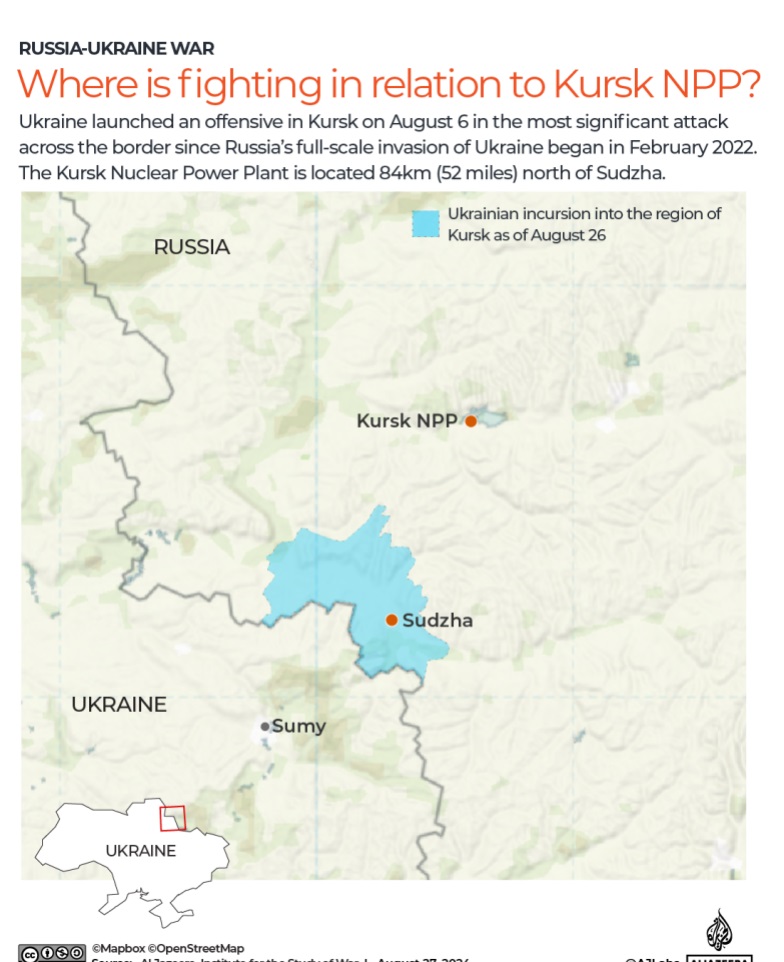
A drone of the Ukrainian Armed Forces was shot down near the Kursk Nuclear Power Plant. Metro learned what such an attack would entail if it hit the station
On Thursday, Kursk Region Governor Alexey Smirnov reported the destruction of a Ukrainian drone 5 kilometers from the Kursk Nuclear Power Plant. According to official information, the Ukrainian Armed Forces attempted to hit the nuclear power plant, but the drone was destroyed on approach.
As Andrey Ozharovsky, an engineer-physicist and expert on the Radioactive Waste Safety program, told Metro , the Kursk NPP is extremely vulnerable to external influences.
— The Kursk nuclear power plant has a serious feature that makes it extremely vulnerable to a military or terrorist attack. These are RBMK-100 reactors of the Chernobyl type. At this station, as at the Ukrainian one, there is no protective shell for the reactors. That is, the “cap” that usually covers the reactor itself at nuclear power plants and thus protects it from external influences, — the expert explained.
He noted that due to such a technical solution, any shelling poses a very serious danger to the station. According to the scientist, it is especially dangerous that the reactors at the Kursk NPP are located in non-specialized buildings.
“Of course, these Chernobyl-type reactors have been modernized and a literal repeat of Chernobyl is impossible. But in the event of a shelling at the station, a graphite fire and the release of a huge amount of radioactive substances into the environment with contamination of territories hundreds of kilometers away from the reactor cannot be ruled out,” the nuclear physicist emphasized.
He added that the recent attack by the Ukrainian Armed Forces could have been not on the station, but on another facility in Kurchatov.
Donald Trump’s assault on U.S. nuclear watchdog raises safety concerns
Donald Trump’s attack on the independence of the US nuclear safety watchdog
has accelerated a severe “brain drain” at the agency, raising the risks
of future accidents, former officials have warned. Almost 200 people have
left the US Nuclear Regulatory Commission since the president’s
inauguration in January, and the pace of executive departures shows little
sign of slowing with the resignation of the agency’s director of nuclear
security and its general counsel.
Nearly half of the agency’s 28-strong
senior leadership team has been installed in an “acting” capacity, and
only three of five NRC commissioner roles are occupied. Trump sacked
commissioner Christopher Hanson in June and Annie Caputo resigned
unexpectedly last month. “It is an unprecedented situation with some
senior leaders having been forced out and many others leaving for early
retirement or worse, resignation,” Scott Morris, the former NRC deputy
executive director of operations who retired in May, said in an interview.
FT 28th Aug 2025, https://www.ft.com/content/f082e338-d4bf-4b5b-882d-09a8795a93ef
OUR NUCLEAR WORLD: PICK YOUR TARGET
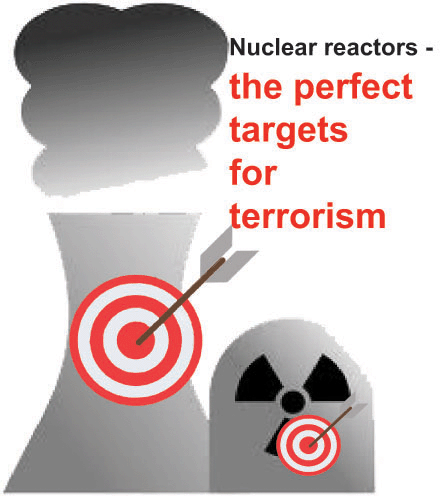
Why use your own nuclear weapons (with all the risks of escalation that this entails) when you can just take out your enemy’s nuclear power stations or nuclear waste facilities?
Jonathon Porritt 27th Aug 2025
I’ve reluctantly come to the conclusion that the only way the nuclear industry’s hype-machine is going to be stopped in its tracks is a Russian cyber-attack on the nine nuclear reactors still operating here in the UK, causing them all to close down and leading to the grid temporarily collapsing. That should do it.
I jest – sort of. But nothing else has worked. In just the last few weeks:
1 The Treasury’s financial modelling for the new power station at Sizewell C (seen by the Financial Times) gives a range of roughly £80 billion to £100 billion, far higher than the official estimate of £47 billion from the Department of Net Zero and Energy Security – which in itself was already nearly double the original cost of £20 billion!
2 The Treasury recently described the Government’s proposals for a new Geological Disposal Facility to deal with the 700,000 cubic metres of spent nuclear fuel as ‘unachievable’. This is a truly extraordinary development – confirming that the UK still has NO idea what to do about its legacy nuclear waste, let alone the waste that will be produced by any new reactors. Yet this got hardly a mention in the media.
3 The Government confirmed that it will be splurging a further £17 billion of taxpayers’ money between now and 2030 on Sizewell C, Small Modular Reactors and fusion energy – even as it continues to ignore the scourge of chronic poverty here in the UK, with 4.5 million children living in poverty – the highest number ever recorded.
On top of which, the industry’s hype-machine is now being turbocharged by the even more powerful hype-machine of AI. Never forget that the nuclear industry is supremely well-equipped to leap onto any and every boondoggle coming down the track – the Bitcoin/Crypto boom a decade ago (which never quite happened), and then green hydrogen. With every hard-to-abate sector queueing up for its share of vanishingly small volumes of green hydrogen, the Knights of Nuclear were up into their saddles just as fast as enough hobby horses could be corralled together to claim that it is only nuclear power that can provide the electricity required.
And now it’s AI. We’ve all read the growth projections for AI-enabled markets – from billions of dollars today to trillions tomorrow. I won’t weary you with the extrapolated increases in electricity consumption for all the new data centres that this entails – but it’s going to be a lot. On a par with the electricity consumption of small countries. New data centres are being built right now, ever bigger, already gobbling up more and more electricity. Nor will I invite you to ask why this AI boom must not – ever, on any terms – be subjected to much deeper scrutiny as to the balance of costs and benefits that will emerge. AI represents the apogee of latter-day technological determinism: if it can be done, then it must and will be done. So suck it up.
I’m not making light of this. The AI-driven nuclear boom in the USA is for real. Donald Trump is getting rid of most regulatory oversight of the nuclear industry, to speed things up, and stock prices of all the publicly traded nuclear companies are up by huge percentages. And it doesn’t seem to matter what kind of nuclear we’re talking about: 40-year-old decommissioned reactors to be given a new lease of life; plans for new big reactors, even in blue states like New York, being fast-tracked; Big Tech applying for construction permits for Small Modular Reactors that are still on the drawing board; and more than $500 billion apparently raised for new fusion reactors – seriously!
It’s not (yet) quite so insane here in the UK, but the signals are worrying. Strenuous efforts are being made by Ministers to force the Office for Nuclear Regulation to fast track any old nuclear proposal. Sweetheart deals with the private sector are being sorted out – regardless of the costs to taxpayers. Rational, evidence-based decision-making is a long-gone memory.
What exactly lies behind this mania? In the timeless words of Sherlock Holmes: ”once you have eliminated the impossible, whatever remains, no matter how improbable, must be the truth”.
So, let’s try that out for size in the context of nuclear power. It would surely be completely impossible for any responsible government pursuing a Net Zero energy strategy to prioritise nuclear power over all other options, given that:
- Large-scale nuclear reactors are now by far the most expensive option (on a Levelised Cost of Energy basis). UK Government figures in July this year showed new nuclear at £109 per MWh, offshore wind at £44MWh, large-scale solar at £41MWh and onshore wind at £38MWh.
- Small Modular Reactors (SMRs) don’t yet exist, but all experts agree their electricity will be even more expensive than that of large reactors – precisely because they can’t achieve the same economies of scale.
- The contribution of both big and small new reactors to a Net Zero electricity system in the UK will be literally ZERO before 2035 at the very earliest.
- Both big and small reactors will continue to produce significant levels of nuclear waste, adding to a waste crisis to which (as already mentioned) we have no long-term solution.
- ALL nuclear facilities pose a significant security risk, both from the point of view of cybersecurity (more later) and the very real possibility of physical attacks through ‘hostile third parties’.
Which brings us to the extraordinarily improbable truth of it: these days, nuclear power has little to do with electricity generation, and a whole lot more to do with the maintenance of the UK’s nuclear weapons capability……………………………………………………………………
It took a while for the UK Government to catch up, but in its latest Nuclear Roadmap it no longer beats around the bush. There are multiple references to the synergies between nuclear power and nuclear weapons: “this Government will proactively look for opportunities to align delivery of the civil and nuclear defence enterprises….it acknowledges the crucial importance of the nuclear industry to our national security, both in terms of energy supply and the defence nuclear enterprise”, and so on.
Big corporations are loving the fact that this is now out in the open. Bechtel, Babcock and Wilcox, AECOM, Rolls Royce – they’ve all spent decades feeding at the trough of either overt or hidden cross-subsidies between nuclear power and nuclear weapons. Rolls-Royce has been one of the most outspoken advocates for Small Modular Reactors, arguing their importance back in 2017 “to relieve the Ministry of Defence of the burden of retaining the skills and capability”………………………………………………………………….
As nuclear nations double down on nuclear power, it’s blindingly obvious that they are ramping up serious threats to national security. Nowhere is this clearer than with the drive to develop SMRs. Most designs currently on the drawing board (that are not light water reactors) will be using as their fuel high-assay, low-enriched uranium – or HALEU, to use the jargon. When it’s first extracted from the earth, uranium concentrations are usually around 1% of the total volume of the ore. HALEU fuel has to be enriched up to around 19% – just below the 20% threshold for the kind of highly-enriched uranium judged to be viable for the manufacture of nuclear bombs. And almost all HALEU fuel comes from Russia!
Beyond that, every nuclear facility (old and new) becomes a target for hostile third parties. Welcome back to the inconceivably scary world of nuclear cyberwarfare. Despite the highest grade of propaganda promoted by the Ministry of Defence – that all nuclear facilities are ‘bomb-proof’ (I kid you not!) – most cyber-experts grudgingly acknowledge that this is just bullshit when it comes to cyber-defence.
And we have no finer example of that than Sellafield, one of the most hazardous nuclear waste and decommissioning sites in the world, sprawling across 2 square miles on the Cumbrian coast. Back in December 2023, a Guardian exclusive revealed that Sellafield had been hacked into ‘by cyber groups closely linked to Russia and China’ since 2015 – despite years of cover-ups by senior staff. “The full extent of any data loss and any continuing risks to systems was made harder to quantify by Sellafield’s failure to alert nuclear regulators for several years”. The denials didn’t last long. The Guardian’s painstaking research over 18 months had got Sellafield bang to rights. In October 2024, it was fined £400,000 by the Office For Nuclear Regulation after it pleaded guilty to criminal charges over years of cyber-security breaches. Astonishingly, the ONR also found that 75% of its computer servers were vulnerable to cyber-attack.
…………………..Why use your own nuclear weapons (with all the risks of escalation that this entails) when you can just take out your enemy’s nuclear power stations or nuclear waste facilities?
…………………… https://jonathonporritt.com/uk-nuclear-policy-risks/
Japan exploring whether AI could help inspect its nuclear power plants.
Japan’s Nuclear Regulation Authority has requested extra funds to
experiment with AI-powered nuclear plant inspectors. Japanese media report
that the authority wants to explore AI inspection because many nuclear
plants operated by Japanese energy companies are already old and will
likely need more oversight as they continue operating. Decommissioning
those plants will also create a need for extra supervision. The regulator
reportedly said it doesn’t have sufficient staff to handle the
inspections needed for extended operations and decommissioning of old
plants.
The Register 28th Aug 2025, https://www.theregister.com/2025/08/28/japan_ai_for_nuclear_inspectiona/
1 This Month

of the week – Shut Down Drone Warfare!


Tell the Ukrainian Government to Drop Prosecution of Peace Activist Yurii Sheliazhenko

Petition to revoke the licensing of the Near Surface Nuclear Disposal Facility (NSDF) at Chalk River. https://www.ourcommons.ca/petitions/en/Petition/Details?Petition=e-7247
To see nuclear-related stories in greater depth and intensity – go to https://nuclearinformation.wordpress.com
-
Archives
- April 2026 (44)
- March 2026 (251)
- February 2026 (268)
- January 2026 (308)
- December 2025 (358)
- November 2025 (359)
- October 2025 (376)
- September 2025 (257)
- August 2025 (319)
- July 2025 (230)
- June 2025 (348)
- May 2025 (261)
-
Categories
- 1
- 1 NUCLEAR ISSUES
- business and costs
- climate change
- culture and arts
- ENERGY
- environment
- health
- history
- indigenous issues
- Legal
- marketing of nuclear
- media
- opposition to nuclear
- PERSONAL STORIES
- politics
- politics international
- Religion and ethics
- safety
- secrets,lies and civil liberties
- spinbuster
- technology
- Uranium
- wastes
- weapons and war
- Women
- 2 WORLD
- ACTION
- AFRICA
- Atrocities
- AUSTRALIA
- Christina's notes
- Christina's themes
- culture and arts
- Events
- Fuk 2022
- Fuk 2023
- Fukushima 2017
- Fukushima 2018
- fukushima 2019
- Fukushima 2020
- Fukushima 2021
- general
- global warming
- Humour (God we need it)
- Nuclear
- RARE EARTHS
- Reference
- resources – print
- Resources -audiovicual
- Weekly Newsletter
- World
- World Nuclear
- YouTube
-
RSS
Entries RSS
Comments RSS
 nuclear-news