Safety Concerns Mount Over Damaged Fuel Rods at China’s Taishan Nuclear Plant

Safety Concerns Mount Over Damaged Fuel Rods at China’s Taishan Nuclear Plant
A French whistleblower claims that the real number of damaged fuel rods exceeds the figure acknowledged by officials, and that there may be issues with other reactors of the same design. By Jesse Turland The Diplomat December 11, 2021 On November 28 Radio France International Chinese published claims by a whistleblower contradicting official statements downplaying the extent of damage to fuel rods at the Taishan 1 Nuclear Reactor in Taishan, Guangdong province.
The whistleblower, who works at a French nuclear energy company, warned that more than 70 fuel rods were damaged, 14 times the figure acknowledged by China’s Ministry of Ecology and Environment (MEE) in June, when it stated “about five” rods were damaged. Additionally, the whistleblower claimed the damage may be linked to a “design flaw.”
Under pressure from public activism, France’s nuclear energy regulator, Autorité de sûreté nucléaire (ASN), yesterday announced it would halt the development of the EPR reactor at Flamanville in Normandy, which uses the same design as Taishan, pending inquiries into the malfunctions at Taishan.
There is still a lot of work to be done on the [Flamanville] site before start-up operations, and feedback from the experience of the Taishan 1 EPR deviation must take place,” said ASN deputy general manager Julien Collet yesterday.
Located 110 kilometers south of Guangzhou, Taishan is the site of the world’s first reactors of the Evolutionary Power Reactor (EPR) design to commence operation. Its two reactors are capable of generating 1,750 Megawatts electric (Mwe) each.
According to the whistleblower, the problem of the Taishan EPR reactor is “a not-very-successful hydraulic system at the bottom of the vessel which gives an uneven distribution of power in the assemblies. A transverse current is created in the core and causes the assemblies to move, especially those at the periphery.”
The whistleblower’s claims were relayed by Bruno Chareyron, director of the Commission for Independent Research and Information about Radiation (CRIIRAD), a Paris-based NGO established in 1986 to monitor radioactive leaks in the wake of the Chernobyl disaster.
According to the whistleblower, the problem of the Taishan EPR reactor is “a not-very-successful hydraulic system at the bottom of the vessel which gives an uneven distribution of power in the assemblies. A transverse current is created in the core and causes the assemblies to move, especially those at the periphery.”
The whistleblower’s claims were relayed by Bruno Chareyron, director of the Commission for Independent Research and Information about Radiation (CRIIRAD), a Paris-based NGO established in 1986 to monitor radioactive leaks in the wake of the Chernobyl disaster.
”
There are at least three consequences. One is the fact that due to the damage to the nuclear fuel, a significant amount of radioactive substances migrate across the cladding of the rods and is go into the water of the primary circuit,” according to Chareyron.
“So radioactive gases like krypton and xenon are accumulating in the water inside the pressure vessel… Those gases are collected into tanks and those tanks are opened to the atmosphere normally every two months. But with fuel rod damage, some of the gases released have half-lives of years, like Krypton 85.”
He continued: “[The] second problem is the impact on the people working in the plant. Because if you have such damage in the core of the reactor, you contaminate the water inside the pressure vessel, but some of this contamination will stay inside the tubes, the pipes, the pumps.
“So when the operators have to conduct maintenance, they receive much more radiation than if the cladding fitted properly.”
Finally, “The third problem is if the fuel assemblies are a little bit broken, it means that you may reach a situation when, for example, in case of an earthquake, you cannot insert the control rods into the fuel assemblies because the assemblies are damaged,” Chareyron said…………….
Jesse Turland
Jesse Turland holds a degree in Chinese language and Asian Studies from the University of Melbourne and writes about contemporary Chinese society. https://thediplomat.com/2021/12/safety-concerns-mount-over-damaged-fuel-rods-at-chinas-taishan-nuclear-plant/
Editorial: No, California shouldn’t extend the life of its last nuclear plant. There are better ways to fight climate change

We can and should curb the dangers of fossil fuel combustion and nuclear fission at the same time, not use the threat of one to prop up the other.
Editorial: No, California shouldn’t extend the life of its last nuclear plant. There are better ways to fight climate change https://www.latimes.com/opinion/story/2021-12-12/diablo-canyon-nuclear-closure BY THE TIMES EDITORIAL BOARD, DEC. 12, 2021
California is approaching an energy crossroads. In three years, its last nuclear plant will begin to power down and the state will lose its largest single source of emissions-free electricity.
A 2018 law requires state regulators to “avoid any increase in greenhouse gases” as a result of closing the Diablo Canyon nuclear power plant on the Central Coast. But if they don’t move more quickly to replace its electricity with renewable energy from wind, solar and geothermal, the void will almost certainly be filled by burning more natural gas, which increased last year to account for nearly half of California’s in-state electricity generation.
California can’t allow the retirement of Diablo Canyon’s nuclear reactors to prolong its reliance on gas plants or increase planet-warming and health-damaging emissions. But the state’s preparations for shutdown of an around-the-clock power source that supplies more than 8% of California’s in-state electricity generation have not inspired confidence; there have been no assurances that an uptick in carbon emissions will be avoided.
That uncertainty has created an opening for a new push to extend Diablo Canyon’s life. A recently launched campaign, whose supporters include former U.S. Energy secretaries Steven Chu and Ernest Moniz, and fashion model and nuclear influencer Isabelle Boemeke, wants California to abruptly reverse course and keep Diablo Canyon operating for another 10 or even 20 years.
Proponents say this would reduce climate pollution, bolster grid reliability and buy time during a crucial period in the state’s transition toward solar, wind and other renewable energy sources, citing a recent report by Stanford University and MIT scientists that lends support to the idea. The Biden administration has chimed in receptively, with Energy Secretary Jennifer M. Granholm suggesting in a recent interview that California might reconsider closing the facility to avoid losing an always-on source of clean electricity.
But the idea is misguided, and at this point remains largely divorced from reality. The plant’s closure should instead serve as an impetus for California do more to accelerate the shift to renewable energy and set a realistic course to meet the state’s target of getting 100% of its electricity from carbon-free sources by 2045
Those floating the idea of keeping Diablo Canyon open seem to ignore many practical considerations, including how to address seismic risks, the ecological harm of using seawater for cooling, and what to do with spent nuclear fuel. The cooling system and earthquake safety upgrades that would be required for the facility to keep operating after 2025 are so extensive they would likely exceed $1 billion, according to the Public Utilities Commission.
The plant’s operator, Pacific Gas and Electric Co., agreed in 2016 not to pursue license renewal, in part because closing the plant and replacing it with other zero-carbon energy sources and storage would cost less than keeping it open. The utility has shown no interest in reconsidering, nor has the Public Utilities Commission received any proposals to revisit its 2018 decision to allow the plant to shut down.
Still, the pro-nuclear camp is right in pointing out that the urgency of fighting global warming has only increased in the five years since the decision to close Diablo Canyon. Wildfires and other climate impacts are worsening at an alarming clip. Last year, California experienced its first rolling blackouts in nearly two decades thanks to climate-fueled heat waves that forced the state to burn more planet-warming gas to keep the power on. And the recent global climate summit in Glasgow, Scotland, showed that world leaders aren’t yet acting with the urgency needed to avert catastrophic warming.
But there are good reasons to eschew nuclear power as a solution. The world is still dealing with repercussions from the Chernobyl and Fukushima nuclear disasters, which rendered huge zones uninhabitable and spread radioactive isotopes across the globe; and closer to home, the cleanup of the 1959 partial nuclear meltdown at the Santa Susana Field Laboratory near Simi Valley. Because the United States has no designated repository for high-level radioactive waste, spent nuclear fuel is stored on site at power plants across the country, posing ongoing risks. We can and should curb the dangers of fossil fuel combustion and nuclear fission at the same time, not use the threat of one to prop up the other.
Inside information from China could sink the French nuclear flagship EPR.
 | |||

Image – by Eva Stegen
Maxron says –
''we are building nuclear power plants 6 new epr klima blablabla''
Inside information from China could sink the French nuclear flagship EPR https://www.ausgestrahlt.de/blog/2021/12/09/insider-infos-aus-china-k%C3%B6nnen-franz%C3%B6sisches-atomflaggschiff-epr-versenken/ 09.12.2021 | Eva Stegen In 1989, in response to Chernobyl, development of a third generation reactor began. The European pressurized water reactor EPR has not yet generated a kilowatt hour in Europe. Despite multiple disasters, no one pulled the rip cord. Now a whistleblower reveals a system error that should be the end of the EPR.
Some people either have nerves of wire, no self-esteem or the deep certainty that any nonsense they utter will be whipped into all media via the international press agencies, just as if one did not have to check a completely absurd announcement at least once. But it is so, the French emperor is naked. He just yelled out to the press that he wanted to have six more reactor construction sites for the fiasco flagship EPR (European pressurized water reactor) when a whistleblower tore the last scrap of material off his body. It was a French nuclear engineer who had an in-depth look at the EPR reactors in Taishan, China. They are the only two – out of 200 announced – that ever went online.
There it was just ………
However, one of the two is offline again after just 2.5 years of operation. With an unknown outcome. Evidence is growing that a design flaw affecting the entire EPR series has led to Taishan 1 being switched off. The whistleblower gave the radiation research institute ‘CRIIRAD’ important detailed technical information from Taishan. CRIIRAD, in turn, put a series of questions to the French nuclear regulator, ‘Autorité de Sûreté Nucléaire’, ASN.
The silence of those who knew it
A copy was sent to the news agency ‘AFP’, but miraculously the horror news did not spread as rapidly as Macron’s ludicrous announcement to sink further billions in further ‘EPR’ flop construction sites. With every additional day on which neither the operator nor the nuclear regulatory authority deny ‘ASN’, this hypothesis of the design flaw, which affects all ‘EPR’, becomes more important.
In June 2021, a CNN report from Taishan, China caused a stir. There was talk of an “imminent radiological threat” in a letter from the French consortium partner “Framatome” to the US Department of Energy, which “CNN” has received. The Chinese security authorities were accused of having raised the radiation limit values for the outside area around the nuclear power plant in order to circumvent the shutdown of the defective reactor block.
Where do the radioactive gases come from?
As early as October 2020, defects were found on the cladding tubes of some fuel elements, which led to the escape of radioactive gases in the reactor pressure vessel. Despite the radiological risks for workers and residents, the nuclear power plant continued to operate. First of all, according to Bruno Chareyron from ‘CRIIRAD’. This duct damage is quite normal, something like that happens. In fact, however, the degree of damage to the cladding tubes and the gas leaks in the reactor have steadily worsened since it was loaded with fuel in autumn 2020.
The operators have asked the authorities to increase the limit value, above which the reactor must be shut down. The authorities would have doubled the value , but as the contamination continued to rise, the new warning threshold was exceeded at the end of May 2021. This continued until the shutdown on July 30, 2021. In August, the fuel rods began unloading. Nobody knows when or whether the reactor can ever start again.
Thanks to the whistleblower’s insider knowledge, ‘CRIIRAD’ is now able to track down the causes of the defective ducts, which the investigative satirical magazine ‘le Canard enchaîné’ described as “knots in the pipelines”. The cameras that the Chinese had brought into the heart of the EPR, in the reactor pressure vessel, were supposed to check the thesis that the zirconium cladding tubes that protect the uranium fuel rods are unusually corroded.
The operators have asked the authorities to increase the limit value, above which the reactor must be shut down. The authorities would have doubled the value , but as the contamination continued to rise, the new warning threshold was exceeded at the end of May 2021. This continued until the shutdown on July 30, 2021. In August, the fuel rods began unloading. Nobody knows when or whether the reactor can ever start again.
Thanks to the whistleblower’s insider knowledge, ‘CRIIRAD’ is now able to track down the causes of the defective ducts, which the investigative satirical magazine ‘le Canard enchaîné’ described as “knots in the pipelines”. The cameras that the Chinese had brought into the heart of the EPR, in the reactor pressure vessel, were supposed to check the thesis that the zirconium cladding tubes that protect the uranium fuel rods are unusually corroded.
In addition to the risk of pipe rupture in the primary circuit, there is also the risk that the grids, which are intended to hold the fuel elements in position in the reactor pressure vessel, are damaged by the vibrations. If this structure is weakened , Chareyron explained , it is conceivable that in the event of an earthquake the clusters of fuel and control rods would swing against the inner walls of the container. A deformation induced in this way could mean that the control rods, which are actually supposed to brake the nuclear chain reaction, cannot retract.
Bad Vibrations from Olkiluoto and the scandal forge Le Creusot
As early as 2018, the Finnish electricity supplier ‘TVO’ and the Finnish safety authority ‘STUK’ reported that during tests on the Olkiluoto EPR permanent construction site, vibrations had occurred in the primary circuit on the reactor pressure vessel .
But as early as 2007/08 hydraulic model tests at the scandal-shrouded nuclear component manufacturer in Le Creusot brought the vibration problem to light. That is why ‘CRIIRAD’ asks the nuclear supervisory authority about the failed attempt to reduce the flow of water with the help of a baffle that was attached under the reactor core in order to influence the hydraulics and thus the vibrations. The vibration problem is obviously inherent in the system and affects not only the Taishan blocks but also Olkiluoto, Flamanville and Hinkley Point C. In short, all Generation 3 reactors that were once touted as “inherently safe”.
Corecatcher not catchy
In addition to carbon-brittle forging errors, messed up welds and inferior concrete, there are also vibrations of the artfully knotted pipeline design. The once-praised core catcher, which was supposed to catch a melted reactor core, apparently also gives the engineers a headache. If a large fragment of the container were to block the slide to the catcher, the corium would not flow into the catcher, according to the confidential account. But the naked Emperor Macron never tires of loudly proclaiming his atomic illusions. If the idea of the third generation of EPR reactors, which incidentally dates back to 1989, doesn’t work, you can tell the same nonsense again. Simply use the same “climate saver” texts again, just replace generation 3 and EPR with generation 4 and SMR. Apparently, the president is sure that the news agencies and the associated copy-paste editorial offices are already creating the appropriate mental cinema for EU citizens. Because he wants taxonomy money from them, for even more atomic illusions.
Taishan Problems An investigation is still under way into leaks at nuclear power plant.

nuClear News No 136 Dec 21, Taishan Problems An investigation is still under way into the cause of problems at the Chinese EPR plant in Taishan. It was shut down in August after reports of damage to fuel rods. The plant is operated by CGN and owned in partnership with EDF, the two companies involved in building Hinkley Point C (HPC).
The Times (1) has reported that key safety components at HPC may need to be redesigned and the project delayed after defects were detected at a similar reactor in China. The newspaper says the scheduled start date for electricity generation, of June 2026, may have to be postponed.
The Commission for Independent Research and Information on Radioactivity (CRIIRAD), a French association created in the aftermath of the Chernobyl disaster, said that a whistleblower had reported to them that a design flaw in the reactor pressure vessel could be the cause of the problem at Taishan which means that design changes may be needed.
In a letter to the French nuclear regulator (2), ASN, CRIIRAD says: “In June 2021, the national and international press widely covered the case of the problems of ruptured nuclear fuel cladding at the Taishan 1 EPR reactor in China.”
It goes on to say there are several possible causes of the rupture some of which may involve design flaws in the reactor. A whistleblower has now told CRIIRAD that the ruptures are caused by a design flaw in the reactors pressure vessel. This will also cause problems in other EPR reactors like Hinkley Point C.
The letter continues: “If they are true, these revelations raise serious questions in terms of nuclear safety and radiation protection, both for plant workers and for residents. The existence of a generic design defect on the EPR reactor vessel could jeopardize the start-up of [other EPR reactors].”
Stop Hinkley spokesperson, Roy Pumfrey says:
“What’s been cobbled together to get Taishan started clearly isn’t working. It’s just another example of the folly of complex designs for big new nuclear reactors. Trying to identify and correct the design flaw can only lead to further delays and cost overruns for the absurdly expensive HPC project.”
“Stop Hinkley will be pressing the UK’s Office of Nuclear Regulation for a full disclosure of its investigations into this matter. And if there are expensive delays and modifications to HPC required, given the already huge cost to consumers, we will be asking government officials to investigate whether, in fact, it would be cheaper to cancel the whole thing.”
Eva Stegen, German blogger and energy consultant says the whistleblower gave the radiation research institute ‘CRIIRAD’ important detailed technical information from Taishan. With every additional day on which neither the operator nor the French nuclear regulatory authority – ASN – deny, the hypothesis that the design error affects all EPRs, Taishan’s problems become more important. She reminds us that in June 2021, a ‘CNN’ report from Taishan, China caused a stir. There was talk of an “immediate radiological threat” in a letter from the French consortium partner “Framatome” to the US Department of Energy. The Chinese security authorities were accused of having raised the radiation limit values for the outside area around the nuclear power plant in order to circumvent the shutdown of the defective reactor block.
In this context, a little-noticed communication of the Institute for Radiation Protection and Nuclear Safety – IRSN – of March 31 assumes new significance: the Institute expressed concern about “abnormally high vibrations” already observed in the primary circuit of several EPR reactors. It said the overall architecture of the primary circuit piping leads to the severe vibrations in the reactor pressure vessel due to an unfavourable distribution of the cooling water. These vibrations could lead to a pipe rupture in the primary circuit and cause significant radioactive releases. This raises the question whether the entire piping architecture should not be revised
As early as 2018, the Finnish power utility ‘TVO’ and the Finnish safety authority ‘STUK’ reported that during tests at Olkiluoto, vibrations had occurred in the primary circuit at the reactor pressure vessel.
So along with carbon-brittle misfits, botched welds and inferior concrete comes the vibration problem. The once-vaunted core catcher, which was supposed to be used to contain a melted reactor core, is apparently also giving engineers a headache. If a major fragment of the vessel were to block the chute to the catcher, the corium would not flow into the catcher. (3) https://www.no2nuclearpower.org.uk/wp/wp-content/uploads/2021/12/nuClearNewsNo136.pdf
Nuclear reactors in the Middle East are vulnerable to missile strikes
Report: Missile strike risks to Middle East nuclear reactors, A new study explores potential radiological fallout and evacuations from a missile strike on commercial nuclear power plants. [Excellent maps] Aljazeera, By Patricia Sabga, 8 Dec 21,
Deliberate attacks on nuclear reactors may seem almost unthinkable – unless the reactor is located in the Middle East, a region that has the dubious distinction of being the only place on the planet where aerial assaults on nuclear facilities are known to have happened.
As debate intensifies in the wake of the United Nations Climate Change Conference (COP26) over what role nuclear energy should play in global decarbonisation efforts, a new report published on Wednesday brings to light the radiological fallout and subsequent evacuations that could result if a state-of-the-art missile or drone successfully attacks an existing or planned commercial nuclear power plant in the Middle East.
Produced by the Nonproliferation Policy Education Center (NPEC), a Washington, DC-based research institute, the study offers a rare publically available analysis of conflict risks to nuclear facilities in the Middle East, warning that a successful strike on a commercial nuclear power plant there “could result in the evacuation of millions of people, many of whom would not be able to return to their homes for several decades”.
“Building large, vulnerable power reactors in the Middle East is a pretty weird way to hug Mother Earth,” NPEC Director Henry Sokolski told Al Jazeera. “It was time to spell out what the implications [of a successful missile attack] would be in a place like the Middle East, which is clearly entertaining building and operating more nuclear plants.”
Produced by the Nonproliferation Policy Education Center (NPEC), a Washington, DC-based research institute, the study offers a rare publically available analysis of conflict risks to nuclear facilities in the Middle East, warning that a successful strike on a commercial nuclear power plant there “could result in the evacuation of millions of people, many of whom would not be able to return to their homes for several decades”.
“Building large, vulnerable power reactors in the Middle East is a pretty weird way to hug Mother Earth,” NPEC Director Henry Sokolski told Al Jazeera. “It was time to spell out what the implications [of a successful missile attack] would be in a place like the Middle East, which is clearly entertaining building and operating more nuclear plants.”
Other nuclear safety experts agree.
“I think it is absolutely critical that people and communities are made aware of the very great risk involved in building nuclear [power plants] in an area of high potential conflict risk,” Paul Dorfman, an associate fellow at the Sussex Energy Group at the University of Sussex, told Al Jazeera.
The map below, [on original] for example, illustrates four current and planned commercial nuclear power plants and the evacuation footprints – including in surrounding countries – that could follow a successful aerial assault on a densely packed spent fuel pool, where discarded radioactive fuel rods are cooled before being moved to more permanent storage.
“This alarming image should prompt nations to carefully evaluate and mitigate the risks and plausible consequences of constructing and operating nuclear power reactors,” said the report…………..
Given the increased interest in nuclear energy in the Middle East, its unique history of air strikes on nuclear facilities, and the emergence of non-state actors wielding advanced military firepower, NPEC believes that any cost-benefit analysis of commercial nuclear power plants in the region needs to include a public disclosure of the potential radiological fallout and population displacements that could result from a successful aerial strike on a facility.
“There have been no fewer than 13 air strikes since the very early 80s against a variety of [nuclear] reactors [in the Middle East], mostly by air forces and attempts with very inaccurate missiles like Scuds,” said Sokolski…………….
aerial strike technology has come a long way since the early 1980s, when Israel and Iran bombed Iraq’s Osirak reactor, or even 2007, when Israel destroyed a suspected reactor under construction in Syria.
“Missiles and drones with high accuracies of 1-10 meters, one thousand times more accurate than during the 1990s,” are available to both state and non-state actors, the report warns…….. https://www.aljazeera.com/economy/2021/12/8/report-missile-strike-risks-to-middle-east-nuclear-reactors
Inherent design flaw in EPRs (European Pressurised or Evolutionary Power Reactors) casts doubt on future of UK’s Hinkley and Sizewell nuclear projects.
The Nuclear Free Local Authorities network (NFLA) has been alarmed to
receive a French scientific report that a radioactive leak recently
reported by the operators of a Chinese nuclear power plant could signify a
potentially fatal design flaw in new reactors planned for the UK.
In June 2021, nuclear operator, Framatome, a subsidiary of French-state owned power
utility, EDF, reported a leak of radioactive gas at the Taishan 1 nuclear
power plant in China. It is still unclear what the cause was, but a rupture
of the uranium rods within the reactor core as a result of abnormal wear
and tear was suspected.
Now the French Commission for Independent Research
and Information on Radioactivity (Criirad) has reported to the French
Nuclear Safety Authority that a problem with the design of the vessel
causes early wear in the reactor, that this inherent design flaw is common
to all EPRs (for European Pressurised or Evolutionary Power Reactors), and
that the accident at Taishan ‘raises serious questions in terms of
nuclear safety and radiation protection, both for plant workers and for
residents.
Although French worries revolve around the future safety of the
Flammaville 3 EPR, the NFLA is also gravely concerned that the latest news
puts into question the future safety of EPRs planned for the UK. An EPR to
the same design is currently under construction at Hinkley Point C in
Somerset and there is a further proposed plant at Sizewell, Suffolk.
NFLA 7th Dec 2021
Norway faces up to fast increasing radiation risks. Drones monitor the nuclear ships, icebreakers, submarines that clutter the Arctic
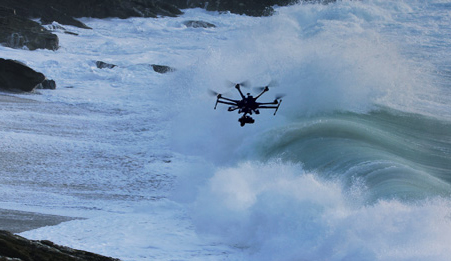
Norway deploys radiation drones along its coast amidst nuclear emergency concerns
Five Coast Guard ships are soon to carry drones with sensors capable of detecting radioactivity in case of a maritime accident involving a potential release from a reactor-powered civilian or military vessel. Barents Observer, By
Thomas Nilsen, December 03, 2021 A sharp increase in nuclear-powered vessels and ships with radioactive materials pose an increasing risk of accidents, a recent radiological- and nuclear risk assessment study for the Arctic Council concludes.
The risk is moderate and increasing in regards to nuclear-powered vessels and floating nuclear power plants, the report reads.
Now, authorities take action and deploy drones with radiation detectors on board Norway’s fleet of five Inner Coast Guard patrol vessels, from the North Sea region in the south to the Barents Sea in the north.
The danger is obvious. A worst-case scenario is a nuclear-powered vessel with a reactor leakage drifting at sea or running aground with a wind direction towards populated areas. In northern Norway, nine out of ten inhabitants live less than four kilometers from the sea.
A drone can help measure levels of radiation in close vicinity to the vessel in distress without exposing any of the emergency response teams to danger. The Coast Guard is already on 24/7 watch and plays an important role in emergency preparedness.
Nuclear-powered icebreakers are more frequently sailing between the yard in St. Petersburg and their homeport in Murmansk, like this weekend when the newest icebreaker, the “Arktika“ sails around Scandinavia a few nautical miles off the coast.
The civilian nuclear-powered “Sevmorput” is also regularly sailing between the Far East and St. Petersburg via the coasts of Siberia, Norway, Sweden, Denmark, Poland, Estonia and Finland loaded with seafood and other products. The ship is 33 years old and is not allowed to make port calls to countries outside Russia.
Every now and then, cargo vessels bring spent nuclear fuel or radioactive substances to the port of Murmansk.
Navy submarines
Caused by increased military tensions, both NATO and Russian nuclear submarines are more frequently patrolling the strategically important North Atlantic. Allied submarines even make port calls to harbors in Norway, like this spring when “USS New Mexico” came to Tromsø in a high-profile visit.
Detailed emergency response plans were made ahead of the submarine’s visit. For Norway, which has a comprehensive network of radiation detectors on land, the challenge however is what to do if something happens at sea. …………………….
Submarines and icebreakers
Norway’s Inner Coast Guard includes the five vessels “Nornen”, “Tor”, “Heimdal”, “Njord” and “Farm”. The latter has Kirkenes as homeport and sails the waters closest to Russia’s Kola Peninsula where several tens of nuclear-powered submarines are based as well as being home to the increasing Arctic fleet of nuclear-powered icebreakers.
Two brand new icebreakers, powered by two reactors each, will be added to the fleet before the end of the year. The first is this weekend en route along the coast of Norway from St. Petersburg to Russia’s ice-covered waters around the Yamal Peninsula and the Kara Sea. ………..
Circumpolar cooperation
Two years ago, the Norwegians and Americans sailed north to Svalbard together with Russian experts from the emergency response unit of Rosatom, working on remote-controlled systems for measuring radiation in case of accidents.
Collaboration on nuclear accident preparedness is a priority for all circumpolar nations which agree that shared resources in sparsely populated areas benefit all………
“We never know where accidents might happen. But with the Coast Guard and their skills on operating drones, we are about to become world-class in preparedness,” Aas-Hansen elaborates. …….
“The new drone detectors for radiation are unique. What we learn from this is something we absolutely will share with other nations,” says Øyvind Aas-Hansen. He underlines that cross-sector collaboration with other agencies in Norway has brought the project forward………
Large nuclear exercise in 2022
In May 2022, the partners will test the systems in a large international Arctic radiation exercise in the area around Bodø, northern Norway…….
Sharp increase in reactors
The Barents Observer has published an overview (pdf) listing the increasing number of reactors in the Russian Arctic. The paper is part of Barents Observer’s analytical popular science studies on developments in the Euro-Arctic Region.
According to the list, there are 39 nuclear-powered vessels or installations in the Russian Arctic today with a total of 62 reactors. This includes 31 submarines, one surface warship, five icebreakers, two onshore and one floating nuclear power plant.
Looking more than a decade ahead, the number of ships, including submarines, and installations powered by reactors is estimated to increase to 74 with a total of 94 reactors, maybe as many as 114. Additional to new icebreakers and submarines already under construction, Russia is brushing dust of older Soviet ideas of utilizing nuclear power for different kinds of Arctic shelf industrial developments, like oil- and gas exploration, mining and research.
Although Russia’s existing “Akademik Lomonosov” and four planned floating nuclear power plants are to operate on the coast of the Chukotka Peninsula thousands of kilometers east of the European Arctic, maintenance, testing and change of spent nuclear fuel elements will take place at the Atomflot base in Murmansk, a city with about 300,000 inhabitants a few hours drive from the border to Norway.
“By 2035, the Russian Arctic will be the most nuclearized waters on the planet,” the paper reads.
Also, existing icebreakers and submarines get lifetime prolongation. The average age of the Northern Fleet’s nuclear-powered submarines has never been older than today. Several of the submarines built in the 1980s will continue to sail the Barents Sea and under the Arctic ice cap until the late 2020s.
Serious accidents happen
In recent years, two serious accidents in Russia’s northern waters have shaken the world.
On July 1, 2019, a fire broke out on the top-secret deep-diving submarine Losharik on 60 nautical miles from Russia’s border to Norway. The submarine was at the time working on the seabed in the Motovkiy Bay, just north of the important navy bases of the Northern Fleet. All 14 sailors on board were killed in the fire that likely started in the batteries.
Losharik was powered by one nuclear reactor and operated on a secret mission for GUGI, the Main Directorate for Deep-Sea Research, a top-secret unit directly subordinated the General Staff of the Russian Armed Forces.
No leakages of radiation were reported at the time.
Later that summer, on August 8, a serious radiation accident happened in the waters just outside Nenoksa naval missile test site on the southern shores of the White Sea.
Five Rosatom experts were killed and at least three others injured as a Burevestnik missile exploded. The Burevestnik is a nuclear-powered cruise missile currently under development by the Armed Forces. The small reactor is aimed at giving the missile “unlimited range”.
Shortly after the blast, radiation levels in the nearby city of Severodvinsk were measured to be several times higher than background for about half an hour, the Barents Observer reported. The data was based on the public automated monitoring system in Severodvinsk with eight sensors in town and at the Zvezdockha shipyard.
While normal background in the town with a population of 190,000 is around 0.11 µSv/h (microsievert per hour), the levels measured at the monitor on the Lomonosov Street near Lake Teatralnoye peaked at 2 µSv/h, nearly 20 times higher gamma radiation than normal. That, though, is still way within permissible levels for population exposure.
Fears more accidents
In its annual threat assessment report the following year, Norway’s Intelligence Service warned that more accidents with Russia’s reactor-powered weapons systems could happen.
“The development will bring, additional to the military challenges, also challenges related to both environment and security. In 2019, about 25 Russians were killed during military activity near Norway,” the Intelligence Service Director Morten Haga Lunde said and added:
“I consider the risk for more such unintended incidents in our neighborhoods to be big in the years to come.”
Safety fault in China’s European Pressurised Water Reactor (EPR) does not bode well for UK’s Hinkley Point C and Sizewell nuclear projects
Key safety components in the UK’s first new nuclear power station for 30 years may need to be redesigned and the project could be delayed after defects were detected at a similar reactor in China.
The £22 billion Hinkley Point C plant in Somerset is already well over budget and a decade late but the defects mean that the scheduled date for starting electricity generation, of June 2026, may have to be revised. The same power plant design is due to be used for another nuclear power station, Sizewell C in
Suffolk, which is planned but has not yet been approved.
An investigation is still under way into the cause of the problems with the plant in Taishan, in the southern Chinese province of Guangdong. It was shut down in August after reports of damage to fuel rods, which hold nuclear materials used to fuel the reactor.
The plant is operated by China General Nuclear Power Group and owned in partnership with the French state-controlled EDF, the two companies involved in building Hinkley Point C.
The Commission for Independent Research and Information on Radioactivity, a French association
created in the aftermath of the Chernobyl disaster, said that a whistleblower had reported that a design flaw in the reactor pressure vessel could be the cause of the problem at Taishan. An industry source
told The Times that the investigation was likely to show that the pressure vessel was “demonstrably safe” but it might also show that design changes were needed.
Paul Dorfman, a nuclear expert at the University of Sussex, said: “If the news we are hearing from the Taishan EPR [European pressurised reactor] is right, then it’s beginning to look like there’s a potential generic fault with the key safety mechanism of the EPR reactor design itself. “If so, this is serious news for ongoing construction at Hinkley Point C and plans for Sizewell C.
Times 1st Dec 2021
https://www.thetimes.co.uk/article/ef84adce-5215-11ec-8d72-b8ab431649b1
Whistleblower explained the tank design problem that caused the shutdown at Taishan nuclear power station
Last July, in China, the Taishan nuclear power plant was shut down. A few weeks earlier, an incident had taken place in the only EPR plant in service in the world, designed jointly by the Chinese CGN and the French EDF.
At the end of November, perhaps finally an explanation: the incident was due to a fault in the design of the vessel, according to a major French association specializing in nuclear safety. The incident which led in July to the shutdown of a reactor at the EPR nuclear power plant in Taishan, in southern China, is believed to be due to a design flaw in the vessel, the French association CRIIRAD said on Saturday.
The Commission for Independent Research and Information on Radioactivity (CRIIRAD) would get its
information from a “whistleblower”. “This is a Frenchman who works in the nuclear industry, having access to very precise technical information on the situation of the Taishan 1 reactor core,” a CRIIRAD official told AFP.
Taishan is the only pressurized water reactor (EPR) plant in the world, with two reactors. Four other EPR reactors are under construction, all in Europe: one in Finland, one in France in Flamandville and two in England. It is a tank design problem that would be the cause of the incident in Taishan reported on June 14, 2021. This is a first explanation.
TV5Monde 28th Nov 2021
Design flaw: the incident that shut down China’s EPR nuclear station could happen to other EPR reactors.
| The type of incident that caused a reactor shutdown at Taishan plant could happen to other plants. The incident in the Chinese reactor last June is believed to be due to a design flaw in the reactor vessel. The incident which led in July to the shutdown of a reactor at the EPR nuclear power plant in Taishan (China) is believed to be due to a fault in the design of the vessel, the Independent Research and Information Commission said on Saturday (November 27th) on radioactivity (CRIIRAD) which warns against the risk of an identical problem on other EPRs. An association created in the aftermath of the Chernobyl disaster, CRIIRAD wrote on Saturday to the management of the Nuclear Safety Authority (ASN) to share this information with it, which it says it has from a “whistleblower”. “This is a French person who works in the nuclear industry, having access to very precise technical information on the situation of the Taishan 1 reactor core,” said Bruno Chareyron, director of the CRIIRAD laboratory. Sud Ouest 28th Nov 2021 https://www.sudouest.fr/nucleaire-le-type-d-incident-qui-a-provoque-l-arret-de-l-epr-de-taishan-pourrait-arriver-a-d-autres-centrales-7148273.php |
Nuclear risks are laid bare by COVID-19
Nuclear risks are laid bare by COVID-19, https://www.europeanleadershipnetwork.org/commentary/nuclear-risks-are-laid-bare-by-covid-19/
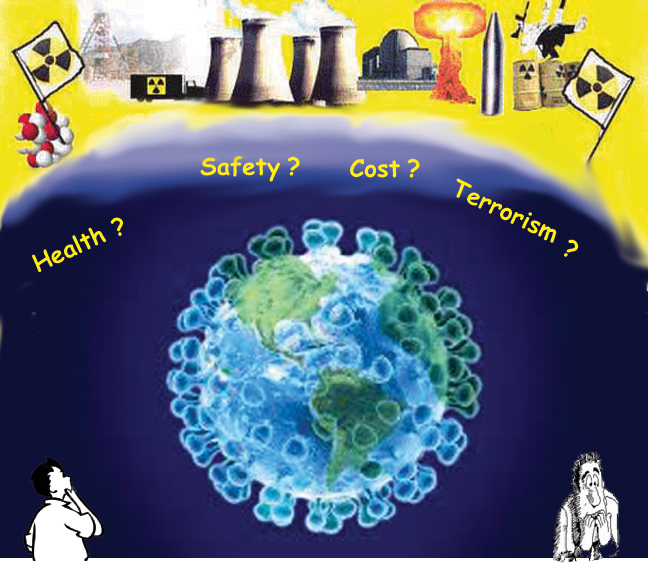
the prioritization of deterrence operations in these circumstances—and the emphasis on conveying this to the public—is fundamentally disquieting. In some circles, there is a call for a reckoning with the massive costs associated with nuclear modernization programs, ever more noticeable with the health sector buckling under extreme pressure.
Wilfred Wan |Researcher at the United Nations Institute for Disarmament Research (UNIDIR) 11 june 2020,
Maintaining deterrence postures has emerged as a key security challenge in the era of COVID-19. In recent weeks, officials in more than one nuclear-armed State have reassured their publics about the viability of their nuclear arsenals. A spokesperson for the UK Royal Navy noted “all required outputs are being maintained” at Faslane, home to Britain’s deterrent, following reports of personnel self-isolating. French submarine crews may not even be informed of the COVID-19 situation, according to their Naval spokesperson. The US Air Force Chief of Staff claimed in a press briefing no change to their nuclear deterrence operations. Similarly, the head of US Strategic Command stressed the pandemic had “no impact to our ability to accomplish our (deterrence) mission.”
Claims of ‘business as usual’ invite scepticism. The machinery of nuclear weapons complexes may be relatively immune from the pandemic, but the people that service them are not. Risk of transmission is especially great in the confined spaces like submarines, bombers, and missile silos that military personnel operate in. For instance, there are confirmed cases of COVID-19 at every nuclear base in the United States except one. Changes by now familiar to the working world are impacting military operations too: virtual teleconferencing, minimized on-site contact, identification of mission-critical tasks; with resources drawn from areas deemed inessential to the deterrence mission. The commander of the US Air Force Global Strike Command noted, “You’ll train a little less, but you can keep training; you can do maintenance, but you don’t have to do as much maintenance.” This is not business as usual.
There should be concern that shifting resources from tasks seen as inessential now could have safety implications down the line. Technical malfunction and human fallibility have featured across the known history of nuclear weapons programs, resulting in false alarms, accidents, and near misses. The US program, about which there exists the most declassified information, experienced a number of ‘broken arrow’ incidents during the Cold War such as missile explosions, aircraft collisions, and even the inadvertent release of nuclear weapons. The longer pandemic-containing measures are in force, the more the militaries of nuclear-armed States will face tough operational choices—choices that bear on nuclear risk.
Meanwhile, the prioritization of deterrence operations in these circumstances—and the emphasis on conveying this to the public—is fundamentally disquieting. In some circles, there is a call for a reckoning with the massive costs associated with nuclear modernization programs, ever more noticeable with the health sector buckling under extreme pressure. Beyond economics, continued reliance on nuclear weapons feels anachronistic as today’s threats are increasingly non-traditional, taking shape in cyber offensive operations or hybrid warfare, and adversaries harder to identify, with their motivations, doctrines, and capabilities varied and complex. Security, as COVID-19 underlines, has evolved. It is hard to hit many of these kinds of nails with the nuclear hammer.
Revitalizing nuclear arms control and disarmament is the only means to eliminate the lingering spectre of nuclear war. Given geopolitical tension, however, a critical short-term goal is to enhance understanding of that risk coming to fruition, intentionally or inadvertently. Proper assessment of the risk of nuclear weapon use is a prerequisite to reducing that risk. The veil of secrecy that has long surrounded nuclear weapons management must be lifted enough to ensure proper regulation, oversight, and accountability, including in all the processes linked to the deterrence ‘mission’. Enhanced use of notifications, signalling, and crisis communication channels, meanwhile, can lessen the likelihood that the mission itself will fail, especially in these extraordinary times.
In the meantime, preserving central control over nuclear arsenals during this and any other time is infinitely preferable to most alternatives. But even control cannot be taken for granted. The possibility of human failure in nuclear operations may well be higher with non-routine rotations and altered schedules of personnel. The hospitalization of British Prime Minister Boris Johnson for COVID-19 in April underlines the permeability of nuclear command and control at even the highest levels. The state of nuclear normalcy and perceived safety and security States are working so hard to uphold is far more fragile than they are willing to admit.
This is not to say that nuclear-armed States cannot effectively maintain their deterrent postures during this difficult period. But for some time now, experts and many governments have become increasingly concerned about nuclear misperception and miscalculation in an environment marked by worsening great power relations (and more so if the US and China continue their blame game over the pandemic). COVID-19 is a further wake-up call. There is no substitute for the easing of tensions and resumption of stockpile reductions. Nevertheless, States must do more to reduce the risk of any use of nuclear weapons. So long as nuclear weapons exist, the possibility remains. This is business as usual.
The nuclear consequences of cyber vulnerabilities
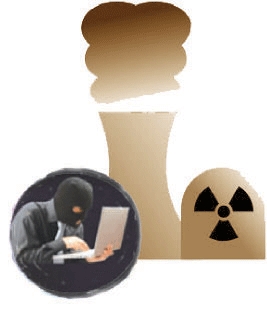
The nuclear consequences of cyber vulnerabilities, https://www.europeanleadershipnetwork.org/commentary/the-nuclear-consequences-of-cyber-vulnerabilities/ Wilfred Wan |Researcher at the United Nations Institute for Disarmament Research (UNIDIR), 29 Nov 21,
A recent report about a massive cyber surveillance campaign allegedly conducted by Russian intelligence against US government agencies reflects disturbing trends in cyberspace. The number of reported data breaches in 2021 is on pace to set a record, with government entities constituting the most targeted sector, and global supply chains increasingly impacted. The planning and sophistication that characterizes some of these operations in recent years also suggest more frequent State-level involvement, underlining the fact that cyber—or information security—capabilities increasingly constitute part of national strategic toolkits.
Operations in cyberspace have also targeted elements of the nuclear weapons enterprise across states. Recent known cases include the discovery in December 2020 of “long duration activity” against the US National Nuclear Security Administration (responsible for the management of the US stockpile), and in April 2021 of operations against a firm linked to the design of Russian nuclear submarines. In neither instance was there any indication that functions related to nuclear weapons systems were impacted.
Yet these revelations should heighten concerns beyond the states targeted, as the existence of these operations could have implications for potential nuclear weapon use. Cyber operations of the kind cited are unlikely to cause detonation events directly. Yet operations that successfully interact with nuclear forces can undermine states’ confidence in their nuclear deterrence capability or credibility, which can trigger forceful military response and even prompt ‘use it or lose it’ nuclear dilemmas. The clearest path to this end involves intrusions into weapons systems themselves. This is not far-fetched. In limited testing with “relatively simple tools and techniques”, the US Department of Defense in 2018 “routinely found mission-critical cyber vulnerabilities” in their weapons systems under development. Other nuclear-armed states are likely to be similarly vulnerable.
Other infringements on deterrence include cyber operations that impact nuclear command, control, and communication. Increased digitalization is likely to create new vulnerabilities, exacerbated by reliance on the supply chain. Even systems isolated from the internet can be compromised. The militarization of cyberspace—and a legacy of Cold War electronic warfare — also raises the possibility that adversaries could now induce the kind of malfunctions (such as erroneous warnings in early warning systems) that in the past have fuelled several nuclear ‘close calls’. Additionally, cyber operations that amplify conventional capabilities to evade radar and air or missile defence may increase nuclear force vulnerability, real or perceived.
The reason why such intrusions may escalate to a scale even beyond the intentions of perpetrators centres on a lack of clarity around so-called cyber ‘red lines’. Several nuclear-armed states have acknowledged the possibility of escalation linked to the cyber domain, or in their nuclear doctrines open the door to use in response to cyber operations. Further precision on thresholds is generally absent, with deliberate ambiguity held in service of deterrence credibility. Yet notions of achievable strategic stability are undermined by the secretive nature of cyber operations, the many potential points of entry for cyber operations, and context-dependent concepts such as ‘critical infrastructure’. Cyber-nuclear interactions open the door for misperception, miscalculation, or misunderstanding.
Reducing cyber-nuclear risks requires preventing interactions between cyber operations and nuclear forces; it also requires mitigating the consequences of interactions when they do take place. Developments in cyber space suggest the potential development of voluntary ‘rules of the road’ that can support the former. Last month the US and Russia submitted a joint resolution to the UN General Assembly (co-sponsored by 104 States) on responsible behaviour in cyberspace. Cyberspace policy also features in ongoing US-Russia strategic stability talks; President Biden in June 2021 had provided President Putin a list of critical infrastructure sectors meant to be “off-limits” from cyber operations. Such negotiations of State behaviours would be significant but would only address part of the risk picture.
It is incumbent on nuclear-armed states to strengthen the cyber security of their weapons and related systems and to elaborate standards across the entirety of their supply chains. Dialogue among nuclear-armed and nuclear-allied states can inform common understandings of risk perceptions, and chip away at the ambiguity around red lines. States can also look to establish guard rails through the conflict-prevention toolkit. In fact, information exchange around cyber military exercises, memorandums of understanding on engagement with communications and radar systems, and political declarations that nuclear command and control lies outside cyber bounds can build a foundation for formal agreements down the line.
Cyber-nuclear interactions are likely to increase given trends in the militarisation of the cyber domain and the digitalisation of nuclear weapons systems. The secrecy across both domains presents significant challenges: not only in their regulation but also to underlining the urgency of the situation and creating the prerequisite momentum for such action. After all, the cyber equivalent of the Cuban Missile Crisis is unlikely to ever play out in public. Yet the very real risk of cyber-nuclear interactions driving inadvertent nuclear war should provide ready incentive for immediate action.
Wilfred Wan is the co-author of a new UNIDIR report on The Cyber-Nuclear Nexus: Interactions and Risks.
Design flaw could explain problem at EDF’s Chinese nuclear plant
Design flaw could explain problem at EDF’s Chinese nuclear plant-NGO https://www.reuters.com/markets/commodities/design-flaw-could-explain-problem-edfs-chinese-nuclear-plant-ngo-2021-11-29/Reuters PARIS, Nov 29 (Reuters) – A design flaw in the reactor pressure vessel could be the cause of a problem that was made public in June at French company EDF’s jointly-owned nuclear power plant in China, a French non-governmental organisation said, quoting a whistleblower.
Newly released Government documents reveal safety, terrorist, dangers of Scotland’s nuclear power stations
Leaks from Scotland’s nuclear power plants had the potential to be as
dangerous as terrorist attacks, ministers in Jack McConnell’s
administration were warned.
Newly released government documents reveal that
concerns were raised about the possibility of accidents at atomic
facilities. There are currently two nuclear power stations north of the
border: Hunterston B, which is due to cease operation early next year, and
Torness, which is scheduled to close in 2030.
Both are operated by the French energy company EDF. Minutes from the Scottish ministerial group on
civil contingencies from March 2005 have been released and posted online.
They contained gloomy forecasts, stating: “The threat from terrorism, in
terms of conventional and Chemical Biological Radiological Nuclear (CBRN)
attacks, remains at a historically high level. ”
The Scottish Conservatives and Scottish Labour have both backed nuclear power to play a role in easing
the country’s reliance on fossil fuels. Last week Anas Sarwar, the Labour
leader, said nuclear should be “part of the mix” of a “diverse energy
supply”. Stuart McMillan, the SNP MSP for Greenock and Inverclyde, said:
“We have been absolutely clear about our opposition to building new
nuclear power plants under current technology.
Times 28th Nov 2021
https://www.thetimes.co.uk/article/warning-over-leaks-scared-scottish-labour-off-nuclear-mb7r2ctc8
Manager at Tricastin NPP files complaint about safety issues and harrassment

In the midst of a debate on the revival of nuclear power, a whistleblower
throws a stone in the pond: a member of the management of the Tricastin
power station (Drôme), one of the oldest in the French fleet, has filed a
complaint against EDF concerning site safety, endangering others, the Labor
Code and harassment, as revealed by Le Monde.
Mediapart 24th Nov 2021
1 This Month



26 September – International Day for the Total Elimination of Nuclear Weapons


PLEASE OPPOSE HR 8255 AND S.3639 – bills would accelerate satellite deployment, with no environmental review or safeguards – https://ncstd5li.quorum.us/campaign/169331/
To see nuclear-related stories in greater depth and intensity – go to https://nuclearinformation.wordpress.com
-
Archives
- September 2026 (233)
- August 2026 (330)
- July 2026 (355)
- June 2026 (287)
- May 2026 (306)
- April 2026 (356)
- March 2026 (251)
- February 2026 (267)
- January 2026 (308)
- December 2025 (358)
- November 2025 (359)
- October 2025 (375)
-
Categories
- 1
- 1 NUCLEAR ISSUES
- business and costs
- climate change
- culture and arts
- ENERGY
- environment
- health
- history
- indigenous issues
- Legal
- marketing of nuclear
- media
- opposition to nuclear
- PERSONAL STORIES
- politics
- politics international
- Religion and ethics
- safety
- secrets,lies and civil liberties
- spinbuster
- technology
- Uranium
- wastes
- weapons and war
- Women
- 2 WORLD
- ACTION
- AFRICA
- Atrocities
- AUSTRALIA
- Christina's notes
- Christina's themes
- culture and arts
- Events
- Fuk 2022
- Fuk 2023
- Fukushima 2017
- Fukushima 2018
- fukushima 2019
- Fukushima 2020
- Fukushima 2021
- general
- global warming
- Humour (God we need it)
- Nuclear
- RARE EARTHS
- Reference
- resources – print
- Resources -audiovicual
- Weekly Newsletter
- World
- World Nuclear
- YouTube
-
RSS
Entries RSS
Comments RSS
 nuclear-news