On shaky ground? Latest EDF planning application casts doubt on suitability of Sizewell site
The Nuclear Free Local Authorities (NFLA) were surprised to see a late
planning application from nuclear power operator EDF Energy to East Suffolk
Council seeking permission to carry out testing on its proposed Sizewell C
nuclear power plant site.
Commenting, Cllr David Blackburn, Chair of the
NFLA, said: “The application has gone in just as the Planning
Inspectorate is about to make a recommendation to the Secretary of State on
whether to proceed further with the next stage of the development. EDF wish
to be allowed to conduct on-site trials to test whether their construction
methods will work on the land at their disposal. It ‘beggar’s belief’
that they should do this now at such a late stage in the process, rather
than at the start.”
The application concedes that EDF still need to
conduct soil and ground anchor trails to determine if their strategy to
stabilise the site during the construction of the plant will work. The NFLA
fears that the high-risk strategy might make the site unstable and the
cut-off wall could be sent crashing down endangering the lives of
construction workers.
NFLA 26th Feb 2022
Ukraine’s reactors – largest nuclear complex in Europe – IN DANGER
 | |||

Author Viewsridge/Wikimedia Commons)
Ukraine’s reactors at risk
15 reactors plus Chernobyl in unprecedented warzone situation https://wordpress.com/read/feeds/72759838/posts/3854353677
A statement by Beyond Nuclear. 25 Feb 22,
Beyond Nuclear joins the chorus of voices calling for a peaceful resolution to the conflict in Ukraine, a situation that could become orders of magnitude worse should any of the country’s 15 nuclear reactors suffer major damage due to military exchanges.
We are in an unprecedented situation, with, for the first time, a war happening in a region where there are operating nuclear reactors. This presents an extreme risk to human life unlike any we have seen in previous wars, even when traditional infrastructure has been bombed and destroyed.
The humanitarian tragedy is already enormous, with people fleeing, abandoning homes and businesses, with their lives upended and their safety and survival in jeopardy. However, should a major release of radioactivity occur due to the damage or destruction of any one of the country’s 15 reactors, the scale of the disaster would escalate to unimaginable proportions, affecting populations well beyond the boundaries of Ukraine and Russia.
Military activity around the Chernobyl nuclear site and within the Exclusion Zone is also of great concern. Reports are coming in showing elevated rates of radiation stirred up by the presence of troops, tanks and heavy equipment moving through the highly radioactively contaminated region, which is closed to regular human habitation. In April 2020, when a major wildfire consumed the area, radiation levels rose by 16 times.
The occupation of the site by Russian military personnel, reportedly the result of a firefight at the plant site, is already a concern. This takeover has called a halt to all activities on the site, which houses a significant inventory of radioactive waste.
Any attack or accidental hit on the Chernobyl nuclear site is of even greater alarm. The new protective dome, euphemistically known as the New Safe Confinement building, that encases the exploded Unit 4’s crumbling sarcophagus, is by no means impervious to damage.
Within this dome lie unstable slurries of radioactive liquids, sludges and sands containing uranium, plutonium and other radioactive wastes. As recently as last May, workers detected an unusual rise in neutrons in the wastes lying in the basement of the destroyed Unit 4, raising fears of a chain reaction or even an explosion. War activities in and around the Chernobyl site, therefore, are a reason for high concern.

The six reactor Zaporizhzhia nuclear power plant in eastern Ukraine is of greatest concern, given its size — the largest power plant in Europe — and location. (Photo: Wikimapia)
The ISF2 (Interim Spent Fuel Storage #2 dry cask facility) at Chernobyl is also of serious concern. Its design, construction, management, and operation has been flawed from the start. Orano (formerly Areva) of France was effectively fired for the design and construction flaws. But serious problems have persisted even after Holtec International’s takeover of ISF2 management. An irradiated nuclear fuel fire at ISF2, whether due to intentional attack or unintended accident, could result in catastrophic releases of highly radioactive wastes into the environment over a large region.
The 15 operating reactors — located at Rivne (4), Khmelnitsky (2), South Ukraine (3) and Zaporizhzhia (6) — are all vulnerable to catastrophic meltdown, even if they are not directly attacked or accidentally hit.
As at Fukushima, a loss of offsite power followed by a loss of onsite power could cause the workforce to lose control of the reactor. If cooling is lost, the reactor will heat up, the water level within the reactor core drops and the fuel rods are exposed. Explosive gases are released, as happened at Fukushima-Daiichi in March 2011, where we saw three reactor explosions. Should these gases find a spark, similar explosions could occur at one or more of Ukraine’s reactors.
Of even greater concern are the fuel pools containing the irradiated fuel rods, and unprotected by the containment building. If a fuel pool is hit and either drains down or boils dry, exposing the fuel assemblies, fire is a real risk. Fuel pools contain far more radioactivity than the reactor itself and a fire would release even greater amounts of radiation.
A war zone could also create a dangerous environment for the nuclear workforce and their families, tempting some to evacuate. But a nuclear power plant, even under daily, routine operations, is not walkaway safe and cannot be abandoned. This presents a terrible, and sacrificial choice that should not have to be made.
The situation in Ukraine is unacceptable at a time when humanity should be coming together to take on our collective existential threat — the climate crisis. The situation in Ukraine brings home all too clearly that nuclear power plants are a dangerous liability and certainly not a solution to the climate crisis.
We are thinking of those suffering as a result of this pointless and cruel war, and offer a list of organizations to which humanitarian aid donations can be made to help the innocent victims caught up in this senseless violence.
The Most Immediate Nuclear Danger in Ukraine Isn’t Chernobyl
The Most Immediate Nuclear Danger in Ukraine Isn’t Chernobyl, Even though an accident is unlikely, Russia must take exceptional measures to avoid a nuclear catastrophe. Carnegie Endowment for International Peace, James M. Acton 24 Feb 22,

……………The most immediate nuclear danger, however, comes from Ukraine’s nuclear power plants. ………… the bigger risk comes from the potential for fighting around Ukraine’s four active nuclear power plants, which contain fifteen separate reactors and generated over half of the country’s electricity in 2020..
Chernobyl is inside a large exclusion zone, and the uninhabited space would mitigate the consequences of a second nuclear accident there. Ukraine’s other reactors are not similarly isolated. Moreover, much of the fuel in these other reactors is substantially more radioactive than the fuel at Chernobyl. To put it simply, nuclear power plants are not designed for war zones. It seems exceedingly unlikely that Moscow would authorize deliberate attacks on these facilities, but they could nonetheless become targets in a war that will, in any case, disrupt their operations.
For Ukrainian nuclear power plant staff, merely traveling to work may be a dangerous act—making it potentially challenging to ensure the reactor can be operated safely. In the event of an accident, backup personnel, such as firefighters, may not be able to reach the plant—not least because they could be involved in civilian relief efforts
Moreover, nuclear power plants might be targeted inadvertently. These facilities use power from the state’s electricity grid to help cool the reactor in the event it is forced to shut down. While backup power systems, such as diesel generators, are available, the power grid is one important line of defense. There is a very real risk of such power being lost in Ukraine if Russian forces attack the country’s electricity infrastructure—as NATO forces did against Serbia during the 1999 Kosovo War and Russia itself did against Ukraine in 2015 using cyber tools.
Even if Moscow doesn’t authorize direct attacks against nuclear power plants, such attacks might occur anyway. A weapon aimed at a nearby target could hit a nuclear power plant if its navigation system failed. If Russian forces believed that Ukrainian defense forces were inside a nuclear power plant, they could call in an airstrike, perhaps in contravention of an order not to attack nuclear power plants. This concern isn’t hypothetical: In 2017, U.S. special operation forces in Syria called in an attack against a dam that was on a “no strike” list. The resulting damage almost caused the dam to fail, which would likely have led to the drowning of tens of thousands of civilians.
The CEO of the company that operates Ukraine’s nuclear power plants has stressed that they are designed to withstand an aircraft crash. However, munitions are often designed to penetrate thick layers of protective concrete. One particularly serious risk is that a direct attack might drain the pools in which spent fuel is stored, often in large amounts. Without cooling, this fuel could melt, releasing very large quantities of radioactivity. This kind of accident was the “worst-case” outcome envisioned by officials as the Fukushima Nuclear Power Plant accident in Japan unfolded in 2011.I set out these scenarios with some hesitation. The likelihood of a serious nuclear accident is probably quite small……………..
Nonetheless, even if a nuclear accident is still quite unlikely, its effects could be severe and would add significantly to the long-term consequences of this invasion for Ukraine’s population. Moscow will be directly responsible for any nuclear accident that is caused, directly or indirectly, by its aggression. If it doesn’t want such an accident to be added to its growing list of crimes, it must take exceptional measures to avoid one. https://carnegieendowment.org/2022/02/24/most-immediate-nuclear-danger-in-ukraine-isn-t-chernobyl-pub-86521
Doubts about extending the lives of USA’s nuclear reactors as federal regulators halt 80 year extension time for 3 reactors
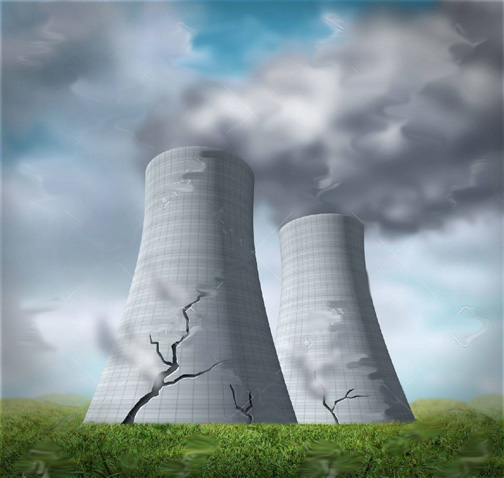
Feds walk back plans for nuclear reactors to run 80 years, E and E News, By Kristi E. Swartz, Jeremy Dillon | 02/25/202 Federal nuclear regulators have reversed course on letting three of the nation’s nuclear power plants run for an unprecedented 80 years, arguing an updated environmental study is needed beforehand.
The surprising decision is a blow to the nuclear industry, which has been pushing to keep existing reactors running for as long as possible while simultaneously touting next-generation technology that could be ready in the coming decade.
The Nuclear Regulatory Commission yesterday told
Florida Power & Light Co. (FPL) that its two Turkey Point nuclear reactors must go through a full environmental review before the agency will allow them to run for an additional 20 years. The NRC originally signed off on the extension in late 2019, using what’s known as a generic environmental study.
The NRC agreed with a legal challenge from several environmental and consumer groups, which argued that a full National Environmental Policy Act review is needed for the already aging reactors to run another 20 years.
The review should include significant new environmental issues that have come up since 2013, the year that a general environmental impact statement was prepared.
Yesterday’s decision applies to other reactors that have won approval to operate for 80 years as well as others with pending applications.
“[We] will not issue any further licenses for subsequent renewal terms until the NRC staff … has completed an adequate NEPA review for each application,” the commission said in one of three written orders.
Diane Curran, an attorney for Beyond Nuclear, said the decision “is a tremendous advance for nuclear reactor safety and environmental protection, because it commits NRC to evaluate the unique risks of renewing reactor licenses for a second term.”
Noted risks include safety and environmental issues that stem from aging equipment, she said.
“This decision paves the way for a hard look at those significant concerns,” said Curran.
Richard Ayres, an attorney for Friends of the Earth, said the decision was a complete surprise. It wasn’t until yesterday that he and others learned that the NRC would hold a morning meeting.
He called the decision “rare” and said he hoped it was a sign that the NRC would continue to strengthen its regulatory action.
Ayers said he thinks the NRC’s decision will lead to a “significant delay” in currently operating reactors getting additional extensions to run for 80 years. And “hopefully, it means a real thoughtful consideration of how climate change will affect these units and how, frankly, age will affect them,” Ayers said in an interview with E&E News.
FPL’s Turkey Point reactors were the first in the nation to win NRC approval to run another 20 years (Energywire, Dec. 6, 2019). The NRC issued that decision in late 2019.
Constellation Energy Corp.’s Peach Bottom nuclear power station in Pennsylvania got the same green light three months later (E&E News PM, March 6, 2020). Dominion Energy Inc.’s Surry nuclear power plant received approval in 2021 but is not named in the NRC’s decisions (Energywire, May 5, 2021). It is not clear why.
An FPL spokesperson said the NRC’s decisions do not affect its authority to operate the Turkey Point reactors currently but apply to the agency’s environmental review for plant operations in the future, starting in 2032.
“We are evaluating the NRC’s decisions to determine our next steps in the license renewal process,” FPL spokesperson Bill Orlove said in a statement.
The Turkey Point reactors are not without controversy, particularly because of their location. Florida has been the centerpiece of debates over the impacts of climate change, and rising seas already plague its coastal towns (Climatewire, Nov. 6, 2019). Turkey Point is on the southern tip of Florida in Miami-Dade County, near Biscayne Bay.
The site is the only one in the United States to use canals to keep the reactors cool. While the 168-linear-mile watery maze has been credited with removing the American crocodile from the endangered species list in a state racked by the effects of climate change, environmentalists argue that the canals make the area ground zero for algal blooms and excessive salinity, threatening nearby water wells (Energywire, July 15, 2019).
“Increased flooding risk caused by climate change poses serious risks to the safe operation of Turkey Point — and greater risks in the decades ahead,” said Caroline Reiser, an attorney at the Natural Resources Defense Council, in a statement.
The NRC’s decision throws uncertainty into the relicensing process as it undoes a decision previously made by the Republican-controlled commission during the Trump administration……..
For operators of the reactors, the NRC change introduces a new level of uncertainty into the age extension program.
Already, as part of the relicensing process, the reactors had to demonstrate a host of performance metrics to show that the plant’s structural and protective integrity could withstand an additional 20 years of operations.
A new environmental impact statement requirement could add another “three years or more” to an already lengthy process, an industry group said in a statement to E&E News……… https://www.eenews.net/articles/feds-walk-back-plans-for-nuclear-reactors-to-run-80-years/
12 nuclear power reactors in France shut down, 6 because of corrosion problems
| EDF CEO Jean-Bernard Lévy announced on Tuesday that a total of 12 nuclear reactors were currently shut down in France, including six linked to a corrosion problem on a safety system. “The last time I looked there were 44 in operation, so there were 12 that were not working,” he told franceinfo in response to a question about the number of reactors in operation in France. the French nuclear fleet. “Of the 12 (shutdown reactors) there were about half, I believe six, which were shut down because we detected, very unexpectedly, a corrosion problem in certain places where we should not not see this corrosion at all, and so we stopped them to examine them, to fully understand what is happening, and then there were six others who are in normal maintenance programs, “explained Jean-Bernard Lévy. Les Echos 23rd Feb 2022https://m.investir.lesechos.fr/actualites/edf-12-reacteurs-a-l-arret-en-raison-de-probleme-de-corrosion-pdg-2004147.html |
Warning on faults in EPR nuclear reactors – Commission de Recherche et d’Information Indépendantes sur la Radioactivité
| French nuclear giants are heavily involved in the EPR in Taishan, China: Framatome in terms of design, construction and fuel supply, EDF in terms of operations with its participation (30%) in TNPJVC. Furthermore, the feedback from first years of operation of Taishan 1 and 2 is obviously essential for the safety of other EPRs. EDF must therefore monitor incidents affecting these facilities very closely. In June 2021, the national and international press widely reported on the affair of the problems of ruptures of nuclear fuel cladding for the Taishan 1 EPR reactor in China. This 1,750 MWe reactor of power is the first EPR to be put into commercial service in the world (in December 2018). Degradation of nuclear fuel led its operator, TNPJVC, to a shutdown “anticipated”, on July 30, 2021, i.e. around 6 months ahead of the initial duration of the cycle. Anticipation was quite relative because the sheath rupture problems had in fact been identified as early as October 2020 and the reactor should have been shut down well before July, in order to limit the radiological risks for workers and residents. The CRIIRAD had alerted on this subject in a press release1 published on June 14 2021. Several causes can be at the origin of these ruptures of sheaths. Without being exhaustive, some may implicate design flaws in the reactor, others manufacturing flaws, other more faults involving the operation and/or maintenance of the Taishan 1 reactor. Some could turn out to be generic and also concern the other EPR reactors under construction. CRIIRAD 22nd Feb 2022 http://criirad.org/Surete-nucleaire/220222_Courrier_CRIIRAD_EDF_Flamanville_EPR.pdf |
Drone and missile attacks on UAE’s Barakah nuclear plant
The United Arab Emirates’ only nuclear power plant is “well protected”
against security threats, the regulator said on Wednesday, following a
series of unprecedented drone and missile attacks on the Gulf state.
Yemen’s Iran-aligned Houthis said in 2017 they fired a cruise missile
towards the Barakah plant, a report which the UAE denied. The group has
repeatedly threatened to target critical infrastructure in the UAE.
Reuters 23rd Feb 2022
Why nuclear risk from war in Ukraine isn’t missiles, but accidental hits on reactors
“In case of the total destruction of the power plant, I think the consequences would be so much worse than at Fukushima and Chernobyl together,” Mr Gumenyuk said. “If speaking about consequences of this war situation, Europe will be totally contaminated.”
Why nuclear risk from war in Ukraine isn’t missiles but accidental hits on reactors, Kyiv safety expert warns, By Isabella Bengoechea i , 23 Feb 22
Kyiv nuclear safety expert Dmytro Gumenyuk told i while a direct attack is unlikely, military invasion raises the risk of possible accidental hits from missiles or artillery
Ukraine’s nuclear power plants would pose a risk of radioactive pollution in Europe if caught in the crossfire of a Russian invasion, a Kyiv safety expert has told i.
The chance of a direct military attack on such facilities would be highly unlikely but a lack of high-precision weapons in the occupied Donbas suggests there could be an increased chance of sensitive facilities being hit accidentally.
If this happens, radiation could contaminate air, soil and waterways, affecting not only Ukraine but also Russia and much of Europe, according to Dmytro Gumenyuk, head of safety analysis at the State Scientific and Technical Centre for Nuclear and Radiation Safety, a body within the state nuclear inspectorate.
Ukraine has 15 nuclear reactors in four power plants, which provide 52 per cent of the country’s electricity: Khelnitsky and Rivne in the northwest, and Zaporizhzhia and the South Ukrainian plants in the west and south respectively.
Some facilities including a nuclear waste storage site in the exclusion zone at Chernobyl – where in 1986 catastrophic failure at the power plant resulted in the worst nuclear disaster in history – lie close to the country’s borders, where Russia has amassed nearly 200,000 troops.
The plant at Zaporizhzhia is only about 150 miles from the front line in Donetsk, while the South Ukrainian plant is about another 160 miles further west.
While a direct attack is unlikely, military invasion raises the risk of possible accidental hits from missiles or artillery. On Tuesday the thermal power station at Shchastya, near the conflict line in Luhansk, caught fire amid shelling, leaving 40,000 residents without electricity.
Mr Gumenyuk said: “Our NPP [nuclear power plant] wasn’t designed for military protection. Of course it wasn’t designed against tanks, bombs, missiles and so on.
“In case of a military attack it is not a long time for getting from Dontesk to Zaporizhzhia NPP, and of course taking into account the small distances from the Russian Federation, we could suppose that our power plants are not fully protected from military attack from our neighbour.”
A direct attack by Russia is unlikely. Lada Roslycky, founder of the Ukraine-based Black Trident defence and security group, said: “From a military perspective and a defence perspective it would be an idiotic action.”
However, she pointed out the separatists’ lack of high-precision weapons in conflict in the occupied Donbas does raise the chance of sensitive facilities being hit accidentally.
She also suggested that this could be part of a Russian strategy of fomenting uncertainty through psychological warfare, by holding out the threat of attacking such facilities. “I really don’t think they would do it [attack nuclear facilities] but it’s possible … it’s such a wonderful, brilliant instrument,” she said.
The Conflict and Environment Observatory (CEOBS) said it is “right to be concerned about Ukraine’s 15 ageing Soviet-design nuclear reactors”.
“The three reactors at the South Ukraine Nuclear Power Plant and the six reactors at the Zaporizhzhia Nuclear Power Plant are the two sites most likely to be affected by a Russian invasion,” the observatory added.
The VVER 1000 pressurised water reactors at Zaporizhzhia each contain 163 assemblies – or structured groups of fuel rods. Each assembly contains about 500kg of uranium dioxide, making the total fuel inside one reactor about 80 tonnes.
After the 2011 nuclear disaster at Fukushima in Japan, Ukrainian nuclear authorities implemented extra safety measures to make their reactors safer, and protect against accidents such as fires and flooding.
However, Mr Gumenyuk warned that were the plant to be attacked, in the worst-case scenario, the consequences would be devastating.
“In case of the total destruction of the power plant, I think the consequences would be so much worse than at Fukushima and Chernobyl together,” Mr Gumenyuk said. “If speaking about consequences of this war situation, Europe will be totally contaminated.”
Soon after the disaster, radioactive rain began falling across northern Britain. In Cumbria detectors showed background radiation 200 times higher than normal. In Scotland two months later it was 4,000 times. Sheep in North Wales, Cumbria, and Scotland were found to have increased levels of caesium-137, prompting temporary restrictions on meat sales for 7,000 farms.
A nuclear disaster at Zaporizhzhia would contaminate the water, entering the Dneiper River and travelling down into the Sea of Azov, the Black Sea and then out into the Mediterranean.
In the event of a meltdown, radiation could contaminate the air where, depending on weather conditions, it could spread across Europe, as happened after the Chernobyl accident, when radiation spread as far as Sweden and the UK.
“But this is if all the units are totally destroyed,” said Mr Gumenyuk. “We do our best to prevent this situation. I hope in most cases our power units would survive even in single hits. Our nuclear reactors have containment to protect against the different impacts, including an air crash for example.”
Chernobyl’s nuclear waste
Ukraine’s nuclear waste storage facilities, including in the exclusion zone at Chernobyl, 70 miles south of the Belarussian border, also pose a radiation risk.

Last year Energoatom, the state nuclear operator, announced that Ukraine’s new Central Spent Fuel Storage Facility, in the exclusion zone at Chernobyl, was almost ready to begin operating. Spent fuel will be transferred to the new facility from where it is currently stored at power plants.
At present Russia has about 30,000 troops stationed in Belarus, apparently for joint military exercises, which are armed with short-range missiles, rocket launchers and Su-35 fighters. Leaders including Boris Johnson have suggested that Russia is planning at attack from Belarus, “coming down from the north, coming down from Belarus, and encircling Kyiv itself”. The route could take Russian troops through the exclusion zone.
According to CEOBS: “Decommissioning of the [Chernobyl] site and the packaging of waste is ongoing and will continue for decades. The site is under constant management and monitoring and the disruption caused by a conflict would impact the ongoing work to reduce the risks it poses. It seems likely that foreign companies would withdraw staff in the event of an invasion, impacting activities at the site.”
There are 22,000 assemblies of spent nuclear fuel at the storage site, kept in special casks to protect them.
However, Mr Gumenyuk pointed out that these were not protected against military firepower: “In case of the destruction of these casks, radioactive materials could be released and transferred to Ukraine and other European territories. This is a very dangerous situation.”
While some experts say any disruption to the site would be localised, Mr Gumenyuk said: “I disagree, the number of the fuel assemblies is very big and if all the casks were destroyed it would not only be the problem of Ukraine, maybe not all Europe, but many countries.”
Cyberattacks are another possibility. Last week Ukrainian government websites and banks were shut down by a wave of distributed denial of service attacks, thought to have been carried out by Russian hackers.
In 2015 the country’s energy sector was attacked by the BlackEnergy computer virus that caused a blackout of 800,000 households across 103 towns.
The next year, on the 30th anniversary of the Chernobyl disaster, Ukraine’s then-President Poroshenko said: “If the BlackEnergy virus was used for attacks on our power distributors, there is no guarantee that such technology will not threaten our nuclear plants”.
“Chernobyl is already volatile,” said Ms Roslycky. “Cyberattacks against Chernobyl call for attention… whether attacking kinetically or through cyber, when that happens this is something that would threaten global security.”
Accident, terrorism or sabotage
Direct attacks on the plants at Zaporizhzhia and South Ukraine are also unlikely, not least because Russia is not far from the power plants, and any radioactive contamination would affect Russia as well as Ukraine.
However, the possibility of an accident, terrorism or sabotage is somewhat higher. According to the Nuclear Security Index for 2020, Ukraine scores highly on global norms for nuclear materials security and implementing international commitments, with 94 and 78 out of 100 respectively.
However, under ‘risk environment’, which considers factors including political stability, effective governance, pervasiveness of corruption, and illicit activities by non-state actors, Ukraine scores 14.
A 2016 report by the EU Non-Proliferation Consortium drew attention to the illicit trafficking of radioactive materials in the DPR, LPR and unrecognised Transnistria in Moldova. “The armed conflict in eastern Ukraine and its related threats are dramatically influencing the nuclear security conditions in the country,” it said.
“Political and social instability amplifies the motivation of criminal or terrorist groups or organisations for illegal business related to the distribution of radioactive materials that are out of regulatory control.”
The danger of these armed insurgencies was highlighted most dramatically in 2014 when Malaysia Airlines Flight 17 was shot down over Donetsk in eastern Ukraine by pro-Russian separatists, killing all 298 on board. The Dutch-led investigation into the incident concluded that the plane was shot down with a Buk missile supplied by the 53rd Anti-Aircraft Missile Brigade of the Russian Federation. Those responsible may have believed they were shooting down a Ukrainian military aircraft…………………………………………. https://inews.co.uk/news/ukraine-war-nuclear-risk-russia-missiles-accidental-hits-reactors-1478269
Putin says that Ukraine is a nuclear threat
| |||
Vladimir Putin labels Ukraine a nuclear threat, says he’s prepared to use force, THE AUSTRALIAN, 23 Feb 22, JACQUELIN MAGNAY, EUROPE CORRESPONDENT@jacquelinmagnay

Russian president Vladimir Putin has announced he would use military force “depending on the situation on the ground” to defend the rights of people in the separatist regions Donetsk and Luhansk.
After receiving approval from the Russian parliament to deploy troops abroad into Ukraine, Mr Putin labelled Ukraine a nuclear threat, telling the Russian people it wanted to lose its neutrality, join NATO and that it received military shipments from the West. Mr Putin also claimed that citizens in the Donbas region were being “abused”.
Crucially, Mr Putin recognised the independence of the entire Donetsk and Luhansk oblasts and its broader territorial ambitions, not just the area controlled by Russian backed separatists.
About two-thirds of this area, known broadly as the Donbas, is currently in Ukrainian control.
Mr Putin said Ukraine was being “armed to the teeth” and that its nuclear threat was a strategic issue. He said Ukraine president Volodymyr Zelensky’s remark that he regretted Ukraine giving up nuclear weapons in 1994 was targeted directly at Russia.
“We have taken a note of them,” Mr Putin said………………….
Mr Putin said that Russia recognised the territory was now independent and warned the border region had been a threat to the Russian Federation………………………. https://www.theaustralian.com.au/world/vladimir-putin-labels-ukraine-a-nuclear-threat-says-hes-prepared-to-use-force/news-story/9ab06086551856b2847c06d91467cb26
Radiation fears after earthquakes at North Korea nuclear test site
North Korea’s underground nuclear test area has been struck by a series of small earthquakes, adding to fears that detonations have permanently altered the area’s geology and raised the risk of radiation leaks.
According to South Korean seismologists, at least four earthquakes have occurred over the past five days close to the Punggye-ri test site in the northern part of North Korea.
The scientists said they were natural tremors rather than those caused by explosions. The latest one this morning had a magnitude of 2.5, following a pair of 2.3 magnitude tremors yesterday and one of 3.1 on Friday, according to the Korea Meteorological Administration (KMA). None are large enough to cause significant physical damage.
However, the fact that they are occurring at all, in an area not prone to quakes, raises troubling questions.
Times 15th Feb 2022
Should the Taishan nuclear plant shutdown worry UK regulators?
Should the Taishan nuclear plant shutdown worry UK regulators? China is
not well known for its commitment to an open government. So the information
now published, as to why one of its new nuclear plants at Taishan has been
shut down for over six months, is potentially very worrying for the UK.
The closure is owing to cracked fuel rods that emerged after only one operating
cycle. Why is it worrying? Taishan is the only completed example in the
world of the prototype EPR being constructed at Hinkley Point in Somerset,
and scheduled for Sizewell in Suffolk. And the implications for the
viability of both of these £20bn+ ‘investments’ are potentially very
serious.
The Business Department is taking no responsibility for analysing
these implications. Instead, a spokesman told the Daily Telegraph that,
“If the British Office for Nuclear Regulation (ONR) considered that any
nuclear site was not safe or secure, it would not be allowed to operate.”
So, is the ONR keeping a beady eye upon the Taishan problems? Er, no. In
response to a Freedom of Information request from Sussex University this
January, the ONR admitted it ‘holds no information relating to design
flaws regarding Taishan, or indeed any information that suggests this
claimed design flaw has or may impact either Hinkley Point C or Sizewell
C’.
But this must mean the ONR cannot have made any inquiries as to these
possible design flaws, because if so they would by definition hold some
information. Given the amount of worldwide media attention the issue has
had, most people would rightly think the ONR is simply not discharging its
duty.
Electrical Review 16th Feb 2022
French utility EDF will check auxiliary cooling circuits, or RRAs, at its 56 domestic reactors, after faults found
French utility EDF will check auxiliary cooling circuits, or RRAs, at its 56 domestic reactors, it confirmed on Tuesday. “We will gradually look at other circuits including the RRA circuit. The [French nuclear safety authority] ASN is being regularly informed of the results of the checks and
expert assessments,” a spokesman for the state-owned firm told Montel.
The comments came in the wake of a Montel report on Monday that EDF had uncovered potential issues with the RRAs, which are used for depressurising the cooling water in the primary circuit of a reactor in the event of an emergency shutdown of the unit. The spokesman declined to say why the utility was checking other circuits, as well as the RRAs.
Montel 15th Feb 2022
https://www.montelnews.com/news/1299687/edf-confirms-new-safety-checks-on-french-reactors
Safety concerns as counterfeit parts found in U.S. nuclear reactors.

Counterfeit parts have been discovered in U.S. nuclear plants, potentially increasing the risk of a safety failure, the inspector general of the federal nuclear industry regulator said in a report released on Thursday.
The report is a blow to a U.S nuclear industry that has shrunk in recent years due to competition from renewable power and plants that burn natural gas and lingering public concerns following high-profile mishaps includinga 2011 tsunami at Japan’s Fukushima plant.
“Counterfeit parts are safety and security concerns that could have serious consequences in critical
power plant equipment required to perform a safety function,” the report from the inspector general’s office of the Nuclear Regulatory Commission
(NRC) said.
Reuters 10th Feb 2022
Reactor at Oskarshamn 3 nuclear power plant in Sweden shut down due to ‘fuel damage’.
Reactor at Oskarshamn 3 nuclear power plant in Sweden shut down due to
‘fuel damage’. Oskarhamn 3 will be temporarily taken out of production for
nine days from February 19 after assessments showed a “fuel damage” issue
needed urgent repair, according to owner OKG.
Mirror 10th Feb 2022
https://www.mirror.co.uk/news/world-news/reactor-oskarshamn-3-nuclear-power-26197599
1 This Month



26 September – International Day for the Total Elimination of Nuclear Weapons


PLEASE OPPOSE HR 8255 AND S.3639 – bills would accelerate satellite deployment, with no environmental review or safeguards – https://ncstd5li.quorum.us/campaign/169331/
To see nuclear-related stories in greater depth and intensity – go to https://nuclearinformation.wordpress.com
-
Archives
- September 2026 (233)
- August 2026 (330)
- July 2026 (355)
- June 2026 (287)
- May 2026 (306)
- April 2026 (356)
- March 2026 (251)
- February 2026 (267)
- January 2026 (308)
- December 2025 (358)
- November 2025 (359)
- October 2025 (375)
-
Categories
- 1
- 1 NUCLEAR ISSUES
- business and costs
- climate change
- culture and arts
- ENERGY
- environment
- health
- history
- indigenous issues
- Legal
- marketing of nuclear
- media
- opposition to nuclear
- PERSONAL STORIES
- politics
- politics international
- Religion and ethics
- safety
- secrets,lies and civil liberties
- spinbuster
- technology
- Uranium
- wastes
- weapons and war
- Women
- 2 WORLD
- ACTION
- AFRICA
- Atrocities
- AUSTRALIA
- Christina's notes
- Christina's themes
- culture and arts
- Events
- Fuk 2022
- Fuk 2023
- Fukushima 2017
- Fukushima 2018
- fukushima 2019
- Fukushima 2020
- Fukushima 2021
- general
- global warming
- Humour (God we need it)
- Nuclear
- RARE EARTHS
- Reference
- resources – print
- Resources -audiovicual
- Weekly Newsletter
- World
- World Nuclear
- YouTube
-
RSS
Entries RSS
Comments RSS
 nuclear-news