Reactivating Nuclear Power Plant Near Volcano a Bad Idea, Geologists Say
. NewsWeek, BY JESSICA THOMSON ON 6/20/22 Plans to reactivate a nuclear power plant near the capital city of the Philippines have been criticized by scientists over its proximity to a potentially active volcano.
The Bataan Nuclear Power Plant (BNPP) is located in the foothills of Mount Natib, only five miles from the caldera, and was built in the 1980s. It was never activated due to anti-nuclear sentiment in the aftermath of the Chernobyl power plant disaster in 1986, with protests expressing concerns that the BNPP was in an earthquake zone thanks to the volcano’s Lubao fault, which runs through the volcano and the power plant…………………………………. https://www.newsweek.com/philippines-volcano-nuclear-power-plant-1717406
Profit in a time of war? The madness of more reactors (from Westinghouse) in Ukraine

in the middle of all this, Ukraine is busy making business deals with a bankrupt American nuclear company with a lamentable track record of cost over-runs, technical challenges and long delayed completion times.
The madness of more reactors in Ukraine https://beyondnuclearinternational.org/2022/06/19/profit-in-a-time-of-war/
Profit in a time of war? — Beyond Nuclear International Westinghouse lands in Ukraine to ink new nuclear deal
By Linda Pentz Gunter
You might think that being in the middle of a war, the last thing you would be contemplating is building more nuclear power plants. But that hasn’t stopped Energoatom, the Ukrainian state nuclear operator.
Earlier this month, Energoatom inked a new agreement with Westinghouse of all companies, the American corporation that went bankrupt trying to build four of its AP1000 reactors in South Carolina and Georgia. The two in South Carolina were canceled mid-construction, while the pair in Georgia are years behind schedule and billions of dollars over-budget.
But like a good corporate vulture, Westinghouse has swooped into Ukraine, to grab a golden opportunity. Already the supplier of nuclear fuel to almost half of Ukraine’s reactors, the company now plans to increase that commitment to all 15, replacing Russia’s Rosatom; to establish a Westinghouse Engineering and Technical Center; and, craziest of all, build nine new AP1000 reactors there.
Westinghouse already has the contract to build more reactors at the 2-reactor Khmelnytsky nuclear power plant, which remain partially complete. Under the deal, Westinghouse will work first on Khmelnitsky 3, which is 75% complete, before taking on the 25% complete unit 4. Talks this month also evaluated Westinghouse building two more reactors at the site.
Fifteen operational reactors in a war zone — seven of them are apparently still running in Ukraine — is already risk enough. If even one of those reactors were fully breached, or its fuel pool caught fire or suffered an explosion — whether from an attack, accident, or meltdown due to gird failure — the amount of radioactivity released would dwarf the 1986 Chornobyl disaster.
Chornobyl Unit 4 was a relatively new reactor when it exploded on April 26, 1986, releasing potentially as much as 200 million curies into the environment. At least 100,000 square kilometres (39,000 square miles) of land was significantly contaminated with radioactive fallout. As much as 40% of Europe beyond Ukraine, Russia and Belarus, received fallout from the disaster. Certain plants and animals — including in Germany, Lapland and, until recently, the United Kingdom—remain unsafe to eat, even today.
The contamination from Chornobyl, and the resulting and widespread health effects, will endure potentially indefinitely. And all of that, as Scientists for Global Responsibility’s Phil Webber said in a recent webinar, would “look like a tea party” compared to the devastation unleashed should one of the older Ukrainian reactors suffer a catastrophe during this unforgivable war.
We’ve already seen the six-reactor Zaporizhzhia site attacked and a fire break out, mercifully not in one of the reactors or fuel pools. Zaporizhizhia will now likely remain permanently occupied by the Russians as they move deeper into Ukrainian territory from the east.
More recently, there have been incidences of Russian missiles flying low — too low — first over the six-reactor Zaporizhzhia site and then over the three reactors at the South Ukraine nuclear power plant. The humanitarian catastrophe that is already unfolding in Ukraine would be magnified beyond imagination were one of those missiles to malfunction and hit a nuclear plant — I use the term ‘malfunction’ because we still rest on the assumption that even Putin would not be reckless enough to deliberately order an attack on a nuclear reactor. But we can’t count on it.
And yet, in the middle of all this, Ukraine is busy making business deals with a bankrupt American nuclear company with a lamentable track record of cost over-runs, technical challenges and long delayed completion times.
All of this is testament to the misplaced caché still held by anything nuclear. Somehow, the possession of both nuclear weapons and nuclear power plants is seen as holding prestige. Indeed, Energoatom announced this latest Westinghouse deal thus: “Every such event in energy too brings the victory of Ukraine!”
It’s not really clear what, if anything, will bring victory to Ukraine and at what price. But building more nuclear power plants there only achieves one thing: putting the people of Ukraine in even greater danger, war or not. Reactors are vulnerable to failure and they make deadly radioactive waste, lethal for tens to hundreds of thousands of years. There is nothing victorious in perpetuating that. Just utter folly.
Macron warned of horror ‘nuclear accident’ as CRACKS appear in EDF’s reactors
 |
|
FRENCH President Emmanuel Macron has been sent a horrifying warning as cracks have been detected in some of EDFs nuclear reactors in France.
https://www.express.co.uk/news/science/1625813/edf-cracks-nuclear-reactor-accident-power-plant-France-energy-emmanuel-macron— By ANTONY ASHKENAZ, Wed, Jun 15, 2022 ,
A new report has warned Mr Macron of significant corrosion safety problems in EDF nuclear power plants in France as cracks detected in some nuclear reactors could risk causing “nuclear accidents”. The cracks were first detected in an emergency cooling circuit of reactor no. 1 of the Civaux power plant in October. The report also warned that the upcoming Hinkley Point reactor in the UK could face a similar situation Similar cracks have been discovered in three other 1500 MW reactors and of the Penly 1 reactor (1300 MW) , prompting them to be shut down as well.
The report notes that several reactors have faced “stress corrosion” which is often characterised by “cracking of a material… the stresses are linked to manufacturing operations and in particular to welding operations”.
Dr Bernard Laponche, the co-author of this study warned that the risk from stress corrosion is serious writing: “If the defects detected on the welds evolve, they can cause a breach in the main reactor cooling system.
While France has a large fleet of nuclear reactors generating about 70 percent of its energy, many of these reactors are ageing, with French regulators pushing the scheduled shutdown of over half of EDF’s reactors by over a decade.
The report added that there are a number of likely reasons why several of these reactors were cracking, which include “a degradation mechanism that simultaneously involves the material and its intrinsic characteristics, the mechanical stresses to which it is subjected and the nature of the fluid that circulates.”
According to the French nuclear regulator ASN, the “geometry” of the circuits concerned is the main cause for this defect, while EDF blames “thermal stratification”, or contact between two types of steam with different temperatures coming into contact.
The authors warned against France’s decision to extend the lifespan of these nuclear reactors from 40 years to 50 after 58 of the country’s reactors were set to shuitdown.
The authors wrote: “In any case, if the vulnerability of the 900 MW reactors were confirmed, the question of extending the operating life of these reactors beyond 40 years would have to be re-examined.
“It would also be necessary to examine the possibility that the EPR reactors at Flamanville, Olkiluoto and Taïshan, as well as those under construction at Hinkley Point, might themselves be concerned, insofar as they were designed on the basis of the 1500 MW N4 model.”
EDF is currently building the Hinkley Point C nuclear power station in Somerset and was previously set to come online in 2026.
Last month, EDF warned that as a result fo the pandemic, Hinkley Point C would be delayed by another year to June 2027, and will cost another £3billion to complete.
However, they assured that there would be no cost impact to the British taxpayer as a result of the delay.
Following Russia’s invasion of Ukraine, the UK has invested heavily in nuclear energy, announcing plans to generate a quarter of the UK’s energy supply from nuclear sources by 2050.
The Government aims to launch 8 new nuclear reactors to replace 5 of the 6 existing plants that are set to be shut down by the end of the decade.
Express.co.uk has reached out to EDF for comment.
An imminent radiological threat – UK’s planned Hinkley and Sizewell nuclear reactors – same design as flawed EPR reactor in China

June 14 marks the first real public reports of the accident at the
Taishan-1 nuclear reactor in China, and the Nuclear Free Local Authorities
have questioned whether the recent findings from the ongoing investigation
indicate that the EPR reactor design intended for Hinkley Point C and
Sizewell C has a ‘fatal flaw’.
Located almost 90 miles west of Hong
Kong, the Taishan-1 and 2 reactors were the first of their kind to enter
service, being of the same EPR (European Pressurised Reactors) design
intended for the Hinkley Point C and Sizewell C plants.
Designed and installed by EDF-subsidiary Framatome, building work started in 2009 and
they began commercial operations in December 2018 and September 2019,
respectively. The project is operated by Taishan Nuclear Power Joint
Venture Co. Ltd, which is jointly owned by CGN (70%) and Framatome, a
subsidiary of EDF (30%).
In late May 2021, American media outlets reported
the venting of radioactive gas at Taishan-1 following an equipment failure.
Rather than authorising an immediate shutdown, Chinese authorities
responded with obfuscation by increasing the safety limits at which the
reactor could operate. Frustrated the French operator reached out to the
international community for technical know-how and equipment to address the
problem, and in memo to the Department of Energy EDF described the
situation at Taishan-1 as ‘an imminent radiological threat to the site
and to the public’.[1]
International pressure finally prevailed and
Taishan-1 was shut-down. The reactor has ever since remained offline whilst
investigations have continued. Information remains hard to come by, but
French nuclear regulators – the ASN or Autorité de sûreté nucléaire
– have revealed that Taishan-1 suffered from two deficiencies which are
unrelated – the failure of springs in the fuel rods and excessive
vibration due to the design of the pressure vessel.
NFLA 14th June 2022
EDF delays the scheduled maintenance shutdowns of 7 French nuclear reactors.

| EDF has pushed back scheduled shutdowns for next winter of seven French reactors and plans to delay an eighth, Remit data showed on Wednesday. These changes concern the shutdowns of the Bugey 5 (880 MW), Cattenom 2 (1,300 MW), Cruas 4 (915 MW), Golfech 2 (1,310 MW), Gravelines 1 (910 MW), Nogent 2 (1,310 MW) reactors. ) and Paluel 1 (1,330 MW). The delays vary from several weeks to about a month. The company also plans to push back for two weeks, until February 25, the scheduled shutdown of its St Alban 1 reactor (1.3 GW). EDF gave no explanation for these measures. They come amid fears of a shortage of electricity supply in France next winter, due to a record drop in nuclear generation. The public nuclear electric company was forced to unexpectedly shut down several reactors for checks and repairs following the discovery of corrosion on important safety circuits at the end of last year. Last month, EDF revised the dates of thirteen scheduled reactor outages, citing corrosion-related checks and repairs. Montel 8th June 2022, https://www.montelnews.com/fr/news/1326472/edf-retarde-les-arrts-hivernaux-de-7-racteurs-franais |
Ukraine bars IAEA nuclear regulator from visiting Russian-occupied power plant !

The International Atomic Energy Agency wants to ensure that the Zaporizhzhia nuclear power plant is safe. Politico, BY LOUISE GUILLOT, June 7, 2022
Energoatom, Ukraine’s nuclear power plant operator, on Monday denounced a request by the global nuclear watchdog to visit the Russian-occupied Zaporizhzhia nuclear power plant.
The Ukrainian operator accused Rafael Mariano Grossi, head of the International Atomic Energy Agency, of “lying” and warned that the visit was a way of legitimizing Russia’s occupation of Europe’s largest nuclear plant — which is operated by Ukrainian staff but has been under the control of Russian troops since March.
“The Ukrainian side did not invite Grossi to visit ZNPP [Zaporizhzhia Nuclear Power Plant] and had previously denied him such a visit, emphasizing that a visit to the power plant will be possible only when our country regains control over it,” Energoatom said in a Telegram post.
Rosatom Director General Alexey Likhachev said in March that the Russian state-owned nuclear operator had no intention of taking operational control of Zaporizhzhia.
Grossi said Monday that he was “actively working” on sending an expert mission to the plant “sooner or later but better sooner.” Grossi has been working on setting up such a trip for months, but has so far been unsuccessful in getting Ukraine and Russia to agree on the details.
Dmitry Peskov, Russian President Vladimir Putin’s spokesperson, said last month that the IAEA was in touch with both Russian and Ukrainian authorities about a possible visit, Russian state-controlled press agency Interfax reported………………………..
Grossi also said Monday that Ukraine told his agency it has “lost control over” nuclear material at Zaporizhzhia and that data communication on nuclear safeguards with the plant has broken down. Nuclear safeguards mechanisms are essential to ensure that nuclear facilities are not misused and nuclear material not diverted from peaceful uses.
“The urgent need for us to be there is clear to all,” he said. “Logistics and other such considerations must not prevent it. We must find a solution to the hurdles preventing progress at Zaporizhzhia NPP.”………………
The IAEA declined to comment on Energoatom’s allegations. https://www.politico.eu/article/ukraine-nuclear-regulator-visit-russia-power-plant/
New film shows the anguish and destruction of the Chernobyl nuclear disaster
| A new documentary contains “lost tapes” of the Chornobyl disaster that have never been seen before, showing the horrific destruction and anguish that occurred during and after the worst nuclear incident in history. In a new trailer for the Sky Original documentary, Chernobyl: The Lost Tapes, HBO released small snippets of footage of the heroic workers that fought to contain the fallout and of the thousands of residents evacuating the area, including the voices of locals that the documentary claims were “silenced” following the disaster. IFL 6th June 2022https://www.iflscience.com/editors-blog/lost-tapes-of-chernobyl-reveal-the-devastating-impact-of-the-worst-nuclear-disaster/ |
Arms sent to Ukraine will end up in criminal hands, says Interpol chief
Jürgen Stock urges members to cooperate on arms tracing as weapons will flood hidden economy when war ends,
Guardian, Kim Willsher, Thu 2 Jun 2022
Weapons sent to Ukraine after Russia’s invasion in February will end up in the global hidden economy and in the hands of criminals, the head of Interpol has said.
Jürgen Stock says once the conflict ends, a wave of guns and heavy arms will flood the international market and he urged Interpol’s member states, especially those supplying weapons, to cooperate on arms tracing.
“Once the guns fall silent [in Ukraine], the illegal weapons will come. We know this from many other theatres of conflict. The criminals are even now, as we speak, focusing on them,” Stock said.
“Criminal groups try to exploit these chaotic situations and the availability of weapons, even those used by the military and including heavy weapons. These will be available on the criminal market and will create a challenge. No country or region can deal with it in isolation because these groups operate at a global level.”
He added: “We can expect an influx of weapons in Europe and beyond. We should be alarmed and we have to expect these weapons to be trafficked not only to neighbouring countries but to other continents.”
He said Interpol urged members to use its database to help “track and trace” the weapons. “We are in contact with member countries to encourage them to use these tools. Criminals are interested in all kinds of weapons … basically any weapons that can be carried might be used for criminal purposes.”
Ukraine’s western allies have sent shipments of high-end military weapons to Ukraine since the Russian invasion more than three months ago. On Tuesday, the American president, Joe Biden, announced the US would supply Kyiv with advanced missile systems and munitions. After the US pulled out of Afghanistan in 2021, following 20 years of war, huge amounts of often highly sophisticated military equipment was left behind and fell into the hands of the Taliban.
Stock, the secretary general of the international policing organisation who was speaking to the Anglo-American Press Association in Paris, said the conflict in Ukraine had also led to a rise in large-scale fertiliser theft and an increase in counterfeit agrochemicals. There was also a huge rise in fuel theft. “These products have become more valuable,” he said……………………………………. https://www.theguardian.com/world/2022/jun/02/ukraine-weapons-end-up-criminal-hands-says-interpol-chief-jurgen-stock
Thin-walled nuclear waste containers – not really very secure

Greg Phillips, Nuclear Fuel Cycle Watch 4 June The biggest piece of BS that jumped out at me [in this pro nuclear article] is the bolded section:
“…Nuclear waste containers have been tested over the last 40 years by running them into concrete bunkers at 80 mph, being dropped onto huge steel spikes, burned in jet fuel fires at thousands of degrees, and sunk deep in water for weeks. These things are as strong as humans can make them.”
ONLY TRANSPORT CONTAINERS HAVE BEEN SUBJECTED TO THE ABOVE TESTS. THE THIN WELDED CONTAINERS PLACED INTO A PROTECTIVE OUTER SHELL OF CONCRETE. THE PRESSURISED THIN INNER CONTAINERS ARE VENTED TO OPEN AIR TO LET HEAT ESCAPE. ANY LEAK FROM A FAILED WELD WILL ESCAPE TO THE ENVIRONMENT.
Excuse the caps, but too many people have been fooled by such pro-nuclear propaganda. Pictured at top is a thin welded canister – a fully laden canister would not survive a drop of a few metres.
Those nuclear waste containers pictured above are like hermit crabs, a hard exterior shell with vulnerable internals. The thin welded canister is placed into the concrete outer shell, which has vents to keep the canister cool. So any weld failure, crack can lead to radioactive contamination into the atmosphere. If the vents of the outer shell get blocked, the temperature of the fuel will rise to 400C+. If the pressurised Helium leaks out the temperature will rise. https://www.facebook.com/groups/1021186047913052
Russia Withdraws From Nuclear Arctic Safety Program with Norway, Amid Safety Concerns
Russia has announced its withdrawal from a nuclear safety program in the
Arctic region, furthering concerns experts have raised about a new period
of heightened nuclear risks. On Tuesday, representatives of Russian state
nuclear agency Rosatom said Norway would no longer be welcome to
participate in radiation safety projects the Nordic country had helped
fund.
The move closes nearly three decades of a bilateral partnership to
deal with nuclear safety in the aftermath of the Cold War. The announcement
has been seen as Moscow’s direct response to Norway’s recent decision to
freeze funding to the high-level joint commission after the invasion of
Ukraine. Norway has provided Russia with more than 2 billion euros to help
secure radioactive dumpsites and improve safety at power plants.
Newsweek 2nd June 2022
Russian-held nuclear plant faces critical shortage of spare parts, says Kyiv

Russian-held nuclear plant faces critical shortage of spare parts, says Kyiv https://www.reuters.com/business/energy/russian-held-nuclear-plant-faces-critical-shortage-spare-parts-says-kyiv-2022-06-03/
KYIV, June 3 (Reuters) – Europe’s largest nuclear power plant that lies in Russian-occupied Ukraine faces a critical shortage of spare parts, threatening the safety of its operations, Ukraine’s military intelligence agency said on Friday.
The plant in the southeastern region of Zaporizhzhia was occupied by Russian troops shortly after its Feb. 24 invasion, but the facility is still operated by Ukrainian technicians.
“A critical situation has developed at the … plant in terms of ensuring stable and safe operations. There are practically no spare parts and expendable materials left,” the Defence Intelligence of the Ministry of Defence said.
The facility is being operated by week-long rotations of staff who have all of their personal belongings and phones taken from them when they begin, it said in a statement.
Then-Soviet Ukraine was the site of the world’s worst nuclear accident at its now-defunct Chornobyl atomic power station north of Kyiv in 1986.
The International Atomic Energy Agency (IAEA) completed a three-day trip to the Chornobyl plant on Friday to ensure safety at the site during the war in Ukraine and said that it also wanted to visit the Zaporizhzhia plant. Reporting by Natalia Zinets in Kyiv and Francois Murphy in Vienna; writing by Tom Balmforth; Editing by Hugh Lawson
The Next Crapshot Reactor Explosion Will Dwarf the Next Psychotic School Shooting

https://buzzflash.com/articles/harvey-wasserman-for-buzzflash-the-next-crapshot-reactor-explosion-will-dwarf-the-next-psychotic-school-shooting May 31, 2022, By Harvey Wasserman
The next explosion at an atomic reactor will dwarf the latest school shooting
There’s a clear GOP stamp on this week’s mass slaughter of our beautiful school children and their teachers—-AND on the next.
Likewise the next nuke irradiation of countless downwind humans already has its horde of unrepentant enablers
To put it in the plainest possible terms: those now advocating continued operation of our increasingly dangerous, decrepit atomic fleet are personally responsible for upcoming explosion(s) at the individual reactors they refuse to evaluate.
And we can be sure that the blame dodging we’re now seeing in Texas will pale before the crocodile tears that will come with the next avoidable apocalypse.
So let’s be clear:
X No private insurance company will fully insure any US atomic reactor. https://www.nrc.gov/reading-rm/doc-collections/fact-sheets/nuclear-insurance.html
X Under federal law, your homeowner’s policy bars meaningful owner/operator liability for any melt-down’s fatal fallout.
X The limited federal liability fund for an apocalyptic reactor disaster represents a minuscule fraction of the likely damage.
X Just 45 miles from the San Andreas, California’s two Diablo reactors are surrounded by a dozen earthquake faults.
X Dr. Michael Peck, the Nuclear Regulatory Commission’s Diablo site inspector, demanded it shut for seismic dangers.
X The NRC purged Dr. Peck and trashed his warnings.
X Seismic shocks have already damaged Ohio’s Perry reactor and Virginia’s North Anna.
X Critical concrete is crumbling at New Hampshire’s Seabrook and Ohio’s Davis-Besse.
X Critical components at the South Texas Nuclear Plant recently froze.
X Vital core metals at Diablo are dangerously embrittled, cracked and decayed.
X Diablo’s owner-operator, PG&E, has pleaded guilty to manslaughter charges involving the avoidable deaths of nearly 100 people.
X Perry and Davis-Besse’s owners are linked to a $61 million legislative bribe meant to buy a $1 billion bail-out.
Like laws allowing psychopaths to buy assault weapons, nuclear non-regulation makes major catastrophes virtually certain.
All reactors regularly emit radiation, carbon, heat.
All can be replaced by renewables that are cheaper, cleaner, safer, more job-producing, quicker to deploy, free of radioactive wastes.
Nearly 800,000 Americans now work in wind, solar, batteries and/or efficiency.
Some 70,000 Californians now work in solar and wind, more than all Americans who mine coal. Just 1500 work at Diablo.
As with those who defend gun sales to mass murderers, reactor promoters can’t personally cover the unconscionable risks they so glibly demand we all take.
Come the next melt-down, their Texas-style moments of “silence and prayer” will reek of predictable hypocrisy.
As assault weapons must be banned, so these reactors must be shut.
In both cases, the ultimate gamble is being imposed by irresponsible crapshooters who can never pick up the pieces, cry as they might when their snake eyes bite the rest of us.
Harvey Wasserman’s THE PEOPLE’S SPIRAL OF US HISTORY narrates the atomic delusion (www.solartopia.org). Most Mondays at 5pm ET he co-convenes the Green Grassroots Election Protection Zoom (www.electionprotection2024.org)
Nuclear safety warning threatens to derail Boris Johnson’s energy revolution
Austria objects to Sizewell C plant in its latest attack on British energy policy, Telegraph, By Helen Cahill 29 May 2022 . Boris Johnson’s plans for a nuclear energy revolution are facing a fresh hurdle after the Austrian government officially raised concerns about the safety of a new reactor design.
In a letter to the Business Department, Austria’s energy ministry raised the spectre of “severe accidents with high releases” at the Sizewell C plant to be built in Suffolk.The warning, made under the Espoo convention in which nearby countries are allowed to comment on nuclear projects, raises the prospect of legal action to derail Sizewell and will be considered by the Government as part of a planning decision in coming months.
…………………… The Austrians said that it is “questionable” whether the Sizewell design could guarantee that radioactivity will be retained within the reactor’s core.
They warned that the high power of the EPR reactor reduces the time available for an operator to react to any fault and prevent a major accident, and added: “At this time, it cannot be proven beyond doubt that severe accidents with high releases cannot occur.”
The intervention comes after Britain put nuclear power at the heart of its long-term energy strategy. https://www.telegraph.co.uk/business/2022/05/29/nuclear-safety-warning-threatens-derail-johnsons-energy-revolution/
France’s Nuclear Industry Slides Into Crisis

https://globeecho.com/news/europe/germany/frances-nuclear-industry-slides-into-crisis/ By David Sadler May 26, 2022,
France is less dependent on Russian gas than Germany – thanks to the country’s 56 nuclear reactors. But because more than half of them are standing still and Russia is disappearing as a customer, France’s nuclear industry is under pressure.
French President Emmanuel Macron had promised a “renaissance of nuclear energy” in February. He wants to have six new pressurized water reactors built. More electricity, more independence, more innovation – Macron is going all-out on the nuclear power card to push France’s industry forward.
Corrosion stalls the plans

But these ambitious plans are currently experiencing a serious setback: 29 of the 56 reactors are shut down. There is a double problem: the state-owned company EDF’s kiln park is showing its age. Many reactors are shut down for routine maintenance. But now, of all things, twelve of the younger series also have to be taken off the grid.
The reason is a corrosion problem that nobody expected. “At the moment, the controls do not allow any statement to be made as to how large the cracks in the cooling tubes are. The reactors have to be shut down for this,” says Bernard Doroszczuk, rapporteur for the Nuclear Safety Authority.
Proportion of nuclear power unplanned at low point
Instead of around 70 percent, France’s nuclear power plants only supplied 37 percent of the electricity requirement in April – less than ever before! Europe’s largest nuclear power provider, Electricité de France, currently estimates the group’s shortfall in revenue for 2022 at 18.5 billion euros. It is already foreseeable that there will be power shortages in winter.
But a quick solution to the technical problems is not in sight. Because there is a lack of skilled workers. “Basically, EDF estimates that by 2026 there will be a six-fold increase in the need for specialist staff. Above all when it comes to the machinery: i.e. pumps, the pipe network, and there is a lack of welders – that’s what drives everyone,” says Jean-Luc Lachaume from the security agency. “And this calculation does not even include the announced construction of new reactors. Nor does it include the need that has now arisen as a result of these unforeseen corrosion problems.”
Instead of renaissance, first of all, renovation. Security auditor Doroszczuk therefore calls for a Marshall Plan. “Industry and the state have to get involved now,” he demands. “Otherwise the announced goals are not tenable. And that would be the worst thing for the credibility of the entire industrial program.”
Russia has been the most important customer so far
On top of all these problems there is now the war in Ukraine. To date, Russia has been the most important customer of the French nuclear industry. Mycle Schneider, editor of the World Nuclear Industry Status Report, sees the items in the order books dwindling. Internationally, Russia was “the decisive, most aggressive promoter” of the construction of new nuclear power plants. And now suddenly this bottleneck has arisen. “In Finland, a project for a Russian nuclear power plant has already been officially canceled – and turbines for this nuclear power plant were to be delivered from France,” says Schneider.
In fact, the French Ministry of Economic Affairs even planned to take a 20 percent stake in the domestic turbine manufacturer in Belfort for the Russian company Rosatom. But that plan could now be shelved. France believed that its nuclear strategy was on the upswing. But the plans have gone haywire.
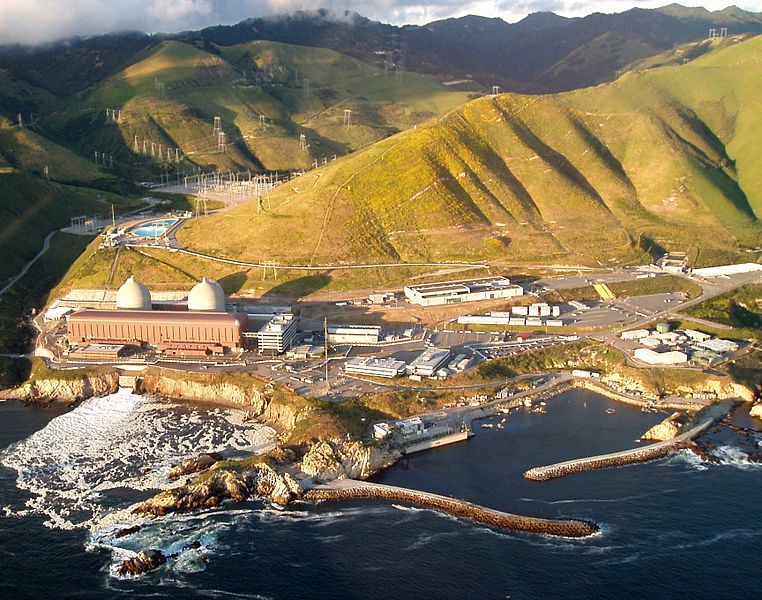
Michigan’s dead old nuke is Diablo’s early warning
| |||
|
https://www.downwithtyranny.com/post/michigan-s-dead-old-nuke-is-diablo-s-early-warning-by Harvey Wasserman, 27 May 22,
Michigan’s Palisades nuke has just shut early for the same reason California’s two reactors at Diablo Canyon must now go down– immediate safety concerns at a badly deteriorated reactor. Safe energy activists fought for decades to close Palisades. Opened in 1971, it was costly, wasteful and grew increasingly dangerous as it inevitably decayed. Finally scheduled to close on May 31, Entergy– one of America’s biggest nuke operators– stunned the world by taking it down on May 20, reducing the US reactor fleet from 93 to 92.
Cause for shut-down was a defect in the plant’s vital control rod mechanism. The alarm bells were global. Simply put: with 11 days left on the clock, the deeply entrenched Entergy Corporation was worried enough about its most bitterly contended reactor’s rotted internals to pull the plug early.
With a 51-year-old reactor now in the graveyard, what else are they not telling us? And what have they admitted about the rest of the nation’s reactor fleet, which averages 39 years of age?
Such safety concerns are equally vital at Diablo Canyon, whose two reactors opened in the mid 1980s. The Nuclear Regulatory Commission’s own senior resident inspector, Dr. Michael Peck, has warned that Diablo’s twin nukes might not survive seismic shocks from the dozen-plus fault lines surrounding the site. The San Andreas is just 45 miles away; the shock that destroyed the four reactors at Fukushima was twice that distance. That quake may itself have set Fukushima I melting even before it was ever hit by a tsunami.
The energy industry and its shoot-from-the-hip supporters have long assured the world its uninsured reactors at Diablo must be safe because it’s regulated by the NRC. But Dr. Peck worked in his official capacity on a daily basis at the Diablo site for five years, and knew its dangers as well as anyone.
1 This Month



26 September – International Day for the Total Elimination of Nuclear Weapons


PLEASE OPPOSE HR 8255 AND S.3639 – bills would accelerate satellite deployment, with no environmental review or safeguards – https://ncstd5li.quorum.us/campaign/169331/
To see nuclear-related stories in greater depth and intensity – go to https://nuclearinformation.wordpress.com
-
Archives
- September 2026 (219)
- August 2026 (330)
- July 2026 (355)
- June 2026 (287)
- May 2026 (306)
- April 2026 (356)
- March 2026 (251)
- February 2026 (267)
- January 2026 (308)
- December 2025 (358)
- November 2025 (359)
- October 2025 (375)
-
Categories
- 1
- 1 NUCLEAR ISSUES
- business and costs
- climate change
- culture and arts
- ENERGY
- environment
- health
- history
- indigenous issues
- Legal
- marketing of nuclear
- media
- opposition to nuclear
- PERSONAL STORIES
- politics
- politics international
- Religion and ethics
- safety
- secrets,lies and civil liberties
- spinbuster
- technology
- Uranium
- wastes
- weapons and war
- Women
- 2 WORLD
- ACTION
- AFRICA
- Atrocities
- AUSTRALIA
- Christina's notes
- Christina's themes
- culture and arts
- Events
- Fuk 2022
- Fuk 2023
- Fukushima 2017
- Fukushima 2018
- fukushima 2019
- Fukushima 2020
- Fukushima 2021
- general
- global warming
- Humour (God we need it)
- Nuclear
- RARE EARTHS
- Reference
- resources – print
- Resources -audiovicual
- Weekly Newsletter
- World
- World Nuclear
- YouTube
-
RSS
Entries RSS
Comments RSS
 nuclear-news