Very high radiation risks amid shelling at the Zaporizhzhia nuclear power plant.

The head of Ukraine ‘s state nuclear power firm has warned of “very high”
radiation risks amid shelling at the Zaporizhzhia nuclear power plant.
Energoatom’s chief, Petro Kotin, said it was vital Kyiv regains control
over the facility in the Russian-occupied south in time for winter.
He added that last week’s shelling had damaged three lines that connect the
plant to the Ukrainian grid and that Russia wanted to connect the facility
to its grid. Some of the shelling landed near storage facilities for spent
fuel, an area that has 174 containers of highly radioactive material, Kotin
said. He warned of the dangers of them being hit, saying: “This is…the
most radioactive material in all the nuclear power plant.
Mirror 10th Aug 2022
https://www.mirror.co.uk/news/world-news/ukraines-nuclear-chief-warns-very-27702181
“Shell” companies purchase radioactive materials, prompting push for nuclear licensing reform

Defense News, By Bryant Harris, 10 Aug 22,
WASHINGTON – Late last year, government employees forged a copy of a license to buy hazardous, radioactive material. They created shell companies, then placed orders, generated invoices and paid two U.S.-based vendors.
The scheme worked. The employees successfully had the material shipped, complete with radioactive stickers on the side, then confirmed delivery.
But the workers were actually investigators from the Government Accountability Office, the congressional watchdog, and they were testing the Nuclear Regulatory Commission’s ability to regulate the sale and procurement of dangerous materials.
The act, and a subsequent report from the GAO, alarmed Rep. Ritchie Torres, D-N.Y., who is now calling on the Nuclear Regulatory Commission to overhaul its licensing system as a way to avoid a national security disaster.
“Anyone could open a shell company with a fraudulent license to obtain dangerous amounts of radioactive material that could be weaponized into a dirty bomb,” Torres told Defense News in an interview on Wednesday. “Disperse radioactive material in a city as densely populated as New York, and it could cause catastrophic damage.”
The commission classifies radioactive material into five categories of risk. Only categories one and two currently are subject to its independent license verification system – a loophole that Torres and the GAO fear that an individual or group could exploit to wreak havoc by building a dirty bomb that combines combines conventional explosives with category three radioactive materials.
Torres, who sits on the House Homeland Security Committee, is pressing the NRC to immediately expand its independent license verification system to include category three quantities of radioactive materials. He formally made the licensing overhaul request in a letter seen by Defense News on Wednesday. This request is in line with the GAO’s recommendations in what Torres called an “alarming report.”………………………
more https://www.defensenews.com/congress/2022/08/10/shell-companies-purchase-radioactive-materials-prompting-push-for-nuclear-licensing-reform/
Attacking a nuclear plant ‘suicidal,’ UN chief tells journalists in Japan

- UN News, 8 Aug 2022 Relief Web
UN Secretary-General António Guterres condemned a recent attack on a nuclear power station in southern Ukraine during a meeting in Tokyo on Monday with the Japan National Press Club.
“Any attack to nuclear plants is…suicidal,” the UN chief said, adding that he hoped that the UN International Atomic Energy Agency (IAEA) would be able to access the plant for inspection.
Both Moscow and Kyiv have denied responsibility for the strike on the Zaporizhzhia plant over the weekend.
While Europe’s largest nuclear power site has been under Russian control since the early days of the war, Ukrainian technicians are still running it…………………………….
During Monday’s news conference, the UN chief reiterated his warning over the use of nuclear weapons, saying that if used, the UN would probably be unable respond because “we might all not be here anymore”.
Against the backdrop that the world currently has 13,000 nuclear bombs while continuing to make huge investments into modernizing atomic arsenals, Mr. Guterres warned that after decades of nuclear disarmament efforts, we are “moving backwards”.
“Stop it,” he appealed, underscoring that the billions of dollars being leveraged into the arms race need to be used in “fighting climate change, fighting poverty, [and] addressing the needs of the international community”.
The Secretary-General will next be traveling to Mongolia and South Korea to discuss ways to address North Korea’s nuclear development.
‘Common sense’ restraint
When asked about China’s massive military exercises around Taiwan, Mr. Guterres said the UN “abides by a resolution of the General Assembly, the so-called One China policy”.
The dispute was sparked by a visit last week to island by US House Speaker Nancy Pelosi.
“We all want that resolution to correspond to a peaceful environment,” he said, calling for common sense and restraint to allow for an “extremely important” de-escalation. https://reliefweb.int/report/ukraine/attacking-nuclear-plant-suicidal-un-chief-tells-journalists-japan
Parts of Zaporizhzhia nuclear plant damaged when struck by shelling
Ukraine’s state nuclear agency, Enerhoatom, said parts of the captured
Zaporizhzhia nuclear plant were “seriously damaged” after a station
containing oxygen and nitrogen and an “auxiliary building” were struck by
shelling. There is now an increased risk of fire and radiation.
On Telegram, the agency said Saturday: “The Zaporizhzhia nuclear power plant
is operating at risk of violating the norms of radiation and fire
protection.” “There remains a risk of hydrogen leaking and radioactive
particles dispersing, and the risk of fire is also high,” Enerhoatom added.
Deutsche Welle 6th Aug 2022
https://www.dw.com/en/russia-ukraine-updates-parts-of-nuclear-plant-seriously-damaged/a-62729710
IAEA alarmed at danger to Zaporizhzhia nuclear plant as shelling continues in Ukraine war
The UN nuclear watchdog has called for an immediate end to all military
action near Ukraine’s Zaporizhzhia nuclear plant after it was hit by
shelling, causing one of the reactors to shut down and creating a “very
real risk of a nuclear disaster”. Rafael Mariano Grossi, director general
of the International Atomic Energy Agency, said he was “extremely
concerned” by reports of damage at the plant and called for IAEA experts
to be allowed to inspect the damage.
“I’m extremely concerned by the
shelling yesterday at Europe’s largest nuclear power plant, which
underlines the very real risk of a nuclear disaster that could threaten
public health and the environment in Ukraine and beyond,” he said. The
Ukrainian nuclear power company Energoatom said the attack had damaged a
power cable and forced one of the reactors to stop working, and that
“there are still risks of leaking hydrogen and radioactive substances,
and the risk of fire is also high”. The shelling “has caused a serious
risk for the safe operation of the plant”, Grossi said.
Observer 6th Aug 2022
Reuters 6th Aug 2022
Danger of nuclear weapons convoys on the UK’s M6

CAMPAIGNERS have again released photographs of a Ministry of Defence
convoy on the M6 – something they say ‘terrifies’ them. Members of
the Campaign for Nuclear Disarmament say they believe trucks making up the
convoy were transporting nuclear warheads.
The route they take uses the M6 through Cheshire, Warrington and St Helens to and from the atomic weapons establishment in Berkshire and the Trident nuclear weapons system base at
Coulport, in the West of Scotland. The convoy is believed to have been
parked at Weeton Barracks, near Kirkham in Lancashire, on the night of
Monday, July 25, after passing through Cheshire on the M6.
St Helens Star 4th Aug 2022
https://www.sthelensstar.co.uk/news/20601561.nuclear-weapon-convoy-m6-terrifies-campaigners/
Zaporizhzhia Nuclear Power Station “completely out of control” – IAEA

The U.N. nuclear chief warned that Europe´s largest nuclear power plant
in Ukraine “is completely out of control” and issued an urgent plea to
Russia and Ukraine to quickly allow experts to visit the sprawling complex
to stabilize the situation and avoid a nuclear accident.
Rafael Grossi, director general of the International Atomic Energy Agency, said in an
interview Tuesday with The Associated Press that the situation is getting
more perilous every day at the Zaporizhzhya plant in the southeastern city
of Enerhodar, which Russian troops seized in early March, soon after their
Feb. 24. invasion of Ukraine.
Daily Mail 3rd Aug 2022
A worsening situation of cracks in Britain’s ageing nuclear reactors
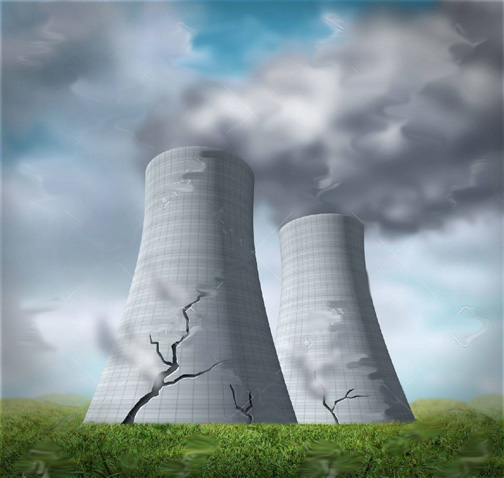
Today (10am, 1 August) Reactor 3 at the Hinkley Point B nuclear power
plant will cease generation for the last time. After the closure of Reactor
4 last month, this will finally bring all electricity production at the
Somerset site to a halt.
Although there were calls for the plant to be
granted a lifetime extension, recent revelations about the extent of
graphite core cracking at Hinkley Point B have convinced the Nuclear Free
Local Authorities that EDF Energy made the right call in sticking to its
closure plan, and the NFLA fears that core cracking will increasingly
compromise the safety of Britain’s remaining aging Advanced Gas Cooled
Reactors if their operating lifetimes are further extended.
In March 2014,
in response to a Freedom of Information request submitted via the Office of
Nuclear Regulation, EDF Energy reported that at their two oldest AGR
stations, Hunterston B (now closed) and Hinkley Point B, there were ‘less
than 10% cracked bricks in the reactor’. In 2017, the Office of Nuclear
Regulation made a major concession to EDF Energy by doubling the tolerances
so that it was now acceptable for a plant to operate with up to 20% of
graphite bricks cracked, rather than the original 10%.
However, in a
response dated May 2022 to a specific enquiry from the NFLA Secretary about
graphite cracking, it became clear that at Hinkley Point B even the raised
tolerance has been breached with the nuclear regulator reporting that in
Reactor 3, 28.8% of graphite bricks were observed to be cracked and in
Reactor 4, 22% with ‘a 99.9% confidence level’ of accuracy, with keyway
cracking observed in both.
Although overall cracking in the other AGRs is
presently reported to be under 10%, worryingly cracks in the vital keyway
bricks have been discovered at Heysham 2, Reactor 7 and at Torness, Reactor
1, which is the currently the last reactor scheduled to be closed in 2028,
suggesting a worsening situation.
NFLA 1st Aug 2022
Ukraine wants to export nuclear-generated electricity to European states – but is that safe?
Ukrainian Energy Minister German Galushchenko has a problem. His
government has tasked him with convincing the EU that the country’s nuclear
fleet is safe enough to export massive amounts of
electricity to the bloc in a bid to help fill Kyiv’s depleted coffers and
bring down eye-watering European power prices.
But the Russian occupation of several Ukrainian nuclear sites since the invasion — coupled with the
minister’s very public spats over safety with the International Atomic
Energy Agency (IAEA) — have raised European fears about the safety of
Ukraine’s power system.
Politico 2nd Aug 2022
https://www.politico.eu/article/ukraine-pitch-export-power-europe-nuclear-safety-snag/
Cracking in the graphite core of Advanced Gas Cooled Nuclear Reactors

Today (10am, 1 August) Reactor 3 at the Hinkley Point B nuclear power plant
will cease generation for the last time. After the closure of Reactor 4
last month, this will finally bring all electricity production at the
Somerset site to a halt.
Although there were calls for the plant to be
granted a lifetime extension, recent revelations about the extent of
graphite core cracking at Hinkley Point B have convinced the Nuclear Free
Local Authorities that EDF Energy made the right call in sticking to its
closure plan, and the NFLA fears that core cracking will increasingly
compromise the safety of Britain’s remaining aging Advanced Gas Cooled
Reactors if their operating lifetimes are further extended.
Hinkley Point B was the first plant to be equipped with two Advanced Gas Cooled Reactors
(AGRs), entering service in 1976. Over 300 fuel channels and 10 layers of
graphite bricks make up the core of each AGR. EDF Energy has described the
graphite structure as ‘the major safety requirement of the core’.
Each graphite brick is loosely connected to its neighbouring bricks by graphite
‘keys’ and there are also ‘keyways’ at the top and bottom of each
brick. The continued integrity of the structure is vital to operational
safety as it provides pathways for the fuel rods, which generate the
fission reaction, to be loaded and for the control rods, which moderate the
reaction, to be inserted.
Although overall cracking in the other AGRs is
presently reported to be under 10%, worryingly cracks in the vital keyway
bricks have been discovered at Heysham 2, Reactor 7 and at Torness, Reactor
1, which is the currently the last reactor scheduled to be closed in 2028,
suggesting a worsening situation.
NFLA 1st Aug 2022
Beatty Nevada Nuclear waste explosions, in the desert.
Terry Southard 2 Aug 22,
Explosions of nuclear waste from pieces of decommissioned San onofre reactor, by San diego.The pieces of the reactor and the other waste from the San Diego, San Onofre reactor decommissioning, started blowing up in the desert outside beatty Nevada. Later the San onofre nuclear waste was dug up and transfered, to a nuclear waste facility outside salt lake city Utah. The explosions, were caused by the decay heat and pyrophoricty of the radionuclides, in the waste and that had accumulated on the reactor pieces.
We simply, don’t get to learn from the mainstream media, about these radioactive hazards.
New Mexico was on fire this summer. 800 thousand acres burned. So much nuclear waste and fallout, in New Mexico, from bomb building and testing. I would not be surprised, if there is a major uptick in lung cancers, and other cancers, in New Mexico in the next 5 years . Nuke bombs exploded under rivers in New Mexico, project gas buggy. Uranium waste catastrophes. Nuclear waste dumps in many places. Largest plutonium core operation in the world at Los Alamos, by Santa fe. Wipp plutonium dump, by Clovis.
These explosions were caused by parts of the decommisioned, highly radioactive pieces of the San onofre reactor, buried in Nevada for a few years. They had to dqqig them up, after the explosions and, moved them to utah. You would have thought, peopke in Utah, would have known better.
Steppenwolf just stick yur head into the sand, pretend that all is grand and everything will be ok
This will happen at other shoddy nuclear waste operations in the usa. Typically under-regulated, and under supervised by cheap and mismanaged, foreign owned nuclear waste management companies. Give them an inch and, they take a mile. They bribe state legislators and start taking in nuclear waste, from other countries. Countries like Japan and Estonia. That happened at the white mesa nuke waste operation, by blanding, utah. I think there is greater risk of wildfires, in the white mesa area, from the pryophoric effects of radionuclide dust from white mesa, blowing into surrounding areas.. There was a truck full of nuke waste owned by energy fuels, by Salt Lake City, that caught fire in 2018. The white mesa, energy fuel operation is trucking in nuke waste, from all over the world.
Radionuclides generate their own heat and can start fires on their own even in small amounts, like the plutonium did at rocky flats. That is why the US Armed forces, uses depleted uranium in bombs, bullets and, other munitions.
https://en.wikipedia.org/wiki/Rocky_Flats_Plant
https://www.osti.gov/biblio/515622
Wildfires and cancer
https://www.thelancet.com/journals/lanplh/article/PIIS2542-5196(22)00067-5/fulltext
More wildfires and cancer
https://www.upi.com/Health_News/2022/05/17/wildfires-cancer-risk-study/5531652723109/
Wildfires are increasing cancer rates in the World.
https://thescotfree.com/opinion/incident-at-santa-susana-a-meltdown-a-fire-and-a-cover-up/
Dead fish near SC nuclear fuel site were an early warning. Then came the spills and accidents
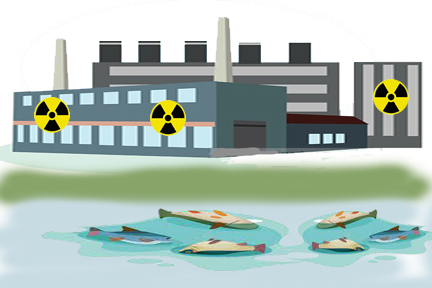
The State, BY SAMMY FRETWELL, JULY 30, 2022
Dead fish floated in a small pond near a nuclear fuel factory one day in 1980, raising concerns about the Columbia plant’s danger to the surrounding environment. A cocktail of contaminants had been documented in groundwater, which seeps into creeks and ponds, and it appeared that one of these pollutants — ammonia — had contributed to the fish kill in Gator Pond, according to environmental studies. It was a disturbing discovery that foreshadowed a variety of environmental and safety troubles the Westinghouse nuclear fuel plant would deal with over the next 40 years.
Since 1980, more than 40 environmental and safety problems have been tied to the Westinghouse plant, ranging from groundwater pollution to nuclear safety violations that endangered plant workers, according to a review of news accounts and public records by The State. Despite those issues, the U.S. Nuclear Regulatory Commission approved a final environmental study Friday that said the future environmental impact of the plant would be small to moderate. The NRC recommended a new license for the plant to operate for an additional 40 years, a decision that greases the skids for final license approval this fall.
John Grego, who is with the Friends of Congaree Swamp organization that supports Congaree National Park, said the fuel factory has had too many troubles of all kinds through the years. “The variety of problems is what troubles me, that this occurred in so many aspects of their culture,’’ Grego said. “It just seems to suggest systemic problems with the safety culture at Westinghouse. You had these long-standing problems that weren’t remediated, problems that weren’t reported.’’
Some of the pollution tied to Westinghouse was not known to the public or government regulators for years, which has incensed some Lower Richland residents who live near the plant. Some residents of the predominantly African-American community have said they were left out of the loop for too long.
Only in recent years, when a flurry of safety issues at the plant arose, did many people learn about past pollution. A key community concern is whether water pollution from the plant could one-day contaminate their drinking water wells. State regulators said mechanisms are now in place to hold Westinghouse more accountable, while resolving past environmental problems. The company struck a binding agreement with the state Department of Health and Environmental Control in 2019 to investigate and clean up pollution on the property. The company also is nearing completion of an investigative study of the site’s environmental problems, according to a statement Friday from DHEC.
……………………… Congaree Riverkeeper Bill Stangler was skeptical. Stangler said he is not confident Westinghouse will improve the operation, despite recent assurances and agreements with state regulators to clean up and do a better job. The plant is located near the Congaree River. “They have a long track record of problems at that facility that would raise anyone’s eyebrows,’’ Stangler said. “It’s concerning if you have an interest in the environment; it’s concerning if you are someone who lives in the surrounding area. Time after time we have seen that they haven’t followed the rules, and they have had problems.’’
………………………
Troubles at Westinghouse began in the 1970s, not long after the plant opened, when a wastewater pond leaked. But problems continued steadily after the 1980 fish kill, sometimes little known to the public. After the company reported a leak of uranium through a hole in the plant floor in 2018, federal and state regulators learned that the company had spilled toxins into the ground in 2008 and in 2011 without telling them or the public. The company said it was not required to report the spills. Contaminants such as fluoride, uranium, solvents and ammonia have been found in groundwater on the Westinghouse site. Technetium, a nuclear pollutant, also has been discovered on the soggy property, but no one has yet pinpointed the cause of the pollution.
Some of the biggest troubles at Westinghouse have revolved around nuclear safety inside the plant. The company has run into trouble through the years for failing to make sure nuclear materials it manages didn’t trigger small bursts of radiation, which can endanger workers. Records show the NRC has expressed concerns multiple times with Westinghouse over the issue, known as criticality safety
……………………… Government records also show that people working at the plant falsified records, including as recently as 2009. In some cases, employees have been injured or threatened by nuclear accidents.
…………………. News accounts and government records also show that Westinghouse has, at times, had trouble handling and keeping track of nuclear material it is responsible for…………………………………………. https://www.thestate.com/news/local/environment/article263945551.html
Westinghouse Nuclear Fuel Fabrication plant – a detailed history of troubles.

Dead fish near SC nuclear fuel site were an early warning. Then came the spills and accidents, The State, BY SAMMY FRETWELL, JULY 30, 2022
“……………………………………………………. 1980: State regulators learn of a fish kill near the Westinghouse wastewater plant. They found elevated levels of fluoride and ammonia-nitrogen in groundwater and surface water. It was later determined that the pollution came from the plant wastewater area. 1980: Twenty plant workers evacuated from Westinghouse after a small leak of uranium hexafluoride gas.
1982: Westinghouse unable to find 9.5 pounds of slightly enriched uranium, according to an NRC report. 1983: State regulators fine Westinghouse $6,000 for illegally shipping flammable material that caused a fire at Barnwell County’s low-level nuclear waste dump. 1988: Radioactivity found in monitoring wells is thought to have come from prior leaks of industrial wastewater. Low concentrations of Uranium 235, 234 and 238 found.
1989: EPA investigators find an array of pollutants in groundwater at the Westinghouse site, some higher than safe drinking water levels. Vinyl Chloride and TCE, both of which can cause cancer, were found to exceed the drinking water standard. 1989: Twenty five dead deer discovered at the Westinghouse property, some of them in an area where wastewater was being discharged near the Congaree River. The deer reportedly died from nitrate poisoning, but public records reviewed by The State do not show an exact cause. 1992: Trichloroethene (TCE), cis-1,2-dichloroethene (CIS 1,2 DCE) and tetrachloroethene (PCE), are detected at amounts above the federal maximum contaminant level for safe drinking water. The high levels were found near the plant’s oil house.
1993: NRC fines Westinghouse $18,750 after alleging that the company failed to perform a criticality safety analysis and failed to conduct safety tests. 1994: Radioactive leak exposes 55 workers to uranium hexafluoride and shuts down the Westinghouse plant. 1997: The plant loses two low-enriched fuel rods. The NRC says five violations of NRC requirements occurred. Safety was not compromised, but problems “are indicative of inadequate management attention.’’
1998: Company fined $13,750 after NRC notes the “loss of criticality control,’’ a problem that could have led to an accident. The agency says a problem had gone uncorrected. 2000: NRC hits Westinghouse with a violation notice because an operator “willfully violated criticality safety procedures when preparing to mix a batch of powder.’’ 2000: Uranyl nitrate spills at the Westinghouse plant, causing a cleanup. When the cleanup began, workers found the spill was worse than originally thought.
2001: NRC hits Westinghouse with a violation for transporting 3 cylinders of licensed material with elevated radiation levels. 2001: Westinghouse fails to follow criticality safety rules at a uranium recovery area dissolver elevator, violation notice says. Containers were not stacked far enough apart, reducing safety. Westinghouse didn’t do enough to fix the problem. 2001: NRC issues a violation notice to Westinghouse after raising concerns about criticality safety, including failing to keep uranium powder mixing hoods properly separated.
2001: NRC hits Westinghouse with violation after criticality safety controls failed to work on the ammonium diurnate process lines. 2002: NRC letter tells Westinghouse that its criticality safety control efforts need improvement. NRC Regional Administrator Luis Reyes says the last two safety reviews have urged improvement for criticality safety. Letter notes concern about nuclear transportation program. 2002: NRC notice of investigation says a contractor for Westinghouse falsified records about the receipt and processing of materials. That resulted in a small amount of nuclear material being improperly shipped to nuclear site in Tennessee. 2004: NRC again raises concerns about criticality safety, the practice of making sure a nuclear chain reaction does not occur. Efforts to improve compliance with procedures and “implement criticality safety controls were not fully effective,’’ letter from regional administrator Luis Reyes says.
2004: NRC letter hits Westinghouse with a $24,000 fine. The company failed to maintain criticality controls as required. Ash in the company’s incinerator exceeded concentration limits for uranium. The Level 2 violation is, at the time, the most serious ever noted at the plant. 2008: Broken pipe spills radioactive material into the soil in the same area as a later 2011 leak, but Westinghouse doesn’t tell state or federal regulators for years. 2008: The NRC sanctions Westinghouse for losing sixteen sample vials of uranium hexafluoride. The company didn’t properly document and control the transfer of the vials and failed to secure them from “unauthorized removal.’’ 2008: Westinghouse hit with a violation notice after a worker disabled an alarm and bypassed a safety significant interlock.
2009: Westinghouse fires a contract foreman after federal regulators found that he had falsified records. Westinghouse also was cited by the NRC. The foreman certified that employees were trained in safety procedures, when they had not completed training.
2009: Westinghouse loses 25 pounds of pellets that were to be used in making nuclear fuel rods. NRC downplays danger but says Westinghouse should have kept better track of the nuclear material.
2010: NRC levies $17,500 fine against Westinghouse after uranium-bearing wastewater spilled inside the plant.
2011: Uranium leaks into ground beneath the Westinghouse plant, but federal inspectors weren’t told about it for years. NRC officials said they only learned about the spill in 2017.
2012: Worker exposed to uranium-containing acid and whisked to a hospital by emergency medical crews. The worker was treated for pain and released.
2012: Westinghouse fails to follow through on a report to improve the facility so it could better withstand an earthquake, NRC says. Recommendations had been made nine years previously.
2015: Three workers are injured when steam erupted from a wash tank. The workers are taken to a Columbia area hospital for treatment and later sent to the burn center in Augusta, which specializes in treating severe burns.
2016: A buildup of uranium that could have led to a small burst of radiation forces Westinghouse to shut down part of the fuel plant and temporarily lay off 170 workers, about one-tenth of its work force at the plant. The uranium found in the scrubber area is nearly three times the legal limit.
2017: Westinghouse worker exposed to a solution toxic enough to cause chemical burns when the solution sprayed him. 2018: Uranium leaks into the ground through a hole in the Westinghouse plant floor. An acid solution had eaten into the floor. Soil was contaminated.
2018. The NRC says Westinghouse allowed workers to walk across a protecting liner for years, which likely weakened the liner and contributed to a hole in the floor that allowed uranium solution to leak out.
2019: Fire breaks out in a drum laden with mop heads, rags and other cleaning equipment.
2019: State and federal authorities report that water had leaked through a rusty shipping container and onto barrels of uranium-tainted trash. Contaminants then leaked into the soil below the shipping container floor.
2019: Westinghouse sends three workers to the hospital after they complained of an unusual taste in their mouths while doing maintenance on equipment that contains hydrofluoric acid.
2019: Two contaminated barrels are shipped from the Westinghouse plant to Washington State after workers in South Carolina failed to properly examine the containers for signs of radioactive contamination.
2020. The NRC issues violation against Westinghouse, this time after questions arose about nuclear safety. The issue centered on improper security of tamper seals, used to keep nuclear material from being stolen.
2020. NRC reports finding 13 pinhole leaks in a protective liner.
2020: South Carolina officials raise concerns about earthquakes at Westinghouse.
Sources: NRC records and news reports from The State. https://www.thestate.com/news/local/environment/article263945551.html
Hinkley Point B nuclear power station to close permanently, due to safety concerns
Hinkley Point B closure adds to strain on Britain’s power supplies. The
nuclear plant is due to stop generating power on Monday,… Hinkley Point B, near Bridgwater in Somerset, will stop generating at 10am on Monday morning, 46 years after it first
sent power to the grid. It is closing due to age, with hairline cracks appearing in its graphite
bricks. EDF said it was too late to try and keep it open for winter, given the detailed safety case required.
Telegraph 30th July 2022
U.N. nuclear conference to start Monday as Ukraine’s Zaporizhzhya plant in “alarming” state, watchdog says
BY PAMELA FALK, JULY 29, 2022 / CBS NEWS United Nations — On Monday, International Atomic Energy Agency (IAEA) chief Rafael Grossi, U.S. Secretary of State Antony Blinken and U.N. Secretary General Antonio Guterres will be among those expected to gather at United Nations headquarters in New York for the tenth annual review of the Nuclear Non-Proliferation Treaty. The meeting comes as the IAEA is being denied U.N. help to access Ukraine’s Zaporizhzhya Nuclear Power Plant, the largest nuclear plant in Europe, which has been occupied by Russia since the early days of the war, and which the watchdog agency says is in an “alarming” state.
“It is urgent,” Grossi said in the latest IAEA report. “I’m continuing my determined efforts to agree and lead a safety, security and safeguards mission to the site as soon as possible.”
Ukraine’s nuclear power facilities at risk
Alarm bells went off, figuratively, in early March at the Vienna offices of the International Atomic Energy Agency, an autonomous agency within the U.N. system, when Russian forces took control of the Zaporizhzhya plant and Ukraine informed the agency that Ukrainian staff was operating the plant under Russian command………………………………………….
Most of the Russian delegation has received their visas to attend the conference, and a Ukrainian delegation will be present. Analysts say it will be an ideal time to map out a safety plan.
Ukraine’s nuclear power plants are a priority and “the range of bad scenarios is unnerving,” Richard Gowan, U.N. director for the International Crisis Group think-tank, told CBS News.
“Nuclear plants getting hit by missiles or artillery, nuclear material going missing, key workers unable to service the plants, it’s a long list,” Gowan said. “The fact that you have nuclear power stations right in the middle of a large-scale conventional war of attrition is unprecedented.”
On Monday, Grossi will be at U.N. Headquarters for two days to open the month-long conference, which will also deal with North Korea’s nuclear ambitions and the stalled Iran nuclear deal. https://www.cbsnews.com/news/un-nuclear-conference-ukraine-zaporizhzhya-plant/
1 This Month
Chernobyl: The Lost Tapes – A good documentary on Chernobyl on SBS available On Demand for the next 3 weeks– https://www.sbs.com.au/ondemand/tv-program/chernobyl-the-lost-tapes/2352741955560

of the week–London Campaign for Nuclear Disarmament

Tell the Ukrainian Government to Drop Prosecution of Peace Activist Yurii Sheliazhenko
To see nuclear-related stories in greater depth and intensity – go to https://nuclearinformation.wordpress.com
-
Archives
- April 2026 (152)
- March 2026 (251)
- February 2026 (268)
- January 2026 (308)
- December 2025 (358)
- November 2025 (359)
- October 2025 (376)
- September 2025 (257)
- August 2025 (319)
- July 2025 (230)
- June 2025 (348)
- May 2025 (261)
-
Categories
- 1
- 1 NUCLEAR ISSUES
- business and costs
- climate change
- culture and arts
- ENERGY
- environment
- health
- history
- indigenous issues
- Legal
- marketing of nuclear
- media
- opposition to nuclear
- PERSONAL STORIES
- politics
- politics international
- Religion and ethics
- safety
- secrets,lies and civil liberties
- spinbuster
- technology
- Uranium
- wastes
- weapons and war
- Women
- 2 WORLD
- ACTION
- AFRICA
- Atrocities
- AUSTRALIA
- Christina's notes
- Christina's themes
- culture and arts
- Events
- Fuk 2022
- Fuk 2023
- Fukushima 2017
- Fukushima 2018
- fukushima 2019
- Fukushima 2020
- Fukushima 2021
- general
- global warming
- Humour (God we need it)
- Nuclear
- RARE EARTHS
- Reference
- resources – print
- Resources -audiovicual
- Weekly Newsletter
- World
- World Nuclear
- YouTube
-
RSS
Entries RSS
Comments RSS
 nuclear-news