‘It can’t go on like this’: Power restored to Ukrainian nuclear plant but situation untenable, says IAEA
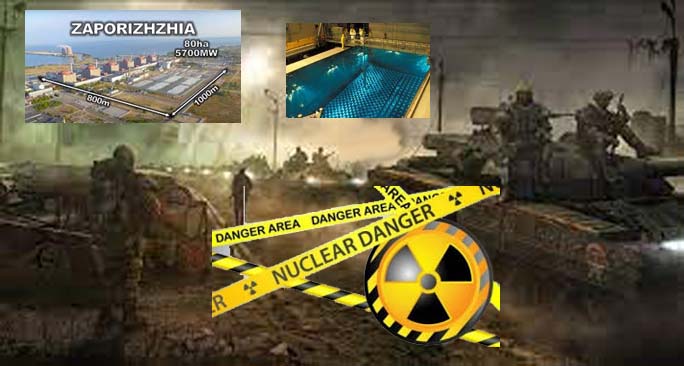
External power has been restored to Ukraine’s Zaporizhzhya Nuclear Power Plant (ZNPP) two days after it
experienced a complete blackout amid Russian shelling, the UN’s
International Atomic Energy Agency (IAEA) said on Saturday. Both of the
plant’s external power lines, a 750kV line and a 330kV back-up line, were
repaired on Friday, re-establishing power to the plant’s six reactors by
10pm.
The reactors have been shut down, although reactors 5 and 6 are in
semi-hot shutdown to provide steam to the site, and arrangements are being
made to further heat-up units 5 and 6 to achieve a “hot shutdown”
state. The other four units in Europe’s biggest nuclear plant remain in
cold shutdown. Ukrainian staff have operated the plant under Russian
occupation since March. The IAEA has had four experts embedded among the
Ukrainian staff since 5 September. It rotated a new team in on Thursday.
Last week, shelling damaged the last two high-voltage lines
connecting ZNPP to the country’s grid, putting it in full blackout mode and
necessitating the activation of all 20 of its diesel back-up generators.
The IAEA said the lines were damaged some 50-60 kilometres from the plant
in Ukrainian-controlled territory.
“The repeated power outages all too clearly demonstrate the extremely serious nuclear safety and security
situation this major nuclear power plant is facing,” said IAEA director
general Rafael Mariano Grossi. He continued: “So far, the brave staff of
the Zaporizhzhya Nuclear Power Plant have always managed to maintain the
safe operation of the six units. But it can’t go on like this. I have
repeatedly called for the urgent establishment of a nuclear safety and
security protection zone around the Zaporizhzhya Nuclear Power Plant to
prevent a nuclear accident. We can’t afford to lose any more time. We must
act before it is too late.”
Global Construction Review 7th Nov 2022
A disaster waiting to happen’: British nuclear-armed sub resurfaces after fire onboard
https://cnduk.org/a-disaster-waiting-to-happen-british-nuclear-armed-sub-resurfaces-after-fire-onboard/?fbclid=IwAR3t-FcdURBZY22Nmf7daG7zZm1F4OTGwxQEQ8hvq0X6RMAt6N9X6OdUgsE A Royal Navy nuclear-armed submarine had to abandon its mission and resurface, after a fire broke out onboard following an electrical fault.
The Ministry of Defence said the incident on HMS Victorious happened six weeks ago. The blaze broke out in an electrical component in one of the submarine’s systems but carbon dioxide injectors built into the module extinguished it. However, all crew were scrambled to tackle the fire and look for others and the sub’s commander had to surface the vessel in the North Atlantic. After the fire was contained, Victorious returned to port at Faslane in Scotland.
Victorious is one of Britain’s four Vanguard-class nuclear-armed submarines with one vessel constantly on patrol ready to launch a nuclear strike. The MoD said the sub wasn’t on patrol during the time of the fire and was en route to the US for wargames.
News of the incident comes after it was revealed in September that another vessel, HMS Vanguard, would remain in dry-dock for the foreseeable future after more technical issues were discovered. Vanguard has been in deep maintenance since 2015 at a cost of £500 million. The delay has compounded problems for the Royal Navy – whose so-called “Continuous at-Sea Deterrence” is reportedly operating at half capacity.
Meanwhile, a whistleblower told STV that staff working at Royal Naval Armaments Depot (RNAD) Coulport – the base where Britain’s nuclear weapons are stored – had to be evacuated due to a “serious radiation breach.”
CND General Secretary Kate Hudson said: “The revelations about HMS Victorious further underline the risks that these weapons present – a disaster waiting to happen. The fact that the sub had to surface and expose itself illustrates both how fallible the technology is and how baseless the myth of ‘invisibility’. The news from Coulport reinforces these concerns. Meanwhile, billions of pounds are being pumped into maintaining these vessels and warheads and billions more in developing news ones. It’s time to stop this irresponsible waste before a real tragedy occurs.”
Incident at France’s Civaux nuclear reactor adds to EDFs problems of stress corrosion crackingin nuclear plants
Stress corrosion cracking: Assessing and remedying cracking problem in
nuclear plants. The full extent of stress corrosion cracking at EDF’s
reactors in France has still to be determined. Nonetheless, lower
production as plants are re-examined has come at the worst possible time
for the company.
Electricite de France SA is investigating an incident
during a test at a halted nuclear reactor last week, just as a series of
repairs jeopardize the country’s power-supply security for the coming
winter. The utility had to stop a high-pressure hydraulic test of the
primary circuit of its Civaux 1 reactor on Nov. 2 when steam was released
in a room of the reactor building. The reactor wasn’t loaded with nuclear
fuel, no one was hurt nor contaminated, and no radioactivity has been
detected outside the building, according to EDF.
The impact of the incident, which is unrelated to so-called stress-corrosion cracks that have
undermined the French nuclear giant’s reactor availability, still needs to
be assessed, Regis Clement, EDF’s deputy-head for nuclear production, said
at a news conference in Paris Tuesday.
The corrosion cracks hobbling EDF
reactors this year have put a hole in its finances and made France —
typically an exporter of power to its neighbors — a net importer. That,
combined with Russia’s dwindling gas deliveries, has contributed to a spike
in energy prices across Europe and stoked concerns of shortages in case of
a windless cold snap this winter.
Bloomberg 8th Nov 2022
EDF Nuclear Reactor Has Test Incident, Deepening Supply Concerns
EDF Nuclear Reactor Has Test Incident, Deepening Supply Concerns, https://www.bloomberg.com/news/articles/2022-11-08/edf-nuclear-reactor-has-test-incident-deepening-supply-concerns#xj4y7vzkg By Francois De Beaupuy, November 9, 2022,
Electricite de France SA is investigating an incident during a test at a halted nuclear reactor last week, just as a series of repairs jeopardize the country’s power-supply security for the coming winter.
The utility had to stop a high-pressure hydraulic test of the primary circuit of its Civaux 1 reactor on Nov. 2 when steam was released in a room of the reactor building. The reactor wasn’t loaded with nuclear fuel, no one was hurt nor contaminated, and no radioactivity has been detected outside the building, according to EDF.
The impact of the incident, which is unrelated to so-called stress-corrosion cracks that have undermined the French nuclear giant’s reactor availability, still needs to be assessed, Regis Clement, EDF’s deputy-head for nuclear production, said at a news conference in Paris Tuesday.
The corrosion cracks hobbling EDF reactors this year have put a hole in its finances and made France — typically an exporter of power to its neighbors — a net importer. That, combined with Russia’s dwindling gas deliveries, has contributed to a spike in energy prices across Europe and stoked concerns of shortages in case of a windless cold snap this winter.
The French nuclear giant so far is keeping the Jan. 8 restart date for Civaux 1 unchanged. It aims to have about 42 of its 56 reactors online in December as repairs at a dozen sites affected by cracks progress, up from 30 on Tuesday morning, Clement said. That number is due to rise to 46 in January.
At Civaux, where heavy repairs of corrosion cracks have been completed, an inner insulation tube of a pipe used to introduce sensors in the reactor vessel was ejected in a room beneath the reactor during the pressure test, Clement said. That’s because equipment installed specifically for the test phase broke, he said.
EDF will send a robot in coming days to put the long radioactive tube in a container, he said. Employees will then be able to access the room, close a valve, and assess damage caused by water that’s still flowing into the room and into a special drain, Clement added.
“It’s way too early to say” how that will affect the restart of the reactor, he said.
Fire on nuclear-armed submarine
A ROYAL Navy submarine which was fully armed with nuclear missiles was
forced to abort a highly sensitive operation after a fire broke out beneath
the waves.
NW Evening Mail 8th Nov 2022
https://www.nwemail.co.uk/news/23110182.barrow-built-hms-victorious-catches-fire-sea/
Attacks on Ukrainian nuclear-power plants challenge treaties, and raise other safety concerns

Researchers and policymakers must ask new questions. Are other locations at risk, given the projected global growth in nuclear energy?
As the crisis at the Zaporizhzhia plant worsens, international agreements need to be extended to ensure nuclear safety during war.
Nature Anthony Burke, 3 Nov 22,
This year marked the first time in which civilian nuclear-power facilities have come under attack during war. As Russian armed forces pushed into Ukraine in February, troops took control of the Chernobyl nuclear exclusion zone, where hundreds of people still manage the aftermath of the catastrophic 1986 meltdown. Thousands of vehicles stirred up radioactive dust as they moved towards Kyiv. Russian soldiers worked and slept in the deadly ‘red zone’ near the abandoned city of Pripyat.
In March, Russian armoured vehicles and tanks took control of the Zaporizhzhia power station — Europe’s largest nuclear power plant. Conditions rapidly deteriorated. Today, all six reactors are shut down. In August, Russia used artillery located at the plant to shell the city of Nikopol, provoking counterattacks from Ukrainian forces. As witnessed by an International Atomic Energy Agency (IAEA) team sent to report on the situation in September, shelling has disconnected main power lines, knocked out radiation-detection sensors and damaged water pipes, walkways, the fire station and the building housing fresh nuclear fuel and solid radioactive waste1. More power losses in October left backup diesel generators as the only electricity supply to keep fuel rods cool. External power was restored, only to be disrupted again by a landmine explosion. One wrong move, and another Chernobyl could be possible.
The international community must urgently address the inadequacy of nuclear-safety architecture, policy and preparedness.
The powers of the IAEA are limited. It has responded in a rapid and principled way to the crisis in Ukraine, after being unable to prevent the Fukushima disaster following the Tohoku earthquake in Japan in 2011. But the international Convention on Nuclear Safety — one of several treaties that the IAEA serves to reinforce — was never designed to grapple with the nightmare of nuclear-power stations coming under military attack. As a ‘soft-law’ instrument, it allows states to create their own regulatory mechanisms with weak international oversight.
Researchers and policymakers must ask new questions. Are other locations at risk, given the projected global growth in nuclear energy? How do Russia’s actions in Ukraine challenge the world’s commitment to the ‘peaceful uses’ of nuclear energy and to international mechanisms for countering nuclear-weapons proliferation? Can current treaties be adapted, or is a more robust legal architecture and rapid-response capability required? And how can political obstacles be overcome?
Unsafe conditions
Conditions at Zaporizhzhia are “not sustainable and could lead to increased human error with implications on nuclear safety”, the IAEA warned in September1. Ukrainian plant staff are working under duress after Rosatom, the Russian energy company, took control and a Russian holding company was established. Energoatom, Ukraine’s state nuclear-energy company, has reported that the plant’s deputy director and head of human resources have been detained and that others are being pressured to sign contracts with Rosatom. The plant’s director, Igor Murashov, was earlier arrested by Russian forces, interrogated and expelled from Russian-held territory.
The integrity of reactor cores and storage pools is the main concern. If fuel rods are exposed, a core meltdown and uncontrolled release of radiation is likely, as happened at Fukushima, Chernobyl and Three Mile Island in Pennsylvania in 19792. “And so, one mine or one missile or whatever”, warned Ukraine’s energy minister Herman Halushchenko, “could stop the working of the generators and then you have one hour and probably 30 minutes, not more than 2 hours, before the reaction starts.”
Russian control of the plant also delayed the IAEA from conducting its required annual inspection, which is crucial for ensuring safety and verifying the secure disposal of nuclear fuel and preventing its diversion for military uses1.
Nuclear-power plants elsewhere in Ukraine are also under threat. Shelling has been reported at the Khmelnytskyy plant in Netishyn, and cruise missiles have overflown the South Ukraine plant in Yuzhnoukrainsk. And Ukraine’s energy infrastructure across the country is coming under attack, including substations linked to nuclear plants.………………………………….
‘Swarm’ of drones spotted flying above UK nuclear plant

https://metro.co.uk/2022/10/31/swarm-of-drones-spotted-flying-above-uk-nuclear-plant-17666304/ Josh Layton 31 Oct 2022,
Up to six drones were seen flying over a nuclear plant, it has been revealed.
The unidentified aerial vehicles (UAVs) spotted above the Capenhurst facility in Cheshire were reported to the Civil Nuclear Constabulary (CNC).
The sighting – logged as a ‘report of 5 – 6 drones flying over and around the site’ – was one of two in the space of four days in 2019.
A note on the second incident simply states: ‘Report of a drone overflying the site.’ A log previously released by the government suggested that there had been a ‘swarm’ incident – where interlinked drones take part in the same operation or attack – at an unnamed nuclear facility.
Capenhurst enriches toxic uranium, allowing nuclear plants around the world to generate electricity.
The sightings were among 11 reports of ‘unauthorised aerial incursions’ at UK nuclear facilities between May 2019 and last November. The latest was at Springfields, near Preston.
Peter Burt, of the Drone Wars UK website, said: ‘Some of the incidents are probably just cases of careless flying by individual drone operators. But others, if accurate, seem far more malicious in their intent, such as the report of several drones flying over and around the Capenhurst uranium enrichment site in July 2019.’
The reports come at a time of heightened tensions between the West, China and Russia, which have both been linked to physical and cyber spying operations in the UK.
A spokesman for the CNC said: ‘To our knowledge, there has been no confirmed malicious use of a drone in relation to the UK’s civil nuclear sites.’
Bulgarian nuclear reactor shut down after technical glitch
Tsvetelia Tsolova Reuters, OCT 30, 2022, SOFIA, Oct 30 (Reuters) – Bulgarian nuclear power plant Kozloduy has shut down its 1,000 megawatt Unit 6 late on Saturday following a technical problem in with the cooling system of the unit’s power generator, its spokesperson said on Sunday………………. more https://www.nasdaq.com/articles/bulgarian-nuclear-reactor-shut-down-after-technical-glitch
Every nuclear power plant is a ‘dirty bomb’ in waiting: watchdog

https://www.alternet.org/2022/10/a-dirty-bomb-in-waiting/ Brett Wilkins and Common Dreams October 26, 2022, With Ukraine and Russia each trading renewed accusations that the other is planning to weaponize Ukrainian atomic reactors, a leading anti-nuclear group warned Wednesday that all such power plants have the potential to become radioactive “dirty bombs.”
“Like all nuclear power plants, Ukraine’s reactors are inherently dangerous pre-deployed nuclear weapons,” Maryland-based Beyond Nuclear said in a statement. “Nuclear power plants—and their mounting inventory of high-level nuclear waste—are inherently dangerous and their use should be permanently discontinued.”
The group’s warning comes as Russian officials this week doubled down on unfounded allegations that Ukraine is planning to weaponize a nuclear reactor, while Ukrainian officials accused Russia of carrying out secret construction work at the occupied Zaporizhzhia Nuclear Power Plant, the largest such facility in Europe.
Russia’s August shelling of Zaporizhzhia, as well as last month’s Russian missile strike a few hundred meters from the South Ukraine Nuclear Power Plant near Yuzhnoukrainsk, have raised eyebrows and alarm among nuclear experts and other observers around the world. Experts also fear that possible Russian destruction of Ukrainian dams and other hydroelectrical infrastructure could leave the Zaporizhzhia plant without enough water to cool its reactors.
“The reality all of this exposes is that nuclear power plants are inherently dangerous with their large inventories of radioactive materials that must be protected for hundreds to thousands of years from escaping into the environment,” Paul Gunter, Beyond Nuclear’s director of reactor oversight, said in Wednesday’s statement.
With Ukraine and Russia each trading renewed accusations that the other is planning to weaponize Ukrainian atomic reactors, a leading anti-nuclear group warned Wednesday that all such power plants have the potential to become radioactive “dirty bombs.”
“Like all nuclear power plants, Ukraine’s reactors are inherently dangerous pre-deployed nuclear weapons,” Maryland-based Beyond Nuclear said in a statement. “Nuclear power plants—and their mounting inventory of high-level nuclear waste—are inherently dangerous and their use should be permanently discontinued.”
The group’s warning comes as Russian officials this week doubled down on unfounded allegations that Ukraine is planning to weaponize a nuclear reactor, while Ukrainian officials accused Russia of carrying out secret construction work at the occupied Zaporizhzhia Nuclear Power Plant, the largest such facility in Europe.
Russia’s August shelling of Zaporizhzhia, as well as last month’s Russian missile strike a few hundred meters from the South Ukraine Nuclear Power Plant near Yuzhnoukrainsk, have raised eyebrows and alarm among nuclear experts and other observers around the world. Experts also fear that possible Russian destruction of Ukrainian dams and other hydroelectrical infrastructure could leave the Zaporizhzhia plant without enough water to cool its reactors.
“The reality all of this exposes is that nuclear power plants are inherently dangerous with their large inventories of radioactive materials that must be protected for hundreds to thousands of years from escaping into the environment,” Paul Gunter, Beyond Nuclear’s director of reactor oversight, said in Wednesday’s statement.
“The only reason there is such justifiably high anxiety right now about the possibility of these plants being used as dirty bombs—as well as the very real threat of a missile attack—is because of the lethal radioactivity that would be released, sickening and killing countless people and contaminating land and water indefinitely,” Gunter continued. “This sends a clear message that using this already highly expensive form of electricity generation is, and was always, a mistake.”
Cracks found in all four Olkiluoto Nuclear 3 feedwater pumps
WNN, 28 October 2022, Cracks of a few centimetres have been identified in all four of the feedwater pumps of the Olkiluoto 3 EPR in Finland. Operator Teollisuuden Voima Oyj (TVO) said it does not yet know the impact this will have on the schedule for the plant’s commissioning.
On 18 October, TVO announced that damage had been discovered in the internals of the feedwater pumps located in the plant’s turbine island during maintenance and inspection work.
The feedwater pumps are Olkiluoto 3’s largest pumps and are used to pump water from the feedwater tank into the steam generators. TVO said the cracks detected in the pumps have no impact on nuclear safety.
The company noted the structure of the feedwater pumps located in Olkiluoto 3’s turbine island is commonly used in power plants. However, the pumps at OL3 have been designed for the plant unit’s operations and are larger in size.
“The investigation is currently ongoing in several laboratories,” TVO has now said. “The root cause of the cracks found in the pump impellers is still unknown.”……………………………. more https://www.world-nuclear-news.org/Articles/Cracks-found-in-all-four-OL3-feedwater-pumps
Ukraine’s Biggest Nuclear Plant Needs a Safety Zone
Atomic energy experts are calling for protections for the Zaporizhzhya plant, which has become a pawn in the war, thanks to power outages and nearby shelling.
Wired, Ramin Skibba, 28 Oct 22,
EUROPE’S LARGEST NUCLEAR power plant lies in the middle of a war zone, posing an ever-present risk of radiation leaks as the conflict following Russia’s invasion of Ukraine drags on. The most immediate dangers include the possibility of an errant missile or shell blowing up waste containers, or a protracted power outage that would prevent workers from keeping spent fuel rods cool, a situation that could eventually lead to a radioactive release……………………………….
To reduce tensions and safety risks at Zaporizhzhya, Grossi and the IAEA are calling for a “nuclear safety and security protection zone” around the plant, including its reactors, nuclear waste, spent fuel pools, and energy and cooling systems. Establishing this zone would mandate an end to shelling near the plant, and to military activities that can affect power supply systems. It also calls for the removal of military vehicles from areas where they could affect safety and security systems, and reestablishing an appropriate work environment for operating staff, with clear lines of responsibilities, so that the workers continue reporting to Ukrainian government officials, not Russian ones.
Earlier this month, Grossi met with Putin in St. Petersburg, and with Ukrainian president Volodymyr Zelensky in Kyiv, to make the case. “It is imperative to agree to this as soon as possible,” he said, according to an IAEA statement on October 18. Both leaders have signaled some interest in the plan: Zelensky has said he would back such a zone if it were aimed at demilitarizing the plant, while Putin told the state Tass news agency that Russia is open to dialog about all issues involving the plant’s operations.
Yet Ukraine’s push for a “demilitarized” zone would go further than the IAEA’s proposal by requiring Russia to completely withdraw its forces and effectively abandon the plant to Ukraine, which Russia is unlikely to do, says George Moore, a nuclear scientist at the Middlebury Institute of International Studies in Monterey, California.
Negotiating a ceasefire within a well-defined perimeter would be more politically achievable, he thinks. That would mean taking care to avoid firing mortars, missiles, or drone weapons anywhere in the area. “Hopefully good sense would prevail, but it hasn’t seemed to,” Moore says.
Until Ukraine and Russia reach an agreement, the plant remains in danger. “There’s no question: There should not be any military operations at the plant or in the vicinity of the plant,” says Ed Lyman, senior global security scientist at the Union of Concerned Scientists and coauthor of the book Fukushima: The Story of a Nuclear Disaster. But, he continues, while neither military’s soldiers have deliberately fired on the plant, anything can happen in the fog of war. A misfired weapon or a missile shot down in the wrong place could exacerbate an already dangerous situation. ………………………………………. more https://www.wired.com/story/zaporizhzhya-ukraines-biggest-nuclear-plant-needs-a-safety-zone/
FRANCE DISCOVERS OMINOUS CRACKS IN DOZENS OF NUCLEAR REACTORS
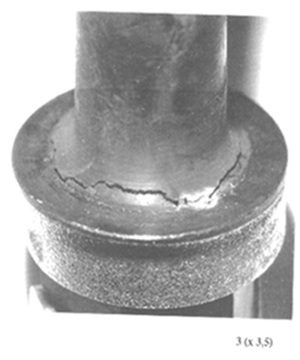
AND THE TIMING COULDN’T BE WORSE.
https://futurism.com/the-byte/france-cracks-dozens-reactors by MAGGIE HARRISON, 27 Oct 22,
Bad Reaction
Europe’s energy crisis may have just gotten worse.
The Wall Street Journal reports that dozens of France’s nuclear reactors — which, amid Russia’s devastating stranglehold on the continent’s natural gas supply, are essential to the nation’s energy security — remain offline following a series of troubling outages believed to be caused by stress-induced pipe corrosion. Fixes are reportedly taking longer than anticipated, but for a struggling continent on the brink of winter, those fixes can’t come quickly enough.
“It’s important that this work restarts as soon as possible,” Emmanuelle Wargon, head of France’s energy regulator, told the WSJ. “If not, the risk of not having electricity rises.”
High Pressure
The nuclear fleet in question, owned by the energy provider EDF, is comprised of 56 reactors, of which 26 are currently out for the count.
According to the WSJ, the pipe problems trace back to late last year, when a crack was discovered in a high-pressure pipe close to the reactor’s core at the nation’s youngest nuclear plant. Other plants, which then launched their own investigations, discovered their own stress corrosion issues shortly thereafter.
“It is only possible to identify [stress corrosion’s] presence once cracking has begun,” read a note from France’s Institute for Radioprotection and Nuclear Safety, the WSJ reports. “Regular inspections of the pipes can only identify the phenomenon once a fault is present.”
Importantly, these aren’t simple fixes. Because the majority of the cracks are so close to the reactor core, radioactivity is a very real threat for technicians, whose exposure has to be limited.
And given how complicated the repairs are, French power experts are reportedly quite pessimistic about the EDF’s ability to get their reactors back online for the winter, especially given that, per the WSJ’s sources, the timelines for several reactor fixes have already been pushed back by at least six weeks.
Beyond the Border
These outages are clearly terrible for France, but they’re just as bad for the rest of Europe, too.
Natural gas prices have skyrocketed as a result of the Russian invasion of Ukraine, which sparred a barrage of Western sanctions and Russia’s subsequent retaliation by way of natural gas restriction. Nations are asking a lot of their citizens, and the continent needs any ounce of energy that it can scavenge to at least somewhat comfortably — let alone safely — get through the winter.
READ MORE: France’s Nuclear Reactors Malfunction as Energy Crisis Bites [The Wall Street Journal]
More on Europe’s energy crisis: Europe’s Energy Crisis Is so Bad It May Have to Idle Cern’s Large Hadron Collider
“Present Danger: Nuclear Power Plants in War,” The US Army War College Quarterly: Parameters
what is still lacking, is a Pentagon assessment of what all this means militarily.
https://npolicy.org/present-danger-nuclear-power-plants-in-war-the-us-army-war-college-quarterly-parameters/ October 19, 2022, Author: Henry Sokolski
As the war in Ukraine drags on, daily developments at the Zaporizhzhia nuclear plant explode on our Google News screens. Last week, external power needed to prevent a core meltdown at the plant was cut off repeatedly, forcing reliance on emergency diesel generators.
Meanwhile, Russians have tortured, kidnapped, and killed Ukrainian staff at the plant to force them to renounce their loyalty to Ukraine and sign employment contracts with Rosatom, Russia’s electrical utility. Poland, Romania, Ukraine, Moldova, and Finland have all begun distributing iodine pills to reduce thyroid cancers if there is a loss of coolant accident at Zaporizhzhia and a radiological release that drifts their way.
And Washington’s response? Several senior US officials have condemned Russia’s assaults on Zaporizhzhia as being “irresponsible” and “dangerous.” Yet, well after Russia’s military assault on the plant, Westinghouse, the Energy and State Departments, and the President announced plans to construct nuclear power plants in Poland, Romania, and even Ukraine. No one has yet explained how or if these plants can be defended.
This is weird. Plants in Central Europe, like Zaporizhzhia, are not just electrical generators, they are stationary, potential slow-burning nuclear dispersal weapons that could conceivably trigger or even force a NATO response. Plants and such war zones present a real and present danger.
Late last month, the U.S. Army War College asked me to write a short piece on the military risks nuclear plants in war zones present. Attached, “Present Danger: Nuclear Plants in War,” is that analysis. It lays out a basic set of recommendations for the Pentagon.
Present Danger: Nuclear Power Plants in War
Zaporizhzhya’s nuclear plant, as of this writing, has been placed on cold shutdown. The plant and its military vulnerabilities, however, have generated some of the world’s most sensational headlines.1 Earlier this summer, online reports featured photographs of the plant’s damaged transformer, a system critical to assuring a steady supply of electricity to the plant’s all-important reactor coolant and safety systems. Throughout August and September, news organizations detailed how the plant’s external main power lines—built to keep electricity flowing to its reactors—had been cut. Some days, some of the plant’s six reactors were operating. Other days, none were. Repeatedly, the viability of the plant’s emergency diesel fuel electrical generators was “Topic A.”
Each of these stories raised the specter of a military-induced Fukushima: strikes against the plant or the power lines feeding into it that could cut off the electricity needed to run the reactors’ coolant pumps and safety equipment followed by nuclear fuel failures and a massive radiological release over Ukraine and its neighbors. Add to this firsthand accounts of Russian torture, the murder of “disloyal” Ukrainian reactor staff, and an emergency International Atomic Energy Agency visit, and you have everything needed for a Netflix docudrama.
What you would not have, however, and what is still lacking, is a Pentagon assessment of what all this means militarily.
Close friends have offered hints. Japanese Prime Minister Fumio Kishida called for stationing security forces at each of Japan’s nuclear plants, and his administration also suggested the possibility of deploying dedicated missile defense systems (as Belarus has done at its nuclear plant since 2019).2 Seoul crafted military exercises this year with US forces that included explosives detonating at one or more of South Korea’s civilian reactor sites.3 Ukrainian President Volodymyr Zelensky accused Russia of turning Zaporizhzhya into a prepositioned, slow-burning, radiation-dispersing “nuclear weapon.”4 Meanwhile, Tobias M. Ellwood, the British House of Common’s Select Committee on Defense chairman, insisted that if Russia intentionally struck Zaporizhzhya and spread harmful radioactivity to Poland or Romania, it would trigger NATO’s Article 5.5 Moldova, Romania, and Ukraine did more than talk. All three countries prepared to distribute iodine pills to their citizens (to reduce the thyroid cancers radiation might induce if Zaporizhzhya leaked radiation).6
Wikipedia, s.v. “Crisis at the Zaporizhizhia Nuclear Power Plant,” last modified September 14, 2022, https://en.m.wikipedia.org/wiki/Crisis_at_the_Zaporizhzhia_Nuclear_Power_Plant.- Eric Johnston, “Japan to Discuss Creating New Police Unit to Guard Nuclear Plants,” Japan Times (website), March 14, 2022, https://www.japantimes.co.jp/news/2022/03/14/national/nuclear-plant-police -unit/; and “TOR-M2 Air Defense Missile Systems to Protect Belarus Nuclear Power Plant,” Army Recognition (website), December 8, 2018, https://www.armyrecognition.com/december_2018_global_defense_security_army _news_industry/tor-m2_air_defense_missile_systems_to_protect_belarus_nuclear_power_plant.html.
- Sang-ho Song, “Upcoming S. Korea-U.S. Training Involves Drills on Repelling Attacks, Staging Counterattacks,” Yonhap News Agency (website), August 1, 2022, https://en.yna.co.kr/view /AEN20220801004000325.
- Rebecca Falconer, “Zelensky Says Russian Forces Using Zaporizhzhia Plant as ‘Nuclear Weapon,’ ” Axios (website), September 4, 2022, https://www.axios.com/2022/09/05/zelensky-russia-zaporizhzhia-plant -nuclear-weapon.
- Article 5 requires NATO members come to the defense of any other member that suffers a military attack. See Tobias M. Ellwood (@Tobias_Ellwood), “Let’s make it clear: ANY deliberate damage causing potential radiation leak to a Ukrainian nuclear reactor would be a breach of NATO’s Article 5. @thetimes,” Twitter, August 19, 2022, 1:55 a.m., https://twitter.com/Tobias_Ellwood/status/1560505699179925509?s=20& t=FYfhPvuxW0pHm8lwXfe99w.
- Josh Lederman, “Radiation Tablets Are Handed out near Ukrainian Nuclear Plants as Fears of a Leak Mount,” NBC News (website), August 26, 2022, https://www.nbcnews.com/news/world/russia-ukraine-war -zaporizhzhia-nuclear-plant-radiation-fears-iodine-rcna45041; Ben Turner, “Ukraine War: Moldova Ships in One Million Iodine Pills amid Fears of Nuclear Disaster,” Euronews (website), August 16, 2022, https: // www.euronews.com /2022 /08 /15 /moldova-ships-in-radiation-pills-as-fighting-rages-near-zaporizhzhia -nuclear-power-plant-i; and Helen Collis, “Romania to Issue Iodine Tablets as Russian War Continues in Neighboring Ukraine,” Politico (website), April 3, 2022, https://www.politico.eu/article/romania-to-issue -iodine-tablets-as-russian-aggression-continues-in-bordering-ukraine/.
Click here to read the full article.
A European scramble for nuclear energy is hampered by risks of terrorist and cyber attacks, as well as the wastes problem.

Fabian Lüscher, who heads the nuclearenergy section at the Swiss Energy Foundation (SES), says that Europe’s ageing nuclear fleet is not adapted to deal with contemporary terrorist attacks and cyberattacks. “You even have to think of those very unlikely possibilities when planning risky infrastructure,” Mr Lüscher argues. And then, of course, there’s the problem of nuclear waste.
Decisions around the future of nuclear energy are urgently needed in
Europe. Russian supplies of natural gas have been disrupted amidst the war
in Ukraine, energy prices have soared to emergency levels. Meanwhile, some
countries are suffering a lingering hangover from the Covid-19 pandemic.
In France, half of the clearcountry’s nuclear power plants are currently not
operating. The main reasons are corrosion, planned maintenance, and delayed
maintenance due to pandemic-linked staffing issues, explains Phuc Vinh
Nguyen, who researches European energy policy at the Jacques Delors Energy
Center in France. Mr Nguyen warns that across the EU the energy price
crisis will probably last until at least 2024.
In this situation, some see the use of nuclear reactors as a way to decouple from Russian natural gas.
Russian influence also looms over many aspects of nuclear power generation:
Russia dominates the supply of nuclear fuel, the enrichment of uranium, and
the building of nuclear power plants in other countries. At Leibstadt,
Switzerland’s largest and youngest nuclear power plant, half of the uranium
supply currently comes from Russia. There, as elsewhere, there’s a scramble
to source more uranium from outside the Russian sphere of influence.
Fabian Lüscher, who heads the nuclear energy section at the Swiss Energy
Foundation (SES), says that Europe’s ageing nuclear fleet is not adapted to
deal with contemporary terrorist attacks and cyberattacks. “You even have
to think of those very unlikely possibilities when planning risky
infrastructure,” Mr Lüscher argues. And then, of course, there’s the
problem of nuclear waste.
BBC 21st Oct 2022
M5.0 quake shakes Japan’s Fukushima, no damage reported
https://english.kyodonews.net/news/2022/10/a43d370b386a-m51-quake-shakes-japans-fukushima-no-tsunami-warning-issued.html KYODO NEWS – 21 Oct 22,
An earthquake with a preliminary magnitude of 5.0 struck northeastern Japan, including Fukushima Prefecture, on Friday afternoon, the weather agency said, though no tsunami warning was issued and no damage was reported.
The quake occurred at around 3:19 p.m. off Fukushima and registered a lower 5 on the Japanese seismic intensity scale of 7 in Naraha, a town in the prefecture’s coastal area, the Japan Meteorological Agency said.
No new abnormalities were found following the quake at the crippled Fukushima Daiichi and nearby Daini nuclear power plants, which are set to be decommissioned in the aftermath of the 2011 killer quake and tsunami, according to the nuclear regulator. Naraha hosts the Daini power station.
An area fire department said it had received no reports of injuries or damage.
The quake’s focus was in the Pacific at a depth of about 29 kilometers.
Elsewhere in the prefecture, the quake registered 3 in the coastal city of Iwaki and 2 in the inland Aizu region. The quake was also felt in parts of the surrounding prefectures of Ibaraki, Tochigi and Miyagi, as well as in Chiba Prefecture.
1 This Month
Chernobyl: The Lost Tapes – A good documentary on Chernobyl on SBS available On Demand for the next 3 weeks– https://www.sbs.com.au/ondemand/tv-program/chernobyl-the-lost-tapes/2352741955560

of the week–London Campaign for Nuclear Disarmament

Tell the Ukrainian Government to Drop Prosecution of Peace Activist Yurii Sheliazhenko
To see nuclear-related stories in greater depth and intensity – go to https://nuclearinformation.wordpress.com
-
Archives
- April 2026 (139)
- March 2026 (251)
- February 2026 (268)
- January 2026 (308)
- December 2025 (358)
- November 2025 (359)
- October 2025 (376)
- September 2025 (257)
- August 2025 (319)
- July 2025 (230)
- June 2025 (348)
- May 2025 (261)
-
Categories
- 1
- 1 NUCLEAR ISSUES
- business and costs
- climate change
- culture and arts
- ENERGY
- environment
- health
- history
- indigenous issues
- Legal
- marketing of nuclear
- media
- opposition to nuclear
- PERSONAL STORIES
- politics
- politics international
- Religion and ethics
- safety
- secrets,lies and civil liberties
- spinbuster
- technology
- Uranium
- wastes
- weapons and war
- Women
- 2 WORLD
- ACTION
- AFRICA
- Atrocities
- AUSTRALIA
- Christina's notes
- Christina's themes
- culture and arts
- Events
- Fuk 2022
- Fuk 2023
- Fukushima 2017
- Fukushima 2018
- fukushima 2019
- Fukushima 2020
- Fukushima 2021
- general
- global warming
- Humour (God we need it)
- Nuclear
- RARE EARTHS
- Reference
- resources – print
- Resources -audiovicual
- Weekly Newsletter
- World
- World Nuclear
- YouTube
-
RSS
Entries RSS
Comments RSS
 nuclear-news