Concerns over the construction of a nuclear power plant in Akkuyu, Turkey, due to its proximity to the 7.8 magnitude earthquake’s epicentre.
Deadly Turkey earthquake stirs debate over nuclear plant construction.
Activists have raised concerns over the construction of a nuclear power
plant in the southern city of Akkuyu, Mersin Province due to its proximity
to the 7.8 magnitude earthquake’s epicentre.
The New Arab 16th Feb 2023
https://www.newarab.com/news/turkey-quake-stirs-debate-over-nuclear-plant-construction
Sizewell B nuclear station switched off fo 66 days for maintenance work
Sizewell B nuclear power station has been switched off for 66 days for
refuelling and maintenance work. Last year, EDF unveiled plans to extend
the operational life of the Sizewell B power station by at least 20 years.
The energy company has made an £80 million investment in the power plant,
part of which is the station’s 18th refuelling and maintenance outage. It
is expected that engineers will complete more than 10,000 routine
maintenance and inspection tasks and replace a third of the fuel during the
66-day outage.
Energy Live News 16th Feb 2023
Operational life of Finland’s nuclear reactors extended till 2050, and wastes to be stored onsite till 2090
The government has extended the permits for the Loviisa nuclear plant until
2050. The plant’s reactors had been scheduled to shut down in 2027 and
2030. Fortum, which operates the two reactors, also received permission to
store low and intermediate nuclear waste on the site until the end of 2090.
YLE 16th Feb 2023
Japan to extend life of nuclear power stations, and also remove rules specifying the operational periods of reactors.
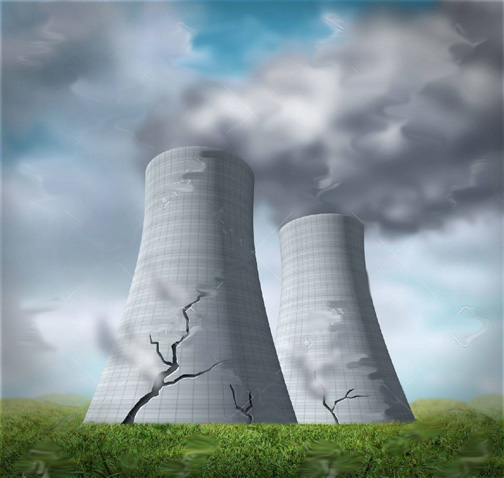
Japan’s Nuclear Regulation Authority (NRA) has approved draft legislation
to extend the operating life of the country’s nuclear power reactors beyond
60 years. It also approved an amendment to the Nuclear Reactor Regulation
Law to remove the rule specifying the operational periods of reactors.
World Nuclear News 14th Feb 2023
https://www.world-nuclear-news.org/Articles/NRA-approves-use-of-Japanese-reactors-beyond-60-ye
The half billion nuclear kitty litter incident
by Brian Nitz “…………………………. imagine being the person who caused a nuclear accident by ordering the wrong kitty litter?
It happened in February 2014 at a nuclear weapons waste processing facility for the Los Alamos National Laboratory in New Mexico. Anyone involved may be trying hard to forget that it ever happened. The confusion began with a typo in a request for “kitty litter/zeolite clay.” (Zeolites can also be used in energy storage as I wrote here).
At some point this was replaced with kitty litter (clay). This was further transformed into an order for organic cat litter, specifically the sWheat Scoop brand which the manufacturer claims is 100% wheat. Now while the word organic has a folk meaning to environmentalists and hipsters at your local cafe, to chemists it means something more specific……………………………
Don’t try this at home
Green Prophet recently covered the possibilities of using Zeolite for energy storage and this amazing mineral has many more tricks up its sleeve. But while it might seem obvious that anything capable of detoxifying cat pee would be equally effective for nuclear waste disposal, this isn’t necessarily true.
The problem with using 100% organic wheat-based organic kitty litter for your nuclear waste disposal instead of zeolite (non-clay) kitty litter has to do with its reactivity and flammability when confined in a barrel with plutonium, americium, uranium and nitrate-based processing chemicals when compared to zeolite. It doesn’t help that all of this takes place deep underground in an abandoned salt mine where there is much more salt and nuclear waste than there are people to watch it.
So the problem wasn’t discovered until barrel #68660 burst, releasing radiation into a ventilation system. It is believed that several hundred nuclear waste barrels were contaminated with the wrong kind of kitty litter. The cost of the cleanup is said to have been more than half a billion. https://www.greenprophet.com/2023/02/kitty-litter-nuclear/
The latest warning — Continuing with Akkuyu nuclear plant in seismic Turkey would be reckless

Devastating Turkey earthquake should end nuclear plant plans
The station is being built like all major projects in Turkey through non-transparent procedures with direct commissioning and guarantees from the government, just like the apartment buildings we saw crumble into rubble during the recent earthquake.
For those wondering why Erdogan supports unsafe, expensive and dirty nuclear power, the answer lies in his statement in 2019, at an AKP conference, that “Turkey’s intention is to acquire a nuclear arsenal”.
The latest warning — Beyond Nuclear International
Continuing with Akkuyu nuclear plant in seismic Turkey would be reckless
By Maria Arvanitis Sotiropoulou
The devastating earthquakes of February 7, with a magnitude of 7.8 in Turkey, brought to the fore the issue of the danger of the nuclear plant under construction there in Akkuyu.
The Akkuyu Nuclear Power Plant, consisting of four 1,200 MWe VVER1200 units, is being built under an intergovernmental agreement between the Turkish and Russian governments. In May 2010, Russia and Turkey signed an agreement that Rosatom would build, own and operate the 4.8 GW nuclear power plant at Akkuyu. The agreement was ratified by the Parliament of Turkey in July 2010. Construction began in 2011 and was expected to be commissioned in 2023 in celebration of the 100 years of the Turkish Republic.
The station is being built like all major projects in Turkey through non-transparent procedures with direct commissioning and guarantees from the government, just like the apartment buildings we saw crumble into rubble during the recent earthquake.
From the beginning of the construction, many technical issues were revealed: ground subsidence, serious deficiencies in the geotechnical and environmental studies, even a case of a forged design signature in 2015. Then, in January 2021, two explosions occurred at the construction site, causing interventions in the European Union where MEP George Georgiou submitted a pertinent question to the European Commission, while the Minister of Foreign Affairs Nikos Dendias also took similar actions without a response.
Unfortunately, as demonstrated by the Classification Vote (on including nuclear power in the green taxonomy) in the European Parliament, the nuclear lobby prevails in the EU today, despite the justifiable alarm among European citizens caused by the war in Ukraine, due to the presence of the Chornobyl and Zaporizhzhia nuclear plants in the war zone.
On January 10, 2021, Kemalist Republican People’s Party (CHP) MP, Mahir Basasir, tweeted that seawater was seeping through the concrete floor of the Akkuyu station. But even if the nuclear plant were structurally safe, such strong earthquakes can cause damage to the piping, so a Fukushima-style disaster is to be expected.
In Fukushima, we saw radioactive contaminated water pouring into the Pacific ocean and pollution has now been measured in the Atlantic as well. The Mediterranean is a closed basin and a similar disaster would turn it into a Dead Sea.
Additional risks arise with radioactive waste because Turkey is not a party to the IAEA (1997) treaty on the safe management of nuclear waste, and, in the Agreement with Rosatom, Russia retains the right to return the irradiated highly radioactive waste fuel to Turkey, after five to 10 years, for dry storage.
The recent earthquakes are an opportunity to stop this madness again. After all, this is not the first time that citizens have managed to reason with their leaders on this matter.
The nuclear era in Turkey began in 1969 when Demirel decided to build a 3,000MW nuclear plant. Ecevit approved a bid from the Swedish ASEA — Atom Metex — but the agreement ended due to problems within the company. Because the nuclear lobby has always been powerful, three companies, from Switzerland, France and Germany, immediately bid and in 1975 the Akkuyu site, 25 km from an active seismic area, was chosen.
In 1985, an agreement was signed with the Canadian AECL for a capacity of 7,000 MW, causing many negative reactions both in Turkey and in the Mediterranean, Europe and Canada, especially after the deadly 6.3 earthquake of June 27, 1998 in Adana, whose epicenter was 136 km east of Akkuyu .
This, along with the 1986 Chornobyl nuclear disaster, prompted a rapid mobilization of citizens, including in Greece, where a press conference was held in Athens on September 28, 1998 with the Greek-Canadian MP and scientific director of the “Nuclear Awareness Project”, David Martin, as the speaker.
Further concerns were raised after the even larger earthquake of August 17, 1999 in the Kocaeli Province of Turkey, with a catastrophic magnitude of 7.6. It caused enormous damage and led to more than 18,000 deaths.
Thanks to the reactions of citizen activists and due to the enormous financial costs, the construction of Akkuyu was canceled in 2000. However, President Erdogan, who does not hide his nuclear ambitions, decided in 2010 to revive it using Russian financing and know-how. Ground was broken for the first of the four reactors in April 2018. Groundbreaking for the fourth reactor took place in July 2022.
Although the nuclear lobby argues that it provides cheap and sustainable energy production, Akkuyu refutes this.
With an estimated cost of $20 billion, the Akkuyu nuclear power plant is one of the most expensive for an estimated lifetime of 60 years. Its construction and operation for the first 20 years is under the exclusive control of Rosatom. Although control of the power station will pass to Turkey after that, 51% of the shares will remain with Rosatom.
The claim that Akkuyu will provide cheap energy is also not true. With the Akkuyu deal, Turkey has guaranteed to buy electricity at a weighted average price of 12.35 to 15.33 US cents/kWh for at least 15 years, while Turkey’s average power purchase price is 4.4 cents/kW currently.
For those wondering why Erdogan supports unsafe, expensive and dirty nuclear power, the answer lies in his statement in 2019, at an AKP conference, that “Turkey’s intention is to acquire a nuclear arsenal”.
Although after the experience of India and Pakistan, who went from nuclear reactors to nuclear everything, the process has become more difficult, Erdogan apparently hopes that the three planned nuclear plants (Akkuyu, Sinop, Iconium, all in seismic areas of military interest) will allow Turkish scientists to be trained in the relevant fields.
As happened after the deadly earthquakes of 1998 and 1999, we hope today that the politics of peace will prevail, that the disastrous nuclear course for the Mediterranean will stop and that the nuclear plant in Akkuyu will remain on the drawing board.
This article is a translation from the Greek of Maria Arvanitis Sotiropoulou’s blog. A retired doctor, she is the President of the Greek affiliate of International Physicians for the Prevention of Nuclear War.
Headline photo of February 2023 earthquake damage in Turkey by Voice of America/Wikimedia Commons.
That time Northern California had a near nuclear accident
by: Matthew Nobert, Feb 11, 2023 https://fox40.com/news/local-news/sutter-county/that-time-northern-california-had-a-near-nuclear-accident/
KTXL) — The Sacramento region has a rich history of United States Air Force aviation, but on a Tuesday in 1961 that history turned dark as an aircraft armed with nuclear bombs crashed in Sutter County.
Following World War II the United States Air Force was looking to add a modern bomber to its fleet and in 1955 the B-52 Stratofortress began its military service.
Between 1960 and 1968, the USAF would run Operation Chrome Dome, which would have B-52’s armed with nuclear weapons remain continuously airborne on the border of the Soviet Union.
On March 14, 1961, a B-52F-70-BW armed with two nuclear weapons departed Mather Air Force Base, now Mather Airport, when the cabin pressure in the crew compartment began to fail, according to Department of Defense records.
The crew dropped the plane to 10,000 feet but the increased fuel consumption caused “fuel exhaustion” before an air tanker could refuel the B-52.
The crew bailed out at 10,000 feet, but the commander stayed until 4,000 feet in order for the massive bomber to be steered away from a populated area.
The bomber crashed into Sutter County farmland near the intersection of Moroni Road and Drexler Road, about 17.5 miles southwest of Yuba City.
When the bomber crashed, the two nuclear weapons it was carrying were stripped away from the body of the plane, but their explosives did not detonate. No nuclear contamination was detected either.
This recounting of events by the Department of Defense was challenged years later in a 2013 book written by Retired USAF Lt Col Earl McGill, a B-47 and B-52 pilot during the Cold War.
His book “Jet Age Man: SAC B-47 and B-52 Operations in the Early Cold War” recounts the Strategic Air Commands (SAC) Operation Chrome Dome and the events of March 14, 1961.
“Whatever the cause, SAC crews were briefed on every B-52 accident….we were summoned to the alert shack briefing room where we were told that a B-52 returning from a 24-hour CHROME DOME mission ran out of fuel and dumped four Mk-28’s on Northern California,” McGill writes.
McGill’s recounting of the crash also puts into question how safe the nuclear weapons actually were when the plane went down.
“The safety devices barely worked as designed,” McGill writes. “Apparently three weapons chutes did not fully deploy, which prevented detonation. The one that hung up (in a tree), we were briefed, had ‘rung in’, a term we used to indicate ‘armed’….”
McGill’s book was Nominated as Best Military History Book 2013 by Air Power History, published by the US Air Force Historical Foundation.
Northern California was not the only area of the United States or the world that saw crash landings by B-52’s armed with nuclear bombs.
Operation Chrome Dome would come to an end in 1968 after five B-52 crashes in the United States and abroad.
Japan: Cabinet adopts policy of using nuclear reactors beyond 60-year limit
Japan Times 10 Feb 23
The Cabinet formally adopted a policy on Friday that will allow for the operation of nuclear reactors beyond their current 60-year limit alongside the building of new units to replace aging ones as part of efforts to cut carbon emissions while ensuring adequate national energy supply.
The government’s “green transformation” [whaaa..aat?] policy features extensive use of nuclear power along with renewable energy and marks a major policy shift for the country, which suffered a devastating nuclear disaster in 2011. The Cabinet decision follows a meeting in late December at which the policy was agreed upon.
The government also plans to raise about ¥20 trillion ($152 billion) through the issuance of green transformation bonds to boost investment in decarbonization projects, as it estimates public and private investment of over ¥150 trillion will be necessary over the next 10 years……… (Subscribers only] https://www.japantimes.co.jp/news/2023/02/10/national/reactor-limit-extended//
Fears of ‘catastrophic’ nuclear horror as Turkey’s reactor rocked by horror earthquake
Turkey’s Akkuyu Nuclear Power Plant is facing a major risk, an expert has
warned, as the death toll of the disastrous earthquake racks up. The
disaster in Turkey and Syria has so far left 11,224 confirmed dead, with
the World Health Organisation warning that the final death toll could be as
high as 20,000.
Rescue teams in Turkey and Syria worked through the night
to recover more bodies from the rubble of thousands of buildings destroyed.
Following the disaster, an expert told Express.co.uk that Turkey’s nuclear
power plant, which lies just 16 miles away from an earthquake fault and is
currently under construction, could be at risk.
Express 8th Feb 2023
Australia radioactive capsule: Missing material more common than you think

By Antoinette Radford, BBC News, 5 Feb 23
The world watched as Australia scrambled to find a radioactive capsule in late January.
Many asked how it could have been lost – but radioactive material goes missing more often than you might think.
In 2021, one “orphan source” – self-contained radioactive material – went missing every three days, according to the International Atomic Energy Agency (IAEA).
The not-for-profit Nuclear Threat Initiative (NTI) lists lost and found nuclear and radiological material, and its records include a person in Idaho who stumbled across a radioactive gauge lying in the middle of a road.
The organisation also listed a package containing radioactive material falling off the back of a truck onto a nearby lawn in an undisclosed location – the resident who found it then delivered it to its intended recipient later that day.
And, in 2019, a tourist was detected in St Petersburg airport wearing a radioactive watch, according to the list.
Of the nearly 4,000 radioactive sources that have gone missing since the International Atomic Energy Agency started tracking them in 1993, 8% are believed to have been taken for malicious reasons, and 65% were lost accidentally. It is unclear what happened to the rest.
When properly maintained and handled, radioactive material does not pose a significant threat to humans.
But if a person is directly exposed to the radiation without protection, they can fall severely ill – or even die.
For example, four people died after a canister containing radioactive material was stolen from an abandoned hospital in the Brazilian city of Goiânia in 1987.
A group of men took the canister that contained Caesium-137 (Cs-137) – a radioactive material commonly used in medical settings – thinking it may have some value as scrap metal. As they took it apart, they ruptured the Cs-137 capsule, spilling its radioactive contents onto the rest of the metal.
A junkyard owner who bought the contaminated metal then exposed dozens of friends and family to the radiation after he brought them to see it glow blue in the dark. This included a six-year-old who ate the radioactive powder.
Dozens required urgent medical attention and two nearby towns were evacuated once doctors established their sudden illness was caused by radiation exposure.
The incident was described by the IAEA as among “the most serious radiological accidents to have occurred”.
In 2020, radioactive waste was also found at the home of a former nuclear energy agency employee in Indonesia.
And in 2013, six men were arrested – apparently unharmed – in Mexico for stealing radioactive material from a cancer treatment machine……………………………… https://www.bbc.com/news/world-64512297
France approves study on extending nuclear reactors’ life.
https://www.reuters.com/world/europe/french-presidency-green-light-looking-into-extending-lifespan-existing-nuclear-2023-02-03/
PARIS, Feb 3 (Reuters) – France has approved looking into the possibility of extending the lifespan of nuclear reactors to 60 years and beyond if safety rules allow it, the French Presidency said.
The Presidency announced the move in a statement after President Emmanuel Macron, who has announced plans to build at least six new reactors by 2050, on Friday chaired the first of a series of meetings on nuclear policy.
France historically has relied on nuclear power for around 70% of its energy, although the share is likely to have fallen last year as the nuclear fleet suffered repeated outages.
A public debate about the six new EPR2 nuclear reactors is set for the end of February.
The commissioning schedule for the new reactors will be established by a bill that will determine the speed of the procedures near the existing nuclear sites and the operation of the existing facilities, the statement said.
The bill is expected to reduce delays in administrative procedure and allow for progress on the construction sites.
The statement also announced plans for the construction of the first pilot of a small advanced nuclear reactor by the 2030s.
The extension of the plants will also require the launch of an examination of the issue of the fuel cycle, including the waste management, the statement said.
Several studies are set to be launched on the matter and presented at the next meeting of the nuclear council in June 2023, the statement said. The presentation of the studies is expected to be followed with a debate in Parliament on the development of energy and climate laws.
Belgium looks to extend lives of oldest nuclear reactors.
DW. 3 Feb 23,
The Belgian government is assessing whether to extend the life of three nuclear reactors that had been due to close in 2025, citing a need to “reduce risks in the energy supply” in lieu of the war in Ukraine.
…………………………… Operational since 1975, the three reactors were initially set to be decommissioned in 2015 but had their lifetime extended until 2025 after Belgium held a review of its phase-out plan.
A delayed phase-out
Belgium has two nuclear plants, operated by French utility company Engie, with five reactors still working.
Belgium first decided on its nuclear phase-out in 2003 and it was scheduled to be completed by 2025. However, it decided last year to keep the newest plants open until 2035.
Belgium took one nuclear reactor, Tihange 2, off its power grid after 40 years on Tuesday evening as part of the country’s planned nuclear phase-out. The winding down of nuclear power began with the closure of a reactor at Doel, near the Belgian port city of Antwerp in September.
Those two reactors were known for repeated safety issues, having been shut down on previous occasions after the discovery of cracks in reactor pressure vessels. The Belgian government had considered keeping those two reactors online because of energy concerns.
……………. The German government and the German city of Aachen, which lies near the Belgian border have repeatedly called for the reactors to be decommissioned in the past.
In 2019, the European Court of Justice found that Belgium infringed European Union law by failing to carry out the required environmental assessments before prolonging the life of Doel 1 and 2 nuclear reactors…….. https://www.dw.com/en/belgium-looks-to-extend-lives-of-oldest-nuclear-reactors/a-64606438
Incompetence in the nuclear submarine industry
A nuclear engineer glued broken submarine bolts back together in an
“unforgivable” error. The unsatisfactory repairs to HMS Vanguard’s
cooling pipes were discovered after a bolt fell off whilst being tightened
during checks inside the reactor chamber.
It is understood that the bolts,
which were providing insulation onto elements of the pipework, snapped off
after being over-tightened and were then glued back on by staff at Babcock,
a defence contractor. However, Navy sources criticised the nuclear
engineering company for a lack of “transparency” for having reported an
issue, but failing to disclose all the details. They said: “Nuclear
engineering is meticulously managed and while the effect of this failure is
insignificant, the actual act is unforgivable. “Instead of replacing the
bolt, they glued it back on and that’s not right,” they said.
Telegraph 31st Jan 2023
Times 31st Jan 2023
Missing radioactive capsule found in Western Australia
Authorities in Australia say they have found a tiny radioactive capsule
which went missing last week. Emergency services had “literally found the
needle in the haystack”, authorities in Western Australia said. A huge
search was triggered when the object was lost while being transported along
a 1,400km (870-mile) route across the state.
Mining giant Rio Tinto
apologised for losing the device, which could have posed a serious danger
if handled. The capsule – which is 6mm (0.24 inches) in diameter and 8mm
long – contains a small quantity of Caesium-137, which could cause skin
damage, burns or radiation sickness.
Emergency services used specialised
equipment including radiation detectors during their hunt. Announcing their
find on Wednesday, the state emergency services paid tribute to
“inter-agency teamwork in the face of seemingly insurmountable odds”. The
capsule was found when a vehicle equipped with specialist equipment, which
was travelling at 70 km/h, detected radiation, officials said. Portable
detection equipment was then used to locate the capsule, which was found
about 2 metres from the side of the road, they added.
BBC 1st Feb 2023
https://www.bbc.co.uk/news/world-australia-64481317
Times 1st Feb 2023
https://www.thetimes.co.uk/article/missing-radioactive-capsule-found-australia-search-vk5crqk03
Blasts near Zaporizhzhia nuclear plant
The UN nuclear watchdog reported Thursday (26 January) that there were
powerful explosions close to the Zaporizhzhia nuclear plant in Ukraine.
This prompted renewed calls for a zone of security around the facility.
Russian officials dismissed comments made by Rafael Grossi (head of the
International Atomic Energy Agency, IAEA), claiming that they suggested
Moscow couldn’t uphold nuclear safety.
EU Reporter 31st Jan 2023
1 This Month



26 September – International Day for the Total Elimination of Nuclear Weapons


PLEASE OPPOSE HR 8255 AND S.3639 – bills would accelerate satellite deployment, with no environmental review or safeguards – https://ncstd5li.quorum.us/campaign/169331/
To see nuclear-related stories in greater depth and intensity – go to https://nuclearinformation.wordpress.com
-
Archives
- September 2026 (219)
- August 2026 (330)
- July 2026 (355)
- June 2026 (287)
- May 2026 (306)
- April 2026 (356)
- March 2026 (251)
- February 2026 (267)
- January 2026 (308)
- December 2025 (358)
- November 2025 (359)
- October 2025 (375)
-
Categories
- 1
- 1 NUCLEAR ISSUES
- business and costs
- climate change
- culture and arts
- ENERGY
- environment
- health
- history
- indigenous issues
- Legal
- marketing of nuclear
- media
- opposition to nuclear
- PERSONAL STORIES
- politics
- politics international
- Religion and ethics
- safety
- secrets,lies and civil liberties
- spinbuster
- technology
- Uranium
- wastes
- weapons and war
- Women
- 2 WORLD
- ACTION
- AFRICA
- Atrocities
- AUSTRALIA
- Christina's notes
- Christina's themes
- culture and arts
- Events
- Fuk 2022
- Fuk 2023
- Fukushima 2017
- Fukushima 2018
- fukushima 2019
- Fukushima 2020
- Fukushima 2021
- general
- global warming
- Humour (God we need it)
- Nuclear
- RARE EARTHS
- Reference
- resources – print
- Resources -audiovicual
- Weekly Newsletter
- World
- World Nuclear
- YouTube
-
RSS
Entries RSS
Comments RSS
 nuclear-news