British Energy Ruled Out Nuclear At Heysham Due to Geological Fault.
Letter sent by Email today…https://lakesagainstnucleardump.com/2025/12/05/british-energy-ruled-out-nuclear-at-heysham-due-to-geological-fault/
Dear Lizzi Collinge MP
I am sure that you felt the earth move on December 4th along with everyone else in the region as there was a sudden movement along faults in the Morecambe bay area between Silverdale and Heysham. This was very scary for all concerned, we thought there had been a massive explosion in Milnthorpe and immediate thoughts went to Heysham’s dodgy old reactors.
SHUT DOWN OLD EMBRITTLED REACTORS AT HEYSHAM
Following on from our previous correspondence with you, the latest earthquake is a major reason why the old and embrittled reactors at Heysham should be mothballed – there would still be jobs on the site (maybe even more than now) for many years to come to ensure safe shut down and decommissioning.
GEOLOGICAL FAULT IS REASON BRITISH ENERGY SAID NO TO NEW BUILD AT HEYSHAM
The movement of the tectonic plates along the fault near Heysham on December 4th is also a major reason why there should be no new nuclear as advised by British Energy in 2002 and reported in the Lancashire Telegraph. We would suggest that MPs should ask for a copy of British Energy’s survey which found that a geological fault in the Heysham area rules out a Heysham 3 and 4. For the nuclear industry and local politicians to be ignoring this advice now in the context of a 3.3 earthquake in the Heysham area could be regarded as being reckless with the public’s safety.
Kind regards
Marianne, Radiation Free Lakeland
Fault rules out new build at Heysham, 18TH APRIL 2002
A GEOLOGICAL fault in the land next to Heysham 1 and 2 has ruled out the possibility of ever building a new nuclear power station at that site.
This week British Energy admitted it would be “impossible” to construct a Heysham 3 or 4.
Local environmentalists have recently been campaigning to stop an expansion of the area’s nuclear power capability fearing that Heysham could be chosen under the Government’s energy review.
But a British Energy survey has revealed that the vacant land has a geological fault which makes it unsuitable for development.
A spokesman said: “We have a certain amount of land but it is not suitable and a Heysham 3 or 4 has never been on the cards.
There are better places around the country to build new power stations.”
Embrittled Old Reactors
UK Government’s nuclear taskforce does not radiate authority
Paul Dorfman – AN “independent” Nuclear Regulatory Taskforce commissioned by UK Prime Minister Keir Starmer has published its final report, calling for a “radical reset of an overly complex nuclear regulatory system”.
Perhaps unfortunately, the taskforce’s announcement seems to have pre-empted its own findings, stating that it will “speed up the approval of new reactor designs and streamline how developers engage with regulators” without providing any evidence that regulation is responsible for huge delays and ballooning costs rather than the incompetence of the
builders and the issues with designs.
So, the possibility that regulation takes as long as it does because that was how long it took to do the job to the required standard was discounted from the get-go.
Made up of three nuclear industry proponents, an economist and a lawyer, the taskforce makes 47 new recommendations “to unleash a golden era of nuclear technology and
innovation” – including the proposal that new nuclear reactors should be built closer to urban areas and should be allowed to harm the local environment.
There are five members of the taskforce: John Fingleton is an
economist, Mustafa Latif-Aramesh is a lawyer, Andrew Sherry is former chief scientist at the National Nuclear Laboratory, Dame Sue Ion has held posts in sets of UK nuclear industry bodies, and Mark Bassett is a member of the International Nuclear Safety Advisory Group and appears the only one with
any experience of regulation.
Following the taskforce’s interim report in
August, a coalition of 25 civil society groups involved in formal
discussions with government warned of the dangers of cutting nuclear safety regulations, stating that the taskforce’s proposals “lacked credibility and rigour”.
Their moderating voices have gone unheard. New nuclear
construction has been subject to vast cost over-runs and huge delays. This is not the fault of safety and planning regulation – rather it’s the nature of the technology.
This attempt at nuclear deregulation would loosen
the safety ropes that anchor the nuclear industry in an increasingly unstable world. It doesn’t make good sense.
Given that the UK will influence other countries, there’s a risk that this narrative, that the only problem with nuclear is regulation, will be taken up elsewhere and there will be increasing pressure on regulators to do their job as quickly as possible regardless of whether necessary rigour would be damaged.
Blaming nuclear regulators for vast cost over-runs and huge delays has always been a fallback position for the nuclear industry. This is not the fault of safety and planning regulation, rather it’s the nature of the technology. De facto nuclear deregulation is a poor short-term choice of the worst kind – and reveals something important about the high-risk
technology that the UK Ministry of Defence classes as a “Tier 1
Hazard”.
It makes good sense to choose the swiftest, most practical,
flexible and least-cost power generation options available. Unlike new nuclear, renewables are here and now – on-time and cost effective. It’s entirely possible to sustain a reliable power system by expanding renewable energy in all sectors, rapid growth and modernisation of the electricity
grid, storage roll-out, faster interconnection, using power far more effectively via energy efficiency and management, and transitional combined cycle gas technology for short-term power demand peaks.
Combining solar, wind and energy storage increases their individual values and lowers the net cost of the energy they produce, making each component more valuable.
This synergy turns intermittent energy sources into a reliable,
dispatchable power supply.
The National 3rd Dec 2025, https://www.thenational.scot/politics/25668133.uk-governments-nuclear-taskforce-not-radiate-authority/
Opponents ‘vehemently disagree’ on omitting transport from nuclear assessment.

The Nuclear Waste Management Organization says its initial project description is to cover the waste repository project only, not the transportation of radioactive materials.
Matt Prokopchuk, Local Journalism Initiative Reporter
Dec 3, 2025, https://www.nwonewswatch.com/local-journalism-initiative-lji/opponents-vehemently-disagree-on-omitting-transport-from-nuclear-assessment-11567432
IGNACE — The transportation of radioactive materials should be included in the impact assessment for a proposed nuclear waste repository, environmental groups say.
But the Nuclear Waste Management Organization, which is working to develop the deep geological repository in the Revell Lake area between Ignace and Wabigoon Lake Ojibway Nation, says existing regulations govern that aspect of the plan.
“They see it as falling within that framework and not needing further examination,” Wendy O’Connor, a volunteer and spokesperson with the We the Nuclear Free North coalition told Newswatch. “And, of course, we vehemently disagree.”
Carolyn Fell, the NWMO’s manager of impact assessment communications, told Newswatch that its initial project description to the federal Impact Assessment Agency of Canada “pertains to new projects and not activities that are already subject to regulation and licensing standards.”
“The transportation of used nuclear fuel is jointly regulated by the Canadian Nuclear Safety Commission and Transport Canada,” Fell added.
The initial project description for the proposed deep geological repository, or DGR, describes a project’s need and purpose, offers an assessment of potential impacts, and proposals to avoid and mitigate them.
The years-long impact assessment process will start with the NWMO submitting the description to, and its public posting by, the federal assessment regulator.
That process, according to the NWMO, is expected to last into 2030, and will include soliciting public feedback. The assessment regulator greenlighting the waste management organization’s proposal is one essential piece for construction of the DGR to start.
The initial submission, Fell said, is expected “sometime in the near future.”
Environmental groups concerned about the hauling of high-level radioactive waste hundreds and thousands of kilometres from Canada’s nuclear plants into Northwestern Ontario, say the existing regulations in place cover the transportation of nuclear waste that is much less dangerous — and a lot less of it.
Should the DGR be built and accept the high-level waste, O’Connor said, it will amount to two to three loads of the spent fuel being transported by truck, and possibly train, per day for 50 or more years.
“Something like this has never happened in Canada,” she said. “Something like this has never been proposed or carried out.”
That, said Dodie LeGassick, the nuclear lead for Environment North, means more attention should be paid to this aspect of the entire proposal — by project proponents and the public.
“It takes the emphasis off transportation,” she said of omitting the issue from the initial project description. “Where, in fact, all along the routes it is the major concern.”
If you’re living along the route, you’re not as concerned about the DGR site as you are about the train or the trucks coming through.”
Fell said existing regulations around nuclear waste transport are “very stringent,” adding that “ninety-three per cent of shipments are moved on roads under strict regulations that ensure they pose very little threat.”
O’Connor said comparing what’s on the roads nowadays to what is being proposed is “disingenuous.”
“The scale is exponentially bigger than anything they’ve done before.”
O’Connor said she and her colleagues were surprised to learn the initial project description wouldn’t include transportation.
“When (the NWMO has) given information on the transportation component, they’ve always presented that as part and parcel of the project as a whole, which was appropriate,” she said. “They gave information as they had it on the trucking, the containment materials, et cetera, which we’ve looked at and sometimes critiqued.”
“So, we’re used to seeing this as a package, and the transportation, as we see it, is integral to the project as a whole — which also includes the deep geological repository and its surface facilities.”
O’Connor said her group is encouraging people to sign up with the Impact Assessment Agency of Canada to receive emails about project information, including public comment periods, and to make their concerns heard.
Chernobyl nuclear plant’s shield damaged: UN agency
Canberra Times, December 6 2025, https://www.canberratimes.com.au/story/9128130/chernobyl-nuclear-plants-shield-damaged-un-agency/
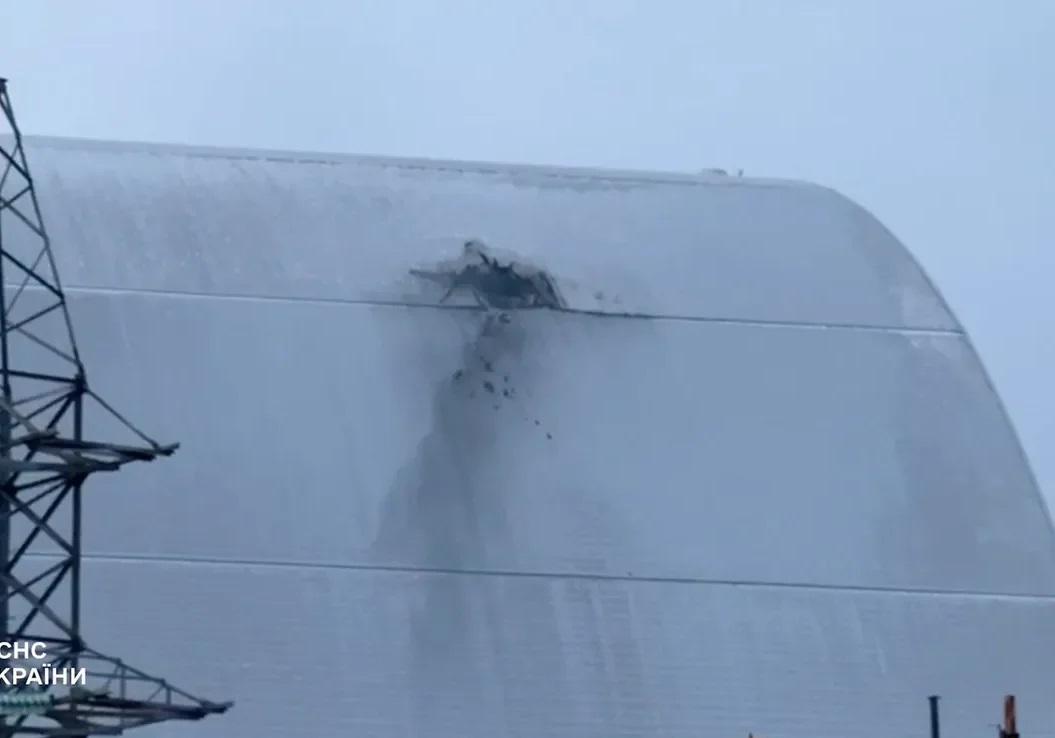
A protective shield at the Chernobyl nuclear plant in war-torn Ukraine, built to contain radioactive material from the 1986 disaster, can no longer perform its main safety function due to drone damage, the UN nuclear watchdog says.
The International Atomic Energy Agency said an inspection last week of the steel confinement structure completed in 2019 found the drone impact in February, three years into Russia’s conflict in Ukraine, had degraded the structure.
IAEA director general Rafael Grossi said in a statement the inspection “mission confirmed that the (protective structure) had lost its primary safety functions, including the confinement capability, but also found that there was no permanent damage to its load-bearing structures or monitoring systems.”……………………………………………………………….. https://www.canberratimes.com.au/story/9128130/chernobyl-nuclear-plants-shield-damaged-un-agency/
$400 Million DOE Bailout for “SMRs” at Palisades

Multiple reactors on the tiny 432-acre site also introduce the risk of domino-effect multiple meltdowns
Holtec’s inexperience exacerbates these synergistic old and new reactor risks. Holtec still has no NRC-approved SMR-300 design certification, has never built a reactor, nor operated one, nor repaired and restarted one, let alone a reactor as perpetually problem-plagued as the 60-year old Palisades zombie.
DECEMBER 3, 2025, by Kevin Kamps
regarding the announcement by the U.S. Department of Energy, Holtec International, and Michigan Governor Gretchen Whitmer of a $400 million federal bailout for “Small Modular Reactor” deployments at the Palisades nuclear power plant in Covert Township, Van Buren County, southwest Michigan.
Holtec’s uncertified and untested so-called ‘Small Modular Reactor’ design, the SMR-300, is not small. At 300 megawatts-electric (MW-e) each, the additional 600 MW-e would nearly double the nuclear megawattage at Palisades, given the unprecedented zombie restart of the 800 MW-e, six decade old reactor there. The zombie reactor was designed in the mid-1960s, and ground was broken on construction in 1967, with the learn-as-we-go dangerous design and fabrication flaws at the nuclear lemon baked in, still putting us in peril to the present day.
Just look at the harm smaller infamous 67 MW-e Michigan reactors have caused in the past. At Fermi Unit 1 on the Lake Erie shore in Monroe County, “we almost lost Detroit” when the plutonium breeder reactor had a partial core meltdown on October 5, 1966. John G. Fuller wrote an iconic book about it by that title in 1975. And Gil Scott-Heron wrote a haunting song about it in 1977, two years before he joined Musicians United for Safe Energy (MUSE) in response to the 1979 Three Mile Island Unit 2 meltdown, the worst reactor disaster in U.S. history — thus far anyway.
And at Big Rock Point — Palisades’ sibling reactor — near Charlevoix on the northwest Lower Peninsula’s Lake Michigan shore, the 67 MW-e experimental reactor shockingly released more than 3 million Curies of hazardous ionizing radioactivity into the environment, from supposedly ‘routine operations’ from 1962 to 1997. In the 1970s, local family practitioner, medical doctor Gerald Drake, and University of Michigan trained statistician Martha Drake, documented statistically significant spina bifida in the immediate area downwind. There is also anecdotal evidence of widespread thyroid pathology as well. This is similar to Palisades, where 50 cases of diagnosed thyroid cancer have been alleged by part-time residents of the small, 120-year old Palisades Park Country Club resort community, where there should not be a single such case of this exceedingly rare disease made infamous by Chornobyl and Fukushima.
Given the damage done by 67 MW-e reactors in Michigan in the past, just imagine what havoc could be wreaked by two 300 MW-e reactors — each 4.5 times larger — at Palisades going forward.
Increased breakdown phase risks at the 60-year old zombie reactor, and break-in phase risks at the two SMR-300 new builds, are a recipe for disaster at Palisades.
Palisades has a long list of breakdown phase risks. From the worst neutron-embrittled reactor pressure vessel in the country or perhaps even the entire world, to severely degraded steam generator tubes, a reactor lid that needed replacement two decades ago, lack of fire protection, calcium silicate containment insulation that would dissolve into sludge with the viscosity of Elmer’s Glue blocking emergency core cooling water flow, the worst operating experience in industry with control rod drive mechanism seal leaks from 1972 to 2022, etc., the Palisades zombie reactor has multiple pathways to reactor core meltdown, which would unleash catastrophic amounts of hazardous ionizing radioactivity into the environment, on the beach of Lake Michigan, drinking water supply for 16 million people along its shores, and more than 40 million people downstream and downwind, up the food chain, and down the generations throughout the Great Lakes region.
Chornobyl in Ukraine in 1986, and Three Mile Island-2 in Pennsylvania in 1979, are examples of brand new reactors causing catastrophes. Through design and construction flaws, and operator inexperience, Holtec’s SMR-300s will introduce increased break-in phase risks at the Palisades nuclear power plant, located on the Great Lakes shoreline. The Great Lakes comprise 21% of the planet’s, 84% of North America’s, and 95% of the United States’ surface fresh water.
Multiple reactors on the tiny 432-acre site also introduce the risk of domino-effect multiple meltdowns, as happened at Fukushima Daiichi, Japan in March 2011.
A 1982 U.S. Nuclear Regulatory Commission (NRC) study the agency unsuccessfully tried to suppress reported that a Palisades meltdown would cause a thousand acute radiation poisoning deaths, 7,000 radiation injuries, 10,000 latent cancer fatalities, and $52 billion in property damage. Adjusting for inflation alone, property damage would now exceed $168 billion. And since populations have increased around Palisades in the past 43 years, casualty figures would be significantly worse, as more people now live in harm’s way.
Holtec’s inexperience exacerbates these synergistic old and new reactor risks. Holtec still has no NRC-approved SMR-300 design certification, has never built a reactor, nor operated one, nor repaired and restarted one, let alone a reactor as perpetually problem-plagued as the 60-year old Palisades zombie. Holtec’s incompetence and corruption has been on full display in just the past several weeks, including a leak of large amounts of ultra-toxic hydrazine into Lake Michigan, the unprecedented fall by a worker into the radioactive reactor cavity, and evidence of potential alcohol consumption and/or drug impairment, including in the protected area, and by a supervisor. Despite all this, NRC has rubber stamped weakened work hour limitations, meaning overworked employees will be more fatigued, as Holtec races to restart the zombie reactor, in order to hold its announced Initial Public Offering, hoping to raise another $10 billion in private investment, for SMR-300 deployment across the country and around the world, with Palisades as the dangerously dubious prototype to be followed.
Speaking of money, Holtec has, thus far, been awarded $3.52 billion (with a B!) in public funding at Palisades alone. But it has requested another $12 billion (with a B!) more. These bailouts significantly impact the pocketbooks of hard working Americans — state and federal taxpayers, as well as electric ratepayers. Palisades represents a wealth redistribution scheme, from the American people to Holtec, compliments of Governor Whitmer, the Michigan state legislature, Congress, President Biden, and now President Trump. Abe Lincoln described the ideal of government as “of, by, and for the people.” At Palisades, government seems to be of, by, and for an inexperienced, incompetent, careless, corrupt and greed-driven corporation, playing radioactive Russian roulette, carrying out a large-scale nuclear experiment, with Great Lakes residents as the unwitting Guinea pigs.”
USA’s Risky Nuclear Policies
Alan J. Kuperman, Ph.D., Associate Professor, LBJ School of Public AffairsCoordinator, Nuclear Proliferation Prevention Project (www.NPPP.org)University of Texas at Austin, 2 Dec 2025
At least six recent policy changes threaten to increase proliferation risk:
Uranium enrichment. The US had opposed spread of this technology for half a century because any facility for peaceful enrichment of reactor fuel could also produce highly enriched uranium for nuclear weapons. But now the White House is exploring uranium enrichment in at least two countries – Saudi Arabia and South Korea – that previously have expressed desire for nuclear weapons.
Reprocessing waste. The US also had opposed this technology for half a century because it enables purification of plutonium for nuclear weapons. Now the White House “supports” South Korea starting to reprocess and is subsidizing US commercialization of this technology by a company seeking to export “on a global scale.”
“Fast” nuclear reactors. The US also is subsidizing commercial development of this exotic technology that originally was invented to maximize production of weapons-grade plutonium. It makes no sense for nuclear energy, since all prior efforts by countries to commercialize this technology have failed for 50 years – due to exorbitant cost and frequent fires.
HALEU fuel. Radically departing from all existing US nuclear powerplants, which use fuel that is unsuitable for weapons, the US government now is promoting HALEU fuel – both for domestic and exported reactors – which scientists warn could readily be used to make bulky but effective nuclear weapons.
Online refueling. A traditional barrier to proliferation has been that fuel could not be removed from nuclear powerplants while they were operating, so inspectors could simply focus on refueling operations every year or two during shutdowns. However, the US government now is promoting reactors with online refueling, which enable fuel to be removed at any time, making it hard or impossible to detect diversion.
Reduced security. The US government also is seeking to cut costs for smaller reactors by reducing or eliminating defenses against attack, such as exclusion zones and armed guards, which is especially dangerous for plants fueled by HALEU or plutonium – both suitable for nuclear weapons.
A Wiser Path
The responsible growth of nuclear energy requires a more prudent course, based on time-tested policies and technologies. Enrichment should be limited to existing producers, which would not only inhibit proliferation but also reduce costs via economies of scale. Reprocessing should be opposed outright, since all versions enable purification of plutonium for weapons, according to six US national laboratories. Fast reactors should be avoided because they foster proliferation, raise costs, and create unique safety risks. HALEU fuel should be capped below 10 percent enrichment, not the current 20 percent, to block a relatively easy path to the bomb. Online refueling should be avoided so inspectors have better chance to detect and thereby deter diversions. Security standards should be sustained or upgraded, which would favor bigger reactors that also produce less expensive electricity. In short, the future of nuclear energy should largely resemble its recent past, which could promote security and affordability better than misguided new policies.
Fighting the Good Fight
This year, NPPP and a few others have tried to sound the alarm. In July, I helped organize a letter to Congress from experts including ex-officials under five US presidents, calling for a halt to policies that “could unintentionally threaten the economic viability of nuclear energy and increase risks of nuclear weapons spreading to adversaries.” I also published an article in Scientific American, after the bombing of Iran, arguing that, “It is far preferable to prevent the spread of nuclear-weapon-usable technologies in the first place.”
Regrettably, these sporadic efforts have hardly made a dent against the onslaught of disinformation, campaign contributions, and cronyism from purveyors of bomb-prone nuclear technology. Any hope of success requires a much larger, more coordinated, and better funded campaign – but charitable foundations so far have dismissed such proposals. I intend to keep trying, so please let me know if you can offer suggestions or financial support.
Paul Leventhal Fellows
Finally, a reminder that the NPPP continues to nurture the next generation of nuclear security professionals by awarding an annual Leventhal Fellowship for graduate students that intern at an organization dedicated to preventing the spread of weapons of mass destruction.
Alan J. Kuperman, Ph.D., Associate Professor, LBJ School of Public AffairsCoordinator, Nuclear Proliferation Prevention Project (www.NPPP.org)University of Texas at Austin
Hinkley Point C contractor issued notice after ‘significant fire safety shortfalls’
The potential for harm and risk of serious injury was identified
A fire enforcement notice has been served on a Hinkley Point C
contractor after “significant fire safety shortfalls” were identified at
the nuclear construction site. Following a focused fire safety
intervention, Office for Nuclear Regulation (ONR) inspectors identified
that Bylor JV (Laing O’Rourke and Bouygues Travaux Publics) had failed to
implement appropriate arrangements for the effective planning,
organisation, control, monitoring and review of preventive and protective
measures.
Somerset Live 2nd Dec 2025, https://www.somersetlive.co.uk/news/somerset-news/hinkley-point-c-contractor-issued-10681094
U.N. nuclear agency returns to Chernobyl to check damage from recent Russian drone attack.

The International Atomic Energy Agency is sending
technicians to the site of Ukraine’s Chernobyl nuclear power plant to
assess the current condition of an arch-shaped steel structure that was
erected over the damaged reactor following the 1986 Chernobyl disaster. The protective shell, known as the New Safe Confinement, was erected in 2016.
It was struck by a Russian drone in February 2025, authorities said.
“While February’s drone strike did not lead to any release of
radioactive material, it caused significant structural damage, affecting
the NSC’s designed confinement function and projected lifetime,” IAEA
Director General Rafael Mariano Grossi said Thursday in a statement.
Washington Times 28th Nov 2025 https://www.washingtontimes.com/news/2025/nov/28/un-nuclear-agency-returns-chernobyl-check-damage-recent-russian-drone/
Visiting bombed nuclear sites is dangerous, Iran FM says.

Nov 27, 2025, https://www.iranintl.com/en/202511276616
ran Foreign Minister Abbas Araghchi warned on Wednesday that approaching nuclear sites hit in recent strikes is unsafe and said inspections there can only resume under new security arrangements.
“It is now dangerous to approach nuclear installations because of security issues,” Araghchi told France 24 in Paris. “There are unexploded munitions, and there are also concerns regarding radioactivity and chemical contamination.”
He said inspections by the International Atomic Energy Agency continue at facilities that were not attacked, but access to damaged sites requires “a new framework and proper modalities.”
Araghchi called last week’s resolution by the IAEA’s 35-nation Board of Governors “a political and unilateral decision,” saying it ignored the reality that Iranian nuclear sites had been bombed. “If you do not include the realities on the ground, then you are committing an error,” he said.
The minister said the Cairo agreement reached earlier this year with IAEA Director General Rafael Grossi had acknowledged that conditions had changed after the attacks and that a new inspection protocol would be needed.
Further attacks possible
Asked whether more strikes could occur, Araghchi said Israel’s recent record suggested the risk remains. “The Israeli regime over the last two years has attacked seven different countries,” he said. “So it’s clear that another attack is possible.”
His comments came a day after IAEA Director General Rafael Grossi said in Manila that the agency wants to “fully reengage with Iran” to restore inspection access and verify enrichment activities. The IAEA’s 35-member Board of Governors last week passed a resolution calling on Tehran to inform it “without delay” about the status of its enriched uranium stock and sites hit in June’s strikes.
Iran condemned the vote as “illegal and unjustified,” saying it undermined the Cairo inspection accord that Grossi reached with Tehran in September through Egyptian mediation. Araghchi accused Western powers of “killing” that agreement, saying it had provided a framework for cooperation before Israel and the United States bombed enrichment facilities during the 12-day conflict in June.
No enrichment after attacks
Earlier this month, Araghchi said Iran was no longer enriching uranium at any site in the country, citing the destruction caused by the attacks. “There is no enrichment right now because our facilities — our enrichment facilities — have been attacked,” he said in response to a question from an Associated Press journalist at a conference in Tehran. “There is no undeclared nuclear enrichment in Iran. All of our facilities are under the safeguards and monitoring” of the IAEA.
Iran had previously enriched uranium up to 60% purity — just short of weapons-grade levels — after the United States withdrew from the 2015 nuclear deal in 2018. Tehran says its atomic program is entirely peaceful.
Reservations over a dash for nuclear- UK’s “Nuclear Regulatory Taskforce”.

Earlier this year Sir Keir Starmer set up an “independent” five-person Nuclear Regulatory Taskforce, comprising three nuclear industry proponents, an economist and a lawyer.
Perhaps unfortunately, the announcement of its role
pre-empted its findings, with the headline to the press release saying:
“Government rips up rules to fire-up nuclear power.” Hence, the
possibility that regulation takes as long as it does because that was how
long it took to do the job to the required standard was discounted.
The Taskforce has just made 47 recommendations “to speed up building new nuclear projects at a lower cost and on time, to unleash a golden era of nuclear technology and innovation” — including the proposal that new
nuclear reactors should be built closer to urban areas and should be
allowed to harm the local environment (“Ministers urged to allow new
nuclear plants in urban areas”, Nov 24).
Nuclear is a high-risk
technology. Blaming nuclear regulators for vast cost over-runs and huge
delays has always been a fallback position for the nuclear industry. This
is not the fault of safety and planning regulation, rather it is the nature
of the technology. De facto nuclear deregulation is a poor short-term
choice of the worst kind.
Dr Paul Dorfman, Times 26th Nov 2025, https://www.thetimes.com/comment/letters-to-editor/article/times-letters-ending-culture-free-gifts-mps-zg28h25s8
Risks of Restarting Duane Arnold nuclear plan
October 1, 2025, Sierra Club, Iowa Chapter
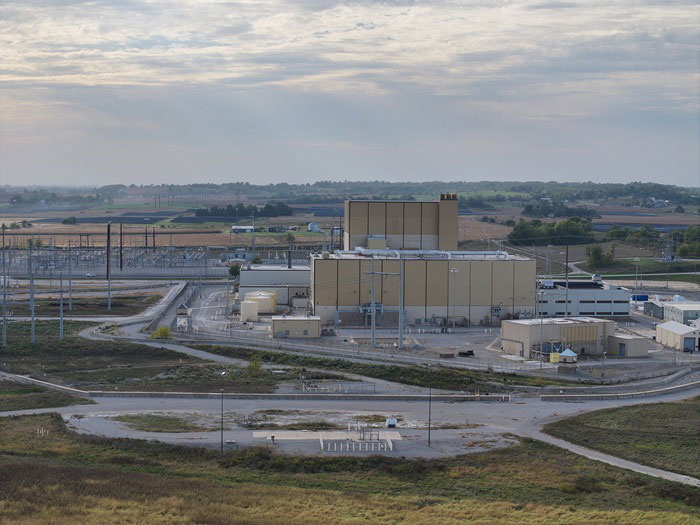
Risks of Restarting Duane Arnold Nuclear Plant and Iowa’s Renewable Energy Future
Sierra Club Iowa Chapter urges legislators and the public to oppose the restart of the Duane Arnold nuclear plant and to support Iowa’s transition to safe, clean, and renewable energy sources.
On September 29, 2025, the Iowa Chapter of the Sierra Club hosted a press conference to address NextEra Energy’s proposal to restart the Duane Arnold nuclear plant, which has been in decommissioning since 2020. Experts in nuclear energy, public health, and environmental law provided insight into the risks of nuclear power and Iowa’s proven success with renewables.
To see the recording of the press conference: Iowa’s Energy Future – Nuclear Risks vs. Renewable Solutions
To see the presentation slides:
Renewables vs. Nuclear in Iowa by Mark Z. Jacobson
Analysis of Changes in Local Health Near Duane Arnold Nuclear Plant by Joseph Mangano
The press conference was held to address NextEra Energy’s proposal to restart the Duane Arnold nuclear plant in Iowa, which has been in decommissioning since 2020. The company has requested federal approval to transfer connections from three planned solar projects to support the nuclear restart. The goal of the press conference was to inform the public about this proposal, its broader implications for Iowa’s energy future, and to provide clear, fact-based information about the challenges and alternatives to nuclear energy.
Restarting Duane Arnold poses significant safety, environmental, and economic risks. The plant’s GE Mark I reactor design is decades old and has known safety flaws, and components may have degraded during the five years of decommissioning. Nuclear energy generates highly radioactive spent fuel that remains dangerous for hundreds of thousands of years, and routine plant operations can impact local communities’ health, including increased cancer rates and infant mortality. Delays in decommissioning the Duane Arnold plant increase safety and financial risks, while the potential use of public funding raises concerns about taxpayers bearing the cost. Additionally, the abandonment of previously planned solar projects shifts resources away from proven renewable energy solutions, further undermining Iowa’s clean energy future.
Speakers highlighted that Iowa has the tools and proven capacity to meet its energy needs safely, affordably, and sustainably through renewable energy sources like wind and solar. Experts emphasized that the state can continue to lead with clean energy while avoiding the safety and financial risks of nuclear power. This amplified importance of science backed decision-making and public participation to ensure Iowa’s energy future is secure, clean, and renewable.
“Iowa now gets nearly 79% of its electricity from wind, water, and solar. Despite that, electricity prices here are about three cents per kilowatt-hour below the national average. The idea that renewables raise costs is simply a myth, in fact, they keep prices low,” said Mark Z. Jacobson, Director of the Atmosphere/Energy Program at Stanford University.
“Before Duane Arnold began operating, cancer rates in nearby counties were 6.5% below the state average. But after decades of operation, those same counties showed cancer rates more than 12% higher. That translates to nearly 500 additional cancer cases among local residents under age 40,” said Joseph Mangano, Executive Director of the Radiation and Public Health Project.
“Nuclear power is not clean or renewable. Uranium mining leaves radioactive waste, reactors routinely leak tritium into groundwater, and the spent fuel remains dangerous for hundreds of thousands of years with no solution in sight,” said Wally Taylor, Conservation Chair and Legal Chair of the Iowa Chapter of the Sierra Club.
“The Duane Arnold reactor uses the same GE Mark I design as the Fukushima reactors that melted down in 2011. This is an old, well-documented, and dangerous design, so flawed that even in the 1970s, engineers warned it could lead to a devastating accident. Fukushima proved those warnings were justified,” said Don Safer, Co-Chair of the Sierra Club Grassroots Network Nuclear Free Team.
More about the Speakers:……………………………………………….. https://www.sierraclub.org/iowa/blog/2025/10/risks-restarting-duane-arnold-nuclear-plan
Zaporizhzhia nuclear plant needs cooperation agreement in event of Ukraine peace, says IAEA
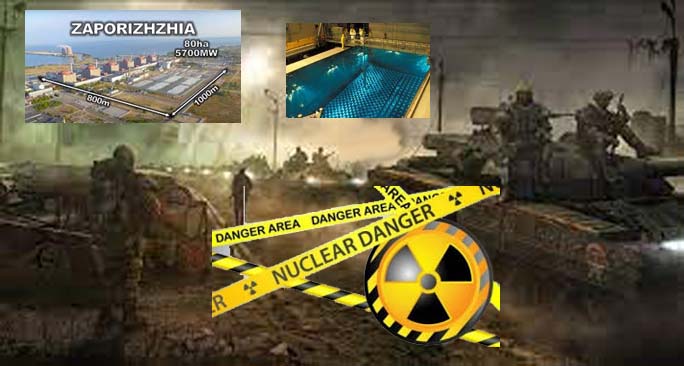
MANILA, Nov 25 (Reuters) – https://www.reuters.com/business/energy/zaporizhzhia-nuclear-plant-needs-cooperation-agreement-event-ukraine-peace-says-2025-11-25/
International Atomic Energy Agency chief Rafael Grossi said on Tuesday the Zaporizhzhia nuclear power plant will need a “special status” and a cooperation agreement between Russia and Ukraine if a peace deal is reached.
Russian forces seized the plant, Europe’s largest with six reactors, in the first weeks of Moscow’s February 2022 invasion of Ukraine. The plant produces no electricity, but each side regularly accuses the other of military actions compromising nuclear safety.
“Whatever side of the line it ends up, you will have to have a cooperative arrangement or a cooperative atmosphere,” he said.
Grossi’s comments come as U.S. President Donald Trump’s administration makes an intense new push to end the war.
U.S. and Ukrainian officials are trying to narrow the gaps between them over a draft peace plan that includes provisions for Zaporizhzhia’s future.
Without peace, there is danger of a nuclear accident, Grossi said.
“Until the war stops or there is a ceasefire or the guns are silenced, there is always a possibility of something going very, very wrong,” he said in an interview.
“No single operator can use a nuclear power plant when across the river there is another country which is resisting this and may take action against that.”
A draft version of the U.S.-backed 28-point peace plan for Ukraine, according to a copy seen by Reuters, proposes restarting the plant under IAEA supervision, with electricity output split equally between Russia and Ukraine.
“Shared, not shared – and I don’t want to get into that because it’s political – …it’s something that Ukraine and Russia will be deciding at some point,” Grossi said. “But one thing is clear, the IAEA is indispensable in this situation.”
Zaporizhzhia’s six reactors have been in cold shutdown since 2022, relying on external power lines and emergency systems to prevent a station blackout. The IAEA maintains a continued presence at the site to monitor safety amid ongoing shelling.
Rise in nuclear incidents that could leak radioactivity
Rob Edwards, May 25 2025, https://www.theferret.scot/nuclear-incidents-radioactivity-faslane/#:~:text=The%20last%20category%20A%20incident,dropped%20from%20101%20to%2039
There have been 12 nuclear incidents that could have leaked radioactivity at the Faslane naval base since 2023, The Ferret can reveal.
According to the Ministry of Defence (MoD), the incidents at the Clyde nuclear submarine base had “actual or high potential for radioactive release to the environment”.
But the MoD has refused to say what actually happened in any of the incidents, or exactly when they occurred. There were five in 2023, four in 2024 and three in the first four months of 2025 – the highest for 17 years.
Campaigners warned that a “catastrophic” accident at Faslane could put lives at risk. The Trident submarines based there were a “chronic national security threat to Scotland” because they were “decrepit” and over-worked, they claimed.
New figures also revealed that the total number of nuclear incidents categorised by the MoD at Faslane, and the neighbouring nuclear bomb store at Coulport, more than doubled from 57 in 2019 to 136 in 2024. That includes incidents deemed less serious by the MoD.
The Scottish National Party (SNP) described the rising number of incidents as “deeply concerning”. It branded the secrecy surrounding the incidents as “unacceptable”.
The MoD, however, insisted that it took safety incidents “very seriously”. The incidents could include “equipment failures, human error, procedural failings, documentation shortcomings or near-misses”, it said.
The latest figures on “nuclear site event reports” at Faslane and Coulport were disclosed in a parliamentary answer to the SNP’s defence spokesperson, Dave Doogan MP. They show that a rising trend of more serious events – first reported by The Ferret in April 2024 – is continuing.
There was one incident at Faslane between 1 January and 22 April 2025 given the MoD’s worst risk rating of “category A”. There was another category A incident at Faslane in 2023.
The MoD has defined category A incidents as having an “actual or high potential for radioactive release to the environment” in breach of safety limits.
The last category A incident reported by the MoD was in 2008, when radioactive waste leaked from a barge at Faslane into the Clyde. There were spillages from nuclear submarines at the base in 2007 and 2006.
There were also four “category B” incidents at Faslane in 2023, another four in 2024 and two in the first four months of 2025. The last time that many category B incidents were reported in a year was 2006, when there were five.
According to the MoD, category B meant “actual or high potential for a contained release within building or submarine”, or “actual or high potential for radioactive release to the environment” below safety limits.
The MoD also categorised nuclear site events as “C” and “D”. C meant there was “moderate potential for future release to the environment”, or an “actual radioactive release to the environment” too low to detect. D meant there was “low potential for release but may contribute towards an adverse trend”.
The number of reported C incidents at Faslane and Coulport increased from six in 2019 to 38 in 2024, while the number of D incidents rose from 50 to 94.
At the same time the number of incidents described by the MoD as “below scale” and “of safety interest or concern” dropped from 101 to 39.
The SNP’s Dave Doogan MP, criticised the MoD in the House of Commons for the “veil of secrecy” which covered nuclear incidents. Previous governments had outlined what happened where there were “severe safety breaches”, he told The Ferret.
“The increased number of safety incidents at Coulport and Faslane is deeply concerning, especially so in an era of increased secrecy around nuclear weapons and skyrocketing costs,” Doogan added.
“As a bare minimum the Labour Government should be transparent about the nature of safety incidents at nuclear weapons facilities in Scotland, and the status of their nuclear weapons projects. That the Scottish Government, and the Scottish people, are kept in the dark about these events is unacceptable.”
Doogan highlighted that the government’s Infrastructure and Projects Authority had judged many of the MoD’s nuclear projects to have “significant issues”, as reported in February by The Ferret. The MoD nuclear programmes would cost an “eye-watering” £117.8bn over the next ten years, he claimed.
He said: “If the UK cannot afford to store nuclear weapons safely, then it cannot afford nuclear weapons.”
Anti-nuclear campaigners argued that the four Trident-armed Vanguard submarines based at Faslane were ageing and increasingly unreliable. They required more maintenance and their patrols were getting longer to ensure that there was always one at sea.
“The Vanguard-class submarines are already years past their shelf-life and undergoing record-length assignments in the Atlantic due to increased problems with the maintenance of replacement vessels,” said Samuel Rafanell-Williams, from the Scottish Campaign for Nuclear Disarmament.
“There is a crisis-level urgency to decommission the nuclear-capable submarines lurking in the Clyde. They constitute a chronic national security threat to Scotland, especially now given their worsening state of disrepair.”
He added: “The UK government is placing the people of Scotland at risk by continuing to operate these decrepit nuclear vessels until their replacements are built, which will likely take a decade or more.
“The Vanguards must be scrapped and the Trident replacement programme abandoned in favour of a proper industrial policy that could genuinely revitalise the Scottish economy and underpin our future security and prosperity.”
Nuclear accident could ‘kill our own’
Dr David Lowry, a veteran nuclear consultant and adviser, said: “Ministers tell us the purpose of Britain’s nuclear weapons is to keep us safe.
“But with this series of accidents involving nuclear weapons-carrying submarines, we are in danger of actually killing our own, if one of these accidents proves to be catastrophic.”
According to Janet Fenton from the campaign group, Secure Scotland, successive governments had hidden information about behaviour that “puts us in harm’s way” while preventing spending on health and welfare.
She said: “Doubling the number of incidents while not telling us the nature of them is making us all hostages to warmongers and the arms trade, while we pay for it.
The secretary of state for defence, John Healey, told the House of Commons that he rejected “any accusation of a veil of secrecy”. He promised the SNP MP, Dave Doogan, that he would look into the allegations and write to him.
When pressed by The Ferret, the MoD declined to outline what had happened in the three category A and B incidents at Faslane in 2025. It has also refused to give details of earlier incidents in response to a freedom of information request.
An MoD spokesperson said: “We have robust safety measures in place at all MoD nuclear sites and we take safety incidents very seriously. Our nuclear programmes are subject to regular independent scrutiny and reviews.
“In line with industry good practice and in common with other defence and civil nuclear sites, His Majesty’s Naval Base Clyde has a well-established system for raising nuclear site event reports.
“They are raised to foster a robust safety culture that learns from experience, whether that is of equipment failures, human error, procedural failings, documentation shortcomings or near-misses.”
In 2024 The Ferret revealed earlier MoD figures showing that the number of safety incidents that could have leaked radiation at Faslane had risen to the highest in 15 years. We have also reported on the risks of Trident-armed submarines being on patrol at sea for increasingly long periods.
TEPCO’s Kashiwazaki nuclear plant hit with another security flaw
Japan’s nuclear watchdog said Thursday another faulty antiterrorism measure
had been found at the Kashiwazaki-Kariwa nuclear complex, operated by Tokyo
Electric Power Company Holdings Inc. The Nuclear Regulation Authority
convened an emergency meeting to discuss responses to the latest discovery
that a TEPCO employee had made an unauthorized copy of a confidential
document in June and stored it in his desk at the complex in Niigata
Prefecture, northwest of Tokyo. TEPCO is preparing to restart a reactor at
the site for the first time since the 2011 crisis at its Fukushima plant.
Mainichi 21st Nov 2025, https://mainichi.jp/english/articles/20251120/p2g/00m/0bu/053000c
IAEA warns of safety importance of substations

Tuesday, 18 November 2025,
https://www.world-nuclear-news.org/articles/iaea-warns-of-safety-importance-of-substations
The International Atomic Energy Agency has stressed the importance of electrical substations in ensuring off-site power supplies to nuclear power plants.
The International Atomic Energy Agency (IAEA) said such substations “are indispensable for maintaining off-site power supplies that support safety systems and cooling functions, making their integrity vital for nuclear safety and security”.
Grossi said: “Reliable off-site power is vital for the maintenance and operation of nuclear safety functions. To this end, Agency experts will, through dedicated expert missions, continue to assess the functionality of substations critical for nuclear safety and security.”
Meanwhile, Zaporizhzhia Nuclear Power Plant, which has been under Russian military control since early March 2022, has had its main external power line shut since Friday after the activation of a protection system. The IAEA said the cause was still being investigated and they were “engaging with both sides to assist in the timely restoration of the line”.
The loss of the 750 kV Dniprovska line means the plant is relying on its 330 kV backup Ferosplavna-1 line for external power at the moment. The plant recently went a month relying on emergency diesel generators for power, before IAEA-mediated local ceasefires allowed necessary repair work to take place to reconnect.
Meanwhile, Energoatom issued a statement explaining that Khmelnitsky unit 2 has “been operating with a damaged turbine since 2022 … currently, the power unit can produce up to 900 MW of electricity”. The company added that it is in the process of purchasing a new, modernised rotor which “will not only restore the design nominal capacity, but also increase it by 40 MW to 1,040 MW”.
1 This Month

of the week – Shut Down Drone Warfare!


Tell the Ukrainian Government to Drop Prosecution of Peace Activist Yurii Sheliazhenko

Petition to revoke the licensing of the Near Surface Nuclear Disposal Facility (NSDF) at Chalk River. https://www.ourcommons.ca/petitions/en/Petition/Details?Petition=e-7247
To see nuclear-related stories in greater depth and intensity – go to https://nuclearinformation.wordpress.com
-
Archives
- April 2026 (7)
- March 2026 (251)
- February 2026 (268)
- January 2026 (308)
- December 2025 (358)
- November 2025 (359)
- October 2025 (376)
- September 2025 (257)
- August 2025 (319)
- July 2025 (230)
- June 2025 (348)
- May 2025 (261)
-
Categories
- 1
- 1 NUCLEAR ISSUES
- business and costs
- climate change
- culture and arts
- ENERGY
- environment
- health
- history
- indigenous issues
- Legal
- marketing of nuclear
- media
- opposition to nuclear
- PERSONAL STORIES
- politics
- politics international
- Religion and ethics
- safety
- secrets,lies and civil liberties
- spinbuster
- technology
- Uranium
- wastes
- weapons and war
- Women
- 2 WORLD
- ACTION
- AFRICA
- Atrocities
- AUSTRALIA
- Christina's notes
- Christina's themes
- culture and arts
- Events
- Fuk 2022
- Fuk 2023
- Fukushima 2017
- Fukushima 2018
- fukushima 2019
- Fukushima 2020
- Fukushima 2021
- general
- global warming
- Humour (God we need it)
- Nuclear
- RARE EARTHS
- Reference
- resources – print
- Resources -audiovicual
- Weekly Newsletter
- World
- World Nuclear
- YouTube
-
RSS
Entries RSS
Comments RSS
 nuclear-news