UK’s dwindling nuclear fleet – four ageing reactors to be kept going beyond their planned closure date.
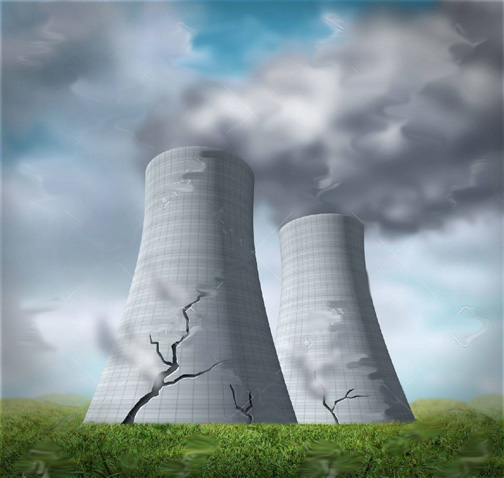
EDF looks to delay closure of four UK nuclear power plants
Four of Britain’s dwindling fleet of nuclear power plants look set to
remain on stream for at least a further two years, EDF Energy announced on
Tuesday, as the French state-owned operator said it aimed to halt seven
years of declining output.
The UK’s nuclear generating capacity has
fallen rapidly since the start of the decade as three of the country’s
eight ageing power stations closed. But EDF, which owns the country’s
nuclear fleet via a joint venture with Centrica, said it now planned to
explore keeping two of the power stations — Heysham 2 and Torness —
open beyond their planned closure date of 2028.
This follows an
announcement last year by the company of similar plans to keep the two
other power stations that use the same reactor design — Hartlepool and
Heysham 1 — open for at least two years beyond their scheduled closure
date of 2024. The company said a decision on the planned extensions for
Heysham 2 and Torness power stations, which have a joint generating
capacity of 2.4GW, will be taken by the end of the year, subject to plant
inspections and regulatory approvals.
The Office for Nuclear Regulation
said in a statement: “Several safety cases for the stations are likely to
require updating to achieve EDF’s stated ambitions, together with
investment in plant to sustain equipment reliability, all while ensuring
that the necessary people and skills are on site.” Other nuclear power
plants based on the same design as Hartlepool and Heysham have been forced
to close earlier than planned because cracks were found in the reactors’
graphite cores. But EDF said in 2022 that the graphite at both Hartlepool
and Heysham 1 remained intact, and regular inspections have continued since
then.
FT 9th Jan 2024
https://www.ft.com/content/06f524ac-2515-432c-97a1-e71aa25189e6
EDF Energy plans to extend life of four UK nuclear power plants
EDF Energy is planning to extend the life of four nuclear power stations
in the UK and step up investment in its British nuclear fleet. The French
energy company said it would make a decision on whether to extend the life
of the four UK plants with advanced gas-cooled reactors (AGR) – Torness,
Heysham 1 and 2, and Hartlepool – by the end of the year.
This would require regulatory approval. A spokesperson for the company said it would
depend on inspections, adding there would not be long lifetime extensions
but “incremental”. Last March, EDF extended lifetimes at Hartlepool and
Heysham 1 by a further two years to March 2026. Heysham 2 and Torness power
stations are now due to stay operational until March 2028.
Guardian 9th Jan 2024
https://www.theguardian.com/business/2024/jan/09/edf-energy-uk-nuclear-power-plants
Japan quake stressed nuclear plant beyond design limit: panel

 KYODO NEWS, 11 Jan 24
Last week’s powerful earthquake in central Japan inflicted stress on parts of a local nuclear power plant that exceeded the limit anticipated in the facility’s design, according to a report shared in a safety panel meeting on Wednesday.
The report, discussed at a regular session of the Nuclear Regulation Authority, indicated the potentially alarming readings of ground acceleration did not appear to pose an immediate safety threat to the facility in Shika on the Noto Peninsula……………………………………………………………..
Shinsuke Yamanaka, chief of the authority, told reporters that such seismic research by experts may take years, and that the activity in undersea faults which triggered the latest quake “must be factored in as new knowledge” in updating safety standards.
Yamanaka, an expert on nuclear power engineering, also urged the operator to get to the bottom of a breakdown of electric transformers installed at its Nos. 1 and 2 reactors that has partially prevented the Shika plant from receiving power supplied from outside………………….
Nobuhiko Ban, another panel member and expert on protection from radiation exposure, called it “a huge problem” that real-time radiation levels have not been monitored at some locations near the Shika plant after the quake, and proposed using aircraft and drones for the purpose………… https://english.kyodonews.net/news/2024/01/79c47d437001-japan-quake-stressed-nuclear-plant-beyond-design-limit-panel.html
Sellafield nuclear safety and security director to leave.

Multiple safety and cybersecurity failings at nuclear waste site were revealed by Guardian last month
Guardian, Anna Isaac and Alex LawsonTue 9 Jan 2024
The top director responsible for safety and security at Sellafield is to leave the vast nuclear waste dump in north-west England, it has emerged.
Mark Neate, the Sellafield environment, safety and security director, is to leave the organisation later this year.
Neate reports directly to Euan Hutton, the interim chief executive of Sellafield, the nuclear waste and decommissioning site in Cumbria, which is also the world’s largest store of plutonium.
Multiple safety and cybersecurity failings, as well as claims of a “toxic” working culture, were revealed in Nuclear Leaks, a year-long Guardian investigation into Sellafield, last month.
The energy secretary, Claire Coutinho, said the reports were “deeply concerning” and wrote to the Nuclear Decommissioning Authority (NDA), the state-owned body which ultimately runs Sellafield, demanding a “full explanation”.
In his response last month, the NDA chief executive, David Peattie, said there had been “necessary changes to the leadership, governance, and risk management of cyber” and responsibility for its cyber function had been moved. A new head of cybersecurity was due to take up the role this month, which Peattie said would ensure “sustained focus and leadership on this matter”.
Sellafield said Neate had responsibility for cybersecurity operations until January 2023, when control was shifted to report to its chief information officer.
It declined to say whether Neate’s departure was related to cybersecurity and safety failings at the site and said that he made the decision to leave last autumn……………………………………………………………….
Sellafield has “more work to do” to reduce safety incidents, according to its annual accounts for the year to March 2023 which were published in late December. The accounts showed that annual operating costs at the taxpayer-funded site climbed by £170m to £2.5bn.
Last financial year the company pleaded guilty to a prosecution brought by the Office for Nuclear Regulation under health and safety regulations after an employee was injured falling from a scaffold ladder while carrying out repair work. The company was fined £400,000 and ordered to pay £29,210 in costs as well as a surcharge of £190. https://www.theguardian.com/business/2024/jan/08/sellafield-nuclear-safety-and-security-director-to-leave
Diablo Canyon nuclear plant must be shut down
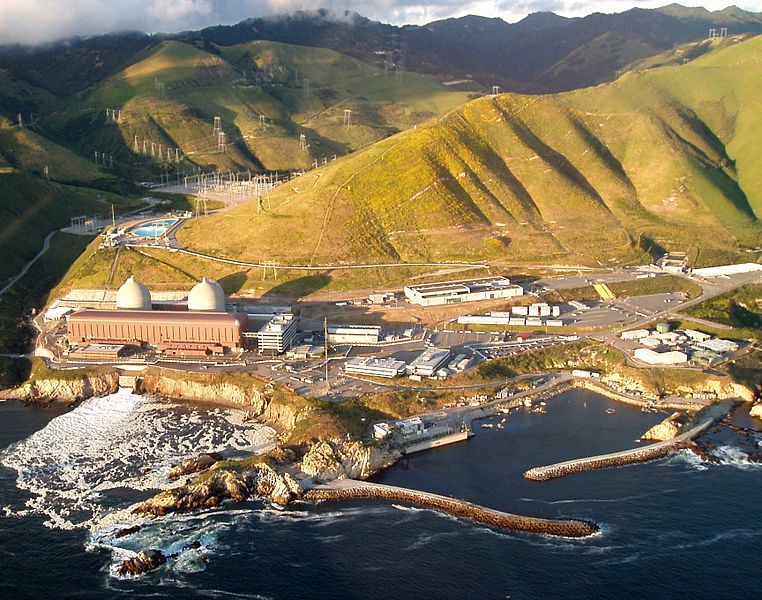
Santa Cruz Sentinel, January 7, 2024 Ron Pomerantz and Jane Weed-Pomerantz, Santa Cruz, https://www.santacruzsentinel.com/2024/01/07/letter-diablo-canyon-nuclear-plant-must-be-shut-down
Recently the Sentinel reported that the California Public Utility Commission (CPUC) approved extending operation of Diablo Canyon Nuclear Power Plant (Diablo) from a 2025 shutdown until 2030.
This is frightening and intolerable news allowing the continued Russian roulette operation of Diablo and confirming the CPUC a “captured agency.”
Many are outraged of the rate increases that PG&E is now allowed, costing ratepayers $8+billion dollars. Conservatively if spent on wind turbines and solar systems, 2-4 times electrical energy of Diablo could be produced! All with 100 percent renewable fuels and without public and environmental risk.
Diablo is old, embrittled, centered onshore near San Luis Obispo with numerous active earthquake faults. No solution exists for the storage of radioactive waste now on site.
Operation also furthers dependence on finite foreign sources of uranium with unstable and dangerous governments.
The reality is the nuclear fuel-cycle demands fossil fuels to process and distribute – hardly a green technology. Please contact the governor and state elected officials to set them straight by shutting-down Diablo and stop endangering lives and property..
Japan’s Hokuriku Elec reports oil leak from Shika nuclear plant
The magnitude 7.6 quake, which has killed more than 120 people in the Hokuriku region, shook the idled Shika power station, which is located around 65 kilometres (40 miles) from the quake’s epicentre.
The utility had already reported temporary power outages, oil leaks at the transformers, and water spill-over from spent nuclear fuel pools following Monday’s jolt, but no radiation leakage.
On Sunday, a small amount of oil film was detected in the gutter and on the road surrounding the main transformer of the No. 2 reactor, it said.
Additionally, an oil slick measuring about 5 meters by 10 meters was observed floating on the sea surface in front of the power station, Hokuriku Electric said, adding it promptly treated the oil film using a neutralizing agent.
The utility believes the oil slick resulted from a transformer insulating oil leak during the Jan. 1 quake, which triggered the fire extinguishing system, dispersing oil and spraying water around the transformer.
Subsequently, the oil appears to have entered the gutter due to rainfall, the company said, adding it was still analysing further details.
The oil slick is not within the radiation-controlled area and there are no external radiation effects, the company said.
Key external power supplies, monitoring facilities, and cooling systems at the plant are functioning normally, it added. (Reporting by Yuka Obayashi Editing by Mark Potter)
Japan earthquake casts cloud over push to restart nuclear plants
January 5, 2024
TOKYO, Jan 4 (Reuters) – The powerful earthquake that hit Japan’s western coast on New Year’s Day has underscored the country’s exposure to natural disasters, casting fresh doubt over a push to bring its nuclear capacity back online.
Nuclear power plants dot the coast of mountainous Japan, which is prone to earthquakes and tsunamis due to its location on the seismically active “Ring of Fire” around the Pacific Ocean.
Monday’s magnitude 7.6 earthquake, which has killed more than 80 people in the Hokuriku region, destroyed infrastructure and left homes without power, struck days after regulators lifted an operational ban on Tokyo Electric’s (9501.T) Kashiwazaki-Kariwa nuclear power plant.
Tepco hopes to gain local permission to restart the plant, which is around 120 kilometres from the quake’s epicentre and has been offline since 2012. The utility was banned in 2021 from operating the plant due to safety breaches including a failure to protect nuclear materials.
“The Japanese public is still generally less positive toward nuclear power now than they were before the Fukushima disaster,” analysts at Rystad Energy wrote in a client note.
“As a result, public sentiment – and potentially government policy – is likely to be sensitive to any new power-plant disruptions caused by the most recent quake or any future ones.”
Japan had planned to phase out nuclear power after the March 2011 tsunami and Fukushima meltdown, but rising energy prices and repeated power crunches have prompted a shift towards restarting idled capacity and developing next-generation reactors.
After the Jan. 1 quake Tepco reported water had spilled from nuclear fuel pools at the Kashiwazaki-Kariwa plant – the world’s largest – but said radiation levels were normal.
“Citizens had felt that Tepco could probably be able to restart reactors by the end of 2024, but this earthquake seems to have reignited a sense of fear,” said Yukihiko Hoshino, a Kashiwazaki city assembly member opposing the plant restart.
Monday’s tsunami warning reminded him of the Fukushima disaster, he said.
Tepco shares fell as much as 8% on Thursday, the first trading day since the earthquake, before closing up 2.2%.
Hokuriku Electric (9505.T), whose idled Shika plant is located around 65 kilometres from the earthquake’s epicentre, slid as much as 8% before paring losses to end down 2.2%.
The company, which reported water spill-over from spent nuclear fuel pools and oil leaks at the plant after the quake, hopes to restart the No.2 reactor there sometime after April 2026, it said in October………………………………… Reporting by Kantaro Komiya, Sudarshan Varadhan, Mariko Katsumura and Sam Nussey; Editing by Hugh Lawson
Nuclear disasters–in–waiting
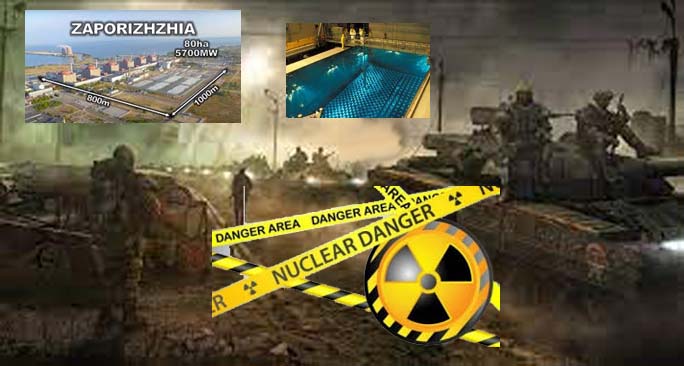
RICHARD STONE, Science 4 Jan 24
Having taken a heavy toll on Ukraine’s ecosystems and water resources, the war with Russia threatens to create a another environmental disaster: damage to the region’s extensive nuclear infrastructure—including 15 power reactors and three research reactors.
“There continues to be a highly precarious nuclear safety and security situation across Ukraine,” International Atomic Energy Agency (IAEA) Director General Rafael Mariano Grossi said in a statement after explosions were heard near the Khmelnitsky Nuclear Power Plant and its two Soviet-era reactors on 28 November 2023—the second near-miss in a single month at the site. “All of Ukraine’s nuclear facilities remain vulnerable, either directly if hit by a missile or indirectly if their off-site power supplies are disrupted.”
Russia’s assault on Ukrainian nuclear sites began on the very first day of the full-scale invasion. On 24 February 2022, troops overran the Chornobyl Nuclear Power Plant, infamous for the explosion and fire there in 1986 that sent a plume of radioactive smoke into Western Europe. During 5 weeks of occupation, Russian soldiers ransacked labs and kicked up radioactive soil and dust as they dug trenches and slogged through contaminated forests in the exclusion zone around the defunct plant. To the east that spring, Russian troops frequently shelled the Kharkiv Institute of Physics and Technology, damaging a hall containing a subcritical nuclear reactor.
Shelling has also flared up repeatedly around the Zaporizhzhia Nuclear Power Station, a complex of six reactors that constitutes Europe’s largest nuclear power plant. Russia captured the plant in March 2022 and the reactors were shut down 6 months later, eliminating the risk of a core meltdown. Still, a prodigious amount of nuclear material remains there: The reactor halls hold 1380 tons of fresh and spent uranium oxide fuel, and two repositories store an additional 2100 tons of spent fuel laced with nasty long-lived radionuclides—the ingredients, many Ukrainians fear, of a “dirty bomb” that would use conventional explosives to spread radioactive isotopes……………………………………….
The presence of IAEA observers at the Zaporizhzhia station since September 2022 has deterred the theft of dirty-bomb ingredients. But a major missile strike on one of its spent fuel repositories could turn the plant itself into a dirty bomb, spreading radioactive contamination in a radius of up to 30 kilometers, says Volodymyr Borysenko, a nuclear engineer with the National Academy of Sciences of Ukraine’s Institute for Safety Problems of Nuclear Power Plants (ISPNPP).
Even a smaller strike could contaminate the reactor complex. And the spent fuel is also at risk from repeated electricity blackouts that have struck the plant, the latest in early December 2023. Diesel-fueled generators can supply power for up to 10 days, but a prolonged outage could be dangerous, as power is needed to pump cooling water into the plant’s uranium reactor cores and pools holding spent fuel.
A lesser known radioactive risk is situated about 150 kilometers upstream from the Zaporizhzhia plant on the Dnipro River. During the Cold War, the Prydniprovsky Chemical Plant was one of Europe’s largest uranium ore processing facilities. The complex accumulated some 40 million tons of tailings—leftovers of milling uranium—and other foul residues before it closed in 1992. By early 2022, Ukraine, with help from the European Union, had fenced off highly contaminated areas. But a missile or artillery strike on a tainted building or dump could disperse radioactive dust over the nearby city of Kamianske.
One relative bright spot is Chornobyl, where Ukrainian scientists are restoring labs damaged early in the war. But large parts of the exclusion zone remain off limits because of the threat of mines and unexploded ordinance, says ISPNPP Director Anatolii Nosovskiy. Complicating matters for radiation monitoring, he says, the Ukrainian army has built defensive fortifications in the zone, near the border with Belarus…………………. https://www.science.org/doi/10.1126/science.adn7987
Japan earthquake raises concerns over restarting country’s nuclear plants
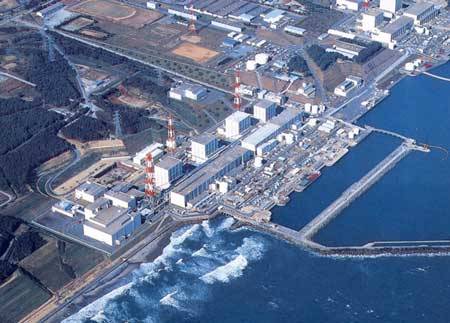
The earthquake struck days after Japan’s regulators lifted a two-year operational ban on a power plant run by Tokyo Electric Power Company (Tepco), which operated the wrecked Fukushima nuclear plant.
Ashima Sharma, January 5, 2024, https://www.power-technology.com/news/japan-earthquake-raises-concerns-over-restarting-countrys-nuclear-plants/?cf-view
The 7.6 magnitude earthquake that hit Japan’s western coast on 1 January has raised concerns over the push to bring the country’s nuclear capacity online.
The earthquake struck just days after the country’s regulators lifted a two-year operational ban on Tepco’s Kashiwazaki-Kariwa nuclear power plant.
Tepco’s plant is located around 120km from the earthquake’s epicentre but has been offline since 2012. Tepco was also the operator of the wrecked Fukushima nuclear plant and in 2021 was banned from transporting new uranium fuel to its Kashiwazaki-Kariwa nuclear plant.
The move was to prevent Tepco from restarting the facility’s seven nuclear reactors, ten years after two of its reactors incurred a triple meltdown at Fukushima.
Following the quake, Tepco reported water spillage from two nuclear fuel pools of the No. 7 and No. 2 reactors at the Kashiwazaki-Kariwa nuclear power plant.
The company ascertained that about 14 litres of water containing radioactive materials spilled from the pools, although it said the radiation levels were normal.
The Shika nuclear power plant, operated by another company, Hokuriku Electric, and located 65km from the epicentre, also reported spillage from spent nuclear fuel pools and oil leaks.
After the Fukushima nuclear disaster in March 2011, there was a strong public and political sentiment to phase out nuclear plants in the country. However, over the years, severe power crunches coupled with rising energy prices have pushed Japan towards restarting idle reactors.
In 2023, Japan’s Kansai Electric Power restarted its 12th nuclear reactor at the Takahama plant. The 826MW Takahama No. 2 was the country’s second-oldest operating reactor, having entered service in 1975.
We care about Japan’s disaster situation and are concerned about nuclear safety:
By Global Times, Jan 03, 2024
As of Tuesday evening, the 7.6-magnitude strong earthquake that occurred in Japan has caused at least 57 deaths, multiple casualties, building collapses, widespread power outages, and fires. The latest development is a collision between a Japan Airlines plane and a Japan Coast Guard aircraft at Tokyo’s Haneda Airport during landing, resulting in at least five deaths among the six crew members of the latter. The Japan Coast Guard aircraft was originally scheduled to transport relief supplies to the earthquake-stricken area in Ishikawa Prefecture. It was preparing for takeoff on the runway when the incident occurred. It’s not difficult to imagine the various chaos that this major earthquake has brought to Japan.
This is the strongest earthquake in Japan since the “3.11” earthquake in 2011. The Japan Meteorological Agency stated on Tuesday that since January 1 local time, there have been 155 earthquakes in Japan, including two strong earthquakes of over magnitude 6. It is uncertain whether there will be continuous aftershocks or even larger earthquakes. Despite Japan’s rich experience in dealing with disasters such as earthquakes and tsunamis, human society remains vulnerable in the face of unexpected natural disasters.
Meanwhile, we also notice that in this earthquake, there is some important information that may not have received enough attention. For example, Tokyo Electric Power Company (TEPCO) announced on the evening of January 1 that the water from the fuel pools at the top floors of the No. 7 and No. 2 reactors at the Kashiwazaki-Kariwa nuclear power plant in Niigata Prefecture spilled over due to strong earthquakes. These waters contain radioactive materials, and the radiation levels are currently being measured. In addition, there was a situation at the Shika Nuclear Power Station in Ishikawa Prefecture where some water had sloshed from a cooling pool for spent fuel rods. Regarding the issues at these two nuclear power stations, the Japanese authorities have promptly concluded that they are “currently safe,” stating that “no damage or leaks were confirmed” and that the fuel cooling at the Shika Nuclear Power Station was “unaffected.”
We certainly hope that this accurately reflects the current situation regarding the nuclear power plants. The information has garnered significant attention from netizens, leading to doubts about whether Japan will experience another catastrophic nuclear accident similar to the Fukushima incident following an earthquake. One reason for this concern is that Japan is one of the countries with the highest concentration of nuclear power plants in the world, coupled with its limited land area. Once a serious nuclear disaster occurs, Japan can hardly cope with it independently. The Fukushima nuclear accident serves as a painful reminder.
More importantly, the Japanese government and TEPCO have a bad track record of mishandling nuclear accidents. To some extent, they have lost credibility. Furthermore, Japan’s stubborn and irresponsible actions regarding the dumping of nuclear-contaminated water from Fukushima have caused great concerns among the Japanese people
Japan needs to take these legitimate concerns seriously. Although the epicenter of this earthquake was in the Noto Peninsula in Ishikawa Prefecture, its impact was widespread, ranging from Hokkaido to Kyushu. The coastal areas of northern Japan, where numerous nuclear facilities and power plants are located, have been affected to varying degrees. The Kashiwazaki-Kariwa nuclear power station, which has witnessed problems, is one of the largest in the world.
It is crucial to assess the condition of these nuclear facilities and the radiation levels in the surrounding sea. Does Japan have a comprehensive monitoring plan in place? Are other nuclear power plants along the coast in a safe state? How does Japan ensure transparency in information disclosure? These issues are directly related to the well-being of the Japanese people and the surrounding countries, and they require a serious response from Japan in the process of dealing with this earthquake………………. https://www.globaltimes.cn/page/202401/1304687.shtml
IAEA says its inspectors are denied access to parts of Ukraine nuclear plant .
The head of the U.N. nuclear power watchdog said on Wednesday his
inspectors had been denied access to parts of Ukraine’s Russian-occupied
Zaporizhzhia nuclear power station and had yet to receive 2024 maintenance
plans for the facility. The plant was seized by Russia in the days
following Moscow’s 2022 invasion of Ukraine. Each side has accused the
other of shelling around the station, Europe’s largest, though its six
reactors now produce no electricity.
Reuters 3rd Jan 2024
Operational Ban Lifted on Major Japan Nuclear Plant
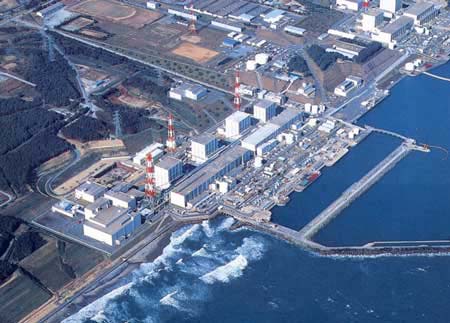
by Sydney Leimbach | Jan 3, 2024
Japan’s nuclear power regulator has lifted its operational ban on Tokyo Electric Power’s (Tepco) Kashiwazaki-Kariwa nuclear plant, the largest nuclear site in the world, after shutting it down about three years ago due to safety concerns.
The plant, which reportedly has a capacity of 8.2 gigawatts, was the only operable atomic power station in the country when it was shut down. It had previously been offline since the 2011 Fukushima disaster caused all nuclear power plants in the country to cease operations.
Tepco was barred from operating the Kashiwazaki-Kariwa plant in 2021 after the Nuclear Regulation Authority reportedly found safety breaches such as failing to protect nuclear materials and finding an unauthorized staff member accessing sensitive areas of the plant.
Last week, Japan’s Nuclear Regulation Authority found that counterterrorism and safety measures had since been improved at the plant after conducting inspections. Before the plant may come back online, however, consent must be achieved from local governments in Niigata, Kashiwazaki city, and Kariwa village, where the plant is located.
“The government will seek the understanding and cooperation of Niigata prefecture and local communities, emphasizing ‘safety-first’,” said Yoshimasa Hayashi, the government’s top spokesperson, in a Reuters report.
The company has compiled a report on the causes of the infractions that led to its ban and how improvements have been made since. Shares in Tepco dramatically increased when the Nuclear Regulation Authority indicated that the ban would be lifted, especially as the country works to revitalize its nuclear power profile, https://www.environmentenergyleader.com/2024/01/operational-ban-lifted-on-major-japan-nuclear-plant/
 | |||
| |||
Following earthquake, Japan’s nuclear reactors escaped serious problems – THIS TIME.
Japan’s nuclear power plants largely undamaged following quake
BY ERIC JOHNSTON, STAFF WRITER, Japan Times, 2 Jan 24
Japan’s nuclear power plants along the Sea of Japan coast escaped serious damage in the New Year’s Day earthquake that struck the Noto Peninsula in Ishikawa Prefecture.
But the 7.6 magnitude quake, which triggered tsunami warnings from Hokkaido to Kyushu and led to evacuations in nine prefectures, could once again spark public concern about the safety of nuclear power in an earthquake-prone country at a time when Prime Minister Fumio Kishida plans to ramp up its usage as part of his “green transformation” policy.
In Ishikawa Prefecture, Hokuriku Electric Power’s Shika nuclear plant saw its electricity system partially disabled following the quake, but no major abnormalities have been reported. The plant’s No. 1 and No. 2 reactors were offline prior to the quake.
The Nuclear Regulation Authority (NRA) reported that Shika plant workers heard what sounded like an explosion, and then smelled something burning near a transformer that received electricity for use in the No. 2 reactor. Staff checking the area discovered the fire extinguishing system had been activated.
No fire was detected but the reactor’s electricity supply was partially disabled. Hokuriku officials believe pressure inside the transformer increased due to the tremor. This triggered a device to release the pressure, causing a loud noise and activation of the fire extinguishing system rather than an actual fire.
Electric power for equipment critical for the plant’s safety was secured through other systems, and cooling pools where spent nuclear fuel is stored continued to operate. Hokuriku Electric officials said Monday they were assessing the damage but that there was no change in the readings of the plant’s monitoring posts, and that no external radiation had been detected. However, of the 101 radiation monitoring posts in the plant’s vicinity, 13 are no longer operational. As of Tuesday, the cause was still unknown.
At Tokyo Electric Power Company Holdings’ Kashiwazaki Kariwa Nuclear Power Station in Niigata Prefecture, home to seven nuclear reactors — all of which were offline before the quake — plant officials confirmed Monday that water from a spent fuel pool spilled over due to the earthquake, but that no abnormalities in operation had been detected………………………………………………..
While the nuclear power plants avoided damage, the New Year’s Day quake and tsunami warnings brought back memories of the devastating Great East Japan Earthquake and triple meltdowns at the Fukushima No. 1 power plant, and could revive doubts about the nuclear industry — especially at a time when the government has plans to use more reactors, many located on the Sea of Japan coast, that have been offline since the quake on March 11, 2011.
Last February, the Kishida Cabinet approved its green transformation policy, which would extend the lifespan of nuclear reactors beyond 60 years and replace those that get scrapped. It was a major reversal of the policies that went into place following the 2011 disaster.
Currently, 12 nuclear power plants have been officially restarted since 2011, while five have received permission to restart and are undergoing final preparations to do so. Another 10 reactors are still undergoing inspections for a possible restart. Nine reactors have not applied for restart, and 24, including 10 Tepco reactors in Fukushima Prefecture, are being decommissioned.
Systems to supply power to nuclear plant in Ishikawa partially unusable
NHK News, Tuesday, Jan. 2, 2024
The operator of the Shika nuclear power plant in quake-hit Ishikawa Prefecture says systems to supply electricity to the facility from outside sources remain partially unusable.
But the utility says electricity continues to be supplied to the plant through other means and that sources of power for important safety equipment are secure.
Hokuriku Electric Power Company held a news conference on Tuesday, one day after a magnitude 7.6 earthquake struck the prefecture.
Both of the No.1 and No.2 reactors at the plant, which are located in the town of Shika, had been taken offline long before the earthquake…………………………..
Hokuriku Electric officials said the pipes of two transformers used for the two reactors to receive electricity from outside have been damaged due to the earthquake, with oil for insulation and cooling leaking out.
The officials said the oil leakage amounts to 3,600 liters at the No.1 reactor and 3,500 liters at the No.2 reactor. They said systems using the two transformers remain unable to receive electricity.
They also said both reactors are receiving electricity from other means, adding that emergency diesel generators have enough fuel to last seven days.
The officials say there are no problems with the systems for cooling spent nuclear fuel. more https://www3.nhk.or.jp/nhkworld/en/news/20240102_33/
Volcanic hazard to planned Natrium fast nuclear reactor – even the NRC admits.
The proposed site of the Natrium fast nuclear reactor in Kemmerer, Wyoming
is subject to potential volcanic hazards that must be rigorously evaluated.
Volcanic ash falls and nuclear plants don’t play together very well.
Nuclear Regulatory Commission 16th Dec 2023
1 This Month


PLEASE OPPOSE HR 8255 AND S.3639 – bills would accelerate satellite deployment, with no environmental review or safeguards – https://ncstd5li.quorum.us/campaign/169331/
To see nuclear-related stories in greater depth and intensity – go to https://nuclearinformation.wordpress.com
-
Archives
- September 2026 (194)
- August 2026 (330)
- July 2026 (355)
- June 2026 (287)
- May 2026 (306)
- April 2026 (356)
- March 2026 (251)
- February 2026 (267)
- January 2026 (308)
- December 2025 (358)
- November 2025 (359)
- October 2025 (375)
-
Categories
- 1
- 1 NUCLEAR ISSUES
- business and costs
- climate change
- culture and arts
- ENERGY
- environment
- health
- history
- indigenous issues
- Legal
- marketing of nuclear
- media
- opposition to nuclear
- PERSONAL STORIES
- politics
- politics international
- Religion and ethics
- safety
- secrets,lies and civil liberties
- spinbuster
- technology
- Uranium
- wastes
- weapons and war
- Women
- 2 WORLD
- ACTION
- AFRICA
- Atrocities
- AUSTRALIA
- Christina's notes
- Christina's themes
- culture and arts
- Events
- Fuk 2022
- Fuk 2023
- Fukushima 2017
- Fukushima 2018
- fukushima 2019
- Fukushima 2020
- Fukushima 2021
- general
- global warming
- Humour (God we need it)
- Nuclear
- RARE EARTHS
- Reference
- resources – print
- Resources -audiovicual
- Weekly Newsletter
- World
- World Nuclear
- YouTube
-
RSS
Entries RSS
Comments RSS
 nuclear-news