Low-Flying Helicopters Will Monitor Any Nuclear Threat In Las Vegas This Weekend
Matt Novak, Senior Contributor Forbes 27 Dec 23
If you see low-flying helicopters over the Las Vegas strip during the next few days, don’t be alarmed. The U.S. Department of Energy is conducting surveillance flights to make sure any potential terrorists aren’t able to sneak a dirty bomb into the tourist destination. And, believe it or not, it’s the kind of surveillance that’s been happening since the 1970s, even if it doesn’t always get a public announcement.
The low-flying aircraft are operated by the National Nuclear Security Administration under a special group called the Nuclear Emergency Support Team, which was established almost 50 years ago to protect the U.S. from nuclear threats.
The flights are scheduled for Friday, Dec. 29 and Sunday, Dec. 31 to prepare for the big New Year’s Eve celebrations in Las Vegas.
“The public may see NNSA’s twin-engine Bell 412 helicopter, which is equipped with radiation-sensing technology,” the Department of Energy said in a press release on Wednesday………………..
The helicopter flights first measure the amount of background radiation that’s naturally occurring in a major city and allow investigators to look out for any abnormal radiation, which would be present if terrorists ever constructed what’s called a “dirty bomb” from nuclear material.
The NEST task force was first set up in 1975 after a number of nuclear threats against major American cities, many of which didn’t make the evening news and were only revealed decades later in the book Defusing Armageddon by Jeffrey T. Richelson. Some of the threats turned out to be just kids, like the 14-year-old who threatened to blow up Orlando in 1970 if he didn’t get $1 million. But other threats stemmed from instances where actual nuclear material was stolen from U.S. labs.
And that’s why NEST has been in action ever since, largely working behind the scenes, as many Americans have no idea that the Department of Energy is even monitoring for such things. But they’re constantly monitoring for nuclear threats, especially during large events like the Super Bowl or New Year’s Eve celebrations in a city like Las Vegas………………………………….. more https://www.forbes.com/sites/mattnovak/2023/12/27/low-flying-helicopters-will-monitor-any-nuclear-threat-in-las-vegas-this-weekend/?sh=13cd7d4784b9
Mystery fire breaks out on Russia’s only nuclear-powered icebreaker vessel as it was docked at Arctic port
- The Sevmorput, built in 1988, underwent extensive upgrades a decade ago
- Its owner stressed there was no threat to the ship’s nuclear reactor plant
By JAMES REYNOLDS and WILL STEWART, 25 December 2023
A mystery blaze aboard Russia‘s only nuclear-powered icebreaker cargo ship triggered panic in the Arctic port of Murmansk.
A fire broke out on Sunday in one of the cabins of the Soviet-made Sevmorput, currently docked in the northern Russian region bordering Finland and Norway.
The inferno spread some 323 square feet (30 sq metres) on the 830-ft ship (230m) before firefighters were able to put it out without casualties, Russia’s emergency ministry said.
‘The fire was quickly liquidated,’ Atomflot, which owns the vessel, said in a statement. ‘There were no injuries. There was no threat to crucial support systems or to the reactor plant.’
The ship, which entered service in 1988 and went through an extensive upgrade a decade ago, is Russia’s only nuclear-powered icebreaking transport ship, according to Rosatom. ………………………………………………..more https://www.dailymail.co.uk/news/article-12899379/Inferno-nuclear-russia-icebreaker-panic-murmansk-arctic.html
 | |||
| |||
(no subject)
Inbox
Search for all messages with label Inbox
Remove label Inbox from this conversation

Christina Macpherson <christinamacpherson@gmail.com>
7:49 AM (0 minutes ago)
to me
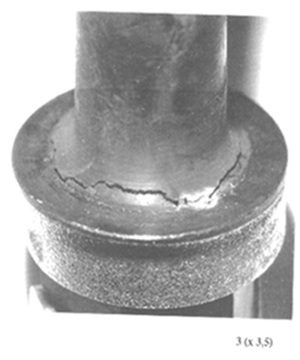
EDF to extend nuclear outages in 2024, 2025 on corrosion issue
CAROLINE PAILLIEZ, Paris, France, 21 Dec 2023
Montel) French utility EDF will extend planned outages at up to five of its reactors by an average of 30 days next year and again in 2025 related to repairs undertaken in 2023 for corrosion, it said late on Wednesday.
The shutdowns could affect one planned outage out of three at 13 reactors*, it said in a statement, adding it was “taking into account key learnings from controls and repairs undertaken in 2023 on reactors linked to stress corrosion cracking”.
The corrosion issue has dogged the firm, with reactor outages jumping 47% in 2022 due to corrosion issues at numerous units, with output plunging to a 33-year………. (Subscribers only) more https://www.montelnews.com/news/1533868/edf-to-extend-nuclear-outages-in-2024-2025-on-corrosion-issue
Documents Reveal Hidden Problems at Russia’s Nuclear Powerhouse
- Flagship reactor had unusual safety event in February 2022
- Rosatom said its reactors all meet highest safety standards
By Alberto Nardelli and Jonathan Tirone, December 18, 2023
As Russian troops poured into Ukraine at the start of Vladimir Putin’s invasion in February last year, alarm was rising at a flagship Kremlin nuclear project in neighboring Belarus, just a short distance from the European Union’s border.
Engineers at Rosatom Corp. preparing a new 1,200-megawatt reactor, which was not yet connected to the power grid, to generate electricity at the Astravets Nuclear Power Plant detected a mysterious and exceedingly rare problem. Resin was seeping into the primary circuit, threatening to seize up critical components, according to internal documents of the Russian state nuclear……………………….(Subscribers only) more https://www.bloomberg.com/news/articles/2023-12-18/documents-reveal-hidden-problems-at-russia-s-nuclear-powerhouse
Sellafield staff ‘used home computers to beat security failings’.

Cybersecurity fears grow amid claims Britain’s most hazardous nuclear
site was targeted by hackers linked to Russia and China. Staff at
Sellafield were asked to work on sensitive projects using their home
computers, a former employee has said, amid questions about cybersecurity
at Britain’s most hazardous nuclear site after claims it was hacked by
groups linked to Russia and China.
Claire Coutinho, the energy secretary,
is due to meet representatives from the Nuclear Decommissioning Authority
(NDA) after an investigation alleged that state actors had embedded sleeper
malware into the computer network at Sellafield, the largest nuclear waste
and decommissioning site in Europe.
Sources told The Guardian that IT
breaches had been detected as far back as 2015, and accused the
organisation’s leaders of having “consistently covered up” the scale
of the intrusions. Highly sensitive material potentially relating to the
movement of radioactive waste and monitoring of leaks had likely been
compromised, and it is still unknown as to whether the malware has been
successfully eradicated, the newspaper reported.
A former staff member, who
worked as a senior manager at the site between 2008 and 2021, told The
Times that staff had a “complacent” and “lax” attitude towards
cybersecurity, with employees often leaving their login details attached to
their computers and frequently having to be reminded to lock their screens.
Times 9th Dec 2023
Poland’s nuclear plans in question after negative assessment by security agency
Notes from Poland, DEC 9, 2023
Part of Poland’s plans to develop nuclear power has been thrown into doubt after the Internal Security Agency (ABW) issued a negative opinion on planned investment in small modular reactors (SMRs) by a state-linked firm.
Orlen Synthos Green Energy (OSGE) – a joint venture between state energy giant Orlen and Sythos, a chemical company owned by one of Poland’s wealthiest men, Michał Sołowow – has been developing plans to build over 70 SMRs around Poland in partnership with a group of US and Canadian corporations.
However, earlier this week, the Polityka weekly reported that the ABW – Poland’s domestic counterintelligence and security agency – had issued a negative opinion on the plans. The climate ministry is required to obtain the ABW’s opinion as part of its assessment of the nuclear project.
The ABW’s opinion is not binding, but a negative assessment makes it unlikely the climate ministry would approve the SMR plans, reports industry news service Energetyka24………………………………………………
“Before issuing an opinion, the agency carries out a multi-element opinion procedure to assess the impact of the indicated investment on the internal security of the state,” Kamiński wrote in a statement.
According to Kamiński, OSCE’s investment “inappropriately secures the interests of the [state] treasury”. But he added that detailed information on this cannot be made public…………… https://notesfrompoland.com/2023/12/09/part-of-polands-nuclear-plans-in-question-after-negative-assessment-by-security-agency/
UK minister demands answers for security failings at Sellafield

Claire Coutinho says cybersecurity issues at UK’s most hazardous nuclear site must be urgently addressed
Anna Isaac and Alex Lawson, Guardian Wed 6 Dec 2023
Cybersecurity vulnerabilities at the UK’s most hazardous nuclear site must be urgently addressed and explanations given for any shortcomings, a cabinet minister has demanded.
Claire Coutinho, secretary of state for energy security and net zero, wrote to the chief executive of the Nuclear Decommissioning Authority (NDA), David Peattie, saying allegations by the Guardian about failings in cybersecurity at Sellafield in Cumbria needed “urgent attention”.
The intervention follows the revelation that the vast nuclear waste and decommissioning dump has been hacked by groups linked to China and Russia, and its potential effects covered up by senior staff. It emerged as part of Nuclear Leaks, a year-long Guardian investigation into problems spanning cyber hacking, radioactive contamination, and toxic workplace culture at Sellafield.
Coutinho said: “The allegations are a worrying reminder of the longstanding nature of some of these issues, specifically cybersecurity at Sellafield, which I understand has been under enhanced regulatory scrutiny since 2014.”…………………………………………………………………………….
The government has also formally requested an update on a range of activities at the site, including work on cleaning up leaking silos of radioactive sludge and liquid after a report by the Guardian on growing safety concerns……………………………………………………………………….
Carla Denyer, co-leader of the Green party, which opposes nuclear power, said: “This toxic legacy of nuclear weapons and nuclear power poses a serious risk to life and public health as well as poisoning relations with other countries, especially Norway, that would be devastated by a radioactive plume if ever there was a major incident at Sellafield.
“This is Europe’s most hazardous nuclear site, so the government must put in place the investment needed to make it as safe as possible.”………………. https://www.theguardian.com/business/2023/dec/05/uk-minister-demands-answers-for-security-failings-at-sellafield
Canadians should be afraid of radiation: Frank Greening.

Dr. Frank Greening, Hamilton, Ont. 4Dec 23
Re: “We can manage predictable radiation: Canadian Nuclear Society,” (The Hill Times, Nov. 15, 2023, letter to the editor. The gist of this CNS letter to The Hill Times appears to be: we should not be afraid of radiation because it’s predictable and we can manage it.
I have to say that when it comes to radiation exposures at nuclear power stations, the Canadian nuclear industry has proven time and again that radiation exposures to workers have often been quite unpredictable and totally mismanaged. As proof of this assertion consider what happened at Pickering Nuclear Generating Station (NGS) in March 1985 and at Bruce NGS in January 2010.
In the case of the Pickering NGS 1985 event, workers involved in the refurbishment of Units 1 and 2 were exposed to airborne beta-active particulate.
Most unfortunately for the CNSC, there is ample evidence that the Bruce alpha exposure event was not unforeseen. Indeed, in November 2009, the CNSC reported that a routine survey during refurbishment operations at the Bruce Nuclear Generating Station detected the presence of radioactive alpha contamination in the Unit 1 reactor vault. Nevertheless, both Bruce Power and the CNSC proceeded with the Unit 1 refurbishment.
I would say that Canadians should be afraid of radiation when our very own nuclear industry and the regulatory body, responsible for the safety of nuclear facilities, appear to be incapable of protecting nuclear workers from needless radiation exposures during reactor refurbishments.
Zaporizhzhia nuclear plant suffered power outage, energy ministry says

Reuters, December 2, 2023
KYIV, Dec 2 (Reuters) – Ukraine’s Russian-occupied Zaporizhzhia nuclear power plant lost its power supply after the last remaining line to it from Ukrainian-controlled territory was disrupted, but it has since been repaired, the energy ministry said on Saturday.
The plant was occupied by Russia in March 2022 and is no longer generating power, but needs a supply of electricity to cool one of its four reactors which is in a state of ‘hot conservation’ – meaning it has not fully been shut down.
According to a statement published by Ukraine’s energy ministry on Telegram, one power line to the plant was disrupted late on Friday, while the last, 750 kW, line was broken at 2:31 a.m. (0031 GMT) on Saturday.
“This is the eighth blackout which occurred at the (Zaporizhzhia plant) and could have led to nuclear catastrophe,” the statement said.
The ministry said that after losing grid connection the plant turned on 20 backup generators to supply its own electricity needs.
IAEA experts record explosions near two Ukrainian nuclear power plants

The International Atomic Energy Agency (IAEA) experts in Ukraine have
recorded explosions near two nuclear power plants (NPP) on the night of
28-29 November. “IAEA experts based in Ukraine reported sound of military
activity overnight in proximity of Khmelnitsky NPP, not just at the
Zaporizhzhia NPP, Director General Rafael Grossi said today [29 November].”
Pravda 30th Nov 2023
https://www.pravda.com.ua/eng/news/2023/11/30/7430978/
Emerging Risks 30th Nov 2023
Closer to nuclear plant than ever, latest Korean quake renews calls to retire aging reactors

A 4.0 magnitude earthquake struck Gyeongju at dawn on Thursday only 10 km from a nuclear plant.
A shallow, magnitude 4.0 earthquake hit the city of Gyeongju in North Gyeongsang Province at 4:55 am on Thursday. It was the second biggest quake Korea has seen this year, following a 4.5 magnitude quake that occurred 52 km off the coast of Donghae, Gangwon Province, on May 15. The Gyeongju quake is the biggest to strike on land in Korea this year.
As the quake occurred not too far from the city’s Wolsong nuclear power plant, critics of nuclear power are becoming more vocal about safety concerns. Many are calling for the immediate decommissioning of aging nuclear power plants at a time when operators are trying to extend their lifespans.
Gyeongju saw a much larger quake of 5.8 magnitude in September 2016, the largest to be recorded in the area, but the recent quake’s epicenter was a mere 10.1 km away from the Wolsong nuclear plant, while the 2016 quake’s epicenter was 27 km away from the plant.
…………………………….. A study published by the Ministry of the Interior and Safety on faults in the southeastern region (North and South Gyeongsang provinces, Busan, Ulsan) revealed 14 active faults that have the potential to produce an earthquake of 6.5 magnitude or larger. The study was published in early 2023. Based on earthquake magnitude and proximity, five of these 14 faults were judged to have the potential to affect the structural integrity of the Wolsong plant. These faults are referred to as “faults for consideration in seismic design.”
Among the 16 nuclear plants operating in regions along the southeastern coast, only Shinkori nuclear power plants unit Nos. 3-6, which were built relatively recently, were designed to withstand an earthquake of 6.5 magnitude or larger (0.3 g).
Joint Action of Gyeongju Citizens Opposing Nuclear Power, a local anti-nuclear power activist group, released a statement that opposes attempts to extend the lifespan of the already aging Wolsong power plant……….
“The Wolsong nuclear power plant’s construction was based on faulty inspections of the geological integrity of the ground and surrounding region. Its earthquake-resistance designs are subpar, and today’s earthquake only magnifies our concerns about the plant’s safety,” the statement said
.“The South Korean government must begin the processing of shutting down Wolsong power plant units 2,3 and 4, as they are exposed to the risks of active faults,” the statement continued……………. https://english.hani.co.kr/arti/english_edition/e_national/1118764.html
Olkiluoto 3 nuclear power station shuts down again
Olkiluoto 3 shuts down again. The nuclear power plant’s third reactor has
faced some disruption since it started production in March 2022. Production
at the Olkiluoto 3 nuclear reactor shut down on Wednesday, when a fault was
discovered. “In a fault ride-through test, a momentary short circuit is
created near the power plant in the network, causing a dip in voltage,”
said the plant’s operator Teollisuuden Voima (TVO). The shutdown comes just
hours after a reactor at Sweden’s Ringhals plant also shut down, taking
more power out of the Nordic energy market.
YLE 29th Nov 2023
Freezing consequences for Mississippi River as nuclear units down
Fox 9, By Corin Hoggard, November 30, 2023
RED WING Minn. (FOX 9) – For the first time in 25 years, both units at the Prairie Island nuclear energy plant are down for repairs………………………………………………………..
Right now, the current is strong enough that the river’s all water not ice, but with both units at the plant shut down, locals expect this entire river to freeze solid………………………….. more https://www.fox9.com/news/freezing-consequences-for-mississippi-river-as-nuclear-units-down
K-219: Russia’s Worst Submarine Ever (And a Nuclear Disaster)?

This article is all about the sinking of a ballistic missile submarine, carrying 6 nuclear missiles.
But – not a word about the radioactive pollution that must still be emanating from the undersea wreck nearly 30 years later.
The K-219 was clearly faulty and the crew did not react well to the emergency. It should be considered one of the worst submarines of all time because it carried nuclear missiles and there was a fire on board.
National Interest, Brent M. Eastwood 26 Nov 23
-219: The Worst or Most Dangerous Submarine of All Time? When it comes to figuring out what is the worst submarine of all time, it is difficult to blame the sub itself or the bad actions of the crew. Such is the case with the sinking of the Soviet submarine K-219. K-219 was a Yankee-class boomer, or ballistic missile submarine, that carried nuclear weapons.
On October 3, 1986, the K-219, with 16 R-27 nuclear missiles, sunk within 700 miles off the coast of Bermuda.
One of the missile tubes sprung a leak and seawater rushed in and blended with the missile fuel. This volatile combination made for a deadly mix that created dangerous levels of heat and gas. This is where the crew reacted slowly without the sailors exhibiting teamwork and conducting damage control.
Only one crew member moved to do something by venting the tube. A short circuit cropped up in the main power line that created a spark. Then a blast in the silo occurred that sent the missile and the warheads into the water. That’s when the sailors finally sprang into action. They battled the fire on board, eventually putting it out.
They had to shut down the nuclear reactors by hand because the control mechanisms were damaged. Three sailors died.
A Soviet ship tried to rescue the sub by pulling it to safety. But that did not work because the tow cord broke. The captain of the sub, Igor Britanov, decided to abandon ship. The sub sunk to the bottom of the ocean and the missiles were lost. The whole encounter lasted three days.
The Reagan administration even offered to help the Soviets and American officials appreciated that the Soviets informed them of the tragedy the day it happened. Fortunately, no radioactivity or nuclear explosion happened. The surviving sailors made it out and Captain Britanov was the last to leave the sub alive, in accordance with naval customs………………………………………………………………………………….
The K-219 was clearly faulty and the crew did not react well to the emergency. It should be considered one of the worst submarines of all time because it carried nuclear missiles and there was a fire on board. This made it one of the most dangerous submarines to ever float. Gorbachev feared the worst and he was correct to blame the crew. They reacted slowly to the original leak and did not check the power system before engaging the water pump.
They should have known that gas was present and that employing electrical power would be dangerous. This was one of the most hazardous maritime situations in the Cold War. The Soviets and the Americans were lucky it was not worse. https://nationalinterest.org/blog/buzz/k-219-why-russias-worst-submarine-ever-and-nuclear-disaster-207495
Hacktivists breach U.S. nuclear research lab, steal employee data.

Bleeping Computer, By Bill Toulas, 21 Nov 23
The Idaho National Laboratory (INL) confirms they suffered a cyberattack after ‘SiegedSec’ hacktivists leaked stolen human resources data online.
INL is a nuclear research center run by the U.S. Department of Energy that employs 5,700 specialists in atomic energy, integrated energy, and national security.
The INL complex extends over an 890-square-mile (2,310 km2) area, encompassing 50 experimental nuclear reactors, including the first ones in history to produce usable amounts of electricity and the first power plant designed for nuclear submarines.
Currently, INL is occupied with research on next-gen nuclear plants, light water reactors, control systems cybersecurity, advanced vehicle testing, bioenergy, robotics, nuclear waste processing, and other studies.
Hacktivists claim attack on INL
On Monday, SiegedSec announced it had gained access to INL data, including details on “hundreds of thousands” of employees, system users, and citizens.
As the group has done in previous breaches on NATO and Atlassian, they openly leaked stolen data on hacker forums and a Telegram channel run by the group, not caring to negotiate with the victim or demand ransoms.
The data leaked by SiegedSec includes:
- Full names
- Dates of birth
- Email addresses
- Phone numbers
- Social Security Numbers (SSN)
- Physical addresses
- Employment information
As the group has done in previous breaches on NATO and Atlassian, they openly leaked stolen data on hacker forums and a Telegram channel run by the group, not caring to negotiate with the victim or demand ransoms.
The data leaked by SiegedSec includes
As the group has done in previous breaches on NATO and Atlassian, they openly leaked stolen data on hacker forums and a Telegram channel run by the group, not caring to negotiate with the victim or demand ransoms.
The data leaked by SiegedSec includes:
- Full names
- Dates of birth
- Email addresses
- Phone numbers
- Social Security Numbers (SSN)
- Physical addresses
- Employment information
On Telegram, SiegedSec also posted alleged proof of the breach by sharing screenshots of tools used internally by INL for document access and announcement creation.
The attackers also showed the creation of a custom announcement on INL’s system to let everyone in the complex know about the breach………………………………….
Although SiegedSec has neither accessed nor disclosed any data on nuclear research, the incident will inevitably intensify law enforcement scrutiny of the hacktivist group, as INL is considered a vital part of U.S. critical infrastructure. https://www.bleepingcomputer.com/news/security/hacktivists-breach-us-nuclear-research-lab-steal-employee-data/
1 This Month

22 June – Virtual Event –Climate Change: New Data, New Debate

Monday, June 22, 2026 2:30 p.m. – 3:15 p.m. CT
YouTube. Register here

Protect Sazan Island from the Trump family! https://secure.avaaz.org/campaign/en/protect_sazan_island_from_the_trump_family_loc/?bqFCVab&v=174511&cl=22707147157&_checksum=5e9dde668860e8231c33699735e16a1fbf22ab2cb01da50c999fe8732b9775ef&utm_source=email&utm_medium=blast_email&utm_campaign=174511
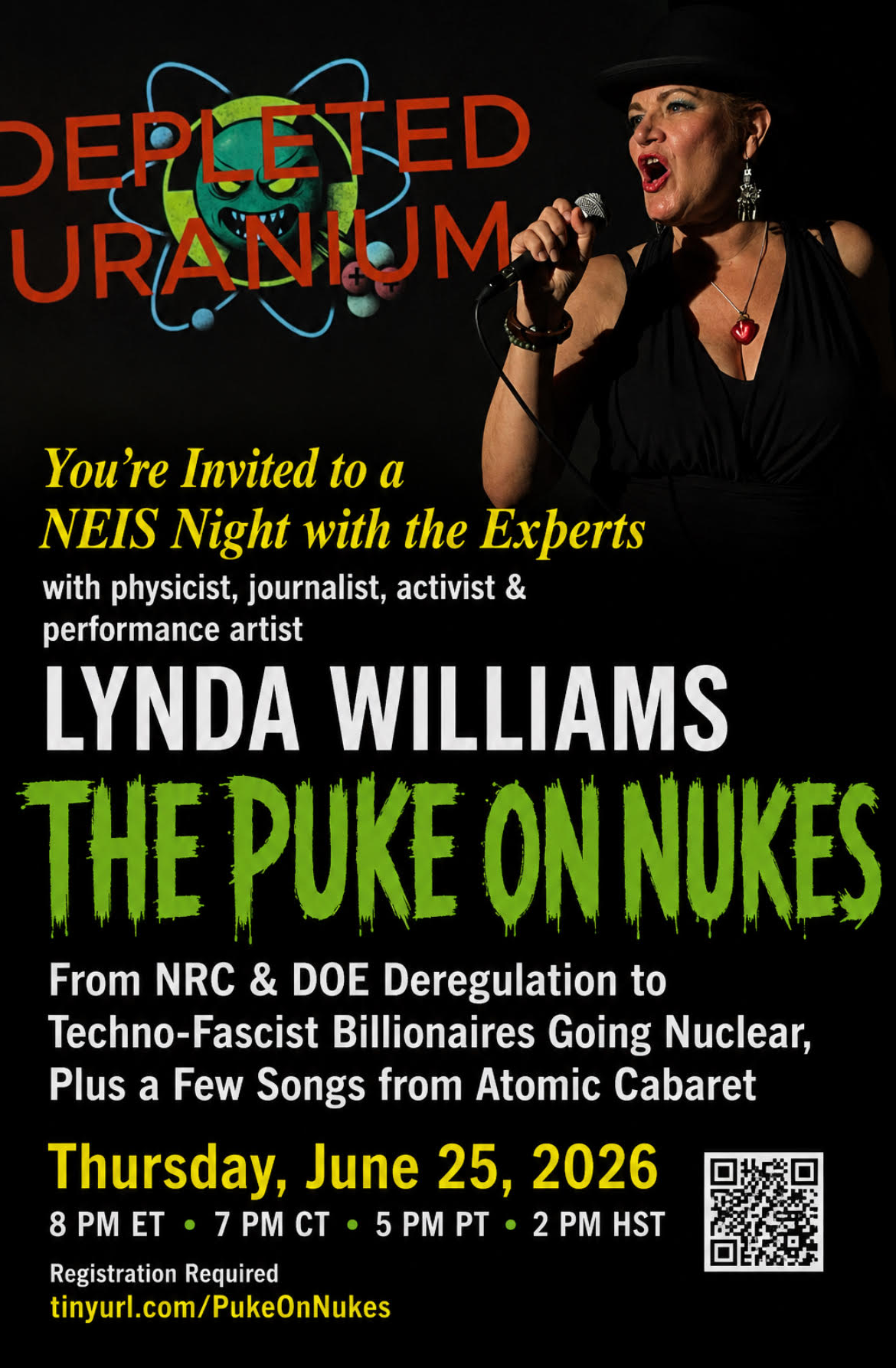
25 June- THE PUKE ON NUKES
Thursday, June 25, 2026
7pm Central Time (8pm ET, 6pm MT, 5pm PT) UTC – 5
From NRC & DOE Deregulation to Techno-Fascist Billionaires Going Nuclear, Plus a Few Songs from Atomic Cabaret REGISTER
26 June – Radiation Trainwreck at the NRC / Join the Protect Better Campaign – https://us02web.zoom.us/meeting/register/4ZlZ5_qLSHGiLSCg8FF6Bg#/registration


Cuba Is Not a Failed State – It Is a Besieged State
PETITION: “Global Appeal to Endorse Palestinian Right of Return of Refugees”
To see nuclear-related stories in greater depth and intensity – go to https://nuclearinformation.wordpress.com
-
Archives
- June 2026 (211)
- May 2026 (306)
- April 2026 (356)
- March 2026 (251)
- February 2026 (268)
- January 2026 (308)
- December 2025 (358)
- November 2025 (359)
- October 2025 (376)
- September 2025 (257)
- August 2025 (319)
- July 2025 (230)
-
Categories
- 1
- 1 NUCLEAR ISSUES
- business and costs
- climate change
- culture and arts
- ENERGY
- environment
- health
- history
- indigenous issues
- Legal
- marketing of nuclear
- media
- opposition to nuclear
- PERSONAL STORIES
- politics
- politics international
- Religion and ethics
- safety
- secrets,lies and civil liberties
- spinbuster
- technology
- Uranium
- wastes
- weapons and war
- Women
- 2 WORLD
- ACTION
- AFRICA
- Atrocities
- AUSTRALIA
- Christina's notes
- Christina's themes
- culture and arts
- Events
- Fuk 2022
- Fuk 2023
- Fukushima 2017
- Fukushima 2018
- fukushima 2019
- Fukushima 2020
- Fukushima 2021
- general
- global warming
- Humour (God we need it)
- Nuclear
- RARE EARTHS
- Reference
- resources – print
- Resources -audiovicual
- Weekly Newsletter
- World
- World Nuclear
- YouTube
-
RSS
Entries RSS
Comments RSS
 nuclear-news