Why this Ukrainian nuclear plant is now on brink of a ‘Fukushima’ disaster.
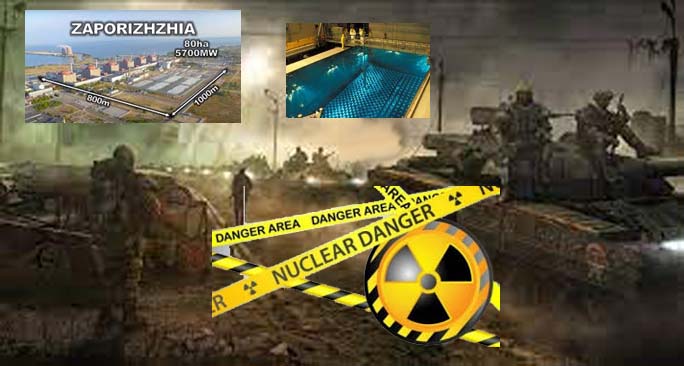
The chance of a serious disaster at the Russian-occupied nuclear power
plant in Ukraine has risen to one in five, a leading engineer at the
Soviet-era facility has warned. A recent exodus of top staff and the power
station’s use as a military base by Chechen troops are among the reasons
why a “Fukushima scenario” could happen at any time, according to one
of the ten most senior engineers at the plant near Zaporizhzhia, which had
a prewar workforce of 11,000.
The shortage of expertise is so acute that
janitors, secretaries and “blue-collar” workers are posing as engineers
in lab coats to dupe international observers into believing that the
Russians have the necessary staff to avert disaster, according to sources
with knowledge of conditions inside the facility. The Zaporizhzhia plant is
the largest in Europe. Before Russian soldiers arrived last year, only 160
senior staff members were licensed to supervise its six reactors. Of these,
about 30 agreed to collaborate with the Russians, while the remaining 80
per cent stayed in the adjoining occupied town of Enerhodar, ready to work
in an emergency. But a brutal crackdown over the summer against any
residents yet to obtain Russian passports forced 100 of those engineers to
take the perilous journey to escape.
Times 16th Sept 2023
A nuclear bomb is still missing after it was dropped off the Georgia coastline 65 years ago
Since 1950, the US military has been involved in 32 “broken arrow” incidents, where they lost or dropped nuclear weapons or other issues, like fires, were involved.
In his book “Command and Control,” Eric Schlosser wrote that in 1957 Air Force planes unintentionally dropped a nuclear weapon once every 320 flights. Coupled with the high rate of B-52 bomber crashes, there was the potential for about 19 incidents involving nuclear weapons each year.
Jenny McGrath Sep 16, 2023, Business Insider
- In 1958, two Air Force jets collided over Georgia, and one was carrying a nuclear weapon.
- The plane dropped the bomb off the coast of Tybee Island and landed safely.
- Several searches have failed to find the weapon in the decades since.
Every once in a while, a high reading of radioactivity off the coast of Tybee Island, Georgia, sends the US government scrambling to look for a nuclear weapon that’s likely hidden 13 to 55 feet below the ocean and sand, buried in the seafloor.
On February 5, 1958, two Air Force jets collided in mid-air during a training mission. The B-47 strategic bomber carried a Mark 15 thermonuclear bomb.
For over two months, the Air Force and Navy divers searched a 24-square-mile area in the Wassaw Sound, a bay of the Atlantic Ocean near Savannah. They never found the nuclear bomb.
Forty years later, a retired Air Force officer who remembered newspaper stories about the lost bomb from his childhood started a search for it.
“It’s this legacy of the Cold War,” said Stephen Schwartz, author of “Atomic Audit: The Costs and Consequences of US Nuclear Weapons Since 1940.” “This is kind of hanging out there as a reminder of how untidy things were and how dangerous things were.”
But some experts say that even if someone finds the bomb, it may be better to leave it buried.
An armed training mission
At the time of the collision, it was “common practice” for the Air Force pilots on training missions to carry bombs on board, according to a 2001 report about the Tybee accident.
The purpose of the training mission was to simulate a nuclear attack on the Soviet Union. They practiced flying over different US cities and towns to see whether the electronic beam would reach its target…………………………………………………………………………………………………………………………………
In 2004, Richardson told CBS News he regretted dropping the bomb because of all the trouble it caused.
“What I should be remembered for is landing that plane safely,” he said. “I guess this bomb is what I’m going to be remembered for.”
The question of the plutonium capsule………………………………………………………………
The US government and military have repeatedly said the Tybee weapon didn’t contain a plutonium capsule when Richardson jettisoned it. A receipt for the bomb that Richardson signed at the time said he wouldn’t allow the insertion of an “active capsule” into the weapon.
A 1966 letter declassified in 1994 complicated the picture. It referred to then-Assistant Defense Secretary Jack Howard’s testimony before a congressional committee calling the Tybee bomb a complete nuclear weapon, with plutonium included. In 2001, a military spokesman told The Atlantic that they had recently spoken with Howard, and “he agreed that his memo was in error.”……………………………………………………………………………………………………………………….
One mishap among many
Less than a month after Richardson jettisoned the Tybee bomb, another B-47 accidentally dropped a nuclear weapon on South Carolina. It didn’t contain plutonium but left a 50-foot crater in a family’s yard. A few family members had minor injuries but everyone survived.
Since 1950, the US military has been involved in 32 “broken arrow” incidents, where they lost or dropped nuclear weapons or other issues, like fires, were involved.
In his book “Command and Control,” Eric Schlosser wrote that in 1957 Air Force planes unintentionally dropped a nuclear weapon once every 320 flights. Coupled with the high rate of B-52 bomber crashes, there was the potential for about 19 incidents involving nuclear weapons each year.
Between 1960 and 1968, the US military kept jets armed with nuclear weapons at the ready in case of a surprise nuclear attack. A series of near misses and serious accidents with nuclear weapons caused the Air Force to end the program.
“I don’t think we’re going to go back to the bad old days of putting our nuclear weapons on aircraft,” Schwartz said…………………………. https://www.businessinsider.com/missing-nuclear-bomb-georgia-coast-still-not-found-2023-9
—
Risk assessment and the nuclear cultists

Damian Meagher From Facebook page Nuclear Fuel Cycle Watch 17 Sept 23
Risk assessment is a complex subject, but nuclear cultist would have you believe it is a simple straightforward matter. There are at least two aspects of risk that they always ignore.
The first is the issue of risk consent.
Some risks in life are ones that consenting adults decide to take. For example, they might go rock climbing or skydiving, or some other adventure sport. Or they might smoke, drink to excess or have an unhealthy diet.
These are examples of risks that they have decided to take.
There is another type of risk though. Risks that are imposed on a person.
Your neighbour might bring home an ill trained guard dog and allow it to roam the streets without supervision. A food manufacturer may include dangerous ingredients in their product and not disclose this fact. A person might drink and drive and cause an injury to another person.
These are examples of risks that exist, but that are imposed on a person who has NOT consented to that risk.
All risks can be analysed both as to the probability of the risk as well as what consequences the risk poses. The risk of being involved in a minor car accident at some point in your life is rather high, but the likely consequences are minimal.
Proper risk management assesses BOTH the likelihood of a risk AND the potential consequences.Poor nuclear cultists don’t use this method, as it immediately highlights a significant problem that nuclear faces.While the likelihood of an accident is low, the consequences can be catastrophic. The victims of such an accident did not consent to this risk. It is imposed on them.
Chernobyl (an accident that cultists like Goronwy Price prefer to ignore) had impacts both health and economic, right across the northern hemisphere. The victims had the risk imposed upon them. This is fundamentally unjust. N-Cultists are happy to put other people at risk regardless.
Cracks at V.C. Summer nuclear plant raise concern from federal regulators
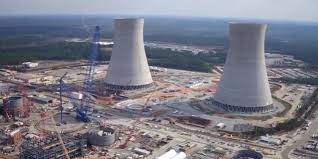
A pattern of cracks and leaks, some dating back two decades, has recently come to light, prompting concerns over the safety of the 40-year-old facility.
News 19 Becky Budds, September 15, 2023
JENKINSVILLE, S.C. — Federal regulators have raised alarms about the integrity of the emergency backup systems at the V.C. Summer nuclear plant.
A pattern of cracks and leaks, some dating back two decades, has recently come to light, prompting concerns over the safety of the 40-year-old facility.
During a routine equipment test last year, plant workers discovered a minor oil leak in a critical section of the piping connected to the diesel generator system.
Subsequently, the Nuclear Regulatory Commission (NRC) inspected the plant, uncovering a disconcerting series of cracks and leaks in the emergency generator system dating back twenty years.
Emergency diesel generators are an essential safety component at nuclear power plants, serving as a backup power source for the nuclear reactor. The NRC cautions that these cracks could potentially hinder the generator’s functionality………………………………………………..more https://www.wltx.com/article/news/local/nuclear-regulatory-comission-concerns-cracks-vc-summer-nuclear-plant/101-1e4f01d0-c8a0-4386-886e-24fc13f5877a
Environmental groups urge regulators to shut down California reactor over safety, testing concerns.

Daily Mail, By ASSOCIATED PRESS, 15 September 2023
LOS ANGELES (AP) – Environmental groups called on federal regulators Thursday to immediately shut down one of two reactors at California´s last nuclear power plant until tests can be conducted on critical machinery they believe could fail and cause a catastrophe.
Friends of the Earth and Mothers for Peace said in a petition filed with the Nuclear Regulatory Commission that tests and inspections have been delayed for nearly 20 years on the pressure vessel in the Unit 1 reactor at the Diablo Canyon Nuclear Power Plant, midway between Los Angeles and San Francisco.
Instead, the groups argue, operator Pacific Gas & Electric has relied on data from similar reactor vessels to justify continued operations at Diablo Canyon, while dismissing indications that the steel wall in Unit 1 might be deteriorating from sustained exposure to radiation and is becoming susceptible to cracking, a condition technically known as embrittlement.
“We will not sit idly by while PG&E cuts corners on Unit 1´s safety,” Hallie Templeton, legal director for Friends of the Earth, said in a statement.
The vessels are thick steel containers that hold nuclear fuel and cooling water in the reactors.
The statement from the anti-nuclear groups contended that PG&E “has repeatedly postponed essential metallurgical tests and ultrasound inspections over the past two decades” on the vessel…………………………………..
The petition, filed Thursday in Washington, was accompanied by a 46-page report by Digby Macdonald, a University of California, Berkeley, professor in nuclear engineering and materials science, who wrote that continued operation of the Unit 1 reactor “poses an unreasonable risk to public health and safety due to serious indications of an unacceptable degree of embrittlement.”
“The reactor should be closed until PG&E obtains and analyzes additional data regarding its condition,” wrote Macdonald, who was retained by the environmental groups.
The petition asks the NRC to convene a hearing to review a 2003 decision by agency staff to extend the testing schedule for the Unit 1 pressure vessel until 2025. According to the groups, the last inspections on the vessel took place between 2003 and 2005. The utility postponed further testing in favor of using results from similar reactors to justify continued operations, they said.
In his report, Macdonald concludes PG&E should have accelerated its testing schedule, not delayed it, to assess possible defects. He noted that unlike most other reactor safety components, the pressure vessel has no independent backup system that can be called upon if it should crack or fracture and lose essential cooling water.
He added that obtaining more testing data on Unit 1 is especially important because its steel has excessive copper and nickel content “that render it more vulnerable to embrittlement.”
The “NRC currently lacks an adequate basis to conclude that Diablo Canyon Unit 1 can be operated safely,” Macdonald said.
Construction at Diablo Canyon began in the 1960s. Critics have long argued that potential shaking from nearby earthquake faults not recognized when the design was approved could damage equipment and release radiation. One nearby fault was not discovered until 2008. The groups argue that the embrittlement assessment is even more critical, given the plant’s seismic vulnerabilities………… https://www.dailymail.co.uk/wires/ap/article-12519587/Environmental-groups-urge-regulators-shut-California-reactor-safety-testing-concerns.html
UN Nuclear Watchdog Risks Running Out of Money on US, China Standoff

- IAEA may ‘grind to a halt’ in a month because of unpaid dues
- Clash over influence puts nuclear power’s growth at risk
Bloomberg, By Jonathan Tirone, September 16, 2023
The International Atomic Energy Agency may soon run out of money to monitor the world’s nuclear stockpiles because the US, China and others aren’t paying their dues, marking the latest frontline in the tug of war between Washington and Beijing for influence.
Draft documents seen by Bloomberg show a hole of about €220 million ($235 million) in the watchdog’s €650 million budget for this year, with the US and China being the biggest debtors. The Vienna-based agency ensures that nuclear fuel used to generate electricity isn’t diverted for weapons, regulates global nuclear-safety standards and provides developing nations with access to technologies.
The US and China — also the biggest donors at a more than a combined €137 million — are increasingly at loggerheads over issues such as Japan’s release of treated wastewater from the crippled Fukushima nuclear plant and Australia’s intention to buy nuclear-powered submarines. Countries traditionally exert pressure on the United Nations’ agency’s purse strings to sway its decision-making.
Both the American and Chinese missions to the IAEA declined requests for comment. In a diplomatic note circulated late Wednesday, the Chinese government said the IAEA was at risk of privatization by Western nations that have control over its board of governors.
“The ‘independent role’ of the secretariat in fulfilling its duties must be based on the understanding and support of member states,” China’s envoy, Li Song, said in a separate statement posted on the embassy’s website.
Who Regulates the Global Nuclear Industry?
European, US nationals run the IAEA with more than 56% of all jobs
It’s the second time in a month IAEA governance issues have bubbled to to the surface, with the cash crunch exposing another potential weak link for a nuclear industry that leans heavily on regulators. ……………
“We may be grinding to a halt in a month if we don’t get the money that is owed,” IAEA Director General Rafael Mariano Grossi said Monday. “It’s time for some important countries to walk the walk.”………………………………………..
Under the motto “Atoms for Peace,” the IAEA was founded by President Dwight Eisenhower in 1957 to commercialize nuclear-energy technologies first developed for weapons………….. more https://www.bloomberg.com/news/articles/2023-09-14/us-china-tug-of-war-is-choking-nuclear-watchdog-s-finances#xj4y7vzkg
Nuclear Free Local Authorities concerned over safety risks regarding nuclear-armed U.S. base planned for RAF Lakenheath, Suffolk
A combination of tremendous heroism, good fortune and the will of
God” – will this be the future of safety at a nuclear-armed Lakenheath?
With evidence mounting that the United States Air Force intends to return
nuclear weapons to RAF Lakenheath in Suffolk, the Nuclear Free Local
Authorities have written to emergency planners in the county, and on their
recommendation now to the Ministry of Defence, to question their
preparedness for any future accident involving the destruction of a
military aircraft carrying nuclear weapons, either at Lakenheath or in
transit to or from the airbase.
NFLA 14th Sept 2023
Radioactive material leaks detected at Japan’s plutonium nuclear fuel research facility

New Straits Times By Bernama – September 13, 2023
TOKYO: The Japan Atomic Energy Agency (JAEA) has confirmed the detection of radioactive material leaks in one of its nuclear fuel research facilities but reported no adverse effects on the health of the staff or the surrounding environment, Xinhua quoted local media reports.
The leaks were detected within the Plutonium Fuel Development Room No. 3 at the JAEA’s Nuclear Fuel Cycle Engineering Laboratories, located in Tokai Village, Ibaraki Prefecture, national news agency Kyodo reported, citing the agency.
Last Friday, the Plutonium Fuel Development Room No. 3 identified pollution caused by radioactive materials at four locations within the facility.
The pollution was discovered during a routine inspection of the glovebox equipment, which is designed to be airtight………………………..
At present, the cause of the radioactive material leak is under investigation. Authorities at the laboratories suspected that the radioactive materials may have seeped out of the equipment. –BERNAMA https://www.nst.com.my/world/world/2023/09/954873/radioactive-material-leaks-detected-japans-nuclear-fuel-research-facility
Japan to start old nuclear reactor checks in October
Japan’s Nuclear Regulation Authority (NRA) will begin receiving
applications for nuclear safety inspections of aged reactors from October,
ahead of the country’s new nuclear safety regulations that will take effect
on 6 June 2025.
Under the new rule, all the country’s reactors that will be
operating for or beyond 30 years as of 6 June 2025 will in advance need to
secure approval from the NRA for safety plans by 5 June 2025. Nuclear power
operators will have to obtain such permission every 10 years or less after
their 30-year operating period is over. The NRA will start safety screening
of each old reactor.
But it is still unclear how long the process will
take. If a nuclear power operator fails to secure safety permission by 5
June 2025, the company could shut down the reactor, an official at the NRA
said.
Argus Media 13th Sept 2023
https://www.argusmedia.com/en//news/2488629-japan-to-start-old-nuclear-reactor-checks-in-october
Safety fears : the problem of Britain’s ageing nuclear submarines
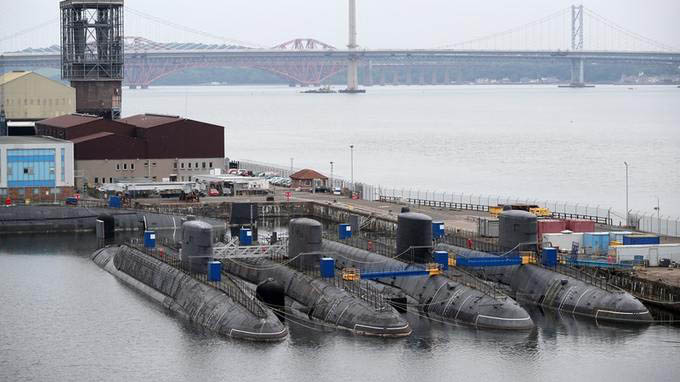
A British nuclear submarine has broken the record for the longest patrol at
sea as safety fears grow over the Royal Navy’s ageing fleet. The
Vanguard-class vessel returned to the Faslane naval base in Scotland on
Monday encrusted with barnacles and covered in slime after a gruelling tour
understood to have lasted more than six months.
Naval experts have raised concerns that the long patrols result in immense physical strain on the vessels and take a psychological toll on the crews. The UK has four
Vanguard-class submarines, which are armed with up to eight Trident
ballistic missiles carrying Britain’s nuclear warheads. At least one
submarine is on patrol at all times to maintain a continuous at-sea
deterrent. The fleet has been effectively reduced to two functioning
vessels, HMS Vigilant and HMS Vengeance, owing to repair works on the other
two.
Times 12th Sept 2023
Are They Already Cutting Corners on Worker Protection at DOE’s New Plutonium Processing Plant?

plutonium is toxic at the scale of micrograms, deadly at the scale of milligrams, and useable in nuclear weapons of mass destruction at the scale of kilograms. This is why plutonium work requires rigid, intensive safety systems, referred to as “defense in depth,” to protect workers and the surrounding people and landscape; as well as extreme levels of security and material accounting.
CounterPunch, BY DON MONIAK 11 Sept 23
As of this past Labor Day, there are strong indications that future workers at the planned, new Savannah River Plutonium Processing Plant (SRPPF) may face unnecessary, increased risks of exposure to radiological hazards inherent in plutonium toxicity and chemical complexity.
According to an August 3, 2023 letter from the Defense National Facilities Safety Board (DNFSB) to the Department of Energy’s (DOE) National Nuclear Security Agency (NNSA), the SRPPF project leadership team does not consider vital plutonium processing safety equipment as “safety significant controls.”
According to the letter, NNSA’s project leadership team believes a reliance on worker sense of sight, hearing, taste, smell, and touch is sufficient to detect and/or prevent accidents such as plutonium fires and dispersal of plutonium oxide powder.
In the hierarchy of nuclear safety, the Department of Energy standards place “Safety Significant Controls” above administrative controls that are reliant upon the absence of human error.
The motive for SRPPF project team’s preference for administrative controls is unknown.
The New Plutonium Processing Plant.
The plutonium/MOX (Pu/MOX) fuel facility was a massive, multi-billion dollar endeavor designed to help dispose of dozens of tons of surplus nuclear weapons plutonium (Pu). This Savannah River Site(SRS) project was abandoned in the late 2010’s, following a chronic array of technical issues, mismanagement, major cost overruns, cutting of corners, and the lack of commercial Pu/MOX fuel customers.
After the project was abandoned, the Department of Energy’s (DOE) National Nuclear Security Agency (NNSA) decided to repurpose the unfinished facility into a new “plutonium pit”production plant. The Mixed Oxide Fuel Fabrication Facility (MFFF) was then renamed the Savannah River Plutonium Processing Plant (SRPPF). This $11 billion plus repurposed facility is already burdened by cost overruns—-the original estimate was $3.7 billion.
Plutonium pits are referred to as the primary nuclear explosives, or triggers,” (1) that dominate the known U.S. nuclear weapons arsenal. Pits acquired their quaint nickname by virtue of the resemblance of the configuration of high explosives surrounding the primary nuclear explosive to stone fruit like peaches and plums—an example of early nuclear weaponeers’ inside humor.
The Pu pits are pressure vessels with nested shells of material, comprised of other non-nuclear parts, including the metal cladding, welds, a pit tube, neutron tamper(s) and initiator, as well as the usually hollow-cored plutonium hemispheres. In most pit designs, a sealed pit tube carries deuterium-tritium gas into the hollow-core to boost the nuclear explosive power of weapons.
But unlike the sweet, fruity, and and delectable flesh surrounding plum and peach pits, a Pu pit is surrounded by a high explosives package powerful enough to implode the plutonium metal sphere contained in the pit. This is not like compressing a tin can, as plutonium is the most durable of the transuranic heavy metals.
The current plan is to annually produce at least eighty new plutonium pits in the SRPPF. Pit fabrication was once the exclusive task at the long-closed Rocky Flats plant in Colorado, and the work processes constitute the most dirty—in terms of waste production—and dangerous workplace in the national nuclear weapons complex. In this century, Los Alamos National Laboratory (LANL) has failed miserably to reconstitute a tiny fraction of the Rocky Flats pit production rate.
Pit production is unlikely to be the only task at the SRPPF. An estimated ten to twelve-thousand surplus plutonium pits, containing a sum of 30 to 34-metric tonnes of plutonium, could also be processed at a plutonium pit disassembly and conversion line at the SRPPF. The resulting plutonium oxide powder would then be sent to the SRS K-Area’s Pu waste production facility, where the powder is diluted to a three to five percent level within a larger mixture of inert materials………………………….
Some Plutonium Processing Hazards
There is a negligible level of debate that plutonium is toxic at the scale of micrograms, deadly at the scale of milligrams, and useable in nuclear weapons of mass destruction at the scale of kilograms. This is why plutonium work requires rigid, intensive safety systems, referred to as “defense in depth,” to protect workers and the surrounding people and landscape; as well as extreme levels of security and material accounting.
The most hazardous plutonium operations involve plutonium pit fabrication. After pit disassembly, the plutonium within pits is converted to a finely dispersed powder form (2), made up of sticky grains containing energetic alpha particles that easily damage soft lung tissues. Sticky plutonium oxide particles clinging to ductwork can also hinder ventilation systems over time.
Recycling plutonium for pit production then requires difficult and dangerous processes to remove impurities and undesirable decay products such as intensely radioactive Americium-241. (3) The resulting plutonium form is transferred to the next step, the plutonium foundry.
The foundry work involves a complex ten-step process, summarized as melting, casting, and heat treating of plutonium metal. Gallium is added at a one-percent ratio to produce an alloy that is considered almost as easy to machine as aluminum or silver. The risk from explosion, criticality, and spill hazards must be rigidly controlled; while contaminated parts such as crucibles pose unique waste management measures.
The final plutonium processing step is machining the foundry product into a precise sub-critical configuration. Like any machining, Plutonium metal work casts tiny shavings and creates fine dust.
These shavings can ignite upon exposure to air and lead to larger fires that can destroy glove boxes and ventilation systems, and cause large releases of plutonium into the atmosphere. The Rocky Flats experience suggests that fires of any size are not a remote possibility, they are a probability.
The task is to keep Pu metal fires small and nondestructive, while preventing injury and harmful exposures to workers. A small fire can render costly equipment useless. A large fire can lead to a countryside contaminated with particles that become more intensely radioactive for decades.
Extreme care must also be taken to keep plutonium metal in a non-critical configuration at all times. The wrong geometry or placement of metal pieces in the wrong configuration can produce the deadly blue light that signifies criticality accidents. In 2009, a number of Los Alamos criticality engineers walked off the job at the lab’s pit production line, citing a casual approach to criticality safety.
The final step is assembly, where the parts that make pits tick are introduced. The making of these parts pose their own toxic hazards, such as the fine dust from machining beryllium metal.
Those are just several aspects of the safety issues involved with the plutonium pit fabrication.
The True, and False, Necessity for New Pit Fabrication and Production. ……………………………………………………………………………………………………………………………………………………………………………….
The Pit Plant’s Initial Design: One Less Layer of Safety Depth?
Because of all these factors, new pit production is considered essential, and a new, smaller scale—by Cold War Standards—plutonium pit fabrication capacity is presently in the preliminary design phase at the SRPPF complex.
The highest standards of safety are expected to prevent accidents or mitigate the impacts of spills, fires, leaks, and dispersion of fine radioactive dust. A less rigid approach to safety is quite unexpected for a high hazard, hardened nuclear facility that would only be the second its kind in the weapons complex—-the last being the Rocky Flats plant built in the 1950’s.
But according to the August 3, 2023 letter from the Defense Nuclear Facilities Safety Board (DNFSB), the DOE/NNSA’s project leadership team does not consider vital plutonium processing safety equipment as “safety significant controls.”…………………………………………………………………………………………………………………………………………………………………………………………….more https://www.counterpunch.org/2023/09/11/are-they-already-cutting-corners-on-worker-protection-at-does-new-plutonium-processing-plant/
IAEA warns of nuclear safety threat as combat spikes near Ukraine nuclear power plant

The United Nations atomic watchdog warned of a potential threat to nuclear
safety from a spike in fighting near Europe’s largest nuclear power plant
in Ukraine, whose forces continued pressing their counteroffensive on
Saturday. The International Atomic Energy Agency said its experts deployed
at the Russia-occupied Zaporizhzhia Nuclear Power Plant reported hearing
numerous explosions over the past week, in a possible indication of
increased military activity in the region. There was no damage to the
plant.
PBS 9th Sept 2023
Taiwan’s ‘clear and present’ spent nuclear fuel danger

Above-ground storage pools at Chinshan and Kuosheng nuclear power plants would be vulnerable to missiles in a Chinese attack
ASIA TIMES, By JORSHAN CHOI, SEPTEMBER 6, 2023
The war in Ukraine has drawn concerns that there is potential for a conflict to happen across the Taiwan Strait.
In Ukraine, the attack and occupation of nuclear facilities, including the Zaporizhzhia nuclear power plant by the Russian military, initiated a dangerous situation for the safe and secure operation of civilian nuclear power plants, including the spent fuel facilities. It also hindered the International Atomic Energy Agency’s effort to ensure the proper accounting and control of nuclear materials in these facilities.
If a military conflict were to happen across the Taiwan Strait, there would be similar concerns. There are six operating or shut-down nuclear reactors in Taiwan: two pressurized water reactors and four boiling water reactors in Taiwan. Of the six, the four BWRs situated on the northern tip of Taiwan pose the biggest safety, security, and safeguards concerns.
Taiwan’s first nuclear power plant, Chinshan 1 & 2, consisted of BWRs similar to Fukushima Daiichi 1, which was involved in the 2011 accident in Japan, with spent fuel pools that are high up above ground.
Taiwan’s second plant, Kuosheng 1 & 2, featured a later BWR design, with spent fuel pools at a lower elevation. The two pressurized water reactors have spent fuel pools at ground level.
When Chinshan 1 & 2 went offline in 2018-2019, more than 6,000 spent fuel assemblies were stored in the two elevated spent fuel pools. At Kuosheng 1 & 2, the capacities of both ground-level spent fuel pools have become insufficient to support reactor operation.
To free up space in the pools for newly discharged spent fuel, TAIPOWER, the utility company, moved those 15-year-old spent fuel assemblies for storage in the upper (refueling) pools, which are well above the ground level.
According to the US National Academies of Sciences, the vulnerability of a spent fuel pool depends in part on its location with respect to ground level as well as its construction. In a potential military conflict across the Taiwan Strait, the spent fuel pools built above ground in Chinshan and Kuosheng may thus be susceptible to accidental attacks from misfired or stray missiles.
Significantly, to protest the Pelosi visit to Taiwan in August 2022, two missiles fired by the Chinese military landed in water about 50 km north of the Chinshan plant.
The Fukushima accident highlighted the vulnerability of elevated spent fuel storage. The explosion that occurred in the reactor building of Fukushima Daiichi 4 destroyed the roof and most of the walls on the fourth and fifth (refueling) floors……………………………………………………………………..
A sense of urgency
Spent fuel has accumulated in the Chinshan and Kuosheng plants over the 40 years of their operating lives. Due to objections from the local public over moving the spent fuel to dry cask storage and the lack of suitable storage or disposal sites on the geographically limited island, spent fuel discharged from Chinshan 1 & 2 reactors has remained in the refueling-turned-into-storing pools adjacent to the reactor wells, high above ground……………………………………………..
The war in Ukraine and rockets/missiles landing in or around the Zaporizhzhia plant (with all six pressurized water reactors’ spent fuel pools situated at ground level) should have given TAIPOWER another warning that spent fuel in high-elevation pools should be moved to ground-level pools or dry cask storage.
TAIPOWER should have a sense of urgency for this “clear and present” danger in Taiwan, especially given that it has the technology and resources to accomplish the task. Taiwan’s internal politics and objection of the local public are the primary causes for the procrastination.
The longer-term problem with moving the spent fuel off the island centers around something called “consent rights,” which is complicated given US involvement in the installation of the nuclear power plants in Taiwan…………………………………………………………………….
The US rights over Taiwan’s nuclear activities are so extensive that Washington instructed the German government in the 1980s that any nuclear items supplied to Taiwan by a German exporter would be subject to US “control rights,” which included US “fallback safeguards rights” if deemed necessary.
Nowhere else does the United States have as much leverage over a foreign nuclear program. Yet whenever Taiwan has requested the United States to take back the spent fuel, Washington has declined…………………………………………….
Removing the spent fuel from Taiwan would eliminate its “clear and present” spent fuel danger, while fulfilling the goal of ensuring a “nuclear-free” Taiwan. This should be a priority. https://asiatimes.com/2023/09/taiwans-clear-and-present-spent-nuclear-fuel-danger/
Ukraine war realises predictions of nuclear power plant threat, says Leicester civil safety expert

29 August 2023, https://le.ac.uk/news/2023/august/nuclear-power-plant-ukraine
Governments need to be aware of the risk of their country’s nuclear power plants being weaponised as they turn to nuclear to tackle the ongoing energy crisis, a University of Leicester civil safety expert has argued.
In his new book Atomic Blackmail? The weaponisation of nuclear facilities during the Russia-Ukraine War, Dr Simon Bennett lays out how the ongoing conflict is confirming long-running concerns about the security of nuclear power plants and their potential to be weaponised to gain political traction over an opponent.
The events of the Russia-Ukraine War have demonstrated the capacity that nuclear power plants have to amplify protagonists’ hitting power, Dr Bennett argues. This is believed to be the first time in the history of nuclear electricity that nuclear power plants have been occupied by an invading force.
The installations at Chernobyl and Zaporizhzhia have been captured by Russian forces and Zaporizhzhia remains under Russian control. Other installations in Ukraine have been overflown by Russian munitions, such as cruise and ballistic missiles. Outbuildings at both the Chernobyl and Zaporizhzhia sites have been struck by munitions. Both Russia and Ukraine deploy munitions in the vicinity of nuclear power plants.
The possibility of gaining tactical or strategic advantage by weaponising an opponent’s nuclear facilities makes them an attractive target – especially for protagonists who find themselves on the back foot.
Dr Simon Bennett at the University of Leicester said: “The risk is not that of a nuclear detonation. Rather it is that of creating a dirty bomb when a conventional munition such as a ballistic or cruise missile, artillery shell or suicide drone breaches a containment, liberating radionuclides to the environment.
“A dirty bomb creates transborder or transboundary hazard, a serious radiological contamination of the environment – land, air and water – potentially over vast areas and for decades. Radionuclides liberated during the 26 April, 1986 Chernobyl fire were transported on easterly winds as far as Cumbria in north-west England.”
The International Atomic Energy Agency (IAEA) has called on the protagonists to create and respect cordons sanitaires around Ukraine’s nuclear installations, including the highly-vulnerable six-reactor Zaporizhzhia Nuclear Power Plant (NPP). A cordon sanitaire is defined by the IAEA as a military exclusion zone created to mitigate the risk of accidental damage to a NPP, which protagonists would be forbidden from entering. The UK has lent the IAEA diplomatic support.
Dr Bennett adds: “As countries expand existing nuclear electricity programmes, and as other countries go nuclear, the risk of weaponisation and atomic blackmail will grow. After years of prevarication, Britain, alarmed at the unreliability of so-called green energy and worried about energy insecurity, is set to expand its nuclear electricity programme. There is a positive relationship between the number of NPPs in a country and its atomic blackmail risk-exposure. In a European or World War, Britain’s NPPs would be as much a target as the NPPs of any other country.
“Any country with a nuclear power programme, and countries neighbouring countries with nuclear power programmes, should take note of what has happened in Ukraine, and what might happen in the future. There will probably be a 2024 Ukrainian offensive and, possibly, a 2025 offensive. This war will not end quickly.”
- Atomic Blackmail? The Weaponisation of Nuclear Facilities During the Russia-Ukraine War is published by Libri Publishing
Nuclear reactors: Malaysia lacks maintenance culture.

Impossible to guarantee ongoing maintenance and safety of such projects.
Malaysia Kini, Yoursay, Sep 7, 2023
This KiniGuide on small nuclear reactors states that there are only two such small modular reactors in operation – one in Russia and another in China.
Both countries are notoriously secretive about problems in their respective countries. So what models are there in countries where objective, open, and transparent data may be obtained?
That is the first problem that should have been highlighted.
Secondly, former prime minister Abdullah Ahmad Badawi famously referred to our situation as a country of first-world infrastructure and third-world mentality.
What are the safety standards, level of knowledge, expertise, number of experts, and safety professionals needed to manage this venture?
What is the state of knowledge in our universities to manage and produce such professionals
Are we going to pay billions if we do not have to import this knowledge and expertise and then be left high and dry when such expertise should suddenly abandon the project?
It is not very unreasonable to say that our state of knowledge in universities is probably outdated if not backward (considering syllabuses of popular subjects).
Most importantly, going by our poor leadership in public infrastructure departments, it is impossible to guarantee the ongoing maintenance and safety of such projects.
In Selangor where I live, missing drain covers do not get replaced despite regular reminders, nor are the drains ever cleaned despite decades of muck that can lead to flooding.
The contractors hired to maintain the landscape rarely send workers to maintain the grounds.
Areas that are under state or public sector entities are sometimes suddenly converted into makeshift shanties where foreign workers and undocumented workers are housed and charged exorbitant amounts by what appears to be dodgy gangster-like groups operating in those areas.
So, with elements of neglect, apathy, poor understanding of professionalism, and indications of bribery and corruption, how can you provide this “happily-ever-after” version to parrot some opportunistic ministers who may never last their terms in the first place?
Anonymous 1092837465: If the government wants to reduce carbon emissions, it should give thought to saving energy first
Only truth: “Can a fleet of smaller, more flexible nuclear reactors be part of the solution to Malaysia’s energy puzzle?”
In this day and age, our ‘budak kita’ cannot even sort out the basic catering supply to the national airline,……………………………..
Dilapidated public facilities at parks and forest reserves say a lot about the people who managed them and also the high-ranking ministers involved.
These people cannot be trusted with dangerous things like uranium or plutonium.
We have a nuclear research facility in name only, allocations were given, grandiose pipedream proposals were made, and allocations were given for years. https://www.malaysiakini.com/news/678306
1 This Month
Chernobyl: The Lost Tapes – A good documentary on Chernobyl on SBS available On Demand for the next 3 weeks– https://www.sbs.com.au/ondemand/tv-program/chernobyl-the-lost-tapes/2352741955560

of the week–London Campaign for Nuclear Disarmament

Tell the Ukrainian Government to Drop Prosecution of Peace Activist Yurii Sheliazhenko
To see nuclear-related stories in greater depth and intensity – go to https://nuclearinformation.wordpress.com
-
Archives
- April 2026 (126)
- March 2026 (251)
- February 2026 (268)
- January 2026 (308)
- December 2025 (358)
- November 2025 (359)
- October 2025 (376)
- September 2025 (257)
- August 2025 (319)
- July 2025 (230)
- June 2025 (348)
- May 2025 (261)
-
Categories
- 1
- 1 NUCLEAR ISSUES
- business and costs
- climate change
- culture and arts
- ENERGY
- environment
- health
- history
- indigenous issues
- Legal
- marketing of nuclear
- media
- opposition to nuclear
- PERSONAL STORIES
- politics
- politics international
- Religion and ethics
- safety
- secrets,lies and civil liberties
- spinbuster
- technology
- Uranium
- wastes
- weapons and war
- Women
- 2 WORLD
- ACTION
- AFRICA
- Atrocities
- AUSTRALIA
- Christina's notes
- Christina's themes
- culture and arts
- Events
- Fuk 2022
- Fuk 2023
- Fukushima 2017
- Fukushima 2018
- fukushima 2019
- Fukushima 2020
- Fukushima 2021
- general
- global warming
- Humour (God we need it)
- Nuclear
- RARE EARTHS
- Reference
- resources – print
- Resources -audiovicual
- Weekly Newsletter
- World
- World Nuclear
- YouTube
-
RSS
Entries RSS
Comments RSS
 nuclear-news