THE R.A.F’S NUCLEAR FLIGHTS OVER BRITAIN AND THE ATLANTIC

Although the chances of such an accident occurring may be low, the consequences would be high
emergency arrangements would be totally inadequate to protect members of the public.
Little-known to the public, the UK military regularly flies planes carrying highly radioactive material to the US in order to maintain its nuclear weapons system, Trident.
RICHARD NORTON-TAYLOR, 27 MARCH 2024, https://www.declassifieduk.org/the-r-a-fs-nuclear-flights-over-britain-and-the-atlantic/
- These flights “pose a significant risk to communities across the UK should there be an accident, says Nukewatch
- “How can we have an independent foreign policy if the cornerstone of Britain’s security relies so heavily on another state?”, asks CND
British military aircraft regularly carry highly radioactive material across the Atlantic to one of the RAF’s largest bases on flights vital to the Trident nuclear weapons system, according to new research, Declassified UK can reveal.
The little-known flights are a lifeline sustaining the ‘special relationship’ embodied in the secretive US-UK Mutual Defence Agreement due to be renewed later this year without the need for any parliamentary scrutiny or even approval.
At least ten of the special round trips between RAF Brize Norton in Oxfordshire and US military bases, usually by large RAF C-17 Globemaster transport aircraft, take place every year, according to Nukewatch, which monitors traffic in nuclear weapons and their components.
In a joint report with Nukewatch, the Campaign for Nuclear Disarmament (CND) told Declassified: “The UK cannot claim to have an independent nuclear weapons system when it is so reliant on the US for technical information and nuclear materials, including these special nuclear flights.
“By having such a direct involvement in Britain’s nuclear weapons technology, the US exercises significant leverage over the UK’s foreign and defence policy”, it added.
The RAF planes fly from Brize Norton either over the Cotswolds and the Bristol and Cardiff areas before crossing the Atlantic, or over Gloucestershire and the South Wales valleys, heading out to sea over Swansea and the Gower peninsular.
Their destinations include Kirtland Air Force Base in Albuquerque, a convenient location for access to US nuclear laboratories and manufacturing plants in New Mexico and northern Texas, and McGhee Tyson Airport, Knoxville, close to nuclear sites in Tennessee.
Radioactive
Although the MoD does not reveal the exact nature of the cargoes, Nukewatch says it can conclude on the basis of its investigations that material in RAF aircraft returning to Britain includes tritium, a radioactive isotope of hydrogen which is used in nuclear warheads.
Tritium has a relatively short half-life of twelve years, and thus requires constant replacement. Britain does not have facilities to produce tritium and needs to replenish supplies from the US.
The RAF cargo also includes highly enriched uranium (HEU) used for nuclear submarine reactor fuel and warhead components. Uranium fuel is burnt up in submarine reactors and cannot be reused.
Britain does not have facilities to enrich uranium to the high levels used in submarine reactor fuel and so either HEU must be purchased from the US, or low enriched uranium must be sent to the US for further enrichment.
Plutonium for warhead components has been exchanged with the US in past decades, according to Nukewatch. The cargo is also likely to include security-classified non-nuclear warhead components such as arming, fusing and firing systems as well as radioactive materials and equipment used in nuclear security exercises.
Refusing details
The US and Britain cooperate closely on security programmes and exercises designed to combat nuclear terrorism.
Some RAF cargoes are loaded on to convoys that transport radioactive and other nuclear weapon-related material loads to and from the Atomic Weapons Establishment (AWE) in Aldermaston, Berkshire, and other sites involved in Britain’s nuclear weapons programme.
Ministers have refused to give details of the types and quantities of radioactive materials transported in special flights on national security grounds.
Read more: THE R.A.F’S NUCLEAR FLIGHTS OVER BRITAIN AND THE ATLANTICThe MoD says the transport of DNM (defence nuclear materials) is carried out in accordance with stringent safety regulations. In more than 50 years transporting DNM in Britain, there has never been an incident that has posed a radiation hazard to the public or to the environment, says Nukewatch quoting the MoD.
The MoD adds that the RAF Immediate Response Force, equipped and trained to identify radiological hazards, are “at a state of readiness” when the aircraft enter British airspace. Brize Norton has a nuclear accident response team equipped to monitor radiation in the event of an aircraft accident.
However, Nukewatch and CND argue that an objective assessment of the level of risk to people living under the flight path cannot be made in the absence of official information on the type of radioactive material the flights are carrying and tests.
Such tests would determine how to respond to the impact of a high altitude or high velocity crash and any subsequent fire that would be likely to scatter radioactivity over a wide area.
‘Astral Bend’
Although the chances of such an accident occurring may be low, the consequences would be high, the report says. Plutonium and uranium are flammable metals which burn easily if exposed to heat, creating a plume of radioactive smoke that is easily ingested.
Tritium is a radioactive gas which is also flammable and can easily be incorporated in water and organic compounds, in which form it may be ingested. All three materials are carcinogenic.
The MoD undertakes annual exercises, code-named ‘Astral Bend’, to test the emergency response to an accident involving an RAF aircraft transporting special nuclear materials. Emergency responses would be tightly controlled by the MoD, with the police in charge of civilian emergency services.
Separate assessment reports of Astral Bend exercises have been released under the Freedom of Information Act. They show that despite their preparations, the authorities are not always able to respond well because of the complex and hazardous nature of any such accident.
Following a 2006 exercise, a temporary ban was imposed on highly enriched uranium flights at Brize Norton. Shortfalls in radiation field monitoring, radiation safety procedures, and medical treatment of casualties were identified by the MoD’s internal nuclear watchdog, the Defence Nuclear Safety Regulator (DNSR), as areas requiring improvement.
Risk of contamination
An Astral Bend exercise in 2010 rehearsed the response to an accident involving a US Air Force plane which had crashed and caught fire, damaging nuclear weapons on board and spreading radioactive contamination around the crash site.
Assessors concluded that, had there been a real emergency, civilian personnel would have been at risk from explosions and radioactive contamination. This was because the MoD nuclear accident response organisation team “did not emphasise the hazards adequately” and gave “insufficient priority” to liaison with emergency services.
Difficulties experienced with two subsequent exercises, in 2011 and 2012, were so severe that the MoD was forced to carry out “an overarching, fundamental review” of arrangements for handling nuclear weapons accidents.
During an exercise at the Caerwent military training area in South Wales mistakes made by emergency services would have led to “avoidable deaths” in a real-life situation, according to exercise assessments.
The fire service was heavily criticised by the DNSR for refusing to allow ambulance teams to take away seriously injured people until they had been decontaminated.
The confusion and delays observed during Astral Bend exercises raise questions about whether the MoD’s nuclear safety arrangements are capable of keeping the public, emergency responders, and MoD personnel safe, the report says.
Experience suggests that emergency arrangements would be totally inadequate to protect members of the public.
Maintaining Trident
The MoD has told Nukewatch in response to a Freedom of Information Act request that releasing the report on the most recent Astral Bend exercise would allow potential adversaries to gain a greater operational understanding of air transport involving defence nuclear materials and emergency response measures.
The release of operational details would make future air transport operations “vulnerable to the potential interception by hostile actors”, which would endanger the safety of the wider public, the MoD argued.
Significantly, it added that providing the information would prejudice its ability to maintain the UK’s Continuous At Sea Deterrence (CASD) – a reference to patrols by Britain’s Trident submarines.
“There is no wider public interest in reducing the effectiveness of the nuclear deterrent which is the ultimate guarantee of our national security”, the MoD told Nukewatch.
Nigel Day of Nukewatch said: “Ministry of Defence nuclear flights pose a significant risk to communities across the UK should there be an accident. Far from keeping us safe, as the government claims, nuclear weapons actually make things far more dangerous for all of us.”
Kate Hudson, general secretary of the Campaign for Nuclear Disarmament (CND), told Declassified: “Special nuclear flights are an underreported but critical aspect in maintaining Britain’s nuclear power status. How can we truly have an independent foreign and defence policy if what is vaunted as the cornerstone of our supposed security relies so heavily on another state?
“It’s time to move away from the current wasteful and dangerous addiction to nuclear arms and to move towards a real defence policy which secures peace rather than deploying weapons of mass destruction.”
Hudson added: “We are also extremely concerned about the safety risks posed by these flights and the poor performance during exercises to prepare authorities for a nuclear accident. Of course, instead of acknowledging these risks and moving towards disarmament, the British government cuts down on transparency by blocking the release of reports on its most recent training exercises.”
Nuclear waste clean-up company to be prosecuted over alleged cyber blunders

Sellafield Ltd accused of lax IT security at Europe’s largest nuclear facility
Jonathan Leake, 28 March 2024 , https://www.telegraph.co.uk/business/2024/03/28/sellafield-nuclear-waste-prosecuted-cybersecurity/
A state-owned company responsible for cleaning up decades of nuclear waste at the Sellafield site in Cumbria is being prosecuted over alleged cybersecurity blunders.
It follows an investigation prompted by fears that the business’s digital defences were breached by hackers acting for hostile states such as Russia and China.
Sellafield is Europe’s largest nuclear facility, serving as a testing ground and waste dump since 1947. It houses a massive range of highly radioactive wastes, including 140 tonnes of plutonium – a key ingredient for nuclear weapons.
The Office for Nuclear Regulation (ONR) has told Sellafield Ltd, the business tasked with clean-up, that it will be prosecuted under the Nuclear Industries Security Regulations 2003.
The charges relate to alleged information technology security offences during a four-year period between 2019 and early 2023.
The announcement coincides with reports today that Richard Meal, who is chief information security officer at the Cumbrian site, is to leave later this year.
It follows the departure of Mark Neate, the director responsible for safety and security, who announced in January that he intended to quit in a move that had been planned for some time.
Sellafield has denied claims the site had suffered serious security breaches and the ONR has supported this. The new charges are thought to relate to alleged failures in compliance – meaning they are more about lax security than actual breaches.
An ONR spokesman said there was no suggestion that public safety had been compromised. Details of the first court hearing will be announced when available.
Sellafield Ltd is owned by the Nuclear Decommissioning Authority, a quango overseen by the Department for Energy Security and Net Zero, which is tasked with cleaning 17 decaying nuclear sites across the UK. Sellafield is the most expensive, costing taxpayers £2.5bn last year.
Some government estimates suggest the total cost of the clean-up will reach £263bn, with Sellafield accounting for the largest portion. The site employs 11,000 people and comprises more than 1,000 buildings, many not designed to house the radioactive material now stored in them.
Sellafield is so expensive that the Office for Budget Responsibility, which monitors threats to the UK Government’s finances, has warned that it and other legacy sites pose a “material source of fiscal risk” to the country.
The ONR investigation is in addition to another by the National Audit Office, Britain’s public spending watchdog, which is probing risks and costs at Sellafield and is due to report this autumn.
A Sellafield spokesman said: “The ONR’s Civil Nuclear Security and Safeguards (CNSS) has notified us of its intention to prosecute the company relating to alleged past nuclear industry security regulations compliance. As the issue is now the subject of active court proceedings, we are unable to comment further.”
It follows separate reports by Radioactive Waste Management Ltd (RWM), another government-owned company, that hackers unsuccessfully attempted to breach its defences using LinkedIn.
RWM, now part of Nuclear Waste Services, is the company tasked with designing the long-awaited Geological Disposal Facility (GDF) project, a vast underground nuclear waste store which would become the final destination for toxic waste now stored at Sellafield.
Nuclear Waste Services is currently seeking a site that would be geologically stable for the millions of years the waste would need to become safe – and which would be acceptable to the local communities hosting it.
Two sites remain in the running, one off the coast of Cumbria and the other off the coast of Lincolnshire, with the choice of site still surrounded in secrecy.
The development is expected to cost taxpayers up to £53bn.
A report filed at Companies House by Nuclear Waste Services said the attempted hacks had failed.
Sellafield nuclear waste dump to be prosecuted for alleged cybersecurity offences
Charges relate to four-year period between 2019 and early 2023, and follow Guardian investigation
Alex Lawson and Anna Isaac, Fri 29 Mar 2024 , https://www.theguardian.com/business/2024/mar/28/sellafield-nuclear-waste-dump-to-be-prosecuted-for-alleged-it-security-offences
The Sellafield nuclear waste dump is to be prosecuted for alleged information technology security offences, the industry watchdog has said.
The Office for Nuclear Regulation (ONR) said on Thursday that it had notified the state-owned Cumbrian nuclear company that it would be prosecuted under industry security regulations.
The prosecution follows the Guardian’s revelations last year of multiple cyber failings at the vast site, part of a year-long investigation into cyber hacking, radioactive contamination and an unhealthy workplace culture at Sellafield.
The ONR said: “These charges relate to alleged information technology security offences during a four-year period between 2019 and early 2023. There is no suggestion that public safety has been compromised as a result of these issues. The decision to begin legal proceedings follows an investigation by ONR, the UK’s independent nuclear regulator.”
Sellafield, which has more than 11,000 staff, was placed into a form of “special measures” for consistent failings on cybersecurity in 2022, according to sources at the ONR and the security services.
Among the Guardian’s revelations in December were that groups linked to Russia and China had penetrated its computer networks, embedding sleeper malware that could lurk and be used to spy or attack systems. At the time Sellafield said it did not have evidence of a successful cyber-attack.
The site has the largest store of plutonium in the world and is a sprawling rubbish dump for nuclear waste from weapons programmes and decades of atomic power generation.
Other findings in the Guardian’s Nuclear Leaks investigation included concerns about external contractors being able to plug memory sticks into its computer system while unsupervised.
The Guardian also revealed that cyber problems have been known by senior figures at the nuclear site for at least a decade, according to a report dated from 2012, which warned there were “critical security vulnerabilities” that needed to be addressed urgently.
Sellafield’s computer servers were deemed so insecure that the problem was nicknamed Voldemort after the Harry Potter villain, according to a government official familiar with the ONR investigation and IT failings at the site, because it was so sensitive and dangerous.
At the time, Sellafield said that “all of our systems and servers have multiple layers of protection”. “Critical networks that enable us to operate safely are isolated from our general IT network, meaning an attack on our IT system would not penetrate these,” it said.
This week, the Guardian revealed that Richard Meal, Sellafield’s chief information security officer, is to leave the site after more than a decade. He will be the second senior leader to leave this year, after the top director responsible for safety and security, Mark Neate, announced in January that he planned to leave.
In January, Sellafield appointed Graeme Slater as its chief digital information officer, responsible for cybersecurity.
The ONR said details of the first court hearing would be announced “when available”.
Britain’s public spending watchdog, the National Audit Office, last month launched an investigation into risks and costs at Sellafield.
A spokesperson at the Department for Energy Security and Net Zero, which funds Sellafield, said: “Safety and security at our former nuclear sites is paramount and we fully support the Office for Nuclear Regulation in its independent role as regulator.
“The regulator has made clear that there is no suggestion that public safety has been compromised at Sellafield. Since the period of this prosecution, we have seen a change of leadership at Sellafield and the ONR has noted a clear commitment to address its concerns.”
Sellafield said: “The Office for Nuclear Regulation’s Civil Nuclear Security and Safeguards has notified us of its intention to prosecute the company relating to alleged past nuclear industry security regulations compliance.
“As the issue is now the subject of active court proceedings, we are unable to comment further.”
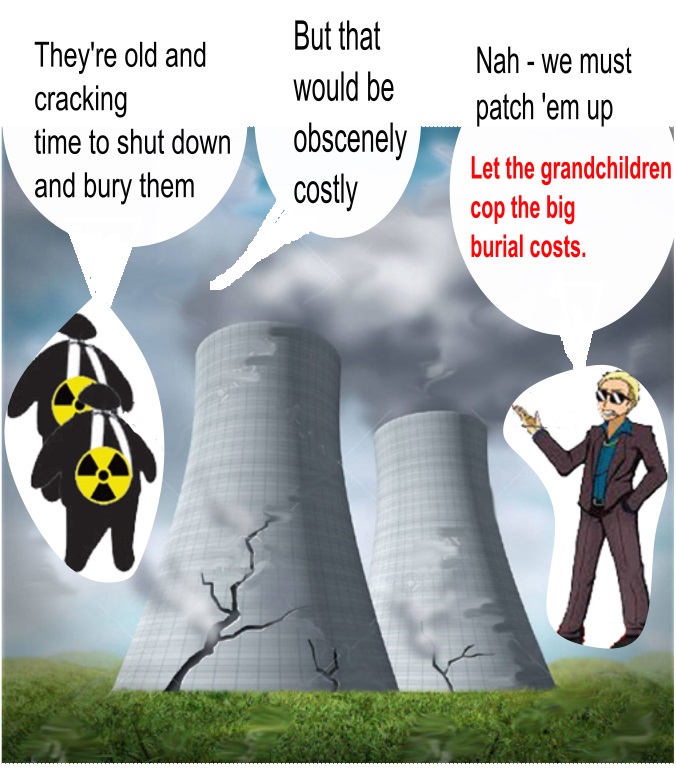
Court Allows Ageing Japanese Nuclear Plants to Continue Operations
By Tsvetana Paraskova – Mar 29, 2024, https://oilprice.com/Latest-Energy-News/World-News/Court-Allows-Ageing-Japanese-Nuclear-Plants-to-Continue-Operations.html
A Japanese district court on Friday rejected petitions from residents and allowed five ageing nuclear reactors in central Japan to continue operations.
The five reactors at the plants, operated by Kansai Electric Power Co in the Fukui Prefecture on the Sea of Japan coast, began commercial operations between the mid-1970s and mid-1980s.
Local residents had asked the Fukui District Court to grant injunctions for the operations of one reactor at the Mihama nuclear plant and four reactors at the Takahama power plant, citing inadequate safety measures.
The court, however, denied the injunctions, thus allowing the five reactors to continue operations.
More than a decade after the Fukushima disaster, public opinion continues to be generally negative toward an en masse return to nuclear power, but Japanese authorities are keen to avoid energy crises and are betting on re-opening more nuclear power plants.
Following the Fukushima disaster in 2011, Japan closed all of its nuclear power plants for rigorous safety checks and inspections. The country has been returning reactors in service in recent years.
Japan is bringing back nuclear power as a key energy source, looking to protect its energy security in the wake of the energy crisis that led to surging fossil fuel prices. The resource-poor country which needs to import about 90% of its energy requirements, made a U-turn in its nuclear energy policy at the end of 2022, as its energy import bill soared amid the energy crisis and surging costs to import LNG at record-high prices.
The Japanese government confirmed in December 2022 a new policy for nuclear energy, which the country had mostly abandoned since the Fukushima disaster. A panel of experts under the Japanese Ministry of Industry has also decided that Japan would allow the development of new nuclear reactors and allow available reactors to operate after the current limit of 60 years.
Special nuclear flights between the US and UK: the dangers involved
CND, March 24
Despite claiming to have an independent nuclear weapons system, for more than sixty years Britain and the United States have been transferring and sharing technical
information, nuclear materials, and warhead components for use in each other’s nuclear weapons programmes.
One important way in which transfers of nuclear materials and technology are carried out between Britain and the US is through special flights into and out of Royal Air Force (RAF) Brize Norton, near Carterton in Oxfordshire. Read more about these special nuclear flights in this briefing, written in association with Nukewatch. https://cnduk.org/wp-content/uploads/2024/03/Special-nuclear-flights-between-the-US-and-UK-1.pdf
Atomic blackmail – Russia-Ukraine war and Ramberg’s theory of vulnerability
Simon Bennett, School of Business, University of Leicester, 6 Mar 24
ABSTRACT
The Russia-Ukraine War is being fought between states committed to nuclear power. This paper references Ramberg’s nuclear powerplant (NPP) vulnerability treatise, the IAEA’s Seven Pillars of Safety metric and Pidgeon and O’Leary’s safety imagination approach to assess the safety of Ukrainian and Russian NPPs. It suggests governments should reflect on events in Ukraine, and, with reference to the above-mentioned approaches, decide whether the upside of nuclear power – the largely carbon-neutral production of electricity – outweighs the downside – giving a blackmail opportunity to hostile states. Although a cost-benefit analysis to inform decision-making is effortful, the paper suggests that failure to consider every advantage and disadvantage of nuclear power could prove costly in human and environmental terms. Drawing on Ukraine’s experience, the paper suggests the national interest is best served in time of war by generating electricity in multiple small plants rather than a few large plants.
Introduction
In 1985, at the height of the Cold War, foreign policy and nuclear expert Bennett Ramberg published his paperback Nuclear Power Plants: An Unrecognised Military Peril, whose subject is the targeting of NPPs by a protagonist to secure tactical or strategic advantage. The Russia-Ukraine War……..has made this subject relevant…………………………………………more https://www.tandfonline.com/doi/full/10.1080/00207233.2024.2317089
COMMENT.
a wonderful article. It contains so many insights that never seem to get mentioned —
– aggressor nation would risk poisoning its own soldiers, civilians and land.
– could target facilities with a larger footprint, such as waste storage ponds or fuel reprocessing plants.
– the ideological-doctrinal domain of propaganda and messaging.
– the blackmail potential of NPPs – it would seem wise to invest intellectual resources in imagining and active learning…….. a dearth of safety imagination in decision-making can be costly.
– – a large number of municipally-operated solar farms, wind farms, tidal barrages, waste-to-power and hydroelectric powerplants generating power for municipalities locally would have provided a more resilient system for Ukraine. In the matter of power generation, in time of crisis or conflict scaling-down secures.
Air attacks on Ukraine have again put the Zaporizhzhia nuclear power plant(ZNPP), under Russian control, in danger

Air attacks on Ukraine have again put the Zaporizhzhia nuclear power plant
(ZNPP), under Russian control, in danger. The vital power supply to keep
the reactors cool is off; potential meltdown and a catastrophic nuclear
“accident” is only being prevented by ancient power generators.
Nobody needs reminding of the devastation to Ukraine and vast swathes of Europe
when the nuclear power plant at Chernobyl melted down and exploded in 1986.
Though ZNPP is newer than Chernobyl with more safety features, it is very
much larger and simply is not safe without power.
Meanwhile, Rafael Grossi,
head of the International Atomic Energy Agency (IAEA), has been cosying up
to President Assad in Damascus, offering to help Syria with nuclear power!
It is well known that Assad has been trying to make the “bomb” for
years.
I humbly suggest Mr Grossi should be in Ukraine or perhaps Moscow to
ensure the safety of ZNPP, rather than waving nuclear power under the nose
of another tyrant who will probably use it as a horrific weapon rather than
a valuable source of power for his people.
Times 25th March 2024
https://www.thetimes.co.uk/article/nuclear-plant-may-be-putins-new-weapon-prgdqxj0p
NRC admits San Onofre Holtec nuclear waste canisters are all damaged
San Onofre Safety.org, 29/11/2018
The San Onofre Holtec nuclear waste thin-wall storage canisters and system are lemons and must be replaced with thick-wall casks. There are no other safe options.
The Nuclear Regulatory Commission (NRC) admits in their November 28, 2018 NRC Inspection Report and Notice of Violation, ML18332A357 (page 8 and 9) every Holtec canister downloaded into the storage holes is damaged due to inadequate clearance between the canister and the divider shell in the storage hole (vault). The NRC states canister
walls are already “worn”. This results in cracks. Once cracks start, they continue to grow through the wall.
The NRC stated Southern California Edison (and Holtec) knew about this since January 2018, but continued to load 29 canisters anyway. Edison’s August 24, 2018 press release states they plan to finish loading mid 2019.
The NRC states Edison must stop loading canisters until this issue is resolved. However, there is no method to inspect or repair cracking canisters and the NRC knows this.
The NRC should admit the Holtec system is a lemon — a significant defective engineering design. They should revoke both San Onofre and Holtec dry storage system licenses.
The NRC should require all San Onofre thin-wall canisters be replaced with thick-wall transportable storage casks.
These are the only proven dry storage systems that can be inspected, maintained, repaired and monitored in a manner to prevent major radiological releases and explosions.
California state agencies should revoke San Onofre permits and withhold Decommissioning Trust Funds until these issues are resolved.
The Navy should consider revoking the San Onofre Camp Pendleton lease until Edison agrees to replace thin-walled canisters with proven thick-wall transportable storage casks. This is a national security issue…………………………………………https://sanonofresafety.files.wordpress.com/2018/11/nrc-allholteccanistersdamaged2018-11-29.pd
The International Atomic Energy Agency (IAEA) Cannot Both Police Proliferation and Promote Nuclear Power

“We are playing with fire, and something very, very catastrophic could take place,” lamented Grossi during a September 2022 UN Security Council briefing, referring to the six Zaporizhzhia reactors in Ukraine, the closest ones to the fighting.
And yet, Grossi has also stated: “It’s very simple, the problem in Ukraine and in Russia is they are at war. The problem is not nuclear energy”. But nuclear energy is very much the problem. Wind farms and solar arrays would present no such dangers under similar circumstances.
Counter Punch, BY LINDA PENTZ GUNTER, 2o Mar 24, https://www.counterpunch.org/2024/03/21/the-iaea-cannot-both-police-proliferation-and-promote-nuclear-power/
The UN agency is sounding the alarm about Ukraine’s reactors and Iran’s nuclear intentions, while at the same time promoting the very technology that delivers these risks
On March 21 in Brussels, Belgium, the International Atomic Energy Agency (IAEA) will host what it is billing as the “First ever Nuclear Energy Summit.” The event follows a pledge made by 22 countries last December during the COP28 climate summit in Dubai to triple global nuclear capacity by 2050.
The Brussels summit, co-hosted by the IAEA and the Belgian government, and featuring prominent officials from the US Department of Energy, will bring together world leaders and other officials to “highlight the role of nuclear energy in addressing the global challenges to reduce the use of fossil fuels, enhance energy security and boost economic development,” according to the event’s website.
Ignoring for a moment that tripling anything by 2050 will be far too late to address the climate crisis now upon us, the Brussels summit is troubling as it marks a notable ramping up of aggressive nuclear power marketing by the IAEA, an agency of the United Nations that is mandated “to deter the spread of nuclear weapons”.
This goal is inherently thwarted by the promotion of civil nuclear energy, which effectively hands over the keys to the nuclear weapons castle by affording non-nuclear weapons countries the technology, materials, know-how and personnel to develop nuclear weapons. History has already demonstrated this with the nuclear weapons programs of India, Pakistan, Israel and North Korea, all of which were acquired via the civil nuclear route.
This is precisely the conundrum with Iran, a signatory to the nuclear Non-Proliferation Treaty that affords non-nuclear weapons countries the “inalienable right” to develop a civil nuclear power program. Iran has long claimed to be doing precisely that and yet the IAEA’s director general, Rafael Grossi, sounded the alarm in late February when he noted that Iran appears to have enriched uranium “well beyond the needs for commercial nuclear use.” This should not be a surprise.
Another contradiction lies in the IAEA’s stated mission to work for “the safe, secure and peaceful application of nuclear science and technology”. To achieve this, the agency eagerly advocates for the global expansion of nuclear power while at the same time worrying about the extreme peril of Ukraine’s 15 civil reactors embroiled in the current Russian war in that country.
“We are playing with fire, and something very, very catastrophic could take place,” lamented Grossi during a September 2022 UN Security Council briefing, referring to the six Zaporizhzhia reactors in Ukraine, the closest ones to the fighting.
In late February this year Grossi warned again that an “extremely vulnerable off-site power situation continues to pose significant safety and security challenges for this major nuclear facility”, calling the safety and security situation at the Zaporizhzhia plant “precarious”.
And yet, Grossi has also stated: “It’s very simple, the problem in Ukraine and in Russia is they are at war. The problem is not nuclear energy”. But nuclear energy is very much the problem. Wind farms and solar arrays would present no such dangers under similar circumstances.
At COP28, Grossi trumpeted that “global net zero carbon emissions can only be reached by 2050 with swift, sustained and significant investment in nuclear energy”, entirely ignoring the faster, cheaper and safer contribution renewable energy is already making to that end.
In the same statement Grossi described nuclear power as “resilient and robust” when it is manifestly neither. Nuclear energy’s share of global commercial gross electricity generation hit a four-decade record low in 2022 according to the 2023 World Nuclear Industry Status Report, a downward trend that is unlikely to change.
The IAEA’s triple nuclear energy plan is both a massive over-reach and a reckless and unattainable diversion, given that no new nuclear construction has ever come anywhere close to this pace, even with known and familiar reactor designs. In fact, nuclear power plants have been taking even longer to build in recent years, at even higher cost.
The proposed “new” smaller reactors — not new at all and rejected for decades as too uneconomical — are designs on paper only that have zero chance of delivery in time and in enough numbers to make any impact on the climate crisis.
The IAEA cannot be both nuclear policeman and promoter. In pushing nuclear power across the globe, the IAEA is complicit in a climate crime that wastes time and money on the needless expansion of expensive, slow and dangerous nuclear power. This takes away vital resources from renewable energy and energy efficiency that would rapidly, safely and affordably address the climate crisis, none of which nuclear power can achieve.
Linda Pentz Gunter is the editor and curator of BeyondNuclearInternational.org and the international specialist at Beyond Nuclear.
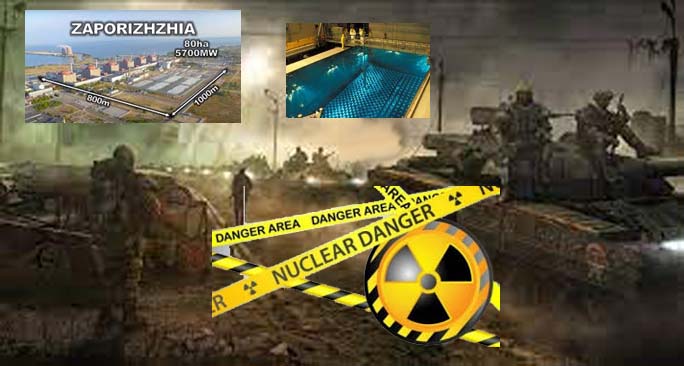
Zaporizhzhia nuclear plant reports shelling by Ukraine army
Reuters, March 14, 2024, https://www.reuters.com/world/europe/russia-controlled-zaporizhzhia-nuclear-plant-says-was-shelled-by-ukraine-2024-03-14/
MOSCOW, March 14 (Reuters) – The Russian-controlled management of the Zaporizhzhia nuclear power plant, the largest in Europe, said on Thursday that the Ukrainian army had shelled a critical infrastructure facility at the plant.
An explosive device was dropped near a fence where diesel fuel tanks are located, the plant reported.
“Such attacks are unacceptable,” it said.
It was not immediately clear when the attack had taken place. Reuters was unable to immediately verify battlefield reports from either side.
International Atomic Energy Agency Director General Rafael Grossi has repeatedly warned of the danger of attacks on the plant.
Russia and Ukraine, at war for more than two years, have blamed each other for past shelling that has downed power lines and endangered generators.
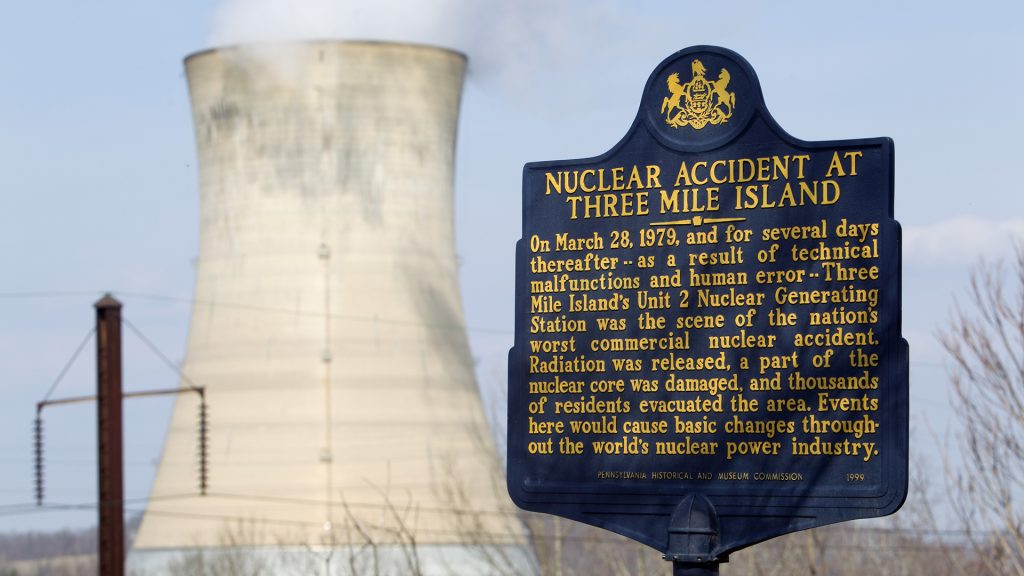
Observing the 45th Anniversary of the Worst U.S. Commercial Nuclear Power Plant Accident.
March 13th, 2024, https://nuclearactive.org/
Thursday, March 28th marks the 45th anniversary of the Three Mile Island nuclear power plant accident in Pennsylvania. A new documentary, “RADIOACTIVE: The Women of Three Mile Island,” tells the harrowing story of the 1979 accident involving the release of radioactive and toxic materials into the air, soils, water and into bodies young and old. As official evacuation orders were delayed, people received much larger radioactive doses than if the evacuation orders were issued immediately.
Forty-five years later four women continue to challenge what the company and government say about the accident.
One review explained how the documentary “uncovers the never-before-told stories of four intrepid homemakers who take their local community’s case against the plant operator all the way to the [U.S.] Supreme Court –- and a young female journalist who’s caught in the radioactive crossfire.”
It also breaks the story of a “radical new health study that may finally expose the truth of the meltdown. For over forty years, the nuclear industry has done everything in their power to cover up their criminal actions, claiming, as they always do, ‘No one was harmed and nothing significant happened.’”
The director of the outstanding documentary is Heidi Hutner. She is a professor of Literature, Sustainability, Women’s and Gender Studies at Stony Brook University New York, and a scholar of nuclear and environmental history, literature, film, and ecofeminism. Hutner chaired the Sustainability Studies Program for six years.
Beginning on March 12th, the documentary is being streamed on Apple + and Amazon Prime for $3.99. Search for The Women of Three Mile Island.
After you watch the film, be sure to register for the historic webinar coming up on Thursday, March 28th at 6 pm Mountain Time with the director Heidi Hutner and her team: Anna Rondon, who is Diné and founder of the New Mexico Social Justice and Equity Institute; Krystal Curley, who is Diné and director of Indigenous Life Ways; Mary Olson, founder of the Gender and Radiation Impact Project; and Professor Mark Jacobson, Stanford University. Cindy Folkers, of Beyond Nuclear, will moderate. The Sierra Club and Beyond Nuclear host the webinar.
In March and April, seven in-person screenings will be held in the U.S. and Canada. CCNS saw the film last weekend at the International Uranium Film Festival in Window Rock, Arizona. It received the Best Investigation Documentary award. We highly recommend watching this story about how the nuclear industry operates and covers up the truth.
EVENTS:……………………………………………….
Shelling continues near Zaporizhzhia Nuclear Power Station
12 March 2024. Modern Power Systems
Director general of the International Atomic Energy Agency, Rafael Mariano Grossi, in his 8 March statement Update 215 concerning the situation in Ukraine, reported his meeting with Russian president Vladimir Putin as part of the IAEA’s continuing efforts to help prevent a nuclear or radiological accident during the present conflict.
Mr Grossi said the meeting, on 6 March, was “professional and frank”, with the discussions focused on the paramount importance of reducing the still significant nuclear safety and security risks at the Zaporizhzhya Nuclear Power Plant in southern Ukraine, under Russian control for the past two years.
It was their second meeting, following one in Saint Petersburg in October 2022, and it took place a month after Mr Grossi on 7 February crossed the frontline to travel to the ZNPP for the fourth time during the war. On the way to the plant, he met with Ukrainian President Volodymyr Zelensky in Kyiv……………………………
Military activity
IAEA experts stationed at the ZNPP site have continued to hear explosions and other indications of military activity not far away from the facility. Three times during the week of 4 March they reported hearing several successive explosions within a few minutes, as well as one explosion on 7 march and multiple explosions on 8 March, possibly indicating the use of heavy weapons from an area close by.
On 1 March, the IAEA experts heard an explosion some distance away from the ZNPP. The following morning, the team was informed by the plant that there had been shelling in parkland a few hundred metres away from the city hall administrative building of the town of Enerhodar, where many plant staff live.
Further underlining the fragile nuclear safety and security situation at the ZNPP, the plant remains without back-up external power after the only remaining 330 kV line was disconnected on 20 February. As a result, the ZNPP remains dependent on its only functioning 750 kV power line, out of four such lines available before the war. The IAEA team has informed that the 330 kV line is not expected to be reconnected before 15 March. https://www.modernpowersystems.com/news/newsshelling-continues-near-znpp-11594597
‘Sometimes I can’t sleep at night’: Adi Roche warns of nuclear risks of Ukraine conflict as she picks up peace award
“It’s a war crime to weaponise a nuclear facility,”
CCI’s medical volunteers treat children for illnesses such as “Chernobyl heart”, a cardiac condition prevalent in the region and thought to be caused by the fallout.
Founder of Chernobyl Children International, operations of which have been upended by Russian invasion, honoured by Ahmadiyya Muslim community
Mark Paul, Irish Times, Sat Mar 9 2024
Ukraine is “sitting on a nuclear powder keg” and the western world must not abandon it to its fate, said peace activist, charity founder and former presidential candidate Adi Roche as she received a major international peace award in London on Saturday.
Ms Roche, the founder of Chernobyl Children International (CCI), which has delivered more than €108 million of aid to Ukraine and neighbouring Belarus since the 1986 nuclear disaster in the region, has been awarded the Ahmadiyya Muslim Peace Prize.
The award is presented each year by the Ahmadiyya community, a south Asian Muslim movement, at a grand ceremony at one of Europe’s biggest mosques, the Baitul Futuh complex in south London.
Previous winners include Hiroshima bomb survivor and anti-nuclear campaigner Setsuko Thurlow and Buddhist nun Cheng Yen, the founder of the Tzu Chi humanitarian organisation in Taiwan.
Ms Roche was originally selected for the award in 2020 but the ceremony was postponed due to the pandemic.
Speaking to The Irish Times in advance of the peace symposium at the Baitul Futuh mosque, she said the award had “given her heart a little bit of a lift”, after CCI’s operations in Belarus and Ukraine were upended by Russia’s 2022 invasion of its neighbour.
But she also accused Russian president Vladimir Putin’s forces of issuing a discreet nuclear threat by invading Ukraine from Belarus on a route directly through the Chernobyl nuclear exclusion zone in the north of the country – the power plant was captured on the first day of the war.
“It’s a war crime to weaponise a nuclear facility,” she said. “The Hague Convention should be invoked. Russia issued a nuclear threat without having to say it by going through that area. It made them triumphalist and so they went on to Zaporizhzhia [a nuclear plant in southeast Ukraine that has been the scene of fighting and is now controlled by Russia].”
Before the war, CCI operated mostly in Belarus, working with medical teams to provide care for children in the region whose health was affected by the nuclear fallout from the Chernobyl disaster. Some of the kids were brought to Ireland each year to stay with host families.
Ms Roche said her Cork-headquartered charity has been unable to go into Belarus ever since sanctions were put in place against the regime there of Aleksandr Lukashenko, a close Putin ally.
The CCI operation in Belarus is now run entirely by 60 local staff.
Before the conflict, CCI also operated from the northeastern Ukrainian city of Kharkiv, which was captured by Russia early in the war and subsequently liberated by the Ukrainians. The charity has since had to shift its operations to the western Ukrainian city of Lviv to avoid the fighting.
“In Ukraine we have a different set of problems. We are on the frontline of child cardiac services there,” said Ms Roche.
CCI’s medical volunteers treat children for illnesses such as “Chernobyl heart”, a cardiac condition prevalent in the region and thought to be caused by the fallout.
“With Chernobyl heart, the children can’t live with it, and they’ll die without help. Our surgeons there tried to stay working in Kharkiv after the invasion but they had to pull out two years ago and move to Lviv. The risk was too great – it would have been suicidal to stay. The surgeons were literally chased from east to west by the war,” said Ms Roche………………………… https://www.irishtimes.com/ireland/2024/03/09/sometimes-i-cant-sleep-at-night-adi-roche-warns-of-nuclear-risks-of-ukraine-conflict-as-she-picks-up-peace-award
Aberdeen shipping logistics company warned over nuclear transport safety failings.
An inspection by the industry watchdog found that nuclear
material had been transported without the proper safety checks in place.
The UK’s nuclear watchdog has slammed an Aberdeen-based shipping
logistics company over risks posed by its transportation of radioactive
materials.
The Office for Nuclear Regulation (ONR), the UK nuclear
regulatory body, identified a series of failings with Streamline Shipping
Group’s risk assessments during a routine compliance inspection at their
site in Aberdeen on January 31. Among the alarming findings were the fact
that radioactive materials had previously been moved despite not being
identified in risk assessment documentation.
Aberdeen Live 8th March 2024
https://www.aberdeenlive.news/news/aberdeen-news/aberdeen-shipping-logistics-company-warned-9152174
Greenpeace warns on danger of restarting Zaporizhzhia nuclear plant
Greenpeace today warned that any plans by Russia to restart reactors at
the Zaporizhzhia nuclear plant would be a further step closer to a
potential nuclear disaster and must be stopped.
The environmental organization has restated its demand for the International Atomic Energy
Agency (IAEA) Director General to state clearly to Rosatom, the Russian
state nuclear corporation, that restart of any of the reactors cannot be
permitted.
The IAEA Director General is traveling to Moscow for meetings
with Rosatom Director General Alexey Likhachev. On 4th March, the second
anniversary of the Russian attack on the Zaporizhzhia plant, Greenpeace,
together with the deputy head of the regional administration, held a press
conference in Zaporizhzhia city. The focus of the event was the
Zaporozhzhia nuclear plant crisis, including the reactor restart threats
and nuclear emergency planning.
Greenpeace 5th March 2024
1 This Month

of the week – Shut Down Drone Warfare!


Tell the Ukrainian Government to Drop Prosecution of Peace Activist Yurii Sheliazhenko

Petition to revoke the licensing of the Near Surface Nuclear Disposal Facility (NSDF) at Chalk River. https://www.ourcommons.ca/petitions/en/Petition/Details?Petition=e-7247
To see nuclear-related stories in greater depth and intensity – go to https://nuclearinformation.wordpress.com
-
Archives
- April 2026 (103)
- March 2026 (251)
- February 2026 (268)
- January 2026 (308)
- December 2025 (358)
- November 2025 (359)
- October 2025 (376)
- September 2025 (257)
- August 2025 (319)
- July 2025 (230)
- June 2025 (348)
- May 2025 (261)
-
Categories
- 1
- 1 NUCLEAR ISSUES
- business and costs
- climate change
- culture and arts
- ENERGY
- environment
- health
- history
- indigenous issues
- Legal
- marketing of nuclear
- media
- opposition to nuclear
- PERSONAL STORIES
- politics
- politics international
- Religion and ethics
- safety
- secrets,lies and civil liberties
- spinbuster
- technology
- Uranium
- wastes
- weapons and war
- Women
- 2 WORLD
- ACTION
- AFRICA
- Atrocities
- AUSTRALIA
- Christina's notes
- Christina's themes
- culture and arts
- Events
- Fuk 2022
- Fuk 2023
- Fukushima 2017
- Fukushima 2018
- fukushima 2019
- Fukushima 2020
- Fukushima 2021
- general
- global warming
- Humour (God we need it)
- Nuclear
- RARE EARTHS
- Reference
- resources – print
- Resources -audiovicual
- Weekly Newsletter
- World
- World Nuclear
- YouTube
-
RSS
Entries RSS
Comments RSS
 nuclear-news