‘Unprecedented infestation’ of rats at Dounreay site
‘Unprecedented infestation’ of rats at Dounreay site. Dounreay has had to
bring in a pest control company to deal with an “unprecedented infestation
of rats over the past few months,” according to a safety rep at the site.
Workers, too, have expressed their concerns about the situation with one
saying hundreds were reportedly seen “scurrying away” when pampas
grass-like plants were removed from around the buildings where they were
nesting.
There have been reports of the rats being seen in vehicles, a
kitchen area and near bins, while concerns have been raised about health
implications.
John O’Groat Journal 11th April 2024
https://www.johnogroat-journal.co.uk/news/unprecedented-infestation-of-rats-at-dounreay-site-347661
UN nuclear watchdog’s board sets emergency meeting after Zaporizhzhia attacks
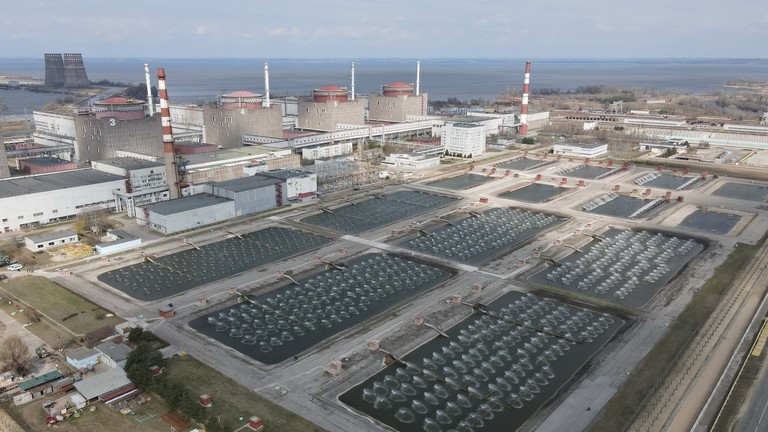
The U.N. nuclear watchdog’s Board of Governors will hold an emergency
meeting on Thursday at the request of both Ukraine and Russia to discuss
attacks on the Zaporizhzhia Nuclear Power Plant, after the enemies accused
each other of drone attacks. The International Atomic Energy Agency has
said drones struck the Russian-held facility in southern Ukraine on Sunday,
hitting one reactor building. It has not ascribed blame but has demanded
such attacks stop.
Reuters 10th April 2024
New blast at Europe’s largest nuclear plant in Ukraine

EUROPE’S largest nuclear plant was attacked by drones again today,
posing no direct threat to its safety but underscoring the “extremely
serious situation” at the facility in Ukraine, the United Nations has
said. The International Atomic Energy Agency said its team was aware of an
explosion at a training centre next to the Zaporizhzhia Nuclear Power Plant
today.
Morning Star 9th April 2024
https://morningstaronline.co.uk/article/new-blast-europes-largest-nuclear-plant-ukraine
Attacks on Ukrainian nuclear facilities ‘must cease immediately’: UN atomic watchdog

United Nations, 8 April 2024, Peace and Security 8 Apr 24
The head of the UN nuclear watchdog agency reiterated that attacks against nuclear power plants in Ukraine are “an absolute no go”, following direct military action targeting the Zaporizhzhya Nuclear Power Plant (ZNPP) on Sunday.
Rafael Grossi, Director General of the International Atomic Energy Agency (IAEA), said the targeting marked a “major escalation” in the level of danger facing the power plant.
It was the first time since Russia’s full-scale invasion of Ukraine in February 2022 that the ZNPP – Europe’s largest nuclear power plant – has been directly targeted. It has been occupied by Russian forces since the early weeks of the fighting.
As of Sunday, while there were “no indications” of damage to critical nuclear safety or security systems, the strikes were “another stark reminder” of the threats to the power plant and other nuclear facilities during the ongoing war, IAEA said.
“Although the damage at unit 6 has not compromised nuclear safety, this was a serious incident that had the potential to undermine the integrity of the reactor’s containment system,” Director General Grossi said.
‘A major escalation’
“This is a major escalation of the nuclear safety and security dangers facing the Zaporizhzhya Nuclear Power Plant. Such reckless attacks significantly increase the risk of a major nuclear accident and must cease immediately,” Mr. Grossi said.
Reiterating that no one can “conceivably benefit” or get any military or political advantage from attacks against nuclear facilities, he stressed such attacks are “an absolute no go”.
“I firmly appeal to military decision makers to abstain from any action violating the basic principles that protect nuclear facilities.”
At least one casualty
According to IAEA, after receiving information from the ZNPP about the drone attacks, its experts stationed at the site went to three affected locations.
They were able to confirm the physical impact of the drone detonations, including at one of the site’s six reactor buildings where surveillance and communication equipment appeared to have been the target.
While they were at the roof of the reactor, Russian troops engaged what appeared to be an approaching drone, the agency said, adding that this was followed by an explosion near the reactor building.
“The IAEA team reported that they observed remnants of drones at this and two other impact locations at the site. At one of them, outside a laboratory, they saw blood stains next to a damaged military logistics vehicle, indicating at least one casualty,” it said.
IAEA experts further reported hearing explosions and rifle fire on the site throughout the day. The team also heard several rounds of outgoing artillery fire from near the plant………………………… https://news.un.org/en/story/2024/04/1148346—
What are the risks at Zaporizhzhia nuclear power plant after drone attack?
By Guy Faulconbridge and Francois Murphy, April 8, 2024, https://www.reuters.com/world/europe/nuclear-power-plant-eye-ukraine-war-2024-04-08/
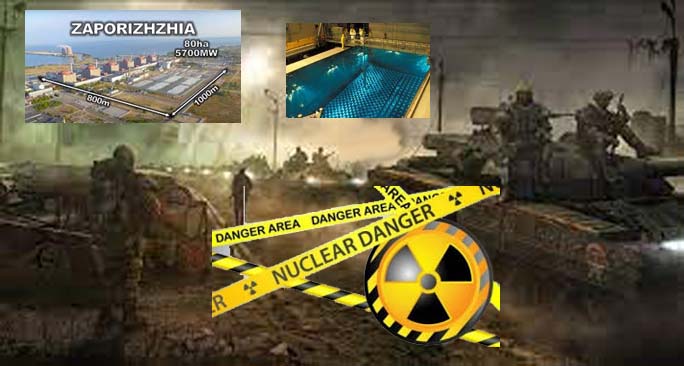
MOSCOW/VIENNA, – Russia said Ukraine struck the Zaporizhzhia nuclear power station controlled by Russian forces three times on Sunday and demanded the West respond, though Kyiv said it had nothing to do with the attacks.
The International Atomic Energy Agency (IAEA) has long warned of the risks of a disaster at Zaporizhzhia, Europe’s largest nuclear plant, and urged an end to fighting in the area.
The plant is just 500 km (300 miles) from the site of the world’s worst nuclear accident, the 1986 Chornobyl disaster.
What nuclear material is at the Zaporizhzhia plant, what are the risks and why are Russia and Ukraine fighting over it?
WHAT IS IT AND WHAT WAS ITS CAPACITY?
The Zaporizhzhia nuclear power plant has six Soviet-designed VVER-1000 V-320 water-cooled and water-moderated reactors containing Uranium 235. They were all built in the 1980s, though the sixth only came online in the mid-1990s after the collapse of the Soviet Union.
All but one of the reactors are in cold shutdown. Reactor unit 4 is in “hot shutdown”, mainly for heating purposes.
IAEA Director General Rafael Grossi says that fighting a war around a nuclear plant has put nuclear safety and security in “constant jeopardy”.
WHAT HAPPENED ON APRIL 7?
Russia’s state nuclear corporation, Rosatom, said Ukraine attacked the plant three times on Sunday with drones, first injuring three near a canteen, then attacking a cargo area and then the dome above reactor No. 6.
IAEA experts at the site went to the three locations of the attacks and confirmed there had been an attack.
“Russian troops engaged what appeared to be an approaching drone,” the IAEA said. “This was followed by an explosion near the reactor building.”
“While the team so far has not observed any structural damage to systems, structures, and components important to nuclear safety or security of the plant, they reported observing minor superficial scorching to the top of the reactor dome roof of Unit 6 and scoring of a concrete slab supporting the primary make-up water storage tanks,” the IAEA said.
The IAEA did not say directly who was to blame for the attacks.
A Ukrainian intelligence official said Kyiv had nothing to do with any strikes on the station and suggested they were the work of Russians themselves.
WHAT ARE THE RISKS?
Russian forces took control of the plant in early March 2022, weeks after invading Ukraine. Special Russian military units guard the facility and a unit of Russia’s state nuclear company, Rosatom, runs the plant.
Nuclear reactors’ containment structures like Zaporizhzhia’s are made of steel-lined reinforced concrete designed to withstand the impact of a small plane crash so there is little immediate risk from a minor attack on those structures.
A 1989 study by the U.S. Department of Energy found that the model of containment structure used in Zaporizhzia “exhibits vulnerabilities to the effects of an aircraft crash” and a fighter jet crashing downwards into the dome, where the structure is thinner, could penetrate it, causing concrete chunks and aircraft engine parts to fall inside.
External power lines essential to cooling nuclear fuel in the reactors are a softer potential target. Cooling fuel even in reactors in cold shutdown is necessary to prevent a nuclear meltdown.
Since the war began the plant has lost all external power eight times, most recently in December last year, forcing it to rely on emergency diesel generators for power. Water is also needed to cool fuel.
Pressurised water is used to transfer heat away from the reactors even when they are shut down, and pumped water is also used to cool down removed spent nuclear fuel from the reactors.
Without enough water, or power to pump the water, the fuel could melt down and the zirconium cladding could release hydrogen, which can explode.
WHAT ABOUT THE SPENT FUEL?

Besides the reactors, there is also a dry spent fuel storage facility at the site for used nuclear fuel assemblies, and spent fuel pools at each reactor site that are used to cool down the used nuclear fuel.
Without water supply to the pools, the water evaporates and the temperatures increase, risking a fire that could release a number of radioactive isotopes.
An emission of hydrogen from a spent fuel pool caused an explosion at reactor 4 in Japan’s Fukushima nuclear disaster in 2011.
WHAT HAPPENS IN A MELTDOWN?
A meltdown of the fuel could trigger a fire or explosion that could release a plume of radionuclides into the air which could then spread over a large area.
The Chornobyl accident spread Iodine-131, Caesium-134, Strontium-90 and Caesium-137 across parts of northern Ukraine, Belarus, Russia, northern and central Europe.
Nearly 8.4 million people in Belarus, Russia and Ukraine were exposed to radiation, according to the United Nations. Around 50 deaths are directly attributed to the disaster itself.
But 600,000 “liquidators”, involved in fire-fighting and clean-up operations, were exposed to high doses of radiation. Hundreds of thousands were resettled.
There is mounting evidence that the health impact of the Chornobyl disaster was much more serious than initially presented at the time and in the years following the accident.
Incidence of thyroid cancer in children across swathes of Belarus, Russia and Ukraine increased after the accident. There was a much higher incidence of endocrine disorders, anaemia and respiratory diseases among children in contaminated areas.
Reports: 2 mishaps in LANL’s plutonium facility in one day
In two separate incidents on the same day last month, Los Alamos National Laboratory workers accidentally set off decontamination showers, causing flooding in the lab’s plutonium facility, and a technician stuffed radioactive wipes into a vest pocket and took them home, a government watchdog says. Reports: 2 mishaps in LANL’s plutonium facility in one day
Nuclear power plants in war zones: Lessons learned from the war in Ukraine
Joanna Przybylak, SECURITY and DEFENCE Quarterly, April 2024
ABSTRACT
The aim of this paper is to examine the lessons learned till mid-2023 from the war in Ukraine to find out how attacking or seizing nuclear power plants (NPPs) can be utilised to advance military and political objectives during an armed conflict.
The qualitative research approach has been applied to the study, focusing on an analysis of academic research and relevant acts of international law. In order to examine Russia’s approach to the attacks against the Chernobyl and Zaporizhzhia NPPs, numerous reports, official statements by the authorities, press releases, and Internet sources have been analysed.
For evaluation of nuclear security and safety standards in Ukraine, the “seven pillars” model proposed by the International Atomic Energy Agency has been adopted. The study indicates that strategically located NPPs can be used as “nuclear shields” for the occupying forces deployed at the plant or nearby. They may also become useful tools of “lawfare” waged with the use of flawed interpretations of international humanitarian law.
Finally, nuclear security-related narrations analysed in the paper clearly prove that seized NPPs can be effectively used in information warfare. The research leads to the conclusion that civil NPPs in war zones can be weaponised and exploited by the hostile forces not only for impeding energy supplies (and thus shattering the public morale of the adversary) but also for blackmailing and coercing the decisionmakers of the attacked state and their international allies with a vision of man-made nuclear disaster……………………………………………………………………………………………………..
Ukrainian artillery cuts last backup power line to Zaporozhye Nuclear Power Plant

Steven Starr, April 6, 2024
The fuel rods within the reactor core and in the spent fuel pools will continue to emit a large amount of heat (from the continuous decay of fission products within the fuel) even after the reactors are in a “cold shutdown”. Thus, electric power is required to run the cooling systems in the spent fuel ponds and the pumps that push cooling water through the reactors. If no offsite electricity is available, diesel generators are required to generate electricity to operate the pumps to cool the reactor and the cooling systems that cool the spent fuel pools.
A prolonged failure of the cooling systems (from loss of electric power) to continuously remove heat from the spent fuels will eventually cause the water in the pools to boil off and expose the spent fuel rods to steam and/or air. Exposure of the fuel rods to steam and/or air will cause them to overheat to the point of rupture or ignition, leading to the massive release of radioactivity. (The Soviet-designed reactors have their spent fuel pools inside the primary containment, unlike US reactors that locate spent fuel pools outside primary containment).
The fuel inside the steel reactor containment vessels must also be cooled (by pumping cooling water through the containment vessel). Failure of the cooling pumps to circulate water through the core will lead to the water in the containment vessel to superheat and eventually lead to the damage of the fuel rods, which would release large amounts of highly radioactive fission products.
Offsite power to the Zaporozhye Nuclear Power Plant (ZNPP) has historically been provided by the Zaporozhye Thermal Power Station, which is located several kilometers away from the ZNPP. I think the damage to backup power line from Ukrainian artillery fire refers to the destruction of the power lines and power transformers that connect the Thermal Power Station to ZNPP.
Russia urges IAEA to publicly reveal Ukrainian attacks on nuclear plant
https://www.rt.com/russia/595516-russia-iaea-zaporozhye-attacks/ 6 Apr 24
The Zaporozhye NPP lost the connection to its last remaining backup power line after artillery fire was heard in the vicinity
Moscow has appealed to the International Atomic Energy Agency (IAEA), urging it to publicly record the recurring attacks by the Ukrainian army on the Zaporozhye Nuclear Power Plant.
The plant is Europe’s largest atomic power station, with six reactor cores capable of generating a gigawatt of electricity each. The plant came under Moscow’s control in 2022, early on in the Ukraine conflict, and was formally transferred to Rosatom management after Zaporozhye Region was incorporated into Russia following a referendum. Kiev claimed it was illegally occupied and insisted that Russia kept heavy weapons at the plant and was attacking Ukrainian forces from it.
Kiev has since targeted the facility with artillery, missile, and drone attacks, and has sent armed groups to try and seize it. Earlier this week, the NPP lost the connection to its only remaining back-up power line, a key source of the electricity it needs to cool its reactors, with the IAEA team on the ground reporting that it heard “numerous rounds of artillery fire” in the vicinity of the plant. On Friday, the NPP wrote on Telegram that it has been repeatedly attacked by Ukrainian drones recently.
Russian Foreign Ministry spokeswoman Maria Zakharova warned Kiev on Friday against further attacks on the plant, noting that they could harm critical infrastructure and destabilize the facility. She also appealed to the IAEA to make the recent attacks and their perpetrators known to the public.
“We strongly urge the IAEA and its leadership to actively use the experts present at the station to publicly record all cases of attacks from the Ukrainian side and clearly state where the threat to the safe operation of this facility really comes from,” she said in a statement.
In a statement to TASS late Friday, the IAEA said it was aware of the reported attacks and was studying them, but refused to give any further details.
The IAEA deployed a permanent on-site monitoring mission to the plant in September 2022, but has repeatedly declined to publicly assess the incidents involving the facility or name Ukraine as the perpetrator.
Experts from the agency said the plant is now entirely dependent on the only remaining 750-kilowatt line for off-site power. The NPP reported that the loss of connection to the backup power line is being investigated, and noted that the radiation background at the station and the surrounding area so far remains unchanged.
Mystery of America’s first fatal nuclear disaster – explosion of small nuclear reactor

– with rumors still rife over 60 years later that explosion in remote Idaho town was triggered by one man’s murderous rage amid LOVE TRIANGLE

COMMENT. The accident never got the same attention as Three Mile Island (1979), Chernobyl (1986) or Fukushima (2011). But the sensational story behind it lives in infamy, even though some experts believe it may have been made up by government officials.
- It happened at the Stationary Low-Power Plant Number 1 (SL-1) in January 1961
- All three technicians there died during routine maintenance on the lab’s reactor
- The trio were eventually retrieved, at the cost of 790 being exposed to radiation
The first half of the video above spells out the technical details – the second half describes the deaths, and the autopsies, mutilation of bodies, and disposal of highly radioactive body parts. Final report showed the flaws in the reactor and its procedures, which were the underlying cause of this disaster.
By ALEX HAMMER FOR DAILYMAIL.COM, 7 April 2024
The SL-1 accident is the only fatal nuclear reactor event to ever occur on US soil.
An earth-shattering explosion at the Stationary Low-Power Plant Number 1 (SL-1) in January 1961 saw all three technicians on staff killed during what was meant to be routine maintenance of the government lab’s nuclear reactor.
Following a painstaking operation, the men’s bodies were retrieved – at the cost of 790 others being exposed to radiation out in Idaho‘s Lost River desert
The three men were then wrapped in hundred pounds of lead, interned in steel coffins and buried under a slab of concrete to prevent any further spread. The lab was also considered lost and was buried a few hundred yards away.
But rumors surrounding the incident still swirl today, with some speculating the disaster was in fact a murder-suicide triggered by a sordid squabble after one of the crew members engaged in an affair with another’s wife.
Indeed, one report claims that the man responsible for the explosion had received a phone call from his wife asking for a divorce just minutes earlier – while the co-worker accused of sleeping with his wife was later found pinned to the ceiling directly above the blown reactor.
The explosion occurred at the Stationary Low-Power Plant Number 1 (SL-1) in January 1961, and saw three technicians on staff killed. A subsequent report from the United States Atomic Energy Commission suggested the meltdown may not have been the result of an error.
Army Specialists Jack Byrnes, 22, and Richard McKinley, 26, and Navy Seabee Richard Legg, 26 were tasked with manning the remote laboratory’s desolate halls, and all died in the blast. AEC special investigator Leo Miazga implied Legg was sleeping with Byrnes’ wife
………………………………………………….The Stationary Low-Power Plant was constructed at the National Reactor Testing Station, now known as Idaho National Laboratory, some 40 miles west of Idaho Falls.
Eight miles south was the aptly named Atomic City, which today boasts a population of around 40, despite – and perhaps due – to its hazardous history……………………..
reactors were designed to be small, lightweight, and easy to maintain – capable of operating for three years without refueling.
But these reactors – powered by boiling water – incorporated several new technologies, many of which required regular maintenance.
New practices at the plant included the use of enriched uranium fuel and burnable poison strips (BPS) to prolong core life, and five control rods from the typical 20 to 50 to simplify maintenance.
Inadequately tested technologies commonly exhibited operational malfunctions, NASA scientists wrote in a 2007 report – citing a phenomenon known as control rod ‘stickiness’ in particular.
The toxic spewing event of 1961 occurred after an 11-day maintenance shutdown at the lab over the Christmas holiday, only a half a year into its lifetime.
It is believed the explosion was triggered when technicians attempted a manual rod travel exercise after a control rod exhibited ‘stickiness’ – a term that refers to when a rod catches more neutrons than usual, creating less energy……………………………………………..
Fewer rods, however, means more bags of balls splitting – a theory that unfortunately became a reality for the three men on duty the night of January 3, 1961.
While performing a basic maintenance procedure – attaching the control rods to the control rod drive mechanism – Byrnes was tasked with manually lifting the control rod about four inches before attaching it to the mechanism.
However, the young technician is said to have raised the central rod to a height of 20 inches in 0.5 seconds – causing the reactor to go ‘supercritical’ in just four milliseconds.
The core power level surged to 20,000 megawatts – 6,000 times the rated power output.
The heat generated by the power surge vaporized the water powering core and keeping it cool, while hammering steam into the top of the reactor.
This caused an explosion of colossal proportions, and the 26,000-pound reactor to lift nine feet off the ground.
Photos from the investigation that followed show the control rod lodged in the ceiling of the SL-1 Reactor building – now buried in the Idaho desert.
Autopsies showed that Byrnes and Legg died instantly, while McKinley – whose wife was pregnant at the time- exhibited signs of diffuse bleeding within his scalp, indicating he survived for some two hours before succumbing to his wounds.
Legg, meanwhile, had been impaled by a heavy shield plug propelled by the blast with a velocity of 85 feet per second, with officials finding both him and the debris pinned to the ceiling.
All three men died of physical trauma – all of which was incurred from a chain reaction in the uranium fuel that caused temperatures to soar to more than 3,600 degrees.
A rescue operation was eventually launched, though with the highly toxic core exposed, another crisis akin the one seen a quarter century later in Chernobyl was also occurring.
Unaware, first responders responding to an alarm at first thought nothing was afoot – because, at first glance, the reactor building’s exterior looked normal.
There had also been two false alarms tripped earlier in the day, further quelling suspicions.
That quickly changed when they entered the building – after which their radiation detectors immediately went off.
Levels of 25 roentgens (r) were recorded, causing an evacuation – despite whole body doses of 1,000r typically being considered a death sentence.
Still, any whole-body radiation dose can increase a person’s lifetime risk of fatal cancer, and the levels left lingering were roughly the equivalent of undergoing 5,000 consecutive chest X-rays.
The rescuers thus rotated trips inside to reduce risks to their safety – rushing in with hazmat suits in 65-second intervals.
Eventually, the men’s bodies were recovered, but they remained highly radioactive.
Such radiation can take centuries to dissipate – so the military men’s especially stricken parts, their hands and organs, had to be removed and buried along with wreckage from the lab site.
The rest of the remains were shipped off to their families, and like the debris, were buried in lead-lined coffins beneath layers of concrete in each of their hometowns…………………………………………………………………………………………… https://www.dailymail.co.uk/news/article-13271859/mystery-america-nuclear-disaster-idaho-love-triangle-murder-suicide.html
EDF confirms cracks on 1.3 GW Paluel 2 reactor
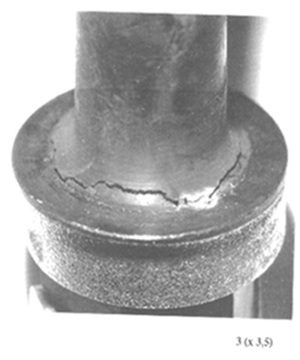
(Montel) EDF has found cracks on its Paluel 2 (1.3 GW) nuclear reactor in the north of France, a company spokeswoman told Montel on Friday, confirming prior comments by the firm’s executive director Cedric Lewandowski.
Reporting by: Caroline Pailliez, 05 Apr 2024, https://montelnews.com/news/df0e8352-e018-4d1d-af96-63266d385d3c/edf-confirms-corrosion-cracks-on-paluel-2-1-3-gw-reactor
Questioned by a parliamentary committee late on Thursday, Lewandowski said the French state-run firm had “recently” found traces of corrosion at its Blayais 4 (910 MW) and Paluel 2 reactors. He gave no further details.
Contacted by Montel, an EDF spokeswoman confirmed the firm had found cracks at the Paluel unit but refused to provide any other details such as when and where the corrosion was found or whether repairs were underway.
“The possibility of carrying out this type of repair on shutdowns scheduled for 2024 is included in our production forecasts,” she added.
Paluel 2 has been offline for maintenance and refueling since 2 February. The outage was initially scheduled to last 98 days but EDF warned last week the shutdown could be extended up to a “total of 135 days”.
The reactor is currently due to return to service on 10 May.
The news comes after EDF confirmed last month that a 30-day outage extension at its Blayais 4 (910 MW) reactor was due to corrosion.
“No surprise”
Lewandowski told the committee in the upper house that the “recent discovery” of corrosion at Blayais 4 and Paluel 2 “came as no surprise”.
Having checked France’s newest reactors, which it said were most susceptible to corrosion, the firm was now probing older units, such as at Blayais and Paluel, he said, adding EDF knew it would also find cracks of “lesser importance” on those units.
Corrosion was “still with us” and “would be until 2025” when the firm was due to complete its probe of France’s 56 reactors, he said.
“Fortunately, we are now in the process of mastering it… Our construction sites are getting faster and faster, our ability to understand the phenomenon is now almost total.”
EDF warned in December it might have to extend one in three planned outages for around 30 days on average at 13 reactors this year and 13 reactors in 2025, based on the probability of finding corrosion on units yet to be examined.
The issue has dogged the company, with reactor outages jumping 47% in 2022 due to problems at numerous units, with output plunging to a 33-year low of 279 TWh.
Edited by: Chris Eales, Robin Newbold
TEPCO plans new installations at Fukushima nuclear plant, to deal with radioactive leakage
In the wake of recent contaminated water leakage at Japan’s Fukushima
Daiichi Nuclear Power Plant, the plant’s operator Tokyo Electric Power
Company (TEPCO) has announced its plan for new installations as a
preventive measure, local media reported.
TEPCO is expected to install new
piping and ventilation ports designed to guide any spewing liquid to fall
within the building, thereby containing the spread of contamination,
national news agency Kyodo reported, citing the company’s announcement on
Friday. The construction is slated to commence on Monday and is expected to
be completed by the end of the month, according to the operator.
CGTN 6th April 2024
M6.0 earthquake hits coast of Japan’s Fukushima: Japan Meteorological Agency
A magnitude-6.0 earthquake struck off the coast of Fukushima Prefecture in Japan on Thursday noon, said the Japan Meteorological Agency (JMA).
The quake hit at 12:16 local time at a depth of 40 kilometers, the JMA said.
No tsunami warnings have been issued and there’s no immediate information on damage or casualties.
Spent nuclear fuel mismanagement poses a major threat to the United States. Here’s how.
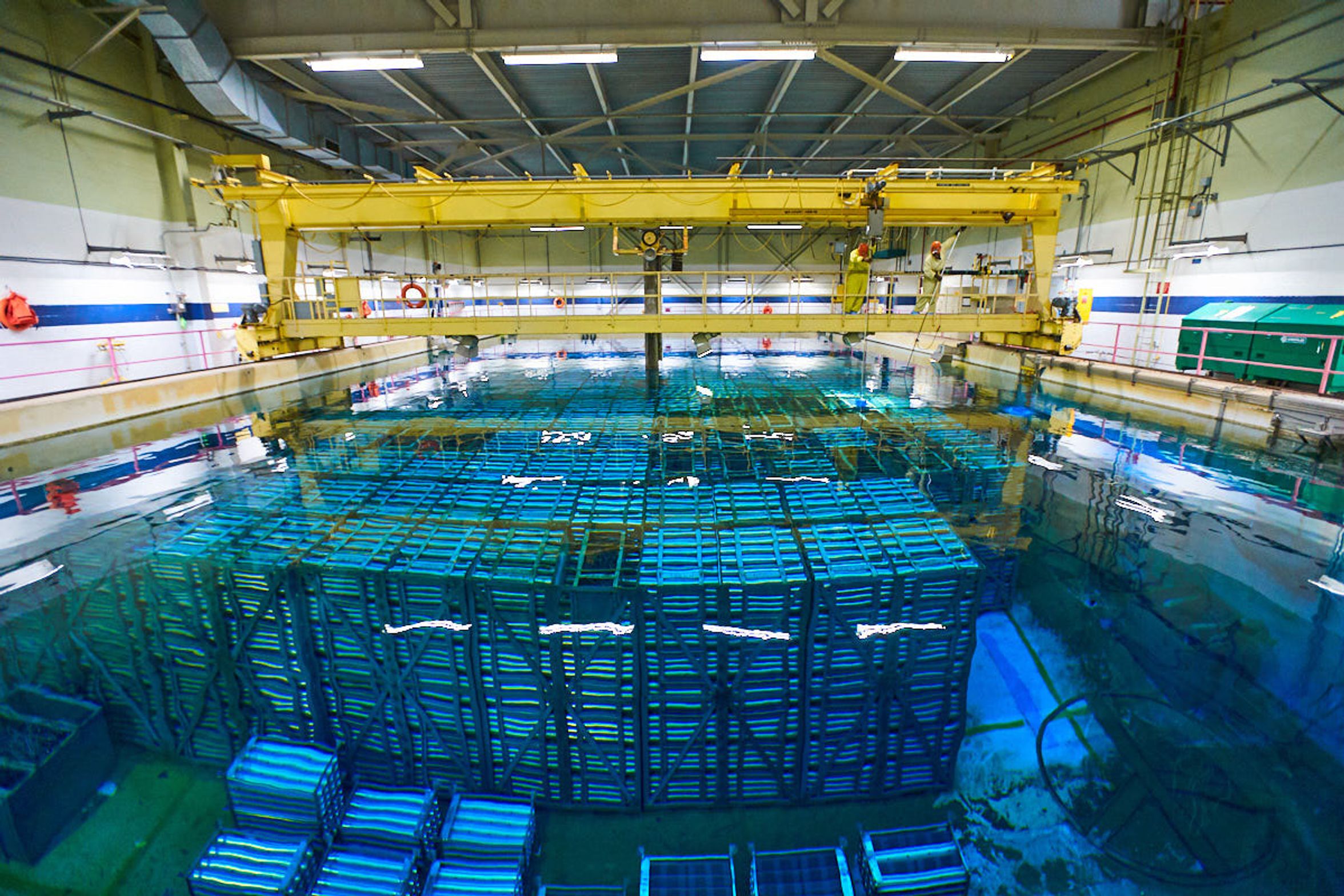
Restricting its analyses to a severe earthquake scenario allowed the NRC to help allay public fears over the dangers of spent fuel pool accidents. There is good reason to question whether severe earthquakes pose the greatest threat to spent fuel pools.
Solar storms, physical attacks, and cyberattacks have the potential to cause a nightmare scenario …….
Bulletin, By Mark Leyse | April 2, 2024
Irradiated fuel assemblies—essentially bundles of fuel rods with zirconium alloy cladding sheathing uranium dioxide fuel pellets—that have been removed from a nuclear reactor (spent fuel) generate a great deal of heat from the radioactive decay of the nuclear fuel’s unstable fission products. This heat source is termed decay heat. Spent fuel is so thermally hot and radioactive that it must be submerged in circulating water and cooled in a storage pool (spent fuel pool) for several years before it can be moved to dry storage.
The dangers of reactor meltdowns are well known. But spent fuel can also overheat and burn in a storage pool if its coolant water is lost, thereby potentially releasing large amounts of radioactive material into the air. This type of accident is known as a spent fuel pool fire or zirconium fire, named after the fuel cladding. All commercial nuclear power plants in the United States—and nearly all in the world—have at least one spent fuel pool on site. A fire at an overloaded pool (which exist at many US nuclear power plants) could release radiation that dwarfs what the Chernobyl nuclear accident emitted.
Many analysts see very rare, severe earthquakes as the greatest threat to spent fuel pools; however, another far more likely event could threaten US nuclear sites: a widespread collapse of the power grid system. Such a collapse could be triggered by a variety of events, including solar storms, physical attacks, and cyberattacks—all of which are known, documented possibilities. Safety experts have warned for decades about the dangers of overloading spent fuel pools, but the Nuclear Regulatory Commission and Congress have refused to act.
The threat of overloaded spent fuel pools. Spent fuel pools at US nuclear plants are almost as densely packed with nuclear fuel as operating reactors—a hazard that has existed for decades and vastly increases the odds of having a major accident.
Spent fuel assemblies could ignite—starting a zirconium fire—if an overloaded pool were to lose a sizable portion or all of its coolant water. In a scenario in which coolant water boils off, uncovered zirconium cladding of fuel assemblies may overheat and chemically react with steam, generating explosive hydrogen gas. A substantial amount of hydrogen would almost certainly detonate, destroying the building that houses the spent fuel pool. (Only a small quantity of energy is required to ignite hydrogen gas, including electric sparks from equipment. It is speculated a ringing telephone initiated a hydrogen explosion that occurred during the Three Mile Island accident in 1979.)
A zirconium fire in an exposed spent fuel pool would have the potential to emit far more radioactive cesium 137 than the Chernobyl accident released. (The US Nuclear Regulatory Commission (NRC) has conducted analyses that found a zirconium fire at a densely packed pool could release as much as 24 megacuries of cesium 137; the Chernobyl accident is estimated to have released 2.3 megacuries of cesium 137.) Such a disaster could contaminate thousands of square miles of land in urban and rural areas, potentially exposing millions of people to large doses of ionizing radiation, many of whom could die from early or latent cancer.
In contrast, if a thinly packed pool were deprived of coolant water, its spent fuel assemblies would likely release about 1 percent of the radioactive material predicted to be released by a zirconium fire at a densely packed pool. A thinly packed pool has a much smaller inventory of radioactive material than a densely packed pool; it also contains much less zirconium. If such a limited amount of zirconium were to react with steam, most likely too little hydrogen would be generated to threaten the integrity of the spent fuel pool building.
After being cooled under water for a minimum of three years, spent fuel assemblies can be transferred from pools to giant, hermetically sealed canisters of reinforced steel and concrete that shield plant workers and the public from ionizing radiation. This liquid-free method of storage, which cools the spent fuel assemblies by passive air convection, is called “dry cask storage.”

A typical US storage pool for a 1,000-megawatt-electric reactor contains from 400 to 500 metric tons of spent fuel assemblies. (Dry casks can store 10 to 15 tons of spent fuel assemblies, so each cask contains a far lower amount of radioactive material than a storage pool.) Reducing the total inventories of spent fuel assemblies stored in US spent fuel pools by roughly 70 to 80 percent reduces their amount of radioactive cesium by about 50 percent. And the heat load in each pool drops by about 25 to 30 percent. With low-density storage, a pool’s spent fuel assemblies are separated from each other to an extent that greatly improves their ability to be cooled by air convection in the event that the pool loses its coolant water. Moreover, a dry cask storage area, which has passive cooling, is less vulnerable to either accidents or sabotage than a spent fuel pool.
In the aftermath of the March 2011 Fukushima Daiichi accident in Japan, in which there was a risk of spent fuel assemblies igniting, the NRC considered forcing US utilities to expedite the transfer of all sufficiently-cooled spent fuel assemblies stored in overloaded pools to dry cask storage. The NRC decided against implementing such a safety measure.
To help justify its decision, the NRC chose to analyze only one scenario that might lead to a zirconium fire: a severe earthquake. In 2014, the NRC claimed that a severe earthquake with a magnitude “expected to occur once in 60,000 years” is the prototypical initiating event that would lead to a zirconium fire in a boiling water reactor’s spent fuel pool.
The NRC’s 2014 study concluded that the type of earthquake it selected for its analyses would cause a zirconium fire and a large radiological release to occur at a densely packed spent fuel pool once every nine million years (or even less frequently). Restricting its analyses to a severe earthquake scenario allowed the NRC to help allay public fears over the dangers of spent fuel pool accidents. (At the time of the Fukushima Daiichi accident, the New York Times and other news outlets warned that a zirconium fire could break out in the plant’s Unit 4 spent fuel pool, causing global public concern.)
There is good reason to question whether severe earthquakes pose the greatest threat to spent fuel pools. A widespread collapse of the US power grid system that would last for a period of months to years—estimated to occur once in a century—may be far more likely to lead to a zirconium fire than a severe earthquake. The prospect that a widespread, long-term blackout will occur within the next 100 years should prompt US utilities to expedite the transfer of spent fuel from pools to dry cask storage. Utilities in other nations, including in Japan, that have overloaded pools should follow suit.
Solar storms, physical attacks, and cyberattacks have the potential to cause a nightmare scenario in which the US power grid collapses, along with other vital infrastructures—leading to reactor meltdowns and spent fuel pool fires, whose radioactive emissions would aggravate the disaster.
Vulnerability to solar storms……………………………………………………………………………………………………………………..
Vulnerability to physical attacks.……………………………………………………………………………………………………….
Vulnerability to cyberattacks. …………………………………………………………………………………………………………….
Insufficient public safety.…………………………………………………………………………………….
Overloading spent fuel pools should be outlawed. Safety analysts have warned about the dangers of overloading spent fuel pools since the 1970s. For decades, experts and organizations have argued that in order to improve safety, sufficiently cooled spent fuel assemblies should be removed from high-density spent fuel pools and transferred to passively cooled dry cask storage. Sadly, the NRC has not heeded their advice.
In the face of the NRC’s inaction, Sen. Edward Markey of Massachusetts introduced The Dry Cask Storage Act in 2014, calling for the thinning out of spent fuel pools. The act, which Senator Markey has reintroduced in subsequent congressional sessions, has not passed into law.
The relatively high probability of a nationwide grid collapse, which would lead to multiple nuclear disasters, emphasizes the need to expedite the transfer of spent fuel to dry cask storage. According to Frank von Hippel, a professor of public and international affairs emeritus at Princeton University, the impact of a single accident at an overstocked spent fuel pool has the potential to be two orders of magnitude more devastating in terms of radiological releases than the three Fukushima Daiichi meltdowns combined. If the US grid collapses for a lengthy period of time, society would likely descend into chaos, as uncooled nuclear fuel burned at multiple sites and spewed radioactive plumes into the environment.
The value of preventing the destruction of US society and untold human suffering is incalculable. So, on the issue of protecting people and the environment from spent fuel pool fires, it is surprising when one learns that promptly transferring the nationwide inventories of spent fuel assemblies that have been cooled for at least five years from US pools to dry cask storage would be “relatively inexpensive”—less than (in 2012 dollars) a total of $4 billion ($5.4 billion in today’s dollars). That is far, far less than the monetary toll of losing vast tracts of urban and rural land for generations to come because of radioactive contamination.
One should also consider that plant owners are required, as part of the decommissioning process, to transfer spent fuel assemblies from storage pools to dry cask storage after nuclear plants are permanently shut down. So, in accordance with industry protocols, all spent fuel assemblies at plant sites are intended to eventually be placed in dry cask storage (before ultimately being transported to a long-term surface storage site or a permanent geologic repository). https://thebulletin.org/2024/04/spent-nuclear-fuel-mismanagement-poses-a-major-threat-to-the-united-states-heres-how/
British nuclear site Sellafield to be prosecuted for cybersecurity failures

Alexander Martin, March 29th, 2024, https://therecord.media/sellafield-site-prosecution-nuclear-facility-cybersecurity
The United Kingdom’s independent nuclear safety regulator has announced that it will be prosecuting the company managing the Sellafield nuclear site over “alleged information technology security offenses during a four year period between 2019 and early 2023.”
It is not clear whether senior managers at the state-owned Sellafield Ltd. will face charges. Under the Nuclear Industries Security Regulations 2003, individuals convicted of an offense can face up to two years imprisonment.
“There is no suggestion that public safety has been compromised as a result of these issues,” the regulator announced on Thursday, adding that the decision to begin legal proceedings followed an investigation.
“Details of the first court hearing will be announced when available,” stated the ONR.
Sellafield had previously been the focus of enhanced regulatory attention over its cybersecurity failings, as the U.K. chief nuclear inspector’s annual report revealed last year. At the same time, EDF, the company operating several nuclear power plants in Britain, was placed under similar measures.
As set out in the U.K.’s civil nuclear cybersecurity strategy, the National Cyber Security Centre (NCSC) threat assessment warns that ransomware “almost certainly represents the most likely disruptive threat.”
A ransomware attack on the IT systems used by a nuclear power plant could disrupt its operations, although the industrial systems are designed with multiple failsafes to prevent a radiological accident.
Sellafield’s nuclear reactor was closed in 2003, but the sprawling complex remains the largest nuclear site in Europe, with the ONR describing it as “one of the most complex and hazardous nuclear sites in the world.”
It houses more plutonium — in particular the isotopes created as a byproduct of nuclear reactor operations — than any other location on the planet, alongside a range of facilities for nuclear decommissioning, and waste processing and storage.
It was the location of the country’s worst-ever nuclear accident in 1957, when a reactor caught fire leading to radioactive material spreading in the atmosphere across Britain and Europe.
Cyberattacks targeting the operational technology (OT) systems at power plants are rare, but not unheard of — with the Triton malware discovered in Saudi Arabia in 2017 among the best known and most concerning examples.
It is not known whether the suspected Russian actors behind that attack could have engineered a method to overcome the failsafe mechanisms preventing an explosion.
According to the British government’s National Risk Register, a cyberattack on the computer systems controlling a nuclear reactor could potentially require a controlled shutdown as a protective measure, although there is not a major concern about them causing any radiological discharge.
As Sellafield no longer has an operational nuclear reactor, it is not clear what damage a cyber incident at the facility could cause.
1 This Month

of the week – Shut Down Drone Warfare!


Tell the Ukrainian Government to Drop Prosecution of Peace Activist Yurii Sheliazhenko

Petition to revoke the licensing of the Near Surface Nuclear Disposal Facility (NSDF) at Chalk River. https://www.ourcommons.ca/petitions/en/Petition/Details?Petition=e-7247
To see nuclear-related stories in greater depth and intensity – go to https://nuclearinformation.wordpress.com
-
Archives
- April 2026 (103)
- March 2026 (251)
- February 2026 (268)
- January 2026 (308)
- December 2025 (358)
- November 2025 (359)
- October 2025 (376)
- September 2025 (257)
- August 2025 (319)
- July 2025 (230)
- June 2025 (348)
- May 2025 (261)
-
Categories
- 1
- 1 NUCLEAR ISSUES
- business and costs
- climate change
- culture and arts
- ENERGY
- environment
- health
- history
- indigenous issues
- Legal
- marketing of nuclear
- media
- opposition to nuclear
- PERSONAL STORIES
- politics
- politics international
- Religion and ethics
- safety
- secrets,lies and civil liberties
- spinbuster
- technology
- Uranium
- wastes
- weapons and war
- Women
- 2 WORLD
- ACTION
- AFRICA
- Atrocities
- AUSTRALIA
- Christina's notes
- Christina's themes
- culture and arts
- Events
- Fuk 2022
- Fuk 2023
- Fukushima 2017
- Fukushima 2018
- fukushima 2019
- Fukushima 2020
- Fukushima 2021
- general
- global warming
- Humour (God we need it)
- Nuclear
- RARE EARTHS
- Reference
- resources – print
- Resources -audiovicual
- Weekly Newsletter
- World
- World Nuclear
- YouTube
-
RSS
Entries RSS
Comments RSS
 nuclear-news